Archive for the ‘vegetable gardening’ Category

Late in the Garden Year

img_4881

Here in central New Mexico our garden year is slowly drawing to a close and the first frosts have blasted the tenderest plants but the days are still warm and lovely.  I have been out in the woods gathering wildlings but they are shutting down for the year. So it’s a good time to start summing up the season.  I hope to write in more detail about all these things over the winter, but life being the uncertain business that it is, might as well get started now.

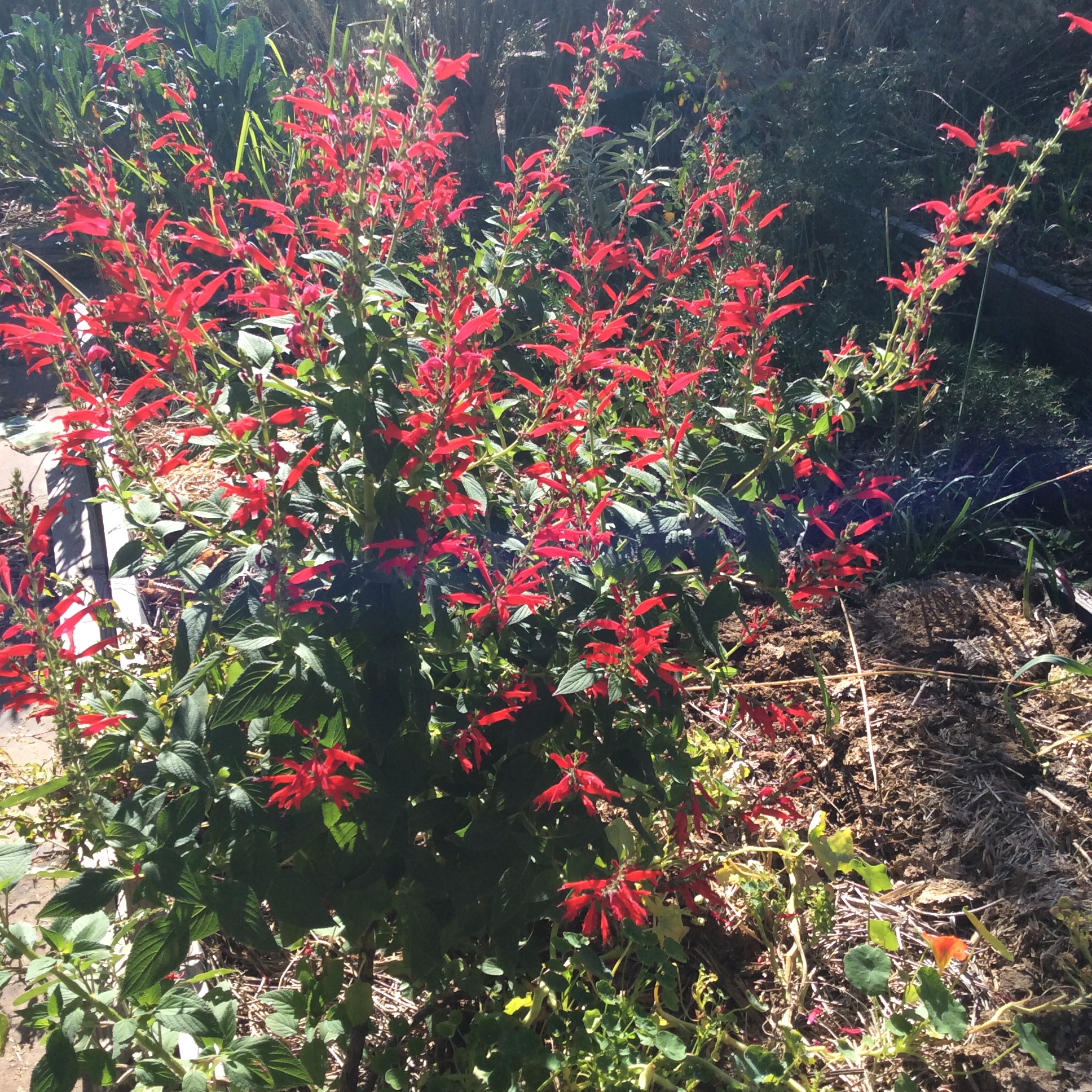
First, beauty. In October, the tender tropical pineapple sage covers itself with red flower spikes and is one of the loveliest sights the garden can offer at this season, so every spring I buy a plant and stick it in somewhere. It makes a good last hurrah for the bees. I make tea from it occasionally during the summer and I’m experimenting right now with tincturing the leaves to make a cordial. More on that later.
img_4888

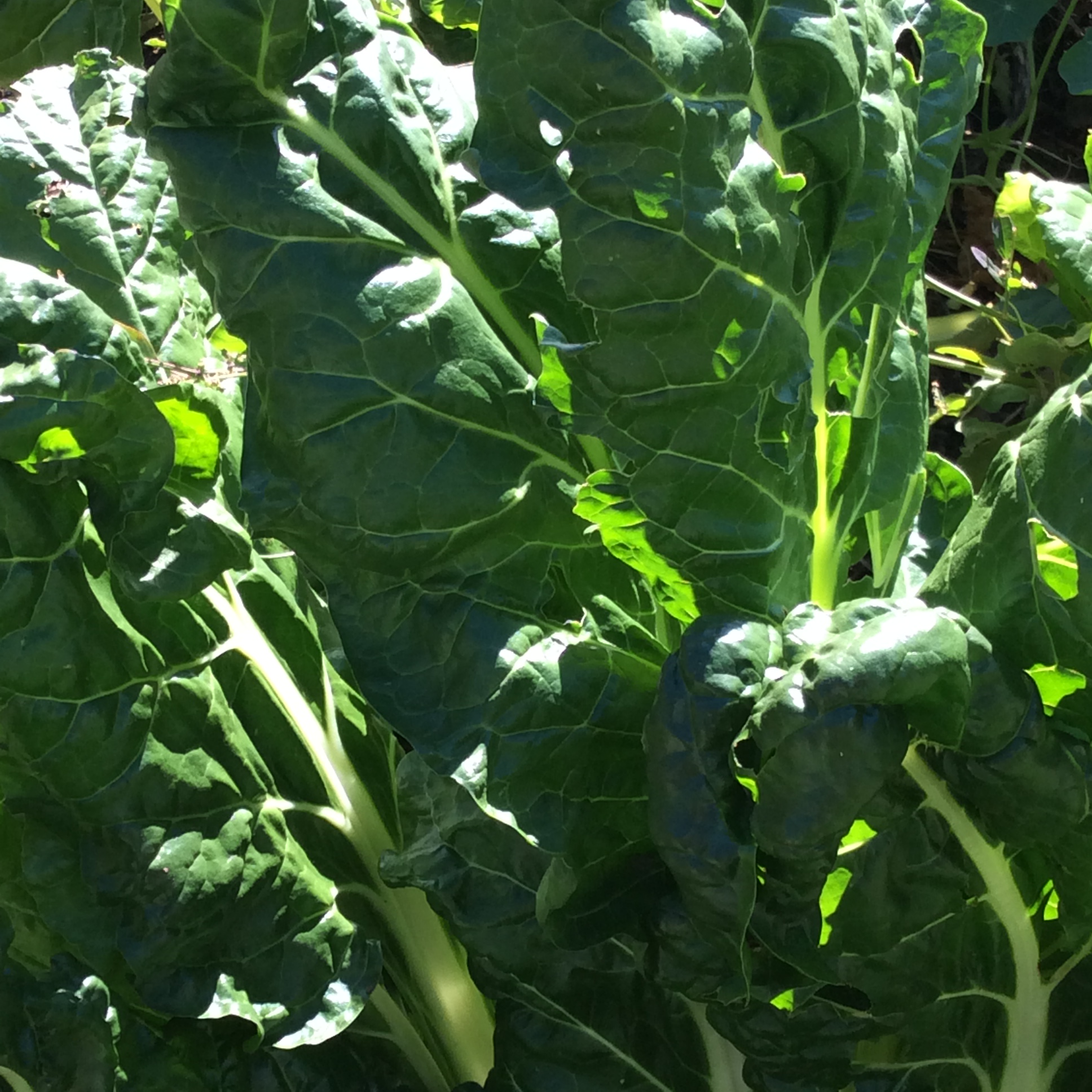
This is chard’s second-best season.  In late spring and summer there are other  greens that I prefer, so I plant my chard in June and in October it is covered with lush green leaves and ready to harvest, when most other greens have given up.   Then I leave the plants in place over the winter and in the spring they send out a burst of leaves that are thick, meaty, tender, and utterly delicious. Remember to harvest the spring leaves before the central stalk starts to form, because as soon as the plant begins to shoot to seed, the leaves become dirty-tasting.  Pick all the fall leaves that you want, since this does not seem to affect the ability of the plant to live through the winter. Blanch some for winter greens if you don’t already have enough in the freezer.
img_4850

All my garden fruits except the quinces are finished for the year, but rose hips are easily found. I am  busy making extracts and cordials from them as a source of vitamin C, flavonoids, and pleasure over the winter.
img_4882

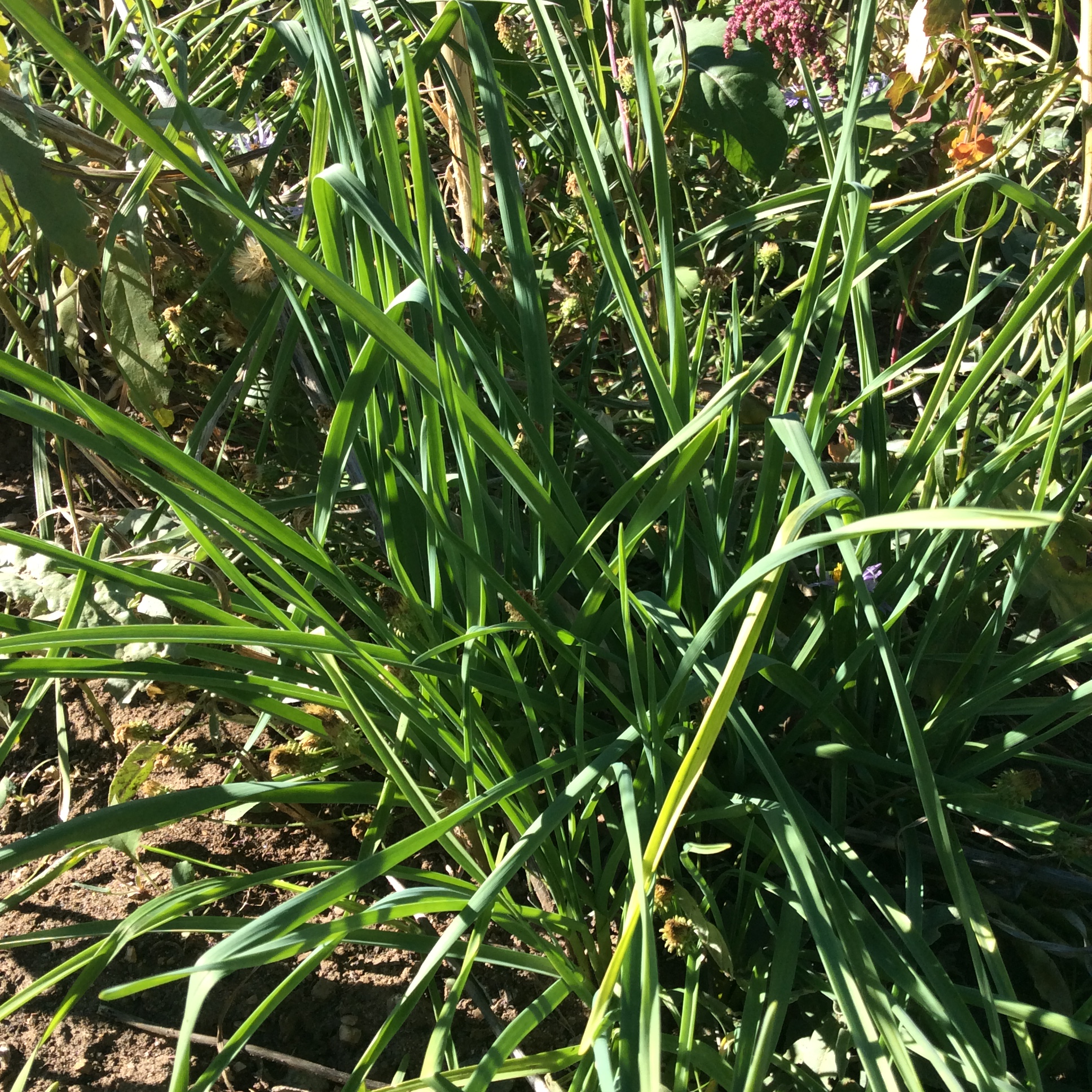
The perennialized section of elephant garlic is making clusters of thin tender leaves that are delicious  snipped up for garlicky chives.  I don’t care for the bulbs, and think that the greens are the best part of this leek relative,  so I cut all that the plants will produce as I need them.  The thin chive like greens shown here come from the tiny bulbils that are found around the outside of the bulbs. I plant them in handfuls to get a thick growth of greens as shown here.
img_4880

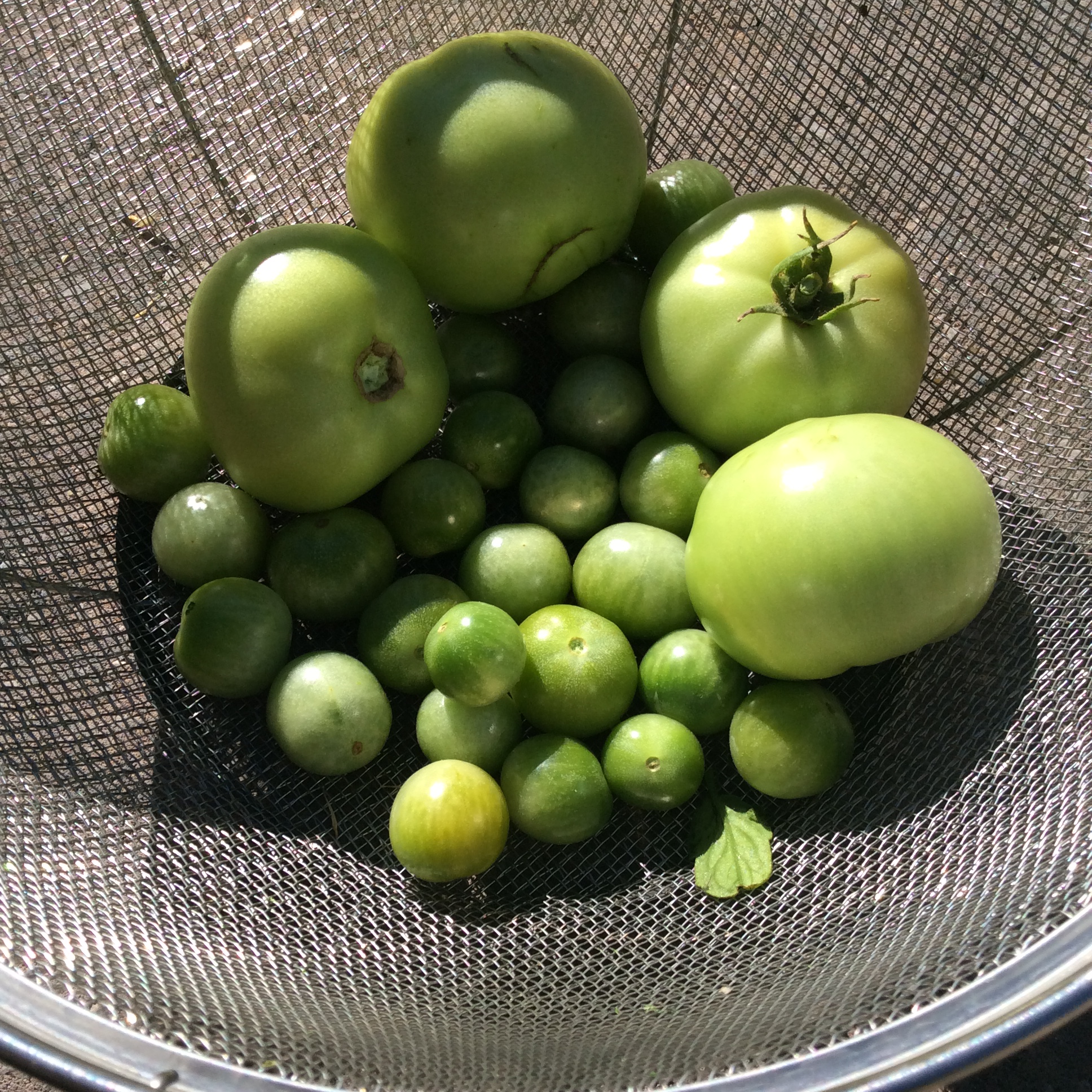
Those last green tomatoes make a wonderful sweet tangy chutney.
img_4891

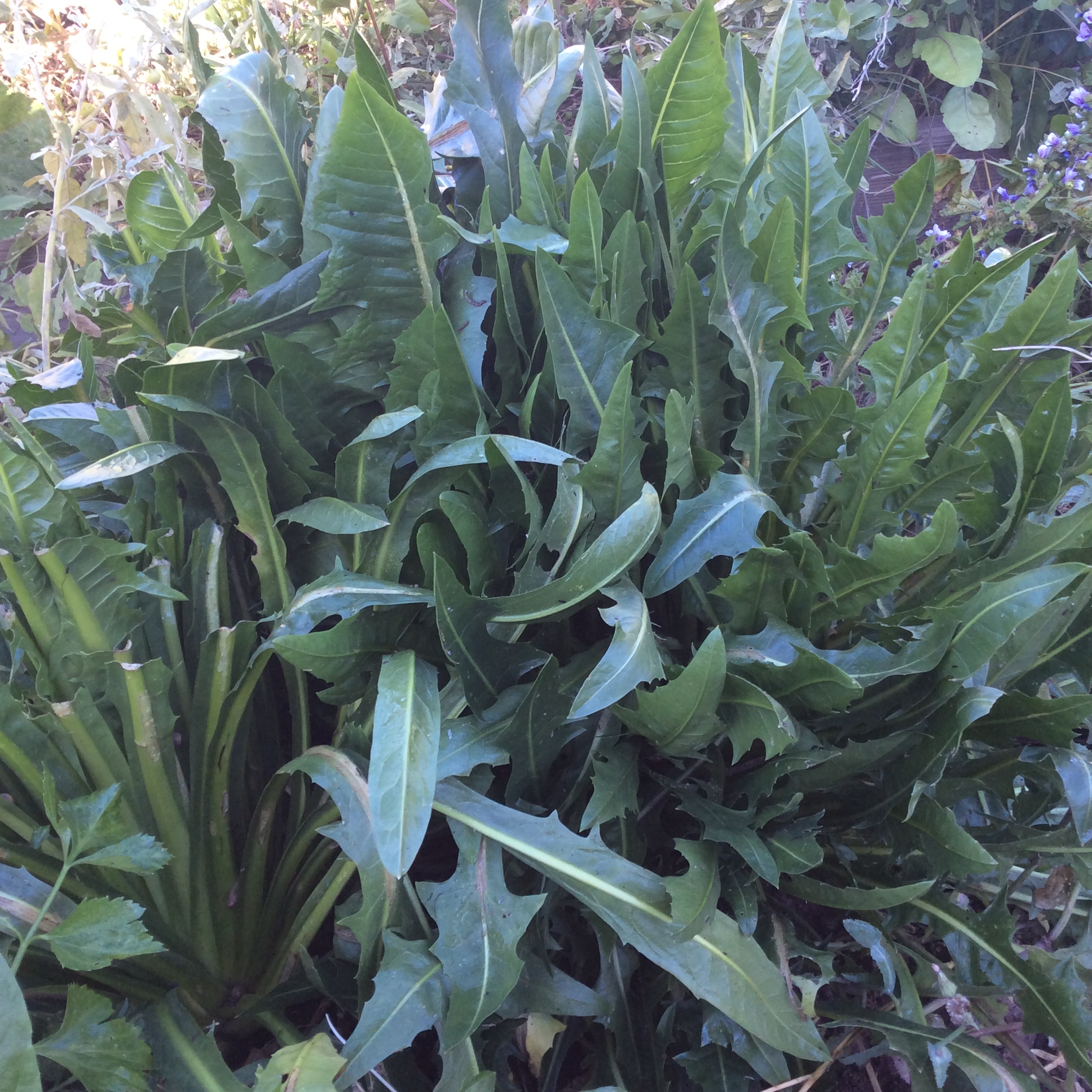
I have a clump of perennialized chicory,  and it languishes in hot weather but produces a vigorous crop of deep greens in the fall.  The lower half of the leaf is mostly stalk, so I tend to cut off the upper halves for cooking. Chicory is a bitter green, much like dandelion.  It responds wonderfully to sautéing  with bacon or pancetta, garlic, and some red chili if you like it. It is also very good for adding savor to mixed greens that include blander species such as chard.
img_4892

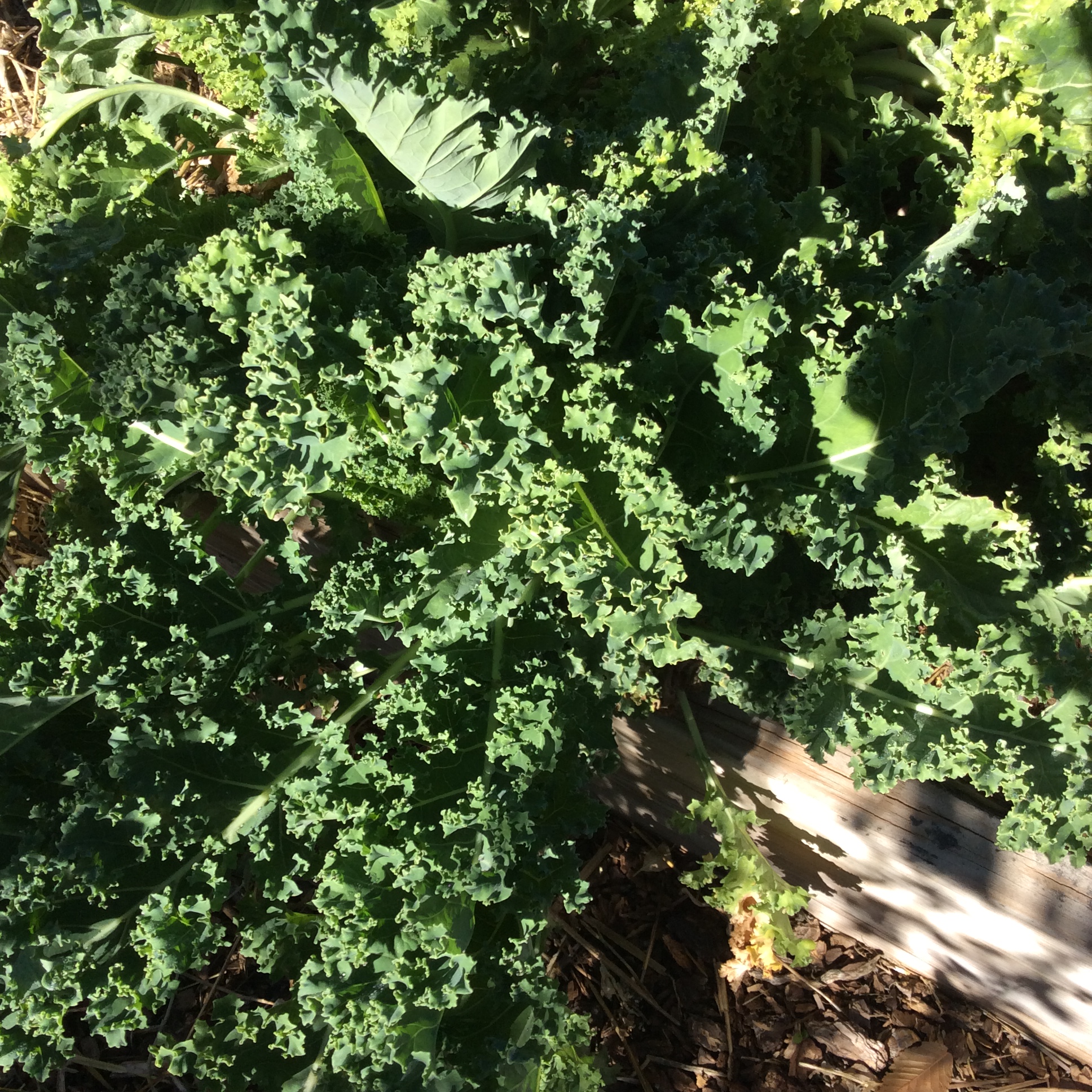
Kale is at its best this time of year, and becomes more tender and sweet after a few frosts. The Tuscan kale will winterkill sooner than the others, so eat it first.  In climates with snow cover, curly kale will last throughout the winter, but in our very dry and windy winters with very little snow it seldom survives in any sort of edible condition.  Covering it with a frost blanket might well preserve it, but is more trouble than I really care to go to.  There are plenty of other things to eat.
img_4890

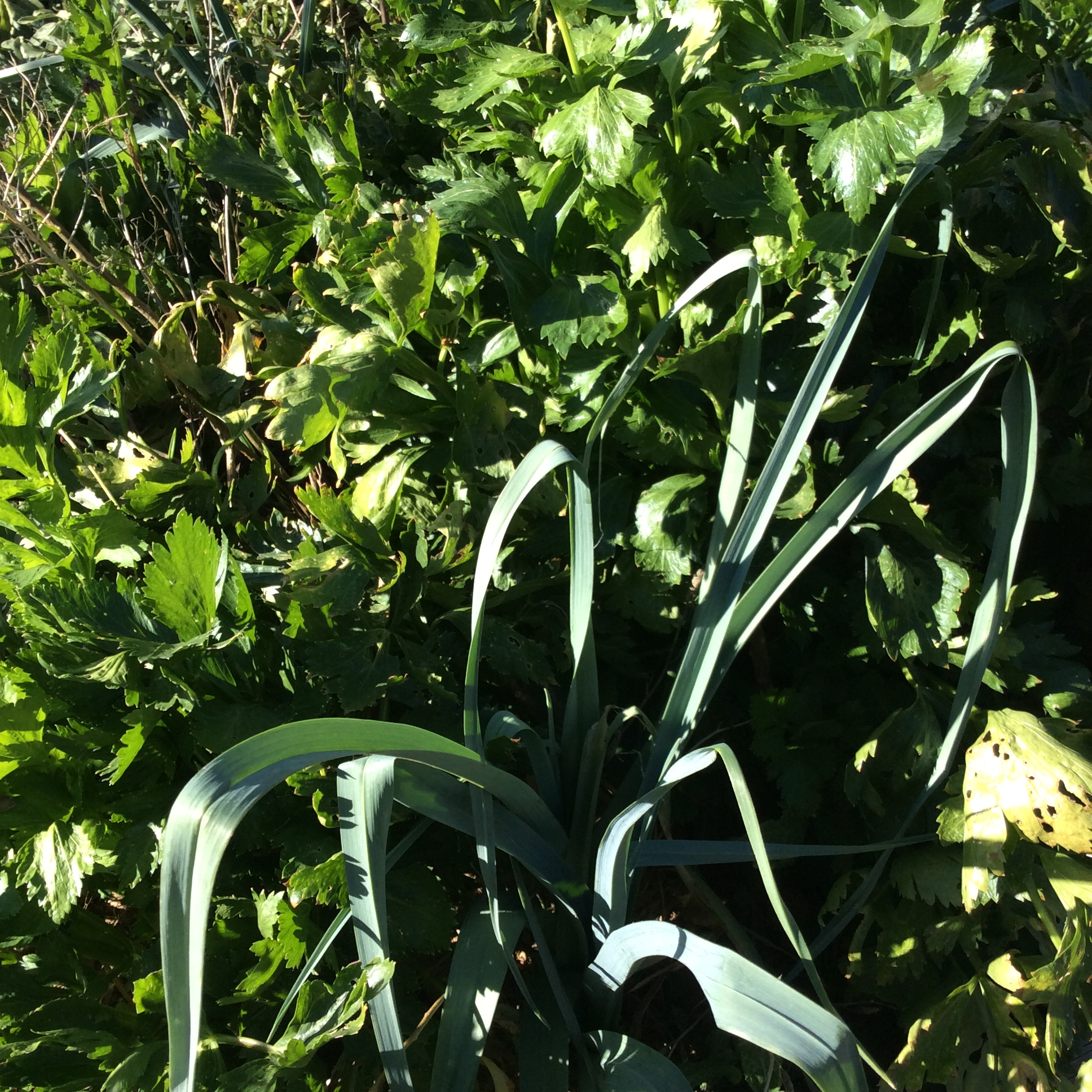
Celery and leeks need to be kept well supplied with water, and will still be fresh and good in the first week or two of November.  I usually buy leek plants in the spring, and none of the hardiest varieties are available as plants. There are very hardy varieties that will hold perfectly in the ground over winter, but to have them you have to remember to plant the seeds in midwinter, and I always forget.  Maybe this year I’ll remember.
img_4885

img_4884

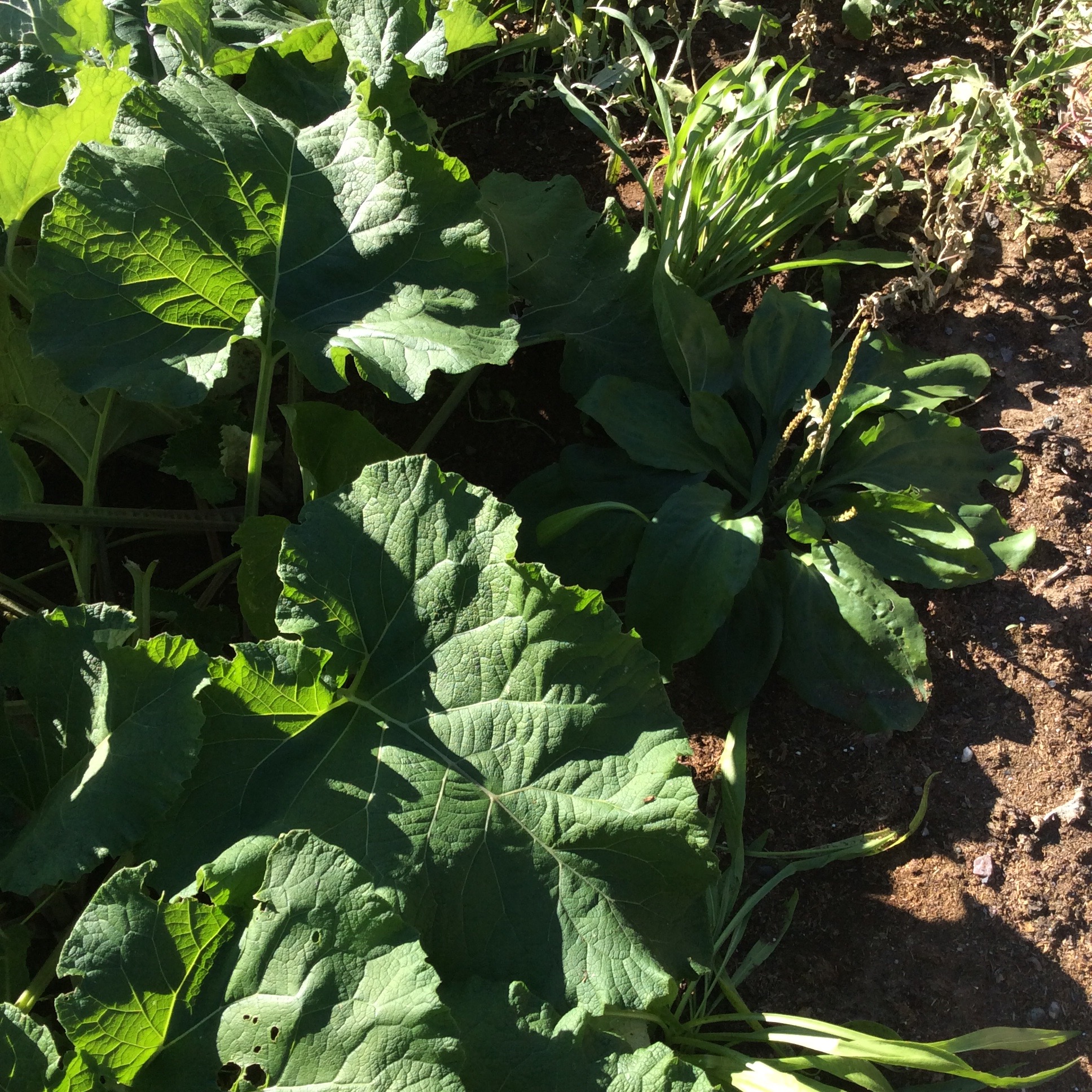
Now we come to the perennial weed patch.  Nobody who lives or gardens in the east will ever believe how much trouble I have taken to get burdock, milkweed, nettles, pokeweed, plantain, and scorzonera to grow in my area.  Burdock provides a good root in the fall from first year plants, makes large coarse leaves that my goat adores, and produces a flower stalk that is supposed to be the best part of the plant for edible purposes. I only got it to germinate this year, so I have not tried the stalks yet, but will be digging my first roots soon. Some people say the leaves and leaf stems are edible, but they are so stringy in texture and coarse in flavor that I’ve never been that desperate for something to eat.

The plantain is the Rugels variety which is rumored to be less stringy and have a better flavor than common plantain. I haven’t tasted it yet but will report back.

Milkweed can be eaten in many ways in many seasons.  As far as I know, our desert native milkweeds are largely inedible, but I have finally gotten the common milkweed to germinate and grow strongly. So next spring I hope to have edible shoots, buds, and pods. Read master forager Samuel Thayer’s books for excellent sections on the uses of milkweeds.

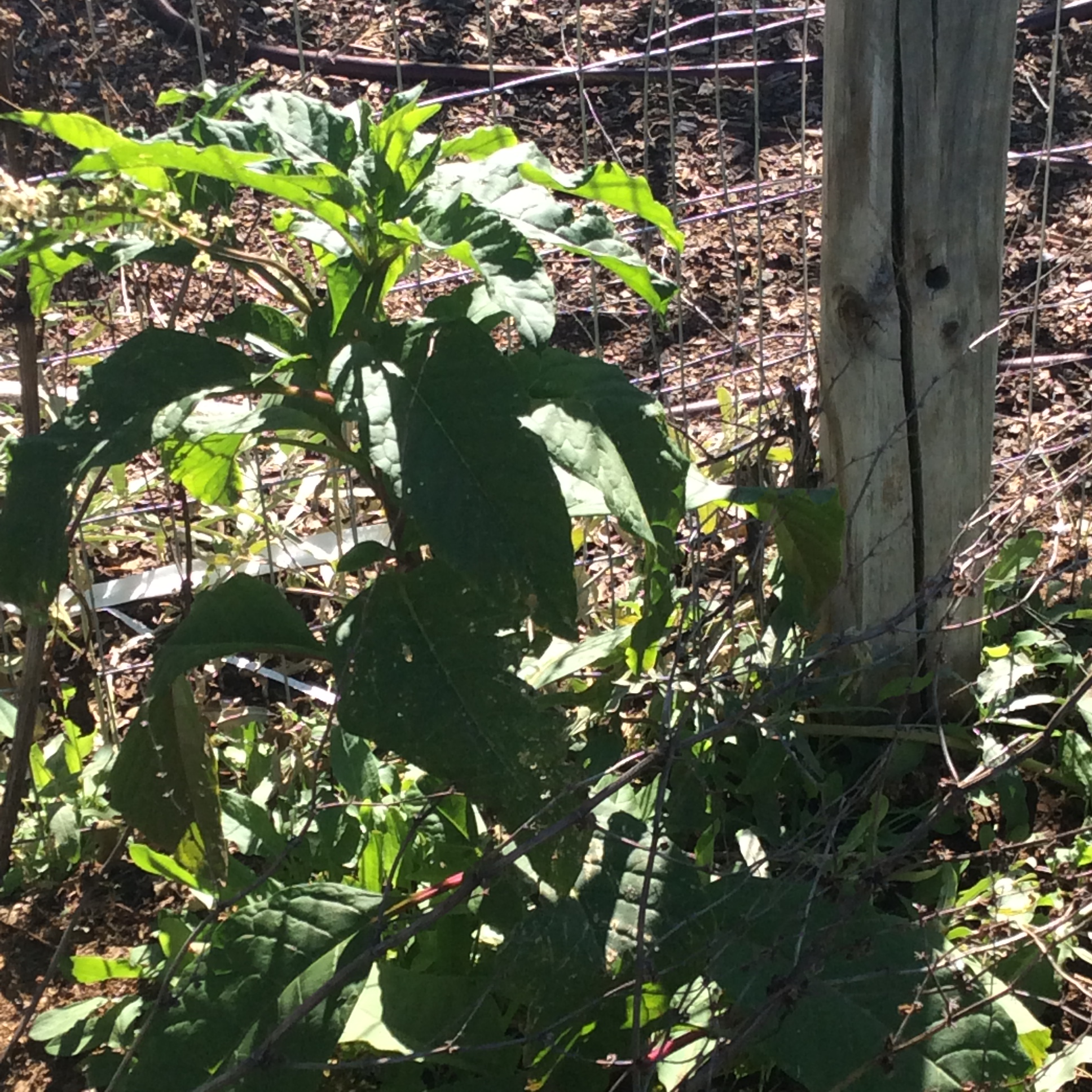
Pokeweed can be a giant nuisance but the spring greens have a great savor.  Or at least that’s what I remember, although I haven’t tasted them for 25 years and couldn’t swear to it.  If you decide to try them, remember that  only the young shoots about 6 inches high are edible and boiling in two changes of water is not optional. It is necessary to remove toxins. I hope to harvest my first shoots next spring.

Nettles and dock are two superb spring greens that seldom occur wild in my area, but grow very nicely in my weed patch.  They provide some of the earliest and most nutritious greens of the spring, and in late fall they produce some new greens that are well worth having at that season.  Every year I swear that I will remember to cut down the nettle patch in late summer so that the new greens can grow up unobstructed, and every year I forget and have to harvest the new greens with elbow length grilling gloves. But they are worth it.  Try to keep the nettles separate from the other plants, or you will have a tough time harvesting everything around them. The sting is pretty fierce.

I give my weed patch a periodic shallow mulch with mixed alfalfa and goat manure. They might grow well enough with no attention to fertility, but if you want your produce to be as nutritious as possible, the soil needs feeding.

If you wonder why it is worth having a weed patch, remember that these are some of nature’s wonder plants, among the most nutritious greens in the world. In addition, they taste really good.   Also, with perennials, once established the only work you have every year is harvesting and cooking them.  Once adapted to an area, they are unlikely ever to desert you. Permaculture also avoids soil disturbance. These plants are not classically attractive and need an inconspicuous spot, but they have a superbly healthy rough-and-ready vigor that is bracing even if it isn’t beautiful.
 

The Oyster of the Woods

image
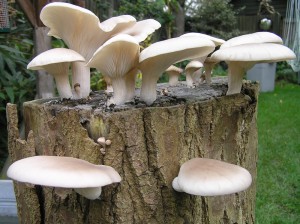
There is nothing more interesting than mushrooms. Really. An independent kingdom of organisms, they have much in common with animals and their interactions with plants are complex and often beneficial. For a wonderful read about mushrooms and their biological role, check out Paul Stamets’s Mycelium Running, and you will be wonderstruck at the hypheal hijinks going on all around you.
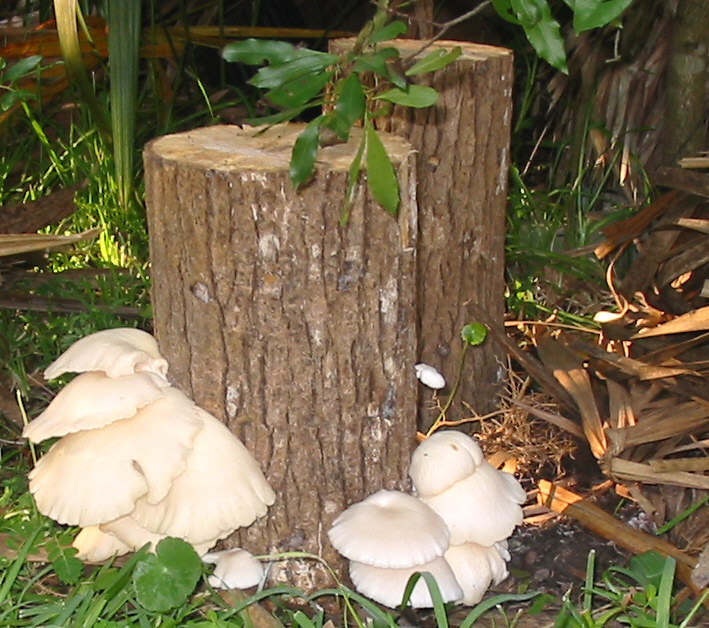
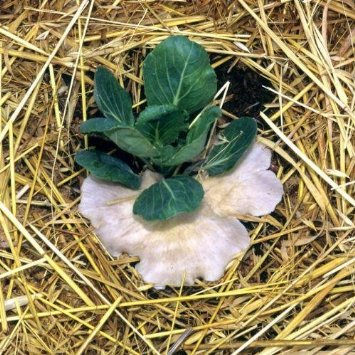
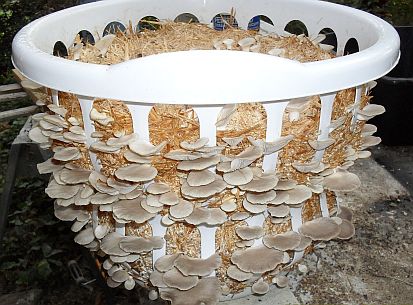
They are extremely easy to grow for everyone but me.  I am convinced that mushrooms have a very important role to play in a functioning urban homestead, even here in the high desert.  So far, however, I have been unable to make that work out in practice.  I have tried spreading the spawn among existing plantings under heavy straw mulches, and putting the spawn in piles of hard wood chips, and so far have not had any significant success, due to lack of consistent moisture, lack of shade, dry air, and insufficient attention.  I have harvested a few mushrooms, but nothing to write home about.  That is why the below images below are borrowed, to show how easily it can be done in moister climates than mine.
image

image

image

image
.
Since I have finally accepted that it’s going to take more focus than just throwing some spawn around, my next attempt will be to insert plug spawn into damp hay bales in the dense shade of my black locust tree. I have also cut down a small Siberian elm recently and have a few pieces of suitable fresh log to try drilling plug spawn into. Next August I will harvest them, or not.
Meanwhile, many farmers’ markets have a mushroom farmer or two, and oysters can be found in our river bosque here and in many woods and forests if you are a knowledgable forager and know exactly what you are picking. Mushroom foraging is not for you unless you are prepared to study it seriously and know all your local toxics. No margin for error here.
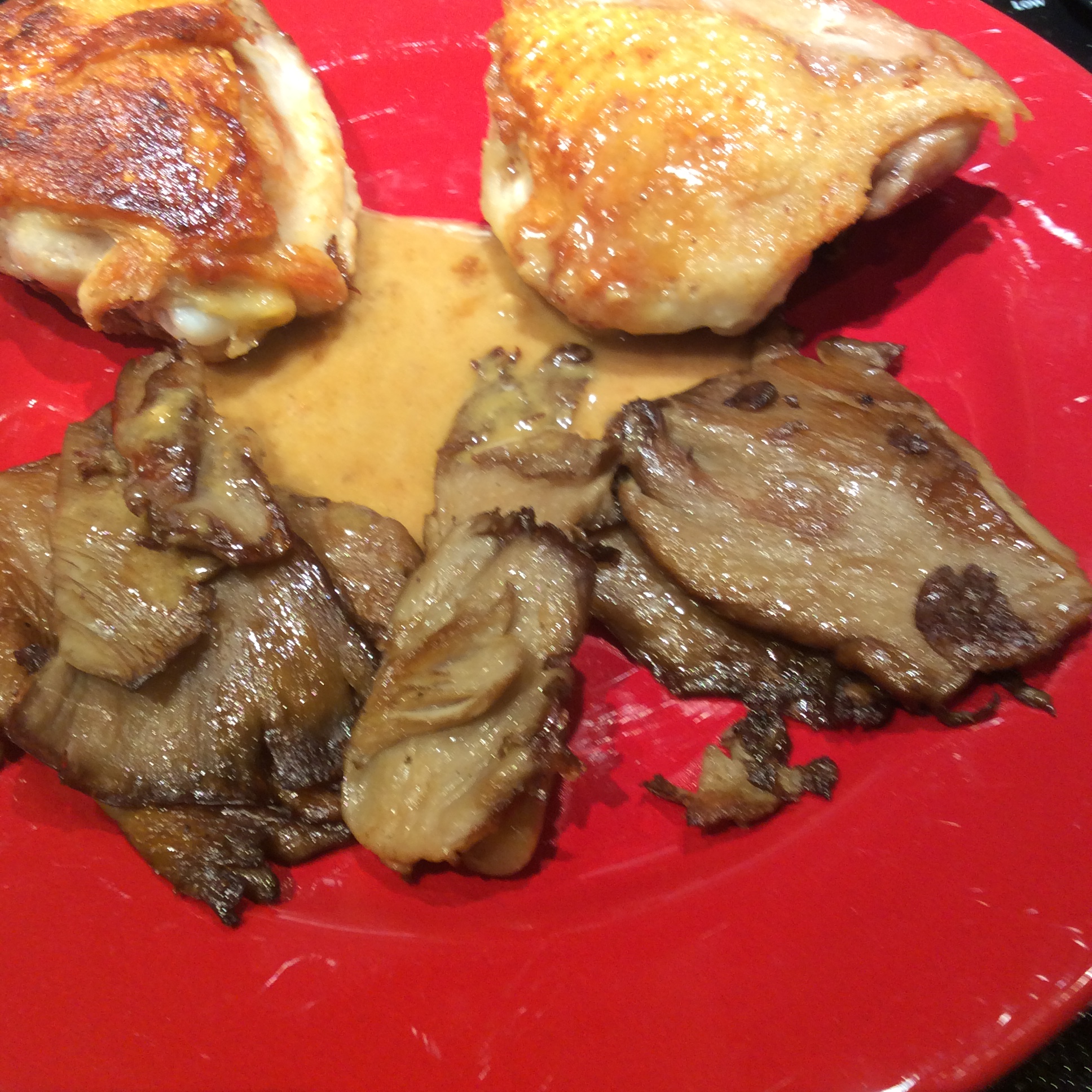
However you get hold of them, good oyster mushrooms are just delicious. I love their earthy-almondy aroma and their meaty texture. I like them best simply pan-fried with a little macadamia oil and salt, but roasting them with a bit of butter and soy is awfully good, and so is grilling them rubbed with olive oil. The addition of a little chicken glacé early in the cooking stage so that it can cook into the caps suits their meaty flavor.
For preserving, I roast them with macadamia oil and salt just to the point that they are cooked through, cool them, bag, and freeze. When wanted, they can be thawed and pan-grilled until they get some lovely brown crunchy bits. I dehydrate the clean stems as long as they’re not buggy and grind them into oyster flour to thicken mushroom sauces and soups. I admit that I also open my little bag of oyster flour just to inhale deeply and recall the woods where I found them.
Yesterday I found that I had tossed more caps with macadamia oil and salt than would fit in my roasting pans, and stuck the surplus in the dehydrator. They emerged as delicious crunchy lightly browned Oyster Crackers. Yum. I will make more of those. A small pan-grilled cap on an Oyster Cracker would make a wonderful cook’s treat. In fact, a couple of them with nothing on top made a great cook’s treat…

Poblanos con Queso

image

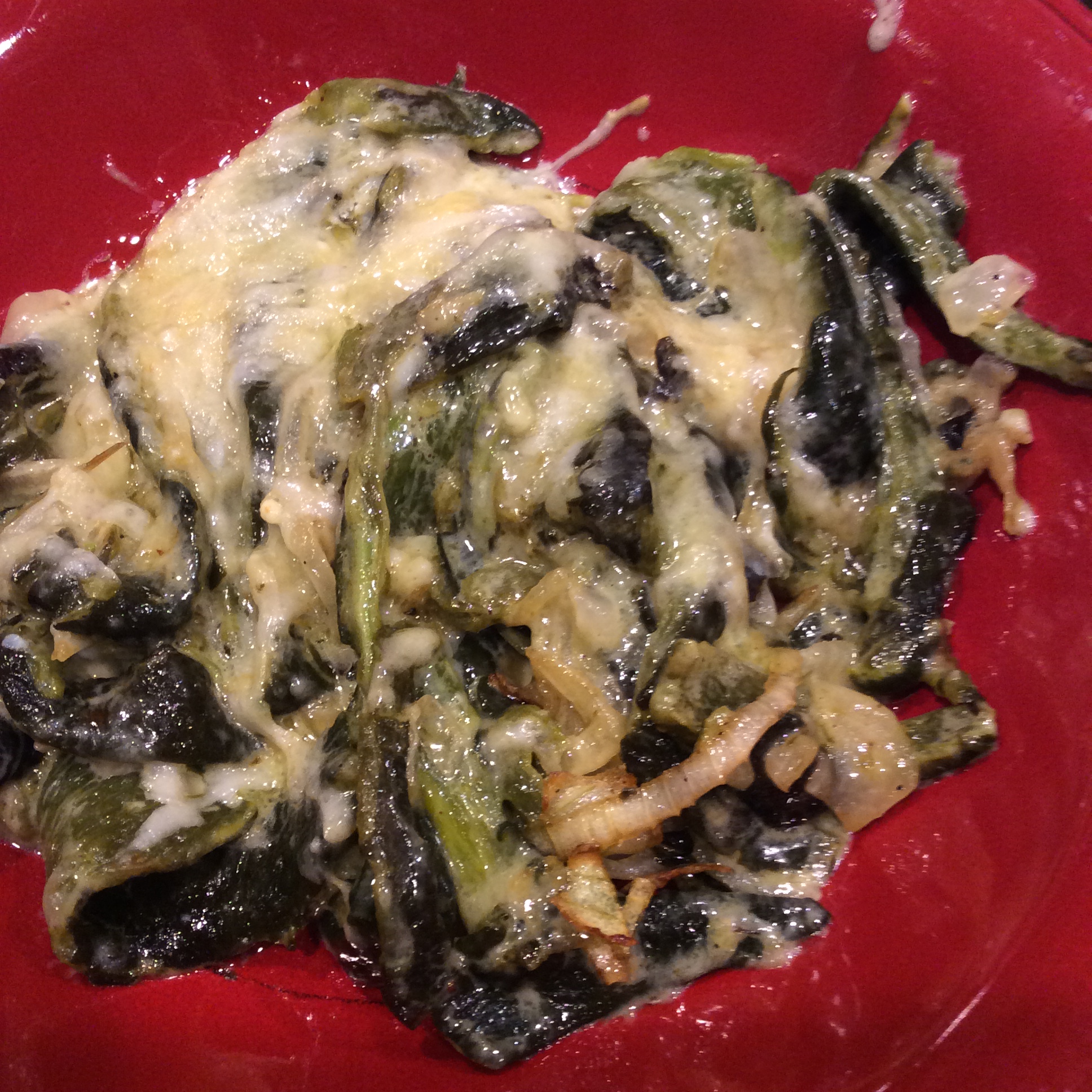
I used to love a bowl of chiles con queso to fold into soft corn tortillas,  and now that I eat low-carb and no longer eat tortillas, I find that my enjoyment of roasted chilies with cheese and cream is undiminished.

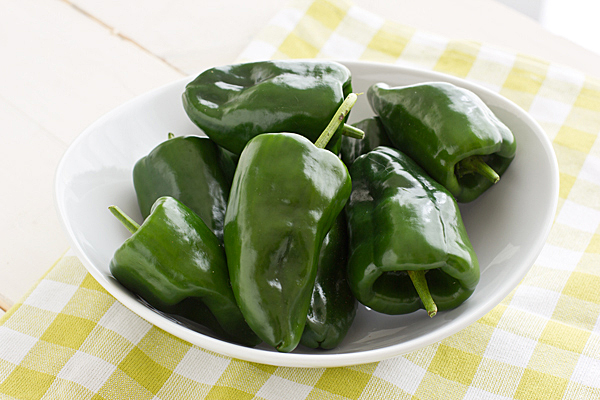
Here in New Mexico August is the great season of chilies, and soon chile roasters will appear everywhere and the aroma of roasted chile will float in a faint delicious cloud over the city.  But there are plenty of chiles around right now  and they can be roasted easily on the grill or under the broiler.  My favorites are the lovely inky green poblanos.  I was so eager to roast mine that I forgot to photograph them, so here is a borrowed photo:

image

Chile pepper plants are sturdy and attractive and can usually be grown in the front yard without comment, especially if planted in groups rather than rows. They have nice deep green foliage. In the case of poblanos, they turn very hot when red and should be harvested when dark green. They have a deep rich flavor and, depending on growing conditions, can be surprisingly hot when green, although generally they are considered a mild chile.  Roast them until they have blackened spots all over their skin, turning as needed, then throw them in a plastic bag to steam for 20 minutes. Peel off the skin and remove the core and seeds. Now tear them into strips. These are called rajas de chile.  For the roasted strips from six poblanos, chop up one small onion and one good-sized clove of garlic and sauté them until cooked; I used fat from my homemade bacon. Add the chili strips and about half a cup of cream, and boil hard for just about one minute until the cream is a little reduced.  And a generous cup of grated cheddar, stirring some into the chili strips and put in the rest over the top, and broil until the cheese is melted and maybe a little brown in spots.  It makes a delicious light meal for two. If you add soft tortillas, it will feed two  generously.  It makes a good side dish for grilled meats of many kinds.  To me roasted chile is the flavor of August, and I am happy to have a foretaste of August in July.

Tomatillos, Salsa, and the Summer Garden

image

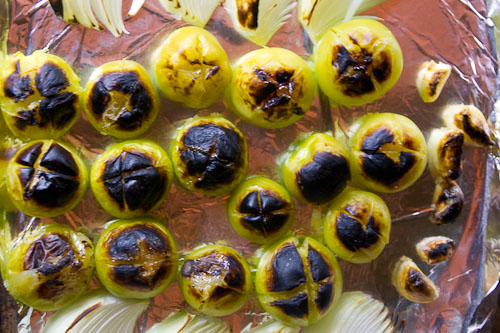
The flavor of tomatillos  is one of the wonderful flavors of summer. This is their glory time, when the plants I have stuck into odd corners have tangled themselves throughout the rest of the bed and are making fruits, almost hidden, which are a fascinating mixture of sweet, tangy, and tart when roasted. Right now tomatillos are ripening  in their husks and I can make one of my favorite salsas. This is an old Rick Bayless recipe, modified only slightly, and couldn’t be easier or more full of flavor. Start with about 30 large tomatillos (mine were about 2 inches in diameter) or maybe 50 smaller ones. Remove husks, rinse, and set in a single layer on a baking tray covered with aluminum foil.   Put five cloves of garlic on the baking sheet off to one side where they won’t burn, still in their skins. Broil under high heat until they look cooked on the top and have black spots, turn them over, and broil until that side is cooked.

Image borrowed from no recipes.com

Image borrowed from no recipes.com

Cool a little, skin the garlic cloves, and put the tomatillos and their juices and the garlic in the food processor.  Add at least two canned chilies chipotle in adobo and their associated juice, more if you like it hot. I like 4 large chipotles in this quantity of sauce.  Grind to the degree that you prefer. I like a chunky texture.

image

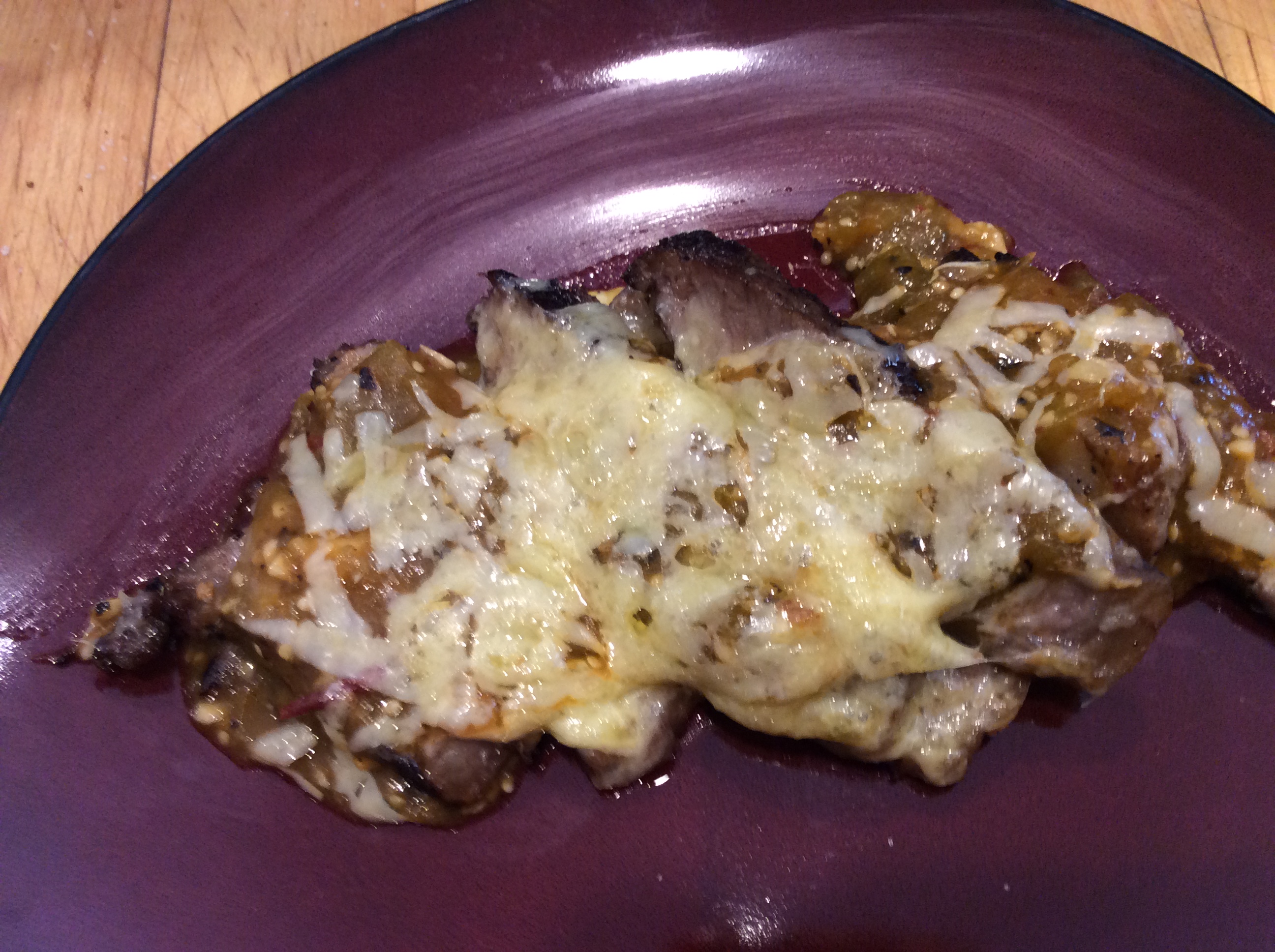
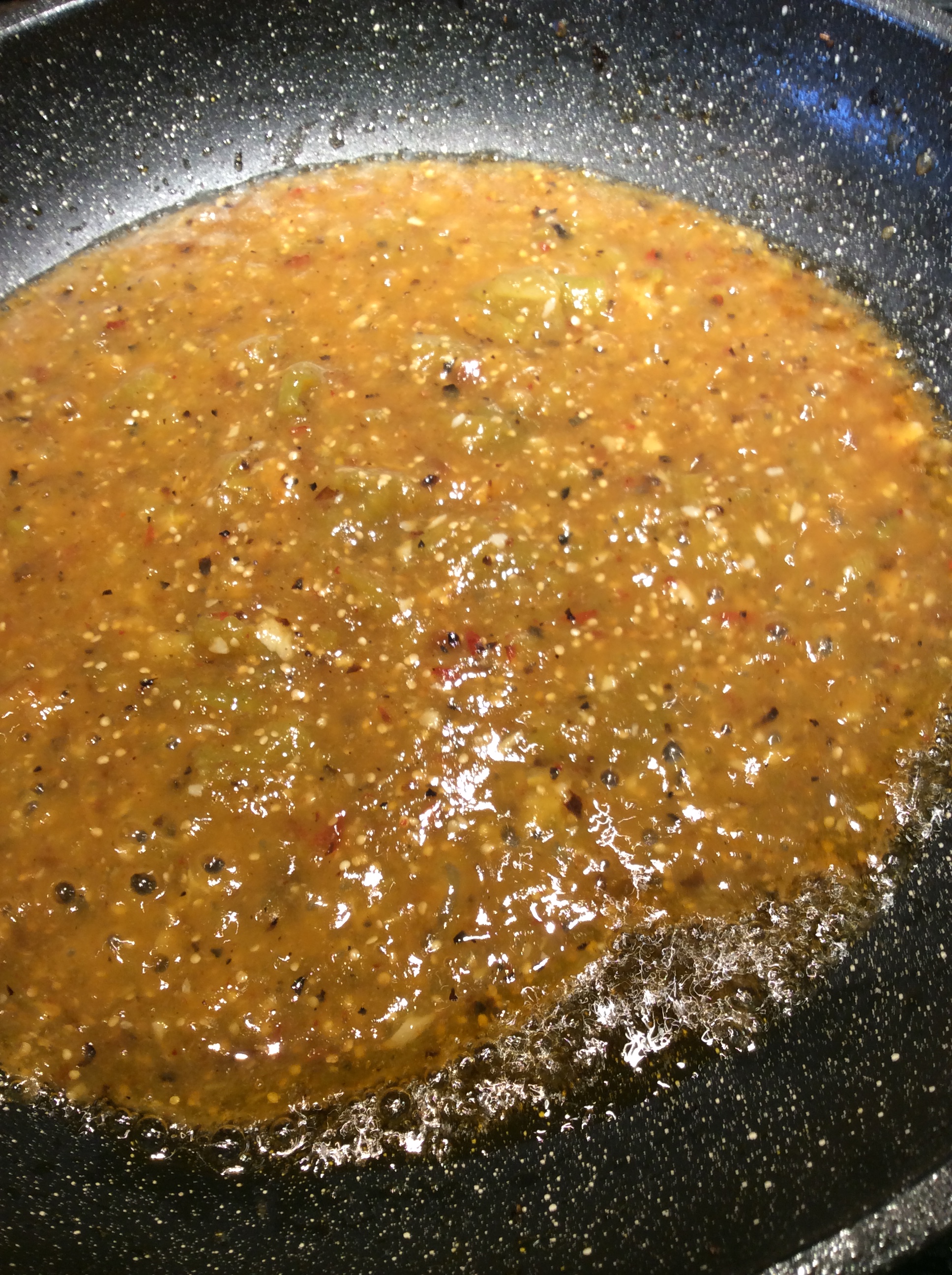
Now, I add the quintessentially Mexican step of frying the salsa.  In my largest skillet I heat 2 tablespoons of chosen fat, in this case fat from my homemade bacon. When the fat is hot, pour in the pureed salsa. It should sizzle furiously.  Fry it over high heat for a couple of minutes, until it has thickened to the degree that you want.  Salt to taste, and it is ready to use. The frying step smooths and blends the flavors in a delicious way. It’s good hot on grilled or smoked meat, gratineed with cheese, room temp with chips, or any way you like to eat salsa. I especially like the tangy-smoky flavor on grilled vegetables or mixed into cooked greens just before serving, or on top of them with a good sprinkling of Cotija or queso fresco. At the top of the page you see my lunch today, a little piece of leftover steak sliced and broiled with salsa and smoked cheddar on top, a fitting reward for the very minimal labor of making the salsa.

Incidentally, in the past I have grown several different kinds of tomatillos including the small purple ones that are supposed to have a more pronounced flavor, and at least under my growing conditions they all tasted pretty much the same. The small ones  are more tedious to pick and involve a great deal more labor in preparation per unit of finished salsa, and so I grow the biggest ones I can find.