Archive for the ‘Vegetable dinners’ Category

The Greens of Winter: Soup Base

img_5098

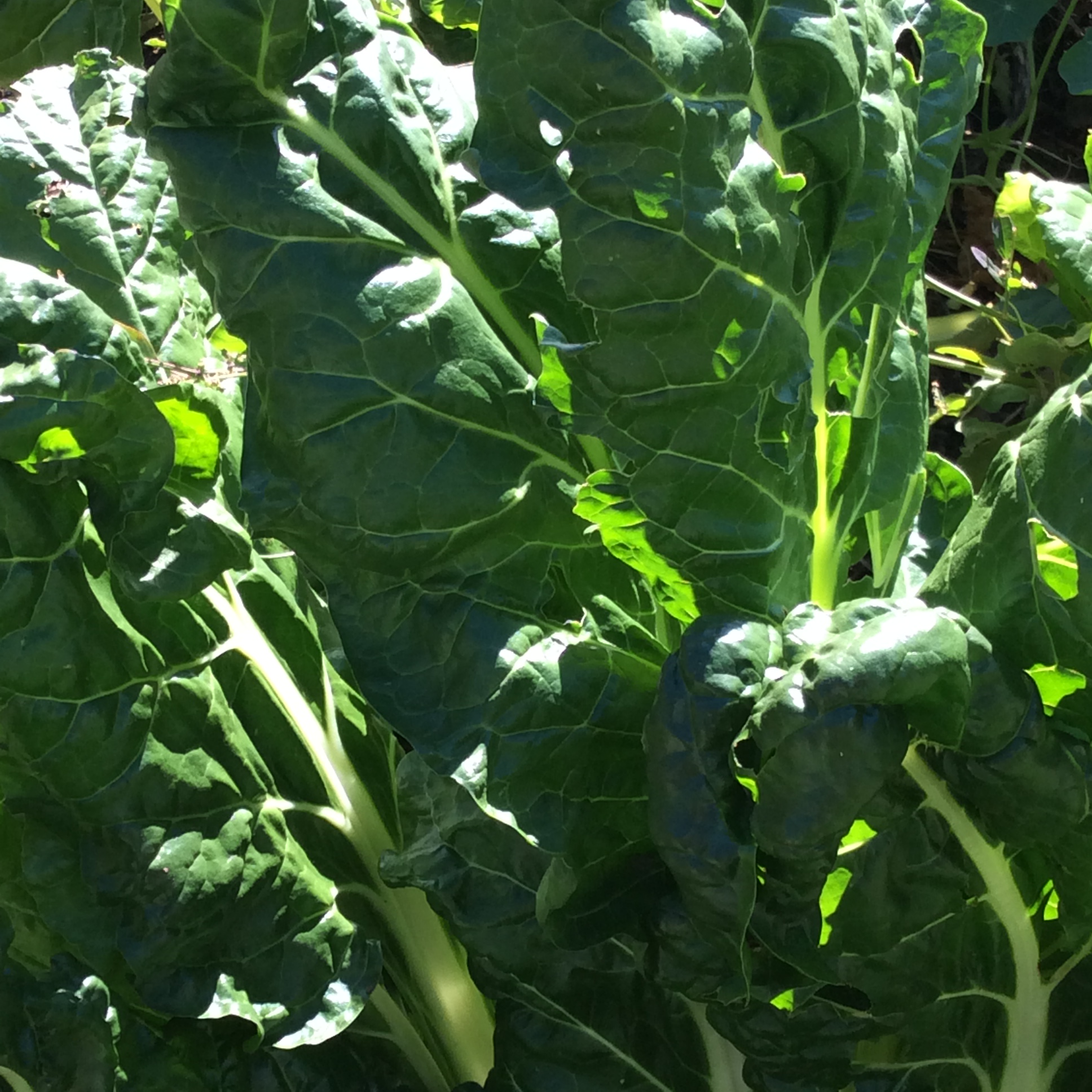
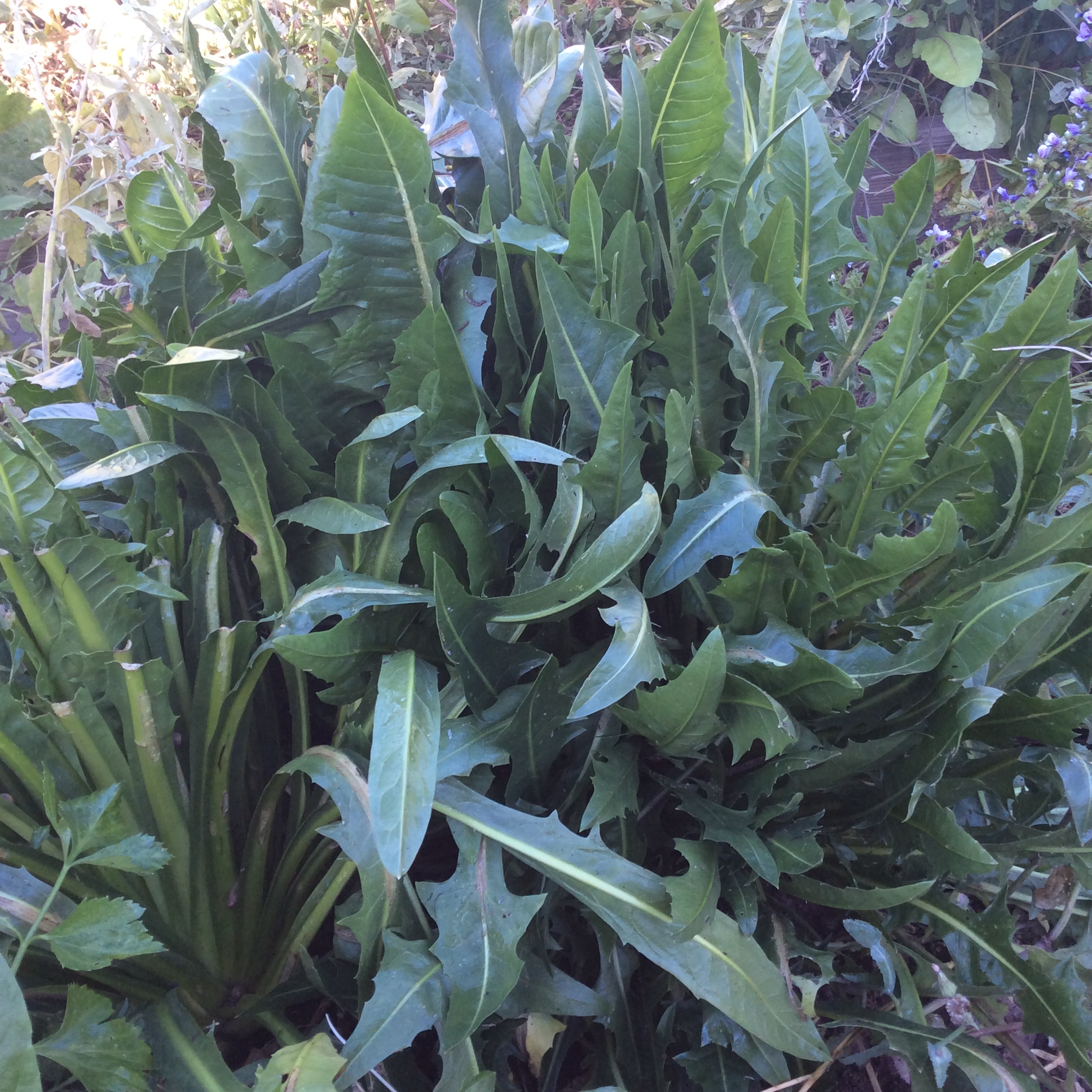
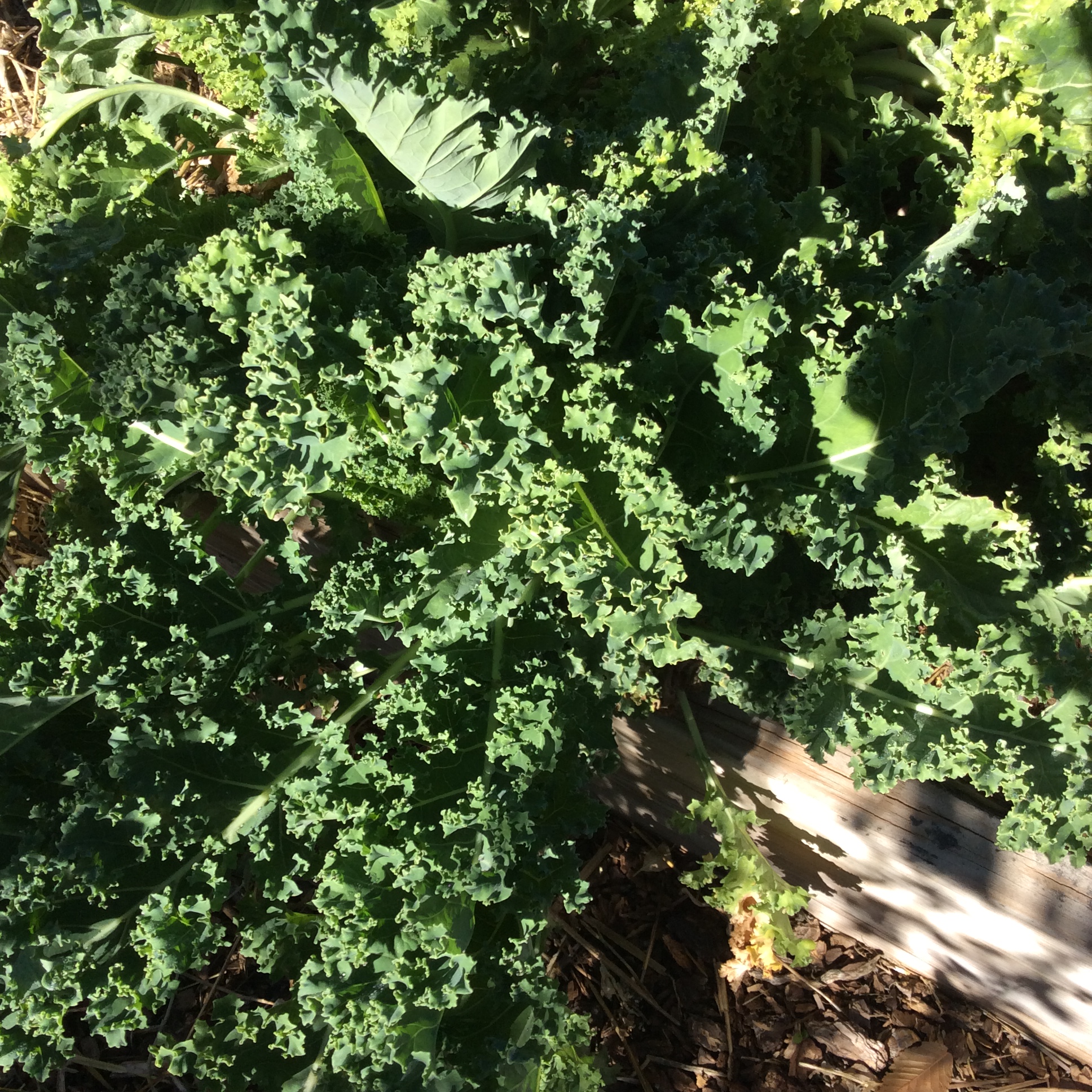
Earlier this week I walked through my frost-killed garden to see what was left. For the most part I don’t make any special effort to protect my garden in the fall because after a long summer I’m ready to move on to the things I do in the winter, so the pickings were slim, but I found lots of chicory, dandelion, chard, broccoli leaves, alfalfa tips, celery, and kale, along with green garlic and green onions, and some of the herbs were still in fine shape. I decided to make soup, and since I had a lot more greens than I remembered planting, it occurred to me to make a soup base that could sit in the freezer, ready at any time to be turned into soup in a hurry. To the garden ingredients I added a large onion and a largish handful of sun-dried tomatoes from earlier in the summer. You could also use a jar of dried tomatoes in oil, drained.  The celery was used from base to leaf tip. I used roughly equal volumes of all the greens types, about the equivalent of a medium-sized supermarket bunch of each.

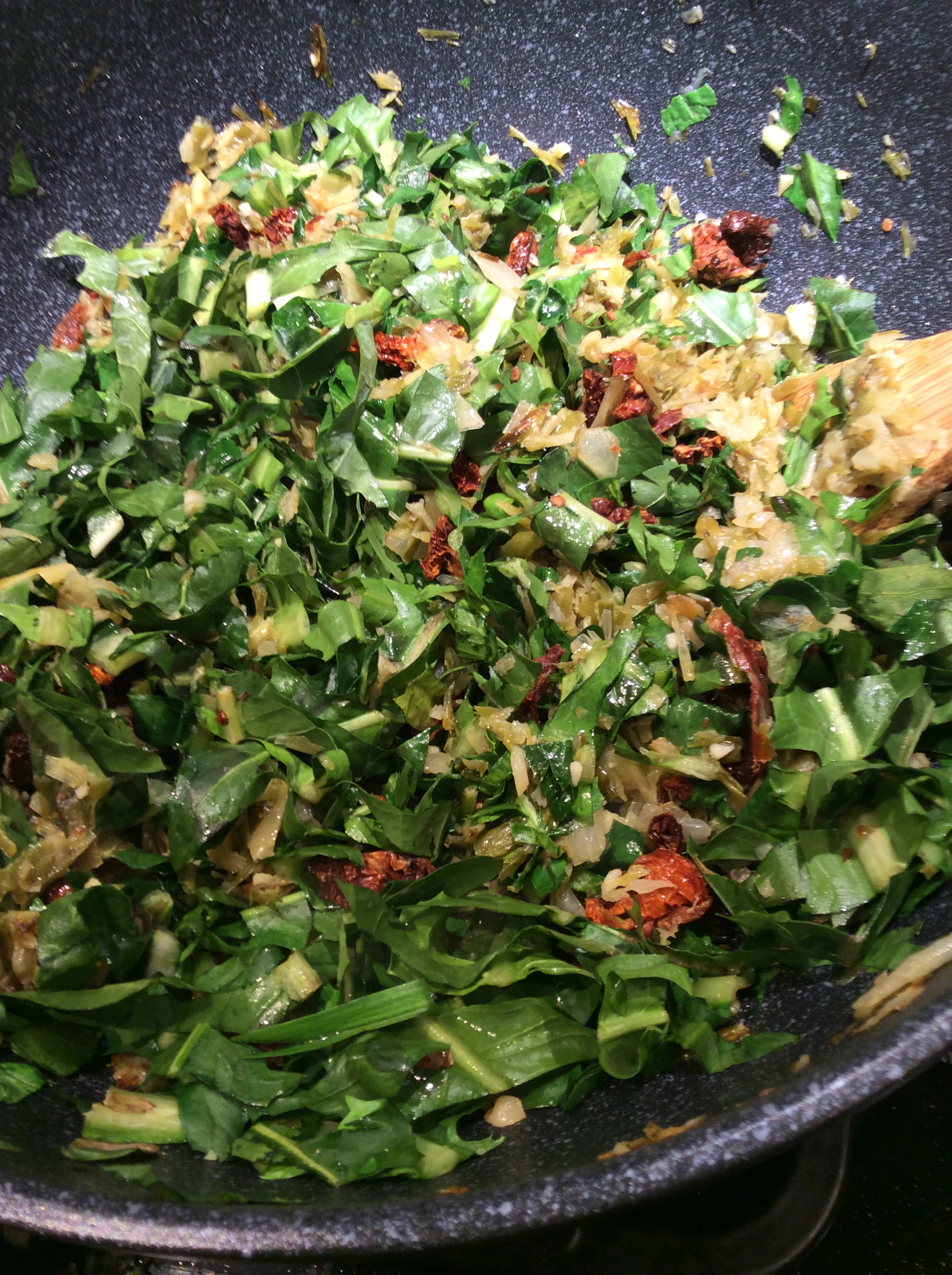
The onion was sliced thinly and sautéed very slowly in olive oil while I washed and prepared the greens. I was aiming for a rich caramel color, which meant low heat and frequent stirring, which is no extra trouble if you’re in the kitchen anyway. I used my wok because I knew that the volume of sliced greens would be considerable. First the green garlic and green onions were cleaned, finely slivered, and held separately, then everything else was washed and midribs removed and cut in cross section into roughly 1/2″ slices.
img_5084

When the onion was a nice toffee color I added the chopped green alliums, cooked about another five minutes, then added the other greens and some more olive oil along with about a teaspoon of salt. Don’t stint on the olive oil. You want sautéed flavor, not steamed flavor.  The heat was turned up to medium and the whole mass stirred and turned with a wide wooden spoon about every five minutes to keep it cooking evenly. As soon as the greens were in the pan I ground the sun dried tomatoes into small powdery chunks in the blender and added them to the wok. They rehydrated well enough in the moisture from the leaves.  Keep cooking until the greens are soft when chewed.

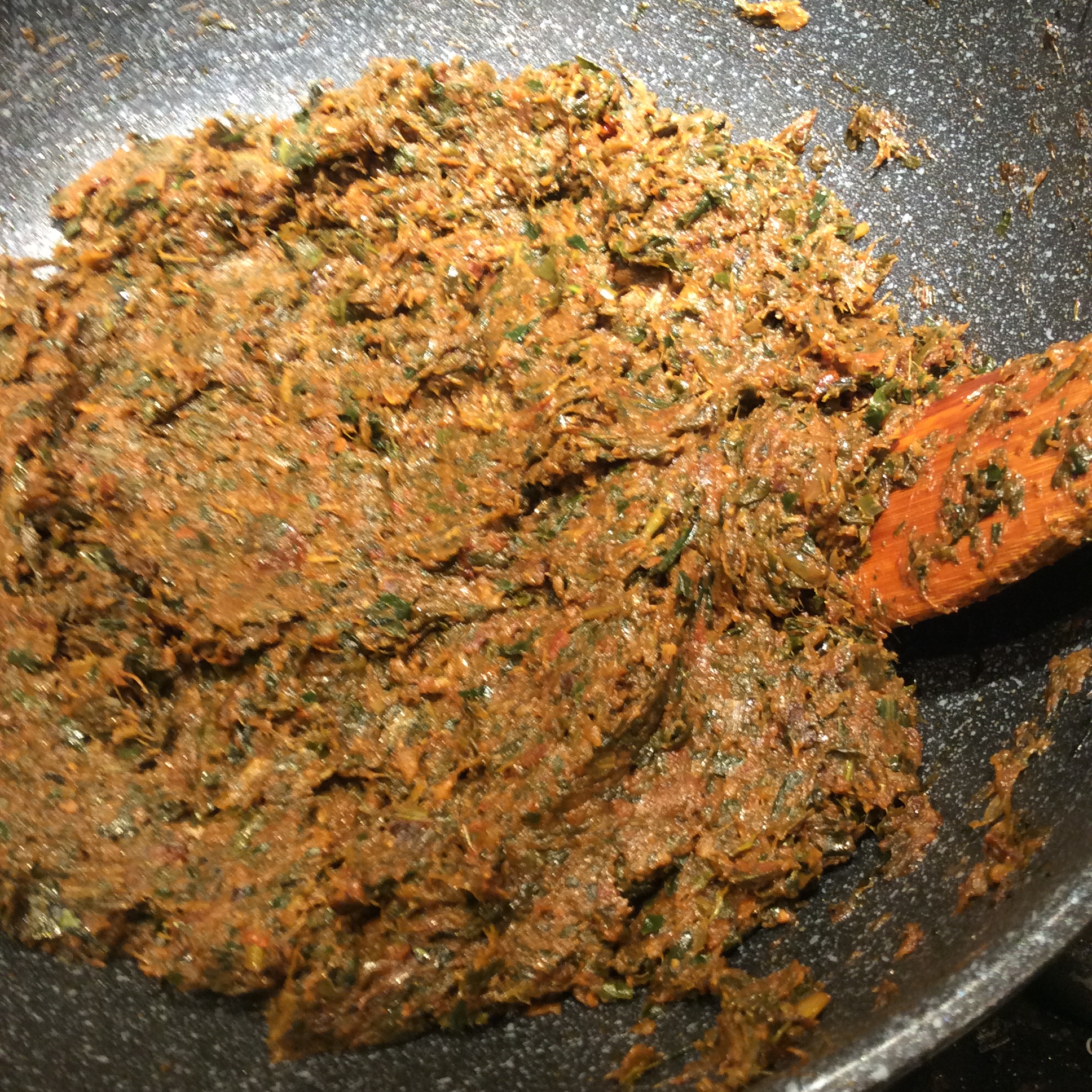
When you have a darkened dense mass of soft greens, put the whole business in the food processor and grind to the finest paste that you can achieve. Taste. You want it on the salty side, because that helps with preservation and it’s going to be diluted later. Add more salt if needed. I prefer to use fish sauce rather than salt to season at this point because it adds a wonderful rich savor. I used about a tablespoon. Don’t use this if you might be serving vegetarians.
img_5085

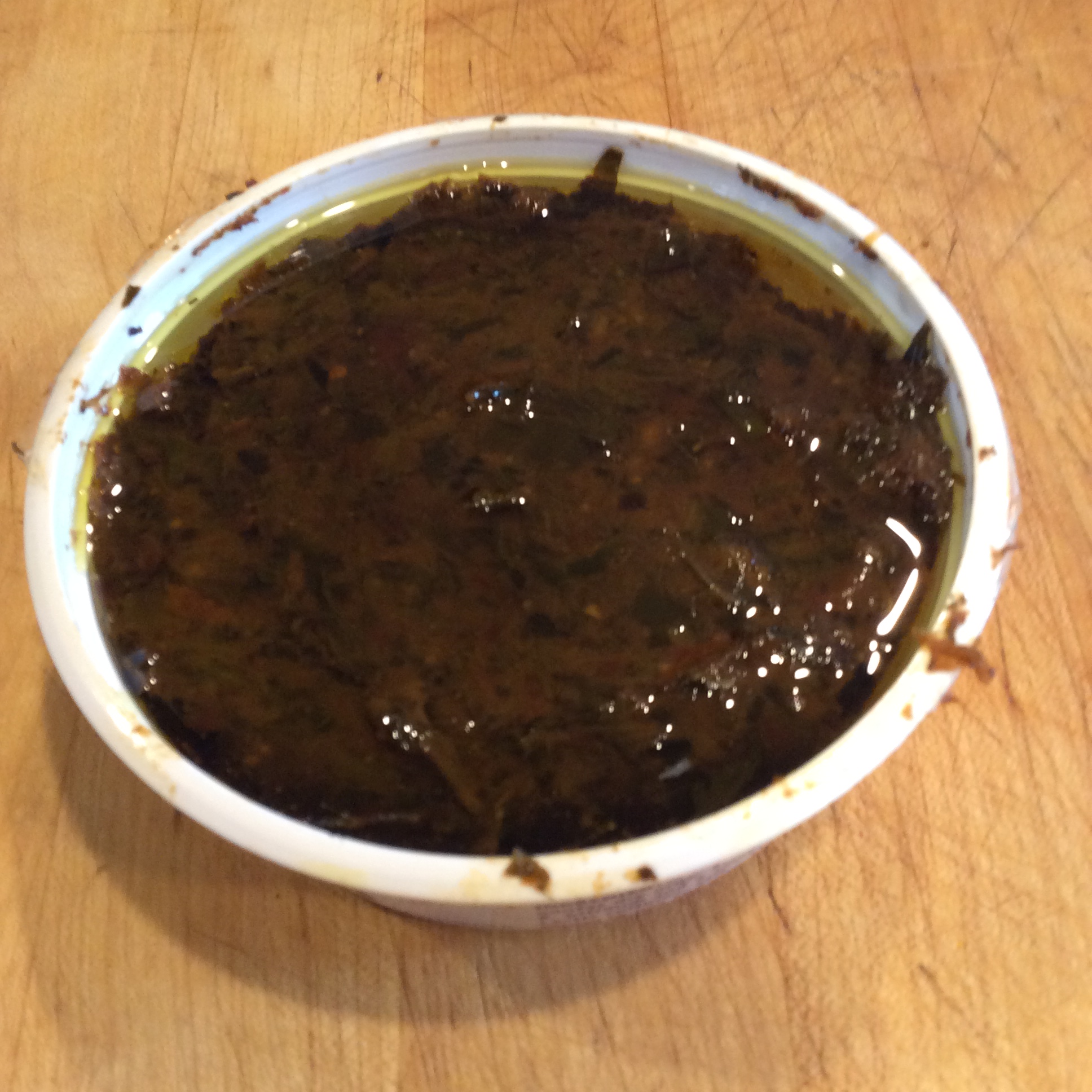
Now cool your soup paste and pack it into one-cup containers, each of which makes about a quart of finished soup. Coat the top with olive oil, push lids on tightly, and freeze.
img_5091

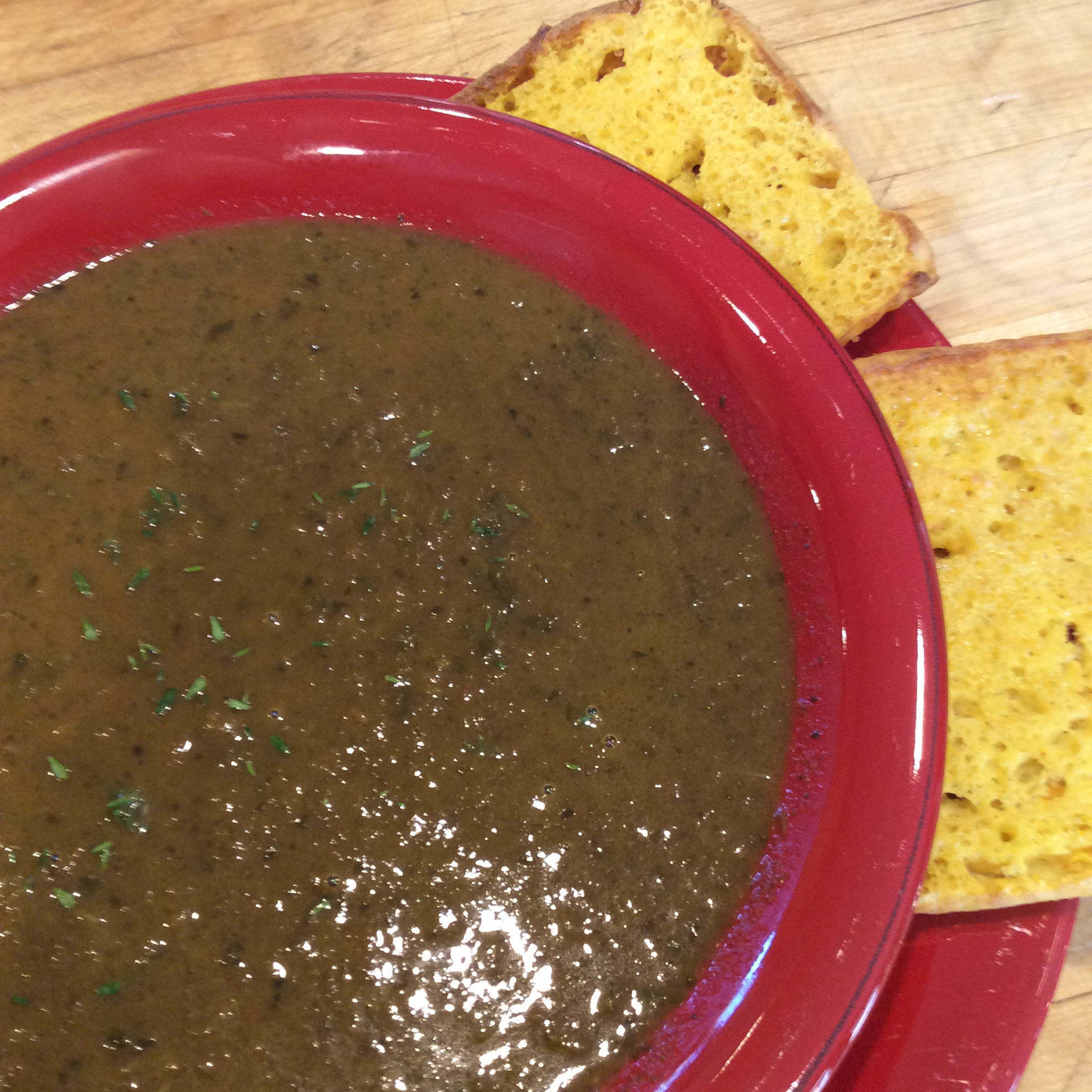
When ready to use, put a quart of any kind of salt-free or low-salt broth you like in a saucepan, add a cup of soup paste, and simmer until thawed. Correct the texture with a stick blender if it needs smoothing out. Taste for seasoning and adjust in any way you like. The caramelized onions, deeply sautéed greens, and fish sauce gave a meaty-umami flavor to the potful I made for lunch today, so I salted to taste and added a swirl of fat from my homemade bacon and a generous sprinkling of thyme leaves, a meaty-umami herb if ever there was one. Yum. With toasted buttered slices of my low-carb fake-o cornbread, it made a perfect light healthy Thanksgiving brunch to lead into the excesses to come at dinner.

This basic formula can be varied endlessly according to what you like and have available. If you serve vegans at your table, using some miso rather than fish sauce and good olive oil for the final swirl with water or vegetable broth as the liquid would suit their needs while fully satisfying the omnivores. If you don’t like the brownish color, leave the tomatoes out and it will be more green. Pan-grilled small oyster or other mushrooms would make a good garnish. A fried or poached egg adds tremendous heft to soup if you want a richer meal, or some bacon lardons fried crisp would satisfy any ardent carnivore with a minimum of actual meat. You can add cow or coconut cream for a cream soup (try a toss of chopped fresh tarragon for the final garnish,) or some leftover tomato sauce for interesting tartness, or finish it with a handful of good freshly grated Parmesan along with olive oil and let the cheese dissolve in the hot soup. For a more Cretan effect, use crumbled feta and olive oil on top.  There are a hundred possibilities and you can get any of them from freezer to table in well under 20 minutes. Serve any kind of bready stuff that suits your diet alongside, and you and your table mates will be full. I say that a quart of soup is two servings, but I understand that normal people can serve three or four with a quart. Know your family’s tastes.

In my opinion the celery is necessary rather than optional, and I strongly advise including at least a small portion of bitter greens (dandelion and chicory in this case.) When making mixed greens, I’ve often noticed that a savory-meaty element is lost if I don’t include some bitter greens. The proportion is small and the final product isn’t bitter and is enjoyed be people who don’t like strong greens in other contexts. Besides, they’re so damn good for you.
img_4891

img_4892

img_4888

My Years with Cardoons

img_5066

It took me a long time to learn to eat cardoons. My own cardoons, at least. I first found them in the market while honeymooning in Italy, and there they are neatly blanched, trimmed, and ready for the pot. I loved them, and ordered seeds from Italy as soon as I got home. They grow robustly in my desert climate and alkaline soil, and they are very ornamental. I had them for years before I successfully cooked them, and they were wonderful bee fodder all that time, blooming in the blasting-hot late summer when few other flowers are available to our pollinators. I tried to cook them without the tedious step of blanching the plants, and would say that this just doesn’t work.

image

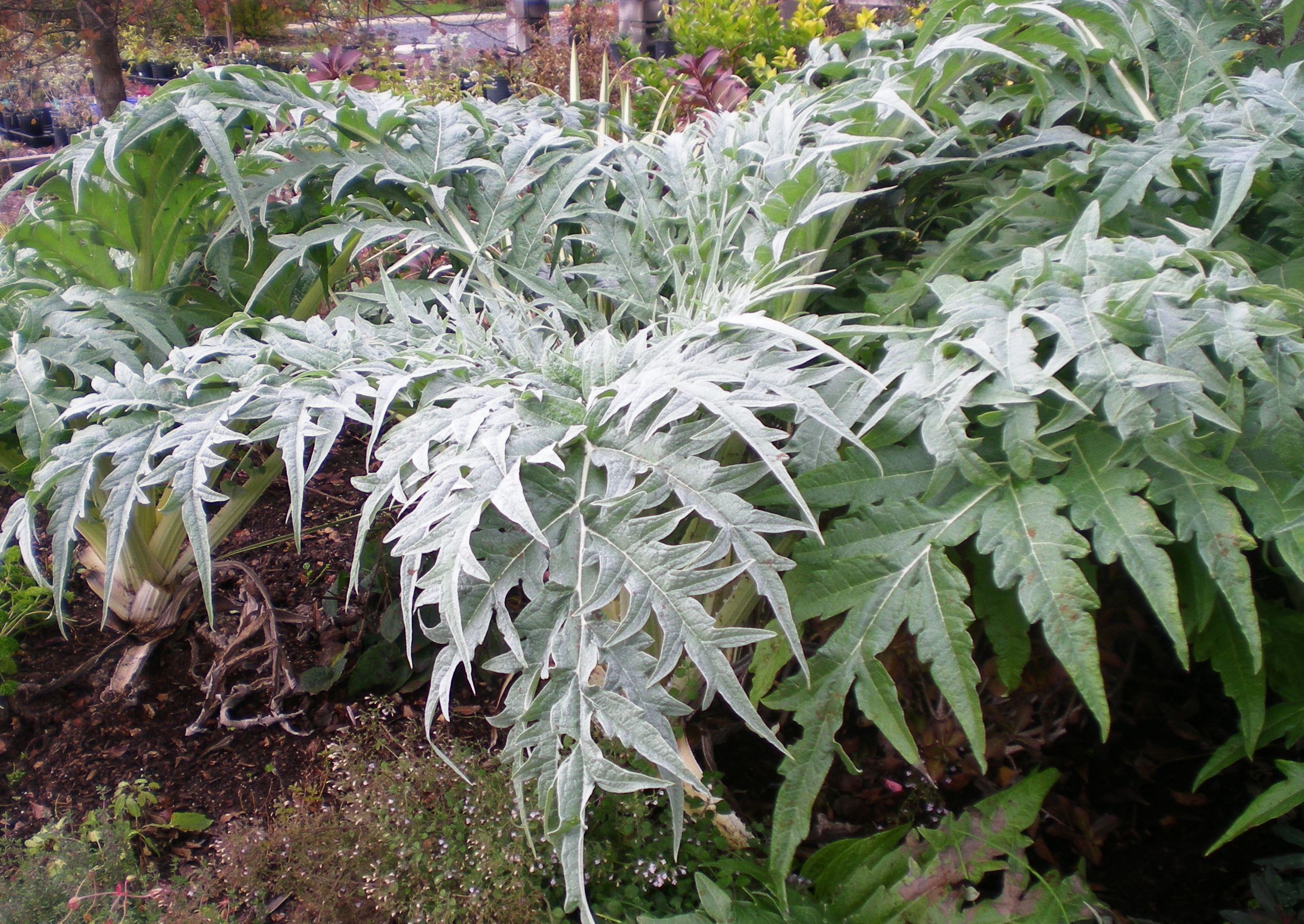
They die back unattractively after flowering, but then sprout again from the ground up. The foliage is silvery, full, and stunning in November. Unfortunately this is also the time when they’re best for eating, so mine aren’t exactly ornamental right now.

Before eating, blanch the stalks for a couple of weeks. I covered mine with some landscape cloth I had around, which is black and fuzzy and nearly lightproof while letting air and water through. You could also wrap your bundled plant in a couple of layers of corrugated cardboard, tieing it on carefully to exclude light from the stalks.

When blanched, use a sharp knife to cut the whole center out of the plant. Wear gloves, because cardoons are thistles and have nasty bristles down the edges of the leaf stalks and at the leaf margins. Cut off the leaves, leaving a bundle of stalks, and pull off any outer stalks that look ragged. My goat adores the leaves and trimmings, and since the leaves are intensely bitter, this is the best use for them.

img_5060

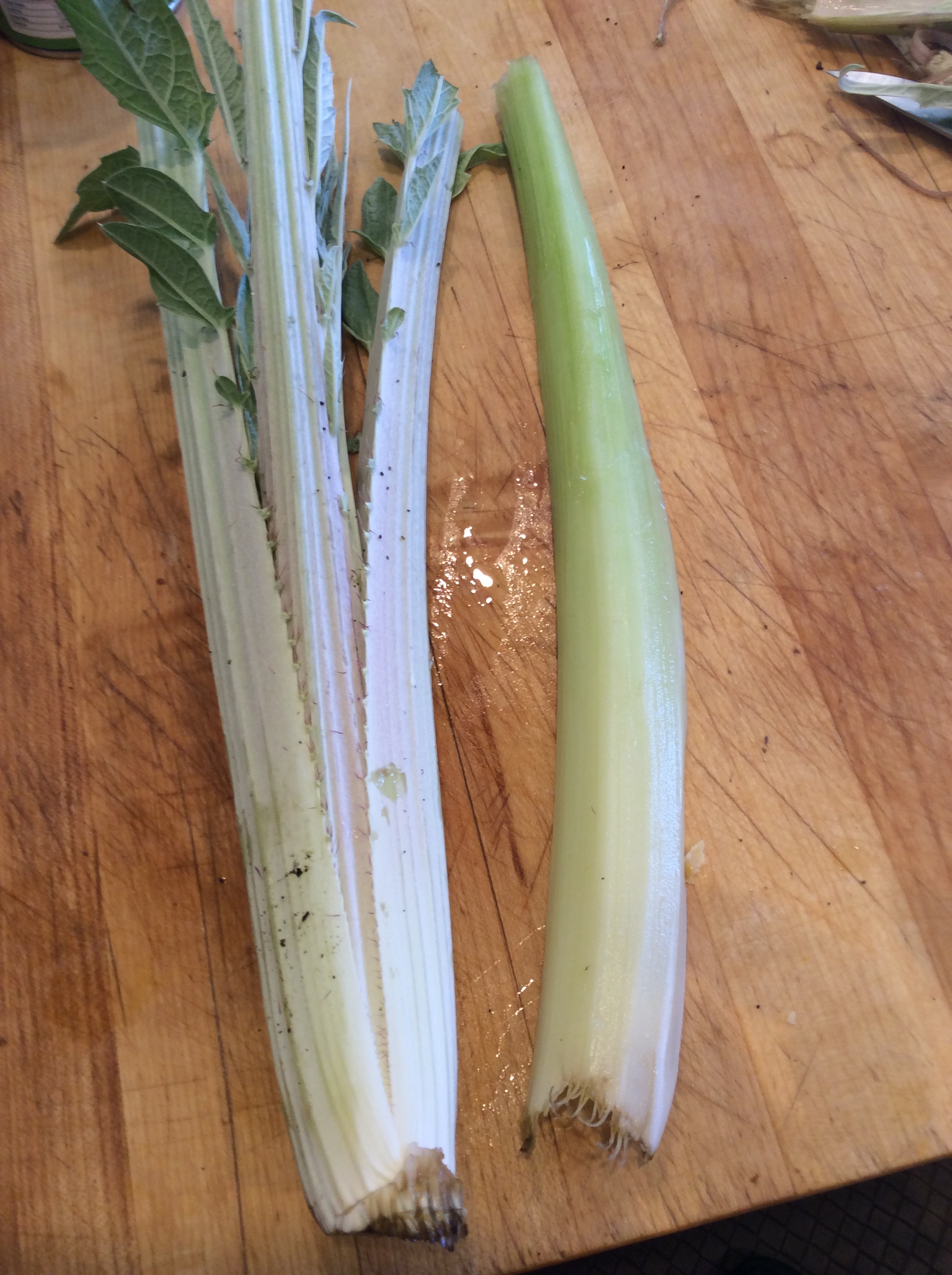
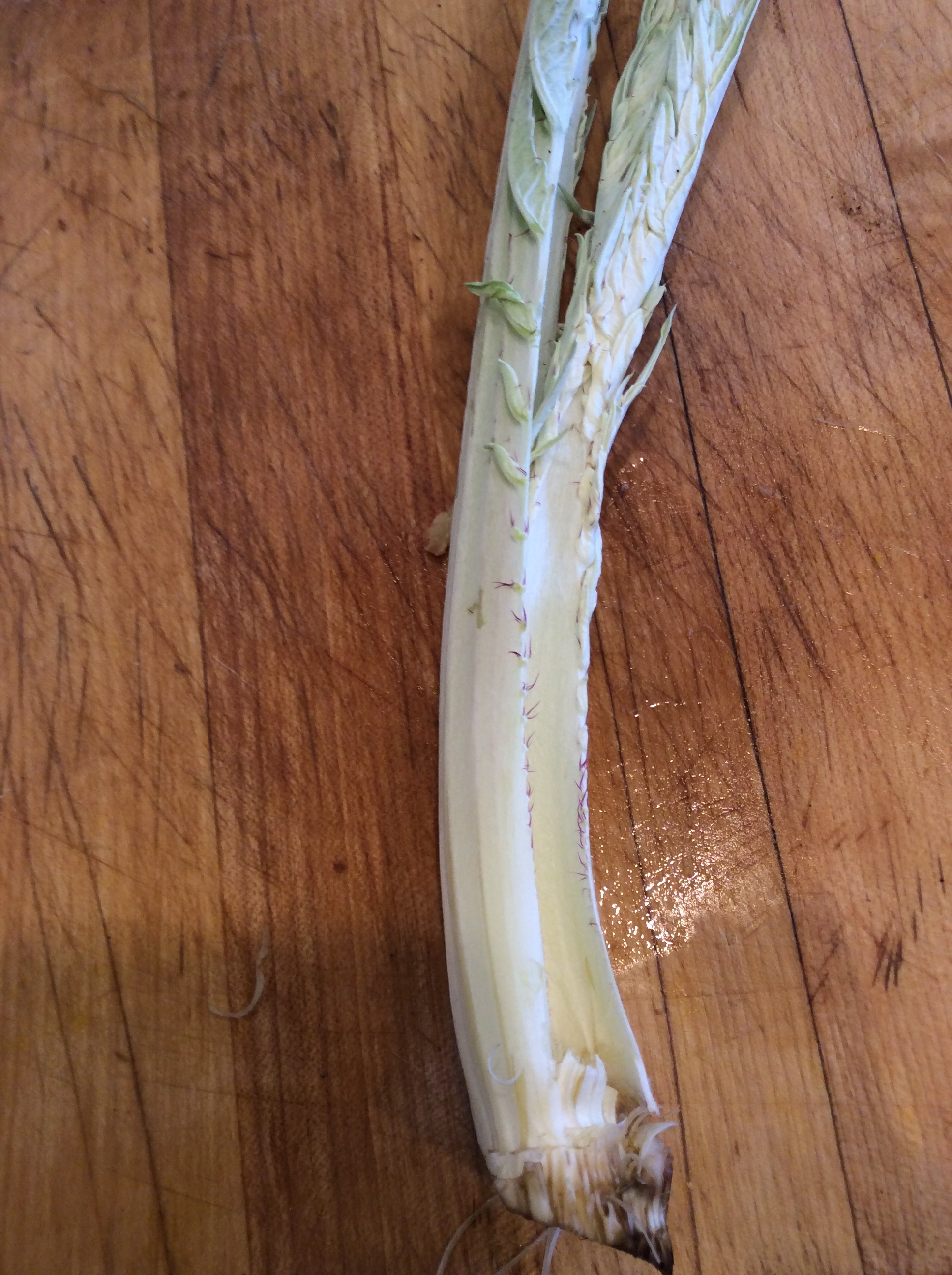
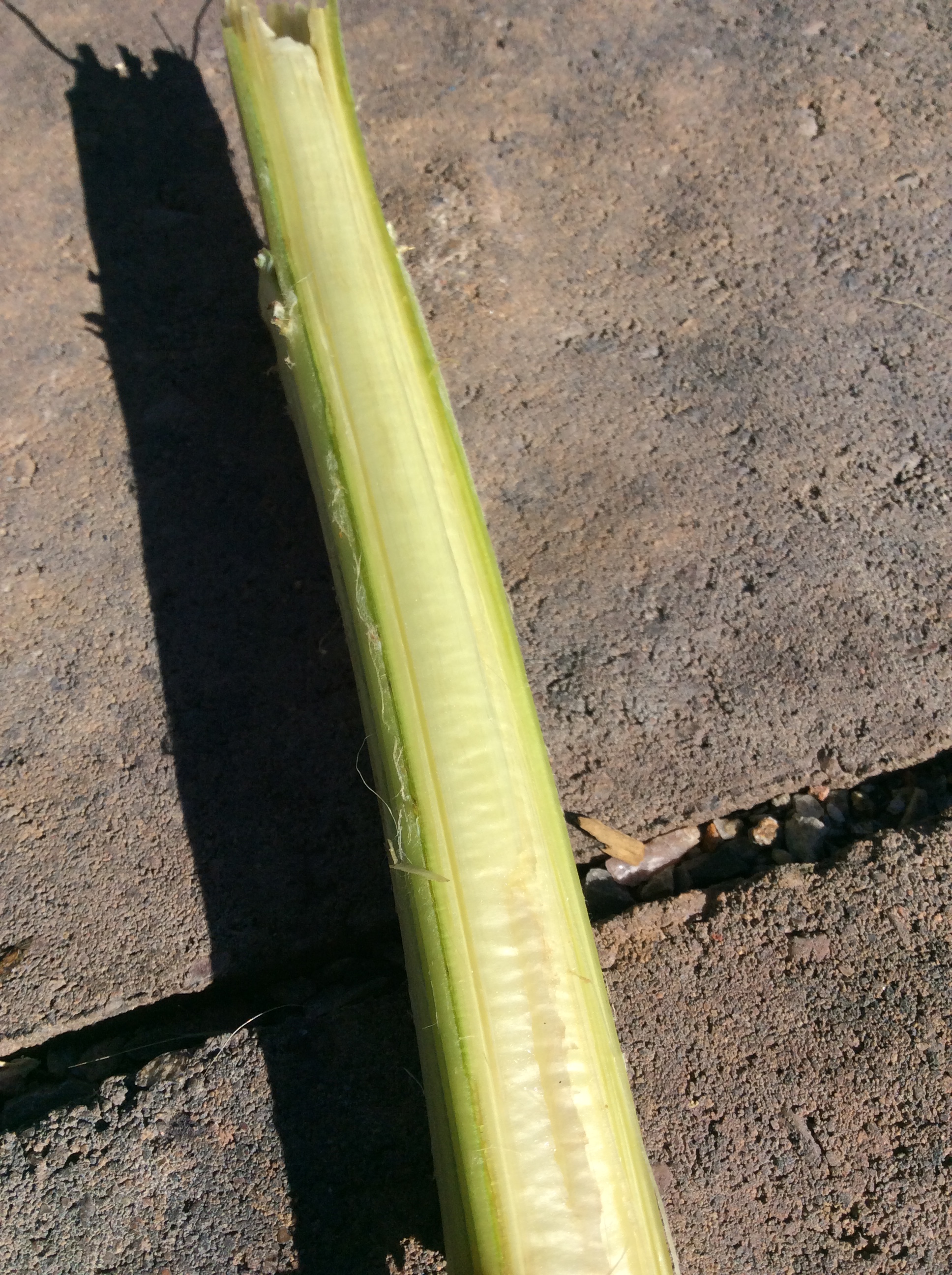
Separate the leaf stalks, wash well, and use a vegetable peeler to skim off the outer margin on each edge, where the bristles are. Now use the peeler to skin off the tough stringy part on the convex outer surface of each stem.  When you are done, they will look like the peeled stalk on the right above. The innermost stalks are tender and fairly stringless and just need the base trimmed and the row of bristles on each edge skinned off. Be sure you pull off the leaves from the center stalks, because even though they are very blanched and not bitter, they are tough even after cooking. Cut off the stalks at the point that they start to look corrugated and use everything below that.

img_5061

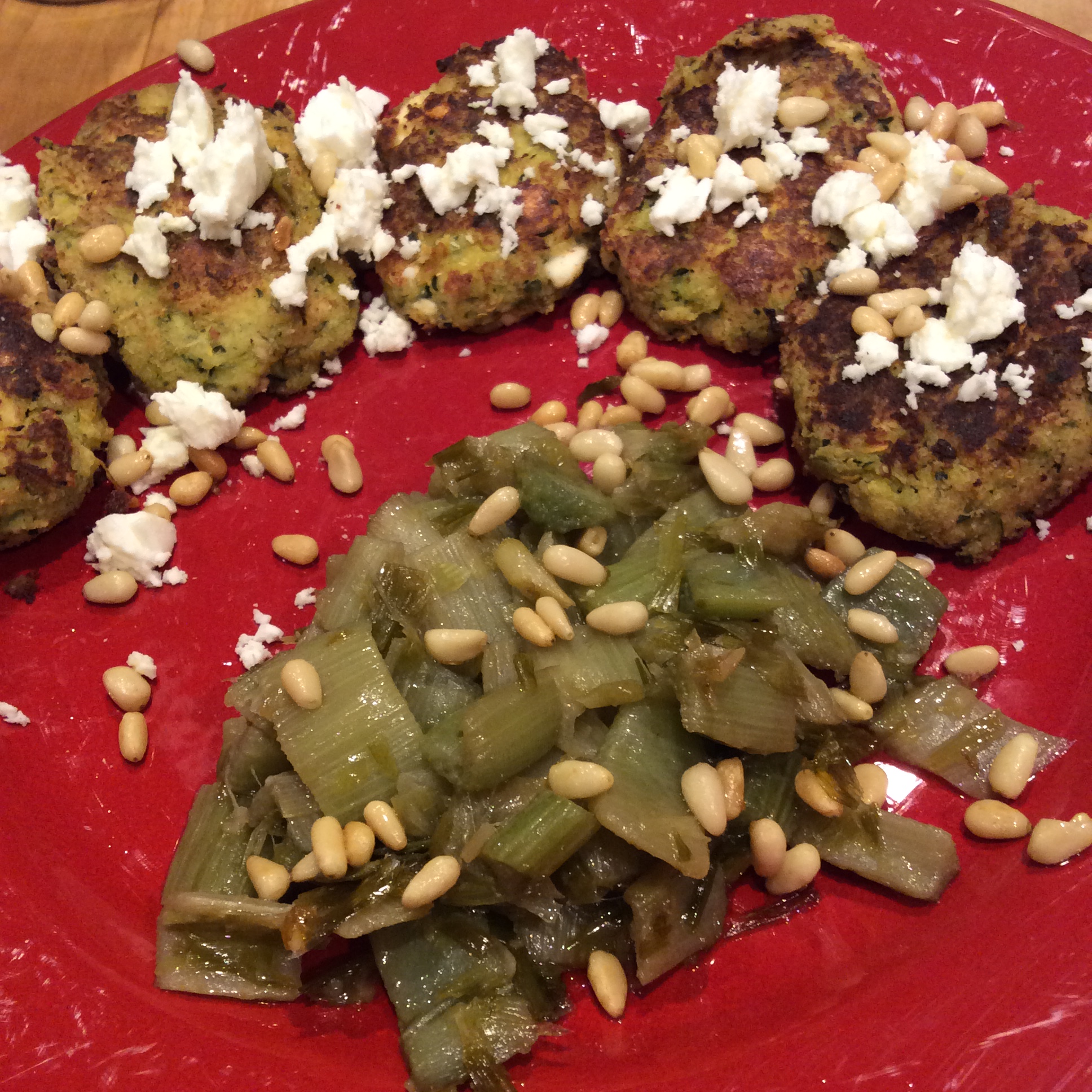
Cut the stalks in half-inch cross sections  and blanch in boiling salted water for about two minutes, then drain well and either continue cooking as you desire or refrigerate them for later.  They have a flavor rather similar to artichokes, so I gave them a bagna cauda treatment by sautéing them for about five minutes in plenty of good olive oil with a chopped clove of garlic and half a mashed anchovy fillet and a final garnish of roasted pine nuts.  Their own flavor is subtle, so don’t get too heavy handed with the seasonings.

img_5063

I think they are awfully tasty. The bad news is that one large plant, with a fair amount of preparation, makes two generous servings.  But given that they are drought tolerant, attractive, and truly carefree perennials, I don’t mind putting in some effort in the kitchen.  As for the low yield aspect, I will just work on growing more of them.

Incidentally, before they flowered last summer, I picked a flower stalk when it had lengthened to about 3 feet but before the buds started to swell. I peeled the thick tough skin off the stalk, cut it in sections about an inch long, and sautéed it in olive oil with some salt until cooked through and fairly tender.  The upper 8 to 10 inches of the stalk, when treated this way, made a delicious vegetable with a crisp texture and a pronounced artichoke flavor.  The other 2+ feet of the stock were not usable because, even when the outer tough skin is peeled away, fibers have developed in the pith itself.  But if you have a lot of cardoons and can afford to pick several stalks, this makes one really delicious vegetable. Otherwise treat the top of one stalk as a Cook’s Treat and cook it in your smallest skillet and eat it standing up in the kitchen, gloating quietly to yourself.

image


Poblanos con Queso

image

I used to love a bowl of chiles con queso to fold into soft corn tortillas,  and now that I eat low-carb and no longer eat tortillas, I find that my enjoyment of roasted chilies with cheese and cream is undiminished.

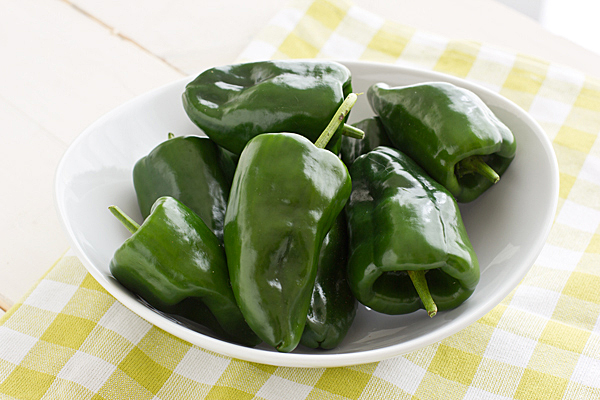
Here in New Mexico August is the great season of chilies, and soon chile roasters will appear everywhere and the aroma of roasted chile will float in a faint delicious cloud over the city.  But there are plenty of chiles around right now  and they can be roasted easily on the grill or under the broiler.  My favorites are the lovely inky green poblanos.  I was so eager to roast mine that I forgot to photograph them, so here is a borrowed photo:

image

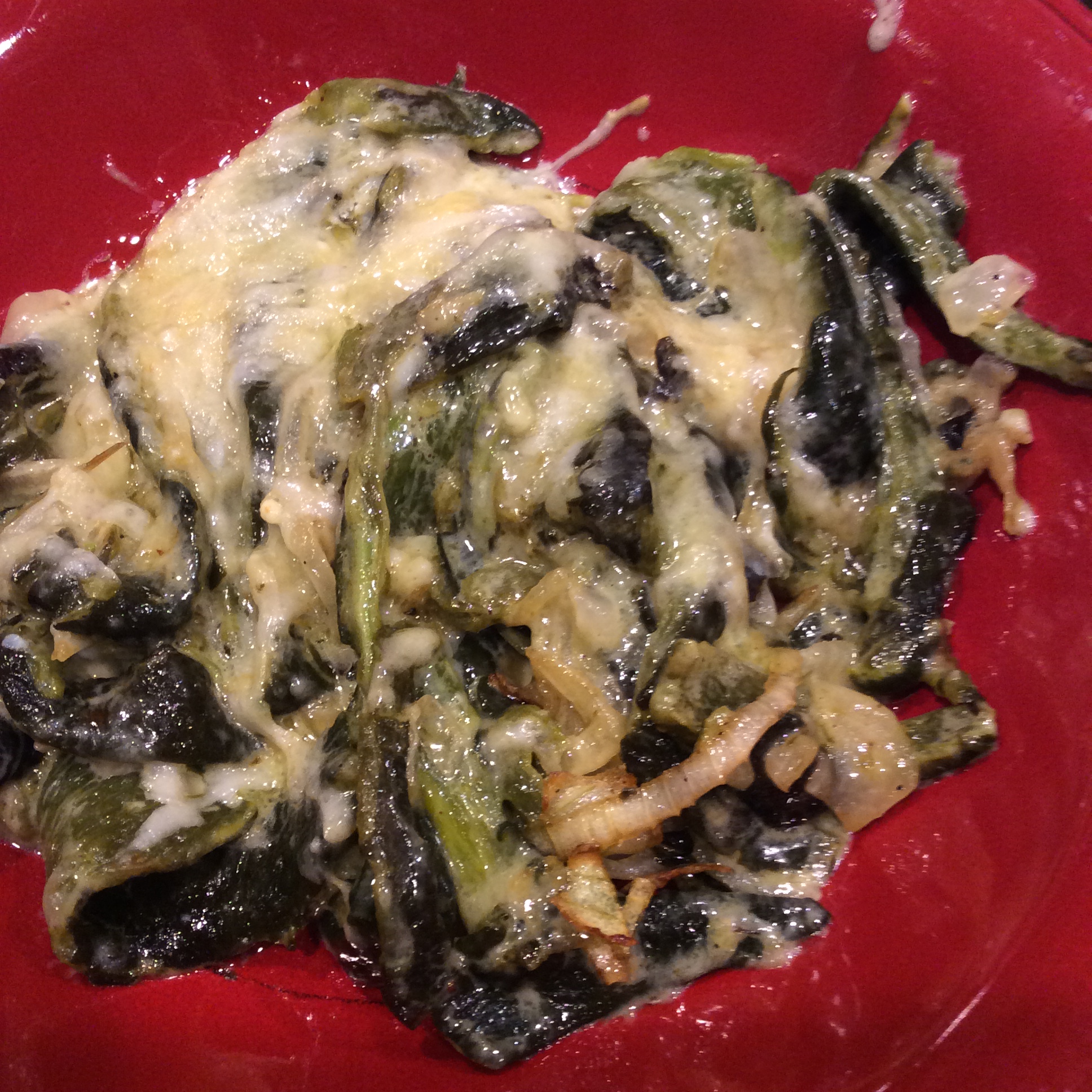
Chile pepper plants are sturdy and attractive and can usually be grown in the front yard without comment, especially if planted in groups rather than rows. They have nice deep green foliage. In the case of poblanos, they turn very hot when red and should be harvested when dark green. They have a deep rich flavor and, depending on growing conditions, can be surprisingly hot when green, although generally they are considered a mild chile.  Roast them until they have blackened spots all over their skin, turning as needed, then throw them in a plastic bag to steam for 20 minutes. Peel off the skin and remove the core and seeds. Now tear them into strips. These are called rajas de chile.  For the roasted strips from six poblanos, chop up one small onion and one good-sized clove of garlic and sauté them until cooked; I used fat from my homemade bacon. Add the chili strips and about half a cup of cream, and boil hard for just about one minute until the cream is a little reduced.  And a generous cup of grated cheddar, stirring some into the chili strips and put in the rest over the top, and broil until the cheese is melted and maybe a little brown in spots.  It makes a delicious light meal for two. If you add soft tortillas, it will feed two  generously.  It makes a good side dish for grilled meats of many kinds.  To me roasted chile is the flavor of August, and I am happy to have a foretaste of August in July.

Ricotta, the Easiest Cheese

image

One day when I have loads of leisure and energy, I plan  to get really serious about cheesemaking.   However, if you have a dairy animal or any other source of good milk, there are times when you have milk on hand but no spare time to do anything fancy with it. On those occasions, make ricotta  right away while your milk is fresh. All you need is milk, a large stainless steel pot, a stirring spoon, a strainer, fine cheesecloth, and lemon juice or vinegar. Any child old enough to use the stove at all can make ricotta with a little supervision. Determine approximately how much milk you have and put it in the pot over medium-high heat.  Milk scorches easily, and it should be stirred frequently so that it doesn’t burn on the bottom of the pot.  As soon as the milk foams and is coming to a boil, remove it from the heat and add 2 tablespoons of lemon juice or vinegar per quart of milk.  I don’t recommend cider vinegar or other strong flavored vinegars, and although I prefer lemon juice, I sometimes use rice vinegar, which does not give any off flavor to the cheese.  Stir the acid in and let the pot sit for 5 to 10 minutes. Meanwhile, line the strainer with a few layers of cheesecloth and set it over a bowl it can drain  into, or in the sink, and when the milk in the pot has definitely separated,  pour gently into the cheesecloth lined strainer. Let drain a few hours. Squeeze it a bit in the cheesecloth to get excess whey out,  salt if desired, chill, and eat.  The only reason for the milk not separating is that it wasn’t heated hot enough. If this should happen, heat again, stirring continually, until it separates. But that should not happen if you brought it to a boil in the first place.

The whey is useful and still contains a lot of nutrients.  It would be a shame to waste it. I feed it to my chickens, and they enjoy it.

When I mention cheesecloth I am talking about the real thing, specifically marketed for cheesemaking, and you can get it at New England Cheesemaking Supply along with a variety of other entrancing supplies and gadgets.

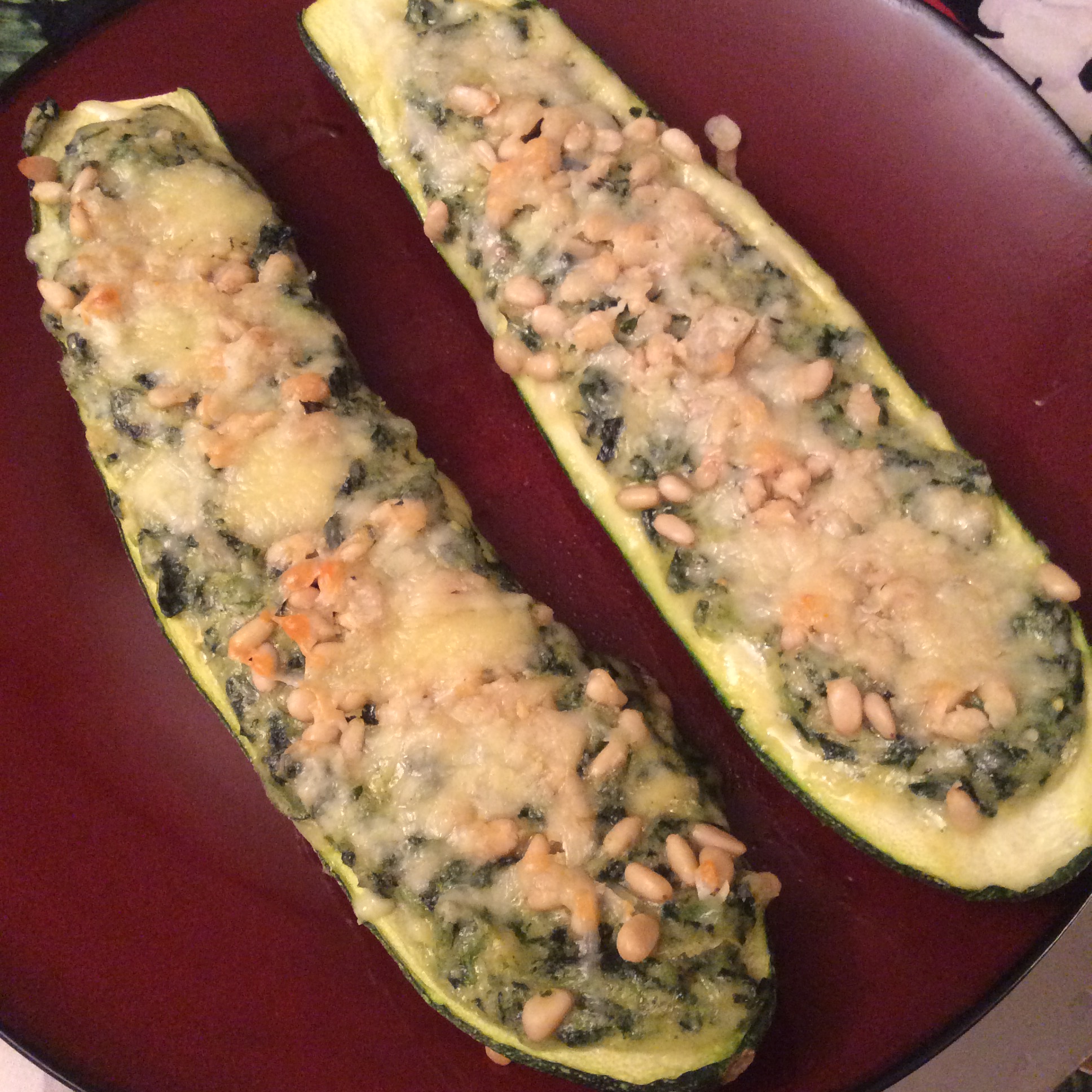
Besides just eating the ricotta itself with herbs stirred in, or sweetened and topped with fruit, it makes a good basis for a lot of other delicious meals.  I especially like it as a fill-in for stuffed vegetables. To make the zucchini above, get some good sized zucchini about 10 inches long. Cut them in half and hollow them out into boats.  Sprinkle very liberally with salt and put them in a bowl to drain for at least half an hour. This step is important. Meanwhile, preheat the oven to 450.  When ready to cook the zucchini, dry them off thoroughly with a kitchen towel. Rub with a little olive oil on the inside, put on a parchment lined baking sheet, and put them in the oven until they are fairly tender, which is about 25 minutes for me.

Meanwhile make the filling. Blanch about 2 quarts loosely packed of mixed greens; I used amaranth and lambsquarters. Drain and press the greens dry. Chop them thoroughly.  Chop one onion and two cloves of garlic and sauté them in a quarter cup of olive oil until they are thoroughly cooked but not colored very much. Stir in the chopped greens, and cook all together at least 10 minutes.  Turn the greens mixture into a bowl and mix in a heaping cup of goat ricotta (or any well-drained ricotta) and a cup of grated Parmesan cheese  or crumbled feta. Toss in a handful of chopped herbs. I used about 2 tablespoons of sweet marjoram, a scant tablespoon of winter savory, and a heaping teaspoon of fresh thyme.  Now start tasting the mixture and add salt until you feel the seasoning is perfect.  I like to add a good squeeze of fresh lemon juice at this point as well. Add more herbs if they seem indicated. Once you have the seasoning the way you want it, mix in two raw egg yolks. Pile the mixture  into the cooked zucchini canoes, top with pinenuts and more grated Parmesan, and bake at 400 until they are thoroughly done and the top is just starting to brown.  I like to serve them cooled off a bit, drizzled with a bit of extremely good olive oil.

image