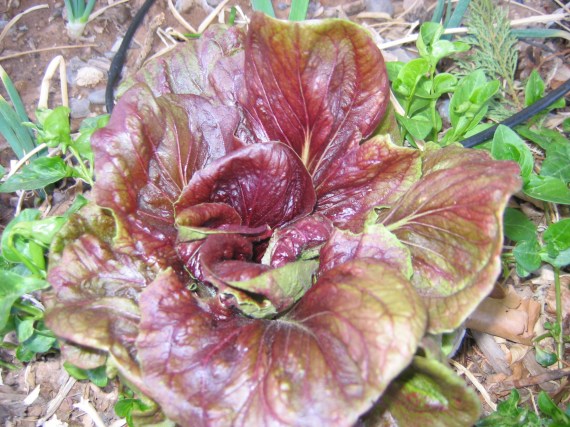
If all the greens you grow are sweet mild greens, your greens dishes will be bland. You need some vigor and some bitterness to make a hortapita or other mixed greens dish come alive. Chicories are a large, drought-tolerant, highly adaptable family well worth getting to know. Our local company Gourmet Seeds in Tatum, New Mexico has the most comprehensive selection I’ve come across. I bought my seed from them last year, and haven’t had to replant. Above, you can see what radicchio looks like in early life. I plant mine in late summer, harvest a small but usable head in late fall, ands take care not to harm the crown of the plant when I cut it for use. If the root and crown are left in place, next April they will look like “earth roses” as you see above. Cut the outer leaves for cooking. Taste before use, and if they’re very bitter blanch them in boiling water for 1-2 minutes and drain well before cooking further in whatever way you choose. Otherwise, when concentrated by cooking, they will be more bitter than you want. Some people like even the outer leaves in salads. Taste before serving. See my “greens” and “recipe” categories for some dishes made with mixed blanched greens, including the hortapita post, which is a great way to eat a lot of greens and enjoy it.
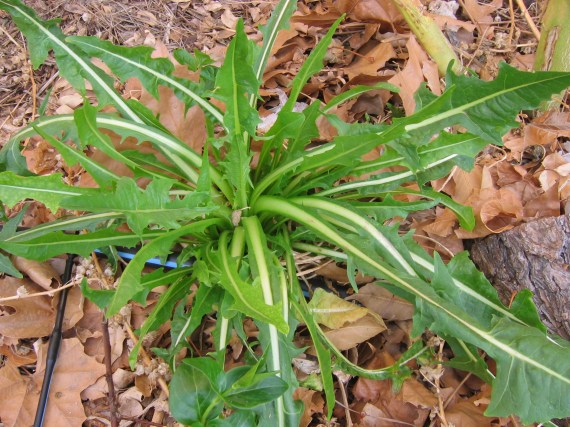
This is the chicory usually sold as “dandelion” in grocery stores. Cut the leaves until May or June; keep taking nibbles raw befre cutting, and when they go from pleasantly bitter to unpleasantly bitter, stop cutting or blanch before use. When very young, they’re good in salads. If allowed to go to seed, they’ll get 4 feet tall and seed themselves all over your garden. If this is not what you want, keep cutting back the stalks before they flower.
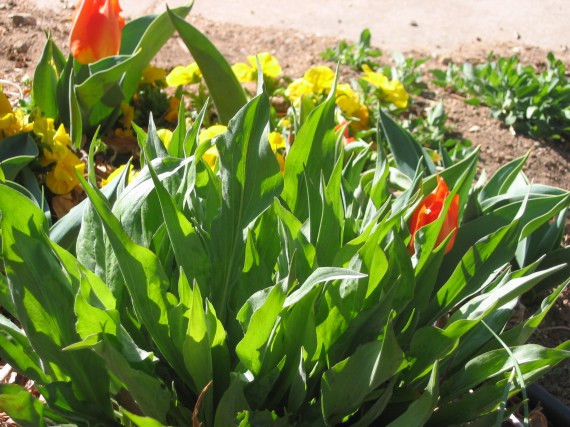
I planted scorzonera for the roots, but found that I wasn’t wowed by them. I left the remaining plants in place, and harvest a nice bunch of mild cooking greens from each plant every spring. After one good cutting, I leave them alone for the year. I’ve read that they can be used in salads, but to my tooth they’re too tough to use uncooked. They require no care and are very drought-tolerant. I prefer to mix them with stronger-flavored greens like chicories, and providentially, they’re harvestable at the same time. Vegetables that come up perennially with no fuss are too good to ignore.
For more about greens, see my “greens” and “herbs” pages on my website.
Archive for the ‘urban homesteading’ Category
27 Apr
The Greens of Spring: Scorzonera and Chicories
17 Apr
The Greens of Spring: Green Herb Pasta
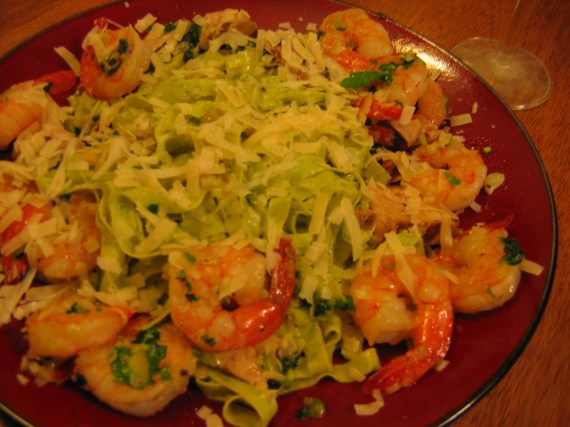
One of the great pleasures of gardening is commemorating each new emergence in spring, and in food gardening, one tends to commemorate them by eating them. Here, the herbs that are springing up everywhere make a pasta dish that is wonderfully tasty and varies every time you make it. If this doesn’t inspire you to plant your own herbs, probably nothing will.
My instructions will be relatively brief, so if you aren’t familiar with pasta-making, consult a good Italian cookbook such as The Splendid Table by Lynn Rosseto Kaspar. This is one of the few times when I use a food processor to start pasta dough.
This amount serves at least six as a first course, four as a main course, or two real pasta-pigs with lots of leftovers to take to work for lunches.
First, gather your herbs. Aim for a generous bunch. About half should be parsley. For the other half, see what’s springing up outside and decide what you plan to serve with the pasta. I like a good big handful each of chives and cutting celery leaves, the leaves of one small twig of rosemary (more if you plan to serve the noodles with lamb,) a few leaves of arugula, and about a tablespoon of thyme leaves. Later in the season, basil or marjoram might figure prominently. In the winter, green onions (green part only) and chervil might predominate, with some winter savory for oomph. You get the general feel of the thing.
Chop all the herbs coarsely. Put three cups of flour in the food processor, add the herbs, and process until they’re well distributed and finely chopped. Have five very good eggs handy. Add them one at a time, processing for at least 30 seconds after each one. Probably you will only need four of the eggs. When the “crumbs” in the processor bowl just start to come together into a dough, stop and finish by hand. Sorry about the work, but it’s much better that way. Turn out onto a lightly floured cutting board and knead until the dough comes together, adding a little water if necessary, or more flour if that’s what’s needed to make a nonsticky dough. Now knead for ten minutes, until smooth and elastic. Dust the dough ball with a little flour, cover with plastic wrap, and let sit half an hour.
When the dough has rested, roll it into sheets and cut into noodles by your favorite method. If you roll pasta by hand, you will go to Heaven. But if you use your handy machine, either powered or hand-cranked, you will eat fresh pasta a lot more often, and that’s a kind of heaven too. Take your pick.
Either way, when the noodles are ready, you can pack them in plastic bags and store in the refrigerator for two days, or in the freezer for a month. When ready to proceed, bring a large pot of well-salted water to a boil, and dump in the noodles. As soon as the water returns to a boil, start testing them for doneness. The cooking should take about a minute, but may take longer if you let the dough dry out a lot after rolling. Be very careful not to overcook. You do want then al dente
Drain the noodles and toss with a good-sized knob of butter or a half cup of heavy cream or both (note to self: stop revealing your spirit of wretched excess) and about a cup of the best Parmesan you can find, grated. Grind a little black pepper over the top, garnish with a little more grated Parmesan, and serve.
If you’d like to add some herbed shrimp to the plate, click here
2 Apr
The Greens of Spring: Greens Enchiladas
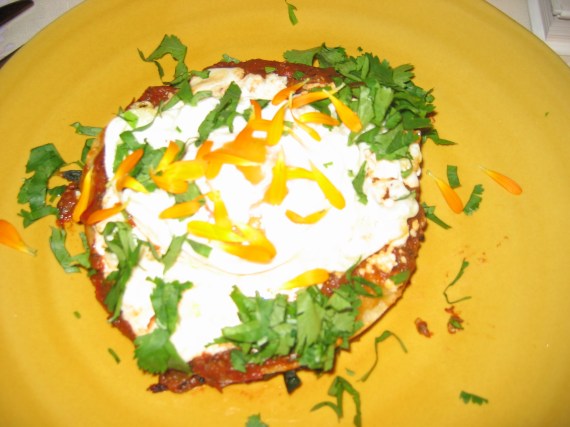
This recipe makes no claims to be authentic Mexican, but it’s healthy and delicious, so enjoy it for what it is. It’s certainly in the Mexican spirit of making use of what comes along. I should mention that the idea came from Rick Bayless’s famous “greens tacos,” so thanks, Rick. I used mild and velvety blanched nettles for the greens . See my earlier post on nettles if you aren’t familiar with them.
For two servings:
6 corn tortillas
A little oil for pan-frying the tortillas
1 cup blanched mild greens; Swiss chard, spinach, mallow, nettles, or a combination.
1 pint Roasted Tomato and Tomatillo Salsa; see my website Recipes page under “tomatoes,” or substitute your own favorite cooked salsa. Raw salsas like Pico de Gallo won’t work here.
¼ pound grated Monterey Jack cheese
¼ pound Cotija cheese (or use extra Monterey Jack for a milder flavor)
½ cup chopped cilantro
Fry the tortillas briefly, or cook them on a comal if you prefer. Set them aside. Chop the greens well, mix with 1 cup of the salsa, and heat to a full simmer, stirring frequently. Spread ¼ of the greens mixture on each of two tortillas, and scatter a bit of cilantro over. Top each with another tortilla, and spread with the rest of the greens mixture and sprinkle on a little more cilantro. Top each stack with one of the remaining tortillas, spread the tops and any exposed edges of the stacks with the rest of the salsa, and top with a mixture of the two cheeses or just with shredded Monterey Jack. Bake at 400 degrees until hot and the cheese is melted. You can brown it briefly under the broiler, if you wish. Serve garnished with the remaining cilantro.
This makes a wonderful lunch or light supper. For a more filling dinner, top each stack with a fried egg. Good with beer.
In the picture above, some calendula petals are scattered around with the cilantro. They don’t have much flavor, but add a lovely sunny color.
27 Mar
The Greens of Spring: a meal on a pita
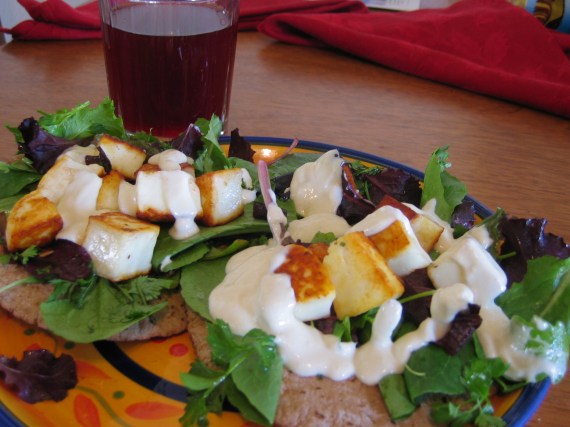
Halloumi cheese from Cyprus grills beautifully, and make a wonderful meatless “barbecue” to combine with your garden produce. It’s a great way to reduce your meat intake, if you want to do that, or just have a lovely and healthy meal.
First, catch your salad. You need a goodly quantity of the freshest salad greens, and it tastes best if some sharp flavors like young mustard, arugula, and herbs are included. My choice for this meal is a smallish bunch each of young mustard and arugula, with a few baby lettuce leaves (preferably red, for contrast,) about a quarter cup of a finely chopped combination of parsley and cilantro, a few fronds of fennel chopped, and about a teaspoon of thyme leaves. If I were using store-bought greens, I’d use half young letture and half watercress, plus the herbs, for a sharp but not aggressive taste. Commercial mustard greens are too mature and strong to use in salads. A handful of chopped chives or shallot greens is a great addition. Remember, herbs are loaded with antioxidants, and they taste great. For two people, you need about a quart of mixed salad greens, tightly packed.
Now locate your Halloumi. La Montanita Co-op and Whole Foods both have it in our area. Then you can proceed with the cooking part:
Dressing:
¾ cup extra virgin olive oil
5 tablespoons chopped fresh parsley
5 teaspoons grated lemon zest
1 teaspoon salt (or to taste)
1 teaspoon freshly ground pepper
¼ cup lemon juice
6 teaspoons chopped cilantro
4 cloves garlic, chopped
¼ cup capers (rinsed and soaked if salt-cured)
Make the dressing by combining all ingredients in your mortar and pestle (see my recipe page under Herbs for more about this) Pound until nicely amalgamated. Set aside. If you use the food processor instead, be careful to leave it with a vigorous texture. Avoid processing to mush.
2 ¼ pounds Cypriot Halloumi cheese, cut into 16 cubes
A few tablespoons of olive oil
Preheat a gas barbecue to medium heat, or let a coal barbecue heat until all coals are mostly white. Coat the cheese lightly with the olive oil. Grill the cheese cubes until they have caramelized on at least two sides. If you don’t feel like grilling, cook them on the stove in a heavy, hot skillet.
Meanwhile, lightly toast two or four whole wheat pitas, depending on appetite.
While the cheese finishes browning lightly, put the hot pitas on plates, two to a plate if you’re really hungry. Toss the greens and herbs with some of the sauce, pile them on the pitas, and distribute the hot cheese cubes on top. Drizzle with more of the sauce and eat. Even an avid carnivore is unlikely to feel shortchanged.
You will probably have a good bit of leftover sauce, and can use it to dress a little pasta for a quick one-person meal. Crumble on a little feta or Kefalotyri if you like.
A delicious variation is to hard-boil two or three eggs per person and slice them. Spread the slices over the dressed greens, and dribble on the sauce. It makes a nice post-Easter lunch, when you’re sick of looking at those eggs.
ADDENDUM: A friend who follows my blog gently pointed out that the sauce in the picture couldn’t be the one in the recipe. Major oops: I posted the wrong picture. But the pictured dressing is delicious on grilled halloumi too, so I decided to leave the picture and add the recipe for Tahini Dressing. Crush a clove of garlic in a mortar and pestle with half a teaspoon of salt. Add the juice of half a lemon and two tablespoons of tahini. Stir untilwell amalgamated, and add enough olive oil to give the consistency of thick cream. I usually use about 3 tablespoons, or a little more. Use a little plain olive oil to dress your greens, arrange them on a pita, and scatter the Halloumi cubes on top. Drizzle over the dressed greens and grilled Halloumi.
 My urban homestead