
Beltane, May Day, has long been one of the most important festivals of the agricultural year, when our ancestors danced around maypoles, leaped across fires, and chose mates or thought about it. It’s easy to see why. The earth is fully awake and full of the promise of the year’s abundance. Flowers are everywhere. Salad bowls brim with the first fruits of the soil. The frosts are largely past, and we can entrust ourselves to the splendors of the unfolding season. Hens lay, cows and goats give milk, and urban homesteading is briefly and exquisitely simple.
This is also the main planting season, and there’s so much to do in each lengthening day that I seldom feel like making fussy meals. The hens are laying mightily, and eggs can be turned into a series of light fresh meals. Here, scrambled egg tacos combine great eggs from your hens or the farmers’ market with good soft corn tortillas, avocados, and your favorite fiery red salsa, either homemade or bought. This is too simple to be called a recipe. For two people, prepare eight corn tortillas by your preferred method; I toast mine briefly on a hot comal and put them in a clay tortilla-holder to keep hot. Have the salsa ready at room temp. Cut two good ripe avocados into chunks and dress them lightly with lemon juice and salt. I like to mash them into a very rough and chunky puree. Saute’ half an onion or the white part of a green onion, chopped finely, in butter or oil until cooked. Pour in 5 eggs and scramble them over medium heat, throwing in about half a teaspoon of salt and a good pinch of ground toasted cumin (a kitchen staple if you do much Mexican cooking, but you can omit it if you don’t have it or don’t want to make it.) When the eggs are done to your liking, pile them on two small plates and serve immediately with the tortillas, the salsa, and the avocados. Roll some egg, some salsa, and some avocado in each tortilla, and eat messily.

Archive for the ‘urban homesteading’ Category
17 Apr
Meet Magnolia
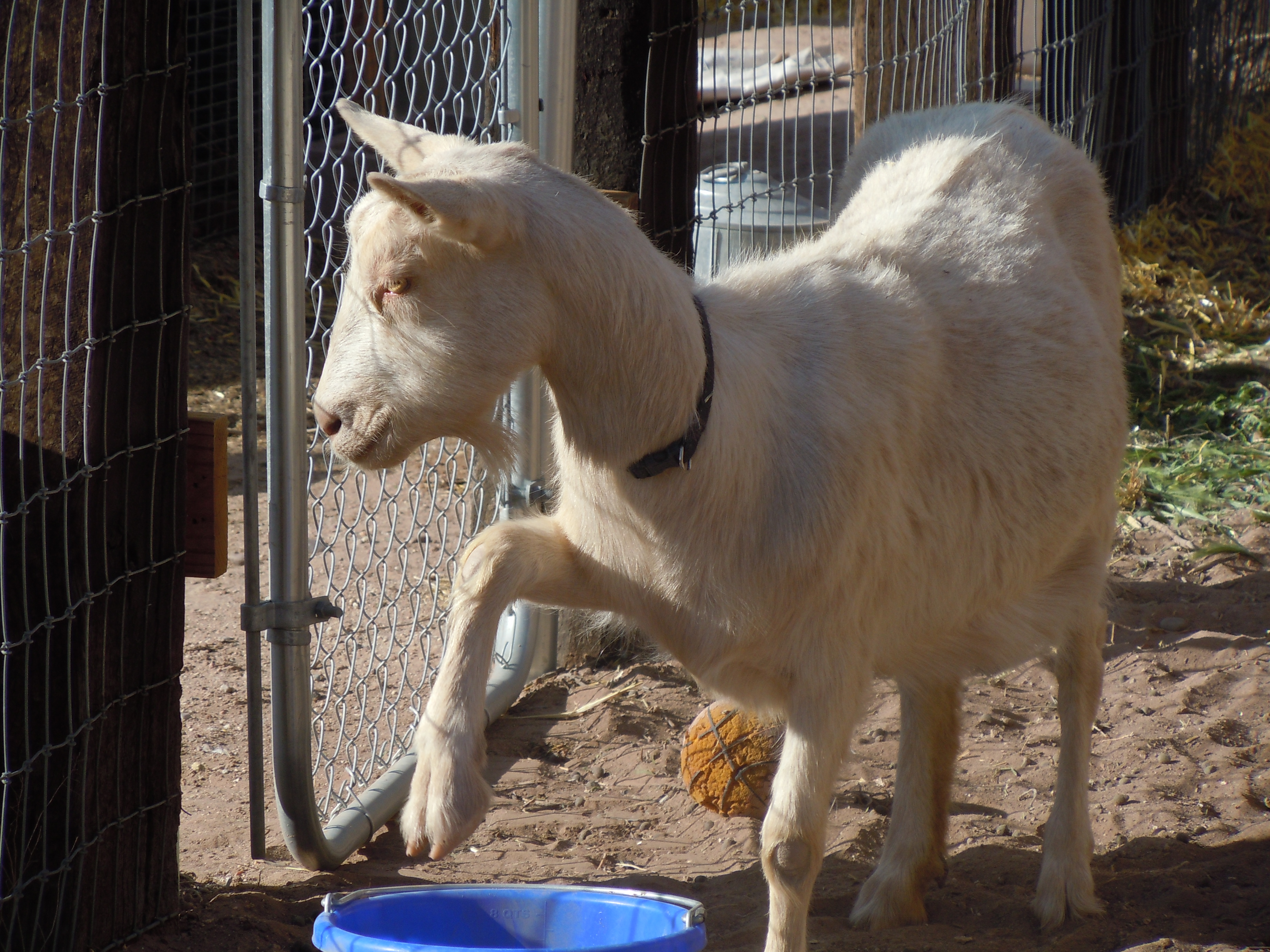
One of the biggest steps in making an urban homestead is adding animals. Chickens are the easiest, and you can get Brett Markham’s book Mini Farming for info about how he integrates layers and meat chickens into a small operation. I have wanted for a while to add a dairy animal, and based on my past experiences with goats here are the pros and cons:
Pro: goats are small and easy to handle compared to a cow. They tend to be hardy. They will eat brush (they love Siberian elms.) They are intelligent and affectionate. They produce a lot of milk relative to body size, and the milk is easy to digest.
Con:they are unbelievable escape artists and require excellent fencing. They will eat all your shrubs and trees unless well fenced. You need to know their health and nutrition needs. Contrary to popular belief, they won’t “eat anything;” they are actually picky eaters who need very specific kinds of food. They need to be bred, and I do not recommend keeping a buck in a suburban area, so you will need to take them somewhere to be bred. If bred or in milk, they need supplemental food and it can get expensive. You need to have a plan for how to handle the milk and what to do with it, keeping in mind that unless you pasteurize it you may not be able to sell it legally (check your local ordinances, but it is illegal in many areas to sell raw milk.)
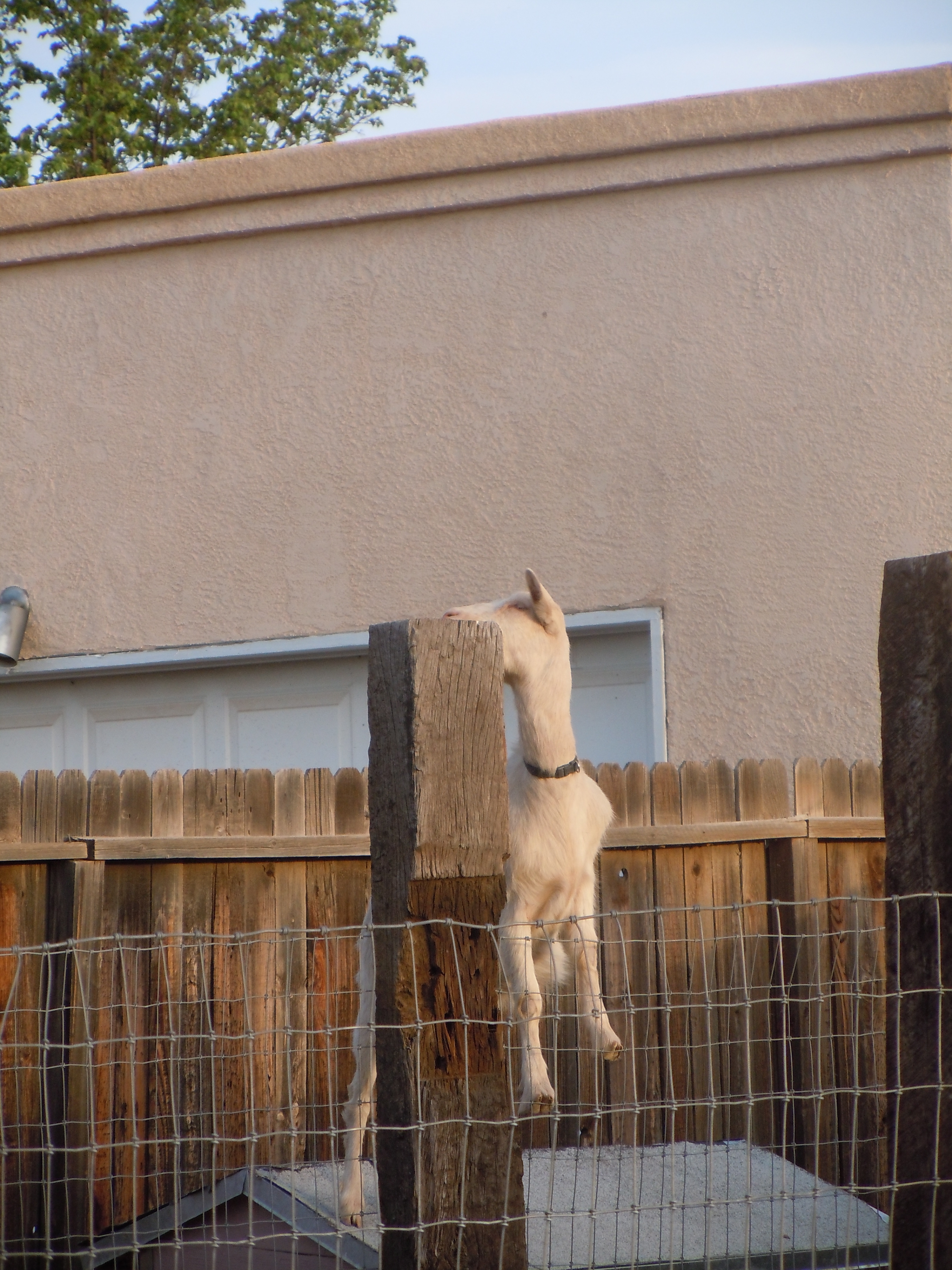
Get a good book on dairy goat raising and actually read it before deciding to get a goat. That said, they are lovely animals and I’m very happy to have one again. Magnolia is a yearling doe, purportedly bred. We’ll see. Meanwhile, she participates in homestead life by standing on top of her goat-house commenting on all yard activity and eating all the siberian elm cutting I bring her.
19 Mar
Green Gadgets: the Naturemill Composter

When I first saw this composter in an upscale catalog, I thought of it as a symbol of our shortcomings as a nation. Why, I thought, would any sane person spend hundreds of dollars to contain and electrify a natural process and pretend it’s “sustainable?”
Well, I was wrong. This is a neat solution for people with no room for a compost pile, but even for people like me who have a large yard and a compost pile, the Naturemill can become an irreplaceable link in efforts to live more sustainably. Here’s why:
1. The Naturemill is compact and energy-efficient. The maker estimates that it draws the same amount of power as a small lightbulb.
2. The compost reaches high temperatures, with the aid of thermophilic bacteria. That means that you can compost meat, cheese, bread, and other things that I would never put in my outdoor pile. Yes, I know that an outdoor thermophilic pile can compost these items, but I can assure you that in the time before it composts completely, it will draw rodents and roaches, even in an off-the-ground tumbler. I consider it unfair to yourself, neighbors, and the groundwater to try to compost these items outdoors in a suburban area.
3. Virtually any food waste item except citrus rinds and bones can be composted quickly and neatly in any quantity that a home kitchen is likely to produce. People with back pain or other problems that preclude managing a large compost heap can compost with almost no effort. It’s as easy as scraping plates into the garbage, and all you do is add some wood pellets (included when you buy it, and then you can use the wood pellets sold cheaply for fuel) and some baking soda. A concise booklet comes with the machine that’s full of good info about how to avoid problems.
4. Pay close attention here: it can compost pet waste at temperatures that make the finished compost safe. Nationwide, enormous quantities of dog and cat droppings are going into landfills or sitting around endangering the quality of water. There are communities where it’s illegal to put them in the garbage. So what do you do with them? I have been looking for a household solution for a while, and have constructed pet septic systems and every other damn thing, and this is the best solution I’ve found. I hope it goes without saying that you don’t keep it in the house if you are going to do this. The unit is well sealed and under most circumstances you don’t notice any odor when it’s closed, but if you are composting pet waste, there is an odor when it’s opened that is nothing like fresh droppings but which I certainly wouldn’t describe as pleasant. The finished compost smells earthy and like other compost.
The best commendation that I can make is that someone as frugal, thrifty, and outright cheap as me spent $400 for the Pro XE model and considers it money well spent. Read more about it at Naturemill. If you buy one, please let them know that Heather at My Urban Homestead sent you.
6 Mar
Spring in the food garden
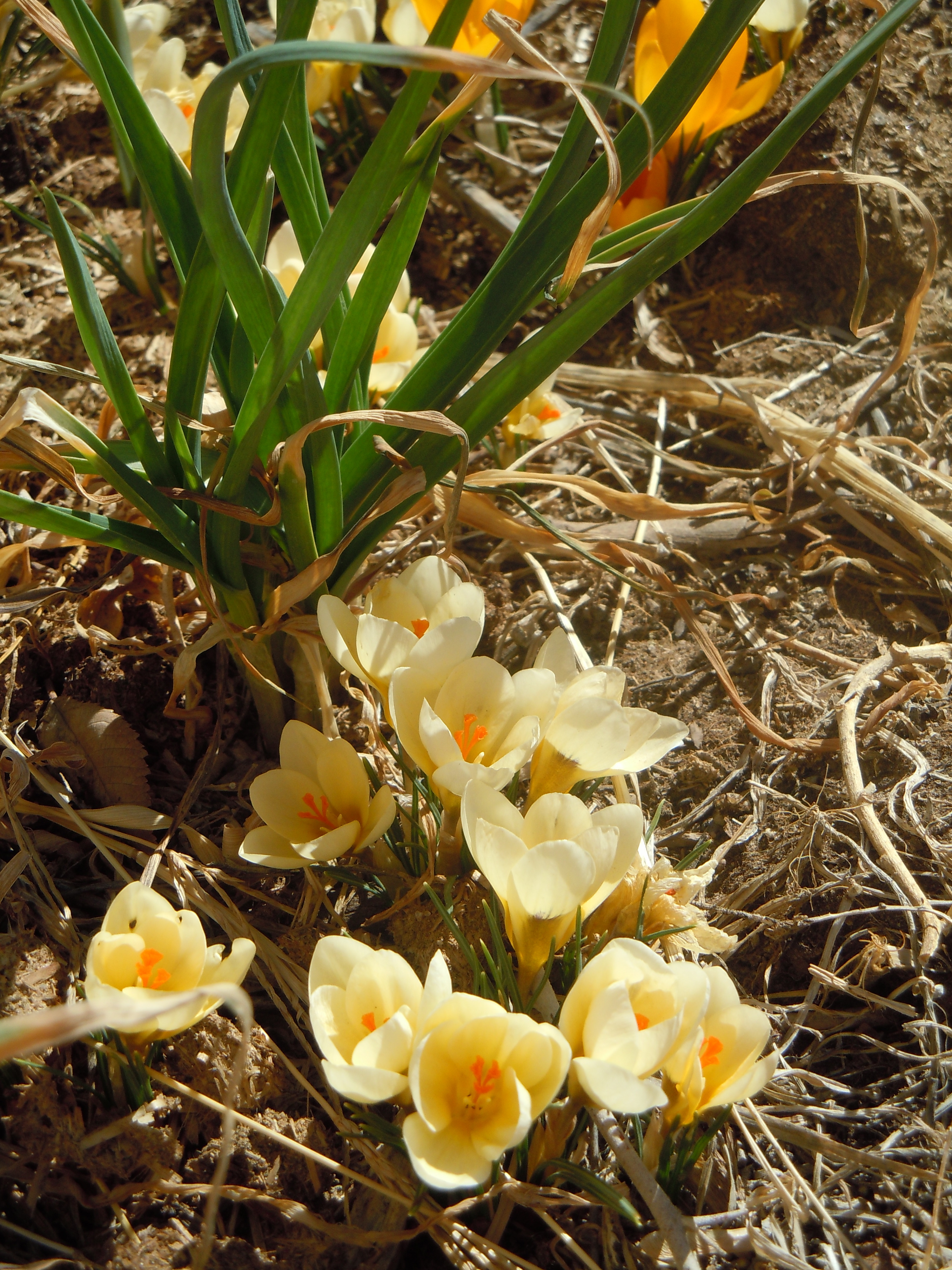
I’m not a winter person, so wherever I move, I always plant a patch of the early little species crocus “Cream Beauty” in my garden. When I see the first glowing blooms, I’ve officially survived another winter.
“Cream Beauty” is also a kind of floral nag, reminding me that there’s no time to hang around luxuriating in the sunlight; I need to be prepping and planting furiously. It’s one of the ironies of garden writing that, just when you actually have something to say, you have no time in which to say it. So here are a few spring tidbits in no particular order:
Last fall I coated all my “greens” beds thickly with horse manure, and dug it in as soon as the ground thawed in early February. Fresh manure needs to go on in the fall, but you can apply well-aged manure or finished compost now. Now the beds are ready to plant, and I put in three kinds of lettuce, several types of mustard, two kinds of spinach, snap and shelling peas, and a wide assortment of chicories, both leaf and heading. It’s important to get them in early so that they don’t fry in overly hot summer sunlight. Chard, parsley, and potatoes will be planted within the next week or two. Leeks and scallions were started in seed trays last month, and the multiplier onions, garlic, and shallots planted last fall are sprouting. I planted grey shallots once and didn’t find the bulbs useful- too small and too much work to peel- but they provide generous cuttings of sharp shallot greens every spring to season salads and soups. They are like chives but with a distinctly stronger flavor.
Every year I try a few things that are completely new to me, and one of my newbies this year is bladder campion, which, according to the catalog, provides young greens that taste something like green peas. It’s a common weed in wetter parts of the country, but here it needs some shelter and encouragement. Bear in mind that many plants which need full sun elsewhere prefer some shade from our high-desert sun. If you fail the first time, as I did with bladder campion last year, try giving a little afternoon shade.
Don’t forget to plant more peas than you need so that you can cut the sweet young greens for spring stir-fries.
If you’re going to try chickens this year, build the coop and make a brooder set-up now, BEFORE you buy the adorable baby chicks. I’m going to try a few meat chickens this year, so I’m building a large open-bottom cage to keep them in. It’s my first effort at carpentry, and I don’t think that there is a perfect 90 degree angle anywhere in it, but the chickens are unlikely to care. Make your chicken construction sturdy and raccoon-proof, not beautiful.
Gardening is a natural process, with all the entropy of any other natural process. Success does not pile upon success in an automatic fashion. Our freakishly cold snap is likely to result in some garden disappointments. My artichokes all seem to be dead, a sad event because they are offshoots of the first plants I grew from seed, many years ago. But that’s a reminder that nature is under no obligation to respect our sentiments. If you are very fond of getting your own way, gardening might not be for you. Nature offers some consolations too, like the glut of big brown eggs with deep orange yolks flowing out of the henhouse. There are a million ways to enjoy them, but while I’m waiting for the spring bulbs to bloom I enjoy eating what I think of as Daffodil Salad. The name comes from the colors, which remind me of the exquisite Poet’s Narcissus. Please know your edible flowers if you use them, and remember that daffodils are NOT edible.
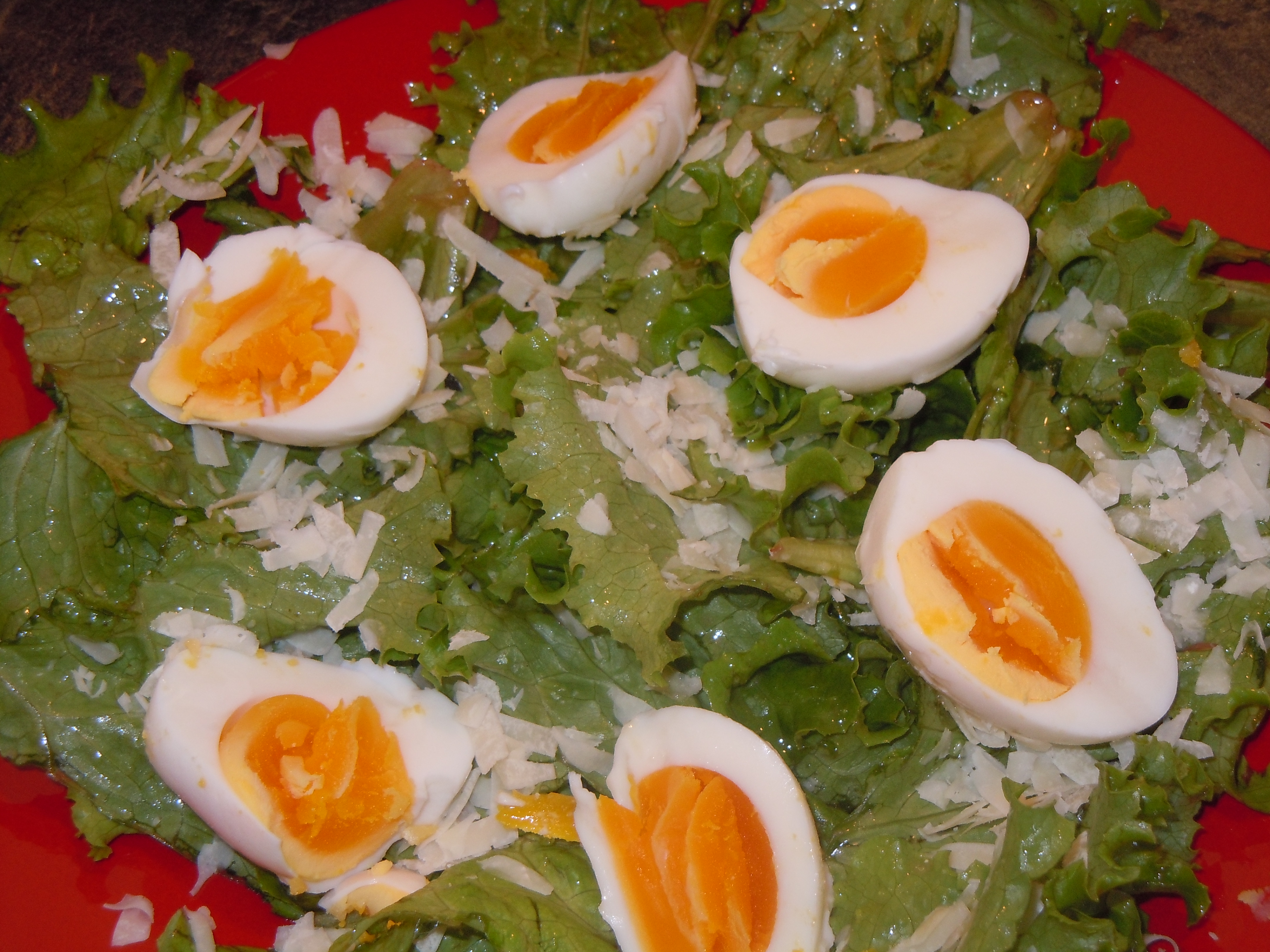
To make a main dish, put three eggs per person in cold water, bring to a boil, simmer 10 minutes, and cool quickly in cold water. If you have your own hens, the eggs need to be at least a week old to peel cleanly. With store eggs this is seldom a problem. The ten-minute simmer gives yolks as shown, just barely solid in the center and a rich orange. Peel the eggs and cut them in half. Put the amount of salad greens you prefer in a big bowl; I use about three good-sized single handfuls per person. Toss with the dressing below or your own favorite vinaigrette. Pile on plates, top with the egg halves, and drizzle a little more dressing over the eggs. Scatter on some thin shavings of your best Parmesan and enjoy.
Spring dressing
1 small shallot or the white part of one scallion or the white part of one stalk of green garlic
juice of one lemon
1/2 cup best olive oil
2 tablespoons roasted hazelnut oil
half a teaspoon of salt, or to taste.
fresh pepper, about 15 turns of the mill
a small handful of chopped chives or about 2 tablespoons very thinly sliced shallot greens
Chop the shallot bulb, scallion, or green garlic bulb very finely and marinate in the lemon juice for fifteen minutes, with the salt added. Don’t skip the marinating step. After fifteen minutes stir in the other ingredients, shake in a jar, taste for seasoning, and use. Any not used immediately will last a day or two in the refrigerator.
 My urban homestead