Archive for the ‘urban homesteading’ Category

The Eggplant Chronicles II: cooking eggplant

image
Like most Louisiana natives I love eggplant, and I have fervent opinions about how it should be prepared for cooking. For any application in which it is to be sautéed, I believe that it must be salted and drained first. This is not to get out bitterness, as some cookbooks say; a well-grown eggplant of a good variety doesn’t have bitterness. The disgorging process gives the eggplant a better texture, almost silky, and in my view is not optional.
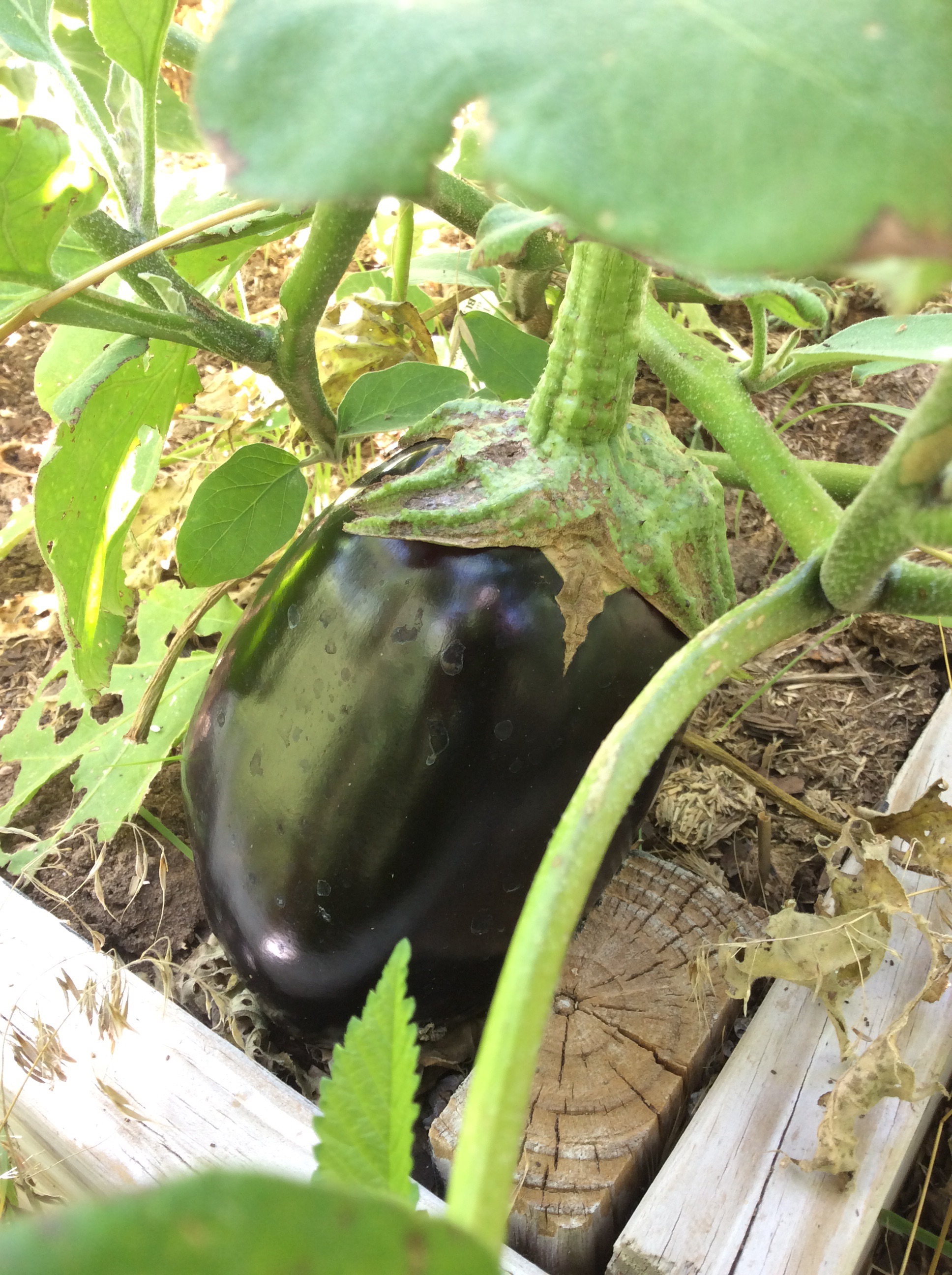
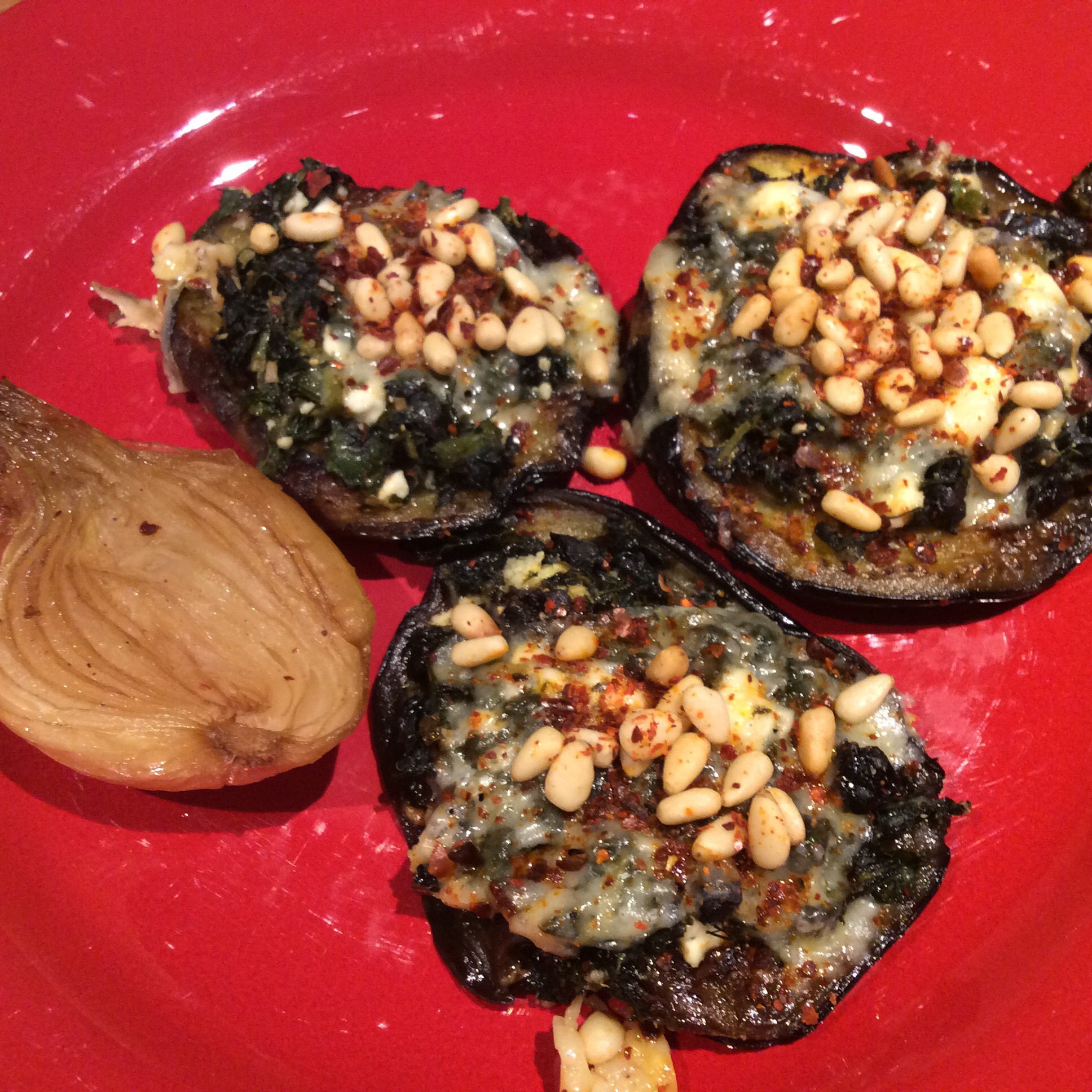
For this dish, I cut an enormous yet still young Black King eggplant into thick meaty slices about half an inch thick. I salted them liberally on both sides in the morning, stuck them in a bag in the refrigerator, and in the evening laid them out in a single layer on half of a clean towel and pushed down hard on the slices with the other half of the towel, pressing out as much liquid as possible. Now sauté them in olive oil over medium-high heat, laying them out on a baking sheet as they finish cooking, and making sure to cook them until they can easily be penetrated with a fork. Meanwhile, decide what you want to put on them. I had some horta (cooked greens mixture) made according to the description in my amaranth post, liberally flavored with garlic, fennel fronds, and salt-cured olives, and decided to use that. Other possibilities include leftover cut-up meat or chicken with herbs, scrambled eggs highly seasoned with herbs, tomato sauce, or whatever. I mixed the horta with crumbled feta for a little pizazz. Top with cheese ( I used an artisanal cheese similar to Parmesan) and pop in a 425 degree oven for 25 minutes or so. Pull them out, top with pine nuts or your own favorite nuts and a lavish sprinkle of Maras pepper flakes or other good red pepper flakes, and put back in the oven for a minute or two. I added some roasted onion halves on the side. Serve. Eat.
This sort of dish screams for a good smooth red wine and has to be eaten with a carefree attitude. Laissez les bon temps roulez, after all.
image

image

Tales of Tadpoles

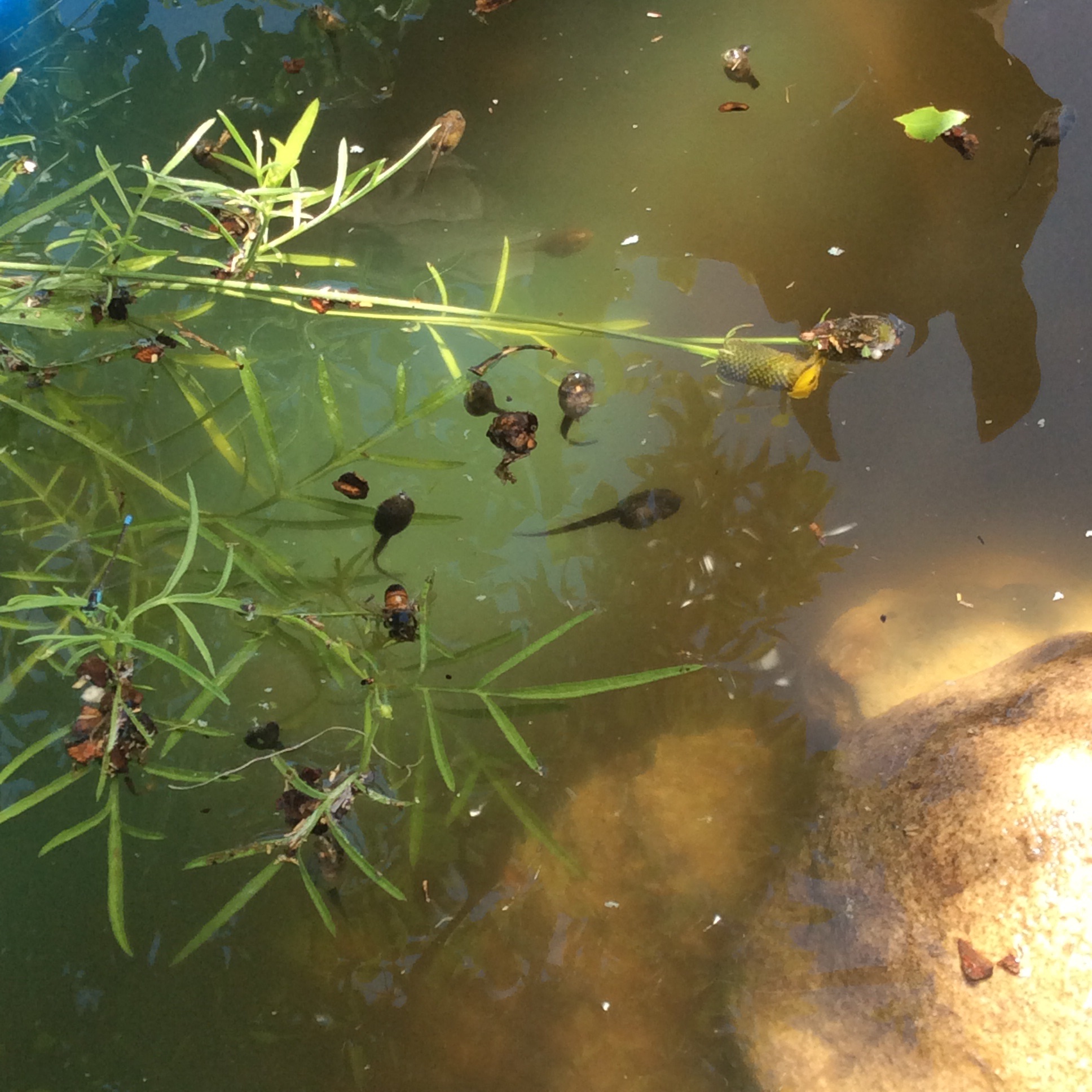
We have had a really unusual summer with lots of rain, and one of my neighbors found his horse paddock flooded. He started to pump it out, and as the water level fell he discovered tadpoles. We scooped them into a bucket, and I put them into a kiddie pool that I keep in my back yard because I have a dog who loves a dip on hot days.
image
At first they were little blobs of jelly with tails.they poked around the bottom of the pool for microbials and weren’t really seen that much.
image
Then they began to swim more purposefully and I saw them a lot more.
image
Now they are flattening out, forming little embryonic hind legs, and their eyes are on top of their heads and becoming protuberant. They are well on their way to becoming frogs.
I haven’t raised tadpoles since about age six, and I’d forgotten how fascinating it is to watch the entire course of vertebrate embryology occur in vivo, right before my eyes. It is a commonplace miracle but still a miracle. It would be hard to quantify the pleasure I’ve gotten from my rescue tadpoles. The chance to watch life work should never be taken for granted.

The Eggplant Chronicles I: choose your plant

image

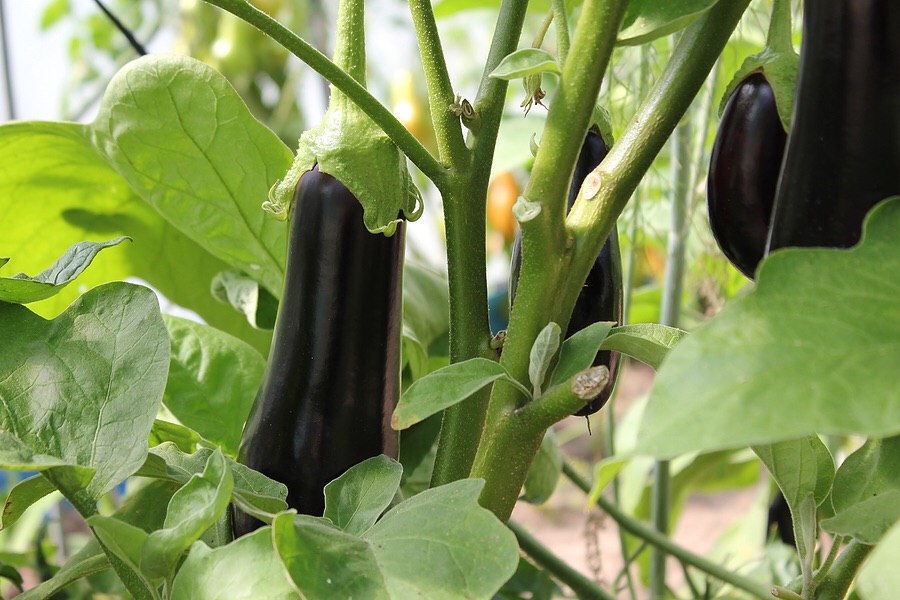
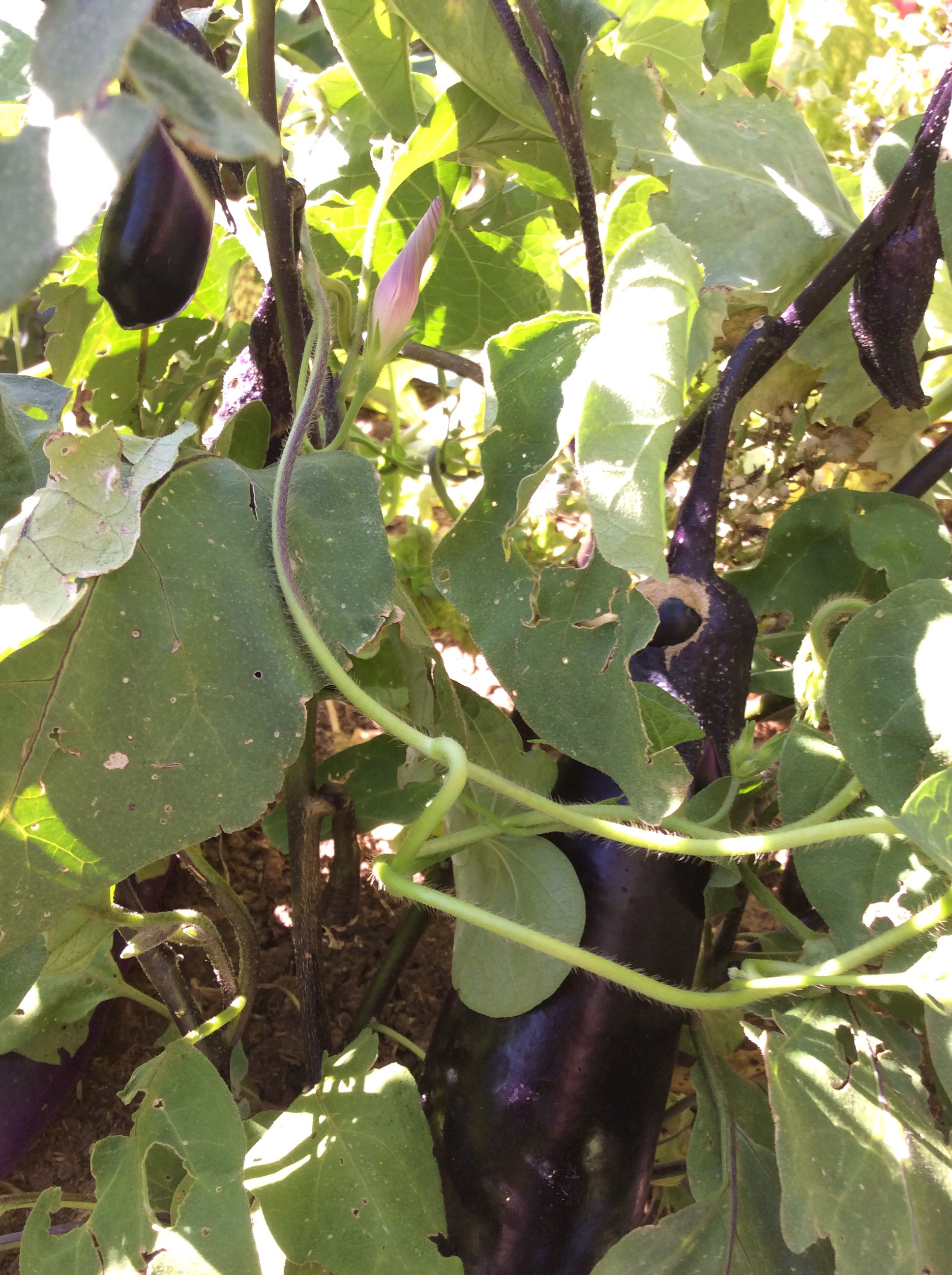
For the last couple of years I’ve rolled my eyes over the phenomenon of grafted vegetable plants, and griped lustily that there is nothing difficult about growing tomatoes or eggplants, so why would anybody  fall for the grafted ones? Then I saw a picture of the extremely deep rootball that the grafted rootstock develops and began to ponder whether this might be really advantageous in my very hot dry area. So this year I tested two grafted eggplants, one Millionaire ( a Japanese-type eggplant) and one Black King. I planted several standard Millionaire and Ichiban plants for comparison.

So far, the grafted Millionaire is out-producing the ungrafted Japanese eggplants at a rate of three to one. I don’t know how well you can see them in the picture above but the plant currently has five eggplants in various stages and is covered with blossoms further up. This one plant would have been plenty for us. The Black King seems sturdier than large eggplants I’ve grown in the past and is holding its enormous fruit without flopping.
image
So I will be planting grafted eggplants again. They cost just about twice as much as the ungrafted plants that I bought from a good local grower, but they are producing three times as much eggplant in less space. The two grafted tomatoes that I tried don’t seem to be outdoing their nongrafted kin at this point, but the jury’s still out. Also, one growing season isn’t a true test. But I’ve seen enough to be intrigued.
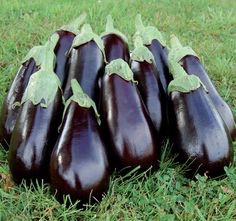
There are a lot of kinds of eggplant. The only types that I grow these days are the resplendent big Italian types and the long slender Japanese types. My preference is for meaty eggplants from which I can carve out big luxurious eggplant steaks. If your cookery leans Asian, you may be interested in the tiny bitter Thai eggplants and the dozens of other Asian types.
By the way, eggplants are highly ornamental at nearly every stage of growth. No need to stick them in the back yard.

Clove Currants

image

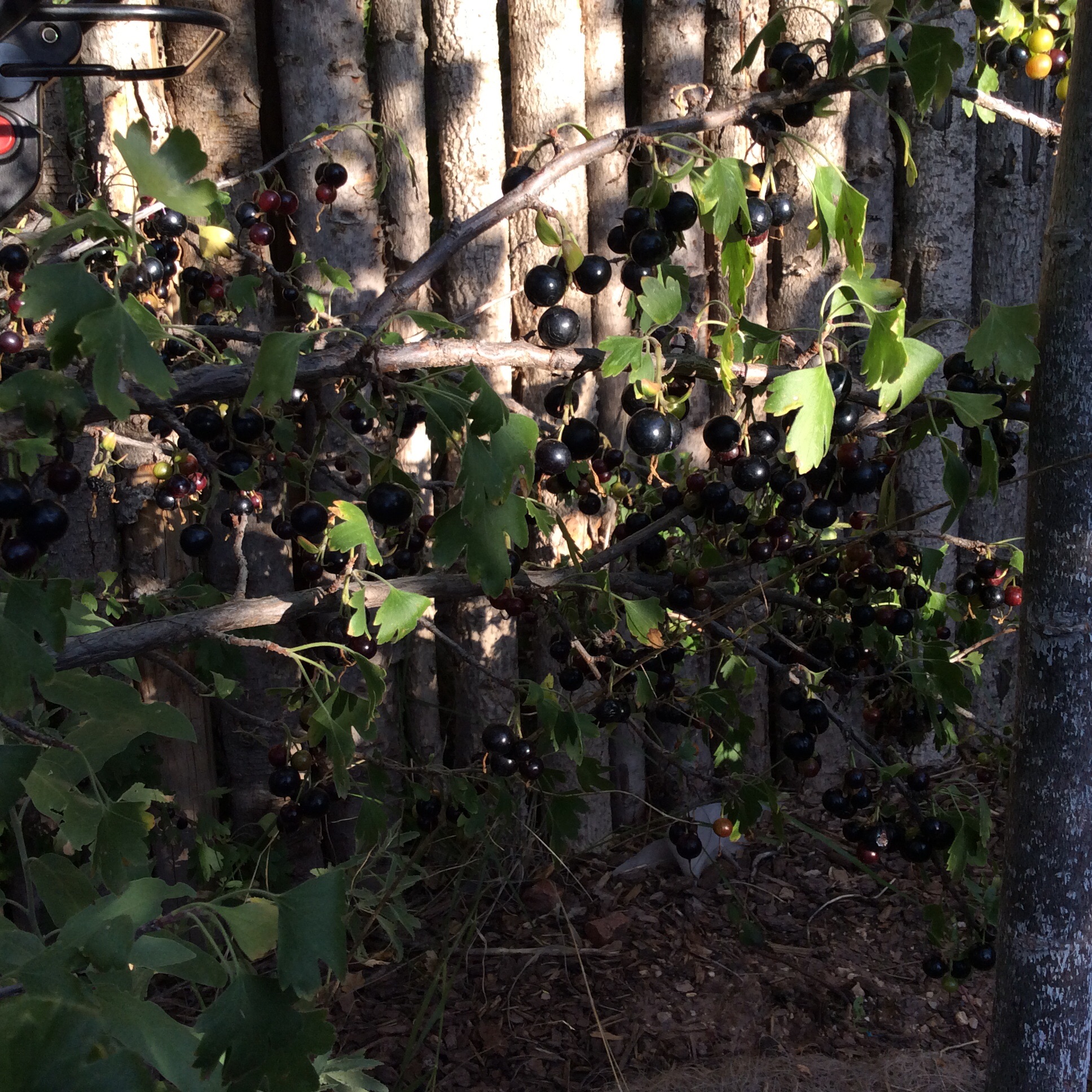
The native clove currant, Ribies odoratum, grows beautifully in my area. It is sturdy, healthy, drought-tolerant, will tolerate some shade, suffers from no bugs or diseases, and is reasonably attractive, especially in spring when covered with thousands of tiny yellow flowers that have a soft pleasant scent. I haven’t found them growing wild in my area but I have a bush that was planted by birds; they grow that easily, and start to bear within three years.  I have several large bushes and would have planted more if not for one major disadvantage: I thought the fruit tasted awful.  The fruits, like most berries, are relatively low-carb for fruits and probably contain a good set of antioxidants, but eating things prescriptively rather than for pleasure is just not my style.

But sometimes plants just have to hang around my yard until I learn to use them well. This year, after living with clove currants for five years, I finally figured out (duh) that the fruits are not ready to eat when they turn black. Don’t grab those first black shiny fruits. Leave them on the bush for another couple of weeks. Taste every few days, and when they taste sweet and spicy (still very tart but with a balance of acid and sweetness) they’re ripe. The fruits actually get a little smaller as they ripen, and some will look a bit wrinkled. Don’t worry. Don’t use any that are dry and shriveled, but a little loss of turgor just intensifies the flavor.

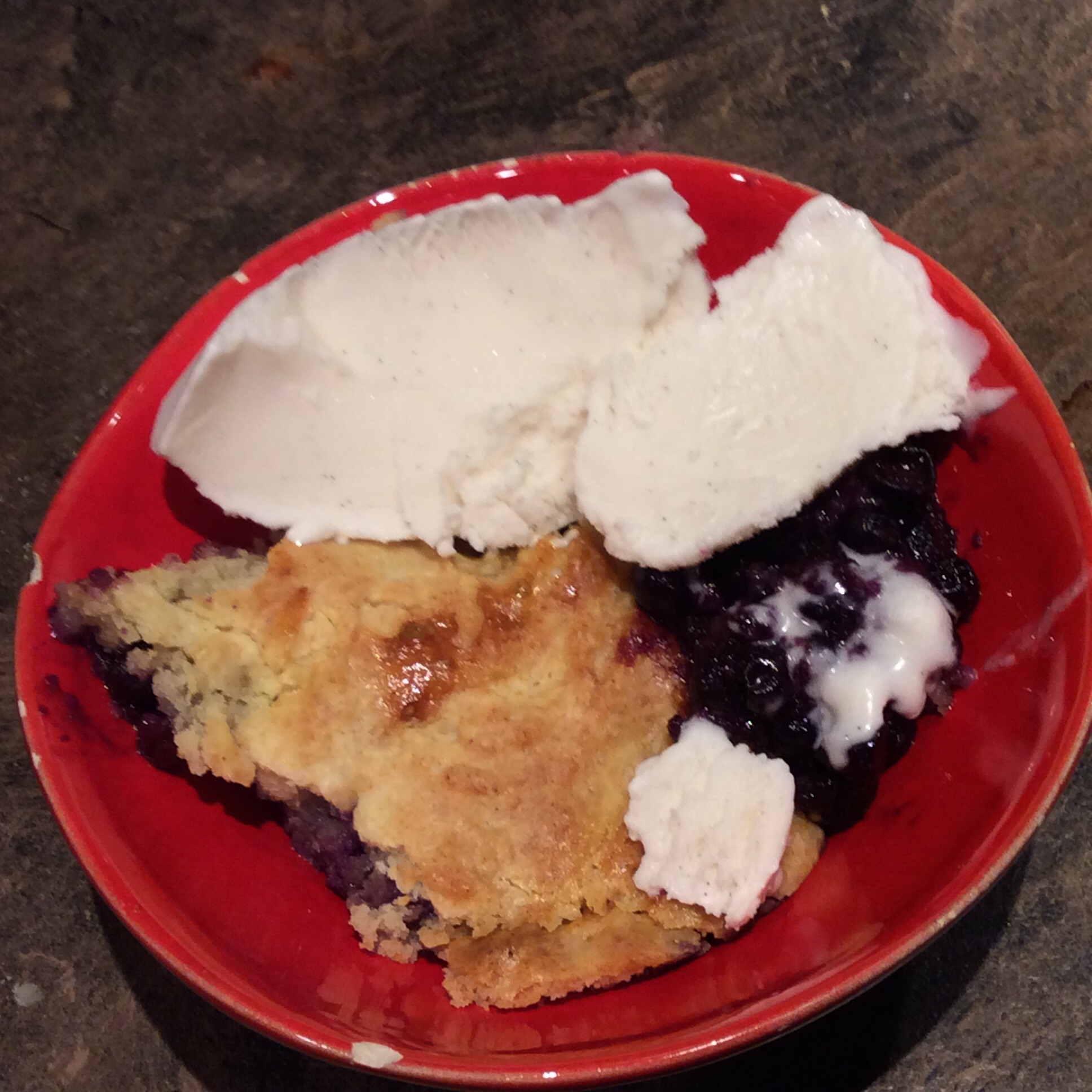
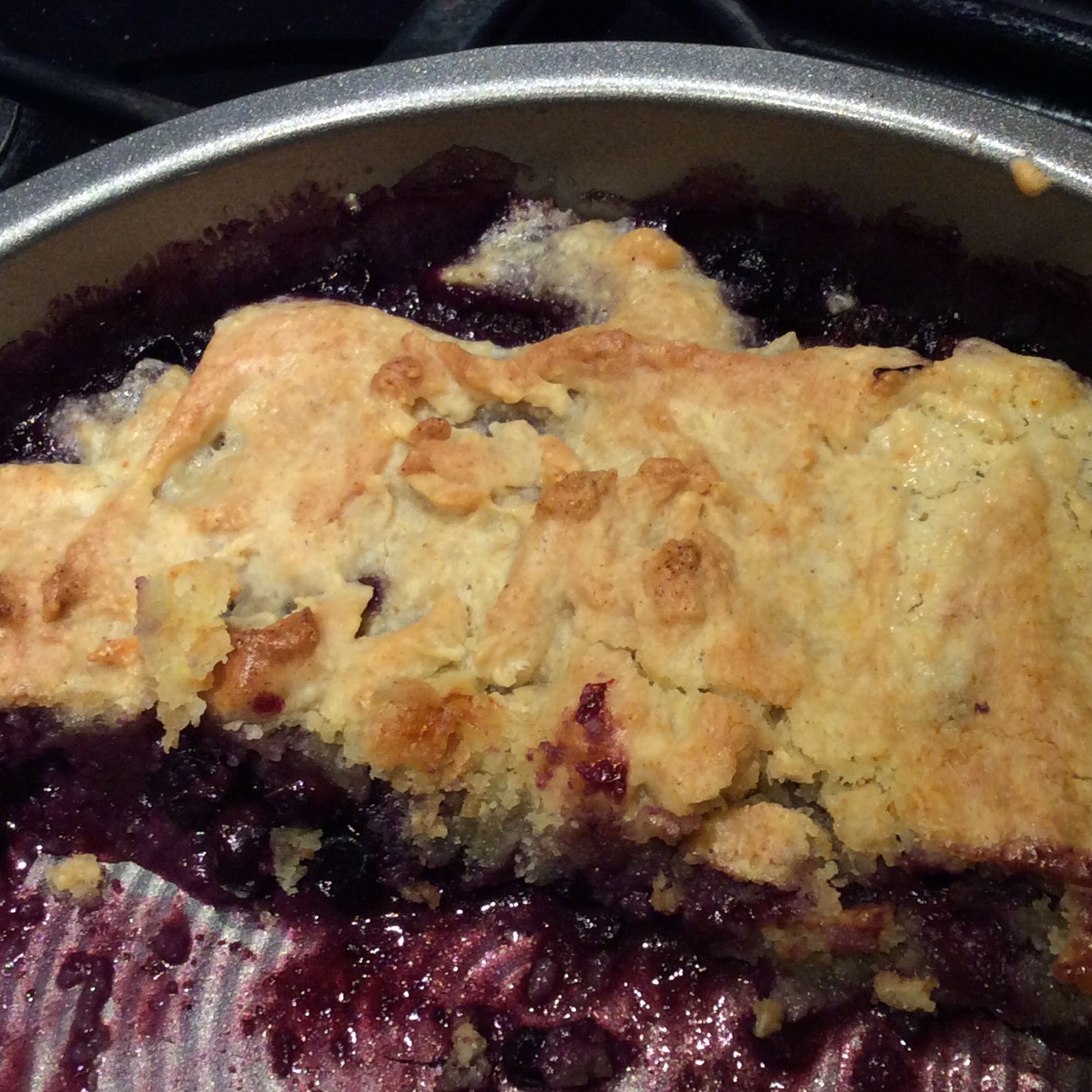
I enjoy eating a handful in the garden when I make my morning rounds, but my favorite use for them is in cobbler. If you are low-carb, use my recipe for red, white, and blue cobbler, using clove currants alone or adding in some frozen wild blueberries to make up the fruit volume if you don’t have enough clove currants. Work the sweeteners into the fruit with your fingers, crushing the fruits a bit as you go. If you eat sugar and flour, just use your own favorite cobbler recipe. Be sure to grate a little fresh nutmeg into the fruit mixture to bring out the spiciness.
image
The fruit clings to the stems and often has a little wiry “tail” clinging to the blossom end which has to be removed, so harvesting them is a bit tedious. I wait until early evening and then sit comfortably under the bushes with a bowl, pulling off stems and tails as I go so that fruits that hit the bowl are ready to use. I eat a few along the way. The laborer is worthy of her hire, after all.

I’ve been thinking of other ways to use them, and I think that they might be good in sauces for meat and game. I can recall reading a British recipe for a blackberry sauce for venison, and along those lines I plan to try using clove currants for a sauce for roasted pork. But right now they are going into cobbler or disappearing straight down my greedy gullet.
image

I also have a couple of bushes of Golden currant, also known as wax currant, but they are slower to bear and I haven’t had enough fruit to experiment with yet. More on that later.