Archive for the ‘urban homesteading’ Category

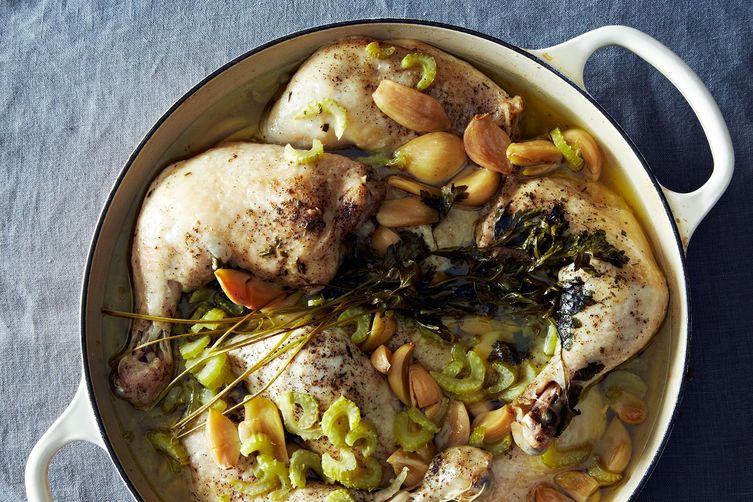
Chicken with Double Garlic Sauce

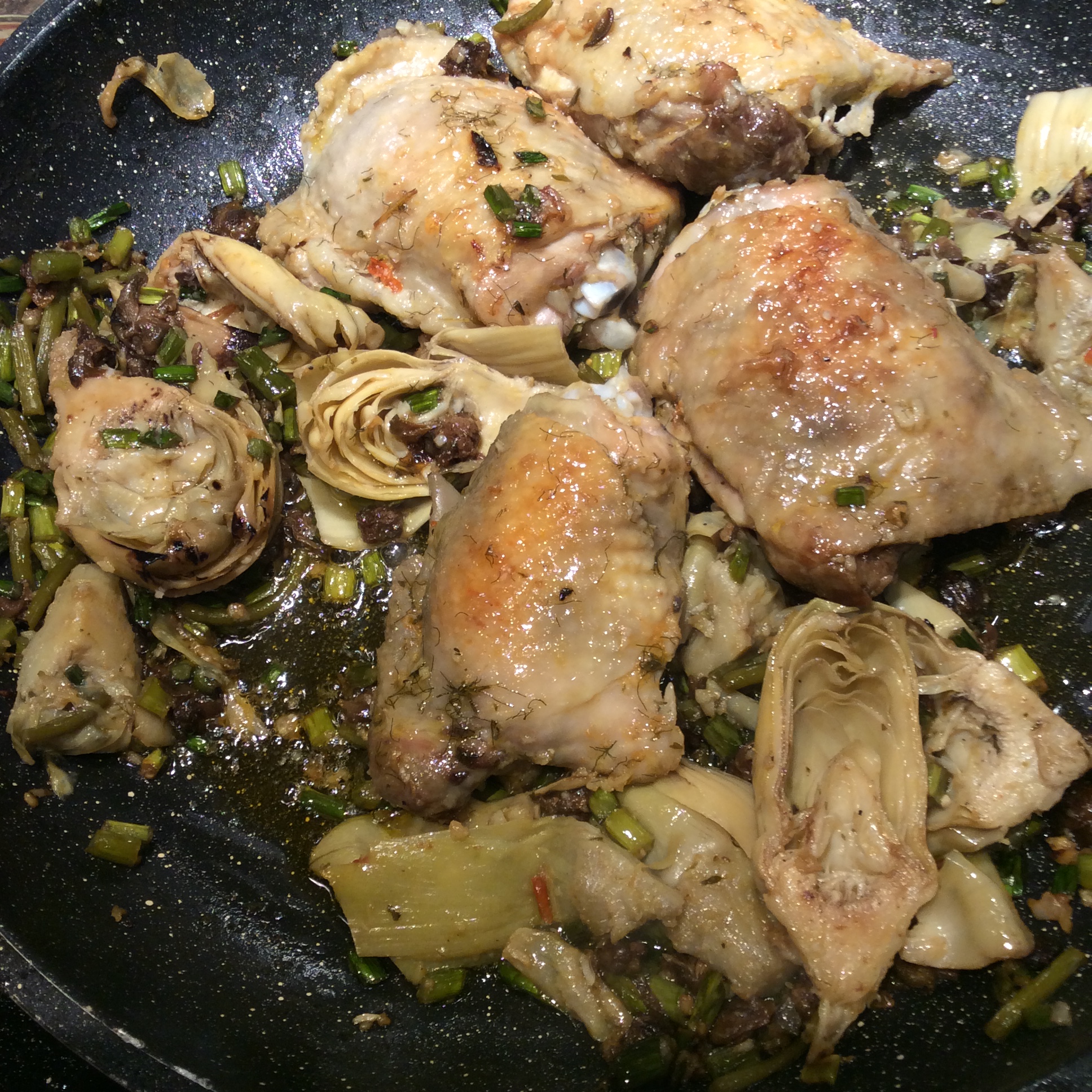
Garlic is wondrous in all its forms. I called this simple chicken sauce  “double garlic” not because it contains a lot of garlic, although it does, but because it contains garlic in two distinct forms. Right now I am harvesting the bulbs of the early Chinese Pink while the late Mount Hood is forming tender scapes. So both went into this dish. For the chicken, I used some leftover plainly roasted thighs. You could also make the very quick seasoning sauce to add interest to a plainly seasoned rotisserie chicken that you bought on the way home after a busy day. Of course you could also cook chicken thighs right in the sauce, but I conceived of this as a way to make leftovers fresh and interesting.

In the spirit of easy convenience, I added some artichoke hearts marinated in oil that I found at a grocery store olive bar. If you have some leftover vegetable that isn’t too seasoned, this is a good place to use it up. Just don’t use marinated veggies that are acidic or pickled-tasting; taste to be sure.

You will need:

1/3 cup very good EV olive oil

7 cloves fresh garlic, chopped

5-6 tender garlic scapes (snap one near the base. It should snap cleanly, with no “bark” peeling at the breakpoint) Chop in bits a little more than 1/4″ long

1/3 cup salted capers, soaked and squeezed dry, or brined capers rinsed and squeezed dry

1/4 cup, loosely packed, chopped herbs of your choice. I used half thyme and half fennel

4 cooked whole chicken thighs, or a disjointed rotisserie chicken

roughly 1 cup of cooked leftover veggies, not too seasoned
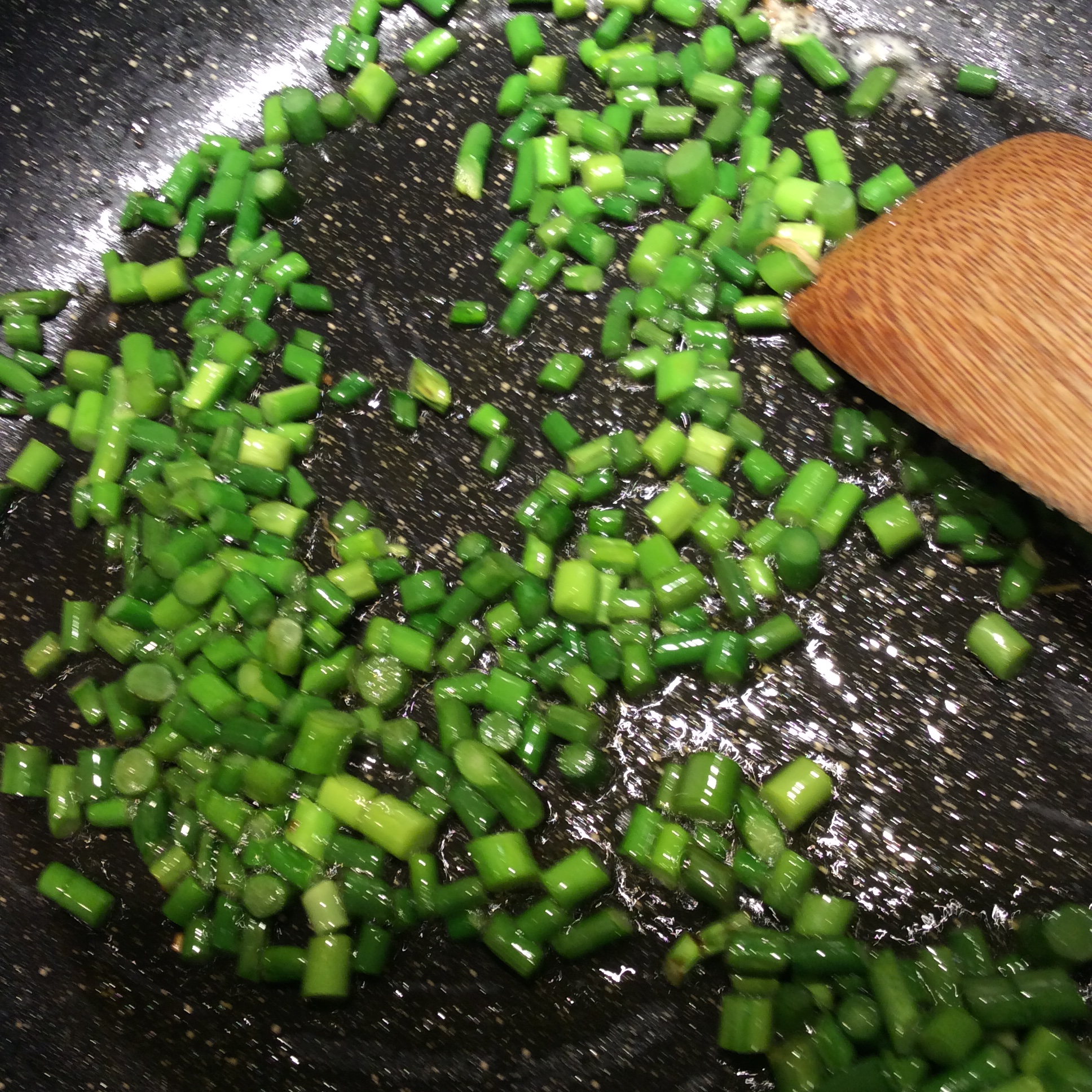
Heat a skillet ovet high heat and add the olive oil. Put in the chopped scapes, fry for about two minutes stirring frequently, reduce heat to medium, and cook until scapes are crisp-tender ( the best way to find out is to chew one.)
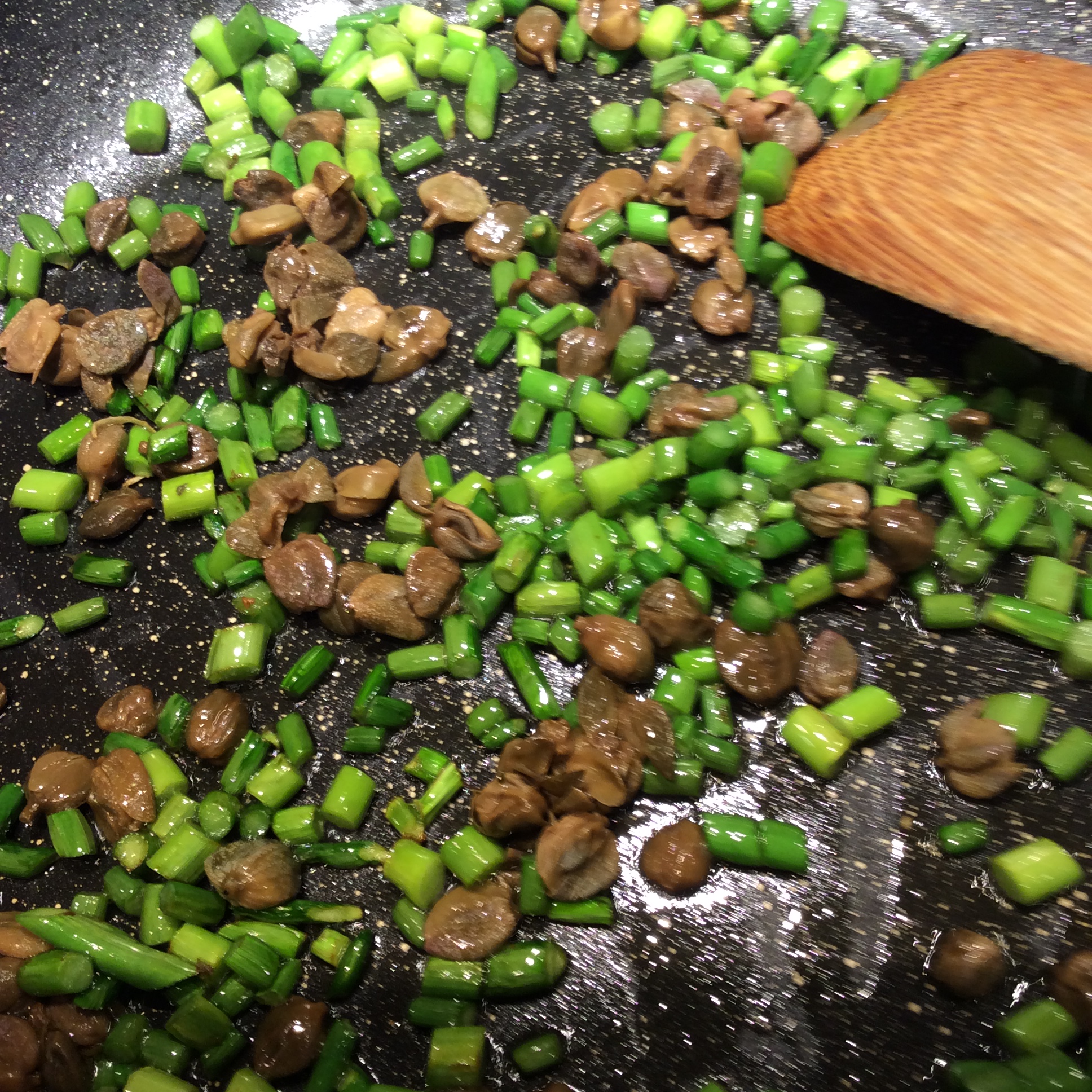
Add the squeezed-dry capers and cook until they look a bit dry and (ideally) a bit browned. Add the chopped garlic and the herbs, sauté just until the chopped garlic looks cooked, and add about 2 tablespoons of water and the veggies and chicken. Cook uncovered over medium-low heat, stirring and turning as needed, until heated through. There should be little to no water left, just seasoned oil full of delicious bits that can be spooned over the chicken and veggies. Serve with freshly ground pepper, but taste before adding salt, because of the capers and the pre-cooked ingredients.

I have already talked about garlic and garlic scapes at length, so this a good time to talk about capers for a minute. I consider them an essential kitchen staple and my favorites come from Morocco, but they are absurdly expensive, so feel free to buy something much more reasonable. The tiny nonpareil capers are often marketed as the best, but I don’t like them except as a garnish on smoked salmon and generally prefer the largest and most herbaceous that I can find. If salted, rinse the salt off, soak in water to cover for 20 minutes, and squeeze dry. If brined, rinse the brine off thoroughly, soak in hot water for a few minutes, and squeeze dry. There is currently a lot of silly snobbery about brined capers, but they can be delicious and are far preferable to tasteless or oversalted dry capers. I eat capers all summer and try to keep a handful, already soaked and squeezed, ready wrapped in a square of plastic wrap in the refrigerator. They’re astoundingly rich in quercetin, if that’s important to you, and they taste like essence of summer.
 

Harvesting Garlic

In a way the title of this post is very inaccurate, because I have been “harvesting garlic” since February  in the form of green garlic. But this is the time of year when I start to pull bulbs, because the extremely early Chinese Pink comes out of the ground now. So this is a good time to say something about the curing of garlic.

First, the variety matters. Chinese Pink doesn’t last that long for me and is mainly to tide me over until the main crop comes in, since it’s a good six weeks earlier than any other type that I grow.

Second, harvest at the right time. Watch for yellowing, withering leaves. Generally I harvest when there are four green leaves left, but Chinese Pink is prone to splitting and needs to be harvested earlier, when about the four lowest leaves are yellow. The picture below shows “split” garlic which has been left in the ground too long. It’s still useful but harder to peel and clean.

Third, DON’T cut off the stalks. The curing bulbs draw nourishment from the remaining leaves. Do, however, remove any bloomscapes. Also leave the roots intact but shake off soil. Brush loose dirt off the bulbs.

Fourth, DON’T leave them lying in the sun, where they will “cook” and be spoiled. After pulling the plants, lay them in single layers on a dry surface (I use flattened corrugated cardboard boxes that will later go into sheet mulch) and put out of direct light in a place with good air circulation. Leave for two weeks, turning the bulbs occasionally.

Now cut the withered tops off unless you grew a softneck garlic and want to make braids. My favorite types are all hardneck so no braids for me. The remaining surface dirt is now dry and can be brushed off with a soft brush, but don’t get fanatical with the brushing because you can damage the wrapper and impair the bulb’s ability to keep. Leave in the dim airy place and bring a few bulbs at a time into the kitchen.

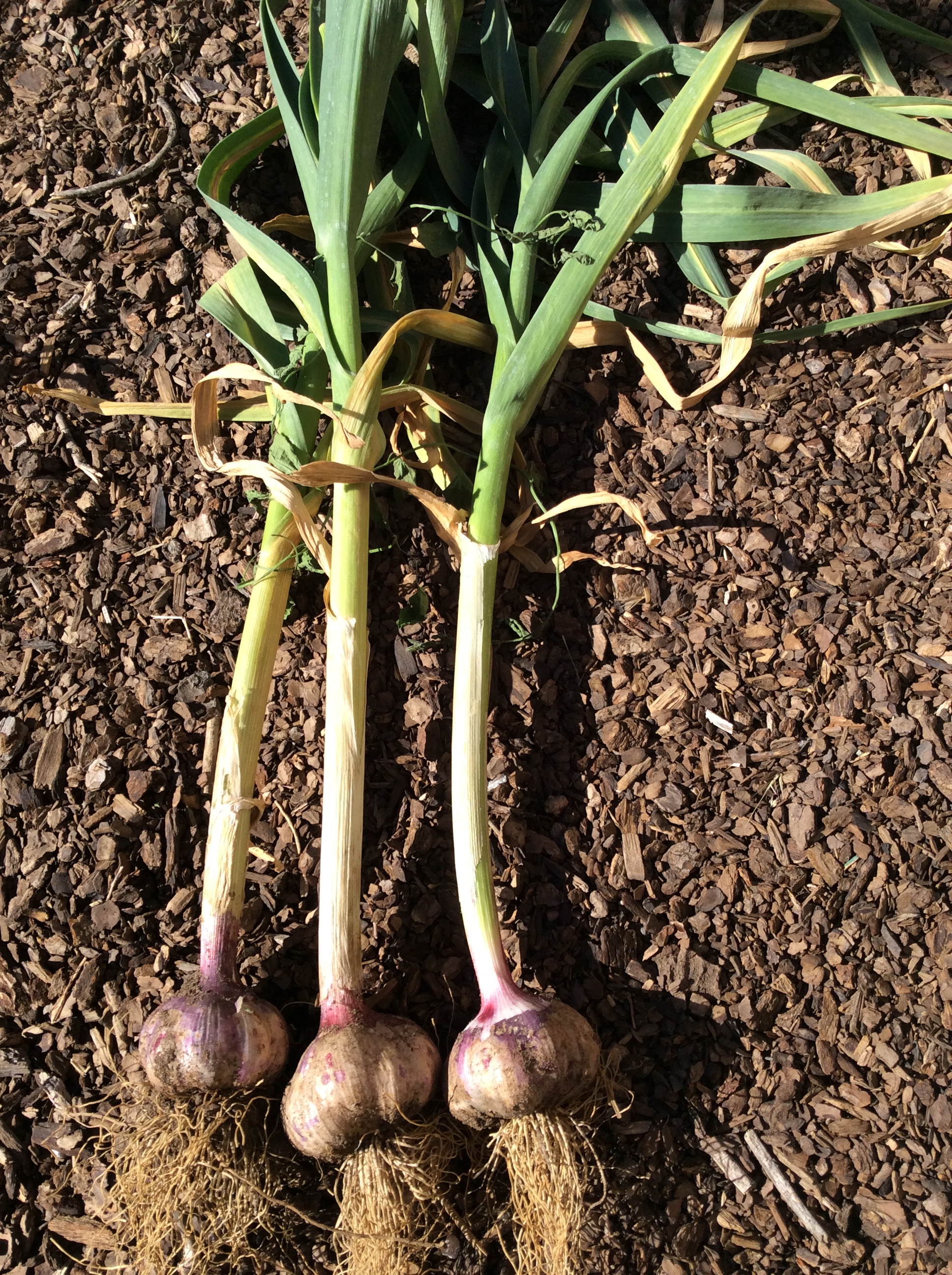
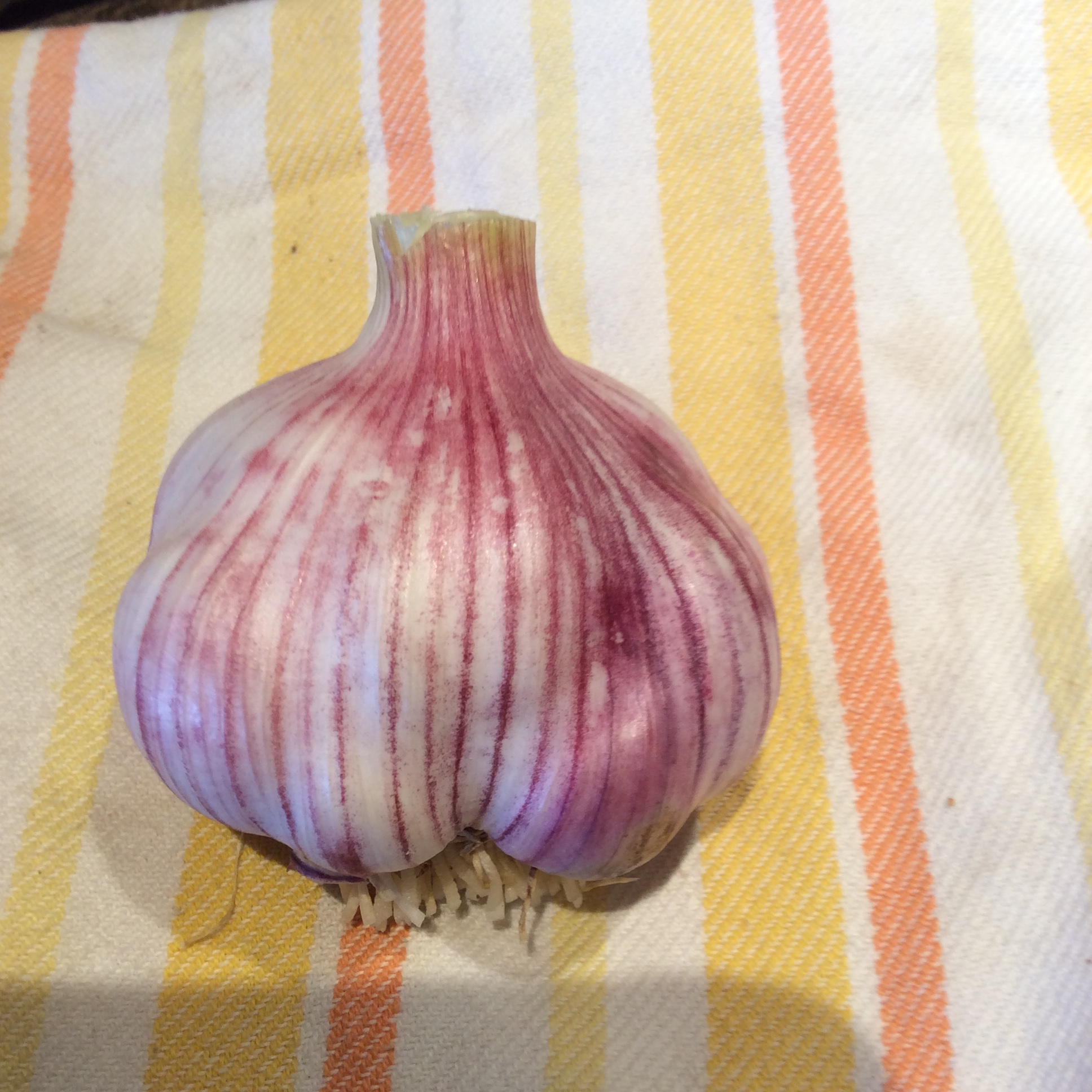
When ready for curing, they will look like the picture below. Later on when you clean them up and bring them into the kitchen, they will look like the picture at the top of this post.

Before you start using your garlic, be sure to set aside the largest and best bulbs with the largest cloves for replanting.

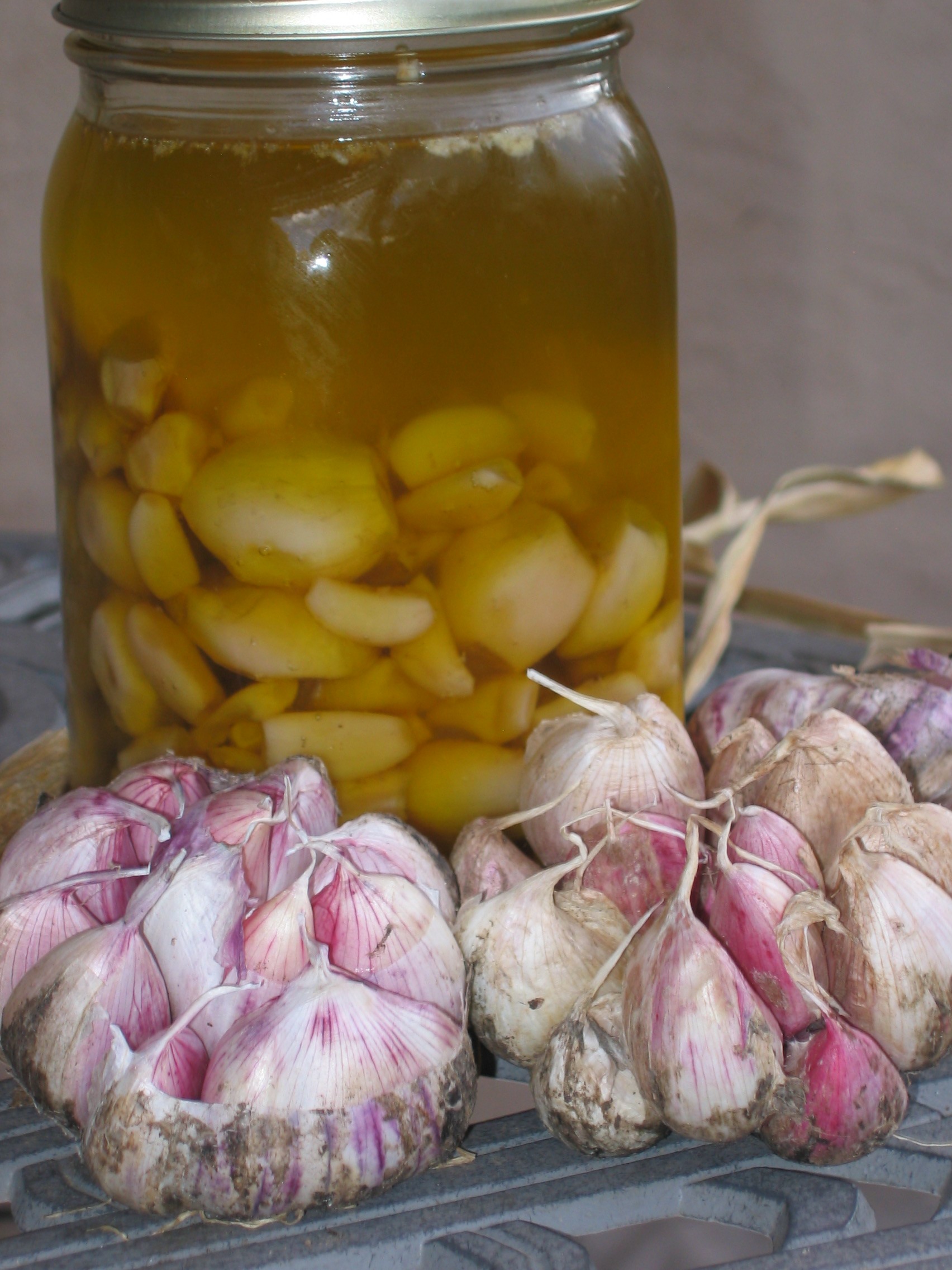
Use your garlic.  A lot. This is the fresh clean-flavored garlic that makes recipes like Chicken with 40 Cloves of Garlic or Chicken with Fennel, Pernod, and Garlic such a pleasure to eat. Confit some and enjoy it on toasted sourdough bread or crackers, or alongside roast chicken, or in pepperonata. To confit garlic, peel a quart’s worth of cloves, put in a small heavy saucepan, cover with good extra virgin olive oil and add a heaping teaspoon of sea salt, bring to a simmer, and simmer slowly over low heat with an occasional gentle stir until the cloves just hold their shape but are soft and can be crushed easily with a spoon. If there is any hard “core,” keep simmering. Cool and store in a jar in the refrigerator. Be sure to keep the cloves covered with olive oil and it will keep a month or more. The confiting oil is a treasure, great in dressings or for drizzling.

The image of chicken and garlic above was borrowed from Food 52, my favorite cooking site.

For a far more detailed take on garlic curing and storage, review this excellent PDF from Boundary Garlic Farm.

Turkish Rocket in garden and kitchen

Last year I finally got around to planting  the perennial vegetable Turkish rocket, Bunius orientalis, and this year I was able to experiment with it in the kitchen. I had read that it was invasive and so I limited myself to five plants that I could watch carefully, meaning that my experiments were on a very small scale. So far, here’s what I found:

As so many have discovered before me,  the leaves are so strongly mustardy that they create quite an unpleasant burn in the back of the throat, and they are not a culinary object as far as I am concerned. Even my goat wouldn’t  eat them.

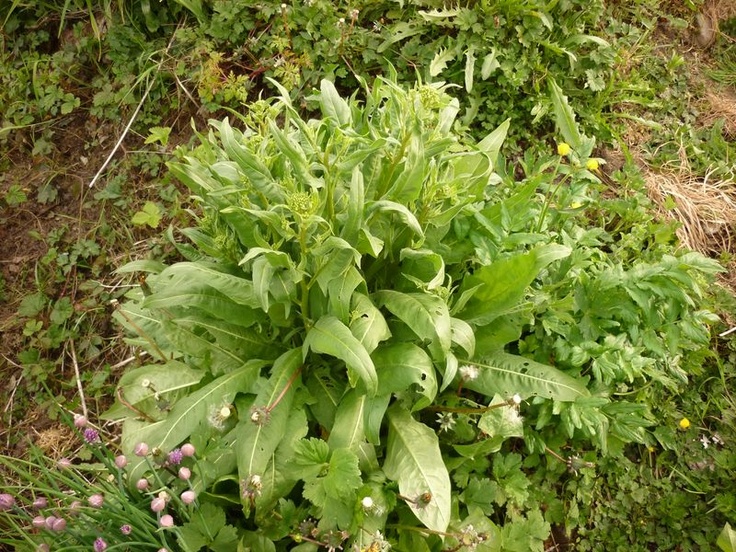
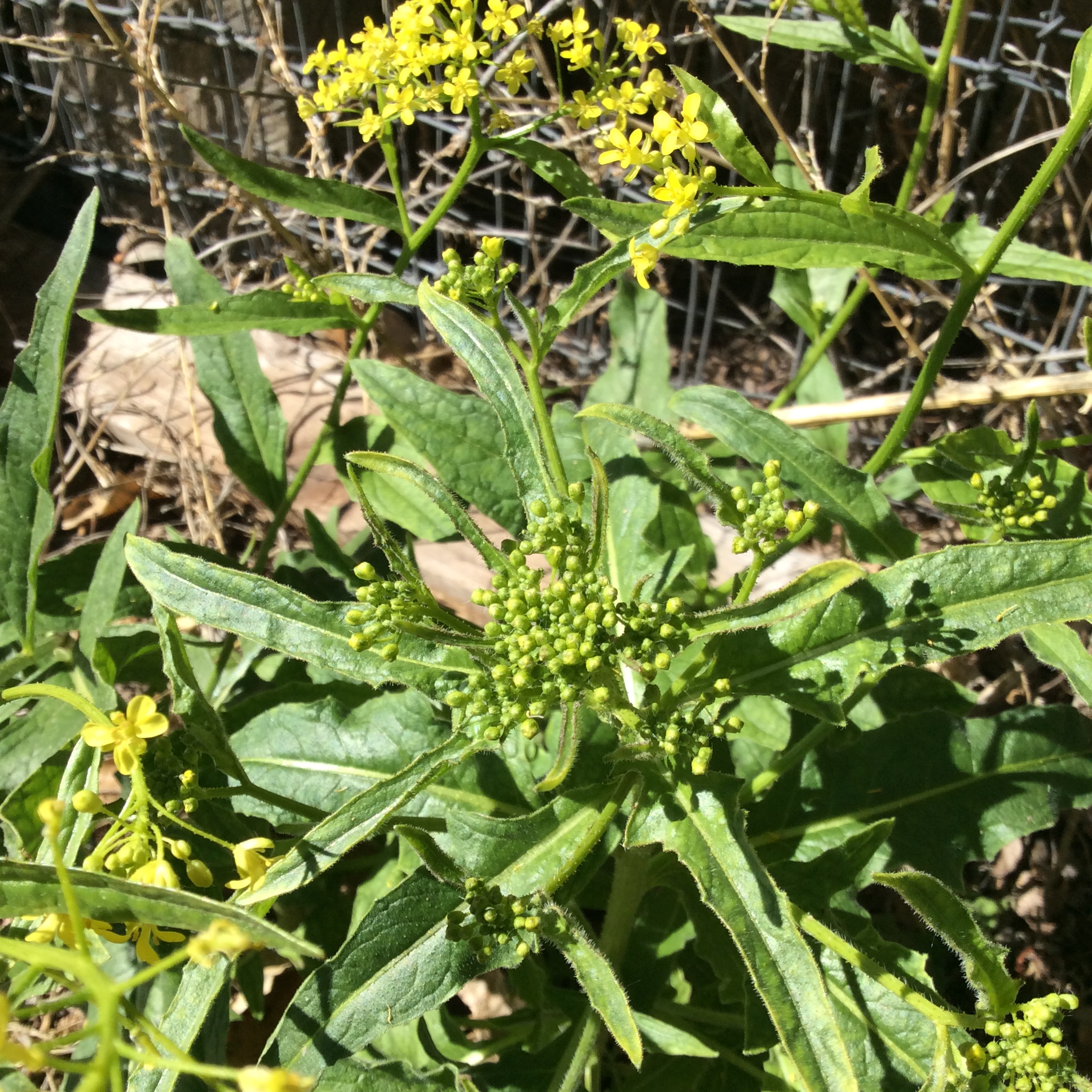
The bud clusters are used like broccoli rabe.  They can be very delicious, but timing is everything. The proper stage is shown in the photo above, when each stalk has one small bud cluster and the buds themselves are green, not yet showing the edges of bright yellow petals.  At this point, they can be blanched in boiling water for a minute or two, drained well, and then sautéed in olive oil with garlic and chili flakes and have the slight nutty-mustardy quality of good rabe,  with no burn as you swallow. You would need several well-established plants to get enough for a few servings, as far as I can tell, but they would certainly deserve their space.

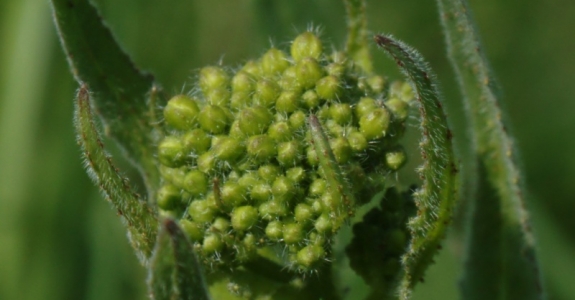
Here’s a close-up of a stalk in the perfect stage for eating. Snap off the top few inches of stem with the buds and it will cook up beautifully.

This picture shows the next stage in the stalk’s development.  The stem has elongated and the small original cluster has spread into sub clusters. I had hoped that this would be a good stage for harvesting, since you would get more material than at earlier stages, however it was not to be. At this stage, even when  cooked, there is a very unpleasant mustardy burn that continues to build in the back of the throat for a few minutes after swallowing. Not a pleasant experience. Once the subclusters have started to show and some yellow shows on the outermost buds, don’t bother.  It is possible that they could be  cooked longer, cooled, and ground with olive oil, salt, and maybe a little lemon into a sharp mustard-like condiment, but I have not experimented with that and throw it out as a purely theoretical idea, possibly similar to a green horseradish sauce.  Because of the throat burn factor, if you choose to experiment with that idea, try it out privately before you foist it on hapless guests.

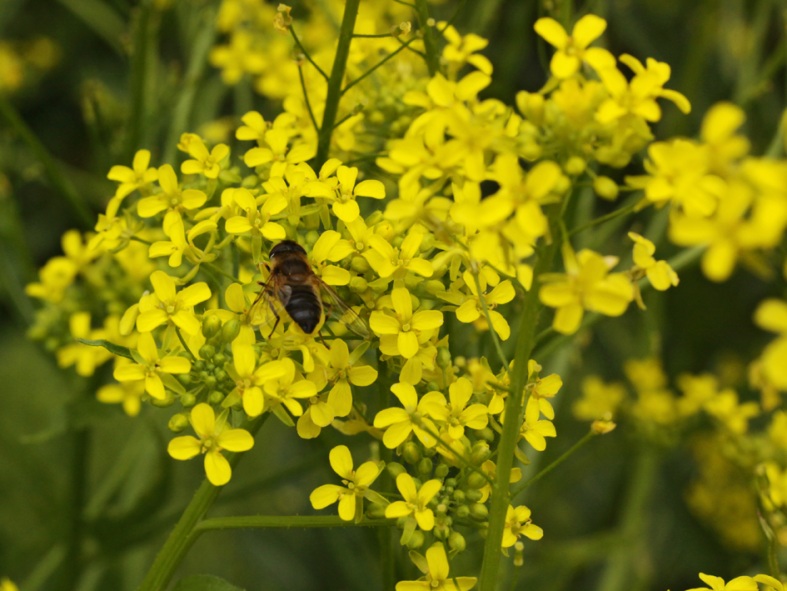
Then there is the flowering stage at which it is a bright cheerful yellow and is a fair bee plant, not highly preferred but certainly visited.

This is the stage that I am waiting for, so that I can plant a whole row of it and have a lot more to cook in the future.

For me this perennial vegetable fills a good niche  after the winter broccoli is gone, but before the spring broccoli begins producing. This time of year there are a lot of edible leaves in my garden but not too much else, so some textural variation is very welcome.

Regarding the claims of invasiveness, I am sure that this is true in many areas, but in my desert climate it requires a fair amount of water to grow well, so I doubt that it could grow outside the confines of my fence.

A Quickie on Pollination

IMG_5498

There can’t be anybody left who doesn’t know about our pollinator crisis. I was saddened recently when an experienced beekeeper who is profoundly attentive to her bees told me that she lost a third of her hives over the last year. It can’t be overstated that our friend over millennia, Apis mellifera, is in deep trouble and therefore so are we.

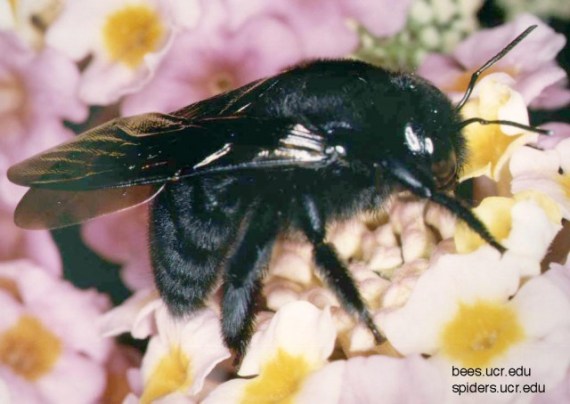
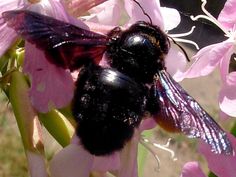
This makes our remaining pollinators even more important. Everyone recognizes bumblebees and knows that they are active pollinators,  and in my area most people recognize the coal black stylish looking carpenter bee.  Unfortunately, they recognize it because they think it is a danger to their houses and tend to reach for spray the minute they see it.  Carpenter bees are active pollinators and adapted to our area and spraying them is a really, really bad idea under most circumstances, but when I did a search on them to find a photograph, I was horrified to find that almost all  the hits that I found were about exterminating them and advised application of “residual pesticides,” i.e. pesticides that leave residues which kill for a long time after they are sprayed.  This is sick stuff, in my view, especially since it kills large numbers of other species.  On the other hand, I own a house with exposed wood beams and don’t want my house bored into any more than anybody else does.  I have repeatedly noticed that the carpenter bees like cottonwood, and have decided to keep a pile of cottonwood logs and branches where the bees can burrow around at peace.  I read that they also will not attack painted wood. Clearly, I will be watching my beams closely for signs of invasion, and if I see carpenter bee activity I will consult an entomologist (not an exterminator, since they have a business interest in selling me their poisonous services) about what to do. But so far that hasn’t happened. And I guess that’s my real point: the mere sight of something that might potentially be harmful but that is minding its own business at the moment is not a reason to get reactive and act harmfully. The mindset of permaculture and homesteading is to avoid making a hazard out of something that isn’t.  This point is rather neatly illustrated below:

IMG_5502

Help our bees. All of them.