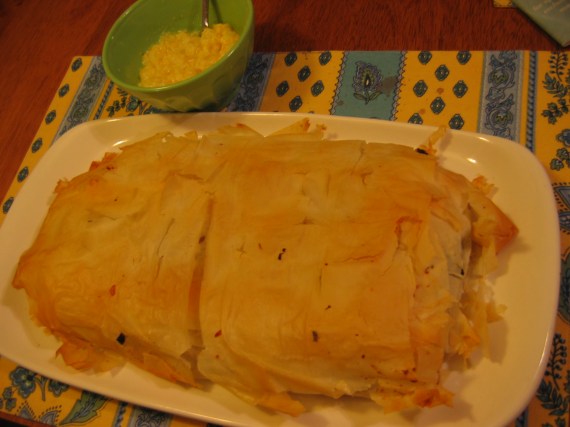
We’re eating meatless until Easter, and with an active vegetable garden that’s no hardship. This is a great time of year for greens, and one of my favorite ways to eat a lot of greens is in a hortapita, or borek, a wild-greens pie found under various names throughout the Mediterranean. For a complete and scholarly exploration of the borek, see Paula Wolfert’s Mediterranean Grains and Greens, which is full of delicious recipes. My own method is rough and unscholarly (surprise!) , but produces tasty greens pies thoughout the season with a minimum of fuss.
First, catch your greens. You need somewhere between 1.5 and 2 pounds of them. My most recent borek was made with chard, nettles, bolted arugula, mustard greens, chicory, green onions, and herbs because that’s what I had a lot of at the moment. I try for a ratio of about half strong-flavored and half mild-flavored greens, but many people may prefer more mild greens. Chard and nettles are mild, while mustard, chicory, and bolted arugula are strong-tasting, so I was careful not to let strong exceed mild in bulk. If you’re buying your greens, a bunch each of chard, dandelion (which is actually chicory) and some zippy green like aruguloa or watercress should come out to the right amount. For flavoring, fennel fronds are a necessity in my book. A handful of the nonbulbing kind, or two handfuls of the relatively weak-flavored fronds of bulb fennel, plus a handful of parsley is always a good start. If you can’t get fennel fronds, use a small handful of dill. Then add other herbs to taste. A tablespoon each of thyme leaves and oregano leaves is my go-to addition, but savory, marjoram, shallot greens, sage (in very small quantities) and tarragon are all possibilities. Just make sure to taste the finished greens mixture carefully for any needed adjustments.
First, chop 2-4 cloves of garlic depending on your taste for garlic, and the white parts of 6-7 green onions (chop the green parts separately and reserve them for later.) Saute the garlic and onion bottoms over low/medium heat in olive oil (about a quarter cup) in a very large skillet or a large flat-bottomed saucepan. Meanwhile, lay all your well-washed greens on a cutting board, one bundle or large handful at a time, and slice them crosswise into thin strips. When the garlic is cooked but not colored at all, add the greens. It will make a huge pile, and this is why you need a big skillet. Continue to cook, turning every few minutes, until the greens are thoroughly wilted. Now add the herbs, finely chopped, and the chopped onion greens. Cook and stir for another few minutes. Now remove from the heat, and either proceed with your borek or refrigerate until later. You can keep the greens mixture for up to two days refrigerated.
When you’re ready to proceed, thaw a package of phyllo pastry and put some olive oil in a bowl at your workspace. Keep the phyllo covered with a barely-damp towel when you aren’t working with it. Taste your greens mixture, salt to taste, add a few more herbs if needed, and decide whether you want to add cheese. Crumbled feta is good, as is nearly any grated cheese if it has no added flavorings. Consult Ms. Wolfert if you are a stickler for authenticity. If not, think about what would taste good to you. Some grated Parmesan is a completely inauthentic addition, but quite delicious. The amount to be added depends on the flavor of the cheese. Add a little to the greens, mix in well, taste, add a little more, taste again. No set amount will work, since you’ll be using a different greens mixture every time you make this dish. If you prefer not to add cheese, a handful of toasted pine nuts is very tasty.
Lay out one sheet on a large baking sheet, brush it lightly with olive oil, lay another sheet on top, brush with oil, repeat. When you have six sheets in place, put the greens mixture in the center and spread it out until it’s about an inch thick. Turn the excess phyllo around the sides over the top. Now brush another sheet with oil, roughly fold it in half, and layer it over the top. Continue until your top “crust” is six layers thick, and tuck the overhang under the edges of the borek. Bake at 350 degrees until gold and crisp on top. Eat hot, warm, or at room temperature. A little bowl of Lemon Oregano Jam, which will be posted soon on my recipe page, is a lovely addition and freshens the flavor wonderfully.
The variations are endless: bread dough crust rather than pastry, different greens, different herbs, different cheeses, and additions of cooked grains like bulgur are all possibilities. I recommend against adding very strong-flavored greens like kale or turnip greens, but if you’re very fond of those greens, be my guest. Green leafy vegetables are among the very healthiest foods that you can eat, packed full of vitamins, minerals, and antioxidants, and anything that induces you to eat more of them is on the side of the angels.
For more about greens for hortapitas, click here!
Archive for the ‘Uncategorized’ Category
22 Mar
The Greens of Spring: Hortapitas
11 Feb
Mushrooms: cleaning up the waste
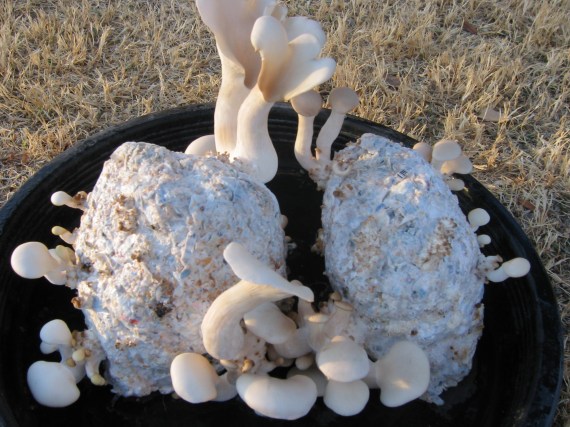
One of my Christmas treats was a kit for growing oyster mushrooms. It came from Fungi Perfecti, and it consisted of a log of mycelium-impregnated straw that needed to be covered with a plastic-bag humidity tent and misted a few times a day. It produced oyster mushrooms in a responsible fashion, and you can see its portrait at the end of this post; click below to read and see the rest. Far more interesting, though, was growing oyster mushrooms from spawn. The spawn can be ordered from them or from other suppliers and used to inoculate mediums chosen by you (with guidance from the experts). The recommendation is to grow them in coffee grounds (start saving them in a bag in the freezer) but I grew the ones that you see above in shredded waste paper and am very excited about the results.
Click here for directions!
5 Dec
Thanks Giving
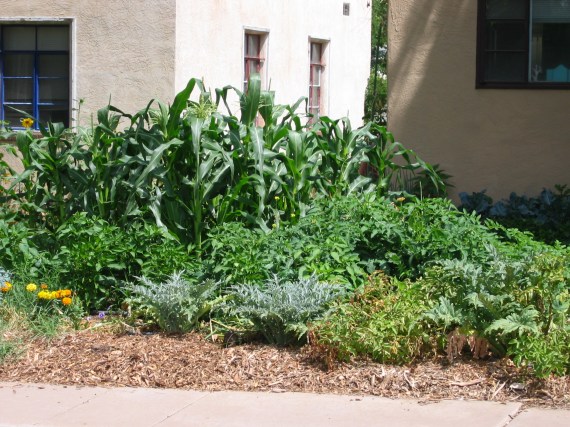
What a deeply joyful Thanksgiving I was privileged to have: here in New Mexico we had both a new president and a good long soaking rain, and in the high desert it’s a little hard to say which is more exciting. The garden is still providing some lettuce, arugula, herbs, and carrots, but I have more time to reflect on what I’m doing. This has led to thinking about what, exactly, my urban homestead means. It certainly doesn’t mean self-sufficiency. That won’t happen until I can grow coffee and olive oil. It doesn’t mean grimly making do. It’s a happy celebration of what one small piece of city dirt can produce. I have a medical practice and a number of hobbies, but growing my own food in the most space-intensive way possible is a lot of fun, and I have a website and blog to let other people know that, if they want to provide for themselves a little more, they don’t need to quit their job and move to the country. I don’t even think that’s the best way to start. Start where you are, with what you have. People with no land at all can bake sourdough bread and brew beer, and those are indoor “yeast gardens.” People with a balcony can grow herbs in pots. People with a tiny yard can utilize it. In the quest for local food, we can have the most local food of all, and if we have more garden space at other points in our lives, we’ll know more about how to use it if we’ve practiced in small ways. Please go to my website, www.localfoodalbuquerque.com, for more about urban gardening, and look at my blog entries on other pages for details about the many small pleasures that crop up along the way.
Most of my winter posts will be about canning, preserving, and using what was made during the summer. That’s also a way of remembering the abundant season and being grateful for what I received. So, here’s a fond look backward at
the colors of summer. 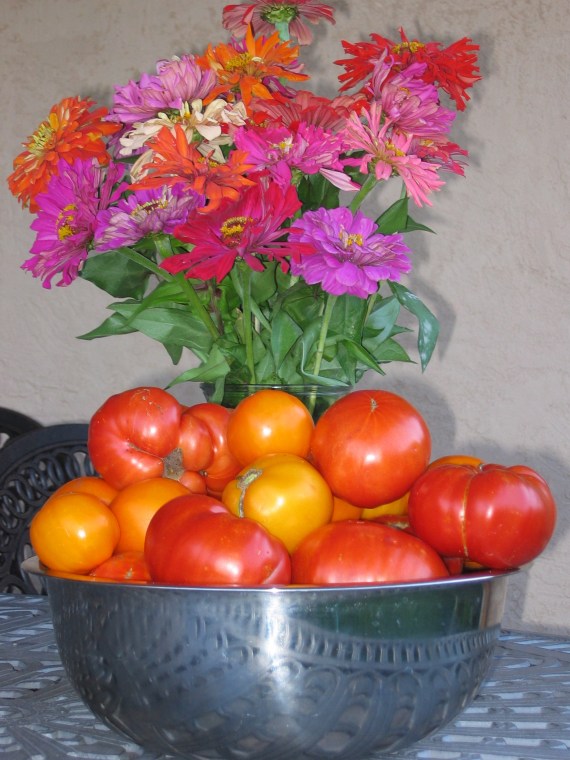
29 Nov
pansies- more than an edible flower
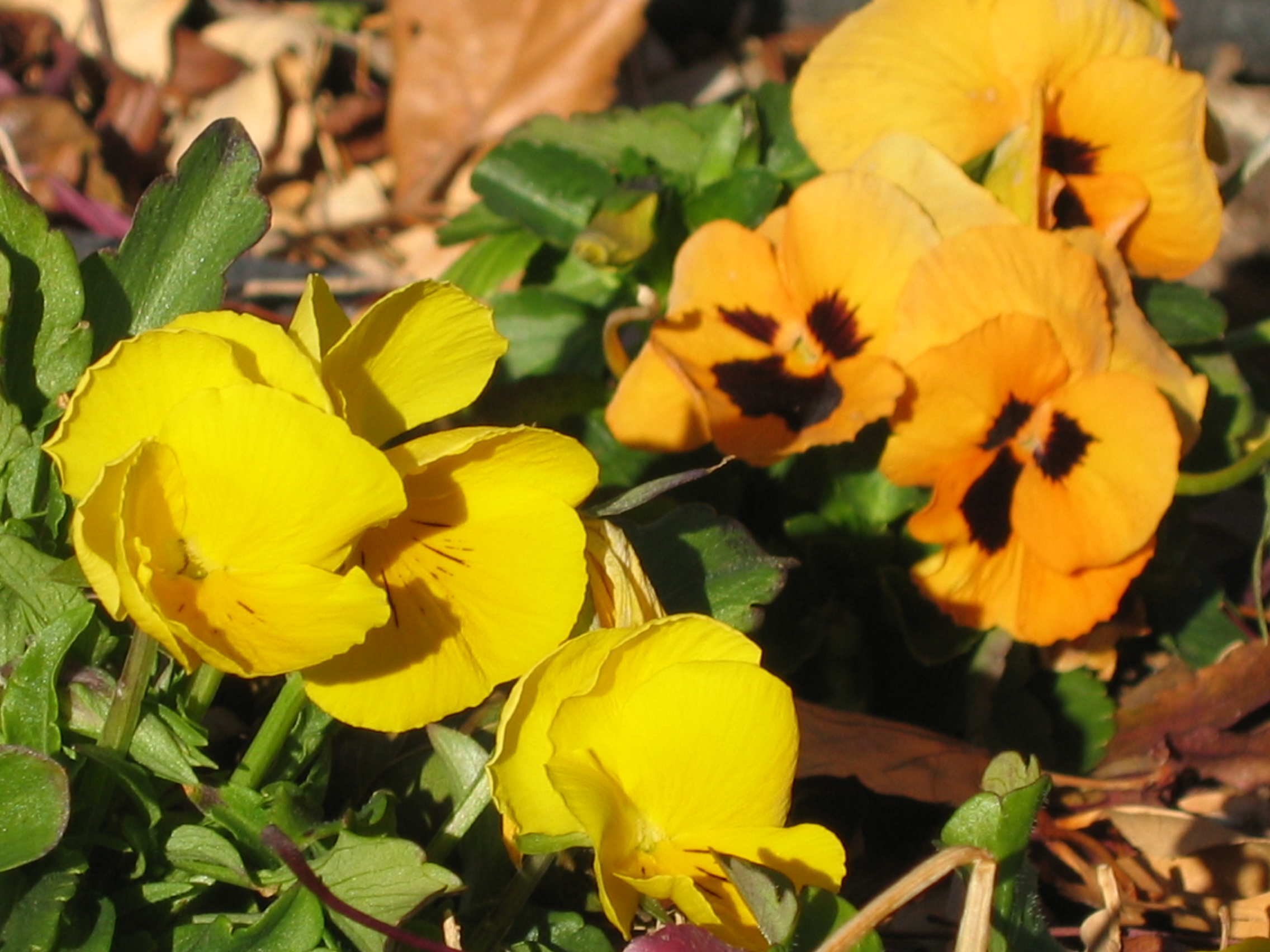
Here in Albuquerque, pansies are a pretty presence during the fall, take a brief break in the coldest weather, and then bloom themselves silly in the spring. The hot weather finishes them off. For years I’ve enjoyed their beauty and have used the edible and mild-tasting flowers to beautify my salads. It was only this year that I learned that the leaves are edible too, and in fact are very tasty, with a substantial but tender texture and a cool, slightly minty taste rather like mache’. Now I put in pansy plants in late September, let them establish themselves for a month, and begin plucking leaves and flowers at will until late November. After that I leave them alone until they show fresh growth in the spring. When making mixed salads, the mildly sweet flowers and leaves go better with lettuces than with the wilder-flavored greens like arugula or any of the chicories. Keep the flowers on top where they can be appreciated. I like to lay them on after the greens have been dressed. Gently floral olive oils like the ones from Provence and mild vinegars or a little lemon juice let these subtle flavors shine.
It’s worth noting that this triple-purpose quality makes pansies a good use of space in the cold months, and means that you can get some local food even from a pot of flowers by your door.
Some people make derisive noises about edible flowers, and think that the trend was a 1980’s California phenomenon and is now long over. Well, edible flowers have a culinary history several hundred years old at a minimum, and not likely to be over any time soon. Anything that both beautifies food and makes it taste better is worth learning about and preserving. The best culinary list of flowers that I know of is an appendix in John Ash’s From the Earth to the Table, which is a delightful cookbook in other respects as well. Second-hand copies are often available. Check it out.
If you get your plants from a nursery, ask whether they’ve been sprayed or fertilized, and wait a month or more to make sure they’re safe to eat.
 My urban homestead