Archive for the ‘recipe’ Category

Kitchen Staples: Spaetzle


This is the time of year for warming and filling meals, but often there isn’t much time to fuss with an elaborate dish. This is when I rely on stews like the short rib braise above or my favorite “Sort-of Paprikash.” If you’re a vegetarian, stews of mushrooms and cream are satisfyingly meaty. Stews are wonderful to make ahead, and they hang out happily in the refrigerator for a few days, improving all the while if they were good to begin with. You want a good carbohydrate on the plate to absorb the rich juices and minimize your meat consumption, and one of my very favorites is spaetzle. It’s delicious, and much quicker and easier than homemade noodles. To male spaetzle efficiently you need a spaetzle maker, which is a $15 gadget readily available by mail order. Sometimes you can find one at local kitchenware stores.

I have recently started using a new recipe because I have lovely fresh eggs coming in from my chickens, and the new recipe uses more of the ingredient I grow myself, eggs, and less of the one I don’t, milk. Remember to make the dough at least half an hour before you want to cook it.

For enough to feed four people very generously:

3 cups unbleached flour

6 eggs

1 teaspoon salt

1/2- 3/4 cup of milk

1/4 cup melted butter

Put the flour and salt in a bowl. Combine the beaten eggs and melted butter, pour into the bowl, and add half a cup of milk. Stir to combine. you are aiming for a thin dough which will “glop” off the end of the spoon in big lumps but which is definitely thicker than a batter. Add a little more milk if you need to. When combined, set in the refrigerator for at least half an hour to let the gluten relax. You can make it up to several hours before you need it. When ready to cook, bring a large shallow pan of salted water to a fast simmer. Fill your little devise with dough, slide the carriage back and forth, and little egg dumplings will fall into the water below. Fill the device again, and repeat until you’ve used up your dough. If the temperature of the water has dropped a lot, turn up the heat, but a hard boil will break up the dumplings. When they float, they’re done. Usually this takes about 5 minutes. Bite one to make sure that it isn’t soggy in the middle. Drain and serve with stew or rich meat juices on top.

Here’s something I learned in a cooking class in Sonoma, and it really works: after draining, you can spread the spaetzle out on a clean baking sheet and set them aside to cool. They will now keep for a day or two in the refrigerator, and can be reheated when you need them. If anything, they taste better than when eaten immediately. They can also be heated by frying in a big skillet with some clarified butter, so that they get crisp brown crunchy spots, and this is truly good, especially if you toss in some thyme leaves and a small handful of chopped parsley.
Root vegetables Chairoscuro


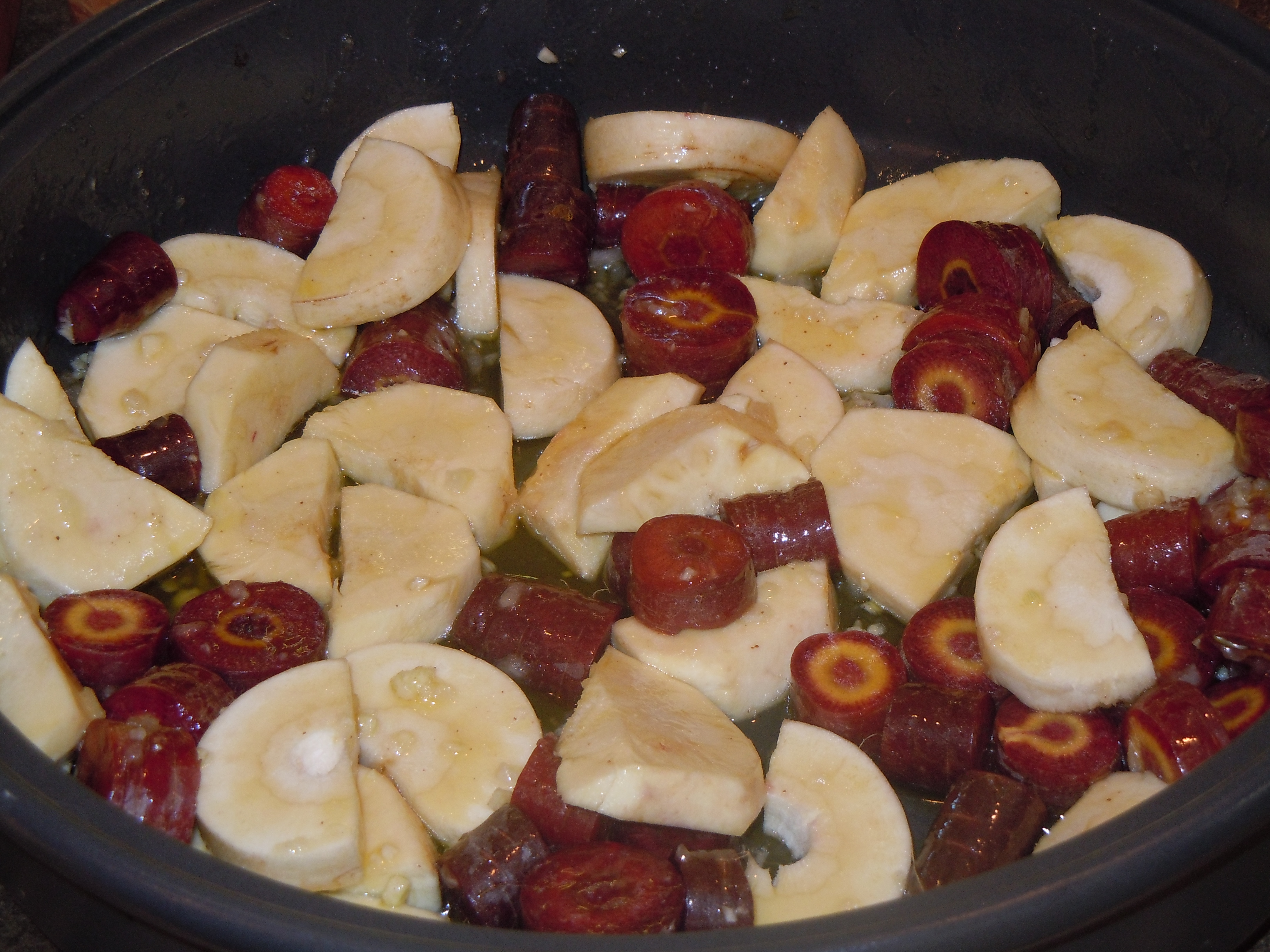
This time of year, parsnips are your friends. They are sitting patiently out in the garden waiting for you to get to them, never demanding any special attention or winter storage. During hot weather they weren’t worth eating and you tended to forget about them, but while you were catering to the flighty tomatoes and peppers, they were biding their time. When the needier vegetables gave in to the frosts, they started to convert their stored starches to sugars. Now, whenever you can pry them out of the cold ground, they’re ready to meet you halfway with a sweet flavor that repays your labor. I love them roasted, but for whatever reason I’m not big on white vegetables, and I started looking for something to relieve their snowy monotony. Finally I settled on their visual opposite, the deep purple carrots that become almost black when roasted, to create a dish with a little drama.
Clean two big parsnips and cut them into chunks no more than an inch on any side. Thoroughly scrub 3 large purple carrots and cut them into chunks somewhat smaller than the parsnips. Combine a quarter cup of good olive oil, a few tablespoons of white wine, half a teaspoon of salt or to taste, and two cloves of chopped garlic. Now this part is important: Put the carrots and the parsnips in two separate bowls and toss each with half the olive oil mixture. Don’t toss them together, because the carrots will “bleed” and stain the parsnips an unattractive magenta in places. If you are using regular orange carrots, separation doesn’t matter. Put the pieces in a cazuela big enough to hold them in one layer, or use a 9X13 heavy pan lined with parchment paper. Roast at 325. Don’t toss them around during roasting, because of the staining problem from the anthocyanins in purple carrots. The timing will vary a lot depending on the tender/tough ratio of the roots and on your personal taste. I like winter root vegetables roasted until they are soft and well caramelized, and it usually takes close to 2 hours at this low heat. If you like yours with some crunch you can stop cooking them sooner, but taste them before turning the oven off. These are not the tender roots of summer, they’re big meaty winter roots, and you may not like the amount of crunch they retain. If necessary, cook longer. Sprinkle a little bit of minced parsley over the top. If you want to be sure they’re done in time for dinner, cook them a little earlier in the day and leave them slightly underdone, then return to the oven for a final 20 minutes before dinner.

A big serving of these “white and black” roots on a red plate makes a great main course with a little piece of something meaty in the center. A few thighs of good pastured chicken seasoned with thyme, garlic, and olive oil can be roasted in the same oven for the last hour or so of cooking and will accent the roots nicely without overwhelming their flavors.

Kitchen Staples: Cornbread with more corn


Like any Southerner and lots of other people, I’m an ardent fan of cornbread. I’ve probably tested dozens of cornbread recipes in my life, but I keep coming back to my favorite one, which uses about half cornmeal and half white flour. Since reading The Resilient Gardener, I’m making some moves toward utilizing more staples that I could eventually produce for myself. I don’t grow field corn currently, but I might in the future, and besides, I reason that using a higher percentage of corn might give a purer corn flavor. Certainly, the less white flour we eat the better, and the cornmeal that I buy is whole-grain. I would also add that if there’s one thing we do really well in the US it’s grow corn, so growing better types and using them in better ways is not a bad idea on a national as well as personal level.
Right now I’m experimenting with lots of different cornmeals, and they offer a range of flavors, colors, and antioxidants, but my husband loves the cheerful sunny color of yellow cornbread, so that’s what I chose for my first experiment in more-corn cornbread. I use a fine meal ground from flour corn, and this type of cornmeal definitely tastes better with some sugar in the recipe, but leave it out if you insist.
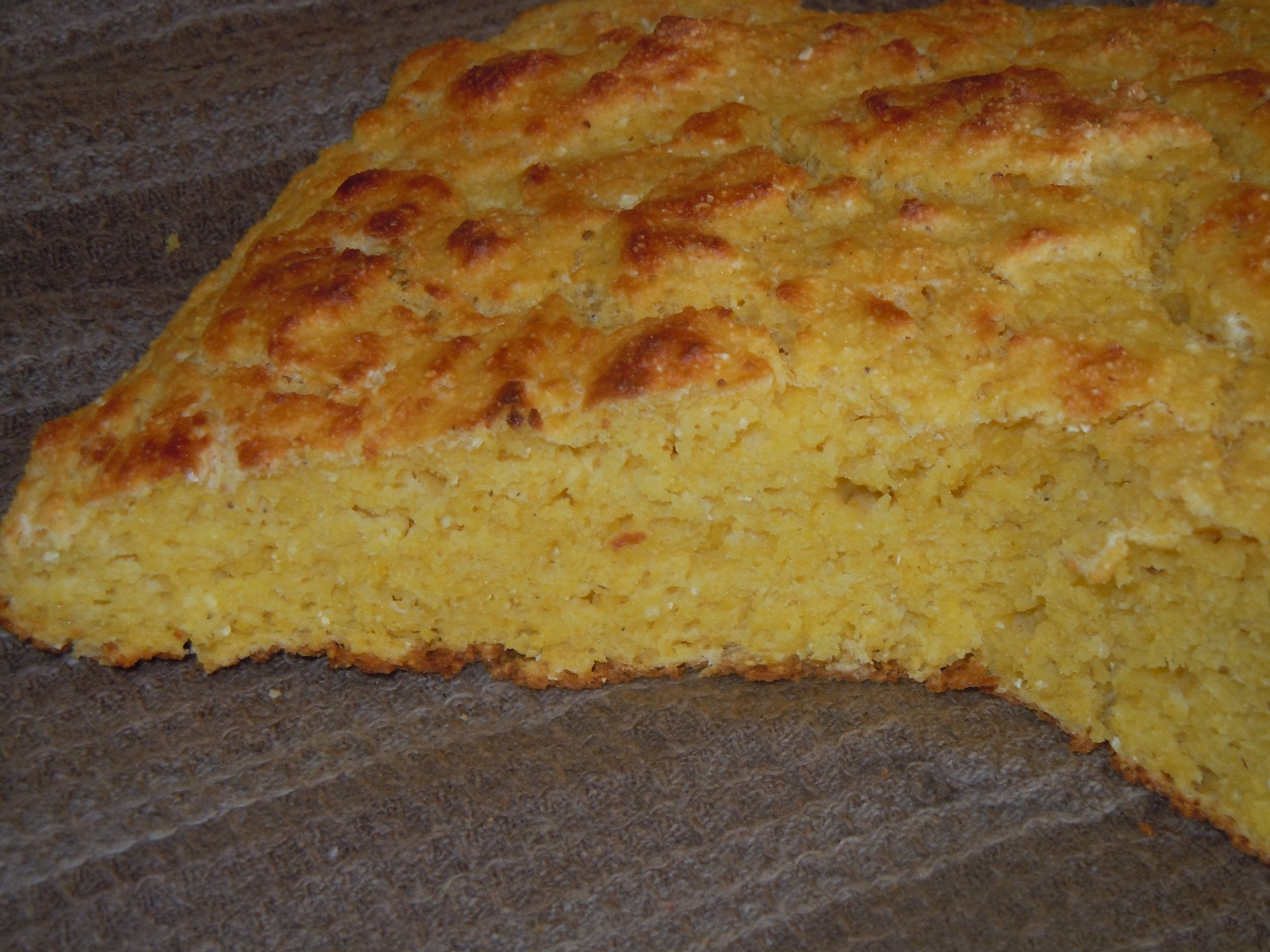
I must say that I really liked the flavor and texture and it rose nicely. I was afraid that I might get a corn-brick, but the texture was only slightly more dense than my usual recipe. Try it. My next cornbread recipe will be all-corn, and I’ll keep you posted on how it comes out.

Mostly-corn Cornbread

3 cups fine yellow cornmeal- whole-grain meal ground fairly recently is important to the flavor.
1/2 cup all-purpose white flour
2 teaspoons salt
2 teaspoons baking powder (our altitude is about 5000 feet. Down lower, you might need twice this much leavening)
4 tablespoons sugar (see below)
2 1/2 cups buttermilk
4 eggs
3 tablespoons butter

Preheat the oven to 425 degrees, and put a 12″ cast-iron skillet in to heat. You could also use another type of pan if it’s heavy and will hold heat. Mix all the dry ingredients in one bowl. In another bowl beat the eggs enough to blend them and stir in the buttermilk. When the oven reaches temp, take out the skillet and throw in the butter cut in pats. It will melt quickly and proceed to burn if you don’t have everything else standing ready. Stir the wet ingredients rapidly into the dry ingredients. Don’t worry that some smallish lumps remain. Pour the batter immediately into the skillet and put it back in the oven. Bake until done, testing with a cake tester or knife blade to be sure the middle is finished. Remove from the oven, and have a rack ready. Invert the pan and the bread will fall out onto your waiting oven-gloved hand. Now invert the bread again onto the rack, so it ends up right side up. Now it can cool a little without the bottom crust, which you took pains to make crisp, getting soggy. Eat in bliss, with butter and good raw honey.
Regarding the sugar, my favorite with corn is a specialty sugar called Heavenly Sugar. I get it at my local Co-op. It’s a whole-cane juice product like sucanet but without the strong flavor, and it perfectly accentuates the flavor of good cornmeal.
The Resilient Gardener is a book that I can’t seem to shut up about. Anybody interested in the issue of personal food security should read it. Here in the Southwest, where corn and squash are traditional crops well-suited to our climate, it’s especially relevant. I am continually impressed with the asides that suddenly make sense of something I’ve puzzled over. For instance, I’ve often wondered why some cornbread tastes bad to me with sugar in it, and some tastes bad without it. Ms. Deppe points out that flour corns taste better with some sugar, and flint corns taste better without it. Simple, really, as long as you have real knowledge of your ingredients.

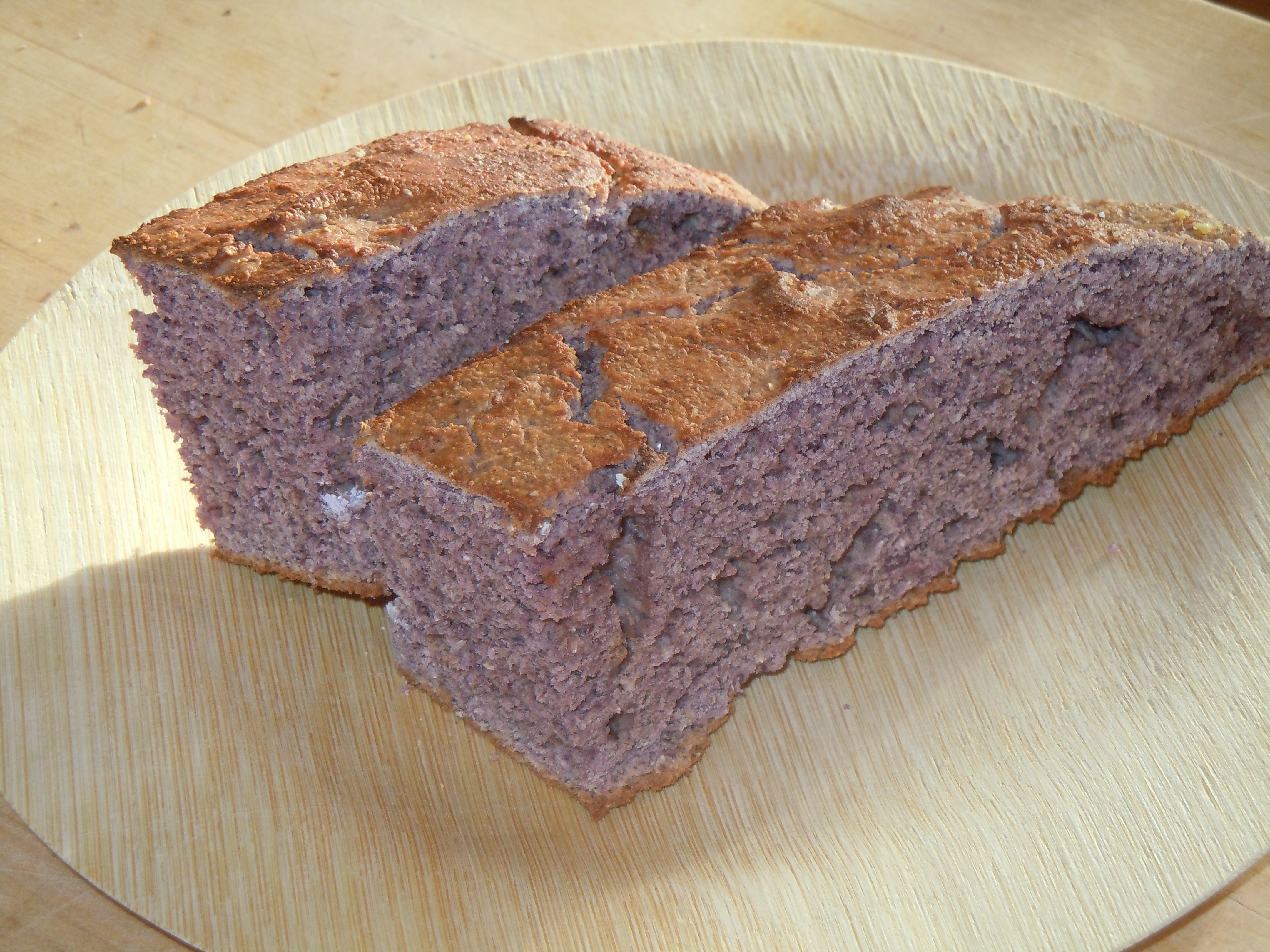
Addendum: I’m trying this recipe with a lot of different cornmeals, because it lets the flavor of the corn be foremost and it’s surprising what flavor differences there are. Below is the same recipe made with fresh blue cornmeal. The good part is that it’s very flavorful, with a deep earthy taste, and packed with fiber and antioxidants. The bad part is, well, it’s, uh, blue.  You will have to decide for yourself whether that bothers you. I’ll be interested to see how red and purple cornbread turn out..

Kitchen Staples: fresh pasta


Now that my chickens are laying and I have all these lovely fresh eggs around, I’m trotting out all my recipes that use up eggs. One of my very favorites is fresh pasta, and I can’t think of any kitchen skill more worth acquiring than pasta-making.
I used to make and roll pasta entirely by hand, and so I made it about twice a year. If you want to do it all by hand, you can get directions from any of several excellent cookbooks, and I particularly recommend The Splendid Table or Essentials of classic Italian cooking. My own current method is (surprise!) a lot more rough and ready, and relies on my Kitchenaid mixer. If you have one, get the pasta roller attachment (expensive but it works really well) and you’re all set. I use the Pro 600 mixer. I don’t know if the lighter ones will do the job. This is still a time-consuming undertaking, best suited to those relaxed weekend days that I think of as Domestic Goddess days, but it’s worth investing some time for a really delicious result.
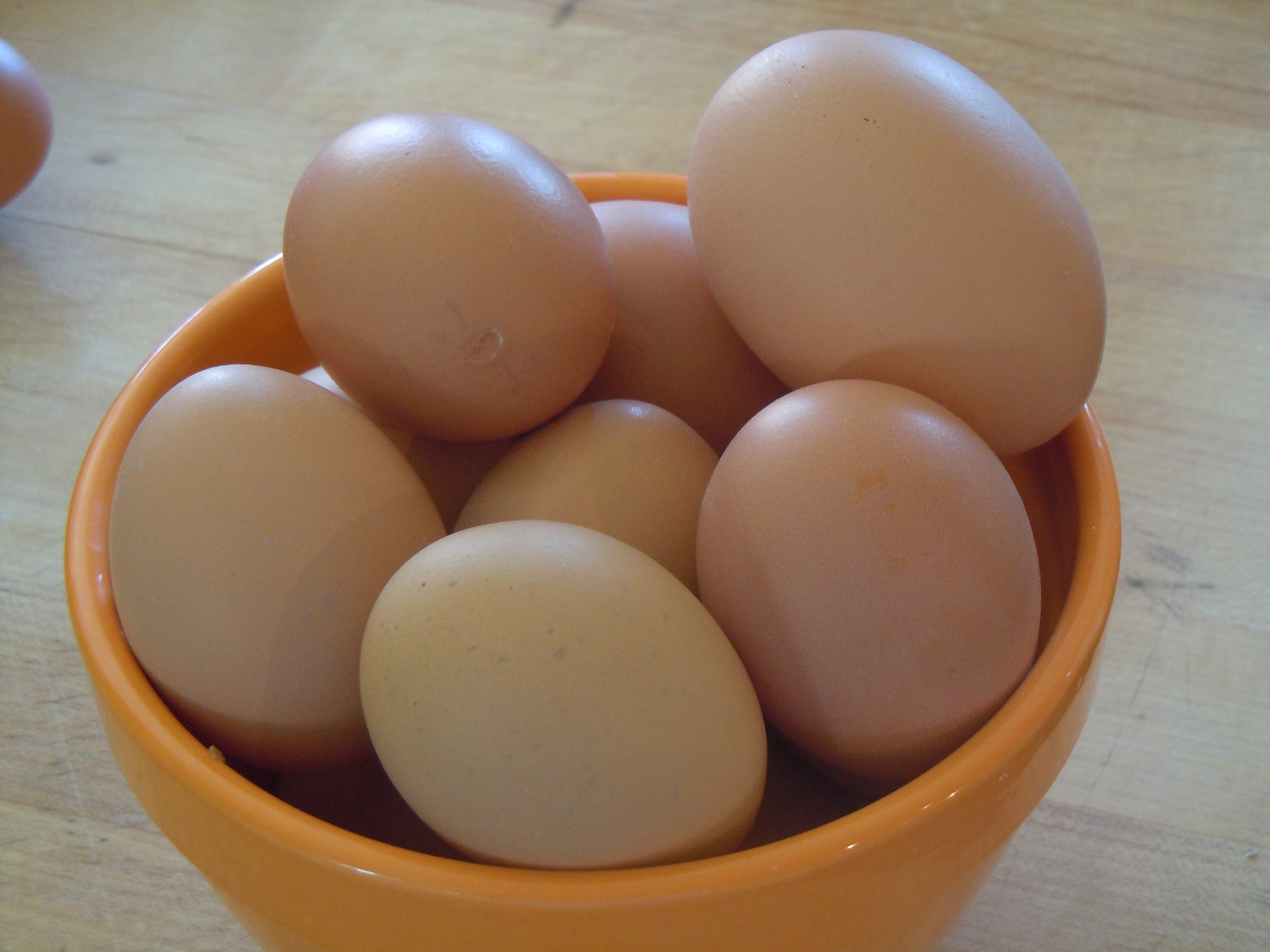
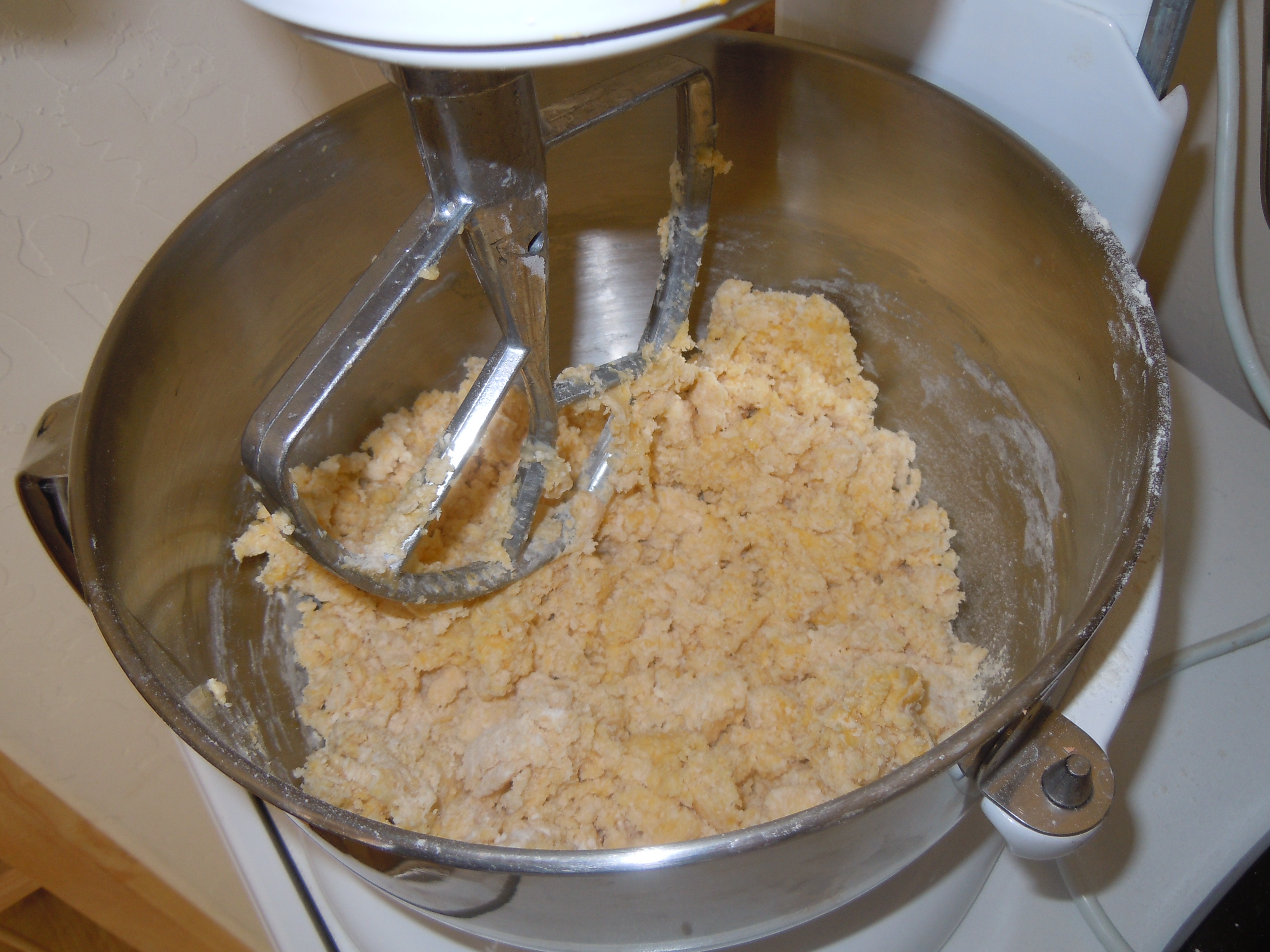
The quality of the eggs is important. If you don’t have your own hens, make an effort to get real free-range eggs (not the supermarket kind.) Start with the bowl in place on the mixer and the regular mixing blade. I usually start with three cups of flour, which makes 4 main-course servings or at least 6 first-course servings. Have about six eggs handy. Put the flour in the bowl, crack one egg into the mixing bowl, and start running the mixer at the lowest speed. After the first egg is incorporated, about half a minute, crack in the next one. Keep adding eggs until you have yellow shreds of moist-looking dough and some dry “crumbs” in the bowl, as shown here. Usually I use five eggs, but a lot depends on the flour, the size of the eggs, and the weather. If the dough won’t come together smoothly when you switch to the dough hook, add another egg and try again.

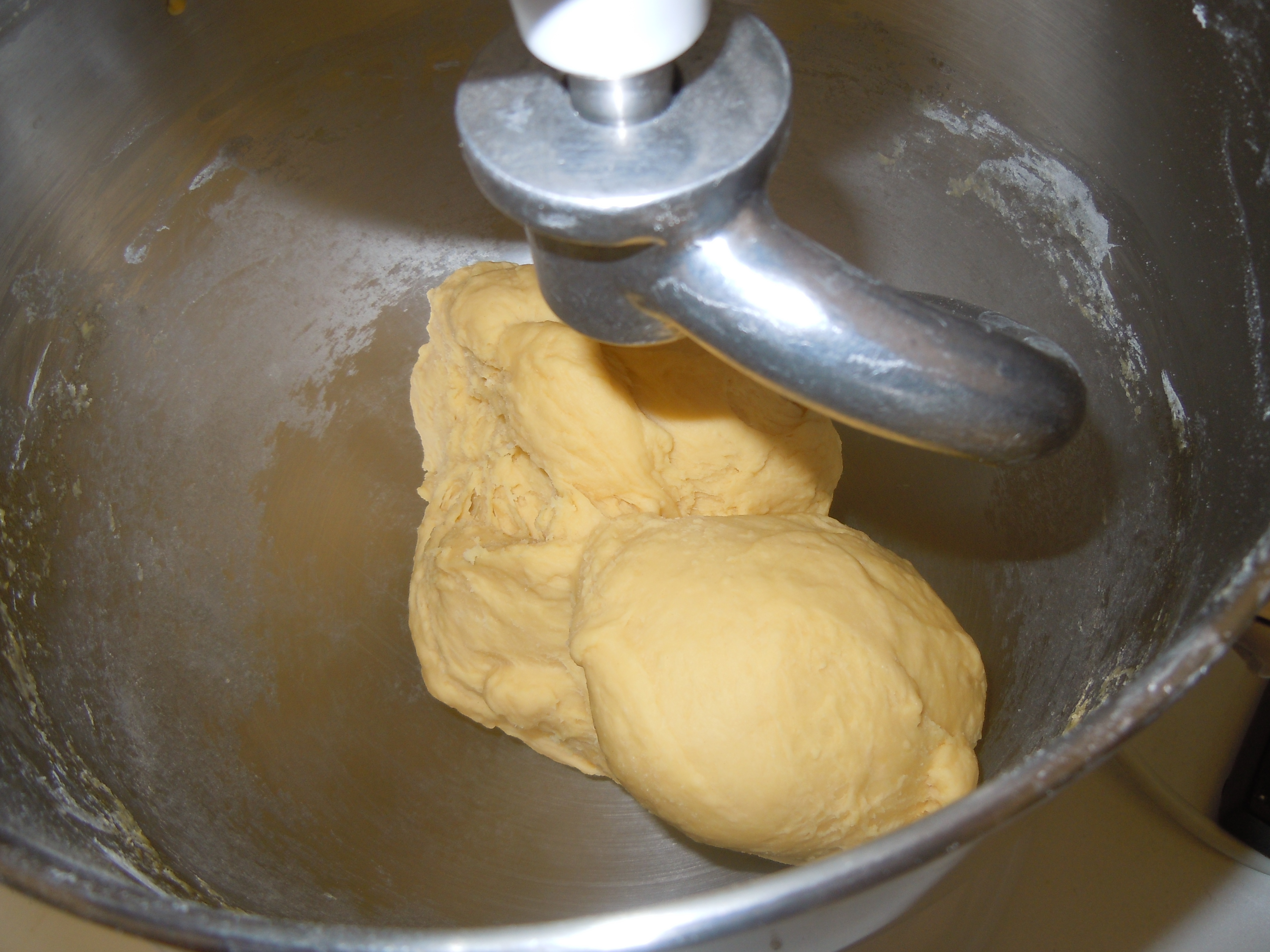
Now switch to the dough hook. Run the mixer at the lowest possible speed until the dough comes together into a ball on the hook, and keep kneading for at least five minutes. This is where I don’t know if the light models will work. Even my pro model strains pretty hard. It’s a stiff dough, much harder to handle than bread dough.

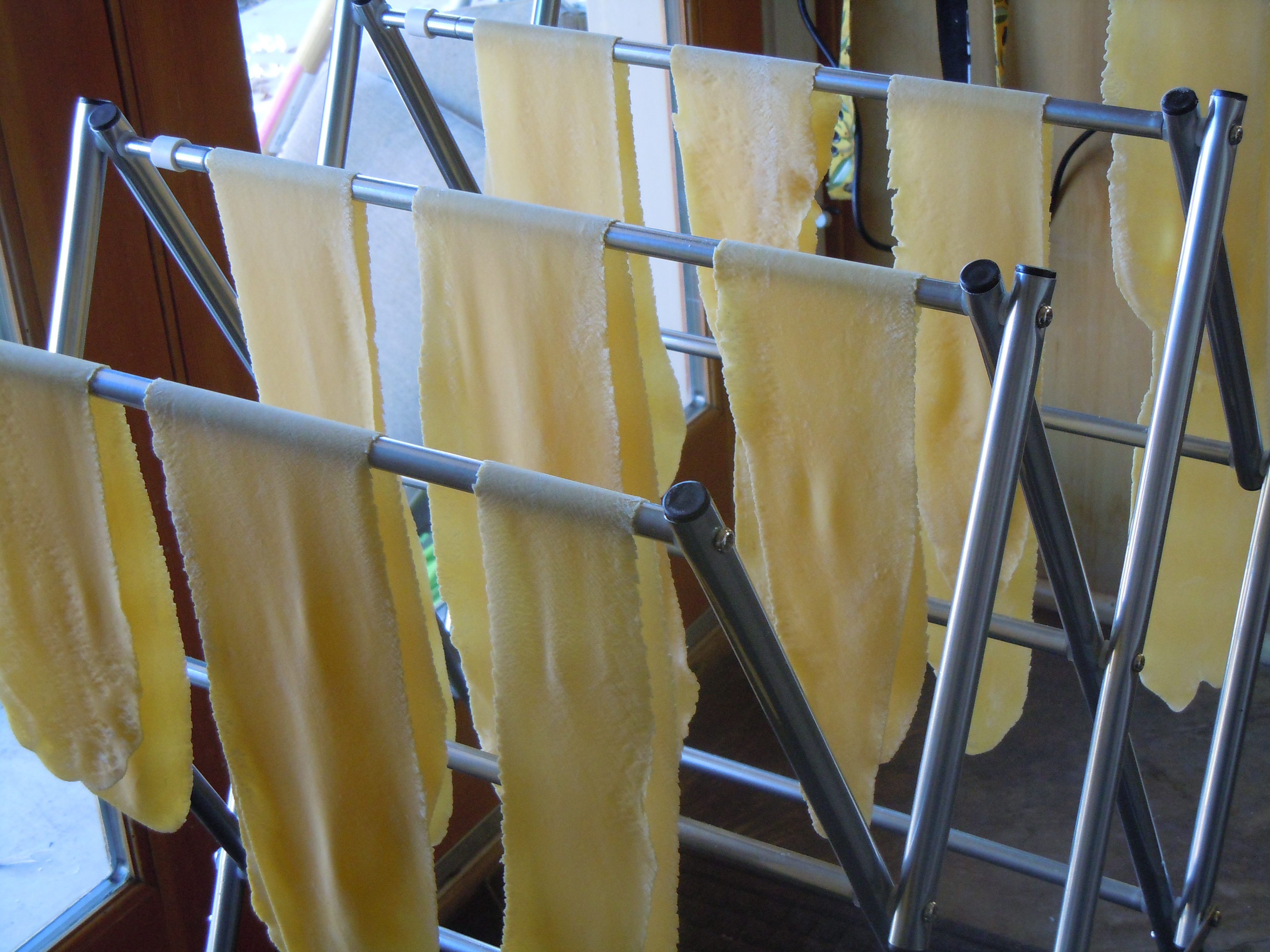
When the dough is smooth and thoroughly kneaded, dust the ball lightly with flour, wrap it in plastic wrap, and put it in the refrigerator for at least an hour and up to eight hours. When ready to roll it out, attach the pasta roller attachment. Cut the ball of dough into pieces about the size of a lemon, and dust each lightly with flour. SEt the rollers as wide as they will go, start the mixer at lowest speed, and start feeding the balls of dough through. I like to do all the balls through the widest setting, then all through the next setting down, etc. Now this is where a trick comes in handy. You are going to need a lot of hanging room for the sheets of dough. Wooden racks are sold for this purpose, but I got a metal laundry-drying rack instead and took the nylon mesh “shelf” off the top. It’s easy to clean due to the smooth surface, HOlds a lot more than most wooden racks, and folds away neatly when not in use. The sheets of pasta look absurdly charming hanging from their rack.

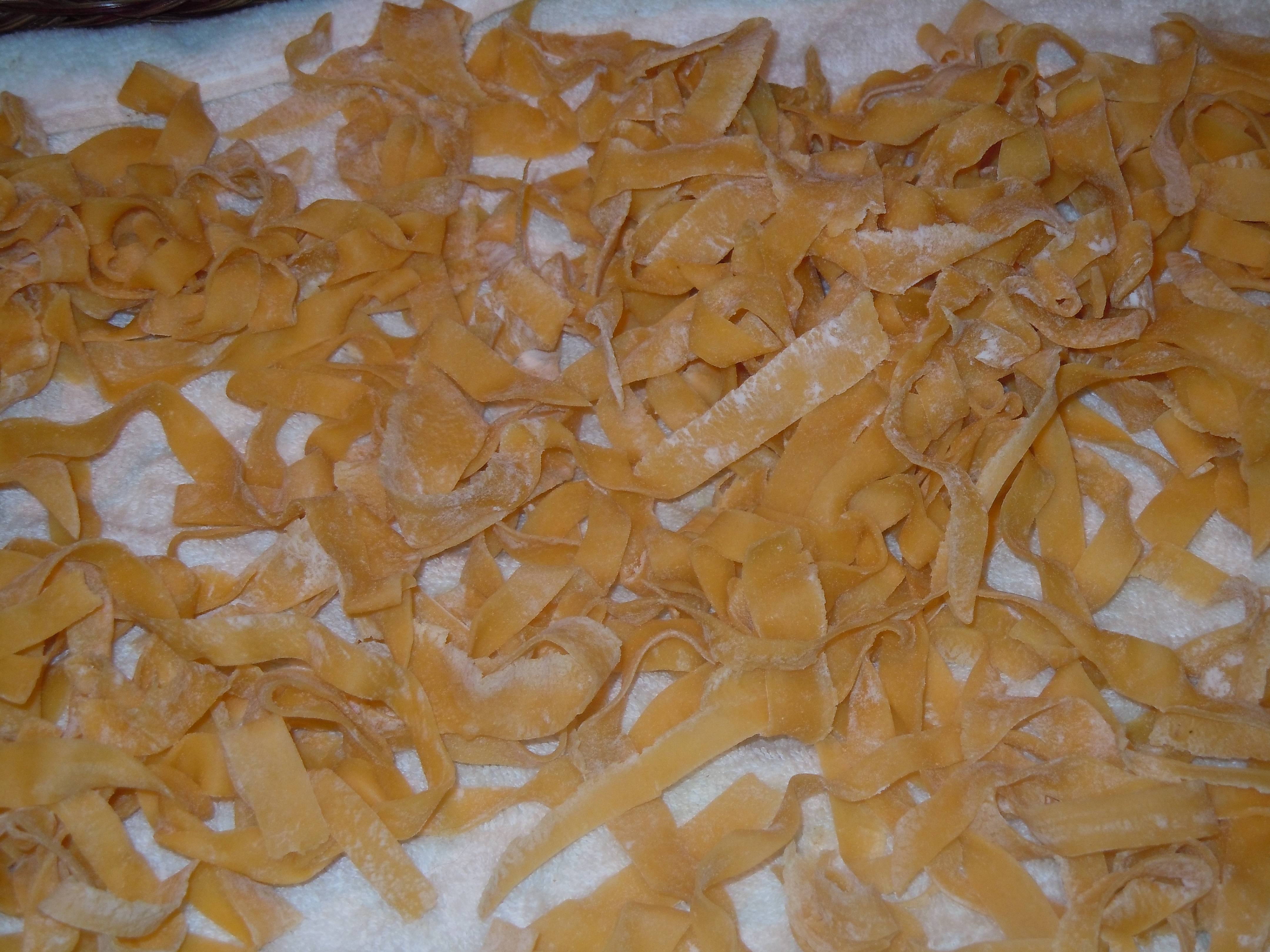
When they are all as thin as you want them, let them hang until somewhat leathery. This may be 15 minutes or may be an hour, depending on humidity, breeze, etc. When they are leathery but can still be folded without cracking, you are ready to cut the sheets into noodles. The pasta roller has an attachment that will do it for you, but I greatly prefer to do this step by hand. I like the unevenness that results, and I can cut anything from thin linguine to very wide papardelle, depending on the meal that I have planned. Work on a lightly floured surface, roll the sheets around your hand to form cylinders, and cut across to make noodles, as wide or thin as you like. Unfold them and lay out on clean dishtowels spread on the counter for the purpose.

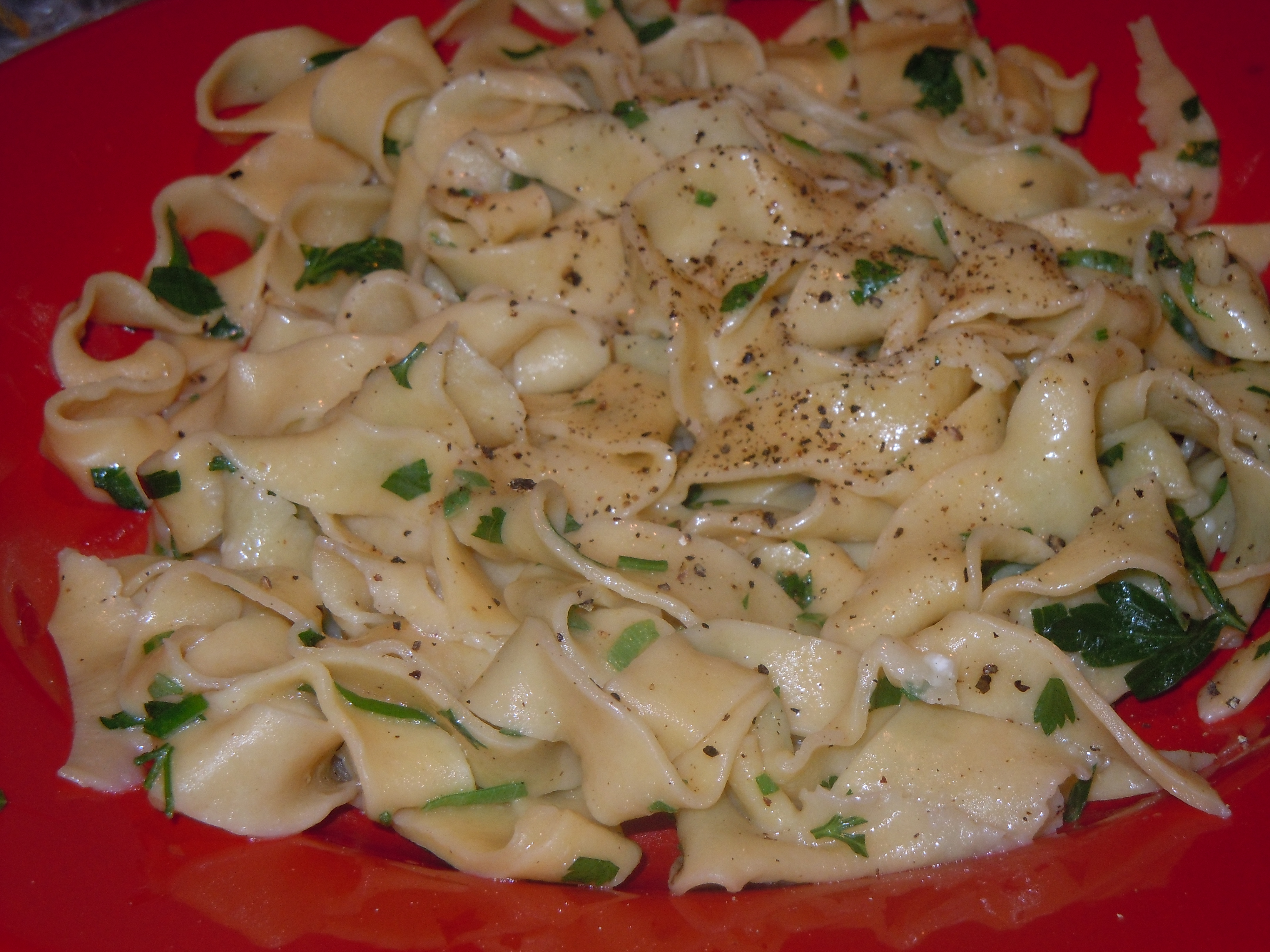
Cook soon for best quality, use plenty of salted water, and start testing for doneness as soon as the water returns to a boil. Sauce them simply to let their quality shine. In the near future I’ll post on my favorite mushroom sauce for fresh pasta, but for your first effort you might want to dress them with butter, cracked pepper, some chopped parsley, and the best Parmesan you can find. There is no simpler, or better, flavor.