Archive for the ‘passing pleasures’ Category

Passing Pleasures: wildflower meadows, and notes on a weeding service


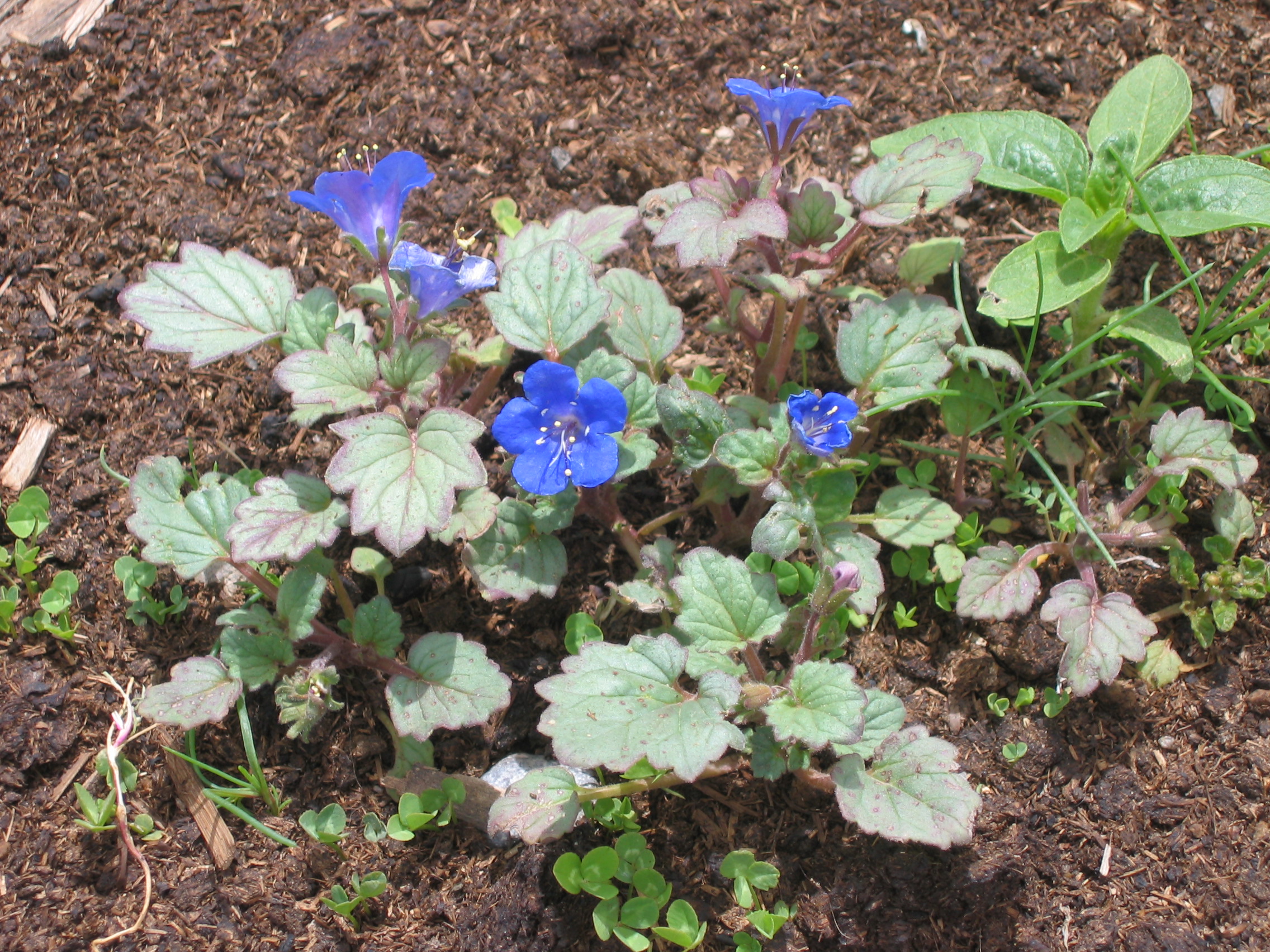
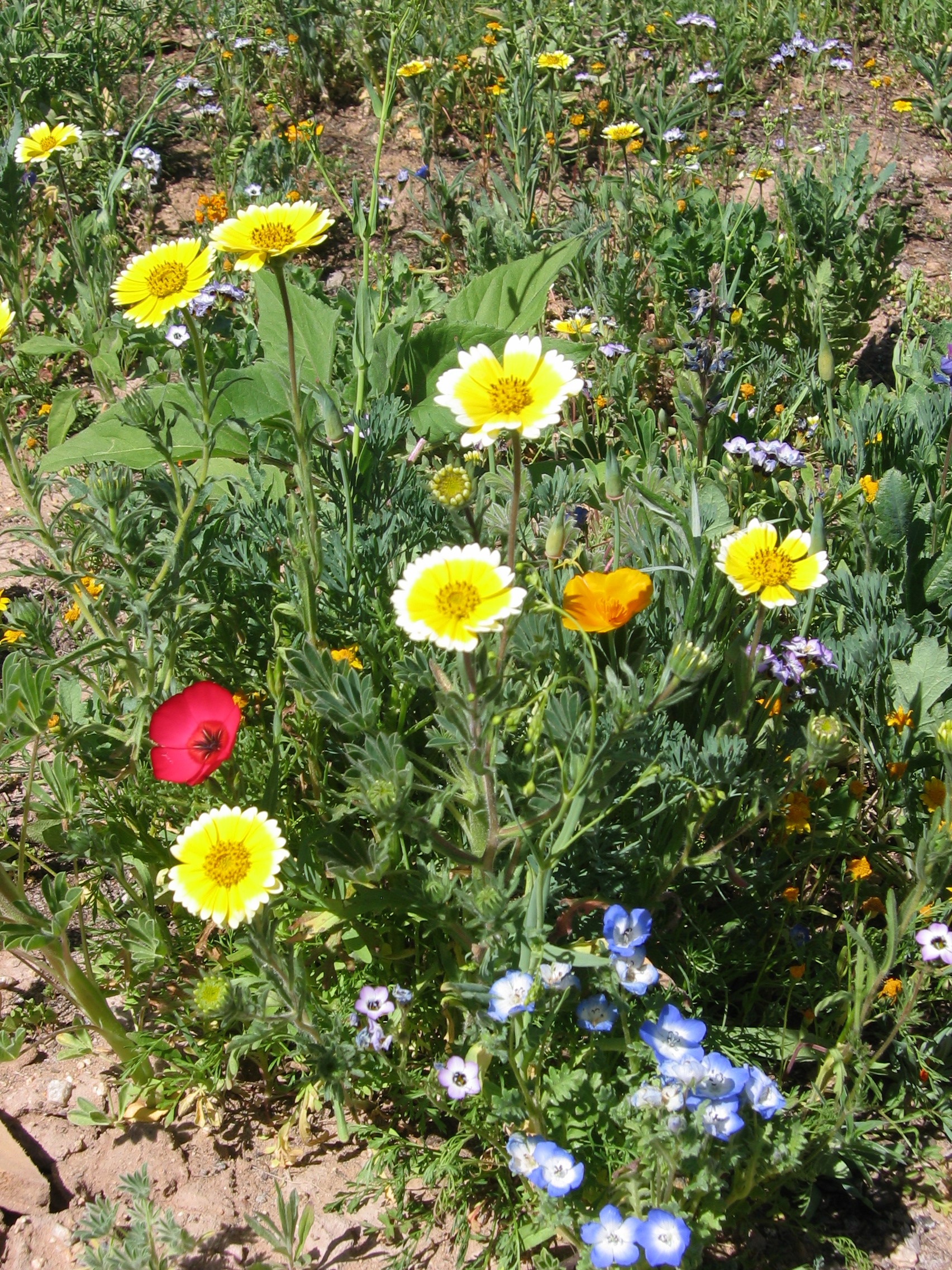
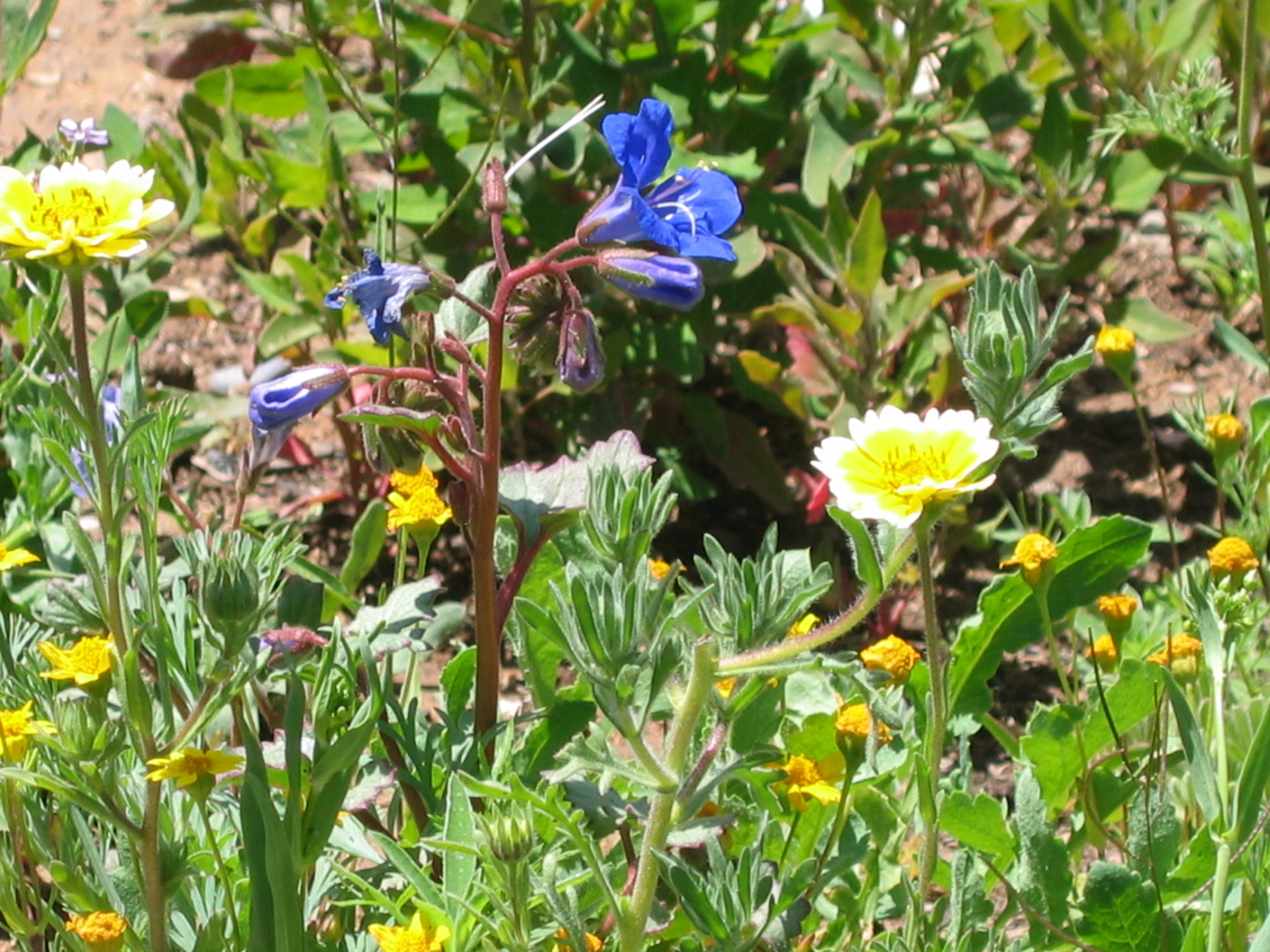
At my new place there is a large backyard, completely barren and given over to weeds by the former owner. When we moved in last winter I decided to concentrate my most intensive efforts on other areas, but eventaully I wanted an orchard of dwarf fruit trees in the back yard and didn’t want any grass there. The soil was terrible, and I decided to till the area shallowly and plant desert/upland wildflowers, which are accustomed to struggling for survival. I used the “California Brilliant” mix from Peaceful Valley. I didn’t do any soil improvement.

Naturally the weeds came up as well as the wildflowers, and the whole area had to be weeded over by hand in the spring to give the infant wildflowers a chance. There was too much area for me to do alone, and I can personally recommend the Albuquerque weeding service “U weed me?” Liz, who can be reached at lizabkap@hotmail.com, is an armed forces veteran and a dependable, reliable person who spent more time on her knees with me in my back yard than seems reasonable, and never complained.

The wildflowers started blooming in late April, and something new comes into bloom every week or two. That area of my yard is a constant pleasure, and I walk through it every morning just to see what’s blooming. It needs some water but not as much as a lawn, and between the flowers, the bees, and the hummingbirds, it’s at least three times as interesting as a lawn. Before you decide on wildflowers, take into account that bare spots do occur, that weeding is necessary, and that the flowers have to be allowed to go to seed if you want to keep the meadow going, which isn’t necessarily going to be an attractive process. But you’ll have a glorious springtime.


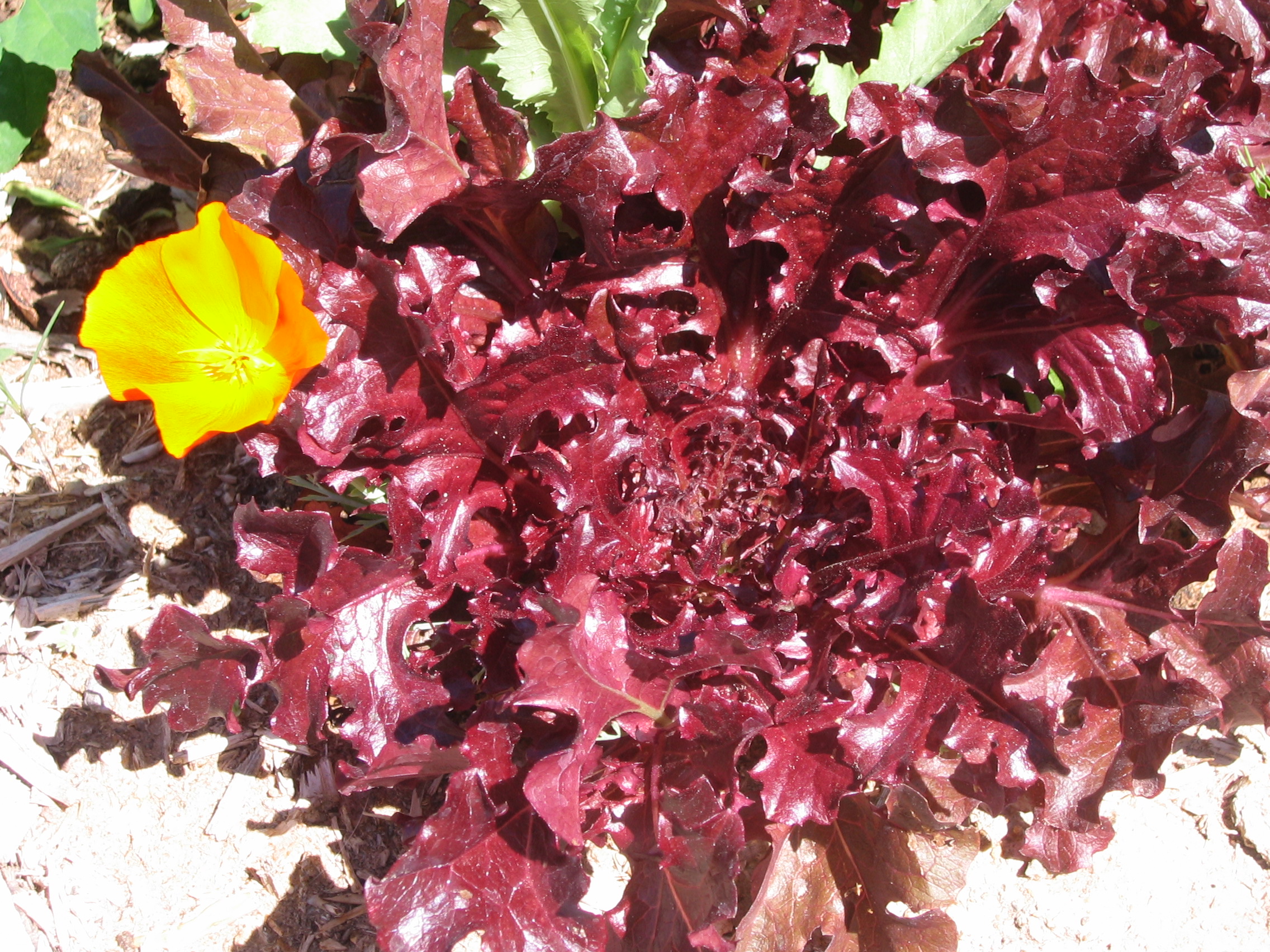
I scattered a little of the mix in a vegetable bed just for fun, and some lovely chance combinations are occurring, like the Califirnia poppy above making itself at home in my lettuce bed.

Passing Pleasures: Blood Orange Marmalade, and notes on sharp knives


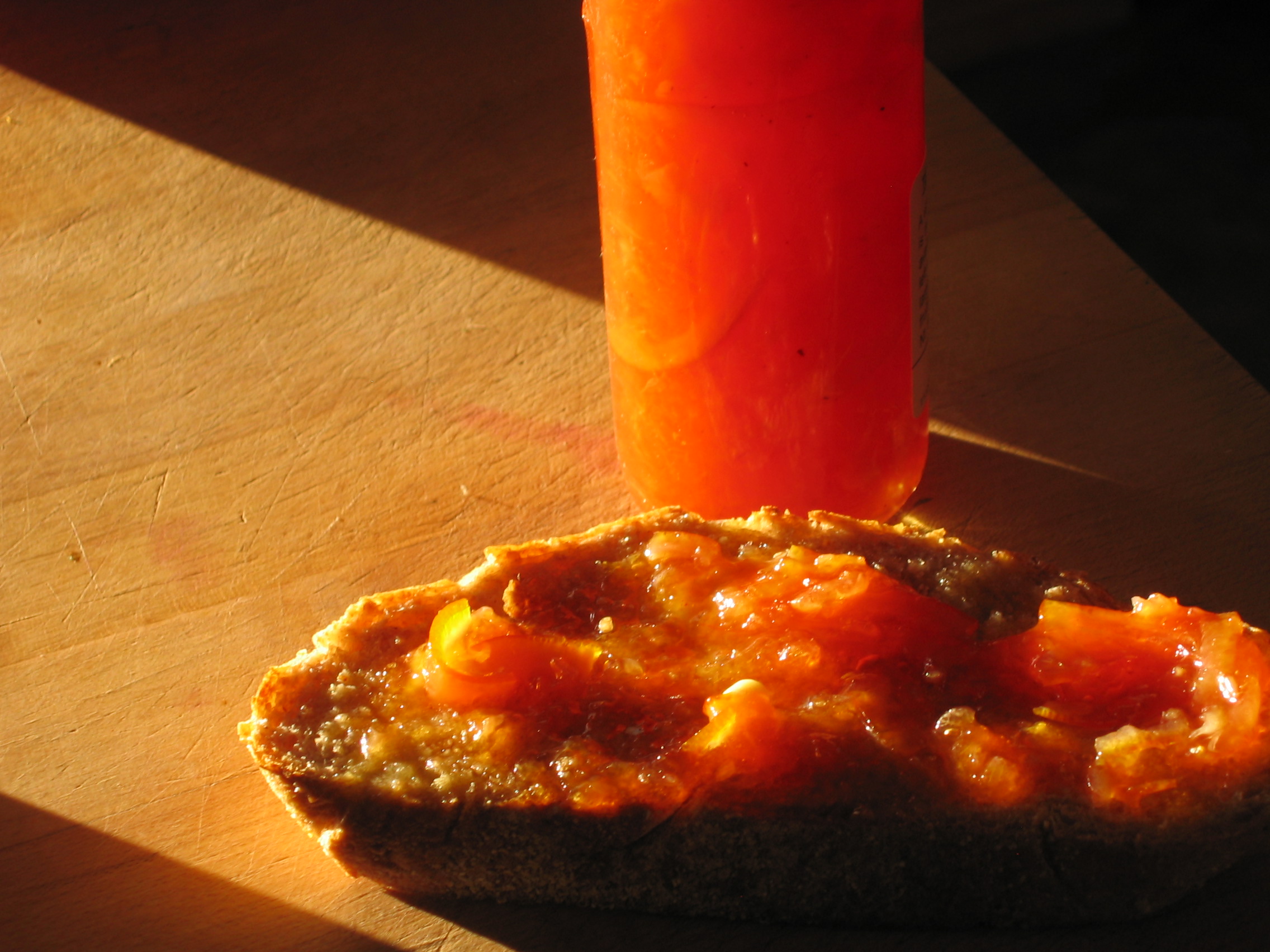
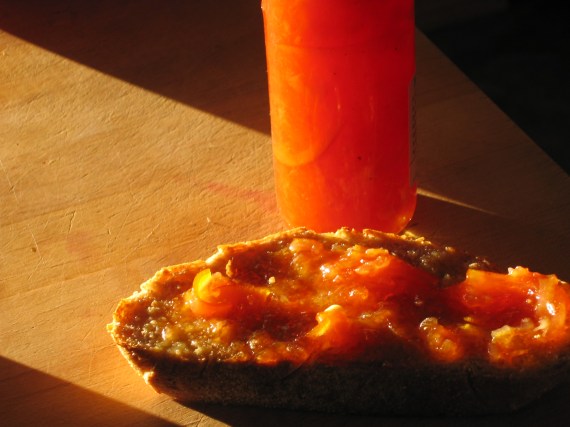
In my last post I discussed the virtues of freshly squeezed blood orange juice, and encouraged you to eat them up during the few short weeks that we can get them. In this post I’ll talk about how to preserve them so that you can spread your morning whole wheat toast with exquisite marmalade long after the season is over.
First, the disclaimer: nearly all my ideas about marmalade came from John Thorne, a remarkably quirky, idiosyncratic, and interesting food writer. I strongly advise getting his book Mouth Wide Open and reading the chapter “Maximum Marmalade,” because you’ll learn good marmalade-making technique, get all the comments and asides of a working cook in his element, and have a great time. I happened to reread his book at a time when I was thinking about the concentration of beneficial flavanoids such as naringenin, hesperidin, and rutin in citrus peel, and wondering how to make them taste good. Naturally, a chunky and delicious marmalade was the way to go.
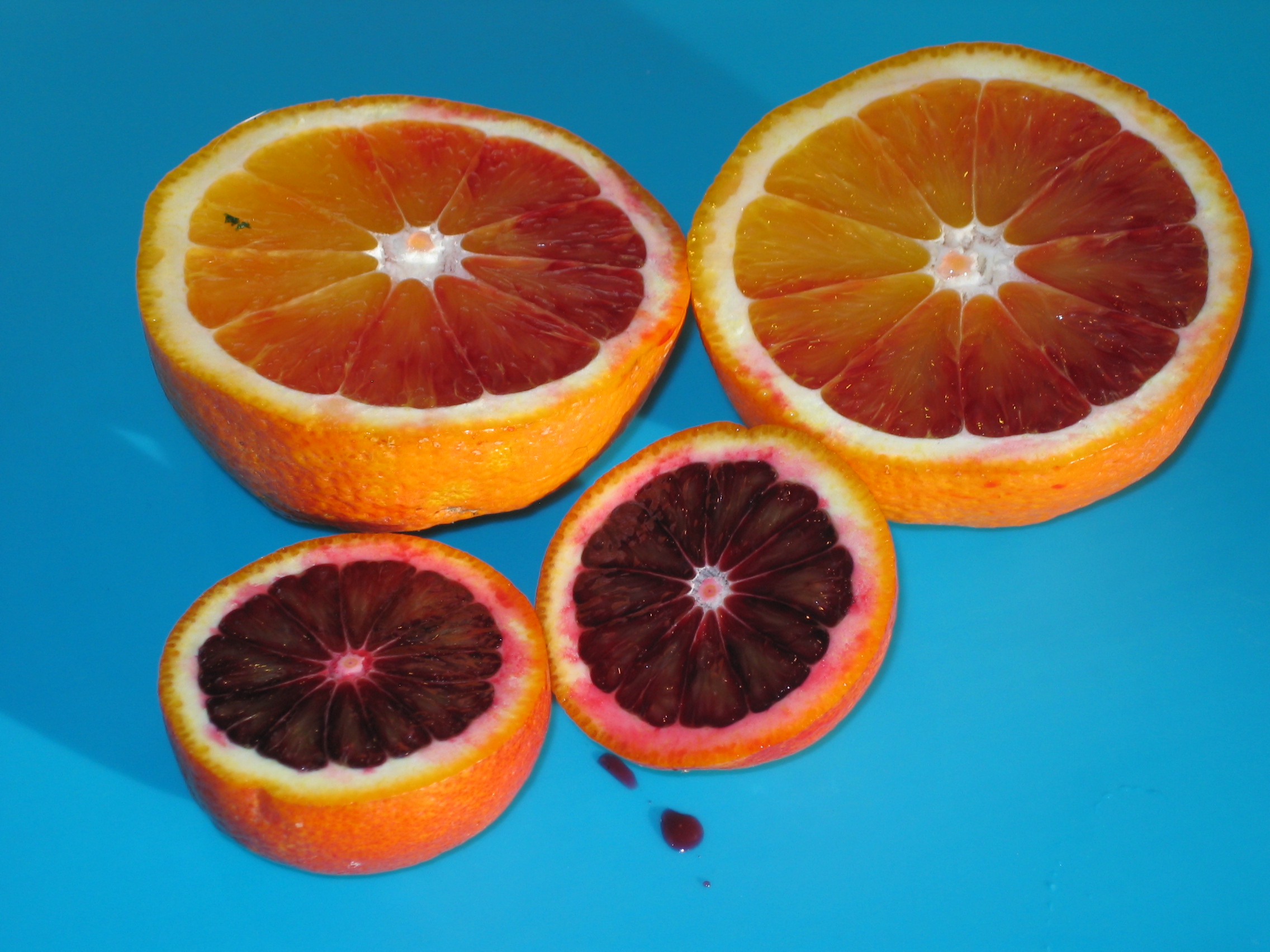
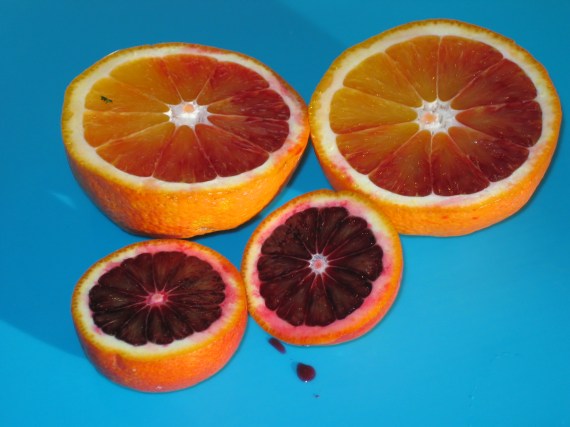
First, catch your blood oranges. There are two basic types on the market right now, one the size of a lemon or a little bigger, deep red inside, and filled with tart juice with a definite note of raspberry. The other is the size of a navel orange and only lightly blushed inside, and the juice is sweet. The former type is best for marmalade. I have only found it at the Nob Hill branch of La Montanita Co-op this week, so act fast if you want to get some. If all you can find is the other kind, you can still make a great marmalade, but it won’t be quite the same. Buy about 15 of the small ones or 7-8 of the big ones. The two types are shown below:
Next, get a really sharp knife. For my local readers I advise a trip to the Santa Fe Farmers’ Market with all your knives in hand. Look for Pat Romero’s sharpening booth, and he will sharpen them to lethality while you shop. Please let him know that Local Food Albuquerque sent you, and be damn careful when you unwrap them at home, because a knife sharpened by Pat has no margin for error.
Now wash the 4 prettiest small oranges, or the one best if using the larger sort. Cut off the two ends enough to reveal the flesh, cut in half lengthwise, and slice each half crosswise into the finest slices that you can manage. Remove any seeds, but keep everything else. Put your slices in a bowl, and juice the remaining oranges until you have enough juice to cover the slices. Cover the bowl tightly and let the slices macerate in juice overnight at room temperature.
The next day, put the entire contents of the bowl in a saucepan of at least twice the volume of the mixture, bring to a boil briefly, and simmer gently until the peel is as tender as you like, remembering that it will firm up some when cooked with sugar. When the peel is softened to your preference, measure how much orange goop you have and add 3/4 that much sugar. I recommend white sugar only, to avoid distorting the wonderful orange taste. Now bring to a boil briefly again, and cook at a fast simmer until it’s ready to gel. John’s test, which is the best one I’ve come across, is to put a heavy plate in the freezer before you start cooking. After cooking the orange-sugar mixture for 15 minutes, start putting a half teaspoon or so on the cold rim of the plate. Return to the freezer for a minute and then prod the dribble with your finger. When it softly holds its new prodded shape, it’s done. Pour it into clean jars, let cool, cover tightly, and store in the refrigerator, or see the Ball Blue Book for directions on how to heat-process so that it can be stored in the pantry until opened. In the morning, toast and butter a piece of very good bread, spread it with butter and marmalade, and eat. Oh my.
Incidentally, cooking any sugar syrup requires a watchful cook hovering over the stove to stir and prevent boil-overs. This is not a forget-it-until-it’s-done recipe. The result is worth it.
Passing pleasures: the blood orange juice “cocktail”

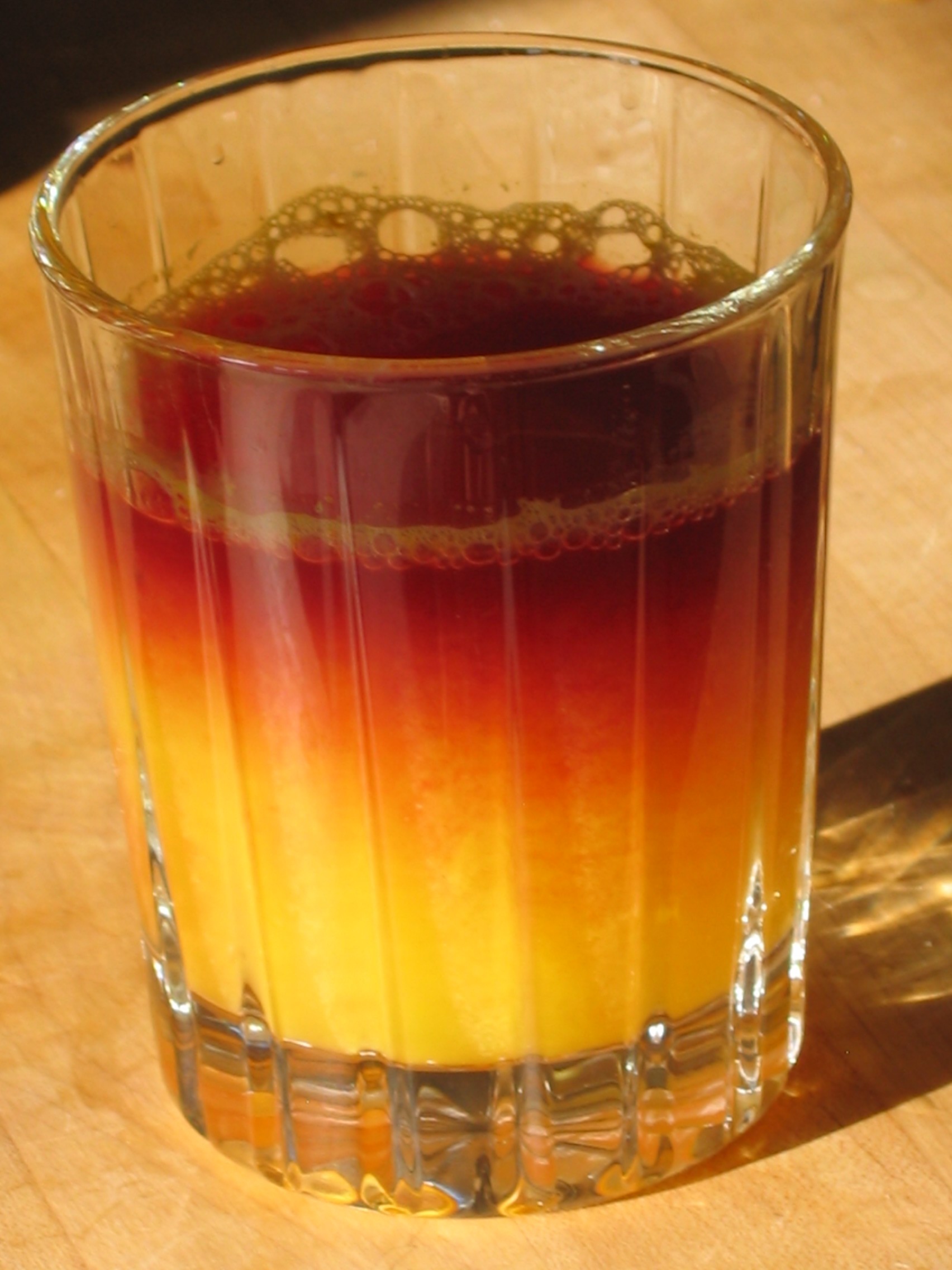
Time to step back a pace and remember that not all good things are local. Personally I would never want to eat exclusively local, and I relish good citrus fruit, chocolate, coffee, tea, and wine from other places, to name just a few. We can offer other parts of the planet a market for high-quality sustainable products, and I’m happy to do my bit to help with that by buying the best organic citrus fruit that I can find when it’s in season. Right now blood oranges (also sold as Moro oranges) and the sunset-pink Cara Cara oranges are available, and my favorite morning wake-up call is a glass of fresh-squeezed Cara Cara juice topped off with the juice of one or two blood oranges. Don’t stir, just let the blood orange juice sit on top and slowly disperse itself. I have tried “fresh-squeezed nonpasteurized not from concentrate” OJ from a local market and can honestly report that it was little better than the bottled kind. Get a good squeezer and make your own, and taste the best that orange juice can be. Within a few weeks the blood oranges will be gone from the markets, so drink them up now.

Passing Pleasures: Prickly Pear Tepache

september 2009 039

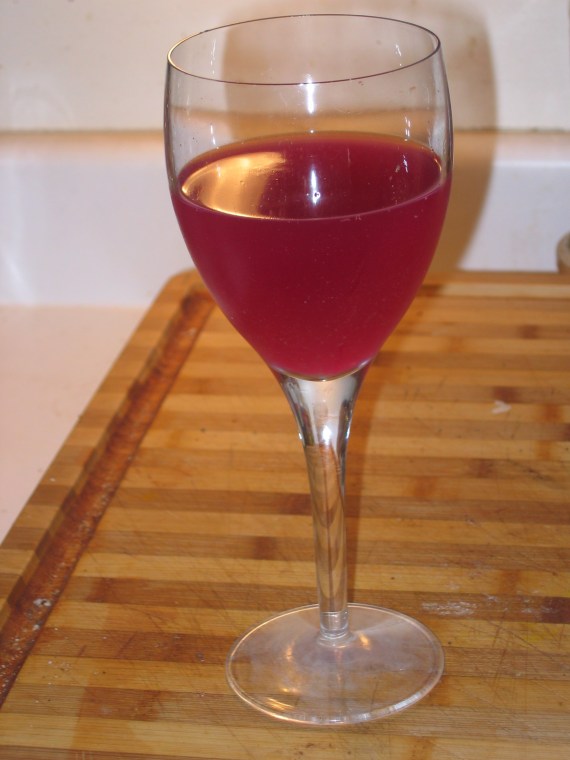
This fizzy, festive fuschia drink gets its color and flavor from a really local fruit, the tuna, or prickly pear fruit. Here in New Mexico you probably have some in your yard, and if you don’t, a neighbor probably does.

The basic directions are the same as for plain tepache. Pick, beg, or borrow eight tunas the size of an egg or bigger. Handle them with respect, because the wicked little prickles will make you itch and burn for days if you let them at your skin. Handle them with gloves. If you already know how to peel them with pliers or have someone to show you how, then peel them. Otherwise, throw them in the blender whole and crush to a puree, adding a little water if you have to in order to get the blender going. Pour the puree into a strainer lined with several layers of cheesecloth. Now, twist the cheesecloth closed and press it with a spatula or wooden spoon to release the juice. Don’t omit the cheesecloth, since the strainer alone won’t get the prickles out, and don’t squeeze the cheesecloth with your hands. You should end up with 1.5 to 2 cups of prickly pear juice. Now make tepache according to the directions I gave earlier in the summer (click here to get the directions) but add the prickly pear juice to the fermenting jar with the other ingredients. The other quantities stay the same, including the pineapple rind, which provides the wild yeasts that do the fermenting. Ferment according to the directions. The flavor of the tunas is accentuated by the fermenting process and will be dominant in the finished drink. Pour and toast the exhilarating autumn weather.


According to an article from Texas A&M, the antioxidants quercetin and kaempherol were found in prickly pear fruit, as well as other antioxidants. The link is below if you want to read more.  Personally, I think the important thing about antioxidants is to get a lot of different ones, not by taking pills but by eating more fruits and vegetables (or, in this case, drinking them.)

http://www.sciencedirect.com/science?_ob=ArticleURL&_udi=B6T6R-4BG8TR7-3&_user=6865397&_rdoc=1&_fmt=&_orig=search&_sort=d&_docanchor=&view=c&_searchStrId=1027331814&_rerunOrigin=google&_acct=C000050221&_version=1&_urlVersion=0&_userid=6865397&md5=67b4ea1bcff5a8121ec6c61beea769b7.