Archive for the ‘Nose-to-tail vegetables’ Category

Spring Alliums

img_5237

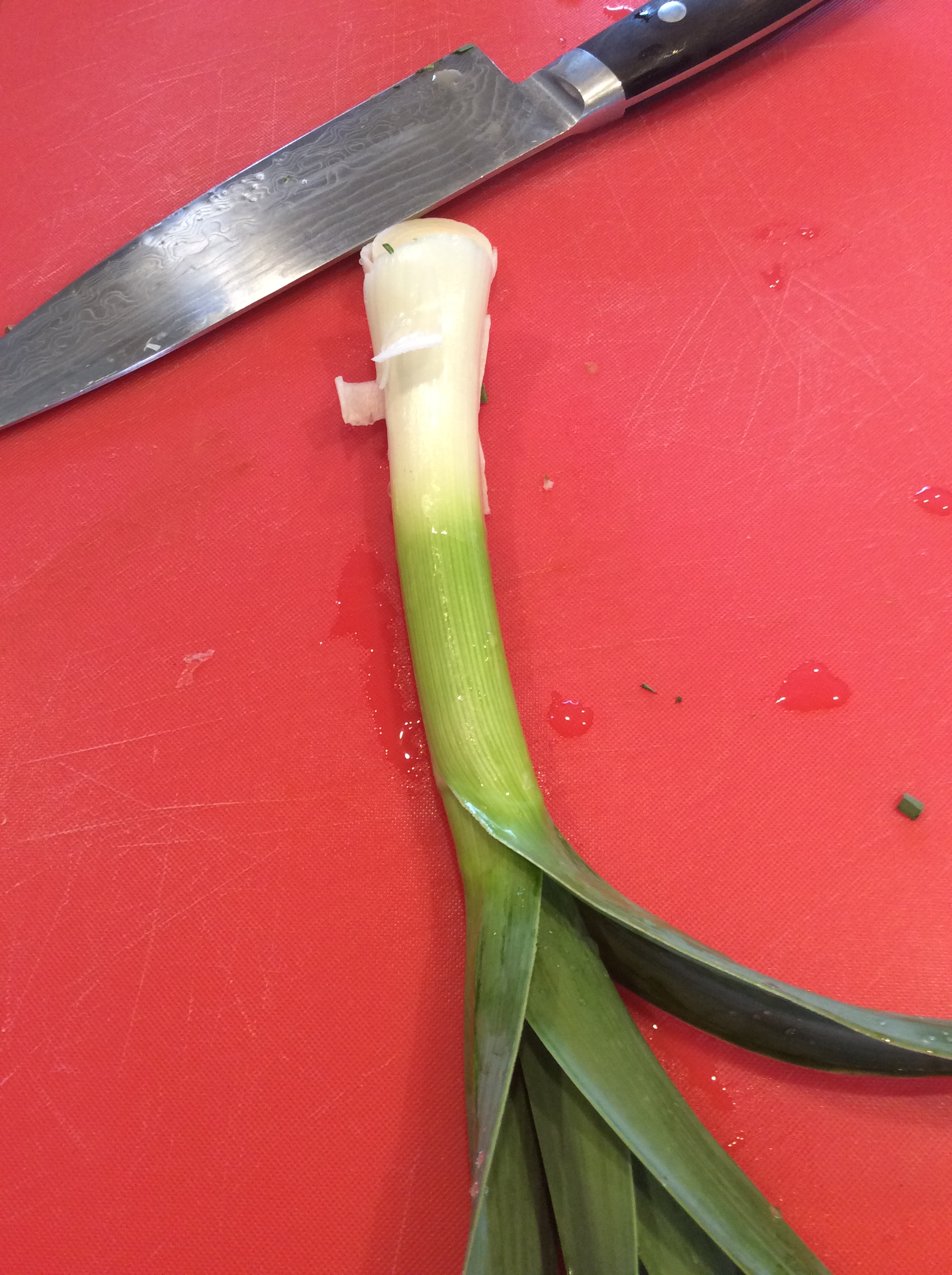
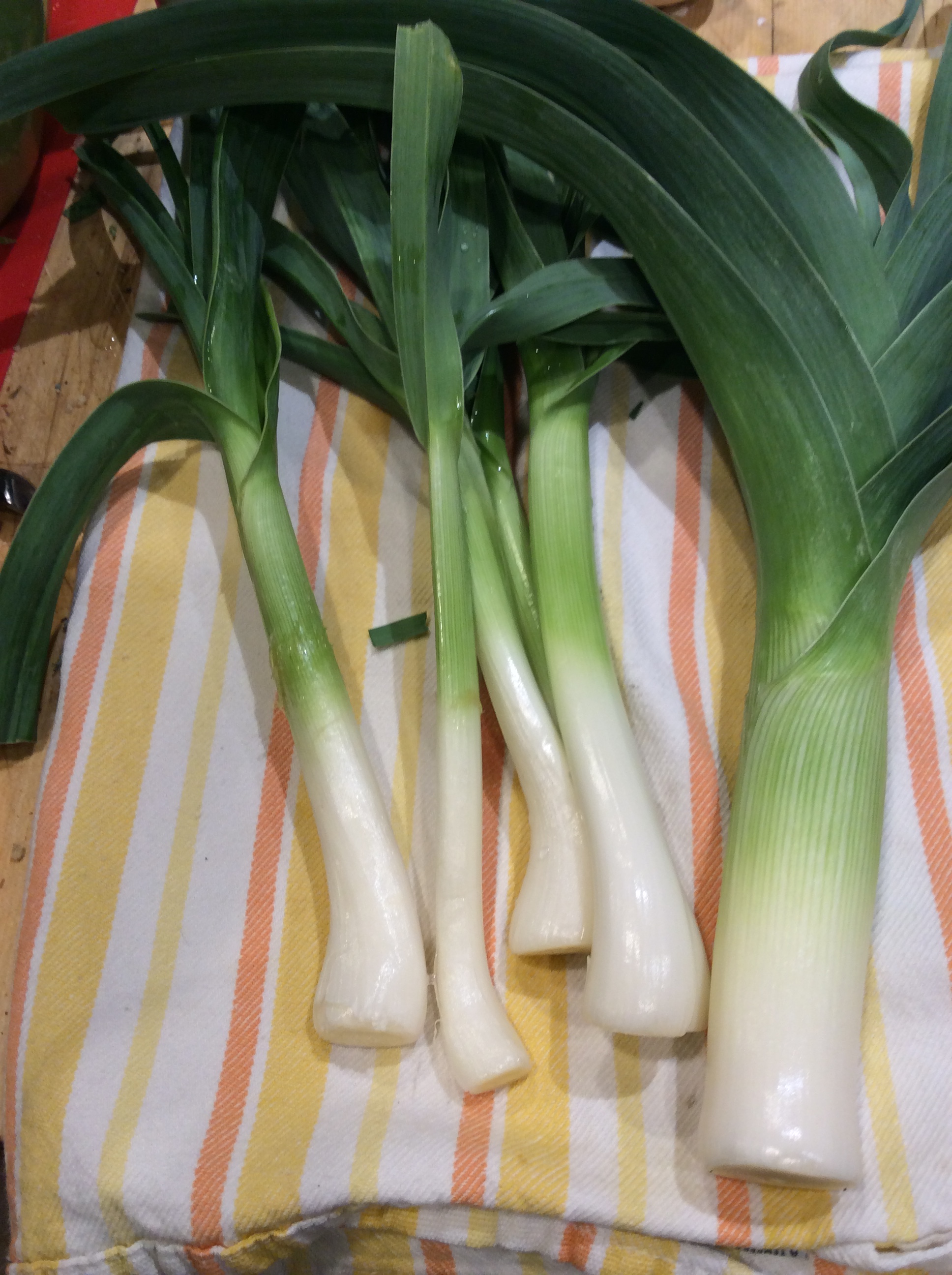
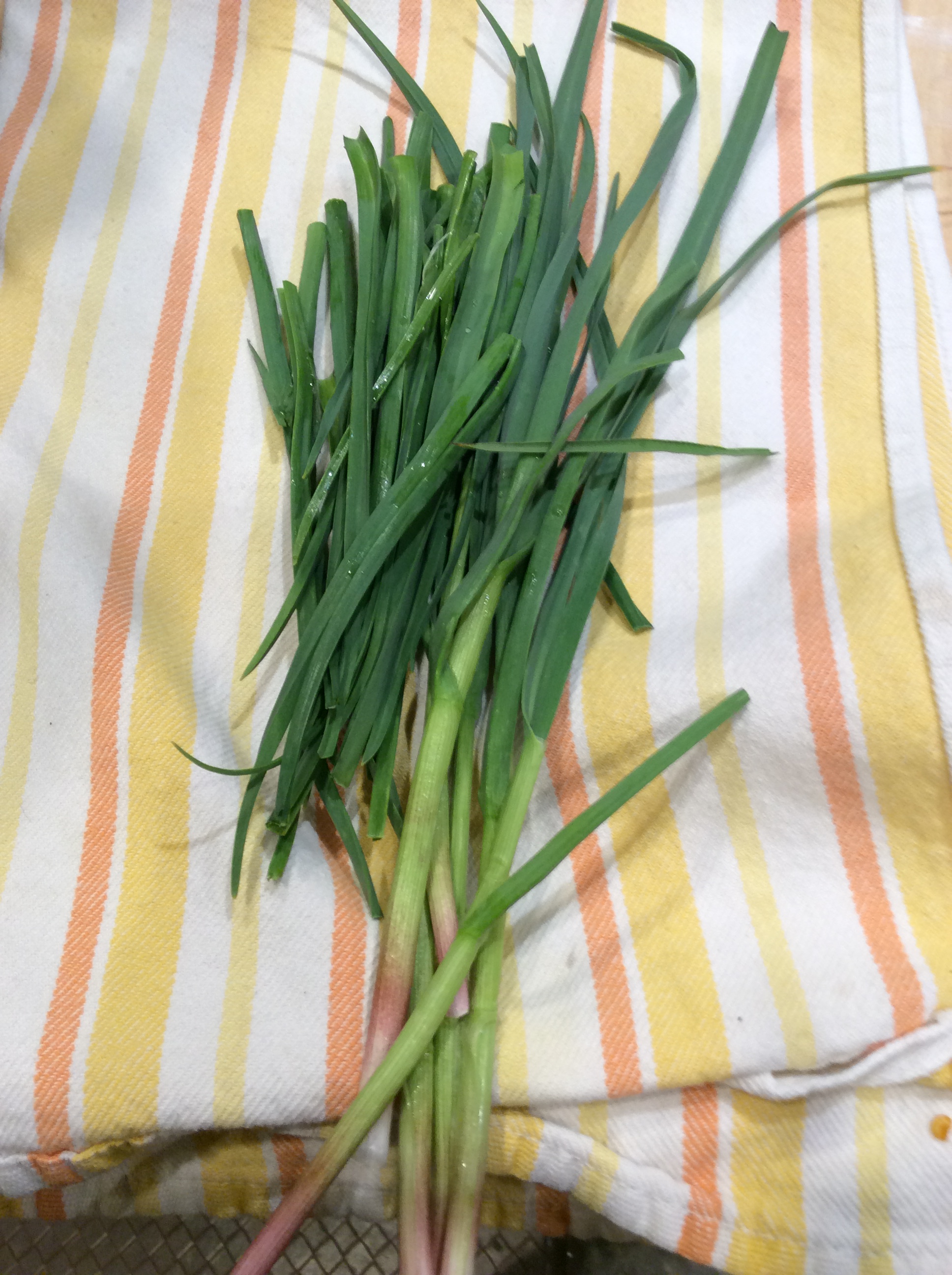
One of the many reasons that I love green garlic and green alliums generally is that they are among the earliest things to come out of the garden, assuming that you planted in early fall. I have plenty of summer veggies in my freezer, but as the days start to lengthen I get ravenously keen for the first real, fresh greens, and by mid-February I’m eating out of the garden again.

For early green alliums, plant some in a block that you can cover with Agribon or other frost blanket material. I like to put a short row of my regular yellow storage onions in this block in September, and each will divide and make four or five superbly sweet green onions in early spring.

Garlic is another must, and my favorite for early green garlic is Chinese Pink, because it is super-early and is eight inches tall and half an inch in diameter by mid-February if frost protection is used. Plant your early block with the cloves about three inches apart each way. When I’m ready for green garlic I pull alternate stalks, and leave the rest 6″ apart to mature for my earliest garlic bulb harvest.

In the case of leeks, there isn’t even any need to replant in fall. Plant extra in spring, cover with frost blanket in late fall, and they will winter over nicely for February eating.

Contrary to much popular advice, I don’t suggest that you even think about cutting the green leaves off and discarding them. They are delicious. They are also the healthiest part of the plant, full of the antioxidant allicin which has multiple health benefits. Do cut them in fine cross-sections, about a quarter inch long, to  eliminate  any possible stringiness  in the leaves.

image

I love a good assortment of green alliums chopped up and sautéed in butter with salt to taste until they are succulent and sweet. Keep the heat medium-low and let them cook at least twenty minutes for best flavor. I eat them as a side dish, but they would also be great on slices of crisp baguette, in an omelette, over scrambled eggs or rice,  on a broiled fish fillet, or nearly any other way that you can imagine.
img_5236

Two years ago I stuck some garlic cloves in a flower bed planning to harvest them for green garlic, but forgot all about them in spring. After two growing seasons they’ve divided so much that the leaves are as fine as grass. I’ve started harvesting the tops and chopping them finely to use as a fresh seasoning. They have a stronger but cleaner flavor than garlic chives. I love them over egg salad, green salad, broiled or grilled meats, on soup, or anywhere that you might crave a hit of freshness and garlic. They give some distinction to a regular or low-carb pizza.

Elephant Garlic in the Semi-permaculture Garden

image

Last fall was the first time that I ever planted elephant garlic. This enormous bulbing  garlicky-tasting leek came from Nichols Garden Nursery. I planted in early fall and scattered lettuce seed over the bed to use the floor space in the spring. The garlic made fall top growth, but I left it to grow.

image

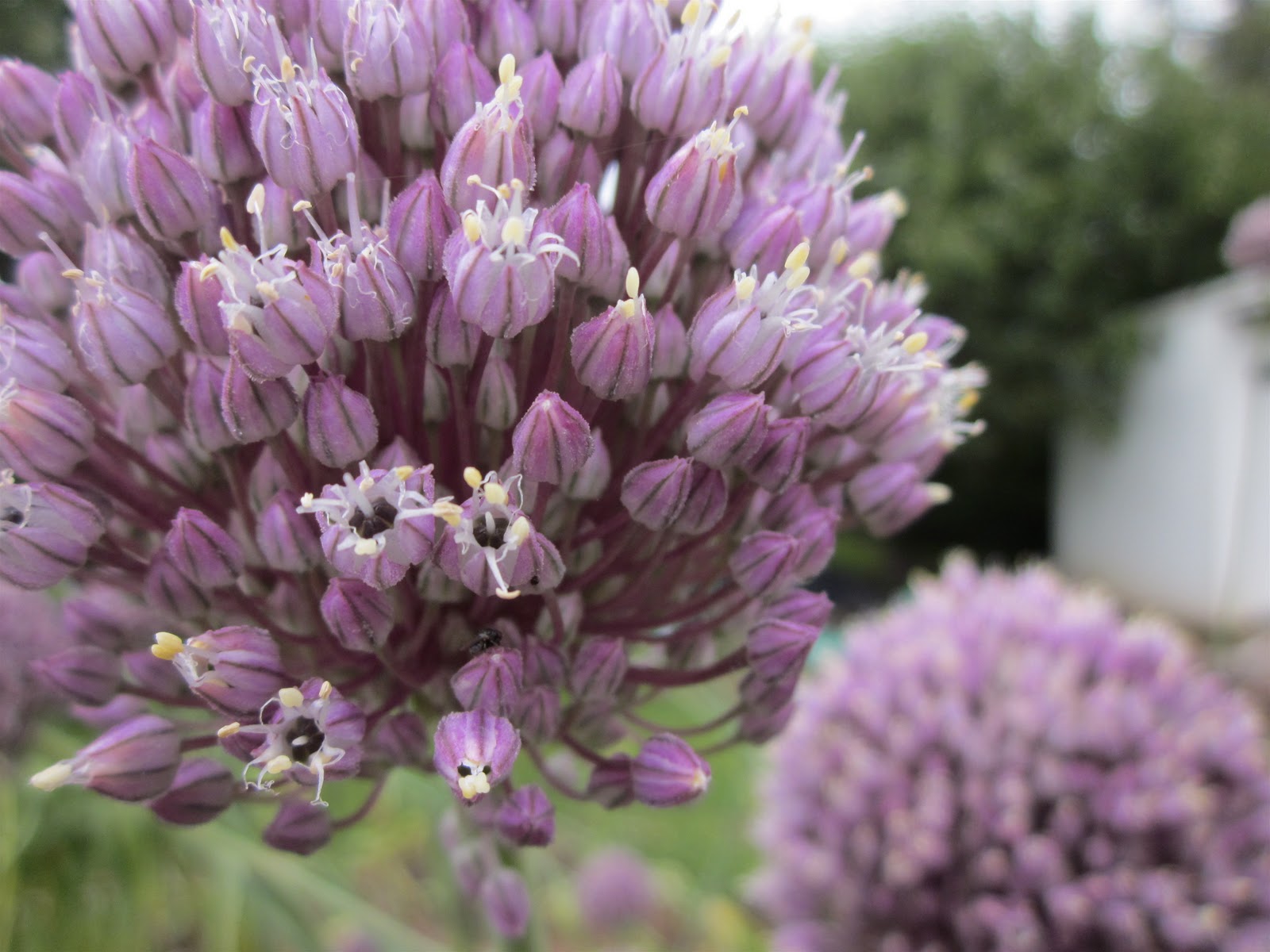
This spring I had a bed full of thick, sturdy, radiantly healthy green garlic, or rather green leeks in this case. I pulled some to use as green garlic, and was delighted by the warm, mildly garlicky flavor when sautéed in butter or olive oil with a little salt. I like all green garlic, but this one was my favorite. I didn’t let myself eat much of it, though, because I had my eye on a good bulb harvest. The bloomscapes care along in early May, and they make a nice subsidiary harvest if picked right away. Cooked at this stage, they are crisp, oniony, and sweet. Leave them more than 2-3 days after first appearance and they develop adamantine, unchewable fibers in the outer layer. Then come the flowers, and the few that I let bloom were very pretty. I forgot to take pictures so here are some borrowed shots:

image image

I have verified to my own satisfaction that if they are allowed to bloom the bulbs will be much smaller, so keep that in mind. The individual flowers make a tasty crunchy garnish, and are adored by bees, so they help carry pollinators through the hottest part of our summer, which is much appreciated.

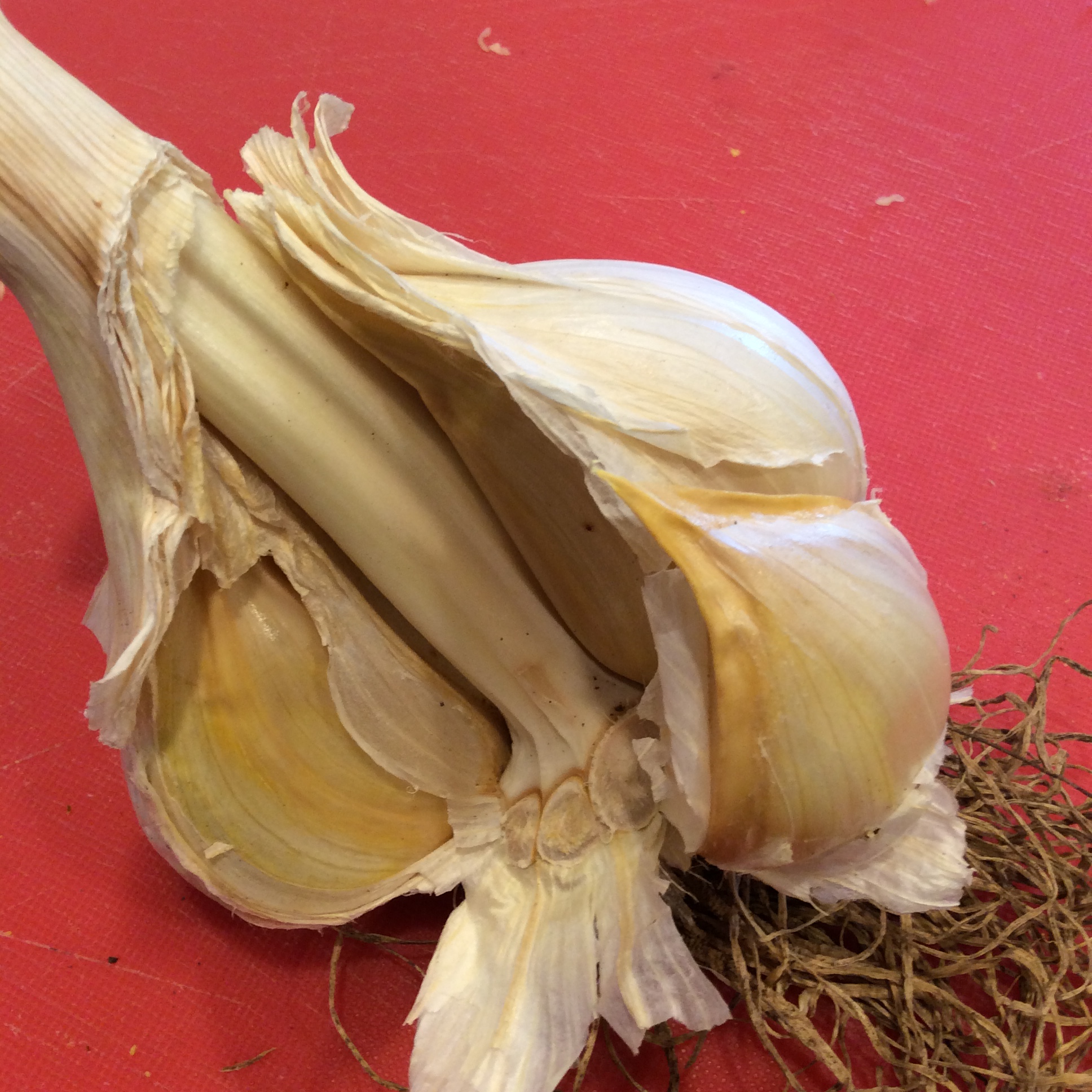
Finally the tops started to yellow and bulb harvest began. Digging them is great fun; the enormous bulbs give you a sense of buried treasure. One must be quite a gardener, one feels, to produce a plant like that. So much of the time gardening is humbling that a little ego-aggrandizement does not come amiss.

The kitchen use is another matter. After a few tries, I can’t take to elephant garlic cloves either raw or cooked. The flavor is weakly garlicky with a bitter edge whether raw or cooked and does no dish any good, in my opinion. One online gardener has suggested that I need to hold it for a month or two, until this quality subsides. We’ll see.

image

The greens are so good that I’ll continue to grow a lot of it, and next spring I’ll let myself harvest a lot more greens. I plan to divide my elephant garlic patch in two, and try two different growing methods. In one half, I’ll continue to grow it in the standard garlic fashion, digging and dividing and replanting each fall, and in the other half I’ll just let it perennialize and pull green garlic at will and see what happens. Of course I’ll be reporting back.


Chard’s Great Moment

image image

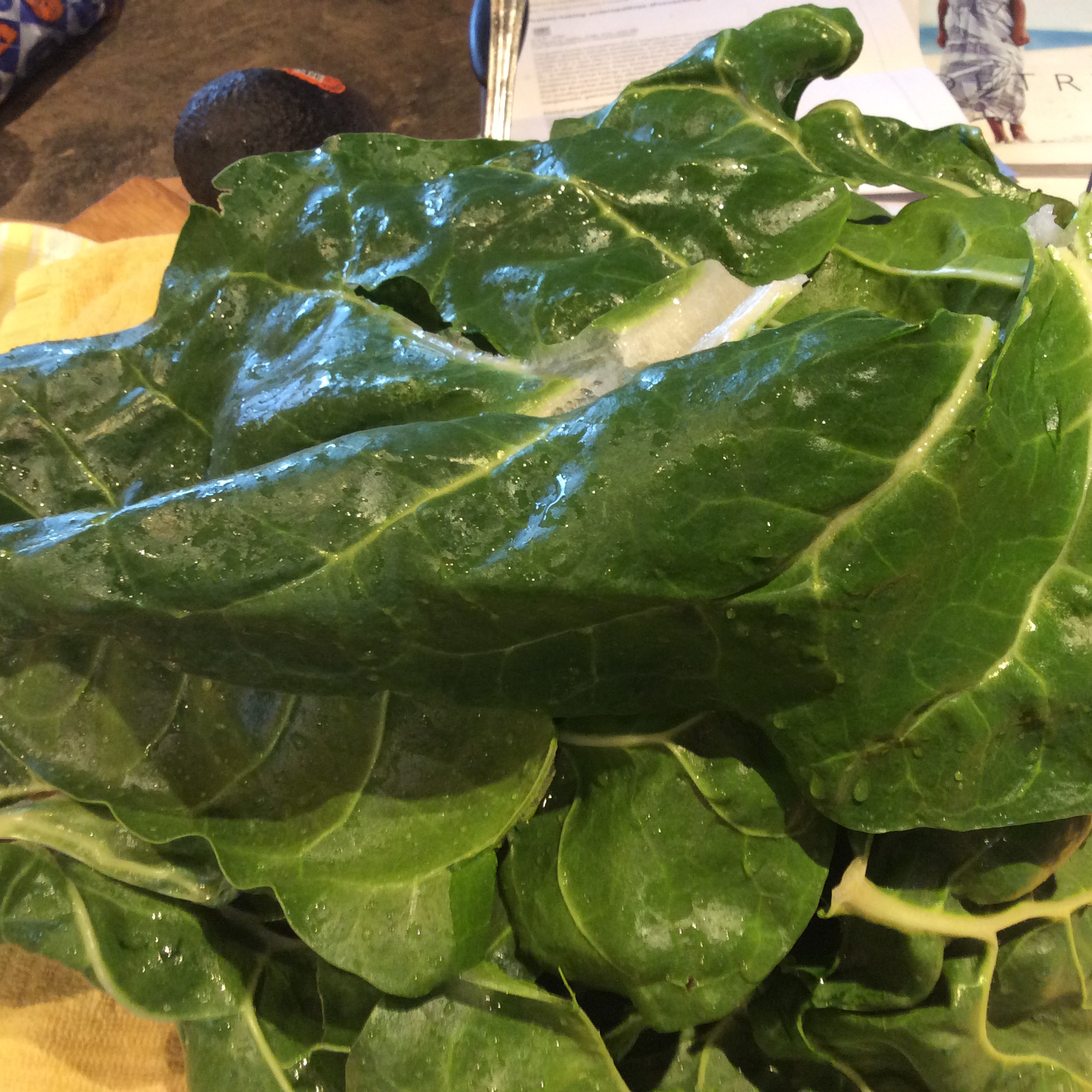
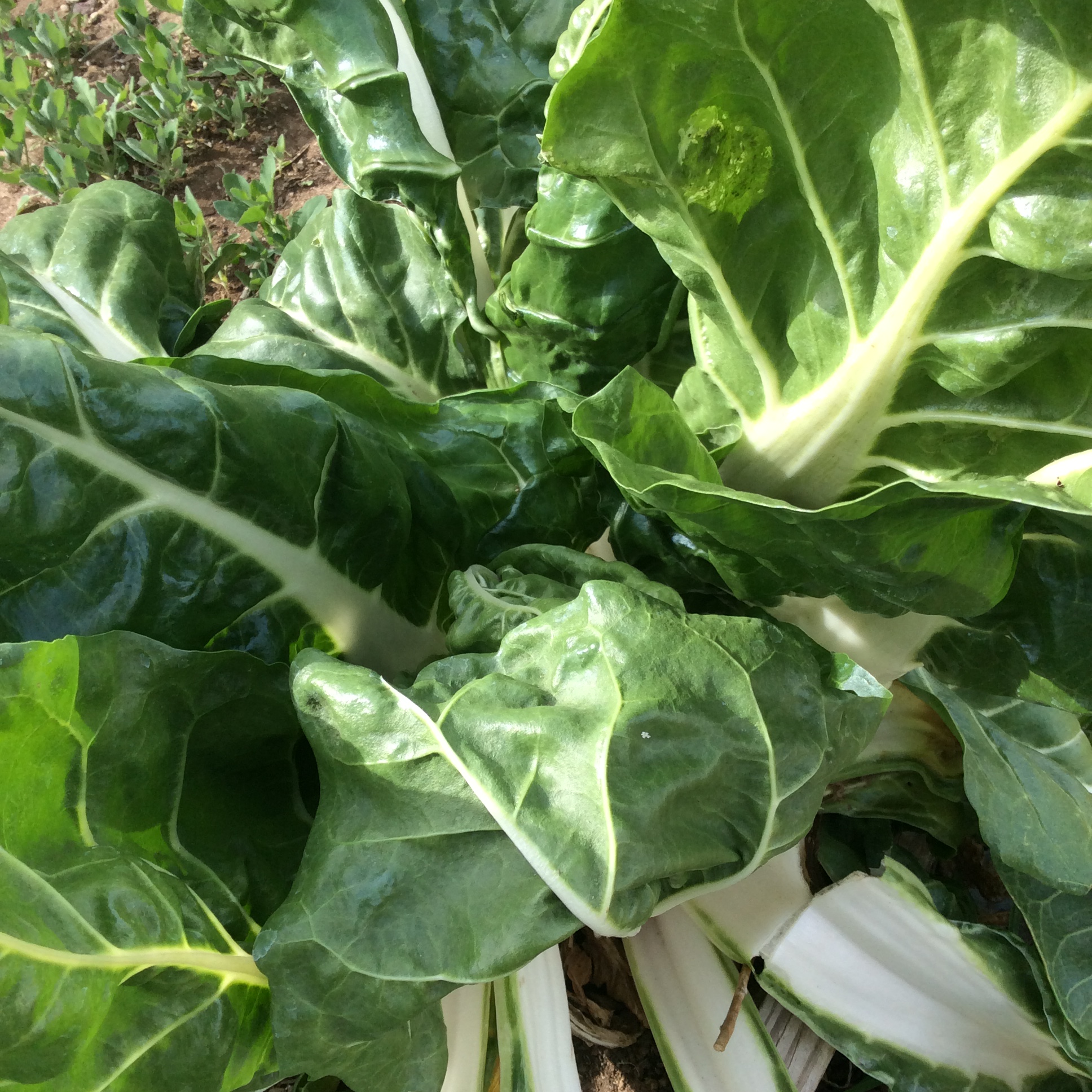
In my garden, this is the time to plant Swiss chard. It grows slowly in summer heat and gets a new lease on life in the fall, which is when I start eating it.  It goes dormant for the winter, and then in spring it emerges again and gradually progresses to making enormous leaves over a foot long.  These early spring leaves are very thick and meaty, and have a taste that has the umami elements of meat, but is mild and clean.  These early spring leaves are the ones that I eat, in huge quantities.  They are great cooked, and this is the only time of year that I love chard as a salad green. As soon as the plant starts to bolt to seed, the leaves of the elongating stalk acquire a rather dreadful dirty taste.  Interestingly, the large thick leaves at the base retain their mild delicious flavor for a while, so once the central stalk starts to form, you still have a week or two to collect leaves.  Then the chard season is over, and in my yard the rest is cut and goes to the goat.  When the last chard plant has been cut, I know it is time to plant more for the following fall and spring. ‘

So plan ahead, plant now, and love your chard in its best season.

More on Scapes: Scape Powder

image
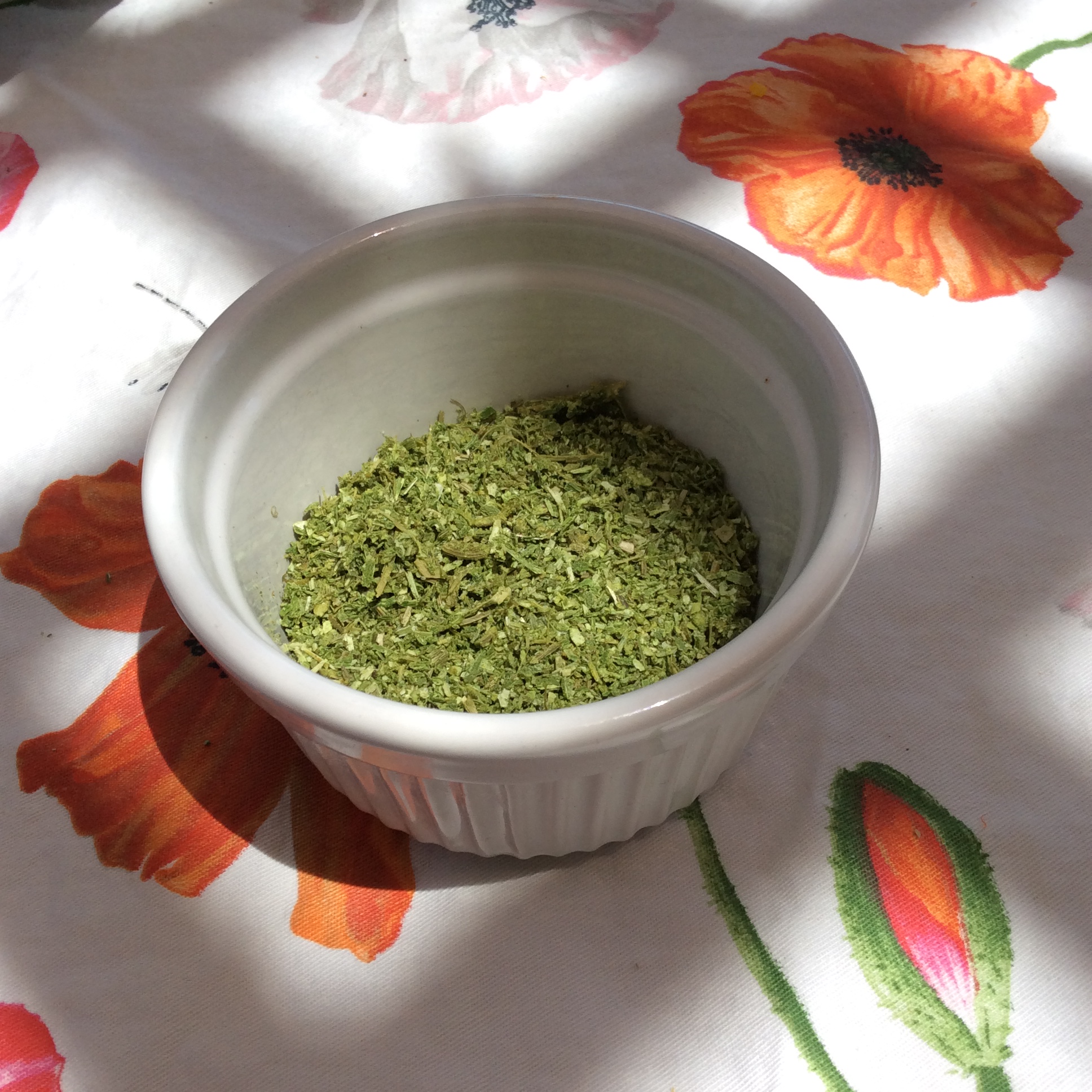
Lately I’ve been experimenting with dehydration, and it occurred to me that I object to the mucousy quality of cooked onion scapes and dehydration often solves such problems. So I put a large bunch of scapes in my dehydrator to see what happened.
Lesson learned: they really are juicy inside, and in future I will split them in half lengthwise before dehydrating, because it took about twice as long as it should have to dry them thoroughly. The bulbous tops should also be cut off at the time of initial preparation.  But I did eventually achieve brittle-dry scapes that I could grind into a fragrant green powder.
image
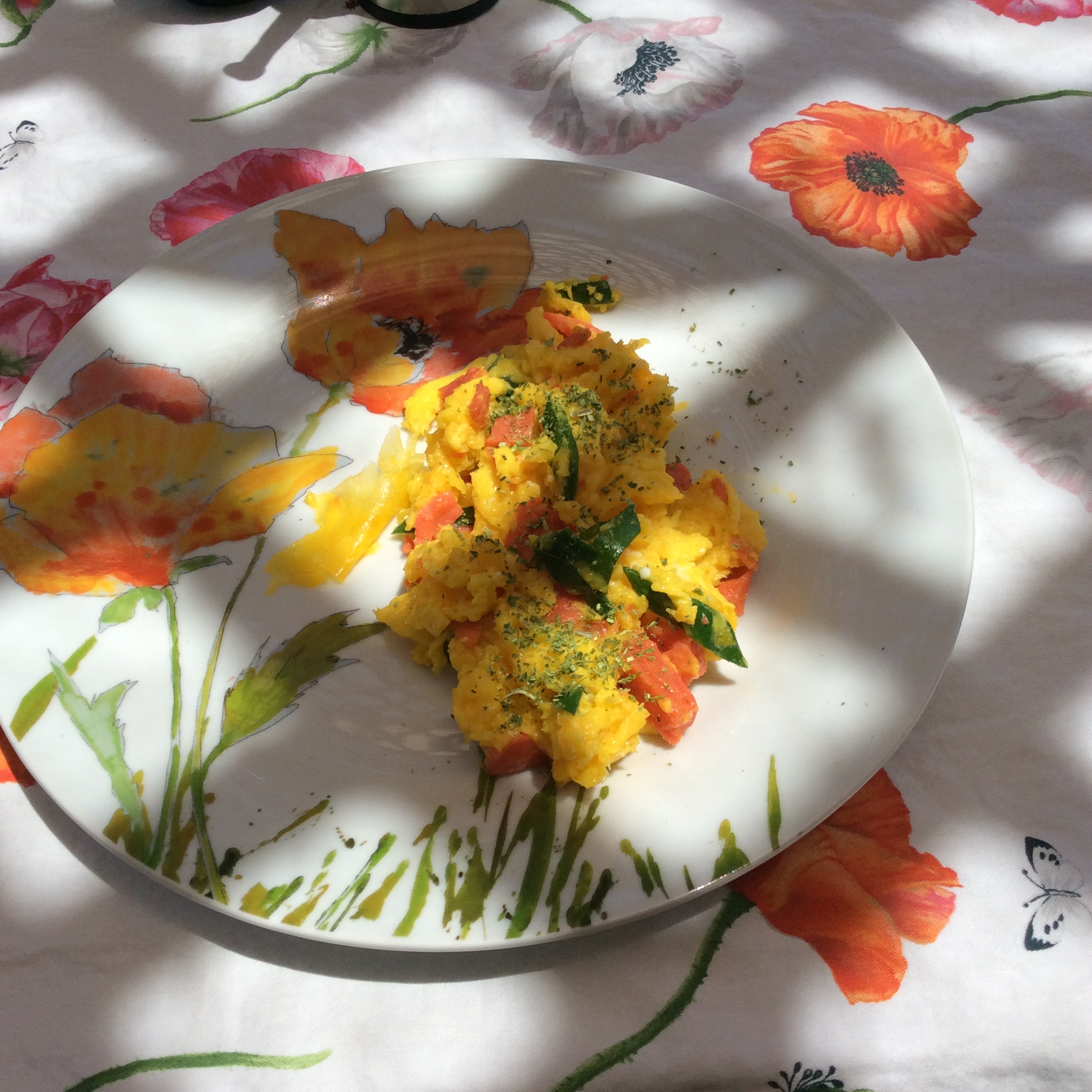
The powder is tasty and sweet, and I’m still considering how to use it. I started with the ultra-simple scramble above: four whole eggs and four yolks beaten with a couple of tablespoons of heavy cream and a dash of salt, then scrambled in butter with one large green onion leaf chopped and four ounces of smoked salmon chopped, finished with pepper and a lavish sprinkling of scape powder. Yum.
This is my favorite way so far to use onion and shallot scapes and the remaining ones will all become scape powder. I think it would be delicious if used to finish chicken, fish, and seafood, and might be good on a steak as well. I have heard of dehydrating garlic scapes, and I tried a couple but didn’t care for the result and will continue to gobble them up as a fresh vegetable.
image