Archive for the ‘Ketogenic diet’ Category

Snacking Greens

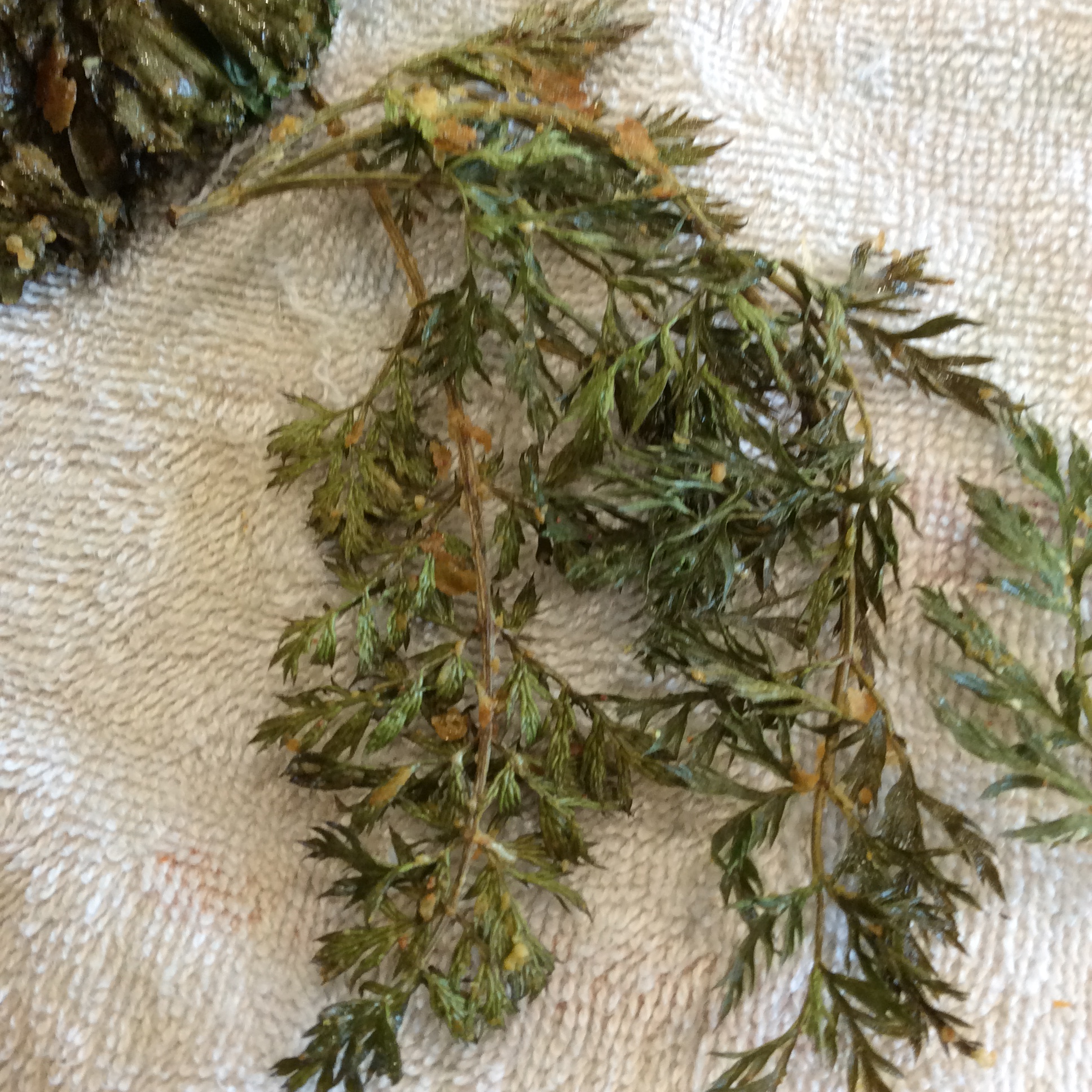
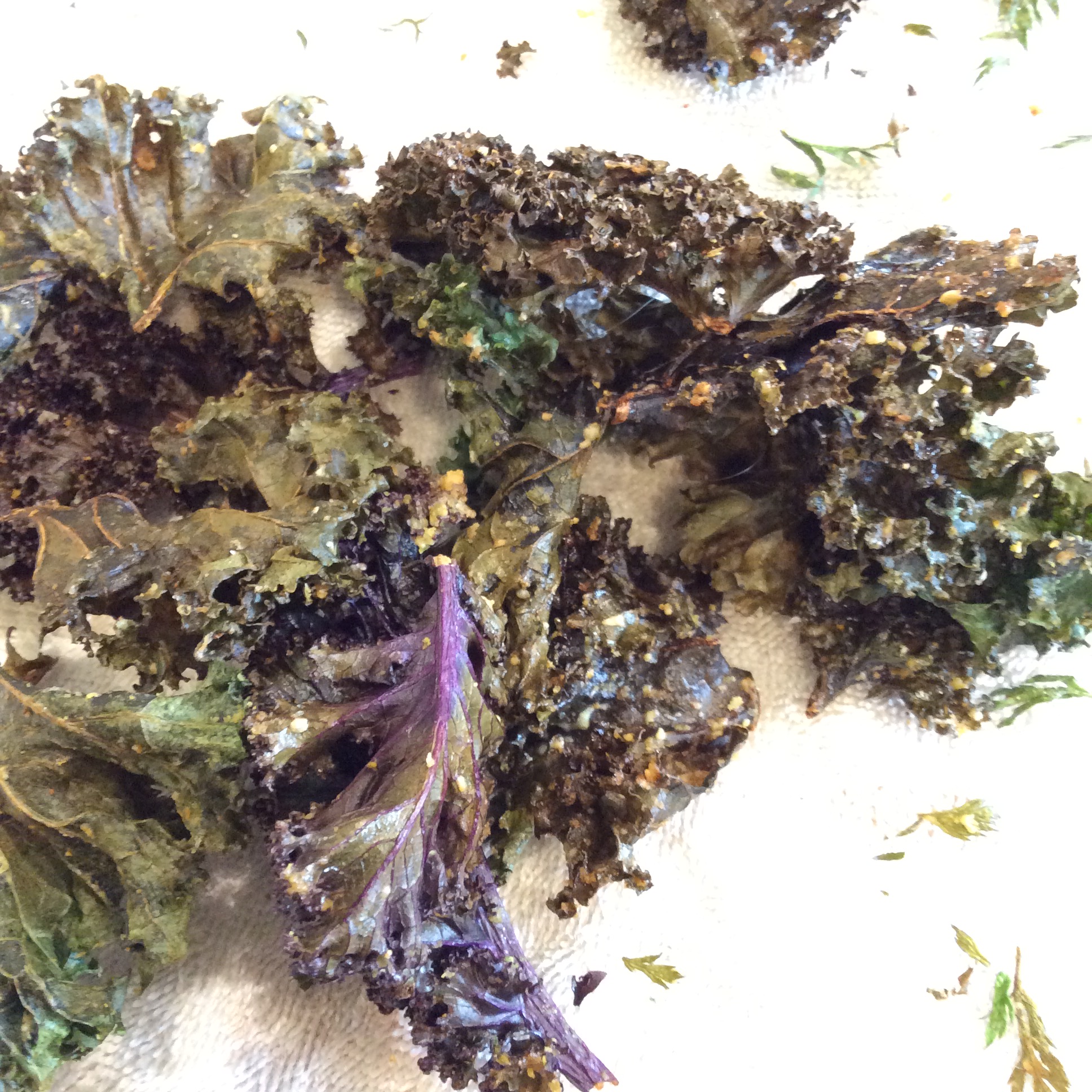
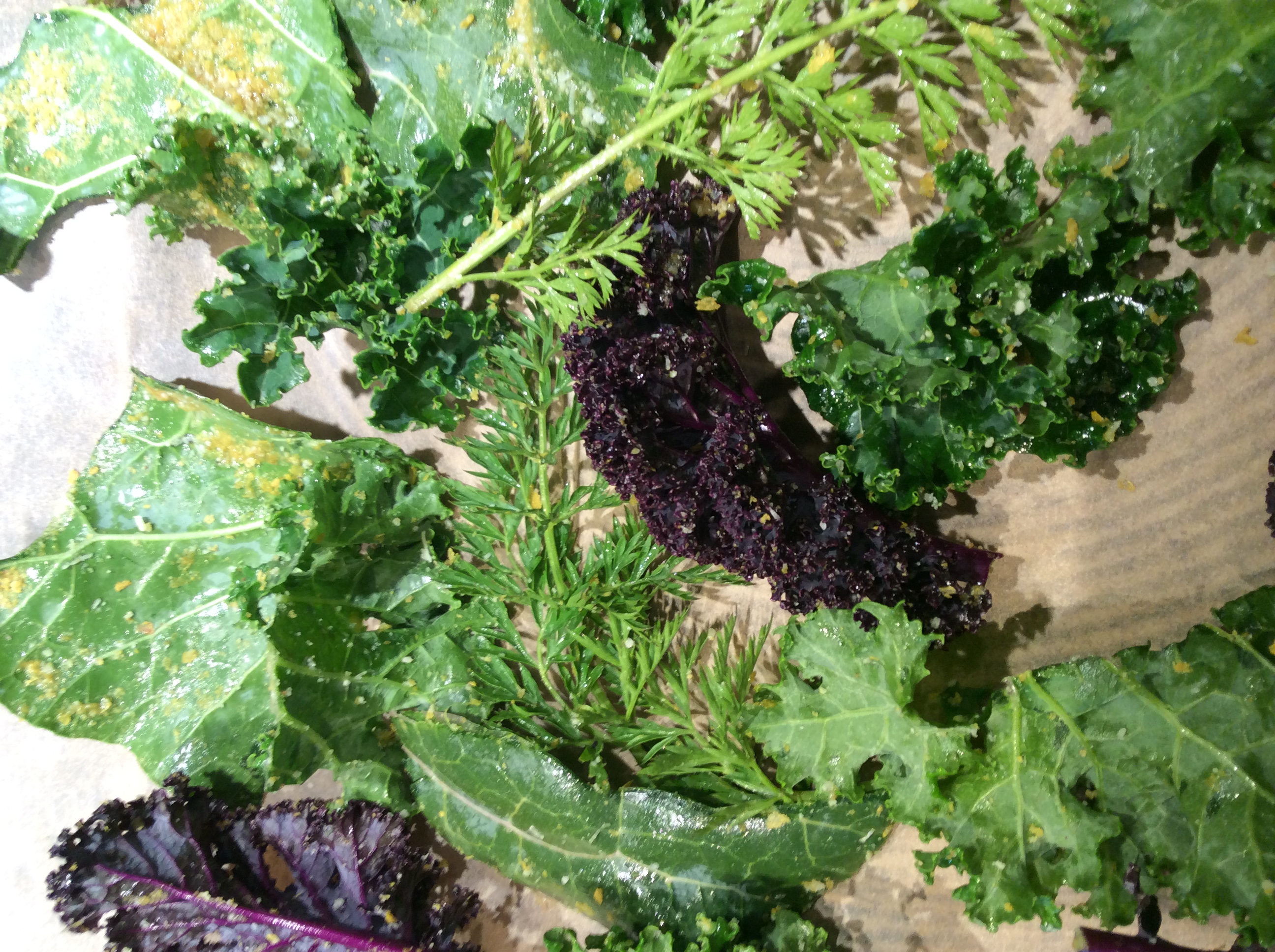
Probably everybody has made kale chips, the delectable snack made by oiling and seasoning pieces of curly kale and baking them at 375 or 400 until they are crisp. They are delicate, and not much good for dipping in anything, but they are quite wonderful by themselves. Recently I was making a batch and began to wonder about using some of my other available greens. Ultimately I used both green and scarlet curly kale,  carrot leaves, and torn sections of collard leaf because that was what was left in the garden.  The leaves were washed, allowed to drain, and 12 mid ribs removed from the larger leaves. In the case of the small carrot leaves, the stem was snapped off just below the lowest leaflet. I drizzle them with olive oil and seasoned with salt, finally grated Parmesan, nutritional yeast flakes, and a sprinkling of roasted ground garlic. If you want an exact recipe, there are dozens on the Internet. This is something you can do in a very improvisational way as long as you don’t oversalt.

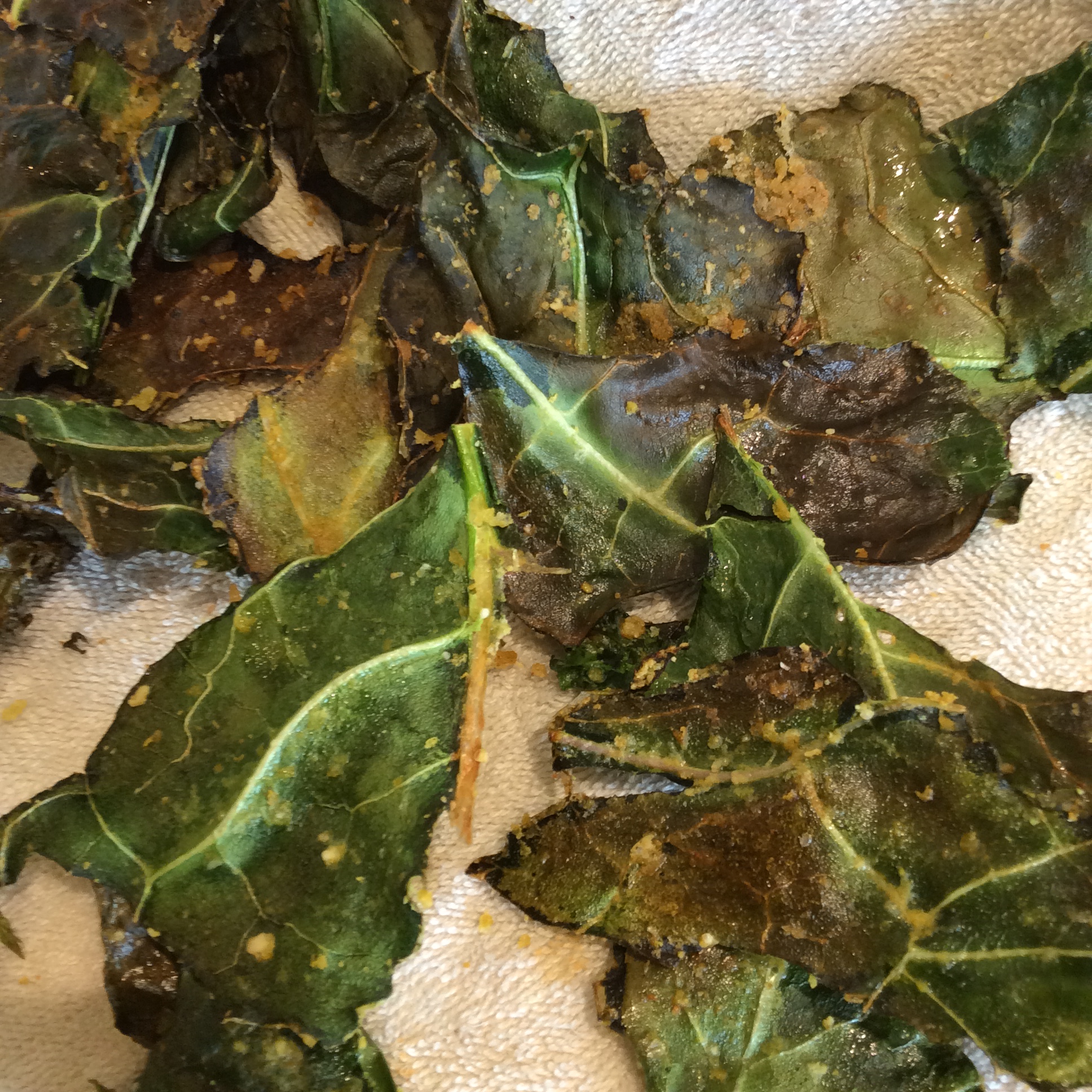
Lesson learned:  don’t put them all on the tray at the same time, no matter how pretty it looks. The three greens finished at very different times.  Collards needed the least time, and despite several experiments I never did get them quite right. They go from olive-green and ready to eat to brown and burnt-tasting  in under a minute. Also, they don’t cook very evenly despite your best efforts, so ultimately what I ended up doing was just picking out the brown leaves, which taste burnt, and throwing them away. I still think there are real possibilities here but I did not get them to work as a satisfactory chip.

The carrot leaves were astoundingly good, with a perfect delicate crunch and a mild flavor. Even the stems had a good texture, lost their toughness, and tasted just fine.  I wish I had discovered this earlier in the year when I had more carrot leaves. But this is a good reason to keep a blog, or a written record of some kind, because if you don’t you end up “discovering” the same things every few years.  I am recording it so that I won’t have to discover this again. It’s a handy thing to know if you buy carrots with the leaves on. Remove the leaves as soon as possible before storing in the refrigerator, because they seem to go limp more quickly if still attached to the roots.

Curly kale was delicious, as it always is when baked this way.  I just love the stuff, and have no idea how large a bowl of kale chips I could eat, but I guarantee that it would be a big one.  If you live in a snowy climate, it is very likely that you can keep curly kale in good shape through much of the winner in your garden. Here in the high desert it does not get all that cold but we don’t have any snow cover and we have a lot of drying winds,  so by this time of year the curly kale that is growing uncovered looks pretty tattered. Also, for reasons I don’t know, there is an invasion of aphids in early December, and they are hard to wash off. But this year I did plant a row of curly kale and put frost blankets over it in early November, and that row is looking great and has no aphids.  So I have at least a few more batches of homegrown kale chips coming.

Incidentally, if you are cooking a meal and have the oven at 375 or so for something else, a few kale leaves out of the garden in a little pan make a great cook’s treat to tide you over until the meal is ready.

Green Slaw, and notes on salt-curing greens

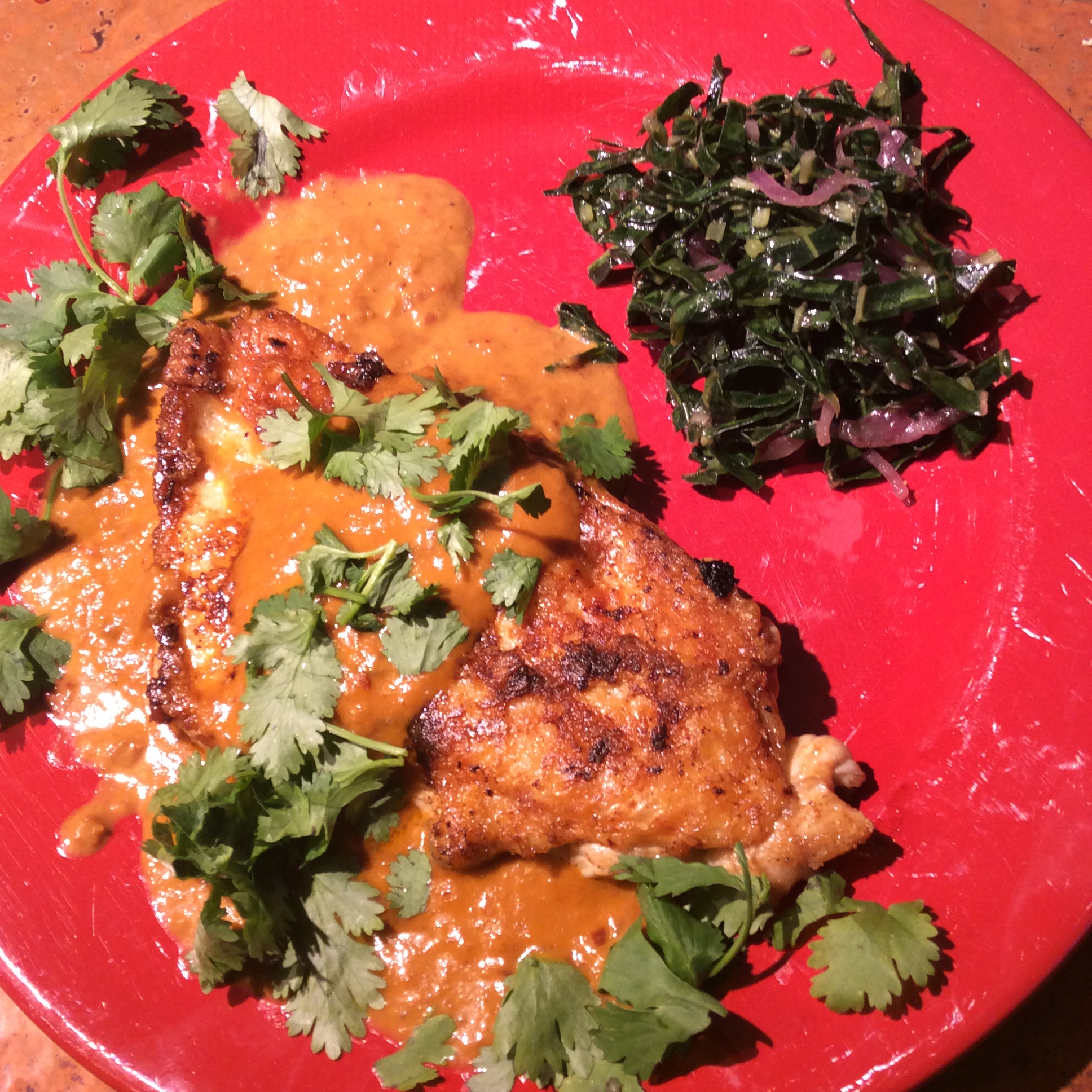
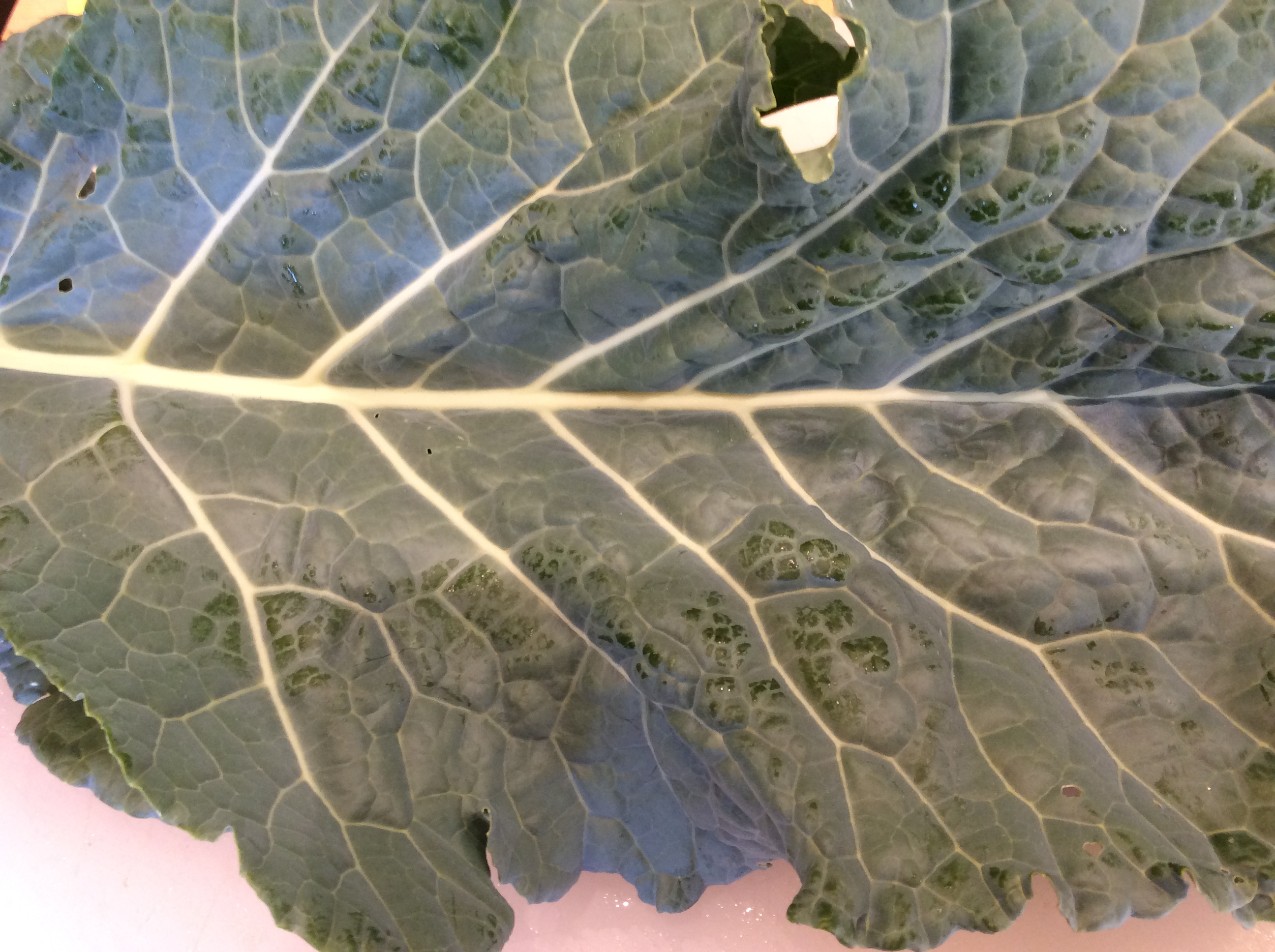
Right now my garden is full of savoy cabbage and collards, the cold-hardiest greens around, and I’m trying to eat them in as many forms as possible. There are no greens more nutritious, and after a few hard frosts the texture is excellent. One way I really love to eat them is salt-wilted or salt-cured, which makes them more tender and gives them a velvety texture. The slaw shown above was designed to go with Mexican flavors and makes use of cilantro stems, which are often wasted but shouldn’t be. They have pure cilantro flavor and, unlike the leaves, will stand up to marinating or cooking.

For two people, I used one giant outer leaf of savoy cabbage and cut the midrib out. I then rolled the leaf halves up and cut them into thin strips less that 1/4” wide. Half a red onion was cut into very thin slices. The cabbage and onion strips were put in a bowl and salted generously. I didn’t measure the salt, but the idea is to use somewhat more than you might sprinkle on at the table, not to drench them with salt. Half a teaspoon for this small salad would probably do it.  Then- this step is important- I massaged the salt in with my fingertips for about a minute. The bowl was then put aside for half an hour. Meanwhile, I chopped a small clove of garlic finely and cut a handful of cilantro stems in fine cross section, as well as getting the chicken breasts and sauce ready. While the chicken breast was cooking, I squeezed out the greens to get rid of excess liquid. Then I tossed in the cilantro stems and garlic, squeezed the juice of half a lime over the leaves, tossed with couple of tablespoons of good olive oil, and finished with a few grinds of black pepper and a generous sprinkle of ground toasted cumin. The most important final step is to taste and consider the seasoning before serving. It may need additional salt, since much was lost when the liquid was squeezed out. And after considering the flavor balance, I ended up tossing in a light sprinkle of stevia, probably equivalent to about half a teaspoon of sugar.

This basic technique can be taken in many other directions. For a more Chinese take, leave out the cumin, use rice vinegar instead of lime juice, and add some grated ginger with the garlic and finish with a final drizzle of roasted sesame oil.  A sweeter take that can accompany Korean food or barbecue with equal facility can be achieved by tossing the wilted veggies, garlic, and cilantro stems with quasi-Korean sauce.  (Incidentally, when making that sauce, remember that oligofructose is not an essential ingredient and, if you aren’t low-carb, you can just use a smaller amount of sugar.) If pursuing an Asian flavor, use a neutral oil like macadamia oil rather than olive oil.  Rather than cilantro stems, you can use finely chopped parsley stems or a handful of finely sliced celery. You might want to salt-wilt the celery with the cabbage and onions if you use it, to make the texture blend in more harmoniously. You can dress the wilted veggies with wine vinegar or tarragon vinegar, add some finely chopped fresh thyme, and finish with a very good olive oil to have the slaw accompany more traditional western flavors. Parsley stems, lemon juice, oregano, and a final sprinkle of feta on top makes it more Greek, which is where I learned the salt-wilting technique in the first place. You can of course use part of a cabbage head rather than outer leaves, and red cabbage turns a lovely scarlet when salt-wilted and dressed with something acidic.  The point is that salt-wilting is a way to make thick cabbagey leafy greens more tender and chewable so that they can readily be eaten raw, and then you can take the flavor in any direction you want.  If you absolutely don’t have time for the salt-wilting step, you could try just massaging the finely sliced veggies with your fingers for an extra couple of minutes, and depending on your greens, this may soften the texture enough to make them very tasty, although the plush texture achieved by salt-curing won’t be there.  And if you don’t want to serve it as part of your meal, a small portion from half a large leaf or  so made in the kitchen while you do other things is a great cook’s treat  to eat while you work and prevent overeating later on.

I never tire of harping on the fact that leafy greens form the basis of the Cretan diet, the diet that nourished some of the healthiest and longest- lived people in the world. Also, they are full of soluble and insoluble fiber and very filling, so you have half the chicken breast left over to eat the next day, providing economies of time and money in addition to the health benefits.There is a meme going around that says

“How do you reset your body back to its factory settings?

It’s kale, isn’t it?

Please don’t say it’s kale”

Substitute “leafy greens” for “kale” and this becomes fairly accurate, and can be made delicious. If you grow your own greens, it’s also dirt-cheap. So there just isn’t a downside.


The Fall Summation IV Part 3: Perennial Odds and Ends

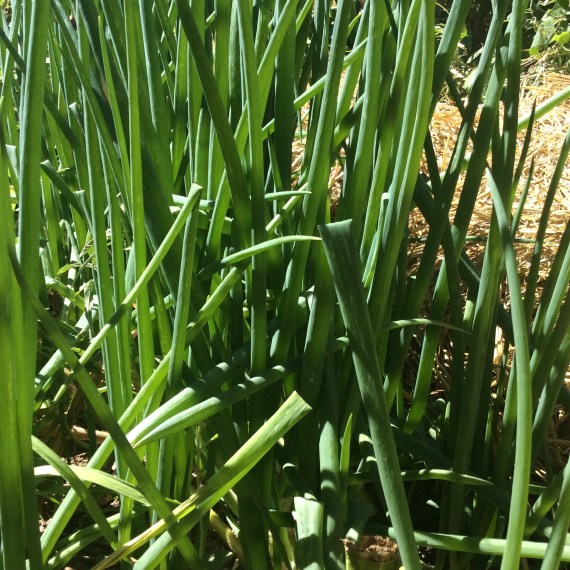
So far I’ve written about 16 perennial vegetables that I eat regularly and enjoy, and there are still more to mention. Most are things that I haven’t really gotten to work well yet, but pictured above is a perennial veggie that I eat nearly every day. The Egyptian walking onion has become so intrinsic a part of my cuisine that I don’t take special note of it as a perennial vegetable. It’s just food. I have written elsewhere about how I manage it,  so I won’t repeat most of that material here except to say that I have four patches of it now, north exposure and south exposure, sun and shade.  This is how I ensure that almost every day of the year except January, there are green onions somewhere on the property that I can harvest. A good way to site them is to wait for a spring snow and then note two things: where the snow melts away first, and where it lingers the longest.  This gives you a good indication of your warmest and coolest microclimates, and you want to get some perennial green onions in each so that you have the longest possible season. If you don’t get any snow at all, odds are that you can grow them throughout the year with succession planting.
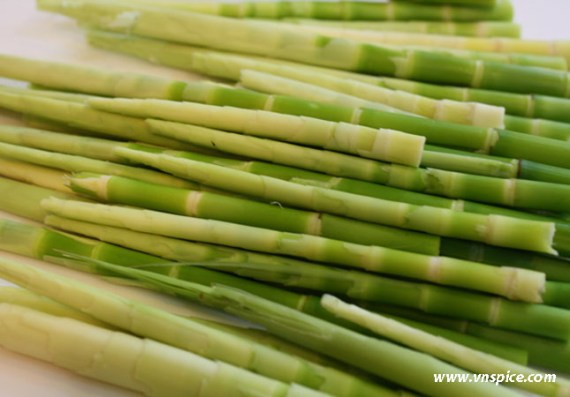
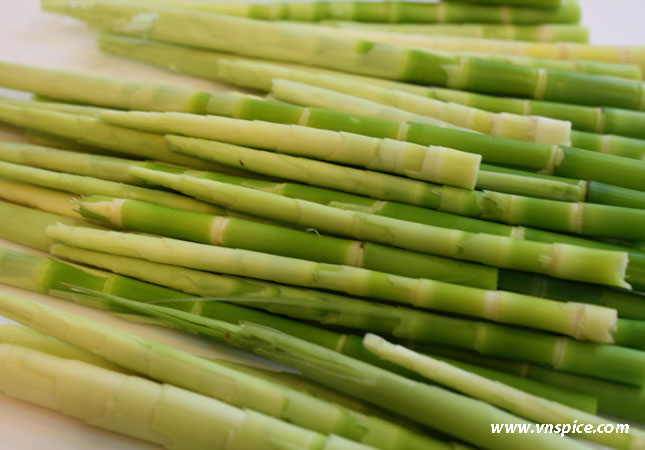
I stole the photo above because I daydream about lavish piles of fresh bamboo shoots. Three years ago I planted Phyllostachys dulcis, the famously invasive sweetshoot bamboo, a 35’ bamboo with shoots sweet enough to eat raw.  I reasoned nervously that in my desert climate the lack of water would probably keep it from spreading far, and for extra insurance I sited it against the fence of my goat’s pen so that, in a worst-case scenario, I could turn her loose on it.  Three years later, it is a clump of about five scrawny canes 6 feet high at most, and I have eaten exactly one bamboo shoot.  That one shoot was very delicious slivered into a salad, but this is not exactly the course that I anticipated. Maybe it’s my dry climate and alkaline soil, or maybe it’s karma,  but so far this one isn’t budging. I remain hopeful.  Maybe 2018 will be its year to take off.
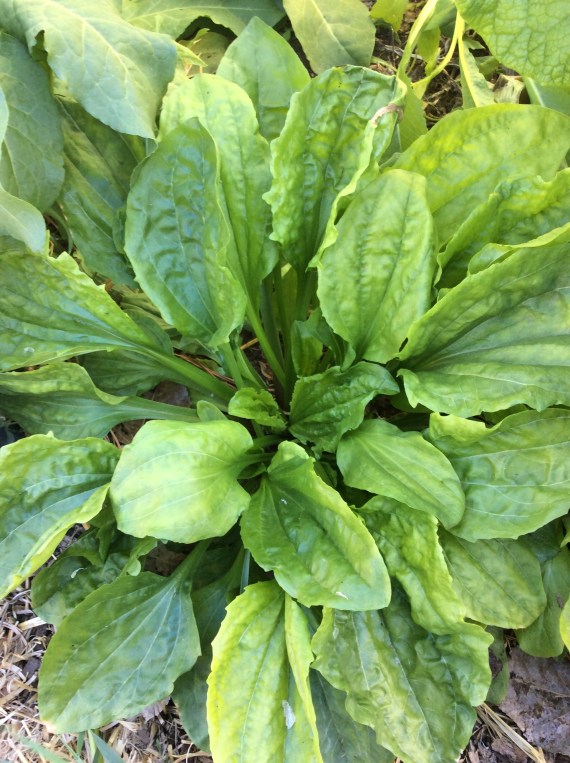
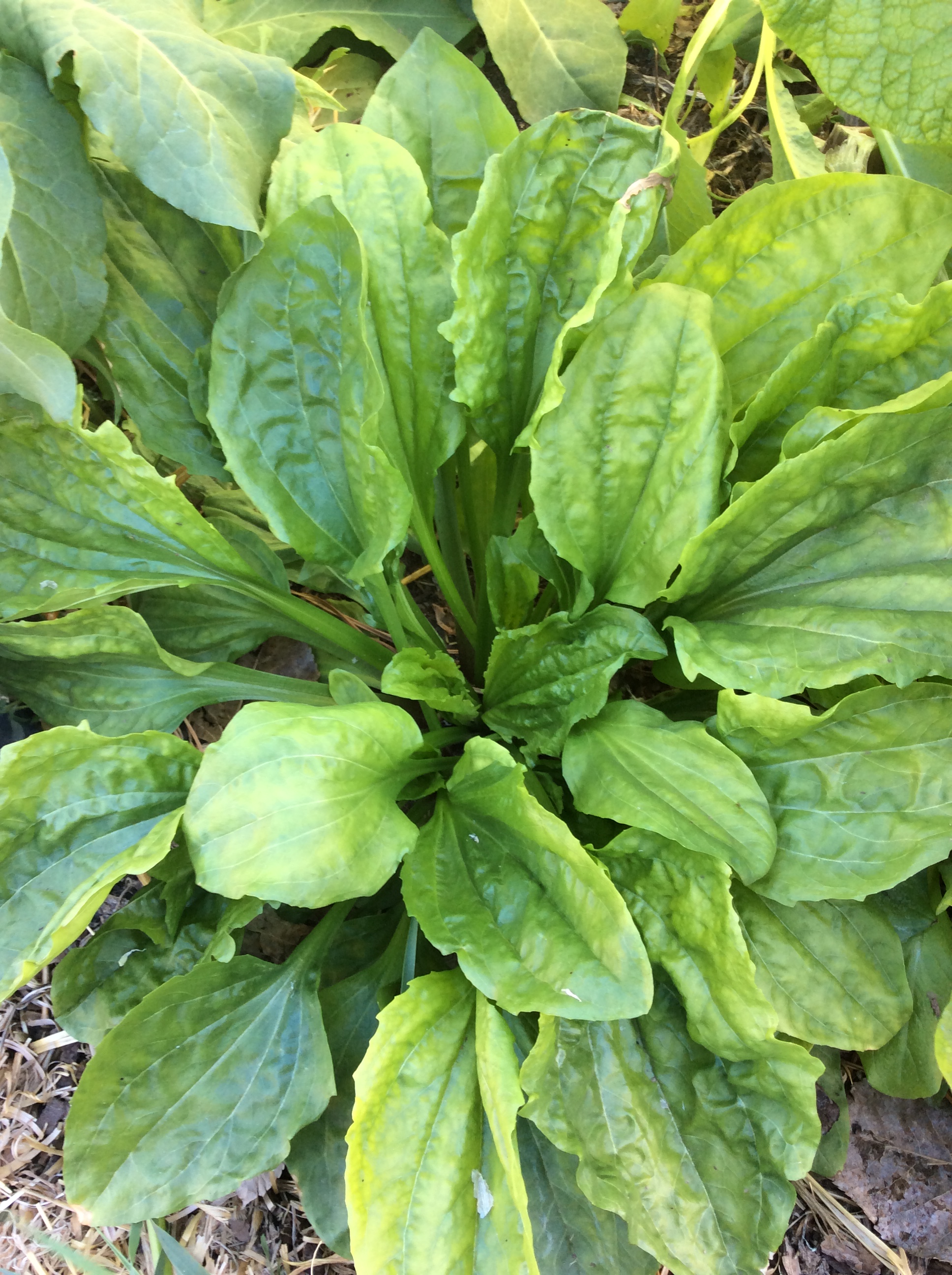
Rugel’s plantain is a plantain  that I actually paid money to have, because I read that it had better flavor than the common great plantain.  It might taste a little less rank and weedy, but I don’t find it to be a choice eating plant by any means.  Probably the best way to use it is boiled and seasoned baked in the planting chips, but then even the common plantain tastes okay when used that way.  So this one is a nice indestructible plant with limited uses.  I am willing enough to let it keep occupying that space, but if I had it to do over again, I probably would not spend money on a specimen.
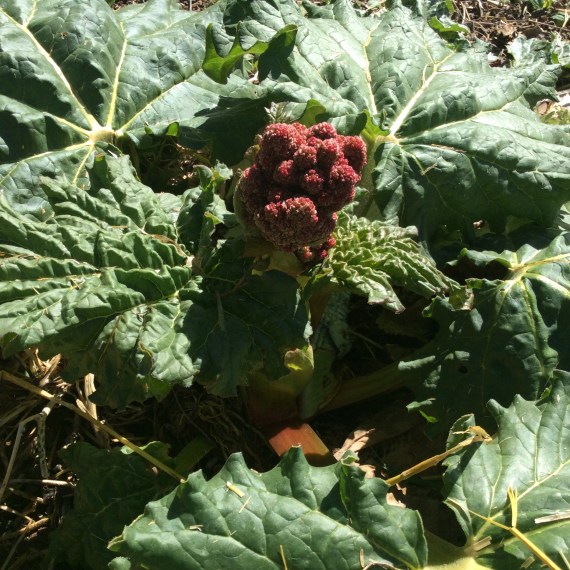
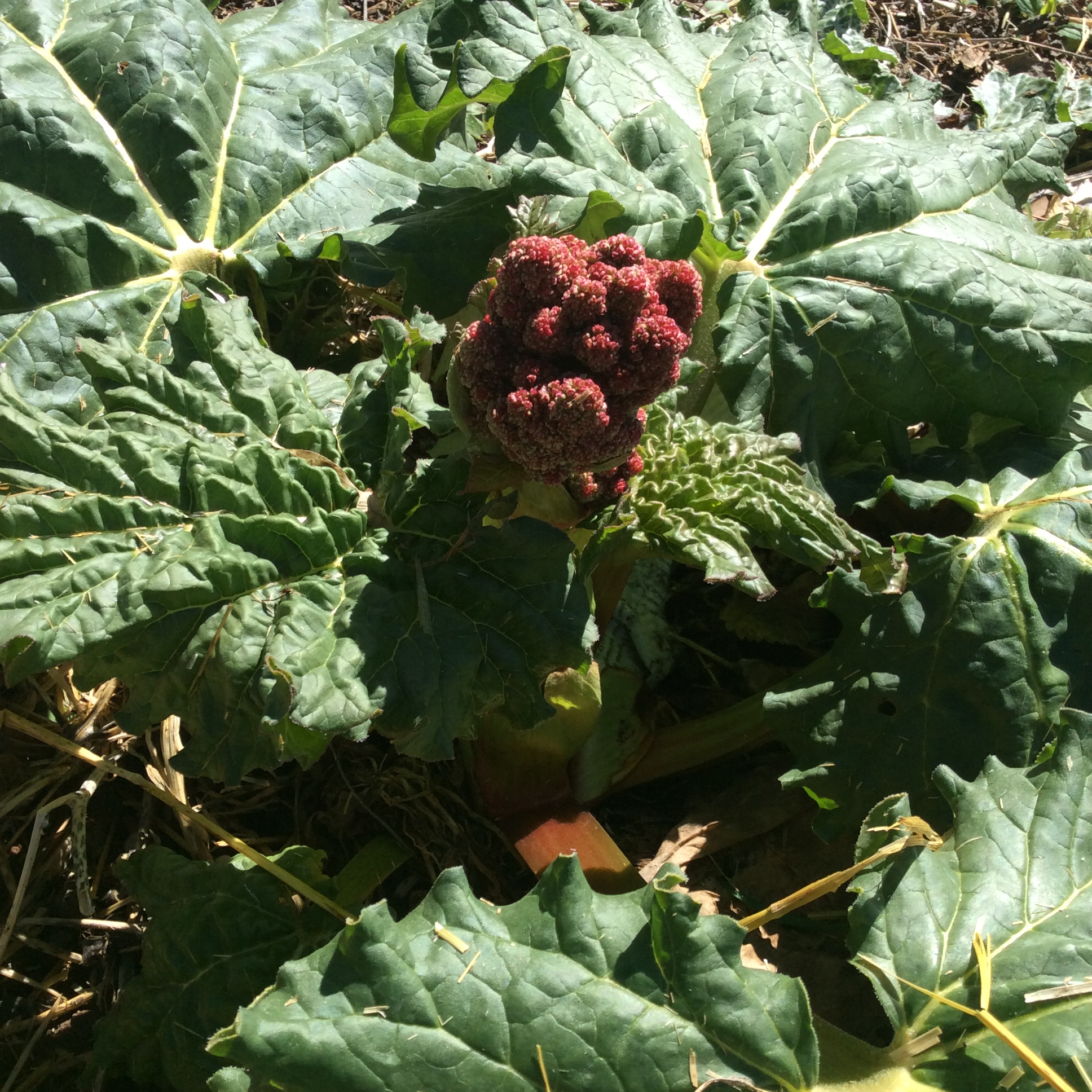
Rhubarb is not a plant that I find a lot of uses for, but I must say that I do enjoy harvesting in the tightly packed flower buds. When steamed, they look a lot like cauliflower but taste strikingly like sorrel, with a strong lemony tang.  The cooked buds make a delicious addition to mixed cooked vegetable salads.
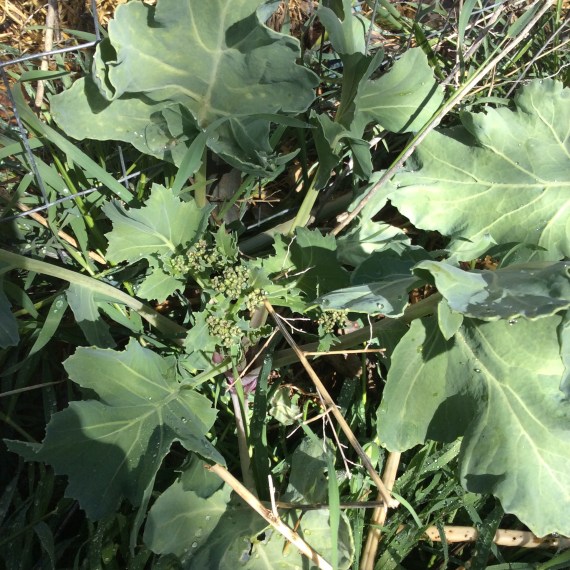
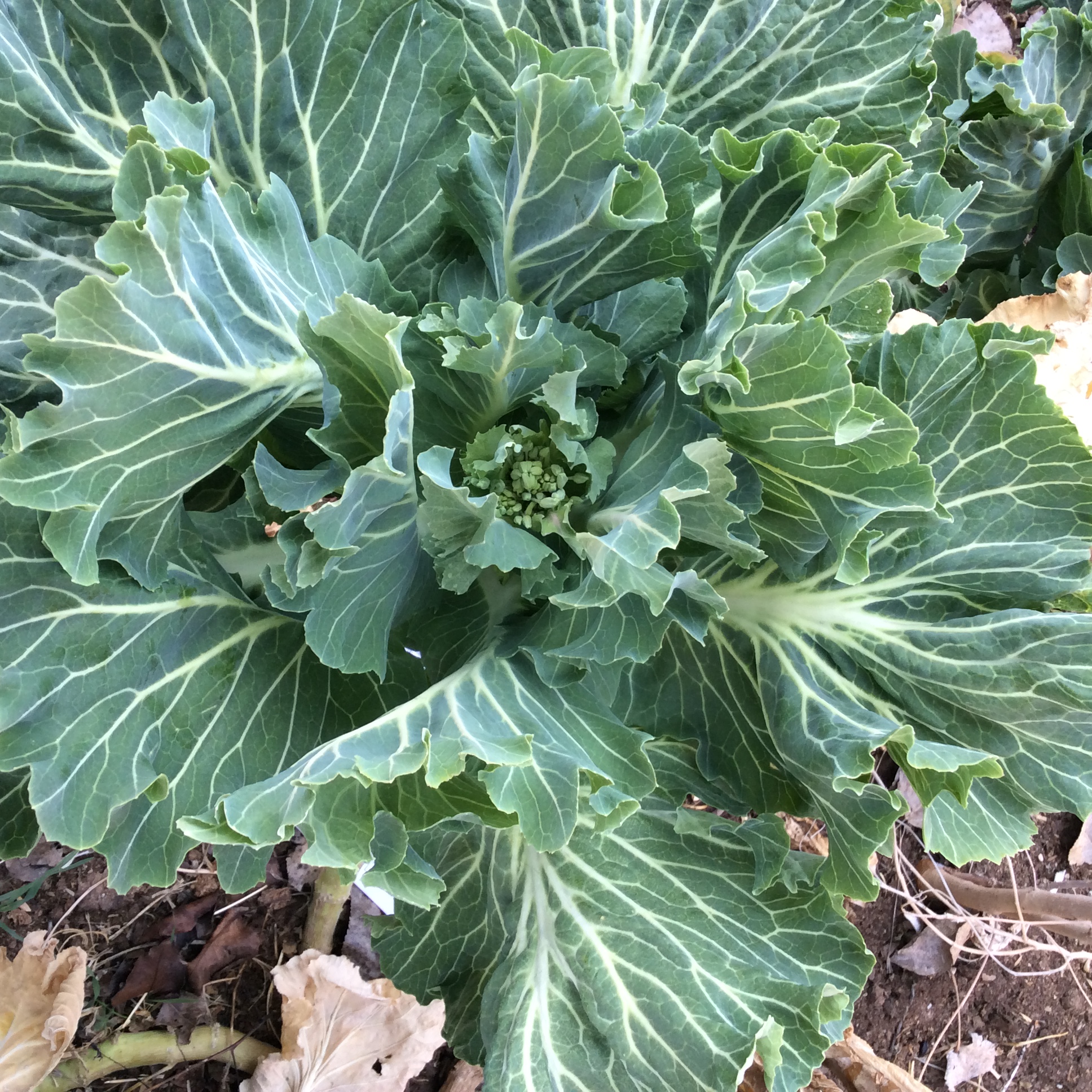
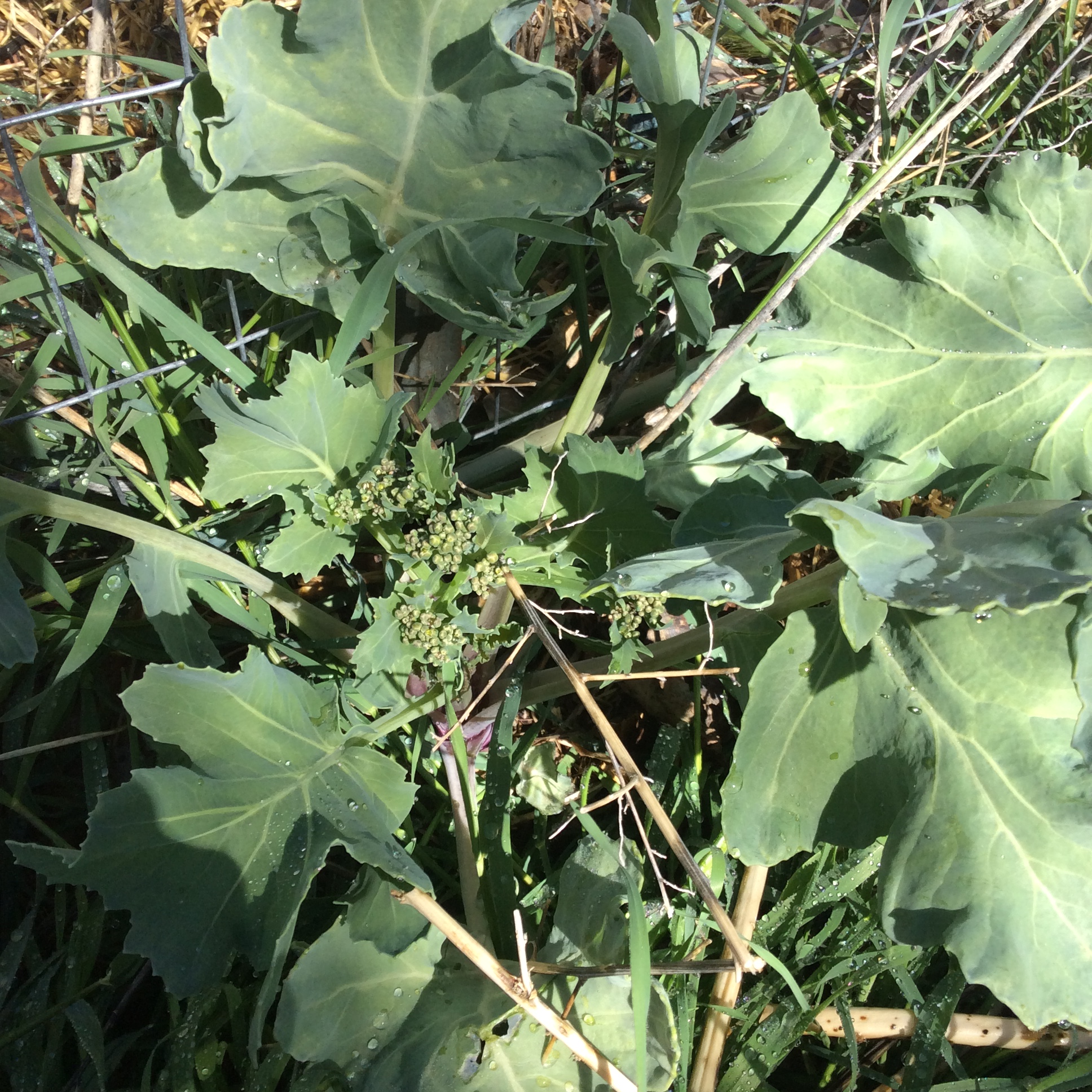
Sea kale  is a plant that is still settling in for me.  Each plant makes only six or seven big waxy leaves, and if you harvest more than one, the plant will probably die. Only one of my new plants bloomed this year, and I did not harvest the buds as a “mini broccoli“ because I wanted to smell the flowers, which are said to smell strongly of honey. Mine had very little scent, so I might as well have eaten the buds.  But they were mobbed with bees.   I am told that if you let the plant ripen seeds, that is another thing that will cause it to die. Per the reports of people who have it, it seems determined to die. I did read that the leaves could be harvested in late fall when the plant no longer needs them, but at that point mine were so ratty and bug-holed that I could not imagine eating them.  So in 2018 I will just harvest buds and leave it at that.  I want to love this plant, because Thomas Jefferson loved it, but so far it is not exactly earning its keep around my place.  Still, there are many perennials that it takes me years to learn to use well, so maybe this is one of them.
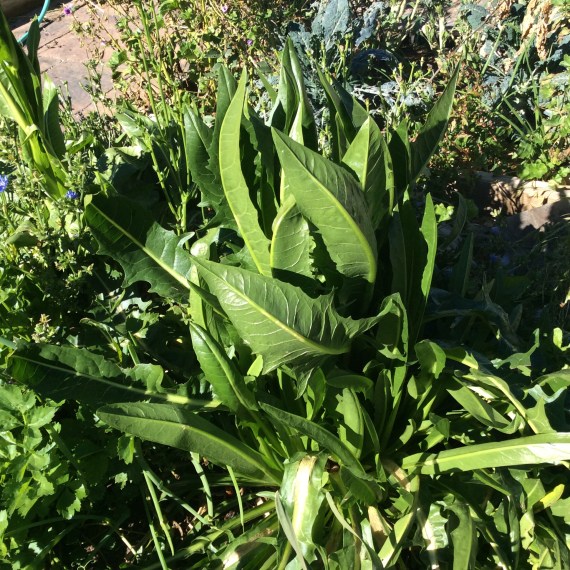
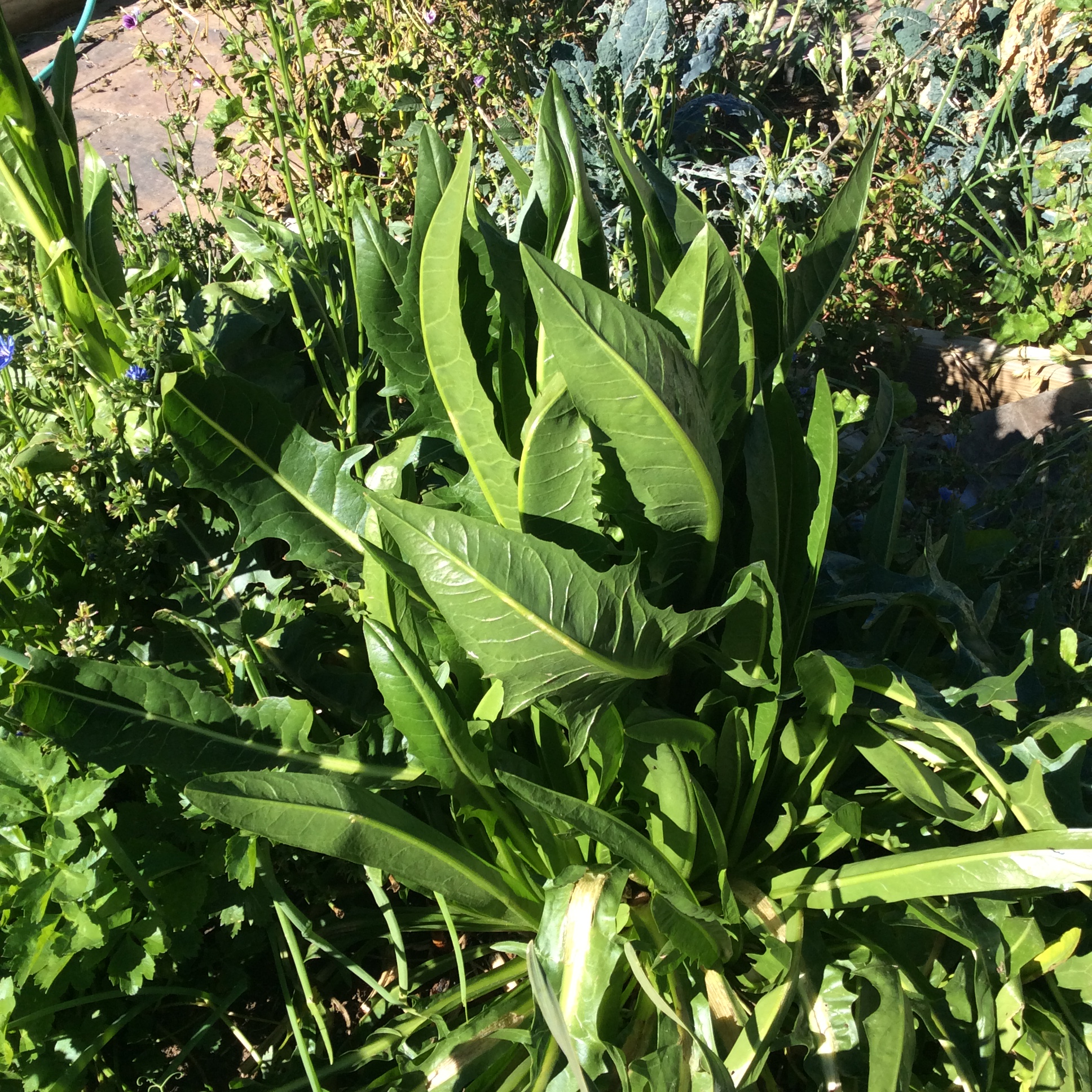
Chicory comes in dozens of forms. The one that I grow as a perennial is Clio, from Johnny’s Selected Seeds. It resembles a dandelion on steroids until it produces its sky-blue raggedy blooms. I cut down the bloomscape after it blooms, and harvest the newer leaves in fall. Like all bitter greens, it needs strong seasoning, and I especially like it with bacon lardons and red chile.  The flavor is different from dandelion leaves, a little richer and not as bitter, and some people like it who don’t care for dandelion at all. I think that probably you could force it with frost blankets in cold weather, but haven’t tried that yet because I have enough other things to eat in cold weather.
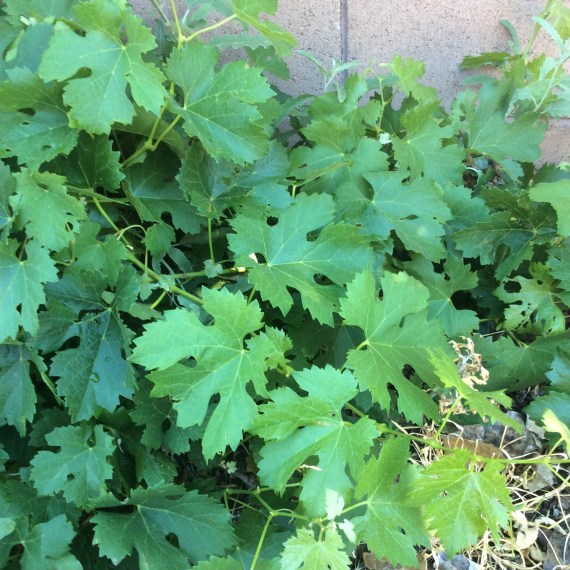
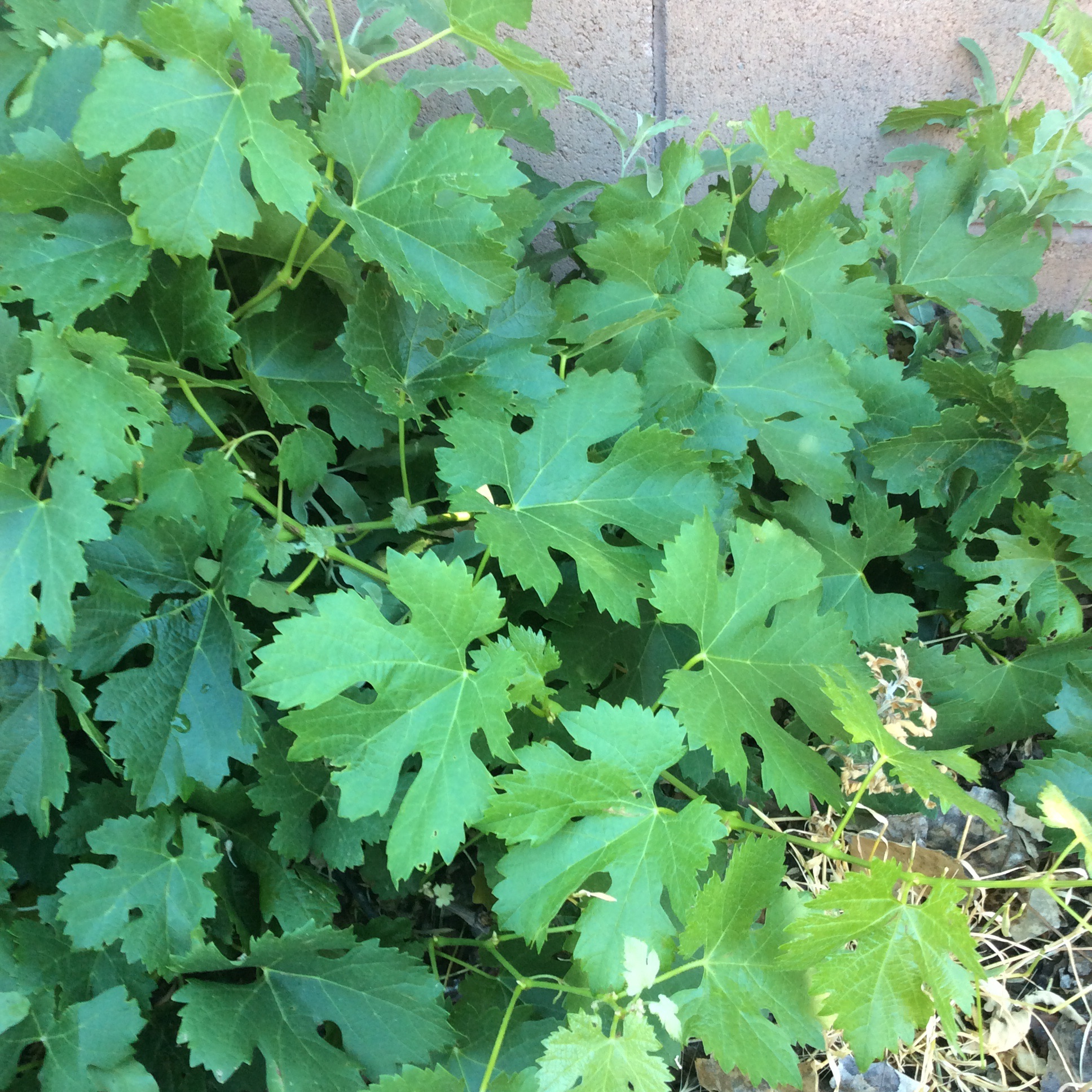
I think that every urban homestead needs to have a wine grape growing somewhere. You will never get enough grapes from one vine to make any wine or vinegar, but wine grapes tend to have nice edible leaves,  while the leaves of Concord grapes and many other grapes of American derivation are full of unchewable undigestible fibers and cannot be considered edible. Grape leaves are endlessly useful. I might actually make stuffed grape leaves once a summer, but once a week in the mid and late spring I grab a handful of grape leaves to throw in mixed greens. They need to be finally slivered because the leaf veins can be tough, and the stems need to be removed altogether, but they have a lovely tang. I also like the small fresh ones chopped into salads.  Young tender grape leaves fried quickly in olive oil make a labor-intensive but really lovely garnish for nearly anything that you might serve in late spring, and I recommend frying them in good olive oil because the rich oil combined with the shatteringly crisp lemony leaf is very delicious.
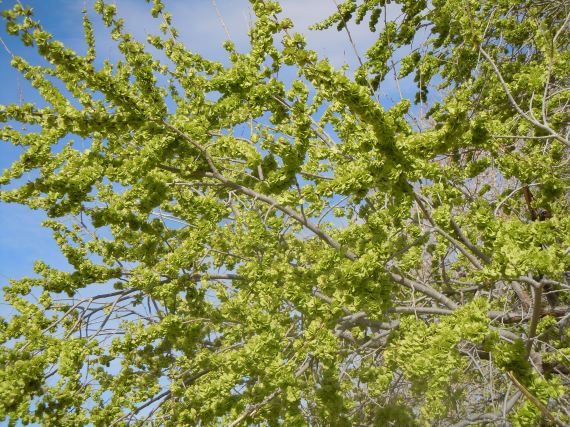
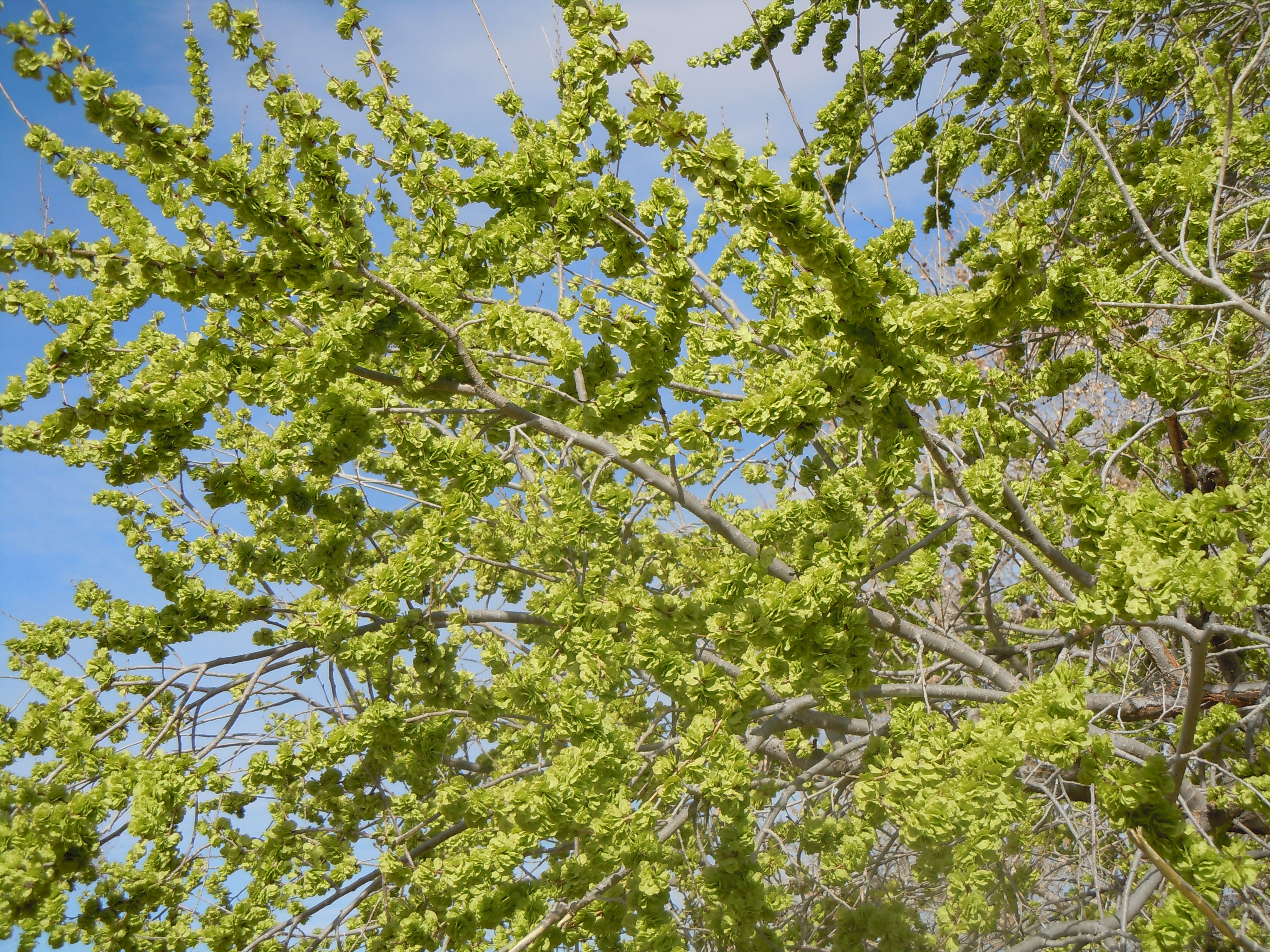
I have decided to count the Siberian elm samaras that grow all along the nearby path as a perennial since, after all, what could be more perennial than a tree? Elm samaras are mild and have no distinctive flavor of any kind,  but they are available in mind-blowing quantities, and are the first green of spring along with bladder campion and whatever I have managed to force under frost blankets.  They are a useful addition to salads and cooked greens, can be nibbled along the walk as a nice trail snack, and gathered by the bucketful  for my chickens and goat, who have gone through the winter without fresh greens.  So despite their lack of distinction, all of us are happy to see them. Within two weeks of their first appearance as a green mist on the trees, the edges have become papery and tough and the season is over. No problem, I am on to other things at that point.  But later in the growing season when I am cursing the wily and invasive Siberian elm, it helps to remember that it was one of the first fresh things to come to my table.
 

The Fall Summation III: The Firepit

I was happily involved in writing in the multiple parts of my fall summation IV post, when I suddenly realized that I never remembered to publish fall summation III. So here it is.

I have always enjoyed grilling as a wonderfully tasty way to cook meat and vegetables, but late this summer I acquired a firepit in my front yard, and it is fair to say  that it is one of the best small investments we ever made.  The pit itself is just a literal pit, a big hole in the dirt, skillfully lined with bricks by a landscape crew. Then there is a drop-in steel grill with a grate which is easily raised and lowered for precise control, and I wish I could remember where I bought it because it is the best ever.  Most important is the fuel, almost completely hardwood in my case although I start fires with twigs and small branches scrounged off the nearby walking path.

Cooking with wood is a whole different experience than cooking with charcoal, and I had not done it for about 25 years, so it took some time to get back in the swing.  When I want to just fire up the grill and cook something without undue fuss, I resort to my beloved Big Green Egg.  Cooking on the fire pit is more a process and an experience than just getting dinner ready. First, there is building the fire. Then, there is sitting next to it feeding it the right kind and amount of wood and giving it a few pokes at the right time to end up with a wonderful bed of red-hot coals  a couple of hours later.  Then there is cooking the food itself, and this is a hot eye-stinging experience that is somehow more pleasurable and more primal than any charcoal cooking could ever be.  The finale can then go one of two ways: either the coals can be damped with a bucket of water so that you end up with biochar for the garden or a bed of charcoal for the next fire, or more wood can be thrown on the fire and the diners can gather around it contemplatively with wine and marvel at their good fortune to be alive at this particular moment.

Don’t think that this is only an activity for carnivores. Pescatarians will find that wild-caught salmon is perfect for the grill, as long as you’re careful not to overcook.  Any vegetarian or vegan would love firepit cooking, for the rich meaty belt that hardwood smoke lends to vegetables. Eggplant, zucchini, and carrots are all wonderful sliced and grilled. I like to rub them with olive oil mixed with salt and a little chile chipotle. Wild mushrooms are lovely grilled, and store-bought mushrooms approach the savor of wild ones when grilled. Oyster mushrooms are especially suited to grilling.   Potatoes and sweet potatoes are both really good when pre-baked, pressed flat and about half an inch thick with your hand or the bottom of a glass, salted and brushed with olive oil or bacon fat, and grilled  just until the outside gets crisp and browned.  Sweet potatoes are very quick to burn because of the sugar they contain, so they need to be kept on a cooler part of the grill and be brought along more slowly and cautiously.  I understand that some people grill kale leaves very successfully, although so far I have not made that work well. And the more tender leaves of romaine lettuce are really delicious when the heads are grilled in halves.

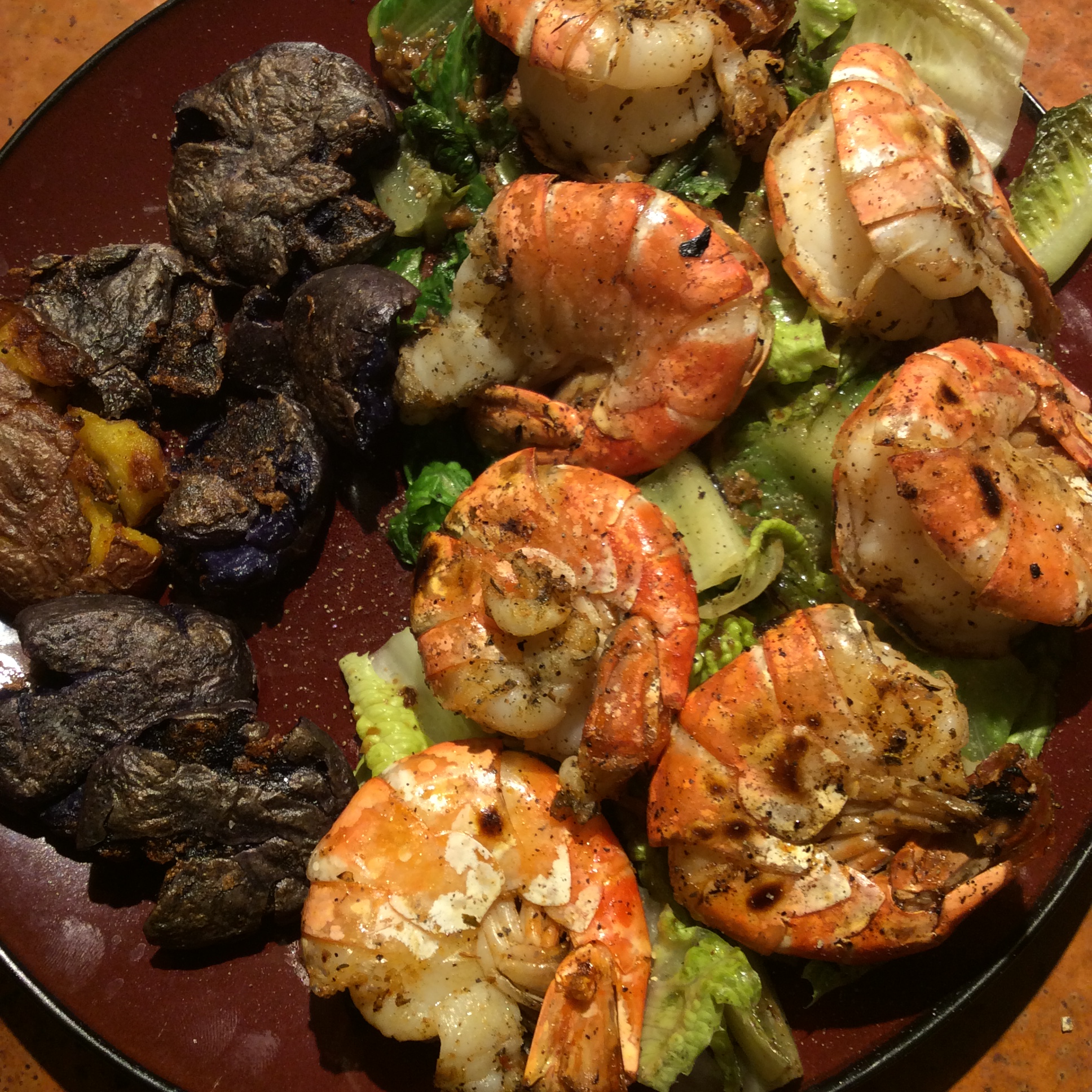
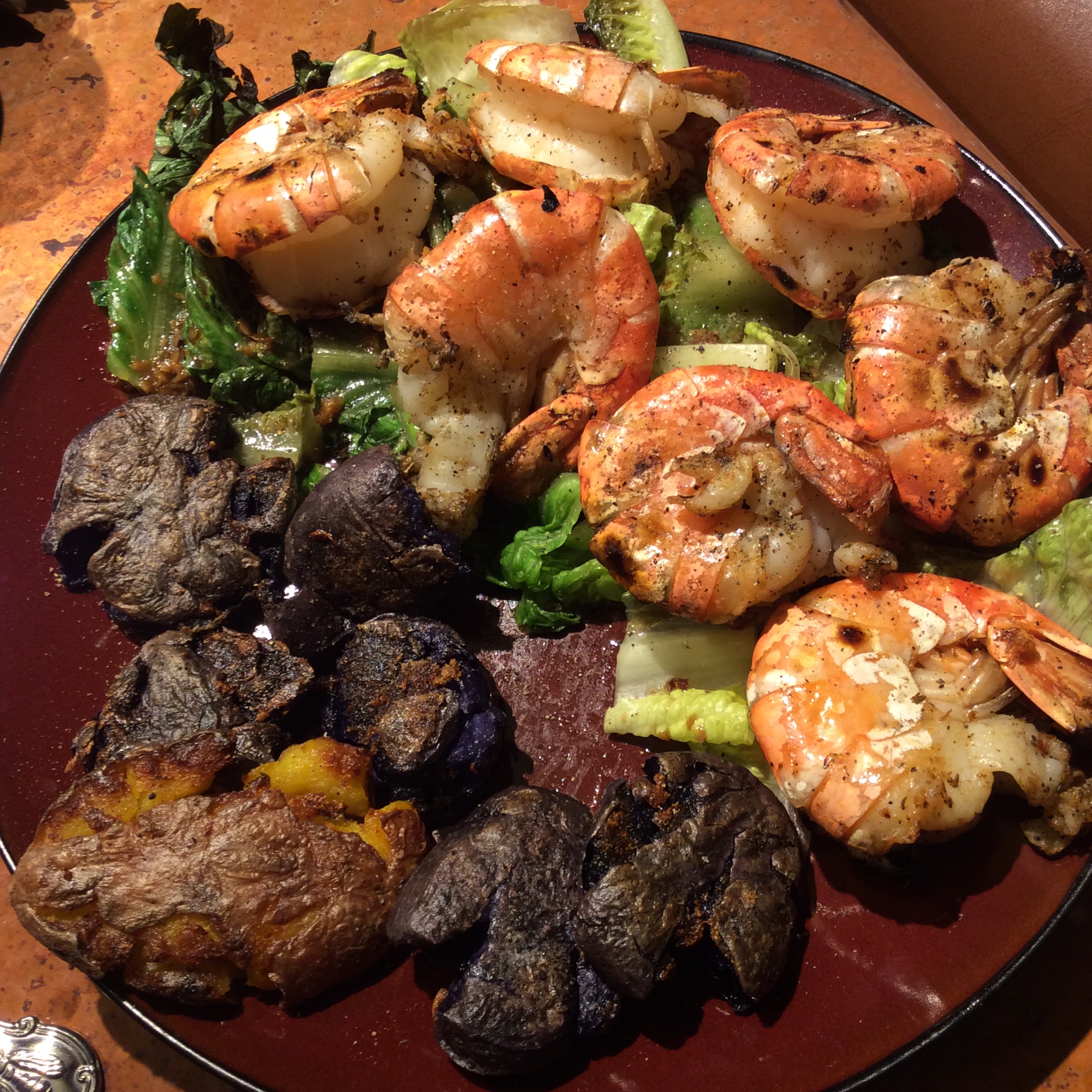
One of my favorite recent dinners involved large shrimp seasoned and grilled in their shells, served on a bed of grilled romaine lettuce made by cutting heads of romaine in half, drizzling them with my mother’s marinade, and grilling them over very hot coals for 2-3 minutes on each side.  I am in favor of taking the grilled romaine into the kitchen and slicing it crosswise before plating it, for more graceful eating. The ribs of the romaine  leaves become softer, sweeter, and a culinary revelation. I would think that the same thing could be achieved with Chinese cabbage. Another small drizzle of marinade when on the plate adds to the general savor.  In the photo above you see the grilled treatment given to little dark blue Magic Molly potatoes, which I intend to write about in another post.   In general we eat low-carb and avoid foods like potatoes, but the occasional treat does not come amiss. Overall, this is a meal that makes you realize that nothing more miraculous has ever happened in human history than the taming of fire. It made us more civilized and brought wolves in off the tundra to be our companions. We co-evolved with them for the next 40,000 years to the benefit of both parties, and their descendents still seem to enjoy hanging around the firepit.

For more on the entrancing world of wood fired cooking, read anything by Francis Mallman, particularly his first book, Seven Fires.