Archive for the ‘home food production’ Category

Passing Pleasures: Artichokes

may 2009 019
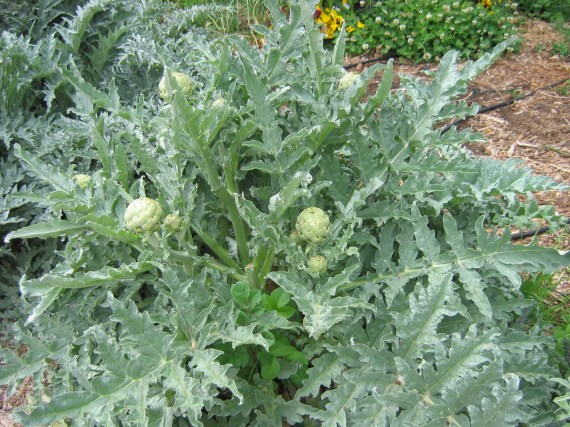
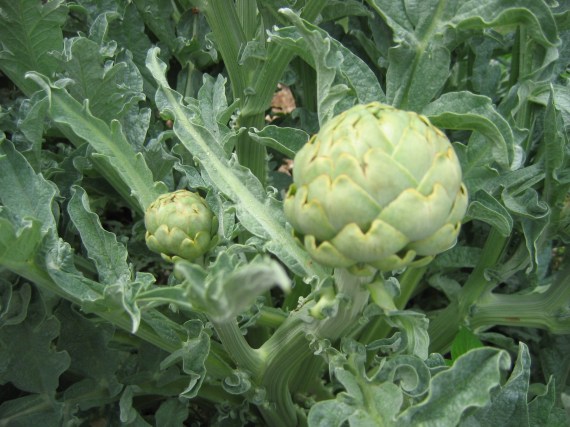
      Artichokes are a wonderful addition to the New Mexico garden. They are splendid silvery architectural bushes for the cooler seasons of the year, and provide a rare treat to their enthusiasts.

       One of the overlooked aspects of front yard gardening is that neat greens like Swiss Chard can’t be used as edging because passers-by don’t know vegetables when they see them, or don’t care, and so they let their dogs urinate on anything along the sidewalk. I solve this problem by edging my front garden with artichokes: the edible part happens a few feet off the ground, and until a squadron of Irish Wolfhounds comes to my neighborhood, I’m safe.

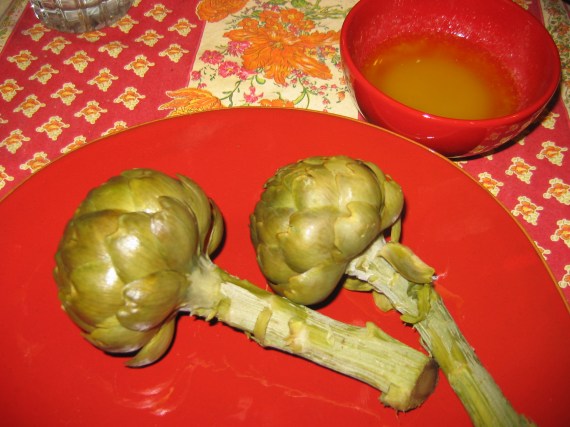
     Now is the time to start artichokes from seed, to enjoy next spring. I like the common “Green Globe” best. The plants typically live 3-4 years in our area. The scaly buds don’t get as big as they do on the misty west coast, but they’re very delicious. A deep watering once a week is plenty once they’re established. They don’t produce over a long season, but for two weeks in late spring we revel in all the fresh artichokes we can eat, and a rare feast it is, too. If you’re interested in such things, artichokes contain abundant amounts of two antioxidants, cynarin and silymarin, which are found only in the thistle family. I’m not sure what this really means nutritionally, but it does mean that when I feel tired and out of sorts, I can eat a plate of artichokes, telling myself that a good dose of cynarin will fix me right up. It usually does, too, unless it’s the bagna cauda or the general abundance of the season that I’m responding to.
may 2009 020
may 2009 018

For more on cultivation and recipes, Continue reading
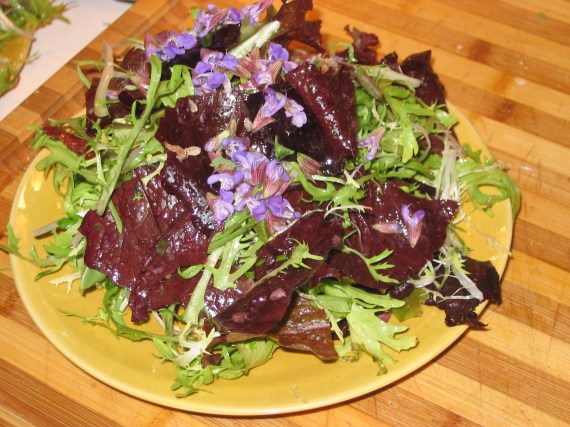
Passing Pleasures: sage blossoms

may 2009 040
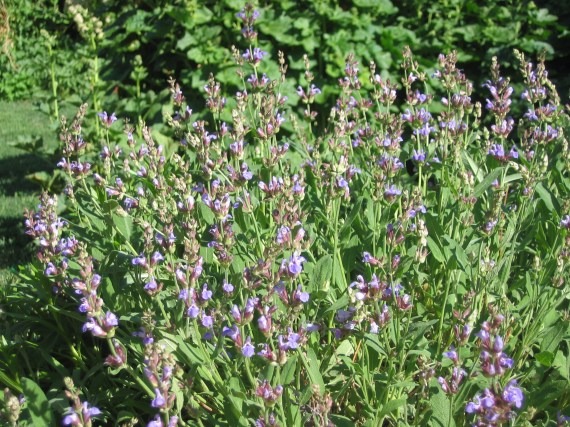
Sage is a useful culinary herb which loves our climate and grows with unbounded enthusiasm. My own specimen has been grown in a container for three years with no care or attention other than periodic watering and has reached 3 feet across and seeded itself around, providing a number of nice plants to give away. A major advantage to growing your own is that you can enjoy its lovely Delft-blue flowers, both in your yard and on your plate. The flowers also taste of sage, but the flavor is softer, sweeter, and more floral. They are lovely on salads. Pick them just before you use them, toss them on top of the dressed leaves, and enjoy. This is one of the ephemeral pleasures of the garden, to be enjoyed for a week or two and then let go. But, like most such pleasures, it makes an impression and leaves a memory of a pure and lovely thing enjoyed in its season.
You can buy a sage plant nearly anywhere. I suggest avoiding the variegated or variously-scented ones unless you have space to spare. Common culinary sage is the most useful in the kitchen.
may 2009 028

The Greens of Spring: cutting celery and lovage

march-2009-0441
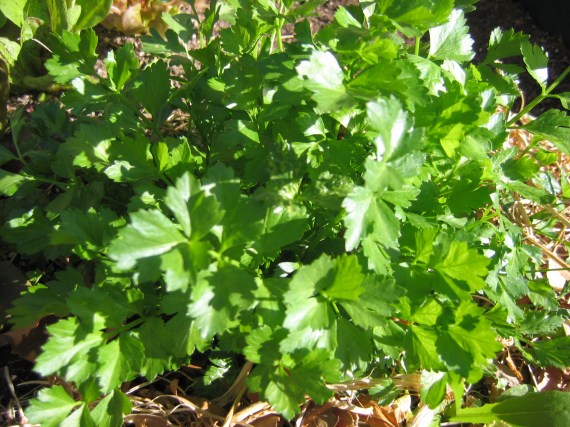
Cutting celery is one of the most underutilized herbs that I know of. It has the flavor of stalk celery without its potential aggression, and can be used in almost any herb mixture. It grows like a weed and can be snipped at for nine months of the year. It seeds itself like a weed, too, so once your clump is established, keep cutting it back to prevent seeding. Throw a few stalks in the pot every time you make broth or stock, chiffonade it into rice or bulgar pilafs, throw a chopped handful into nearly any mixed greens dish. It seems to support the other flavors without taking over.
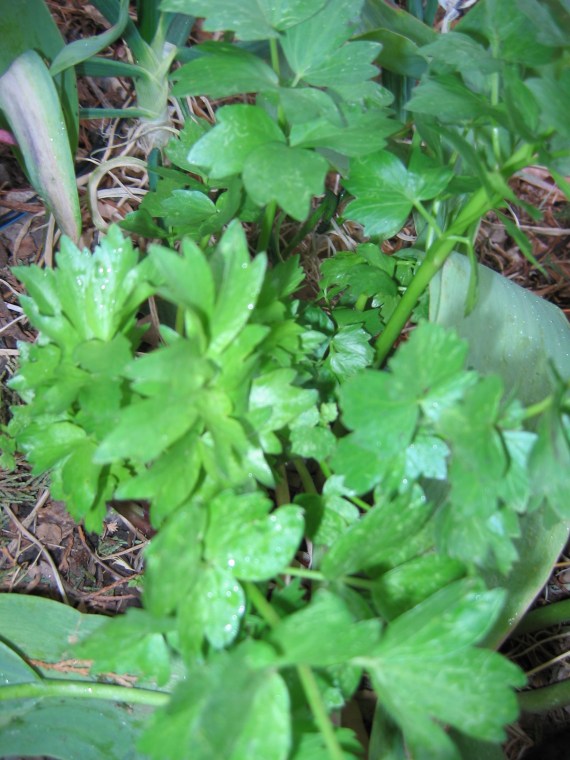
Lovage, shown below, is another matter. It grows best in semi-shade in our sunny climate. It’s loaded with quercetin and other antioxidants and has a fascinating celery-juniper flavor, , and I wouldn’t be without it, but the flavor is insidious and can dominate a dish. A few leaves are plenty for most dishes and a leaf or two chiffonaded into a vinaigrette will give it more complexity. More will unbalance the flavors, at least to my palate. My favorite way to use it is in Lovage Pesto, where it is used lavishly but the garlic keeps the lovage under control. Lovage will shoot to seed and die if you let it, so keep cutting if you want to keep it. Also, bear in mind that the plant gets pretty big, and site it where it can have a couple of square feet to itself when it matures.

Lovage Pesto
4 large cloves garlic, chopped
About 6 cups of lovage leaves, no stems, loosely packed
1and ½ cups full-flavored olive oil
1 cup walnut pieces
1½ teaspoons sea salt

For this recipe, the food processor is okay. Chop the garlic in your food processor, then add the lovage leaves and half the oil and process until the leaves are coarsely chopped. Add the salt, the rest of the oil, and the walnuts, and process only until the nuts are coarsely ground. Let mellow for an hour before use. It can be tossed with pasta and parmesan like other pestos, or makes a good marinade for fish (add a squeeze of lemon if you wish.) It can be brought to the table with roast lamb as a sauce to dip into sparingly. A spoonful is a good addition to a simple vinaigrette. Tightly covered, it will keep about 2 weeks in the refrigerator.
For more on herbs, visit the “recipes” page of my website and click on “herbs.”
april-2009-013
Lovage in early spring. It gets three times this size in a couple of months.

The greens of spring: scapes

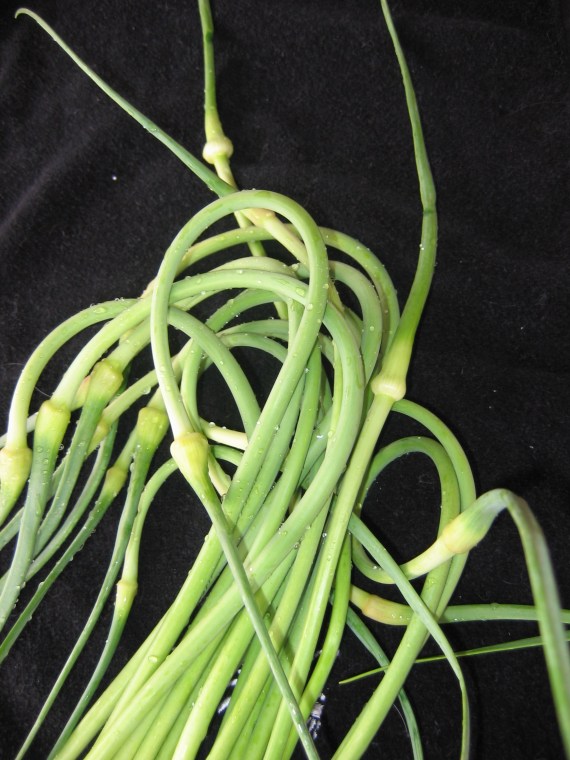
may-2009-014
Garlics of the hardneck type have a wonderful array of flavors and are easy to grow. Separate cloves and plant them in early fall. Earlier in spring, green garlic could be harvested if you planted extra for that purpose, and it certainly is delicious. Please see my earlier post on alliums for more on green garlic. Now, though, the underground cloves are swelling and forming fibrous skin between divisions and aren’t good to eat as green garlic. But your garlic plants have sent up scapes, thoughtfully providing you with a pleasant garlicky green vegetable to tide you over until the “heads” are ready to harvest. You need to cut off the scapes, since they take energy from bulb formation, so this harvest is guilt-free pure bonus.

The scapes may have coiled into fantastical seaweedy coils. Make sure that you harvest them while the entire stem is still green, with no withering or yellowing. There may be a small touch of yellow around the blossom-sheath at the tip, but the stem should be all green. Cut them at the base of the highest leaf on the plant. Now wash well and cut each scape into one inch pieces, including the bulging part of the blossom sheath but discarding the long skinny tip above it. Now you are ready to cook them. See below for recipes and suggestions.

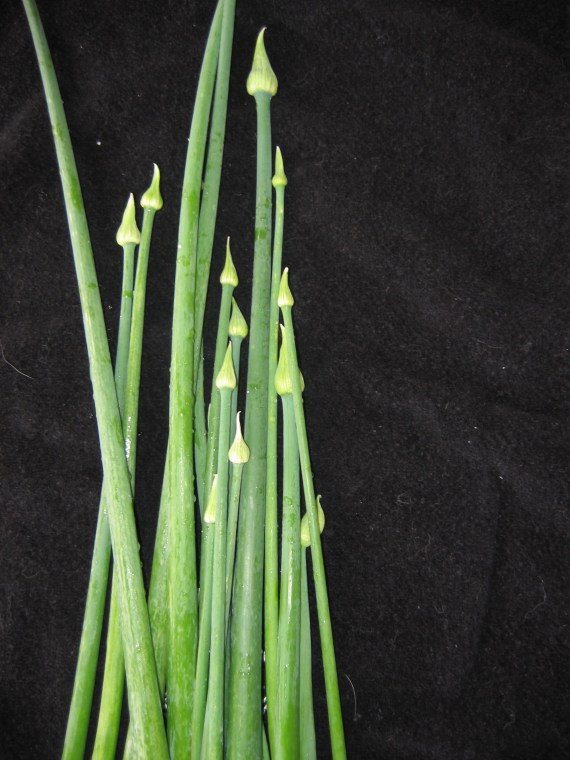
may-2009-015

Onion scapes, shown above, are also a nice kitchen bonus. When green onions (see my last post) start to go to seed, this is what you get. Pick them while the blossom-sheath is still the size of the tip of your finger or smaller. Wash them and cut in segments as for garlic scapes, above. They need different handling at the stove. Click here for recipes and suggestions