Archive for the ‘home food production’ Category

Living in Interesting Times: Tough Herbs


Joyous Ostara/Passover/Easter, happy Spring, or whatever you choose to celebrate when life is returning to the soil. “Spring is Christ, raising dead plants from their shrouds” Rumi said, and any ordinary yard shows us the truth of it.  These are strange times indeed, and the best way to keep yourself safe is to stay home when not working. Gardeners and permaculturists are used to staying home, and have plenty to stay home for. This is the glory season for greens and herbs.

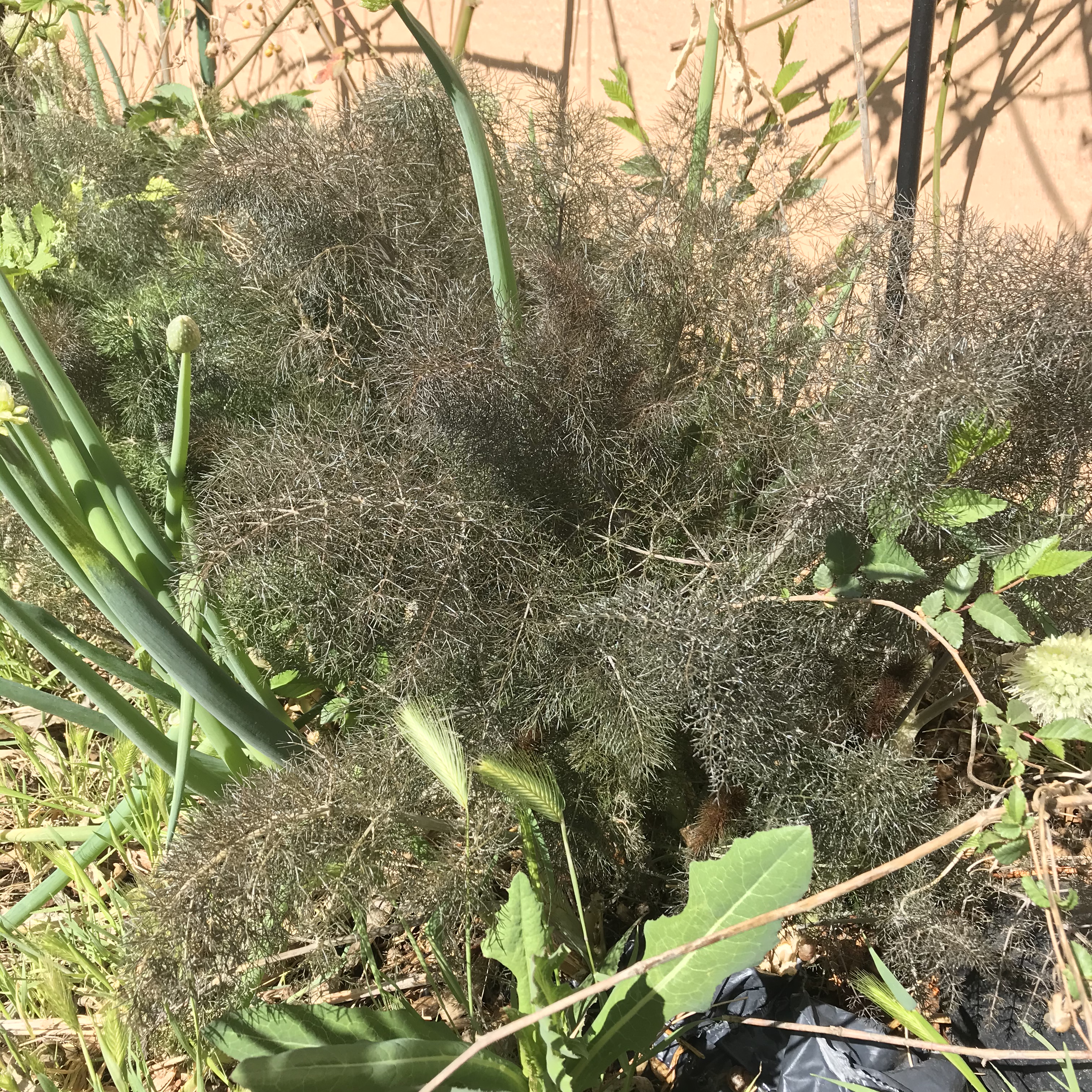
I have written before about one of my favorite plants, bronze fennel, and you can find that post here. Today I’ll just remind you that it is very ornamental most of the time and you can easily sneak it past your homeowners association if you are unlucky enough to have one. Pollinating insects adore it, and so do I. It will take two or three years to reach a good size, so start now.
in the spring I like to make herb pesto used to have on hand for all kinds of seasoning uses. Essentially, pesto involves garlic in some form, herb leaves, nuts of some kind, and olive oil. I typically add the cheese at a later stage.

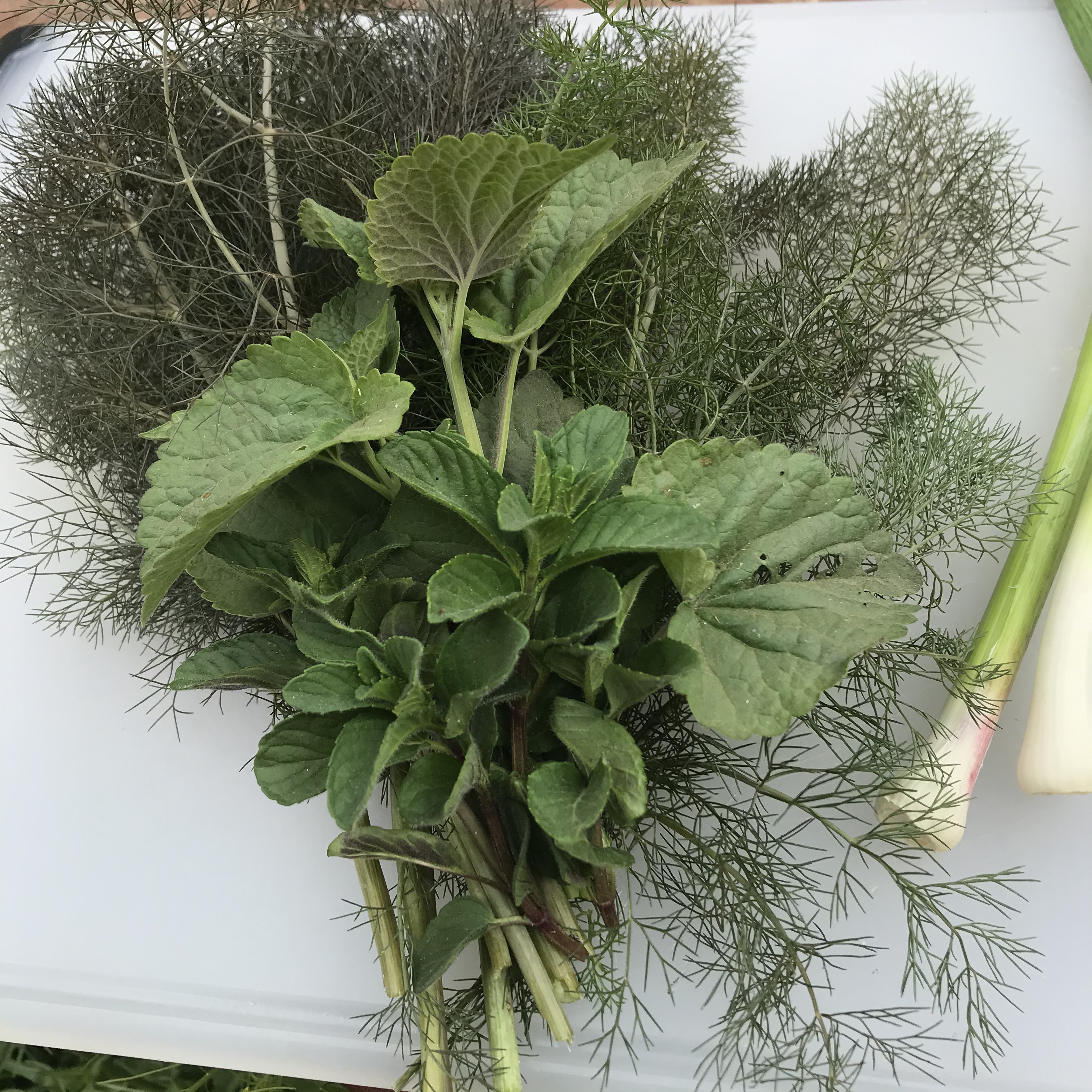
Don’t make pesto just by throwing together all the herbs you have. Herbs have strong flavors, and some contemplative tasting, sniffing, and thinking is called for to make sure you have a coherent and appealing flavor picture. I made this one yesterday morning, picking the  fennel first, and decided to go with the anise flavor and chose anise hyssop and a fruity mint, a couple of stout sprigs of each, and two stalks of green garlic.

in my opinion, proper pestos are made with a mortar and pestle. Use the food processor if you must, but please, don’t even think about using the blender. Blended leaves all acquire an off, grassy taste. Wash the herbs, remove tough stems, chop the leaves coarsely, and peel the green garlic down to tender parts and finely slice it crosswise. Pound the garlic in the mortar with a good pinch of salt until it is pretty thoroughly crushed, then add the chopped leaves and pound to a chunky paste. Then add nuts of your choice and decide how finely to crush them. The herbs had a Sardinian taste so I added roasted salted pistachio kernels and pounded them only until coarsely crushed. Pound in a little really good herbaceous olive oil, then stir in more oil to the consistency that you want. Check for salt.
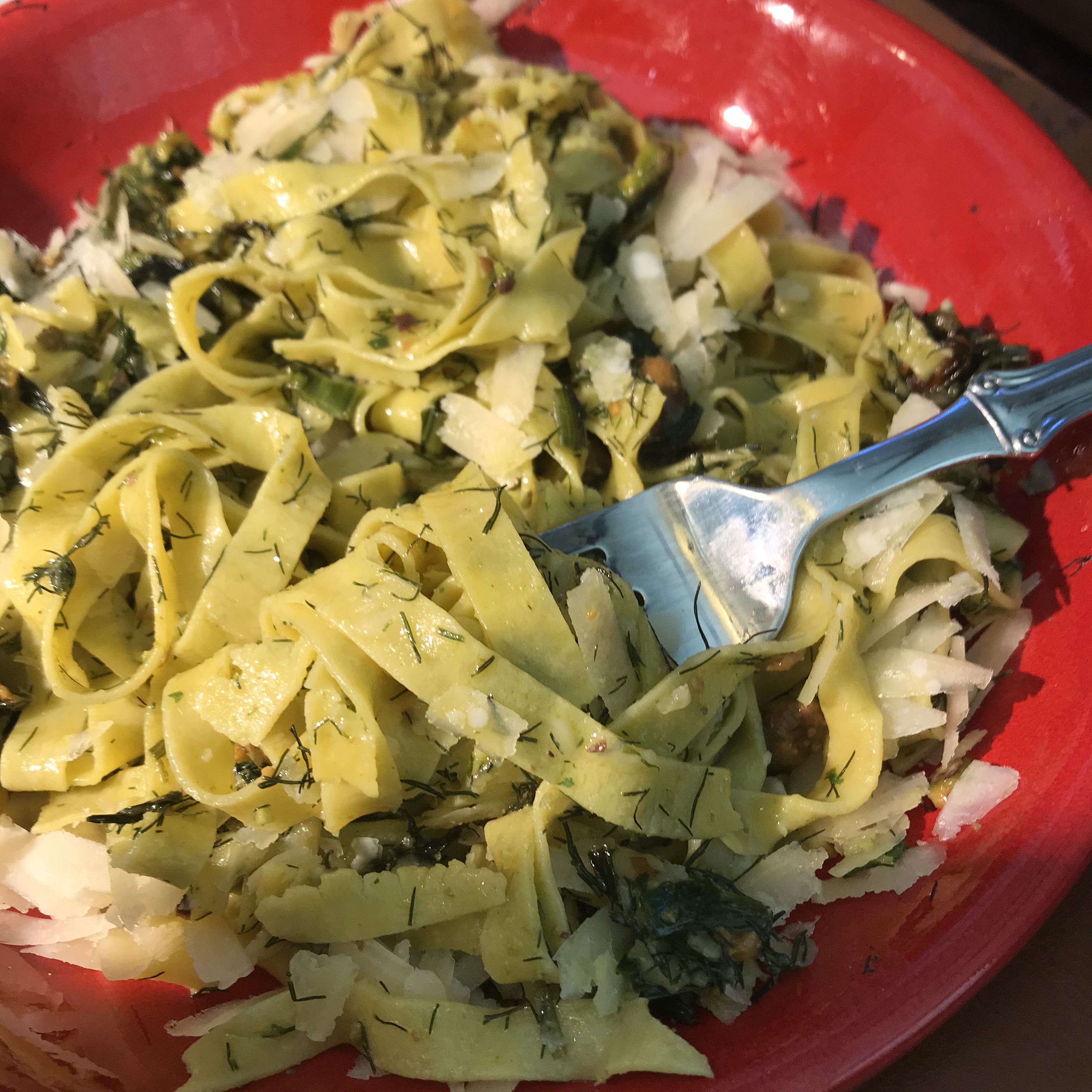
It smelled so good that I was eager to eat some right away, so for lunch we had fresh handmade egg linguine with half the herb pesto, a couple of glugs of additional olive oil, and some top notch Parmesan. Yum. The rest of the pesto went in a jar, and later that day I stirred up some sourdough bread dough and left it to rise in the refrigerator overnight.
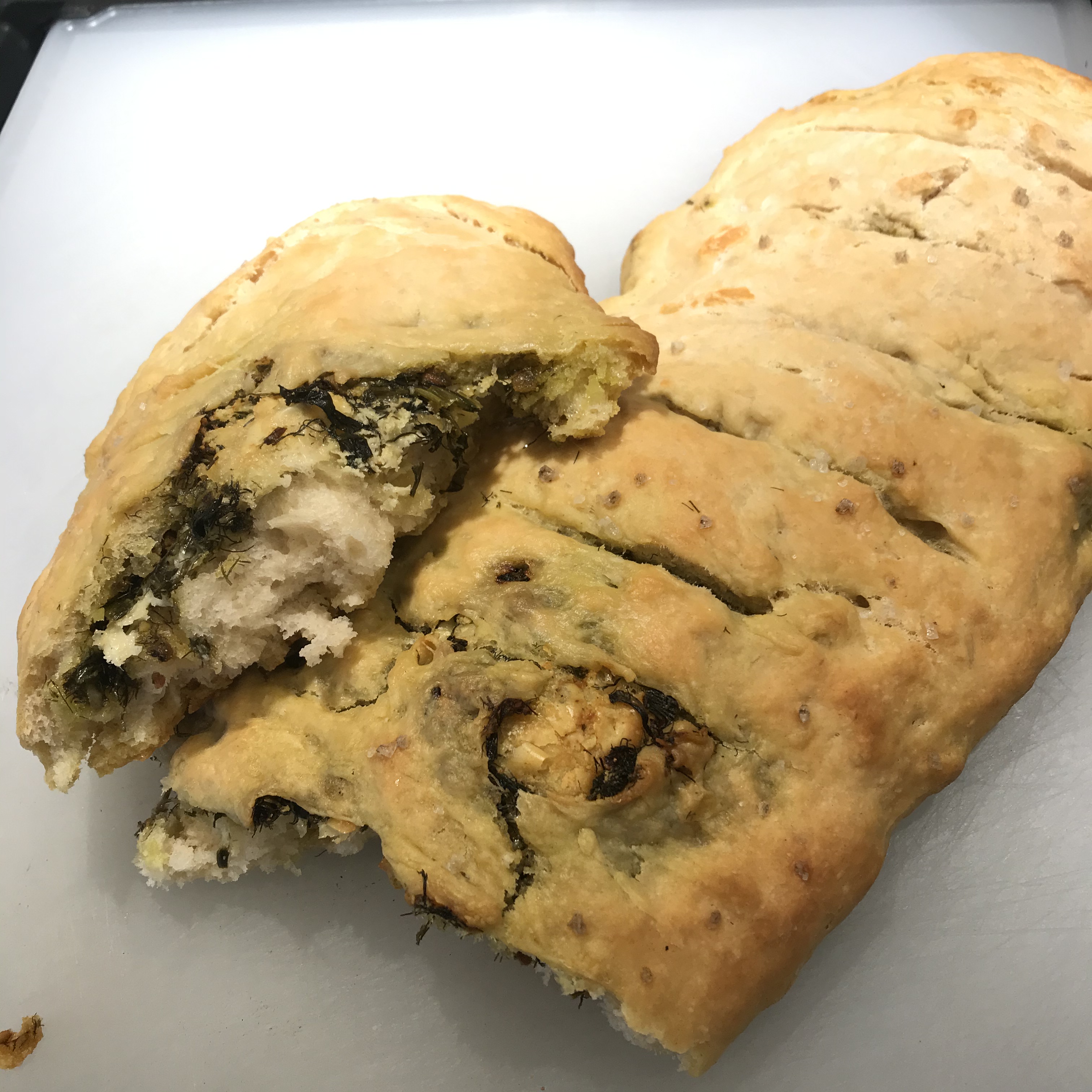
The next day I took the dough out of the refrigerator mid-morning and let it come to room temperature for a couple of hours. Then I patted a loaf’s worth of the dough out into a large somewhat erratic rectangle on an oiled board, smeared it thickly with the rest of the pesto, and then topped it with grated Romano. This was rolled into a long loaf and left to rise on a baking sheet, then slashed across the top, brushed with more olive oil, and baked in a preheated 425 degree oven until done. After cooling on a rack for 15 minutes, it was ready to break into beautiful fragrant chunks and eat as an Easter lunch full of the flavors of the season. Butter was excessive, but that didn’t stop us.

The amount of pesto to make is a very individual decision. The flavor of this one is subtler than it sounds, and I picked a nice sized bouquet of fennel leaves and ended up with about a cup of pesto, divided between the two dishes here.

The Winter Kitchen: Pipian Verde


My recent Mexican cooking binge began with darker richer flavors but a spell of warmer weather got me thinking about pipian verde, which is complex but fresher and more spring-like in flavor. I became determined to develop a paste for it so that I could have it on short notice.  Pipian verde is a highly variable sauce based on herbs and thickened with ground seeds, often pumpkin seeds. It’s simpler than the more complicated mole verde but can be surprisingly similar to it. When I first ate it in Oaxaca more than a decade ago it had a flavor that I have not come across before, and which I later identified as hoja santa. This is a fascinating large perennial which grows well in warmer parts of our country, and in fact I noticed it growing wild near San Antonio, but my mountain area is too cold for it. The dried leaves are readily available but are a pale shadow of the taste of the fresh leaves, which resembles authentic sarsaparilla. Ebay came to the rescue, and I found a seller who sent me eight of the large leaves impeccably wrapped up in damp paper towels so that they arrived in perfect condition. There are as many pipian verde recipes as there are cooks in Mexico, so I can’t say that yours has to contain the special leaf, just that mine does. I also think that fresh epazote is necessary, and it’s available at my local Mexican grocery. Again, don’t use dried.
This makes a lot of seasoning paste. It’s concentrated and will be diluted in the final dish. It freezes well. You’ll need a blender.

My ingredients (study some recipes online and your ingredients may vary):

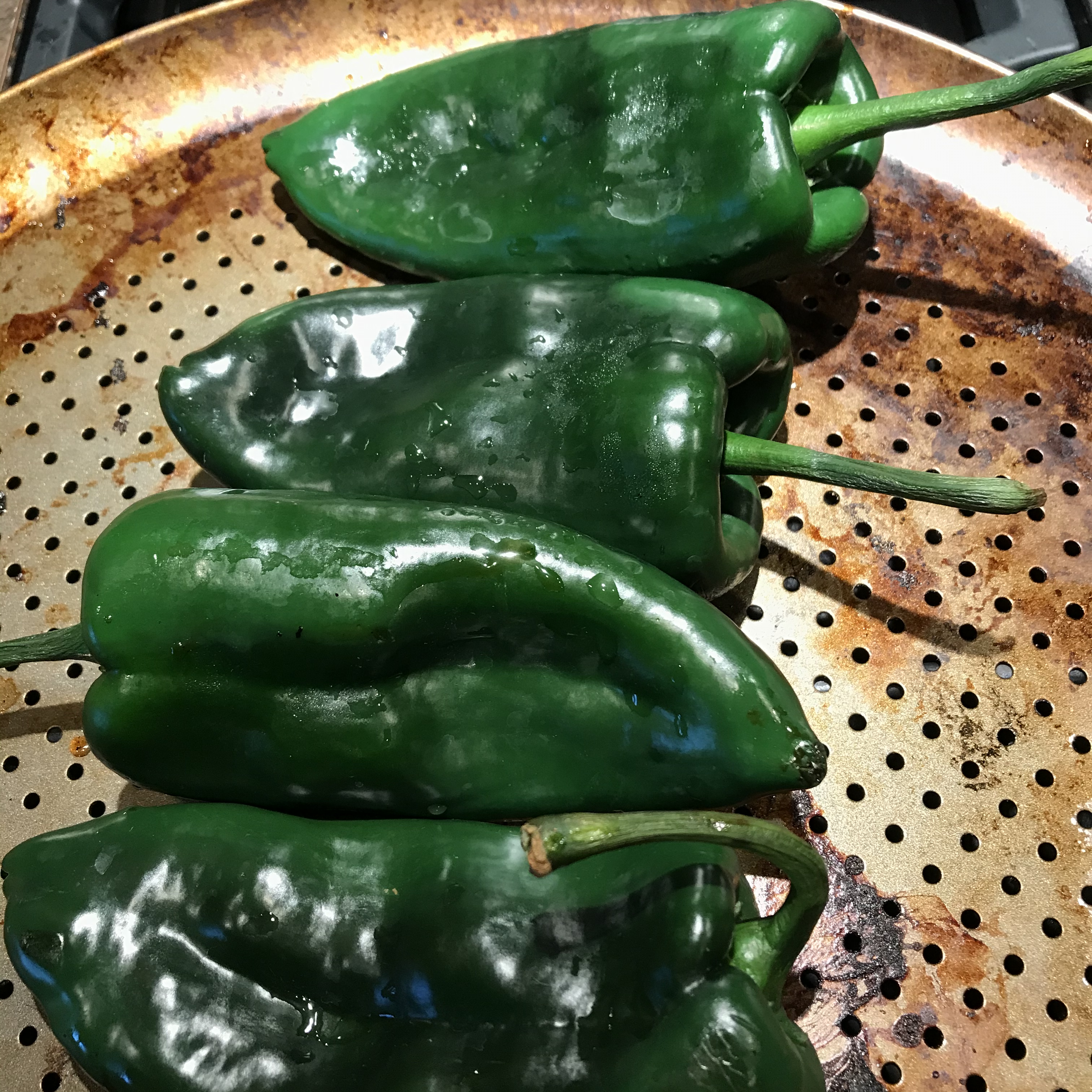
5 fresh poblano peppers

2 fresh jalapeño chiles, only if your poblanos are mild or you love fire

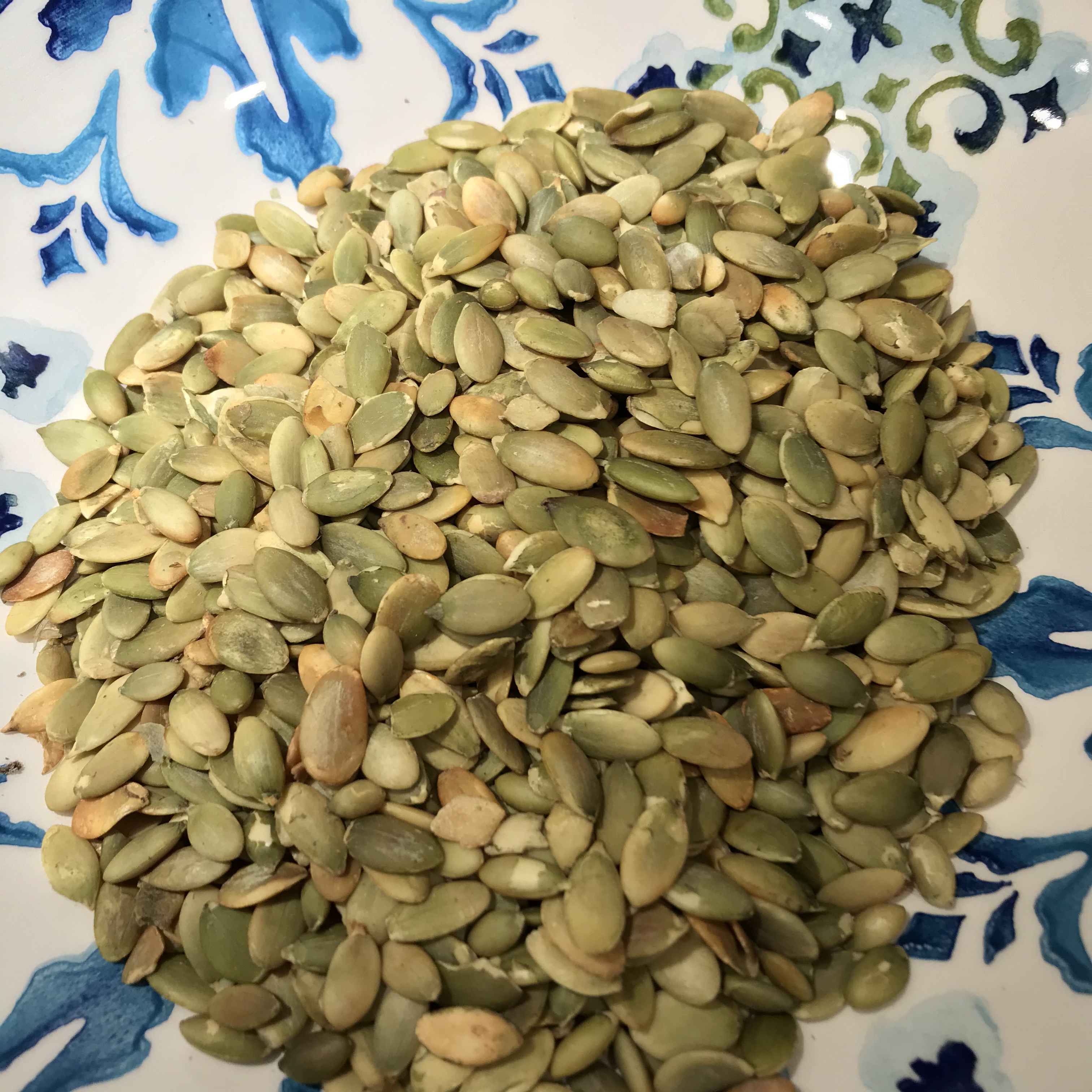
1 cup raw pumpkin seeds

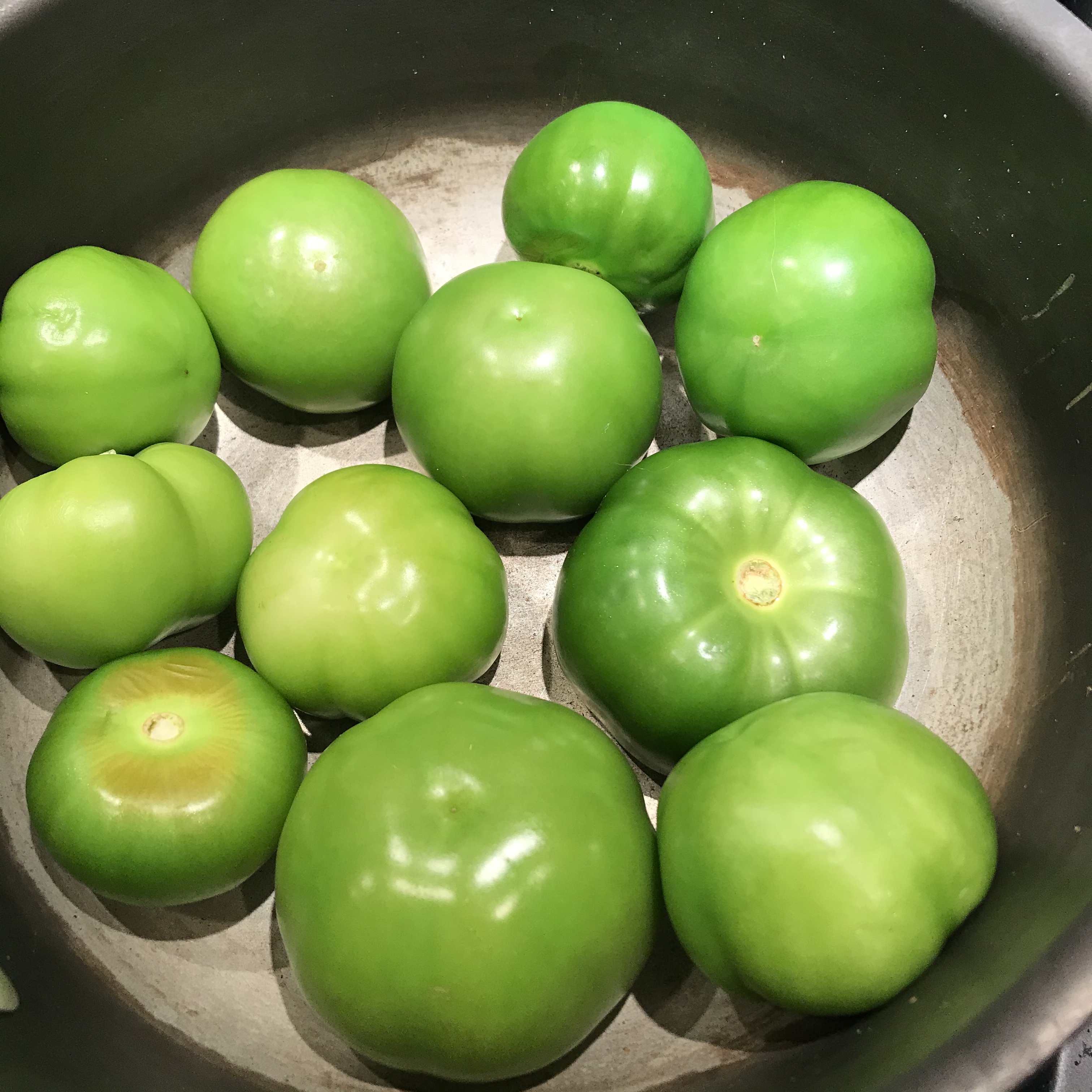
9 medium-sized tomatillos

1 medium onion, peeled and sliced

5 cloves garlic, peeled and chopped

stems (just cut the washed bunch in half vertically) of one bunch cilantro, chopped

1 cup steamed spinach or other mild greens (I used foraged lambsquarters)

1 fresh hoja santa  leaf about 8” long

1 bunch fresh epazote, about 1/2 cup chopped

1/2 teaspoon dried oregano

1/4 cup home-rendered lard or avocado oil

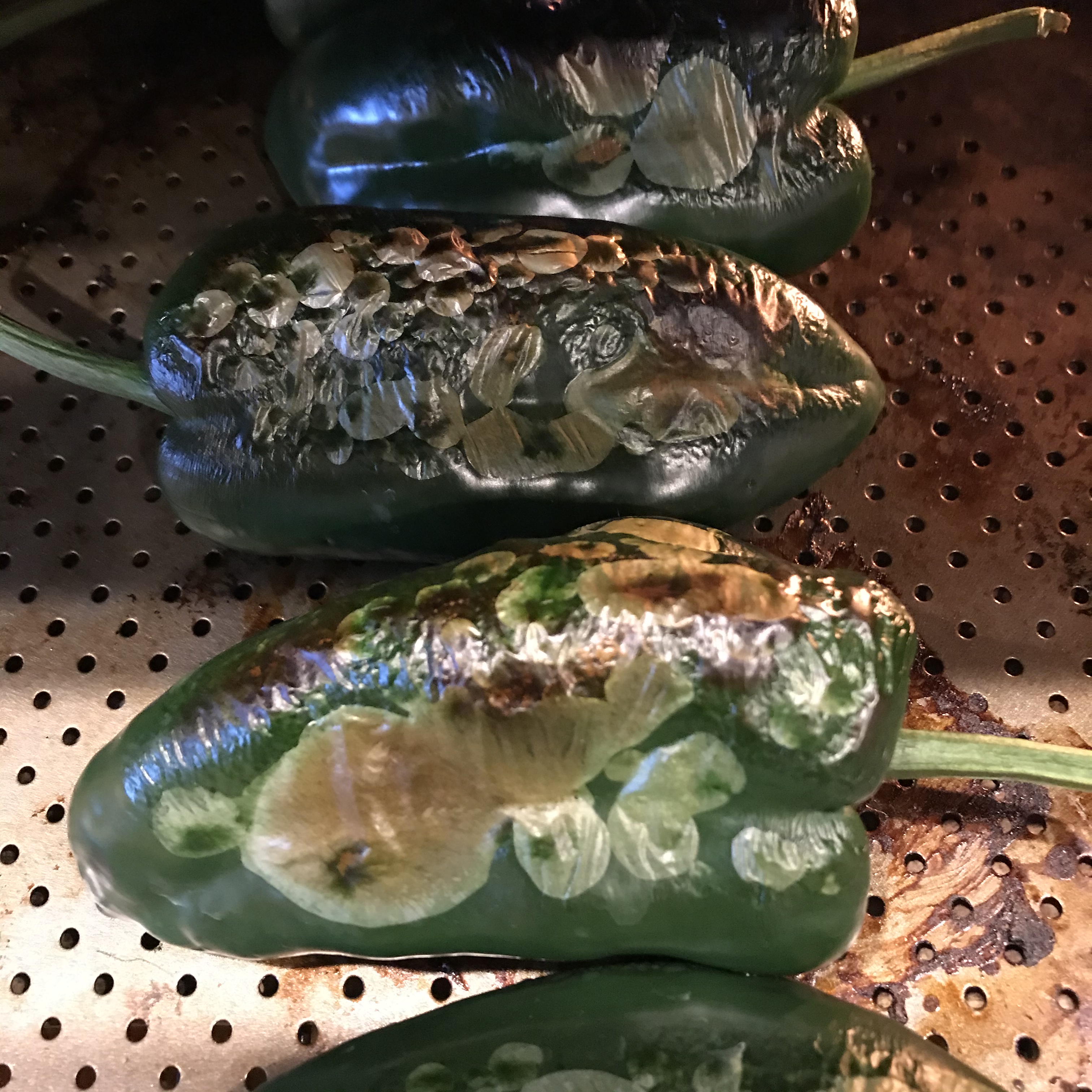
Roast the poblanos (and jalapeños if using) under the broiler, turning frequently, until blistered all over.

Use tongs to transfer into a plastic bag, wrap in towels, let “sweat” for about 20 minutes, then peel off the skins, remove and discard stems, veins, and seeds, and set the peeled flesh aside.

The tomatillos can be roasted under the broiler until cooked through (requires close attention) or cooked in a heavy saucepan over medium heat, turning frequently, until they have a few dark spots. Then add enough water to prevent burning and cook until soft. Set aside.

Toast the raw pumpkin seeds in a heavy skillet over medium heat, stirring continuously, until they swell and darken a bit but don’t let them brown, which ruins the flavor. As soon as they’re ready, pour them out of the hot skillet into a bowl to cool.

Chop up the various fresh leaves and stems into small pieces, crumble the oregano a bit, chop the steamed spinach or similar if not already chopped.

Put the cooled pumpkin seeds in the blender and blend to the fine-crumbs stage but don’t let them turn to butter. Add all other ingredients except the lard or oil and blend, adding a little water if needed to keep the blades turning. I like to keep some texture in mine.

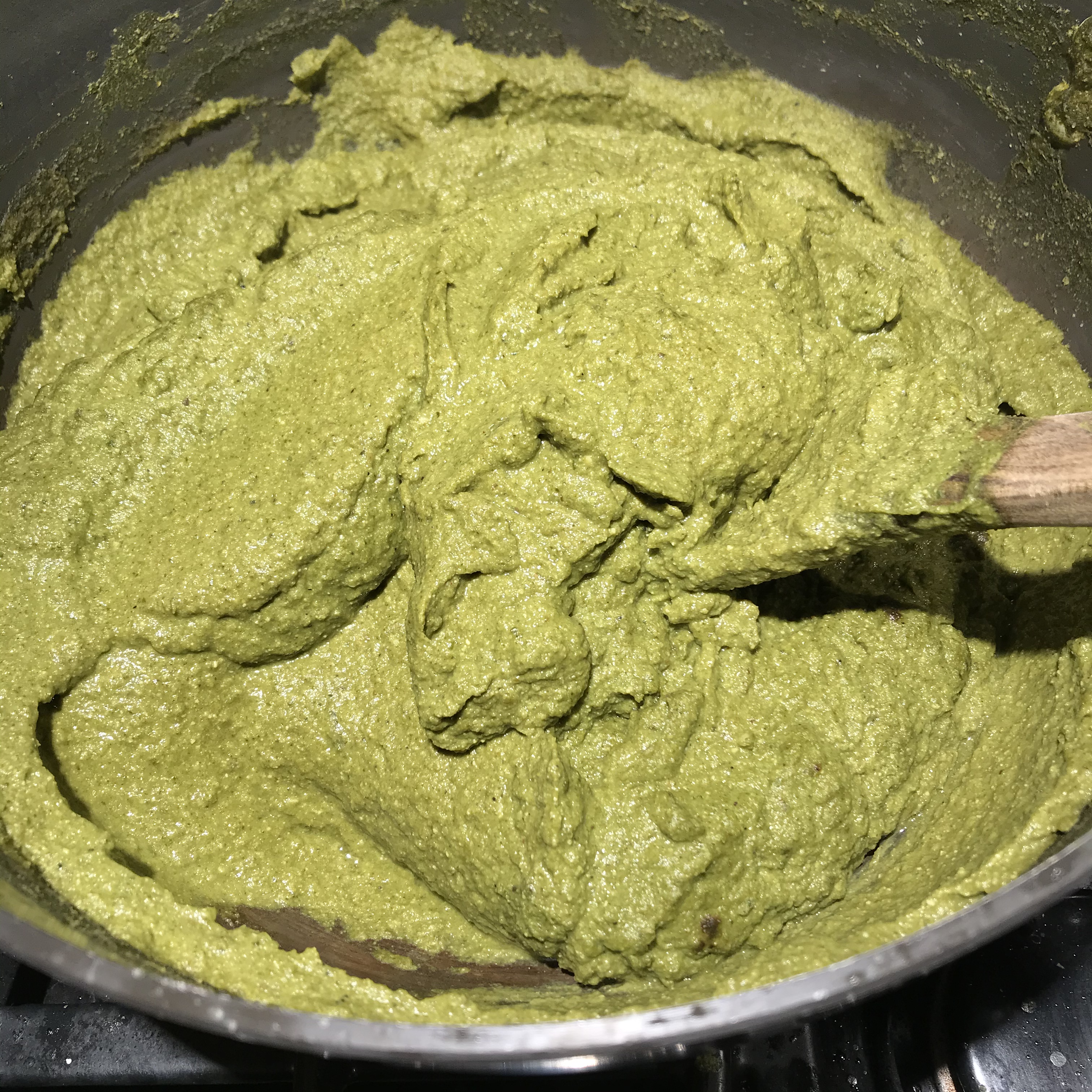
Now, the final step that makes everything meld. Heat a large saucepan or a wok with the lard (more authentic) or oil (more readily obtainable) over high heat and pour in the seasoning paste to “sear.” Careful, it spatters furiously. Cook over high heat, stirring and scraping constantly, for a few minutes until the entire potful is boiling hard. Turn off the heat and (cautiously) taste and add salt to taste. Let cool, and package in suitably sized containers for refrigeration or freezing.

Now it can be used to sauce pork, chicken, or fish, diluting to the right consistency with good broth appropriate to the meat or seafood and adjusting the salt as needed. Roasted salted pumpkin seeds and/or some fresh cilantro leaves make a good garnish.  It’s great in a soft taco or sope  with a slice of fresh panela cheese and a crumbling of the far more intense cotija cheese on top.  My favorite use for it is shown at the top of this post: pan-grill some very good shrimp with salt and garlic, add a cup of pipian paste and 1/2 cup of shrimp broth per pound of shrimp and cook briefly until the sauce comes together, adjust seasoning as needed but keep the sauce very thick, and serve with an endless supply of good hot fresh tortillas.


For lunch in 10 minutes, use pipian verde paste diluted half and half with broth, bring to a boil to thicken, and adjust seasoning. Heat tortillas. Scramble two or three eggs with a little salt to taste until fairly firm. Cover a plate with the sauce, heap the eggs in the middle, sprinkle with chopped cilantro and a handful of roasted salted pumpkin seeds (darker squash seeds here,) and add a red dash of salsa macha. Eat with soft tortillas. Yum.

About those tortillas: in general I stick to a low carbohydrate diet, but when in a Mexican phase I don’t. Simple as that. Without rice, beans, and the endlessly creative uses of masa, it isn’t real Mexican food as far as I’m concerned. So I watch my portion sizes, eat one main meal a day and some light snacks, and try not to stay in a Mexican phase for too long. But it’s worth it.

The Winter Kitchen: Posole


During the growing season I’m generally too busy planting, tending, and processing to fool around much with ingredients from elsewhere. In winter, there’s more leeway. I’m giving myself more personal leeway with food choices, too: I no longer stick to strict keto. So there’s lots of room for play.
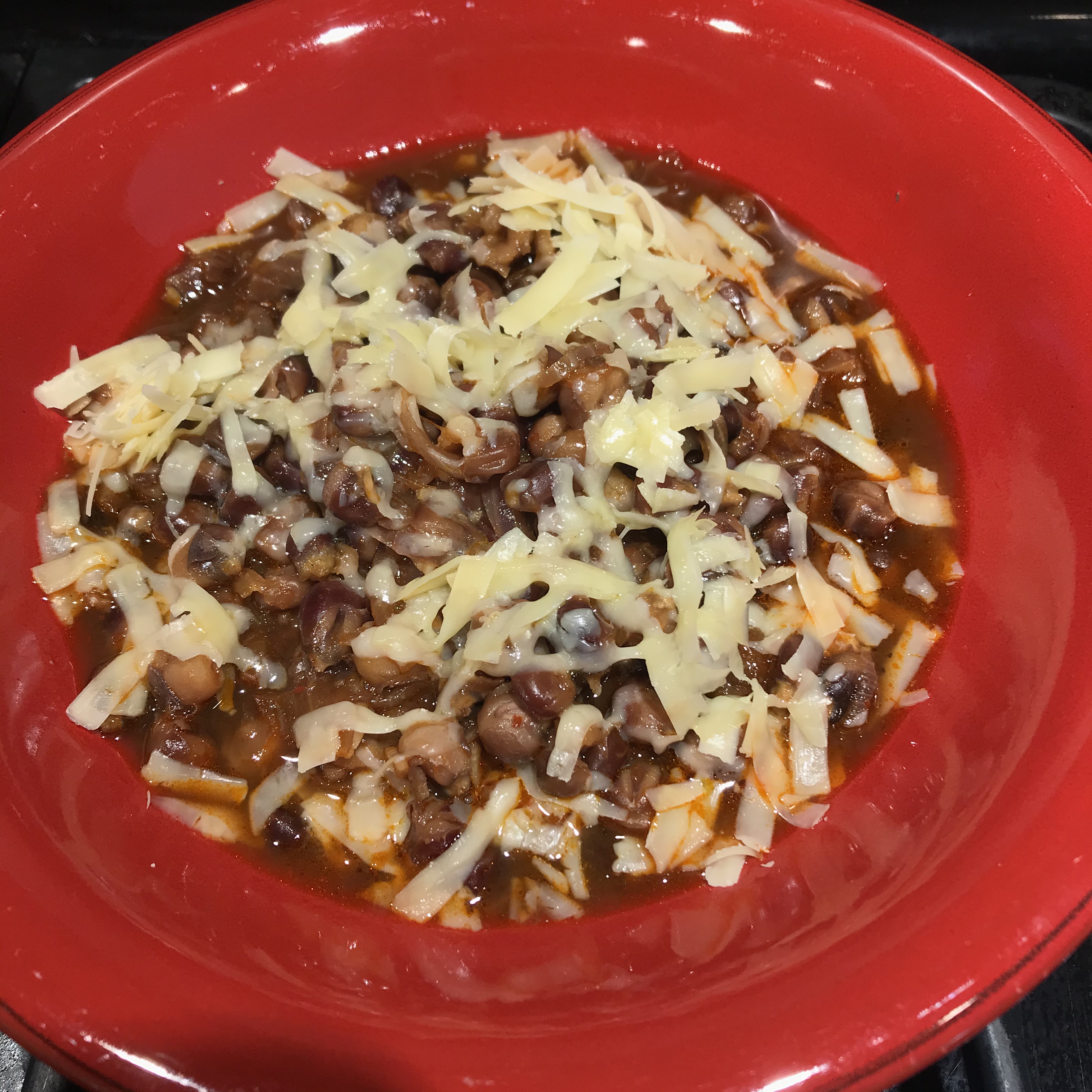
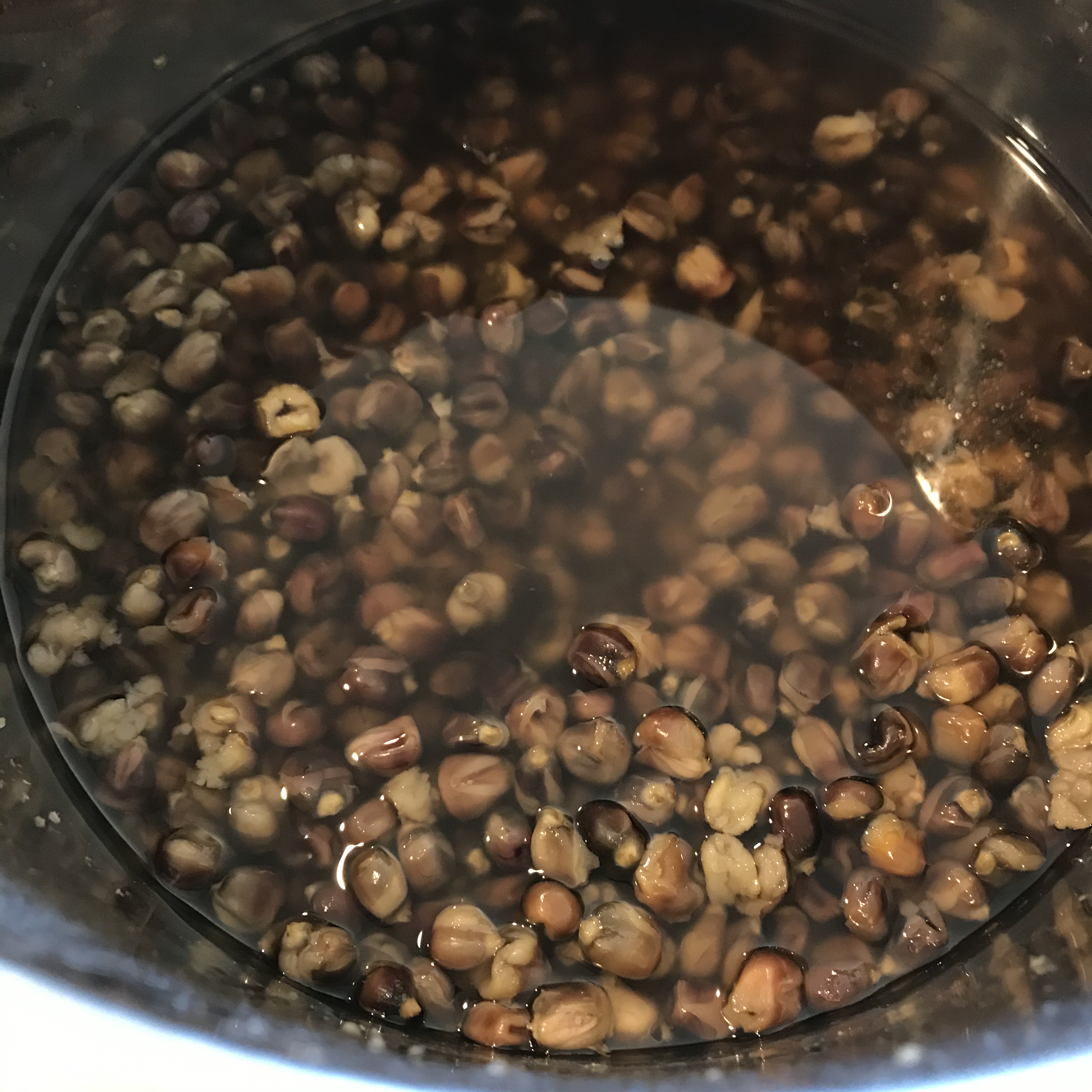
Posole, a stew based on hominy corn, is a traditional Christmas dish in my area, but is usually based on canned hominy to get around the lengthy and tedious nixtamalization and cooking involved. But I was ordering beans from Rancho Gordo, was curious about their heirloom blue hominy corn, and decided to try it. “Hominy corn” means that the nixtamalizing, soaking the corn in a calcium hydroxide solution and rubbing the outer carp off, is finished. I soaked 12 ounces of the kernels in cold water to cover overnight, then put the corn and soaking water in my Instant Pot, added enough water to stand 1” above the kernels,  added salt, and cooked under pressure for 30 minutes.

When I was able to open the pot and taste, the result surprised me. Although the only ingredients were the corn, water, and salt, the broth tasted so rich and meaty that I sipped a cup of it as I worked. Many kernels looked whole and I thought I had undercooked them, but when tasted they were perfect, with chewy-but-tender consistency. I could happily have eaten them plain, but I set out elaborating.

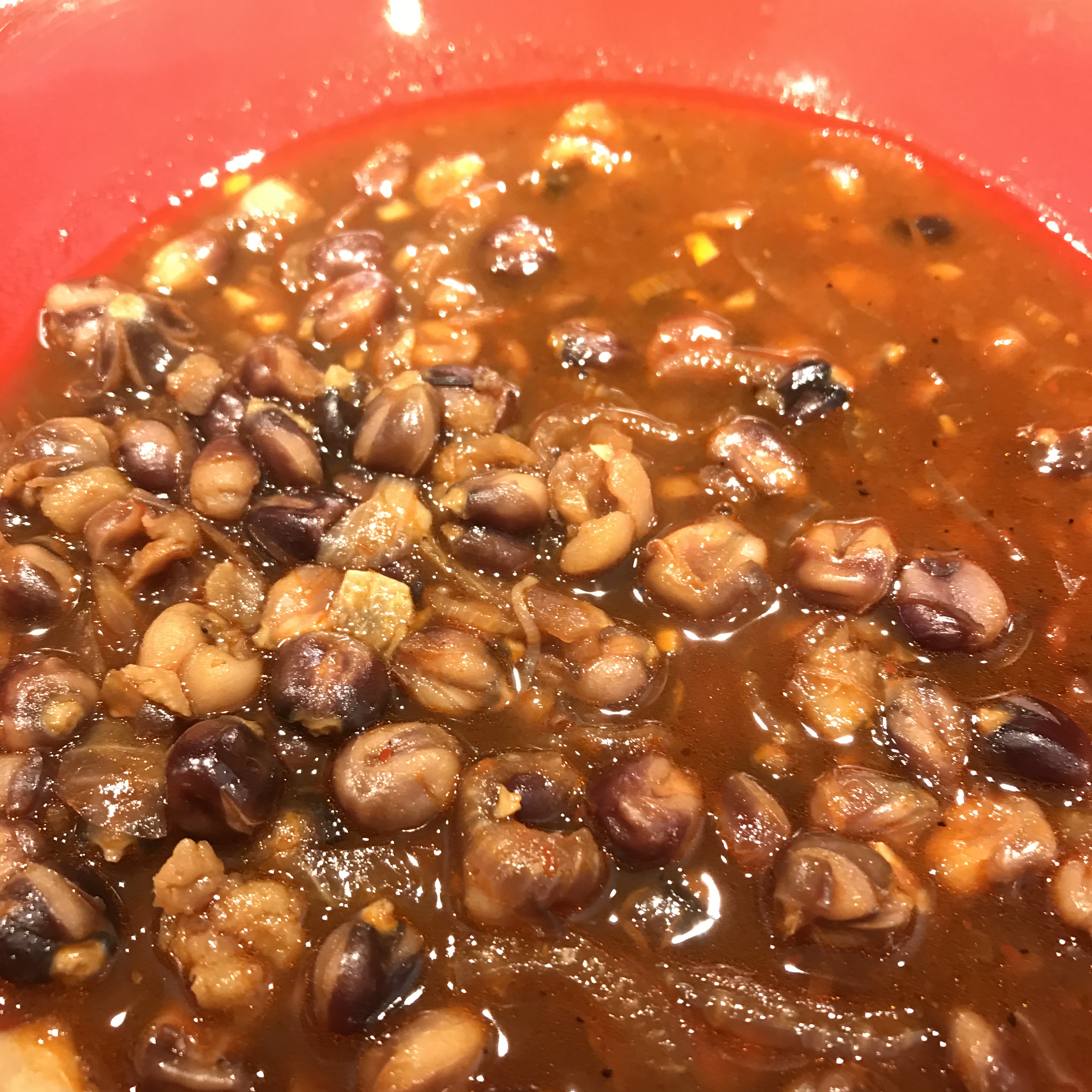
I kept it easy and quick. After all, the whole point of doing some cooking ahead is to have a quick good meal when you need one. I sliced a large onion and sautéed it slowly in a few tablespoons of bacon fat until golden throughout, then added a generous quarter cup of the colorado seasoning paste that I wrote about recently and about a cup of canned fire-roasted tomatoes. The corn and its cooking liquid were added and the whole pot simmered for 20 minutes. Then it was time to dish out in cheery red bowls.

I added a generous handful of grated mild cheddar on top of each bowl as shown at the top of this post, but I have to add that it was extremely good without the cheese, and by using oil instead of bacon fat to sauté the onion and water instead of broth in the seasoning paste, you could have a vegan dish that would pass muster with the meat-eaters  at the table.

The Winter Kitchen: Colorado Seasoning Sauce

Lately I have been on a Mexican kick. Not the light, bright, tropical flavors that are so refreshing  in the summer, but the darker and earthier ones that are so warming in the winter. In my last post I wrote about the darkest and richest of my home-composed seasoning sauces, and this time I’ll give the recipe for my Colorado sauce. I call it Colorado, the Spanish word for brick-red, because it is that color and to distinguish it from red chile, which is made everywhere in my area with local chiles and is truly bright red. It is quite different from the Oaxacan mole colorado, which is enriched with nuts, seeds, and often fruits or sugar. This one is pure chile.

The selection, toasting, deseeding, soaking, and grinding of chiles can be a prolonged process. I’ve gotten around this by making a base that can be used about 85% of the time as a start, modified as needed with additional chiles and seasonings to suit a particular dish. That way I can make the base once and use it for quick meals.

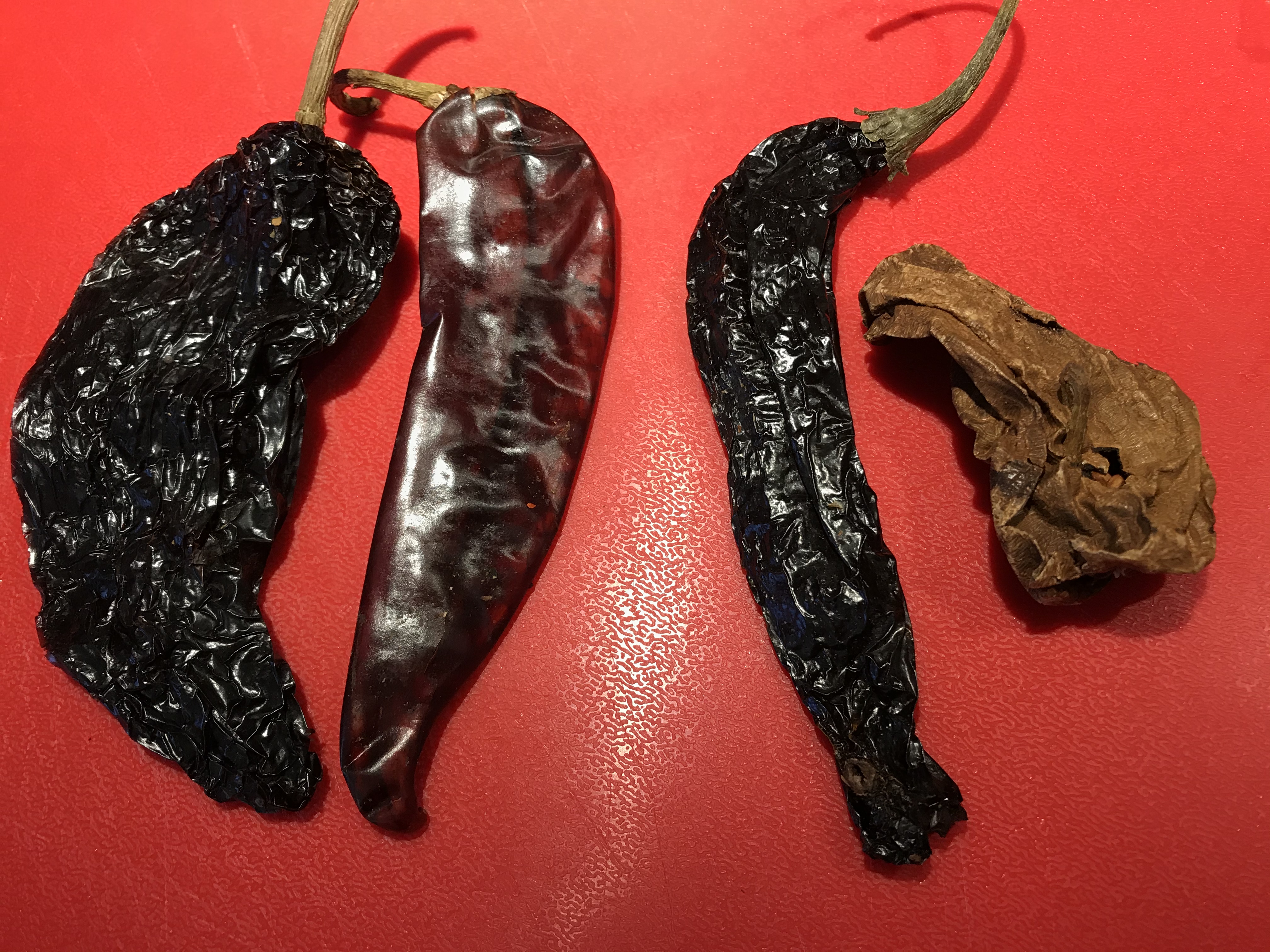
First and foremost, get good chiles. This is not as easy as it sounds. For instance, a lot of places sell dried anchos, but they are generally dried out, brittle, and have lost much of their special flavor. A proper ancho chile is bendable and leathery, has a scent of good pipe tobacco, and when tasted raw has tobacco and raisin notes. In areas with a large Mexican population, you can usually get good ones, but in other areas the chiles often will be dried out, crumbly, and short on flavor. You can order from The Chile Guy and be certain of getting good stock.

The chiles used here are anchos, guajillos, pasillas  negro, and chipotle meco, shown from left to right above.

8 anchos

6 guajillos

5 pasillas negros, often sold just as chiles negros

2 chipotles mecos

1 large onion

4 cloves garlic

1/4 cup home-rendered lard or avocado oil

3 cups chicken broth or water, heated to near boiling

1 14.5 ounce can fire-roasted tomatoes
1/2 teaspoon oregano

With kitchen shears cut  the stem ends off all the chiles, slit them down one side, pull out most of the seeds and veins, and flatten out as much as possible. Slice the onion fine, peel and chop the garlic, and heat up 3 cups of water or broth in a bowl.

Heat a comal or iron skillet to medium-hot. Be prepared to work very fast. Put one chile  at a time in the skillet, hold down firmly with a metal spatula, and toast about 20-25 seconds, even less if your skillet is really hot. For this recipe, you don’t want them to darken, blister, or burn. As each one is finished, toss it into the hot chicken broth or hot water. As chiles pile up, stir frequently so that they all get soaked. When all are soaking, rinse and dry the skillet. Put 2 tablespoons lard or oil in the skillet over medium heat, add the sliced onion, and sauté slowly with frequent stirring until medium gold. Meanwhile, put the chilies and their soaking liquid and the tomatoes and oregano in the blender and grind to a smooth purée. When the onions are cooked, add the chopped garlic and sauté another few minutes until the garlic is cooked. Pour in the purée  from the blender and cook the mixture over medium-low heat until it boils, then turn down to a simmer and continue to cook, stirring frequently, until it is very thick. This may take up to an hour depending on heat, but be very careful not to scorch it. Now taste and add salt.

You now have a thick chile concentrate which can be smeared on tortillas or sopes or chalupas or meat or chicken as is, but can also be added to rich broth to make wonderful sauces on very short notice. I keep it in the refrigerator in a jar, but if you don’t think you’ll use it that much, freeze it in large ice cubes and calculate about two cubes per cup of broth for a thin sauce or three cubes for a thicker one. It has a little capsaicin heat but not a lot. It’s my favorite seasoning to add to good cooked hominy corn to make posole, and can be used as is or with a little broth added to reheat leftover meat or poultry to make tacos. If you are fond of Oaxacan mole colorado you may be able to elaborate this base into some version of it, although if that’s your preference I think you’d be better advised just to make mole Colorado paste in the first place.

Don’t underestimate the capacity of chile pastes to bring vegetables to life. Stirred into a stir-fry or as part of a rub for roasted vegetables, they can help old favorites show a new side. I can also imagine a little eaten with tortitas, the wonderful Mexican vegetable fritters that are not much seen in the US. You can read more about them here, and I hope that you will, because Zarela Martinez is a truly interesting food writer. However you use your elixir, just be aware that scorched chiles taste acrid and unpleasant and don’t let this happen when using chile pastes.

The toasting step is vital in bringing out the flavor of the chiles. I always do it on the comal because that’s the way that I originally learned, but many sources recommend  oven toasting. I haven’t tried it, but here are directions if you want to experiment: Cook’s Illustrated. In my previous post on Earth and Fire Sauce toasting is replaced by frying in oil, a different and even more complex flavor.