Archive for the ‘home food production’ Category

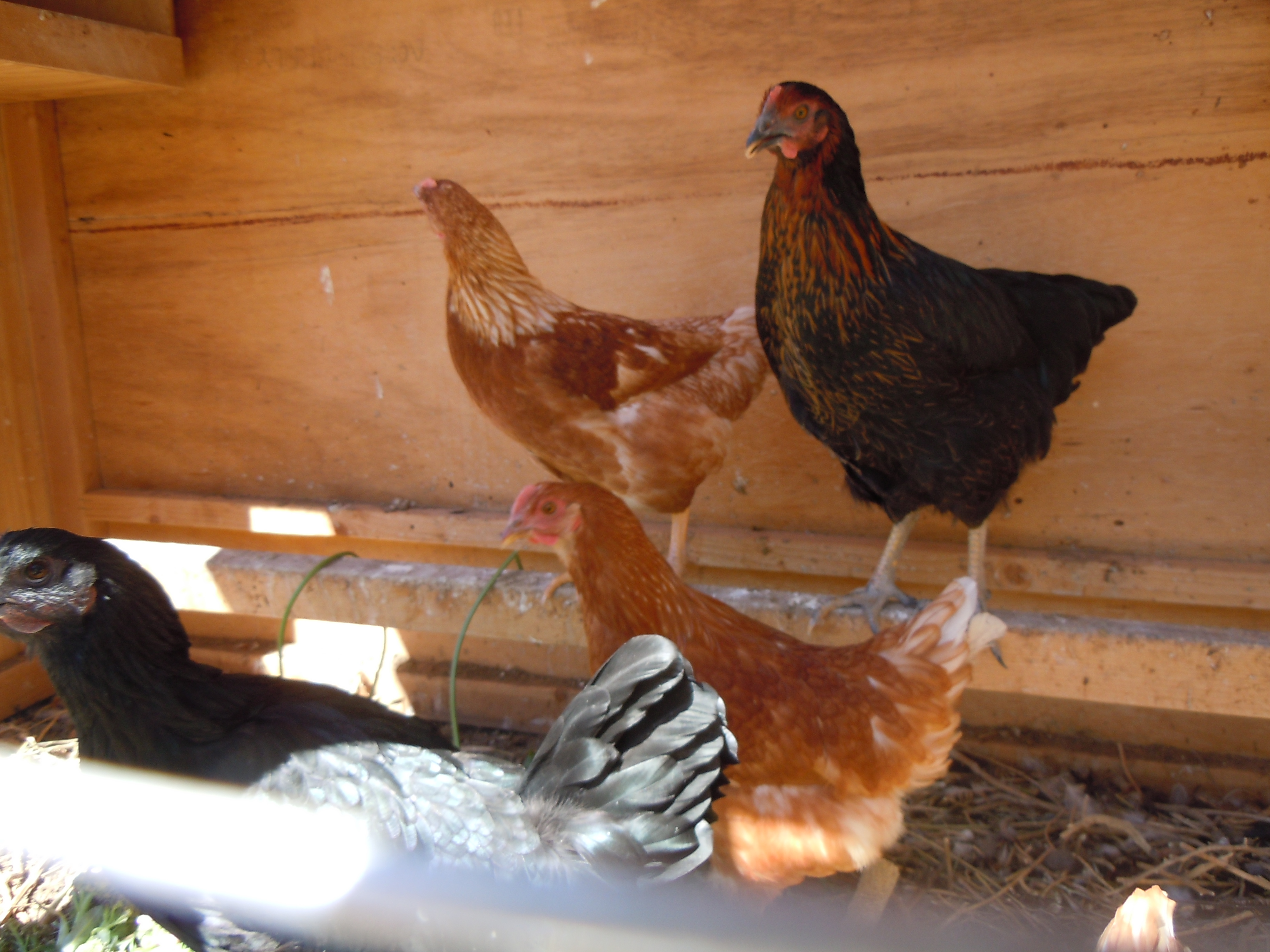
Chickens are still legal residents of Albuquerque


I don’t usually use this blog for anything remotely political, but I received some worried inquiries about our city’s HEART animal ordinance, and whether it bans or limits chickens in the city, so I feel compelled to set the record straight. Don’t worry, backyard farmers, your chickens and mine are safe. The HEART statute controls and limits the possession and care of companion birds, but it carefully defines “companion birds” within the ordinance, and chickens are specifically excluded, as are ducks, geese, and a lot of other birds. The relevant section reads as follows:

COMPANION BIRD. A bird commonly kept as a pet by humans and confined on the property of the Owner, including, but not limited to, parakeets, canaries, lovebirds, finches, parrots, macaws, cockatoos, cockatiels, toucans and lories, but excluding:

(1) all of the family Anatidae (waterfowl);

(2) all of the family Tetraonidae (grouse and ptarmigans);

(3) all of the family Phasianidae (quail, partridges and pheasants);

(4) all of the family Meleagridae (wild turkeys) except for the domestic strains of turkeys;

(5) all of the family Perdicidae (francolins);

(6) all of the family Gruidae (cranes);

(7) all of the family Rallidae (rails, coots and gallinules);

(8) all of the family Charadriidae (plovers, turnstones and surfbirds);

(9) all of the family Scolopacidae (shorebirds, snipe, sandpipers and curlews);

(10) all of the family Recurvirostridae (avocets and stilts);

(11) all of the family Phalaropodidae (phalaropes);

(12) all of the family Columbidae (wild pigeons and doves) except for the domestic strains of pigeons; and

(13) ducks, geese, chickens and other poultry.

Therefore, existing laws about chickens permitting us to keep up to fifteen chickens (only 1 rooster among them) prevail. Thank goodness, because there’s nothing like those fresh warm eggs.

Vegetable dinners: a roasted melange, and notes on gochujang


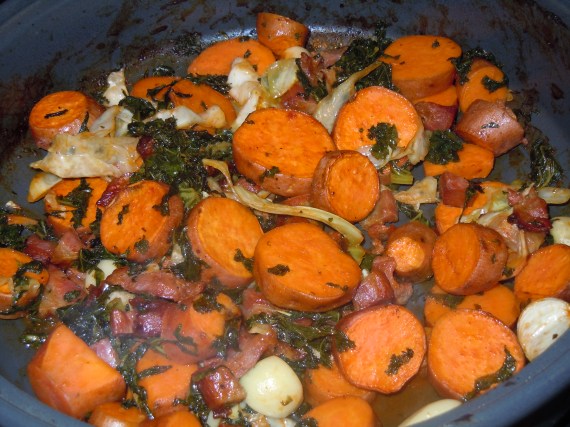
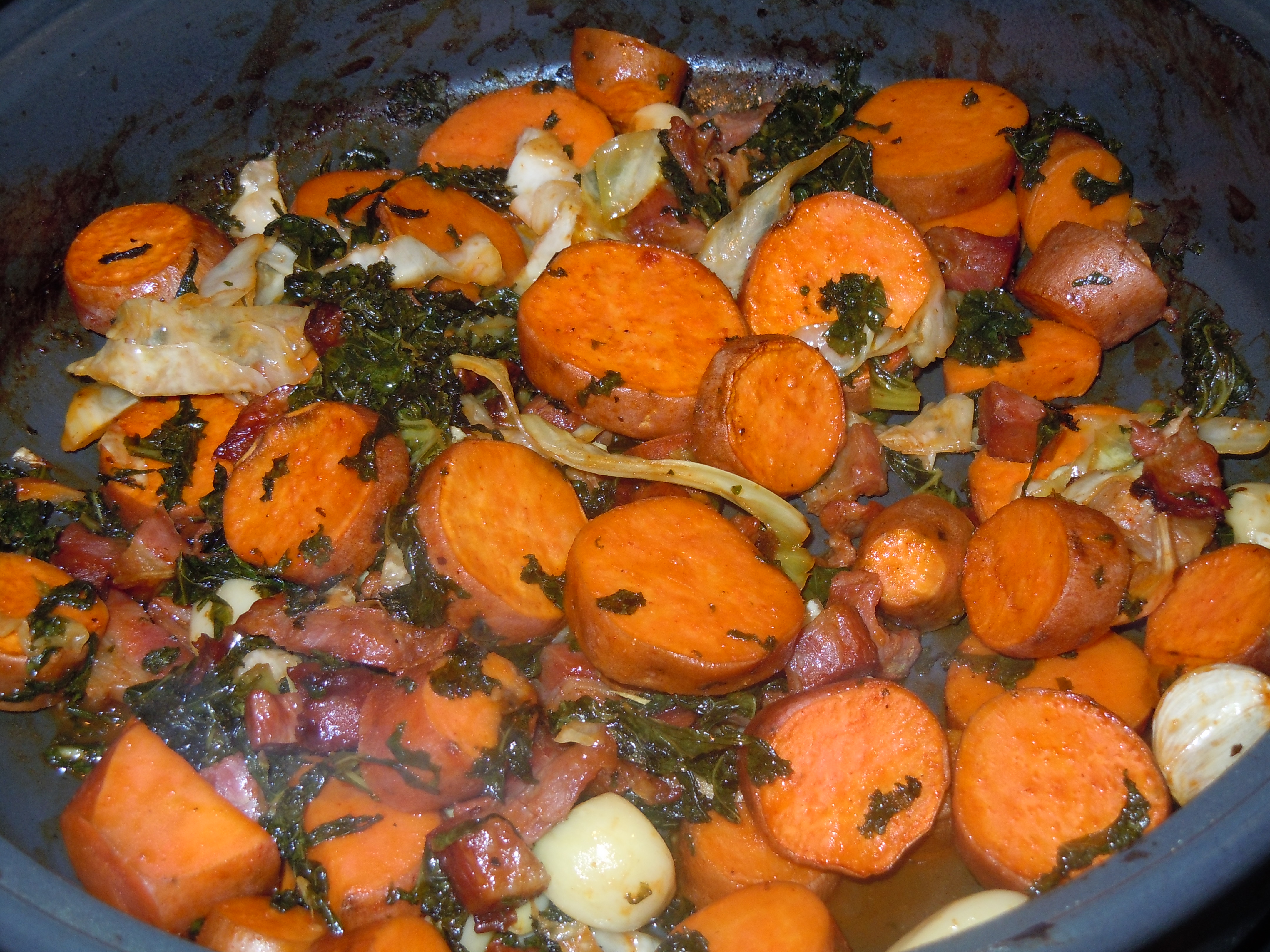
On frazzled days, one way to save time when making dinner is to put food in the oven and pretty much forget about it until it’s done. Many vegetables respond beautifully to this treatment, especially if flavored a little. I have a large clay Spanish cazuela about 14″ in diameter that I use for these impromptu roasts because I’m convinced that the clay improves the flavor, but you can use your standard 9X13 pan if you prefer. I am using a lot of sweet potatoes right now because I dug a lot of them recently, but I’ll include suggestions for substitutions. The idea is to use what you have and like.

You will need:
for the vegetables: 4 medium/large sweet potatoes cut in 1″ chunks (I scrub them well and leave the peel on), or a medium-sized winter squash peeled and cubed, or 6 large carrots scrubbed well and cut in 1/2″ chunks, or some combination of the above. I used sweet potatoes.
For the greens: 1 bunch of kale cleaned and cut in 1″ slices crosswise, or half a small green or red cabbage cut in thin slices, or 3/4 pound of sturdy leafy greens cleaned and cut in 1″ slices, to total about 3/4 pound. I used half Tuscan kale and half sliced green cabbage.
For the seasoning:
a handful of bacon, bacon ends, or pancetta, cut in little cubes. I used the tail end of a bacon slab.
3 large cloves garlic, chopped
3-4 tablespoons of olive oil
1 tablespoon of Korean gochujang paste (see below) or a teaspoon of Tabasco or other red chili sauce, or a teaspoon of red pepper flakes
about half a teaspoon of salt, or to taste
1/2 cup good stock or water

Preheat the oven to 375 degrees. Prepare the vegetables and toss them in the cazuela or pan. Mix the seasoning ingredients and pour over the vegetables, tossing with your hands to distribute. Try to end up with the chunky stuff mostly on top and the green stuff mostly on the bottom. Put the cazuela in the oven. Half an hour later turn the veggies with a spatula, and if the bottom seems dry and things are starting to stick, add a little more stock or water. Again, try to keep the greens mostly below the other stuff, where they won’t dry out. After an hour, check the vegetables for doneness. You don’t want them crisp for this dish; they need to be cooked through, a little soft, and well impregnated with the seasoning ingredients. When done, drizzle a tablespoon or so of your best olive oil over all, bring to the table in the cazuela, and eat with a crusty baguette or toasted whole-wheat bread, as you prefer. It couldn’t be easier or healthier.
You can leave out the bacon or pancetta and have a vegan/vegetarian meal. I don’t recommend it, because the pork has a wonderful alchemy with the sweet winter vegetables and the chili paste, and creates a whole much greater than the sum of its parts.

Now and then we find an ingredient that represents the Platonic ideal of its kind. For me, the Korean chili paste gochujang is the seventh heaven of the chile pepper. There is nothing quite like its deep, intense, fermented flavor, unctuous texture, and exquisite mahogany color, and it has a special affinity with pork and a thousand uses outside of traditional Korean cooking. These days the only gochujang that I will use is the one from Mother-in-law’s Kimchee, which does have some sugar in it but no high-fructose corn syrup and is properly fermented and deep and delicious. If it isn’t available in your area, you can order it online. I like the original one, called “concentrated” on the label.

I talk a lot about making dietary and lifestyle changes slowly and one at a time. This is a great time to start thinking about eating more green leafy vegetables. Salads are great, but cold weather is a perfect time to incorporate more cooked greens as main dishes, side dishes, or soups. If you garden, kale and cabbage will help get you through the winter. If you forage, dock, chicory, and dandelion greens are among the few wild foods available in winter in our area (plan to mix them with milder greens from the garden or store.) If you buy at the store, Tuscan kale is everywhere, and since there is no better leafy green, go for it. I do recommend sticking to organic greens wherever possible. If you always have garlic, olive oil, and a little good bacon or pancetta in the house you are always ready to make a lovely dish of saute’ed greens, and there are lots of variations. Check out my “greens” category on this blog for more recipes. I know I have said this before, but I’ll keep saying it: don’t undercook them. The thicker tougher greens like curly kale are acutely unpleasant to eat when undercooked and tough, so taste before sending to the table, and if chewing requires a ruminant level of effort, cook five minutes longer and taste again. Mark Bittman is now galaxy-famous as the author of many authoritative cookbooks, but few people are aware that his first effort was a little gem called “Leafy Greens.” You can still find it second-hand, and it’s worth tracking down. Read it and use it, and your family’s health will benefit.
Squash without end, amen


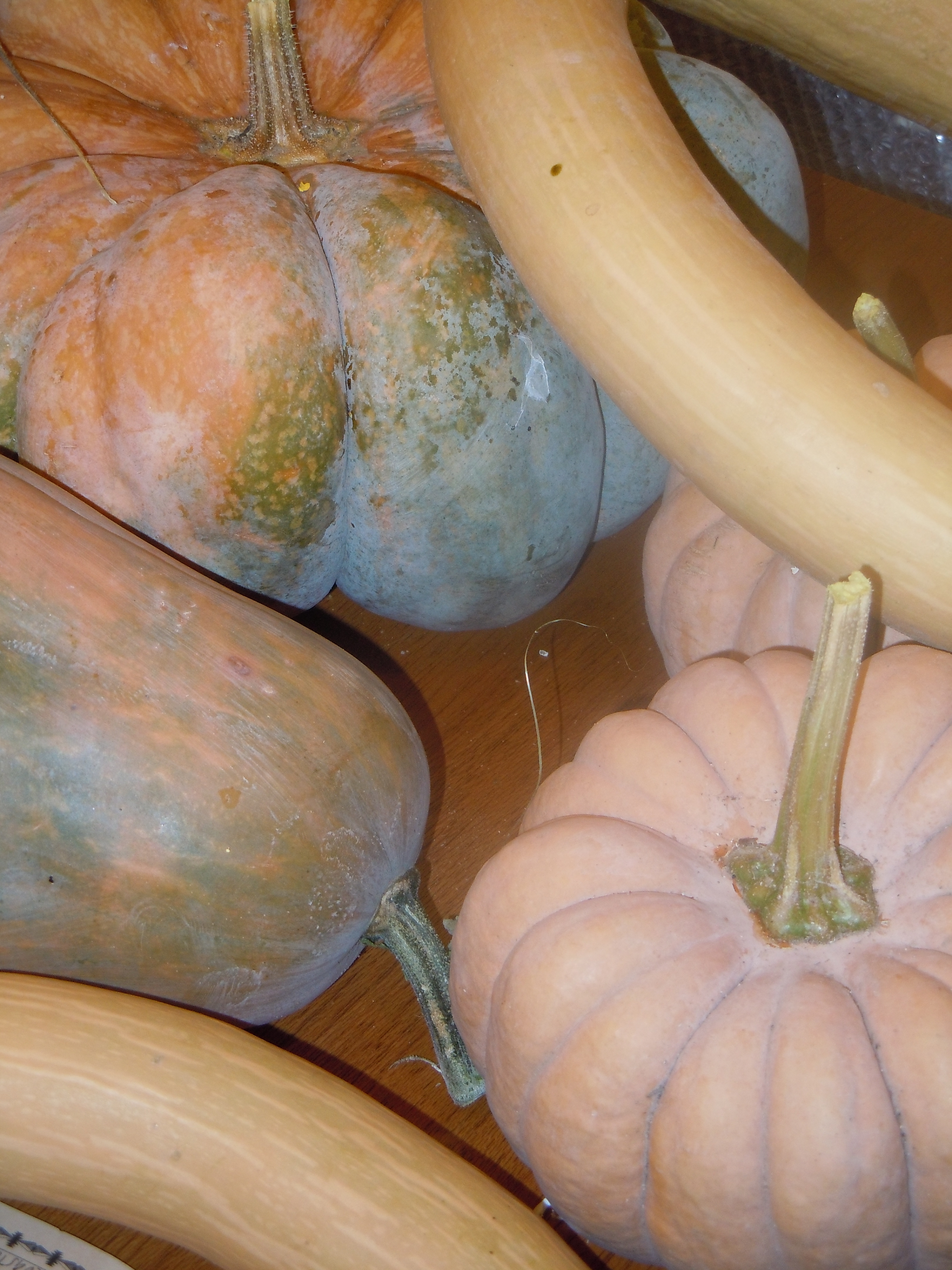
I love winter squash, and they can be hard to grow here in central New Mexico because of our thriving population of squash borers. The vine grows beautifully and sets baby squash in a responsible fashion, then one day it wilts, then it dies. I have tried all the organic “remedies” listed in the books, and don’t think that any of them are worth my time, in that the vine may survive (barely) but the chance of a good crop is nil. So this year I tried to beat the borers genetically. I grew only squash varieties of the species Cucurbita moschata, which is rumored to be borer-resistant. All I can say is, there are no guarantees in gardening, but I didn’t lose a single vine and my garage shelves are heaped with squash.
To use this method, you have to find a catalog that identifies squash by species as well as varietal name. I got mine from Baker Creek Heirloom Seeds. They are a great source for interesting heirlooms. I chose five varieties: Waltham Butternut, Musquee de Provence, Kikuza, Chiriman, and Sucrine du berry. All bore fairly well, although the sucrine du berry were the clear winners in terms of total pounds of squash. So far, the Kikuza are the best in flavor and texture, but I’ve only tasted three of the five varieties so far.
My favorite way to eat squash is halved,seeded, and roasted, with maple syrup or agave nectar and a pat of butter in the hollow. They will roast nicely at any temperature from 350 to 425 degrees, although of course they need more oven time at lower temps. Be sure to roast them long enough, by the way. The flesh should be soft and the syrup well sunken into the flesh. My preference in squash is a sweet dry flesh with no stringiness about it. To let any squash reach its best potential, it’s important to leave them on the vine as long as possible. Often the vines will die back in late fall, signaling harvest time, but if they don’t, harvest the evening that your first frost is predicted. It’s tempting to harvest them earlier when the skin hardens and they look mature, but this is the road to stringy watery flesh. Let the vine do its work. Once harvested, be careful not to bump or bruise them and set them on shelves in a cool place, not touching each other. I like to set several of mine on one end of my dining room table, where they look opulent and festive, but be sure to cook them within a month, since storage conditions in the average dining room are not ideal. The ones kept in a cooler (but not refrigerated) place will often keep well until January or February, but they do lose quality if kept too long. If you suspect that they are past their peak, roast them as described above and freeze the flesh.
I see a lot of recipes for squash that involve steaming the flesh, but I would never bother with them steamed. Roasting brings out the lovely caramelly notes and gives a rich flavor. Whenever I have something baking that doesn’t fill up the whole oven, I roast a split squash in the remaining space, and since the halves keep well in the refrigerator and are even better warmed up a day or two later, I have a handy adjunct to a meal waiting. If you have chickens, don’t forget to give them the stuff you scooped out when preparing the squash. They relish the nutrient-rich seeds. I also give the scooped-out shells to the chickens after dinner, and they enjoy those too.

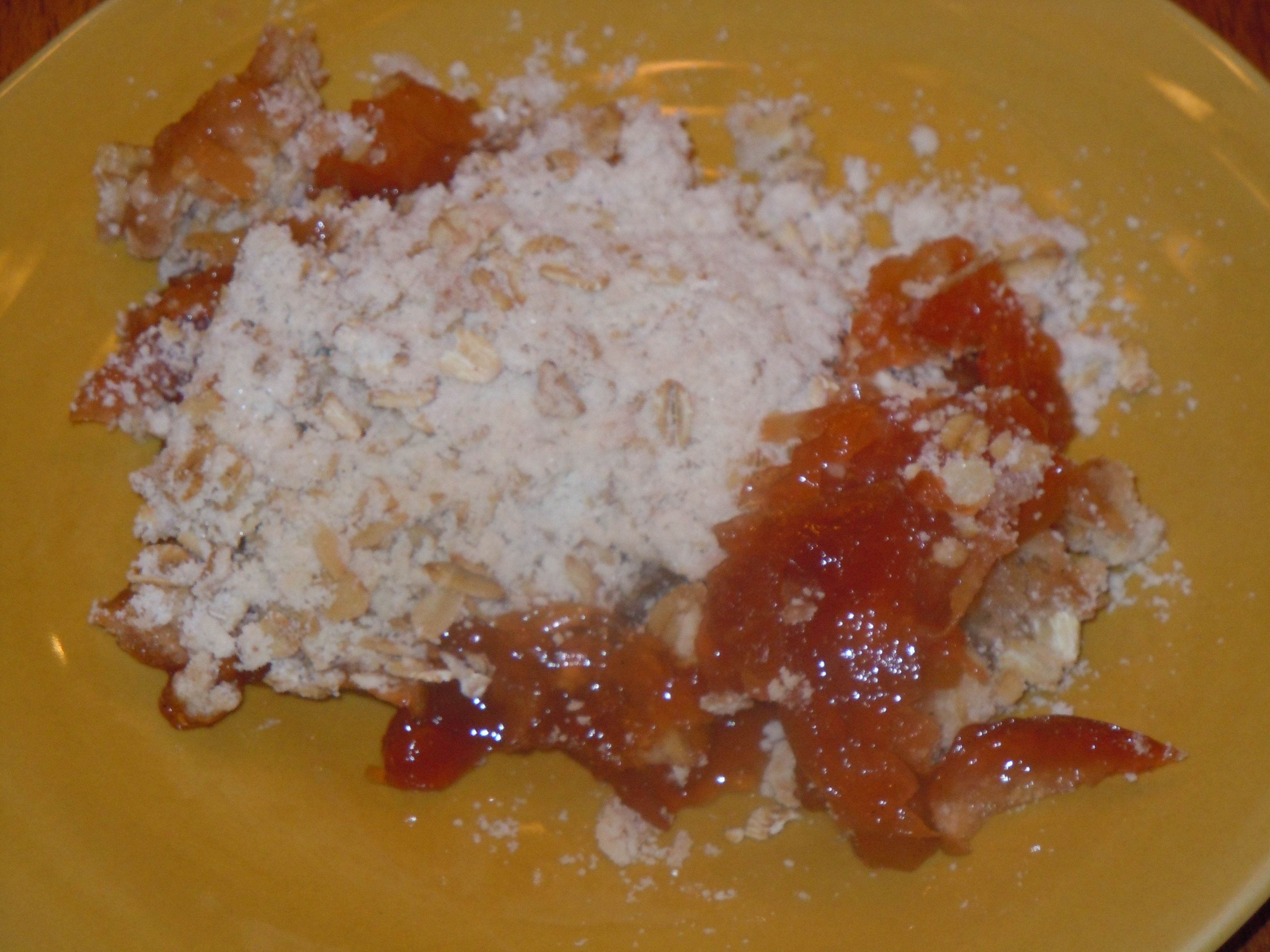
Cooking in Clay: cazuela apple crisp


In my new home my apple trees are infants about five feet high, but the day will come when I’m eating apples from my own trees, all heirlooms chosen for superb flavor. In the meantime the farmers’ markets are full of apples, and in a moment of impulse I bought an enormous bag of Winesaps. After eating all that I could fresh, I indulged my passion for fruit crisps. Desserts are seldom justifiable on purely nutritional grounds, but this one is a lot healthier than most, particularly because the peel is left on the apples. Try it. As long as you follow the directions, the peel won’t bother you a bit, and it adds fiber and antioxidants and saves time. Use organic, unwaxed apples. Ask to taste them first, because any apple is affected by its immediate conditions and the season. Don’t ever bother cooking with an insipid or mealy apple. Your time and effort will not be rewarded.

I strongly advise cooking in a clay pan for best flavor. I keep a 10″ Spanish cazuela from The Spanish Table in Santa Fe, and find that it’s the most used pan in my kitchen, because I can use it on the stovetop or in the oven. I strongly advise reading Paula Wolfert’s “Mediterranean Clay Pot Cooking” for the ins and outs of using clay pots. Season the cazuela according to the directions that come with it, and follow the temperature and timing directions below closely. This dessert takes a few hours to make, but 90% or more of the time is unattended oven-cooking time, so you’ll get a lot of other things done at the same time.

The whole beauty of this dessert is the pure flavor of the slow-cooked, semicaramelized apples, made a little richer by the vanilla. I definitely don’t recommend adding spices.
You will need:
a seasoned 10″ cazuela
Fruit layer:
8 large flavorful apples such as Winesap or Granny Smith, each at least 3″ in diameter, or a dozen or more smaller apples
juice of half a small lemon
1/2 cup (or more) light agave nectar
2 tablespoons cornstarch
2 teaspoons vanilla
a pinch of salt
Crisp layer:
1 cup rolled oats
1 cup unbleached flour
1/2 cup sugar
8 tablespoons good grass-fed butter
2 teaspoons vanilla
1/2 teaspoon salt
l
Wash, halve, and core the apples, then slice into very thin slices lengthwise. Aim for slices 1/8″ thick, but if a few are a little thicker it won’t matter much. A food processor or mandoline is helpful, but I just use a good sharp knife. Don’t leave any really thick slices in, because the peels will be tough in the finished dessert, while very thin slices of peel become unnoticeable during the long slow cooking. In a large bowl, toss the apple slices with the cornstarch, lemon juice, agave nectar, vanilla, and salt. Pile them into the cazuela. They will probably have to be stacked up a little inn order to fit. Don’t worry, they cook down a lot. Pop the cazuela in the oven, set it for 300 degrees, and bake about 90 minutes. Stir once or twice during that time. If the apples seem to be browning on the bottom, turn the oven down some and stir a little more frequently.

To make the topping, combine the oats, flour, salt, and sugar in a bowl. Cut the cold butter in chunks, then work it into the mixture with your fingers, making sure that it is “smooshed” well into the dry ingredients and no large chunks remain. Toss in the vanilla with a fork, then check the baking apples. After about 90 minutes they should be well cooked down. Pile the crumble mixture on top, return to the slow oven, and bake another hour. At that point you can turn up the heat to brown the top a little, or turn on the broiler for a minute or two, but don’t let it get darker than medium gold and watch carefully to avoid burning. Remove from the oven, let cool a little, and serve with vanilla ice cream on top, or cool it completely to rewarm at another time. It keeps at least a few days.

The desert is not terribly sweet, and I love it that way. If you prefer, you can add a little more sweetener to both the apple mixture and the topping. This topping is very crumbly and crispy. If you want something more like a cake topping, you can add an egg and a little milk and a pinch of baking powder to the dry mixture, but keep it on the dry clumpy side and don’t stir it too much, or you’ll develop the gluten in the flour and make it tough. This version doesn’t reheat nearly as well as the crumbly version.
Viva Fall! I love summer and hate to see it go, but the end of the harvest season has its own pleasures. Besides, it inspires me to dig more planting holes for more apple trees next spring.