
For some reason, probably simple curiosity, I tried an old spinach variety called Giant of Viroflay this spring. It was a hot, early spring with lots of wind and duststorms, and I didn’t think that this European antique would survive our high-desert climate, but in fact I have never had such a good crop of spinach. The leaves are smooth and about 10″ long,and in the current June heat I’m still picking from the row that I started harvesting in early May. The particular strain that you have can make a big difference. I got mine from Nichols Garden Nursery. I have seen seeds around labeled “Giant Noble,” which may or may not be the same thing. The maintenance of a good line of seed takes a lot of attention, and it pays to get your seed from the best source that you can find.
The flavor is wonderful, full of the richness that good spinach has, with no metallic or bitter flavors. The texture is smooth and melting when cooked properly, and wonderful in salads too. When I have spinach this good, I like plain creamed spinach more than any other way of cooking it. I think that the French method of blanching first produces the best flavor, and I make up for any diminishment of water-soluble vitamins by eating a great deal of it.
Pick a lot of spinach, since it shrinks greatly when cooked. I use a 5-gallon food-grade pail to pick into, and pick it 2/3 full (loosely filled) to serve 4. Wash very well three times in sinkfuls or pailfuls of cold water. Don’t neglect the washing step. Any bit of grit will spoil your perfect spinach. Then bring a gallon of water to a rolling boil in your big stockpot, toss in the spinach, DON’T cover the pot, and stir with a wooden spoon to get all the leaves exposed to boiling water. When the water returns to a full boil, stir and boil for another minute, then drain in a colander and press ALL the excess moisture out. Turn out on a clean cutting board, chop rapidly with your big chef’s knife, and put in a saucepan with a few tablespoons of butter, half a cup of heavy cream, and salt to taste. Cook over high heat, turning regularly, until the cream is reduced and there’s no drippy liquid. Serve forth promptly, with a little more butter on top. If you know someone who has a Jersey cow, your cream can be thick raw Jersey cream, which is the best cream there is. Shave a few shreds of fresh nutmeg on top just before it goes to the table (I do mean a few, 1/8 teaspoon or thereabouts.) Some fresh pepper is nice too. Sometimes I add some sauteed shallot or green onion, and sometimes I feel that alliums impair the delicacy of the thing.
I like to eat this as a meal all by itself, with a few slices of good baguette alongside. It also makes a great base for poached eggs, and accompanies delicately seasoned chicken and fish dishes beautifully. It is one of the joys of late spring, to be enjoyed lavishly in its season.

Archive for the ‘greens’ Category
13 Jun
My Favorite Spinach
8 Jun
Another Great Green
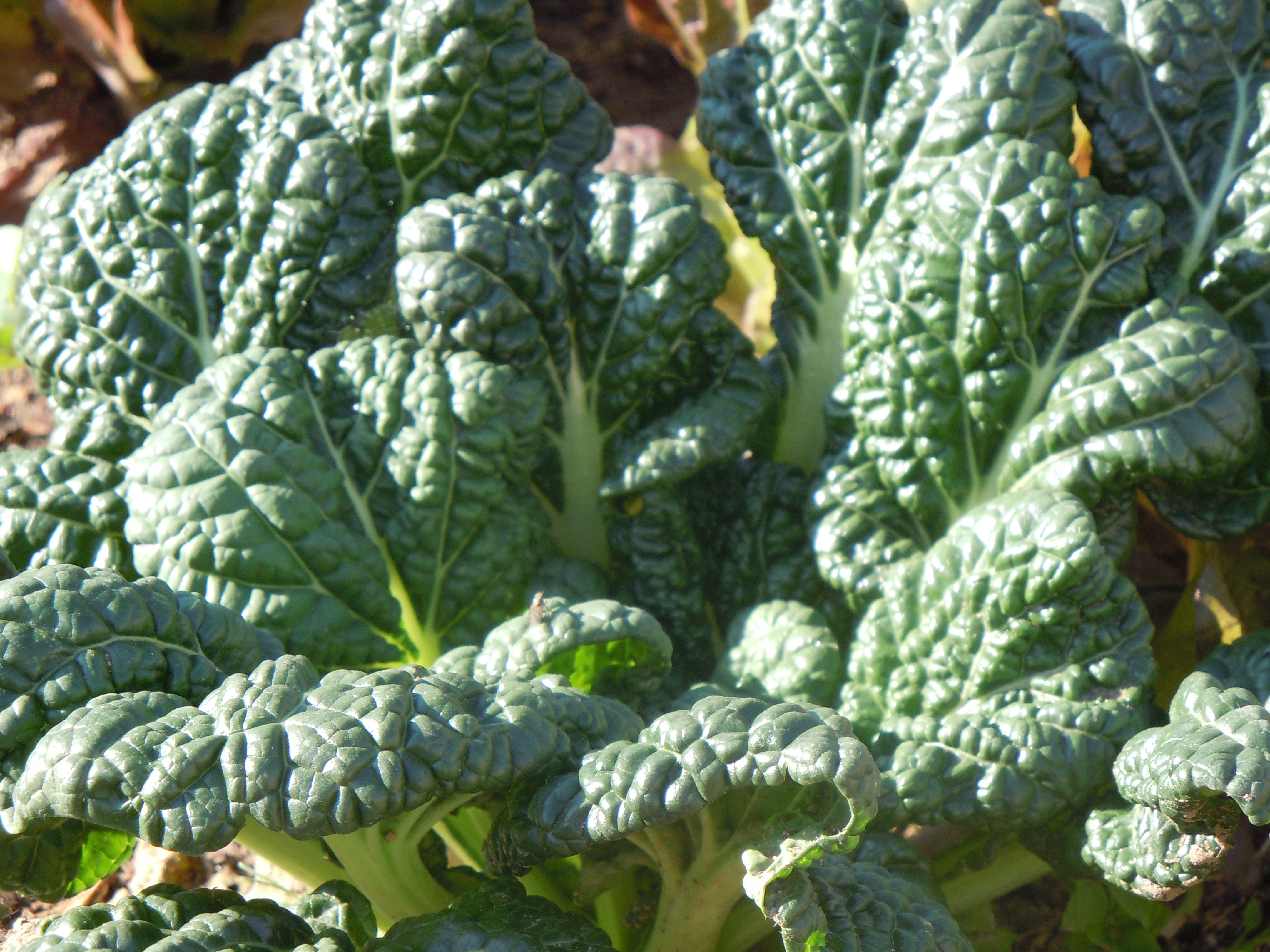
One of my new trials this year was the Asian hybrid green Misome. I got my seed from Nichols Garden Nursery, one of my favorite sources for unusual and useful seeds. It’s a hybrid of tat soi, a vegetable that I love but can only grow in the fall. I planted Misome in earliest spring and it grew beautifully, producing deep green savoyed leaves that shone in the sun like the deepest jade. It had no insect or disease problems. Like many mustards, the only secret is to plant it early enough. The flavor was mild and ever so slightly mustardy. I used the youngest leaves in salads and the older ones stir-fried. It held for a surprising time in the garden, considering our early and very hot and windy spring, and when it bolted a few weeks ago, I pulled up the plants and fed them to my goat Magnolia, who was ecstatic over them. I like to believe that the dark green color indicates a high level of beta-carotenes, but I have no data to prove that. I do know from experience that it’s delicious. I’ll be planting another crop in early fall. Keep it in mind for next spring, or order some seed now while you’re thinking about it.
One of many ways to stir-fry greens:
This is too simple to be written as a recipe. Think of it as a basic technique that works for a wide variety of greens. Peel and chop a clove of garlic, a 1/2″ piece of ginger, and a 1″ piece of turmeric. Have ready a tablespoon of Thai fish sauce, a tablespoon of palm sugar or agave nectar (a surprisingly good substitute) and half a cup or so of coconut milk (not the low-fat kind). Thoroughly wash a pound of misome leaves, whirl them dry, and cut them across in 1/2″ slices. Heat a large wok very hot, put in about 2 tablespoons of canola oil, and dump in the chopped garlic, ginger, and turmeric and fry, stirring constantly, for a minute or until the fragrance comes up, which may be less than a minute. Be careful not to burn them. Now put in the strips of misome, fry a few minutes while turning regularly, and then add the fish sauce and coconut milk. Continue to stir-fry over very high heat until the coconut milk thickens, taste and adjust the seasoning if needed, and serve immediately. This is surprisingly satisfying by itself with jasmine rice for lunch. If you can’t find fresh turmeric, leave it out. Do not under any circumstances use musty dried turmeric instead.
Dishes like this will give you a glow of virtue and good health that goes on for hours. Perhaps it’s a true virtue of the greens, or maybe it’s just the glow of achievement that comes of eating what you grew. Either way, it feels good.
18 May
The Weed You Need: Edible Wild Plants in Your Garden
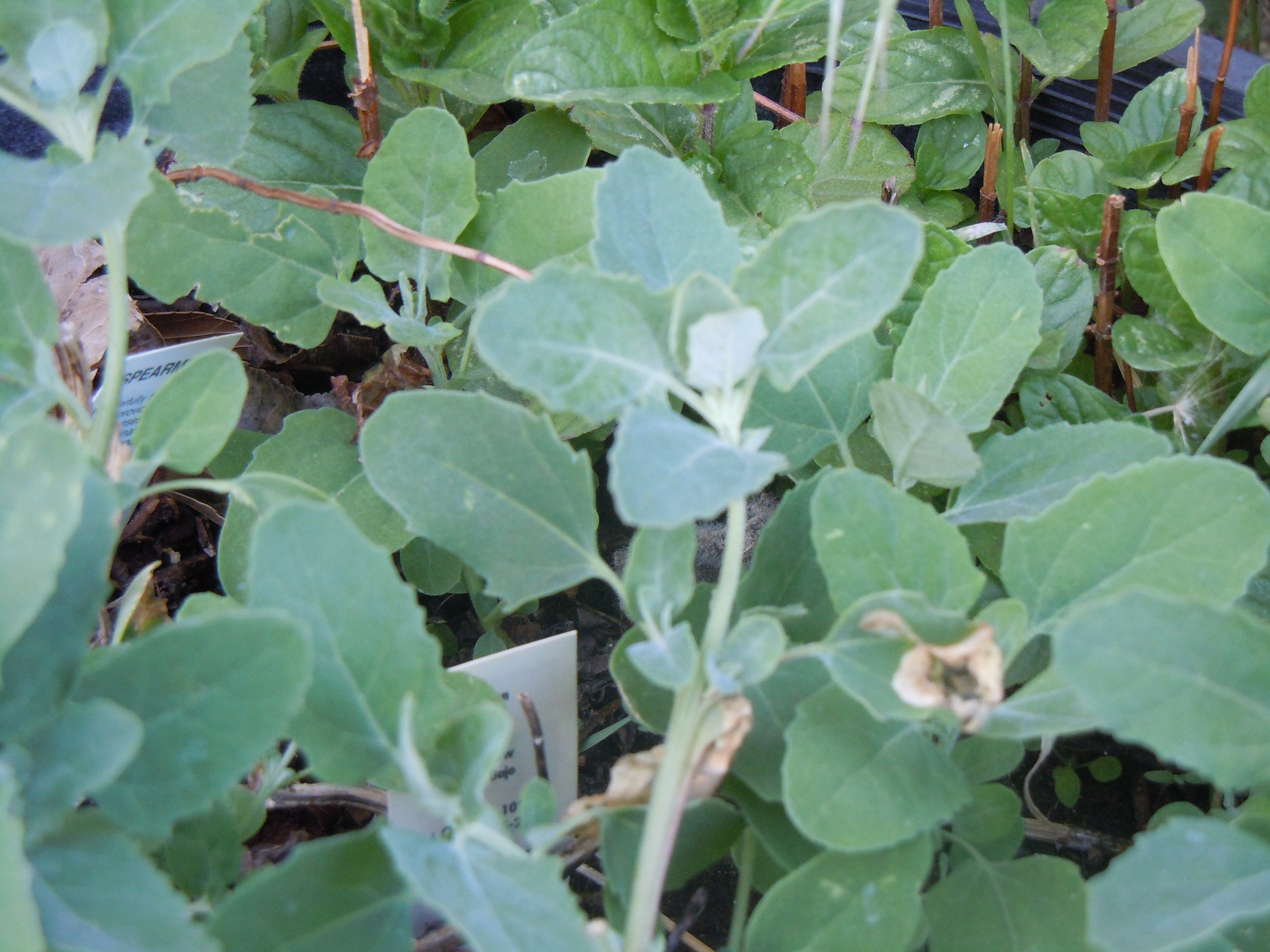
Lambs-quarters seedlings
Here in New Mexico we have a trio of useful weeds that make delicious greens during the summer heat. In fact, I suspect that most pieces of the continent that aren’t actually submerged have these three. Lambs-quarters, amaranth, and purslane are ultra-nutritious, mild and pleasant in flavor, and take nearly any sort of abuse. They come along in that order; right now lambs-quarters in my yard is nearly ready to harvest, amaranth seedlings are about an inch high, and purslane seedlings are a fine mist on the ground. The reason to learn to recognize them now is so you don’t weed them out. They are shown here in seedling stages, but never rely on one source to identify a wild plant unfamiliar to you, at least not if you intend to eat it. Get a good foraging book (anything by Samuel Thayer or John Kallas will have the info that you need) and double-check yourself. Then, harvest and eat. These three are easy to use. Lambs-quarters is my favorite, but I’d hate to be without any of the three. I generally blanch them for two minutes in boiling salted water in an open pot, drain and press out all moisture, and chop, then proceed in any of dozens of ways or freeze them in vacuum-sealed bags for winter. Lambs-quarters and amaranth can be eaten by themselves with great pleasure, but personally I find purslane a little slimy by itself and prefer it as no more than 25% of a greens mixture. It’s full of omega-3 fatty acids, though, so don’t neglect it. Click the “greens” category on my sidebar and scroll through some ideas to get you going. Be careful not to let them overwhelm your garden plants. Amaranth and Lambs-quarters can grow six feet high and three across in good garden soil, and they can crowd out nearly any other plant that you might be trying to grow. Leave one of each to go to seed, and pull the others before they take over. I can’t think of anything nicer that most people could do for their health than eat more leafy greens. If you have chickens, be sure to give them all the nutritious weeds that they can eat. My dogs love cooked greens too, although of course they are given only limited quantities.
I can cut the tender tips several times per plant, but these are wild annuals and they do what wild annuals do, which is make huge quantities of seed before winter. When the days shorten, they will go to seed. I’ve tried planting seed in late summer to extend the harvest, and the new plants went to seed before they were six inches tall. They haven’t been bred for our purposes, and I say thank goodness something hasn’t. Their season is a long and generous one, so enjoy it. Spread some seedheads in any neglected areas that you aren’t using, and you’ll benefit next year.

Amaranth seedling
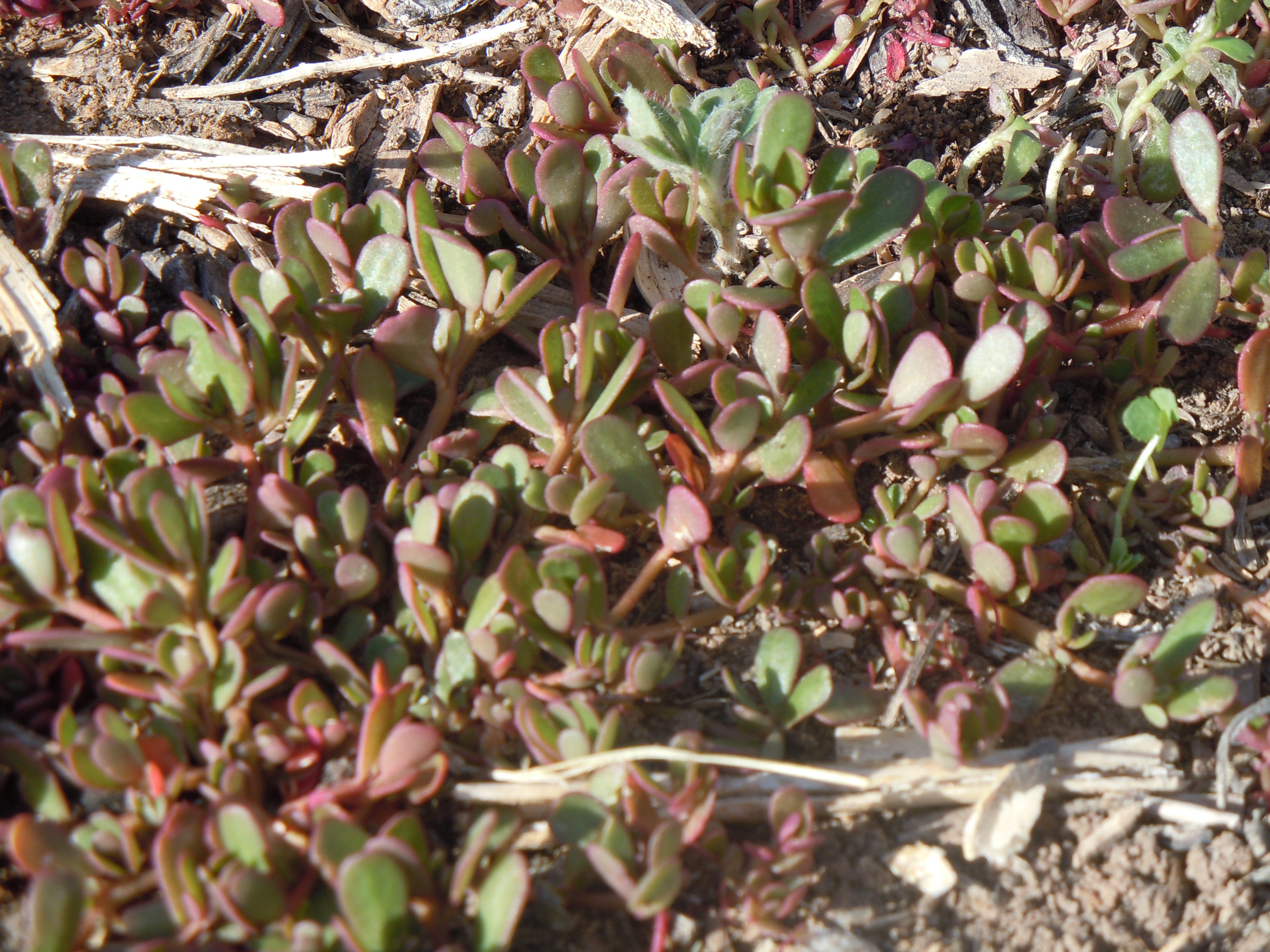
Purslane seedling
6 May
Appearing now in your salad bowl: Chickweed
Funny how things cycle. When I first learned to forage as a child, I was distressed because I couldn’t find any chickweed near my Louisiana home. Later, when I had a farm in upstate New York, I had plenty of chickweed and came to curse its abundance. Now, in the desert southwest, nature doesn’t offer any chickweed and I had to buy seeds in order to have it again.
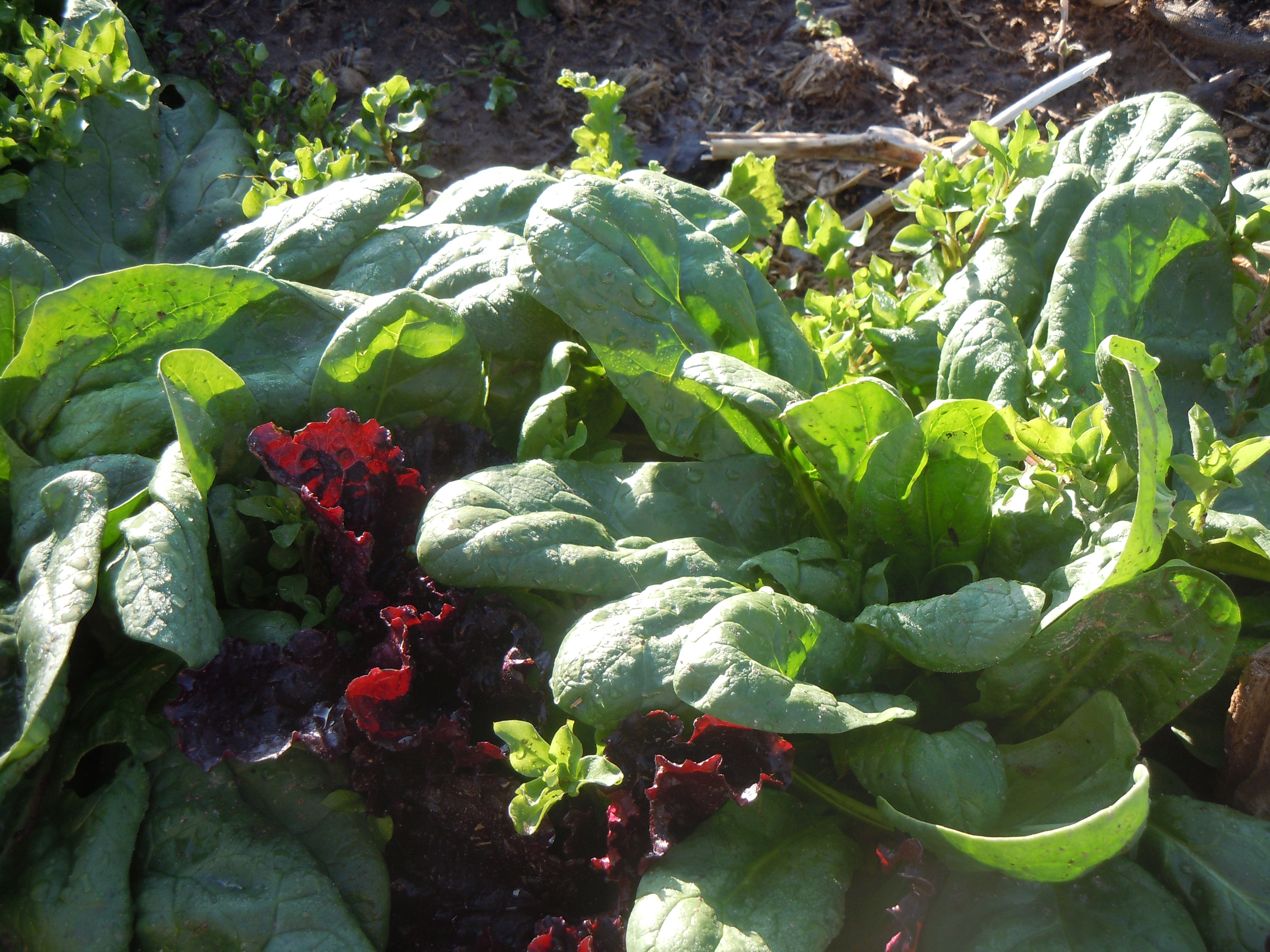
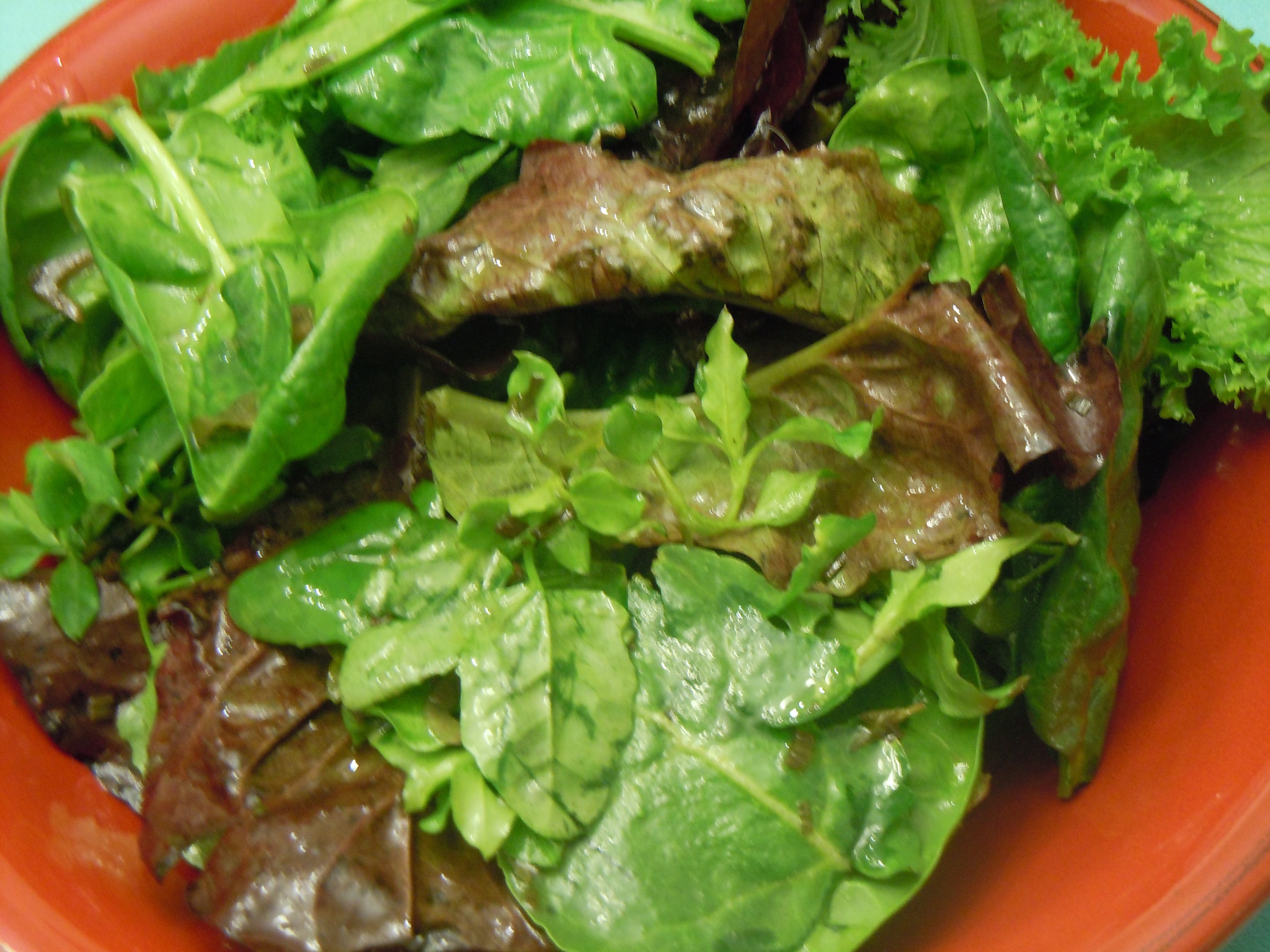
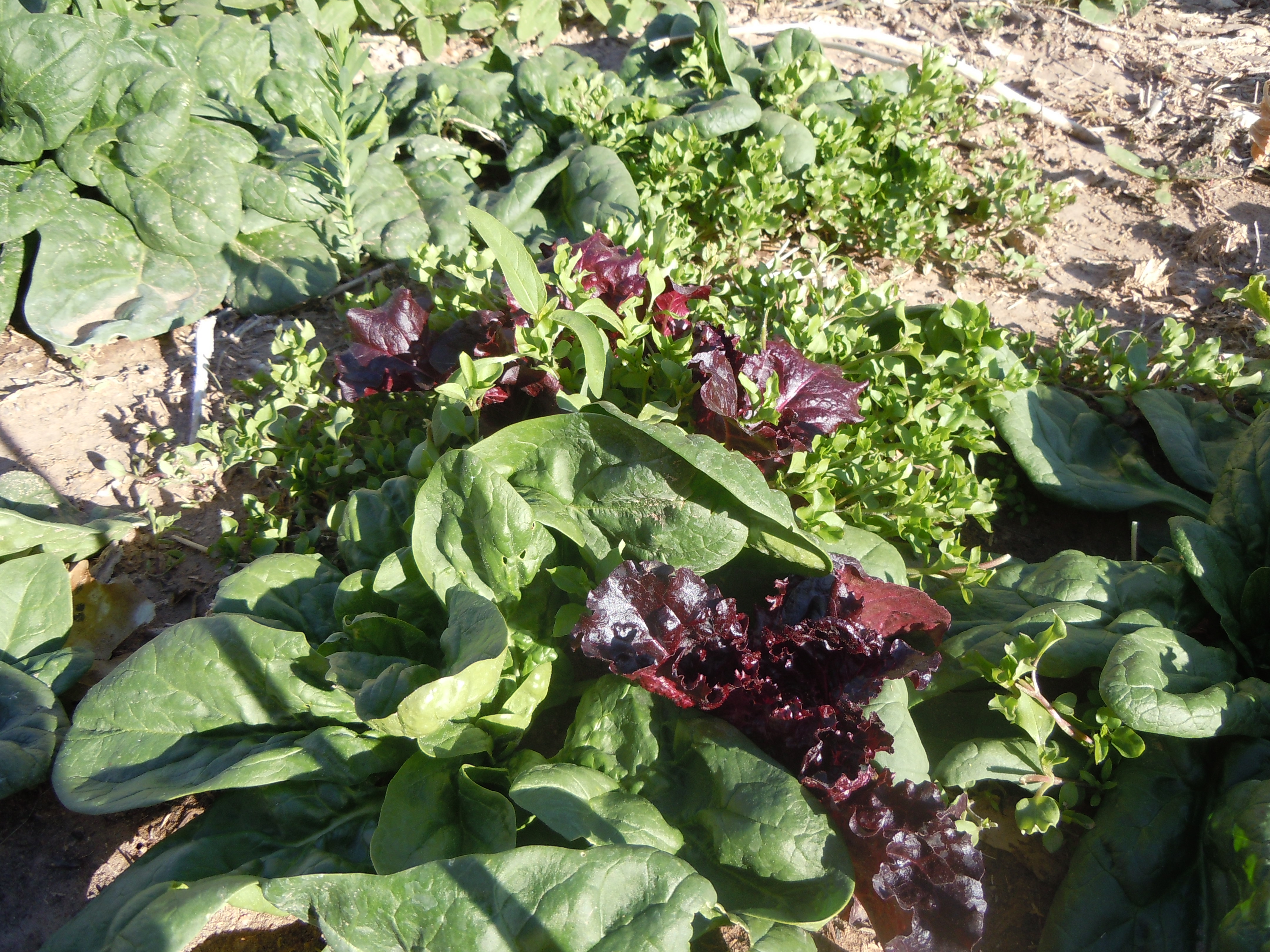
Stellaria media, the common chickweed, is a mild and tasty wild salad green, with more nutritional value than many domesticated salad greens. I had to look hard for seed, because it tends to be assumed that everybody has it and wishes they didn’t. I finally found it at Wild Garden Seeds. It appreciates some shelter from our blazing sun, which I provided by planting it in the same row as lettuce and spinach (right in the same tiny trench) so that it could nestle under the larger leaves and stick its head up for picking. The picture above shows this. In my opinion, only the tip of each sprig is worth eating, so I cut one or two inches off each little branch and leave the rest. Eaten alone with no dressing it has a somewhat grassy flavor, but mixed with other greens it’s delicious and adds a certain airiness and lift to the texture of a mixed salad. I use it up for anywhere up to half the bulk of a salad, depending on how much of it I have available at the moment. I have often read that it can be used as a cooked green, but I don’t care for it that way- too bland- and use it only in salads. I plan to let some go to seed, and will also make another planting in the fall, because it loves cool weather.
 My urban homestead