Archive for the ‘front yard gardening’ Category

The Eggplant Chronicles I: choose your plant

image

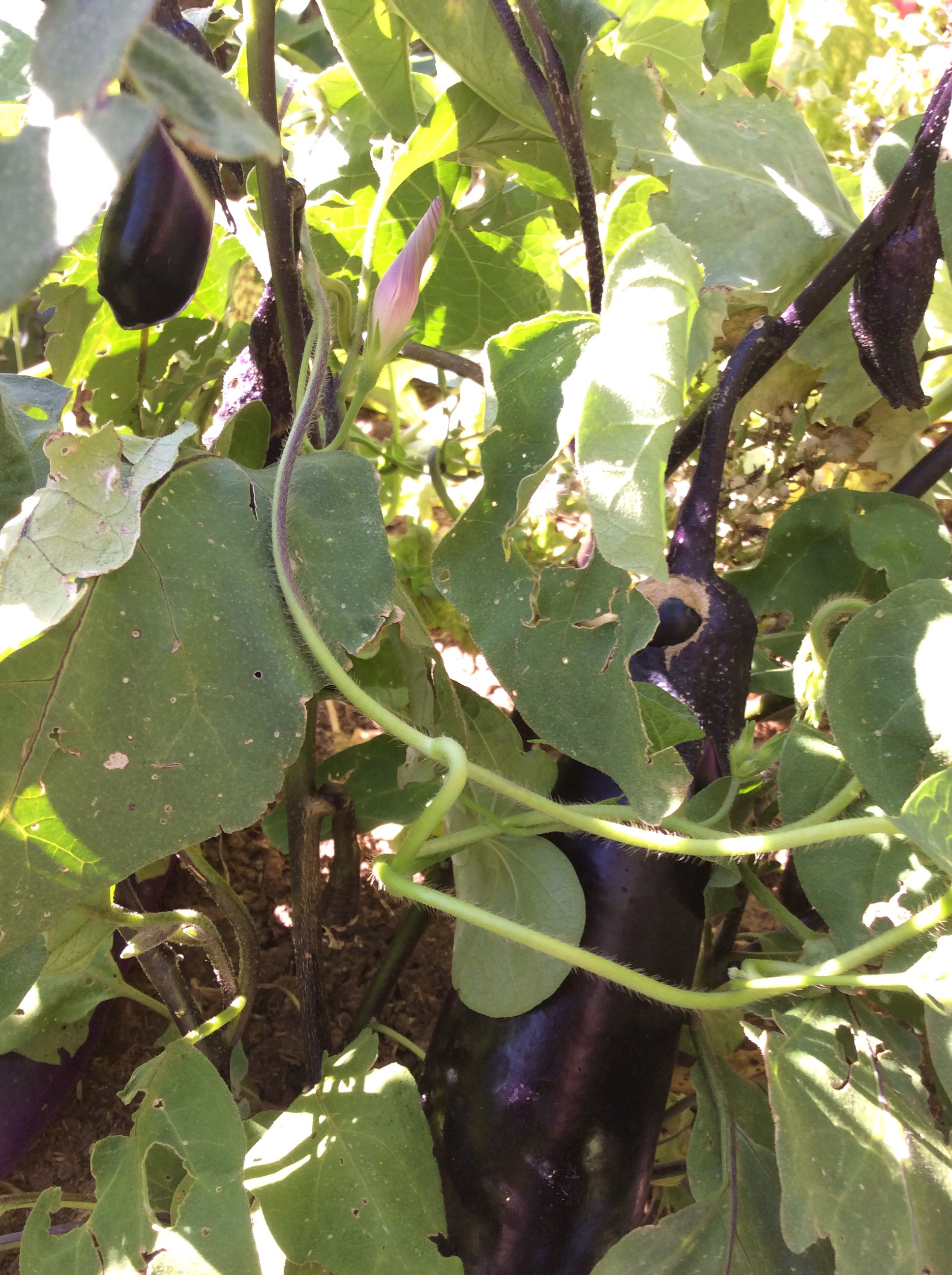
For the last couple of years I’ve rolled my eyes over the phenomenon of grafted vegetable plants, and griped lustily that there is nothing difficult about growing tomatoes or eggplants, so why would anybody  fall for the grafted ones? Then I saw a picture of the extremely deep rootball that the grafted rootstock develops and began to ponder whether this might be really advantageous in my very hot dry area. So this year I tested two grafted eggplants, one Millionaire ( a Japanese-type eggplant) and one Black King. I planted several standard Millionaire and Ichiban plants for comparison.

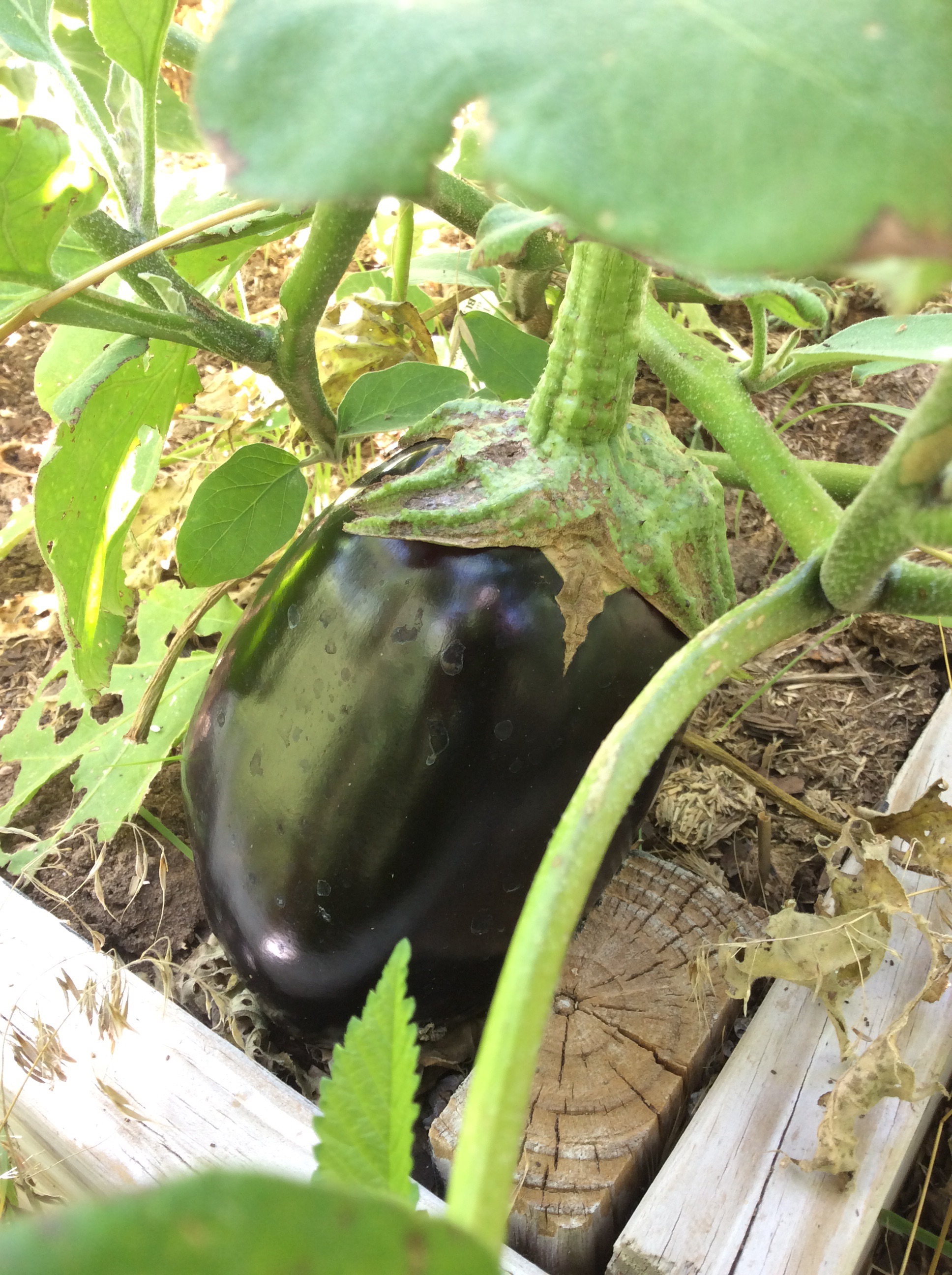
So far, the grafted Millionaire is out-producing the ungrafted Japanese eggplants at a rate of three to one. I don’t know how well you can see them in the picture above but the plant currently has five eggplants in various stages and is covered with blossoms further up. This one plant would have been plenty for us. The Black King seems sturdier than large eggplants I’ve grown in the past and is holding its enormous fruit without flopping.
image
So I will be planting grafted eggplants again. They cost just about twice as much as the ungrafted plants that I bought from a good local grower, but they are producing three times as much eggplant in less space. The two grafted tomatoes that I tried don’t seem to be outdoing their nongrafted kin at this point, but the jury’s still out. Also, one growing season isn’t a true test. But I’ve seen enough to be intrigued.
There are a lot of kinds of eggplant. The only types that I grow these days are the resplendent big Italian types and the long slender Japanese types. My preference is for meaty eggplants from which I can carve out big luxurious eggplant steaks. If your cookery leans Asian, you may be interested in the tiny bitter Thai eggplants and the dozens of other Asian types.
By the way, eggplants are highly ornamental at nearly every stage of growth. No need to stick them in the back yard.
Breeding a Landrace II: the unexpected bonus

image
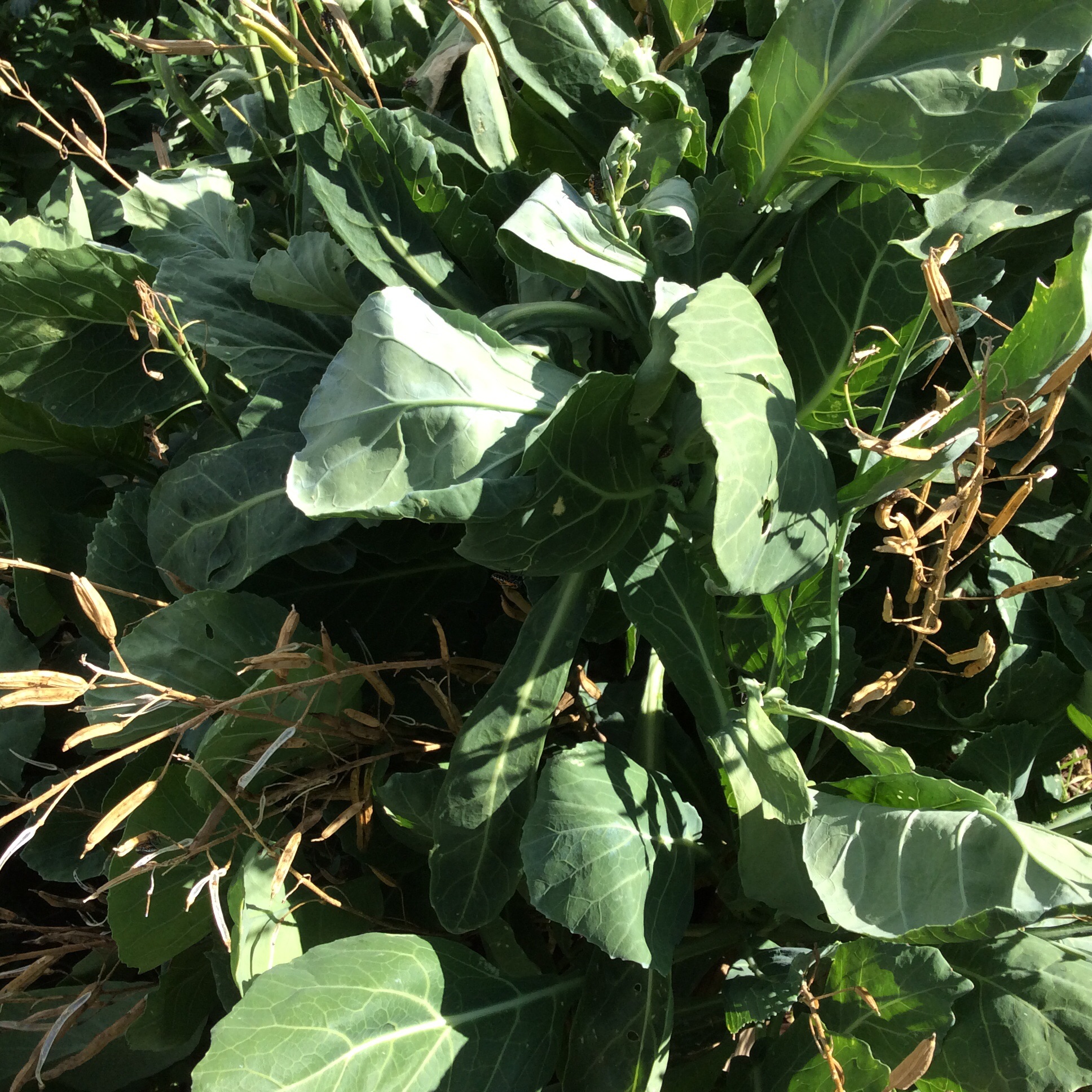
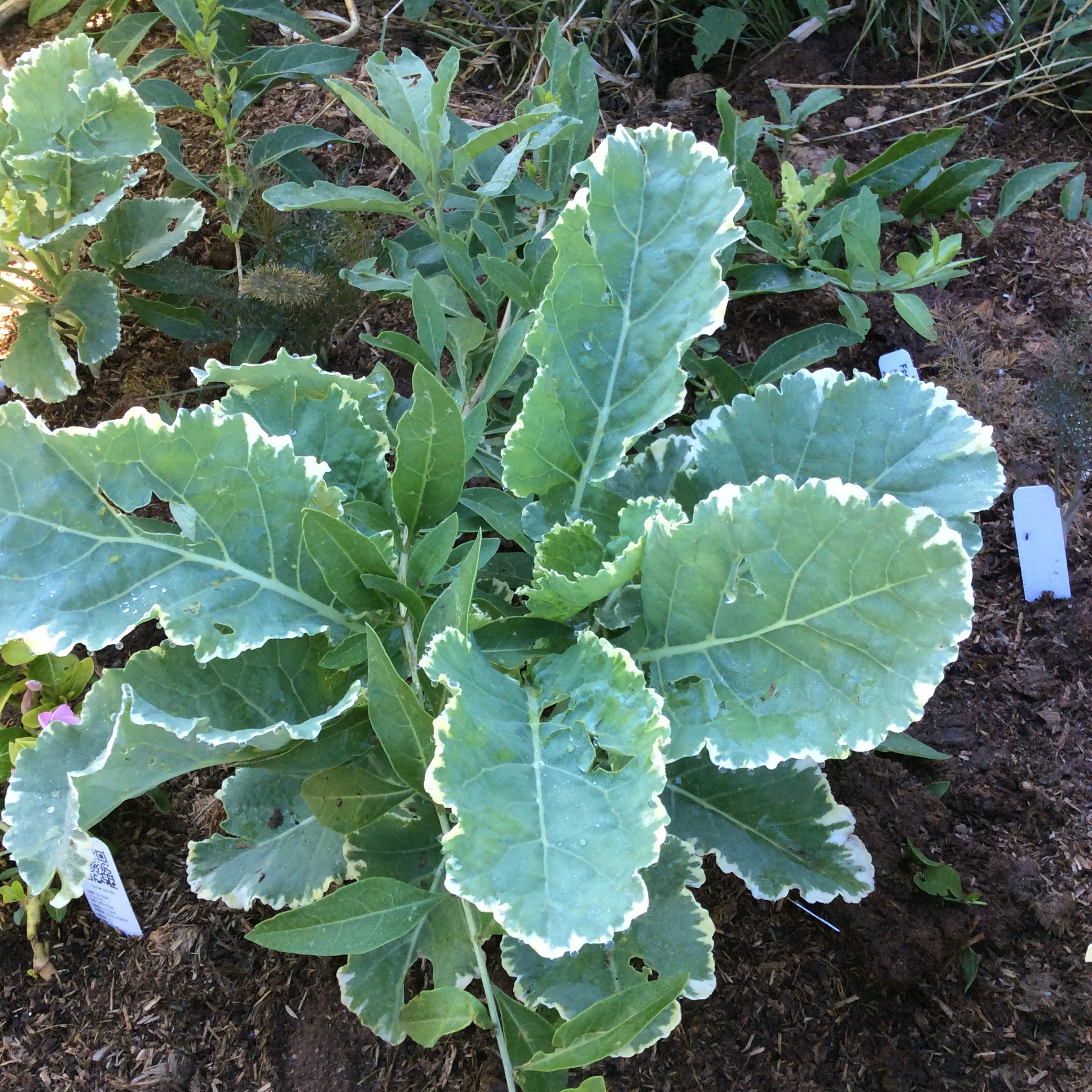
I have written recently about breeding my own brassica landrace, and I was happy enough that some of the plants survived the winter, made a nice crop of spring greens, and set seed. Since then, to my surprise, after the seed dried down a few of the plants produced a whole new crop of tender greens. So far I have been eating greens from these three plants since last summer, and they still seem to be going strong. It goes without saying that I will choose the seeds that these plants set for next year’s planting, and also will be watchful about whether they set another crop of seed and live through another winter. I am also trialing a few plants of the new perennial kale introduction, Kosmic Kale, shown below.
image
I wonder if the delicious third-growth leaves produced by my brassica landrace might not be preferable to Kosmic, which (so far) is not distinguished for deliciousness.
My main point is, give your plants the room and time to surprise you. If I had pulled the brassica crosses out after harvesting seed, I wouldn’t know about their delightful late-summer greens. When we let nature teach us it’s amazing what we can learn.

The Easiest Vegetable Dish Ever

image
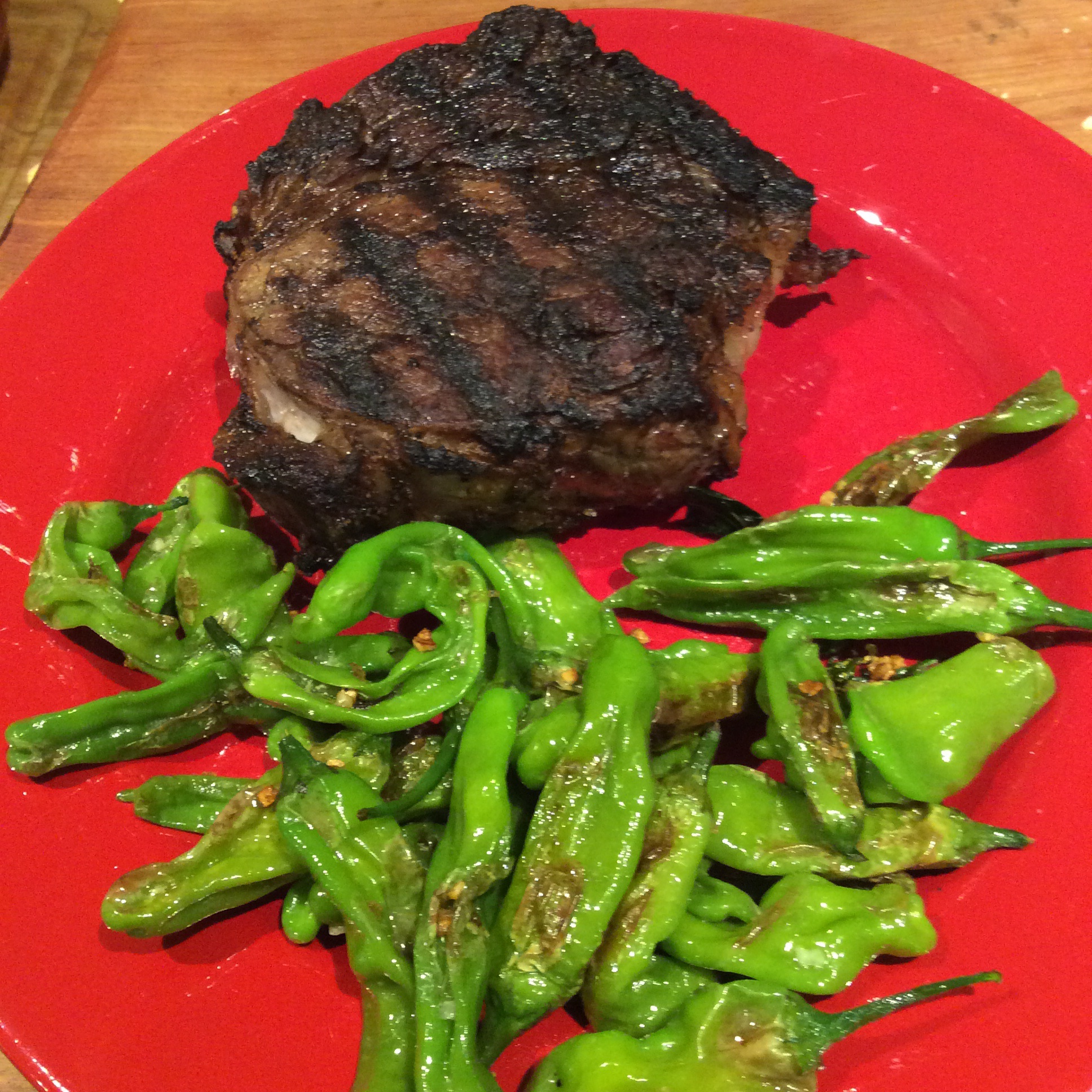
Shishito peppers are my favorite side dish for a summer steak. I put in four plants this spring, and they have provided a good mess of Shishitos for two people about every four days. Cooking them well involves three steps:
1. Pick
2. Rinse
3. Throw in a hot frying pan with a glug of good olive oil and shove around the pan with a spatula, turning them about once a minute. Keep the heat high. They will hiss and spit. When they look cooked all over, and a bit blistered in places, sprinkle generously with fleur de sel or other coarse mild salt. Pile on the plate and eat with your fingers, leaving the cap behind.

That’s it. If you are determined to elaborate, you can throw in a little finely chopped garlic for the last minute of cooking (no sooner or the garlic will burn.)

If you only have a few of them, use your smallest skillet and call them a cook’s treat, eaten privately in the kitchen. I say a serving of them is about 18. Other people may be more moderate in their tastes.
If you are a thrill-seeker you can seek out pimientos de Padron instead, but the last time I grew those, not just some but all of them were hot as blazes. So I’m giving my GI system a rest with Shishitos.

Clove Currants

image

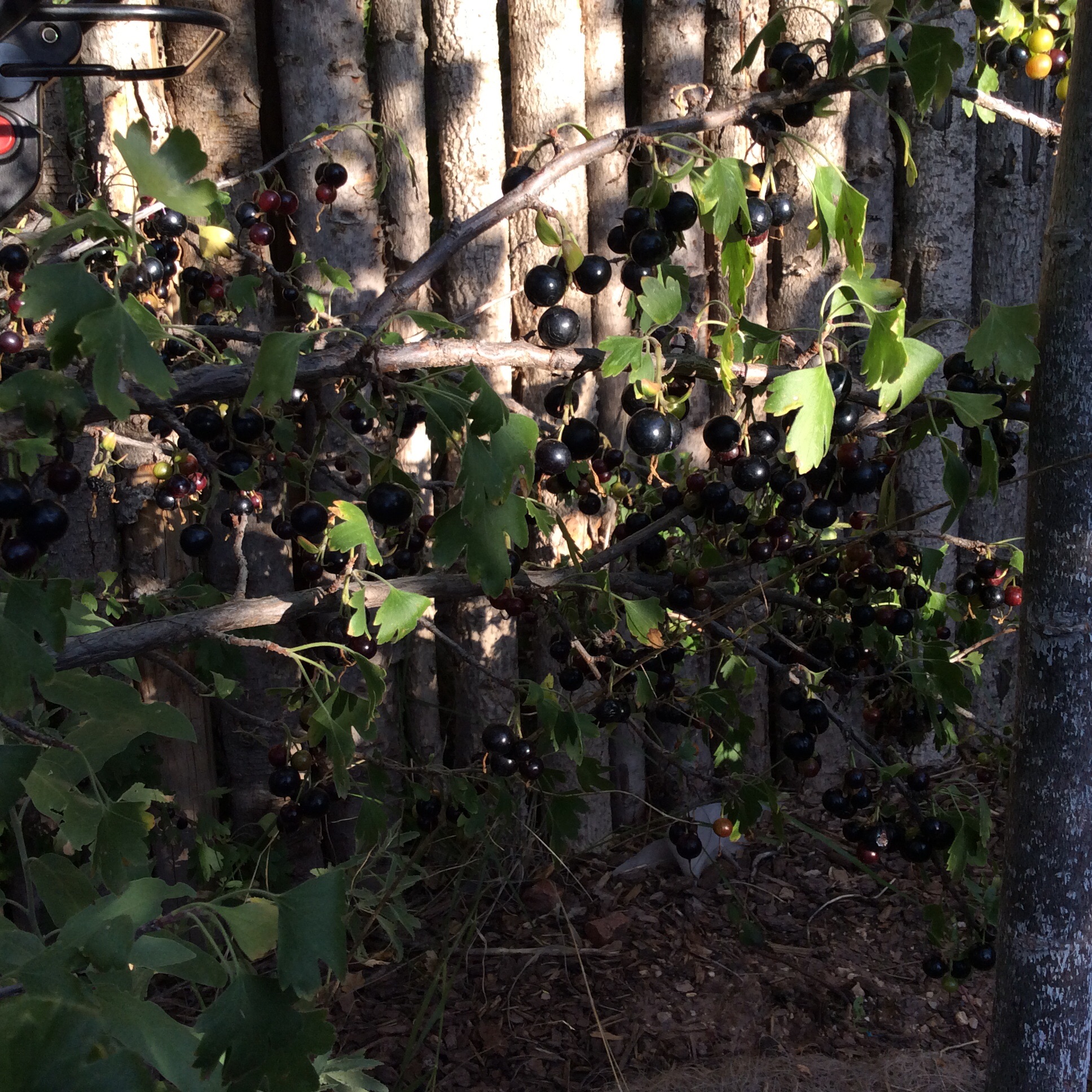
The native clove currant, Ribies odoratum, grows beautifully in my area. It is sturdy, healthy, drought-tolerant, will tolerate some shade, suffers from no bugs or diseases, and is reasonably attractive, especially in spring when covered with thousands of tiny yellow flowers that have a soft pleasant scent. I haven’t found them growing wild in my area but I have a bush that was planted by birds; they grow that easily, and start to bear within three years.  I have several large bushes and would have planted more if not for one major disadvantage: I thought the fruit tasted awful.  The fruits, like most berries, are relatively low-carb for fruits and probably contain a good set of antioxidants, but eating things prescriptively rather than for pleasure is just not my style.

But sometimes plants just have to hang around my yard until I learn to use them well. This year, after living with clove currants for five years, I finally figured out (duh) that the fruits are not ready to eat when they turn black. Don’t grab those first black shiny fruits. Leave them on the bush for another couple of weeks. Taste every few days, and when they taste sweet and spicy (still very tart but with a balance of acid and sweetness) they’re ripe. The fruits actually get a little smaller as they ripen, and some will look a bit wrinkled. Don’t worry. Don’t use any that are dry and shriveled, but a little loss of turgor just intensifies the flavor.

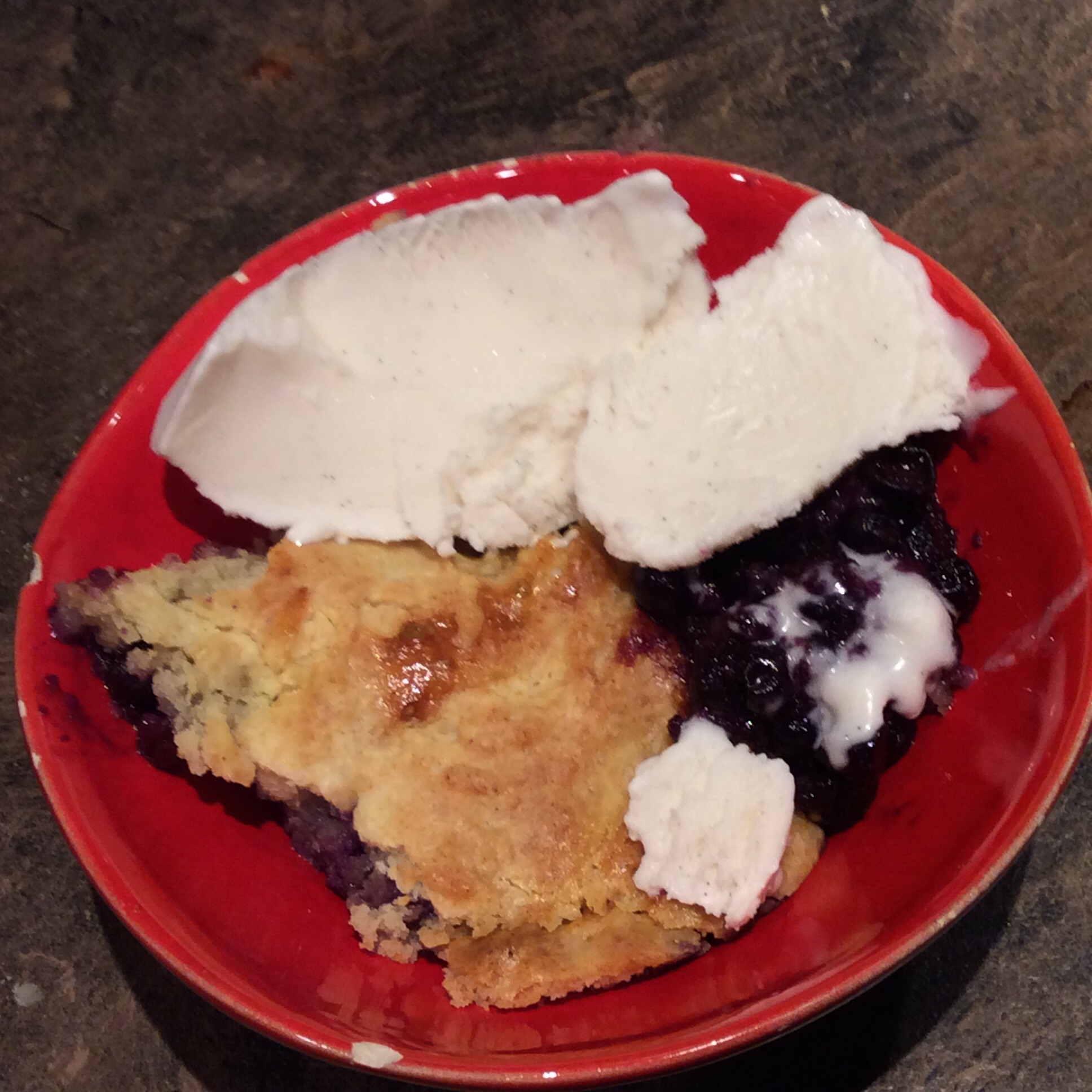
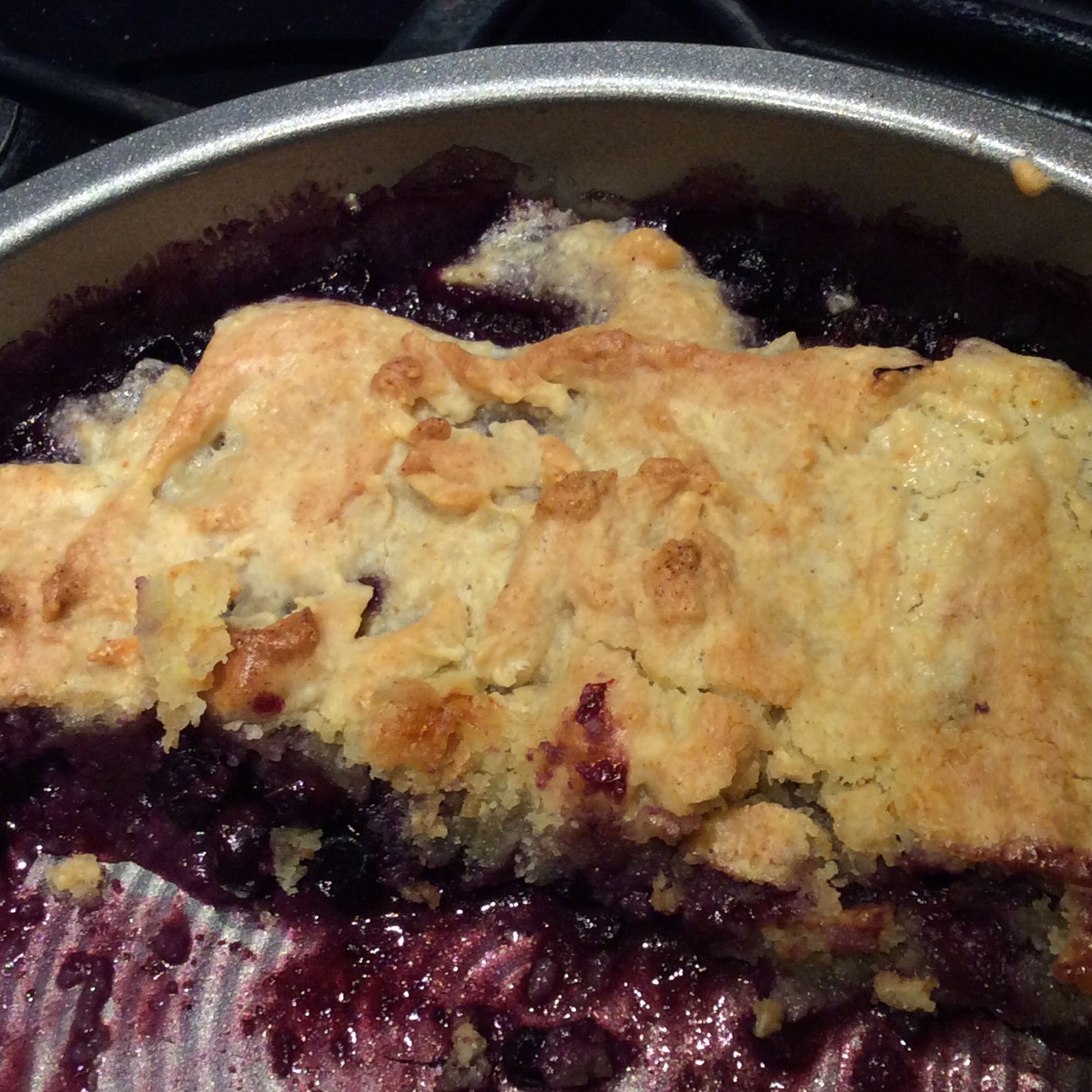
I enjoy eating a handful in the garden when I make my morning rounds, but my favorite use for them is in cobbler. If you are low-carb, use my recipe for red, white, and blue cobbler, using clove currants alone or adding in some frozen wild blueberries to make up the fruit volume if you don’t have enough clove currants. Work the sweeteners into the fruit with your fingers, crushing the fruits a bit as you go. If you eat sugar and flour, just use your own favorite cobbler recipe. Be sure to grate a little fresh nutmeg into the fruit mixture to bring out the spiciness.
image
The fruit clings to the stems and often has a little wiry “tail” clinging to the blossom end which has to be removed, so harvesting them is a bit tedious. I wait until early evening and then sit comfortably under the bushes with a bowl, pulling off stems and tails as I go so that fruits that hit the bowl are ready to use. I eat a few along the way. The laborer is worthy of her hire, after all.

I’ve been thinking of other ways to use them, and I think that they might be good in sauces for meat and game. I can recall reading a British recipe for a blackberry sauce for venison, and along those lines I plan to try using clove currants for a sauce for roasted pork. But right now they are going into cobbler or disappearing straight down my greedy gullet.
image

I also have a couple of bushes of Golden currant, also known as wax currant, but they are slower to bear and I haven’t had enough fruit to experiment with yet. More on that later.