
Stinging nettles are a pernicious weed in damp parts of the country. The sting is painful and the plant is weedy-looking. So why did I make an effort to have them here in New Mexico? Well, because the greens are delicious and extremely nutritious and they come up with no effort once established.
I had no luck starting from seed, and bought plants from Richter’s in Canada. They are a wonderful source for rare herbs, and well worth knowing about. The plants arrived last spring. I put them in a piece of waste ground where nothing much would grow and where they would be prevented from excessive spreading by walls and mown paths . This is very important, because once established, they turn their forces toward world domination. I watered them deeply once a week and mulched them heavily.
This spring, each little plant from last year is surrounded by dozens of offspring. They sting fiercely, so don’t go near them without gloves and long pants. When they’re about six inches high, use heavy gloves and a pair of scissors to harvest them. Wash in a few changes of water, using wooden spoons to swirl them in the water and lift them out to avoid the thousand tiny painful injections of formic acid that they are trying to give you. Until they are cooked well, they can sting. Now cook them any way you like. My favorite way to cook the first batch of spring is to put them in a hot skillet with some water still clinging to them, add a knob of good butter and a little salt, turn the heat down, and saute’ until cooked. Turn out on a cutting board, chop well (I hate long stringy stems in greens, and since nettles have stringy stems, I strongly recommend that you don’t skip this step) and serve with a little more butter on top. They are a startling deep iron-green and very, very good. Later in the season, I use them in greens mixtures and boreks and all the ways I love to eat greens. For more of my favorite greens recipes, visit my website’s recipe page.
Within six weeks of the first picking, they will be coarse and no longer taste good, and their texture will become gritty and unpleasant. This is why you want them in an obscure spot. Control their spread, avoid being stung, let them do their weedy thing, and turn your attention to other vegetables. Early next spring, when you’re sick of cold winds and desperate to reconnect with the awakening earth,they’ll be there.
Archive for the ‘edible landscaping’ Category
9 Mar
The Greens of Spring: Stinging Nettles
1 Mar
Lemons, limoncello, and springtime
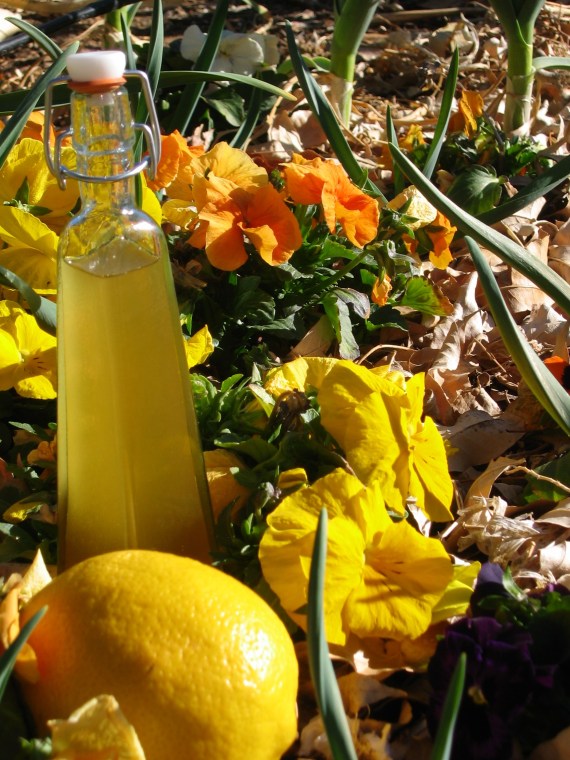
I recently returned from a conference in Tucson, where there were trees gloriously heavy with brilliant lemons and oranges. It set me thinking about the Ilalian liqueur Limoncello, which at its best is redolent of pure fresh lemons. Unfortunately, most of the versions that make it to America taste a bit artificial. It’s quite common for Italians to make it at home, and I started looking for a recipe. As often happens, most of the easily located recipes online were copied from one source, and used only the peel and not the juice. After looking further, I ended up doing it this way:
Obtain ten fresh juicy organic lemons. With a very sharp paring knife, peel the zest off in strips, carefully avoiding the white layer underneath. Probably it would also work to grate the zest off, but I haven’t tried that. Put the zest in a large jar (I used a half-gallon jar) and add the strained juice of five of the lemons,
2 1/2 cups good vodka, and 1 1/2 cups sugar. Stir it around to start the sugar dissolving, but it won’t finish dissolving for days, so don’t worry. Let steep for one week, stirring daily. Taste it for sweetness, and adda little more sugar if needed. Let it sit two or three more days. Then strain carefully, pour into decorative bottles, and store in the refrigerator. Since it’s never boiled and contains fresh juice, it won’t keep as well as the commercial stuff. Serve well chilled in tiny glasses.
Addendum:shortly after I posted this, I received a comment which led me to a fascinating site, limoncelloquest.com. I recommend that anyone with an interest in the subject check out this quirky and fascinating site.
22 Feb
The Sensuous Carrot
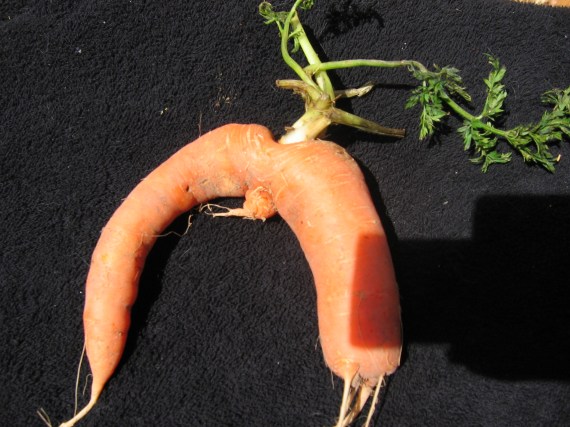
In the relatively mild central New Mexico climate, I leave my carrots in the ground all winter and dig them whenever the ground is thawed enough to get a shovel into. The area that I find it convenient to grow carrots in has some stones, and sometimes the roots hit the stones and are induced to grow in peculiar ways. I offer this piece of natural carrot art without further comment.
1 Feb
More winter treats: the Peruvian Purple Potato
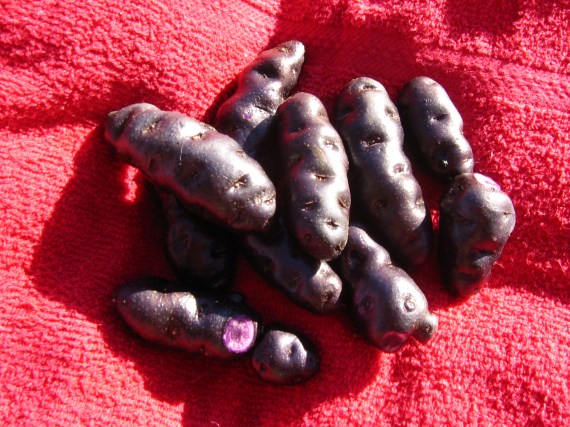
When I first ordered Peruvian Purple seed potatoes, I thought of them more as a curiosity than as a real crop. I was curious about how this native of the Peruvian highlands would adapt to our own high-desert conditions. I was also aware of their very high anthocyanin content, and I’m never one to turn down a good source of antioxidants. I’m still digging them for winter use, and they are one of my most successful crops this year and fill an interesting niche in my household menu: they’re readily available when nearly everything else is dormant.
I planted mine in a strip at the side of my house, which gets very hot in the summer. I did water them but not as much as they might have liked. Even so, they flourished and looked very pretty in their season. Incidentally, this brings up the fact that much gardening information on the Web is clearly written by non-gardeners. Now that edible landscaping is hot, I see recommendations to use the potato as an ornamental, which sounds fine if you don’t know that the vegetative parts die off in late summer and look just awful. So plant them where some other big pretty plant will spill over and fill the empty space in late summer, or put them in an out-of-the-way place where you can admire them in their season and not see them as much when they die back. Do keep them weeded.
When they flowered I scrabbled under themn to look for new potatoes, as I do with all my potatoes, but didn’t find any, and thought they were probably a loss. However, in November when I dug up the space for the winter, I found a treasure trove of earth-amethysts. They were blemish-free and looked very lovely after scrubbing, with deep purple skins that glistened like jewels when wet. I left them in the ground and dug them as I needed them, and on February 1st I’m still digging them and they’re still in perfect condition. They have been completely free of disease and haven’t shown any sprouting yet.
They’re very tasty cut in chunks and roasted in nearly any kind of fat (olive oil and goose fat are probably my favorites) in a 400 degree oven with some coarse salt and a good sprinkling of chopped herbs added near the end of cooking. Chopped garlic added late in the cooking period when it won’t scorch is nice too. A hot potato salad made of chunks of Peruvian Purple boiled in salted water until tender, drained, and dressed with a vinaigrette dressing and a little chopped green onion, parsley, ands celery (plus a good dose of bacon crumbles for non-vegetarians) would be delicious and very decorative. This potato is a survivor, which is probably why it was valued as part of the Peruvian mixed potato patches. It doesn’t demand intensive care and makes do with less water than other potatoes I’ve grown. I recommend it. You can get it at Ronnigers. Formerly I recommended Seed Savers Exchange, and although they don’t have this potato for the 2010 season, I do still recommend them for almost everything else.
For more on growing potatoes. Click here
 My urban homestead