Archive for the ‘edible landscaping’ Category

The Siberian Elm and Our New Ecosystem

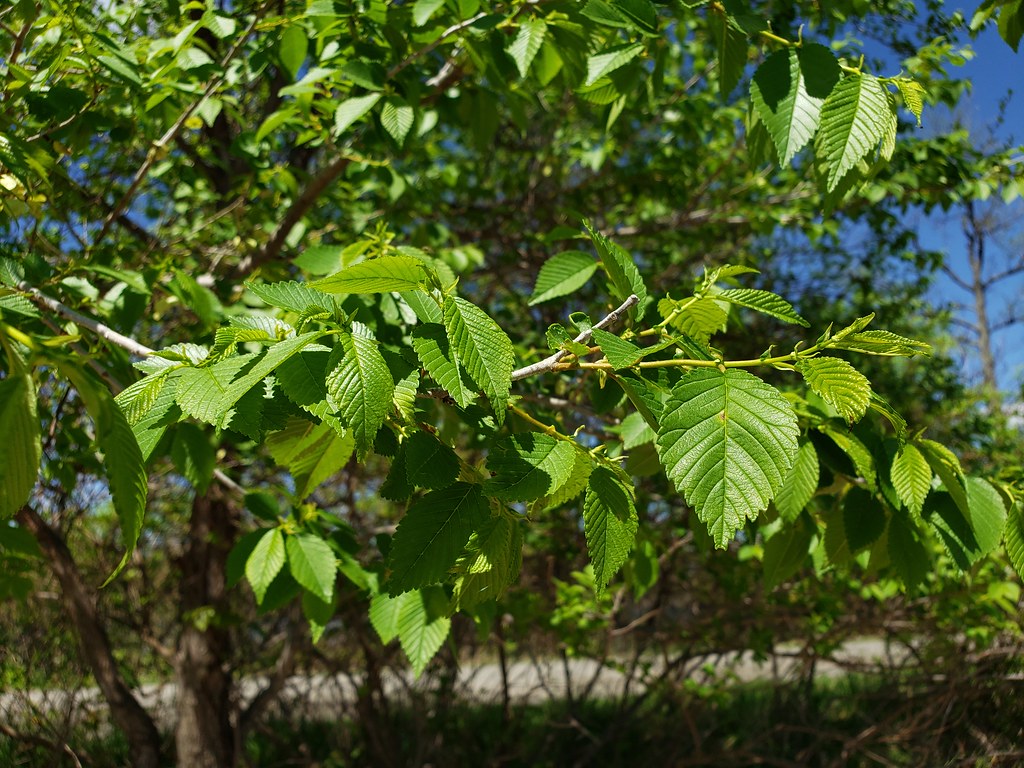
When I write about the uses of invasives, I can usually count on getting a lot of hate. So I’ll say this up front: I am thoroughly acquainted with the awful side of the Siberian Elm, Ulmus pumila. It invades inexorably, grows indefatigably, sucks up groundwater needed by our beautiful native cottonwoods, and is generally regarded as a trash tree. It’s changed the entire ecology of the Rio Grande bosque. I get all that.

But here’s the thing: while pamphlets and online sites are devoted to how to battle the Siberian elm, the battle is over and this tree has already won the war. It’s everywhere, and it cannot be eradicated.  So as I see it, we might as well look at whether we can use it well. And since I only write about my own small home ground, I am not looking at how to use hundreds of acres of it well, but how to use it on a half acre.  It grows lustily even in our dry desert climate, and there are large areas where it is the only green thing around, so I feel a certain gratitude to it. But I don’t allow it inside my yard because I want other trees there, and because as soon as I step outside my gate, it’s everywhere.

For me, its food uses are limited. I’ve written before about the edible samaras, or seed cases,  and I won’t say more here except that they have a pleasant green mild taste and are produced in unbelievable quantities every spring, and the chickens like them as much as I do.  As I get further into permaculture I’m experimenting more with tree leaves that have culinary uses, but I can’t find anything much about Siberian elm leaves except on the wonderful site Eat the Weeds, where I find that the young leaves are edible cooked. I admit that this doesn’t sound enterprising on my part, but I haven’t tried it yet. I have so many other green things to eat that it will probably be some time before I make this experiment.  I can’t find any nutritional analysis even about their use as fodder, although I did find one reference stating that they might be a potential source of higher-protein forage for animals.

But when it comes to nutritious forage, I typically let my beloved old dairy goat Magnolia make her own decisions. And there is no question that Siberian elm is her favorite food and one of the few foods that she never gets tired of.  So over the years I have been letting Siberian elms grow up along my longest fenceline, and cutting them back above the top of the fence. New branches grow at astounding speed below the cuts, and Maggie chows them down as an almost exclusive diet all summer long. She is naturally on the thin side, but loses no weight during the 6-7 months of her elm diet, and her enthusiasm never fails. The usual life-span of a domestic goat is 9-11 years and she is pushing 13, so I don’t think it’s done her a bit of harm. The feed is free, as local as it gets, and gives me plenty of mostly unwanted exercise with the cutting and hauling. The trunks occupy the space along the hot baking hell of the open space, and I don’t give them any water so they’re surviving on what they can find on their own. There’s no doubt that they look scraggly between cuttings, but I can tolerate that to see Maggie so happy. And if I ever get hungry enough I’ll try eating them myself.

The hens also love the leaves when young and tender. They might eat the tougher late summer leaves if cut up, but I don’t bother when there are so many other greens for them.

I’m largely talking about animal feed here, but whenever I allude to possible human uses I feel compelled to say a few common-sense things about wild and unfamiliar foods:

1. Never assume that because an animal can eat it, you can eat it. Goats in particular are able to eat some plants that are toxic to other animals including humans. Magnolia’s metabolism is wired differently than mine.

2. Never assume that because one part is edible, the whole plant is edible. Black locust blossoms and elder flowers are delicious, but the leaves and stems are toxic. There is no substitute for studying reliable authorities.

3. Never assume that because other people including reliable authorities can eat it, you can eat it. Test a small amount of any new food, and wait a day before trying more.
A Quick Note on Bamboo

I love bamboo shoots, and several years ago I bought two plants of Phyllostachys dulcis, the famously invasive and delicious sweetshoot bamboo. I enriched the soil, planted and mulched, supplied plenty of water, and waited confidently for them to invade, so that I could start eating. Four years later the two plants are a scraggly 5’ tall each. Each year one or the other, but not both, makes exactly one spindly shoot which often follows a kamikaze trajectory toward the goat paddock.   In all this time, I have eaten exactly one bamboo shoot. It was very good, but a pretty poor return on investment.

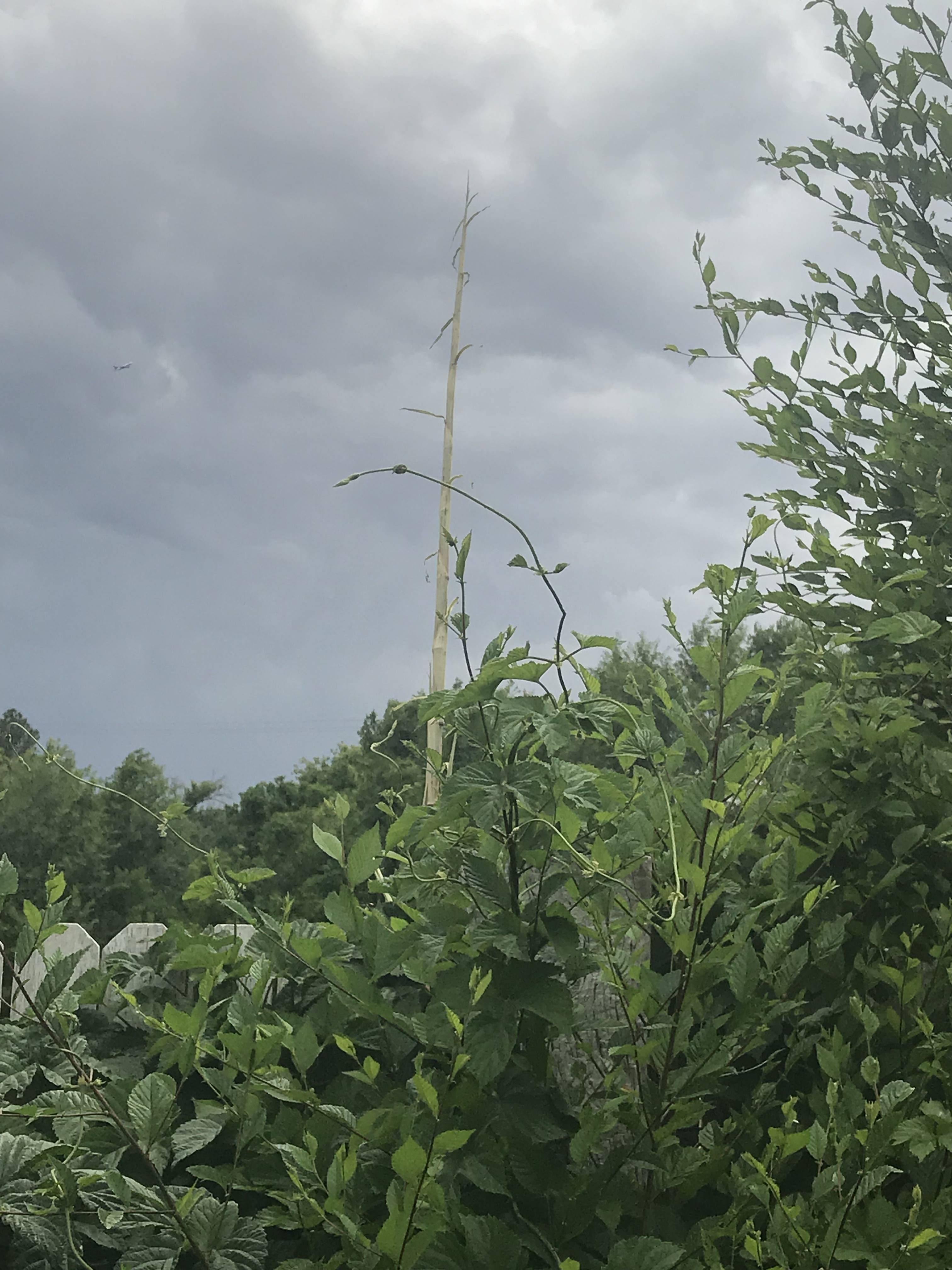
This May, after a few days of absence from the garden, I was looking along the fence row inspecting hops vines  when outside my fence, in the desert open space, I saw a startlingly robust bamboo shoot almost 20 feet tall.  Phyllostachys dulcis is spreading out into an area that is impacted, alkaline, and gets only our natural rainfall, which is 10 to 11 inches per year.  In short, it is a bamboo’s version of Hell, and yet this is where my expensive and pampered plants have chosen to stake their claim.

Plants are naturally perverse, and the more you want a particular plant to flourish, the more perverse it typically becomes.  It is as if they thumb their noses at the whole concept of domestication.  But next spring I will watch the desert strip outside the fence and see if the miracle repeats itself. If so, I may finally harvest enough bamboo shoots to be worthwhile.  If it finally begins to behave like a real invasive, I can always take my goat out on a leash to teach P. dulcis some manners.

I should add that if you don’t live in the desert, you can’t afford to be cavalier about invasive plants. Be aware of your neighbors, don’t invade their space unintentionally, and if you plant an invasive bamboo you really need to create proper rhizome barriers. My P. dulcis  plants have a foraging goat between them and any neighbors, and the part of the open space they are growing into actually belongs to my property. I doubt that they can get far on 11” of water annually, but if they show truly invasive behavior out there I have room to make a concrete barrier.  I have never seen a bamboo get out of hand here in the desert, and don’t anticipate it happening now, but I’ll act assertively if it does.

The Greens of Early Summer

I love leafy greens and consider them one of the healthiest foods in the world, as long as they were raised in a clean fashion.  If you are lucky enough to have a garden and an active permaculture property, you can nearly always eat some greens but the source of your greens changes throughout the growing season.  Right now, we are in the glory season for lambsquarters, and they are everywhere and are at their tender best right now. I eat huge quantities of them, but I have written so much about them elsewhere that in this post I will say very little except: for the sake of your health and your palate, learn to identify them, harvest them, prepare them, and eat them.

Today I decided to write about some uncommon greens which are unique to the season.  Americans don’t think very much about eating the leaves of trees, but some of them are very appealing, and my favorite “tree green“ is the young sprouts of mulberry trees.  It is almost never possible to gather good edible leaves from mature trees. The best mulberry greens are the tips of actively growing shoots from trees that have been cut back, and I am lucky because on the walking trail near the river in my area, several mulberry trees have been cut back to keep them from impinging on the trail. They produce a forest of new growth, and it is the tips of that new growth that are good to eat.   Harvest only as far down as the stem can easily be snapped with your fingernail. If it bends or creases instead of snapping, go further up toward the tip.

Incidentally, there is some pretty ridiculous stuff on the Internet to the effect that mulberry leaves will get you high or the water from cooking them will. Utter rot.  This is one of those unfortunate cases of one writer printing a piece of misinformation and dozens of others picking it up as gospel.  I have been eating young mulberry tips for decades, and nothing remotely interesting has ever happened as a result. Euell Gibbons ate them, Samuel Thayer eats them,they are used as a tea throughout Southeast Asia,  and there is no reliable report anywhere of them causing hallucinations. You must always do your own due diligence and make your own decisions, but I simply don’t worry about it.

For a quick lunch for two, I gathered a double handful of mulberry tips. I washed them and cut them in fine cross sections of less than a quarter inch, chopping a large bunch at a time.     Then I considered what else to add.

I could’ve used sorrel for a tart element, but since the leaves on my petit syrah grapevine are young and tender, I decided on several of them.  Wash them, stack them, roll them up like a cigar, and sliver them very thin with a sharp knife.

For flavoring, garlic is always a favorite of mine, and right now the garlic is forming bulbs but they are small and the skin is still young and tender. I pulled an entire head since they are mild this early, peeled off just the toughest outer layers, and sliced the rest finely in cross section and chopped it. The material that would later become the skins is full of allicin, and is very desirable.  But I also wanted some herbal flavor, so I grabbed the top of one of my bronze fennel plants. At this time of year, when it is getting full and bushy, bronze fennel is so ornamental that I can hardly stand to use it, but it tastes good so I try to overcome my scruples.

I decided that I wanted a texture element, and this time of year my favorite crisp texture is the scapes of last year‘s leek plants.

Cut them before the bulb on top begins to open, peel off the very tough outer skin, and then use a vegetable peeler to get all stringy bits off.

As I got ready to cook,  I decided to cut the stalks in quarter inch  cross sections because it would go better with the other textures. The taste of leek stalks is soft, oniony, and sweet.

First heat a skillet over medium heat.  Then add your oil of choice. I used a mixture of olive and avocado oil.  When the oil is hot, put in the chopped garlic, leek stalk pieces, and fennel.  Sauté until the garlic looks cooked. Add the chopped mulberry leaves and grape leaves, and because the texture of mulberry leaves tends to be dry, I added a quarter cup of water at this time.  Add salt to taste, and sauté until the greens are cooked to your liking and any added water is cooked away but the greens aren’t too dry. Personally, I like tree greens a bit on the done side, since they tend to be a bit chewy when cooked al dente.   Taste for seasoning, and then set your greens mixture aside in a bowl, reheat the skillet, put in a knob of butter, and scramble whatever you think is the right number of eggs for two people.  When cooking for my husband and myself, I always use a mixture of three eggs and three additional egg yolks, beaten together with about a tablespoon of cream.  When the eggs are scrambled and have less than a minute left to cook, return the greens to the pan and stir the mixture up together, but you want discrete lumps of egg to remain among the greens.   Serve onto plates, grind over fresh pepper to taste, and salt as needed.

Besides mulberry and  grape leaves, I’m giving thought to other climbing perennials or trees that might be useful for greens.  I have a linden tree that I planted specifically for greens, however the texture turned out to be somewhat mucilaginous and if there is one thing I dislike, it is what my husband calls the “mucoid food group.“  They are fine in a salad when young, but I don’t care for them cooked at all.  I am beginning to eye the shoot tips on Siberian elm trees that have been cut back. My goat and chickens eat them in huge quantities, and maybe I could too,  so I have been searching for data, especially because this is an enormously prolific trash tree in my area.  According to the website Eat the Weeds, run by the prolific and reliable Green Deane, the very young leaves of both Siberian elms and Chinese elms are edible and can be used interchangeably with each other. So I will be trying that in the future. I’ll report back.

Passing pleasures: Hops shoots

Many years ago I planted hops vines along my fences, planning to use the flowers for brewing. Not long afterwards, I gave up beer for weighty reasons, but in my difficult climate I’m not likely to get rid of plants that grow lustily with no attention. There was also the delightful bonus of hops shoots every spring. Gather the young shoots by snapping them off at the point where they snap easily. This is usually about the terminal 6-7 inches of the vine.

When it comes to cooking them, I’m very opinionated. After trying other ways, I’m convinced that this way suits their rich-bitter flavor best. Rinse the bundle of shoots and cut them in cross section, 1.5-2 inches long. Heat a large skillet over medium-high heat. You don’t want to crowd the pan too much. A 12” skillet is right for one large bundle of shoots.  When the pan is hot through, add a glug of good olive oil, swirl it around, and add the shoots. Toss them around, sprinkling them with a good pinch of salt. Toss the shoots every couple of minutes.

Here’s the part that many find difficult. When they look like this, keep going. Taste them at this stage and, if you like them you can stop here, but I think that you haven’t yet tasted hops shoots at their best. Instead add a pat of butter, at least a tablespoon, and keep cooking.The butter will brown a bit and is important to the flavor.

This stage, in my opinion, is their point of perfection. They have shrunk considerably. The stems are browned in spots and many of the little leaves are brown and crisp. Taste for salt and serve. I find them delicious. They are especially good alongside ham or bacon, and I like them with fried eggs for lunch.

Hops plants are known to contain an estrogenic compound and chalcones. The latter are an interesting group of chemicals with anti-tumor properties, and you can read more about them here. What this means in practice is anybody’s guess, and my own opinion is that it means very little, since the shoots are only in season for about 3 weeks and no one person will eat enough of them to make much difference one way or another. They are a springtime gift of the earth, thrown up exuberantly in great quantities with no effort on the gardener’s part except providing them with something to climb on, and I cherish them as such.

If you plan to grow them, remember that hops are intent on world domination and need a sturdy support. Also, they spread and come up in unexpected places. This is fine with me, since I keep a very untidy yard anyway, but if you like things to stay neatly in their assigned places, the bold independent nature of hops may not be to your taste.