Archive for the ‘edible landscaping’ Category

Fava Beans, and Oyster Mushrooms

june 2009 017
Fava beans are a chic ingredient these days, but they’re more versatile than people realize. I learned this when I came across the leaves being sold at the beautiful farmer’s market in San Francisco as a salad green. I bought some and loved them, so this year I set out to grow my own.

In February I planted eight seeds of Broad Windsor fava beans in one of my large containers, about six inches apart. All of them sprouted, and I let them grow unchecked until they were nearly a foot high. At that point, I cut two of the plants and used all their leaves for an early salad, along with some romaine lettuce. The leaves are very mild in flavor and have an appealing tender texture. They marry well with a wide variety of other salad ingredients, including the delicate ones like butter lettuce, mache, and pansy leaves. Vinaigrettes that aren’t too strong and contain a little nut oil or a light, flowery Provencal olive oil work well.

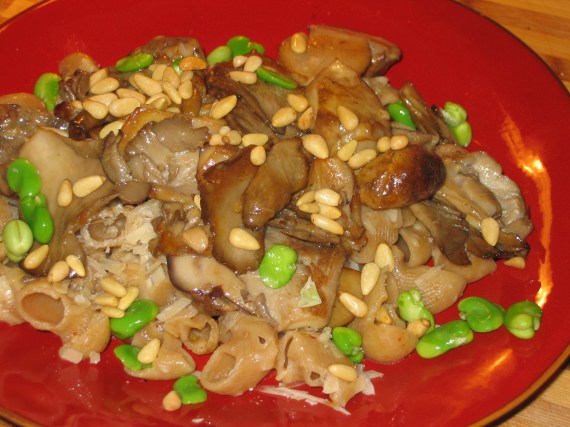
I let the remaining plants grow until they had bloomed and set small pods. At that point, I cut off 6-8 inches of the tops of those plants, above the pods, and used the leaves in salads, which did no discernible harm to the maturing pods. As soon as the pods were filled out and I could feel beans inside about half to three quarters of an inch across, I picked the pods. A traditional Italian way to eat them is by themselves, raw on the plate, with thin slivers of young pecorino. It’s very good, but I thought they were great in this mushroom pasta. It’s vegetarian but has a substantial, meaty quality, and the slight delicious bitterness of the raw young fava beans is just what’s needed to give dimension to the flavor.

During the winter I grew my own oyster mushrooms but while the farmers markets are open I get them from Exotic Edibles of Edgewood, which is a good deal easier. You can find Scott and Gail, our local mushroom mavens, at the Downtown growers’ market on Saturday mornings.
Click here for the recipe! Continue reading
The First Tomatoes

july 2009 009
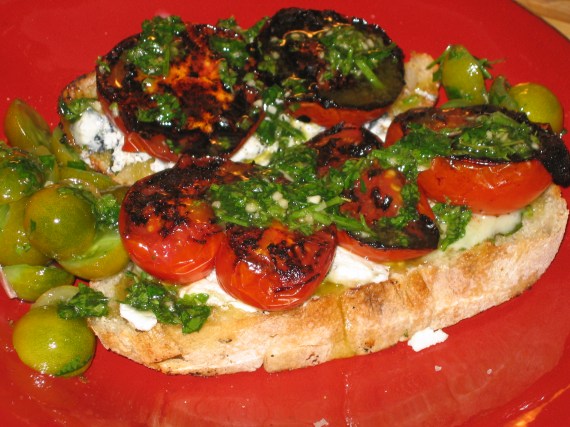
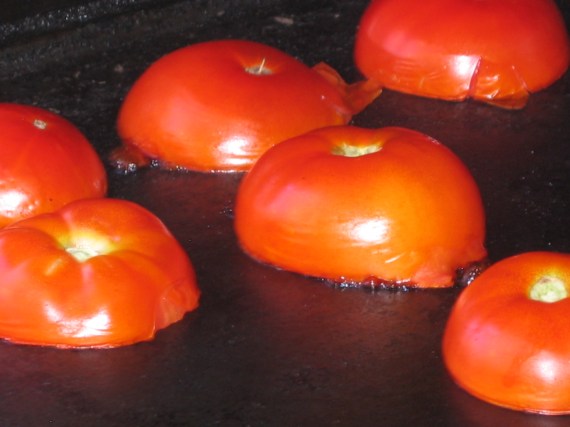
A grill offers wonderful vegetable cooking options. It’s a pity that most people only cook meat on their grills, because grilled vegetables make wonderful and satisfying summer meals. If you are a grilling enthusiast, or would like to become one, I highly recommend the elegant cookbook by Francis Mallmann Seven Fires: Grilling the Argentine Way. My husband, the family grill-wallah, was intrigued by the directions for Burnt Tomatoes, and set out to make a great tomato sandwich. All the hot work stays outside, and your kitchen is spared. Of course you can buy tomatoes at the Farmers Market if you don’t grow them yourself, but if you plant a few around your house, you’re likely to realize why they were grown as an ornamental even back when they were thought to be poisonous.
july 2009 004
Click here for the recipe! Continue reading
The Joys of Summer: dinner on the grill

june 2009 033

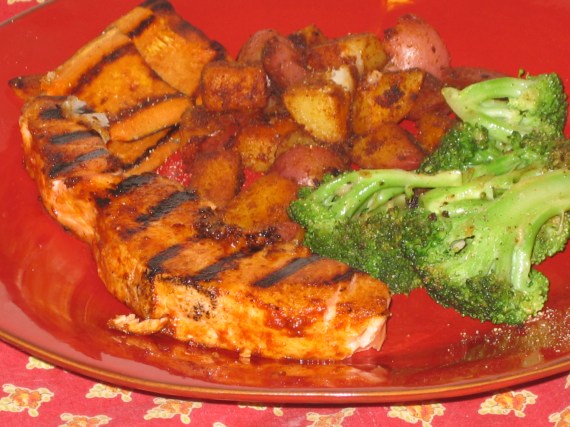
When it’s too damn hot to heat up the kitchen, the pleasures of summer dinners are just getting started. My garden is producing huge beautiful heads of broccoli right now, and the blossoms have died off the potatoes, indicating that I can start digging new potatoes. You can go to the Los Ranchos or Corrales farmers markets and find the Fishhuggers, Kenny and Brenna, who will sell you a splendid King Salmon “breakfast” steak from a fish personally caught by Kenny. They do beautifully on the grill. Add one large sweet potato and you’re all set. The small amount of prep work can be done in the morning, before the heat starts, and then the entire meal is finished on the grill.  If you read my earlier post (“The First Garlic,” three posts ago)and made garlic confit, you have a head start on the prep work. 

King salmon is loaded with omega 3 fatty acids, and personally I would rather eat delicious food than take pills, so for me the choice to eat Kenny’s wild-caught sustainable Alaskan fish whenever I can afford it is an easy one.

This meal is especially nice if you need to feed vegans and vegetarians as well as fish-eaters, because the vegetables are so satisfying by themselves.

Clich here for the recipe! Continue reading
The Jewels of Summer: flowers and local food

june 2009 026

Now that the idea of local food is popular, a backlash is detectable. I’m beginning to see comments and articles attacking the  idea of obtaining all your food locally. I’m familiar with the debate technique of building a straw man and knocking him down, so this doesn’t especially surprise me; caricaturing your opponents’ views is a way to make them seem ridiculous. All I will say in this context is that few of us obtain all our food locally, or want to. Coffee, chocolate, wine, and olive oil are among the foods that I love dearly and will happily buy from other areas. On the other hand, local fruits and vegetables are fresher and superior, and we have some truly superb grass-fed local meats available. If you aren’t ready to make a big lifestyle change, try shopping at one farmers’ market a week and cooking what you find. If you want the cooking done for you, try one of the prepared foods, cheeses, or breads.  Don’t go there with strong notions about what you should eat. Instead, look around and see what you want to eat.  Local farmers and artisans will benefit, and so will you.

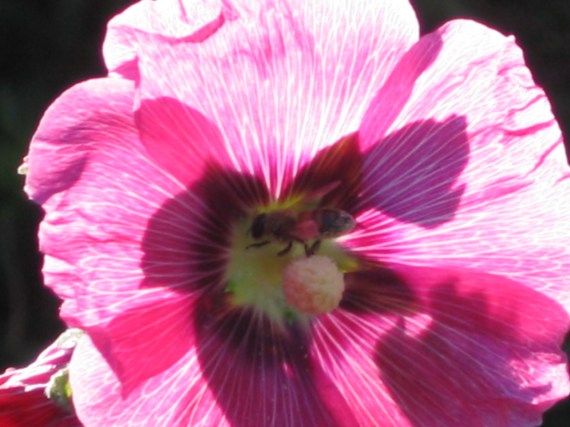
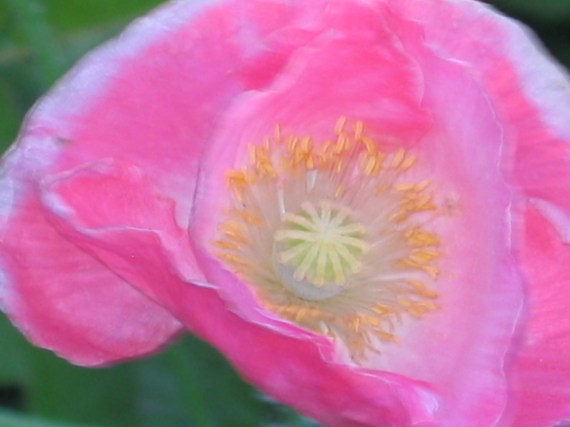
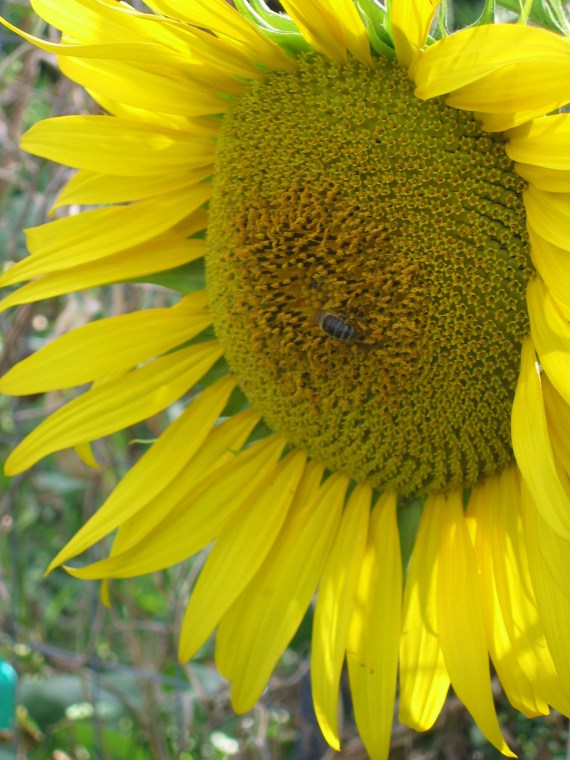
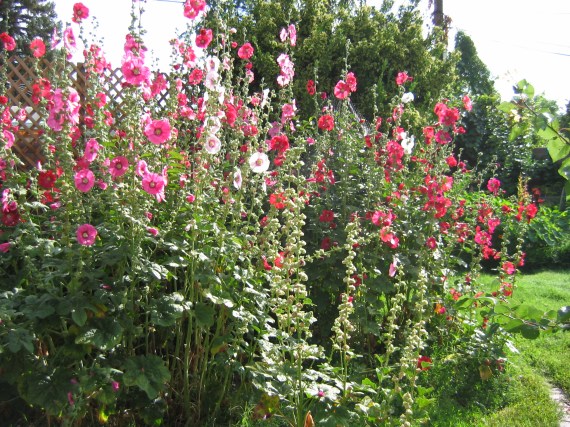
If you don’t want to try any  local foods, buy some local flowers. One of the greatest pleasures of my gardening  lifestyle is eating my own food on my patio among my own flowers. Beauty feeds the spirit as surely as vegetables feed the body, and our local seasonal flowers didn’t require greenhousing, pesticides, fertilizer, petroleum fuel, or poorly paid labor to reach us. The flowers are the fringe benefits of  growing locally, and sometimes they are beautiful enough to stop you in your tracks, which can only be good for your health.

june 2009 035

june 2009 036

june 2009 024