Like most Louisiana natives I love eggplant, and I have fervent opinions about how it should be prepared for cooking. For any application in which it is to be sautéed, I believe that it must be salted and drained first. This is not to get out bitterness, as some cookbooks say; a well-grown eggplant of a good variety doesn’t have bitterness. The disgorging process gives the eggplant a better texture, almost silky, and in my view is not optional.
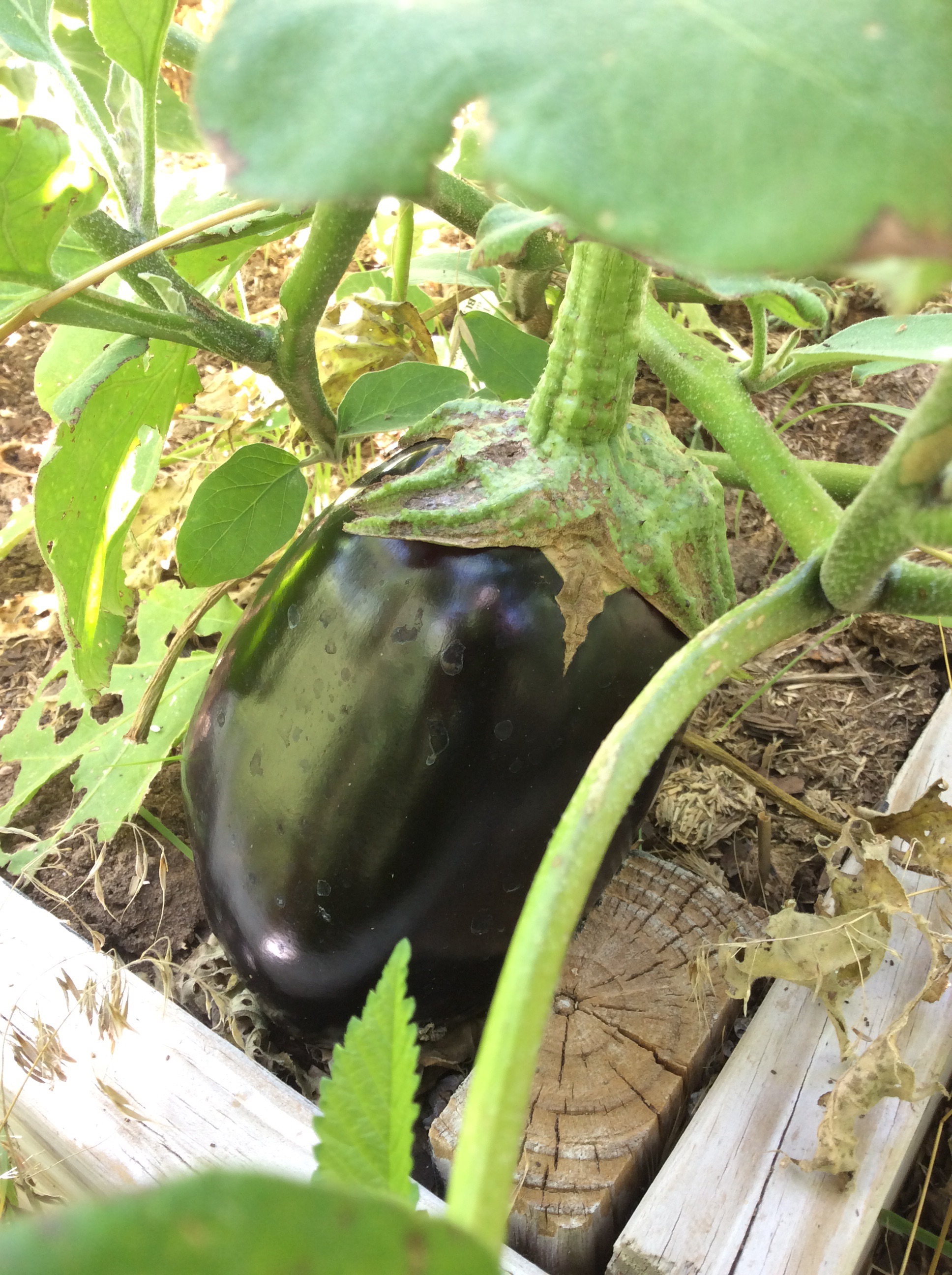
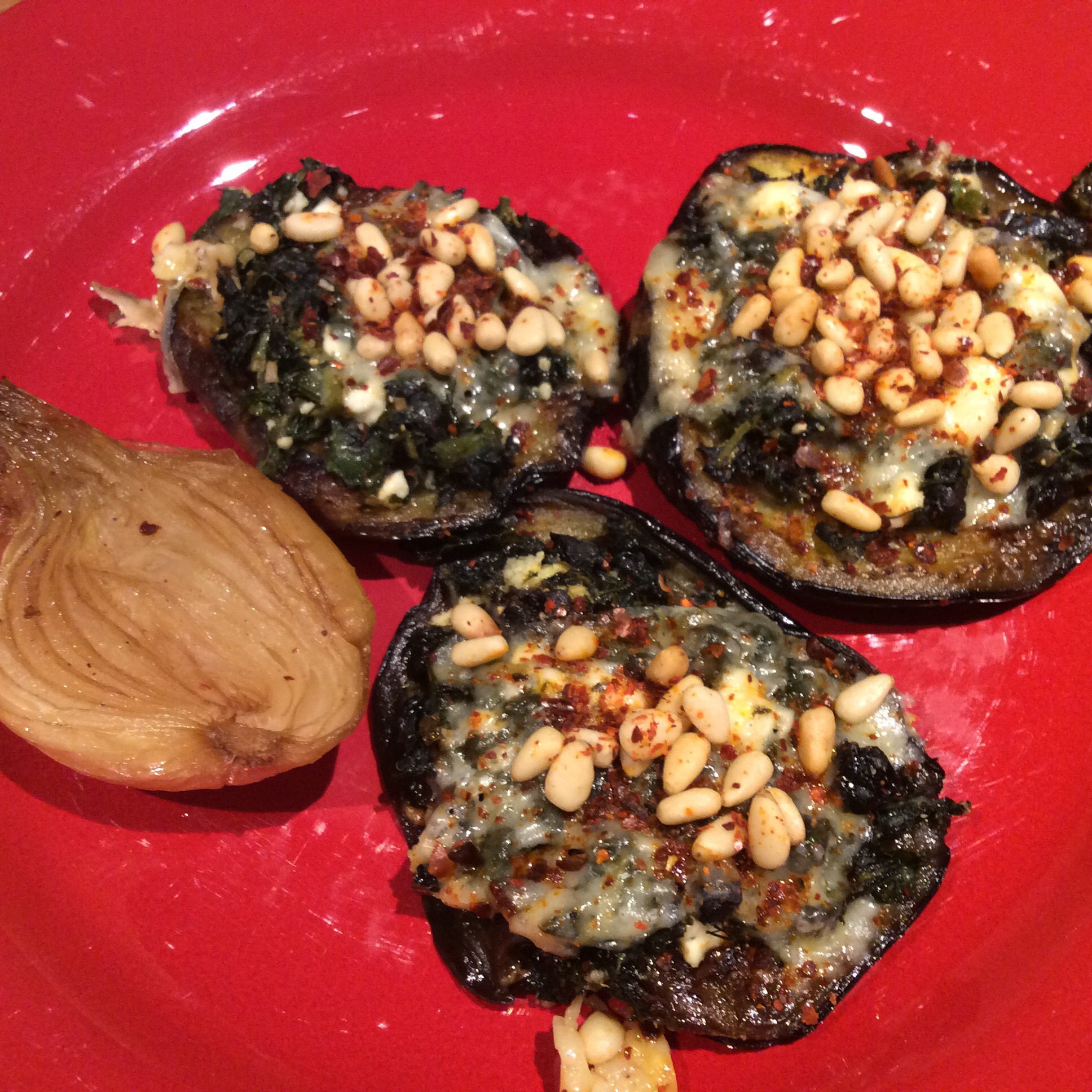
For this dish, I cut an enormous yet still young Black King eggplant into thick meaty slices about half an inch thick. I salted them liberally on both sides in the morning, stuck them in a bag in the refrigerator, and in the evening laid them out in a single layer on half of a clean towel and pushed down hard on the slices with the other half of the towel, pressing out as much liquid as possible. Now sauté them in olive oil over medium-high heat, laying them out on a baking sheet as they finish cooking, and making sure to cook them until they can easily be penetrated with a fork. Meanwhile, decide what you want to put on them. I had some horta (cooked greens mixture) made according to the description in my amaranth post, liberally flavored with garlic, fennel fronds, and salt-cured olives, and decided to use that. Other possibilities include leftover cut-up meat or chicken with herbs, scrambled eggs highly seasoned with herbs, tomato sauce, or whatever. I mixed the horta with crumbled feta for a little pizazz. Top with cheese ( I used an artisanal cheese similar to Parmesan) and pop in a 425 degree oven for 25 minutes or so. Pull them out, top with pine nuts or your own favorite nuts and a lavish sprinkle of Maras pepper flakes or other good red pepper flakes, and put back in the oven for a minute or two. I added some roasted onion halves on the side. Serve. Eat.
This sort of dish screams for a good smooth red wine and has to be eaten with a carefree attitude. Laissez les bon temps roulez, after all.
Archive for the ‘edible landscaping’ Category
31 Jul
The Eggplant Chronicles II: cooking eggplant
28 Jul
The Eggplant Chronicles I: choose your plant
For the last couple of years I’ve rolled my eyes over the phenomenon of grafted vegetable plants, and griped lustily that there is nothing difficult about growing tomatoes or eggplants, so why would anybody fall for the grafted ones? Then I saw a picture of the extremely deep rootball that the grafted rootstock develops and began to ponder whether this might be really advantageous in my very hot dry area. So this year I tested two grafted eggplants, one Millionaire ( a Japanese-type eggplant) and one Black King. I planted several standard Millionaire and Ichiban plants for comparison.
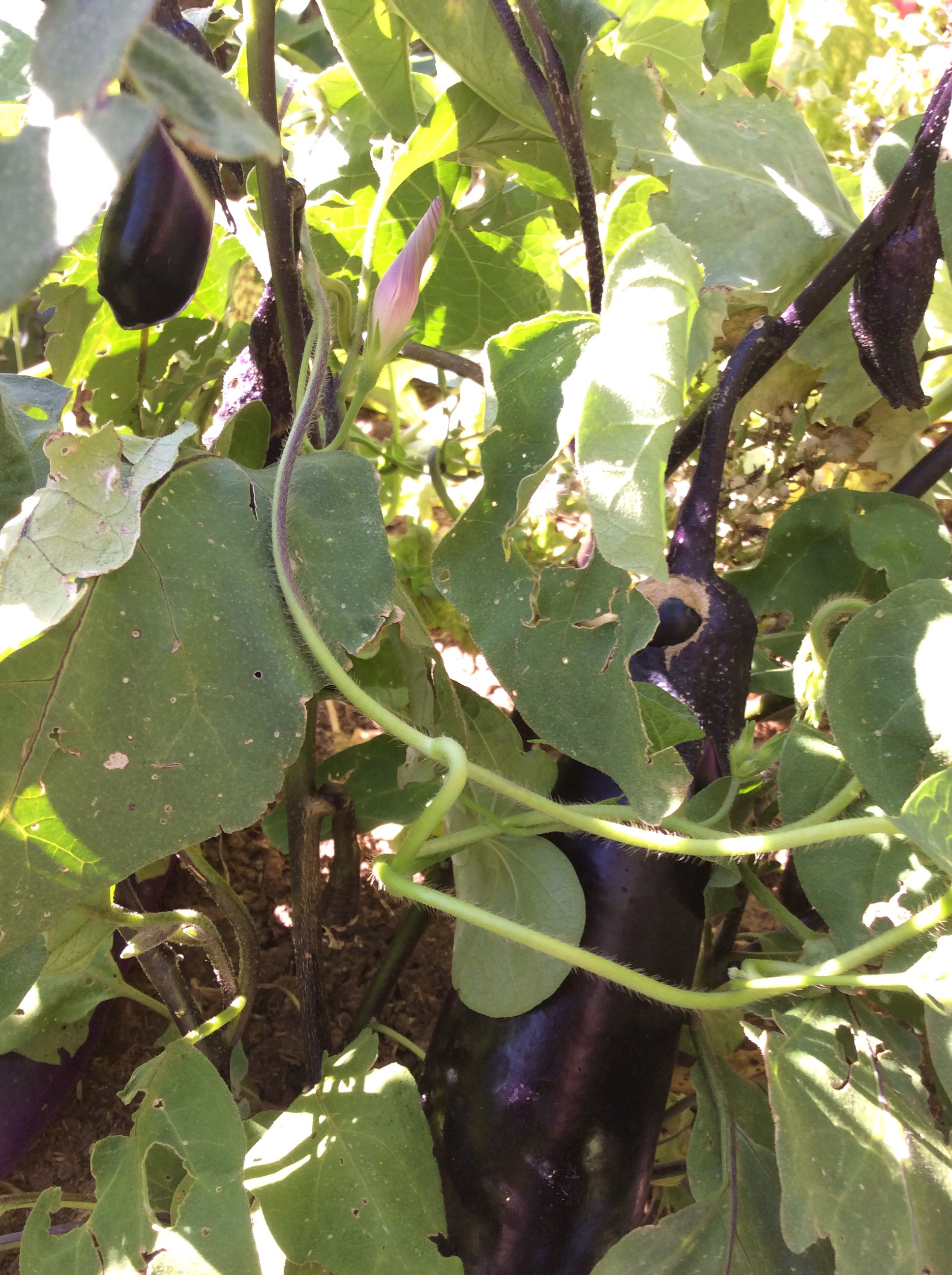
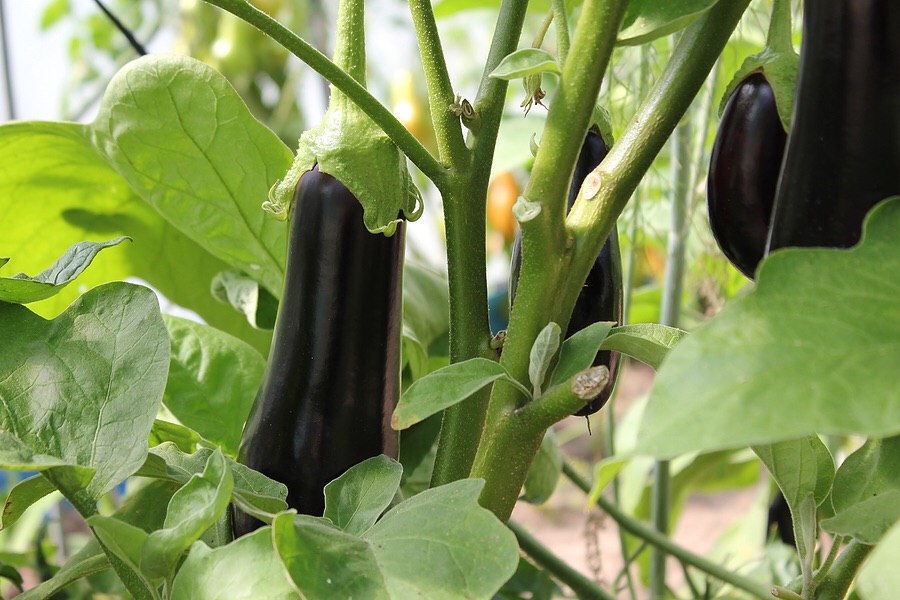
So far, the grafted Millionaire is out-producing the ungrafted Japanese eggplants at a rate of three to one. I don’t know how well you can see them in the picture above but the plant currently has five eggplants in various stages and is covered with blossoms further up. This one plant would have been plenty for us. The Black King seems sturdier than large eggplants I’ve grown in the past and is holding its enormous fruit without flopping.

So I will be planting grafted eggplants again. They cost just about twice as much as the ungrafted plants that I bought from a good local grower, but they are producing three times as much eggplant in less space. The two grafted tomatoes that I tried don’t seem to be outdoing their nongrafted kin at this point, but the jury’s still out. Also, one growing season isn’t a true test. But I’ve seen enough to be intrigued.
There are a lot of kinds of eggplant. The only types that I grow these days are the resplendent big Italian types and the long slender Japanese types. My preference is for meaty eggplants from which I can carve out big luxurious eggplant steaks. If your cookery leans Asian, you may be interested in the tiny bitter Thai eggplants and the dozens of other Asian types.
By the way, eggplants are highly ornamental at nearly every stage of growth. No need to stick them in the back yard.
27 Jul
Breeding a Landrace II: the unexpected bonus

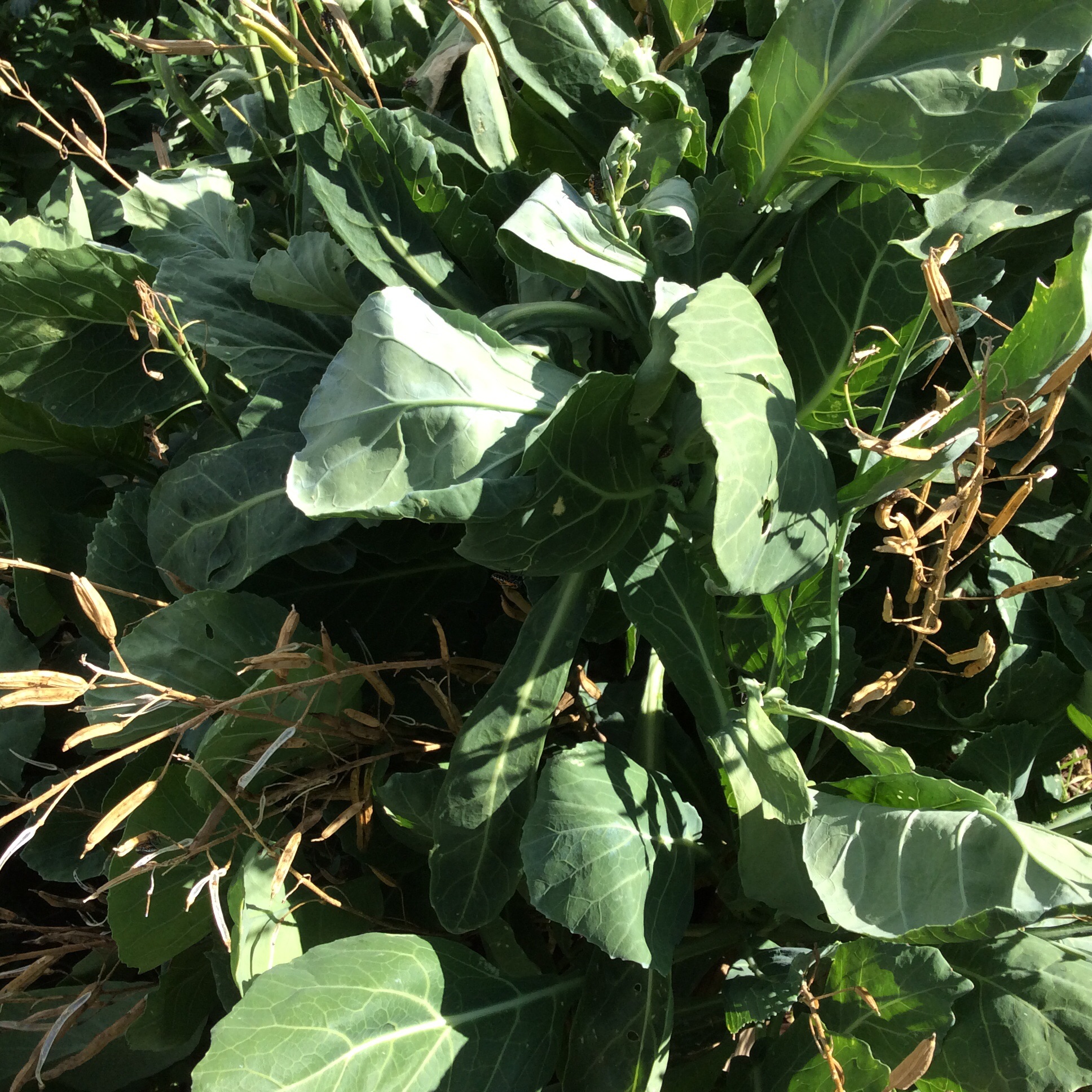
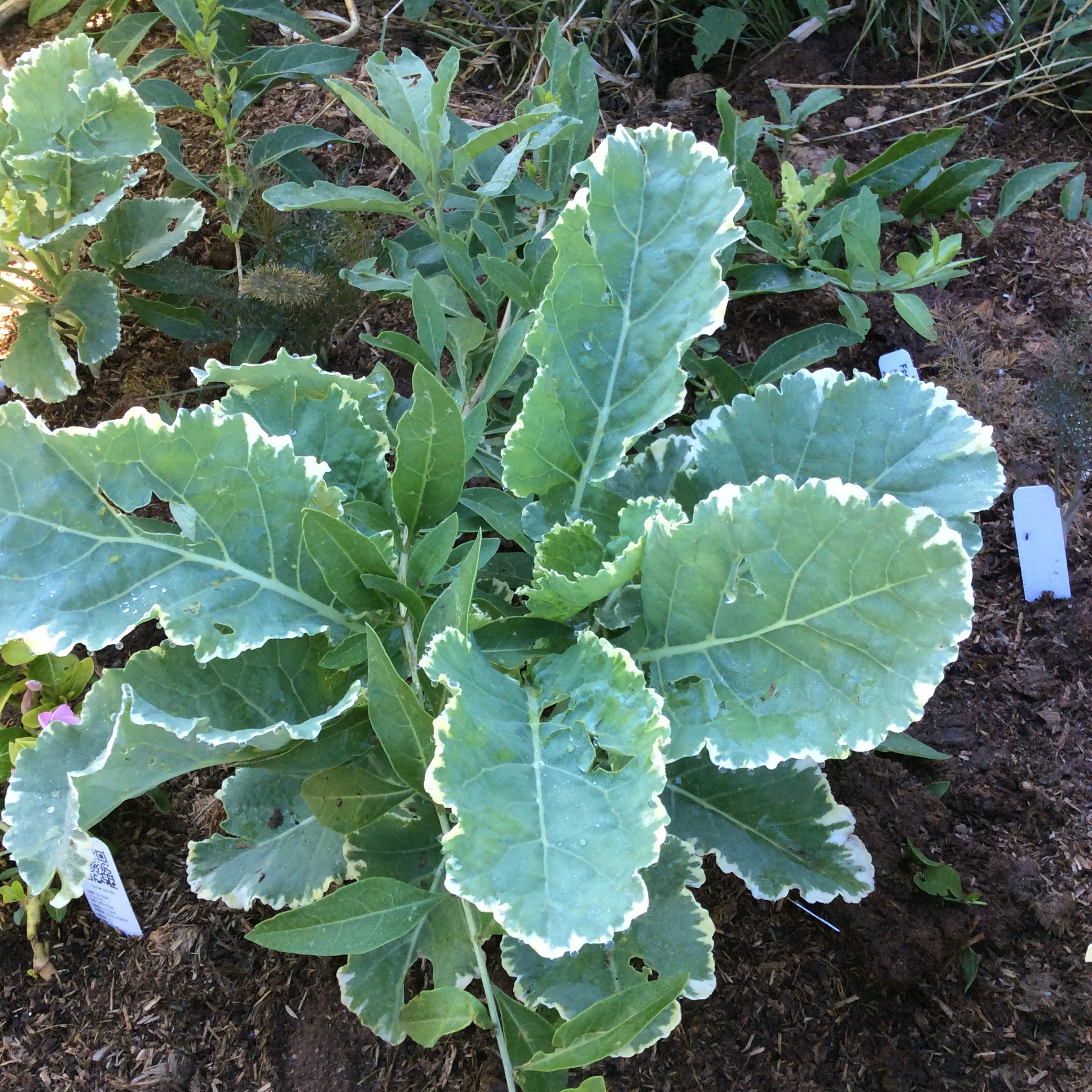
I have written recently about breeding my own brassica landrace, and I was happy enough that some of the plants survived the winter, made a nice crop of spring greens, and set seed. Since then, to my surprise, after the seed dried down a few of the plants produced a whole new crop of tender greens. So far I have been eating greens from these three plants since last summer, and they still seem to be going strong. It goes without saying that I will choose the seeds that these plants set for next year’s planting, and also will be watchful about whether they set another crop of seed and live through another winter. I am also trialing a few plants of the new perennial kale introduction, Kosmic Kale, shown below.

I wonder if the delicious third-growth leaves produced by my brassica landrace might not be preferable to Kosmic, which (so far) is not distinguished for deliciousness.
My main point is, give your plants the room and time to surprise you. If I had pulled the brassica crosses out after harvesting seed, I wouldn’t know about their delightful late-summer greens. When we let nature teach us it’s amazing what we can learn.
27 Jul
The Easiest Vegetable Dish Ever

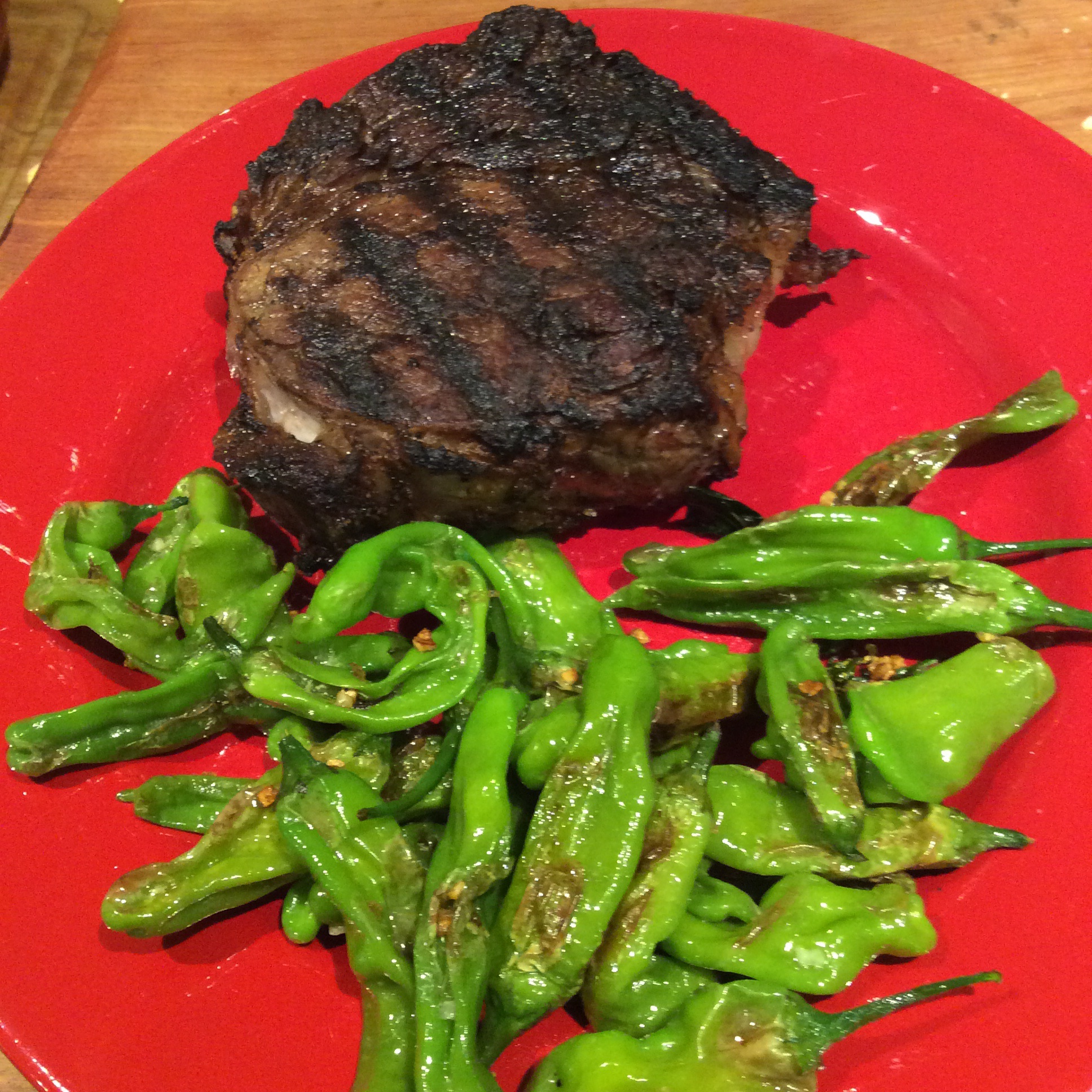
Shishito peppers are my favorite side dish for a summer steak. I put in four plants this spring, and they have provided a good mess of Shishitos for two people about every four days. Cooking them well involves three steps:
1. Pick
2. Rinse
3. Throw in a hot frying pan with a glug of good olive oil and shove around the pan with a spatula, turning them about once a minute. Keep the heat high. They will hiss and spit. When they look cooked all over, and a bit blistered in places, sprinkle generously with fleur de sel or other coarse mild salt. Pile on the plate and eat with your fingers, leaving the cap behind.
That’s it. If you are determined to elaborate, you can throw in a little finely chopped garlic for the last minute of cooking (no sooner or the garlic will burn.)
If you only have a few of them, use your smallest skillet and call them a cook’s treat, eaten privately in the kitchen. I say a serving of them is about 18. Other people may be more moderate in their tastes.
If you are a thrill-seeker you can seek out pimientos de Padron instead, but the last time I grew those, not just some but all of them were hot as blazes. So I’m giving my GI system a rest with Shishitos.