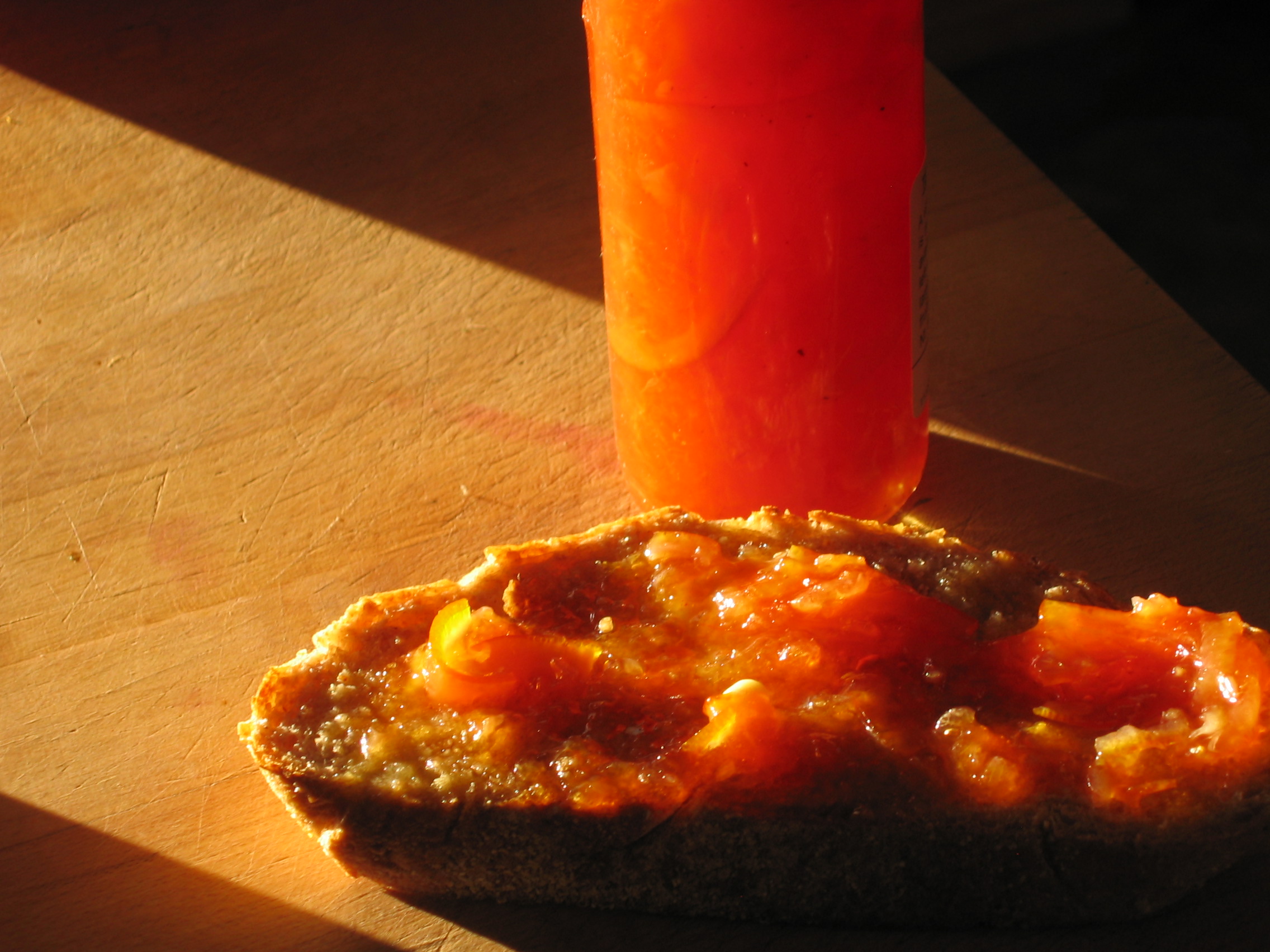
In my last post I discussed the virtues of freshly squeezed blood orange juice, and encouraged you to eat them up during the few short weeks that we can get them. In this post I’ll talk about how to preserve them so that you can spread your morning whole wheat toast with exquisite marmalade long after the season is over.
First, the disclaimer: nearly all my ideas about marmalade came from John Thorne, a remarkably quirky, idiosyncratic, and interesting food writer. I strongly advise getting his book Mouth Wide Open and reading the chapter “Maximum Marmalade,” because you’ll learn good marmalade-making technique, get all the comments and asides of a working cook in his element, and have a great time. I happened to reread his book at a time when I was thinking about the concentration of beneficial flavanoids such as naringenin, hesperidin, and rutin in citrus peel, and wondering how to make them taste good. Naturally, a chunky and delicious marmalade was the way to go.
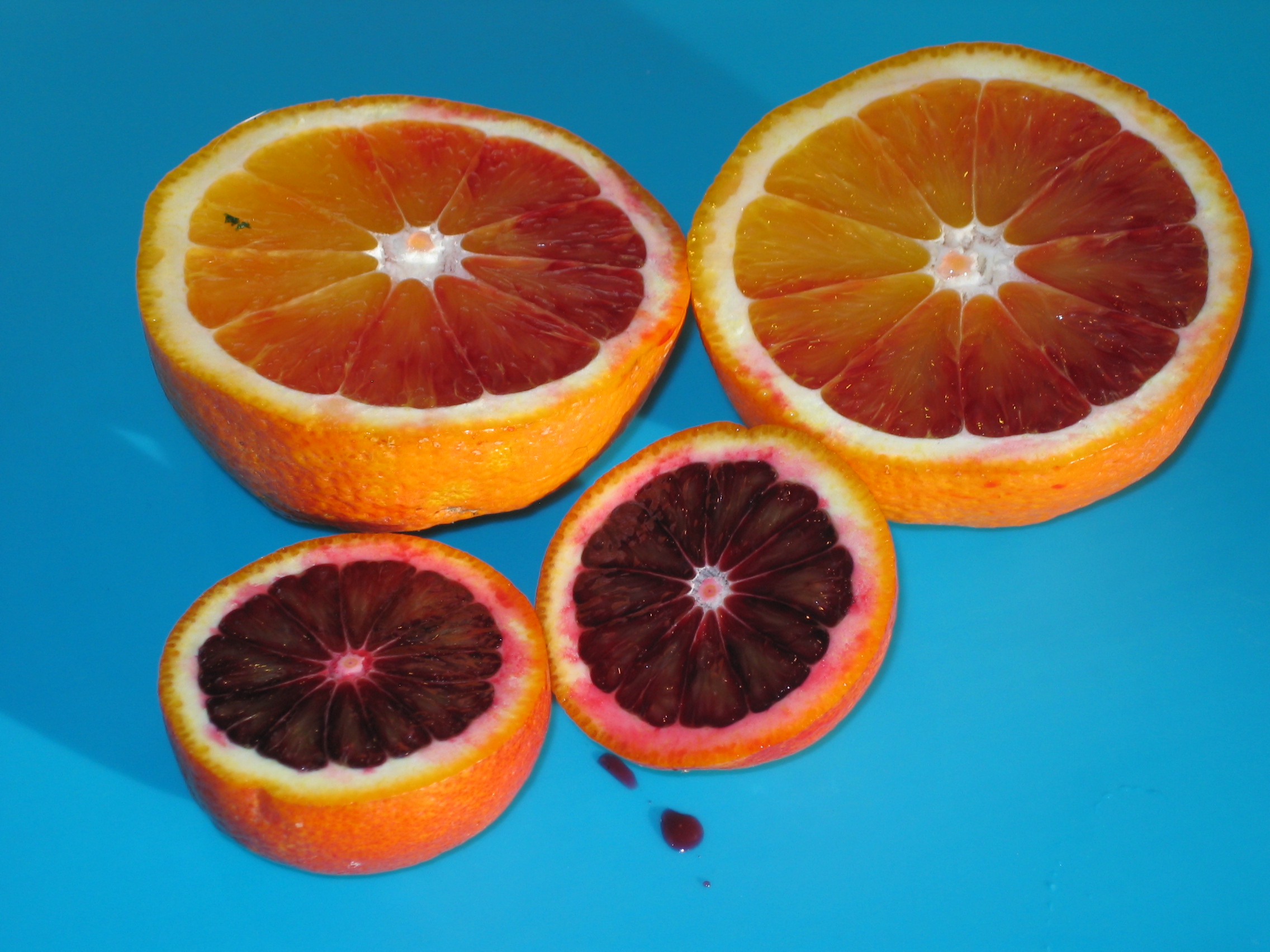
First, catch your blood oranges. There are two basic types on the market right now, one the size of a lemon or a little bigger, deep red inside, and filled with tart juice with a definite note of raspberry. The other is the size of a navel orange and only lightly blushed inside, and the juice is sweet. The former type is best for marmalade. I have only found it at the Nob Hill branch of La Montanita Co-op this week, so act fast if you want to get some. If all you can find is the other kind, you can still make a great marmalade, but it won’t be quite the same. Buy about 15 of the small ones or 7-8 of the big ones. The two types are shown below:
Next, get a really sharp knife. For my local readers I advise a trip to the Santa Fe Farmers’ Market with all your knives in hand. Look for Pat Romero’s sharpening booth, and he will sharpen them to lethality while you shop. Please let him know that Local Food Albuquerque sent you, and be damn careful when you unwrap them at home, because a knife sharpened by Pat has no margin for error.
Now wash the 4 prettiest small oranges, or the one best if using the larger sort. Cut off the two ends enough to reveal the flesh, cut in half lengthwise, and slice each half crosswise into the finest slices that you can manage. Remove any seeds, but keep everything else. Put your slices in a bowl, and juice the remaining oranges until you have enough juice to cover the slices. Cover the bowl tightly and let the slices macerate in juice overnight at room temperature.
The next day, put the entire contents of the bowl in a saucepan of at least twice the volume of the mixture, bring to a boil briefly, and simmer gently until the peel is as tender as you like, remembering that it will firm up some when cooked with sugar. When the peel is softened to your preference, measure how much orange goop you have and add 3/4 that much sugar. I recommend white sugar only, to avoid distorting the wonderful orange taste. Now bring to a boil briefly again, and cook at a fast simmer until it’s ready to gel. John’s test, which is the best one I’ve come across, is to put a heavy plate in the freezer before you start cooking. After cooking the orange-sugar mixture for 15 minutes, start putting a half teaspoon or so on the cold rim of the plate. Return to the freezer for a minute and then prod the dribble with your finger. When it softly holds its new prodded shape, it’s done. Pour it into clean jars, let cool, cover tightly, and store in the refrigerator, or see the Ball Blue Book for directions on how to heat-process so that it can be stored in the pantry until opened. In the morning, toast and butter a piece of very good bread, spread it with butter and marmalade, and eat. Oh my.
Incidentally, cooking any sugar syrup requires a watchful cook hovering over the stove to stir and prevent boil-overs. This is not a forget-it-until-it’s-done recipe. The result is worth it.
Archive for the ‘cooking’ Category
2 Apr
Passing Pleasures: Blood Orange Marmalade, and notes on sharp knives
1 Mar
The Greens of Spring: Broccoli Raab, and a brief note on spring flowers
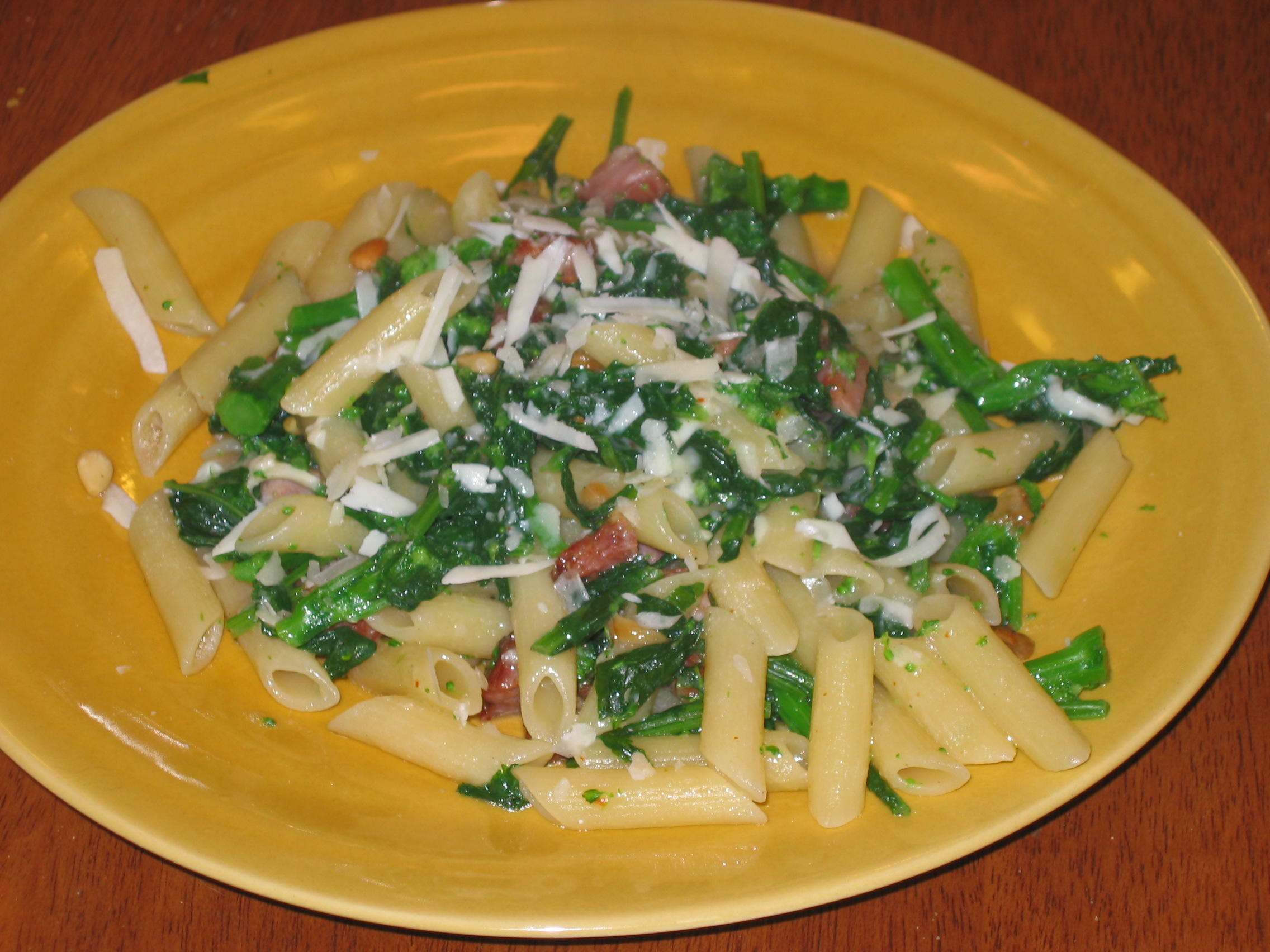
This is a good time of year to eat some broccoli raab from the store, because you may well be convinced to plant your own while there’s still time. You may find the seeds sold as broccoli rabe, broccoli raab, or rapini. This is a vigorous grows-like-a-weed kind of vegetable, but it won’t tolerate hot weather, so get it in the ground now. Direct seeding works well as long as the ground is well prepared and you keep it weeded until it’s big enough to compete. Harvest as soon as it shoots to seed; you’ll notice broccoli-like heads which can vary from the size of a nickel to 3 inches across, depending on variety and weather conditions. Harvest while the buds are still tight, before any blooms appear. Just whack off the top 6-8 inches, leaves and all, compost the rest, and you have time to grow another crop in that space. It’s a close relative of the turnip, but instead of the pronounced (some would say extreme) earthiness of turnip leaves, it has a lovely clean flavor with a slight bitterness that makes it the perfect companion for mellow pasta.
Usually I like greens in mixtures, but I prefer this one by itself. My favorite way to cook it is so simple that it isn’t really a recipe, and it’s on the plate within fifteen minutes of the water coming to a boil. The various steps fit in so well with one another that I prefer to write this as a brief kitchen story rather than a recipe. Read it through before beginning, so that the kitchen logic and logistics will be clear.
You will need: half a pound of good dried pasta, a large bunch of broccoli raab, good olive oil, red pepper flakes, a couple of ounces of good ham, Italian sausage, or pancetta (a small handful when chopped into cubes), an anchovy fillet if you like them, and a few ounces of good cheese, either Parmesan or part Parmesan and part Romano. Toasted pine nuts can be added as a bonus of you have any on hand.
Put on a pot of water to boil for the pasta. Don’t forget to salt it.
While the water is coming to a boil, chop up a small chunk of ham, or some good Italian sausage, or some pancetta, or a little slab bacon if it isn’t too smoky. Chop two large or three small cloves of garlic. Throw them in a small hot skillet with some olive oil, probably 2-3 tablespoons. Stir frequently. As soon as the garlic and meat are cooked, put in half a teaspoon of red pepper flakes and, if you like, a chopped rinsed anchovy fillet or a dash of colatura. Add a tablespoon or two of water, just enough to stop the cooking, and take the skillet off the heat. Wash a bunch of broccoli rabe, using a bunch as big as you can hold in two hands, and set it in a strainer to drain a little.
Meanwhile, the water should have come to a boil. Put in half a pound of good dried pasta. I think penne goes especially well with chunky greens. If you like whole wheat pasta, this is an especially good place to use it. Don’t reduce the heat. Keep it at a hard boil until after you add the greens.
While the pasta is boiling, cut the bunch of rapini in cross section across the bunch, slicing about every half inch. Discard the stem ends if they are more than half an inch in diameter. Five minutes after the pasta went in the water, put the chopped rapini in the water to boil with it. Once the water returns to the boil you can turn it down a little, but be sure to maintain a boil, not a simmer. Grate about 2/3 cup of good Parmesan and 1/3 cup of good Romano, or use all Parmesan if that’s what you have. These measurements refer to loosely packed measuring cups. My trip to Florence convinced me that Americans over-sauce and over-cheese their pasta. Personally I don’t meaure grated cheese in any formal way, and prefer to think in terms of two loose, scant handfuls of grated cheese.
When the pasta is ready, pour out into a strainer, return to the pan, toss with a glug of good olive oil, toss in the meat mixture and half the cheese, plate, sprinkle with the rest of the cheese, and toss some toasted pine nuts on top if you like. Eat and savor this splendid green.
By the way, I estimate that a “glug” is about two tablespoons. But in a dish like this, use kitchen sense rather than measurements. How much olive oil do you need in the skillet to keep the meat and garlic from sticking, and how much olive oil do you need to give a light delicious sheen to your pasta and greens? Your eyes are a better guide than a measuring spoon.
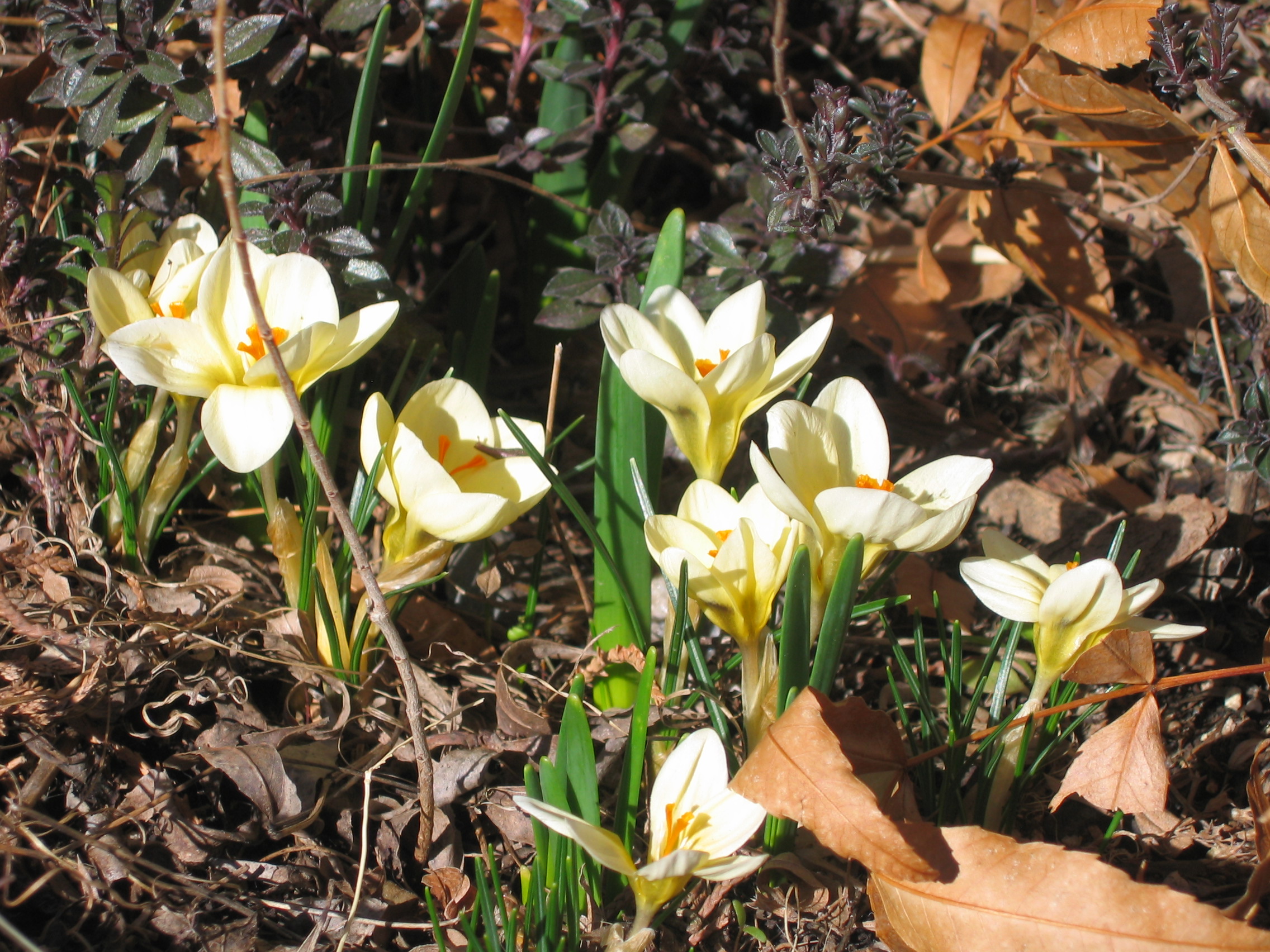
My garden is intended as a food garden, but there’s no reason why it can’t be a treat for the senses as well, and nothing lifts my spirits in late winter like bright crocuses blooming away in whatever appalling circumstances the season hands them. I strongly recommend at least a dozen bulbs of the cream-yellow Crocus crysanthus “Cream Beauty.” It’s always the first to bloom for me, and if you put it in the warmest part of your yard it will bloom in February in the Albuquerque area, a visible harbinger that your garden, like you, has survived another winter.
20 Feb
Planning Your Garden: the Weed Patch, and more on the Peruvian Purple Potato
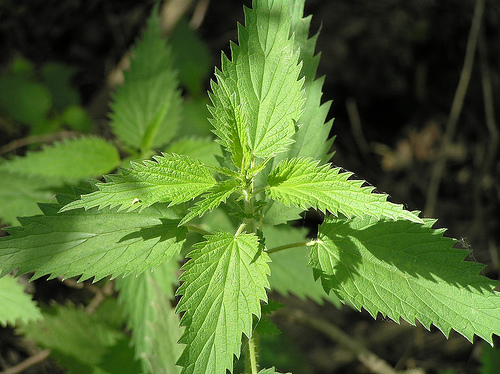
Those of you who have been following my blog for a while know about my interest in useful weeds, ie plants which thrive on neglect, spread rapidly, and are often overlooked, but offer good eating. Now that I’m planning a brand-new garden from scratch, I’m planning a “weed patch” as part of it. This will be out of the path of garden traffic so that I can have milk thistles and nettles, and screened from the rest of the property with a row of sunflowers so that nobody but me has to look at it much, and there all my favorite edible thugs can slug it out together. If you have room for a weed corner, you might consider some of these:
1. Stinging nettle. The nettle offers some of the best early-spring greens to be found. You can start them from seed (try Johnny’s Selected Seeds) or from plants (Richter’s is the only source that I know of.) They spread like wildfire, so underground barriers or a spot that you can mow all the way around are essential. See my post for harvesting and cooking details, and treat this plant with great respect, because the sting is pretty painful.
2. Curly Mallow. I like the leaves as part of a mix of greens, and it thrives on heat and doesn’t need too much water. I got the seeds from Nichols Garden Nursery years ago, and it’s been happily self-seeding ever since.
3. Milk thistle. THis will be a new one for me, but I’m told that the young shoots make good cooked greens when the prickles are trimmed off, so I’ll give it a try.
4. Sorrel. This might not seem like a weed, but it’s a healthy, vigorous, weedy-looking plant, so it can stay in the weed patch, out of the way. You can get seed almost anywhere, even from seed racks. It’s best to let it grow the first year, just removing flower stalks as they appear, and then start harvesting in early spring the second year.
5. Curled dock. This comon roadside weed is sour and bitter at most stages of development, but in the late fall and very early spring it’s one of the best greens around. Like its relative sorrel, it turns brownish-green when cooked, so I use it in mixtures of cooked greens rather than by itself. I don’t know of any source for the seeds. I picked mine by the roadside years ago, and this robust perennial has been with me ever since.
6. Dandelions. Like dock, they are actively distasteful most of the year, but in very early spring they offer delicious lightly bitter leaves which give a wild tang to a mixed salad or a little zip to a cooked greens mixture.
An alert reader let me know recently that the source I gave for the Peruvian Purple Potato no longer offers them. I save my own starter potatoes from year to year, but you can get the Peruvian from Ronnigers. They also have a splendid assortment of garlics, and some other plants of interest.
8 Feb
Tronchuda, and some thoughts on planning urban homesteads
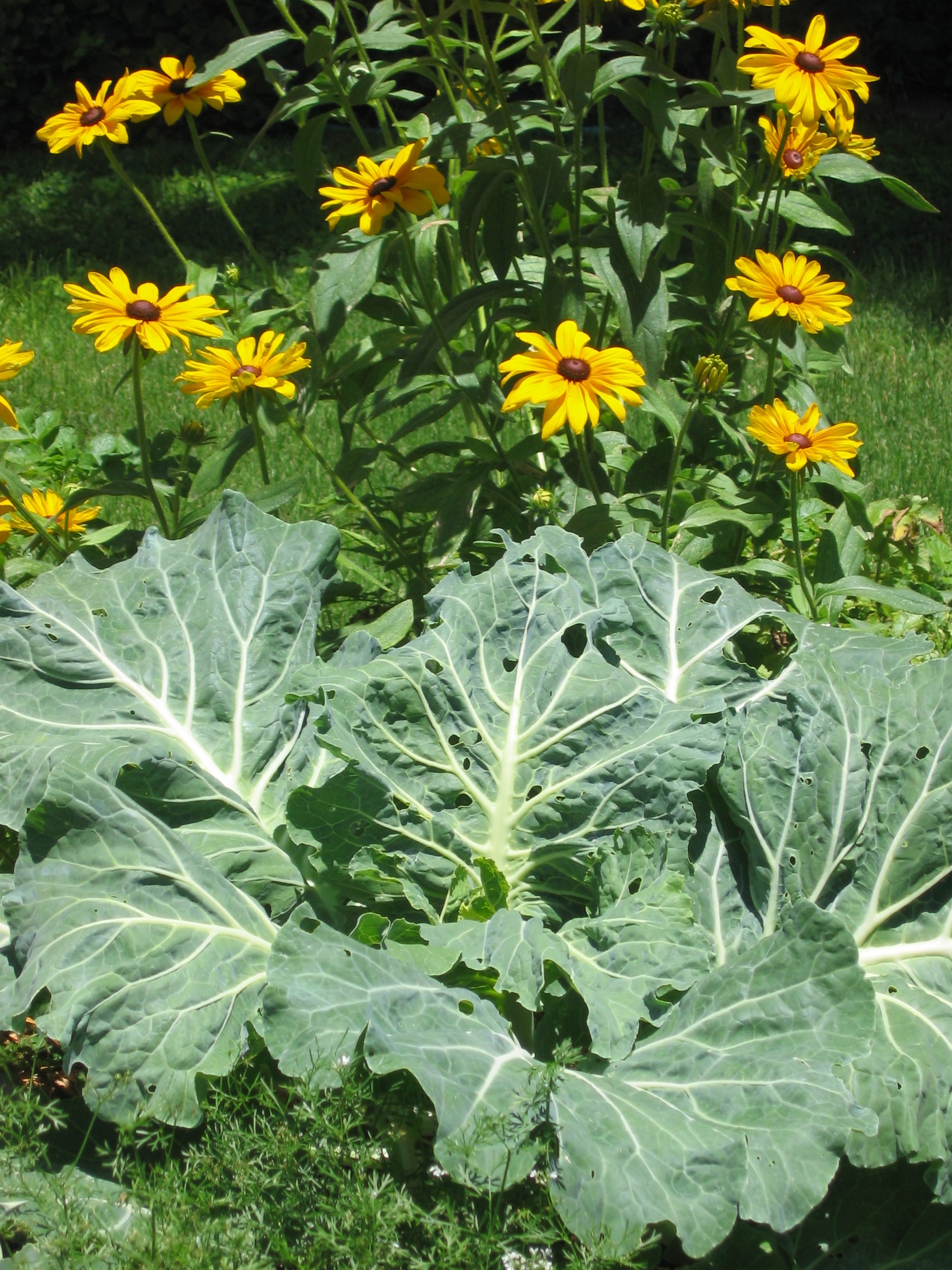
Every year I try a few vegetables that I haven’t tried before, and for 2009 one of the clear winners was Tronchuda, a giant non-heading cabbage from Portugal. I grew only one plant, and it ultimately reached over four feet across, with leaves almost 2 feet from side to side. The leaves were pleasant to eat cooked at any point, but especially good after a few frosts. I used it in the same ways as collards or kale, and also made a soup with sauteed onions and garlic, Spanish chorizo (not the Mexican soft chorizo,) good chicken broth, salt to taste, and chopped tronchuda, all simmered together until the tronchuda tasted good. By the way, this is an overlooked method for determining when green leafies are sufficiently cooked: keep tasting them, and when they start to taste good, they’re done.
I will definitely be growing it again this year, and that’s the real test of any vegetable: is it worth the garden space? Tronchuda delivers. I’ve read that the wide white leaf ribs can be cooked as a vegetable in their own right, but I didn’t care for them and composted them instead, keeping the green parts and the narrow ribs to cook. I recommend it highly for any garden. You can get seeds at Nichols Garden Nursery, a wonderful source for all sorts of odd delights.
Our own New Mexico seed company, Gourmet Seed International, offered seeds for two of my new experiments, rampion (the famous “rapunzel” of the fairy tale) and bladder campion. I’ll keep you posted.
This is the time of year to plan your homestead garden and order what you need. I’m dealing with a brand new property with no planting in place, so I’ll be starting a new mini-orchard, and I would highly recommend dwarf fruit trees for eager would-be urban homesteaders. They produce relatively quickly, look charming, and allow harvesting with feet planted firmly on the ground.
Every yard-farm should reflect what the owner and family like to eat and drink, and with this in mind I’ve decided to plant wine grapes. It will be a few years before I’m making my own wine, but the thought of my very own mini-winery has already given me a lot of pleasure and the vines aren’t even planted yet. In anticipatory value, it’s the best garden bargain I’ve had, and this may be the most overlooked benefit of urban homesteading; you spend so many happy expectant hours. The same applies to my backyard chickens, which are not yet purchased but are already clucking quietly in the back of my mind.
By the way, if you have any interest in adding livestock to your homestead, it’s worth reading Farm City . Author Novella Carpenter created a little squatter farm in Oakland, and it isn’t what most of us would want, but her descriptions of raising and killing animals for meat are accurate and unromantic (but reverent.) If you have never harvested meat animals, this is a test. If you can’t stand to read her descriptions, you probably don’t want to go into livestock. If you do go on to raise a little of your own meat, I can guarantee that you will no longer allow meat to be wasted. Once you really understand where it comes from, waste is not an option. On the other hand, you will understand the fascinated reverence with which good farmers and hunters view meat animals.
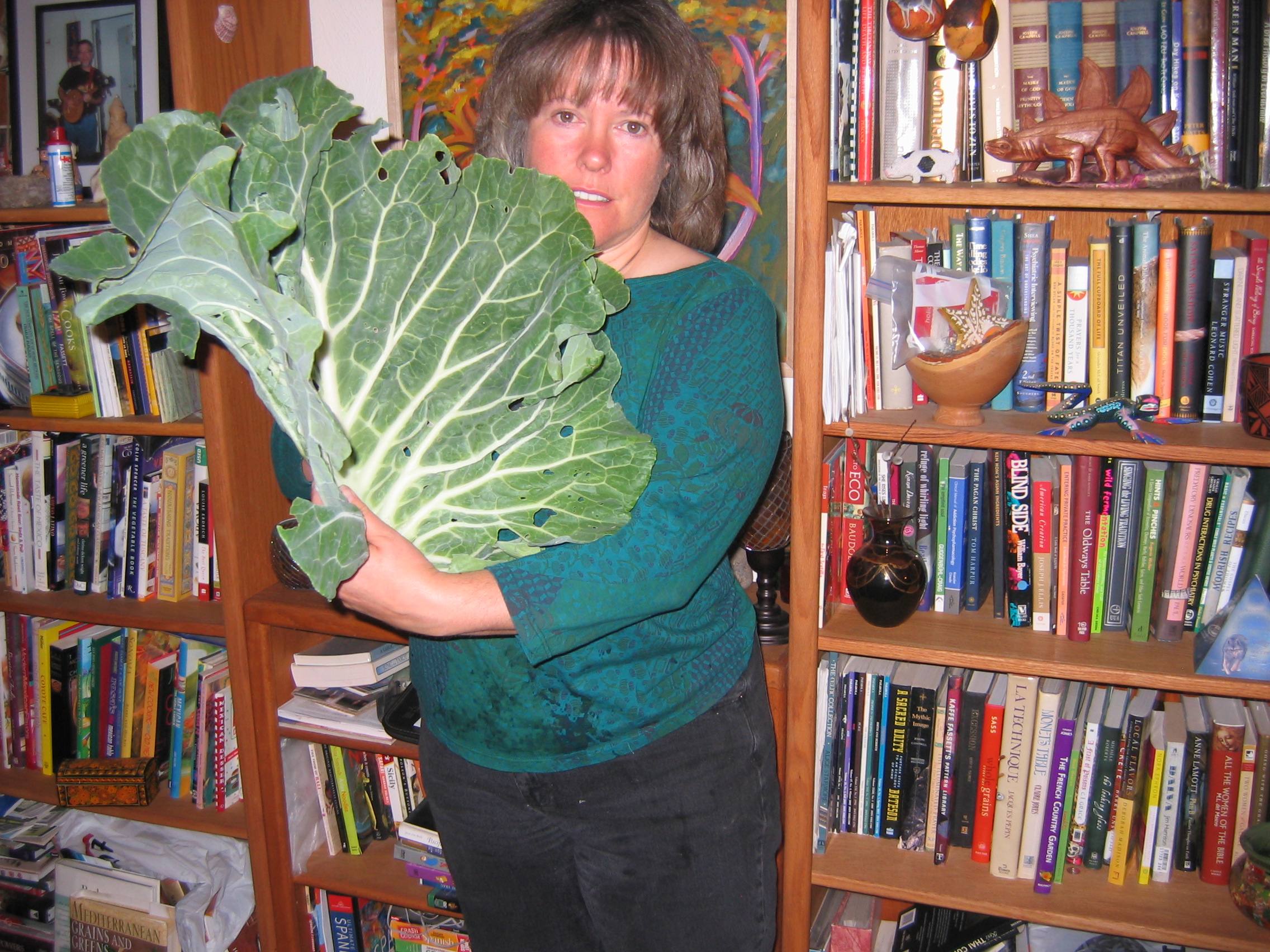
 My urban homestead