Archive for the ‘cooking’ Category

Harvesting Garlic

In a way the title of this post is very inaccurate, because I have been “harvesting garlic” since February  in the form of green garlic. But this is the time of year when I start to pull bulbs, because the extremely early Chinese Pink comes out of the ground now. So this is a good time to say something about the curing of garlic.

First, the variety matters. Chinese Pink doesn’t last that long for me and is mainly to tide me over until the main crop comes in, since it’s a good six weeks earlier than any other type that I grow.

Second, harvest at the right time. Watch for yellowing, withering leaves. Generally I harvest when there are four green leaves left, but Chinese Pink is prone to splitting and needs to be harvested earlier, when about the four lowest leaves are yellow. The picture below shows “split” garlic which has been left in the ground too long. It’s still useful but harder to peel and clean.
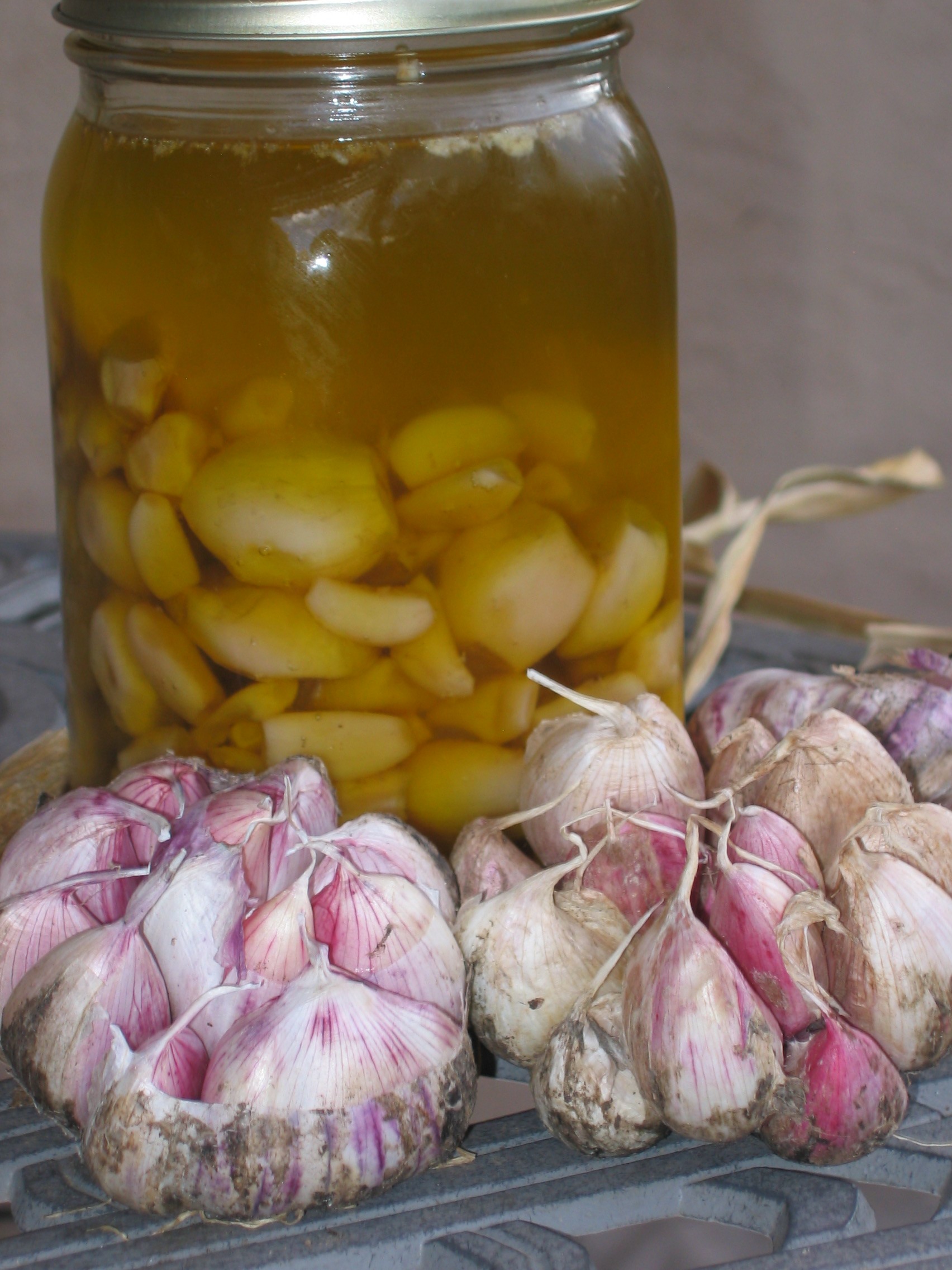
Third, DON’T cut off the stalks. The curing bulbs draw nourishment from the remaining leaves. Do, however, remove any bloomscapes. Also leave the roots intact but shake off soil. Brush loose dirt off the bulbs.

Fourth, DON’T leave them lying in the sun, where they will “cook” and be spoiled. After pulling the plants, lay them in single layers on a dry surface (I use flattened corrugated cardboard boxes that will later go into sheet mulch) and put out of direct light in a place with good air circulation. Leave for two weeks, turning the bulbs occasionally.

Now cut the withered tops off unless you grew a softneck garlic and want to make braids. My favorite types are all hardneck so no braids for me. The remaining surface dirt is now dry and can be brushed off with a soft brush, but don’t get fanatical with the brushing because you can damage the wrapper and impair the bulb’s ability to keep. Leave in the dim airy place and bring a few bulbs at a time into the kitchen.

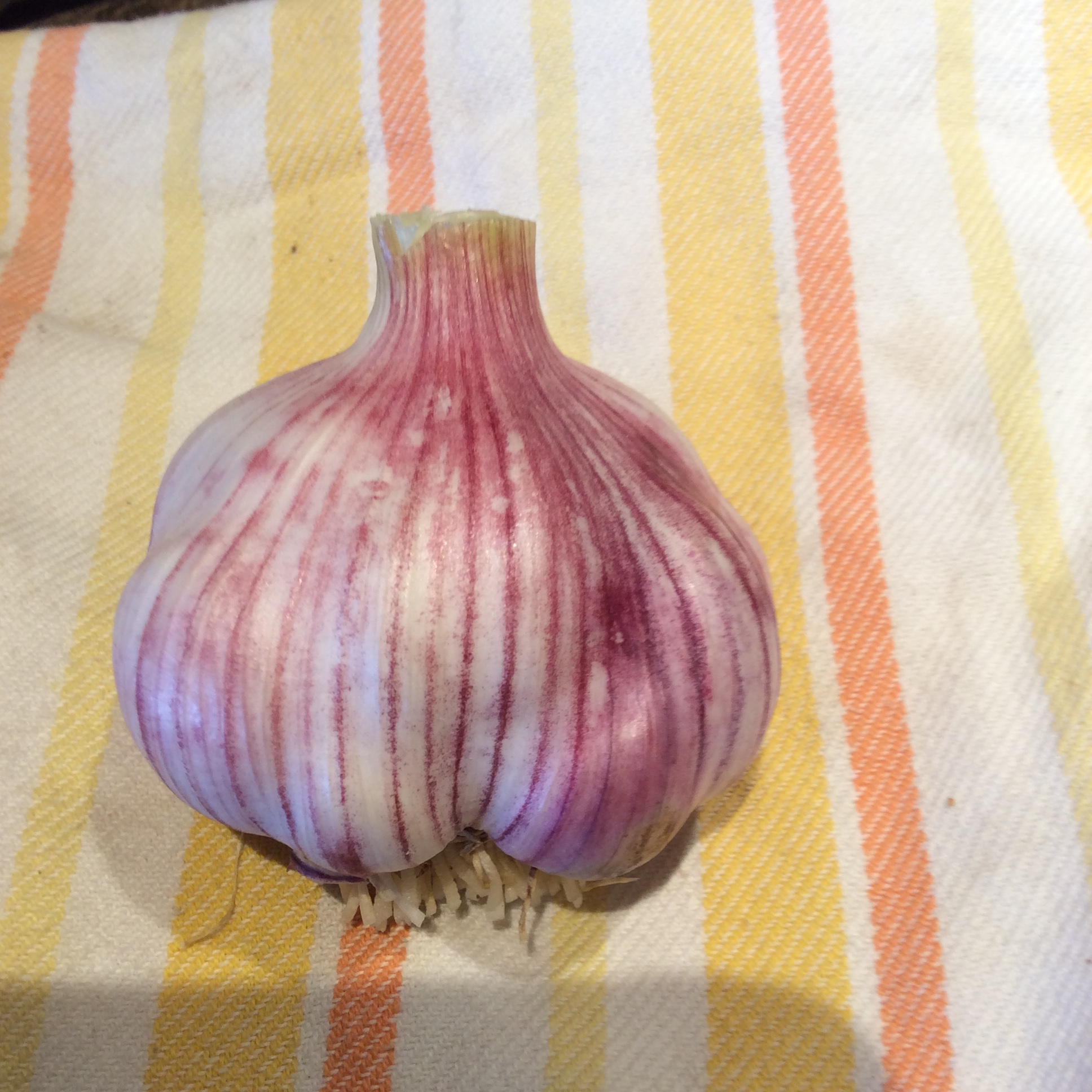
When ready for curing, they will look like the picture below. Later on when you clean them up and bring them into the kitchen, they will look like the picture at the top of this post.
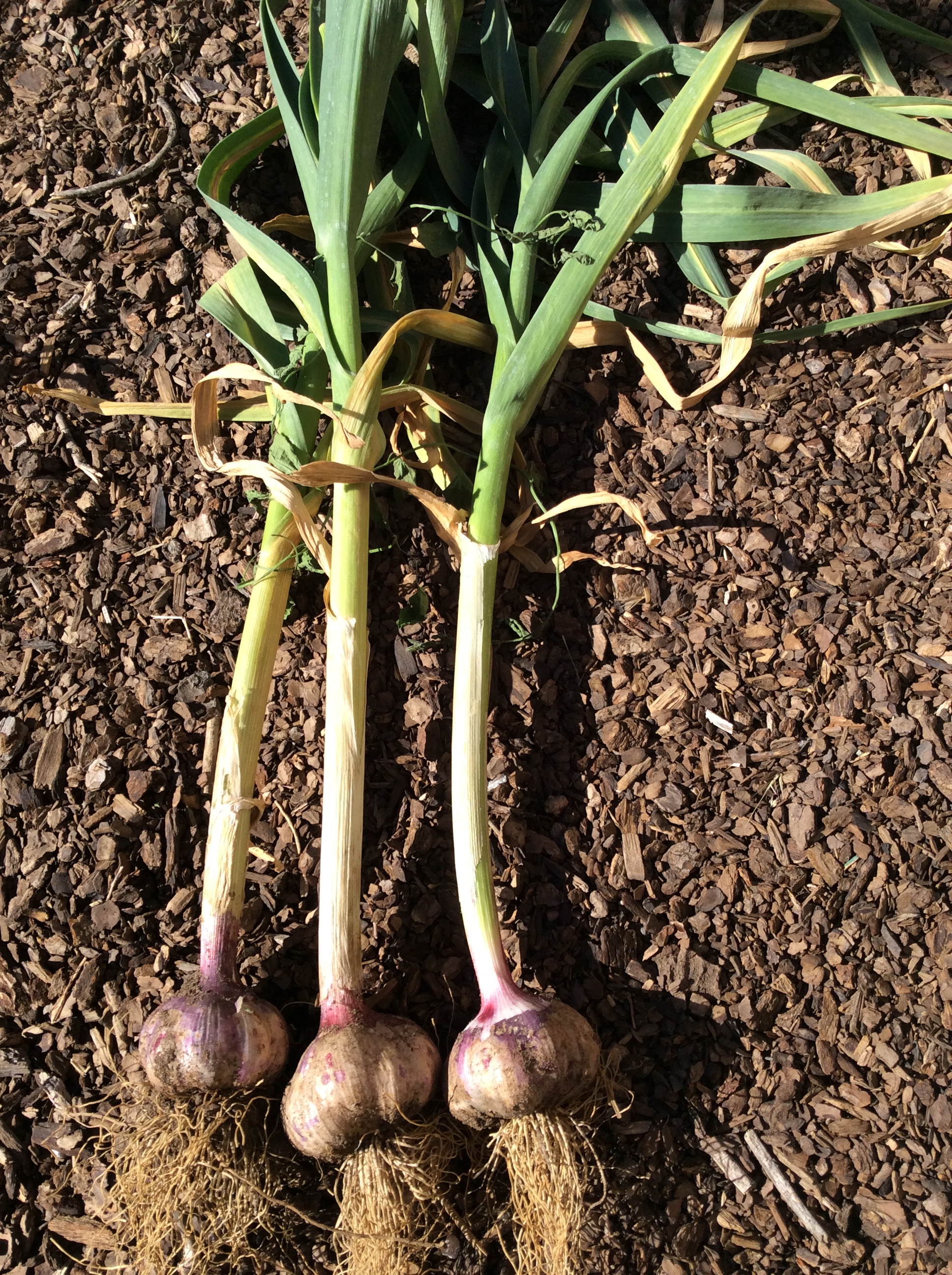
Before you start using your garlic, be sure to set aside the largest and best bulbs with the largest cloves for replanting.
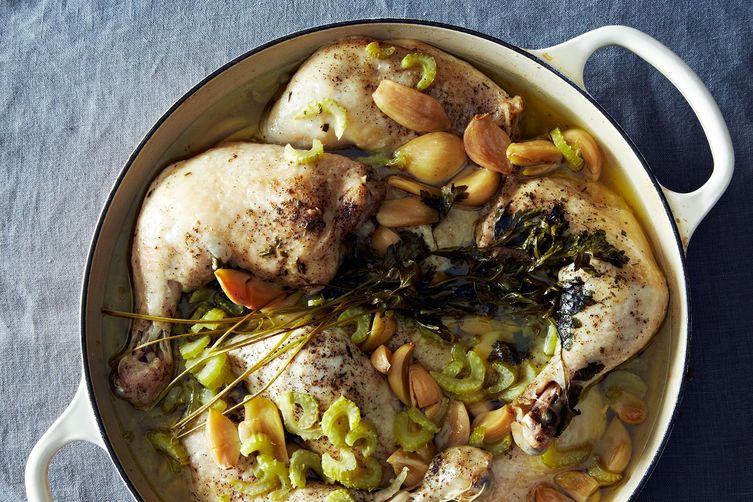
Use your garlic.  A lot. This is the fresh clean-flavored garlic that makes recipes like Chicken with 40 Cloves of Garlic or Chicken with Fennel, Pernod, and Garlic such a pleasure to eat. Confit some and enjoy it on toasted sourdough bread or crackers, or alongside roast chicken, or in pepperonata. To confit garlic, peel a quart’s worth of cloves, put in a small heavy saucepan, cover with good extra virgin olive oil and add a heaping teaspoon of sea salt, bring to a simmer, and simmer slowly over low heat with an occasional gentle stir until the cloves just hold their shape but are soft and can be crushed easily with a spoon. If there is any hard “core,” keep simmering. Cool and store in a jar in the refrigerator. Be sure to keep the cloves covered with olive oil and it will keep a month or more. The confiting oil is a treasure, great in dressings or for drizzling.

The image of chicken and garlic above was borrowed from Food 52, my favorite cooking site.

For a far more detailed take on garlic curing and storage, review this excellent PDF from Boundary Garlic Farm.
Food for Thought: A Cookbook for Cooking and for Thinking

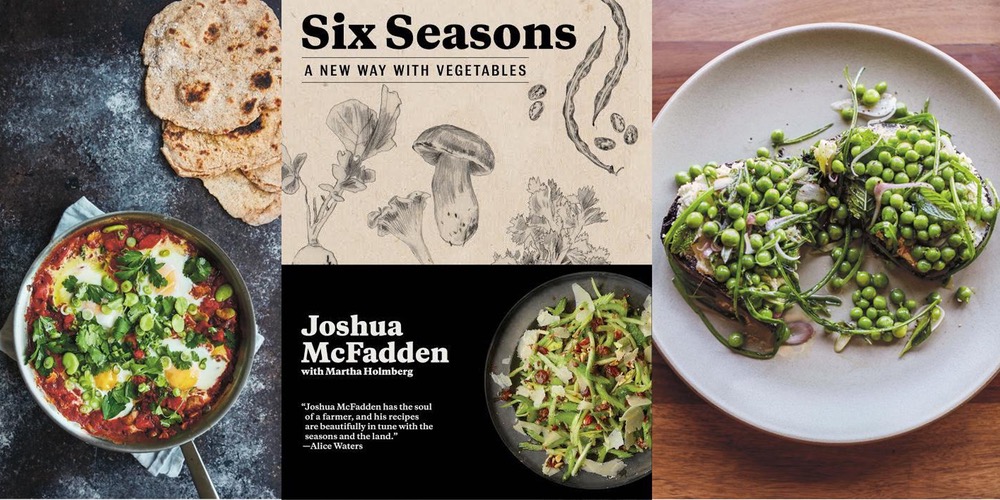
I have been  vegetable gardening all of my adult life, and own several shelves full of vegetable cookbooks, and I have a very high bar when it comes to buying new ones.  Actually, that’s not true. I buy new ones in a fairly promiscuous fashion because that is my addiction, but I have a very high bar indeed for recommending that other people spend their hard-earned money on them.

So  here’s what I have to say about  Six Seasons: A New Way With Vegetables by Joshua McFadden: go buy it.  Now. Read it. Think about it.  It really will bring you to think in a new way about how to handle familiar vegetables.  Take salads, for instance. I like salads well enough but am almost never really excited by them.  They always seem a little predictable to me, and just throwing some meat, cheese, or eggy thing of some kind on top does not make them interesting in my view. McFadden’s  way of putting a substantial “pad” of seasoned nut butter sauce, savory seasoned whipped cream, whipped seasoned ricotta cheese, or other interesting  possibilities underneath the salad does make them seem new and like a real meal that I am happy to eat.

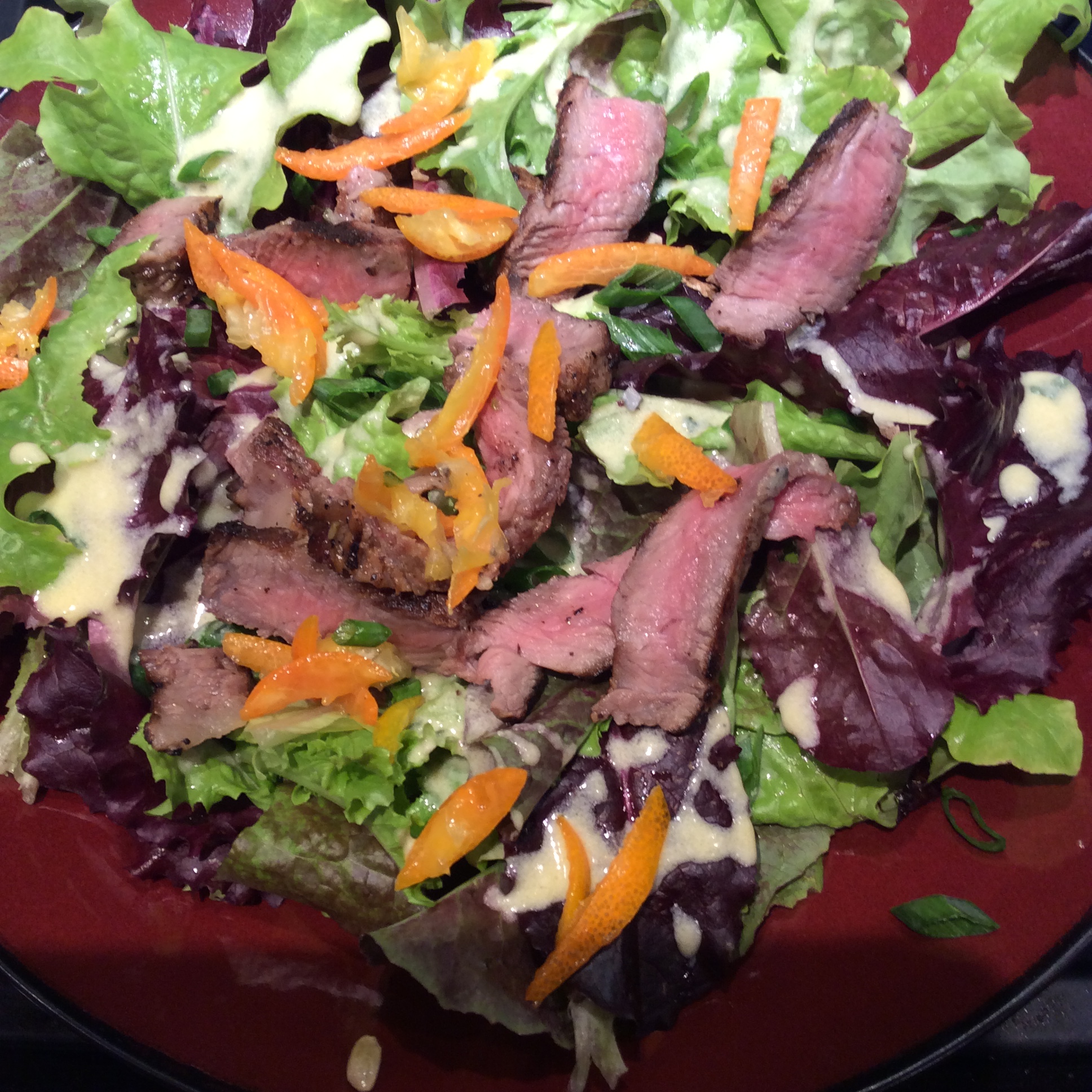
As good as the recipes are, I put this one in the “thinking cookbook” category,  i.e. an idea-rich cookbook that will affect the food you put on the table whether you were actually following a recipe from the cookbook or not.  Take the salad shown above, for example.  I had a lot of lettuce in the garden, including some dark red lettuce that still looked beautiful but had grown the slightest bit bitter  in hot weather.  I kept tasting bits of the leaves, thinking about what would make them taste good.  Ultimately, I whipped and seasoned some homegrown goat ricotta  with olive oil and salt, and smeared the plates with it, then arranged the red lettuce and some sweet green lettuce on top.  Then I put some of the ricotta mixture in the blender with an egg yolk and two cloves of roasted garlic, blended in more olive oil and some salt, and acidified it with lemon juice and white wine vinegar until it tasted just right, added some chopped marjoram because it seemed to fit in well, and used that as the dressing. I slivered shallot greens, soaked them in cold water briefly as McFadden recommends, pressed dry, and scattered them all over, and finished with warm leftover steak and bright sweet crunchy slivers of kumquat rind. The earthy rich ricotta dressing made the faintly bitter lettuce just right and complemented the steak beautifully, and dripped down to the whipped ricotta beneath to season it, while the kumquat rind added an electric zing.   Delicious and interesting to eat. It isn’t a McFadden recipe per se  but was entirely inspired by his methods and I would not have come up with it without reading his book.

The cooked vegetable recipes are very good too, as are the techniques. Just to name one, McFadden recommends grilling your vegetables “dry,” i.e. without oil, and then drizzling them with olive oil afterwards on the grounds that the burnt oil produces strange chemical flavors.   Even if you like the ones grilled in oil, I think you’ll like his method better. Try it and see.  I am also a fan of his section on pickles. These are not pickles that you can put on your shelf and keep forever. They are quick, delicate refrigerator pickles that serve as seasoning and garnish and add wonderful nuances to the flavor of vegetables.

This is a useful and excellent book at any price,  but I do wish to point out that the Kindle version is a special bargain and I highly recommend it.

Pleasures of the Grill: Oyster (and other) Mushrooms

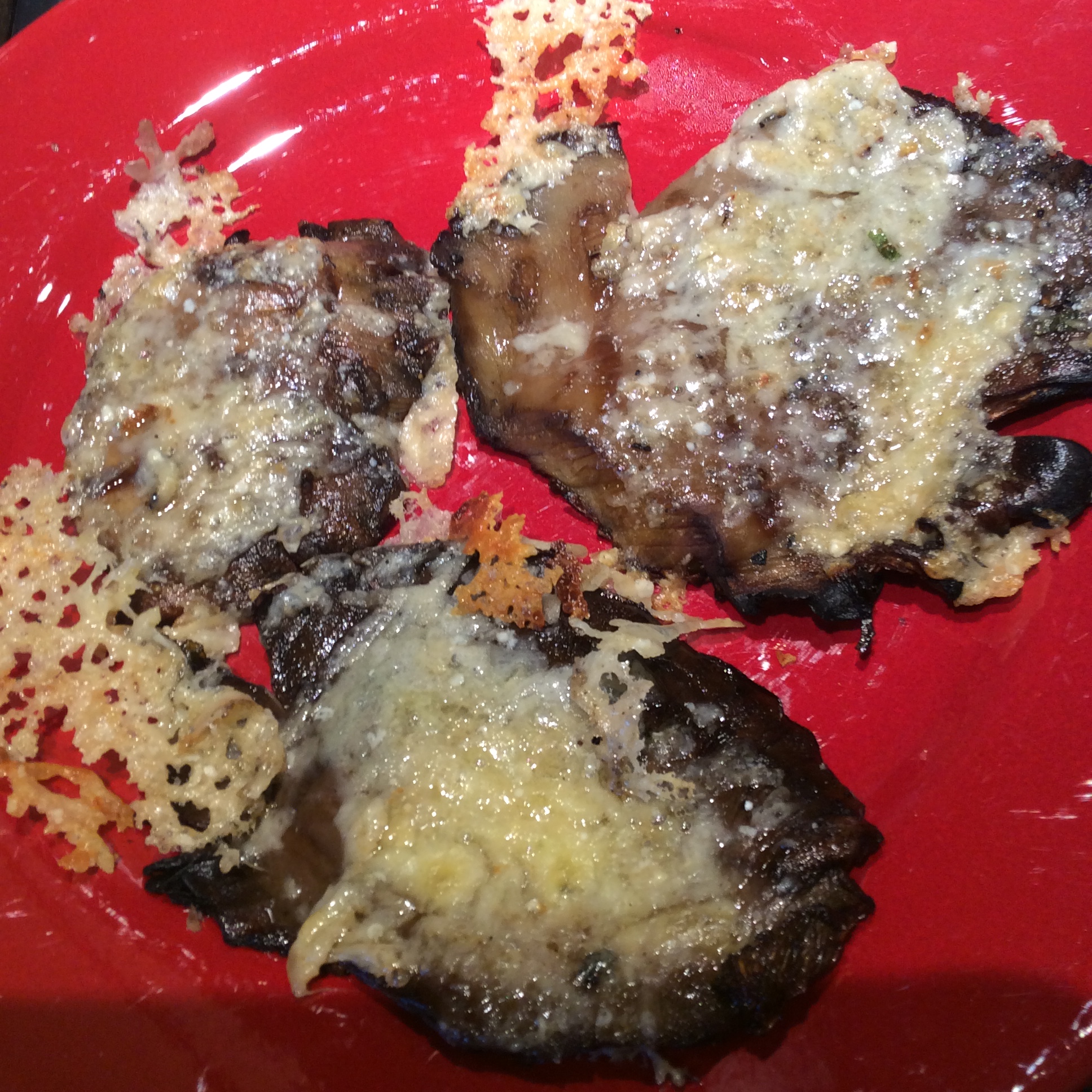
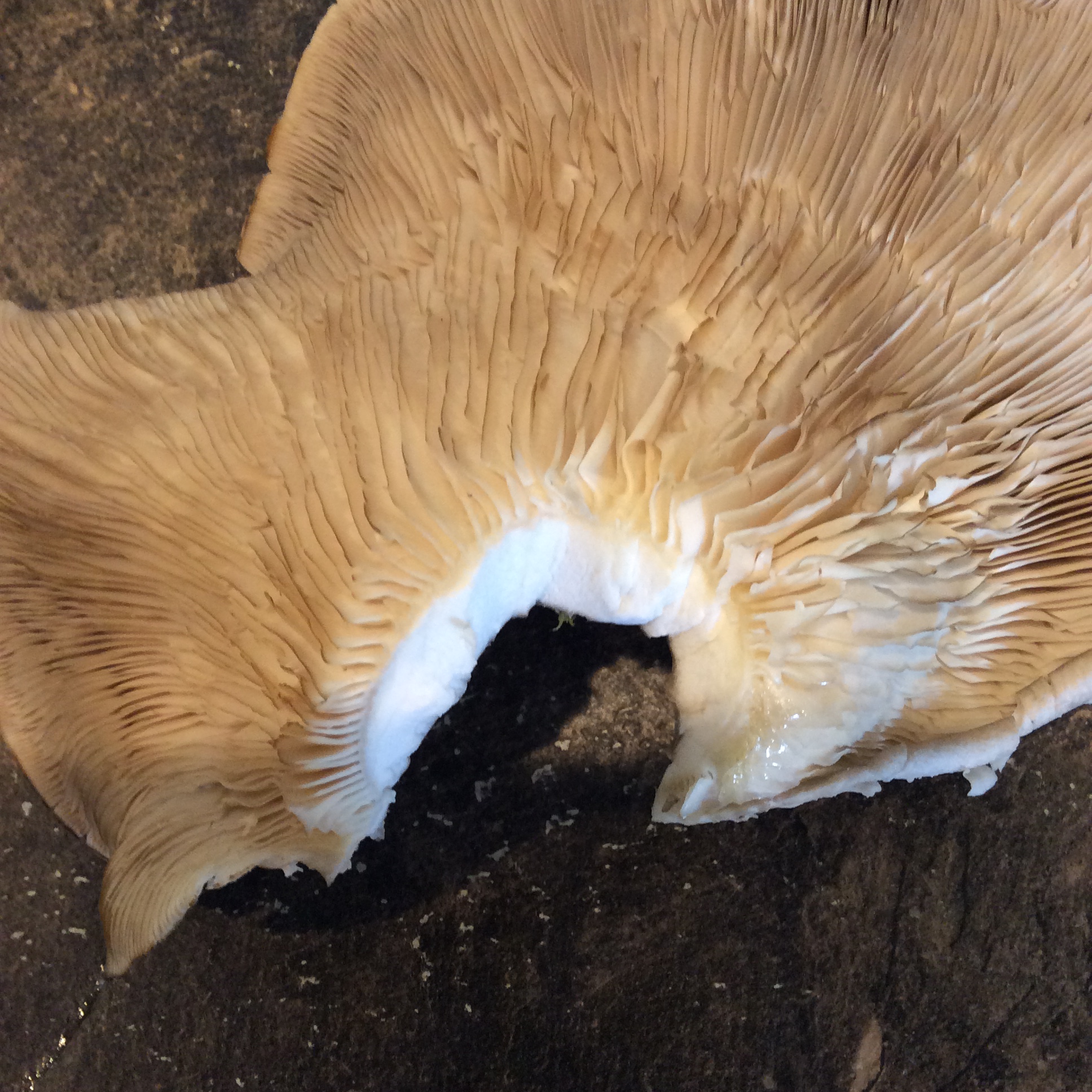
A family member was admiring a picture of my oyster mushrooms, up to 8″ across, and asked if they were too big to eat. Not if you like to grill. I love a plateful of giant oyster mushrooms, as long as they were still fresh and moist and not dried out when picked. The big ones have leathery bases and need to have the stem (technically a stipe) trimmed off to the extent that a little semi-circle is taken out of the base.

Now the toughest part is gone. Clean the rest and rub it on both sides with basic steak marinade. Make sure that the marinade gets up in the gills, since this helps keep them moist while cooking. Sprinkle the gill side with a good smoked salt.

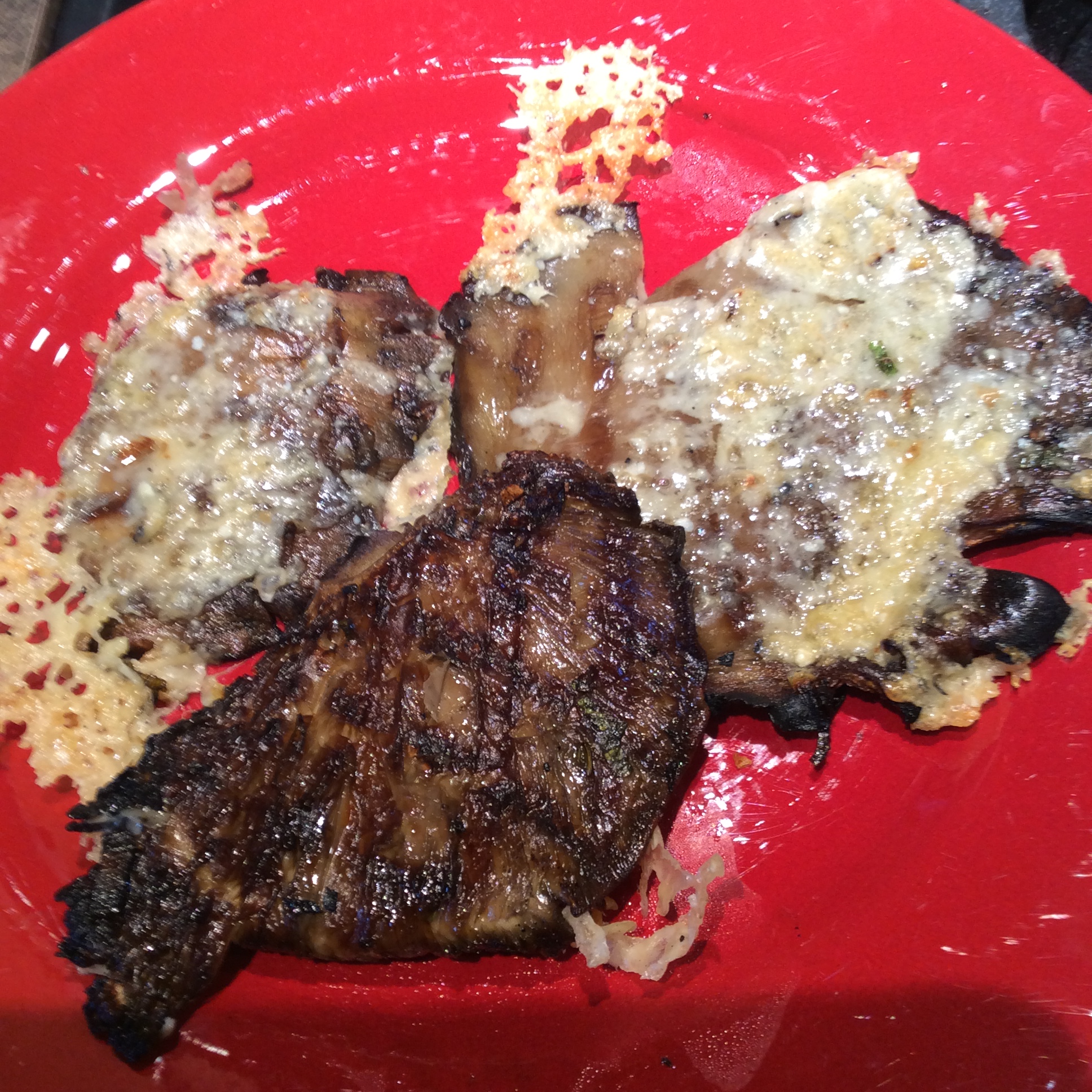
Heat the grill to about 300 degrees and sear nicely on the upper side. Turn and cook on the gill side until done, turning them 90 degrees midway if you want nice crosshatched sear marks. Meanwhile, preheat the broiler. Put the caps on a baking sheet lined with parchment paper, gill side down. Sprinkle lavishly with grated Parmesan, making sure to sprinkle the areas of bare parchment paper to make the lacy garnish. Broil, turning the pan as necessary, until the cheese is just beginning to brown. Eat.

The argument could be made that there’s no point in fussing with crosshatched grill marks since they’re on the bottom and don’t show. This is a fair point, but in good spring weather it’s a pleasure to fuss a bit at the grill.

This is a good meal to share with vegetarians if you don’t use any fish sauce in the marinade. In my opinion the final cheese crusting adds a lot to the flavor and so it isn’t ideal for vegans, but try it if you feel so inclined. If you don’t have oyster mushrooms try portobellos, which come alive with some seasoning. If you find really big meaty fresh shiitakes, they are ideal for grilling whole. If you’re lucky enough to find some porcinis  in the woods or market in the fall, they are superb sliced thickly and grilled.

A Hundred Kinds of Chimichurri

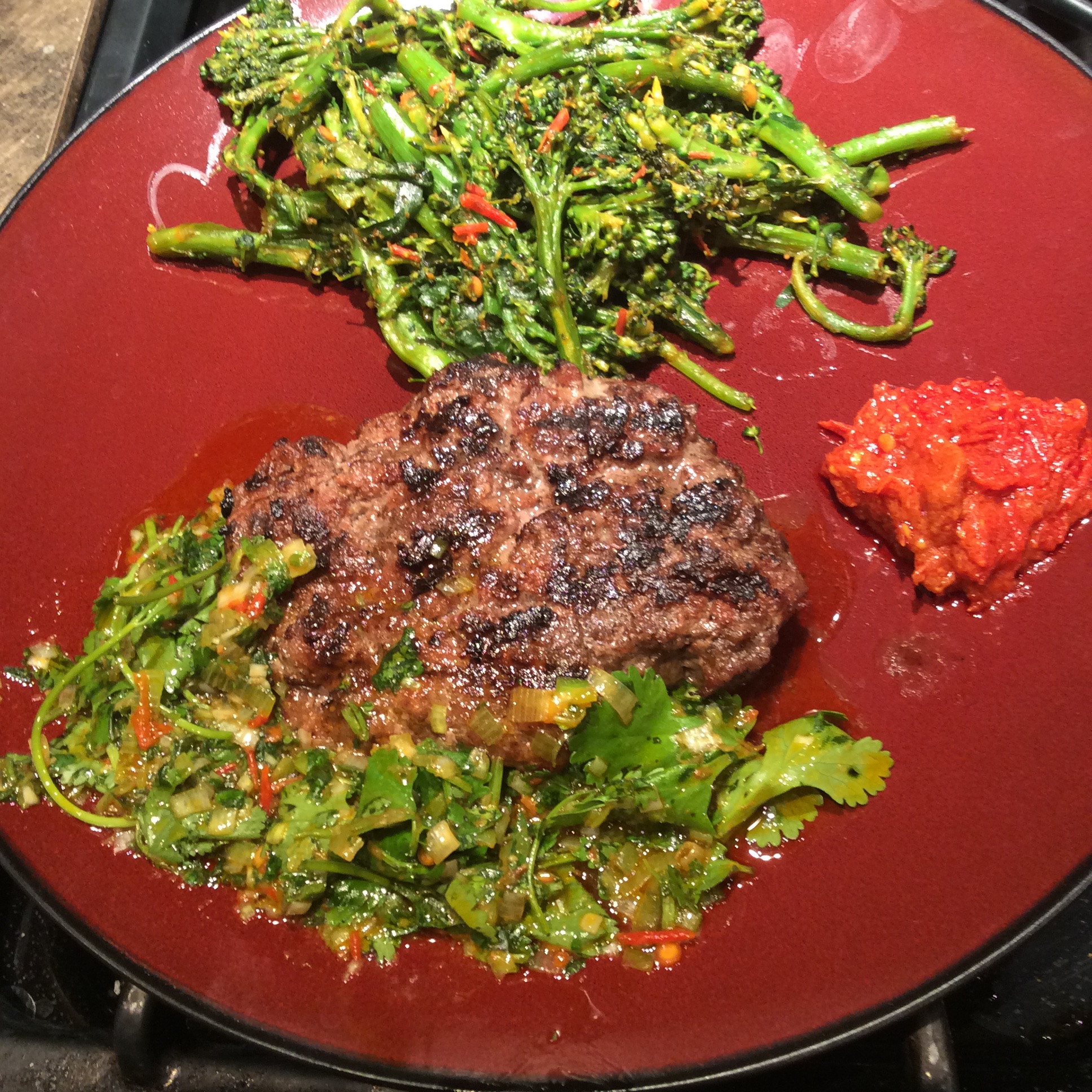
I love chimichurri, the ground herb table sauce of Argentina, but I am by no means faithful to the Argentinian version. If you have an active garden, spring offers the first of infinite variations of chimichurri to accent any grilled meat or poultry. These savory herbal sauces also dress up baked and roasted foods, and are a great way to perk up hard-boiled or fried eggs. People who don’t have to stay low-carb may like them drizzled on bread or rice. Vegetarians will like chimichurri on roasted vegetables, and for that matter ardent carnivores would love it on roasted carrots, broccoli, and other meaty veggies. I can imagine it freshening and enlivening roasted or grilled oyster mushrooms.

The basic necessary ingredients are olive oil, garlic, an acid, salt, herbs, and embellishments. Variables are the herbs, the texture, and the embellishments and degree of heat, if any.

So here’s a menu for infinite improvisation:

Oil: I say very good olive oil is a necessity. If you choose to fool around with other oils, feel free. Plan on between a half cup and one cup.

Garlic: green in spring, mature cloves later on. 2-3 large stalks of green garlic or 3-4 cloves of mature garlic.

Acid: vinegar is traditional but lemon juice is delicious with the more delicate spring versions. Consider wine vinegar or sherry vinegar.  Plan on about 2 tablespoons and have extra available to add if needed. Please, don’t use sweet caramelized ersatz “balsamic” vinegars. Yech.

Salt: “Plenty” is the important concept here. Some chimichurris that seem like failures come alive when enough salty element is added. Remember, this is a seasoning sauce, not a main dish.Your salt element may be sea salt, but a good dab of anchovy paste or a glut of the salty-lemony fermented liquid from preserved lemons may attract you.

Herbs: parsley is traditional and great, but don’t feel bound. Cilantro is a great alternative for the “bulk” herb, of which you’ll need a bunch (from the store) or a large handful (from the garden.) Oregano, sweet marjoram, summer savory, thyme, and lemon thyme are great options for the subsidiary herb, of which a small chopped handful (combined if using multiple herbs) is plenty. Combos are potentially wonderful. I don’t recommend tarragon for this sauce, but feel free to prove me wrong, and I think rosemary should be limited to a chopped teaspoon or two if used at all. Some mint is a possibility if used judiciously. Sage is difficult to use and, in my view, not a good possibility.But suit yourself, as long as you are pursuing a coherent taste-vision. Wander your garden, be seducible, and work it out later.

Embellishments: Heat is an important possibility. Hot sauce, harissa, and ground dried chiles can all work wonders, and fresh chopped jalapeños (seeded or not per your preference for fire) can do real magic. Anchovy fillets mashed can add a savor and tang that are the making of rich meats like roasted  lamb or goat. Preserved lemon peel, finely chopped, is highly nontraditional but extraordinary in the right circumstances. A pinch  of toasted cumin seeds, finely ground, can give an earthy, sweaty, quintessentially masculine note that makes a simple grilled steak or chop memorable.

Texture: can be anywhere from medium-fine grind to as coarse as a chopped salad. It all depends on your mood and your main dish.

Procedure:

Chop your garlic coarsely or slice finely crosswise if using green garlic and put in a large mortar or small food processor; I invariably use my little stoveside Mini-prep. Chop or pound to desired degree. Add herbs, salt,  and embellishments and process only until you like the texture. Add the acid and salt, process briefly, and work in the oil. Now taste, and think. If you are sure it didn’t work, think about how to rebalance and save it. Sorry to harp, but insufficient salty element is a common fault. Increase the salt, anchovy paste, or preserved lemon juice, or add a bit of the latter two if you didn’t use them before. If overly salty or acid, add more oil to smooth it out.  If bland, add a little more acid. If just not that interesting, consider stirring in more chopped herb or some heat.

This sauce can be refrigerated overnight and may be even better the next day, although cilantro-based versions tend to lose freshness and pizazz and are best consumed on sight.