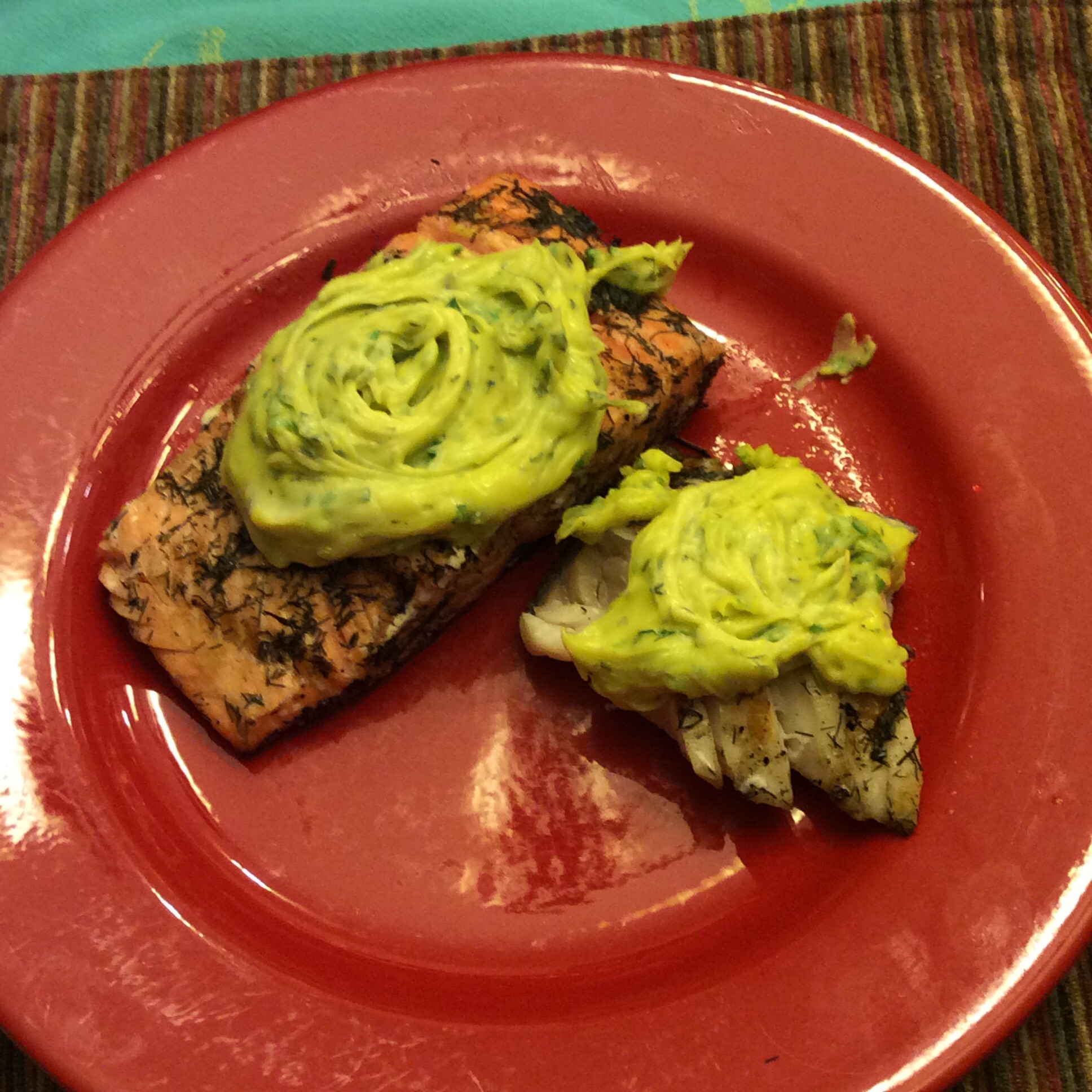
Many of us who eat ketogenic diets refer to homemade mayonnaise as “ketonnaise.” It is one of the luxuries of our very-low-carb style of eating that we can have this beautiful stuff. This time of year, the garden is full of wonderful ways to flavor it, and one of my favorite things to do with it is put a luxurious dollop on top of grilled sockeye salmon, as you see above.
You will have to make your own decision about eating raw eggs. I use my own backyard eggs, and if I am expecting to feed others, I either pasteurize the eggs in my sous-vide cooker or let my visitors make their own choices with full disclosure. Don’t ever feed raw eggs to the elderly, children, immunocompromised people, or the unsuspecting in general.
In my opinion this is best made with a Mini-prep. It gets so thick that stick blenders can’t handle it.
The basic mayo is very simple. Have 1.5 cups of oil ready. I use a light-flavored olive oil or equal parts each of full-flavored olive oil and MCT oil (a fraction of coconut oil that’s liquid at room temp.) Put four egg yolks and a teaspoon of salt in your Mini-Prep food processor. You need a small one so that the mixture reaches the blades. Start the food processor running, and very slowly drizzle in the oil. The Cuisinart Mini-prep has a little runway and hole in the lid for exactly this purpose. You will start to hear the thickening mayonnaise slap against the sides of the bowl. Last thing, put in two teaspoons of fresh lemon juice. When it’s done, turn out into a colorful bowl and put in the refrigerator for now.
Now the fun starts. What do you want it to taste like? For standard use I love a handful of chopped parsley, some tarragon, cutting celery, and a little thyme, a handful of chopped chives, a few large arugula leaves chopped, and the white part of a good-sized stalk of green garlic chopped finely. I usually add a smashed anchovy filet too. A meal that leans Mexican might want lots of cilantro and a little epazote and garlic. Somewhat Southeast Asian? Consider a little green curry paste and a goodly amount of chopped rau ram and a chile, chopped. Add your chosen herbs and fold in well. Taste to correct seasoning. The large amount of oil blunts flavors, and you may need more herbs and salt than you think.
You can put it on broiled meat, chicken, and fish, spoon some on top of grilled shrimp, dip veggie sticks in it, or if you aren’t ketogenic it is superb smeared on chunks of baguette.
Eat happily. This is an occasion for high-class piggery, not portion control. It will last a day in the fridge but, in my view, not more than that. I have read one cook online insist that it will keep safely for over a week when chilled, but I wouldn’t chance it.
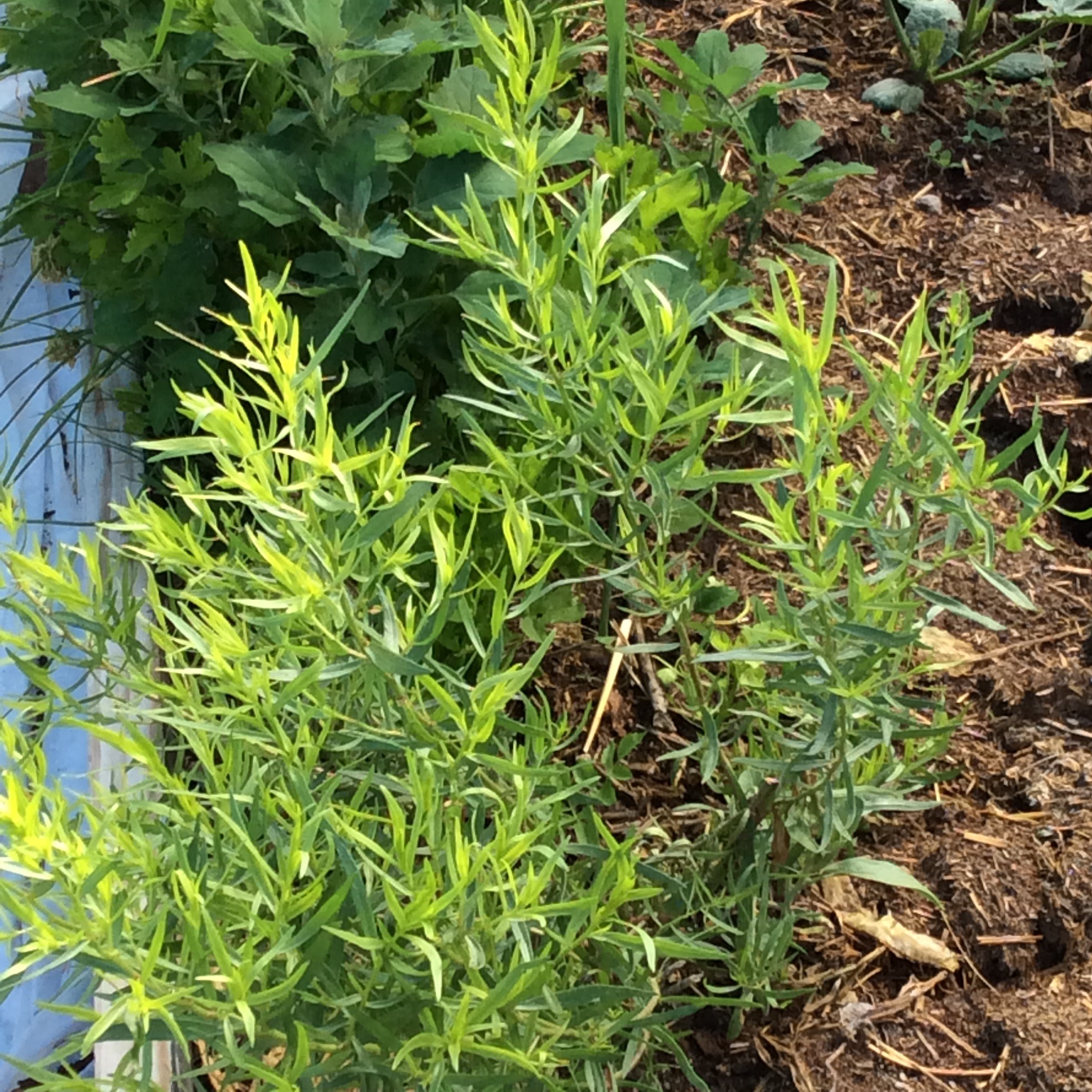
Tarragon goes crazy in late spring so let’s make use of that tender growth.
Archive for the ‘fish and seafood’ Category
2 Jun
Green Mayo
19 May
Salmon in Springtime
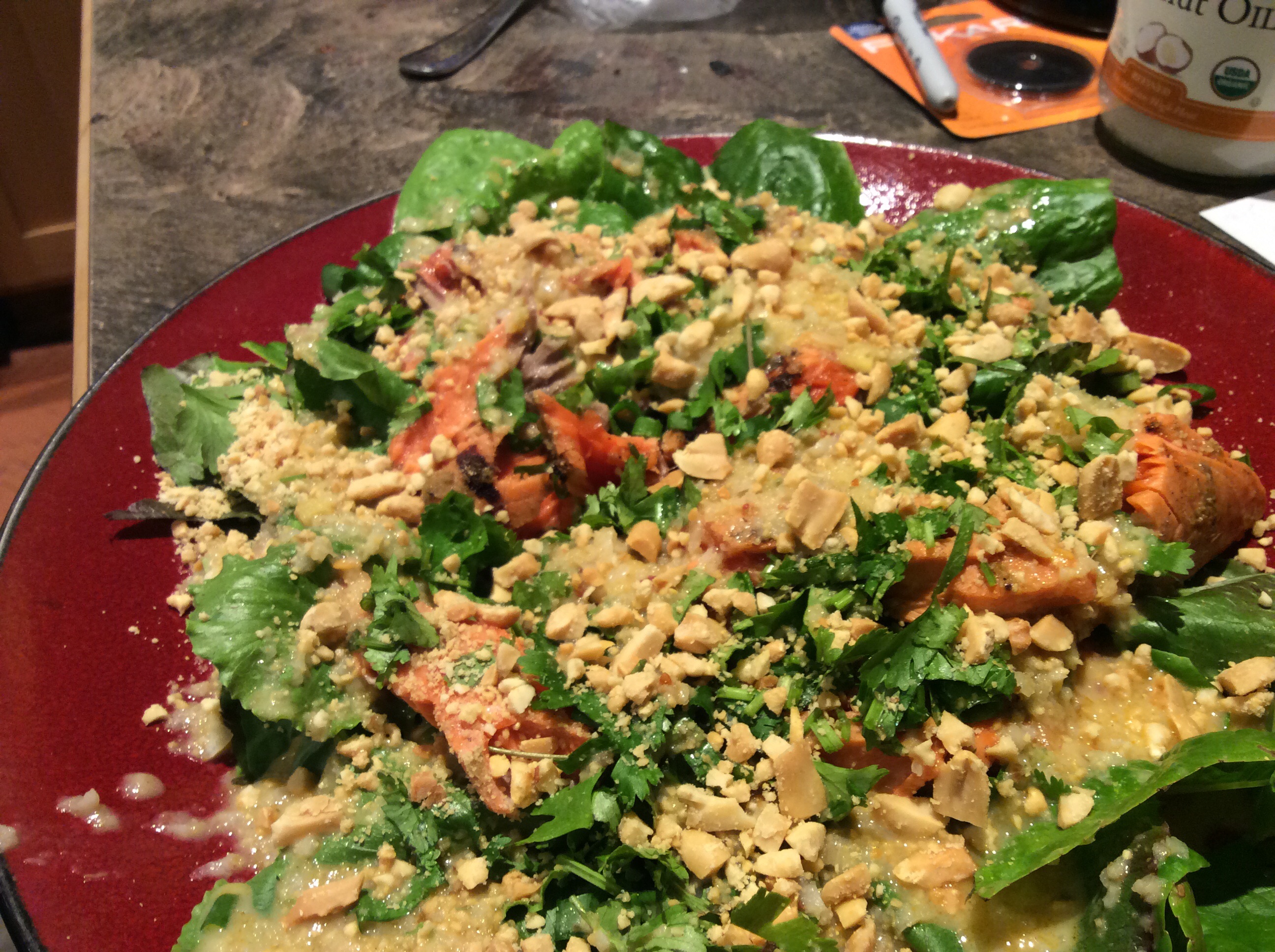
Here in central New Mexico we are enjoying a cool and unusually wet spring, and the romaine lettuce is still in great shape. Our local Fishhuggers are back at the markets with lovely Alaskan sockeye salmon caught by Kenny, and there is no healthier meal. For some reason I like my warm-weather lunches to lean Southeast Asian, and this one is a bit Thai-ish.
I used romaine, green onions, and cilantro from the garden, a fillet of sockeye salmon, crushed peanuts, and the vaguely Thai dressing below, which I keep jars of in the refrigerator in warm weather. Put generous heaps of sliced romaine on plates, rub the fillet with salt, grill quickly ( on a hot Green Egg grill, about 2 1/2 minutes each side will do it,) let cool a bit while you chop the cilantro and green onions ( green part only,)break up the fillet and remove all skin and put chunks of warm salmon on the lettuce, scatter on a handful of chopped cilantro and green onions, dress generously, and sprinkle crushed peanuts over the top. Delicious and very quick as well as insanely healthy.
Sort-of-Thai dressing:
Large chunk of ginger, about 1″ by 3″, peeled and sliced
7-10 large cloves of garlic
1/4 cup coconut fat
1 tablespoon green curry paste
2 tablespoons fish sauce
1 cup water
1 can full-fat coconut milk
Sriracha sauce to taste
Artificial sweetener ( I use liquid stevia,) or sugar, and more fish sauce to taste
Finely chop the ginger and garlic, heat the coconut fat in a saucepan, and stir-fry the garlic and ginger until cooked and fragrant but not browned. Add the green curry paste, stir-fry about another minute, add the fish sauce and water and bring to a boil, add the coconut milk and cook just until it’s all melted and creamy, then remove from heat. Let it cool to lukewarm, taste, and add more fish sauce if indicated. Add some sriracha if you like it hot (I love hot food and use about a tablespoon,) and then add sweetener, if you are ketogenic or low-carb, or sugar if that’s still in your kitchen, slowly, tasting frequently. I like mine on the sweet side, to balance the heat. Let cool all the way and use or keep in the refrigerator for later use.
This makes a perfect lunch to eat outside.

5 Apr
Kitchen Staples: Pasta and Eggs, and notes on what makes a good egg.
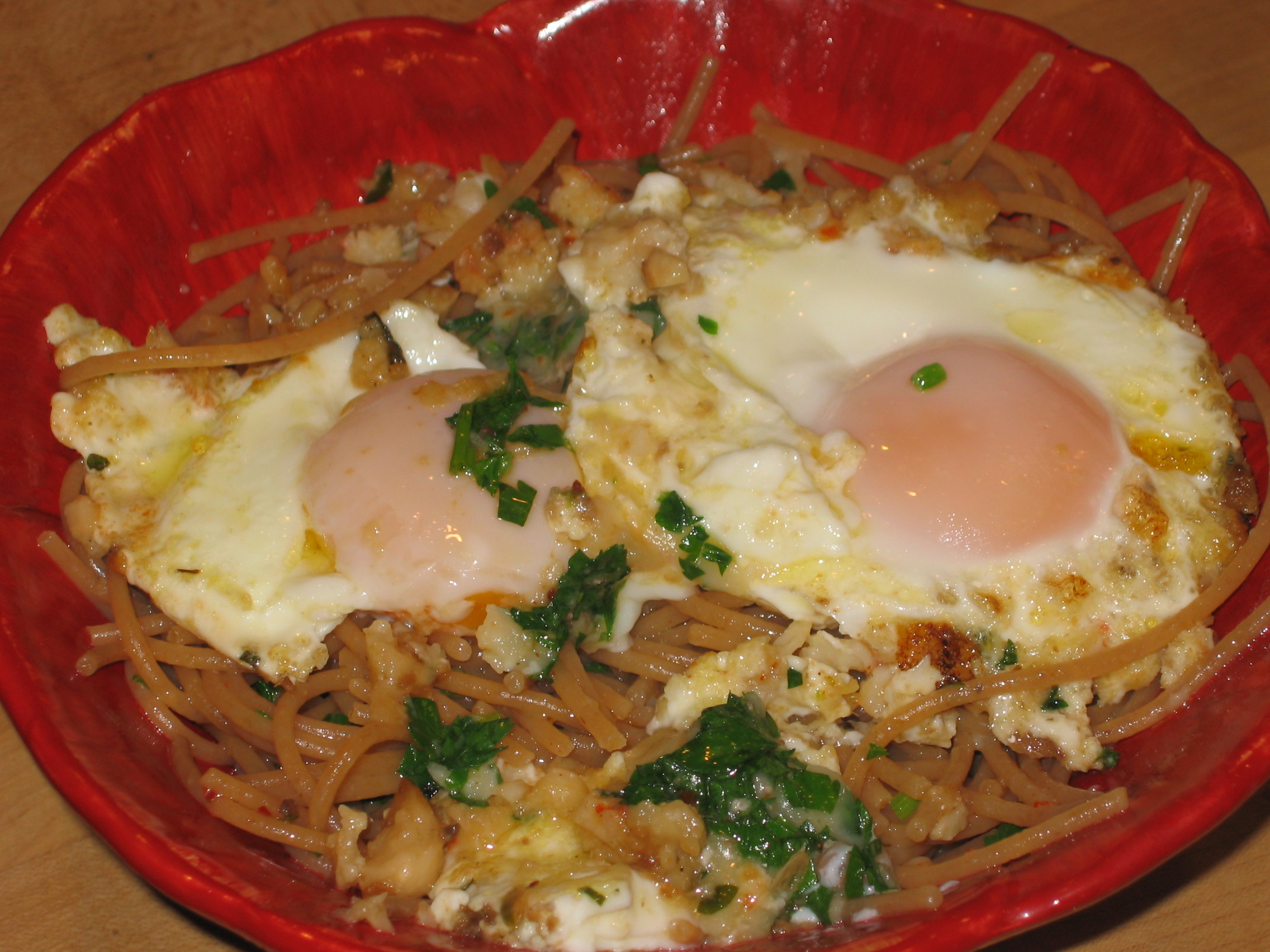
If you’re a lover of pasta carbonara, you know the rich and lovely taste of egg yolks on pasta. This time of year, if you don’t have chickens yourself (I don’t yet), the farmers markets are full of beautiful eggs with deep orange yolks, and wonderful impromptu meals can be made from them. This one is warm and comforting, but has a little zing to it. You can have it on the table in 30 minutes or less. If you always have pasta, high-quality olive oil, good Parmesan, and anchovies around, you’re never more than 30 minutes (tops) from a good meal. Good eggs in season send the combination over the top.
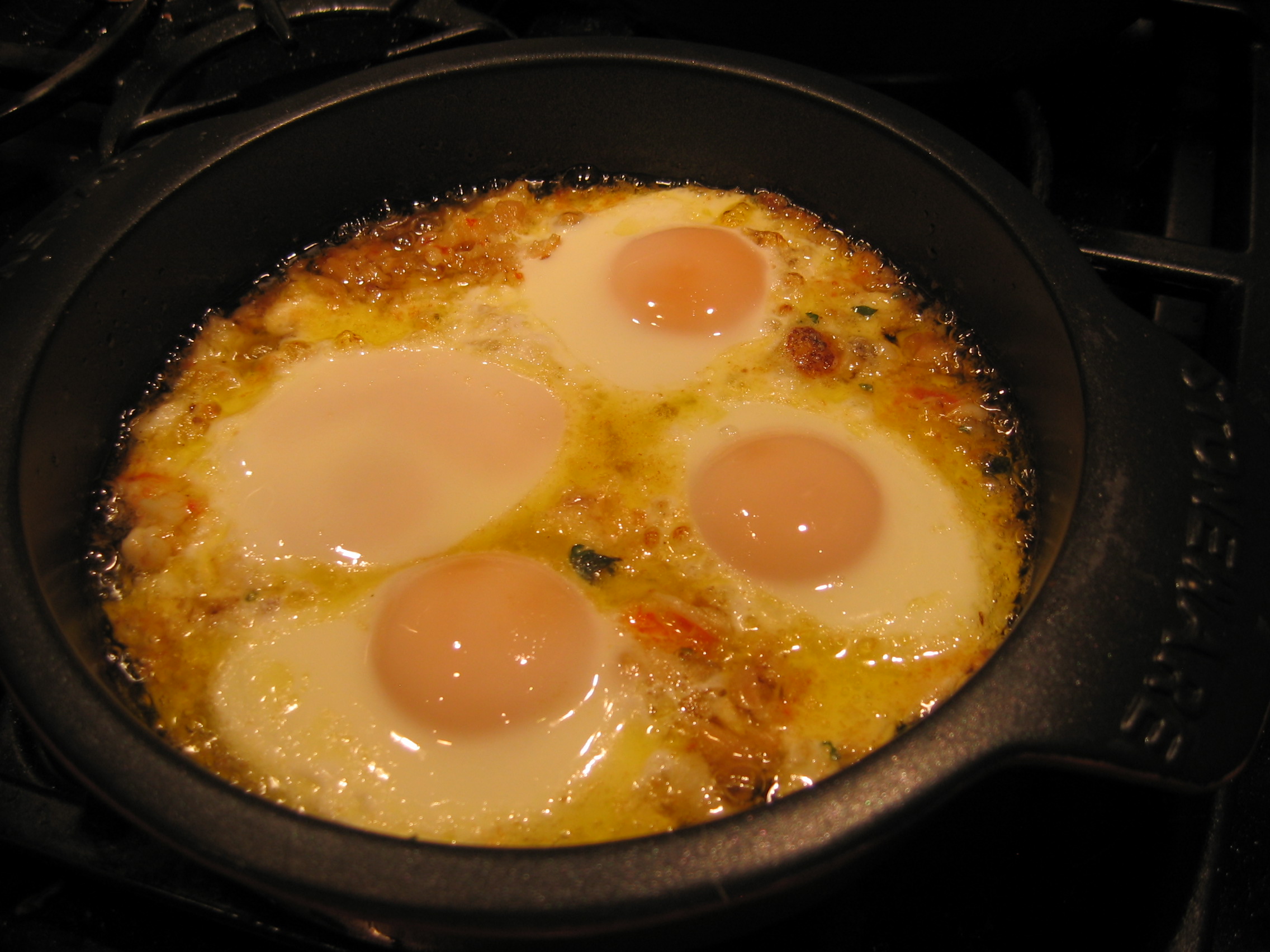
You will need a small, heavy skillet or clay dish (my preference) with a cover. Clay needs to be heated slowly, so if you’re using it, start heating it over low heat about 15 minutes before you want to start cooking the eggs.
Ingredients: for 2 very generous servings, start with 4 very good eggs, about 6 oz. of spaghetti or linguini, 2 small anchovy fillets (very necessary for the bold flavor of the dish), 3 tablespoons of good olive , 2 cloves of garlic chopped, a few tablespoons of chopped parsley (plus more for garnish if you like,) an ounce or two of the best Parmesan you can find, and half a teaspoon of red pepper flakes (more if they’re mild.)
Start cooking the garlic slowly in the olive oil, over medium heat, while the salted water for the pasta is coming to a boil. Meanwhile, chop the anchovy fillets very finely or pound them in a mortar until they’re paste-like. Stir them into the saute’ing garlic and cook the mixture until the garlic is soft through but not browned. Lower the heat under the skillet and stir in the red pepper. Break the eggs into the skillet a few minutes after you add the pasta to the boiling salted water. Splash a couple of teaspoons of water into the skillet (this makes a little steam to lightly cook the top of the eggs,) cover the skillet tightly, and let it sit over low heat until the eggs are done to your liking. Make sure the yolks stay soft. When done to taste, take the skillet off the heat. Heavy iron or clay will keep them hot. Open the cover so that they don’t overcook.
When the pasta is ready, drain it, toss it very quickly with the cheese, another tablespoon or so of olive oil, and the chopped parsley. Put in warmed bowls and top each with two of the eggs. Pour the garlic/anchovy/red pepper mixture left in the skillet over the top.
At the table, break the yolks, stir them into the pasta a little, and revel in simplicity and ease.
This dish accomodates whole wheat spaghetti if you like it.
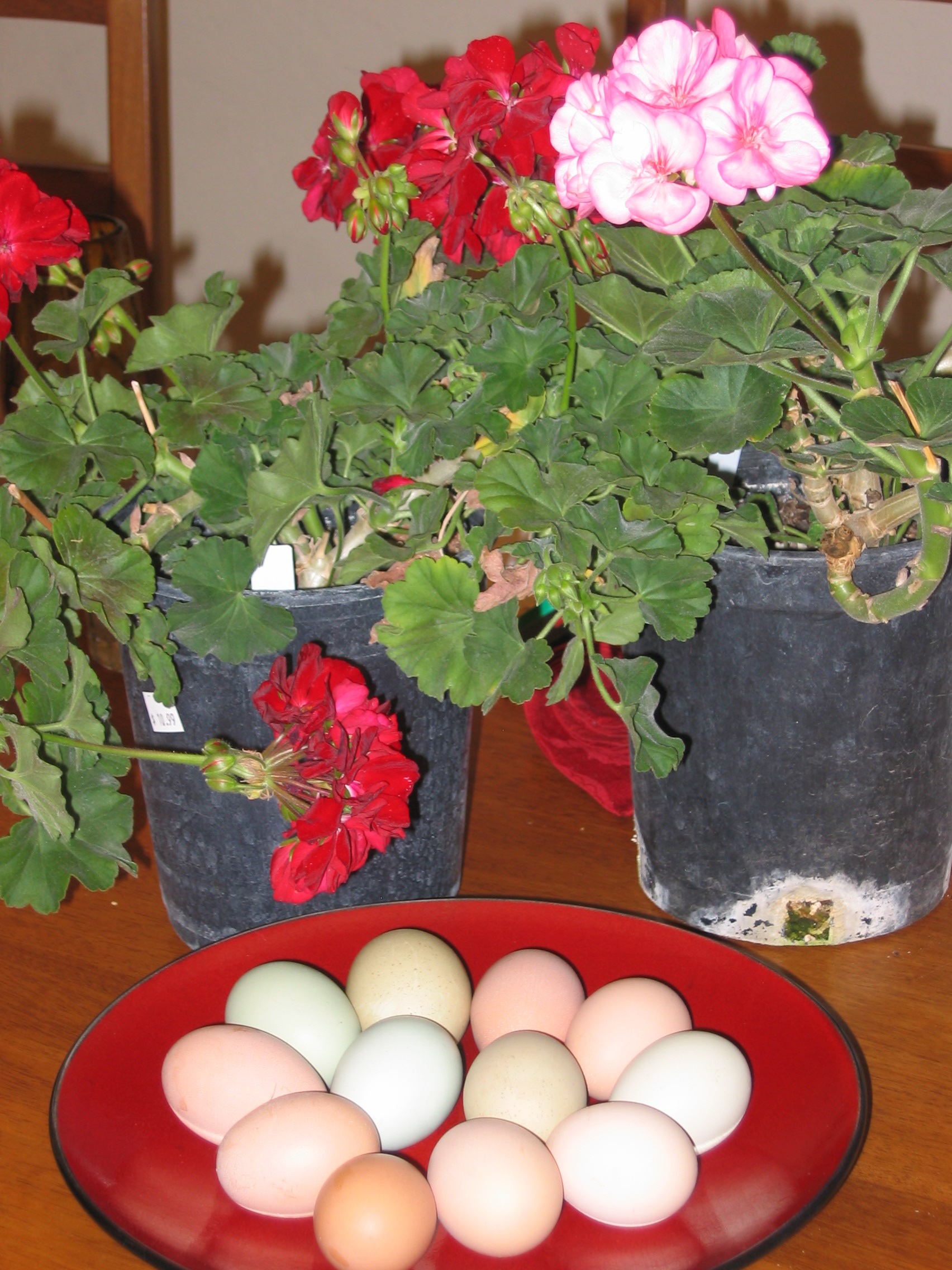
Regarding those eggs, I advise buying at the farmers market whenever possible. To have a good life and make good eggs, chickens should run around outside and have access to plants and bugs, not run around a giant stinking building with a tiny outdoor yard, mostly unused by the chickens, that allows the manufacturer (and I use that term advisedly) to call its product “free range.” Don’t support a CAFO with the misimpression that you are getting truly good eggs. Really good eggs come from small producers and backyard growers and are not found at the grocery store. Be sure to bring the cartons back when you empty them, because the small growers pay too much for them and are usually eager to reuse them.
12 Jan
Kitchen Staples: Broth

Few things will improve your cooking as much as getting rid of all commercial broth products and making your own. On my website I have extensive notes about broth-making, and you can read them here. In this post, I’ll just add a few notes about broth and its uses, and refer you to that site for the details.
Use very good materials to begin with. You can get lovely flavorful pastured chicken necks and backs from Pollo Real at the Santa Fe farmer’s market, and there is no better basis for chicken broth. Give the roasting step the time it needs, and the pay-off in flavor will be considerable. Don’t salt your broth, because you may want to reduce it later which will concentrate it manyfold. I pressure-can mine for later use, but if you have room in your freezer, that’s an easier alternative.
Once you have good broth on hand, you can use it to reduce waste and pick up some goodness from all kinds of things that you might otherwise discard. If I buy a pound of oyster mushrooms or shitake mushrooms to roast for a winter dinner, I put the stems and trimmings in a quart of broth to simmer for an hour, building the foundation for a great mushroom sauce or mushroom soup on another day. Chicken bones left over after dinner? Pop them in a quart or two of broth to simmer and enrich the flavor. Onion skins and ends on your cutting board? A slow simmer in broth will improve its flavor and give it a lovely gold color, and the rawness of the onions is lost en route.Many people save their bones and vegetable trimmings in plastic bags in the freezer, but I think the flavor is better if you simmer them while they’re fresh. The broth can be frozen more successfully than the ingredients.
Fish and seafood broths need to be cooked separately from other meats, naturally, and don’t include any salmon trimmings. I love salmon, but it does ruin fish fume’. But if you buy a few mild fish heads to start fish broth, then every time you have shrimp shells, crab shells, or any other flavorful but inedible seafood bits available, you can extract its flavor in broth and save the broth for a great paella or gumbo when you’re in the mood.
Once some good enriched broth is hanging out in your kitchen, what do you do with it? There is almost no pan-grilled or roasted meat that can’t be improved by a simple reduction sauce. Remove the meat from the pan, pour a cup of good broth into the pan over high heat, boil hard and scrape all the lovely browned bits into the broth, and when it’s reduced to a few tablespoons and has a syrupy consistency, swirl in a tablespoon of butter and serve immediately. A glug of good red or white wine, depending on the meat and seasoning, can be added to the pan for the initial deglazing, then add the stock and boil down. If you want to get fancier, most of the sauces of classic French Cuisine are at your command when you have really good broth to start with, and you can check out Glorious French Food or another cookbook to consider your options. Grains like rice and bulgur are delicious when ccoked in broth. If you’re a fan of Mexican cooking, you’ll want to try Zarela Martinez’s trick of toasting dried chiles of various kinds and then soaking them in broth rather than water before grinding them into a mole’ paste or other flavoring paste. Great stews like coq au vin are within your reach, although they will use up a lot of broth, which is why you make a lot in the first place. A paprikash like the one above requires little more than a meaty main ingredient, top-notch paprika, and really good broth (my own far-from-conventional recipe is below.)When I’m feeling dispirited and glum I revert to my Louisiana roots and make gumbo, and it invariably cheers me up, and usually cheers some other people too.
I advise avoiding strong-flavored vegetables of the cabbage family, such as broccoli and kale, for general-purpose broth. If you use leafy greens, they will color the broth, so don’t use them unless you’re willing to have green broth. Onions, carrots, celery, shallots, and leeks are aromatic staples that improve any broth. If you want to make all-vegetable broth, my favorite way is to roast the vegetables to bring out their flavor via the lovely Maillard reactions, and add a few mushrooms for the base note; dried shitakes are especially good for this, and as long as you don’t use too many, the flavor will not be identifiably Asian. .
If we can grasp some positive principle from the wretched ecomony, it should be to get the best value we can from everything we use. Nothing does that better or more gracefully than broth.
Continue reading
 My urban homestead