Posts Tagged ‘vegetables’

The Seeds You Need

image

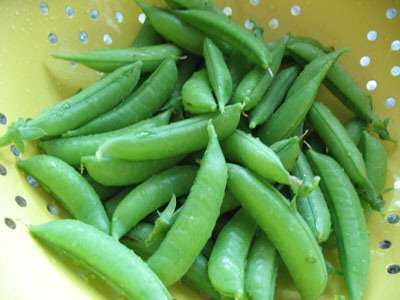
Here in the high-desert Southwest, our cold-weather vegetables need to be planted by mid-March, and so late February is my last good chance to review my seed box and order what I need. This resulted in my sending off a frantic order for sugar snap peas. My attachment to them is strong, largely because I love English (shelling) peas but never find time to shell them. My favorite snap pea is the original Sugar Snap. This variety has some disadvantages: it climbs 5-6 feet and has to be provided with support, the pods have strings and need to be de-stringed before cooking, and it doesn’t have much in the way of disease resistance (although I have had no problems with disease.) It has a single incomparable advantage: flavor that none of the newer, neater varietals can live up to. For best flavor, the peas inside the pod have to be allowed to develop. Don’t pick them in the flat snow-pea stage. Then rinse and string the pods, which is a very quick job, and steam them to eat with butter, stir-fry with some scallion and ginger, or cook them in your own favorite way. Yum.

In my opinion they develop a soapy taste when frozen, so I don’t recommend “putting them by.” Eat mountains of the fresh article and give any extra to people you really like.
The important thing is, order those seeds now.

And don’t forget to plant extra so that you can cut pea shoots. Cut when they are 6-8 inches high, pea shoots are delicious in salads and stir-fries.

How to love Your Carrots


I’m doing a blog series for our local newspaper this month, but some readers had trouble accessing those posts, so I decided to put them on my own blog as well. Here’s the third one:
Eating seasonally is a pleasure for most of the year, and fall is a wonderful time to eat carrots. We all know how healthy carrots are, so I’ll skip over that part and concentrate on how delicious they are. When I cook carrots I make a lot, because they are wonderful for at-your-desk lunching the next day. Usually I retrieve my lunch from the refrigerator at my mid-morning brief break and eat it at room temperature at lunchtime, as long as no egg yolks, mayonnaise, or other extreme perishables are involved. If I plan to eat them at room temperature for lunch I use olive oil instead of butter, since animal fats congeal unattractively when they aren’t hot, but if you prefer to use butter, no problem. Just heat your carrots a little the next day, then carry them back to your desk and eat happily, with the slightly smug glow that comes of doing the right and healthy thing and getting your work done at the same time.
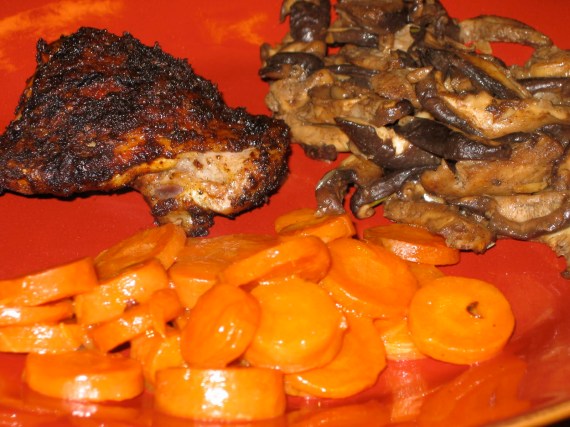
First, catch your carrots. Real carrots come in bunches with the tops on, and if the tops look withered, don’t bother with those carrots. Get some fresh ones instead. Your nearest growers’ market is a great place to shop for them. Here in Albuquerque you can find several colors, including yellow, the standard orange, red, and a glowing royal-purple. I love the purple ones, but any of these techniques can be used for any carrot.

I use the word “technique” with forethought, because it is basic technique that makes it quick and easy to cook and eat lots of vegetables. If you have to read a recipe in the kitchen as you work, you will eventually get fed up, but technique lives in your brain and makes it a snap to blanch, saute’, stir-fry, bake, boil, or grill any veggie that you care to eat. No precise measurements are needed. So here are a couple of basic techniques for carrots:

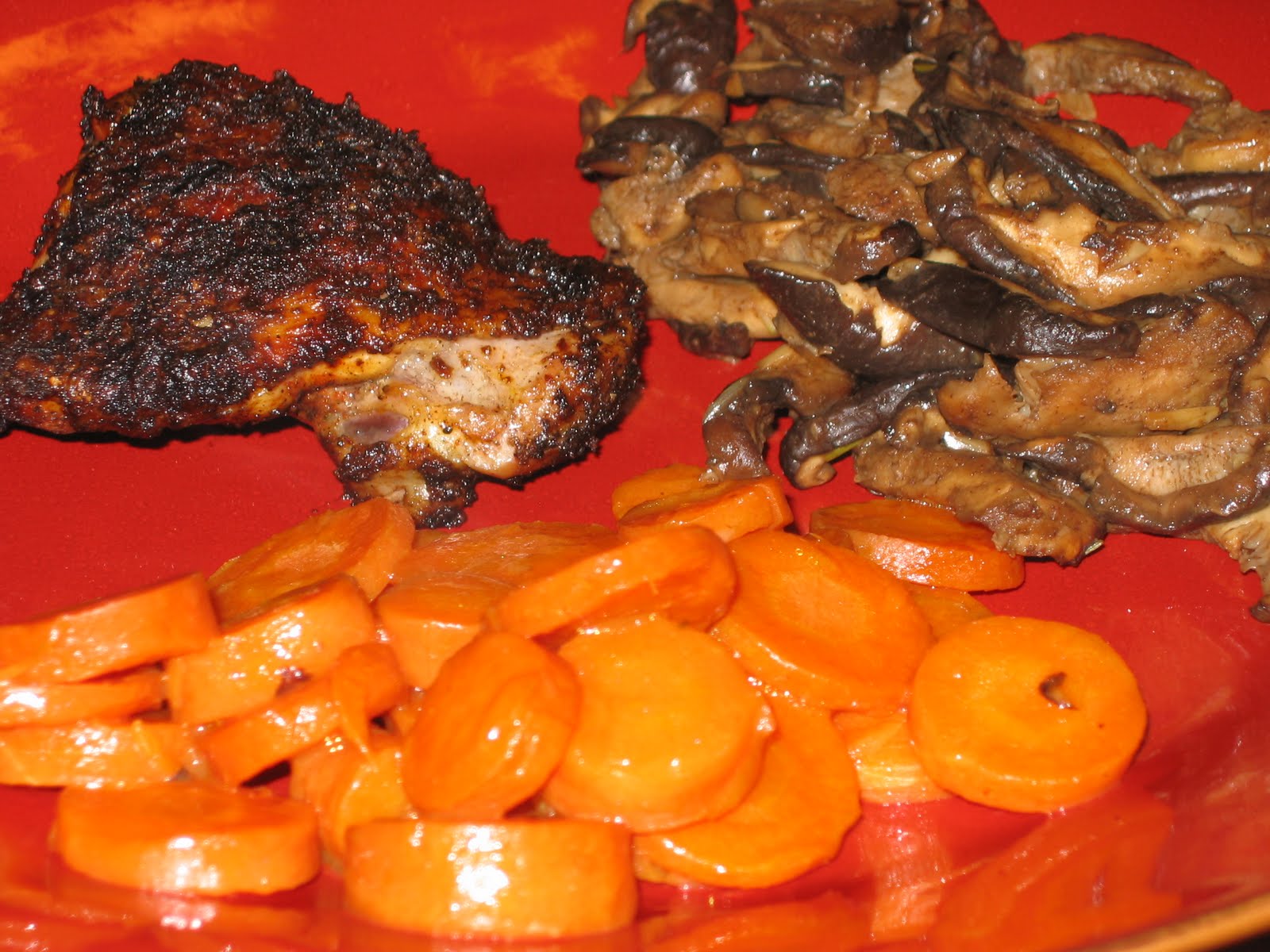
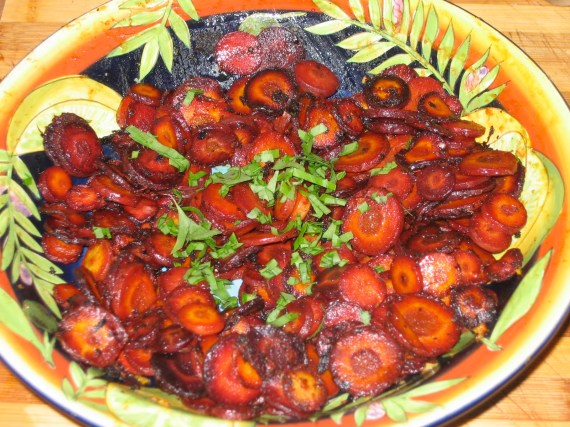
Blanch, then saute’: trim and scrub four large carrots or six smaller ones of any color. Peel if needed (usually I scrub well with a brush instead.) Slice into slices about a quarter inch thick. Fill a large saucepan with about 2 quarts of water, add 2 teaspoons of salt, bring to a boil, toss in the carrots, boil 5 minutes, and drain thoroughly. If you want to, you can hold the drained carrots at room temperature for 2-3 ours, making it easy to do some work ahead of time if needed. Melt two tablespoons of butter in a frying pan, or use olive oil if you prefer. Put in the carrots, 2-3 teaspoons of honey, salt to taste, and a grating of fresh nutmeg. Saute’ over medium heat until the carrots are done to your liking, and serve. The blanching makes sure that the carrots cook evenly, and the saute’ing brings out their flavor. You can vary this infinitely: add herbs in the saute’ stage; thyme or savory are especially good with carrots. Chop a clove of garlic or half a small onion and cook in the butter or oil until just cooked through before adding the carrots. Use a tablespoon of balsamic vinegar instead of honey. Add a squeeze of fresh lemon juice for a very fresh flavor. Add half a teaspoon of grated orange rind with the honey. Add a tablespoon or two of dark rum and cook it off thoroughly before serving. Or, if you have access to some good artisanal root beer (I brew my own. Just don’t use the grocery-store glop) you can add a quarter cup of it when you add the carrots to the butter, and cook over high heat until the root beer is reduced to a syrup that just coats the carrots. A quarter-cup of dark ale produces a malty, ever-so-faintly bitter glaze that’s great with game. You can also cut the carrots into chunks about 2 inches long and then cut those into quarters at the initial prep, for a different texture. When using orange carrots, sometimes I cook a couple of purple potates separaely, slice them, and add them in for the saute’ stage.
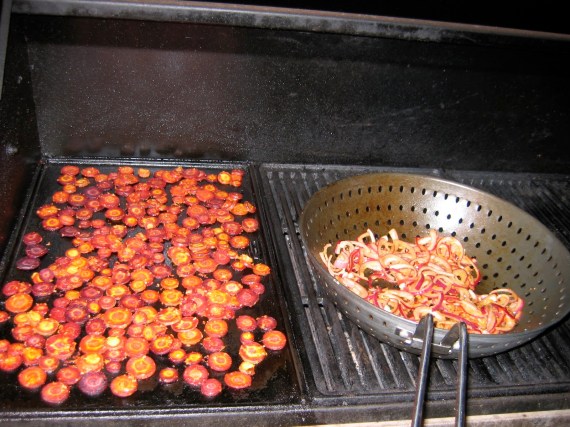
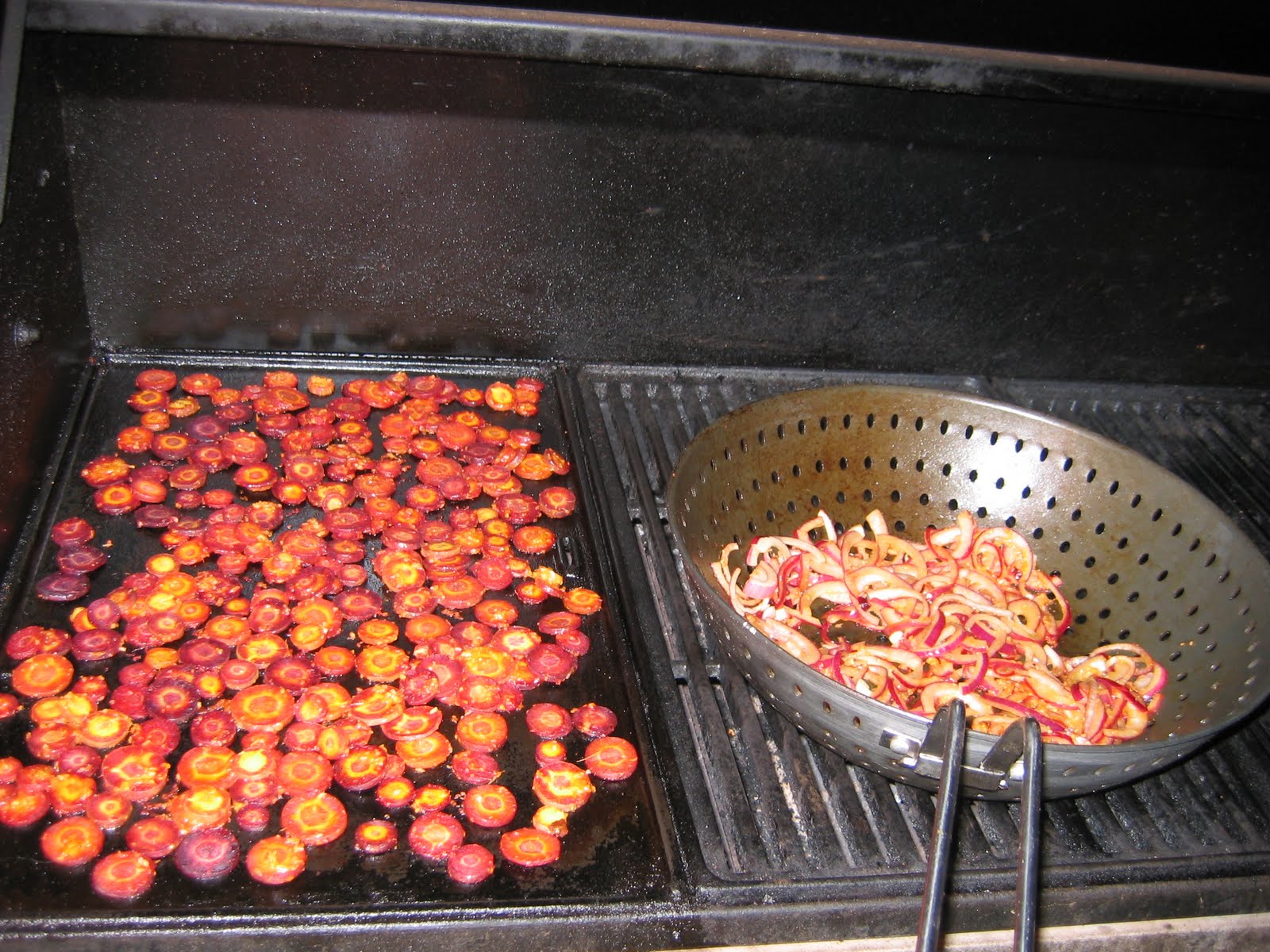
Grilling: Usually people don’t think of grilling carrots, which is a shame, because the caramelization around the edges is delicious. Just cut them thinly. I like slices about 1/8” thick. Use a griddle or grill-wok so they don’t fall through the grill, and watch them closely so that they don’t burn. I describe a Southeast Asian seasoning here, but again the technique is key, and once you get the hang of it, you can season them any way you like. Trim and scrub 3-4 large carrots of any color, and slice them thinly. Toss with two chopped cloves of garlic, a 1” chunk of ginger grated, a tablespoon of Asian fish sauce (you can use soy sauce instead if you insist,) a tablespoon of agave nectar or coconut sugar, and 2 tablespoons of canola oil or similar. Heat the grill to medium-high and spread the carrot slices out on the griddle section or put them in the grill-wok. If griddling them, turn them in bunches with a spatula about halfway through. If using the wok, you will need to turn several times during cooking. Taste to see when the texture seems just right to you, salt a little if they need it (the fish sauce is fairly salty) and serve with some chopped cilantro on top.
Choosing a CSA


If you don’t want to garden yourself, or don’t have room, a CSA is a great local-food option. You share in the season of a local farmer/gardener, and receive truly seasonal vegetables. Using a CSA for a season is also great preparation for starting your own garden, since it trains you to cook with what is in season and grows well in your area. We have several CSAs in our area, but recently I was contacted by Jill, a HIgh Desert yoga instructor who has a small CSA and is ready to take a few more customers. I have not used her CSA myself, but this is exactly the sort of Earth-friendly mini-farm that we need more of, so I’m reproducing her ad below.
Whenever you are considering a CSA, I suggest a discussion with the farmer by phone or email about growing practices (most mini-farms can’t afford the organic certification process, even if they use organic methods,) the variety of vegetables that you can expect, whether fruits and/or flowers are ever included, roughly when the season will start and end, and how many family members each box can be expected to feed.
After one or two CSA seasons, you might be ready to grow your own!

Vegetables by the box.
Mama’s Garden is a Northeast heights backyard garden CSA providing a fresh and delicious variety of seasonal vegetables, herbs, flowers and melons. Mama’s Garden is run by Jill Palmer and her son Narayan and has been selling its pesticide-free produce at local grower’s markets since 2009. Sign up by May 5th for your weekly box throughout the growing season and pay weekly. Free deliveries to the NE heights and Nob Hill. Contact Jill at growinluv@gmail.com

Jill adds in her email: ” I am happy to provide you references of my previous CSA members or any
> other info. you might like to know about us. Having just a backyard,
> I am not cert. organic, yet I use no pesticides and prep. the soil
> with yummy compost I make at home and from Soilutions as well as horse
> manure. I have enough variety to keep the box fun…as every few
> weeks a few more veggies begin to fruit. I sell a 1-2 person amount
> as a $15/box and 3-5 person amount as a $30/box. Yet amounts/prices
> can be tailored for more persons than that with discounts.”

Vegetable dinners: Starting the new year


Recently a reader contacted me about how to transition to a diet of “all real food.” Expense and time were real concerns for him, as they are for most of us.  Well, there’s no question that if you’ve been eating a lot of convenience and supermarket food, real food is likely to be more expensive. You will be making more things from scratch, so it will take more time, too. So my first piece of advice is: don’t make a New Year’s resolution to change your whole diet. I am very mistrustful of New Year’s resolutions; in fact I am mistrustful of any statement that anyone is going to make sudden sweeping changes in their way of being in the world and maintain those changes over time. Personally, my transition in food and lifestyle took place over years, with one step building on the previous ones, and no one change so huge that I couldn’t maintain it until it became a habit.
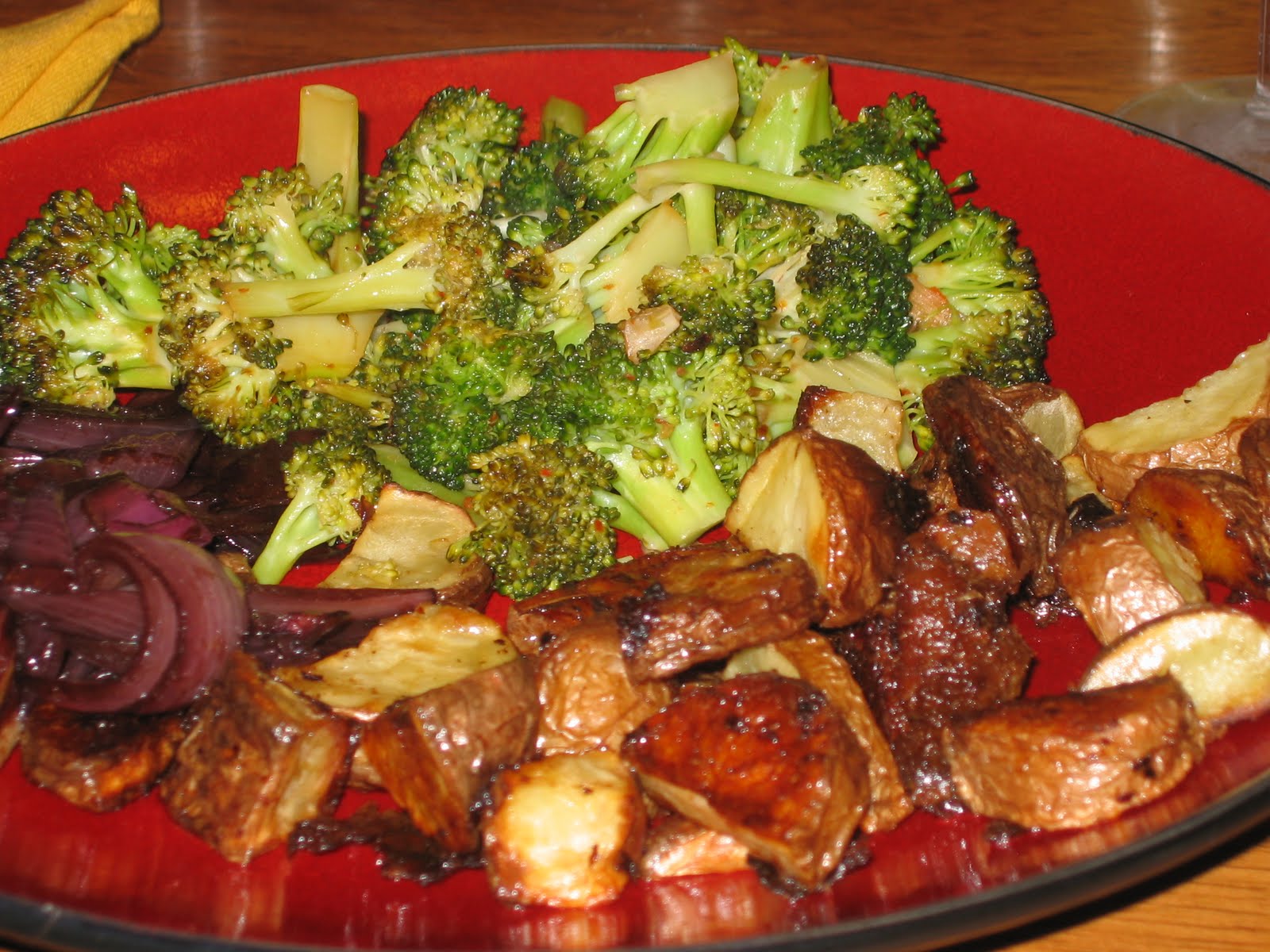
So here’s how I would approach this change: eat more vegetables. Fill your plate with them. Twice a week or so, make two or three simple vegetable dishes for dinner, and don’t have any meat available. On the other nights, offer a small amount of meat and lots of vegetables. A loaf of good bread is a great way to center the table for all-vegetable dinners, and at first you can buy the bread and transition to home-baked later on if you want to. Heat the bread up and have butter or olive oil available to make it festive. Let your vegetable meal be a celebration. Learn a few simple whole-grain dishes and use them as “grounding and centering” dishes to offer some variety from bread. Don’t forget vegetable pasta dishes, which are delicious and appeal to kids. Buy your vegetables wherever you usually shop, and learn to cook them in ways that taste really good. Notice that at this first stage you do not torment yourself by trying to grow all your own food, eat local only, or eat organic only. You just cook the veggies that are readily available to you in ways that work for you. Pay special attention to learning to cook leafy greens in ways that you really like. They are abundantly good for your health, and if you take up gardening later on, they are among the easiest things to grow, but they are also the most likely to sit in the garden unused if you don’t have your kitchen techniques down pat. When you and your family are used to eating lots of vegetables, you can add more whole-grain dishes, or go organic, or shop at the farmers’ market when possible.

If you make this your first step toward a whole-foods diet, you won’t save much money initially because CAFO meat at the supermarket is cheap, but you won’t spend more than usual. Invest a very little bit of money in a really good vegetable cookbook; a wonderful and inexpensive one is Fast, Fresh, and Green by Susie Middleton. Check out my “vegetable dinners” category, too.

When you and your family are really loving your veggies and you can turn out vegetable dishes smoothly and without kitchen trauma, and plates heavy with vegetables look just right to you, take the next step. Enlist your family in deciding what the next step will be. If you use a lot of dairy products, organic dairy might be a good step. Or consider a backyard garden, or a farmers’ market excursion once a week in season, or more whole grains, or whatever. Bear in mind that truly ethical meats are going to be expensive, and if you just substitute them for the supermarket kind in the amounts you are used to eating, you are in for a nasty surprise when you add up the bills. I don’t suggest changing to them until you have formed the habit of eating small amounts of meat and making veggies the biggest part of your meal.
Don’t forget breakfast. Cook a pot of wild rice or red quinoa ahead of time and heat up enough for breakfast, topping it with some butter and maple syrup or honey. This is a treat even for people who don’t like “health” foods.

I don’t believe that negative energy is ever very helpful. Don’t berate yourself for the things you aren’t doing, just be appreciative of the positive changes that you’re making. If you need to pick up a quart of milk at the convenience store some night, don’t go crazy over it. If unexpected events change your life for a while, respond to them as needed, and then go back to your new way. Somewhere along the way, read or reread The Omnivore’s Dilemma, still head and shoulders above other books about factory-farming systems and, in my view, much better than Pollan’s subsequent books at helping you remember why you are making these changes. Love your food, and enjoy your mealtimes, and step will follow naturally on step. Have fun, and happy New Year!