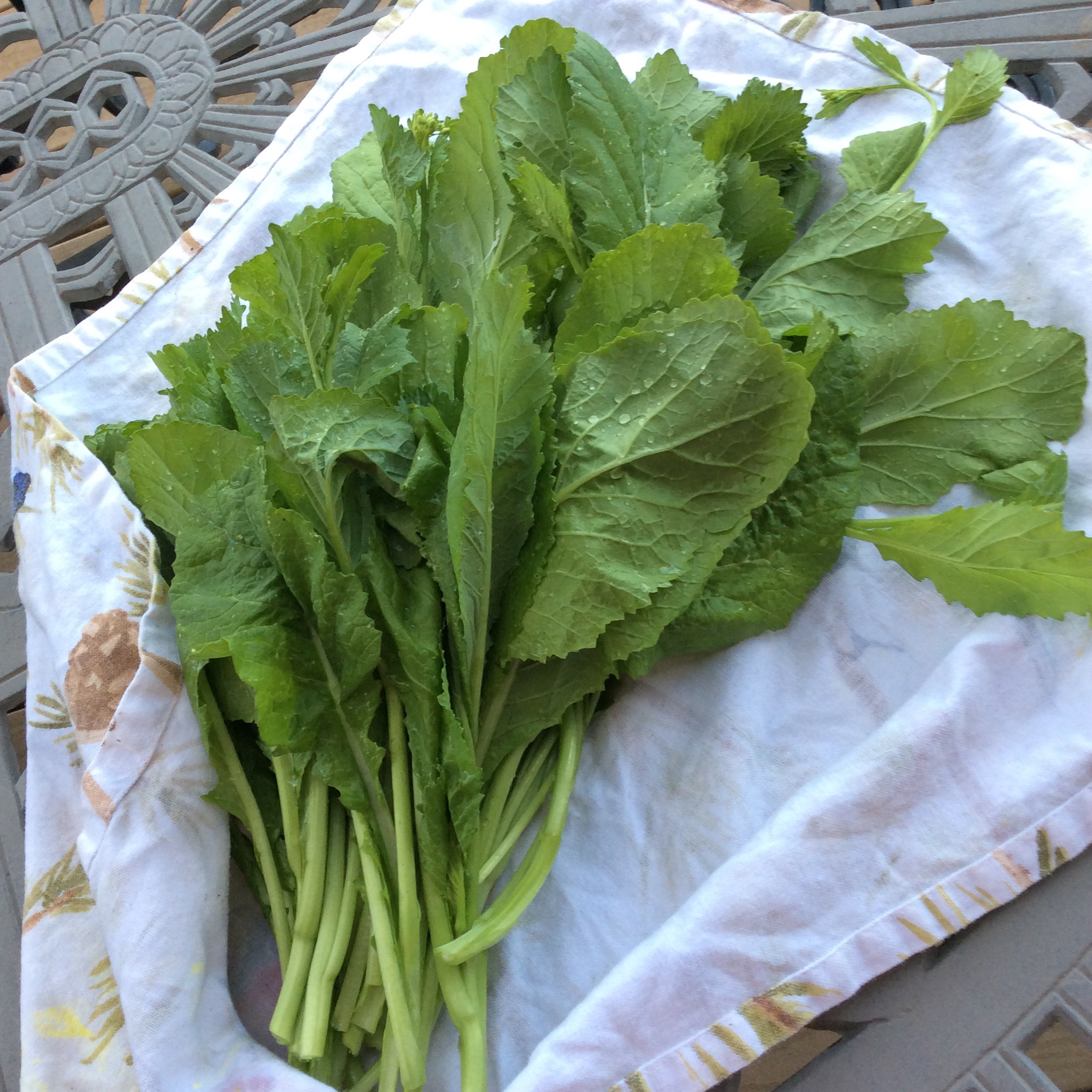
I hear people talk about how difficult they find it to cook vegetables for themselves. I’m on my own tonight, so I decided to try it. I started with a bunch of mustard from an area where I’d sown mustard greens thickly as a quick cover crop. The greens were thinned to 2″ apart in the seedling stage, and now are about a month old and maybe 8″ high. I grabbed a handful and pulled them out by the roots. Then, still holding the stems together as a bunch in my left hand, I used my right hand to snap the roots off of each stem at the point where they snapped rather than bending, taking the lower yellowed leaves away with the roots, and put the roots aside on the mulch and avoided dirtying the leaves. It’s important to break the stems where they snap. If they bend almost double instead, they have acquired more fiber than you can chew. Then I took the rootless mustards inside and washed them quickly. They grew upright due to the crowding, and that keeps them clean and saves washing. This entire process took five minutes, plus another minute to snap off two young tender garlic scapes and rinse them.
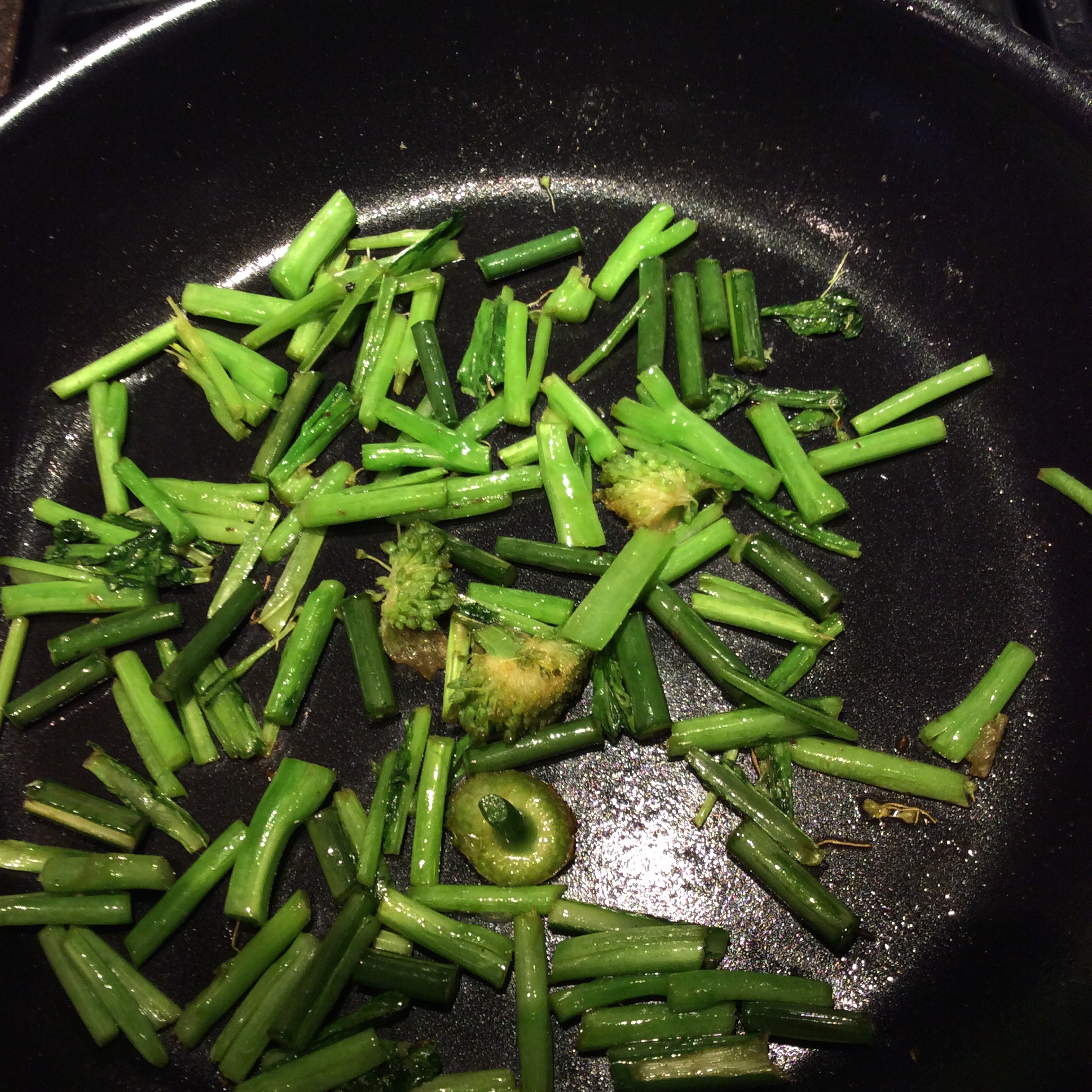
Then I heated my skillet over fairly high heat, and while it was heating I cut the garlic scapes crosswise into 1″ lengths. When it was hot, I put in a couple of tablespoons of olive oil and tossed in the garlic scapes. I put in the cut-up bud sheath from the top of the scape too, but I ended up picking it out later because it was too large and tough. No issues, you are alone and there are no mistakes. While they sizzled, I cut the mustard bunch crosswise into 1″ sections.
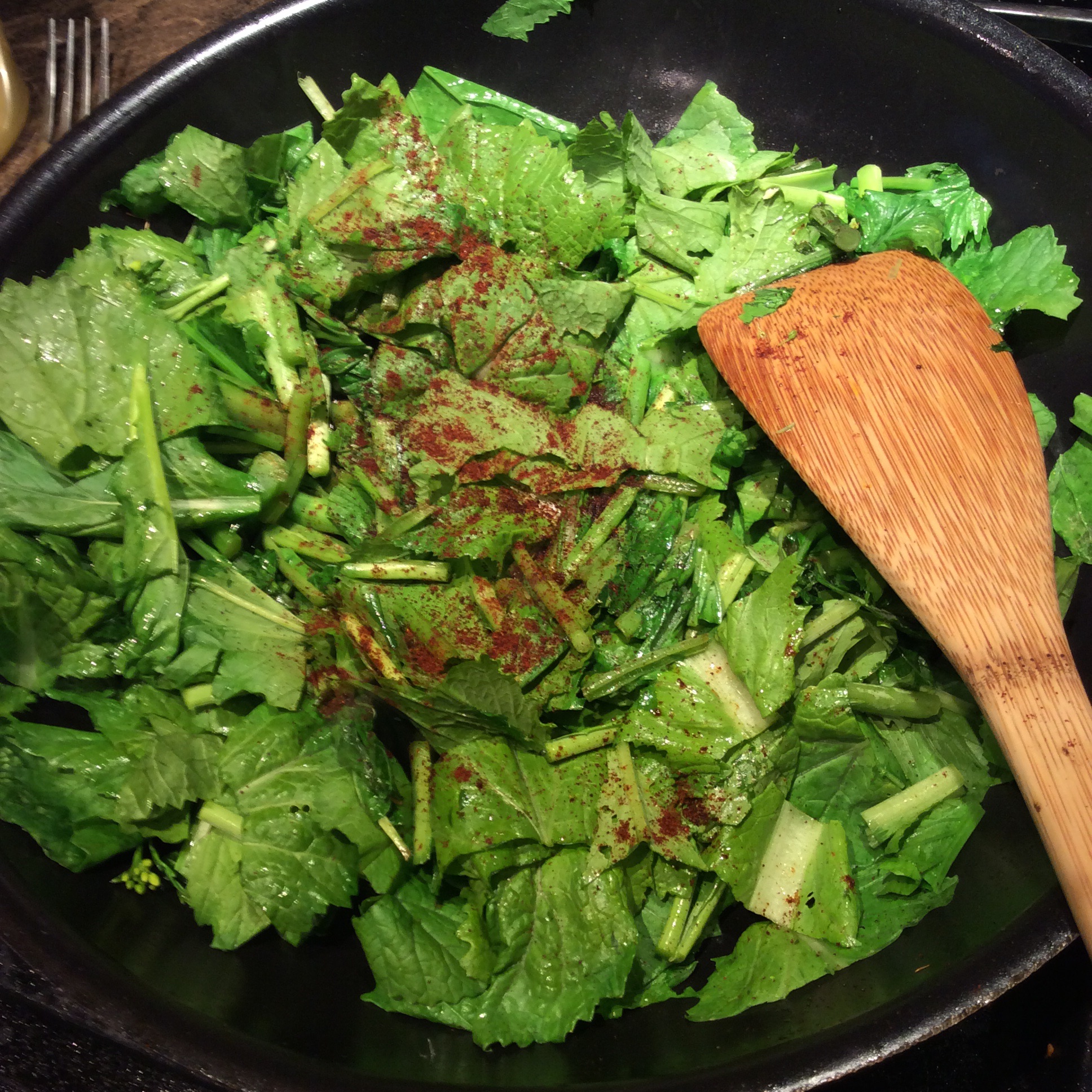
After the scapes had cooked about three minutes, I added the stem ends of the mustard, cooked a couple of minutes, and then added the rest of the cut-up mustard and a large pinch of salt, stirred and fried a few minutes, and added a heaping quarter teaspoon of ground chipotle chile. If you don’t care for heat, Spanish smoked paprika would work well. Keep tossing every minute or so.
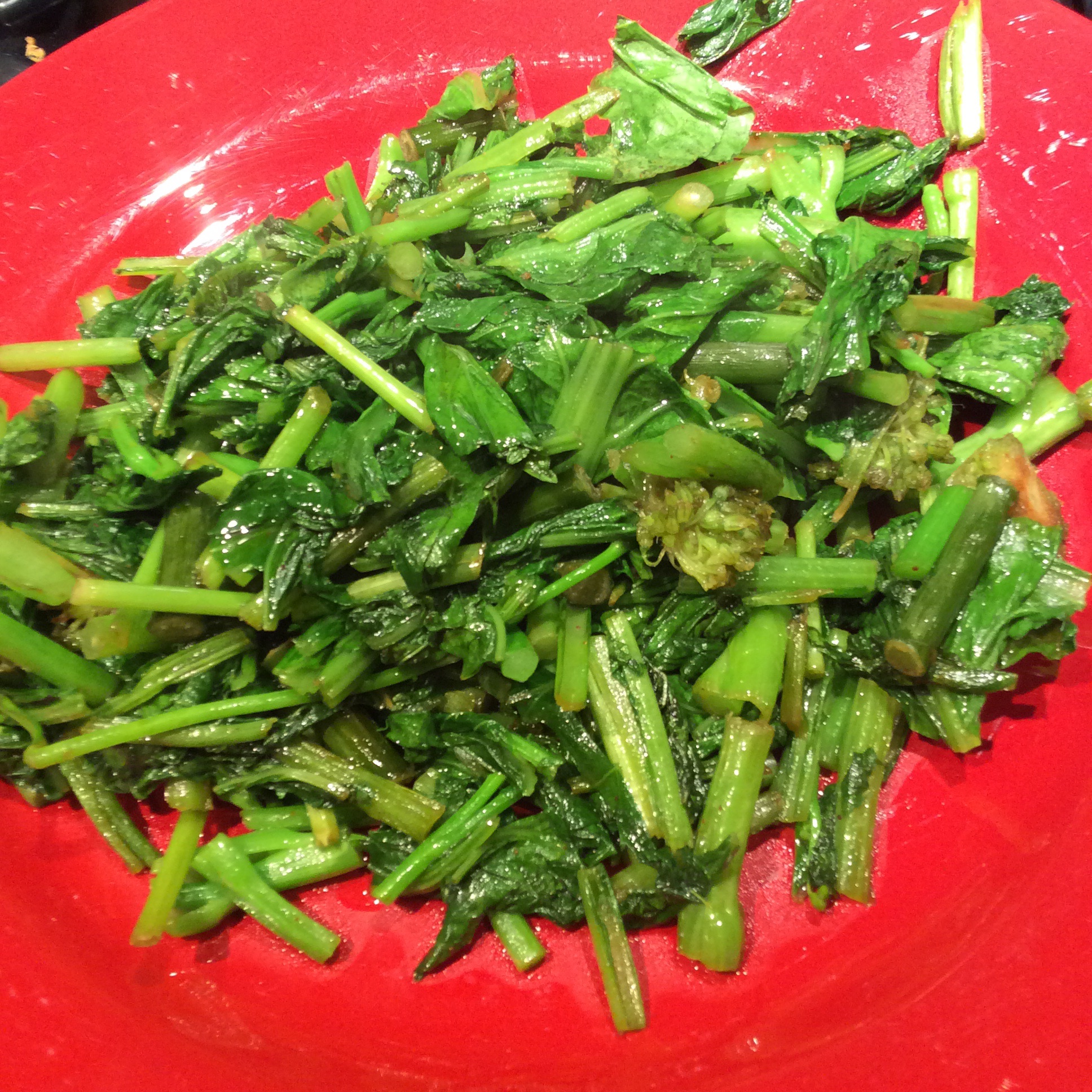
Just before they were done, I added a good dash of Red Boat fish sauce, which is easily obtainable at Asian markets or online and is the closest substitute for Italian colatura. Stir another minute, check doneness by eating a leaf section and a stem section, and keep cooking until it tastes good. Keep the heat fairly high but not hot enough to brown the leaves. When done to your taste, plate it. I think everything tastes better on red plates.
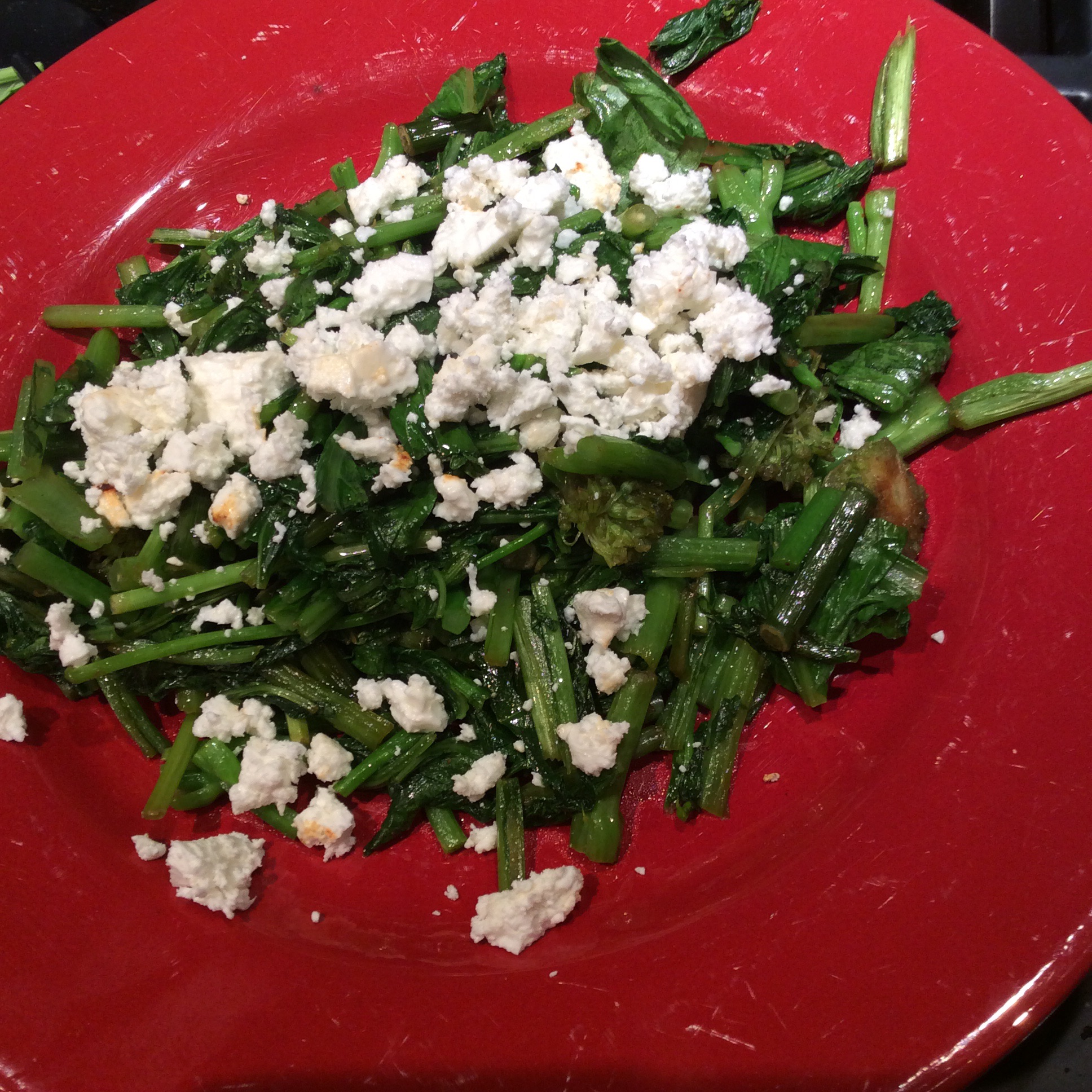
Then I looked in the refrigerator for a cheesy protein component. I suddenly went all Greek and crumbled some wonderful locally made goat feta over the top. If not using feta, check the salt. If really hungry, top the greens and feta or other cheese with a fried egg.
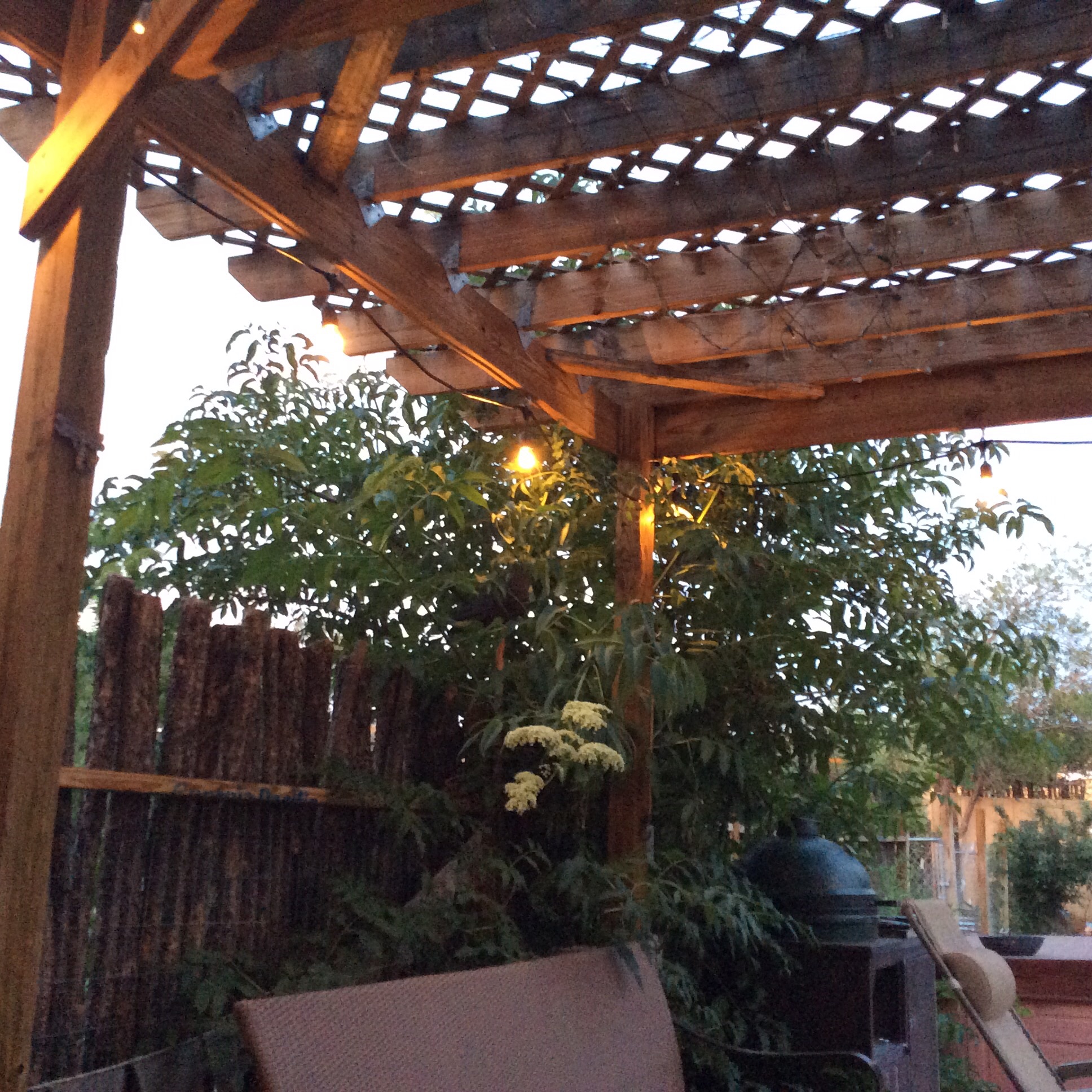
Eat in solitary splendor. You are doing a good thing for your body and it tastes good. How cool is that? So eat on the patio under the romantic lights.
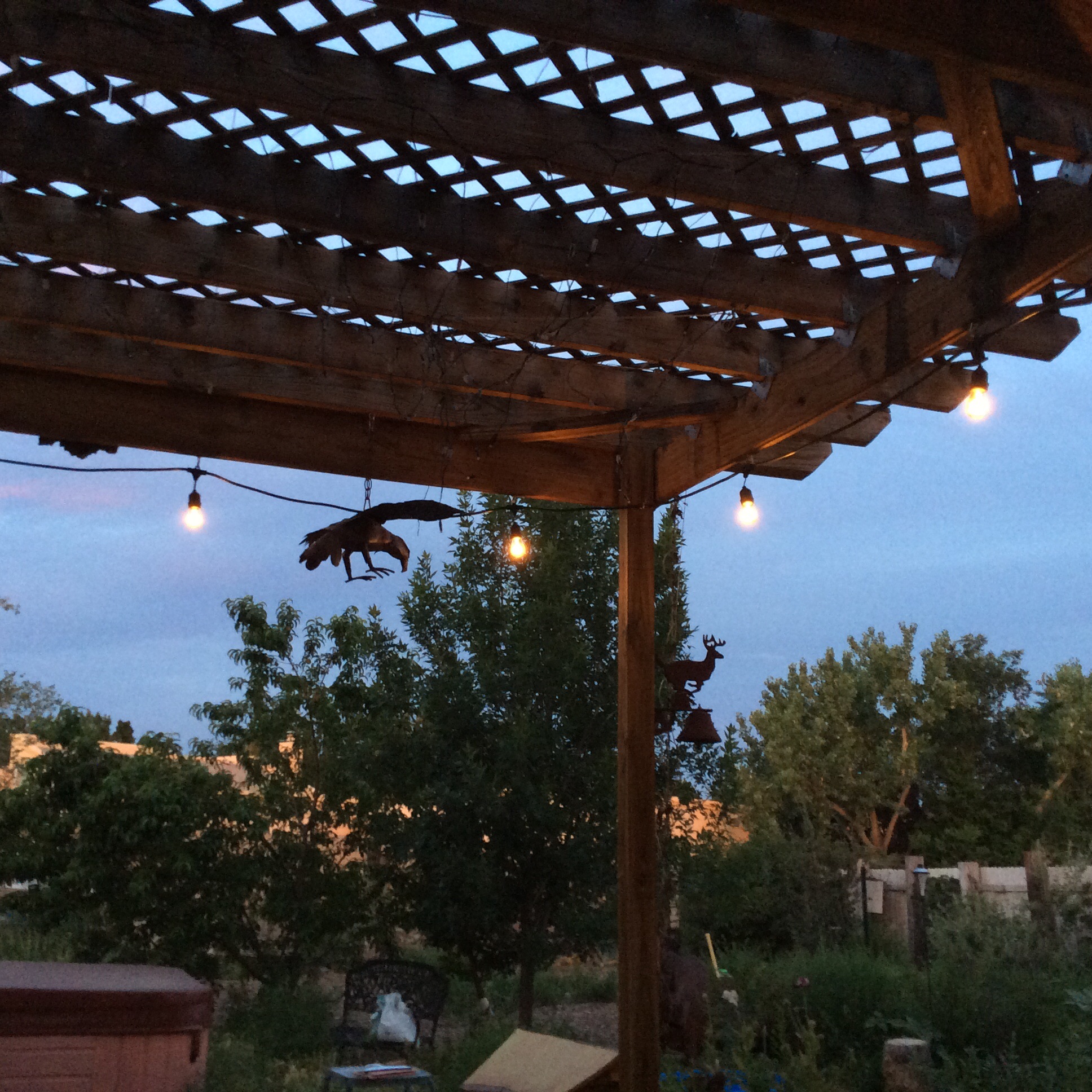
Have a little dark chocolate for dessert, because life is short.
Posts Tagged ‘leafy greens’
9 Jun
Vegetables for One
28 May
The Cook’s Treat: Lambs-quarters

I am the cook in our household, and one of the reasons that I love my kitchen work is that I can have cook’s treats, little experimental dishes that I cook up while working on something else and eat standing up in the kitchen. They are something like impromptu tapas for one.
Recently I was preparing large quantities of tender lambs-quarters tips for the freezer, and began to speculate about how a handful of the tops could be turned into a cook’s treat. I have been very happy with some recent experiments that involved pan-frying hops shoots or scorzonera shoots over medium-high heat with just olive oil and salt, but hadn’t tried it with a leafy green vegetable.
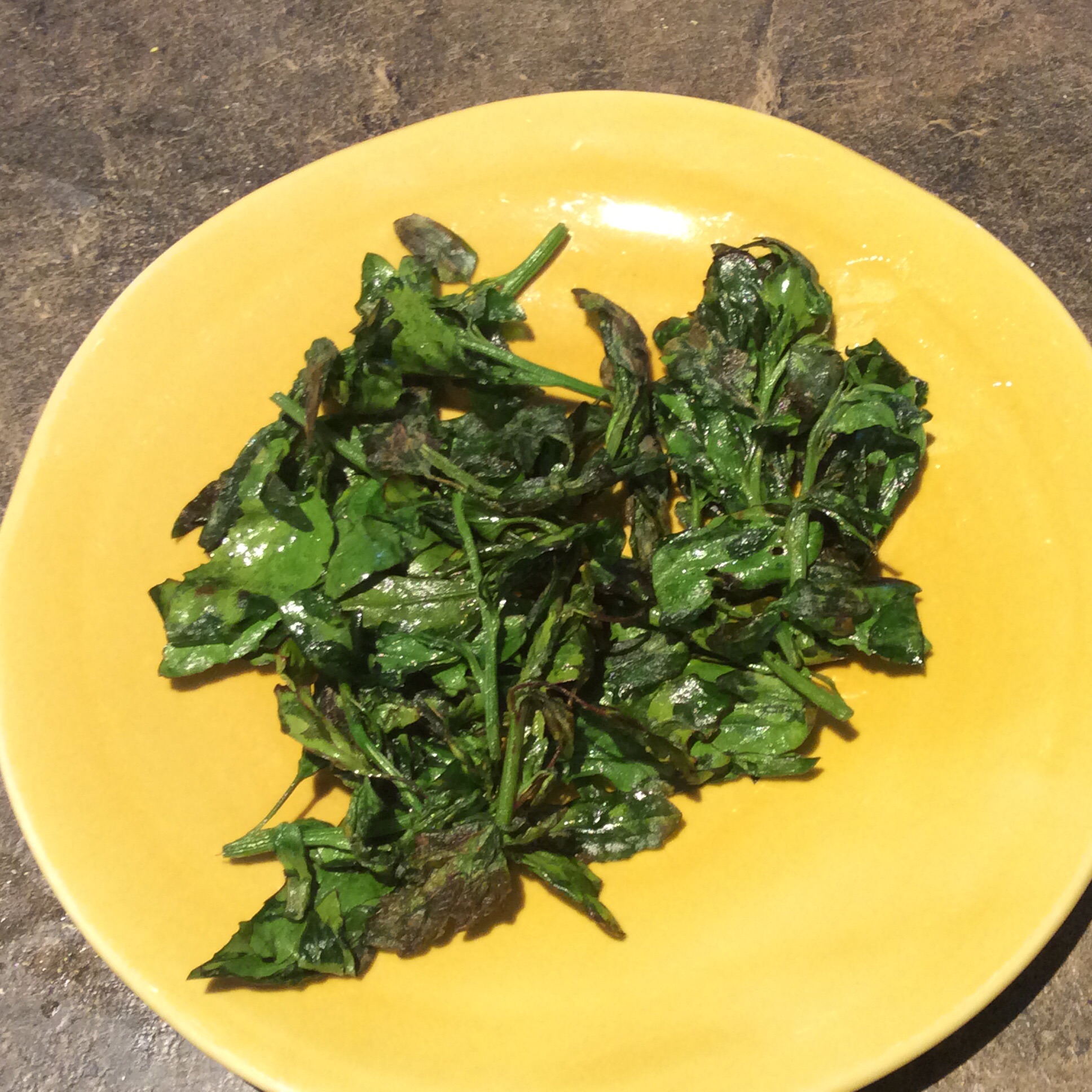
I was delighted with the results. I chose about a dozen small tender tips, maybe three inches long on average, and washed them but didn’t make any special effort to dry them beyond setting them on a towel to drain. While washing them, I set my little 7 inch skillet over medium high heat to heat up. When the pan was hot, and my greens were washed and drained, I put in a glug of good olive oil. I never measure olive oil, but I would guess that the glug that looks right in my small skillet is about 2 tablespoons. You do need enough oil in the pan for the greens to be able to fry in spots. Wearing an apron and standing back a bit from the stove, I threw the greens into the skillet. They spat and hissed ferociously. After a minute, I sprinkled on a generous pinch of salt and turned them roughly. After another minute I turned the heat down to medium and continued to turn them over every minute or two until the stems were tender enough to eat and many ( but not all) of the leaves were browned and crisp. I turned them out onto a small plate, sprinkled on a bit of Fleur de Sel, and ate them hot in between other kitchen tasks. Yum. The flavor is fuller and maybe slightly more bitter than mild lambs-quarters can usually reach, and the crisped leaves crunch delicately between your teeth, like very thin ice.
They have to have enough space in the pan to crisp up and not steam each other into softness. I think that my large skillet would probably hold enough for three people, but not more. To serve more people, possibly one batch could stay hot in the oven while the next was frying, but I haven’t tried it yet. I do know that from thought to finished cook’s treat took about seven minutes, and that the cook, thus treated, returned to her kitchen tasks very happily.
Addendum: I did try making it for more people, and the hold-in-the-oven idea doesn’t work, I regret to say. The greens rapidly go soft, and taste fine in a toasty way but the delicate crunch is lost. So this is a treat for one or two people. But then, it’s very romantic to have a special treat that simply can’t be shared with a larger group.
18 May
Improvisational Cooking: Greens on the Table
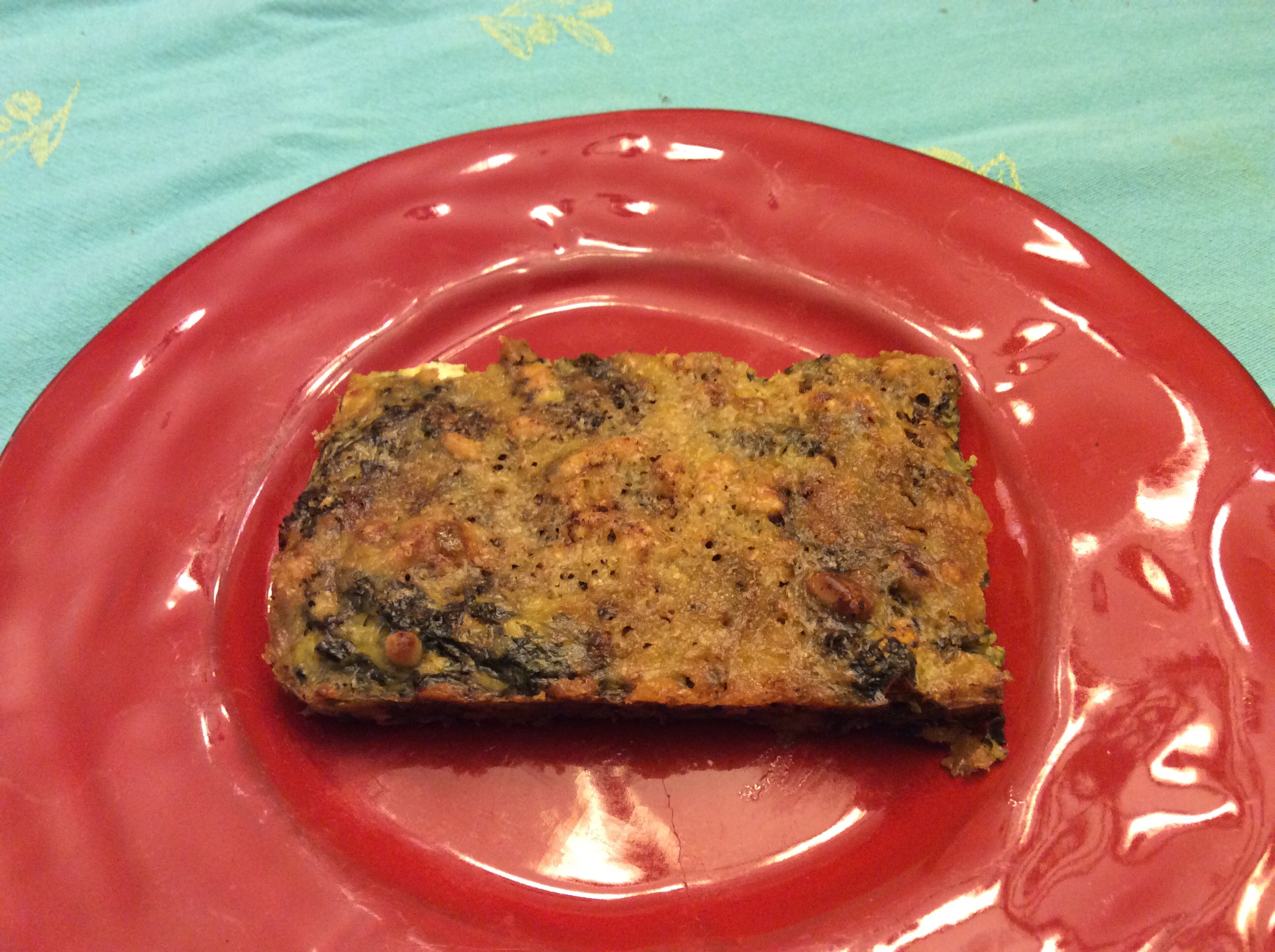
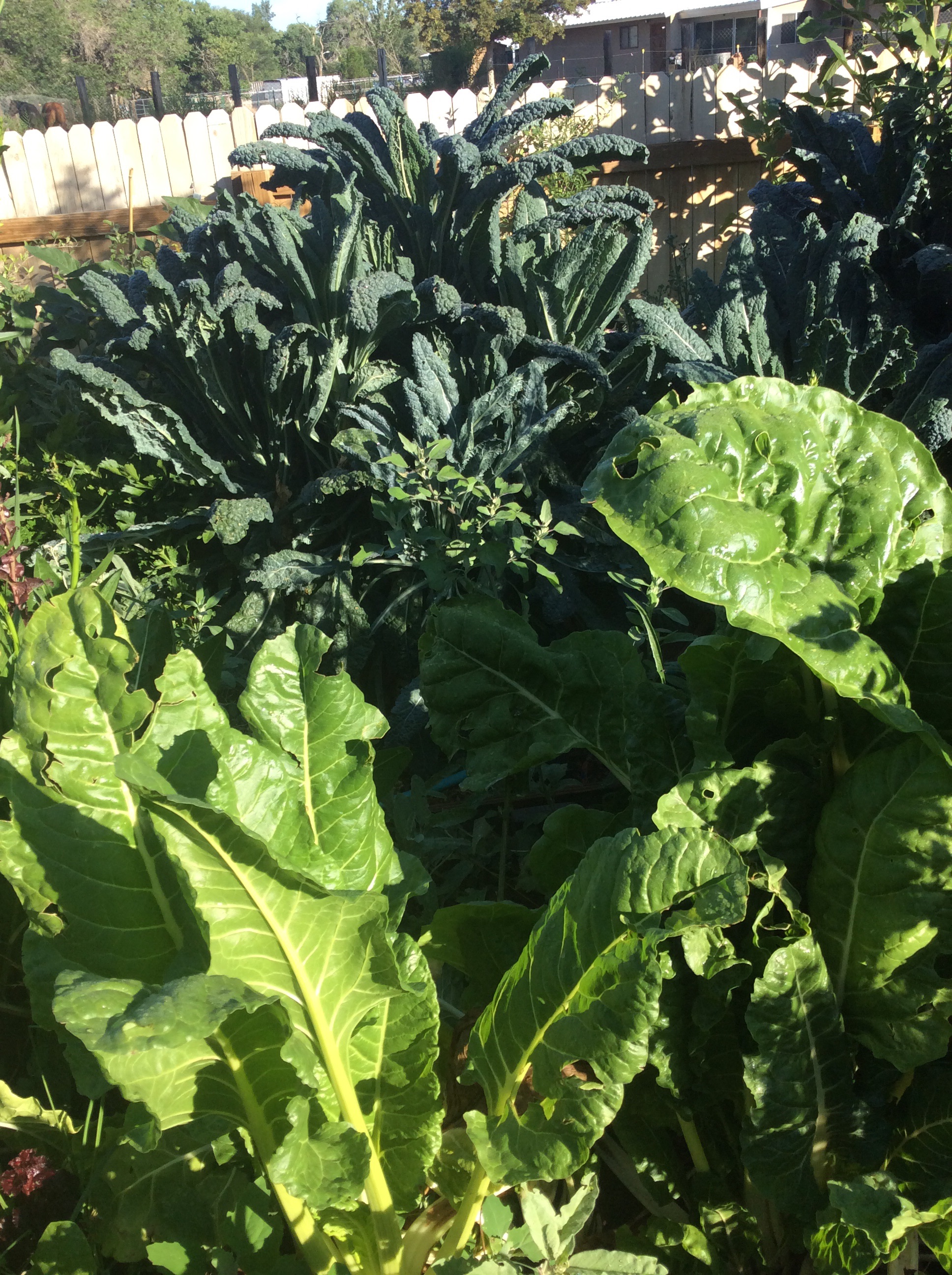
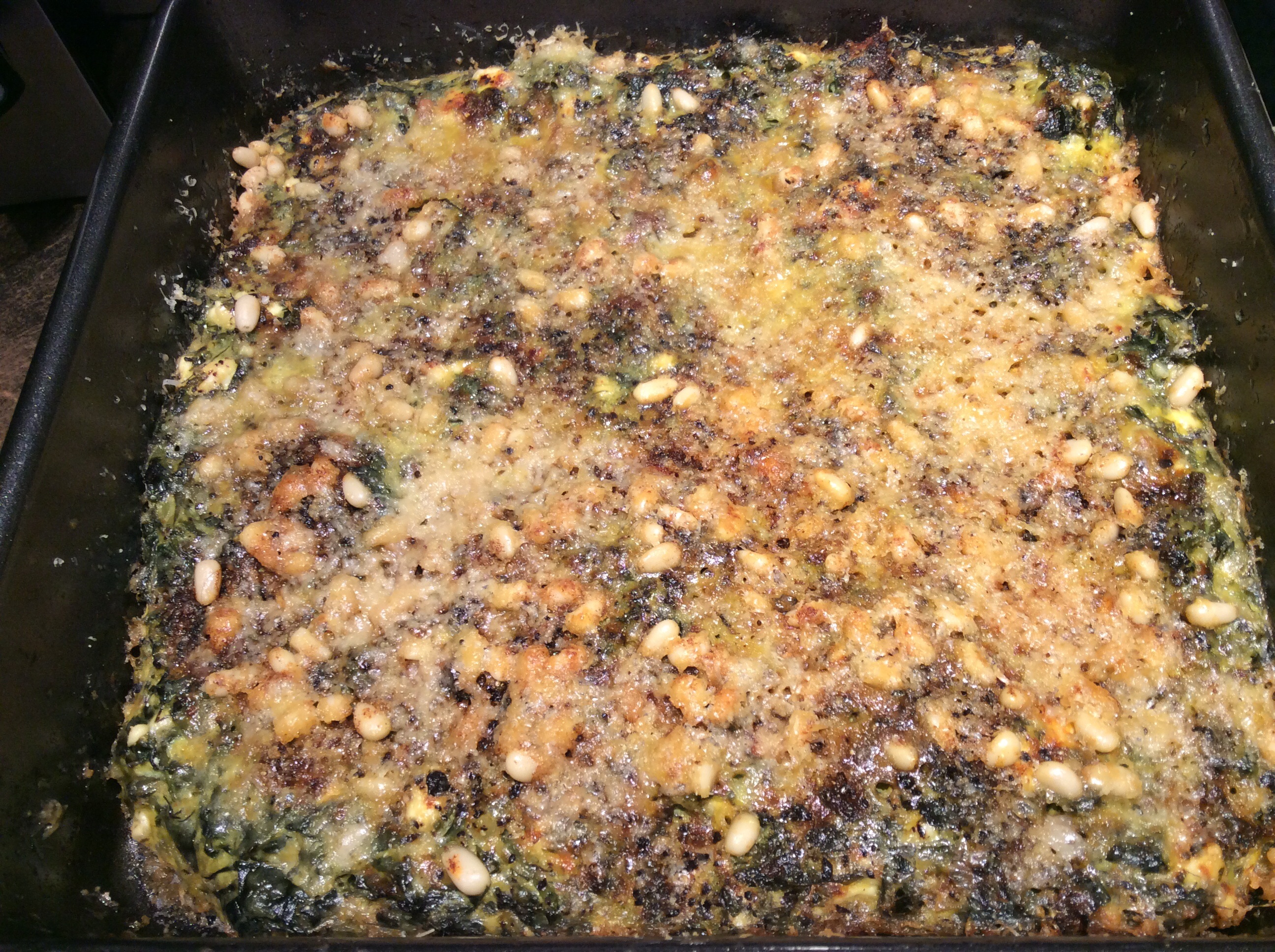
I am always yapping on about eating more leafy greens, and periodically I like to write about how I put leafy greens on my own table. Here is a low-carb recipe that even greens-phobes tend to like, and leftovers make wonderful lunches and snacks. It is improvisational in nature and you can substitute at will: this is a skeleton recipe and you can flesh it out any way you like.
The basic ingredients are greens, alliums, flavoring leaves, oil, cream, eggs, nuts, seasonings, and cheese. The greens, alliums, and flavoring leaves can be varied endlessly, except that the bulk of the greens should be relatively mild.
First, catch your greens. I carry a white plastic food-grade 3 gallon bucket out into the garden and pick it full, with the greens loosely thrown in and not packed down. Today I picked mostly lambs-quarters leaves, with some late spinach and early chard. If I was working from the farmer’s market or grocery store, I would choose a very large bunch of chard and Tuscan kale, and would tear out the large central midribs. Wash the greens twice. Grab them by handfuls and, on a BIG cutting board, chop them coarsely.
Second, decide on your alliums. Today I picked two big green onions and a couple of very big stalks of green garlic. If you don’t have a garden, a large onion and three cloves of garlic would work. You could use two cloves of garlic and two bundles of onion scapes from the farmer’s market. Shallots are good in the winter. Don’t use garlic scapes in this recipe, because the texture doesn’t work. Chop your alliums finely.
Third, consider your flavoring leaves. Think in terms of adding herbal, sharp, aromatic, and sour flavors. Today I picked several large young wine grape leaves for the sharp-sour note, a few leaves of lovage and a handful of parsley for green-herbal tones, and a few sprigs each of thyme and fennel for aromatic notes. Possibilities are endless. If working from the grocery store shelves, I would often choose a small bunch of parsley and some tarragon and thyme. Chop your flavoring leaves finely.
For the oil, I use top-notch extra virgin olive oil.
For the cream, I chose a can of coconut milk because I had one on hand, but heavy cream would do just as well, and if you insist on almond or cashew milk you can use that. You need a cup or a little more of your cream of choice.
For eggs, I use three whole eggs and nine egg yolks. Do be sure to get the best pastured eggs that you can get.
For nuts, I always use about half a cup of pine nuts. If you choose some other nut, chop them coarsely.
For seasonings, I used about a teaspoon each of red pepper and Urfa pepper flakes. I seldom vary this, just because I love this combination with greens. You may prefer freshly grated black pepper.
For the cheese, I nearly always use 6 ounces of finely grated Parmesan and eight ounces of the wonderful Mt. Vikos feta, crumbled.
Having made your choices and prepared your ingredients, preheat the oven to 375 and generously grease a pan about 10 by 14 with olive oil. Sprinkle the bottom of the pan with some of the Parmesan. Beat the eggs and egg yolks together and salt them a bit.
Heat some olive oil, about a quarter cup, in your largest skillet and sauté the alliums until they are softening. Add the coarsely chopped greens and salt rather generously, and cook turning frequently and carefully as the greens shrink. Cook them 15 minutes or longer, until they taste good when you eat a bite, and then add the flavoring leaves and sauté about two more minutes. Now add the cream. Boil a minute and take them off the heat and let cool 10-15 minutes.
When the greens are just cool enough to handle, stir in the crumbled feta and then the beaten eggs and yolks. Spoon the mixture into the greased cheesed pan, smooth out a bit with a wooden spoon, and sprinkle with the red pepper and Urfa pepper flakes. Then sprinkle on the pine nuts, or whatever nuts you chose. Top with the rest of the Parmesan (I like to drizzle on a bit more olive oil, too) and bake at 375 until the mixture is firm and a knife tip comes out clean, about 18-20 minutes for me. then, if you like, run under the broiler until the top crisps a bit. Be careful not to burn the nuts. Let it cool a little and serve in generous squares, jam-packed with nutrition. Smaller squares could be used as a finger food.
4 May
Books Worth Reading: Eat Your Greens!
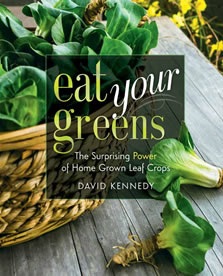
I am a gardener and also a doctor, so I spend a lot of time thinking about what could improve health for individuals and communities. When it comes to simple and practical innovations, I’m firmly convinced of this: there is no better thing that we can do for our own health and our families’ health than cook, serve, and eat more leafy greens. You can take me at my word,or you can read Eat Your Greens, by David Kennedy. Mr. Kennedy has collected a lot of information about why growing and eating more leafy greens is important, and gives information about some obscure greens. He is the founder/director of Leaf for Life and he wants everyone to be healthier.
Whenever I review a book, I want to talk about what it is and what isn’t. This is not a gardening book, and it isn’t a cookbook. It is a book about the importance of leafy greens to improving health worldwide. Lots of plants are given equal importance, no matter how relatively unsuited they are to cultivation in temperate America; this author thinks globally. Read it anyway, if you need to be convinced that the best thing you can do with your home garden plot is to grow a good supply of greens. A plentiful supply of fresh  unsprayed greens is just about guaranteed to improve your health and your family’s health. There are some really good books about how to cook your crop. This one is to stretch your thinking in other directions.
Be sure to review the chapter on edible cover crops. If you want to improve your soil and eat some greens at the same time, try the cover crops that Kennedy recommends.
So, my personal opinion, after years of home gardening and given that I have trialed moringa and Chaya and many other chic greens discussed in this book, goes something like this: forget the obscure stuff unless you love to fool with that sort of thing (I do, but that’s not where the bulk of our green veggies come from.) Grow what grows well in your area. Grow kale, lots of kale, and chard and spinach and leaf lettuce, and harvest amaranth and lambs-quarters and purslane from your weedy patch. Grow any green leaves that you like to eat, and then eat them. Lots of them. Use cover crops in your little yard-farm, and feed leafy greens to your chickens and other livestock so that they will enrich you indirectly. Recognize green leaves as the most extraordinary solar collectors in the world, and let them feed you the energy of sun, earth, and water. Think about how to preserve them for winter. Keep them on your table. I will be trialing some of Kennedy’s ideas like Green Tofu, or leaf-juice curd, and I’ll let you know how it comes out for me. But please, eat your greens!
Oh, and please consider buying this book and other great books at your local independent bookstore. This is a genuine case of use it or lose it.
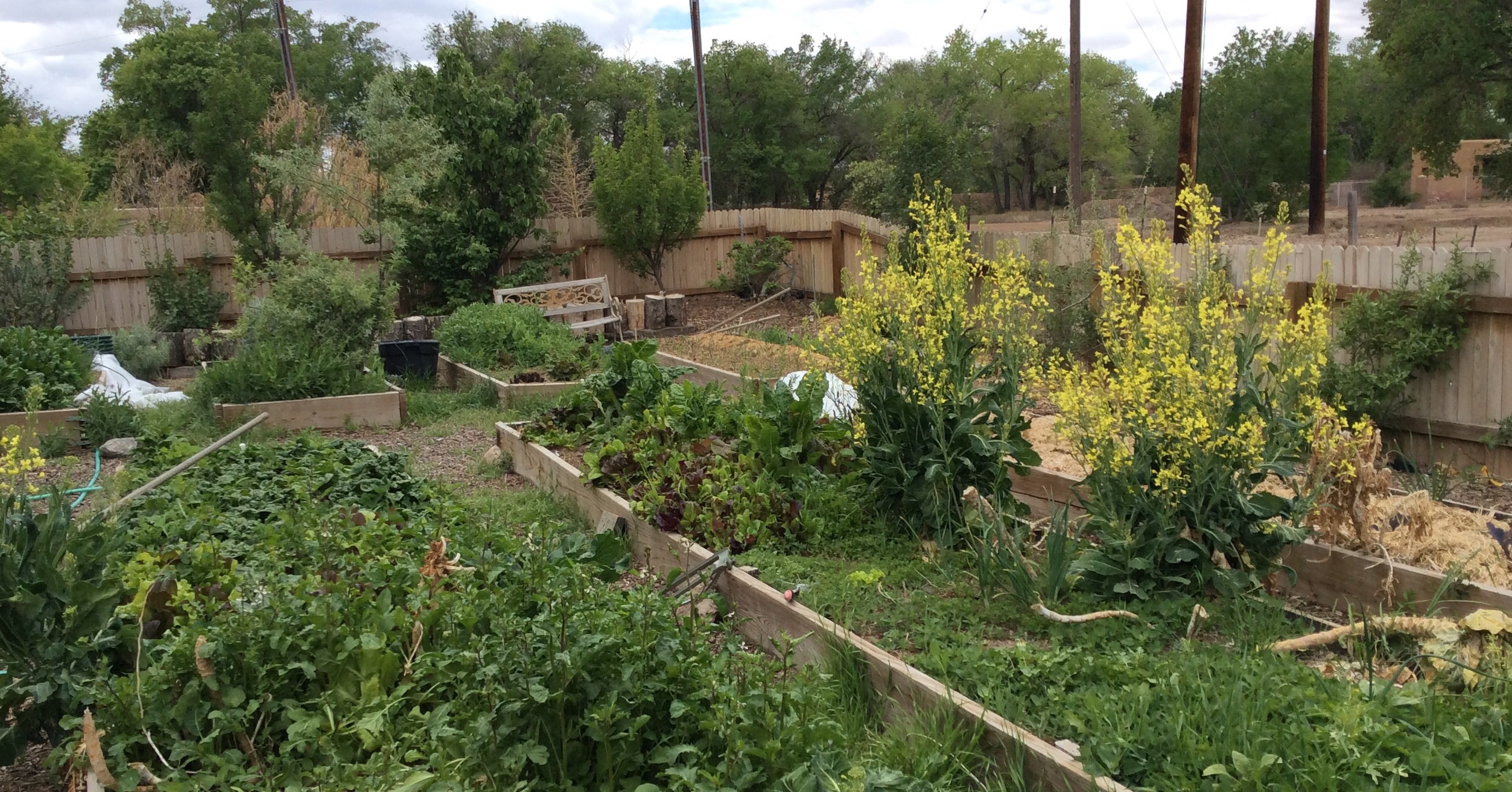
 My urban homestead