Posts Tagged ‘foraging’

Wild Lettuce

image

Wild lettuce is everywhere. I see it all over the downtown area of our city, growing in cracks in pavement and against buildings.  Wherever you are right now, there is probably a plant of it growing nearby. Its endurance is extraordinary and there is no getting rid of it, which suits me fine. A green that will grow in unwatered parts of my desert yard is an unusual thing, and I’m not likely to turn down a gift like that.

It’s quite variable in leaf shape and a few species are common in the U.S. In my area I mostly see Lactuca serriola, which is covered with small spines. I borrowed the photo above because the spines show more clearly than in my own photo. Accounts online and in foraging books differ, some reporting that the young leaves are delicious, others considering them a very poor food, and all commenting on the bitterness of the adult plant. In my area they don’t seem to get very bitter, not half as bitter as dandelions or chicory, and I love to eat the growing tips regardless of the age of the plant. This may relate to soil or temperature factors. I have noticed the same thing with sow thistle that grows in my yard, which lacks its characteristic bitterness, while dandelions in the same area seem even more bitter than those found elsewhere. Nature always has the last word and does not have to provide us with explanations. You have to get to know your home area.
image

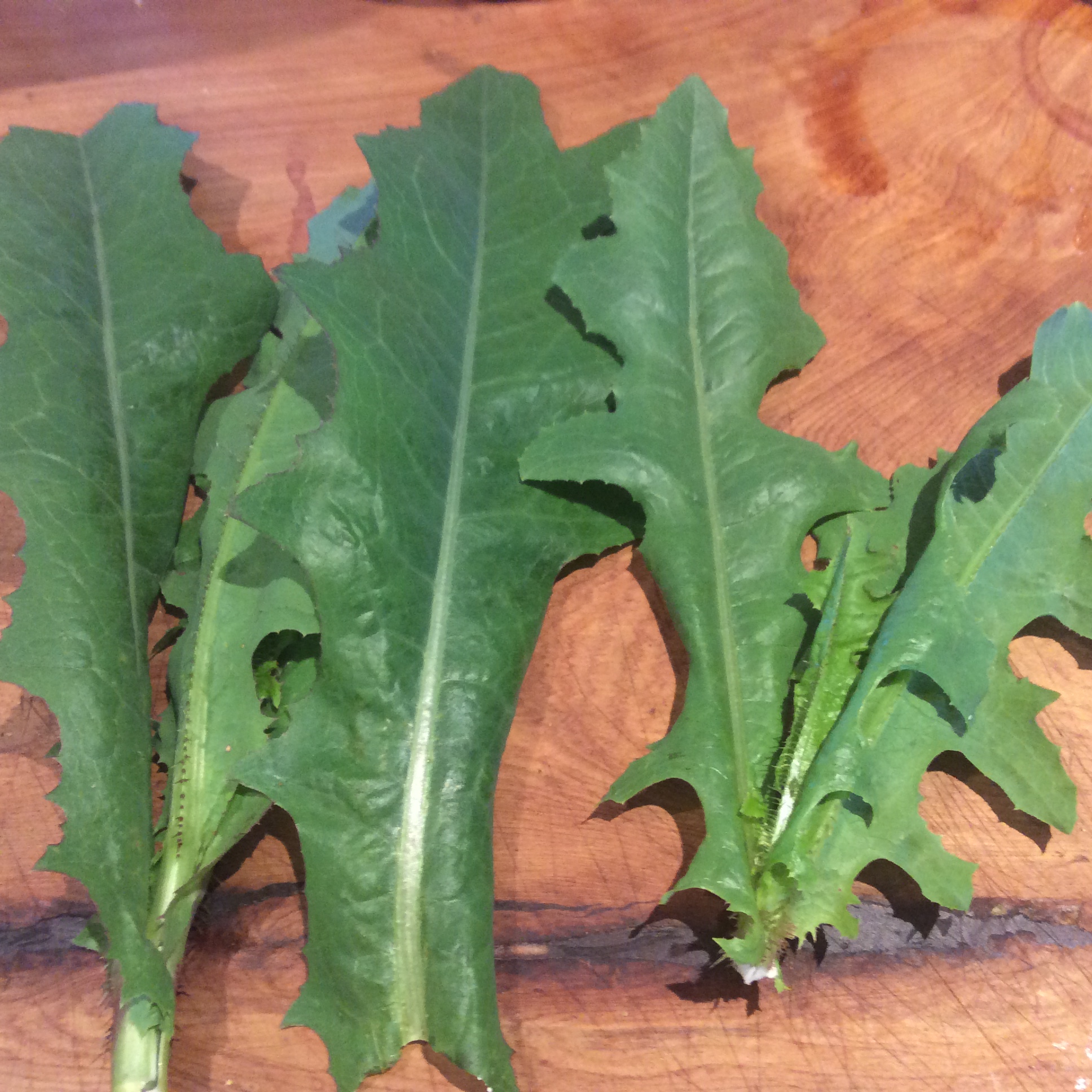
I pick the tips as shown on the right, but if I find a plant growing in shade I will pick larger leaves because they remain more tender than when grown in sun. They exude sticky white sap, which washes away easily. I toss the tips in boiling water for about 90 seconds and drain and squeeze, which renders the spines soft and harmless. Proceed as desired. With greens that have any tinge of bitterness, I like to sauté with garlic, olive oil, and pepper flakes, preferably the deep earthy Turkish Urfa pepper flakes or smoky chipotle flakes. A ten minute sauté creates a lovely vegetable.

The rest of the plant is a favorite treat for my goat, who is totally unbothered by the spines. It’s one of the few plants that she never seems to get finicky about.

There are some very weird things to be found online. Wild lettuce has  acquired a strange internet reputation as “lettuce opium” and there are places that sell the seeds and tincture and swear it will cure insomnia and/or get you high. I have no idea where this idea came from. I was startled to learn about it when I searched for a good photo, and overall I would disregard the whole idea. So do the people who have actually tried it; customer feedback includes comments like “very mild,” “placebo buzz only,” “nothing going on here,” and “useless.” One commenter who thought it was great admitted to being “crazy drunk” when he tried it, which no doubt makes a difference. Some think it is a useful mild sleep aid if smoked or brewed as a very strong tea. I don’t advise smoking anything at all so I wouldn’t know. For those interested in soporifics I can only say that when I eat it at dinner I feel sleepy at bedtime, and when I eat anything else for dinner I feel sleepy at bedtime.
A Cookbook to Make You Think: The New Wildcrafted Cuisine


image

Some cookbooks make you cook. The recipes are smart and well-crafted and will clearly work, and you want to run to the kitchen and get started.

Other cookbooks make you think. They are provocative and, at their best, subversive, and expand your possibilities even if you never cook a single recipe.

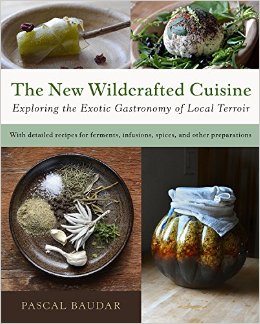
Today we have a thinking cookbook. When I first looked at this book a few weeks ago it seemed meant to be weird. In fact, it seemed at first to have a self-consciously outré quality that set my teeth on edge. An example: “lemonade” made, not with citrus, but with 2000 lemon ants, a citrusy-tasting ant found in Southern California, crushed and macerated. Surely juicing a lemon would be quicker and better, although the image of some earnest chef-wannabe counting out 2000 lemon ants is an interesting one that will be with me for a while. The author proposes that some fermentations to make vinegar need to get started from the fruit flies that they naturally attract because the little bugs carry something (Acetobacter presumably) that start the conversion to vinegar. Yech. As I see it, fruit flies are why humans invented cheesecloth, and nothing will convince me that they are better fermented than slurped straight-up just as they land in your wineglass, an ingestion that I avoid if at all possible. There are a series of recipes with “forest floor” seasonings composed of grass and leaves found under trees, and I can’t say that I have ever nibbled on a grass that I would consider potentially useful as a seasoning. There are a lot of recipes for lacto-ferments, and having lived through the last lacto-fermenting craze, I am not very enthusiastic about having another one. Lacto-fermented elderflower “beer” might sound elegant but is nowhere near as good as a well-made wine. The current obsession with local terroir in wine often involves mediocre grapes, inferior bottling practices, and determination to drink bad wine because it somehow tastes of the locale, and I thought that author/forager Baudar’s “primitive brews” would be much like that.

In short, I thought that I would pan this book and get on with other things. Instead, after owning it for a few weeks, I keep going back to it and thinking, and gradually realizing how wrong my first impression was. I have seldom encountered a book that makes me think as creatively about possibilities, and this is after reading, foraging, and cooking for decades. Now the lemon-ant lemonade seems, not tricksy and silly and literally intended, but an invitation to explore the possibilities around you in ways that you might never have thought of on your own. In effect, the recipe tells you “Don’t limit yourself. Think about every possibility.”  Bauder’s practice of letting his gaze light on something familiar and spending some time thinking about its culinary possibilities is infecting me with new pleasures and possibilities. Make wild greens kimchee out of whatever greens suit your fancy, and not only enjoy it as is but dehydrate it to use as a seasoning? Sure. Try cold-infusing the deliciously honey-scented goumi blossoms in my front yard to make a drink, as Baudar does with elder flowers and others? Not until my bushes get bigger, but then I will. Put a few of their blossoms on salads now? Of course. The trash Siberian elms that invade the Rio Grande bosque; have I ever thought about whether their scented cambium (inner bark) had any flavoring possibilities if roasted or smoked and infused? Not until I read this book. I like to make verjus from unripe grapes in the summer and enjoy its clean sourness anywhere that I might use lemon juice, but I’ve never thought of juicing other unripe fruits for the same purpose, and I’ll enjoy testing their range of flavors. I may well try roasting outdoors on a hot stone, or cooking something fast and delicate by arranging pine needles and herbs over the food in question and burning them. It has been a decade since I made flavored vinegars for shrubs, but now I will because this book has excited me all over again about the possibilities. And yes, I will certainly be trying “primitive brews” akin to his and experimenting with my local versions of his SoBeers, fizzy low-alcohol concoctions somewhere in between soda and beer. I’ll be tasting my own local grasses and herbs again to test their flavoring possibilities. I’ll be making vinegar-based and fermented hot sauces. I’ll try vinegars flavored with an assortment of my local seeds to grind into a mustard-like condiment. In short, I will view the familiar things around me, with uses that I think I already know, with new excitement and find new uses for them. Once over my initial dubiousness, I began to think that this is one of the most exciting cookbooks that I have read in a very long time. See where it leads you. Odds are that I will never cook a single recipe from it as written, because that isn’t the point.

I trust that it goes without saying (but here it is anyway): YOUR SAFETY IS YOUR RESPONSIBILITY when foraging. Study, consult guidebooks, and know for certain what you are about to taste. This book is not a guidebook and will not teach you the safety of your own local plants and animals. Don’t wander around tasting things at random, like a feckless innocent in Not-Eden. That kind of thing gives foraging a bad name.

Foraging Know-how

I often write about my foraged and semi-foraged edibles, and periodically I like to post something about how to forage safely. With mushrooms, it’s a life-or-death matter to know what you’re doing. With plants there is sometimes a matter of deadliness at stake, but more often you are risking an upset stomach or a ghastly meal. So get it right, which is a fairly easy matter.
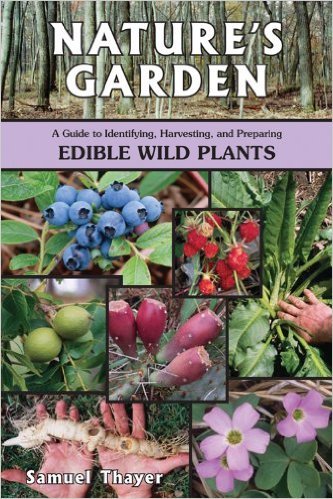
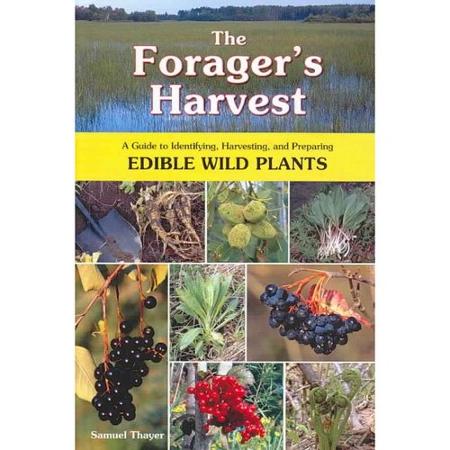
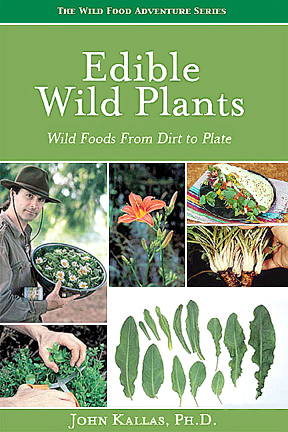
Easy instructions for beginners: buy any book by Samuel Thayer or John Kallas. They are both incredibly knowledgable foragers and good writers, and you will still be studying their books years from now and learning new things. I recommend starting with Kallas’s book, which is the comprehensive guide to wild greens that you will use for years or permanently. It is available in Kindle format, which is great because I can pull out my IPad at any time and study a bit without needing to lug around additional books with me. I have had this book since it was published and at least once or twice a month I go back to it to learn something new about using a familiar plant. Then add one of Thayer’s books, or both of them, to learn a new slant about the wild edibles you’ve already learned and learn some new ones. They aren’t available on Kindle, unfortunately, but they are wonderful.
There are a ton of other foraging books out there, and most of them have some special merit or charm, but if I ever had to narrow down my shelf, I would have these three. If you have some long winter evenings ahead of you, study and prepare so that you are ready to hit the ground in spring.
By the way, bear in mind that the original Cretan diet, the one that produced some of the longest-lived and healthiest people in the world, included wild greens as primary vegetables. They are extraordinary nutritional powerhouses and there is no better gift that you can give your body than to incorporate some of them into your diet. And, I hate to bring this up, but don’t just add them to your current diet; use them to replace something that isn’t doing your body good.
image
image
image

Foraging Your Protein

image

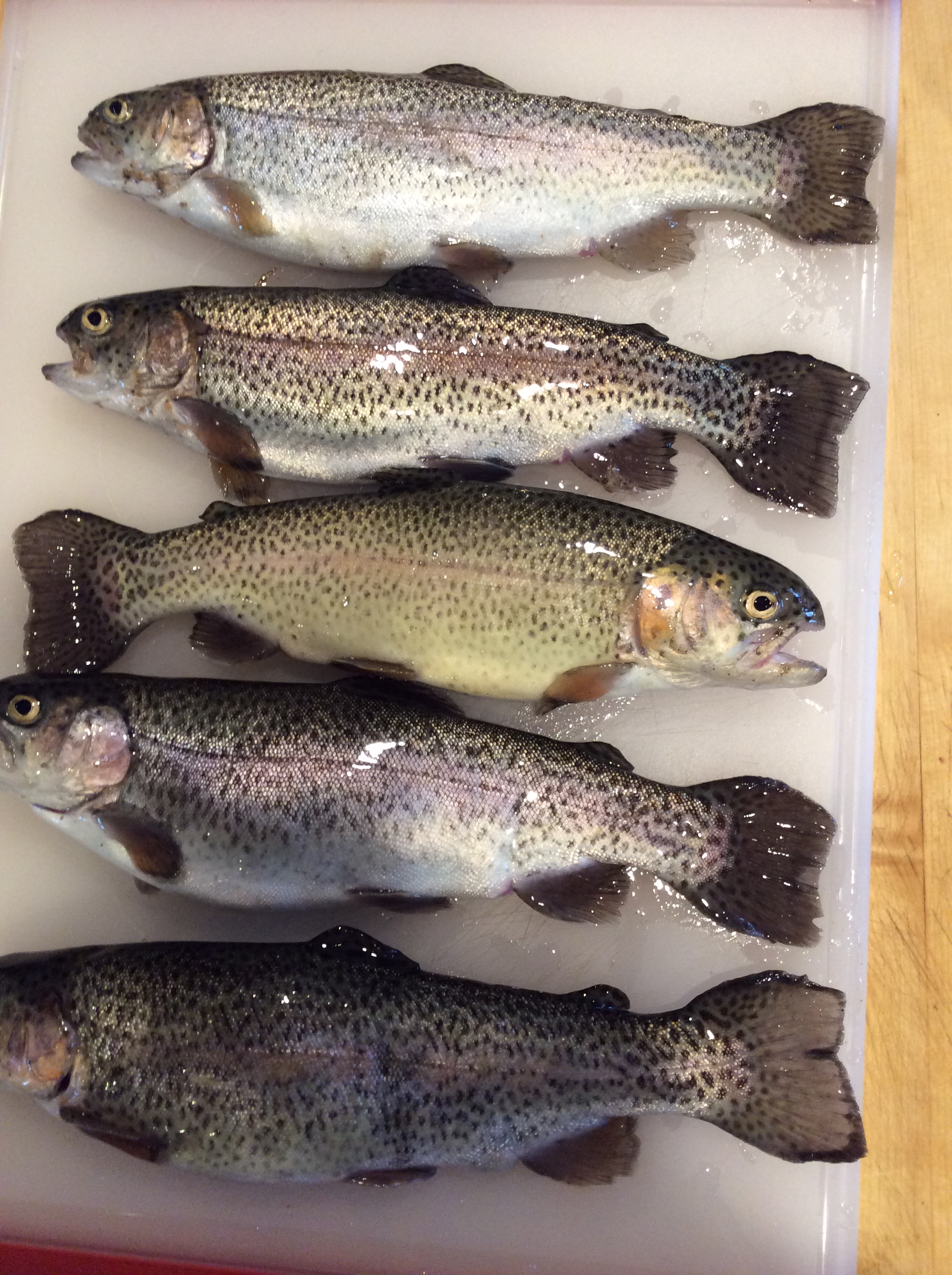
Here in the high desert, fishing might seem like an unlikely pastime. But we have world-class trout fishing, and recently I decided to learn to fish. After exactly one month of reading and practice, I had the day commemorated above. Of course this is balanced against several days when I didn’t get anything, which is part of the fun. NATURE DOES NOT EXIST FOR YOUR CONVENIENCE. If you insist on a sure thing, go buy your fish at the store.

For people like me who are learning on their own, here are my recommendations:

  1. First, get a basic book on fishing. Read it. I used Fishing for Dummies, and everything you need to know to get started is in there somewhere. A good book will help you understand what tackle you really need and what can wait.
  2. Study the section on reel types, but if you are new to all this, get a spincast reel for your first reel. They are so very easy to use. I caught all the trout above on a $20 spincast rod and reel. They work.
  3. Get a fishing license. It’s the law. Be sure to go to your local Fish and Game office and get it in person, because if you tell them you’re a beginner, they will load you down with useful advice about where to fish.
  4. Plan to be outdoors in a pretty area, and catching fish is a bonus.
  5. Practice casting in your back yard before you go out to fish.
  6. In popular fishing spots you will usually see lovely grandfatherly people who got there ahead of you. Walk up to them, tell them you’re a beginner, and ask for advice. A few will chase you off and the vast majority will bend over backwards to help you understand how to fish that particular bit of water.
  7. Before you ever catch your first fish, know how to kill a fish humanely and how to gut it, and how to fillet it if that’s your preference, so that you will actually enjoy eating it. The second trout that I caught was cooked without removing the bloodline. Yech. Watch videos on YouTube that show you exactly what to do. Do this BEFORE you ever go fishing. Don’t waste an animal’s life, ever.
  8. Don’t get too fancy too early. Don’t start with fly fishing unless you insist. Bait-fishing is very successful.
  9. Make sure you have butter, lemon, and capers in the house at all times, so that when you are finally successful, you can do your catch proud.
  10. Have fun, and post a picture of your first catch, because you may find out that you have fishing friends you didn’t know about.
  11. image
  12. image
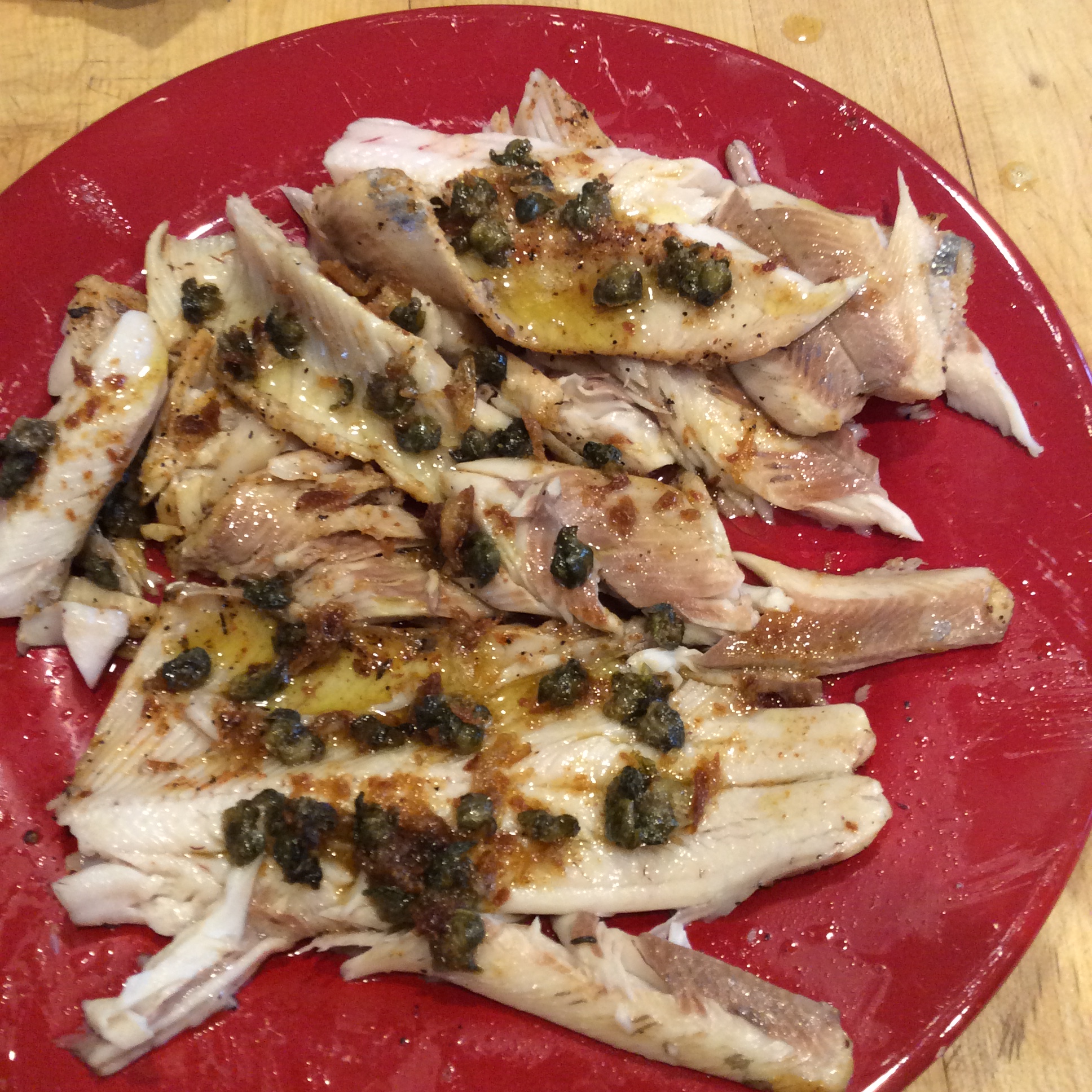
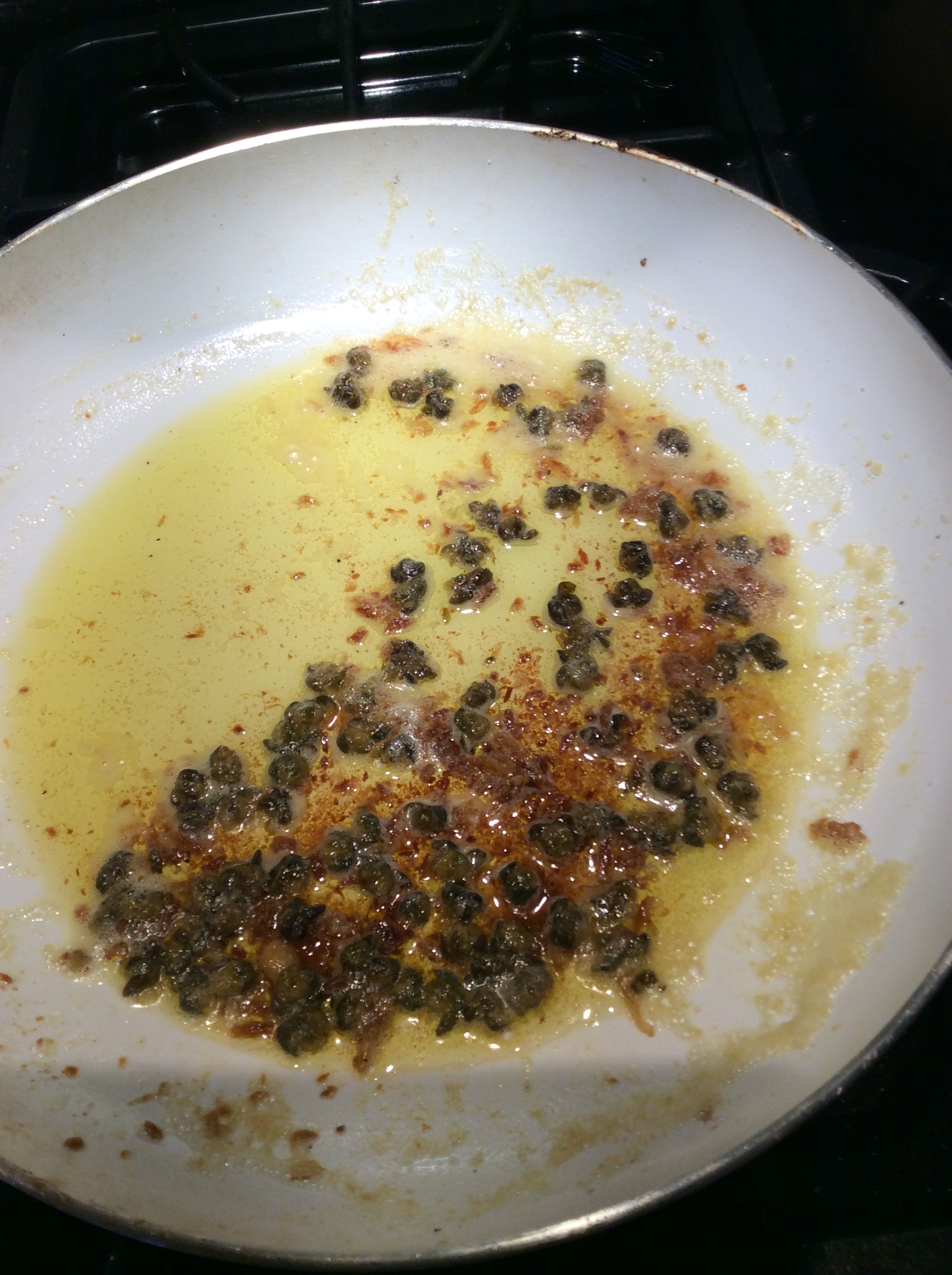
  13. Basic sauce for trout: drain a tablespoon of pickled capers per fish. Chop up a clove of garlic per fish. Have ready a quarter of a lemon per fish. Warm a tablespoon of butter per fish, plus a tablespoon for the pan, in a skillet over medium heat. When it starts to bubble, add the capers and garlic and stir over medium heat until the garlic is slightly browned. Squeeze in the lemon juice,  cook hard for 30 seconds, and drizzle over the filleted cooked fish.