Posts Tagged ‘edible wild plants’

Wild Lettuce

image

Wild lettuce is everywhere. I see it all over the downtown area of our city, growing in cracks in pavement and against buildings.  Wherever you are right now, there is probably a plant of it growing nearby. Its endurance is extraordinary and there is no getting rid of it, which suits me fine. A green that will grow in unwatered parts of my desert yard is an unusual thing, and I’m not likely to turn down a gift like that.

It’s quite variable in leaf shape and a few species are common in the U.S. In my area I mostly see Lactuca serriola, which is covered with small spines. I borrowed the photo above because the spines show more clearly than in my own photo. Accounts online and in foraging books differ, some reporting that the young leaves are delicious, others considering them a very poor food, and all commenting on the bitterness of the adult plant. In my area they don’t seem to get very bitter, not half as bitter as dandelions or chicory, and I love to eat the growing tips regardless of the age of the plant. This may relate to soil or temperature factors. I have noticed the same thing with sow thistle that grows in my yard, which lacks its characteristic bitterness, while dandelions in the same area seem even more bitter than those found elsewhere. Nature always has the last word and does not have to provide us with explanations. You have to get to know your home area.
image

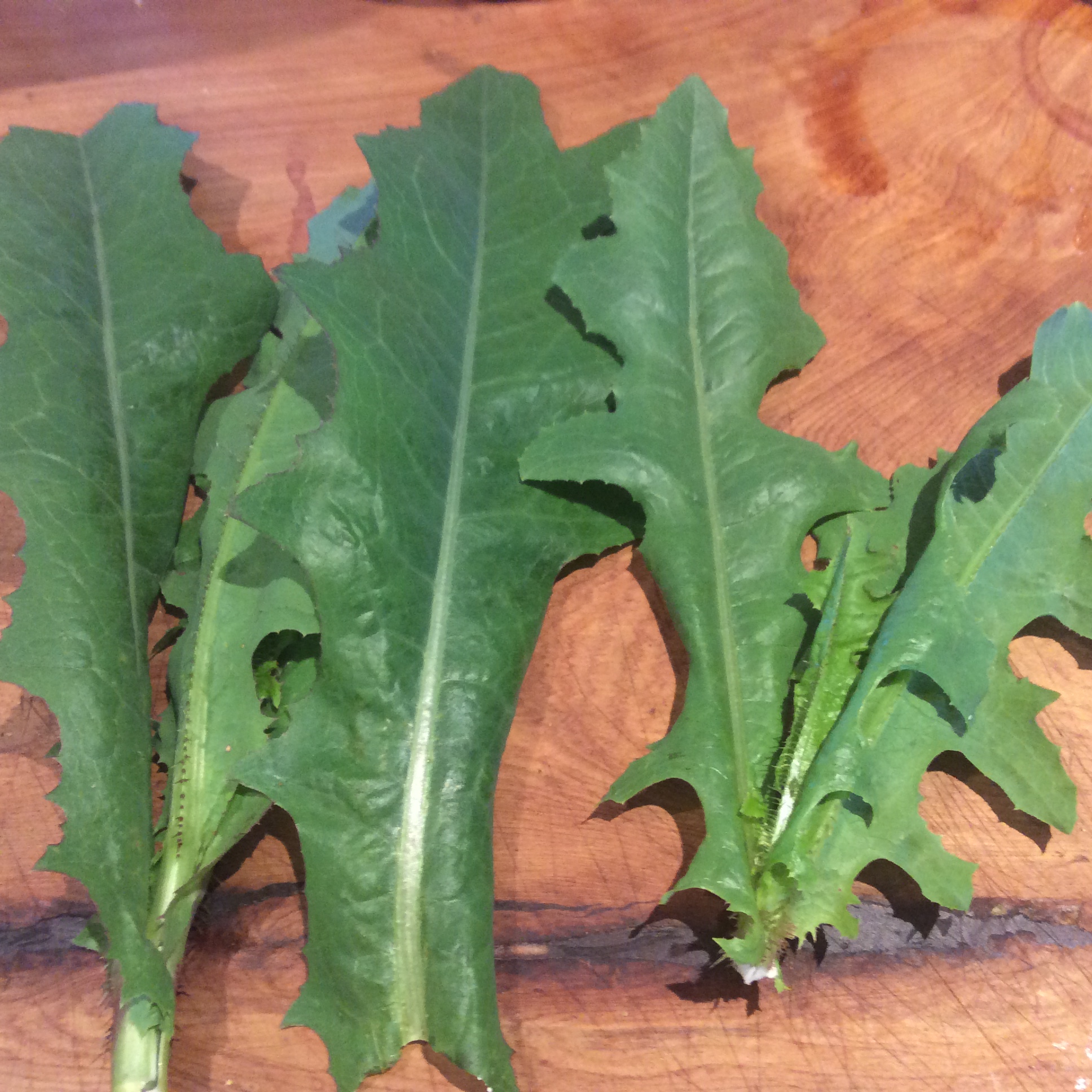
I pick the tips as shown on the right, but if I find a plant growing in shade I will pick larger leaves because they remain more tender than when grown in sun. They exude sticky white sap, which washes away easily. I toss the tips in boiling water for about 90 seconds and drain and squeeze, which renders the spines soft and harmless. Proceed as desired. With greens that have any tinge of bitterness, I like to sauté with garlic, olive oil, and pepper flakes, preferably the deep earthy Turkish Urfa pepper flakes or smoky chipotle flakes. A ten minute sauté creates a lovely vegetable.

The rest of the plant is a favorite treat for my goat, who is totally unbothered by the spines. It’s one of the few plants that she never seems to get finicky about.

There are some very weird things to be found online. Wild lettuce has  acquired a strange internet reputation as “lettuce opium” and there are places that sell the seeds and tincture and swear it will cure insomnia and/or get you high. I have no idea where this idea came from. I was startled to learn about it when I searched for a good photo, and overall I would disregard the whole idea. So do the people who have actually tried it; customer feedback includes comments like “very mild,” “placebo buzz only,” “nothing going on here,” and “useless.” One commenter who thought it was great admitted to being “crazy drunk” when he tried it, which no doubt makes a difference. Some think it is a useful mild sleep aid if smoked or brewed as a very strong tea. I don’t advise smoking anything at all so I wouldn’t know. For those interested in soporifics I can only say that when I eat it at dinner I feel sleepy at bedtime, and when I eat anything else for dinner I feel sleepy at bedtime.

Integrating Your Weeds II: Amaranth

image
Amaranth is the second of my Holy Trinity of super-nutritious edible weeds. It is a creature of hot weather, and in my garden it’s appearing everywhere right now. Like lambs-quarters it will get huge if allowed to, and unless you have limitless room, your job is not to allow it to.
Consult any good wild-foods guide to identify it, and then assess how much of it you have. If your response is “OMG, it’s everywhere!” then don’t worry about propagating it. Your soil has plenty of seeds. If there are only one or two plants, proceed as for lambs-quarters the first season, and you will have amaranth in perpetuity. I have two varieties, one with smooth stems and one that forms small but unpleasant spines at the leaf joints, and I try to keep the spiny kind from ever going to seed.
Pick them when they’re about a foot high and have a nice large umbrella of leaves on top. I have no interest in eating stems, and I pull off the topmost part with all the largest leaves and add the rest of the plant to the mulch, taking care that it’s completely uprooted.
The greens are fairly mild but have a slight touch of the earthy flavor that’s so pronounced in beet greens. When grown in prime soil the flavor verges on meatiness in a delicious way, and my favorite way of cooking the greens adds other meaty umami flavors.
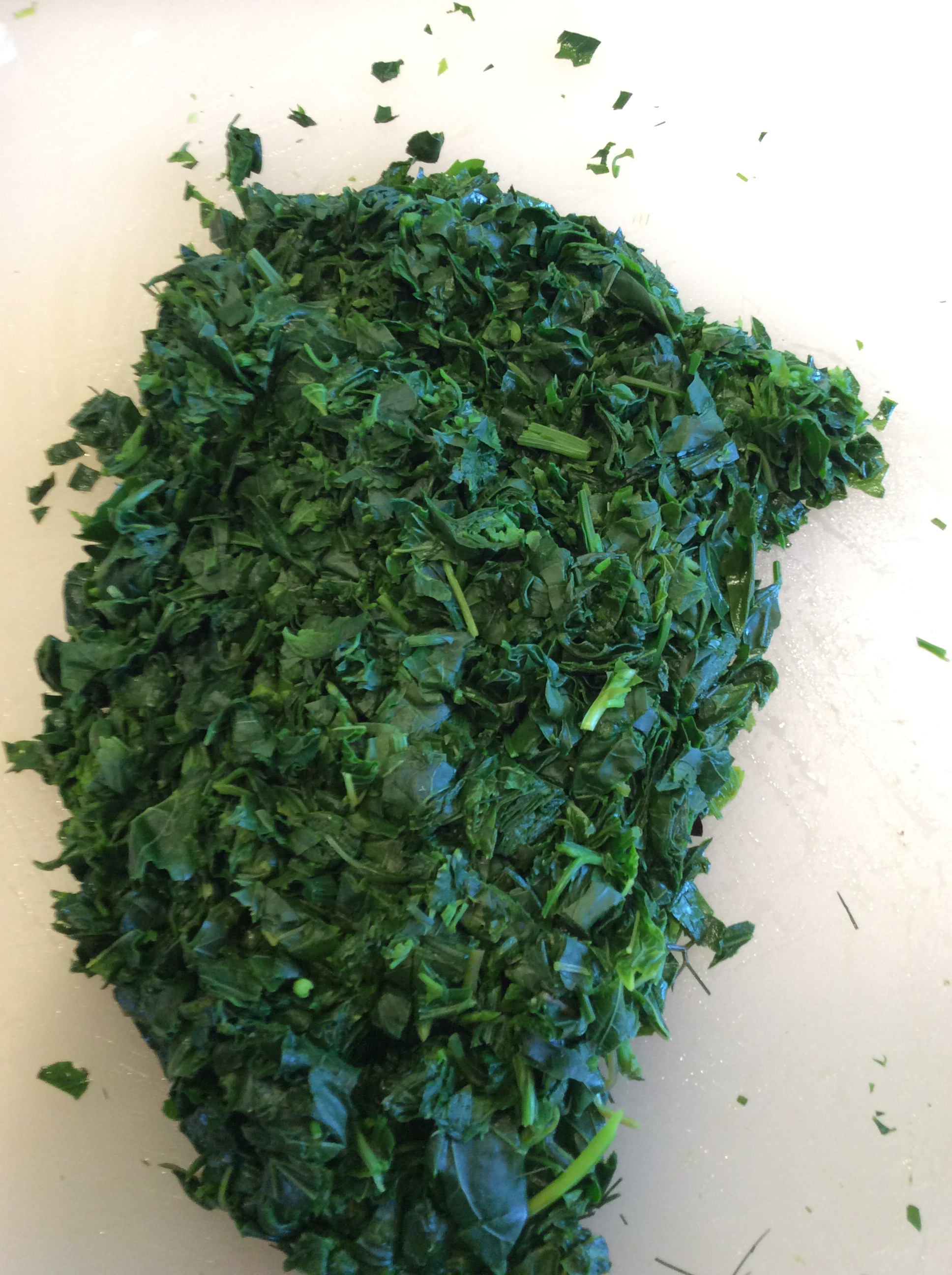
Wash a mixing bowl full of loosely packed leaves well and wilt them in a small amount of water, stirring frequently over fairly high heat until the leaves all look “cooked.” Drain them, saving all the cooking liquid. Return the cooking liquid to the pot and boil hard to concentrate it to a very small amount, maybe a couple of tablespoons (don’t turn your back on the pot or it will scorch.) Pour into a little bowl and save.
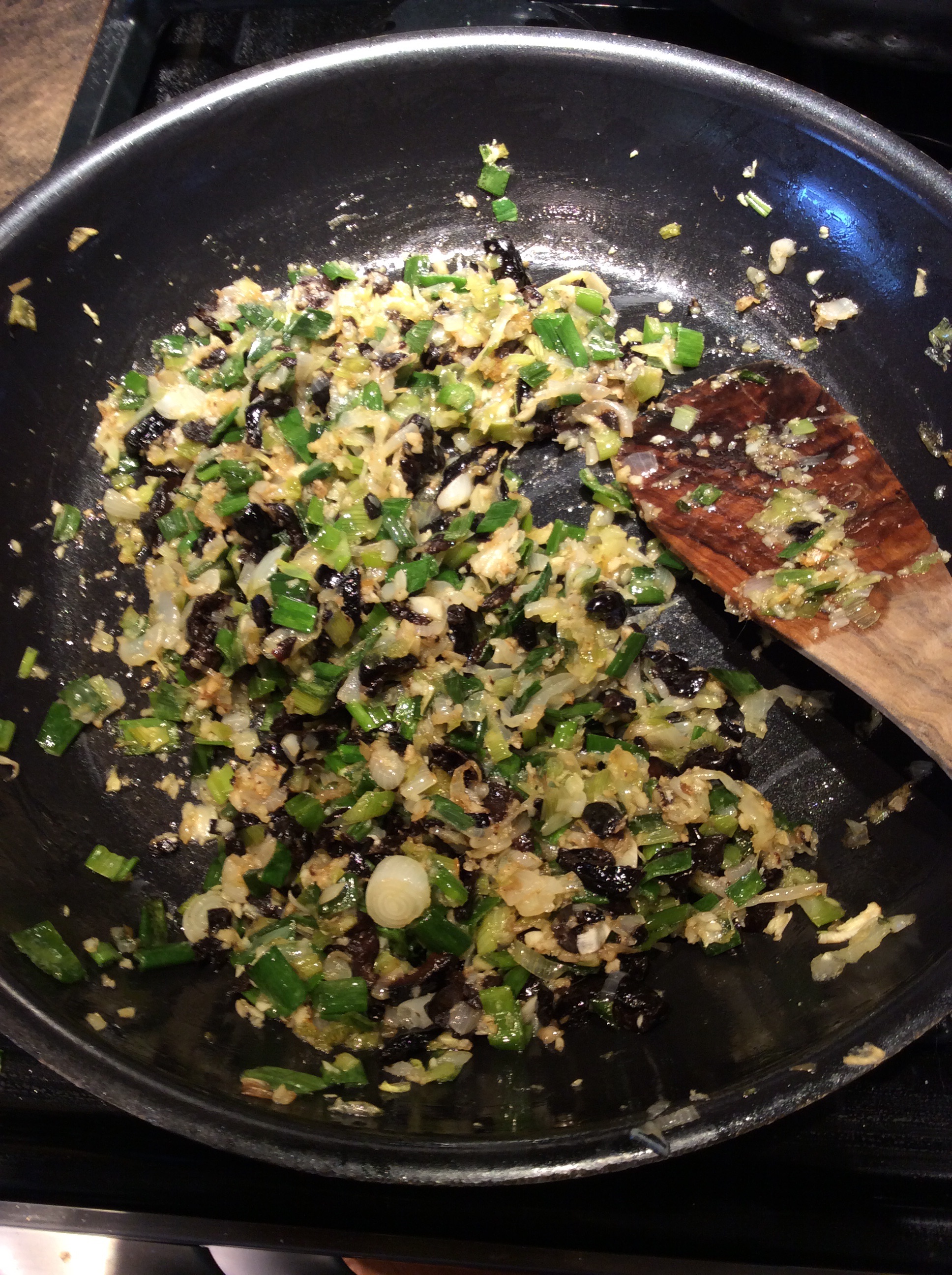
Chop 6 big green onions. Make a basic separation between white and green parts, but don’t get obsessive about it. Separately chop 6 big cloves of garlic. Heat about a quarter cup of olive oil in your largest skillet and cook the white parts over medium-high heat, stirring frequently. When they begin to look a little translucent and “cooked,” add the green parts, cook another couple of minutes, add the garlic, lower the heat to medium, and cook a few minutes more. Meanwhile, put the lump of blanched greens on a cutting board and chop fairly finely in both directions.
image
When the garlic looks cooked but has not colored at all, add a handful of pitted chopped oil-cured olives to the sautéed mixture and cook another minute.
image
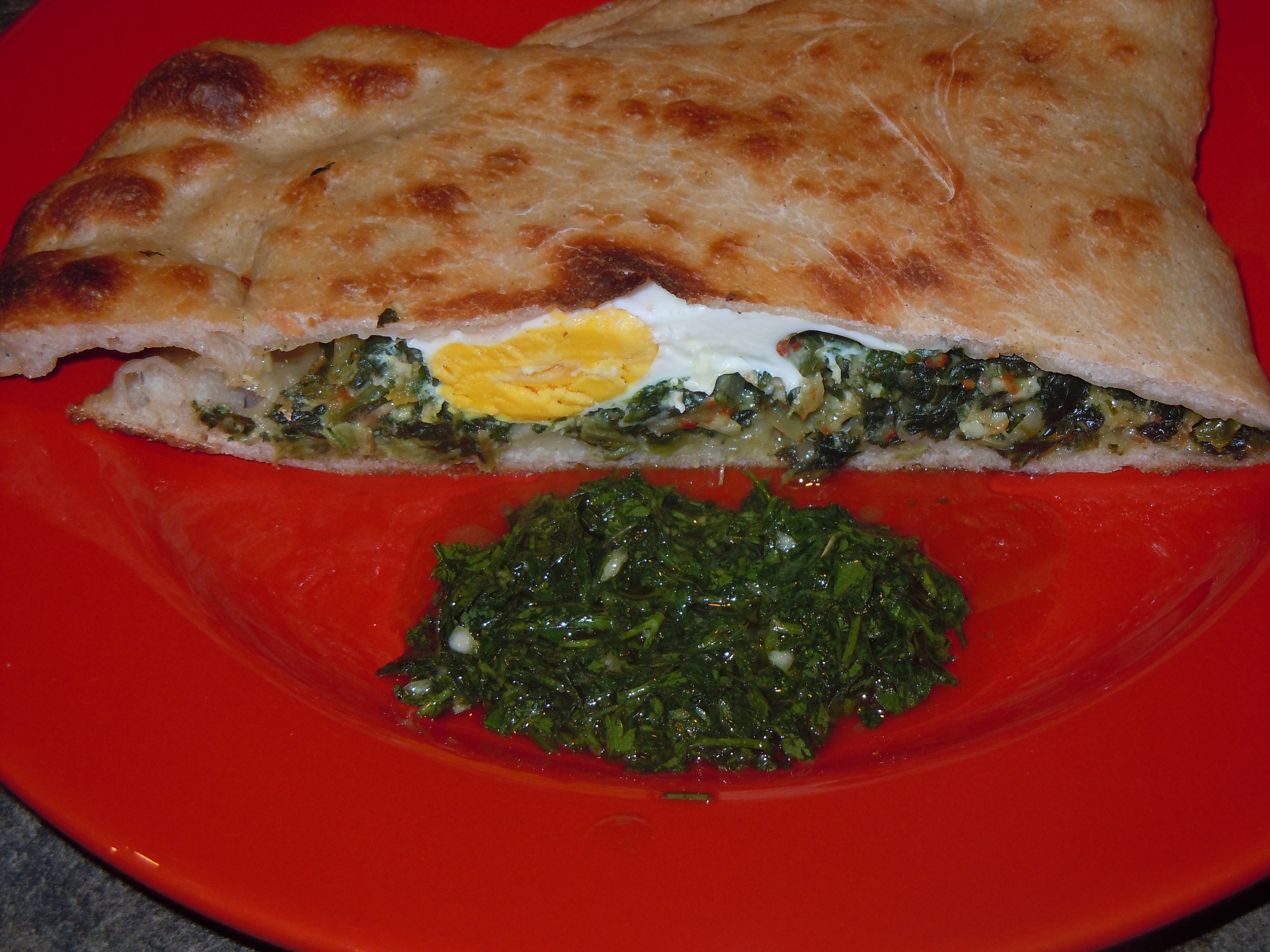
Add the cooked chopped greens, the tiny amount of cooking liquid, a teaspoon of Spanish smoked paprika or, if you like heat, the same amount of ground chipotle chile. Add a small handful each of chopped parsley and chopped fennel fronds. If not cooking for vegetarians or vegans, add a smashed anchovy fillet or a dash of fish sauce. Cook the mixture over medium-low heat for at least 20 minutes, periodically turning it to get it all completely cooked (a spatula works well.) Taste it, salt to taste, and cook a few more minutes to let the salt blend in. Serve drizzled with good olive oil as a side dish, or fill an omelette with it and add some feta cheese, or bake in phyllo to make a hortapita or little spanakopitas, or do whatever else you fancy with it. Back when I ate bread, I used to love to smear this stuff on slices of grilled baguette and put some grated Parmesan and pine nuts on top. I can remember once baking it in thin bread dough with a raw egg on top, so that when baked in a hot oven the egg came out cooked. You can add cooked chickpeas and bits of cooked meat for a real peasant dinner. It freezes well in vacuum-sealed bags to keep you healthy all winter. When served next to beef or pork, I top each serving with a bit of butter to add to the general animalic savor. I like to have it in the refrigerator for a super-healthy lunch, and it seems to taste best at room temperature.
DSCN0988
December 2009 014
DSCN0747
DSCN0153
Incidentally, the main reason for a poor result is not cooking it long enough. If it tastes grassy, keep going until it tastes good. Undersalting is another problem. Add salt cautiously because of the salty olives, but add enough.
If you don’t have a wild good guide that you like, get John Kallas’s “Edible Wild Plants: Wild Food From Dirt to Plate” and you will be glad you did.

Integrating Your Weeds I: lambs-quarters

image

I’ve written a lot at various times about the Holy Trinity of edible weeds: lambs-quarters, amaranth, and purslane. In this post I don’t plan to say anything much about harvesting and cooking lambs-quarters, Chenopodium album,  since I’ve said that already and the short version is “harvest them young, collect as little stem as possible, and use them like any other mild-flavored leafy green.” Personally I dislike the texture and mouthfeel of the raw leaves intensely, and only like them cooked, but others see it differently. This is their great season; after midsummer they are very eager to make seeds and are no longer very usable as a leafy green.

The focus today is on how to have them in your garden without losing everything else. They are highly competitive. First, don’t just let a nice big plant go to seed in your garden, unless you have a lot more space than I do, because they get six feet tall and nearly the same across and tend to flop around, and nothing else in that bed will survive. Instead, look over your self-sown lambs-quarters (which you almost surely have,) choose one right at an edge or corner of a garden bed, cut it down to an inch from the ground, and keep hacking at it until late summer, allowing it to make exactly one branch which lies out horizontally over the ground of the bed. This branch is allowed to go to seed, and everything else is clipped off. It helps if the planned plants in that bed are large and robust. All other lambs-quarters in that bed are pulled out by the roots after harvesting. Your mother plant will dry out in early fall, very unattractively I might add, and when you are sure that it’s dropped its seed, you can dig the husk of the mother plant out. This will take a lot of effort and a good shovel.

Next spring, you will see a fine mist of seedlings on that bed. Keep them watered for tenderness, harvest them at 6-8 inches tall, and be sure to pull out the roots. If you are growing other things in that bed, be sure to give everything else a head start. In the bed shown above, I hoed up the ground when the seedlings showed and planted collards and onions. Don’t worry about hoeing the seedlings. There are millions more to come.  Then I let the second wave of lambs-quarters seedlings grow up among my plantings. Today I’ll harvest the lambs-quarters, and mulch around the remaining veggies and let them take over.

No doubt this decreases the total yield of collards and onions, but if you use a rich mulch like stable bedding they will make up for the slower start, and overall you are getting remarkable yields for the space. The returns are especially remarkable if you consider nutrient density, since lambs-quarters are among the most nutritious greens that you can eat.

You should only have to do this once, or maybe once every several years. You will then have millions of potential lambs-quarters in your soil and can grow a crop of them at any point in late spring or early summer that you have a bit of empty space. Just water the ground and stand back.

The marvelous foraging guide by Dr. John Kallas called “Edible Wild Plants: Wild Foods from Dirt to Plate” will enable you to identify and cook your bounty.


The Weed You Need: Edible Wild Plants in Your Garden


Lambs-quarters seedlings
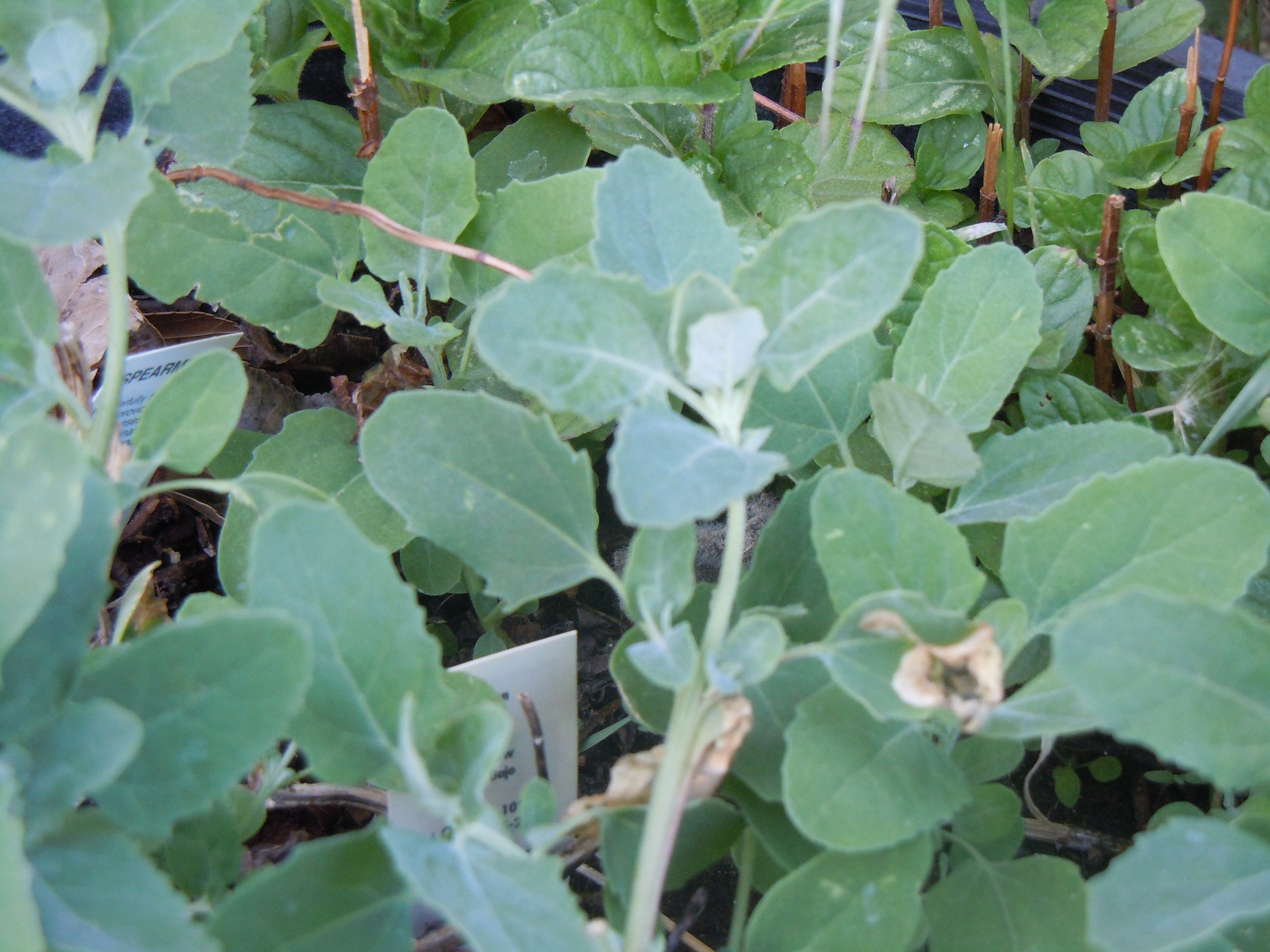
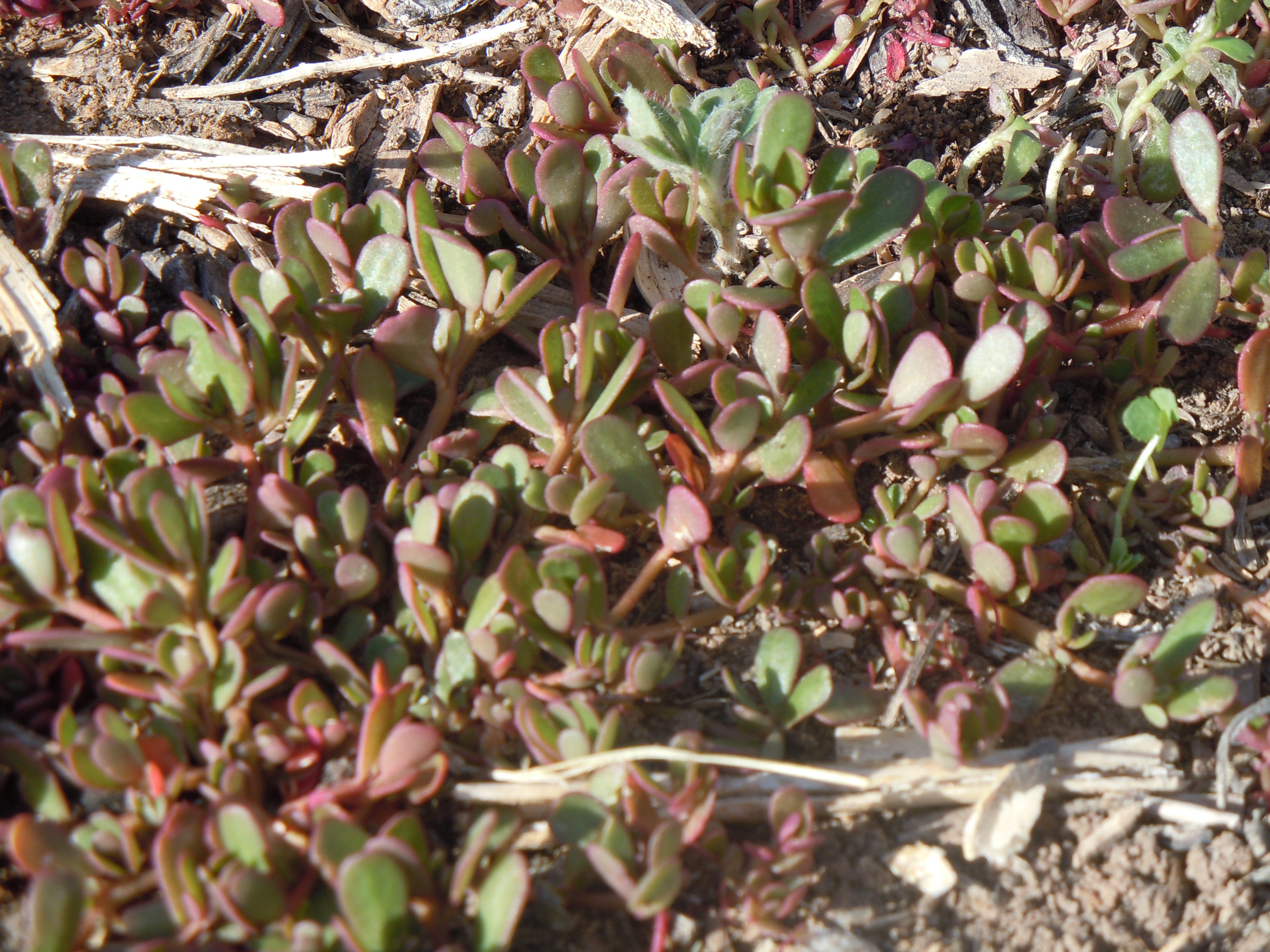
Here in New Mexico we have a trio of useful weeds that make delicious greens during the summer heat. In fact, I suspect that most pieces of the continent that aren’t actually submerged have these three. Lambs-quarters, amaranth, and purslane are ultra-nutritious, mild and pleasant in flavor, and take nearly any sort of abuse. They come along in that order; right now lambs-quarters in my yard is nearly ready to harvest, amaranth seedlings are about an inch high, and purslane seedlings are a fine mist on the ground. The reason to learn to recognize them now is so you don’t weed them out. They are shown here in seedling stages, but never rely on one source to identify a wild plant unfamiliar to you, at least not if you intend to eat it. Get a good foraging book (anything by Samuel Thayer or John Kallas will have the info that you need) and double-check yourself. Then, harvest and eat. These three are easy to use. Lambs-quarters is my favorite, but I’d hate to be without any of the three. I generally blanch them for two minutes in boiling salted water in an open pot, drain and press out all moisture, and chop, then proceed in any of dozens of ways or freeze them in vacuum-sealed bags for winter. Lambs-quarters and amaranth can be eaten by themselves with great pleasure, but personally I find purslane a little slimy by itself and prefer it as no more than 25% of a greens mixture. It’s full of omega-3 fatty acids, though, so don’t neglect it. Click the “greens” category on my sidebar and scroll through some ideas to get you going. Be careful not to let them overwhelm your garden plants. Amaranth and Lambs-quarters can grow six feet high and three across in good garden soil, and they can crowd out nearly any other plant that you might be trying to grow. Leave one of each to go to seed, and pull the others before they take over. I can’t think of anything nicer that most people could do for their health than eat more leafy greens. If you have chickens, be sure to give them all the nutritious weeds that they can eat. My dogs love cooked greens too, although of course they are given only limited quantities.
I can cut the tender tips several times per plant, but these are wild annuals and they do what wild annuals do, which is make huge quantities of seed before winter. When the days shorten, they will go to seed. I’ve tried planting seed in late summer to extend the harvest, and the new plants went to seed before they were six inches tall.  They haven’t been bred for our purposes, and I say thank goodness something hasn’t. Their season is a long and generous one, so enjoy it. Spread some seedheads in any neglected areas that you aren’t using, and you’ll benefit next year.

Amaranth seedling

Purslane seedling