Posts Tagged ‘edible weeds’

The Cook’s Treat: Lambs-quarters

image image

I am the cook in our household, and one of the reasons that I love my kitchen work is that I can have cook’s treats, little experimental dishes that I cook up while working on something else and eat standing up in the kitchen. They are something like impromptu tapas for one.

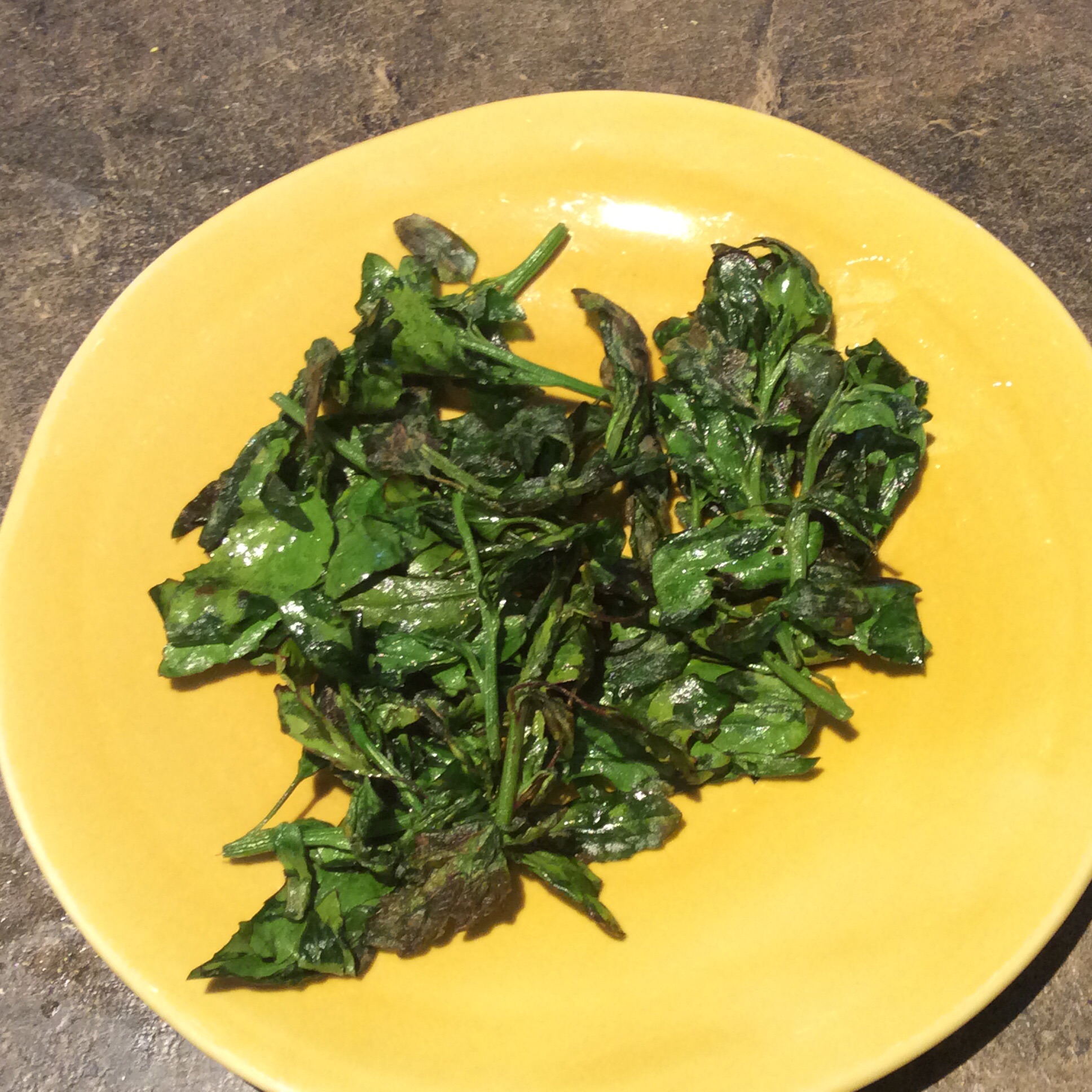
Recently I was preparing large quantities of tender lambs-quarters tips for the freezer, and began to speculate about how a handful of the tops could be turned into a cook’s treat. I have been very happy with some recent experiments that involved pan-frying hops shoots or scorzonera shoots over medium-high heat with just olive oil and salt, but hadn’t tried it with a leafy green vegetable.

I was delighted with the results. I chose about a dozen small tender tips, maybe three inches long on average, and washed them but didn’t make any special effort to dry them beyond setting them on a towel to drain.  While washing them, I set my little 7 inch skillet over medium high heat to heat up. When the pan was hot, and my greens were washed and drained, I put in a glug of good olive oil. I never measure olive oil, but I would guess that the glug that looks right in my small skillet is about 2 tablespoons. You do need enough oil in the pan for the greens to be able to fry in spots. Wearing an apron and standing back a bit from the stove, I threw the greens into the skillet. They spat and hissed ferociously. After a minute, I sprinkled on a generous pinch of salt and turned them roughly. After another minute I turned the heat down to medium and continued to turn them over every minute or two until the stems were tender enough to eat and many ( but not all) of the leaves were browned and crisp. I turned them out onto a small plate, sprinkled on a bit of Fleur de Sel, and ate them hot in between other kitchen tasks. Yum. The flavor is fuller and maybe slightly more bitter than mild lambs-quarters can usually reach, and the crisped leaves crunch delicately between your teeth, like very thin ice.
They have to have enough space in the pan to crisp up and not steam each other into softness. I think that my large skillet would probably hold enough for three people, but not more. To serve more people, possibly one batch could stay hot in the oven while the next was frying, but I haven’t tried it yet. I do know that from thought to finished cook’s treat took about seven minutes, and that the cook, thus treated, returned to her kitchen tasks very happily.

Addendum: I did try making it for more people, and the hold-in-the-oven idea doesn’t work, I regret to say. The greens rapidly go soft, and taste fine in a toasty way but the delicate crunch is lost. So this is a treat for one or two people. But then, it’s very romantic to have a special treat that simply can’t be shared with a larger group.

Integrating Your Weeds I: lambs-quarters

image

I’ve written a lot at various times about the Holy Trinity of edible weeds: lambs-quarters, amaranth, and purslane. In this post I don’t plan to say anything much about harvesting and cooking lambs-quarters, Chenopodium album,  since I’ve said that already and the short version is “harvest them young, collect as little stem as possible, and use them like any other mild-flavored leafy green.” Personally I dislike the texture and mouthfeel of the raw leaves intensely, and only like them cooked, but others see it differently. This is their great season; after midsummer they are very eager to make seeds and are no longer very usable as a leafy green.

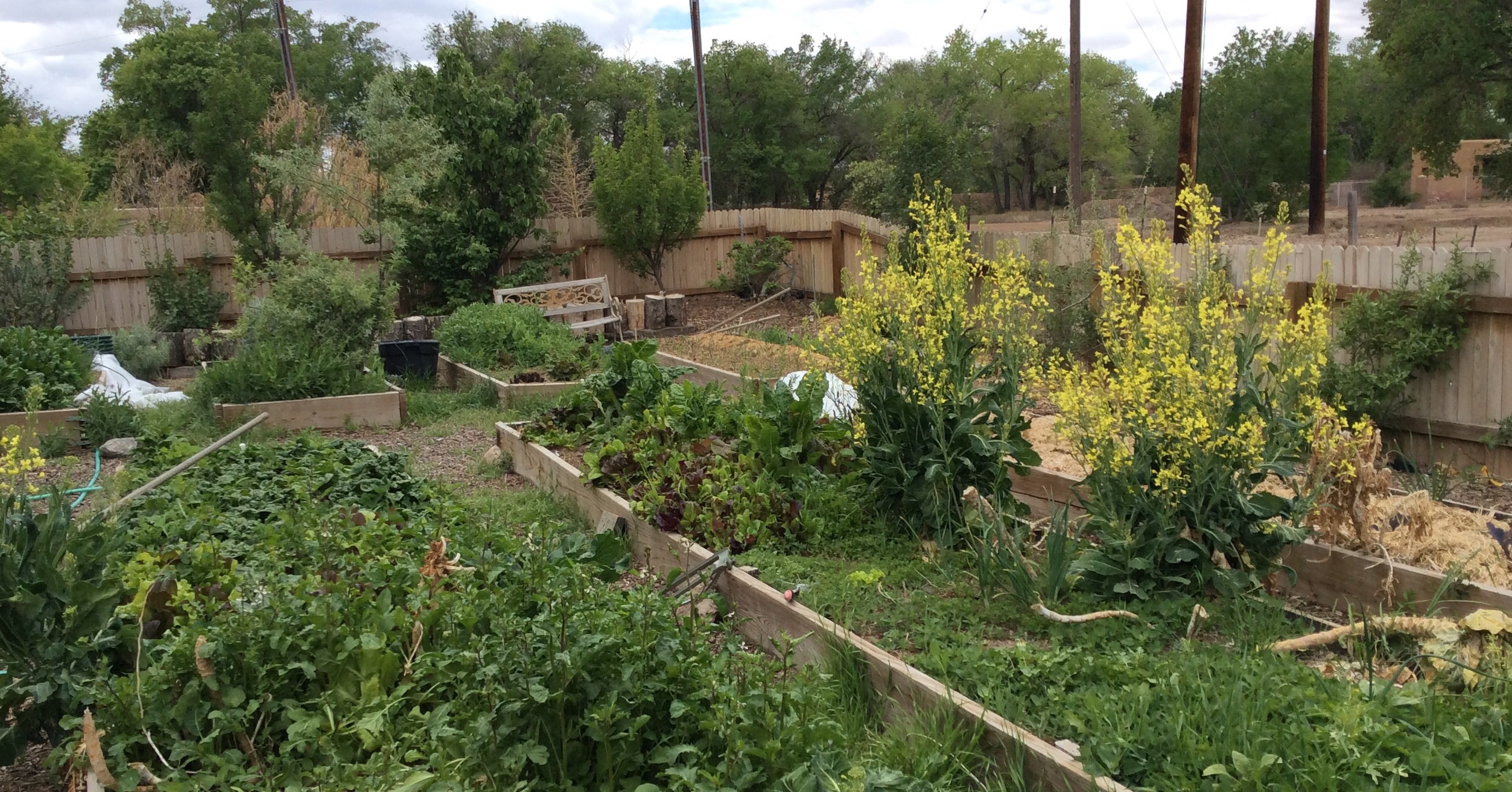
The focus today is on how to have them in your garden without losing everything else. They are highly competitive. First, don’t just let a nice big plant go to seed in your garden, unless you have a lot more space than I do, because they get six feet tall and nearly the same across and tend to flop around, and nothing else in that bed will survive. Instead, look over your self-sown lambs-quarters (which you almost surely have,) choose one right at an edge or corner of a garden bed, cut it down to an inch from the ground, and keep hacking at it until late summer, allowing it to make exactly one branch which lies out horizontally over the ground of the bed. This branch is allowed to go to seed, and everything else is clipped off. It helps if the planned plants in that bed are large and robust. All other lambs-quarters in that bed are pulled out by the roots after harvesting. Your mother plant will dry out in early fall, very unattractively I might add, and when you are sure that it’s dropped its seed, you can dig the husk of the mother plant out. This will take a lot of effort and a good shovel.

Next spring, you will see a fine mist of seedlings on that bed. Keep them watered for tenderness, harvest them at 6-8 inches tall, and be sure to pull out the roots. If you are growing other things in that bed, be sure to give everything else a head start. In the bed shown above, I hoed up the ground when the seedlings showed and planted collards and onions. Don’t worry about hoeing the seedlings. There are millions more to come.  Then I let the second wave of lambs-quarters seedlings grow up among my plantings. Today I’ll harvest the lambs-quarters, and mulch around the remaining veggies and let them take over.

No doubt this decreases the total yield of collards and onions, but if you use a rich mulch like stable bedding they will make up for the slower start, and overall you are getting remarkable yields for the space. The returns are especially remarkable if you consider nutrient density, since lambs-quarters are among the most nutritious greens that you can eat.

You should only have to do this once, or maybe once every several years. You will then have millions of potential lambs-quarters in your soil and can grow a crop of them at any point in late spring or early summer that you have a bit of empty space. Just water the ground and stand back.

The marvelous foraging guide by Dr. John Kallas called “Edible Wild Plants: Wild Foods from Dirt to Plate” will enable you to identify and cook your bounty.


Pleasures of the Garden: Solo Specials

image
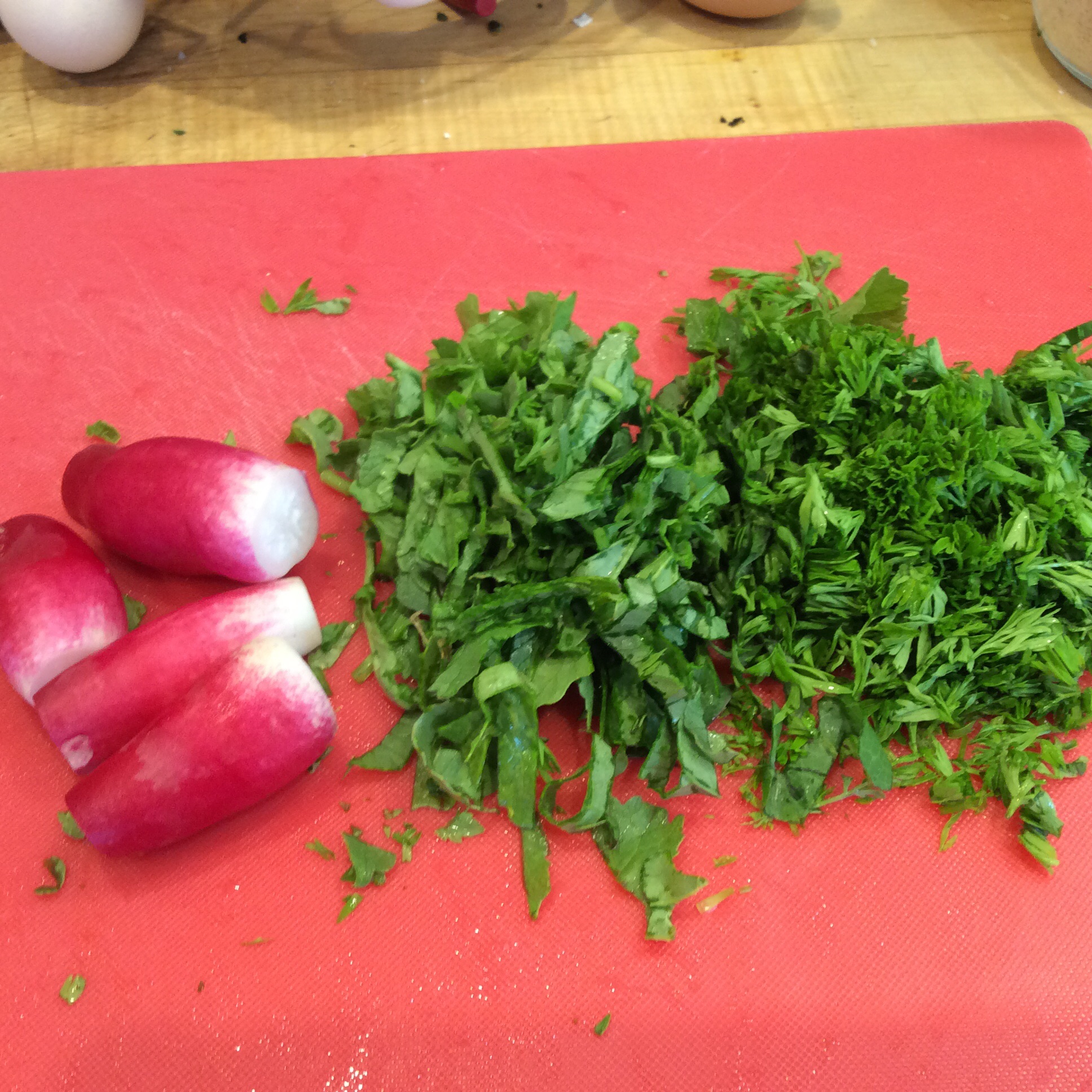
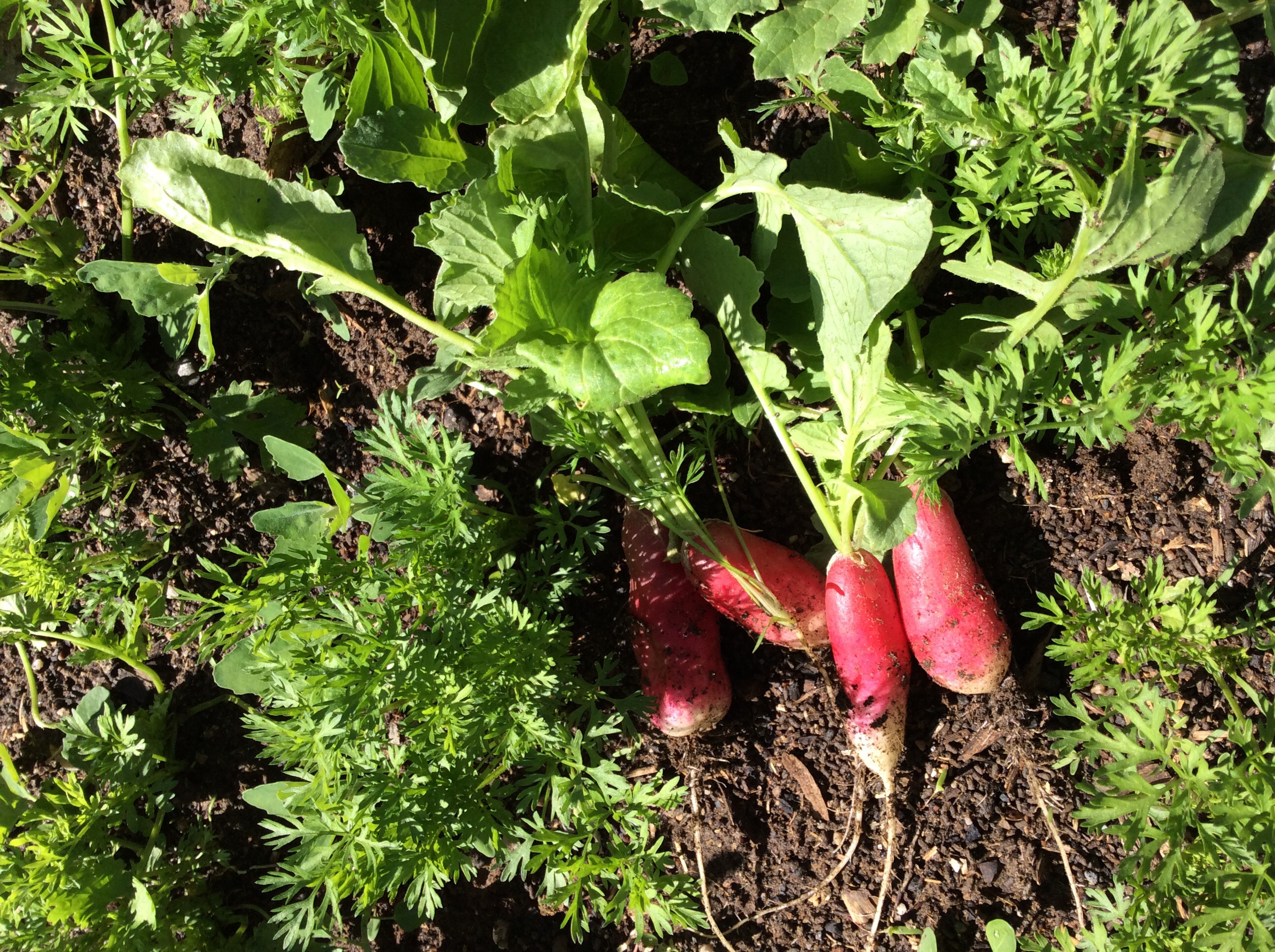
If you have the habit of solitude, there is no better hobby than gardening, and cooking for one can be a real pleasure too. Today I noticed that the radishes which I plant in my carrot rows ( one radish seed every four inches or so, to break the soil up and offer some shade and shelter for the tiny infant carrots) were ready to pick. Only four were ready, and I’m on my own today, so I began planning my solitary lunch, based on very flavorful (somewhat bitter) greens. I had the four radishes and their tops. I also picked the tops of several infant carrots ( they needed thinning and didn’t yet have any roots to speak of,) two large leaves of spinach, a couple of leaves of arugula, and a few large sprigs of lambs-quarters from the weed patch, to offer a mild cushion for the stronger greens. I also grabbed tender tips of alfalfa and a stalk of green garlic. A still-warm egg from the henhouse completed my outdoor prep.
image
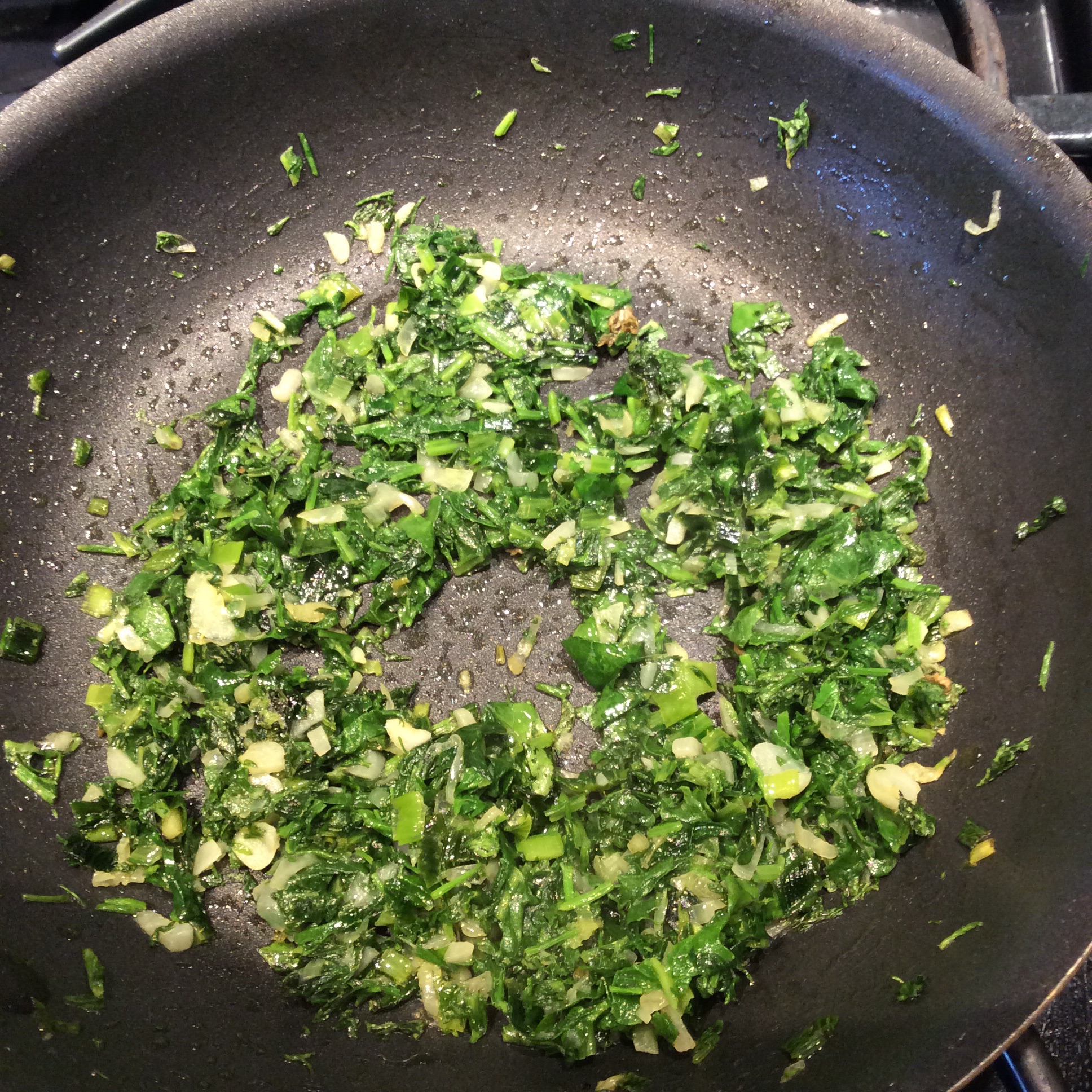
Indoors, I washed the radishes and greens, sliced the radishes in half lengthwise, chopped the stalk of green garlic finely, and then chopped all the other greens together more coarsely. In a small skillet, I heated a couple of tablespoons of good olive oil and started sautéing the green garlic. When it started to look a little cooked, the rest of the greens went in. Then I added some salt and cooked over medium-low heat for a little over 15 minutes, until the greens were softened and mellowed but still had plenty of character.

image

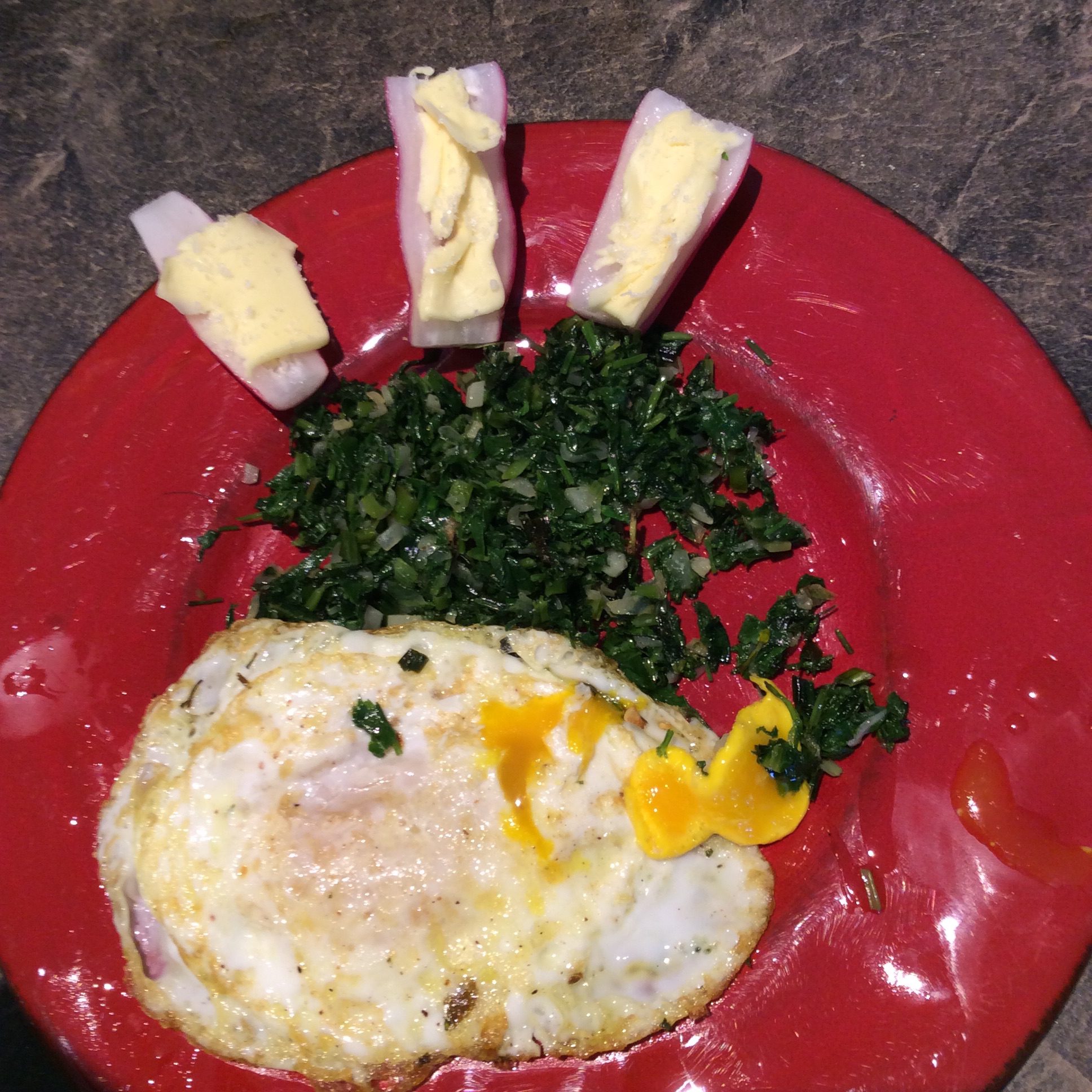
Meanwhile, I spread the sliced radishes with good grass-fed butter and sprinkled them lavishly with my best fleur de sel. When the greens were ready, I turned them out onto a little warm plate, added some more olive oil to the skillet and quickly fried the egg in it, and added the radish slices that I hadn’t already eaten to the plate.
image
Yum. There is absolutely nothing like a fried egg to mellow the flavor of strong bitter greens. And now, filled with bubbling good health, I can go on to an afternoon of further garden chores.
I eat a ketogenic (ultra-low-carb) diet for health and weight reasons, but if bread is still in your kitchen, a couple of slices off a good baguette would add heartiness to this perfect little impromptu meal.
Ah, the witchcraft we perform in our gardens and kitchens when nobody’s looking.

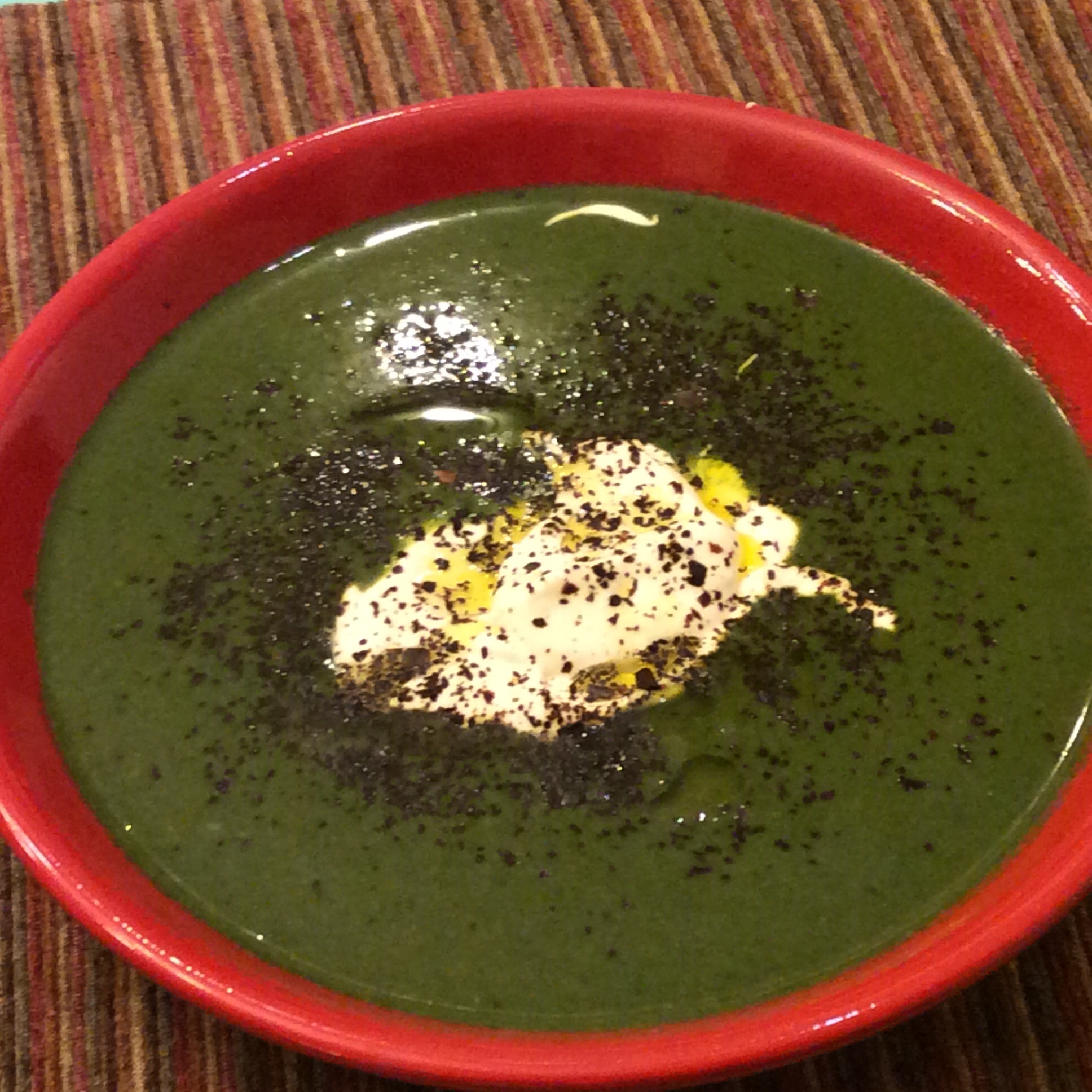
A Glory of Greens, and notes on Turkish greens soup

image


There is nothing more vibrant than a garden full of greens in the spring, all growing like mad, offering you a million healthy possibilities. During the two unfortunate years that I couldn’t garden, I did at least rogue out all the weeds that weren’t edible, and now nearly everything that sprouts in my beds is delicious, whether I planted them intentionally or not. And everybody, every one of us, would do well to eat more greens. Our health would improve and we would feel so damn good. Remember, the REAL Mediterranean diet, the one that was originally studied on Crete and that produced a long-lived and healthy population, was based on a huge variety of cultivated and wild greens.

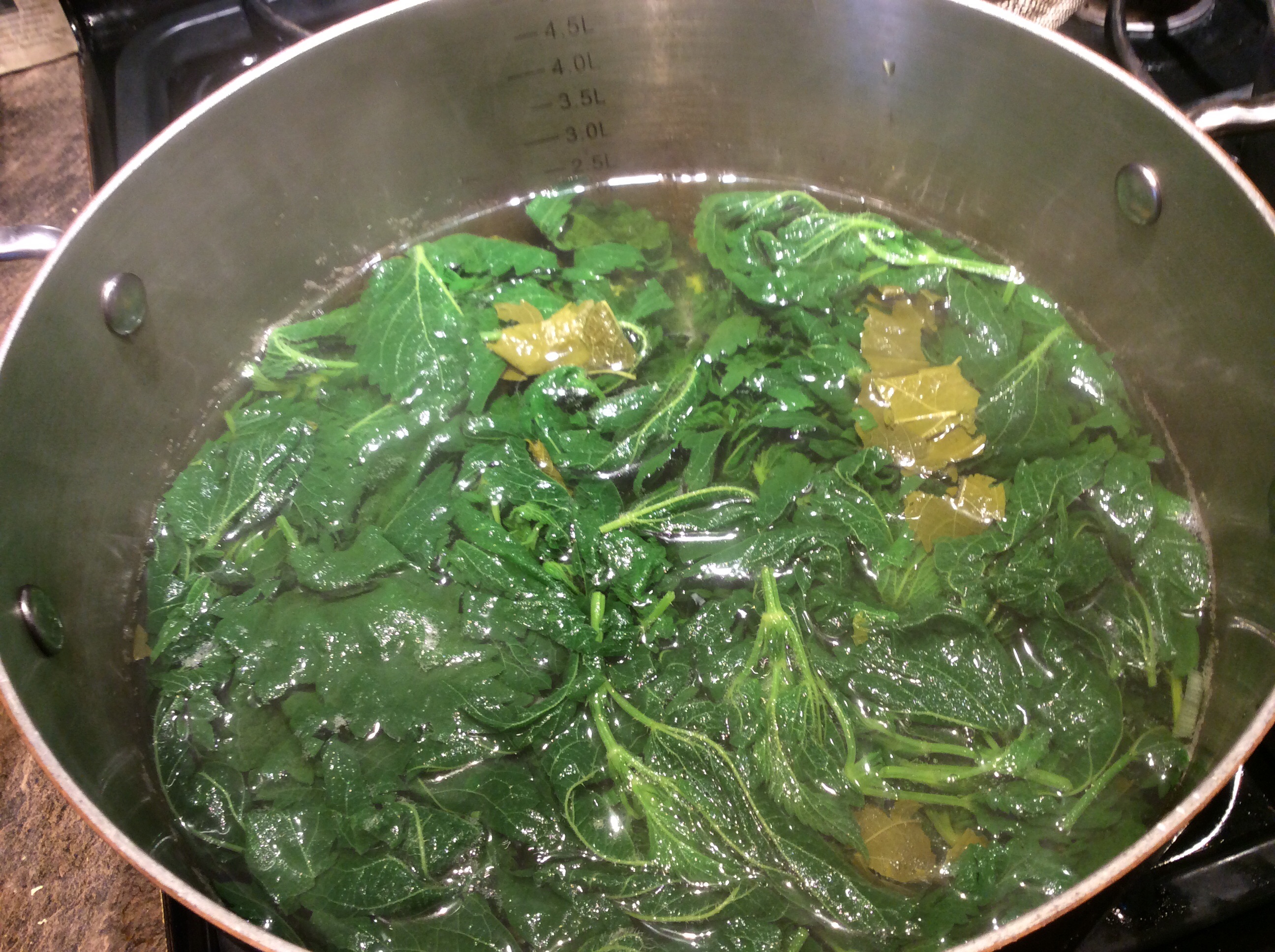
Today I noticed nettles, spinach, and lambs-quarters that needed to be harvested pronto. I also had lively green garlic ready to harvest. I picked a three-gallon pail to the brim, but loosely filled as I threw the bounty in, not packed down. I washed them ( it goes without saying that when nettles are in the mixture, you use gloves whenever handling them and stir in the washing water with a big wooden spoon, not your hand,) and decided to make a Turkish greens soup for dinner.
image
This is a soup that I have been making variations of since a lovely trip to Turkey nearly thirty years ago. It is based roughly on a soup that my guide described his wife making, but it’s interpreted by me and changes every time I make it, so I don’t vouch for its authenticity. This time it was a thick velouté; other times it’s a rough potage, and sometimes it resembles gumbo z’heirbes. So here’s how this one happened:
Prepare and wash three gallons, loosely packed, of assorted greens. No bland store-bought baby spinach! If you don’t have a garden, consider chard, adult spinach, and Tuscan kale, one bunch each.
Pull a quart of good rich chicken stock out of the freezer (it is in there, isn’t it?)or procure a quart of good chicken stock from somewhere.
Set the chicken stock to melting over medium heat in a gallon pot.
Chop three large stalks of green garlic, stems, leaves, and all, and sauté them in a quarter cup or so of excellent olive oil in a sauté pan. OR use a small onion and two cloves of garlic, chopped, for the sauté step. Make sure they are cooked through, and soft but not colored, before proceeding.
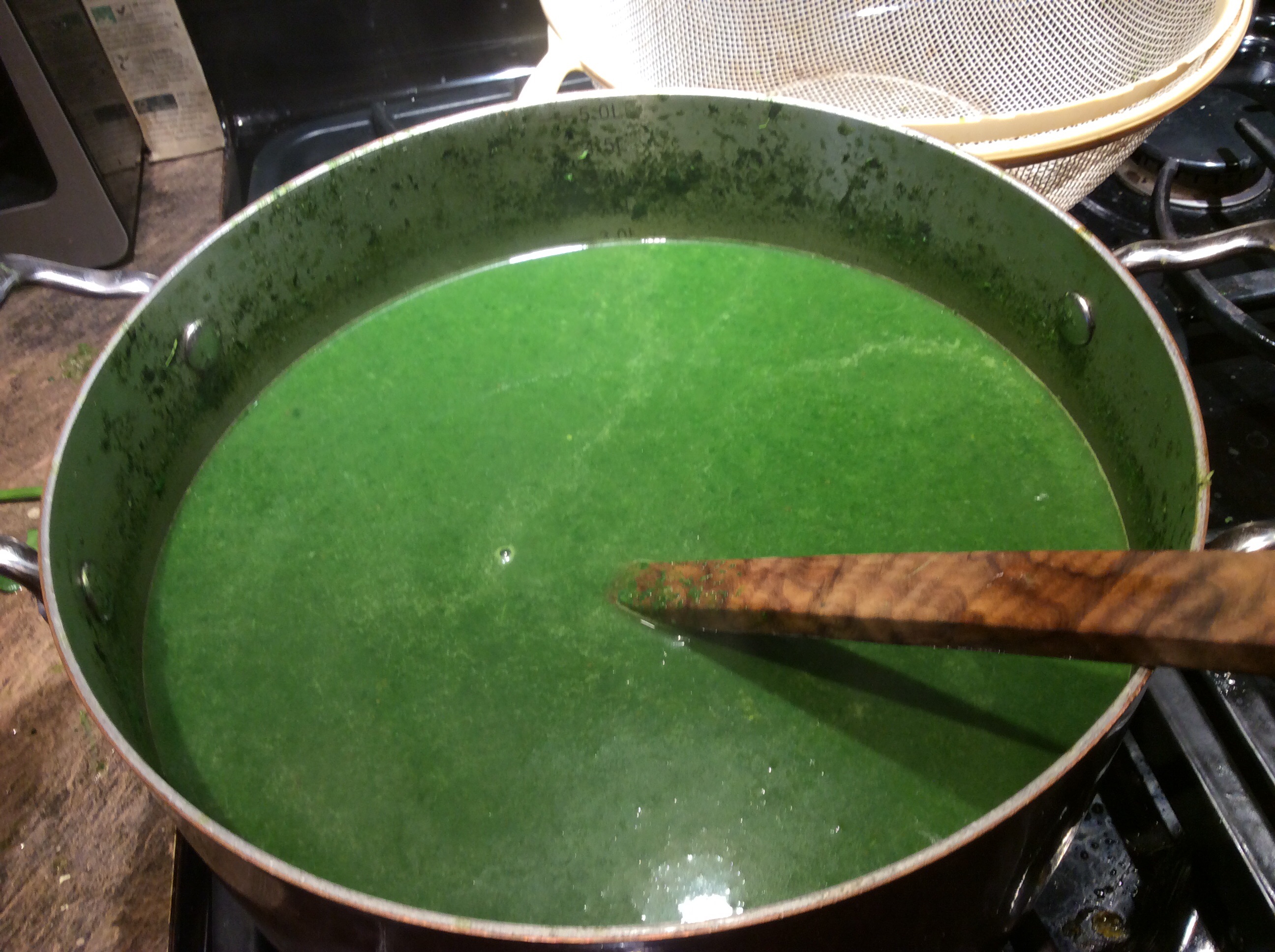
When the garlic mixture is ready and the stock is boiling, begin adding the greens to the stock, stirring, and remembering not to touch those nettles. Boil for about a minute after the last of the greens is added. Now add the garlic mixture to the soup pot and simmer for five minutes.
Now purée with a stick blender. Add salt to taste (I think it needs to be on the salty side)and add a teaspoon of Urfa pepper flakes, Aleppo pepper flakes, or mild red pepper flakes. I like a bit of oregano and thyme. Taste and correct the seasoning carefully.
Mix some full-fat Greek yogurt with salt to taste and have it ready.
Put six egg yolks in a bowl, whisk them up, and slowly add a cup of the hot soup, whisking furiously all the time. Slowly pour the egg mixture into the soup over lowest heat, and whisk another minute or two until it’s lightly thickened and smooth.
Serve into bowls, pile a half cup of salted yogurt in each bowl, drizzle lavishly with your best olive oil, and sprinkle heavily with more Urfa or red pepper flakes. Eat, and flourish.
image

image

image

image