Posts Tagged ‘cooking vegetables’

A Carrot of a Different Color

image

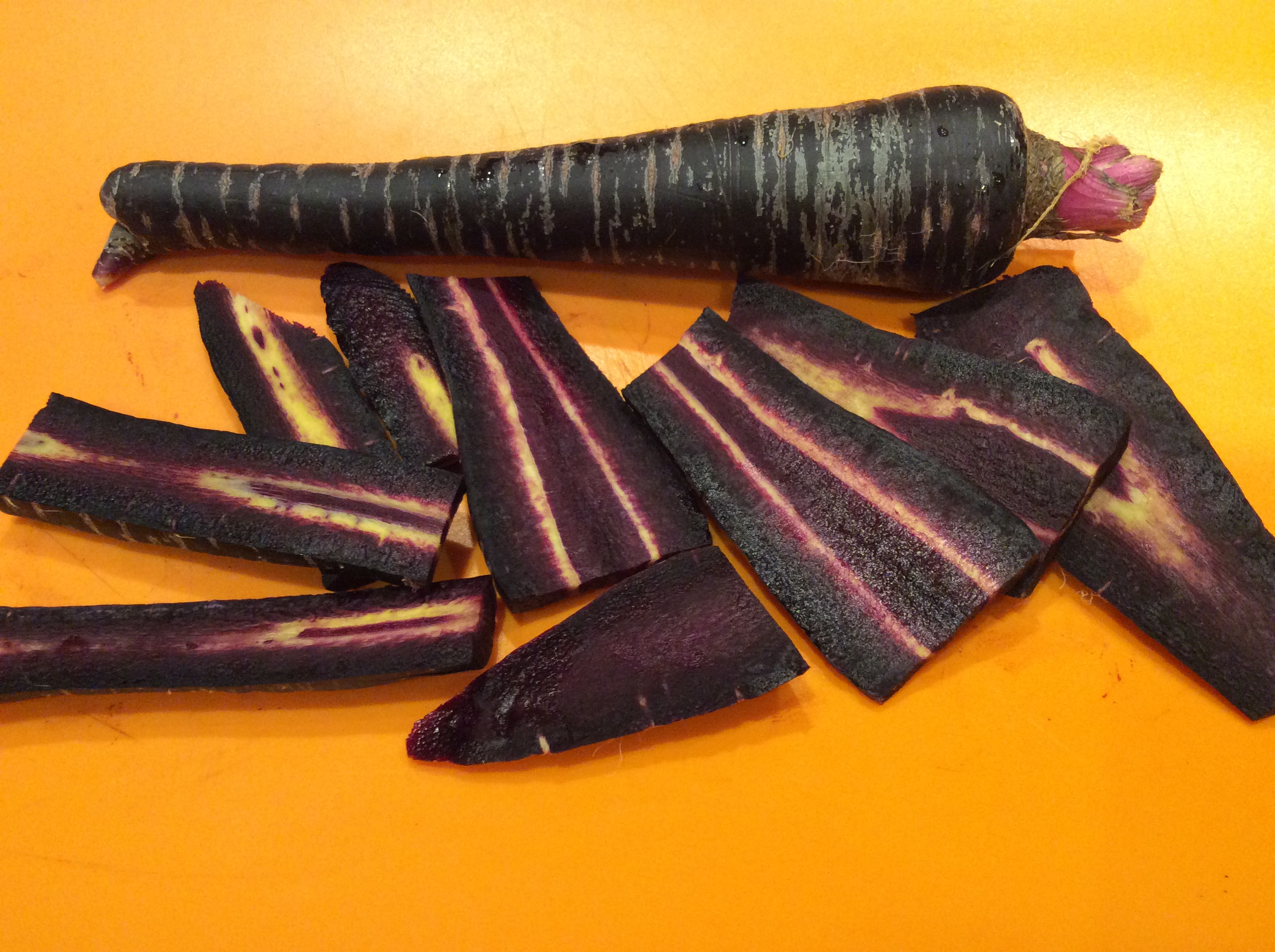
I like carrots in general, and this year I’m especially enamoured of the carrot variety named Deep Purple. As you see above, it is not a wimpy purple-blushed orange carrot. It is a startling deep indigo-violet right to the core. It is packed with anthocyanins, which can only do us good, and the flavor is a bit less sweet than many modern hybrids, which suits my preferences. I like carrots, not candy bars.

If you are accustomed to boiling carrots you will need to rethink your strategy, because the rich anthocyanin content in this one makes it bleed on the plate like boiled beets. This is not attractive, and I am no fan of boiled vegetables anyway, so a cooking method that keeps its juices inside where they belong makes sense.
image

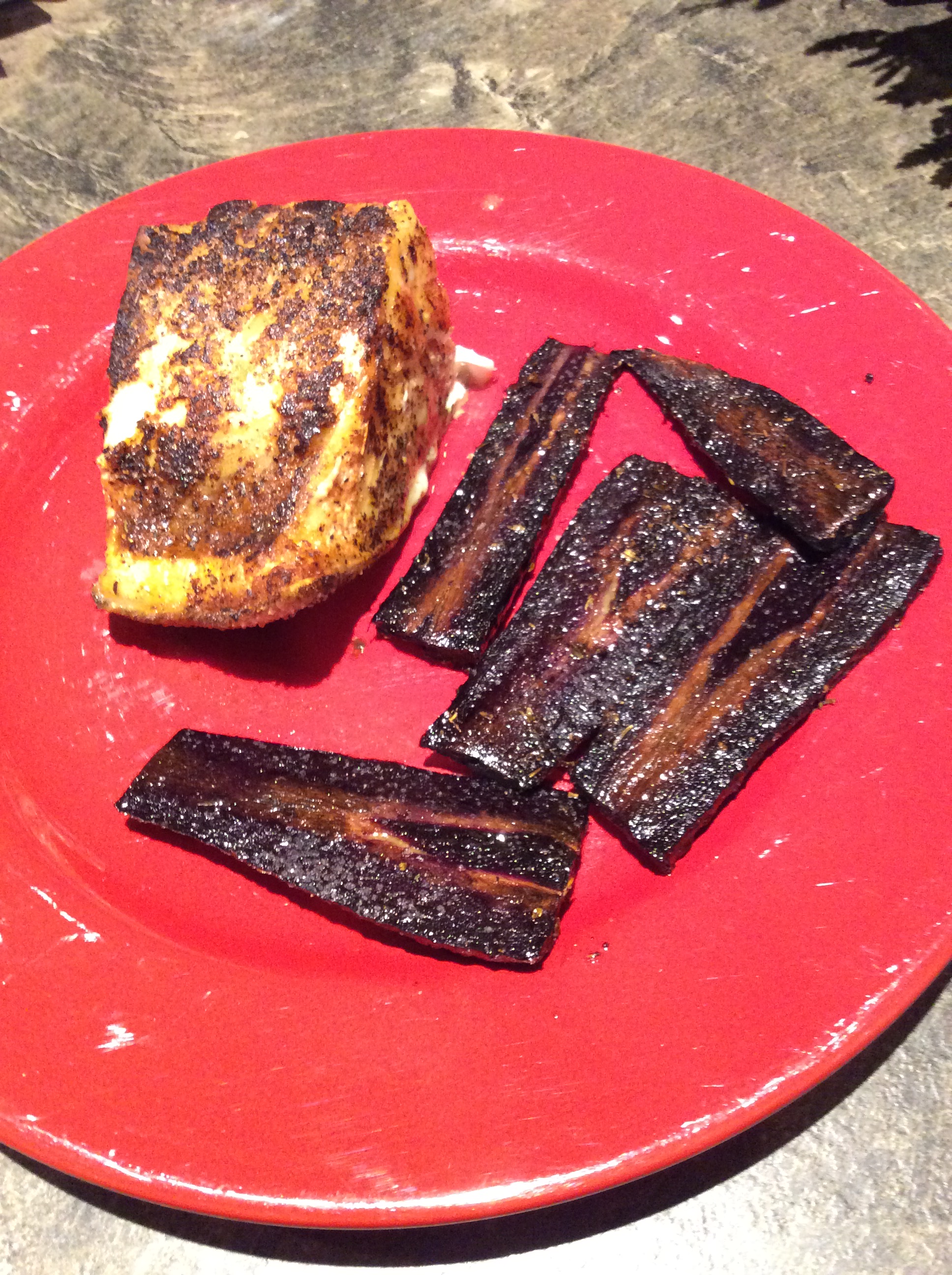
I am cooking a lot of carrot steaks lately and this is a great method for quick vegetable accompaniments that requires no forethought. The prep is quick. Catch your carrots, scrub them thoroughly, cut off the tops and bottoms, and cut the body of the carrot lengthwise into “steaks” of the thickness that you prefer. I like 1/4″ because I like them to cook quickly and get a little cooked clear to the center. I cook all the odd-shaped side slices because they are all delicious; the tapering parts get a little gooey and caramelized, which adds depth and savor. I salt the slices lightly, rub them with good olive oil, and add any seasoning that I might want. In the case shown here they were to accompany blackened fish chunks and so I dusted them lightly with blackening spices.

After you cook your entree, or in a separate nonstick skillet, heat the pan over medium-high heat and lay in the carrot slices, not letting them touch each other. Let them cook at a brisk sizzle until the underside looks cooked and is deep brown in spots, flip, and repeat. Serve and eat.

Incidentally, when I say “nonstick skillet,” these days I mean seasoned cast iron. The newer ceramic-lined nonstick skillets might be safer than the older ones, but their nonstick qualities rapidly break down if used over high heat and they are not considered safe for use under these circumstances. I also dislike the mushy not-really-a-crust that is produced over lower heat, and only fairly high heat will produce a true sear. So cast iron it is. Keeping a skillet seasoned takes a little extra work but not much. The Maillard browning reaction is the cook’s friend for deepening flavor and it happens happily in hot cast iron.  The meaty tang that browning produces makes carrot steaks an ideal vegetable entree.
DSCN0490

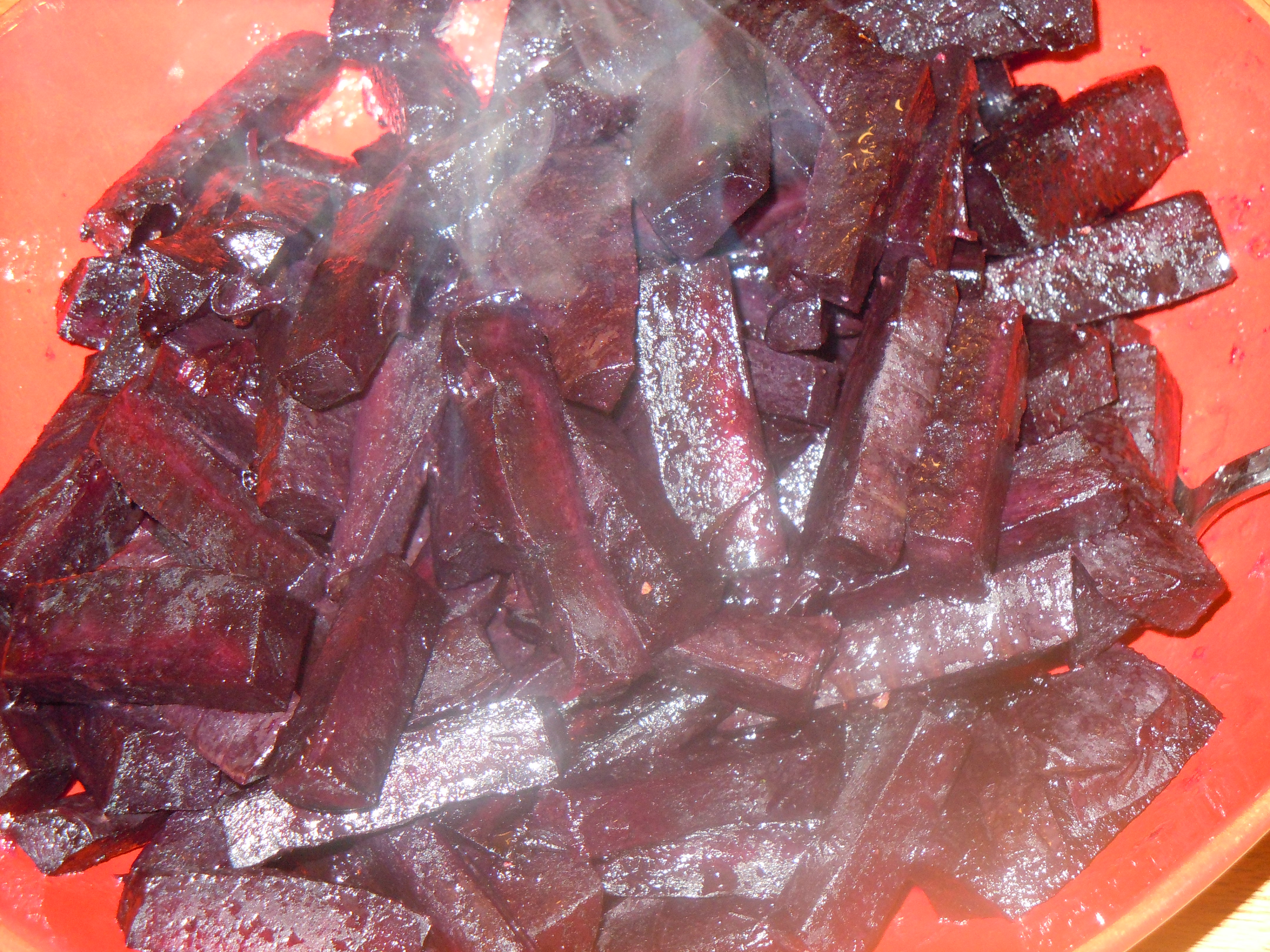
The same general method can be applied to purple carrot quarters as shown in the steaming plateful above. In this case I cooked them over lower heat for a longer time with no seasonings but salt and olive oil, and added thyme butter just before serving.

august 09 007

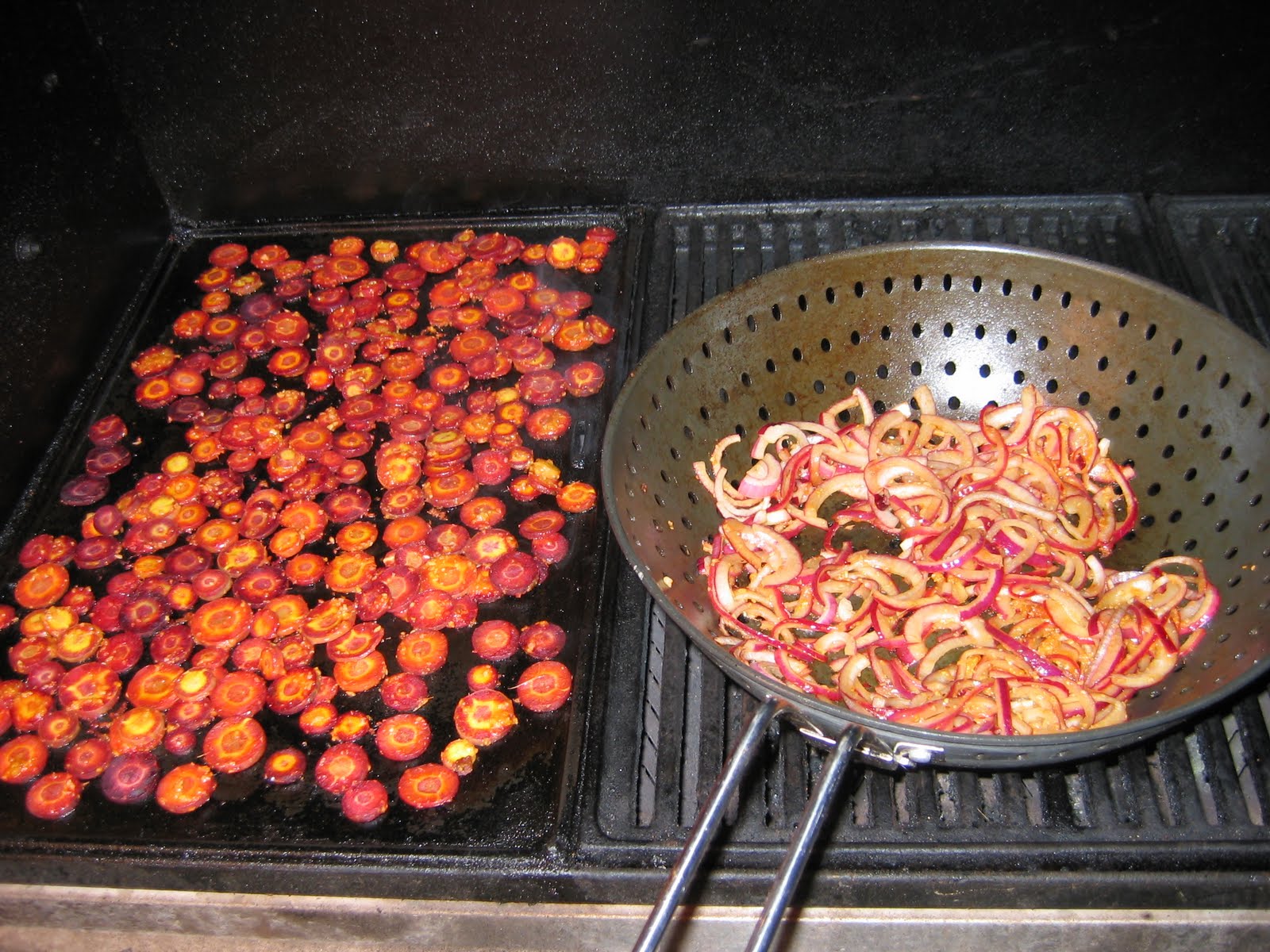
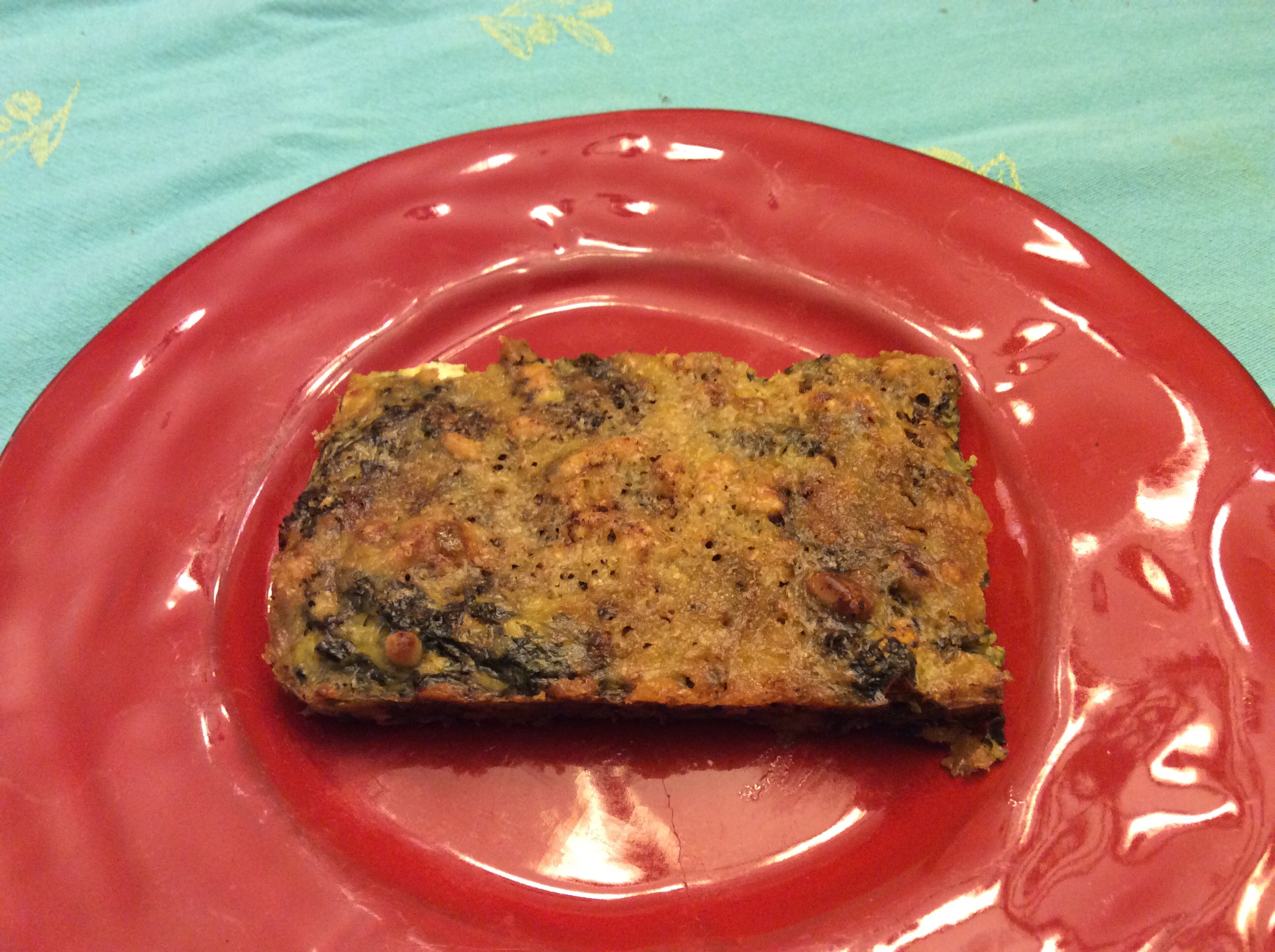
Grilling is another great way to cook purple carrots. The ones shown above are a purple-blushed variety that I grew before I discovered Deep Purple, seasoned with garlic and ginger midway through grilling so that the garlic doesn’t burn and topped with chopped turmeric leaves to accompany a dish of southeast Asian grilled shrimp.
august 09 005

Improvisational Cooking: Greens on the Table

imageimage
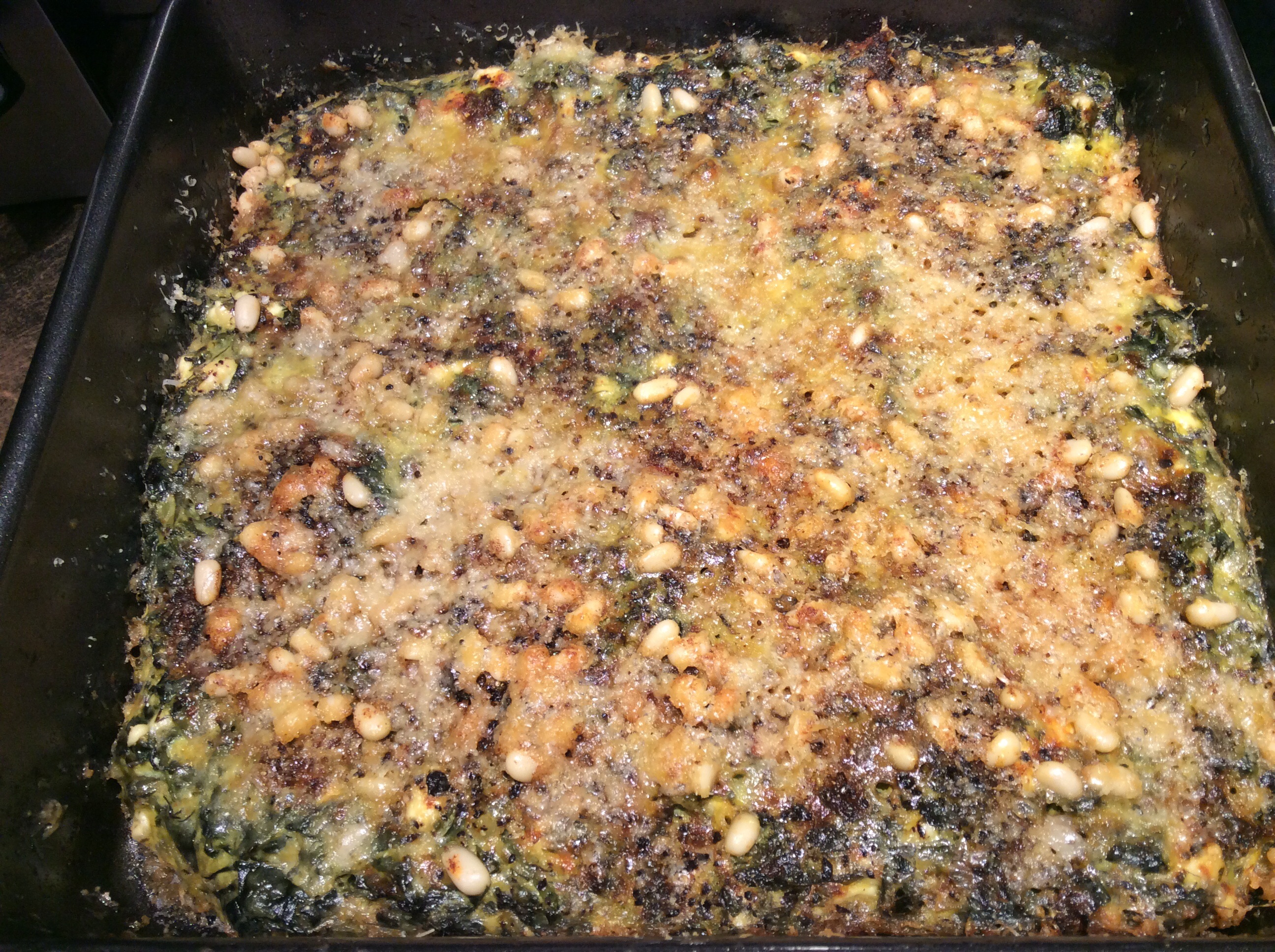
I am always yapping on about eating more leafy greens, and periodically I like to write about how I put leafy greens on my own table. Here is a low-carb recipe that even greens-phobes tend to like, and leftovers make wonderful lunches and snacks. It is improvisational in nature and you can substitute at will: this is a skeleton recipe and you can flesh it out any way you like.

The basic ingredients are greens, alliums, flavoring leaves, oil, cream, eggs, nuts, seasonings, and cheese. The greens, alliums, and flavoring leaves can be varied endlessly, except that the bulk of the greens should be relatively mild.

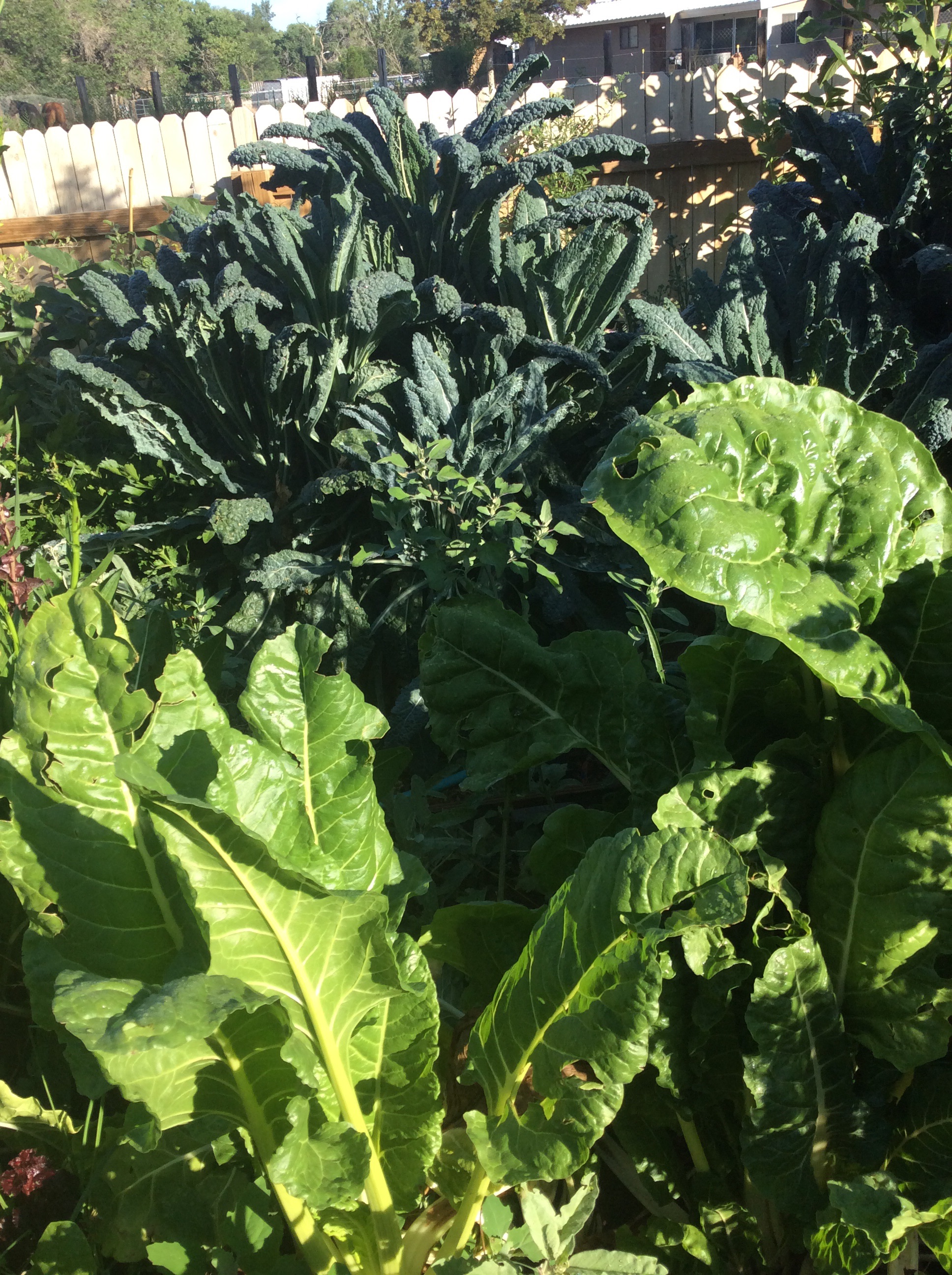
First, catch your greens. I carry a white plastic food-grade 3 gallon bucket out into the garden and pick it full, with the greens loosely thrown in and not packed down. Today I picked mostly lambs-quarters leaves, with some late spinach and early chard. If I was working from the farmer’s market or grocery store, I would choose a very large bunch of chard and Tuscan kale, and would tear out the large central midribs. Wash the greens twice. Grab them by handfuls and, on a BIG cutting board, chop them coarsely.

Second, decide on your alliums. Today I picked two big green onions and a couple of very big stalks of green garlic. If you don’t have a garden, a large onion and three cloves of garlic would work. You could use two cloves of garlic and two bundles of onion scapes from the farmer’s market.  Shallots are good in the winter. Don’t use garlic scapes in this recipe, because the texture doesn’t work.  Chop your alliums finely.

Third, consider your flavoring leaves. Think in terms of adding herbal, sharp, aromatic, and sour flavors. Today I picked several large young wine grape leaves for the sharp-sour note, a few leaves of lovage and a handful of parsley for green-herbal tones, and a few sprigs each of thyme and fennel for aromatic notes. Possibilities are endless. If working from the grocery store shelves, I would often choose a small bunch of parsley and some tarragon and thyme. Chop your flavoring leaves finely.

For the oil, I use top-notch extra virgin olive oil.

For the cream, I chose a can of coconut milk because I had one on hand, but heavy cream would do just as well, and if you insist on almond or cashew milk you can use that. You need a cup or a little more of your cream of choice.

For eggs, I use three whole eggs and nine egg yolks. Do be sure to get the best pastured eggs that you can get.

For nuts, I always use about half a cup of pine nuts. If you choose some other nut, chop them coarsely.

For seasonings, I used about a teaspoon each of red pepper and Urfa pepper flakes. I seldom vary this, just because I love this combination with greens. You may prefer freshly grated black pepper.

For the cheese, I nearly always use 6 ounces of finely grated Parmesan and eight ounces of the wonderful Mt. Vikos feta, crumbled.

Having made your choices and prepared your ingredients, preheat the oven to 375 and generously grease a pan about 10 by 14 with olive oil. Sprinkle the bottom of the pan with some of the Parmesan. Beat the eggs and egg yolks together and salt them a bit.

Heat some olive oil, about a quarter cup, in your largest skillet and sauté the alliums until they are softening. Add the coarsely chopped greens and salt rather generously, and cook turning frequently and carefully as the greens shrink. Cook them 15 minutes or longer, until they taste good when you eat a bite, and then add the flavoring leaves and sauté about two more minutes. Now add the cream. Boil a minute and take them off the heat and let cool 10-15 minutes.

When the greens are just cool enough to handle, stir in the crumbled feta and then the beaten eggs and yolks. Spoon the mixture into the greased cheesed pan, smooth out a bit with a wooden spoon, and sprinkle with the red pepper and Urfa pepper flakes. Then sprinkle on the pine nuts, or whatever nuts you chose.  Top with the rest of the Parmesan (I like to drizzle on a bit more olive oil, too) and bake at 375 until the mixture is firm and a knife tip comes out clean, about 18-20 minutes for me. then, if you like, run under the broiler until the top crisps a bit. Be careful not to burn the nuts. Let it cool a little and serve in generous squares, jam-packed with nutrition. Smaller squares could be used as a finger food.
image