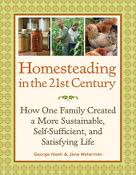
Urban homesteading and homesteading generally are enjoying 15 minutes of fame right now (this seems to happen every 30 years) and so there are a plethora of books about homesteading, many of them written by people who got their information from other books about homesteading. Occasionally a book turns up that was written by people who have actually walked the walk, not for a year or two but for decades, and this is such a book. It is much more about rural homesteading and small farming than about urban/suburban issues, but there are urban-oriented sidebars that have some useful information. The section on choosing a property is exceptional, and I strongly recommend that anybody who is thinking about buying a rural property read it carefully. Alas, it is packed with exactly the sort of useful advice that most of us don’t take when the time comes. Instead, we fall in love with a property, buy it, and then learn what the problems are and spend years and dollars sorting them out. But if you read this first, you will at least have your eyes opened about where the problems might lie before they actually smack you in the face. The section on vegetable gardening has good information about how to calculate realistically how much of each veggie you might actually use, as well as a lot of practical growing information. The sections on keeping animals deserve a careful and attentive reading BEFORE you actually purchase any animals. The material on maintaining animals in a healthy condition is excellent. If you are planning to raise meat animals, be aware that there is a good sidebar about going from sustainable/humane fantasy to blood-spattered reality, but there is little information about how to do that, so if you are planning to do your own butchering you will need other sources of information about the process. There is also a good piece of advice about discussing your self-sufficient fantasies with your partner, in detail, before embarking, because one person’s rural idyll can be the other person’s isolated nightmare. Sometimes even full disclosure doesn’t help. I can say from personal experience that my very truthful husband told me in a straightforward way, before we moved to a bigger property, that he didn’t want to do any garden or yard work, and it turned out that what he meant was this: he didn’t want to do any garden or yard work. I had the nerve to act surprised when I realized this. Now I arrange things so that I can manage the garden myself, and we’re both happy with the arrangement.
Writing about a new homesteading book makes me think of old homesteading books, and some of them are too good to be forgotten. The Complete Manual of practical Homesteading by John Vivian stands out. I first read it when I was 17, and when in my twenties I acquired an actual working farm, I used a lot of his information. I don’t agree with some of it, but I am very grateful that he started me on the path to thinking about how to do farm tasks as well as possible. I don’t think it’s in print any longer, but used copies turn up here and there, and it’s worth a read for anyone who has a larger or rural property. And if anybody knows where John Vivian is these days, let me know so that I can thank him. By scrupulously writing about only what he knew for himself and had done himself, he saved me a lot of time that I would otherwise have spent sorting out real information from the second-hand kind.
2 May
Books Worth Reading: Homesteading then and now
29 Apr
Beltane Fire
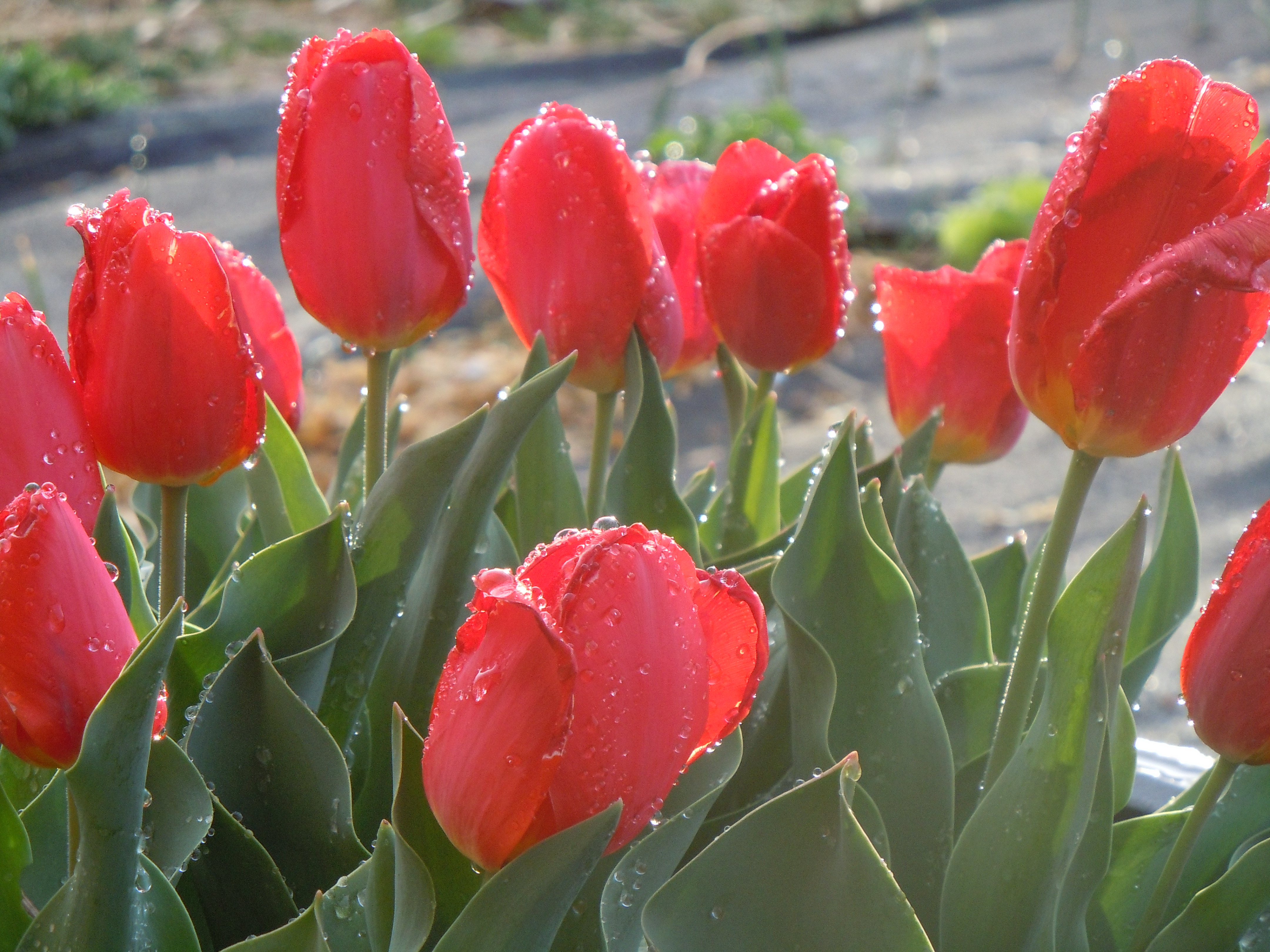
Beltane, May Day, has long been one of the most important festivals of the agricultural year, when our ancestors danced around maypoles, leaped across fires, and chose mates or thought about it. It’s easy to see why. The earth is fully awake and full of the promise of the year’s abundance. Flowers are everywhere. Salad bowls brim with the first fruits of the soil. The frosts are largely past, and we can entrust ourselves to the splendors of the unfolding season. Hens lay, cows and goats give milk, and urban homesteading is briefly and exquisitely simple.
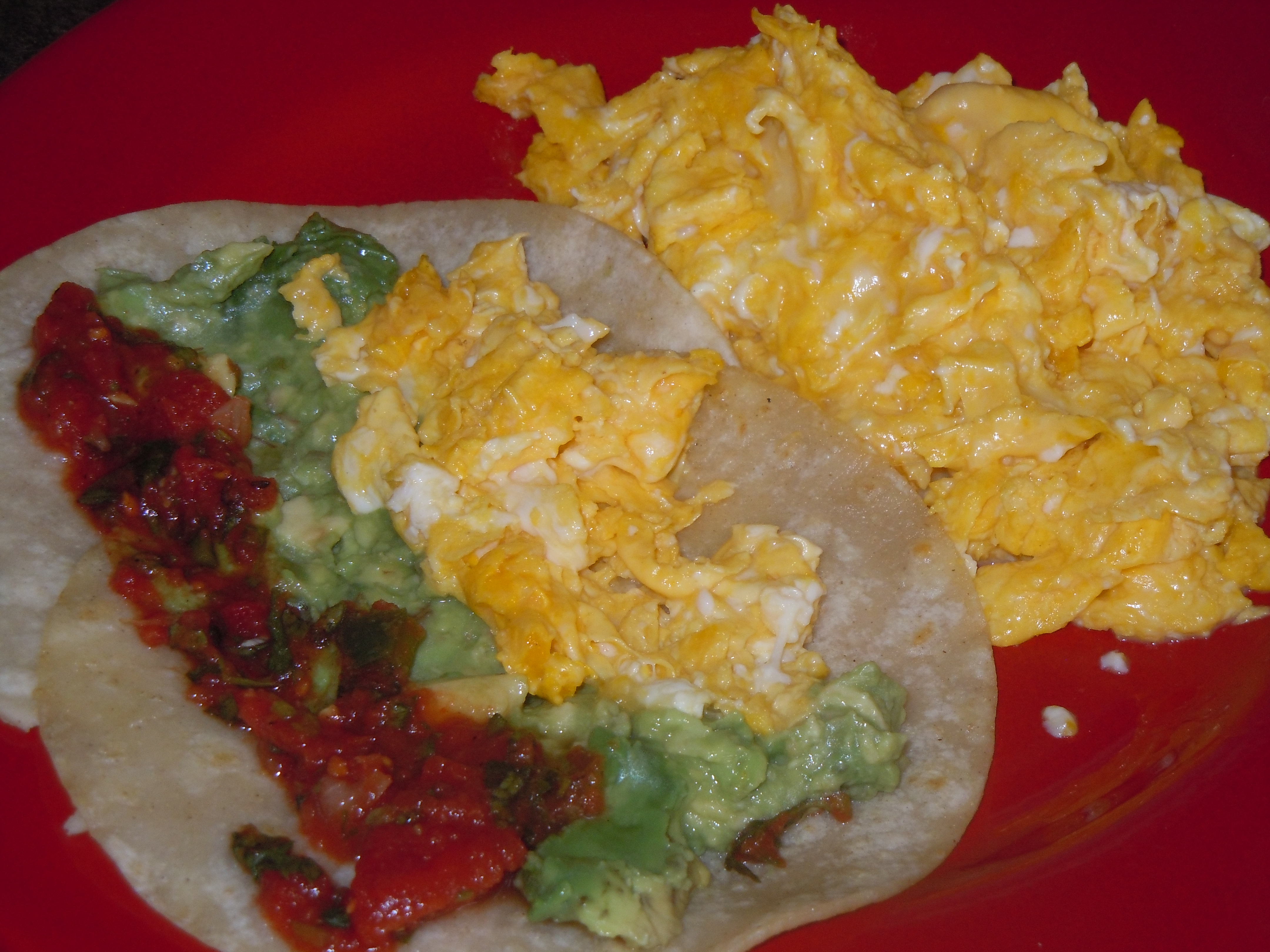
This is also the main planting season, and there’s so much to do in each lengthening day that I seldom feel like making fussy meals. The hens are laying mightily, and eggs can be turned into a series of light fresh meals. Here, scrambled egg tacos combine great eggs from your hens or the farmers’ market with good soft corn tortillas, avocados, and your favorite fiery red salsa, either homemade or bought. This is too simple to be called a recipe. For two people, prepare eight corn tortillas by your preferred method; I toast mine briefly on a hot comal and put them in a clay tortilla-holder to keep hot. Have the salsa ready at room temp. Cut two good ripe avocados into chunks and dress them lightly with lemon juice and salt. I like to mash them into a very rough and chunky puree. Saute’ half an onion or the white part of a green onion, chopped finely, in butter or oil until cooked. Pour in 5 eggs and scramble them over medium heat, throwing in about half a teaspoon of salt and a good pinch of ground toasted cumin (a kitchen staple if you do much Mexican cooking, but you can omit it if you don’t have it or don’t want to make it.) When the eggs are done to your liking, pile them on two small plates and serve immediately with the tortillas, the salsa, and the avocados. Roll some egg, some salsa, and some avocado in each tortilla, and eat messily.
17 Apr
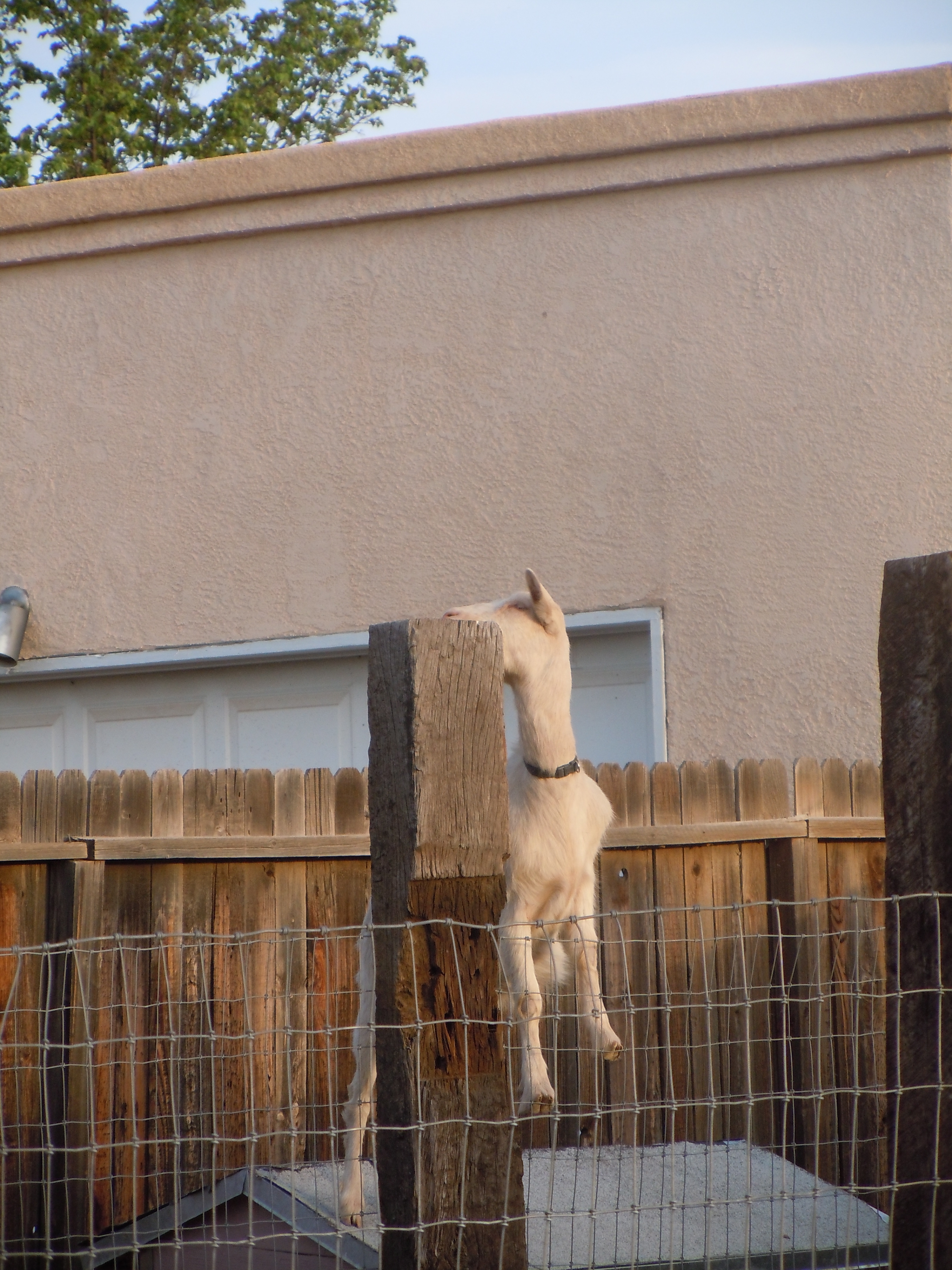
Meet Magnolia
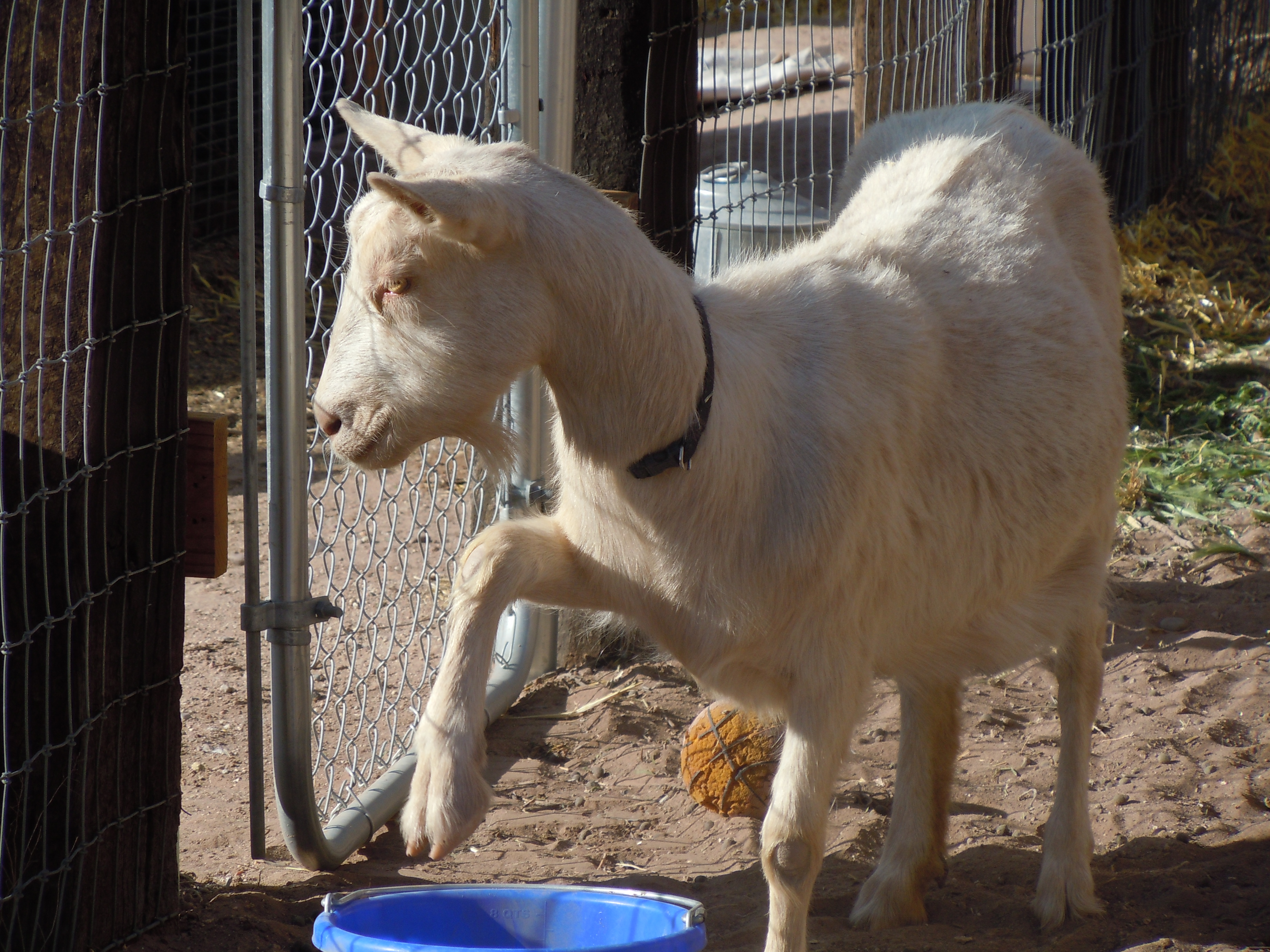
One of the biggest steps in making an urban homestead is adding animals. Chickens are the easiest, and you can get Brett Markham’s book Mini Farming for info about how he integrates layers and meat chickens into a small operation. I have wanted for a while to add a dairy animal, and based on my past experiences with goats here are the pros and cons:
Pro: goats are small and easy to handle compared to a cow. They tend to be hardy. They will eat brush (they love Siberian elms.) They are intelligent and affectionate. They produce a lot of milk relative to body size, and the milk is easy to digest.
Con:they are unbelievable escape artists and require excellent fencing. They will eat all your shrubs and trees unless well fenced. You need to know their health and nutrition needs. Contrary to popular belief, they won’t “eat anything;” they are actually picky eaters who need very specific kinds of food. They need to be bred, and I do not recommend keeping a buck in a suburban area, so you will need to take them somewhere to be bred. If bred or in milk, they need supplemental food and it can get expensive. You need to have a plan for how to handle the milk and what to do with it, keeping in mind that unless you pasteurize it you may not be able to sell it legally (check your local ordinances, but it is illegal in many areas to sell raw milk.)
Get a good book on dairy goat raising and actually read it before deciding to get a goat. That said, they are lovely animals and I’m very happy to have one again. Magnolia is a yearling doe, purportedly bred. We’ll see. Meanwhile, she participates in homestead life by standing on top of her goat-house commenting on all yard activity and eating all the siberian elm cutting I bring her.
23 Mar
Kitchen Staples: notes on staples and specialty ingredients
I’ve been in the habit of referring readers to my website for more information on the seasonings that I use and the ingredients that I don’t grow at home, but at this point it seems to make more sense to make the blog more independent. Therefore, here are some random jottings on what I keep in my kitchen and why.
Vegetables: Veggies are a primary and prime staple! During the growing season, I cook with what’s ready, but often I’m tired out by dinner and don’t want to spend more time picking, so I try to harvest and prep vegetables in the morning so that they’re ready in the refrigerator and can be prepared with little trouble. When I buy vegetables, I try to wash and trim them right away so that they’re near-instant gratification at dinnertime. Salad greens are soaked clean, rinsed twice, and stored in a large salad spinner-crisper. I try to think of vegetables first, meat or grain second, when planning meals. When I know that something is ripening, for example the first of eight broccoli heads is nearly ready to pick, I brush up on interesting recipes then, not a week later an hour before dinner when I’ve got three heads of broccoli in the refrigerator.
Meat: here in Albuquerque, I get most of my beef, fish, and lamb from the Fishhuggers, an energetic local couple who sell their family’s grassfed beef and lamb and the Alaskan salmon that Kenny catches every summer. Their meat is 100% grassfed, and unlike many grassfed operations, their meat is not overly lean and tough. Cooking grassfed meat is different, and I recommend getting some advice from them. Generally it cooks a lot faster than grain-fed meat and you have to get it off the grill promptly to keep it rare and tender. I get all my chicken from the Pollo Real people at the Santa Fe Farmers’ Market. Their chicken is fed some grain but is raised on pasture. It’s healthier for the chickens and for you, and also it tastes like real chicken. I don’t know of a reliable local source for pasture-raised pork, so I get mine from the James Ranch people in Durango. Again, with regard to sustainability and health benefits, you can use the sources of info mentioned in “butter and Dairy” above. Most of the meat mentioned above comes frozen. If you want to buy fresh, be aware that “grass-fed” is not a legally controlled designation and there is a lot of meat in the meat cases around town labelled “grass-fed” that isn’t. One producer even told me that his meat was grass-fed “but I just finish them on grain for a month. That’s still grass-fed.” That isn’t grass-fed, and a well-designed study has indicated that the Omega3 content falls very rapidly during even a brief period of grain-finishing, eliminating the health benefits that you are paying for as well as the environmental benefits. I would only buy from a farmer that I knew personally and trusted. If in doubt, ask to visit the farm.
Butter and cheese: for the sake of the planet and the cows, I eat only pastured butter. The very best that I know of is from Pasturelands in MInnesota, and is 100% grass-fed, no grain supplementation, which makes it unique in the market. It comes frozen in styrofoam shippers, and they include a prepaid label so that you can send the empty shipping carton back and have it reused. I keep it in the freezer for up to a few months. They also offer 100% grass-fed cheeses. I especially like their mild Cheddar for snacking, and then they have complex cave-aged cheeses for special occasions. Why does 100% grass-fed matter? For quick info you can check out the Eat Wild site, or you can take more time and read The Omnivore’s Dilemma, still the best book on ethical eating that I know of and far above later books on the subject (including, unfortunately, Pollan’s own later books.) I wish that there were a local producer of 100% grassfed dairy products, but until there is, I’ll buy by mail.
Parmesan: I am giving this imported cheese its own heading because there is no worthy substitute for the genuine Italian article. It’s worth buying the best that you can find. Discount stores like Trader Joe’s or Sam’s Club carry imported Italian Parmesan, but the quality is quite poor compared to really good Parmesan, and most domestic and Argentinian imitations that I’ve tasted have been appalling. Nobody will be more thrilled than me if American producers come up with a truly great Parmesan, but I would argue that it hasn’t happened yet. If you buy the good stuff, your pastas will benefit, and because the flavor is so pronounced you can use it the way the Italians do, ie sparingly. Pastas in America are too often oversauced and overcheesed. You’re supposed to be able to taste the pasta.
Capers: There is no question about salt-cured capers being the best. I’ve seldom met a caper I didn’t like, but my favorites are the “Wild Mountain Capers” that I get at The Spanish Table in Santa Fe. They are fearfully expensive but they have a wonderful herbaceous flavor and are less salty than other kinds. I buy them in 1 pound jars. When you are ready to use them, rinse off the surface salt and soak in cold water to cover for an hour, then drain and squeeze dry. In the summer I use capers so much during the summer that I often soak some when I’m working in the kitchen, squeeze dry, and pack them tightly in little plastic containers to use on the spur of the moment. They will keep 2-3 days this way, and they keep indefinitely in their salted state.
Anchovies: There is no better seasoning than anchovy for giving a meaty complexity and richness with minimal use of actual flesh. One or two fillets can give a complex undertone that can’t be identified as “fish” but which greatly improves the dish. I use tiny amounts in a wide variety of dishes. Salt-cured are the best if they are the lovely meaty specimens that you find in Italy, and in a very few specialty food stores in this country. Food “experts” frequently recommend the 1KG cans of salted anchovies that are readily available in the US, which makes me think that they themselves have never opened such a can to find the scads of teensy fish with no fillets to speak of that they contain. My experiments with those cans have been very disappointing, and I now use anchovy fillets packed in olive oil instead. Another product that I would never be without is colatura, an Italian “anchovy essence” of the highest quality. It is something like Asian fish sauce but darker, more complex, and richer in flavor. Zingerman’s has it. I don’t know of a local source.
Wine: all I will emphasize here is that if you cook with wine, it has to be good wine. If you wouldn’t drink it or serve it, don’t cook with it.
Eggs: I have my own laying flock now, but there are several people at the various local farmers’ markets who have real free-range eggs, not the ersatz kind that come from large producers. Be sure to save your egg cartons and take them back to the people who sell eggs. The growers are always glad to get them back, because they aren’t cheap, and reuse always beats recycling.
Olive oil: I’m sometimes shocked at how much of it I use in a couple of months. It loses flavor slowly but steadily in the bottle, so don’t buy more than you can use up in a few months, store it in a dark place, and buy from good sources where it isn’t displayed in a light hot place. Find a few kinds that you like. The easiest way to find out what you like is to taste a lot of them, and the most convenient way to get started is to go to The Spanish Table in Santa Fe, where knowledgable employees will offer you samples of oils that you are interested in. Or just let them surprise you. I try to keep a couple of very flavorful oils on hand for salads, and some less intense but much less costly oil for cooking.
Charcuterie: The excellent products of La Quercia last a long time when wrapped properly and refrigerated, and they are scrupulous about using humanely raised pigs. The prosciutto rosso is superb. I have not tasted any Italian prosciutto that was better, and no domestic product has been anywhere near as good. They also have a less expensive grade called Americano, and it’s very good, although it lacks the subtlety and finesse of the rosso. Their guancialle is a good staple to have around, and has been the start of about a zillion delicious pasta sauces in my home. For Spanish cooking I keep some Spanish chorizo around. This is a dry cured sausage, nothing like the fresh uncased chorizo found in Mexican groceries.
Herbs: I strongly recommend growing your own, even if you don’t grow anything else. The presence of fresh organic thyme, winter savory, sage, rosemary, basil, and parsley will inspire you to cook. They are easy to grow, and in our sun-drenched area will survive in partial shade if necessary. Having big pots of them around invites frequent use. I advise getting the culinary classic Simple French Food by Richard Olney and reading his notes on use of herbs. These are very strong flavors, and using them at random invites a muddled result. Once you have used them for a while, it’s second nature to create a balanced taste.
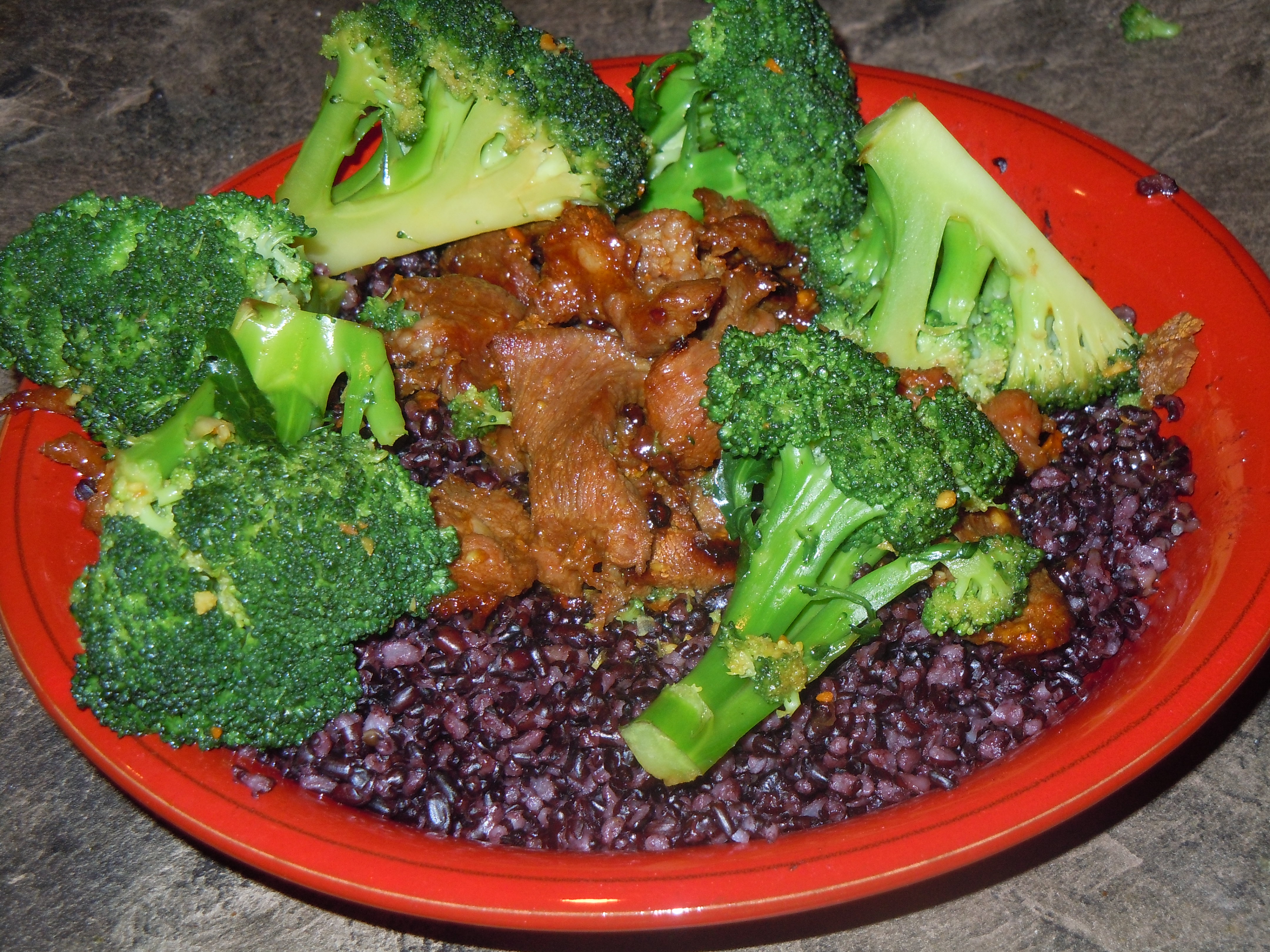
Grains: I like to have coarse bulgur, size 2, on hand because it cooks up with a more interesting texture than the finer grades that “gourmet” groceries tend to sell. Local readers here in Albuquerque can get it at Cafe’ Istanbul. Elsewhere, check your local Middle Eastern food source. I keep organic jasmine rice on hand at all times for Thai-influenced meals. I have never been able to take to brown rice, so I use white. I do love to use forbidden rice (black rice) on occasion. As you see above, it makes a dramatic deep-purple backdrop for bright green vegetables. I keep yellow, blue, and purple cornmeal. For baking, I always have coconut flour on hand to supplement white-flour products with a dose of fiber that doesn’t ruin the flavor. It’s tricky to work with at first, but as you learn its quirks it becomes easy to add fiber to your baked goods to improve the glycemic index. Coconut flour doesn’t ruin the color the way grain brans do.
Legumes: I cook these in my solar cooker and freeze them in containers. But if inspiration strikes shortly before dinner, a frozen block is daunting to approach, so I keep a few cans of beans and chickpeas on hand for the last-minute ideas.
 My urban homestead