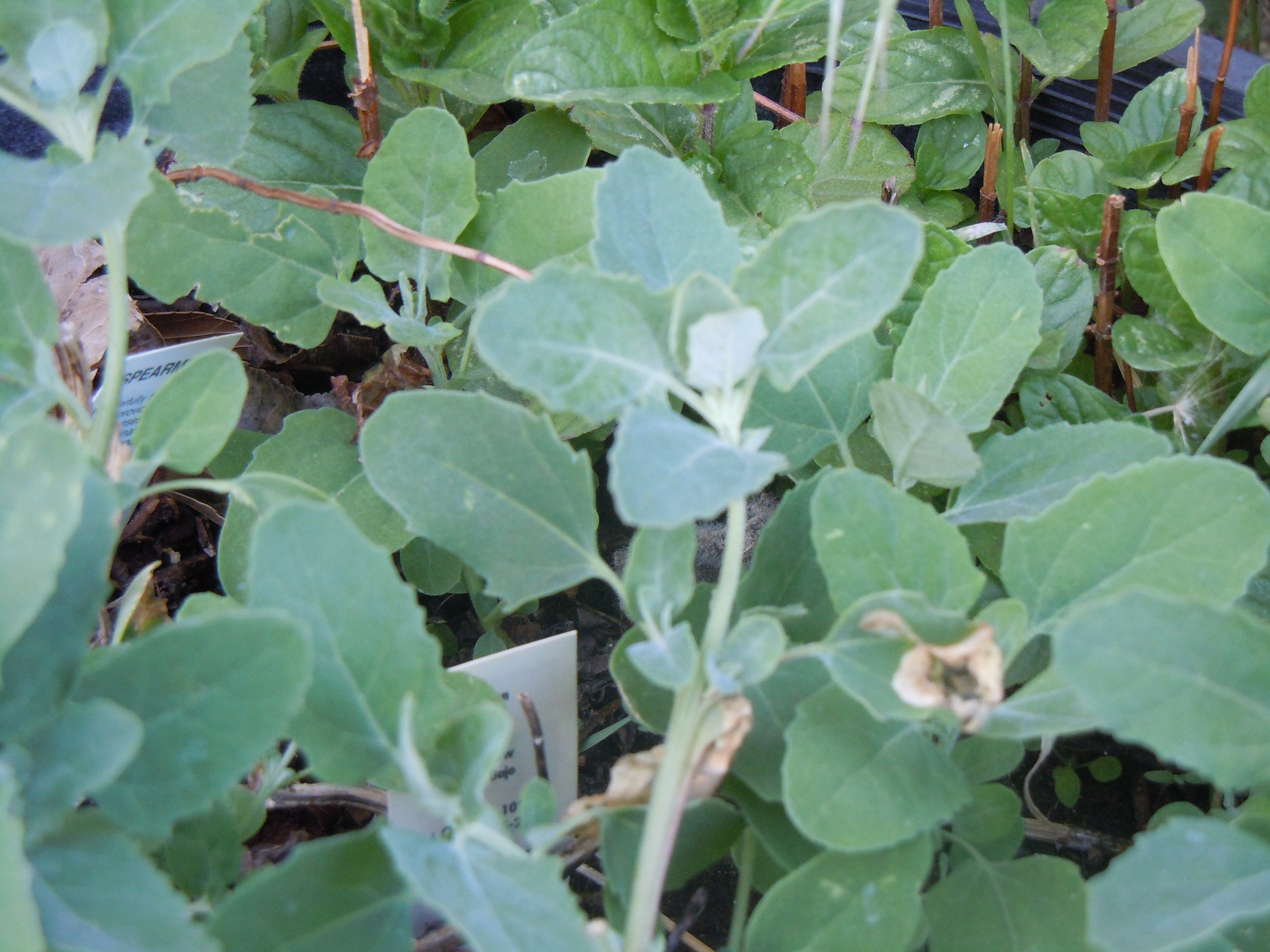
Lambs-quarters seedlings
Here in New Mexico we have a trio of useful weeds that make delicious greens during the summer heat. In fact, I suspect that most pieces of the continent that aren’t actually submerged have these three. Lambs-quarters, amaranth, and purslane are ultra-nutritious, mild and pleasant in flavor, and take nearly any sort of abuse. They come along in that order; right now lambs-quarters in my yard is nearly ready to harvest, amaranth seedlings are about an inch high, and purslane seedlings are a fine mist on the ground. The reason to learn to recognize them now is so you don’t weed them out. They are shown here in seedling stages, but never rely on one source to identify a wild plant unfamiliar to you, at least not if you intend to eat it. Get a good foraging book (anything by Samuel Thayer or John Kallas will have the info that you need) and double-check yourself. Then, harvest and eat. These three are easy to use. Lambs-quarters is my favorite, but I’d hate to be without any of the three. I generally blanch them for two minutes in boiling salted water in an open pot, drain and press out all moisture, and chop, then proceed in any of dozens of ways or freeze them in vacuum-sealed bags for winter. Lambs-quarters and amaranth can be eaten by themselves with great pleasure, but personally I find purslane a little slimy by itself and prefer it as no more than 25% of a greens mixture. It’s full of omega-3 fatty acids, though, so don’t neglect it. Click the “greens” category on my sidebar and scroll through some ideas to get you going. Be careful not to let them overwhelm your garden plants. Amaranth and Lambs-quarters can grow six feet high and three across in good garden soil, and they can crowd out nearly any other plant that you might be trying to grow. Leave one of each to go to seed, and pull the others before they take over. I can’t think of anything nicer that most people could do for their health than eat more leafy greens. If you have chickens, be sure to give them all the nutritious weeds that they can eat. My dogs love cooked greens too, although of course they are given only limited quantities.
I can cut the tender tips several times per plant, but these are wild annuals and they do what wild annuals do, which is make huge quantities of seed before winter. When the days shorten, they will go to seed. I’ve tried planting seed in late summer to extend the harvest, and the new plants went to seed before they were six inches tall. They haven’t been bred for our purposes, and I say thank goodness something hasn’t. Their season is a long and generous one, so enjoy it. Spread some seedheads in any neglected areas that you aren’t using, and you’ll benefit next year.

Amaranth seedling
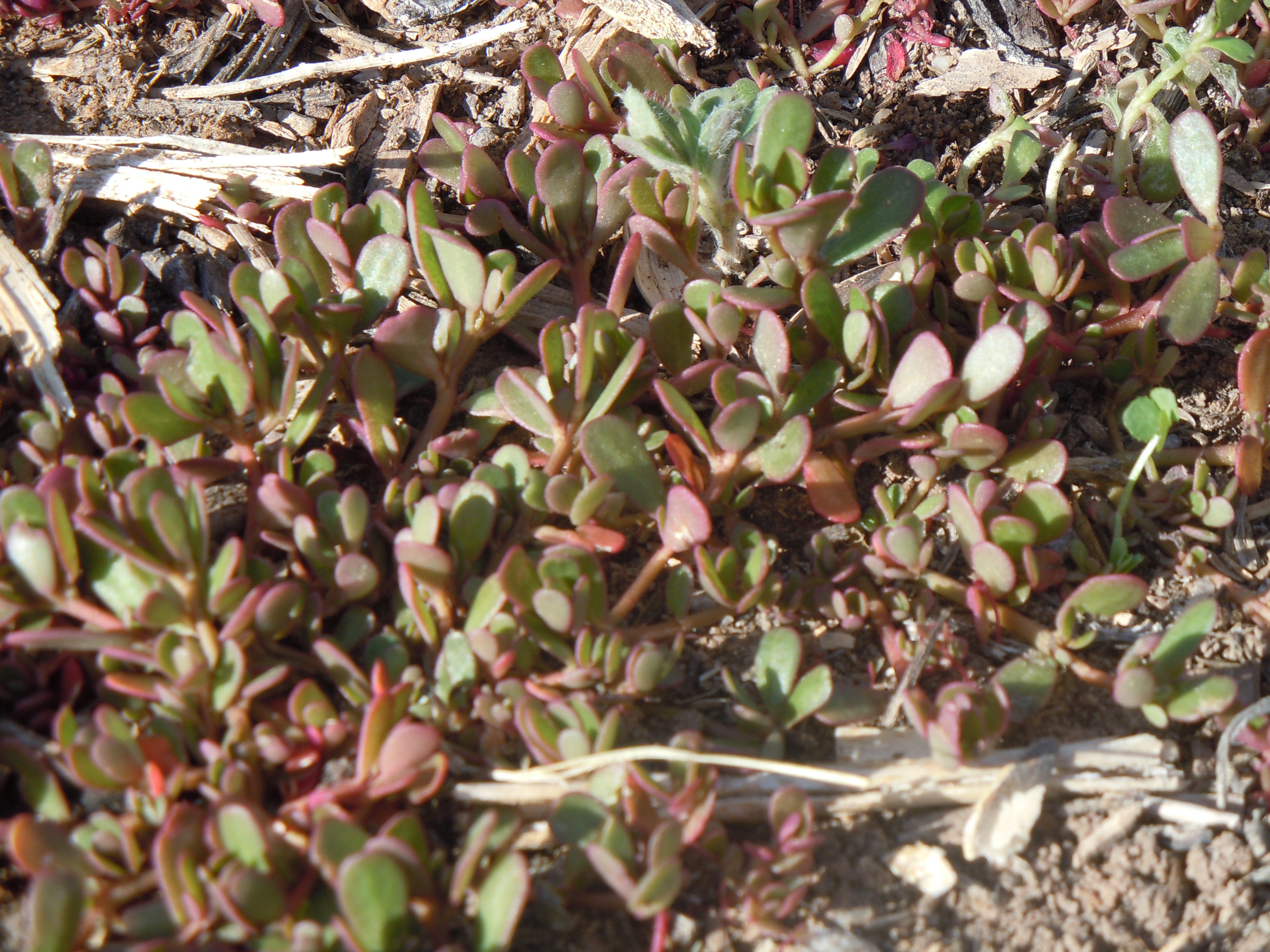
Purslane seedling
18 May
The Weed You Need: Edible Wild Plants in Your Garden
16 May
Passing Pleasures: Grow Your Own Endorphins
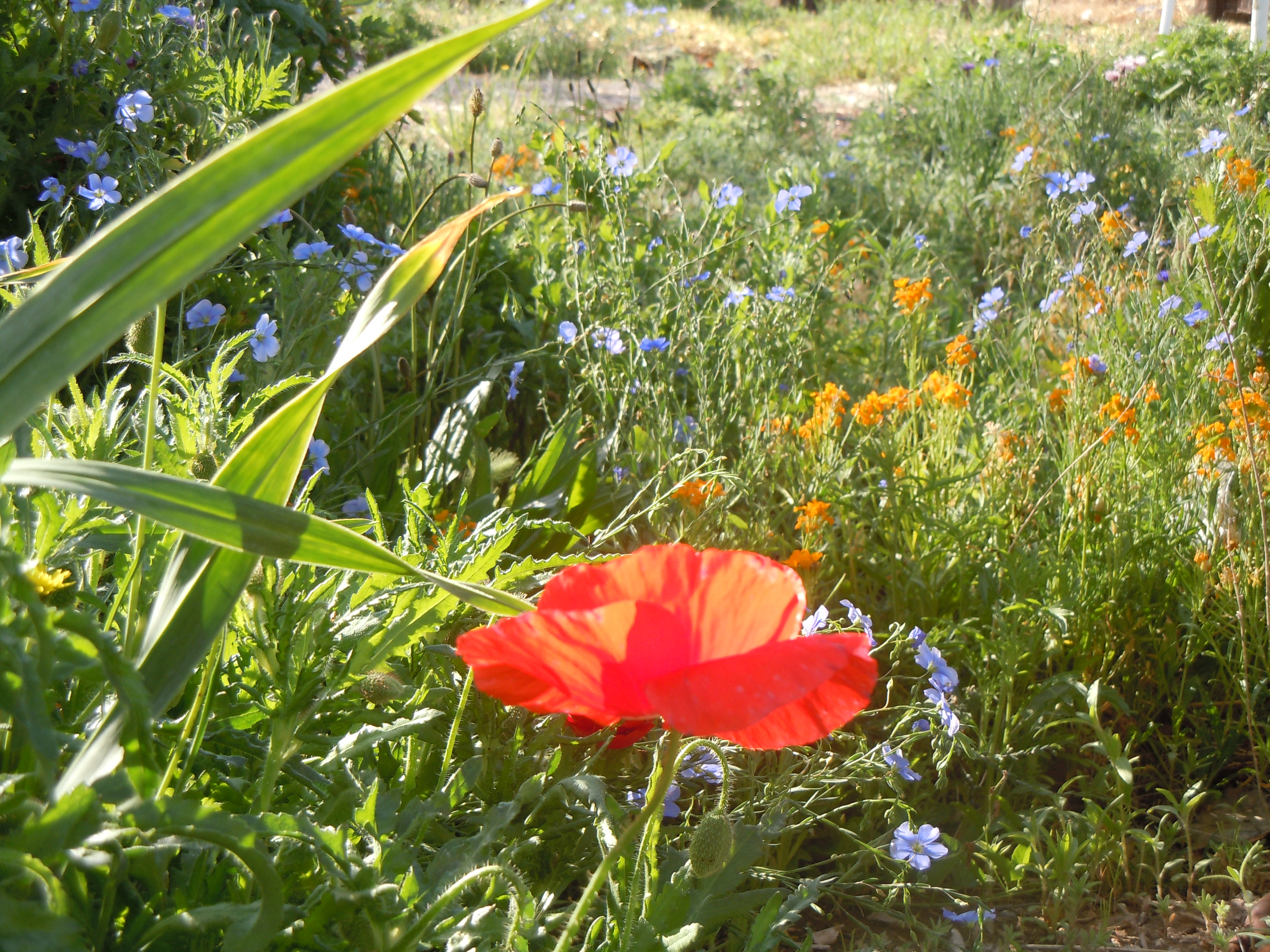
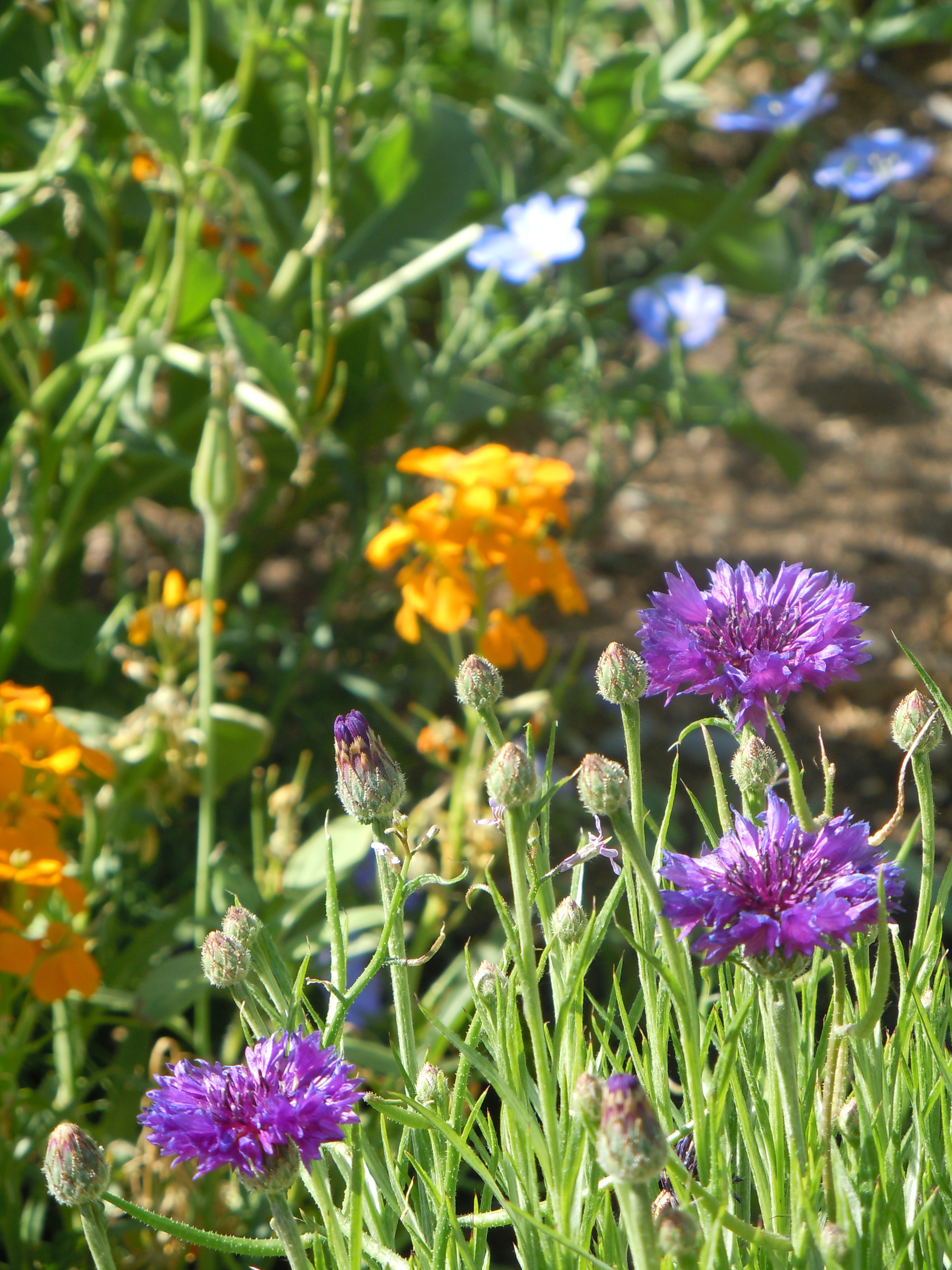
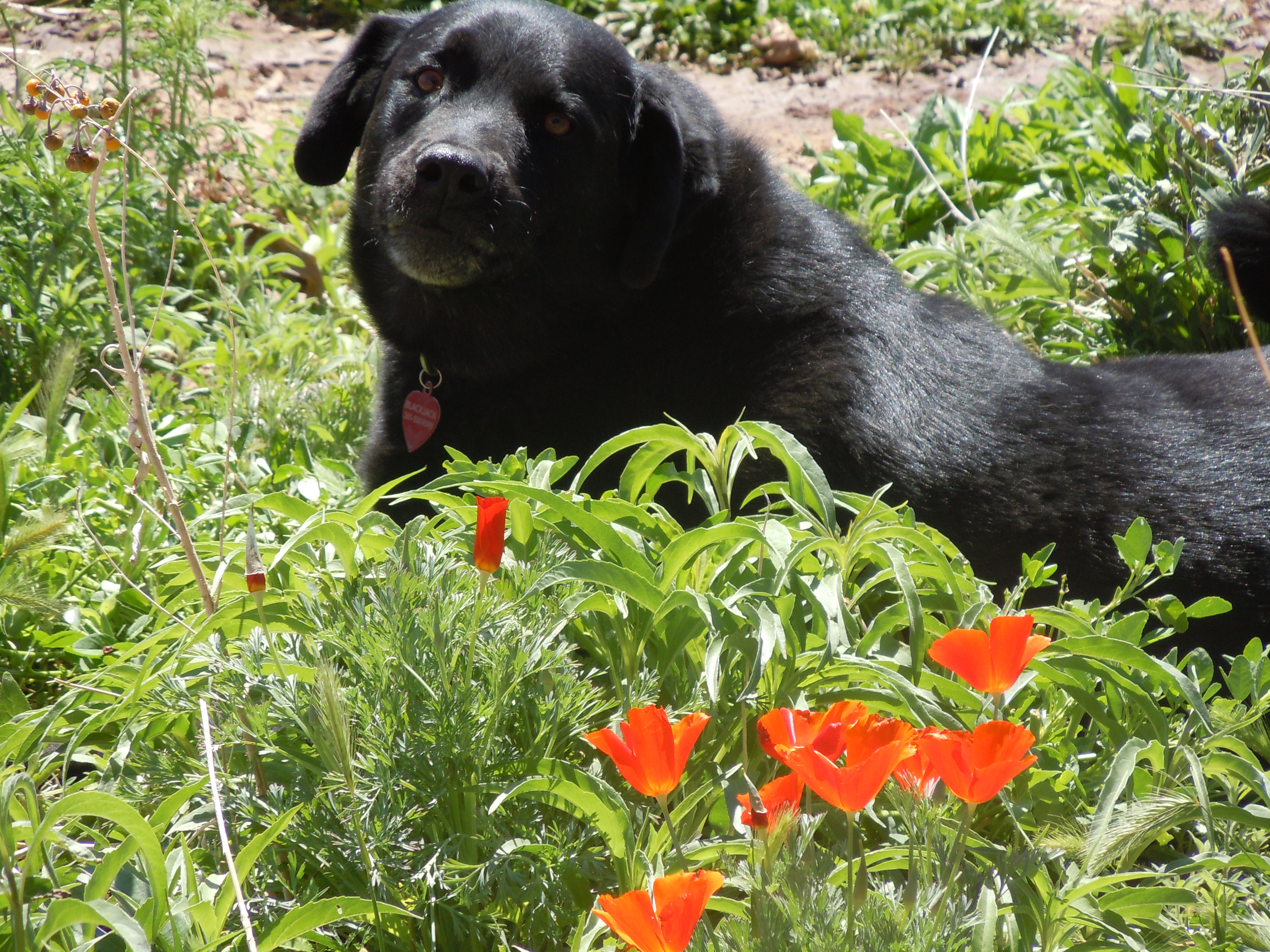
It is my belief that, no matter how efficiently you want to manage your small space and make every square inch produce something, some of your land should be given over to something for each season that is so heart-stoppingly beautiful that you catch your breath when you see it. You can think of it as endorphin-farming if you like, and it’s an important part of what makes your gardening sustainable. The moments of joy that you experience can only do you good. For me, poppies will always be the ultimate late spring heart-stoppers, with their blend of drop-dead showiness and tissue-paper fragility. So I use a small swathe of my land for a wildflower circle where poppies are harmonized with other lovelies such as Siberian wallflower and blue flax. Don’t be afraid to throw bright colors together, because in this season it looks right. You need to decide by late winter where the wildflowers are going to go, and do some soil prep. They don’t need a lot of pampering, but to be lush and beautiful they do need some care and good soil. Plant very early, by March at the latest, water regularly, and keep the weeds out. Then, some morning in May, you will wander through your flowery meadow so filled with pleasure that you can hardly believe it, and at tedious meetings or in the dentist’s chair the image will still be there. Surely that’s worth a little sweat and compost.
9 May
Midsummer Mead
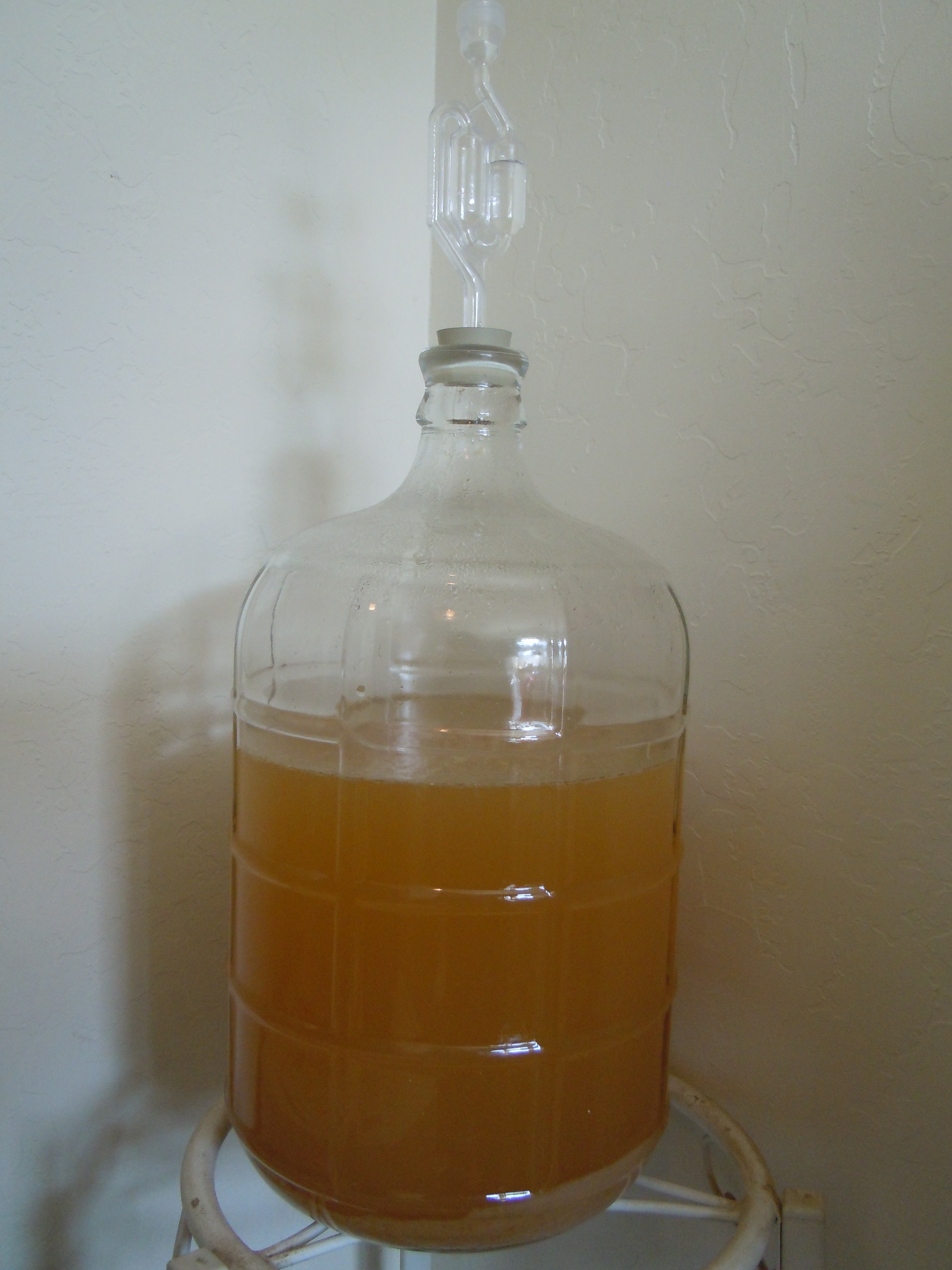
Somewhere I read that it’s traditional to drink mead on Midsummer Eve. Since I love to ferment nearly anything, this is a convenient excuse to try my hand with mead. In this case I’m posting before I know the results, in case you want to brew your own Midsummer Night’s Dream.
The equipment you will need to brew two gallons is a 3-gallon glass carboy, a drilled stopper that fits it, a fermentation lock, a food-grade plastic tube for siphoning, and 8 quart bottles with sturdy gaskets. You can obtain all of this from Victor’s Grape Arbor in Albuquerque or from any brewing supply house. While you’re there, get a packet of champagne yeast and have the helpful salesperson show you how to set up the fermentation lock, ie where to put the water. From your favorite food co-op, you will need five pounds of wildflower honey, two lemons, and a nutmeg.
After cleaning the carboy, stopper, and fermentation lock, bring two gallons of water and the honey to a boil. Stir until the honey is completely dissolved. While it heats, grate the rind off the lemon, squeeze the lemon juice out, and grate the nutmeg or crush it thoroughly with a mortar and pestle. When the mixture boils, remove from the heat, add the lemon zest and juice and the grated nutmeg, and let it sit uncovered until it cools to 90 degrees. Now pitch the yeast; sprinkle some on the surface, let it moisten a bit, stir it in, and sprinkle more. It should take about 5 minutes to pitch the whole packet. Stir the mixture well, pour it into the carboy, fit the fermentation lock and put some water in it, and set in an inconspicuous place. Within 2 days there will be frequent bubbling of gases through the water in the fermentation lock. Let sit two weeks (it will probably stop bubbling within a week) and then siphon the liquid off the dregs and into the cleaned quart bottles. Seal the gaskets, let sit a week in a cool place, and then chill until the magical evening. If you can drink it in your own garden as the sun sets, so much the better.
I plan to give mine a “dosage,” ie add a teaspoon of a honey-water mixture to each bottle to make it carbonate, but this is not essential.
Needless to say, this is an alcoholic drink, so don’t share it with children or the addicted, and don’t drive. But if you want to cast a beguiling charm on your beloved while you sip mead together, there’s no law against that.
6 May
Appearing now in your salad bowl: Chickweed
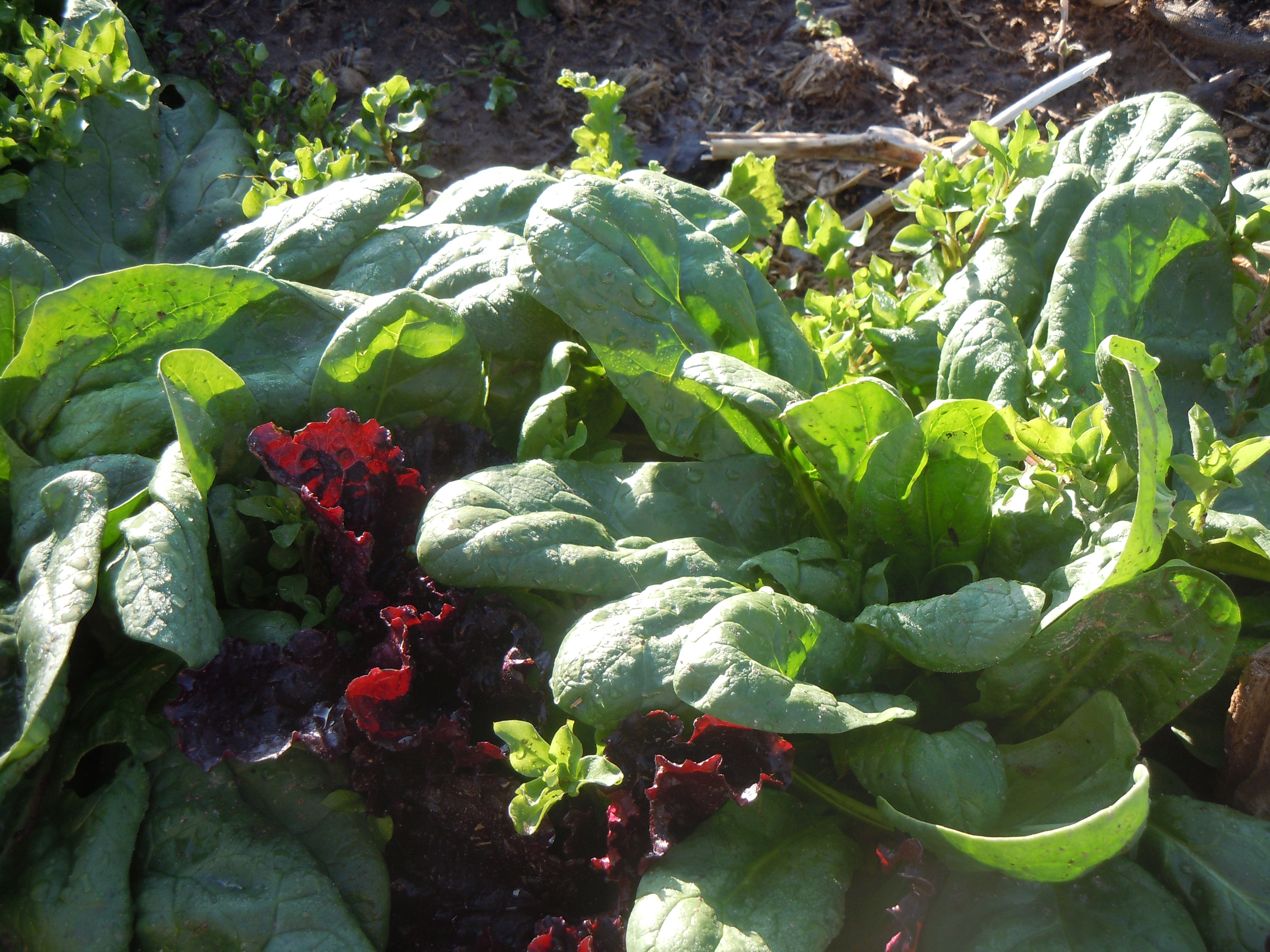
Funny how things cycle. When I first learned to forage as a child, I was distressed because I couldn’t find any chickweed near my Louisiana home. Later, when I had a farm in upstate New York, I had plenty of chickweed and came to curse its abundance. Now, in the desert southwest, nature doesn’t offer any chickweed and I had to buy seeds in order to have it again.
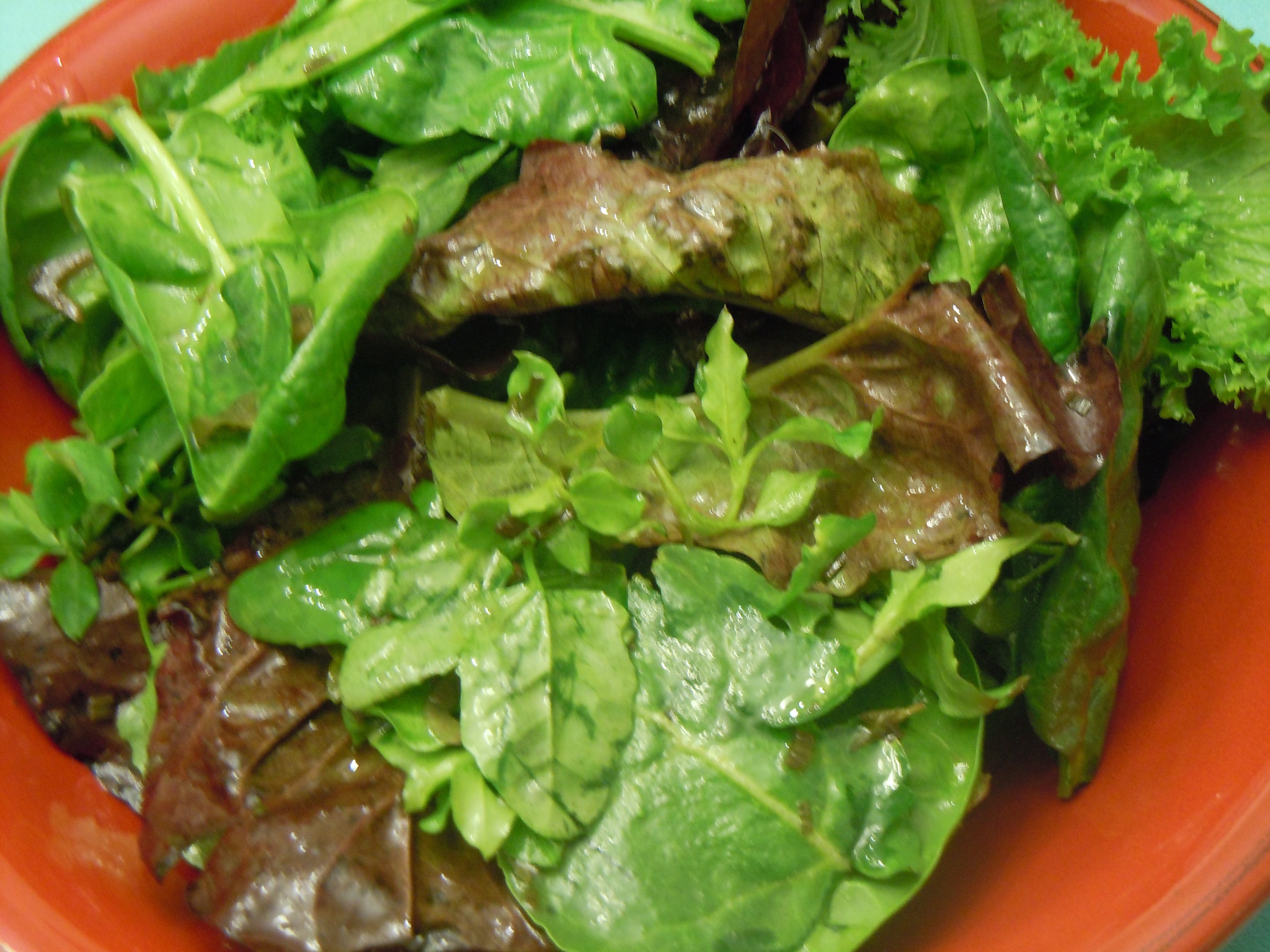
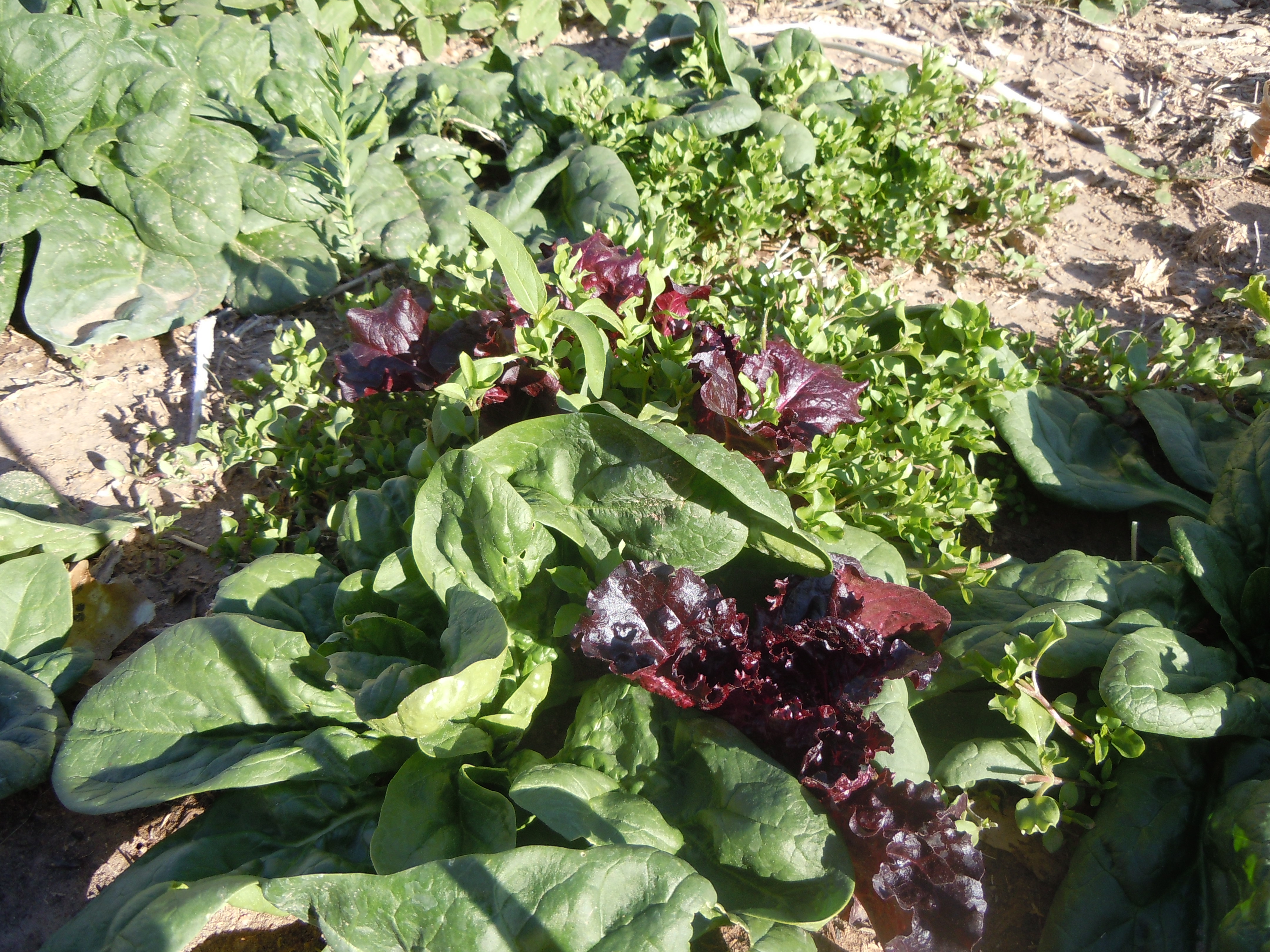
Stellaria media, the common chickweed, is a mild and tasty wild salad green, with more nutritional value than many domesticated salad greens. I had to look hard for seed, because it tends to be assumed that everybody has it and wishes they didn’t. I finally found it at Wild Garden Seeds. It appreciates some shelter from our blazing sun, which I provided by planting it in the same row as lettuce and spinach (right in the same tiny trench) so that it could nestle under the larger leaves and stick its head up for picking. The picture above shows this. In my opinion, only the tip of each sprig is worth eating, so I cut one or two inches off each little branch and leave the rest. Eaten alone with no dressing it has a somewhat grassy flavor, but mixed with other greens it’s delicious and adds a certain airiness and lift to the texture of a mixed salad. I use it up for anywhere up to half the bulk of a salad, depending on how much of it I have available at the moment. I have often read that it can be used as a cooked green, but I don’t care for it that way- too bland- and use it only in salads. I plan to let some go to seed, and will also make another planting in the fall, because it loves cool weather.
 My urban homestead