Independence

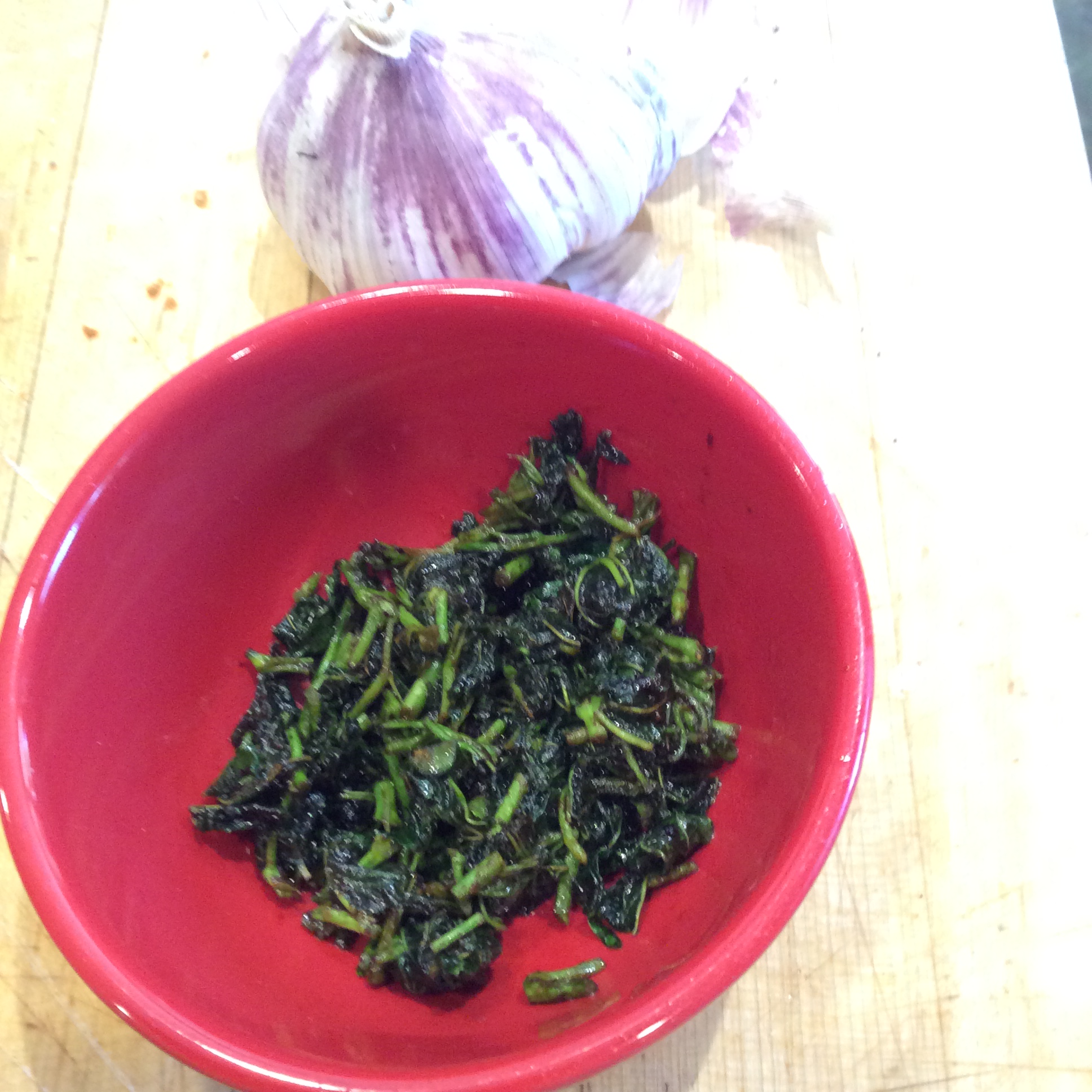
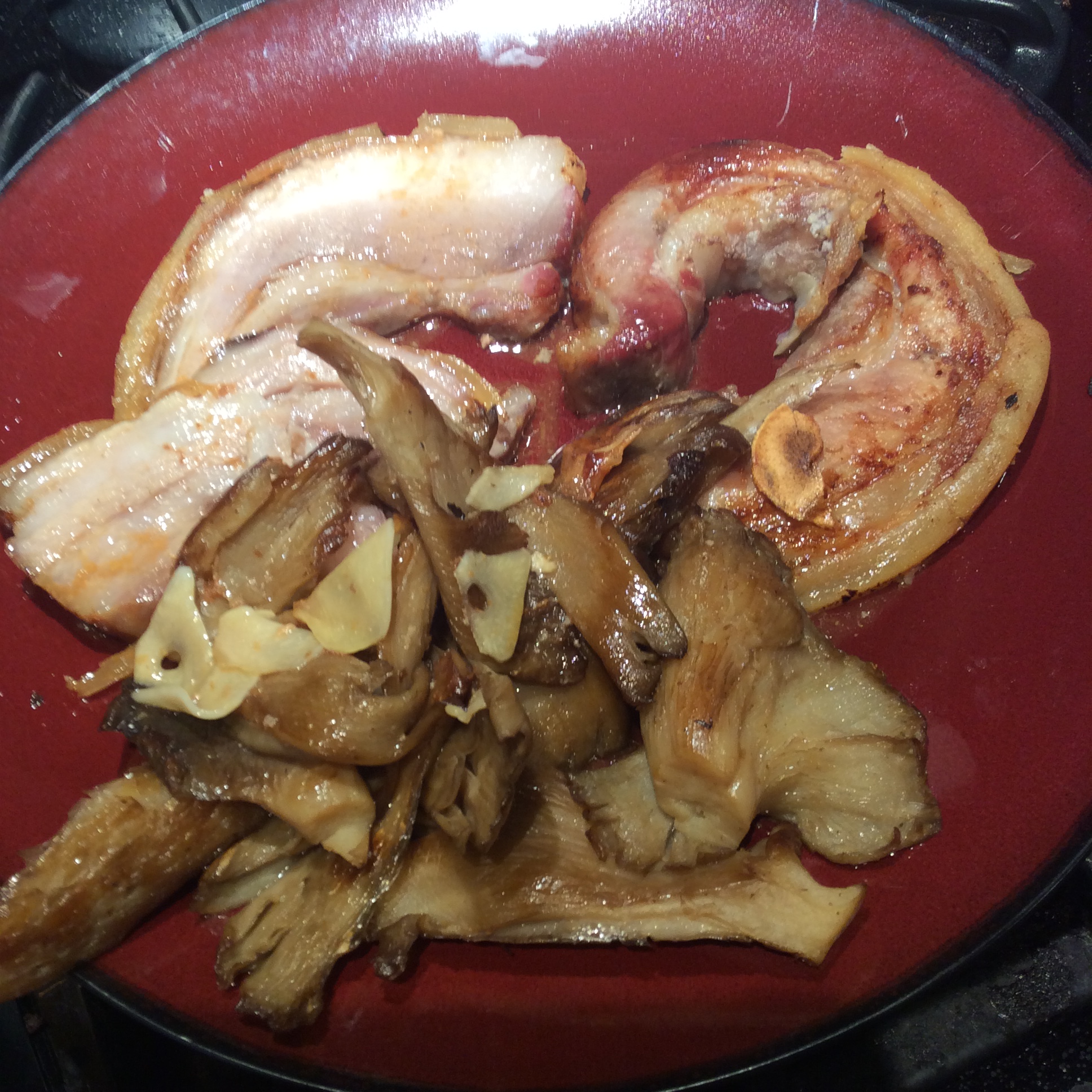
On this July 4th, I am sitting after dinner contemplating the hardly-revolutionary idea that all independence is local as well as national, and neither can exist without the other. I have wonderful irreplaceable freedoms under the Constitution. I also have a little plot of land on which to grow food like the garlic shown above, a splendid local system of farmer’s markets where I can buy what I can’t grow like the  pork belly that I roasted, and a system of national forests that preserve nearby wilderness areas where I found the oyster mushrooms. Without the national systems that protect our local freedoms, none of this could be maintained.

So be conscientiously local. Grow what you can, and buy what you have to. Waste as little as you can manage. Connect with other local people. Compost and reuse as well as recycling. Support your area farmers, not just by buying their products, but by realizing that your votes can support politicians who are sympathetic to local farms. Keep it always in mind that “All politics is local.” Connect with your neighbors, even if (especially if) their political views are different from yours, because both you and your neighbors might end up with something new to think about. And love and relish this country and support its national freedoms and national programs, and refuse to consider abridgment of its freedoms or demonization of people who don’t look or sound or worship exactly like its founders. We are bigger than that.


Baked Feta

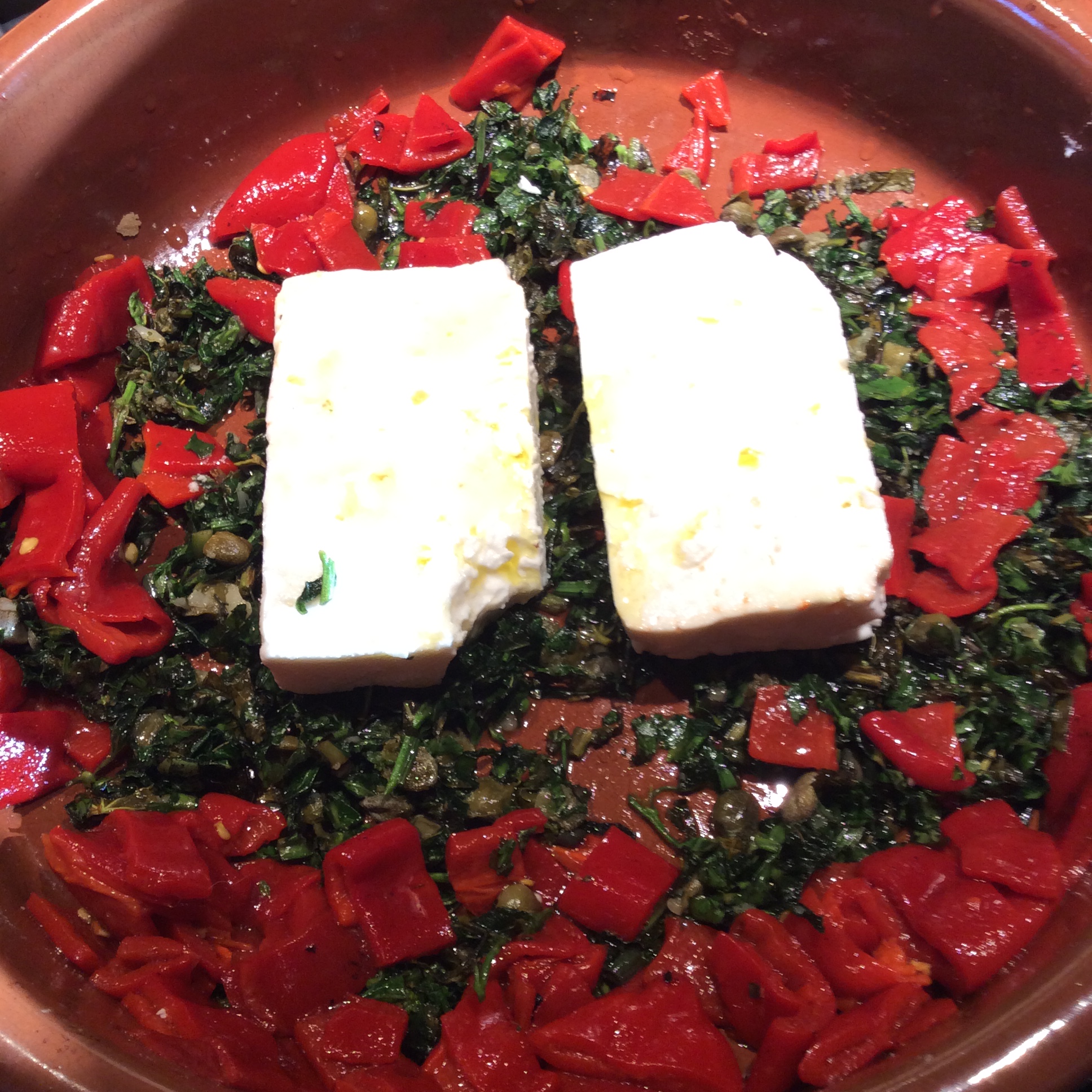
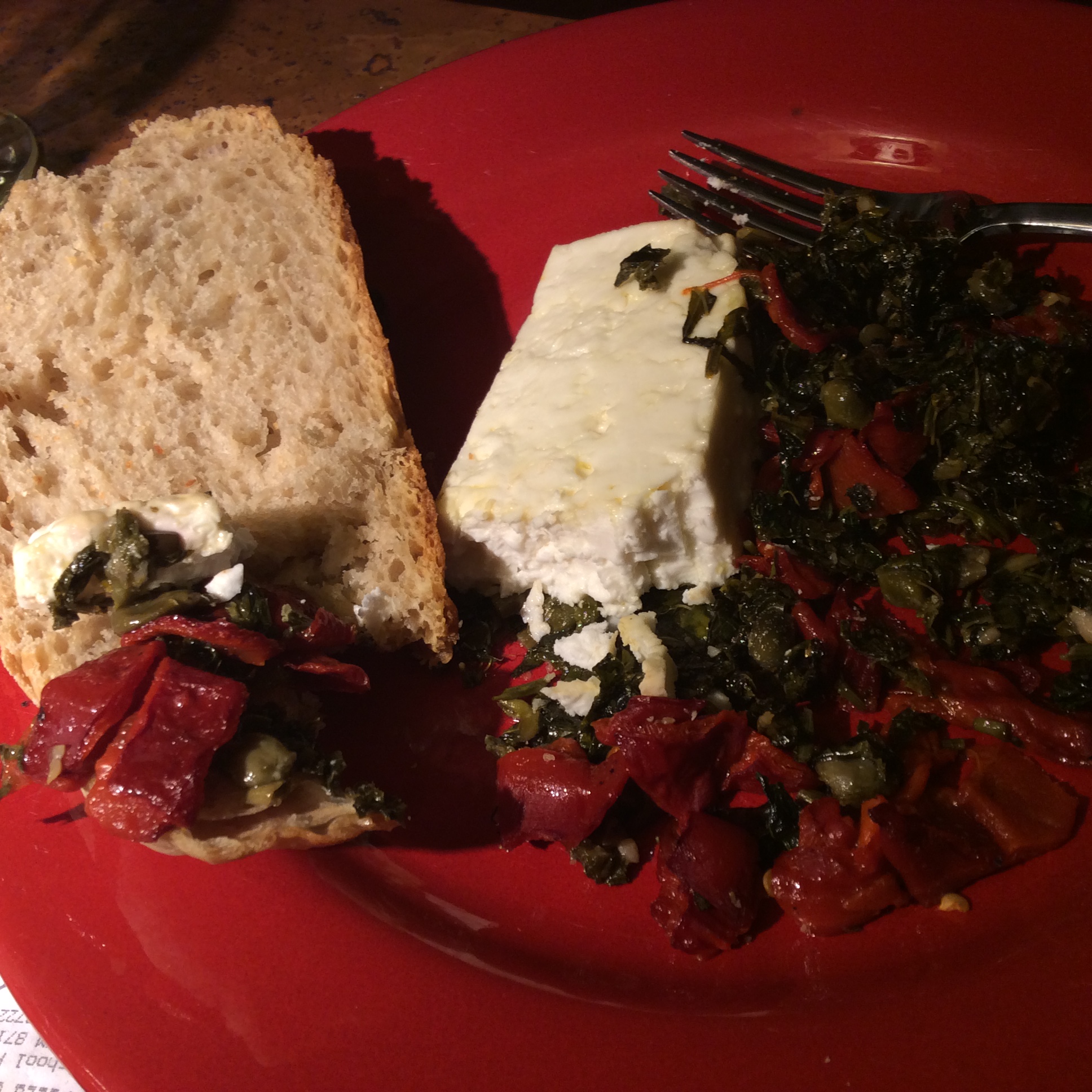
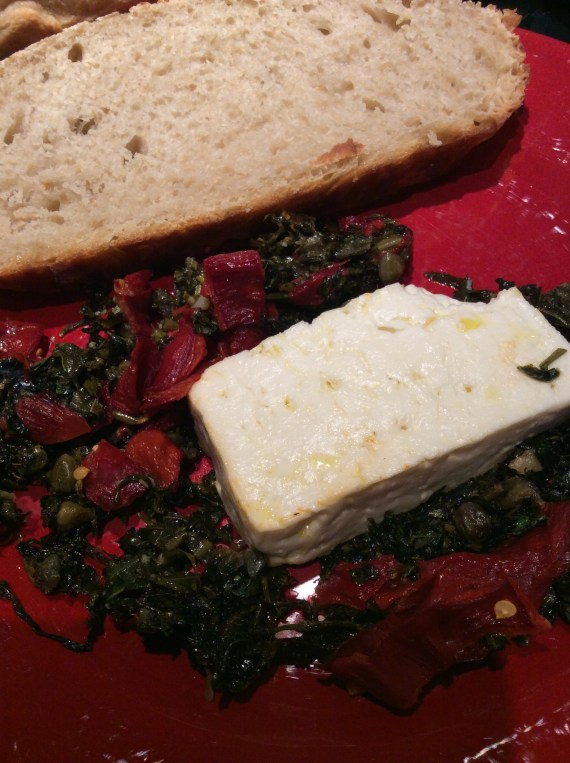
I love the texture that feta acquires when baked, firm and compact and steak-like and very different from its crumbly fresh incarnation,  and I love to season it with assortments of garden and wild greens gathered as the inspiration strikes.

For this infinitely adaptable recipe, you will need a quarter cup of drained capers, two cloves of garlic, a quart loosely packed of very flavorful chopped greens and herbs, plenty of extra virgin olive oil, and a block of feta sized according to your appetite. This dish can be anything from a meze to a full meal, depending on the size of the feta block. Just be sure that it’s high quality; this is a good time to check out your local Middle Eastern import store. Cut two “steaks” of the desired size, being careful not to crumble them.

Have ready olive oil, two cloves of garlic chopped, and a handful (maybe 1/4 cup) of capers, rinsed of brine and squeezed dry. An optional but very pretty addition is some red pepper, roasted, peeled, and chopped, or some red chiles roasted, peeled, and sliced.
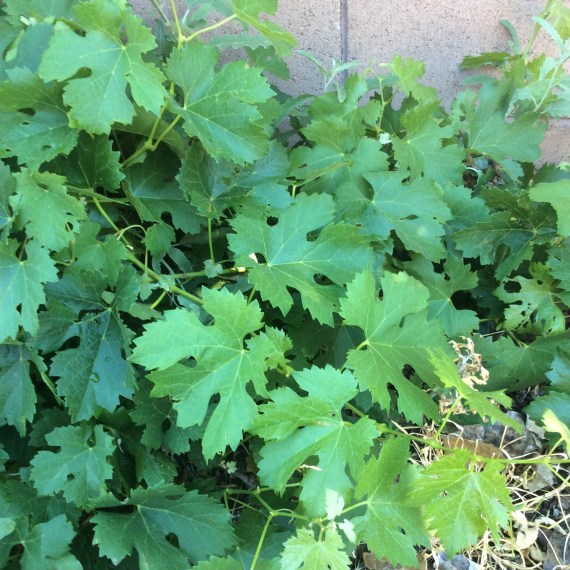
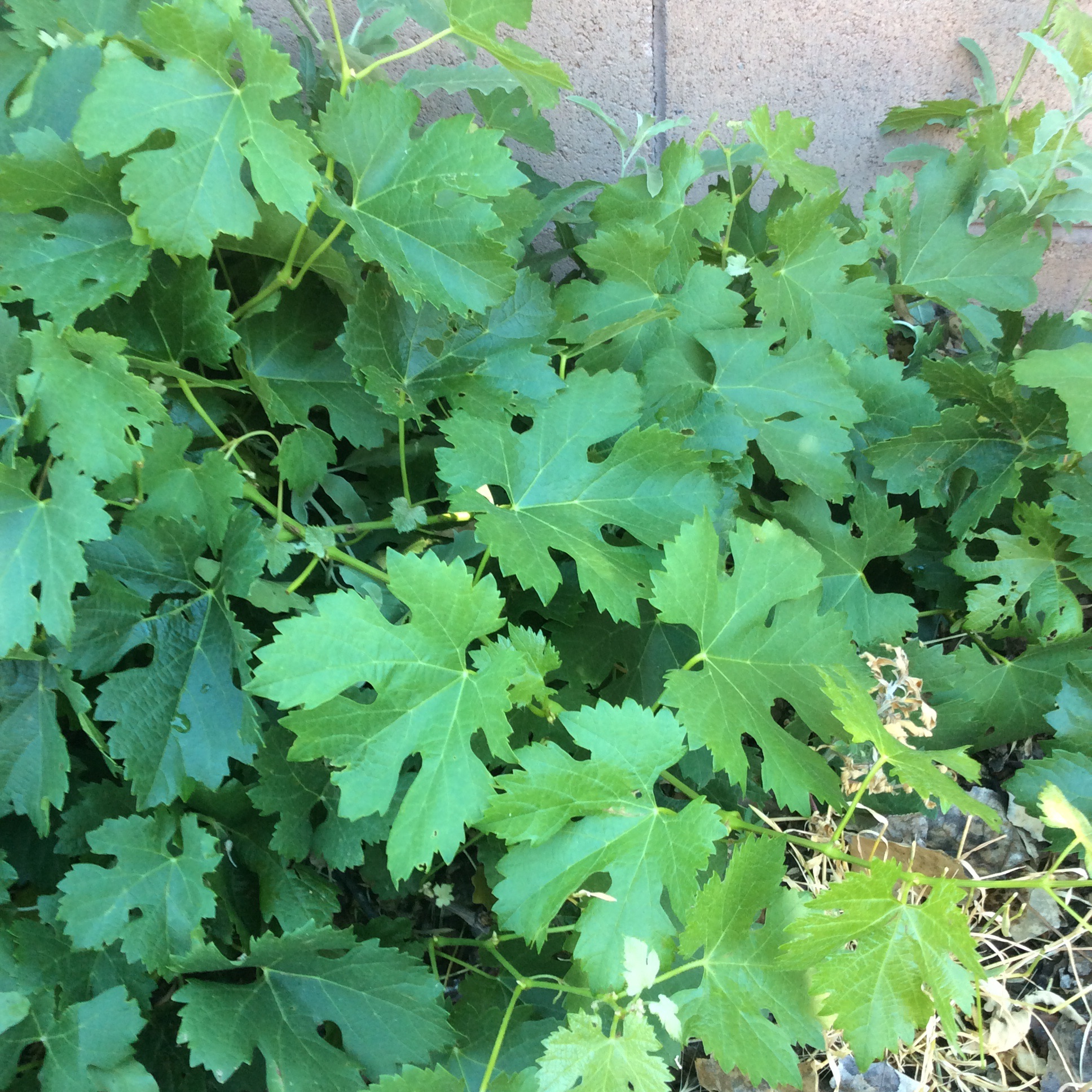
Next, choose your greens. I decided that I wanted the flavor to be bright, tart, and lemony as well as herbal, so I started with 15 good-sized wine grape leaves. If you are going to use fresh grape leaves, please read my post on choosing grape leaves first, because some are unchewable and will ruin your meal.

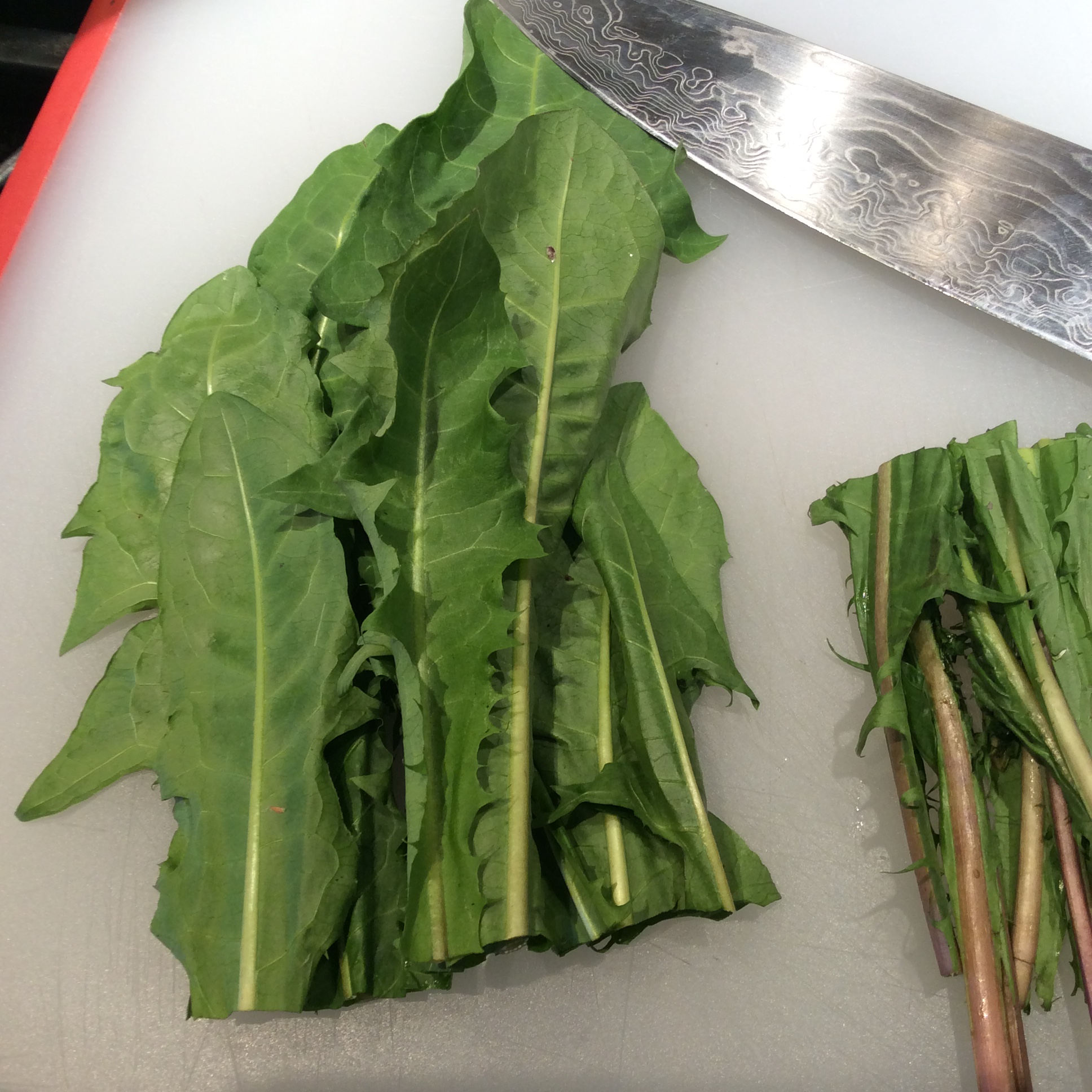
I added dandelion leaves, the new ones that have grown after the plant bloomed, which are tender and only slightly bitter. I used about a dozen, cutting the stringy ends off as shown.
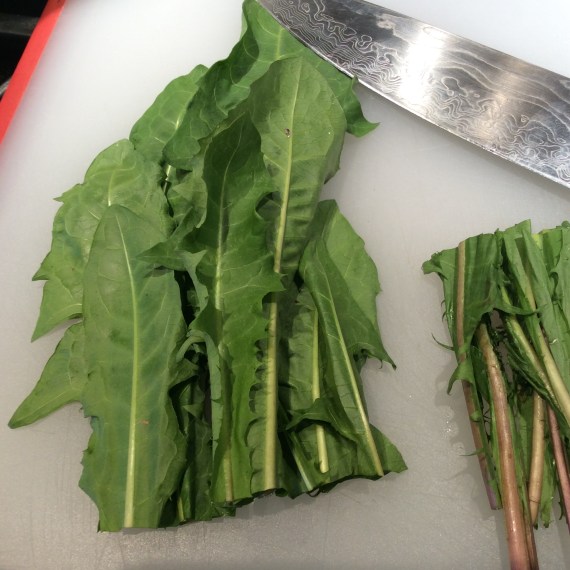
Then a double handful of mulberry shoots, using only the ones that are new, bright grass-green, and snap off easily with very little use of force.

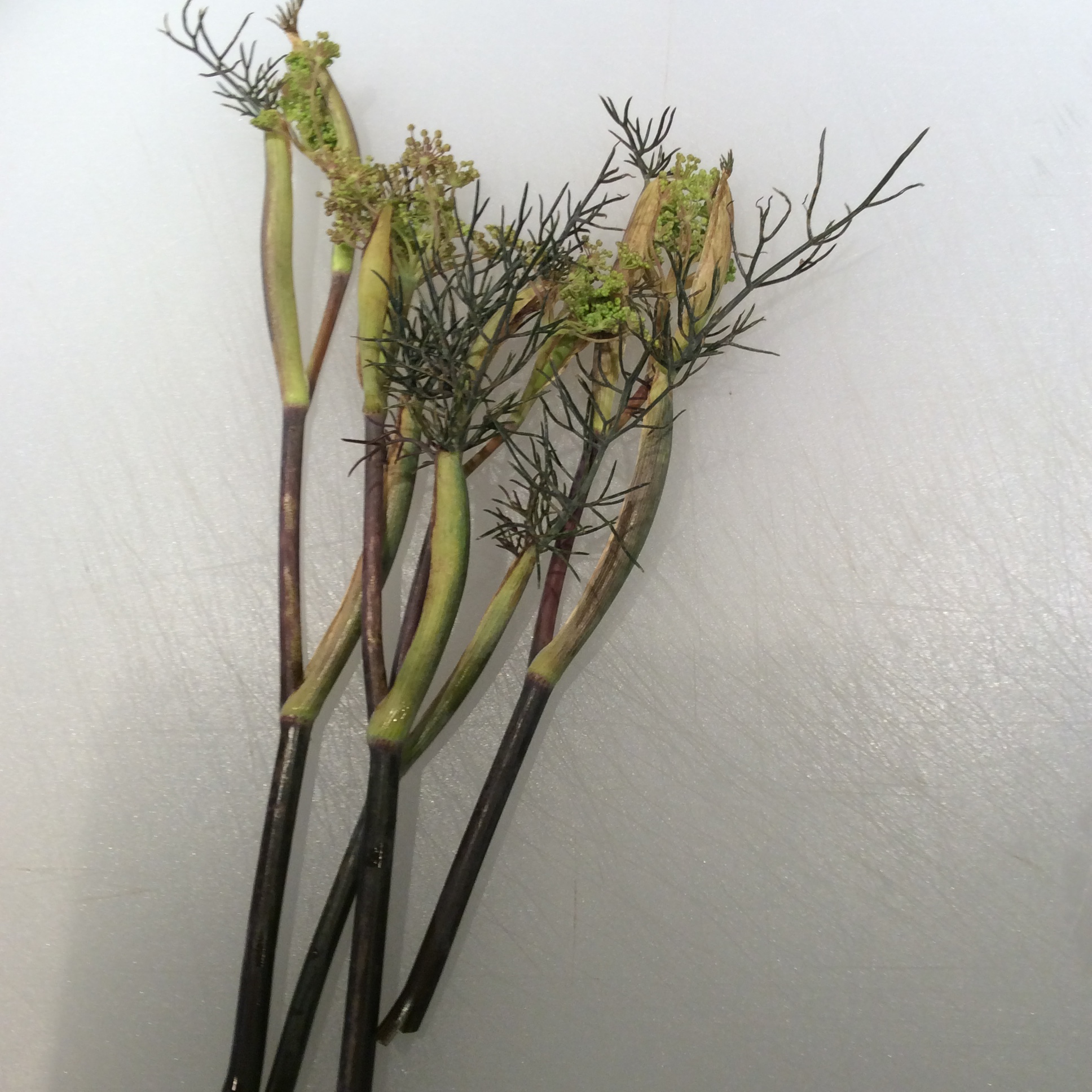
Finally, some fennel shoots, the top of the bloomscape as shown, before the flowers emerge and open. The stalks are tender, nonwoody, and wonderfully anise flavored at this stage. Once the flowers emerge, the stems become woody.
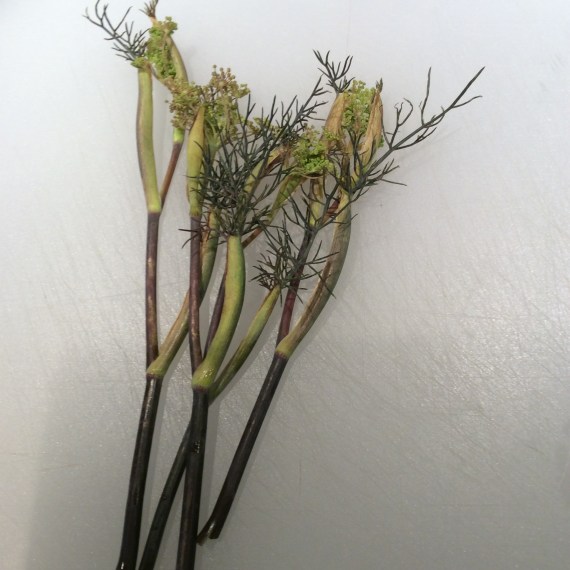
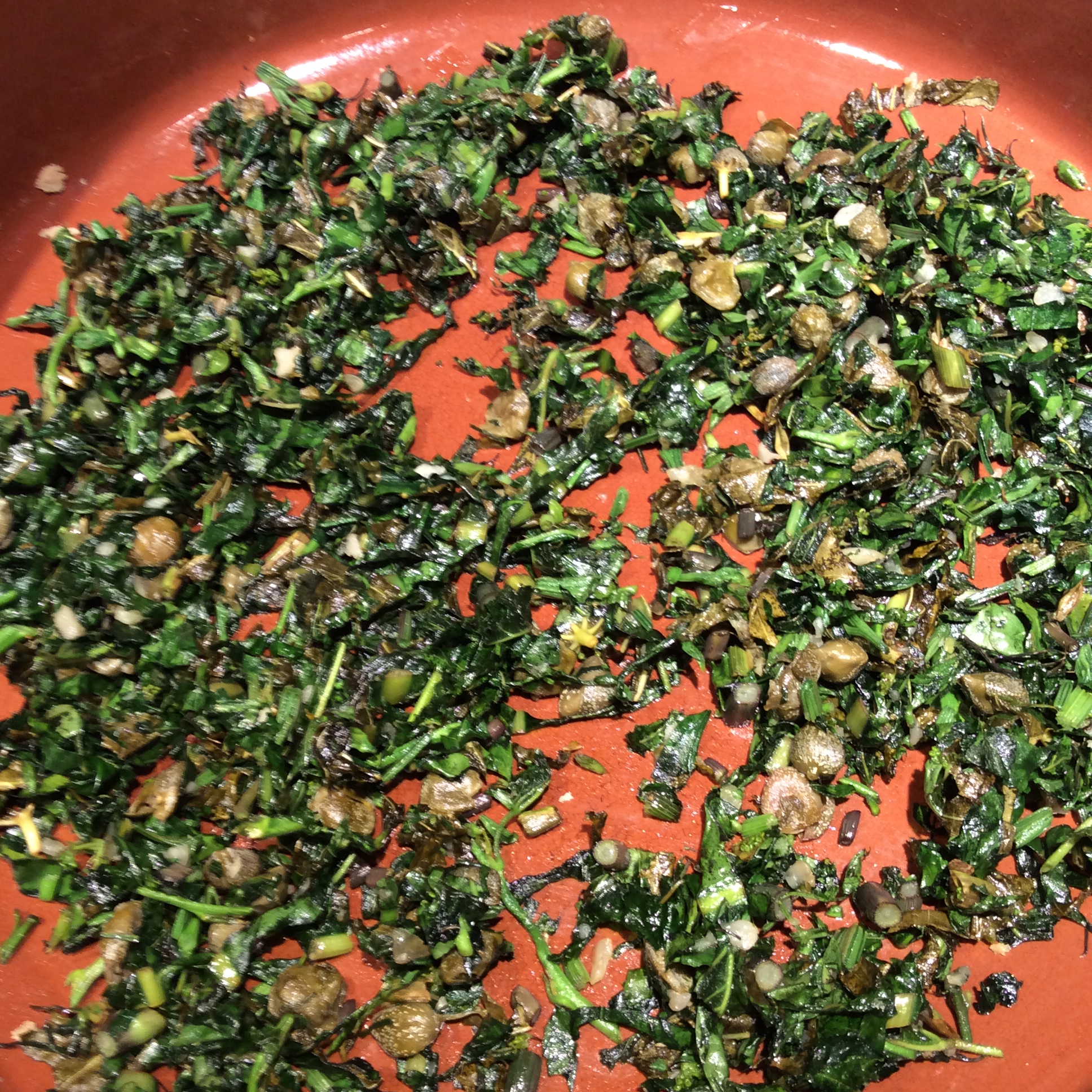
Wash all your greens and sliver them in fine cross-section. make sure the fennel shoots are cut in fine slices less than a quarter inch thick. Preheat the oven to 350. You will start cooking on the stove, but if you use a Spanish cazuela it can go right into the oven for the second step. Heat the dish and sauté the garlic in olive oil until just cooked but not at all colored. Put in all the greens and the capers and cook, stirring frequently, until the greens are cooked and soft. Taste for salt, but salt it on the light side, since you are going to add feta.
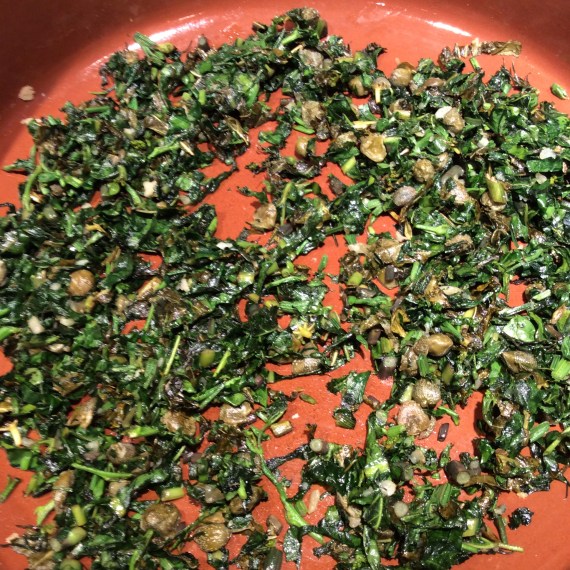
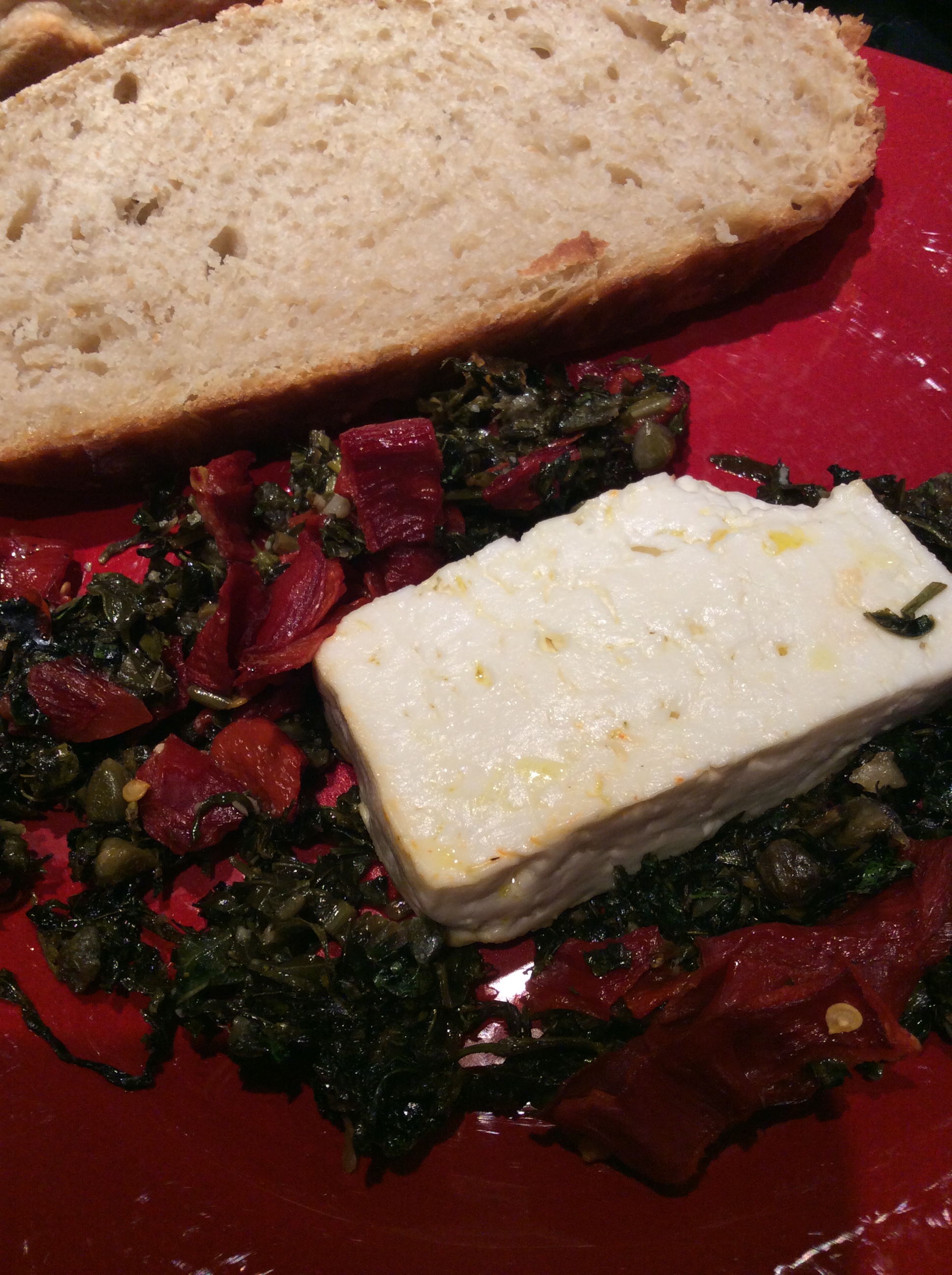
When they just begin to fry in the oil, remove from heat and scatter the red peppers or red chiles around the edges, then put the feta “steaks” in the middle and drizzle olive oil over all.
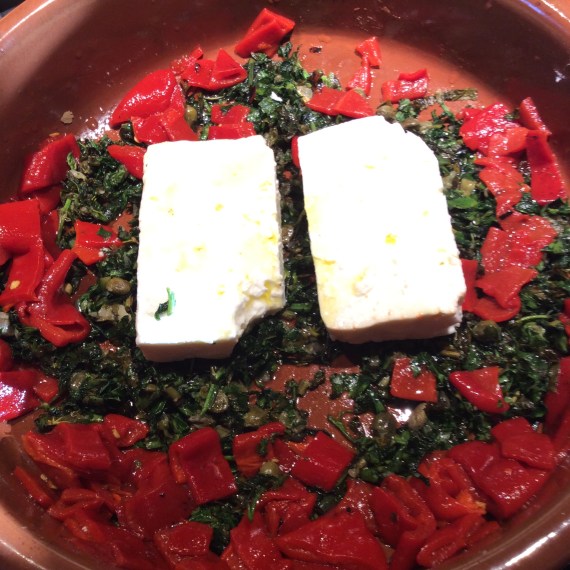
Bake at least 15 minutes or until the herbs and peppers look all cooked together, probably about 15 minutes. The cheese might color slightly at the edges but won’t brown. If you like it to brown, run under a hot broiler for a minute, taking care not to let the greens burn. Serve with sourdough bread if you can have it, or with a salad alongside.
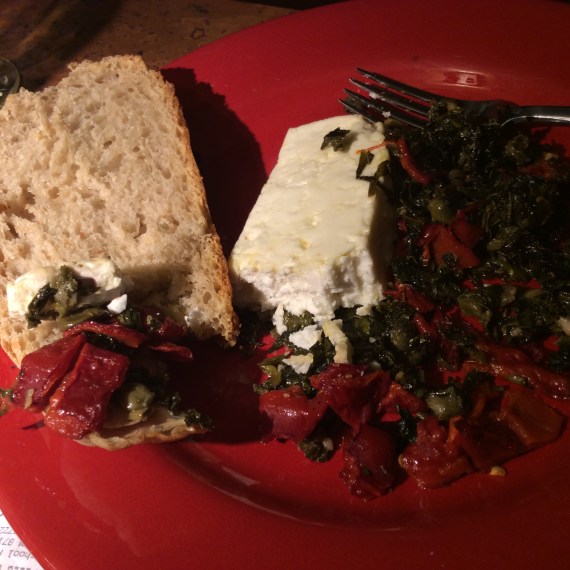
I am sometimes the target (quite fairly, I might add) of complaints about imprecision. “A double handful,” the precisionists cry, what on earth is that? I reply that it’s the amount you have, and if you don’t have any, you probably have something just as good. I cut my eyeteeth on Elizabeth David recipes with her terse, one-cook-to-another directions, and I hate the mindless insistence of “precisely 1/8 teaspoon” sort of directions.  “But drizzle with olive oil, how much do you mean?” Somewhere I read the story of a new wife being taught a recipe by her Greek mother-in-law, whose directions included “Then close your eyes and pour in olive oil.” That’s how much I mean.
Deconstructed Thai Egg Salad

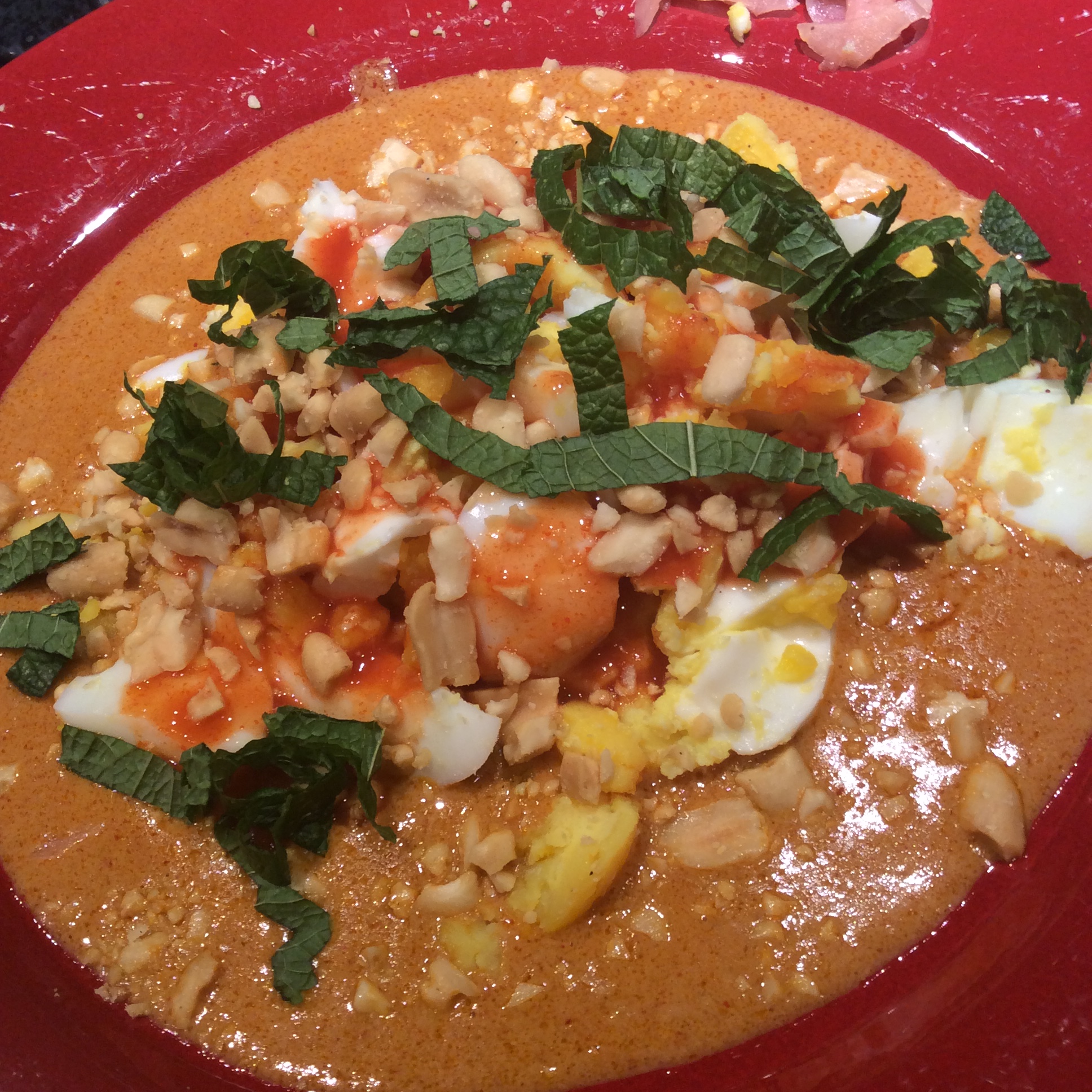
If you have chickens, there are inevitably times when you grow tired of eggs. I had one of those times recently and started to grope for a new way to think about egg salad. Since I love Thai food and keep a lot of the necessary seasonings around, some sort of Thai egg salad seemed like the perfect way to reawaken my enthusiasm. I wanted to make it quick and easy, too, so cupboard condiments played a large role. I used coconut milk, fish sauce, some artificial sweetener (people with no blood sugar problems can just use sugar,) Shark brand Thai  sriracha sauce (important, because it tastes very different from standard Vietnamese-style sriracha,) the excellent Hand brand Matsuman curry paste, and chopped peanuts, and all I added to them was eggs and sliced mint leaves.

For two people I started with three hard-boiled eggs each, and chopped them roughly leaving them in large chunks. I heated the top fat off one can of coconut milk, stirred in a heaping tablespoon of Matsuman curry paste, and cooked a few minutes until thick and smooth. I added fish sauce to taste and sweetened it a bit. I pooled this elixer on a plate, put piles of chopped eggs on top, salted the eggs to taste and then dribbled Thai sriracha (which is not very hot) liberally all over the eggs. Peanuts and sliced mint finish up the seasoning, and a bit of sushi ginger on the side is my own very weird addition.

If the eggs are already hard-boiled, you will be plating your lunch in about ten minutes. It’s ketogenic except for the sugar in the sriracha, which isn’t much. You can use your own sweet-hot dipping sauce for the dribbling if you prefer. The mint could be replaced with Thai basil or cilantro. I speculate that finely slivered leaves of lemon verbena might be interesting here but I haven’t tried it yet. This is of course in the Thai-ish category and I feel free to experiment and find new tastes.

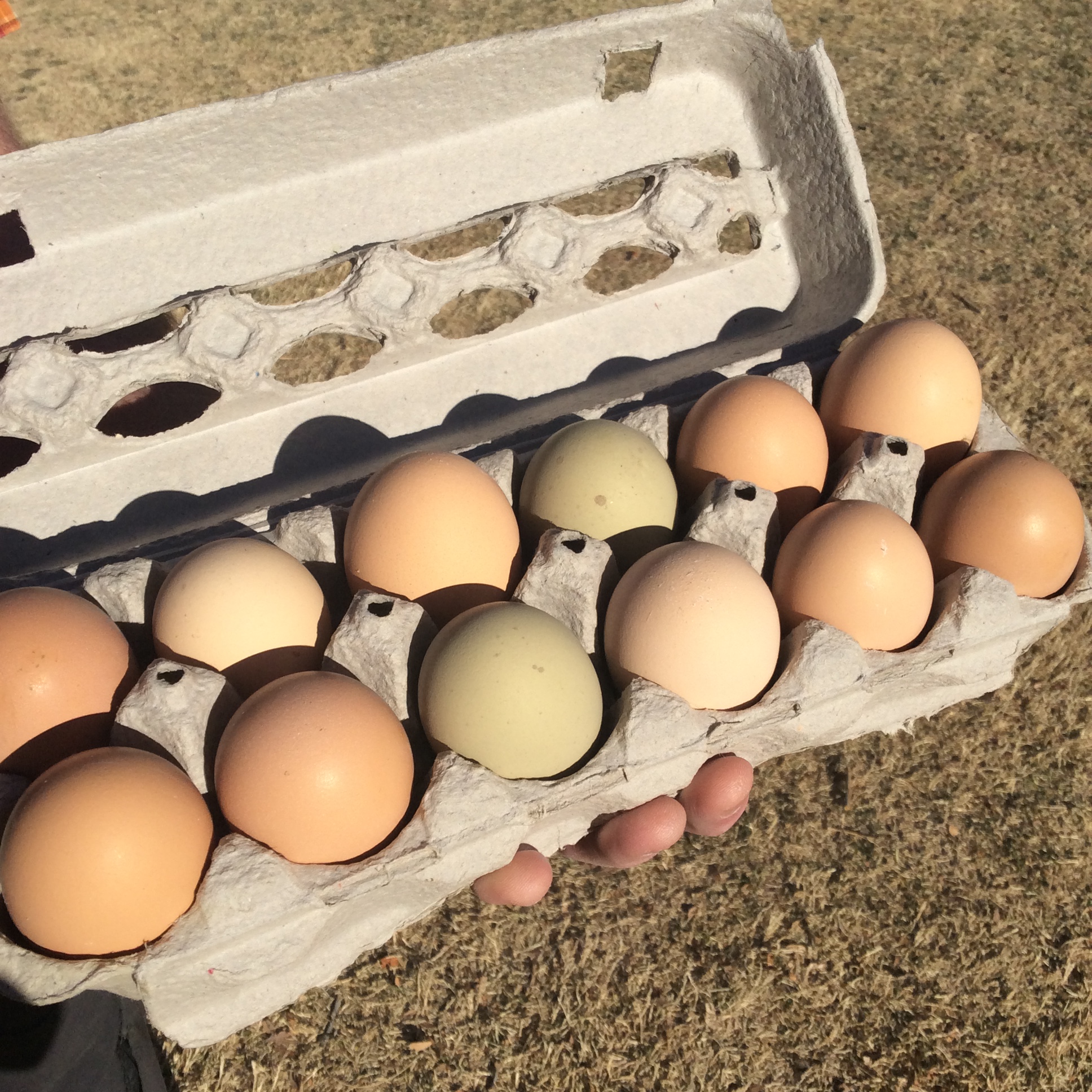
This is a good time to say something about producing the best eggs you can: in addition to a good commercial laying pellet high in an Omega-3 source such as flaxseed, feed your chickens all the greens that they will eat and a good source of calcium. In addition to oystershell I save all eggshells, dry them in the microwave and grind them, and feed them back in any soft foods from the table or kitchen that I have occasion to give my birds. I grow alfalfa patches in the back yard so that I can cut fresh alfalfa for them. Chickens are busy little machines that convert the 18-carbon Omega-3 fatty acids found in plants, which we absorb poorly, into the 20 and 22-carbon Omega-3s EPA and DHA, which we absorb well. (More structural info here.) One small commercial egg producer who feeds this way says he has hit about 600 mg Omega-3s per egg, verified by testing. I haven’t tested mine, but when I watch my chickens chow down greens, I know that it’s happening and that they are the best eggs I can get.


A Quick Thai-ish Snack

After yesterday’s brief dissertation on nam prik pao,  it occurred to me that one thing I had not really demonstrated about this Thai seasoning paste is its ability to make something very good very fast.

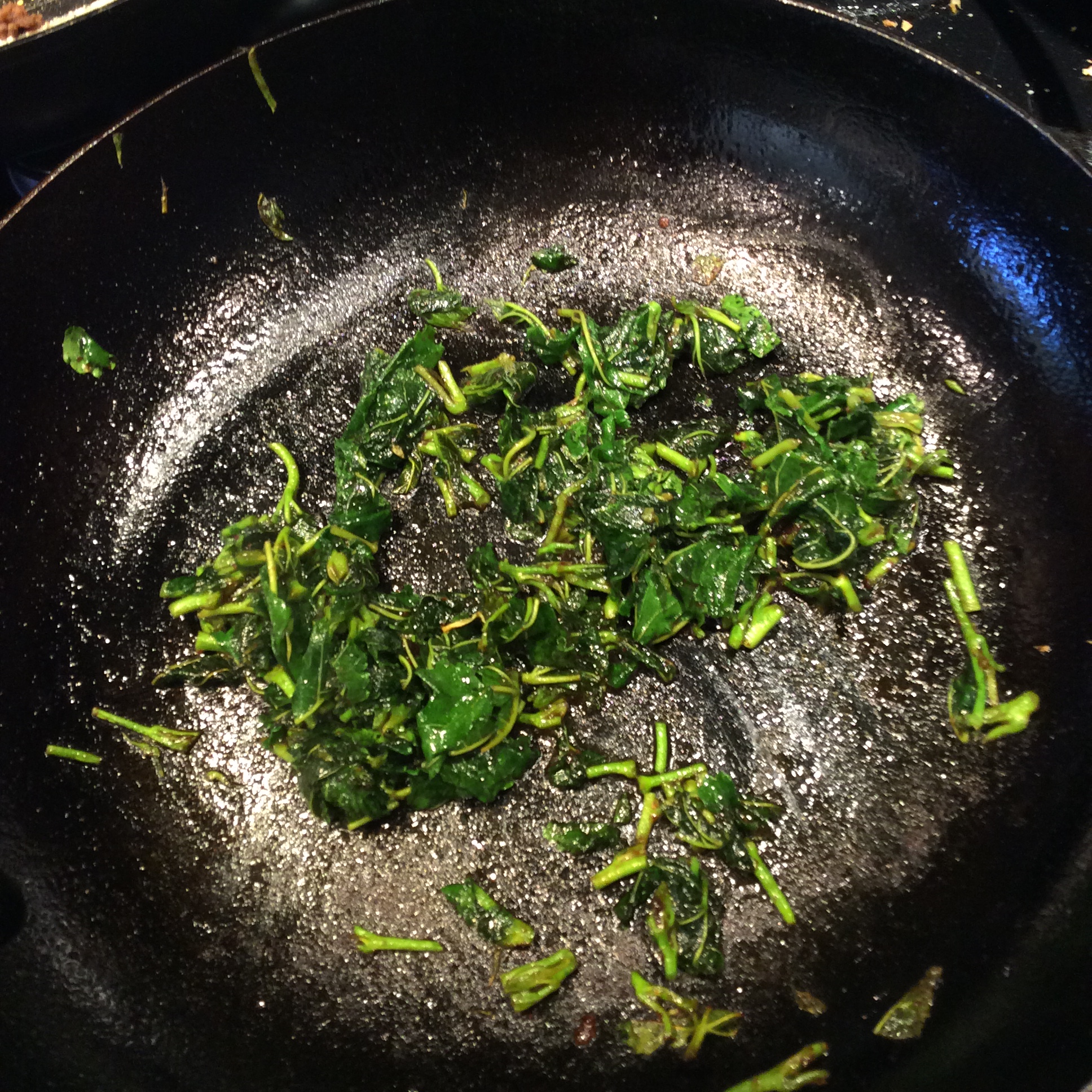
Today I was not hungry for lunch but did want something healthy in a hurry to tide me over.  I decided on a quick very small bowl of greens. I used mulberry shoots, but any rather sturdy green would do. If you use something substantial like collards or kale, one collard leaf or two kale leaves  would work for a passing snack.  For smaller leaves, a generous handful is the right spirit.

All you need is your leaves, fish sauce, a little coconut oil or other cooking fat, and nam prik pao.  Wash and chop the leaves or, if they are large and substantial, chiffonade them.   Heat your smallest skillet, put in the coconut fat and heat it briefly, and put in a heaping teaspoon of nam prik pao.  Stir it around for about 30 seconds to distribute it through the fat, throw in your greens over medium heat, and stir around for a couple of minutes, drizzling with a little bit of fish sauce but not too much because the small quantity of greens can get too salty in a hurry.  When the greens are done to the degree of tenderness that you like, put them in a little bowl and eat them.  Simple as that. You will feel a pleasant glow of virtue because of the soluble fiber and antioxidants that you have taken in, and it will taste good  and take less than five minutes. The leaves are whatever struck your eye on the way from the garden to the kitchen and took approximately a minute to gather. No fuss no bother.  You can chop some herbs on top if you want to and that will be delicious, but it will still taste awfully good without them.

You could use the same principle to make a side dish for dinner, or for that matter a main dish, and a few different Southeast Asian vegetable dishes with a cushioning bowl of rice if you can eat it make a wonderful dinner full of interesting flavors.  If you are a low-carb person, you can use cauliflower rice instead of real rice, or have both available for the various kinds of eaters at your table.   But the recipe as written is for your own private pleasure.