Archive for the ‘wild food’ Category

My Life With Invasives

I’m reading Beyond the War on Invasive Species, an interesting book by Tao Orion that, among other things, recalls some of the horrors that the native plant ecomovement fell into, such as “nuking” large areas repeatedly with Round-Up so that they could eventually be replanted with “pure” native species. The whole issue of how to think about invasives is complicated, and I will not approach it here. But the role of invasives in my own yard is one that I feel able to tackle.  My yard is happily multicultural and can absorb almost any invasive that has a use to me, my livestock, or our local pollinators. Over the years I’ve been surprised by plants that came with warnings about their aggressive nature, but in my yard struggled or even died.
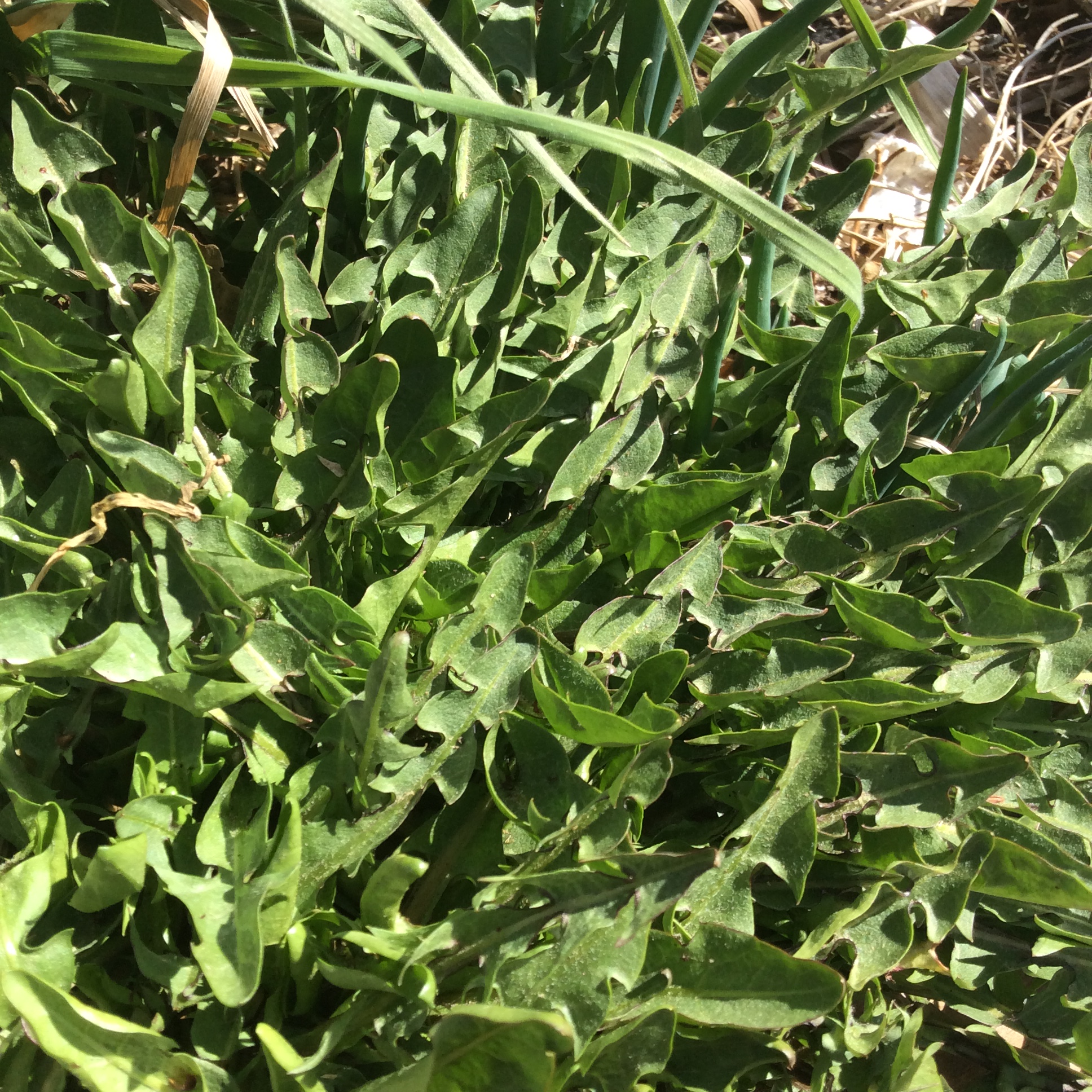
There are lots of invasives here, mostly introduced by me and mostly cherished. To have dandelions, I had to pay good money for seed and then wait impatiently as they took three years to get large and lush and edible. Now they are finally self-seeding a bit and are welcome almost anywhere they appear.

Gojis took a while to settle in but now come up everywhere, which is fine since I like the leaves and young shoots as well as the berries.

Nettles, shown at the top of this post,  are my favorite spring greens, and it has turned out to be very possible to manage them for a fall crop of greens as well. They aren’t found in my high desert area and I had to buy plants to get them. They are probably my favorite invasive.  The first nettle patch was located in an area that has concrete walkway all around it, to foil its dreams of world domination. I have started a couple of other nettle patches this spring in large containers. I’ll report back on how this works out.
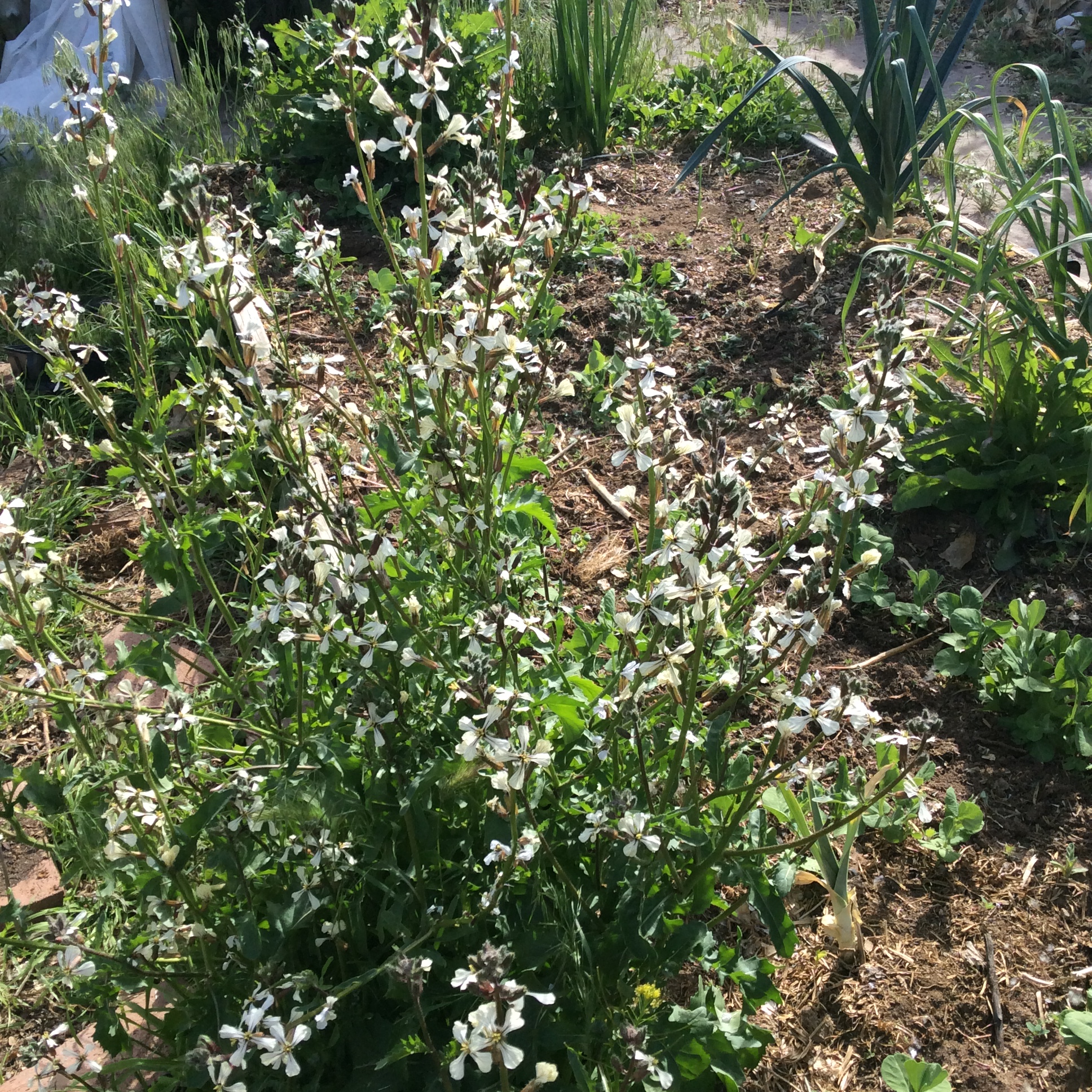
Arugula  comes up everywhere, and is welcome almost everywhere it appears. It is one of my favorite salad greens, and makes a fairly good cooked green as well, best with stronger seasonings like garlic and cayenne. The flowers are very attractive to bees  and open at a time when little else is flowering, so I always let plenty of it go to seed.
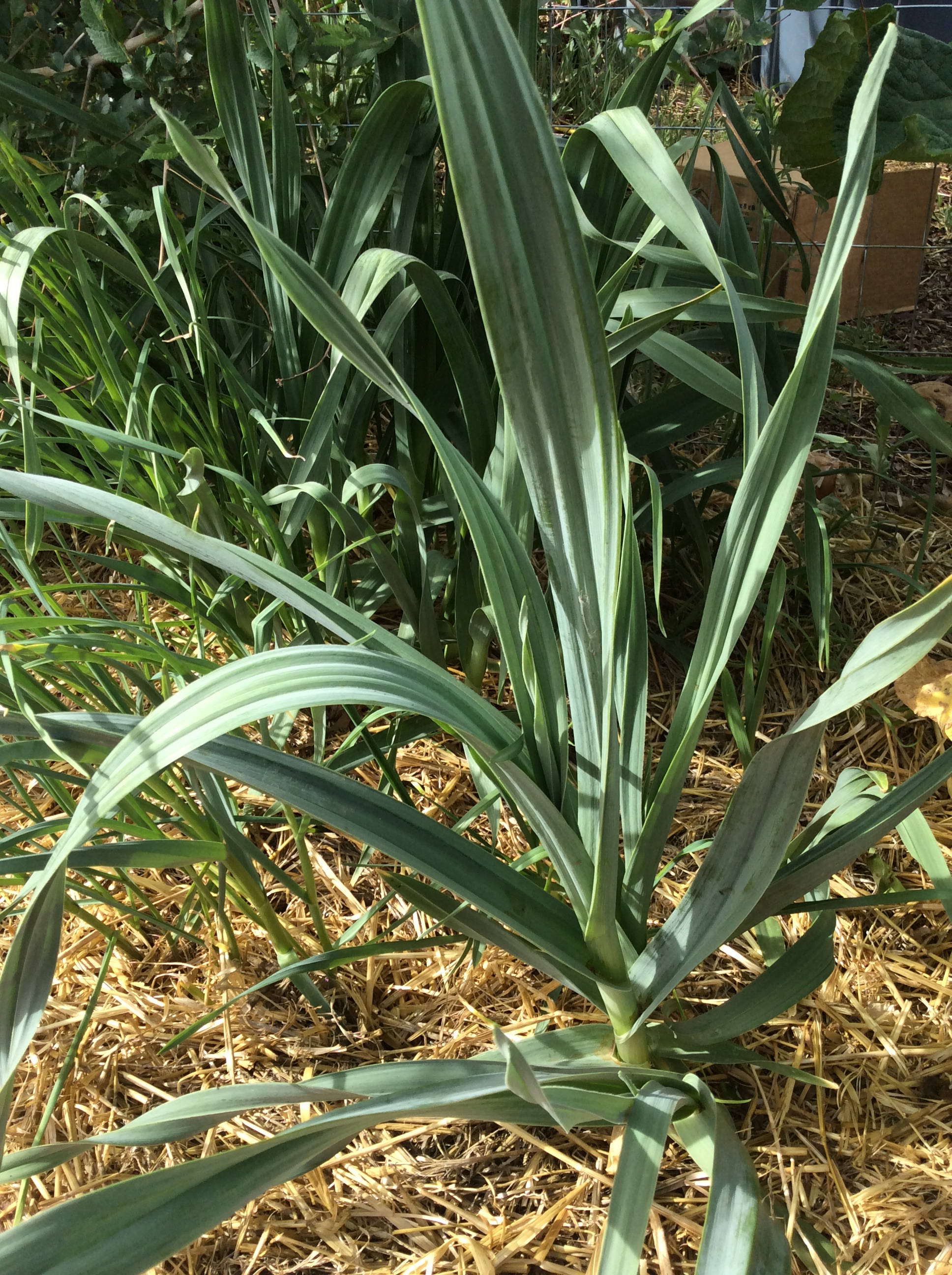
At this point I would have to classify elephant garlic as an invasive, because no matter how much of it I pull up, I always seem to have even more the following year.  When I threw an arm full on top of straw mulch just to get rid of it, it sent roots down  through the mulch and took off as you see above. I don’t mind it, though. It isn’t much use as a bulb and does not compare to true garlic, but I like the early shoots for green garlic, so it does have a use, and the bees enjoy any flowers that I allow to form.
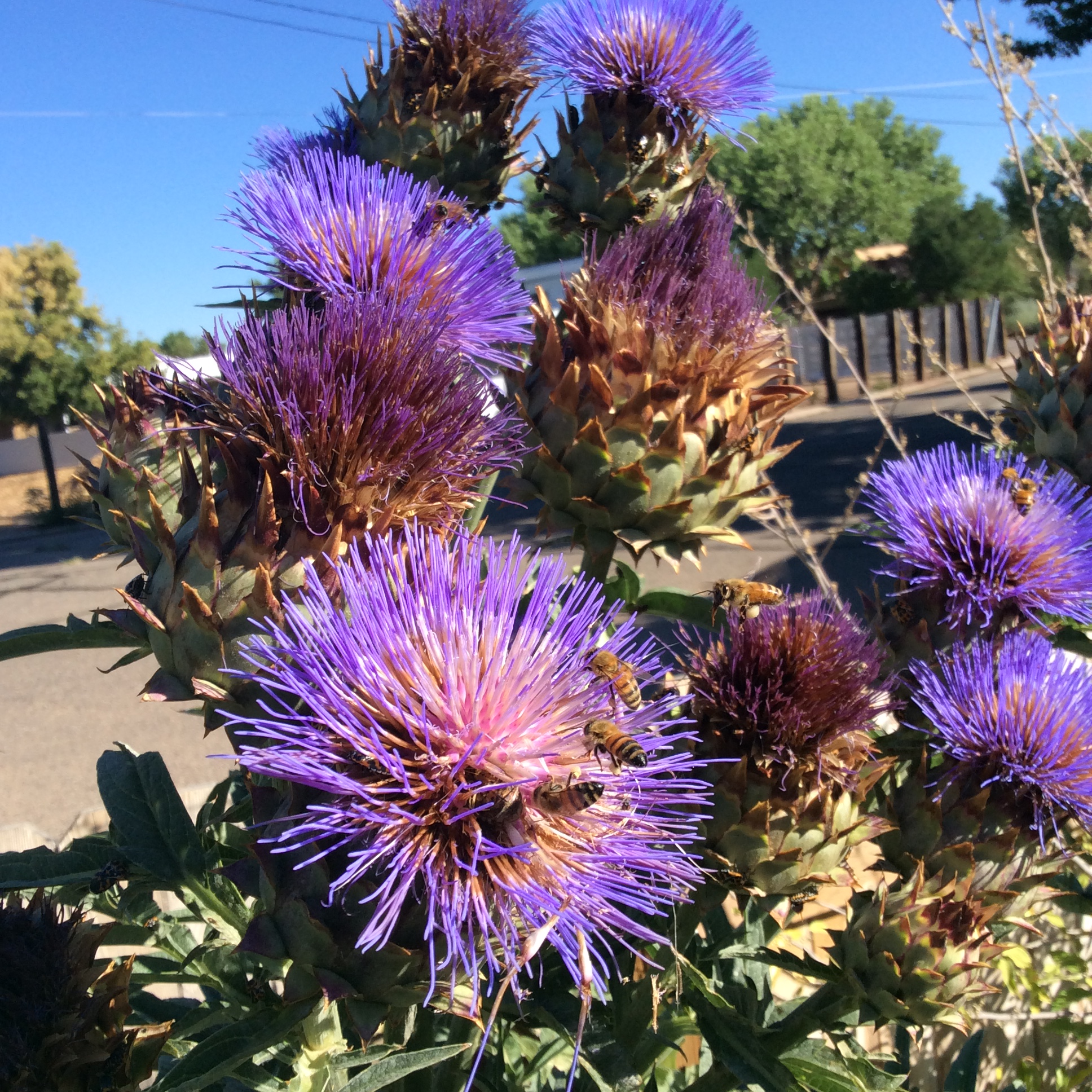
Speaking of attractive to bees, cardoon has become quite an invasive in my yard but one that, as you see above, has its admirers.  I loved cardoons when I ate them in Italy, and brought back seeds from there to make sure that I got the edible kind and not the florist kind, but I have never been able to eat my homegrown cardoons. No matter how carefully blanched, they are inedibly bitter. They do provide one wonderful vegetable, the peeled top of the bloom scape before the buds swell, but that is one small serving per very large plant. I still let them seed themselves around though, because the bees and my goat adore them and even in my desert climate and alkaline soil, they come up in odd corners and require no care or attention whatsoever. The huge jagged silver leaves are strikingly ornamental.  When they come up in the middle of garden beds, I let them reach a good size and then pull them for the goat. I have read that the large parsnip-like root is edible, but when grown in my yard it is as bitter as the leaves, and is a flavor that only a goat could love.
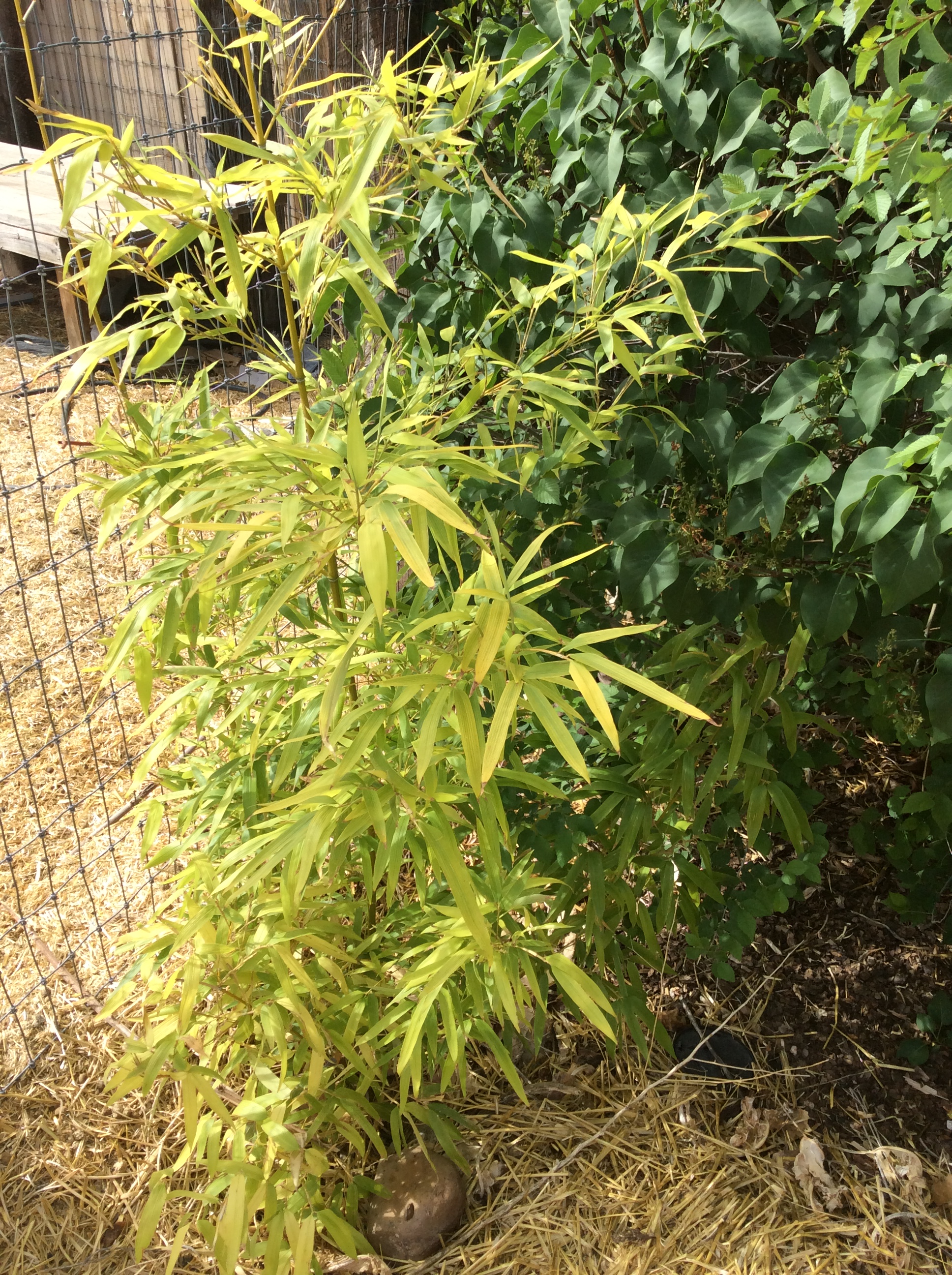
Scrawny little Phyllostachys dulcis “invading.”

I love bamboo shoots and can seldom  find fresh ones locally, so growing them seemed obvious.  I planted  clumping bamboo and the famously invasive running sweet shoot bamboo.  The latter is famous for overrunning its boundaries and forming 30 foot high jungles, so I sited it in a part of the yard up next to the goat paddock, figuring that I could always turn her loose on it if worst came to worst.  Three years later, each plant now has two or three wimpy looking canes about 5 feet high, and I have eaten exactly one bamboo shoot. It was very good, and I was glad to have it,  but I am still waiting for the abundant shoots that I was told would pop up absolutely everywhere.  The aristocratic clumping bamboos took one look at their pedestrian setting and refused to go on living.
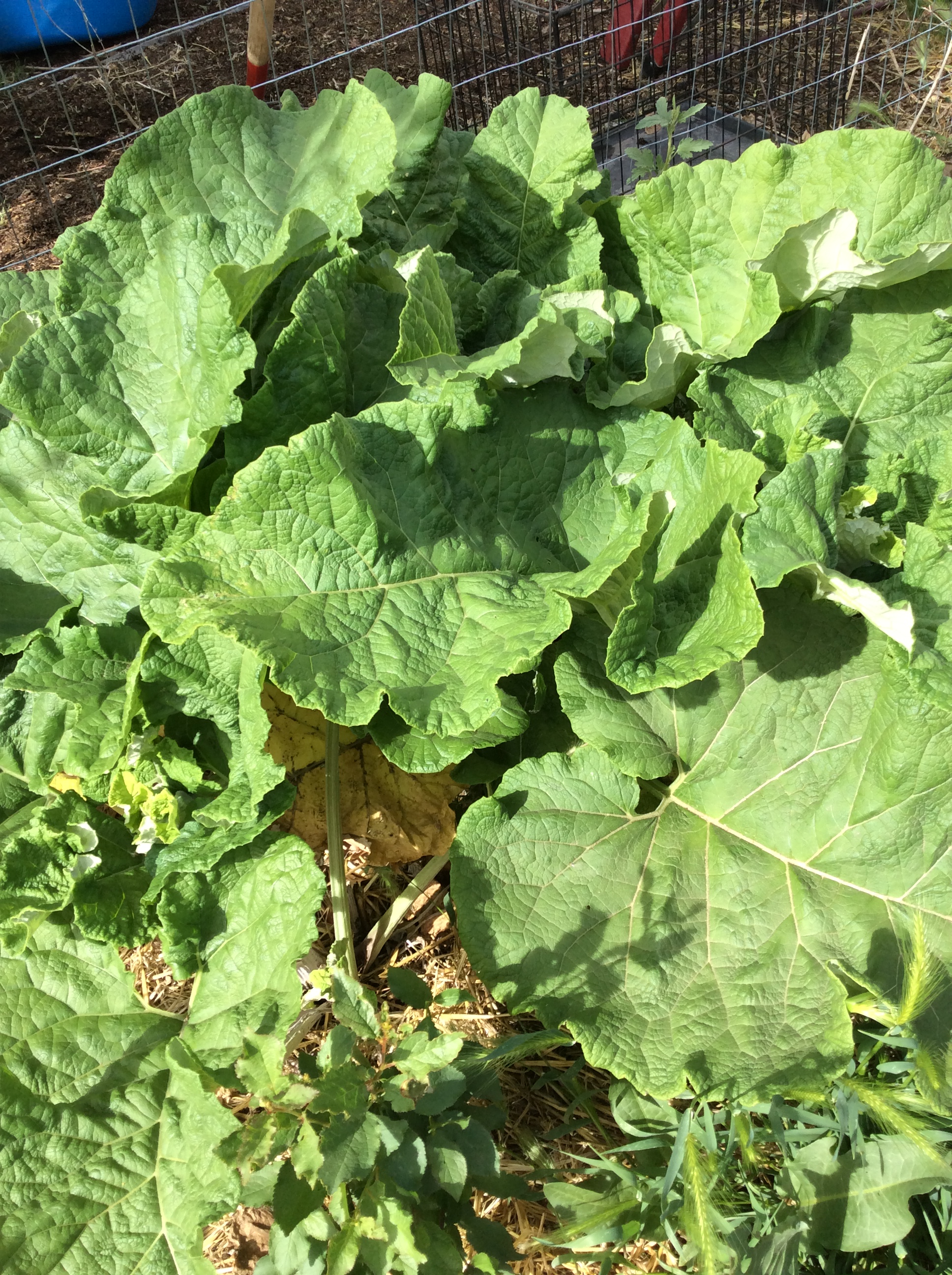
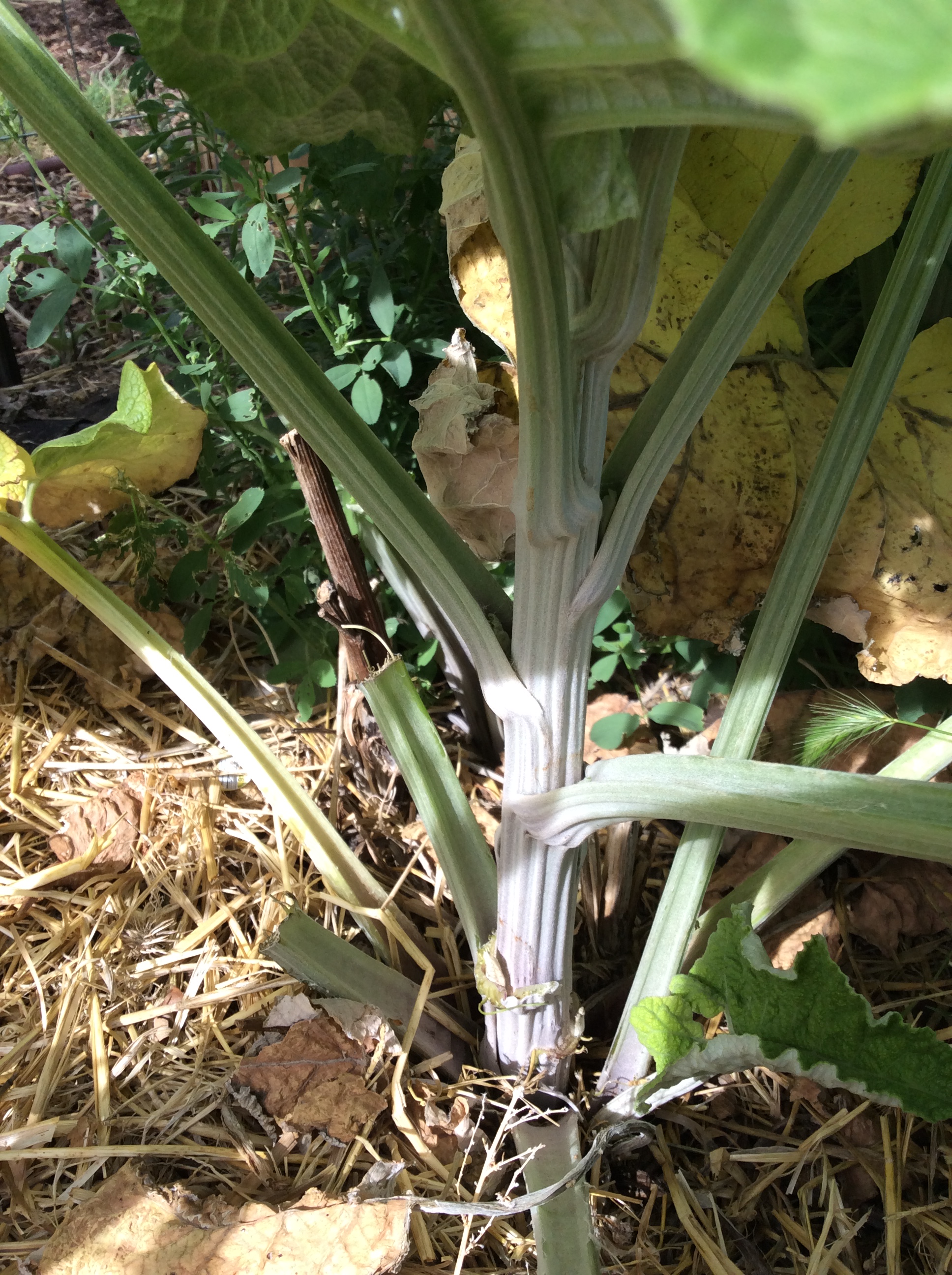
Burdock bloomscape at right stage for peeling and cooking.

Burdock has done a better job of becoming an invasive. I don’t care for the roots that much, and planted it because the peeled bloom scape is a fair vegetable, and I assumed that since I was eating it before the flowers formed, I would be able to keep the plant from reproducing. It fooled me. If you keep cutting off the bloomscape, it forms little short bloomscapes down under the huge leaves where you don’t see them, and seeds itself thickly all around the parent plant.  Dogs wandering through the patch pick up the burrs and plant more elsewhere.  Still, the leaves are a favorite goat treat, and I don’t mind having it around.
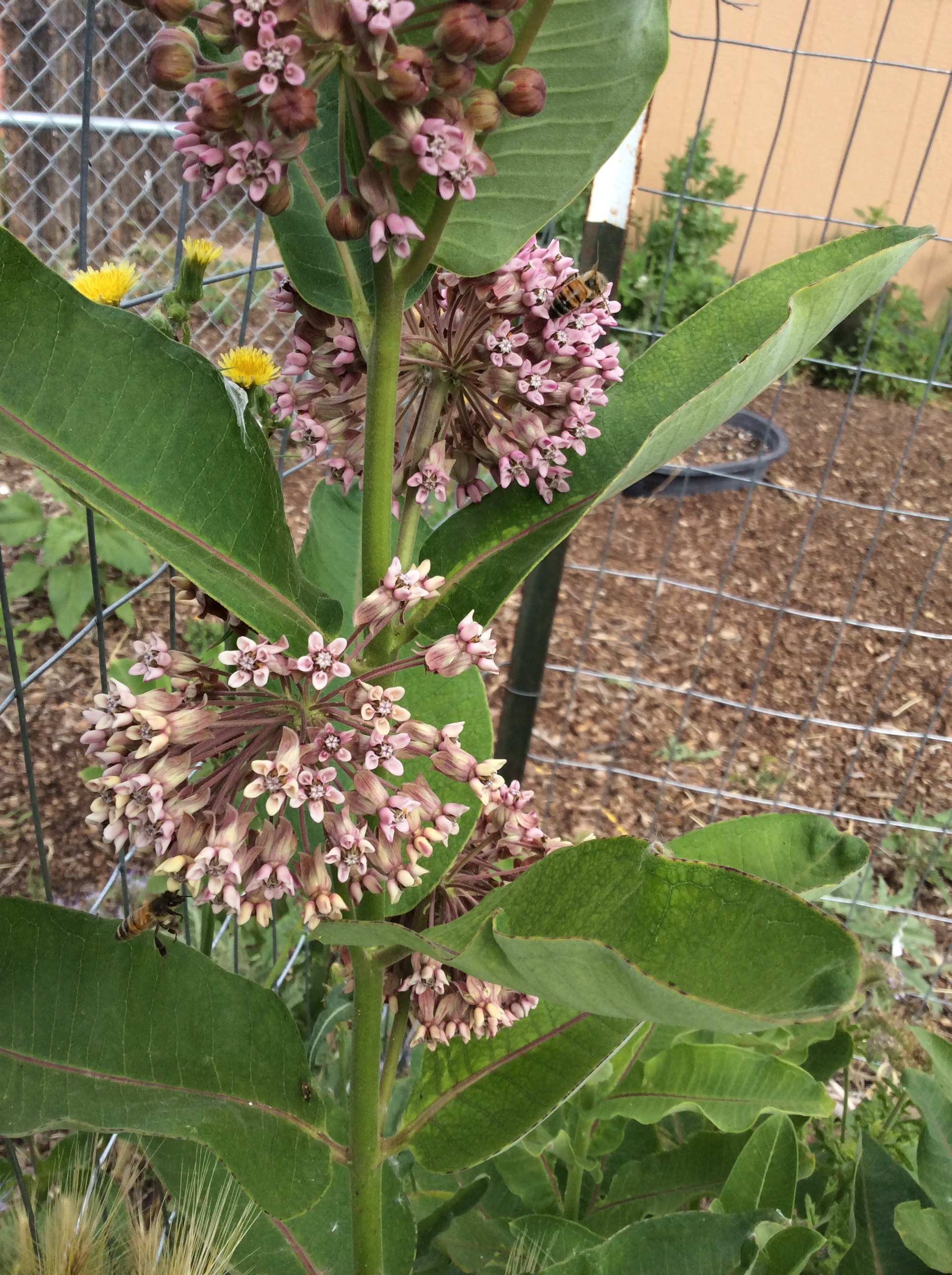
Common milkweed is one of my favorite wild edibles, as well as being a great bee plant and the chosen food of the monarch butterfly larva, and for years I have been trying to get it to become invasive, but in my yard it remains as fussy as orchids.  Ordinarily I run a Darwinian garden and will not make great efforts to keep any plant going when its natural inclination is to die, but I have really gone out of my way for the milkweed, and it has not reciprocated. Finally, this year it is beginning to spread a little bit, but there is still not enough to eat any.
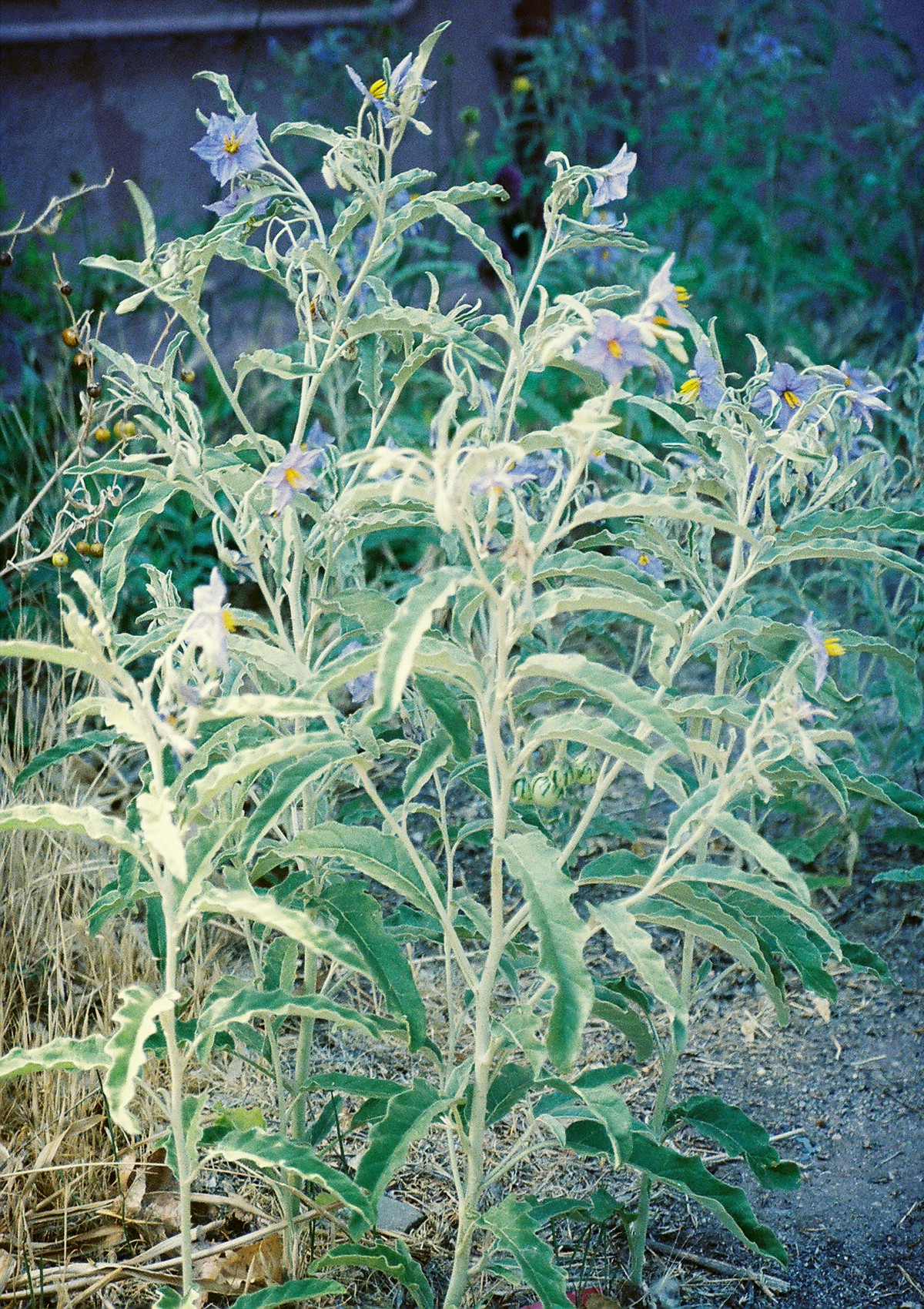
Silver nightshade is the only invasive plant in my area that I truly despise and can find no use for, which is a shame because it’s everywhere. If you think it looks pretty, you haven’t gotten to know it. The roots lie several feet underground and are invulnerable. The plant comes up everywhere, and is covered with small prickles that are not only painful but break off in your skin with any touch and cause irritations that last days. The leaves are poisonous to livestock. There is no argument to be made for its existence except that, unfortunately, it does exist.  It does not seem possible to have less of it. I blush to admit that once, many years ago, I was so infuriated by it that I tried spraying some with Round-up, and I must say that it shriveled up over the next several days in a very satisfying way. Unfortunately, within a few weeks it had rebounded and was growing up happily and thickly from the roots, seeming invigorated by the experience.  So do not bother sacrificing your organic credibility, because it won’t work anyway.  Every now and then I run its scientific name through the medical databases, hoping that somebody somewhere will have found a chemical in it that treats a rare cancer or something like that, so that I will feel differently about its general uselessness. But so far, it remains one of nature’s blights. It seems to be highly aggressive in dry soils and doesn’t compete well in damp areas, so maybe as humus and moisture increase in my soil, it will be less of a problem.

Read the book if you are really interested in a different way of thinking about invasives.
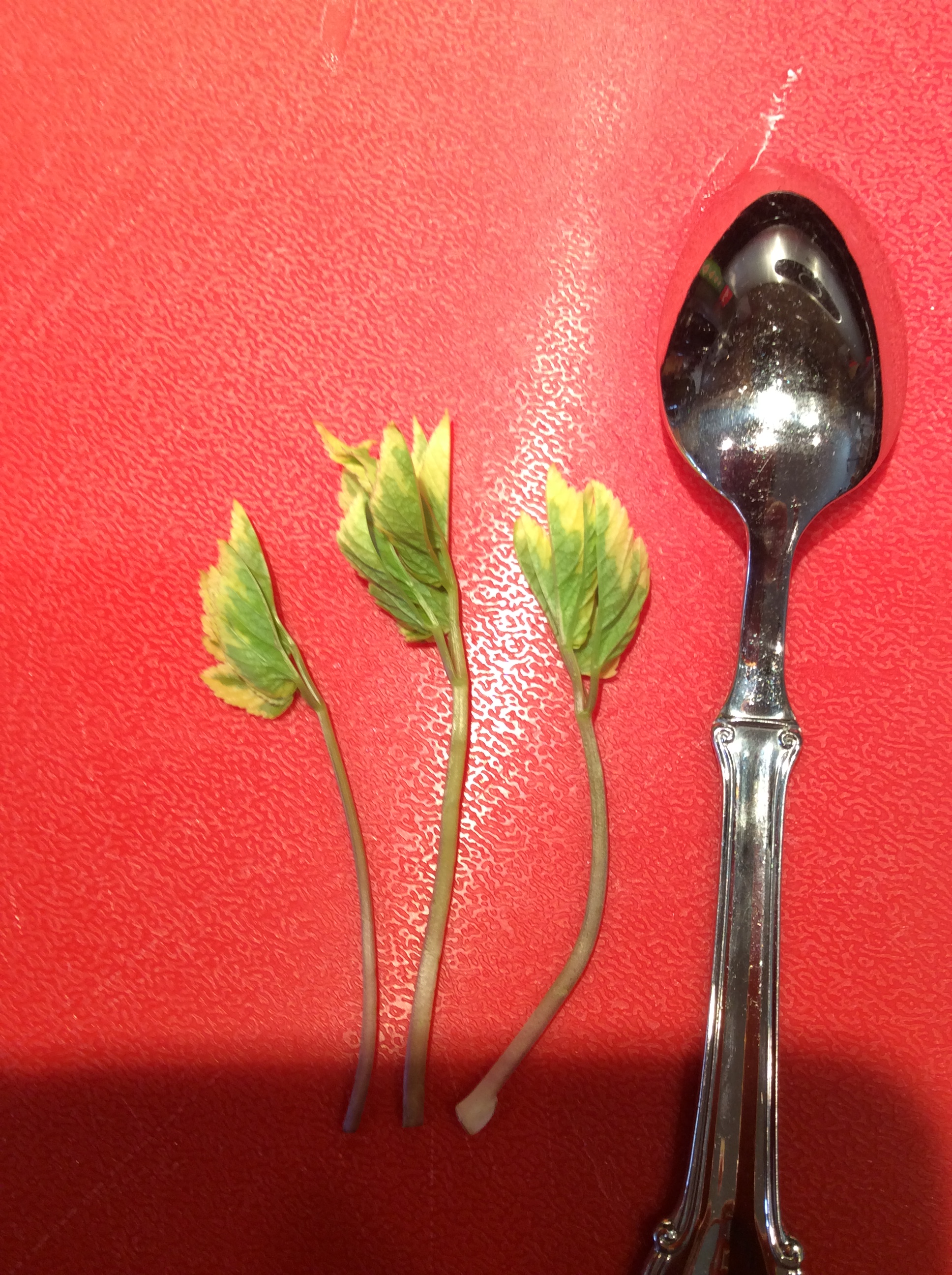
Eating Up the Ground Elder


Ground elder is a famous invasive, and most sensible people would never dream of growing it on purpose. But I live in the high desert and tend to be fairly fearless about moisture-loving invasives, on grounds that if I get tired of them I can withhold water and watch them disappear. Therefore, I let some variegated ground elder grow under a plum tree and harvest it aggressively for salads.
It needs to be harvested young, before the leaves unfurl, and at this stage it has a strong celery-parsley flavor that I find appealing, and a lovely crisp texture. The furled young leaf at the top is pretty, but the stem is the real vegetable, so pick it as close to the ground as possible. Toss in a mixed salad, or arrange artistically on top.

When the leaf opens out it becomes tough and is no longer desirable eating. I have read that it also produces nausea in some people at this stage, so it’s definitely to be avoided.

If you live in a wetter climate, you may want to confine ground elder to a large pot, because it can get out of hand in a hurry.

Because each individual leaflet is small, I never get enough to cook, but I imagine that it would be good in stir-fries.

Be cautious with invasives, but don’t rule them out completely if your natural conditions will prevent them from spreading. And if you live in an area where it would be irresponsible to introduce ground elder, help solve the problem. Find a naturalized patch and start foraging.


The First Nettles of Spring

This year we ate all winter from the broccoli and greens growing under frost blankets. Even so, it remains a major spring event when the first nettles are ready to pick. They taste so good and give such an all-over glow of virtue.  There are people who think that nettles have special medicinal benefits. My own belief is that all dark leafy greens have medicinal benefits, and the important thing is to eat as wide a variety of them as possible. But that first meal from the uncovered soil does confer a special feeling that spring is finally and truly here.

If you aren’t familiar with them, consult a good wild-food field guide, and be aware that the sting is quite uncomfortable and can last hours. Have leather gloves handy for picking. They’re ready to harvest when 6-8” tall. I cut off the top 2” or so, including as much leaf and as little stem as possible.

I turn them into a big bowl of water and stir gently with a wooden spoon for 2-3 minutes to get dirt off.

My favorite tool for lifting them out of the water, leaving any dirt that was present at the bottom of the bowl, is a pair of “salad hands” that somebody once gave me as a hostess gift. A large slotted spoon would work too. I make sure to throw the water on a garden bed. We live in the desert, after all.

Cooking nettles is a breeze, but in my opinion chopping is a necessary step, to eliminate stringy stems. First I put them in the pan with about half a cup of water, and cook over high heat, stirring, for about two minutes or until thoroughly wilted. The water should be pretty much gone. Turn out on a cutting board, let cool for five minutes or so, and chop. The cooking has eliminated their capacity to sting, and you can handle them with impunity now.

The flavor of nettles is rather like spinach, but deeper and richer, with a slight feral twist. I especially like them creamed, and always eat the first ones this way. Slice up two big fat green onions, sauté them in butter until cooked, add chopped nettles, sauté another minute or so, add heavy cream just to cover, boil for a couple of minutes until the cream is thickened, and salt to taste. Serve with freshly ground pepper and nothing else, so that you can taste the true flavor of the nettles.  You can also use netales in absolutely any way that you would use cooked spinach. They are infinitely versatile, and I have never served them to anyone who disliked them.  After the initial cooking and chopping, they can be frozen for later years. Whenever I wash and cook nettles, I try to make about twice as much as I need for immediate use, so that I can freeze the other half.

They can be dried for tea, although I do not care for the watery tasting tea that results and don’t bother.  Adding a twist of orange peel or something similar would give more flavor. I am not much of a tea drinker, but if you are, this might be worth considering.

If, like me, you live in an area who are nettles don’t grow naturally, there are some considerations to growing them in your yard.  First is obtaining them. When I first started growing them in central New Mexico about 12 years ago, I could not get seeds to germinate and no herb nurseries offered them. I finally called an herb nursery from whom I was buying other things and asked if they could please find me some nettles.  The “plants” I received had clearly just been dug from the nearest roadside, and were little more than cut rhizomes in potting soil, but they grew just fine.  These days they are easier to find and a number of mail order nurseries have them.

Siting  must be done carefully, because of the sting and because they are invasive.  I have mine in an area surrounded by concrete, where they cannot escape to parts of the yard where I don’t want them.  My large dogs are readily able to avoid them, but I have heard that they could do real harm to very small dogs, so keep this in mind.   Growing them in areas where small children could get into them is an obvious no-no. They get tall and gangly and flop around, but if cut or mown back in summer, they stay neater and make a second crop in fall.  I hope that I am never without nettles in spring.


A Wild Tangle

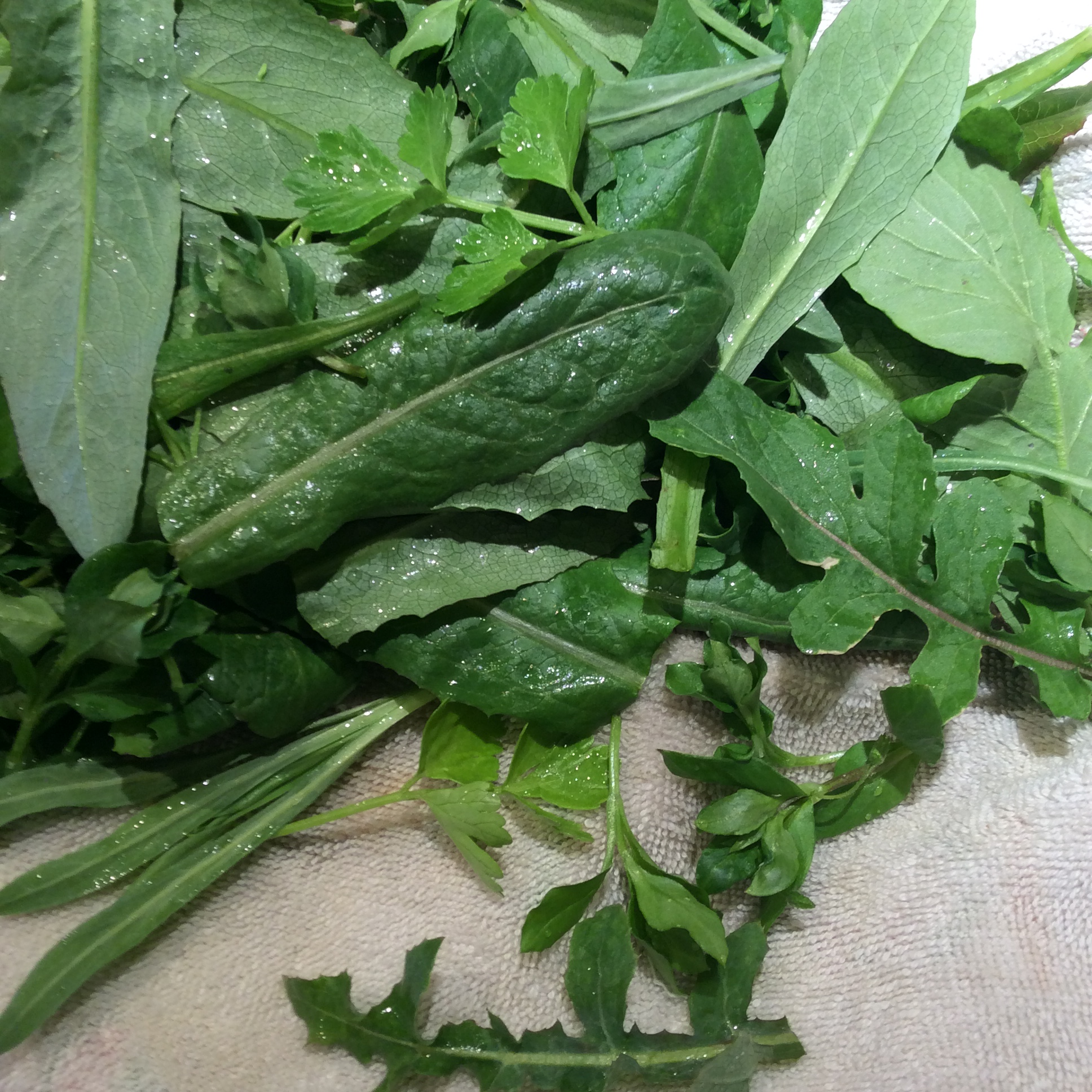
Back when I first became interested in the Cretan diet, somewhere I read a saying that I cannot remember accurately but that went something like this: “better my own greens and olives than foreign  sugar doled out to me by others.”  From a health standpoint, certainly, better any greens than any sugar, no matter where it came from.  So after the broccoli under frost blankets in my garden beds finally gave in, having produced most of the winter, I pulled out the broccoli plants for the goat and chickens  and left all the weedy little seedlings under the blankets to grow into salad greens.  In addition to real weeds like wild lettuce and arugula and sow thistle, which sow themselves all over the place at my house,  there are some greens like chickweed which are very weedy in other parts of the country, but which I actually had to start from purchased seed because they don’t grow around here.  Another treat that I am really enjoying in salads right now is celery micro greens, of which I have a large cluster simply because I forgot to cut down one of last year‘s celery plants before it went to seed. Now, tender 4 inch high celery has formed a dense patch over a foot in diameter, and it is very delicious in salad. With a wide enough assortment of wild and semiwild greens and herbs, a simple vinaigrette is all you need to have a great salad or side dish. Add some meat, eggs, or cheese and you have a meal.

I did make sure to have one established dandelion plant under frost blankets, but it is not doing any better than the ones in the open. Dandelions absolutely resist being civilized, and they do not adapt to us. They just keep doing their own gloriously wild thing.  Dandelions also resist selective breeding. I have bought expensive packets of seed that purported to produce larger, thicker-leaved, more delicious dandelions, and they are exactly like all the other dandelions around. This year, in some fit of madness, I spent €24 ordering two packets of highly specialized dandelion seed from France, despite the fact that I know perfectly well they will come out exactly like the common yard dandelion.

Early spring is the perfect time to learn to do a little foraging, if that is not already one of your hobbies. I would suggest starting out with the wonderful book from John Kallas, Edible Wild Plants: Wild Food From Dirt to Plate.  Most of the plants that Dr. Kallas describes will be found in your area, because they are common and  ubiquitous, and he will  teach you to identify like an expert and then get you doing delicious things with them.

Just recently, over maybe the last six months, I have noticed that any post I write that is tagged as having anything to do with wild lettuce gets an astounding amount of attention.  I wish that somebody could explain this to me. Because I have been foraging and eating this plant for a good 20 years, and  despite some strange Internet rumors I feel that I can definitively say as follows: it will not relieve pain. It will not cure insomnia. It will not get you high. I wish I understood where these ideas came from, because they certainly did not come from anybody with a knowledge of foraging wild plants.  Really, if your goal is to get high, please leave the wild lettuce for those of us who just like to eat greens.