Archive for the ‘vegetable gardening’ Category

Garlic Chives, and Notes on Blanching

This time of year, so much is coming up and I am so busy planting, gathering, cooking, and preserving that often I don’t get any of it written about. But I did want to throw in a quick note about garlic chives. I have had a couple of clumps of them going for two years, but I have tended to forget to use them. I have, however, read that they are often eaten blanched in Asian countries, and I wanted to try that.

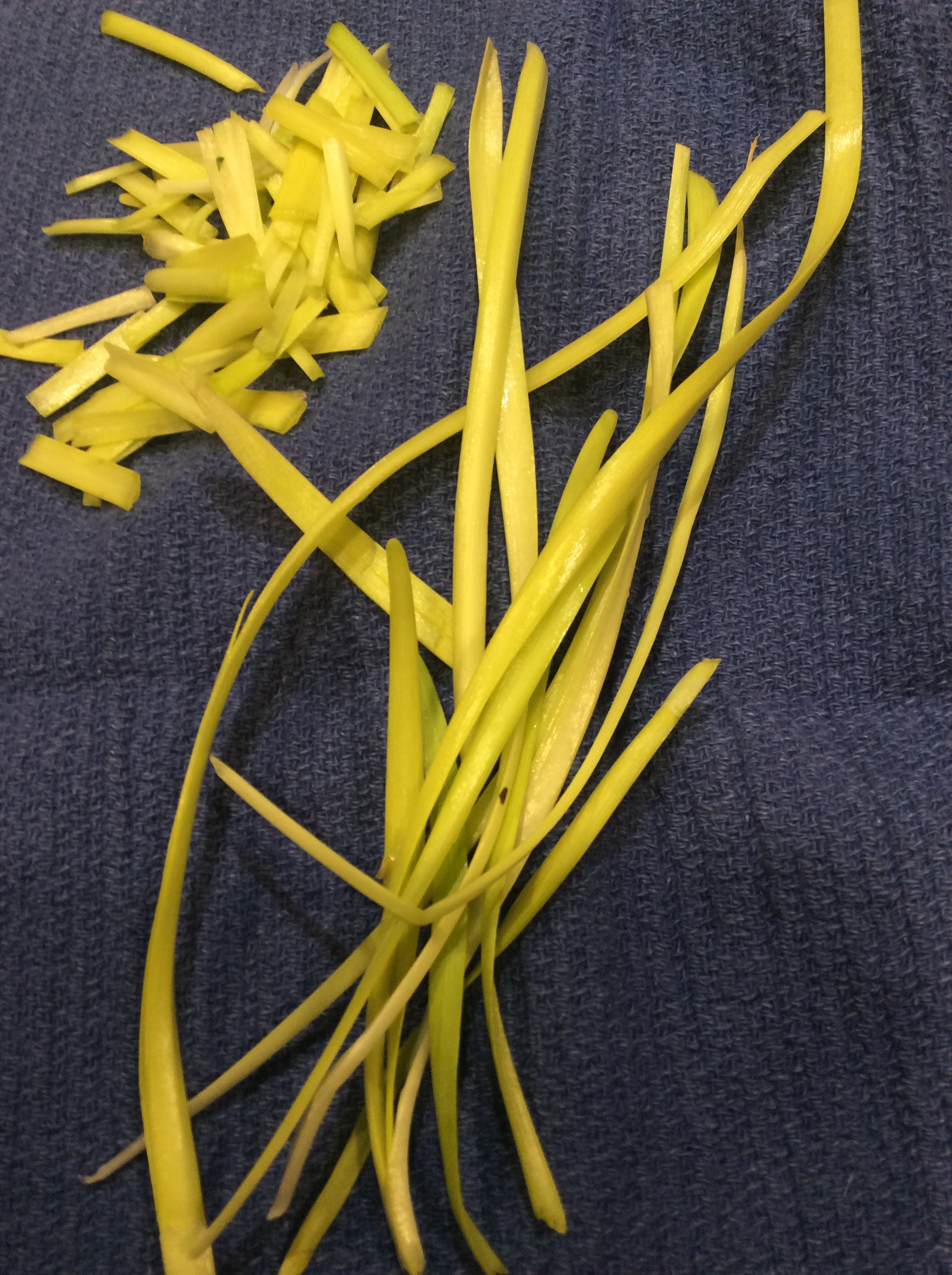
I don’t often go in for blanching because, in general, I do want my produce  kissed by the sun and full of all the nutrients possible. However, when I saw my two clumps of garlic chives coming up, I decided to try blanching one of them. There are some elegant ways to accomplish this, but I did it very inelegantly.  I hauled my big stockpot out to the garden, turned it upside down over one of the clumps, and set a rock on top.  This worked perfectly. About six days later I remembered to look underneath, and there were long chartreuse strands. I tasted one, and it had a mild and sweet garlic flavor, perfect for eating raw.  I picked them all, and have left the clump to see if it will rejuvenate.

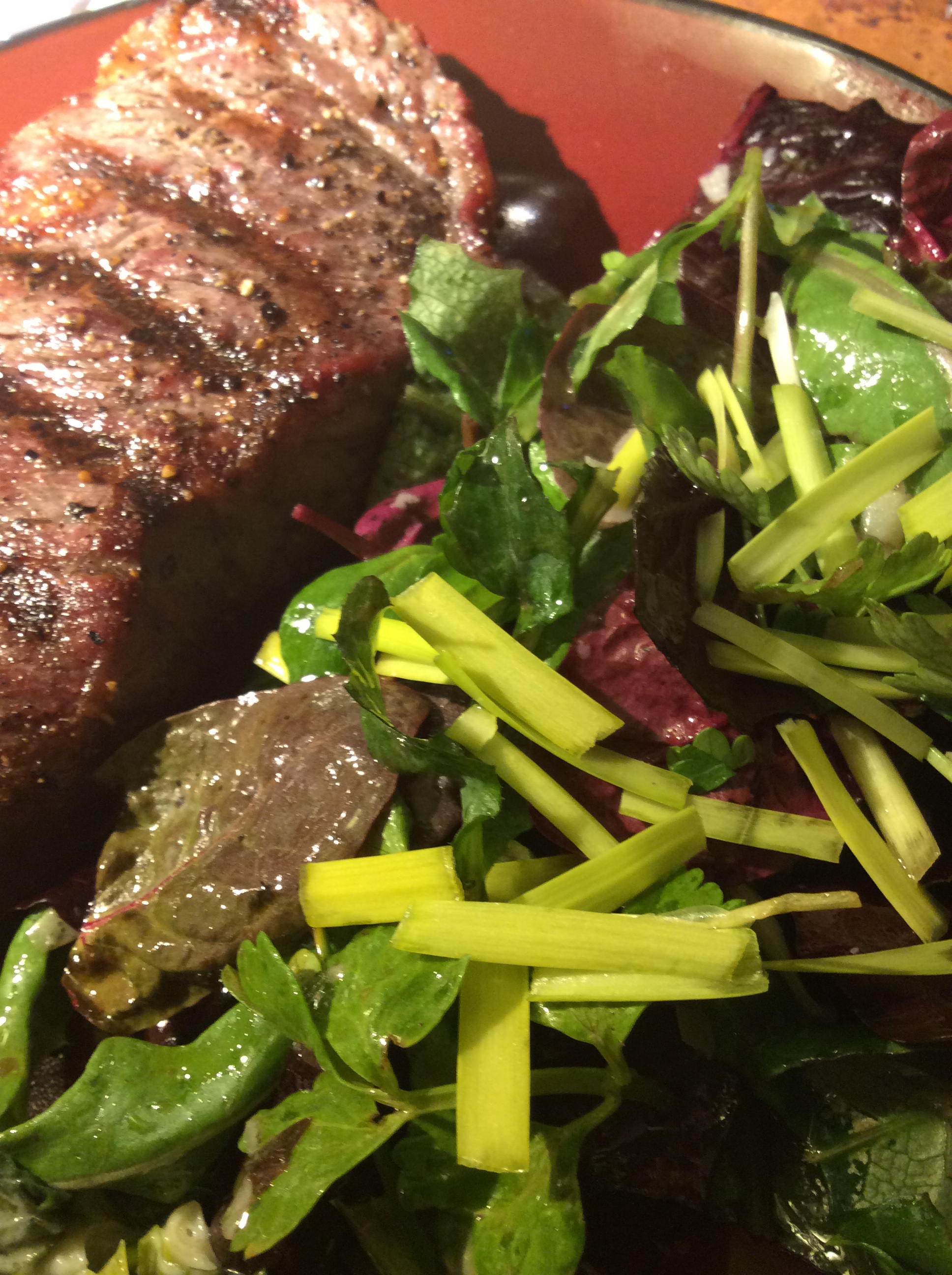
I used the glistening blanched chives over a salad, cut in 1” sections. They were delicious. Try blanching.

Because, yum.

A Wild Tangle

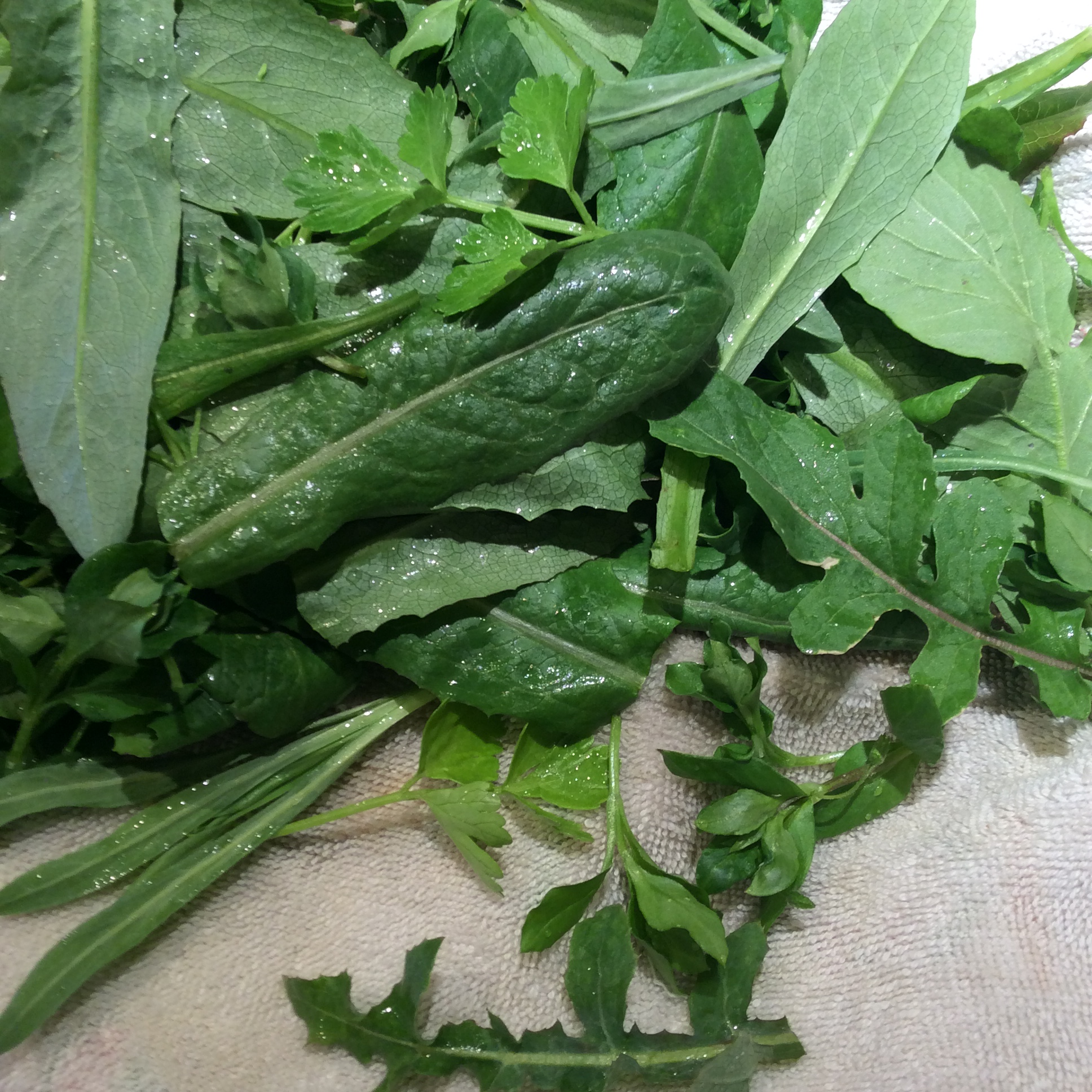
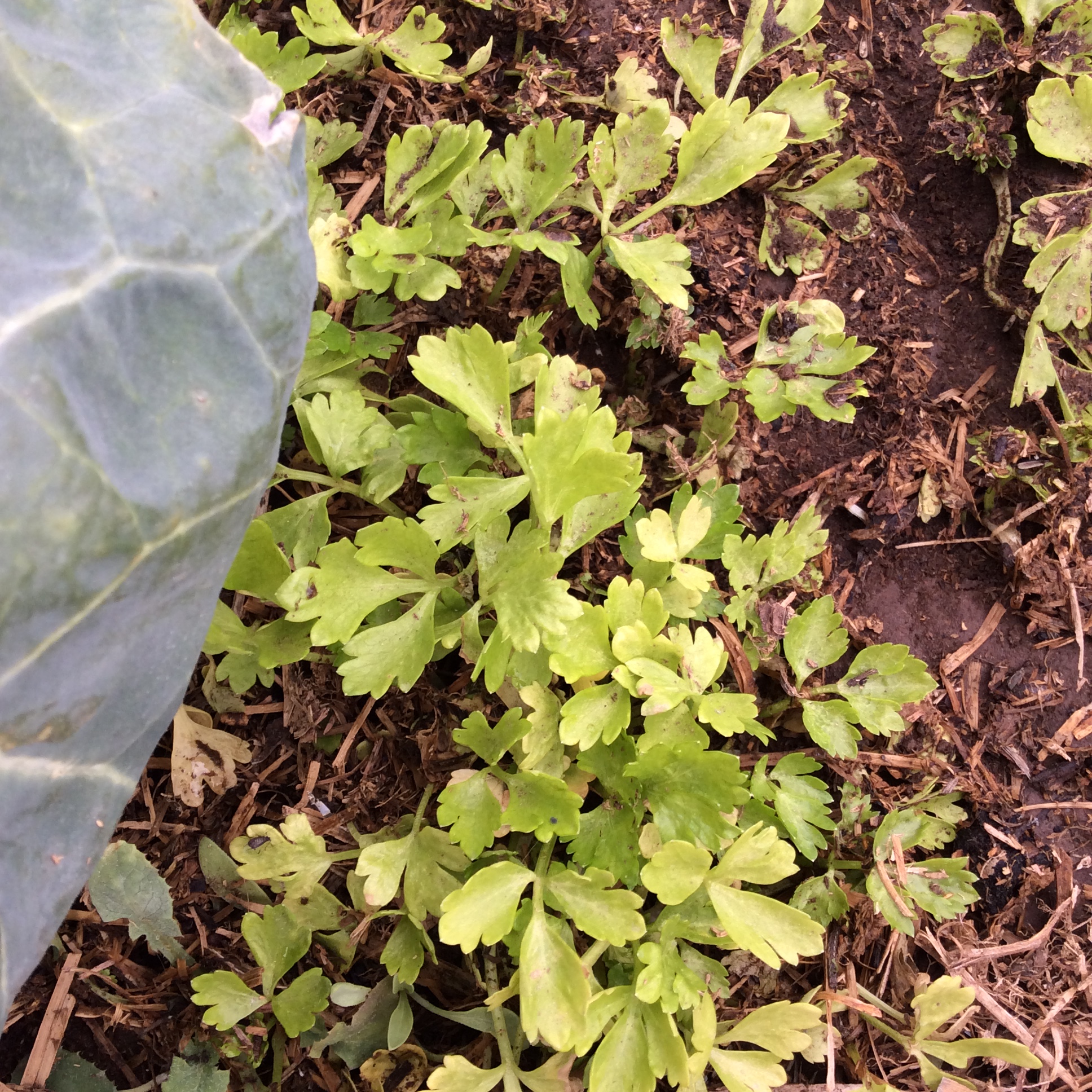
Back when I first became interested in the Cretan diet, somewhere I read a saying that I cannot remember accurately but that went something like this: “better my own greens and olives than foreign  sugar doled out to me by others.”  From a health standpoint, certainly, better any greens than any sugar, no matter where it came from.  So after the broccoli under frost blankets in my garden beds finally gave in, having produced most of the winter, I pulled out the broccoli plants for the goat and chickens  and left all the weedy little seedlings under the blankets to grow into salad greens.  In addition to real weeds like wild lettuce and arugula and sow thistle, which sow themselves all over the place at my house,  there are some greens like chickweed which are very weedy in other parts of the country, but which I actually had to start from purchased seed because they don’t grow around here.  Another treat that I am really enjoying in salads right now is celery micro greens, of which I have a large cluster simply because I forgot to cut down one of last year‘s celery plants before it went to seed. Now, tender 4 inch high celery has formed a dense patch over a foot in diameter, and it is very delicious in salad. With a wide enough assortment of wild and semiwild greens and herbs, a simple vinaigrette is all you need to have a great salad or side dish. Add some meat, eggs, or cheese and you have a meal.

I did make sure to have one established dandelion plant under frost blankets, but it is not doing any better than the ones in the open. Dandelions absolutely resist being civilized, and they do not adapt to us. They just keep doing their own gloriously wild thing.  Dandelions also resist selective breeding. I have bought expensive packets of seed that purported to produce larger, thicker-leaved, more delicious dandelions, and they are exactly like all the other dandelions around. This year, in some fit of madness, I spent €24 ordering two packets of highly specialized dandelion seed from France, despite the fact that I know perfectly well they will come out exactly like the common yard dandelion.

Early spring is the perfect time to learn to do a little foraging, if that is not already one of your hobbies. I would suggest starting out with the wonderful book from John Kallas, Edible Wild Plants: Wild Food From Dirt to Plate.  Most of the plants that Dr. Kallas describes will be found in your area, because they are common and  ubiquitous, and he will  teach you to identify like an expert and then get you doing delicious things with them.

Just recently, over maybe the last six months, I have noticed that any post I write that is tagged as having anything to do with wild lettuce gets an astounding amount of attention.  I wish that somebody could explain this to me. Because I have been foraging and eating this plant for a good 20 years, and  despite some strange Internet rumors I feel that I can definitively say as follows: it will not relieve pain. It will not cure insomnia. It will not get you high. I wish I understood where these ideas came from, because they certainly did not come from anybody with a knowledge of foraging wild plants.  Really, if your goal is to get high, please leave the wild lettuce for those of us who just like to eat greens.

Food Diatribe II: Leafy Green Season

Medscape just published an article worth reading. The information is from a prospective study of older adults living in the community, and showed a direct linear relationship between consuming one or two servings a day of leafy green vegetables and slower cognitive decline. In fact, eating leafy greens daily offered the cognitive equivalent of being 11 years younger.

One expert neurologist asked to comment on the findings responded with confirmation: “This study adds to the rapidly evolving and convincing evidence that you are what you eat when it comes to brain health,” Richard Isaacson, Weill Cornell Medicine, New York City, said. “From a practical clinical perspective, regular intake of green leafy vegetables should be a standard part of a risk reduction paradigm to delay cognitive decline throughout the lifespan.”

Amusingly, another expert said that it was “too soon” to recommend leafy greens, and advised waiting for further confirmation from future studies, a typical recommendation for new drugs but not typically applied to foodstuffs that healthy people have been eating for millennia. I do of course see his point, which is not to jump into thinking of leafy greens as a cure-all, but really now. So here is my response as a gardener, a doctor, and an avid reader of research: don’t wait. Some of the longest-lived and healthiest populations in the world have had  markedly high  consumption of leafy greens. There is no downside and no dangerous side effect to worry about unless you are on warfarin. So just do it. You can read the article here if you want, and it contains a link to the study. Then, just do it. Grow them if you can. If you have a small garden patch, make an investment in your family’s health by filling it with greens. If you don’t garden, you can haunt your farmers market or start making foraging trips. If you prefer to eat salad, choose darker greens, not lettuce hearts or iceberg, and eat a big bowlful.

Right now I’m still eating last fall’s leafy greens from under frost blankets. The collards and Savoy cabbage held up best, and are uniquely delicious after exposure to cold. I harvested Swiss chard for people and chickens all last summer, and then put a frost blanket over half  the row.  The new leaves of spring are the meatiest and most delicious that a chard plant ever produces, and the protected ones are nearly eating size, while the unprotected ones will come in some time next month. Just be sure to get them before the central stalk starts to elongate, because they lose their sweet meatiness and get strangely dirty-tasting when the flowering stalk starts to form. Green alliums are coming up everywhere, and my nettle patch is sprouting strongly.

If you keep animals for food, feed greens to your animals (not nettles, but chickens do love the leftover cooked ones.) I have a carnivorous friend who eats supermarket meat and insists that he’s a secondary consumer of vegetables, and I keep trying to tell him that on the contrary, he’s just a secondary consumer of GMO corn. Unless you are buying animal foods known for a fact to be grassfed or pastured and not grain-finished, you aren’t consuming the nutrients of vegetables.  But if you keep your own, it’s astounding what quantities of greens chickens will eat if they get a chance, while cattle, sheep, and goats can be raised to butterball fatness on grass and greens alone if you have enough. The nutritional profile of the eggs and meat is enhanced and the animals are much happier. I’ll have more to say about meat in the near future.

Under the Frost Blankets

I have always tried to protect a couple of winter crops with frost blankets, but this year is the first time I got really serious about it at the right time of year. The right time of year is October, when you figure out which beds are going to be open during the winter and prepare them for planting.   Clean them of the debris of their previous crop, and fertilize a little more heavily than you usually would. Since I planned to grow mostly green things, I used blood meal and organic kelp meal.  If I had had more finished compost on hand, I would’ve used some of that too. Whatever you decide to use, fertilize, turn it in, water, and let the bed sit untouched for about a week.

Next, hunt your frost blankets. I cannot say enough good things about the heaviest weight of Agribon agricultural fabric, the one called Agribon 70. I got mine from Johnny’s Selected Seeds.  After a couple of years of fooling around with lighter fabric or two layers of lighter fabric, I have concluded that nothing but the 70 is worth spending my money on. The others all tear in our desert windstorms allowing the plants I have tended so carefully to be dessicated and killed.  It comes in rolls of 12 foot wide fabric, and 100 feet of it is one of the best gardening investments I ever made.

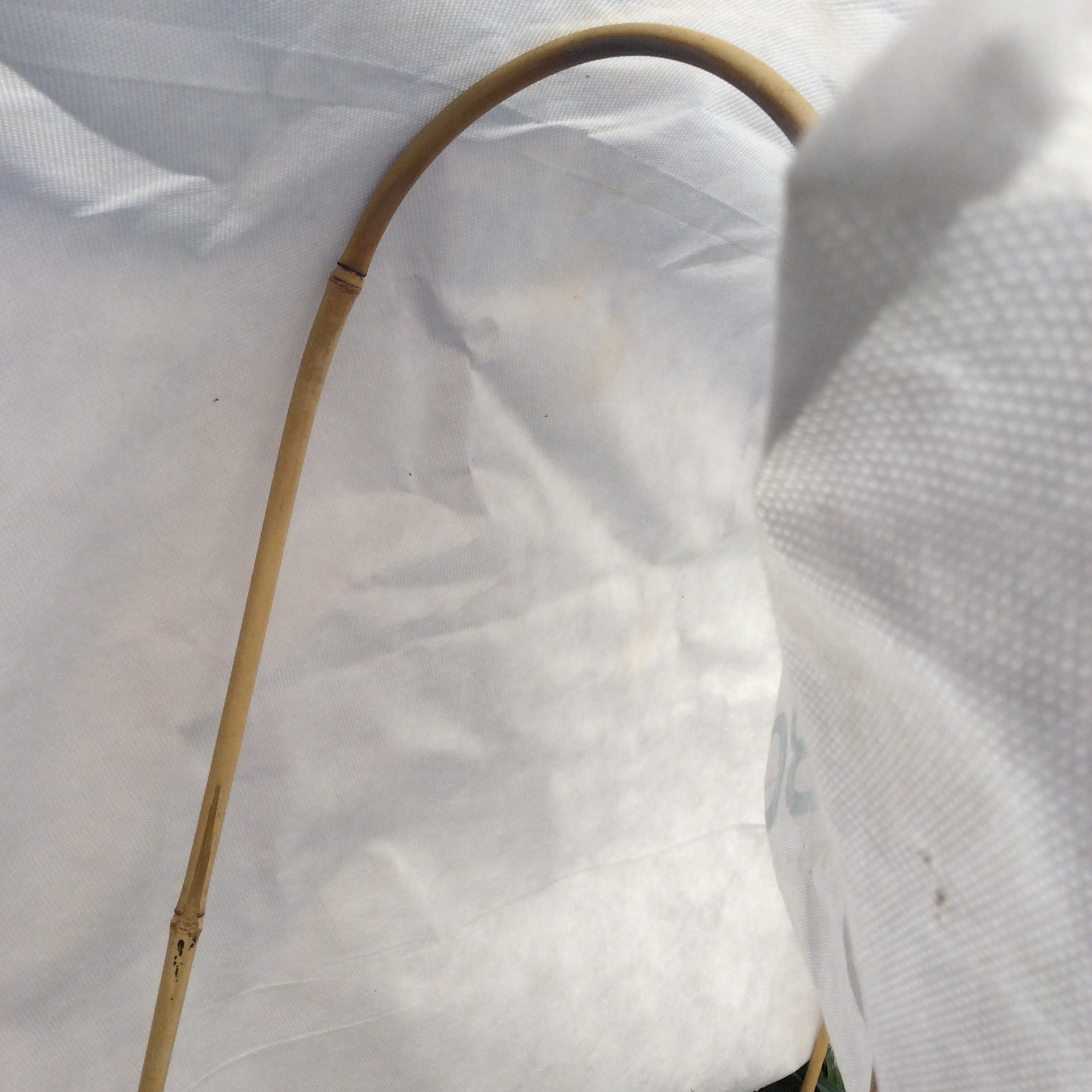
This is a heavy weight fabric and will actually smother the crops if it is allowed to just lay on top of them, so you need some kind of support.  If you are even slightly handy, no doubt you could rig something up with thin PVC pipe hoops, which I think would be the best possible solution.  I am not remotely handy, and so I bought a package of bamboo garden hoops.  These seem flimsy when you handle them but actually will do the trick.
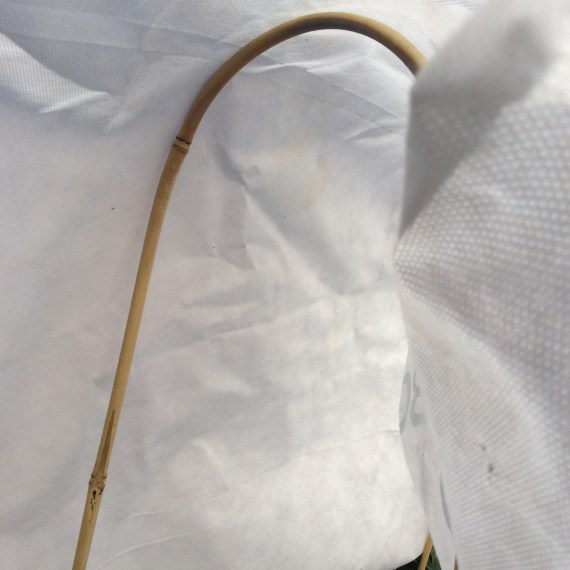
Put the fabric over them and weight it down all around. Don’t use fabric staples, because you will need to move it a lot for watering and harvesting. I use a small load of bricks that I bought from a neighbor. They need to be placed at least one brick per foot, because otherwise you will lose it all in a real windstorm.
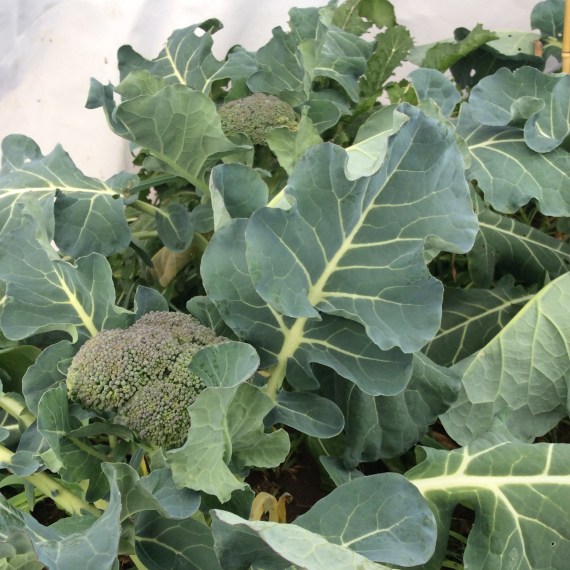
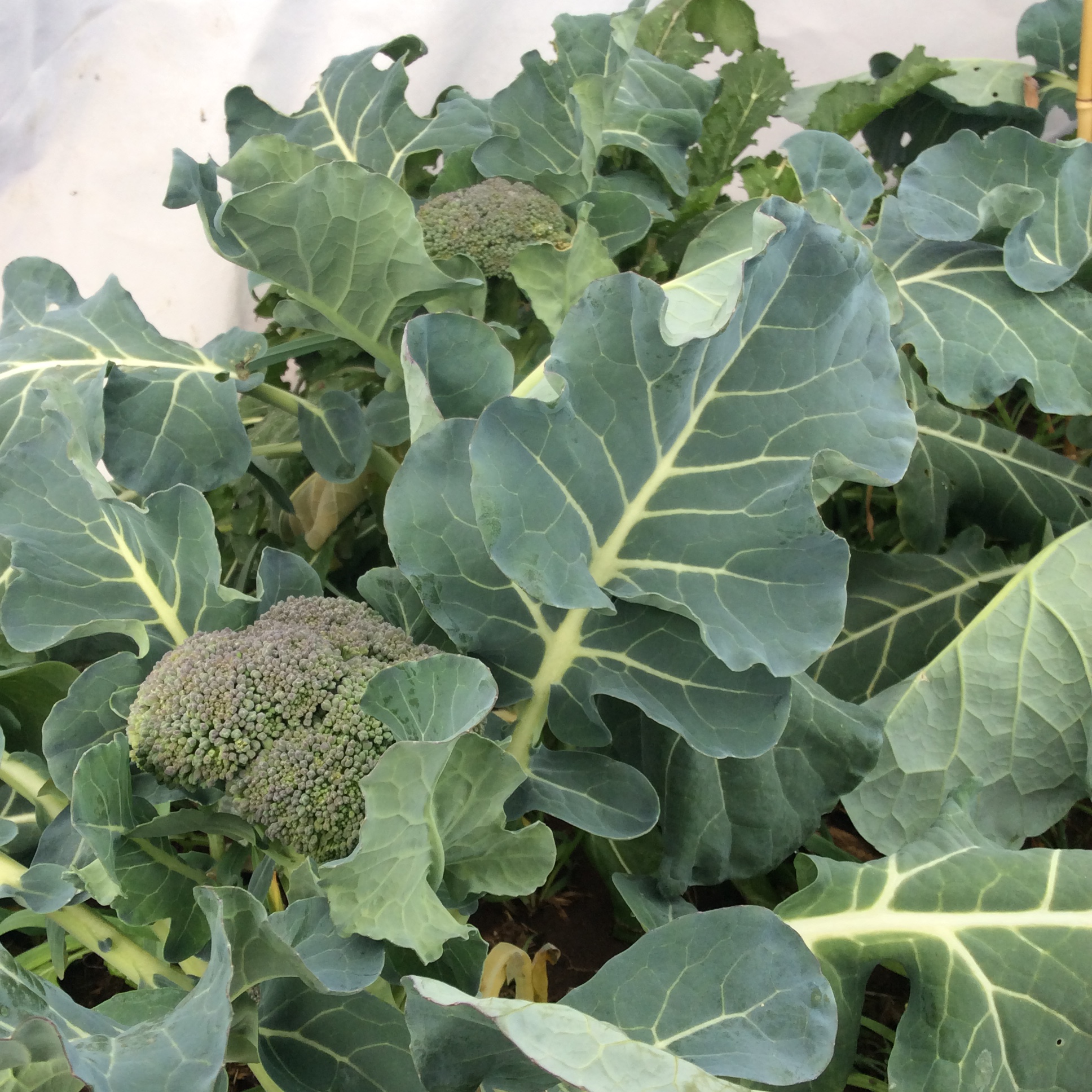
Next, decide what to plant.  Broccoli was an easy choice for me because I love it and also consider it one of the healthiest vegetables around, and the leaves and stalks are as edible as the buds.  I had planned to start my own from seed to get a known cold hardy variety, however in late October I saw some plants in my local garden center and decided to buy them because it would save time and trouble. Most of the broccoli sold in my area is chosen for heat tolerance, not cold tolerance, so no doubt I could have had heavier yields with a different variety, but this one is working out well enough.  I put the plants in 18 inches apart each way, which is pretty close, but they are not going to get quite as big as those growing in the open in other seasons.
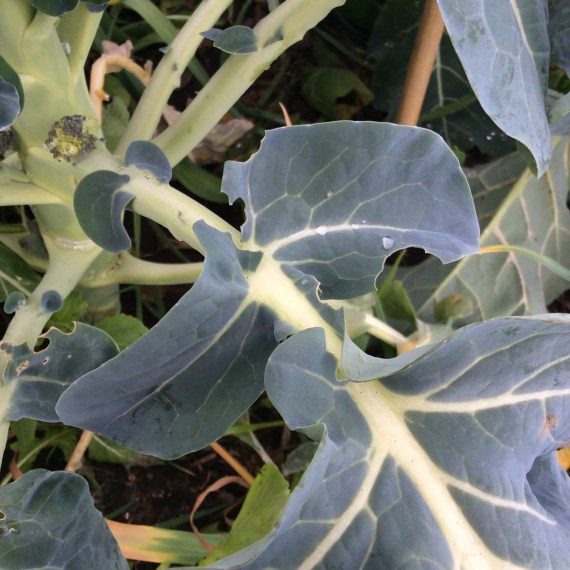
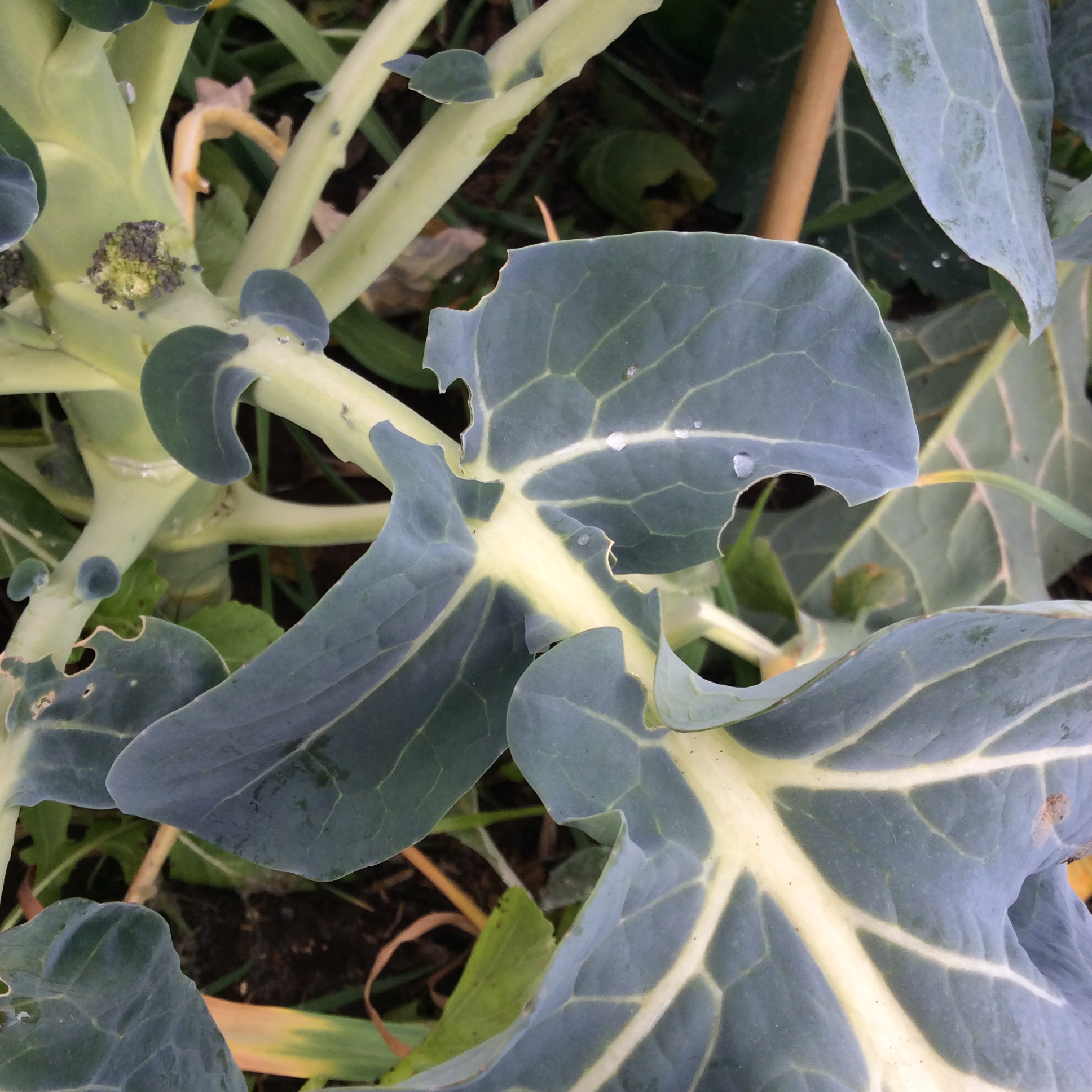
One of the joys of having a growing oasis in the winter is sticking your head under the frost blanket and just inhaling the scent of green growth. I also frequently break pieces off the broccoli leaves to eat while I’m watering. I try to restrict myself to the lobes at the base of each leaf, so that the overall appearance is a little less ratty, but as I see it nobody but me is really looking under there anyway.  Here, at the base of the leaf, you see the tiny little bud cluster that is going to become a side head after I cut the main head of broccoli.
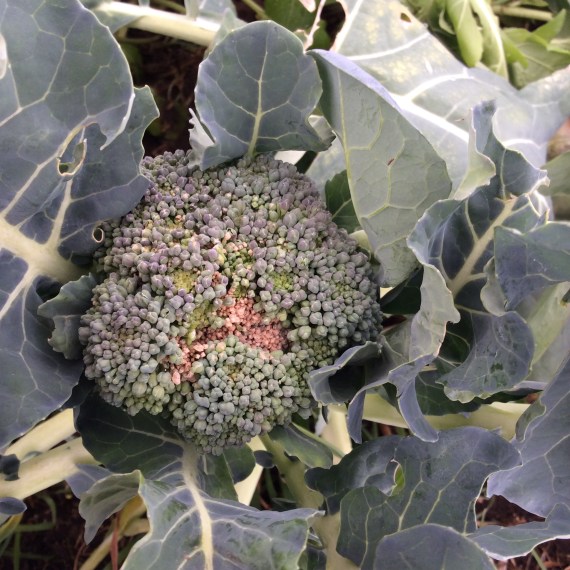
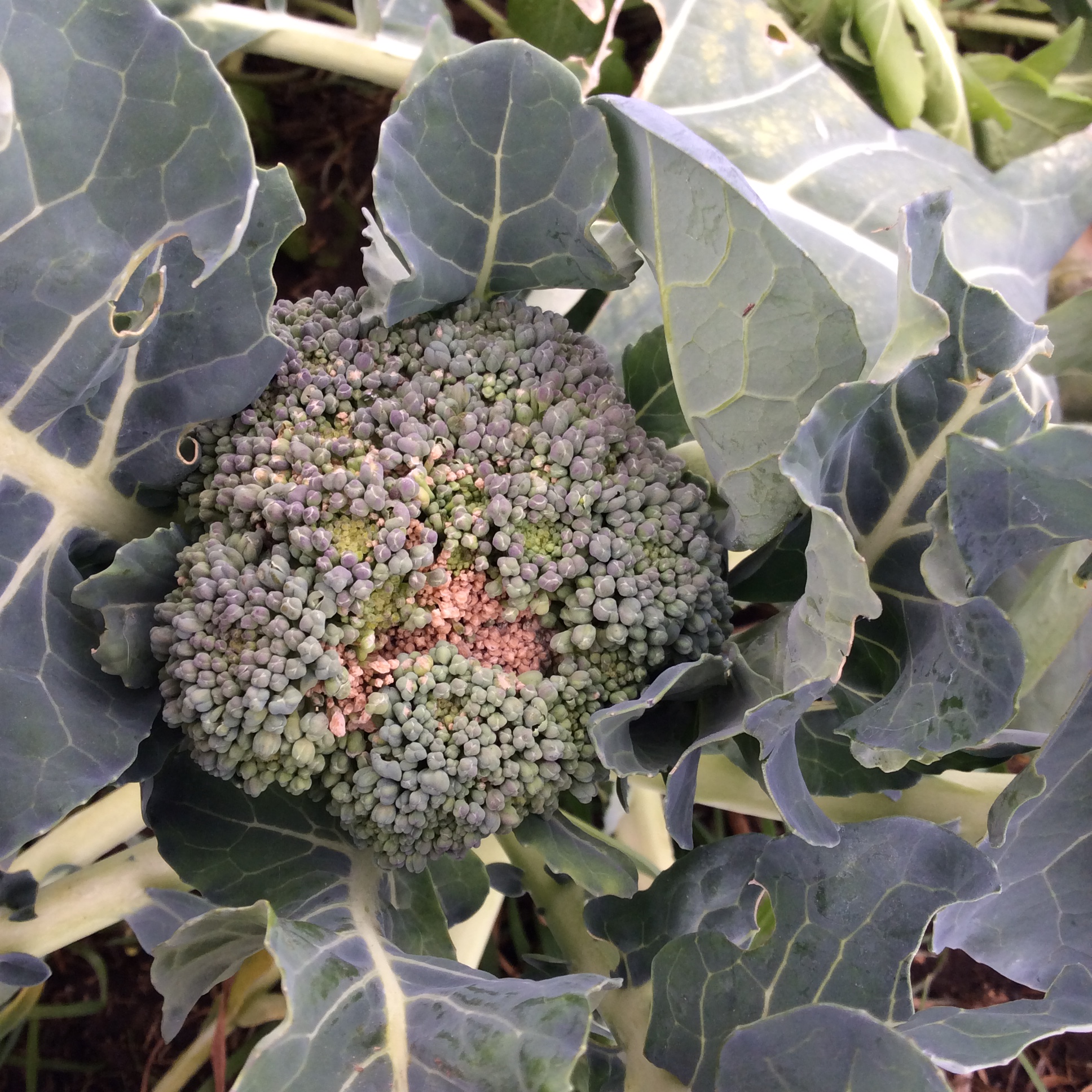
A few of my heads got brown bud, as you see above. There seems to be no real consensus about what this is, except that it probably is not a disease caused by a pathogen but related to growing conditions. I did notice that the plants that got the least water developed this condition. It also happens sometimes with my outdoor broccoli in very dry conditions. When I see this, I cut that head off and I am sure to keep that plant watered, so that it can concentrate on growing large side heads.  Overall, I still get a fairly good yield out of those plants.
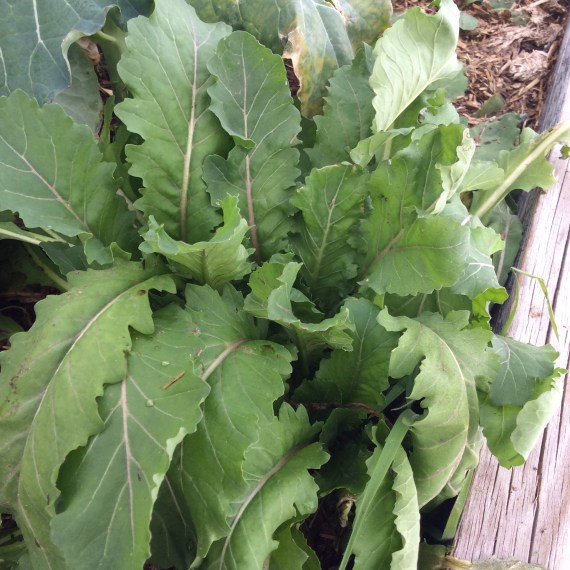
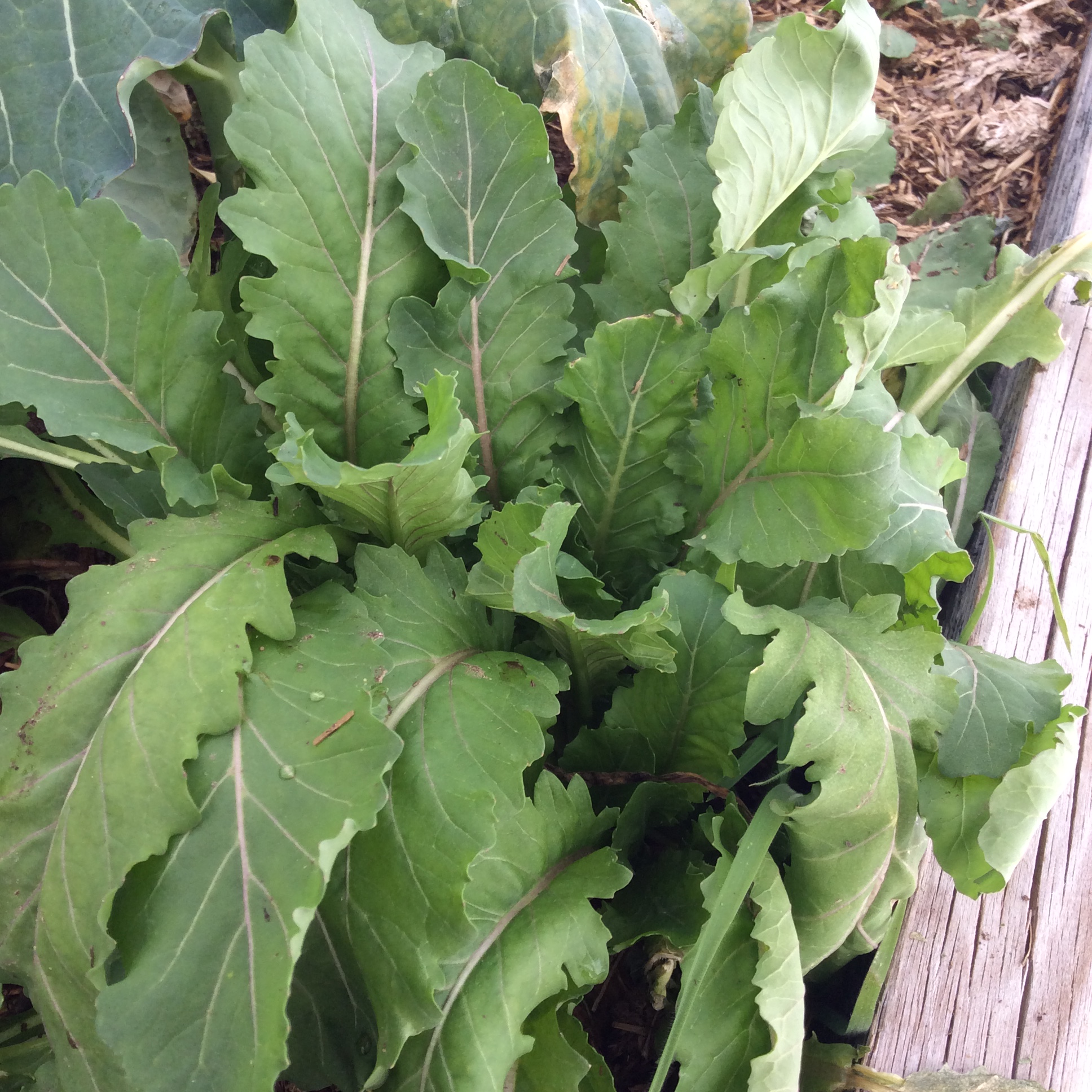
A delightful part of having a winter garden is that some of the things you let go to seed in the past come back around. Here you see a particularly healthy arugula plant that will go into a salad in the next day or two.  One of the reasons that I was careful to enrich the soil thoroughly is so that a lot of things could grow without hampering the broccoli very much
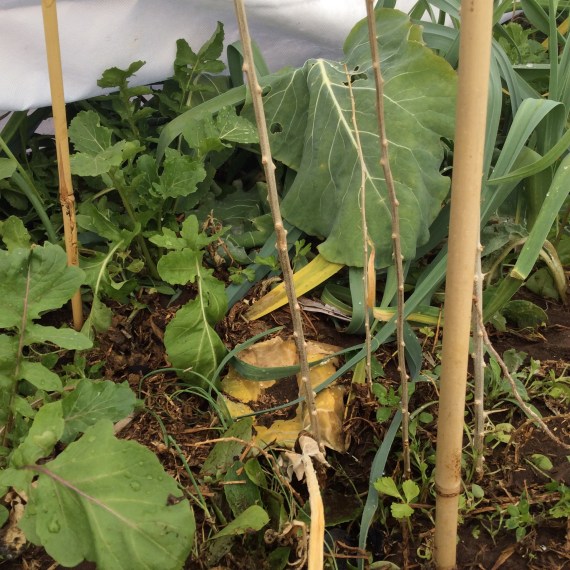
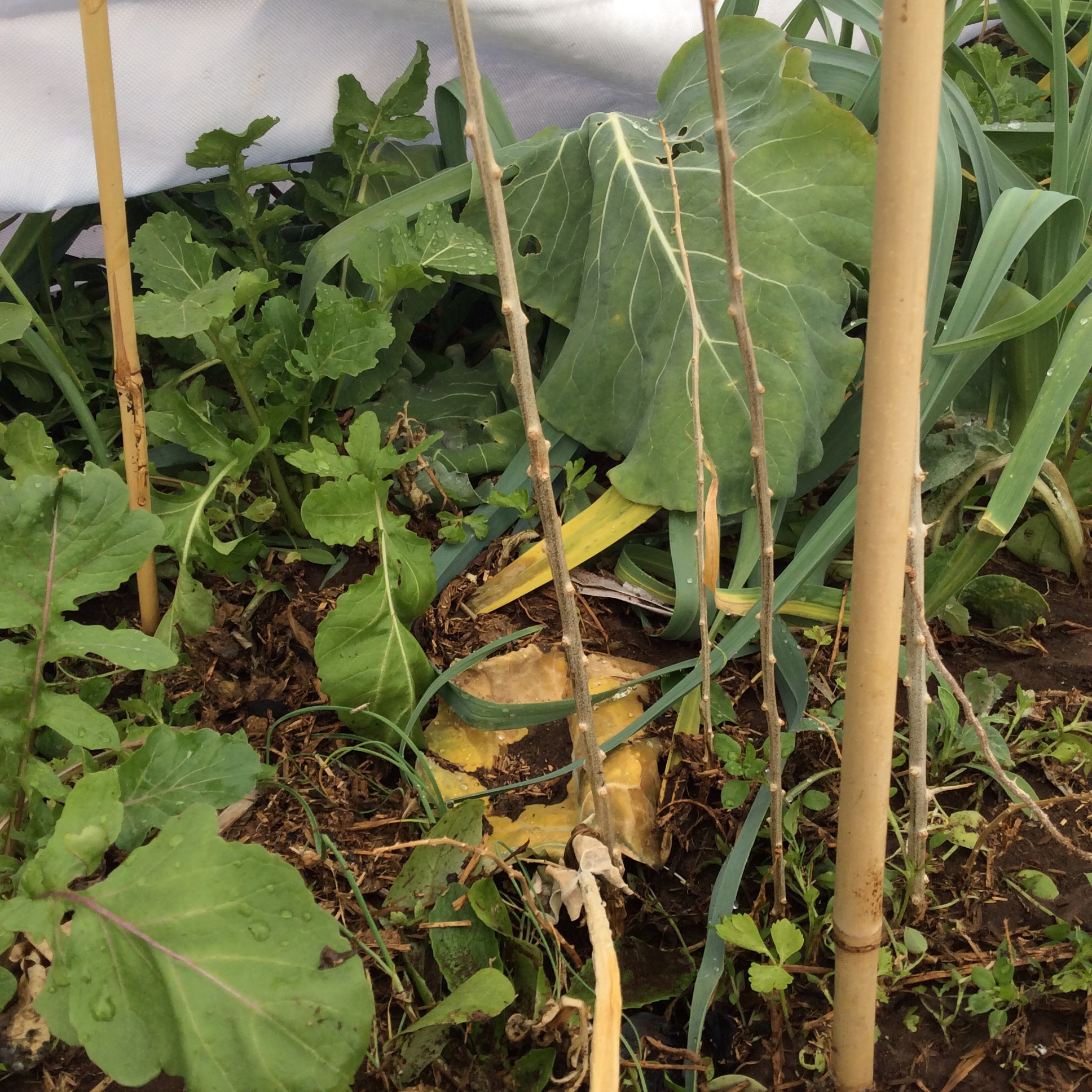
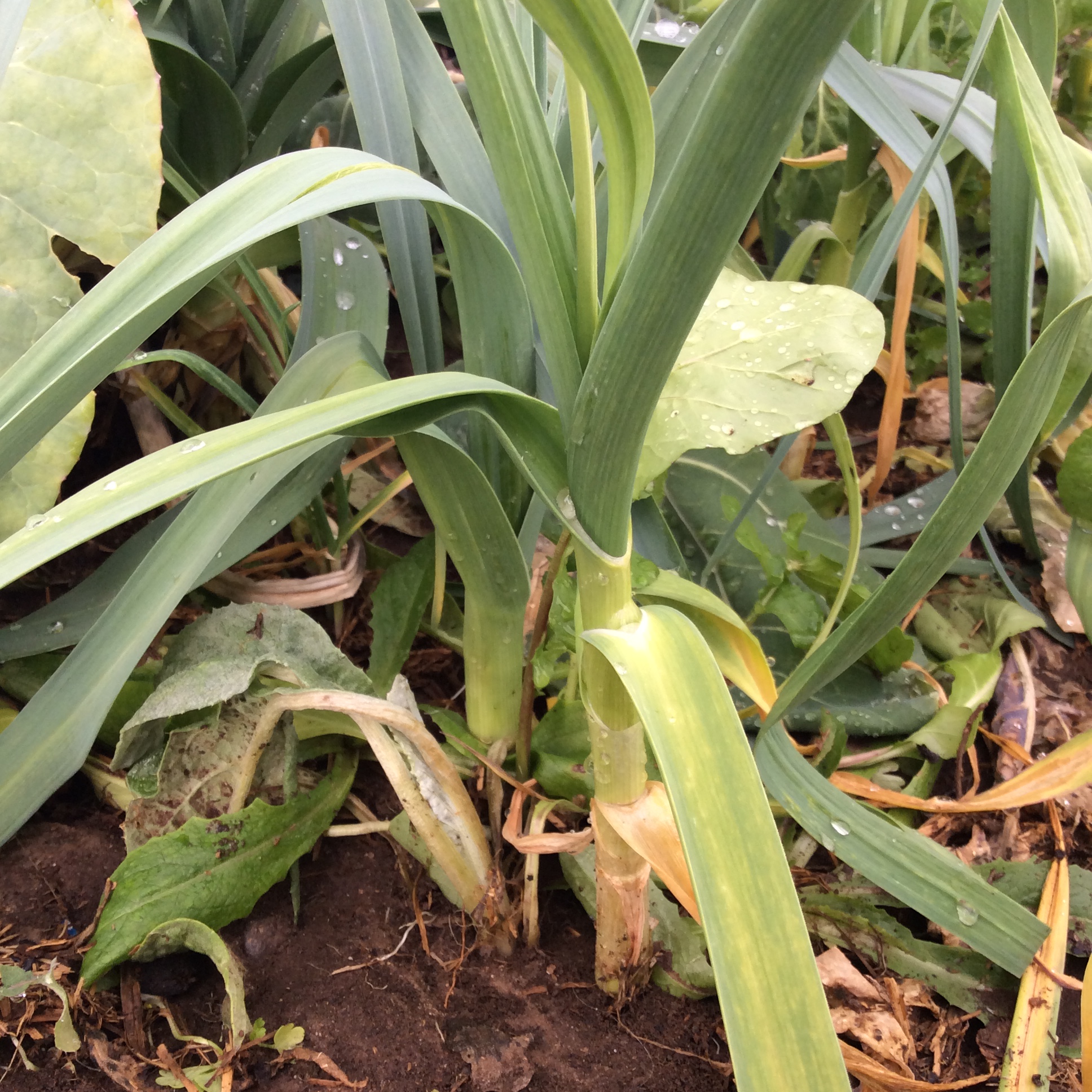
Here are a few interesting things going on. This is an area where a goji berry came up in the middle of the bed last year, and I cut it back hard before I covered the bed and I’m hoping to get some edible shoots out of it. You cannot get rid of gojis once you have them, so whack and eat them enough to keep them within limits.  This is a section of a few feet in the middle of the bed, where I planted Snow Crown cauliflower, and those plants died by November. I have done very well with the same variety in the open, so I don’t know what happened, but I do know that they did not like the conditions under the blanket. No problem. In the open space that they created by dying, you see leeks, garlic, arugula, chickweed, and celery coming up.  You might be able to spot tiny little leaks in the foreground from one that I let go to seed last summer, and then you can see larger leeks growing where I harvested last year‘s leeks  by cutting them off a few inches below the surface and leaving the base and the roots in the soil.  In each place that I did that, there are are two or three healthy leeks coming up from those roots. I am very pleased with this way of growing them, and I plan to keep experimenting with it.  The garlic is there because, after I planted my regular garlic beds, I had a lot of seed garlic left over and just stuck it in all over this bed before I covered it. My hope was to have green garlic earlier than usual, and it seems to be working out well.
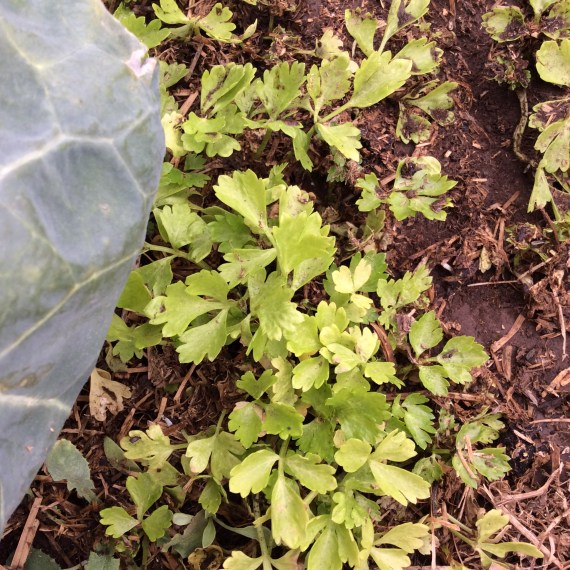
A closer look at the celery seedlings. These are the offspring of a hybrid celery called Tango, and the offspring of a hybrid are not necessarily true to the parent. However, it is likely that some will be close enough, and I’ll weed out the rest.
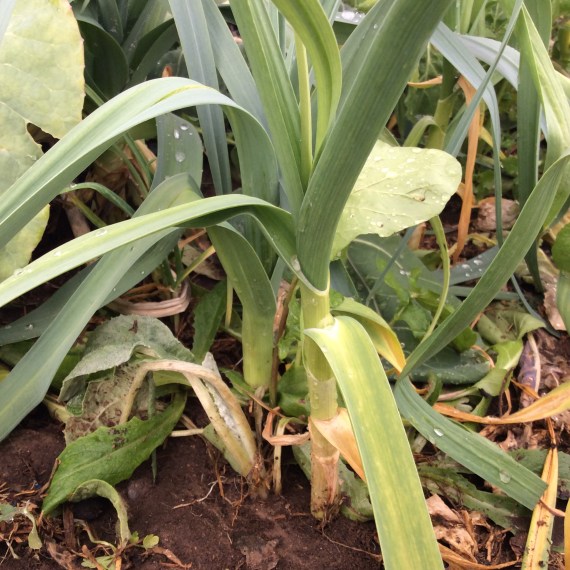
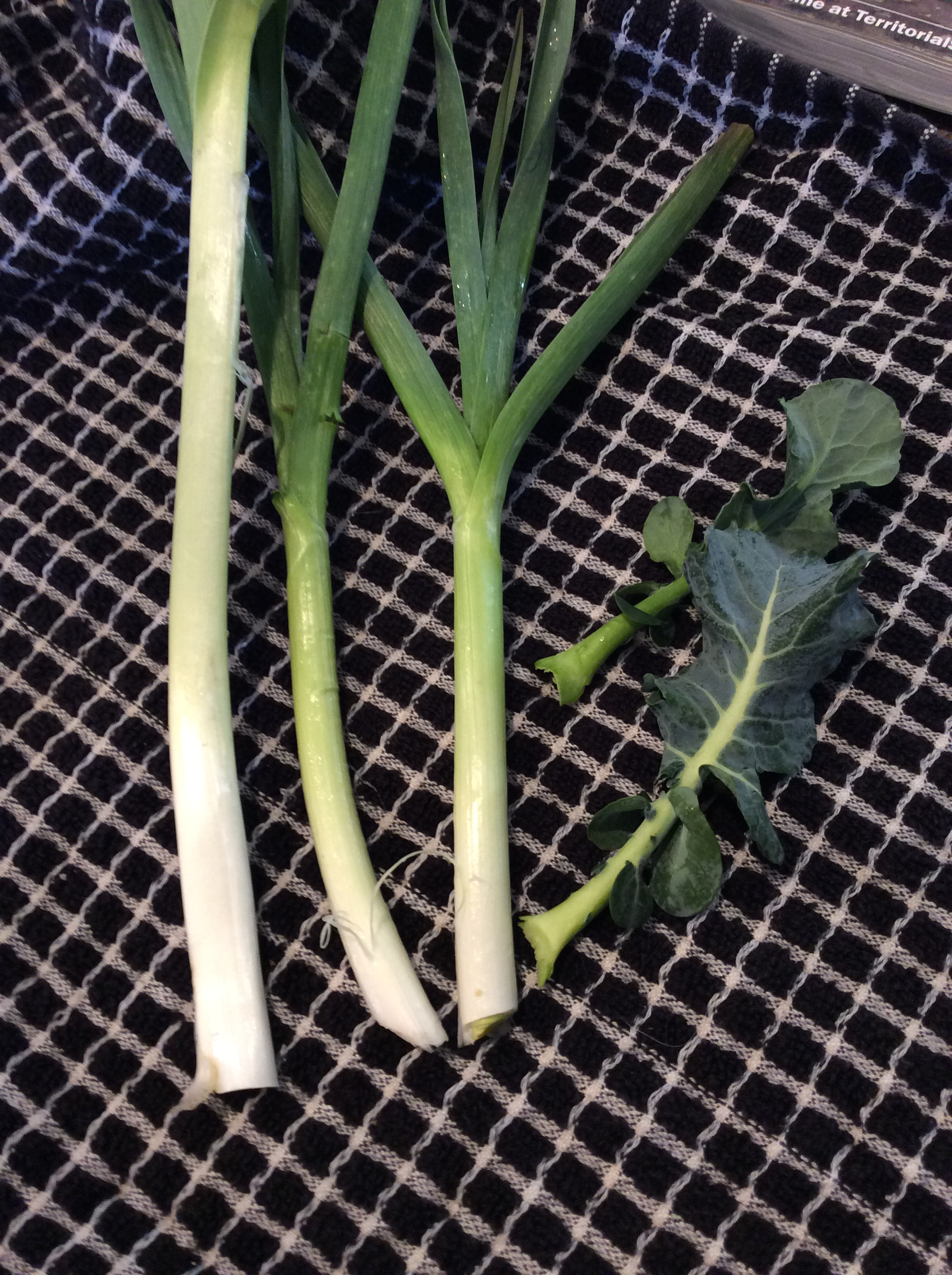
A closer look of the green garlic, growing lustily. These are the same shoots that you will see in the picture below, prepared for cooking.
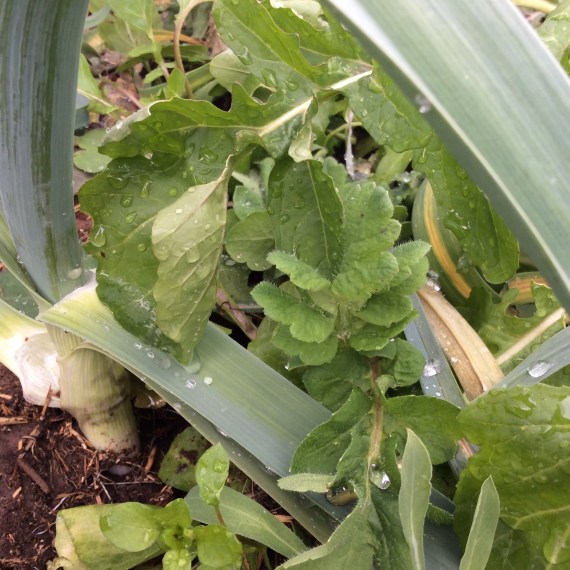
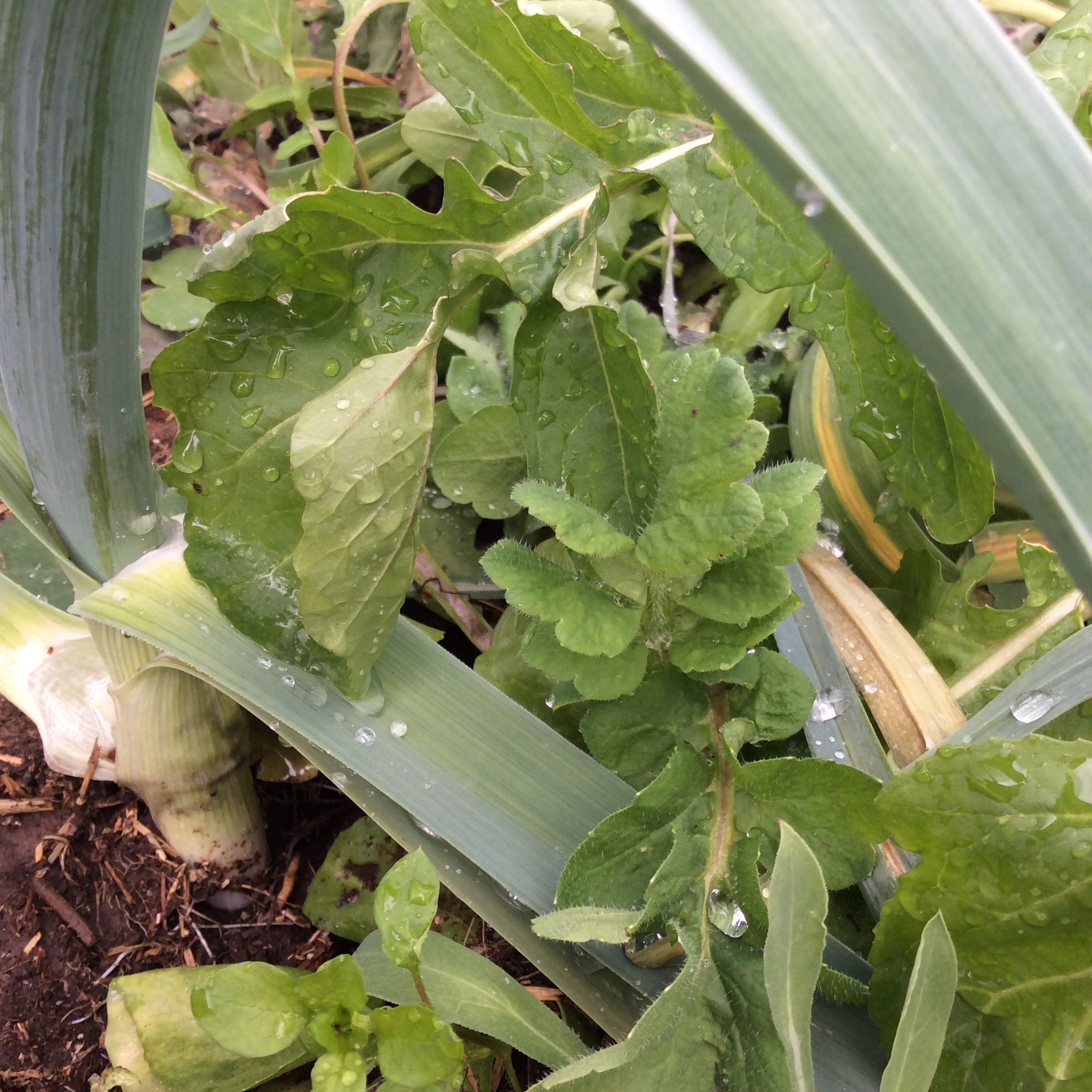
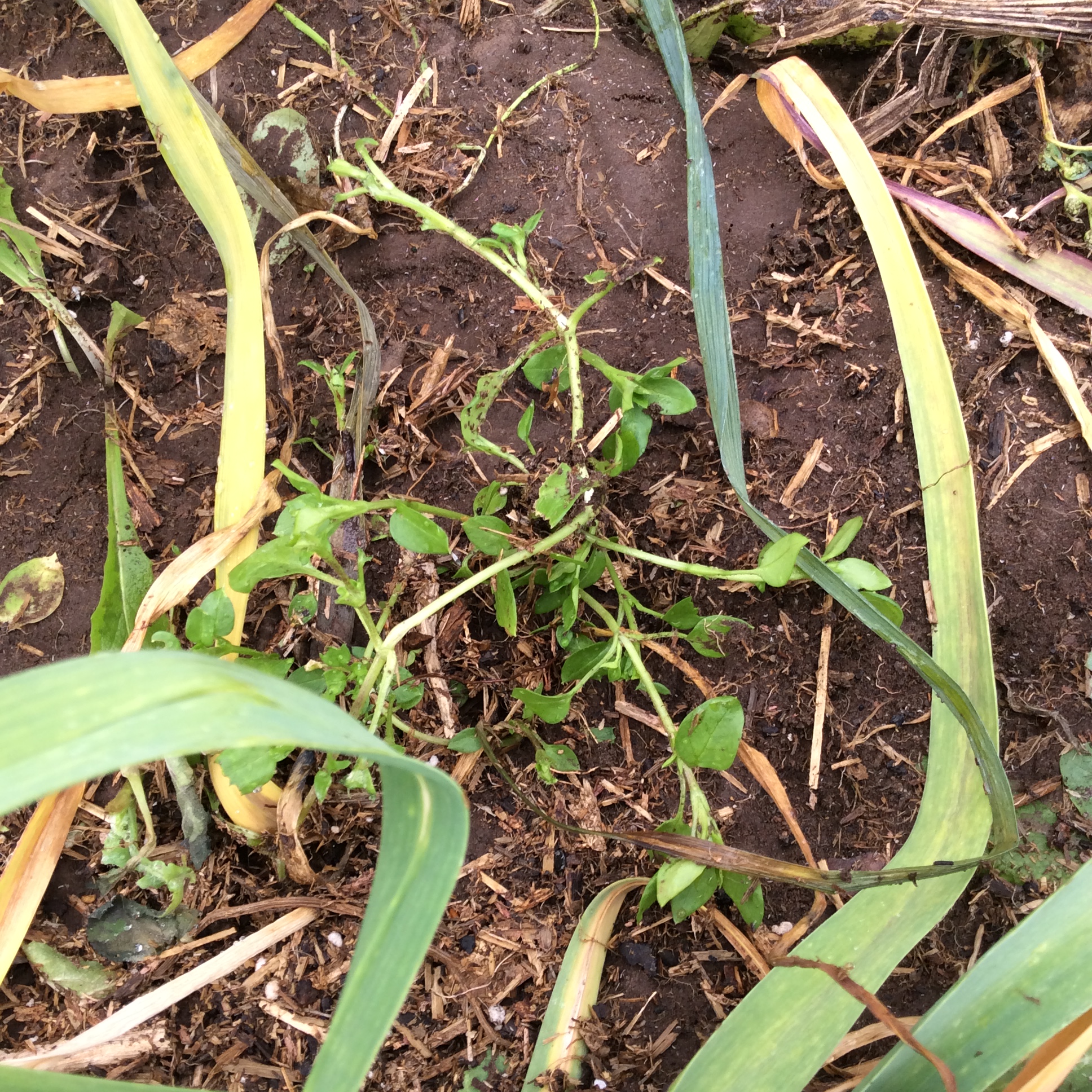
Above you see Shirley poppy, bladder campion, and chickweed joining the party wherever they can find room, next to a sturdy leek.
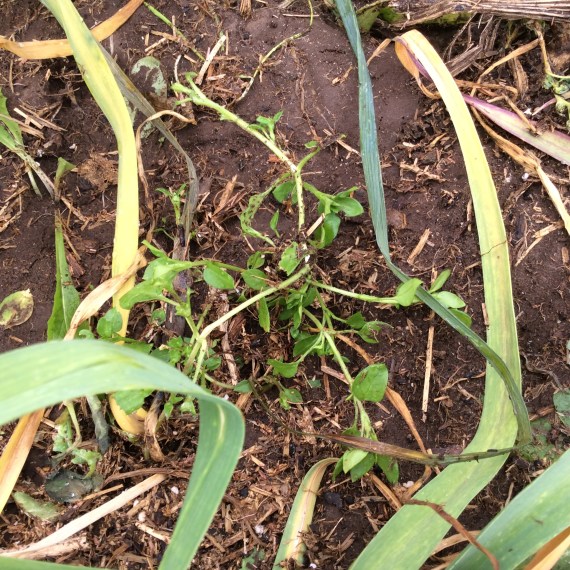
People who live in other parts of the country might be appalled to know that I planted chickweed on purpose, but it’s a tasty nutritious salad green and good edible ground cover that doesn’t grow here naturally. So whenever I see it seeding itself around a bit, I am quite pleased.
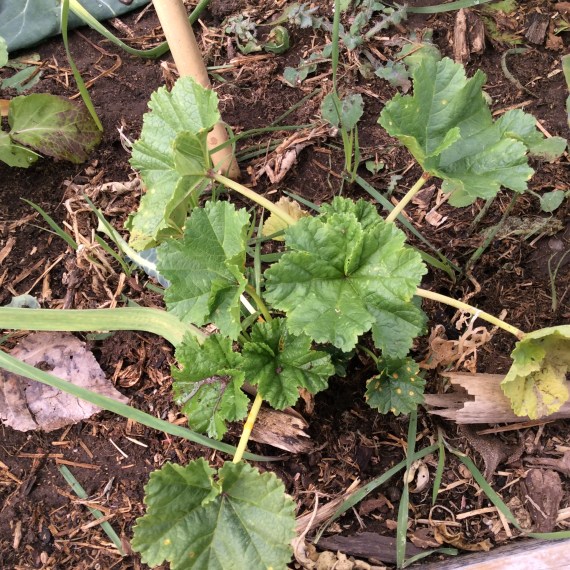
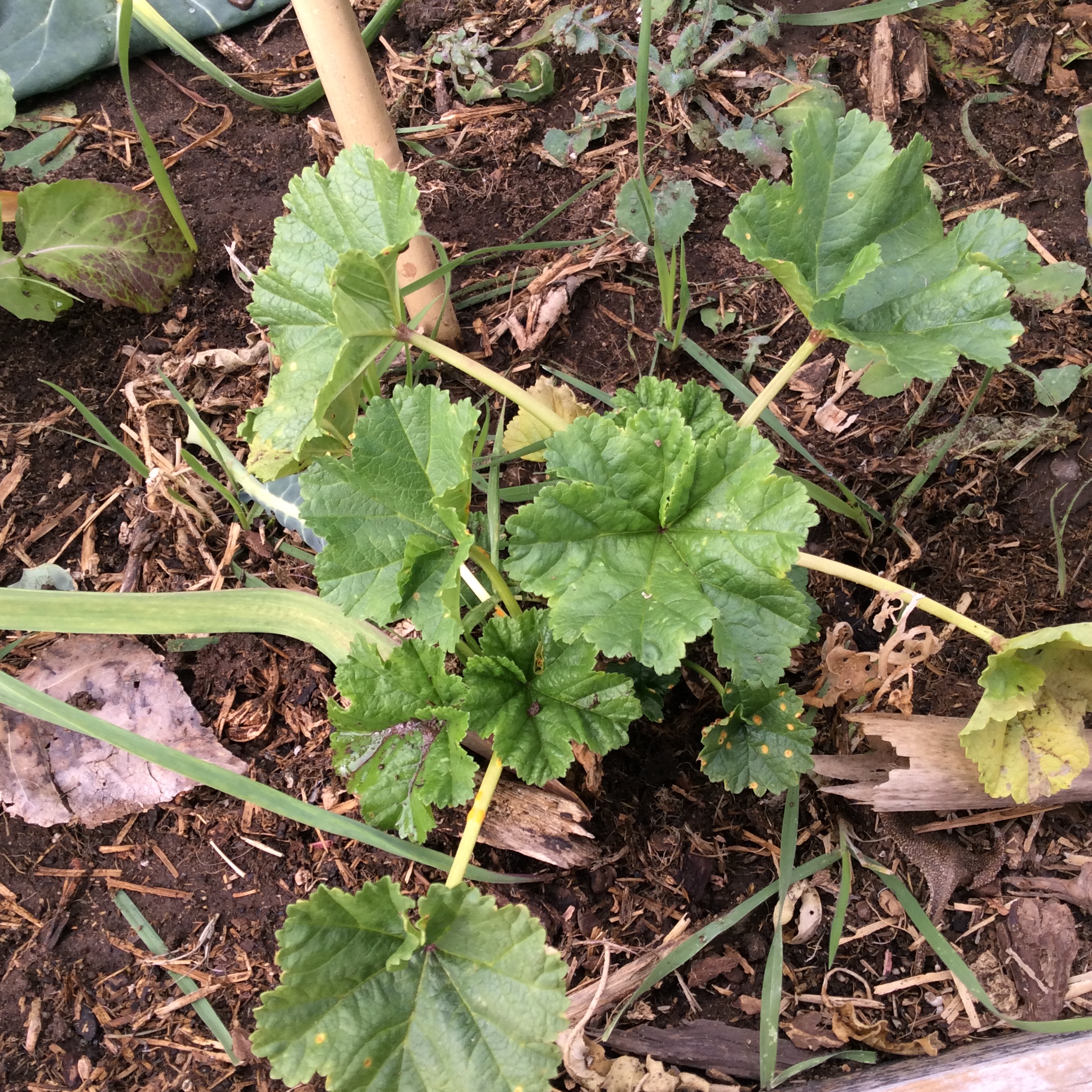
Mallow seeds itself around my garden, and I let some of it grow for greens and because the bees like the blossoms.  It will never be a favorite for greens, because it is just a touch on the slimy side, but as long as it makes up a quarter or less of a greens mixture you won’t notice that.  Behind the mallow you can see a small sow thistle, and I was hoping that these would get larger and more tender under the frost blanket than they do in the open ground, but so far this is not the case and I am not very impressed with them. Oh well.  The whole idea is to try things and see what works.
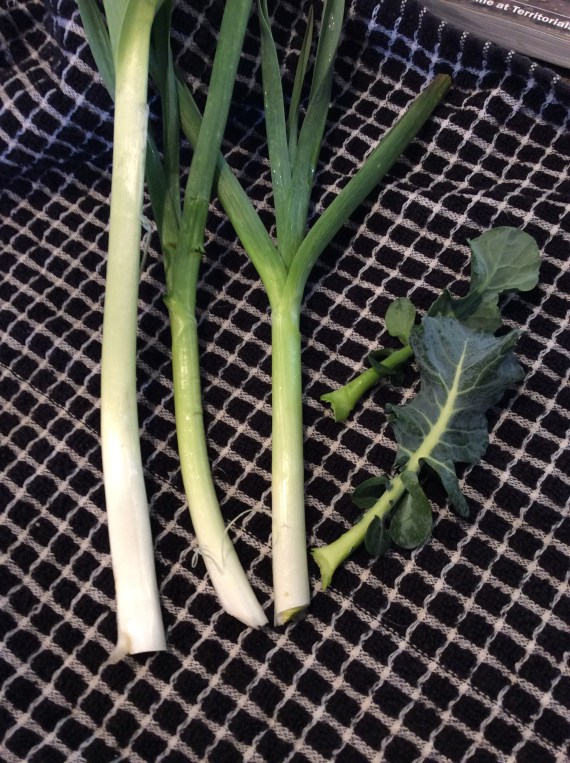
Lunch was a head of broccoli seasoned with the green garlic shoots above and fried eggs from the one valiant hen who is laying this time of year. Eating off your own property just feels good.