Archive for the ‘Vegetable dinners’ Category

Food for Thought: A Cookbook for Cooking and for Thinking

I have been  vegetable gardening all of my adult life, and own several shelves full of vegetable cookbooks, and I have a very high bar when it comes to buying new ones.  Actually, that’s not true. I buy new ones in a fairly promiscuous fashion because that is my addiction, but I have a very high bar indeed for recommending that other people spend their hard-earned money on them.

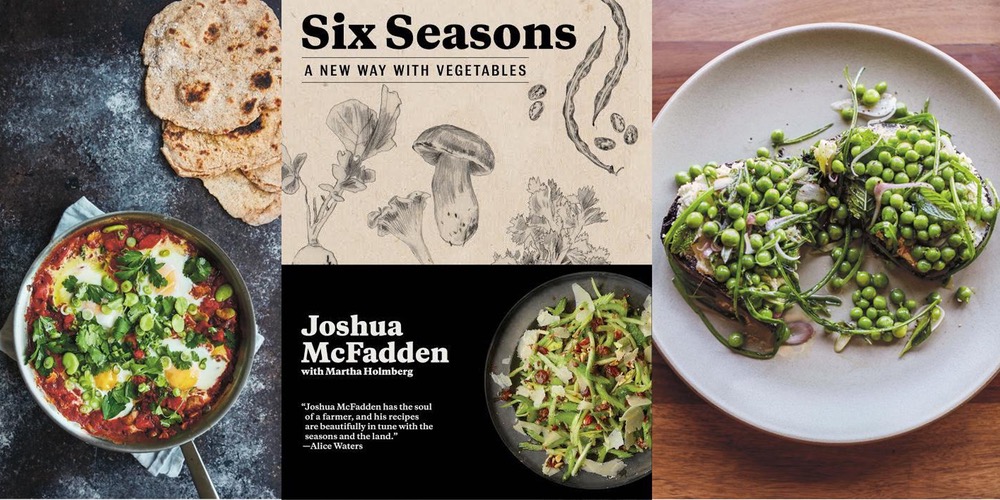
So  here’s what I have to say about  Six Seasons: A New Way With Vegetables by Joshua McFadden: go buy it.  Now. Read it. Think about it.  It really will bring you to think in a new way about how to handle familiar vegetables.  Take salads, for instance. I like salads well enough but am almost never really excited by them.  They always seem a little predictable to me, and just throwing some meat, cheese, or eggy thing of some kind on top does not make them interesting in my view. McFadden’s  way of putting a substantial “pad” of seasoned nut butter sauce, savory seasoned whipped cream, whipped seasoned ricotta cheese, or other interesting  possibilities underneath the salad does make them seem new and like a real meal that I am happy to eat.
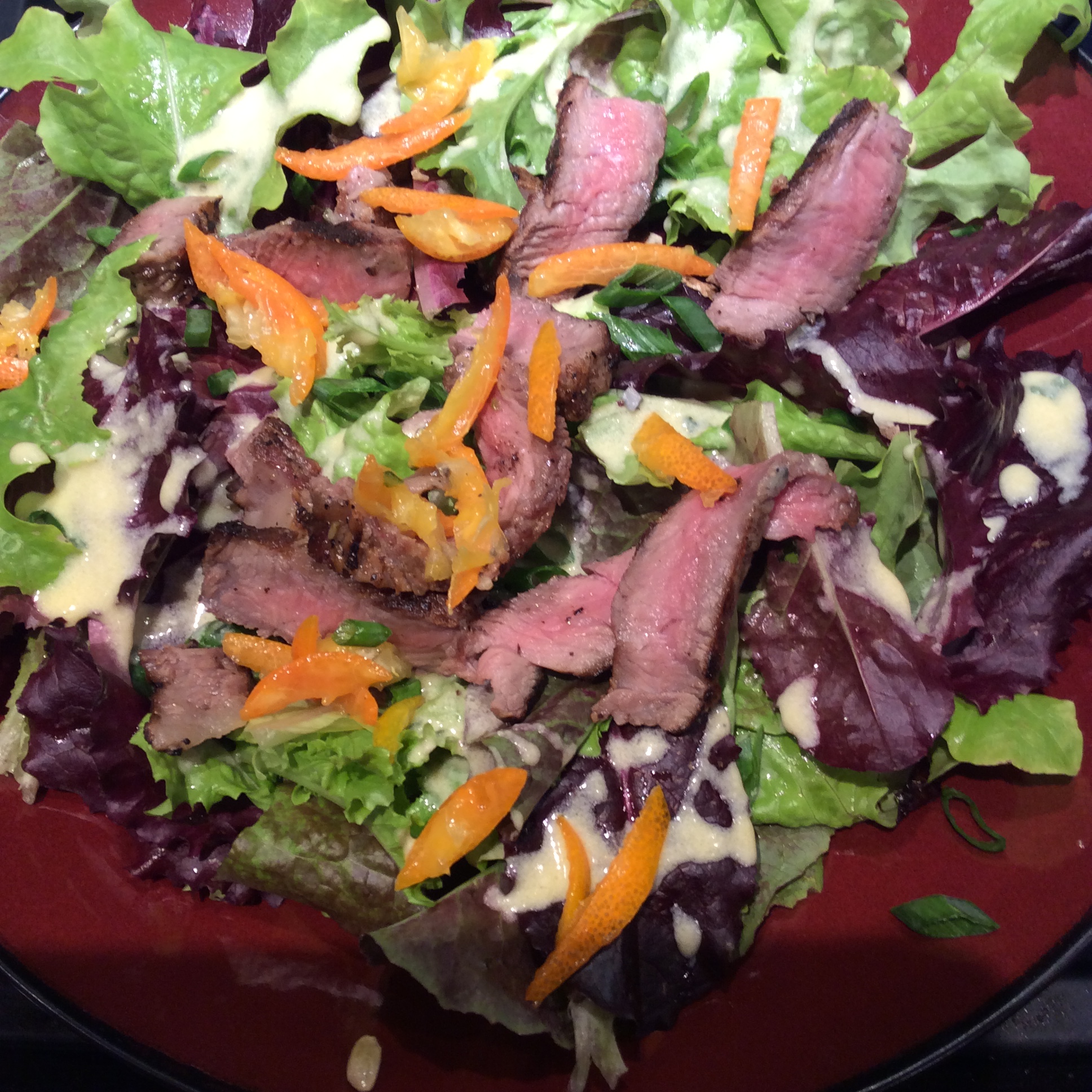
As good as the recipes are, I put this one in the “thinking cookbook” category,  i.e. an idea-rich cookbook that will affect the food you put on the table whether you were actually following a recipe from the cookbook or not.  Take the salad shown above, for example.  I had a lot of lettuce in the garden, including some dark red lettuce that still looked beautiful but had grown the slightest bit bitter  in hot weather.  I kept tasting bits of the leaves, thinking about what would make them taste good.  Ultimately, I whipped and seasoned some homegrown goat ricotta  with olive oil and salt, and smeared the plates with it, then arranged the red lettuce and some sweet green lettuce on top.  Then I put some of the ricotta mixture in the blender with an egg yolk and two cloves of roasted garlic, blended in more olive oil and some salt, and acidified it with lemon juice and white wine vinegar until it tasted just right, added some chopped marjoram because it seemed to fit in well, and used that as the dressing. I slivered shallot greens, soaked them in cold water briefly as McFadden recommends, pressed dry, and scattered them all over, and finished with warm leftover steak and bright sweet crunchy slivers of kumquat rind. The earthy rich ricotta dressing made the faintly bitter lettuce just right and complemented the steak beautifully, and dripped down to the whipped ricotta beneath to season it, while the kumquat rind added an electric zing.   Delicious and interesting to eat. It isn’t a McFadden recipe per se  but was entirely inspired by his methods and I would not have come up with it without reading his book.

The cooked vegetable recipes are very good too, as are the techniques. Just to name one, McFadden recommends grilling your vegetables “dry,” i.e. without oil, and then drizzling them with olive oil afterwards on the grounds that the burnt oil produces strange chemical flavors.   Even if you like the ones grilled in oil, I think you’ll like his method better. Try it and see.  I am also a fan of his section on pickles. These are not pickles that you can put on your shelf and keep forever. They are quick, delicate refrigerator pickles that serve as seasoning and garnish and add wonderful nuances to the flavor of vegetables.

This is a useful and excellent book at any price,  but I do wish to point out that the Kindle version is a special bargain and I highly recommend it.
Pleasures of the Grill: Oyster (and other) Mushrooms

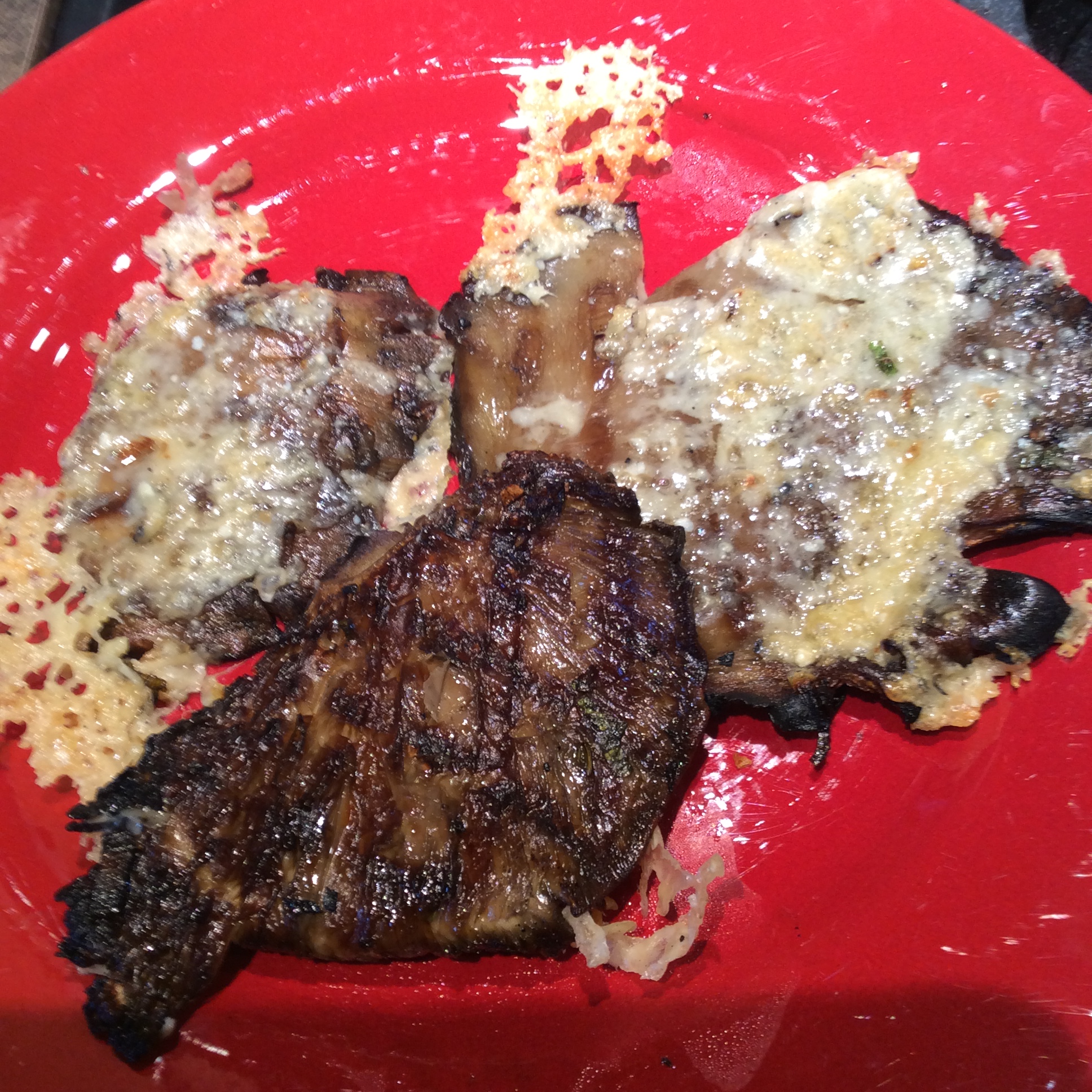
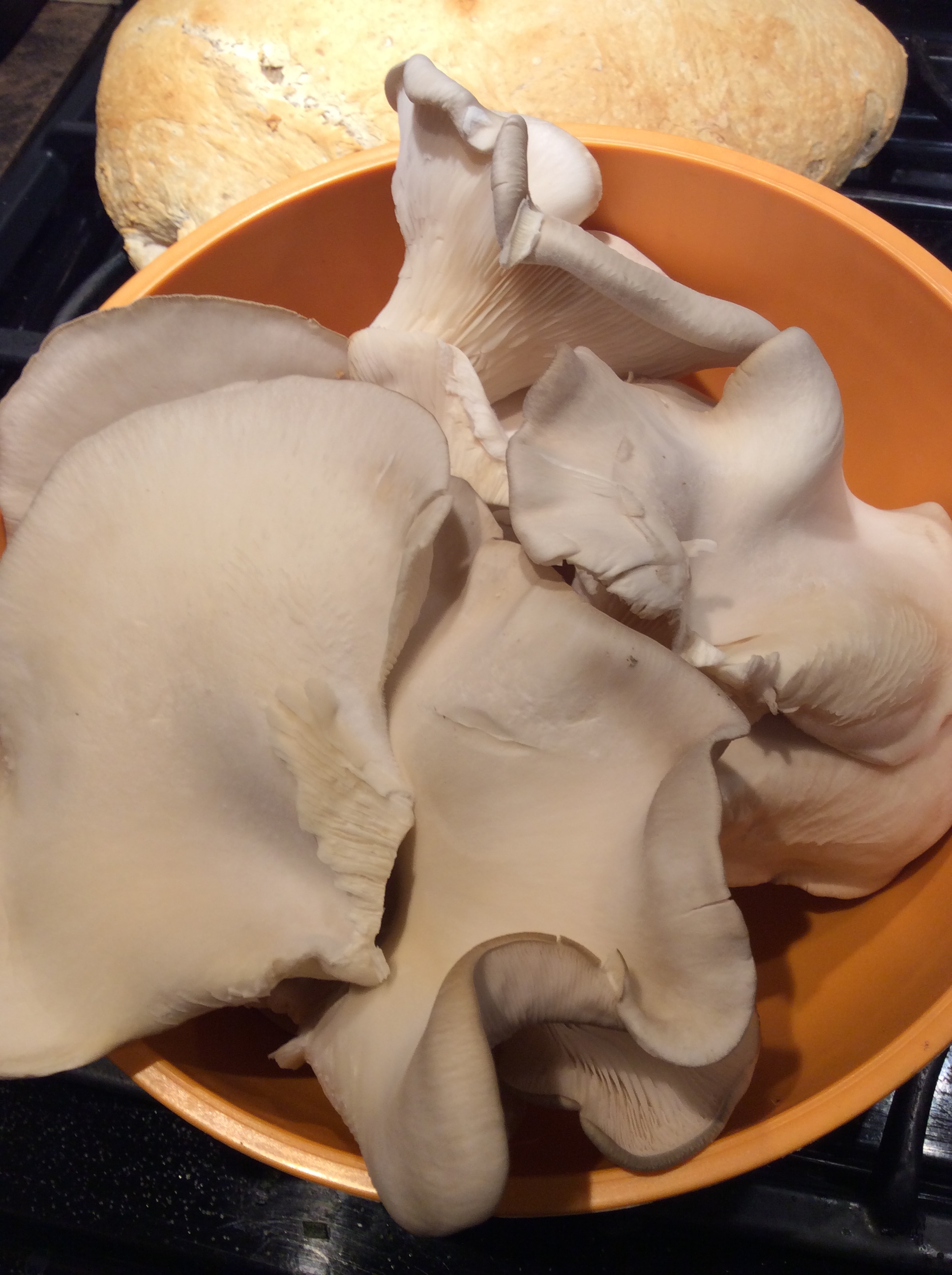
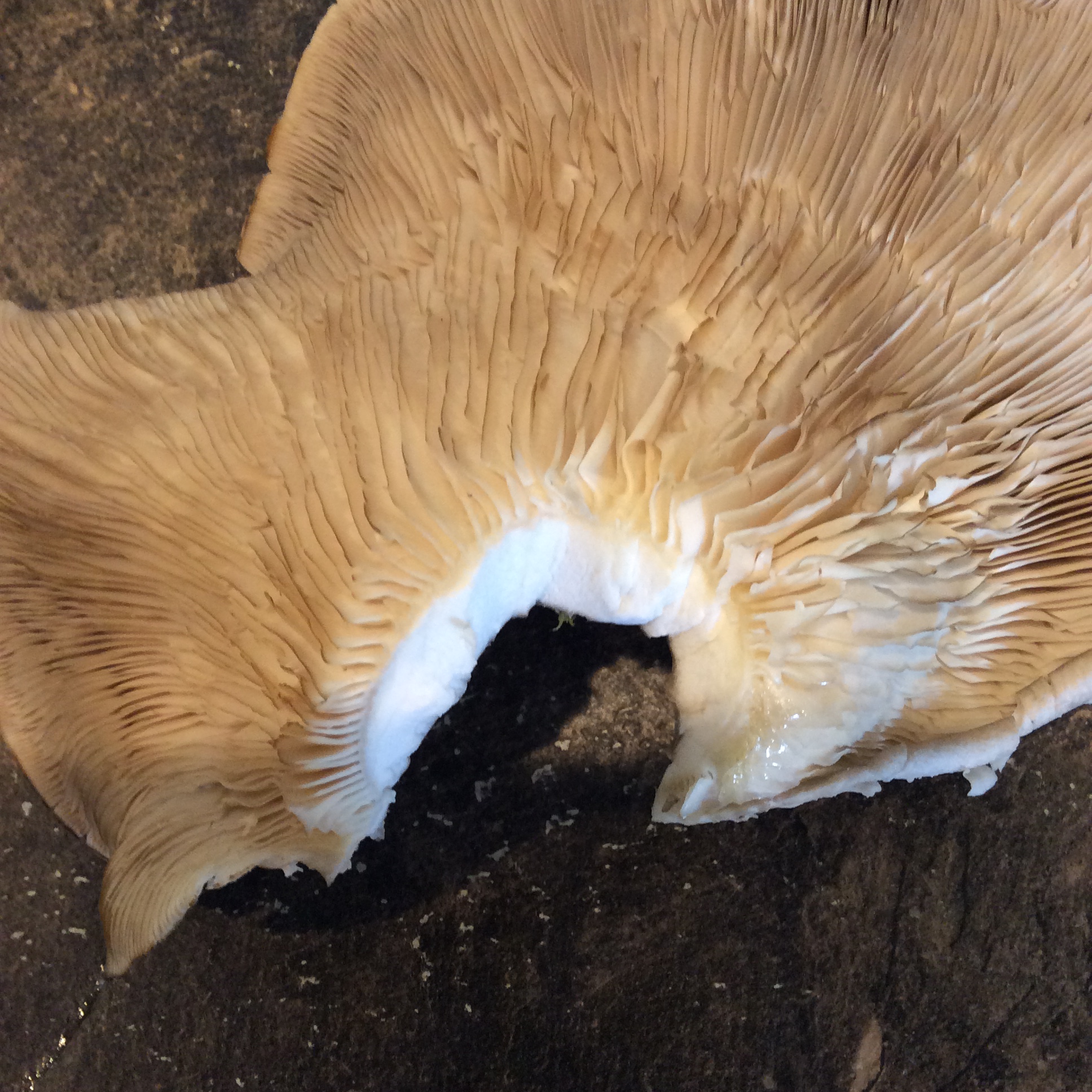
A family member was admiring a picture of my oyster mushrooms, up to 8″ across, and asked if they were too big to eat. Not if you like to grill. I love a plateful of giant oyster mushrooms, as long as they were still fresh and moist and not dried out when picked. The big ones have leathery bases and need to have the stem (technically a stipe) trimmed off to the extent that a little semi-circle is taken out of the base.

Now the toughest part is gone. Clean the rest and rub it on both sides with basic steak marinade. Make sure that the marinade gets up in the gills, since this helps keep them moist while cooking. Sprinkle the gill side with a good smoked salt.

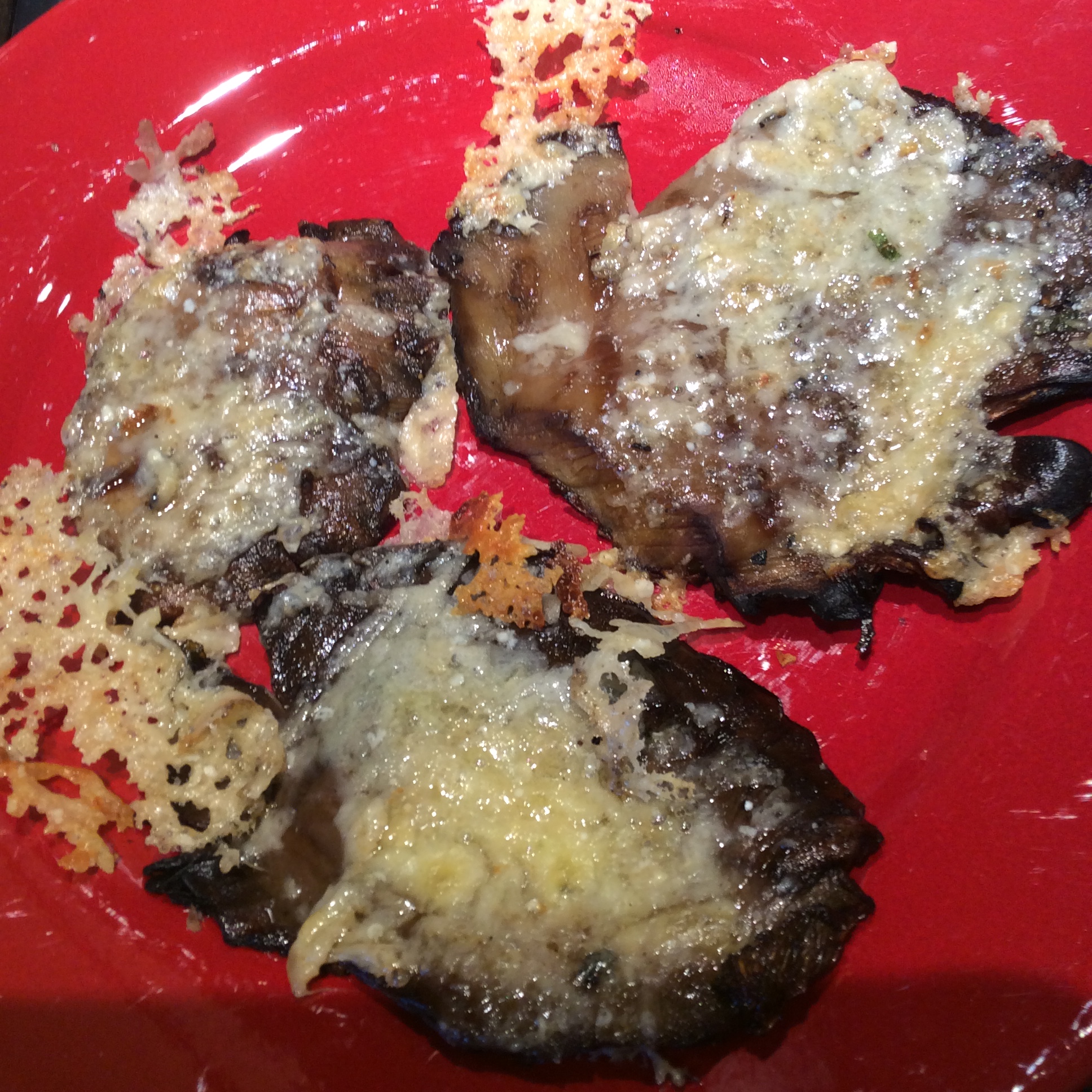
Heat the grill to about 300 degrees and sear nicely on the upper side. Turn and cook on the gill side until done, turning them 90 degrees midway if you want nice crosshatched sear marks. Meanwhile, preheat the broiler. Put the caps on a baking sheet lined with parchment paper, gill side down. Sprinkle lavishly with grated Parmesan, making sure to sprinkle the areas of bare parchment paper to make the lacy garnish. Broil, turning the pan as necessary, until the cheese is just beginning to brown. Eat.

The argument could be made that there’s no point in fussing with crosshatched grill marks since they’re on the bottom and don’t show. This is a fair point, but in good spring weather it’s a pleasure to fuss a bit at the grill.

This is a good meal to share with vegetarians if you don’t use any fish sauce in the marinade. In my opinion the final cheese crusting adds a lot to the flavor and so it isn’t ideal for vegans, but try it if you feel so inclined. If you don’t have oyster mushrooms try portobellos, which come alive with some seasoning. If you find really big meaty fresh shiitakes, they are ideal for grilling whole. If you’re lucky enough to find some porcinis  in the woods or market in the fall, they are superb sliced thickly and grilled.

“Processed” Food

IMG_5298

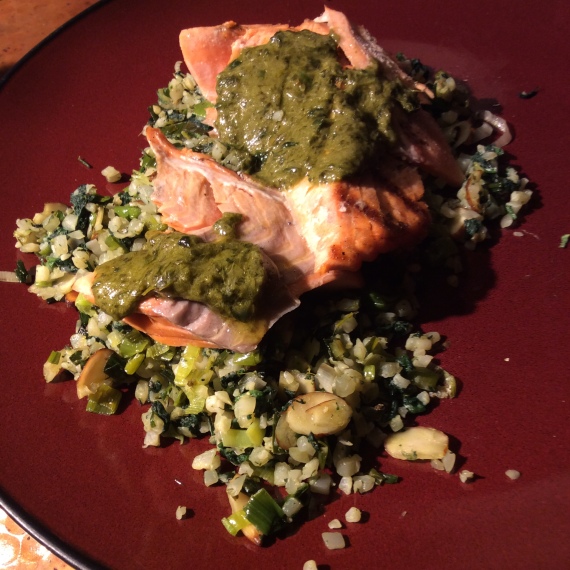
Like everyone else who works, I have a lot to do when I get home and some nights I need help to get a healthy dinner on the table. I eat a ketogenic (low carbohydrate) diet and don’t have pasta and rice and bulgur to fall back on. For those nights I keep some “fast food” in the freezer, like riced organic cauliflower. If I’m thinking ahead, I leave a bag out to thaw in the morning. More often I didn’t think ahead and need to thaw it quickly in the microwave. Either way, if you just cook it as is, you are going to have a rather damp mess on your hands, in my opinion anyway. So take the thoroughly thawed cauliflower, bundle it in a dish towel, and squeeze the water out of it. You’ll get a surprising amount out. Now you can throw it in a skillet with some salt, sliced green onions, chopped herbs, olive oil, and sliced almonds, and cook over medium heat for about 20 minutes with regular stirring. Don’t add water back. Cauliflower loves to go soggy if it gets a chance. It’s done when the cauliflower grains are done to your preference. I like mine a bit on the firm side, holding their shape briefly to the tooth without any hint of raw crunch.  Check whether it needs more salt before you serve. Meanwhile, grill some salmon as shown here, or warm up leftover chicken thighs, or slice up some warmed leftover meat. Land it on your cauliflower pilaf and flavor it with finishing butter (Montpellier butter with green garlic is shown here) which also lives in the freezer in convenient individually wrapped portions, or just drizzle with your best olive oil.
Some would say that I should grow, grate, and freeze the cauliflower myself if I’m going to use it, and when such people get hold of me, I always suggest that they invite me over for a meal 100% produced from their yard so that I can write about it😉. So far, those invitations haven’t arrived. I am not a believer in making the perfect the enemy of the good, and we are not full-time yard farmers and have to make our modern lives work. Besides, grating cauliflower is one of the few kitchen jobs that I hate and one that I outsource whenever possible. I grow things that are unobtainable at markets or distinctly better when home-grown, and cauliflower is neither. So let somebody else do the work for you.
Regarding the finishing butter above, I am used to horrified shrieks of “It’s GREEN!” Indeed it is, and so are a lot of other good things. Expose yourself (and your family and friends) to green food until you get used to it, and your health will benefit. After all, nobody has ever looked at wild-caught Alaskan salmon at my table and said “Ugh, it’s PINK!” Good food is good food. Close your eyes if you really must, but getting over biases about green is better.

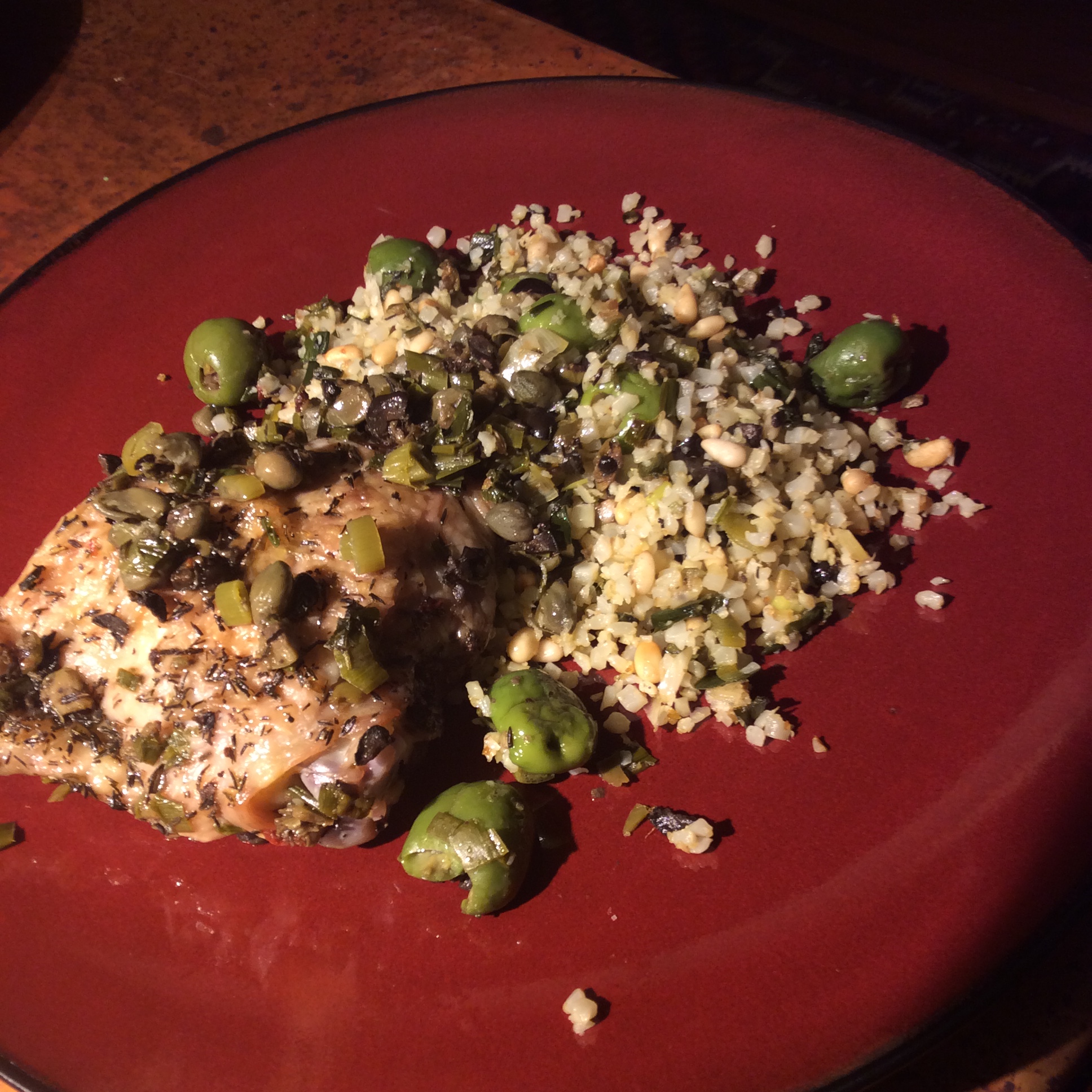
Here’s another version tricked out with capers, green garlic, thyme, pine nuts, and castelvetrano olives.

Spring Miscellany

Tonight I find myself eating a lovely and satisfying dinner out of the yard, and reflecting on a series of happy surprises.

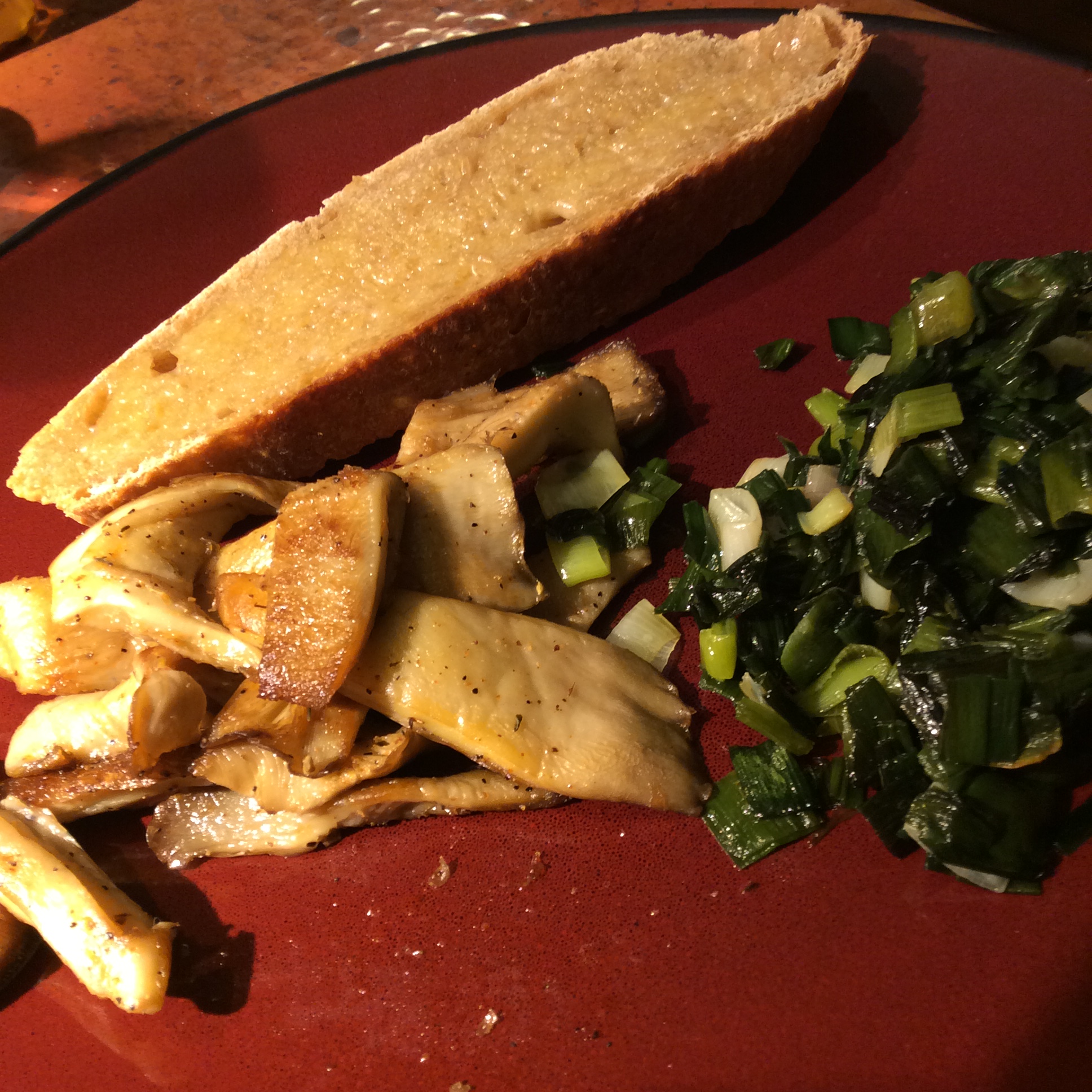
First, I went to the shed to get a tool, and my latest mushroom laundry basket had a gorgeous huge clump of oysters across the top.

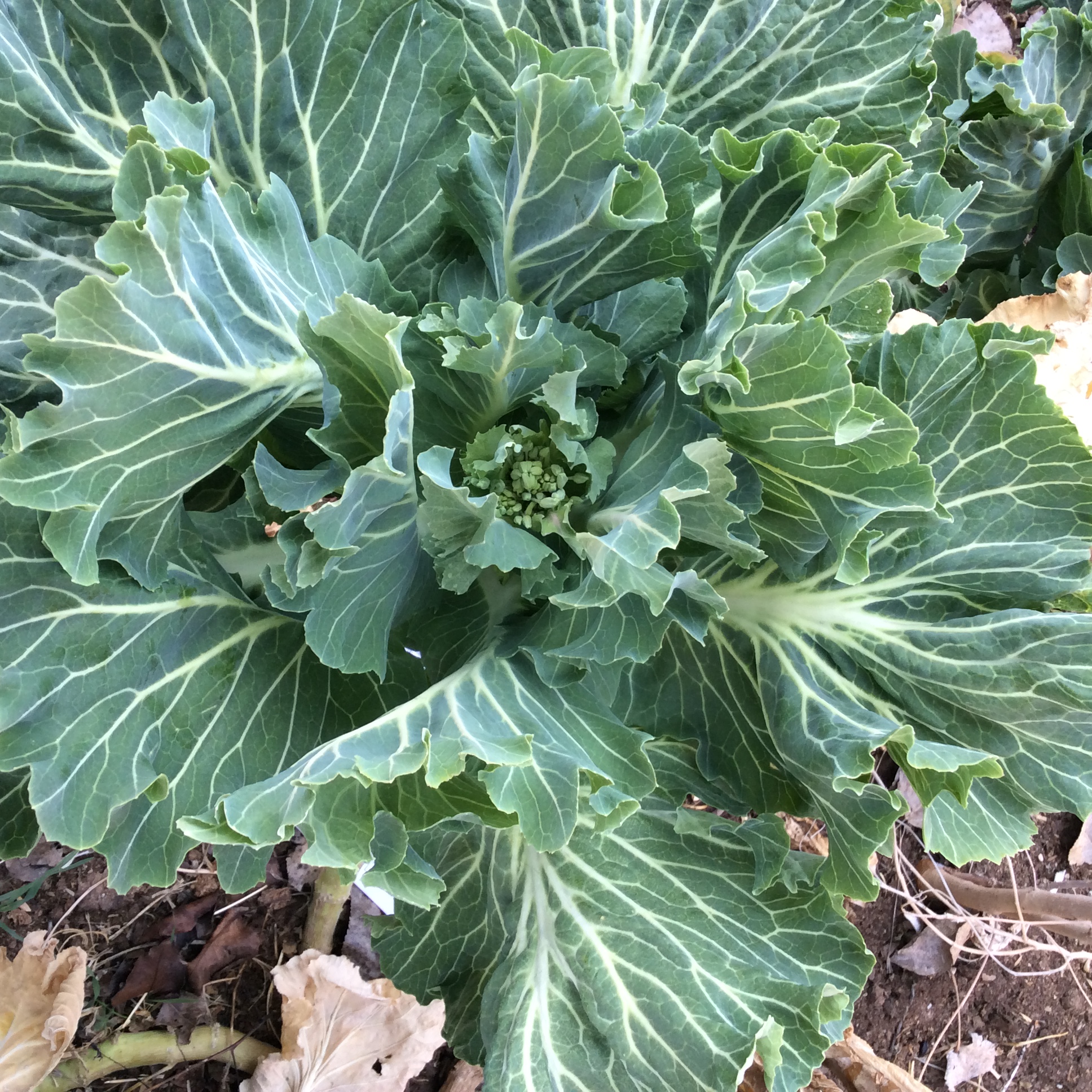
The tronchuda, or Portuguese kale, was still tender and sweet from night frosts, and there was a wild abundance of green garlic to cook with it because I finally planted enough to satisfy my taste for it.

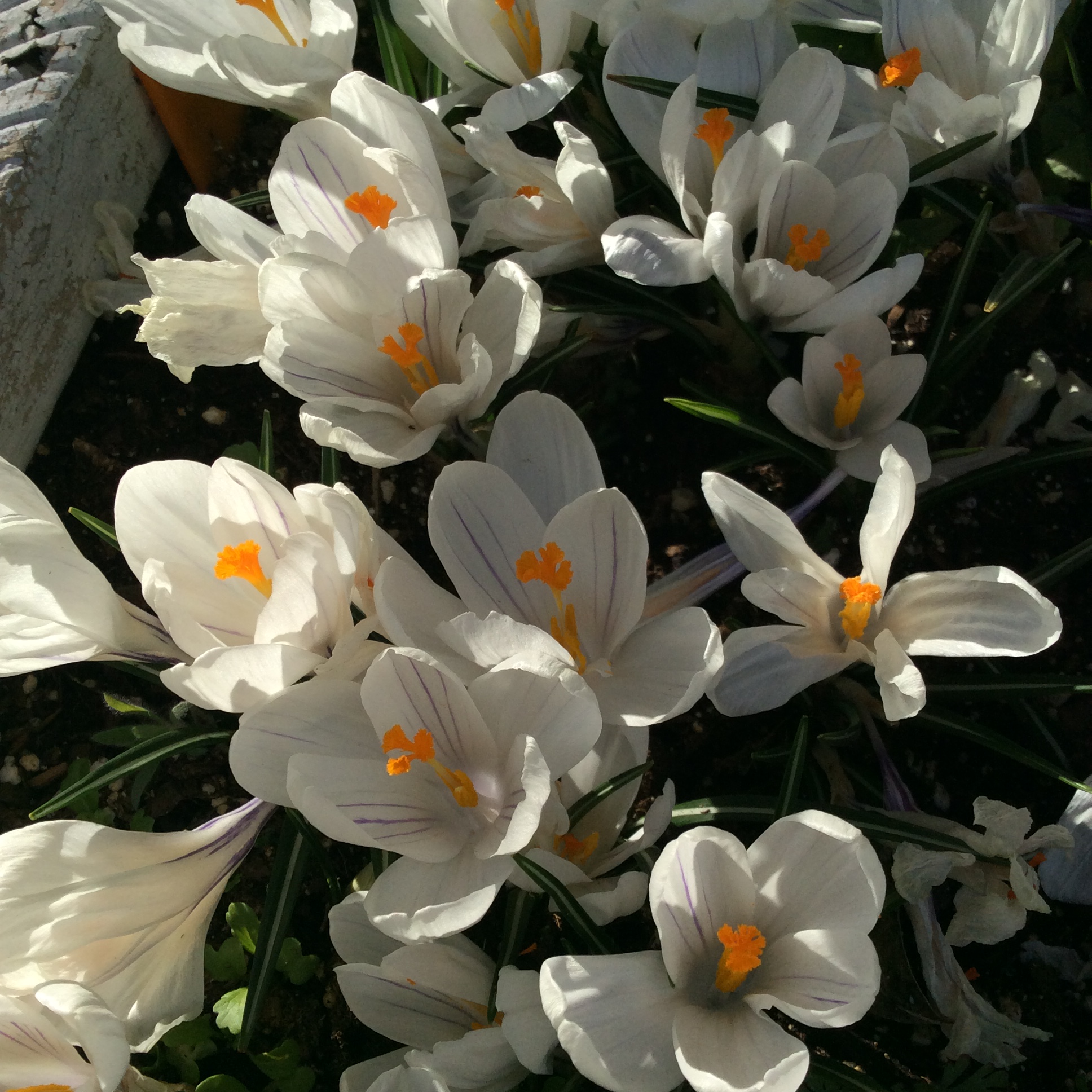
The exquisite late Jeanne d’Arc crocuses were finishing the crocus season.

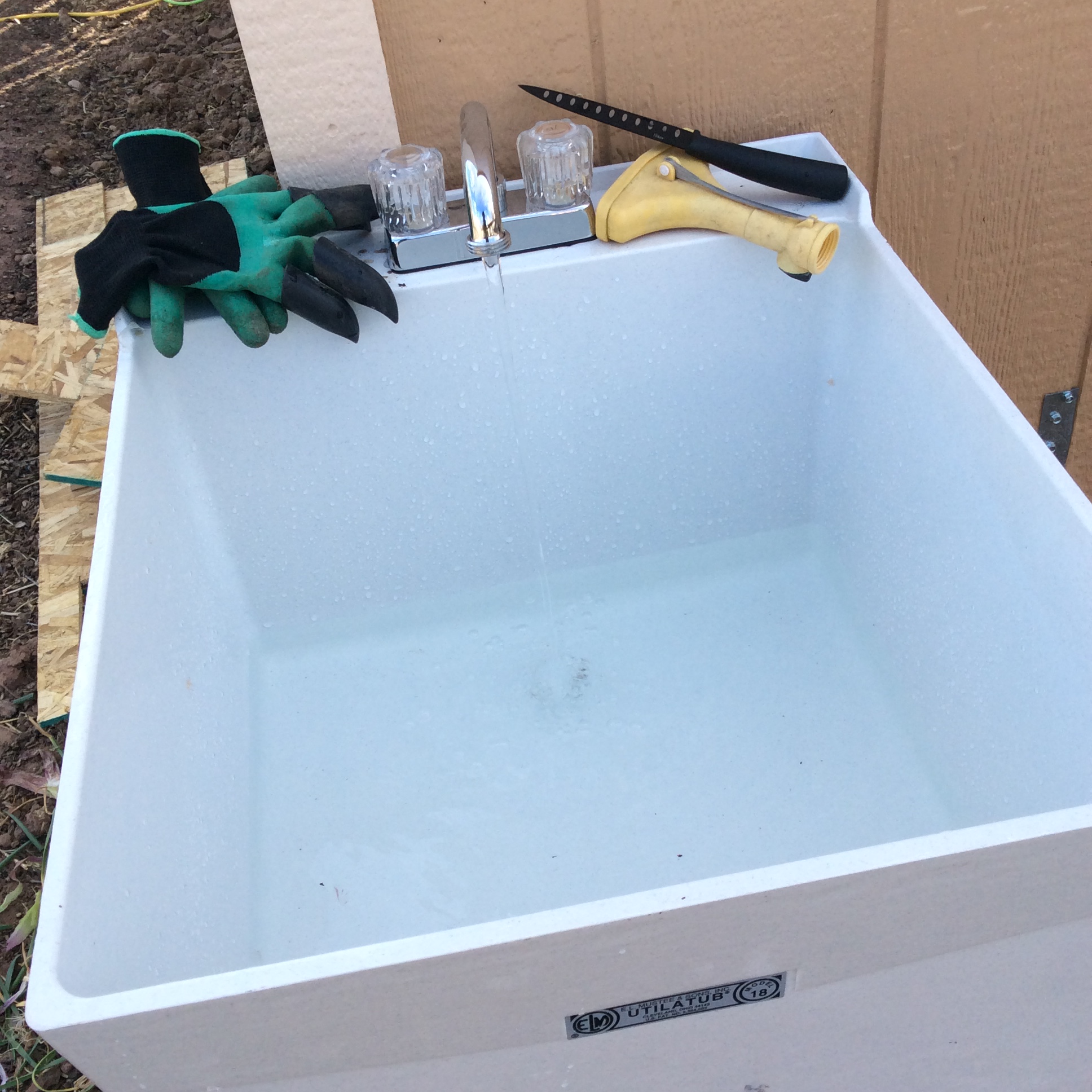
And the garden goods could be washed and prepped right in the garden where the water could do some good. This is an ordinary laundry sink, but I asked the nice man at the plumbing supply store to sell me the correct fittings to hook a garden hose to it. So the water can be turned on and off, and the water drains out into a bed that can really use the moisture. My ingenious yard man got me a 3 foot piece of hose with the correct fittings to attach to the fawcet at one end and the hose at the other, so there is no fumbling underneath when I want to use the sink. And it could be lifted and moved if I wanted the water to land somewhere else.

Life is good, and spring is good.