Archive for the ‘Vegetable dinners’ Category

Another Great Green


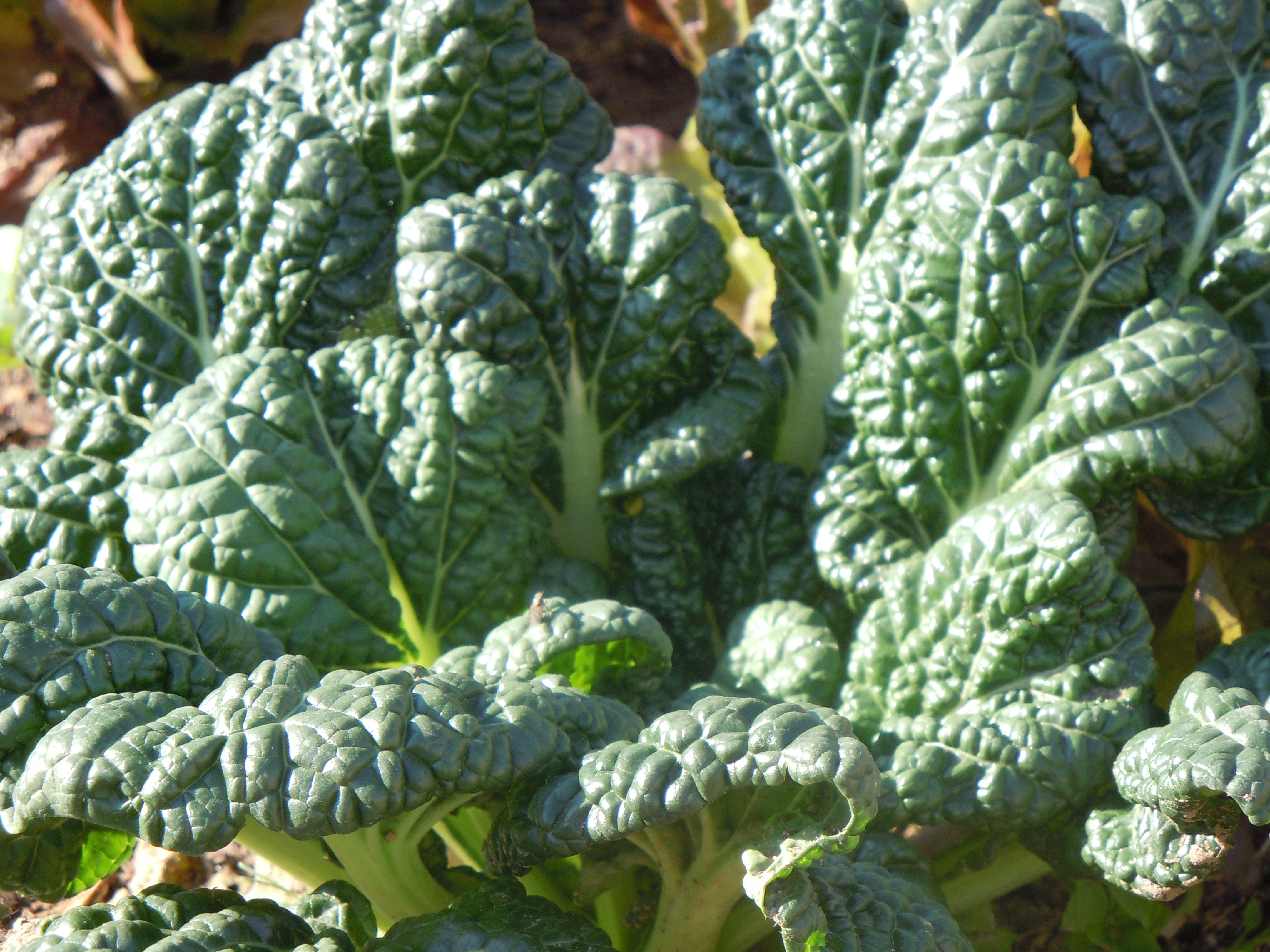
One of my new trials this year was the Asian hybrid green Misome. I got my seed from Nichols Garden Nursery, one of my favorite sources for unusual and useful seeds. It’s a hybrid of tat soi, a vegetable that I love but can only grow in the fall. I planted Misome in earliest spring and it grew beautifully, producing deep green savoyed leaves that shone in the sun like the deepest jade. It had no insect or disease problems. Like many mustards, the only secret is to plant it early enough. The flavor was mild and ever so slightly mustardy. I used the youngest leaves in salads and the older ones stir-fried. It held for a surprising time in the garden, considering our early and very hot and windy spring, and when it bolted a few weeks ago, I pulled up the plants and fed them to my goat Magnolia, who was ecstatic over them. I like to believe that the dark green color indicates a high level of beta-carotenes, but I have no data to prove that. I do know from experience that it’s delicious. I’ll be planting another crop in early fall. Keep it in mind for next spring, or order some seed now while you’re thinking about it.

One of many ways to stir-fry greens:
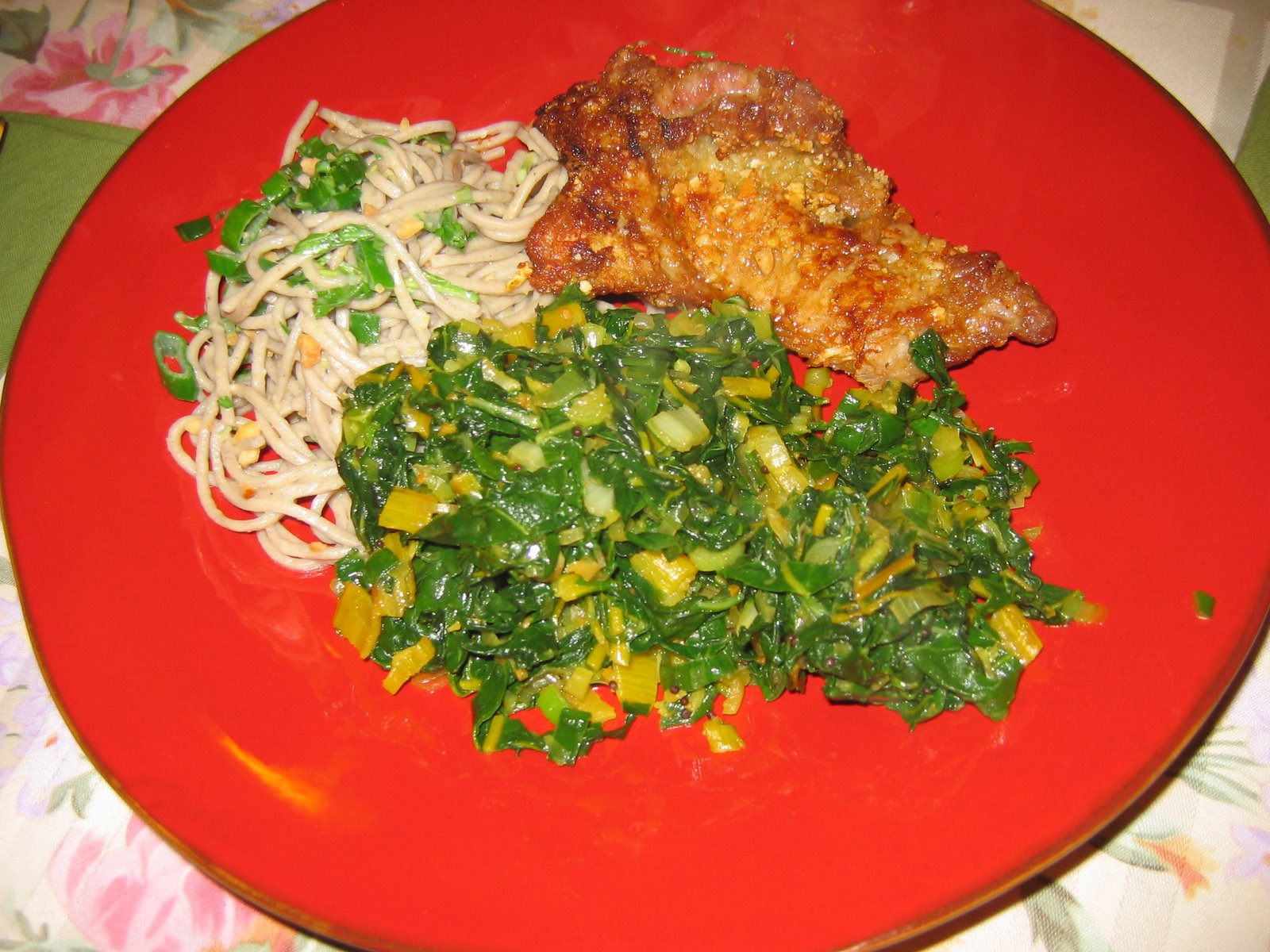
This is too simple to be written as a recipe. Think of it as a basic technique that works for a wide variety of greens. Peel and chop a clove of garlic, a 1/2″ piece of ginger, and a 1″ piece of turmeric. Have ready a tablespoon of Thai fish sauce, a tablespoon of palm sugar or agave nectar (a surprisingly good substitute) and half a cup or so of coconut milk (not the low-fat kind). Thoroughly wash a pound of misome leaves, whirl them dry, and cut them across in 1/2″ slices. Heat a large wok very hot, put in about 2 tablespoons of canola oil, and dump in the chopped garlic, ginger, and turmeric and fry, stirring constantly, for a minute or until the fragrance comes up, which may be less than a minute. Be careful not to burn them. Now put in the strips of misome, fry a few minutes while turning regularly, and then add the fish sauce and coconut milk. Continue to stir-fry over very high heat until the coconut milk thickens, taste and adjust the seasoning if needed, and serve immediately. This is surprisingly satisfying by itself with jasmine rice for lunch. If you can’t find fresh turmeric, leave it out. Do not under any circumstances use musty dried turmeric instead.
Dishes like this will give you a glow of virtue and good health that goes on for hours. Perhaps it’s a true virtue of the greens, or maybe it’s just the glow of achievement that comes of eating what you grew. Either way, it feels good.

Choosing a CSA


If you don’t want to garden yourself, or don’t have room, a CSA is a great local-food option. You share in the season of a local farmer/gardener, and receive truly seasonal vegetables. Using a CSA for a season is also great preparation for starting your own garden, since it trains you to cook with what is in season and grows well in your area. We have several CSAs in our area, but recently I was contacted by Jill, a HIgh Desert yoga instructor who has a small CSA and is ready to take a few more customers. I have not used her CSA myself, but this is exactly the sort of Earth-friendly mini-farm that we need more of, so I’m reproducing her ad below.
Whenever you are considering a CSA, I suggest a discussion with the farmer by phone or email about growing practices (most mini-farms can’t afford the organic certification process, even if they use organic methods,) the variety of vegetables that you can expect, whether fruits and/or flowers are ever included, roughly when the season will start and end, and how many family members each box can be expected to feed.
After one or two CSA seasons, you might be ready to grow your own!

Vegetables by the box.
Mama’s Garden is a Northeast heights backyard garden CSA providing a fresh and delicious variety of seasonal vegetables, herbs, flowers and melons. Mama’s Garden is run by Jill Palmer and her son Narayan and has been selling its pesticide-free produce at local grower’s markets since 2009. Sign up by May 5th for your weekly box throughout the growing season and pay weekly. Free deliveries to the NE heights and Nob Hill. Contact Jill at growinluv@gmail.com

Jill adds in her email: ” I am happy to provide you references of my previous CSA members or any
> other info. you might like to know about us. Having just a backyard,
> I am not cert. organic, yet I use no pesticides and prep. the soil
> with yummy compost I make at home and from Soilutions as well as horse
> manure. I have enough variety to keep the box fun…as every few
> weeks a few more veggies begin to fruit. I sell a 1-2 person amount
> as a $15/box and 3-5 person amount as a $30/box. Yet amounts/prices
> can be tailored for more persons than that with discounts.”

Vegetable dinners: Starting the new year


Recently a reader contacted me about how to transition to a diet of “all real food.” Expense and time were real concerns for him, as they are for most of us.  Well, there’s no question that if you’ve been eating a lot of convenience and supermarket food, real food is likely to be more expensive. You will be making more things from scratch, so it will take more time, too. So my first piece of advice is: don’t make a New Year’s resolution to change your whole diet. I am very mistrustful of New Year’s resolutions; in fact I am mistrustful of any statement that anyone is going to make sudden sweeping changes in their way of being in the world and maintain those changes over time. Personally, my transition in food and lifestyle took place over years, with one step building on the previous ones, and no one change so huge that I couldn’t maintain it until it became a habit.
So here’s how I would approach this change: eat more vegetables. Fill your plate with them. Twice a week or so, make two or three simple vegetable dishes for dinner, and don’t have any meat available. On the other nights, offer a small amount of meat and lots of vegetables. A loaf of good bread is a great way to center the table for all-vegetable dinners, and at first you can buy the bread and transition to home-baked later on if you want to. Heat the bread up and have butter or olive oil available to make it festive. Let your vegetable meal be a celebration. Learn a few simple whole-grain dishes and use them as “grounding and centering” dishes to offer some variety from bread. Don’t forget vegetable pasta dishes, which are delicious and appeal to kids. Buy your vegetables wherever you usually shop, and learn to cook them in ways that taste really good. Notice that at this first stage you do not torment yourself by trying to grow all your own food, eat local only, or eat organic only. You just cook the veggies that are readily available to you in ways that work for you. Pay special attention to learning to cook leafy greens in ways that you really like. They are abundantly good for your health, and if you take up gardening later on, they are among the easiest things to grow, but they are also the most likely to sit in the garden unused if you don’t have your kitchen techniques down pat. When you and your family are used to eating lots of vegetables, you can add more whole-grain dishes, or go organic, or shop at the farmers’ market when possible.

If you make this your first step toward a whole-foods diet, you won’t save much money initially because CAFO meat at the supermarket is cheap, but you won’t spend more than usual. Invest a very little bit of money in a really good vegetable cookbook; a wonderful and inexpensive one is Fast, Fresh, and Green by Susie Middleton. Check out my “vegetable dinners” category, too.

When you and your family are really loving your veggies and you can turn out vegetable dishes smoothly and without kitchen trauma, and plates heavy with vegetables look just right to you, take the next step. Enlist your family in deciding what the next step will be. If you use a lot of dairy products, organic dairy might be a good step. Or consider a backyard garden, or a farmers’ market excursion once a week in season, or more whole grains, or whatever. Bear in mind that truly ethical meats are going to be expensive, and if you just substitute them for the supermarket kind in the amounts you are used to eating, you are in for a nasty surprise when you add up the bills. I don’t suggest changing to them until you have formed the habit of eating small amounts of meat and making veggies the biggest part of your meal.
Don’t forget breakfast. Cook a pot of wild rice or red quinoa ahead of time and heat up enough for breakfast, topping it with some butter and maple syrup or honey. This is a treat even for people who don’t like “health” foods.

I don’t believe that negative energy is ever very helpful. Don’t berate yourself for the things you aren’t doing, just be appreciative of the positive changes that you’re making. If you need to pick up a quart of milk at the convenience store some night, don’t go crazy over it. If unexpected events change your life for a while, respond to them as needed, and then go back to your new way. Somewhere along the way, read or reread The Omnivore’s Dilemma, still head and shoulders above other books about factory-farming systems and, in my view, much better than Pollan’s subsequent books at helping you remember why you are making these changes. Love your food, and enjoy your mealtimes, and step will follow naturally on step. Have fun, and happy New Year!

Root vegetables Chairoscuro


This time of year, parsnips are your friends. They are sitting patiently out in the garden waiting for you to get to them, never demanding any special attention or winter storage. During hot weather they weren’t worth eating and you tended to forget about them, but while you were catering to the flighty tomatoes and peppers, they were biding their time. When the needier vegetables gave in to the frosts, they started to convert their stored starches to sugars. Now, whenever you can pry them out of the cold ground, they’re ready to meet you halfway with a sweet flavor that repays your labor. I love them roasted, but for whatever reason I’m not big on white vegetables, and I started looking for something to relieve their snowy monotony. Finally I settled on their visual opposite, the deep purple carrots that become almost black when roasted, to create a dish with a little drama.
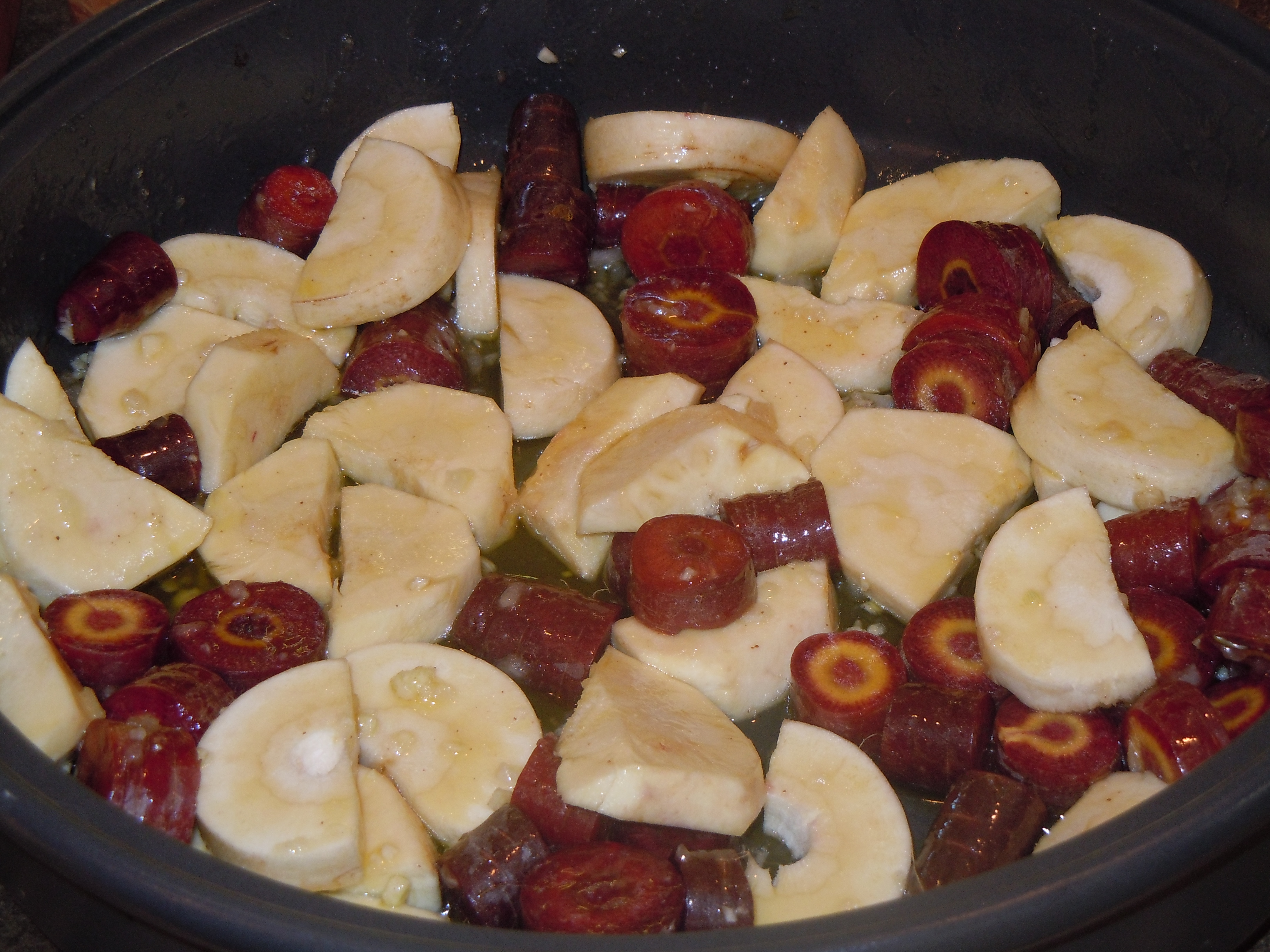
Clean two big parsnips and cut them into chunks no more than an inch on any side. Thoroughly scrub 3 large purple carrots and cut them into chunks somewhat smaller than the parsnips. Combine a quarter cup of good olive oil, a few tablespoons of white wine, half a teaspoon of salt or to taste, and two cloves of chopped garlic. Now this part is important: Put the carrots and the parsnips in two separate bowls and toss each with half the olive oil mixture. Don’t toss them together, because the carrots will “bleed” and stain the parsnips an unattractive magenta in places. If you are using regular orange carrots, separation doesn’t matter. Put the pieces in a cazuela big enough to hold them in one layer, or use a 9X13 heavy pan lined with parchment paper. Roast at 325. Don’t toss them around during roasting, because of the staining problem from the anthocyanins in purple carrots. The timing will vary a lot depending on the tender/tough ratio of the roots and on your personal taste. I like winter root vegetables roasted until they are soft and well caramelized, and it usually takes close to 2 hours at this low heat. If you like yours with some crunch you can stop cooking them sooner, but taste them before turning the oven off. These are not the tender roots of summer, they’re big meaty winter roots, and you may not like the amount of crunch they retain. If necessary, cook longer. Sprinkle a little bit of minced parsley over the top. If you want to be sure they’re done in time for dinner, cook them a little earlier in the day and leave them slightly underdone, then return to the oven for a final 20 minutes before dinner.

A big serving of these “white and black” roots on a red plate makes a great main course with a little piece of something meaty in the center. A few thighs of good pastured chicken seasoned with thyme, garlic, and olive oil can be roasted in the same oven for the last hour or so of cooking and will accent the roots nicely without overwhelming their flavors.