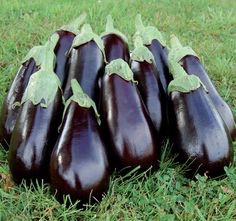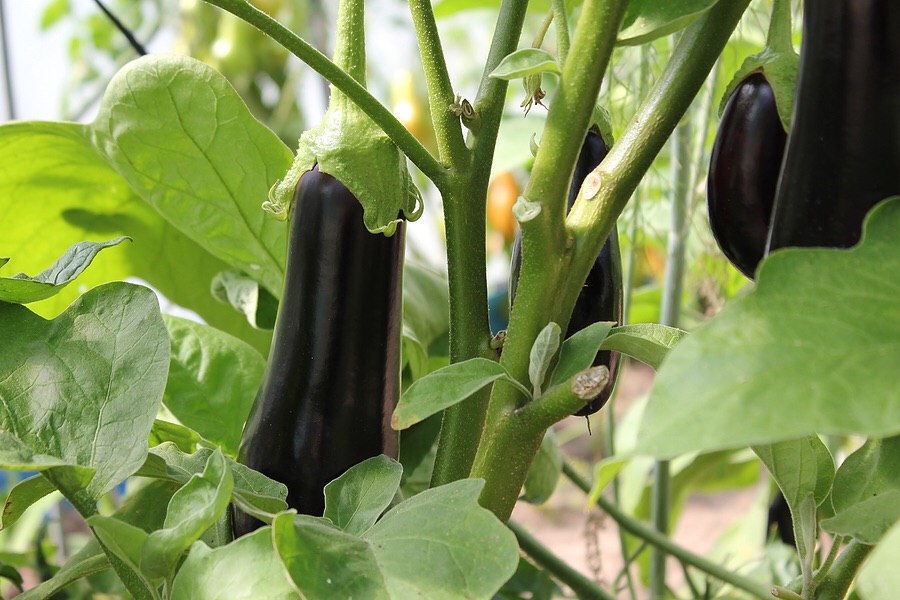
Like most Louisiana natives I love eggplant, and I have fervent opinions about how it should be prepared for cooking. For any application in which it is to be sautéed, I believe that it must be salted and drained first. This is not to get out bitterness, as some cookbooks say; a well-grown eggplant of a good variety doesn’t have bitterness. The disgorging process gives the eggplant a better texture, almost silky, and in my view is not optional.
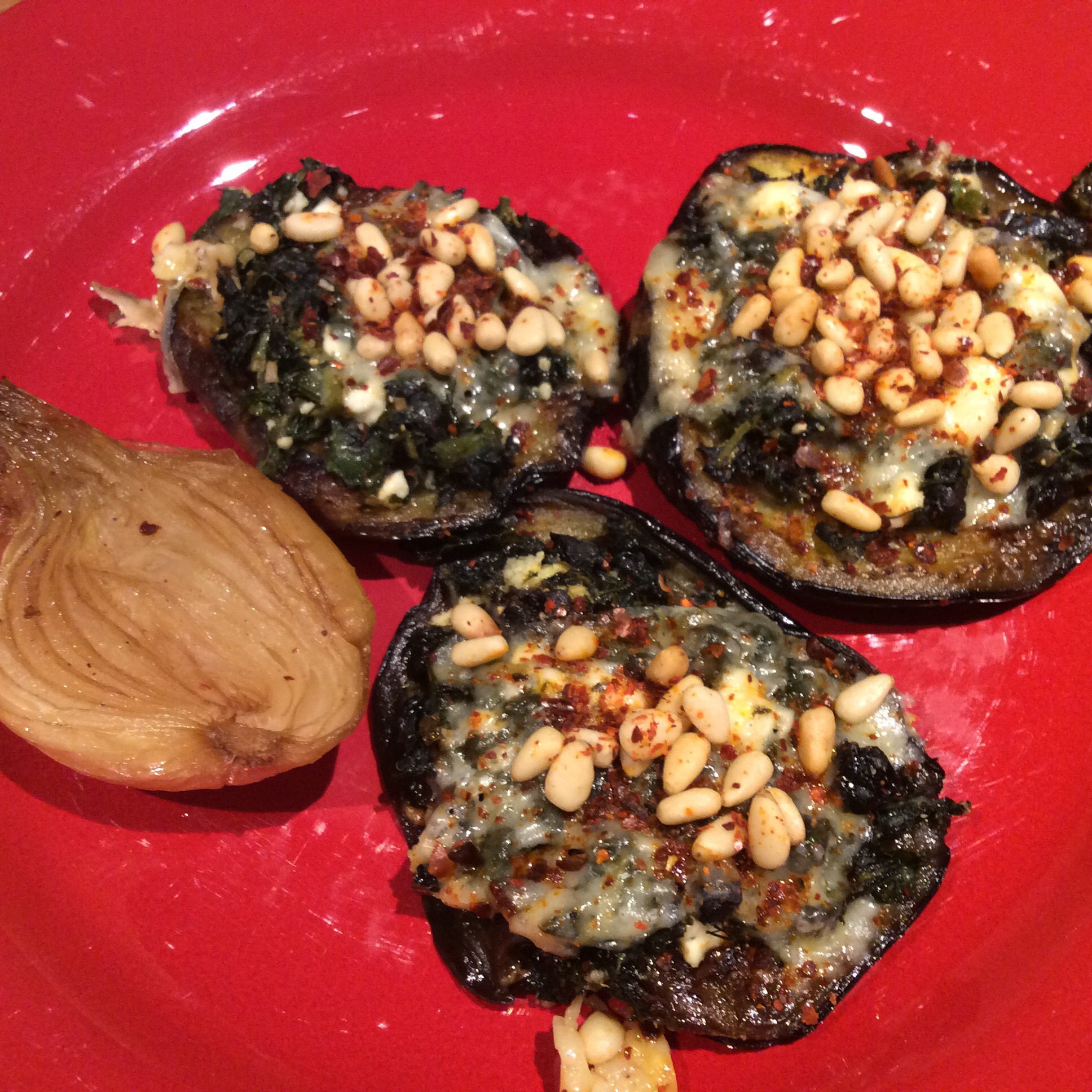
For this dish, I cut an enormous yet still young Black King eggplant into thick meaty slices about half an inch thick. I salted them liberally on both sides in the morning, stuck them in a bag in the refrigerator, and in the evening laid them out in a single layer on half of a clean towel and pushed down hard on the slices with the other half of the towel, pressing out as much liquid as possible. Now sauté them in olive oil over medium-high heat, laying them out on a baking sheet as they finish cooking, and making sure to cook them until they can easily be penetrated with a fork. Meanwhile, decide what you want to put on them. I had some horta (cooked greens mixture) made according to the description in my amaranth post, liberally flavored with garlic, fennel fronds, and salt-cured olives, and decided to use that. Other possibilities include leftover cut-up meat or chicken with herbs, scrambled eggs highly seasoned with herbs, tomato sauce, or whatever. I mixed the horta with crumbled feta for a little pizazz. Top with cheese ( I used an artisanal cheese similar to Parmesan) and pop in a 425 degree oven for 25 minutes or so. Pull them out, top with pine nuts or your own favorite nuts and a lavish sprinkle of Maras pepper flakes or other good red pepper flakes, and put back in the oven for a minute or two. I added some roasted onion halves on the side. Serve. Eat.
This sort of dish screams for a good smooth red wine and has to be eaten with a carefree attitude. Laissez les bon temps roulez, after all.

Archive for the ‘Vegetable dinners’ Category
31 Jul
The Eggplant Chronicles II: cooking eggplant
29 Jun
Integrating Your Weeds II: Amaranth

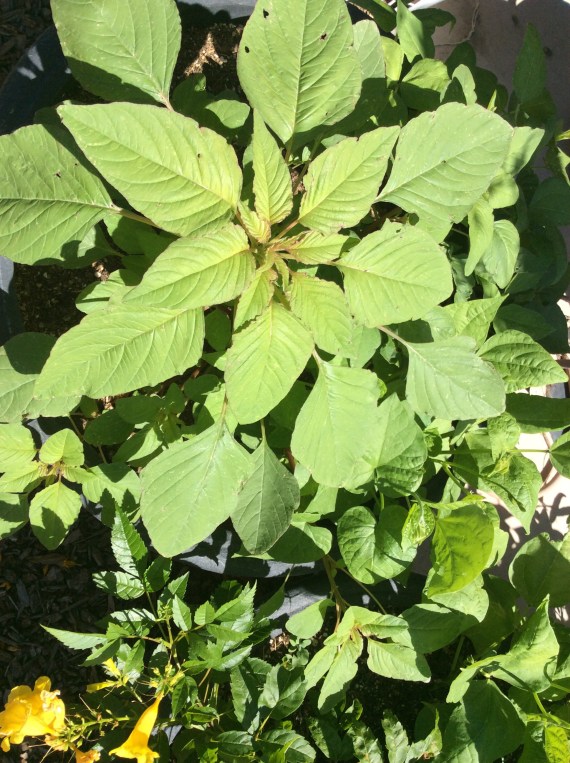
Amaranth is the second of my Holy Trinity of super-nutritious edible weeds. It is a creature of hot weather, and in my garden it’s appearing everywhere right now. Like lambs-quarters it will get huge if allowed to, and unless you have limitless room, your job is not to allow it to.
Consult any good wild-foods guide to identify it, and then assess how much of it you have. If your response is “OMG, it’s everywhere!” then don’t worry about propagating it. Your soil has plenty of seeds. If there are only one or two plants, proceed as for lambs-quarters the first season, and you will have amaranth in perpetuity. I have two varieties, one with smooth stems and one that forms small but unpleasant spines at the leaf joints, and I try to keep the spiny kind from ever going to seed.
Pick them when they’re about a foot high and have a nice large umbrella of leaves on top. I have no interest in eating stems, and I pull off the topmost part with all the largest leaves and add the rest of the plant to the mulch, taking care that it’s completely uprooted.
The greens are fairly mild but have a slight touch of the earthy flavor that’s so pronounced in beet greens. When grown in prime soil the flavor verges on meatiness in a delicious way, and my favorite way of cooking the greens adds other meaty umami flavors.
Wash a mixing bowl full of loosely packed leaves well and wilt them in a small amount of water, stirring frequently over fairly high heat until the leaves all look “cooked.” Drain them, saving all the cooking liquid. Return the cooking liquid to the pot and boil hard to concentrate it to a very small amount, maybe a couple of tablespoons (don’t turn your back on the pot or it will scorch.) Pour into a little bowl and save.
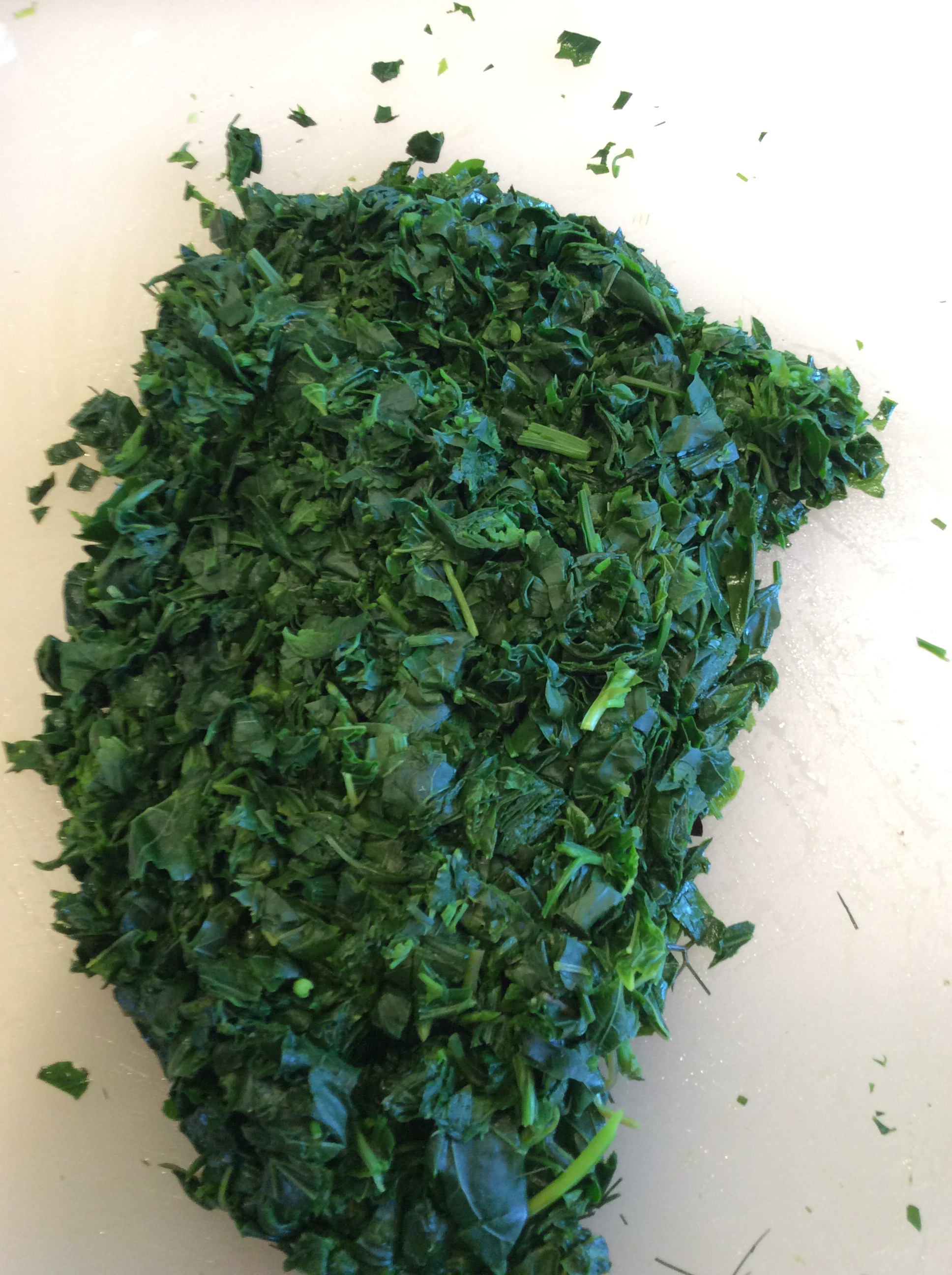
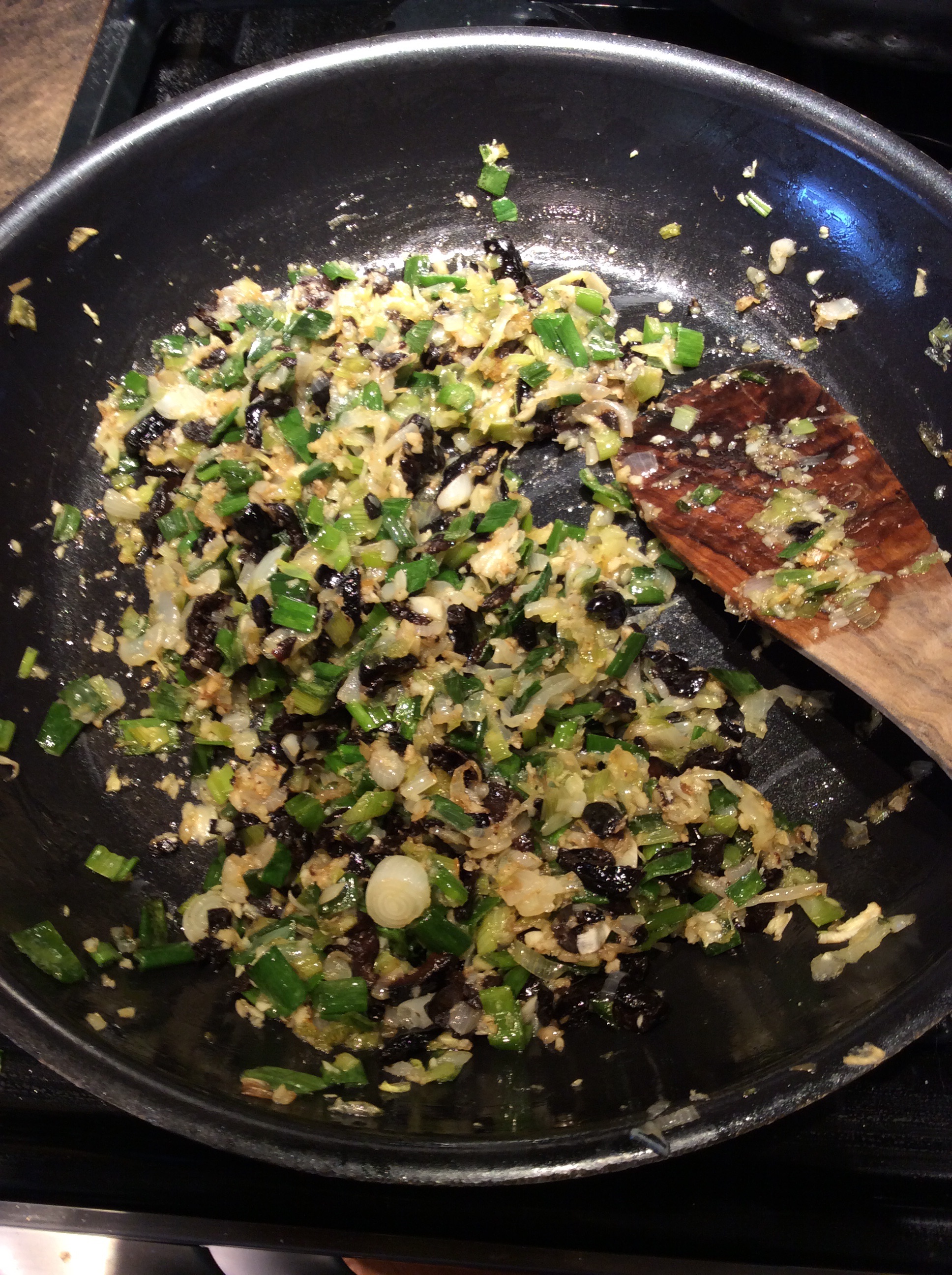
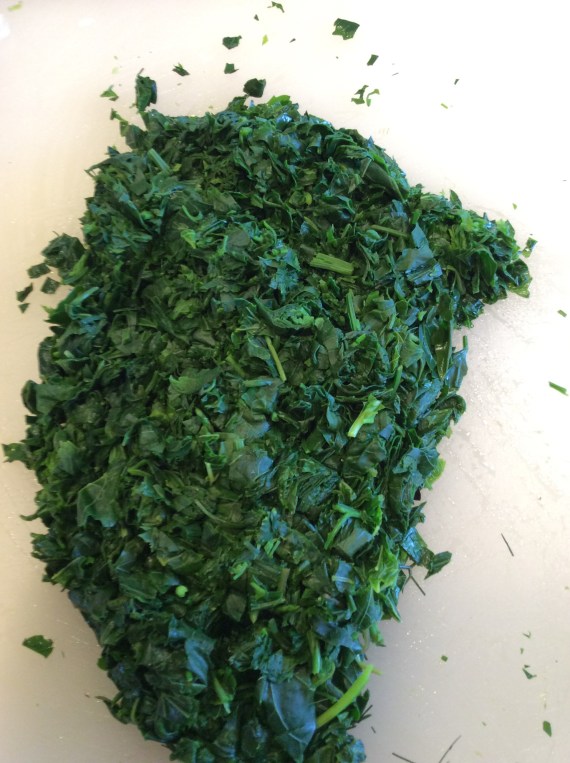
Chop 6 big green onions. Make a basic separation between white and green parts, but don’t get obsessive about it. Separately chop 6 big cloves of garlic. Heat about a quarter cup of olive oil in your largest skillet and cook the white parts over medium-high heat, stirring frequently. When they begin to look a little translucent and “cooked,” add the green parts, cook another couple of minutes, add the garlic, lower the heat to medium, and cook a few minutes more. Meanwhile, put the lump of blanched greens on a cutting board and chop fairly finely in both directions.
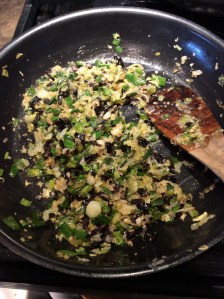
When the garlic looks cooked but has not colored at all, add a handful of pitted chopped oil-cured olives to the sautéed mixture and cook another minute.
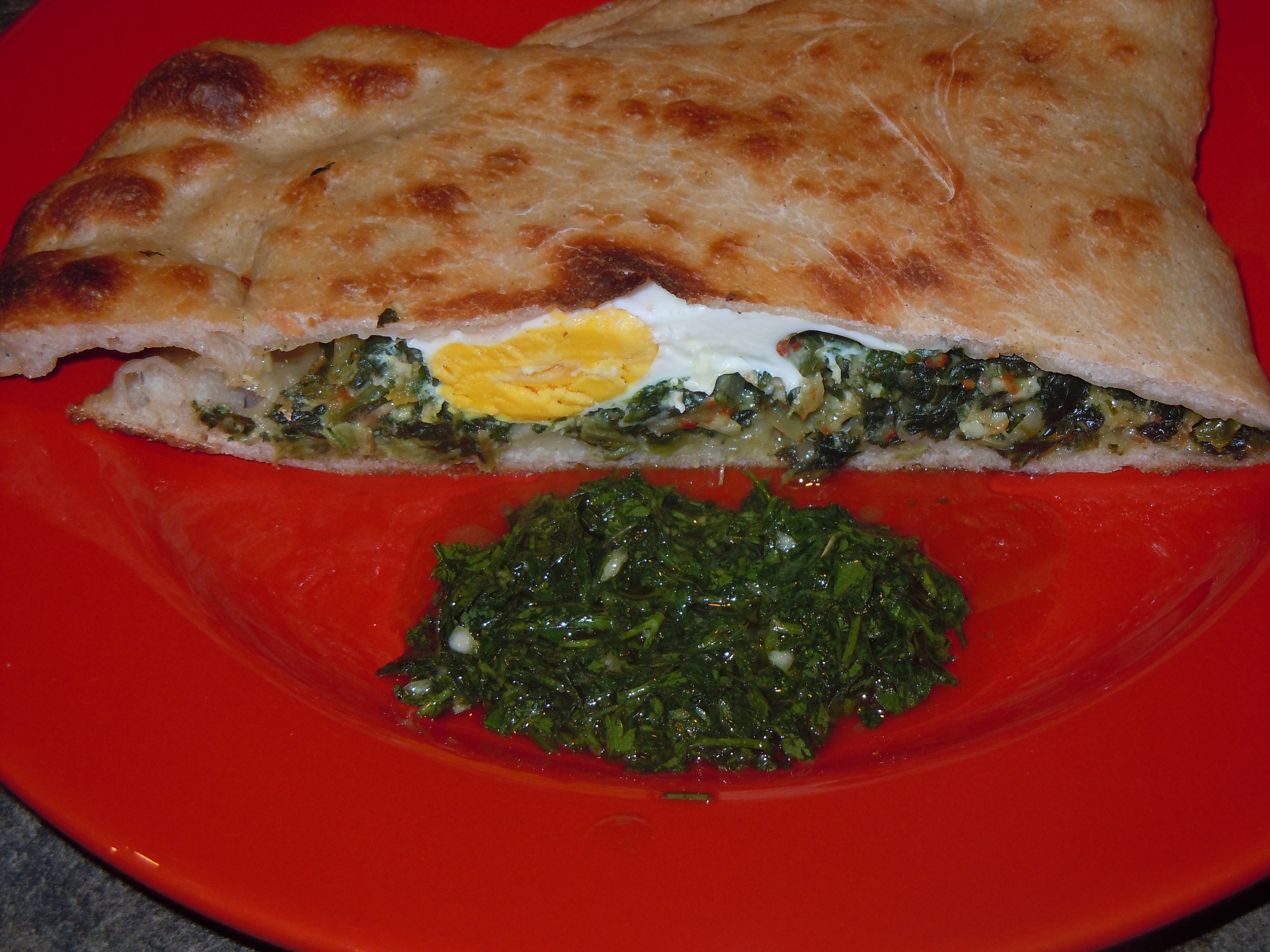
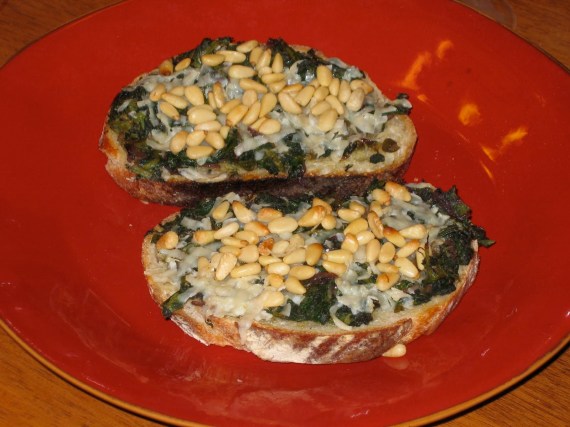
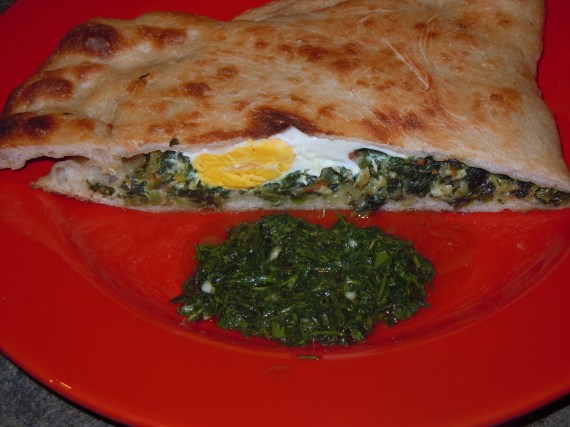
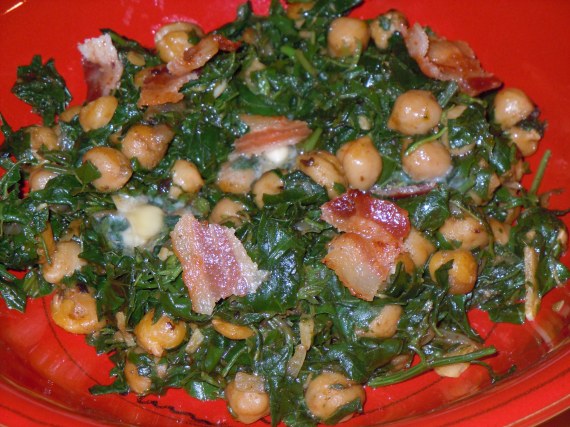
Add the cooked chopped greens, the tiny amount of cooking liquid, a teaspoon of Spanish smoked paprika or, if you like heat, the same amount of ground chipotle chile. Add a small handful each of chopped parsley and chopped fennel fronds. If not cooking for vegetarians or vegans, add a smashed anchovy fillet or a dash of fish sauce. Cook the mixture over medium-low heat for at least 20 minutes, periodically turning it to get it all completely cooked (a spatula works well.) Taste it, salt to taste, and cook a few more minutes to let the salt blend in. Serve drizzled with good olive oil as a side dish, or fill an omelette with it and add some feta cheese, or bake in phyllo to make a hortapita or little spanakopitas, or do whatever else you fancy with it. Back when I ate bread, I used to love to smear this stuff on slices of grilled baguette and put some grated Parmesan and pine nuts on top. I can remember once baking it in thin bread dough with a raw egg on top, so that when baked in a hot oven the egg came out cooked. You can add cooked chickpeas and bits of cooked meat for a real peasant dinner. It freezes well in vacuum-sealed bags to keep you healthy all winter. When served next to beef or pork, I top each serving with a bit of butter to add to the general animalic savor. I like to have it in the refrigerator for a super-healthy lunch, and it seems to taste best at room temperature.
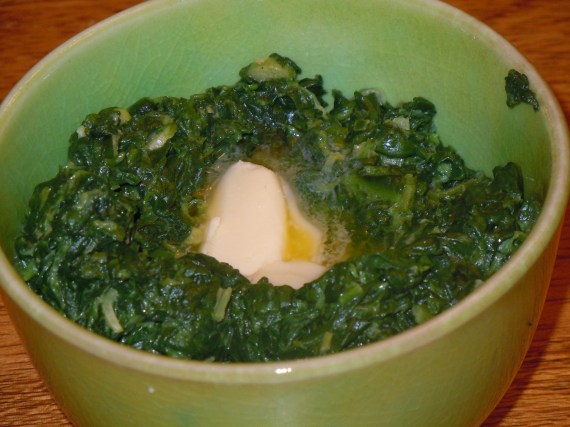
Incidentally, the main reason for a poor result is not cooking it long enough. If it tastes grassy, keep going until it tastes good. Undersalting is another problem. Add salt cautiously because of the salty olives, but add enough.
If you don’t have a wild good guide that you like, get John Kallas’s “Edible Wild Plants: Wild Food From Dirt to Plate” and you will be glad you did.
13 Jun
Leftovers Wraps for One

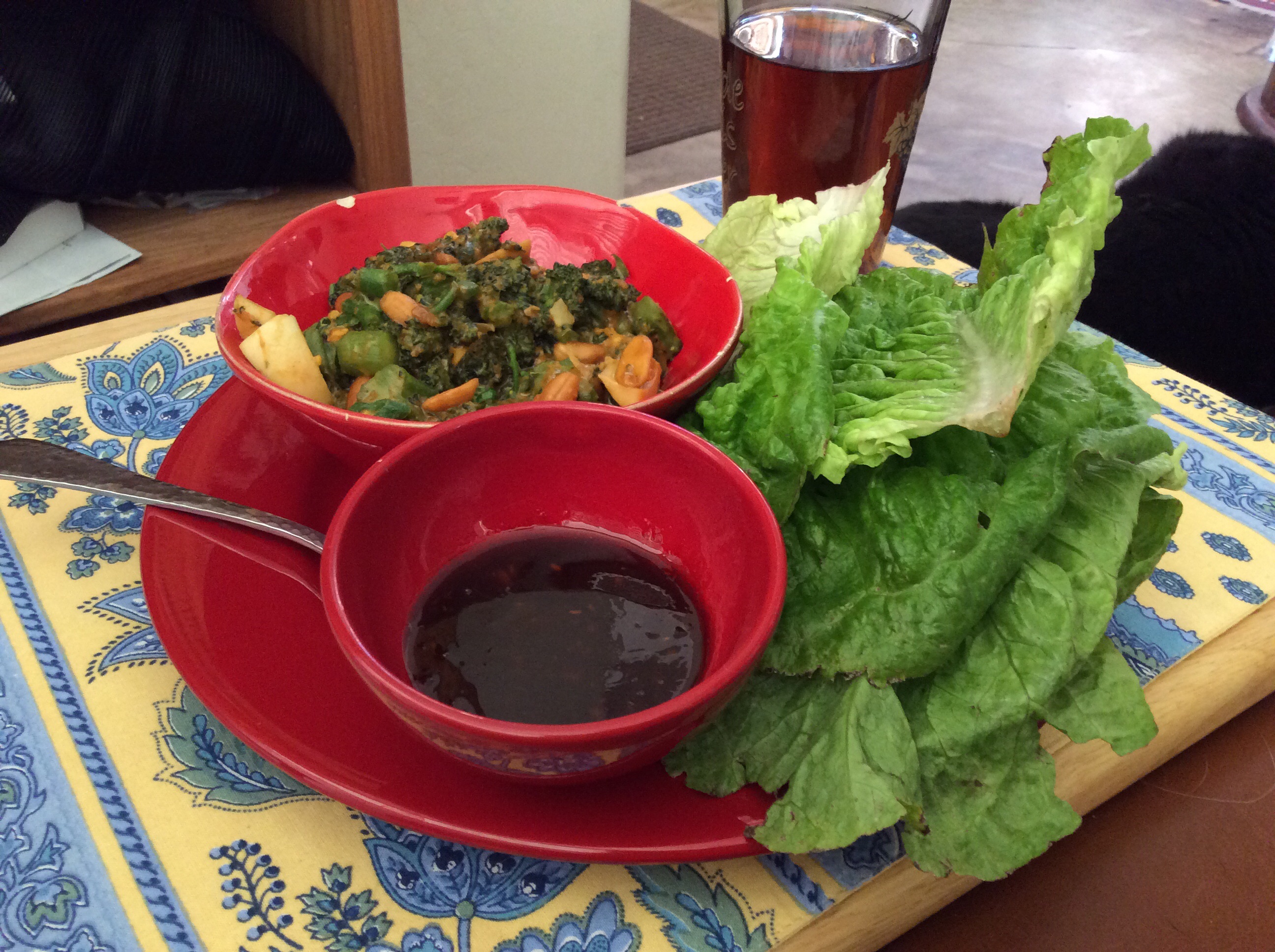
After I ate last night’s broccoli side shoots for one, I had several shoots left over, and tonight I pulled them out of the refrigerator for another veggie dinner. I also had last night’s Semi-Korean dipping sauce chilled, a couple of leftover hard-boiled eggs, a handful of roasted peanuts in my snack bag, and a head of romaine lettuce in the garden begging to be used. With the addition of a green onion from the onion row, my meal came together.
First I rinsed the biggest outer leaves of the lettuce quickly and set them in the dish rack to drain. Next, I thinly sliced the white part of the green onion while a small heavy saucepan heated up. I sliced the green parts separately, and chopped the cooked broccoli and eggs roughly. By this time the pot was hot, and I put in 2 tablespoons or so of oil and threw in the onion whites. They sizzled furiously as I stirred for about one minute, then the peanuts went in. After another minute, I added the chopped broccoli and about a quarter cup of the sauce, plus a glug of good soy sauce from the bottle that hangs out by my stove. After about one more minute of stir-frying, I turned the heat to medium, cooked just until the broccoli was hot, and stirred in the green onions. The chopped eggs were tossed in after the pot was removed from the stove. It was plated, wrapped in the romaine leaves a spoonful at a time, drizzled with more of the sauce, and eaten. Prep time and cook time together totaled twenty minutes.
Cooking for yourself is a great time to go improvisational because if something goes wrong you can shrug and, in a worst-case scenario, eat something else. That’s not so bad. And odds are that you will make some delightful discoveries along the way. The more you think through your available ingredients, putting them together on your mental palate, the less likely you are to make awkward combinations. And I want to put in a plug for prepping vegetables and possibly cooking at least some of them as soon as they hit your kitchen, so that you have fodder for really fast, really good meals. I recommend that any aspiring improvisational cook, or for that matter any cook, read Tamar Adler’s An Everlasting Meal. It’s a delightful read and a quick education in skilled use of leftovers.
Incidentally, when you find a sauce that suits you like my sort-of-Korean sauce suits me, make it in larger batches, keep it in the refrigerator, and see how many different ways you can use and enjoy it.
11 Jun
Veggies for One, or Two

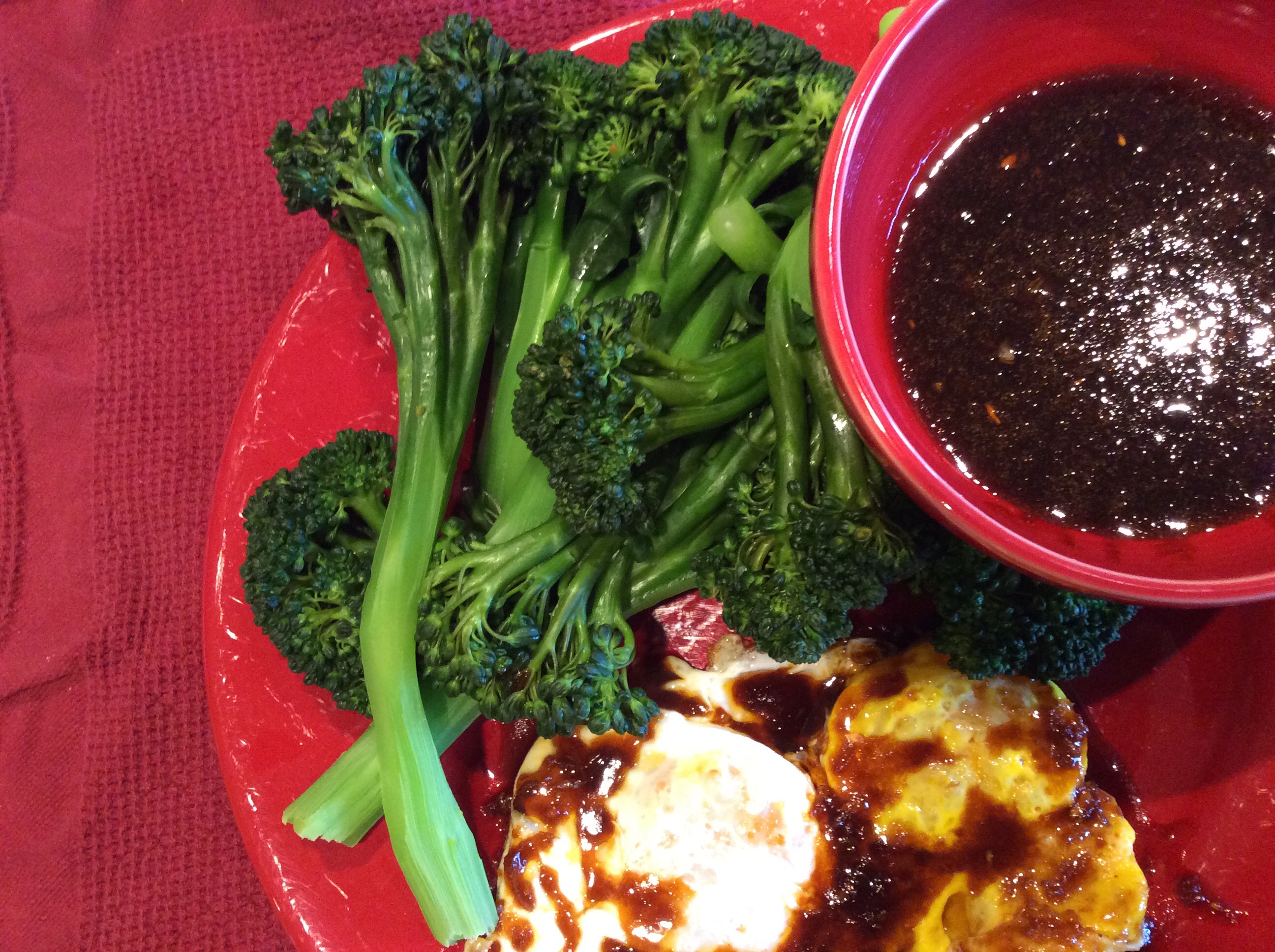
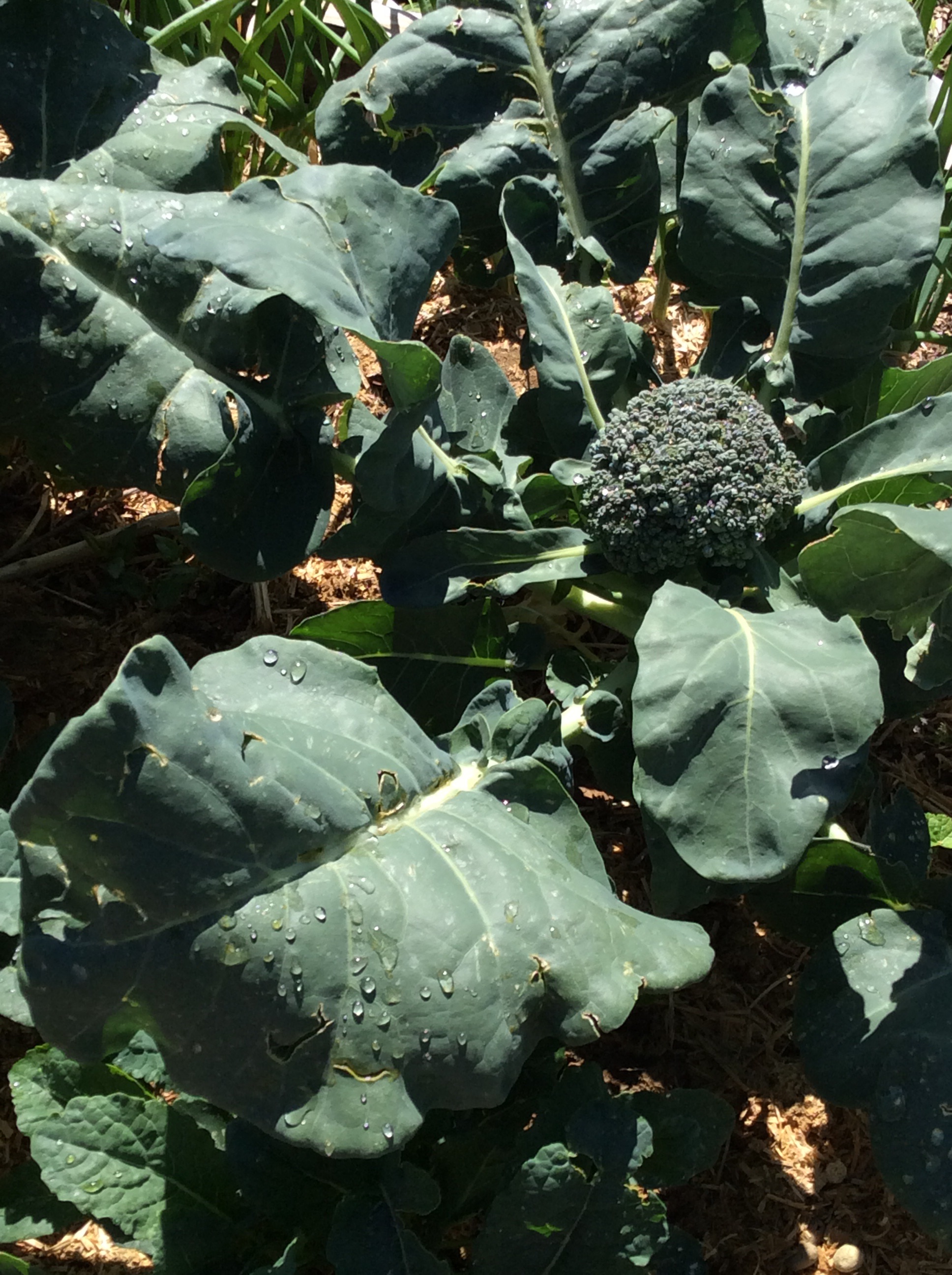
One of the joys of early summer is seeing gorgeous big heads of broccoli “crowning” above the leaves. After you’ve cut the central head, the fun is just beginning. Keep replenishing fertile mulch around the plants and keep them watered, and soon a ring of side shoots will appear above the foliage. Cut the shoots with their long stems, being careful not to harm the main stem of the plant. Rinse them off and peel the stems carefully with a vegetable peeler. Steam to taste. In my opinion, broccoli should be steamed for eight minutes, and raw broccoli is not a vegetable at all. Your mileage may vary.
My favorite way to eat these long elegant stalks is with a quasi-Korean dipping sauce. I was particularly hungry and added a fried egg (double-yolked, so I got a bonus) and drizzled it with the dipping sauce too. The sauce is flavored with gochujang, a lovely deep-flavored fermented sweet chile paste that is unlike any other form of chile. Currently the only brand of gochujang I use is from the quirky company Mother-in-Law’s Kimchee.it contains rice powder and sugar and has some carbs, but you don’t use that much and it doesn’t have any corn syrup. I make this sauce by the pint and keep it in the refrigerator. The recipe as given here makes just over one cup.
The sweeteners that I use are oligofructose, a chicory root derivative, and liquid stevia, because I’m a ketogenic eater. If you don’t worry about carbs, you can just add sugar to taste at the boiling stage. If you do use oligofructose, I recommend the Sweet Perfection brand. Other brands have a bitter taste to me.
Dipping sauce
3×1″ piece of ginger, peeled
8 cloves garlic
3 tablespoons coconut oil
2-3 tablespoons gochujang depending on your heat preference
1/4 cup rice vinegar
3/4 cup soy sauce
1/2 cup Sweet Perfection oligofructose
Drops of liquid stevia to taste
Chop the ginger and garlic while a small saucepan heats up over medium heat. When hot, add the coconut oil, let it heat a minute or two, and add the chopped ginger and garlic. Stir-fry until they are cooked and fragrant but haven’t colored at all. Add the rice vinegar and soy sauce, bring to a boil, and slowly pour in the oligofructose with your nondominant hand while whisking rapidly with your dominant hand. It will form awful clumps if not handled this way. When it is all incorporated, remove the pan from the heat, let stand at least ten minutes to cool, and add liquid stevia just 2-3 drops at a time, tasting to make sure you don’t go too far. Serve in neat small bowls with nearly any meat or vegetable that could use some quick perking up. It seems tailor-made for broccoli, but a big glug poured over rapidly stir-fried greens is also pretty damn good, especially with chopped hard-boiled egg on top to complete the meal, and a salad of leftover thinly sliced steak or chicken, fresh sliced romaine, and this sauce as a dressing makes a beautiful lunch.