Archive for the ‘urban farm animals’ Category

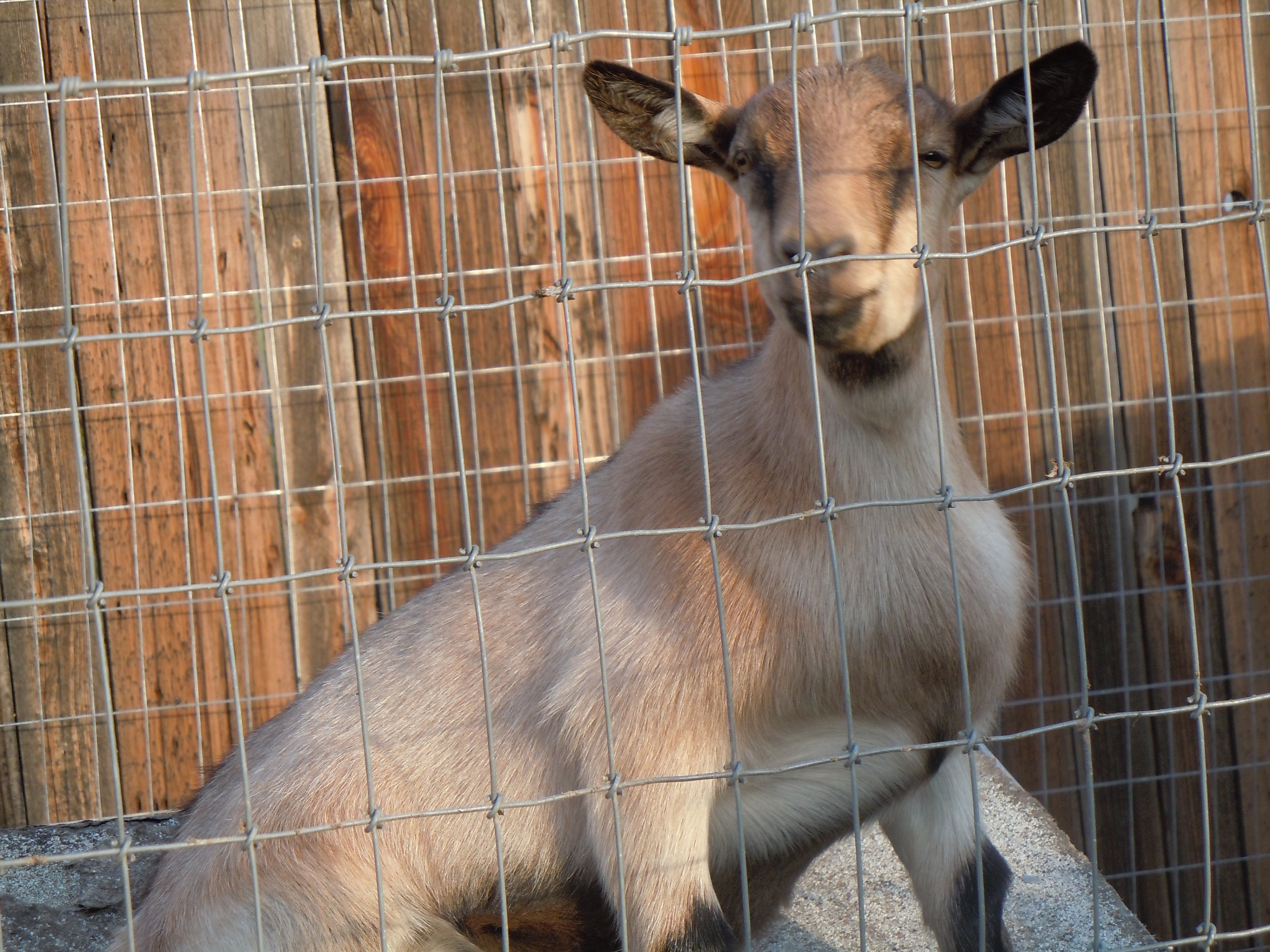
The Urban Goat


Goats are a practical dairy animal to have in a small setting, and they are delightful company, but there are a few things to keep in mind before you run out and get some. If you have a job as well as an urban-farming impulse, pay close attention to the timesaving techniques listed here.
1. Goats require excellent fencing, because they prefer brush, shrubs, and trees to grass and will destroy your plantings if they get a chance. The fencing also has to be sturdy enough to protect them from other people’s dogs, as well as coyotes and other wildlings.
2. Contrary to popular belief, they don’t “eat anything,” and in fact are picky eaters who can be expensive to feed.
3. They are very productive. This doesn’t sound like a problem until your refrigerator is crammed with mason jars of milk and you have no time to do anything useful with it.
4. To have milk, they have to have babies, and you have to have a plan for what to do with the babies.
With that in mind, here’s how I manage my “yard goats.”
They have a long thin pen, about 8 feet by 50 feet, very well fenced. There is an inside fence and gate allowing the paddock to be subdivided 1/3 to 2/3rds.
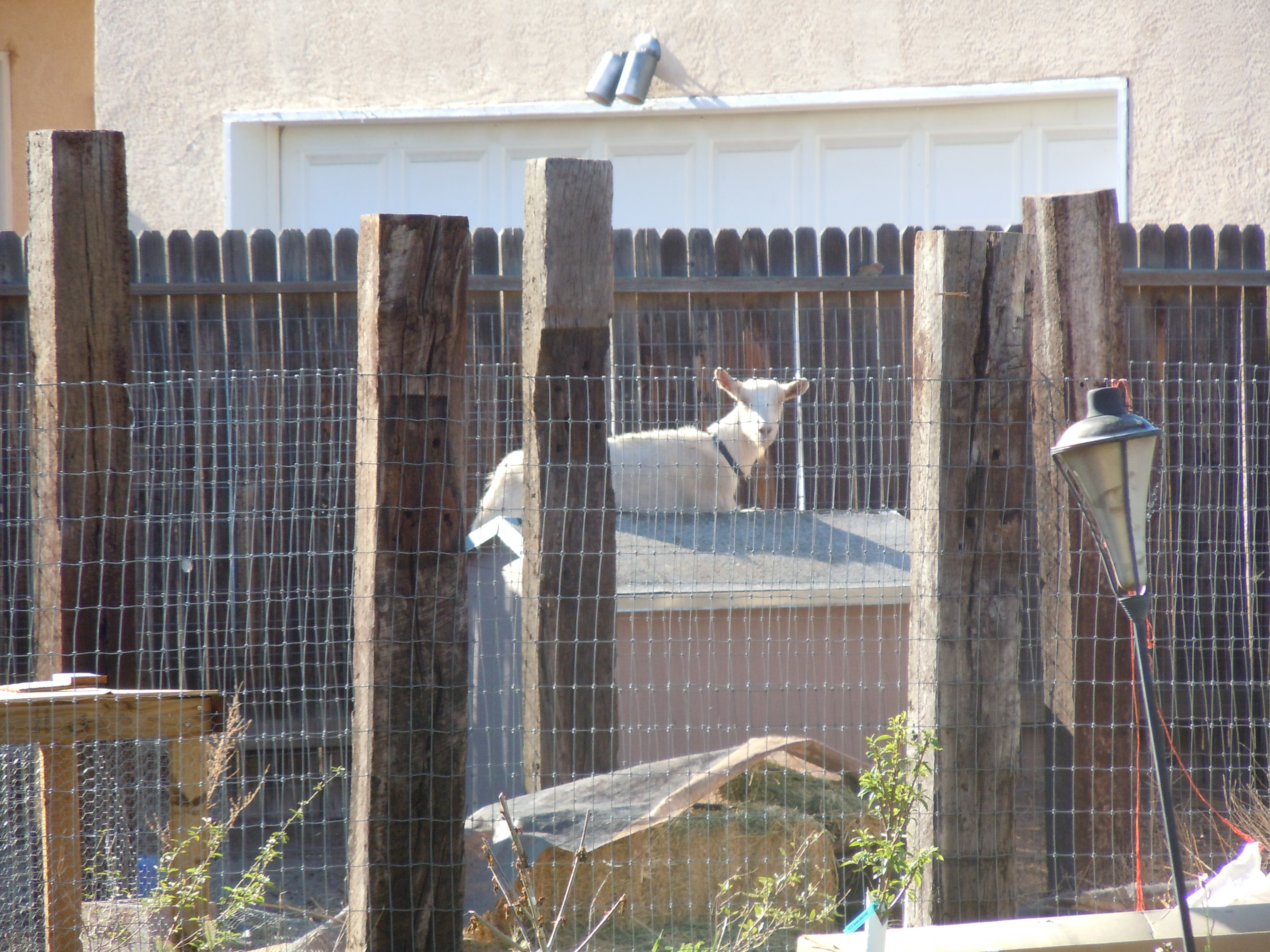
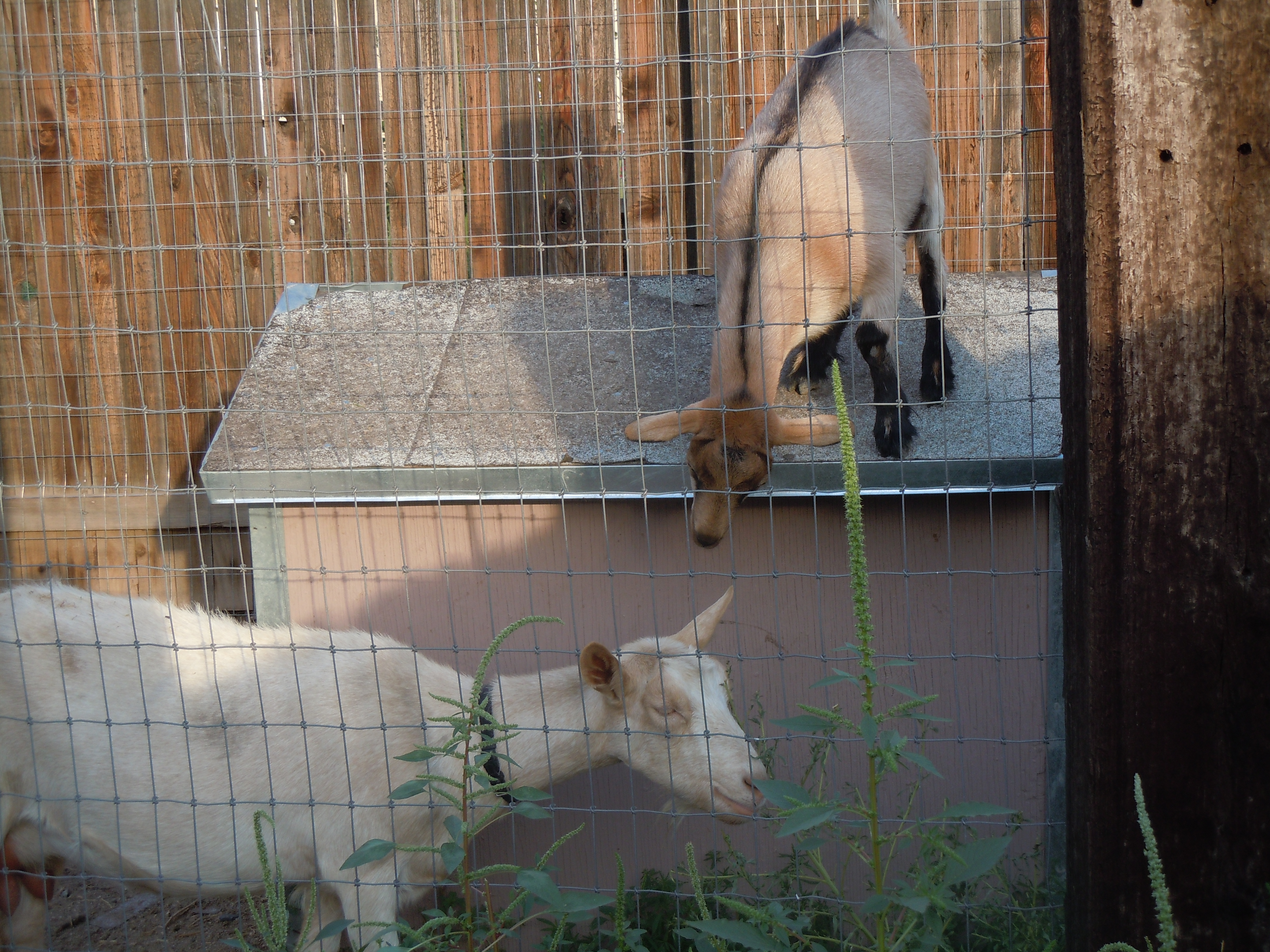
Housing is a large old wooden doghouse. They go inside in wet weather, but most of the time they lounge and sleep on the roof.
The bulk of their diet is good alfalfa. During the green season I cut armloads of Siberian elm branches and various weeds for them. I take care to know all the toxic weeds in my area so that I can avoid them, and there are some perfectly wholesome plants that they won’t touch. In late pregnancy and when in milk, they get a daily grain ration. I would like to produce milk completely on green feed, but they get too thin, so I haven’t pushed it. All grain ration needs to be formulated specifically for goats, since they have exacting mineral requirements.
They get routine clostridium and tetanus vaccinations yearly, twice for kids.

I don’t invest in milking stands or other expensive equipment. I just chain the doe to her feeding post, kneel down on a pat of straw, and milk directly into a stainless steel milk strainer with filter in place; this is set in the mouth of a sanitized mason jar, and I have a second jar ready. The jar, filter in place, is set in a clean food-grade plastic bucket to prevent kicking and to avoid any contact with the ground. Each jar is capped as soon as it’s full, and I put them in the refrigerator as soon as I’m done. This only works with quart jars, because they are small enough to cool rapidly in the refrigerator. If you use bigger containers, you would need to chill the containers quickly in an ice bath. This adds up to more hassle and expense. I prefer to keep it simple. I use standard udder wipes to clean the udder before milking, but I don’t dip the teats afterwards because the babies are going to be nursing.

Now here’s the part that is a little unusual compared to standard practices. I only milk once a day. This is because my career doesn’t allow me the luxury of milking twice daily and bottle-raising the kids. So I let the kids grow as nature intended. After the does freshen (give birth,) I leave the kids with mama full-time and milk out any excess milk once a day. For the first two weeks, I feed the milk to the chickens because it contains colostrum. There isn’t a lot of milk these first two weeks anyway. After that the milk supply will gradually increase, reaching full production after two months. I continue to milk once a day, and about a month after the birth, when the kids are growing fast and drinking nearly all the milk, I start to shut the kids in the small end of the pen for about 12 hours a day. I do this in the morning before going to work, and in the evening I milk and then let mom and kids back together overnight. Both doe and kids have access to all the alfalfa they can eat, and the doe gets a grain ration while being milked.

By the time the kids are two months old, I can take a day off milking here and there if I want to, just by not separating them in the morning. If I have to go out of town, doe and kids stay together and, as long as a reliable person feeds them, they do fine until I get back. Managed in this way, my Saanan doe Magnolia gives two quarts of milk a day plus what her offspring drink, and the kids are raised with no trouble to me, which seems like a good deal. After about 8 months the doe will start kicking the kids away when they try to nurse, but at this point I’m ready to quit for the year anyway, so I let her dry up. Along the way she’s been bred, and we can all wait quietly through the winter for the next batch of kids. It wouldn’t work commercially, when a steady supply is crucial, but it suits me fine to be free of milking chores during the short days of winter.

If you are thinking of getting goats, keep those kids in mind, because you have to do something with them. You may be able to place the females as “yard goats” for others, but about half your kids will be male and the only real market for them is for meat. If you don’t eat them yourself, someone else is likely to. Goat is one of the most widely eaten meats on the planet, and the meat of young goats is delicious, so do consider having your excess kids butchered for your own use. It’s a good healthy meat source

To get milk you need babies, and to get babies you need access to a buck. In my opinion, it is unwise even to think of keeping a buck in an urban or suburban setting. They smell terrible in breeding season, and your family and neighbors will not appreciate it. This is the sort of thing that gives urban homesteading a bad name. Find a breeder with a buck, or pair up with a rural pal who is willing to keep a buck.

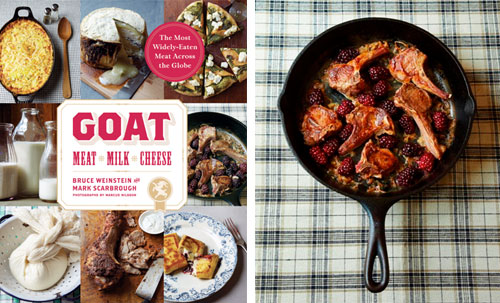
Set a firm limit on how many goats you are going to keep, and stick to it. For me, that limit is two adult does, with kids in season, but no additional goats kept over the winter. And get the wonderful cookbook Goat, to help you stick to your limit.
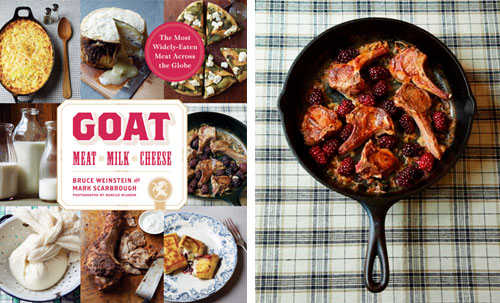
Goat milk in the morning, and a great goaty book


My goat does Magnolia and Cocoa are out being bred right now, and the back of my property is depressingly silent, with none of the constant cross-talk that occurs as they stand on the roof of their goathouse observing the antics of the rest of us. It makes me realize how much they’ve become part of our daily lives. In their absence, I’ll talk about some things that I do with goat milk.
Of course I make cheese, mostly soft cheese and halloumi. I plan to discuss cheesemaking in some later post, but for now let’s get on to the fresh milk. You will hear it said that goat milk tastes just like cows’ milk, to which I say “Not so fast.” On day 1, goat milk tastes much like cows’ milk but even when impeccably fresh it has a tangier flavor profile. However, it contains lipase that works on the lipids and changes the flavor. On day 2, it’s good but you will know that you’re drinking goat’s milk. On day 3 it’s quite strong and only good for making stronger cheeses, and on day 4, as far as I’m concerned, it’s chicken food (they love it, by the way.) So the goal is to use it up by the end of day 2.

I’m always looking for nutritious, tasty, and interesting things to eat for breakfast. They have to be very quick, because getting to work in the morning is not optional. And they have to hold me for hours so that I’m not tempted to snack.
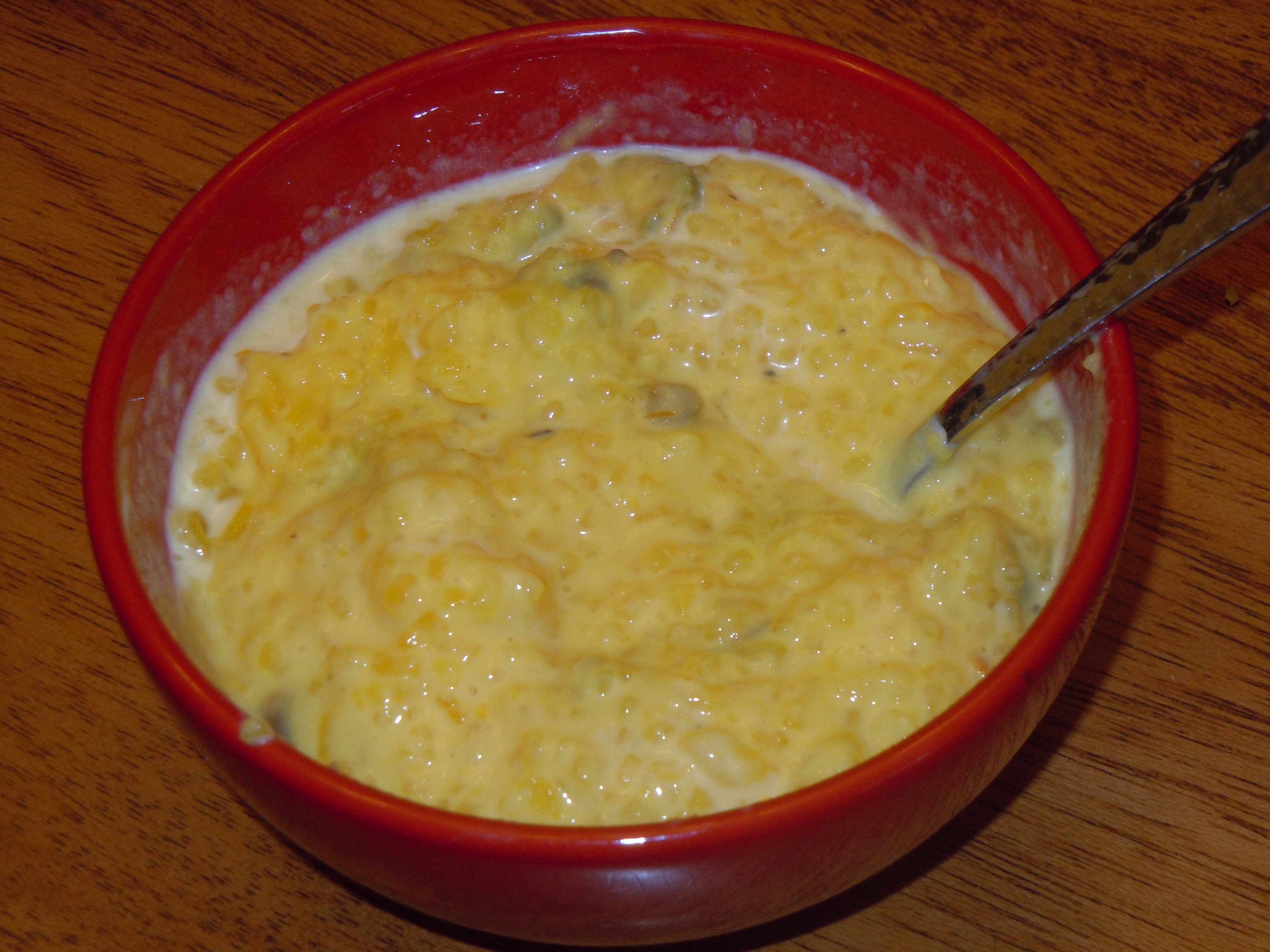
One of my favorite breakfasts is a sort of warm pudding of goat’s milk and rice. The flavors are based on an Indian drink of warm milk sweetened and flavored with saffron that I read about in my early twenties. I recommend cooking this in an unglazed clay pot for the ineffable earthiness it confers, but do use a flame-tamer device or a simmer burner, because scorched milk adheres to clay like stucco. You can make several days’ worth at once and it will keep in a good cold refrigerator for up to a week.
Start with eight cups of fresh goat milk. Add half a cup of unwashed uncooked basmati rice or jasmine rice. Start the burner on low, and as your clay pot warms up, increase the heat gradually to medium. Add half a cup of agave nectar (important for its low glycemic index), a half teaspoon of salt, a teaspoon of saffron crumbled between your fingers, and a half teaspoon of cardamom crushed finely in a mortar and pestle (please don’t use the preground stuff.) For the first half hour you will need to stir frequently, scraping the bottom of the pot well all over with a wooden spoon so that the grains of rice don’t stick and scorch. Once the milk comes to a good simmer, turn the burner down as low as possible and add the flame-tamer under the pot. Add a large handful of raw shelled pistachios or slivered almonds. Let simmer, uncovered, for 4-5 hours. Stir occasionally. When a milk-skin forms on the top, stir it in. The rice will swell and the milk will cook down. You are aiming for something about the consistency of half-and-half, although naturally it will be lumpy with softened rice grains. It will thicken as it cools. Eventually you will have what looks like a cream-soup of a beautiful creamy-gold color. Turn off the burner and let it cool. Taste when cool, and add a little more sweetening if needed, but keep in mind that this is a breakfast, not a dessert. Store in a container in the refrigerator and ladle out into pretty little bowls, heat gently in the microwave (I use two minutes at the defrost setting for two bowls) and eat. I like to pour a tablespoon or so of extra fresh milk across the top for extra gleam and “juice.” It turns breakfast into a little ten-minute island of luxury, and the boost from my own chemical-free hormone-free alfalfa-fed goat milk is considerable.

Goats are compact, hardy, and economical, and the amount of milk they produce relative to body size is prodigious. It’s no surprise that they were among the earliest domesticated animals (although well after dogs) and that they still help people eke out a living in marginal circumstances all over the world. They are the ideal dairy/meat animal for small properties. And yet, rarely are the meat or milk seen in American cookbooks. This book changes all that, with scores of carefully composed recipes for the meat, milk, and cheese that goats produce. Buy it if you have goats or access to goat products. If you don’t, it’s still a great read, full of stories about the authors’ interactions with these highly interactive animals.
Also, checl out Mark and Bruce’s marvelous blog about making and eating real food, Real Food Has Curves.

The Hen That Laid the Golden Eggs, and more notes on ethical meat


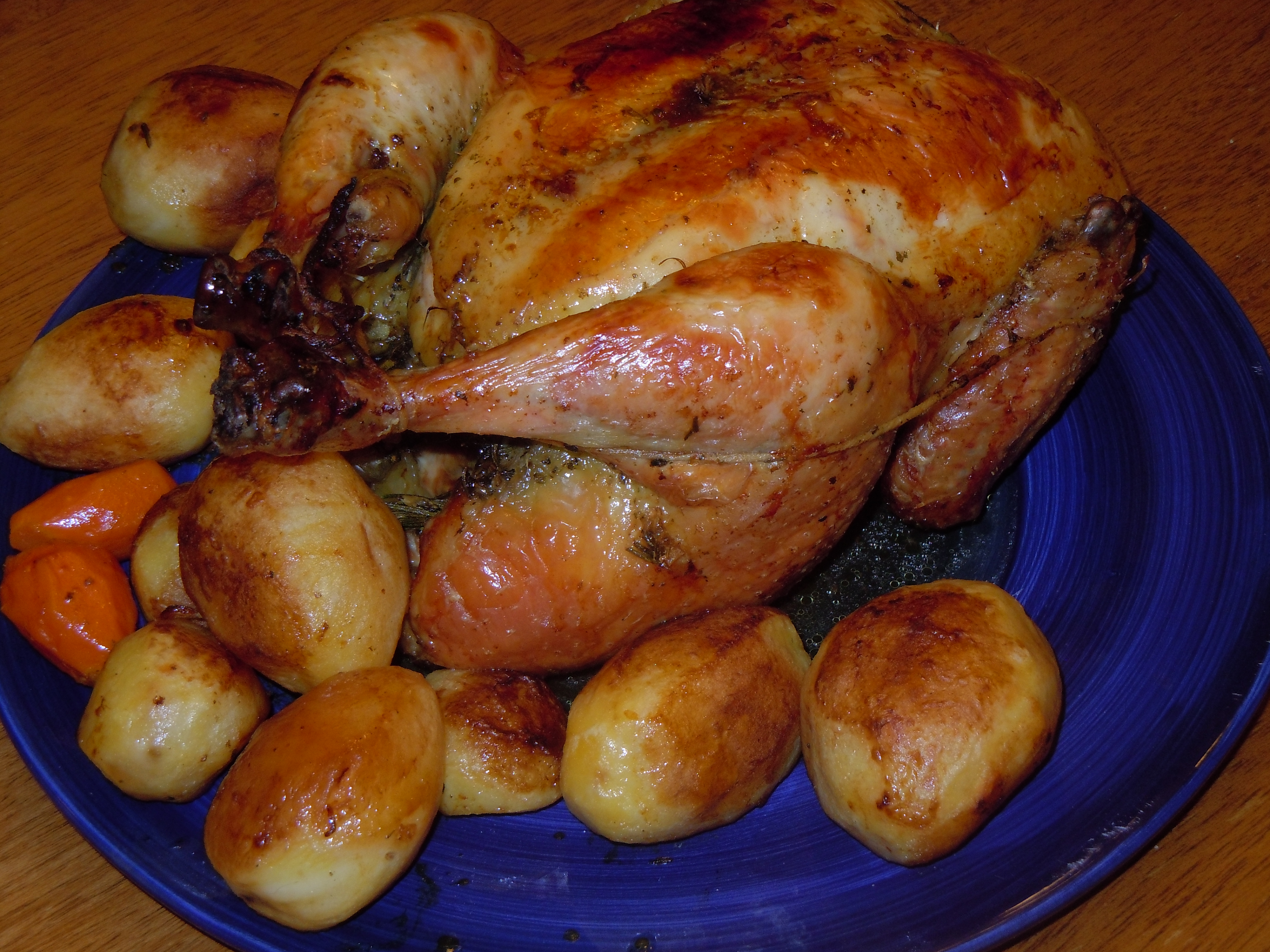
The days are short now, cold nights make a warm stove welcome, and there are longer evenings in which to do my culinary experimenting. Sometimes I like to try unknown ingredients and cuisines that are new to me, and sometimes I like to try slight twists on familiar favorites. Right now I have an abundance of good chicken raised in my own yard, and a simple roast chicken is great when it has real chicken flavor. These birds are big (the one we ate for Thanksgiving had a dressed weight of 14 pounds) and they look quite impressive roasted, but of course a smaller chicken is fine as long as it was raised properly and tastes like a real chicken. Here I followed my usual MO for roasting a chicken (see my post on roast chicken) with a couple of changes.
Twist #1: Since these huge birds have deep breasts which can dry out near the surface by the time the center is cooked properly, I injected the breast with a half-and-half mixture of melted butter and concentrated homemade chicken broth to improve the juiciness. You can buy injectors for this purpose which have big needles that won’t clog up easily. This isn’t as necessary on a smaller chicken, but is still a very tasty touch.
Twist #2: I carved the potatoes into eggs and browned them well in a skillet with some olive oil before putting them in the oven to roast. Keep them in a separate roasting pan and put them in the oven about 50 minutes before the chicken will be done. Be sure to sprinkle them with salt. Baste them regularly with chicken pan juices (you will need to keep adding good broth to the chicken pan to have enough juices.) When you take the chicken out to rest before carving, test the potatoes for doneness and leave them in the oven if needed while the chicken rests. Then pile them around the hen and bear the laden platter to the table. I also carve some chunks of carrot into smaller, goldener eggs to roast in the chicken pan, but I’ll be the first to admit that this is unnecessary fiddling.
If your bird isn’t a hen, it can be the rooster that laid golden eggs, an even rarer phenomenon. I suppose that if you were obsessive enough, you could cut some chard leaves or kale leaves into long, trailing tail feathers to make the phoenix that laid golden eggs, but this is the sort of culinary feat that announces to your friends and loved ones that you spend way too much time thinking about matters unrelated to real life. It will get you talked about, and not in a good way. But if your tastes lean toward culinary fantasy, it’s worth trying anyway. Since you are already lost to reason, consider carving some blue potatoes and purple carrots into colored eggs to add to the general picture of barbaric opulence.

Now, about those notes on ethical meat that I promised you. None of my homesteading ventures have been treated with more dubiousness by others than my decision to raise chickens for meat and harvest them myself. But from a personal standpoint, it’s the best project that I’ve undertaken. The way that commercial chickens are raised is appalling, and fancy labeling about “free range” means very little. If you want details, read the section on chickens in The Omnivore’s Dilemma, and then remind yourself that Pollan is describing a best-case scenario. Then, get real about what you eat. Sometimes I come across writing by others who have participated in the harvest of meat, and today I’d like to share a clip from Mourad Lahlou’s marvelous book New Moroccan. He describes how in his Moroccan home, it was the duty of one adult man to kill meat animals with maximum speed and minimum suffering for the animal, and that it was an activity conducted after prayer and one that the whole family gathered to witness. At thirteen he was taught to do the ritual slaughter by his grandfather. He says “No doubt your reaction to this is that it seems barbaric. But I’m telling you that it’s the opposite, not simply because the slaughter is done in a humane way, but because the act of witnessing it is a reminder that we can never take a life for granted. When you’ve seen an animal give its life for you, you don’t take it lightly. You cook it with care. You eat it with respect. And perhaps the greater barbarism is never coming face to face with that, and pretending that meat comes from a market and not an animal.” Amen to that.
Mourad’s book is one of the best new cookbooks I’ve come across for years, and I recommend it to anyone for the marvelous writing as well as for the recipes.

In the near future I’ll write about exactly how I produce the chickens.

.

The Pollo Real Chicken: A real chicken, indeed


As you may know if you’ve seen my post on The Meaty Issue, I started raising my own meat chickens this summer. The results have been thrilling, but I have been hesitant to write about my kitchen experiments with them because most readers don’t grow their own and wouldn’t have access to this kind of chicken. This problem has now been solved because our local growers of pastured chickens, Pollo Real, have returned to the local farmers’ markets. Their French Label Rouge chickens are absolutely the best that I know of besides my own, and the pasture-raising is humane, environmentally friendly, and results in higher omega-3 content and a better taste. There is no such thing as a completely grass-fed chicken- they just aren’t able to survive on pasture alone- but these chickens have access to all the things that chickens naturally eat. Look for the Pollo Real booth at the Albuquerque downtown market on Saturday mornings and at the Corrales market on Sunday mornings. Ask them about their CSA, and please be sure to tell them that Heather at My Urban Homestead sent you. I want our local ethical growers to know that I’m recommending them.

The first time you get hold of a really good chicken, roast it fairly plainly and enjoy the meaty, nonmushy texture and the full flavor. My favorite method is this:
24 hours before you plan to roast the chicken, salt it generously inside and out or (my preference) put it in a large plastic bag with a brine made from half a gallon of water and half a cup of salt. If just salted, leave it in the refrigerator until ready to cook. If brined, leave it in the bag of brine in the refrigerator overnight, and in the morning pour the brine down the drain. Return the chicken to the bag and put it back in the refrigerator until ready to cook. This lets the added salt and liquid distribute themselves more evenly throughout the flesh.

When ready to make dinner, preheat the oven to 375 degrees. Smash two cloves of garlic in a mortar and pestle or chop them finely, add a tablespoon or two of white wine, a teaspoon of freshly ground black pepper, and two tablespoons of chopped fresh tarragon or one tablespoon of chopped fresh thyme. Rub the paste over the chicken inside and out, cut a lemon in half and stick it in the cavity, truss the chicken, and put it breast down in a baking pan. Pour about half a cup of good white wine in the baking pan and set in the hot oven. Roast for half an hour, and meanwhile cut some cleaned potatoes into chunks about an inch on a side. After half an hour take the pan out, turn the chicken breast side up, rub all visible skin well with good butter, and add a little more water if needed to keep the bottom of the pan lightly filmed with liquid. Roast until done, basting with more butter every 15 minutes. When the chicken is done, remove to a platter to rest for 15 minutes and, if the potatoes aren’t done, return them to the oven until they are. Pile them around the chicken and carve the chicken at the table. Pass the pan juices in a gravy boat. A salad and a good bottle of wine are all that you need to complete the meal.

What does “roast until done” mean? Well, it all depends on the size of your chicken. An oven thermometer is an absolute necessity, and oven heat can still vary depending on how often you open the oven. I have been cooking chickens for 30+ years and I roast them until the drumstick wiggles just right in its socket, but this isn’t something that can be conveyed in writing. so it’s safest to use a good meat thermometer and roast until it reads 170 degrees in the thickest part of the thigh. Even so, prick the thigh and check for any pink juices running onto the platter. If pink shows, return it to the oven until the juices run clear. Roasting a chicken well is a skill worth mastering. I aspire to roast a chicken on a spit next to a hot wood fire, but I haven’t tried it yet. If you have, leave a comment to let me know how it worked out. For that matter, every enthusiastic cook has a favorite way of roasting a chicken, so feel free to leave yours in the comments. And please, support our great local growers and farmers!