Archive for the ‘Uncategorized’ Category

Chickens for meat

image

The picture above is courtesy of the wonderful blog site the Self Sufficient Home Acre, about which I will say more later in this post.
There are a number of reasons to grow and process some meat chickens at home, but one reason stands out for me: the conditions under which commercial broilers are raised and butchered are appalling. My home-grown meat birds are healthy eating because of the way that I feed them, but even if they weren’t, I can provide a better life and a better death than happens on a commercial basis.

The question of what type of chicken to raise is an important one. The chickens that are seen everywhere from chain grocery stores to fancy butcher shops are all Cornish crosses. They are extremely fast growing, being ready for harvest in about eight weeks, and have the extremely broad breast that appeals to American consumers. The meat is soft and doesn’t take much chewing. I don’t like them, personally, because they are so fast-growing that all they do is lie on their heavy breasts and eat. They don’t act like real chickens. Also, the meat doesn’t have time to develop deep flavor, and these birds do very poorly at high altitudes like my home area. On the other hand, the males of most laying breeds make a scrawny-looking eating chicken and they start crowing long before they are big enough to eat, a serious problem in my urban area. My personal preference is for Pioneer hybrids, which are relatively large and fast growing but look and act like real chickens. They are pretty to see, and reach edible size in 3-4 months. I butcher the males as soon as I hear crowing, and let the females grow on a bit. I have kept some for laying hens and they are pretty good layers.

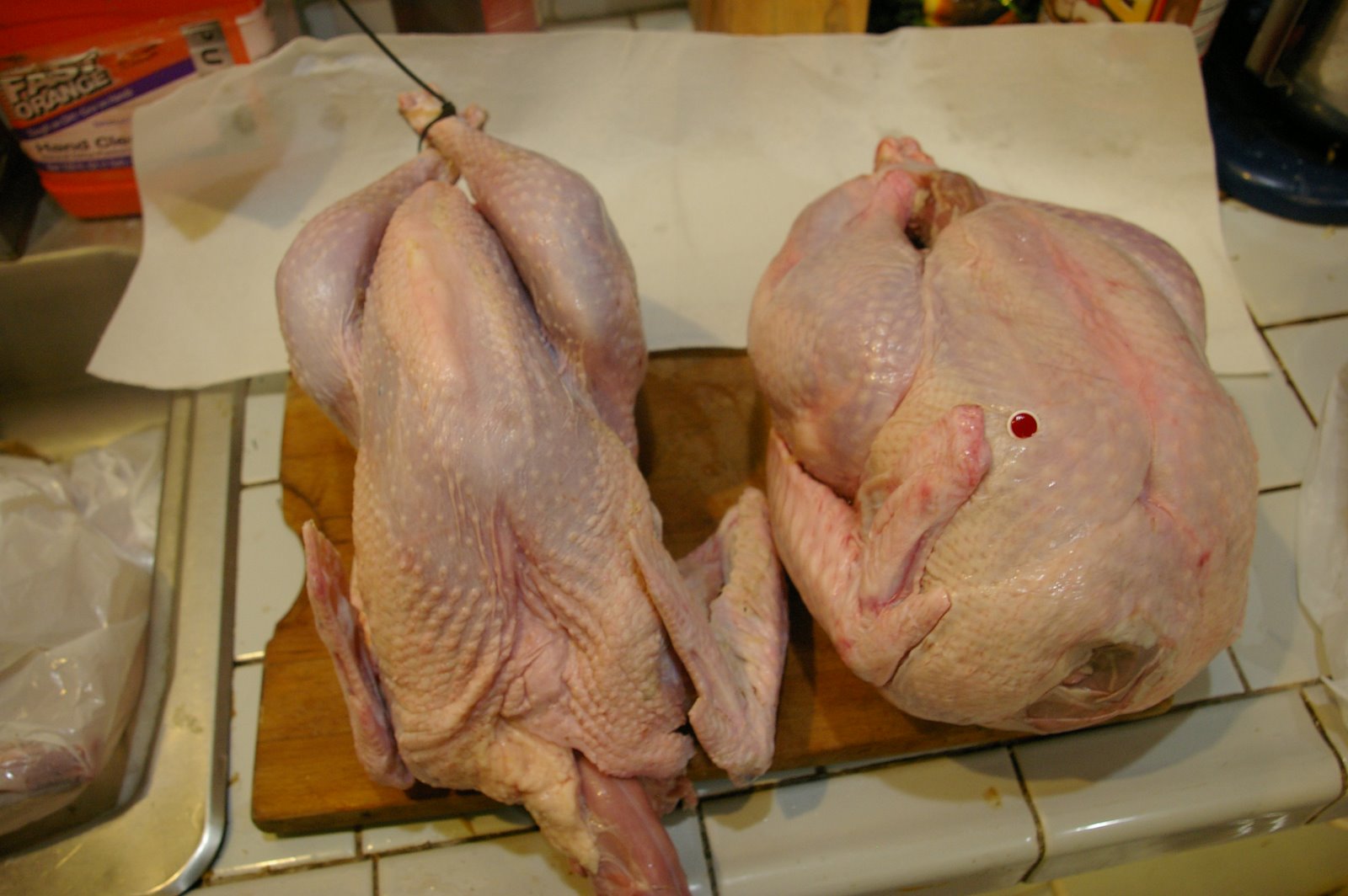
The  picture above illustrates something very important to understand about body morphology.  This particular picture is of commercial versus heritage turkeys, but the chickens are quite similar to this. The rounded bird on the right resembles the Cornish Cross which is used commercially, and the long bodied light-breasted bird on the left resembles the Pioneers and heritage breeds. American consumers are used to looking at a fairly spherical bird, and can find the natural configuration of a chicken startling. Some also find the meat a little tougher. I find it utterly delicious in flavor, the way chicken is supposed to taste, and don’t mind using my teeth a little bit. I often choose moist cooking methods such as braising to increase tenderness, but also grill these birds and am very happy with the results. And I really like it that these chickens can run around, forage, and flap up to the perch in normal fashion.

I came across a self-sufficiency blog that has wonderful material about home meat production, The Self Sufficient Home Acre. The author has a great post about the process of butchering chickens, and another about mindset and preparation for butchering. The photos are graphic, so don’t go there out of casual interest. But if you can imagine that a meat animal could be regarded respectfully and even reverently, then you may want to consider raising some of your own and taking responsibility for how it is treated and harvested, and this blog can help.

I also strongly recommend the book Mini Farming by Brett Markham. He has an excellent discussion of meat chickens and a great set of instructions for butchering. My set-up is based on his. His book is also a wonderful source of information about serious vegetable gardening and home-business laying flocks.

I feed the chicks a starter mix that’s 20% protein until they’re about 10 weeks old. They get grit right from the beginning, and at age three weeks when they have had time to eat some grit, I start giving them greens from the garden finely chopped, starting with small amounts and increasing over time. After the ten-week point I change their ration to the flaxseed-spiked layer pellet that my hens get, continue greens, and add additional protein with goat milk, table scraps, eggs that weren’t used up in a timely way, or whatever is handy. My goal is to produce maximum omega-3s without using too much flaxseed, which can give an off taste.

I have only one more thing to add, and that is that I incorporate every by-product of butchering back into the growth cycle. To me, that is part of taking the animal’s life seriously.  Each year I choose a spot where I want to grow trees or berries later, choosing a fenced-off area that my dogs can’t get to, and dig a series of deep holes in a large circle six feet or more across. After each butchering, the feathers, entrails, etc. are buried and covered with a couple of feet of soil. Then I set a straw bale or something similar on top to keep the fence-leaping coyotes out. Early the following spring I plant my chosen fruit tree or berry bush in the middle of the circle. They thrive. Five years after growing my first batch of meat chickens, the plum tree planted in that circle yields bushels of plums.

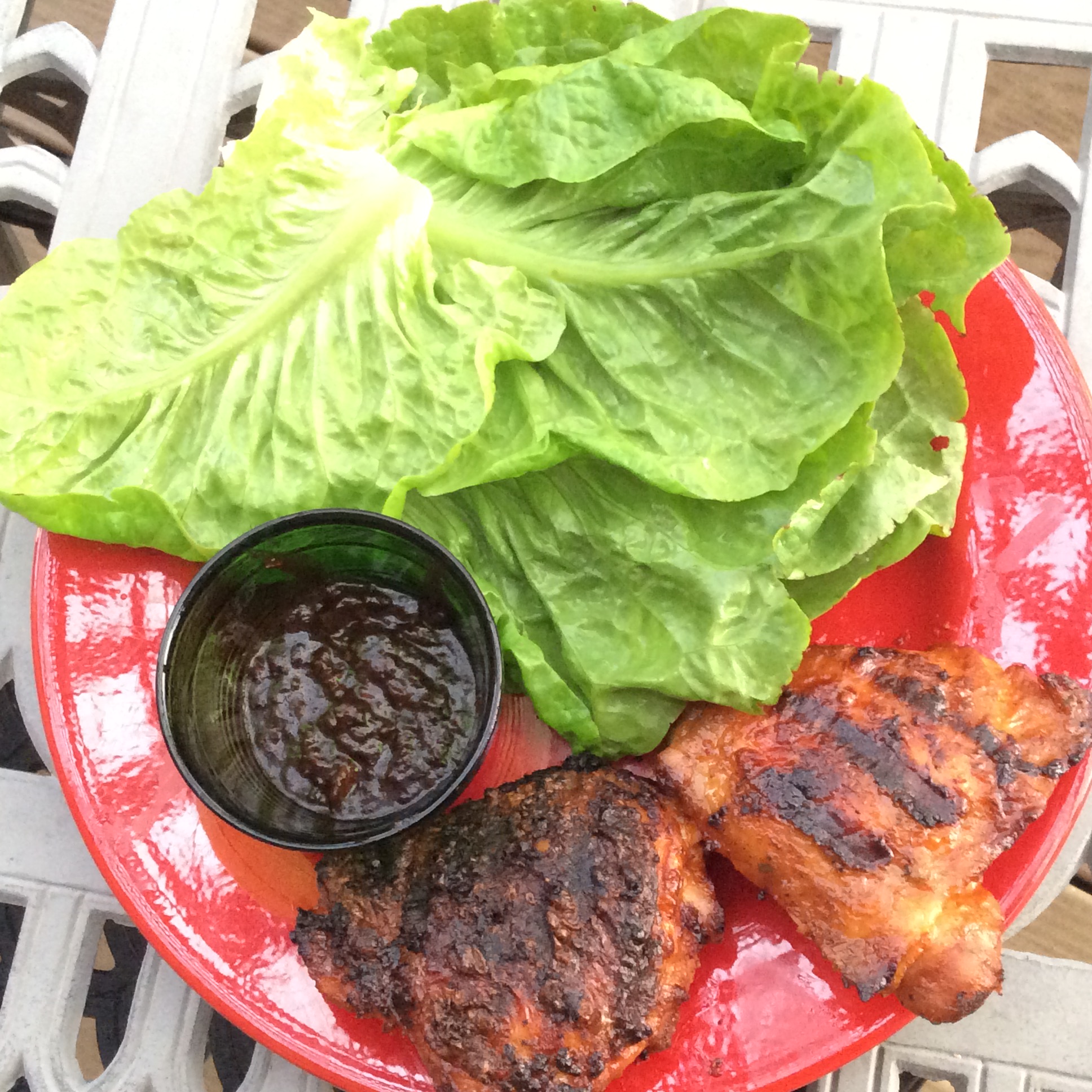
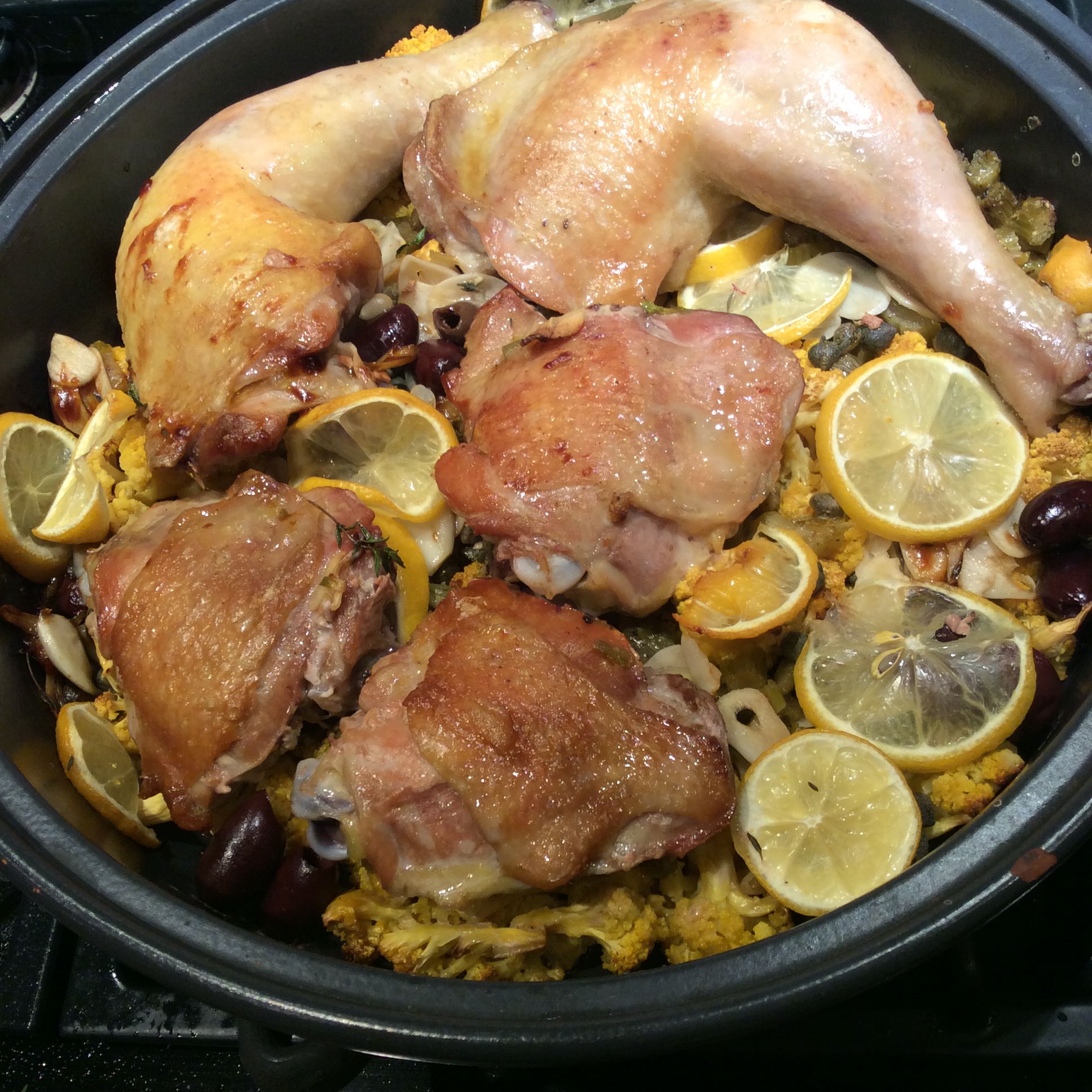
Ultimately, the proof is in the eating:
image
image

Urban Livestock I: Hens

image

Many people love the idea of urban farm animals and wonder what’s practical on a city lot. So I’ll spend a few posts ( not necessarily consecutively) talking about laying hens, meat chickens, and goats. There are other urban/ suburban possibilities, including bees, rabbits, small pig breeds, and even mini-cows. I may explore these in the future, but for now I’ll stick to what I know.

image

Laying hens are easy and delightful but need to be thought out. If you start with chicks, it will be 5-7 months until your first egg. Started pullets are available in many areas but of course are more expensive. Check Craigslist if you want to find pullets. I suggest two hens per egg-eating household member. That should provide enough eggs for eating, baking, and giving away occasionally. Many people who get hens fail to realize that they don’t necessarily lay every day except during the spring glut and don’t lay at all when they are broody or molting, or in midwinter unless you supply supplemental light.

Housing doesn’t need to be elaborate but does need to be safe. Raccoons are a concern in most urban areas. In my area we also have urban coyotes who can get over 6 foot fences, and they wiped me out of laying hens before I had the chicken run roofed over with sturdy welded wire. A safe coop at night is not enough, since I regularly see coyotes during the daytime. So no free-ranging for my ladies. I cut grass and leaves to bring to them instead.

image

Feed the hens to produce the best eggs possible. I like a laying pellet with flaxseed that produces high omega-3s in the egg, and I also provide daily heaps of greens for three seasons of the year, usually including fresh alfalfa. Extra calcium is a must, and in addition to oyster shell I save the shells of all eggs used in the kitchen. They can be briefly dried in the microwave and kept in a paper bag to be ground when they accumulate and mixed into leftovers of various kinds to be fed back to the ladies. If you have some spare time in the winter you can sprout seeds and grains for the hens, but I seldom bother. I did invest in a big bag of organic food-grade kelp meal a few years ago, and I dry some kale every year to make “kale meal,” both good winter supplements for hens.

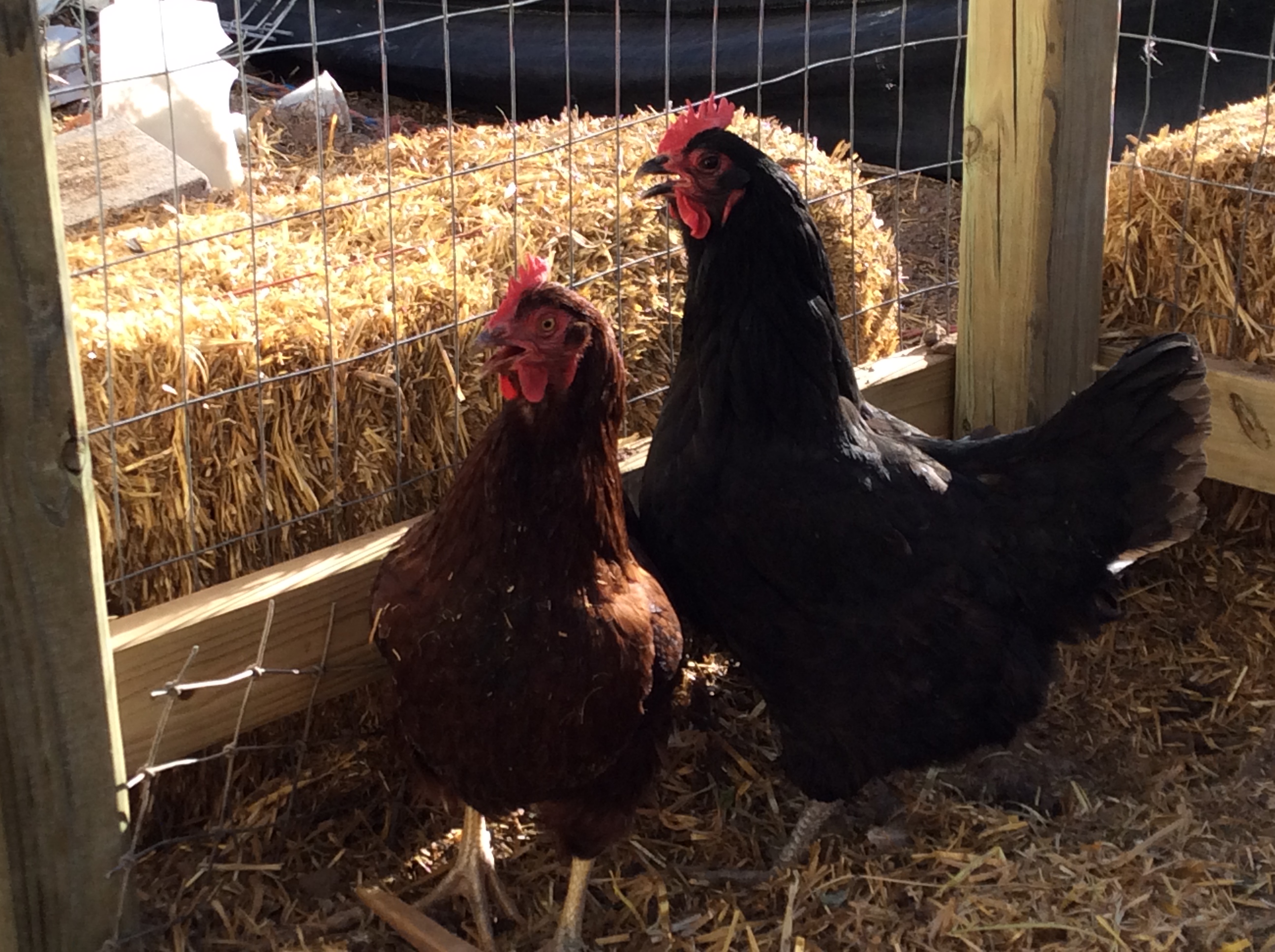
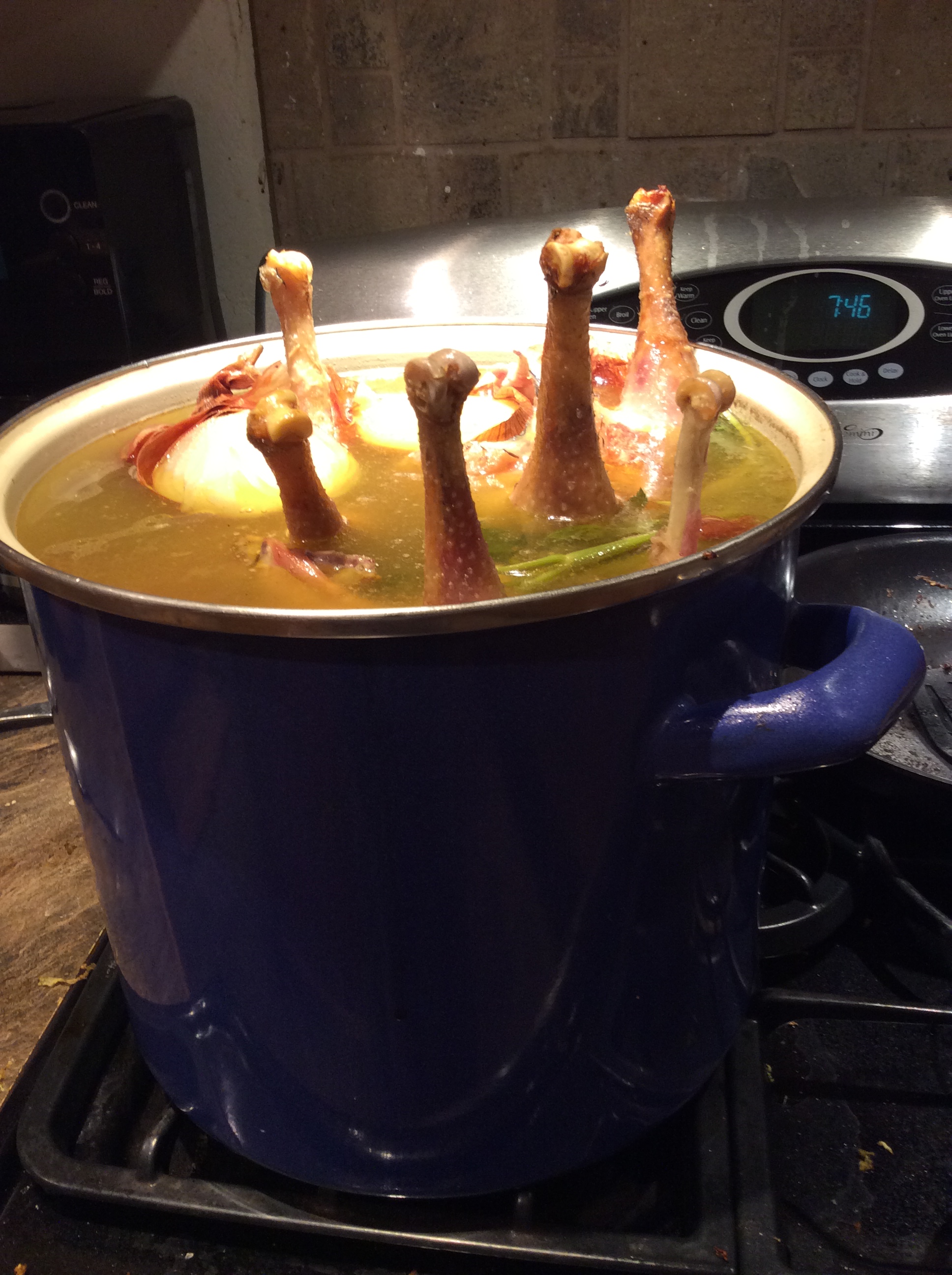
Hens lay well for one or two years, moderately for another two, and very little after that. This means that after the first two or three years you have to have a plan to bring in some new ones each year and move out the oldest ones. Old hens are not good for most cooking methods but make the best broth or stew imaginable, full of flavor and collagen. To manage your flock well, you need to be able to tell fairly reliably how old your hens are. I start a few new hens of a different breed and color each year, so for instance the Rhode Island Reds in my flock are all four years old, the gold Pioneer hens are three years old, etc.  This way I know that at the end of the upcoming season the Reds need to go in the broth pot and some new color of hens needs to be started. You will need to learn to butcher or be prepared to sell the old hens very cheaply to someone else who wants real chicken soup

image

DSCN0797

Consider whether you want a rooster. They are beautiful, protective of the hens, and also very loud indeed. In some areas they are actually illegal. In my area it’s legal to have one, but legality doesn’t mean much if your neighbors are unhappy. I keep enough hens to supply my immediate neighbors with eggs, and that helps a lot. A few neighbors now have hens of their own, so be aware that you may start a mini-epidemic. Roosters can be aggressive, but most of mine have been fairly easy to handle. If they do get aggressive with you, a broom is a good humane instrument for shooing them away with no damage done.

If you do have a rooster your eggs will be fertile, and if a hen goes broody, she can be allowed to hatch out the eggs. A separate small coop should be provided for the hen to sit the eggs and rear her brood. Have a plan for what to do with them, and bear in mind that the young roosters should be butchered or otherwise disposed of the minute they start to crow. But it is a real delight to watch a mother hen care for her little family.

image

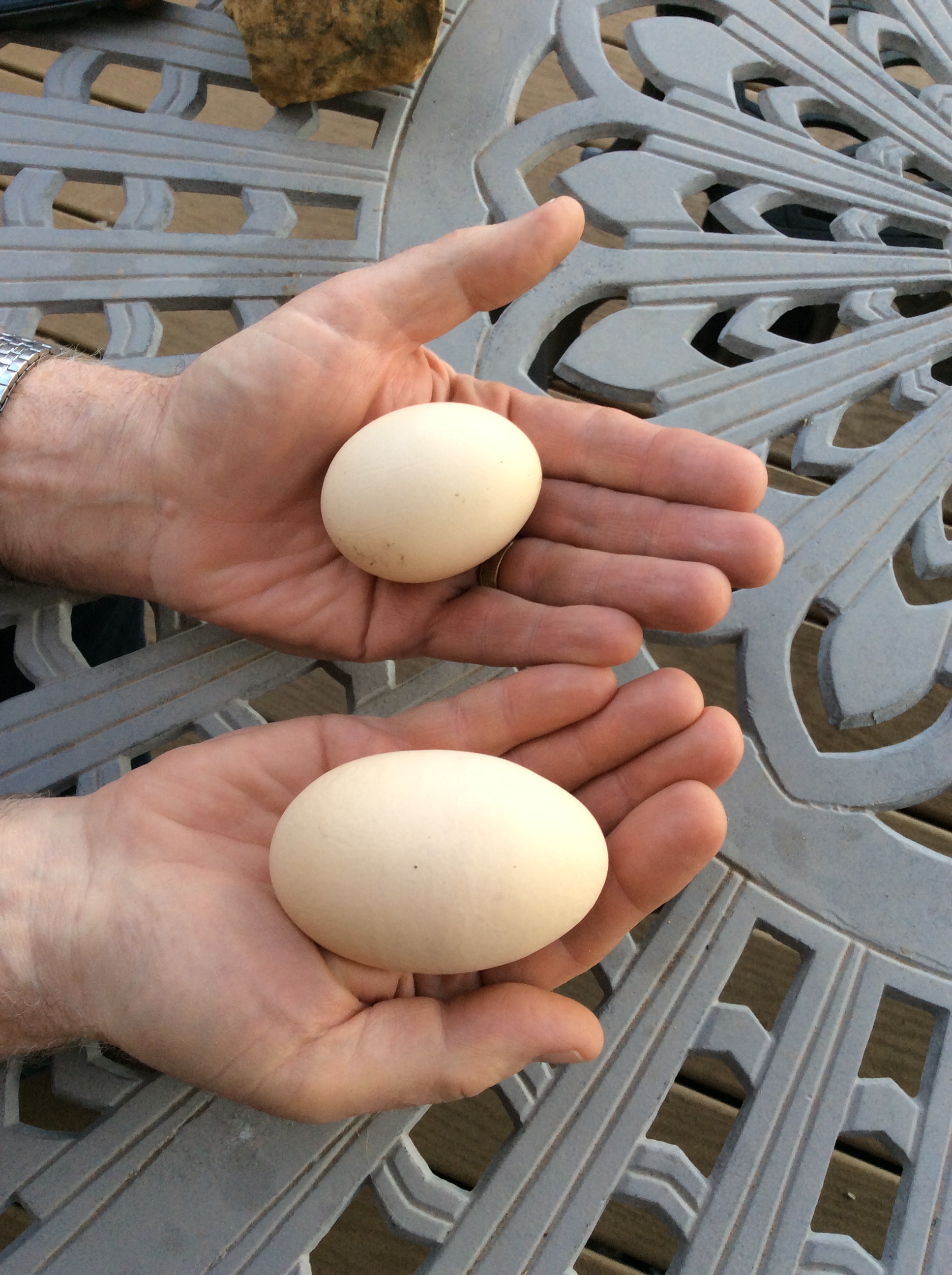
Sometimes I get questions about the “best” breed of hen. I have had Rhode Island Reds, Australorps, leghorns, Pioneers, buff Orphingtons, and several of the layer hybrids like black sexlinks and red sexlinks, and they have all layed well.  For purely aesthetic reasons I prefer brown eggs and usually choose layers that produce them. Heritage breeds like Welsomers and Barnvelders go broody too easily to be great laying hens, but they excel at hatching eggs and caring for chicks, and I keep two elderly heritage hens just for the purpose of raising several chicks each year. I usually have an Americauna or two around to add soft sea-green and blue eggs to the egg basket. If I were more organized than I am, I would keep a rotation of Australorps, Rhode Island Reds, black sexlinks, and red sexlinks, since these are the best layers that I have found among the brown-egg breeds. My roosters are either Pioneers or Red Rangers, both large meat birds whose chicks, even when crossed with the laying hens, will be large and meaty. Personally I look at the Murray McMurray hatchery catalog each year to see which breeds are designated “best” for laying, and I never bother with chickens bred for appearance rather than production or with flighty little bantams.  But if a flock of strangely alien-looking Frizzles pleases you and you don’t like eggs that much anyway, well, this is your flock and should gladden your heart in addition to its other benefits.

More on Carrot Steaks

A few days ago I wrote at some length about purple carrots and you can find that post here.

Today I want to talk about the common orange carrot which I also grow, for its vivid color on winter plates as well as flavor and nutritional value.
image
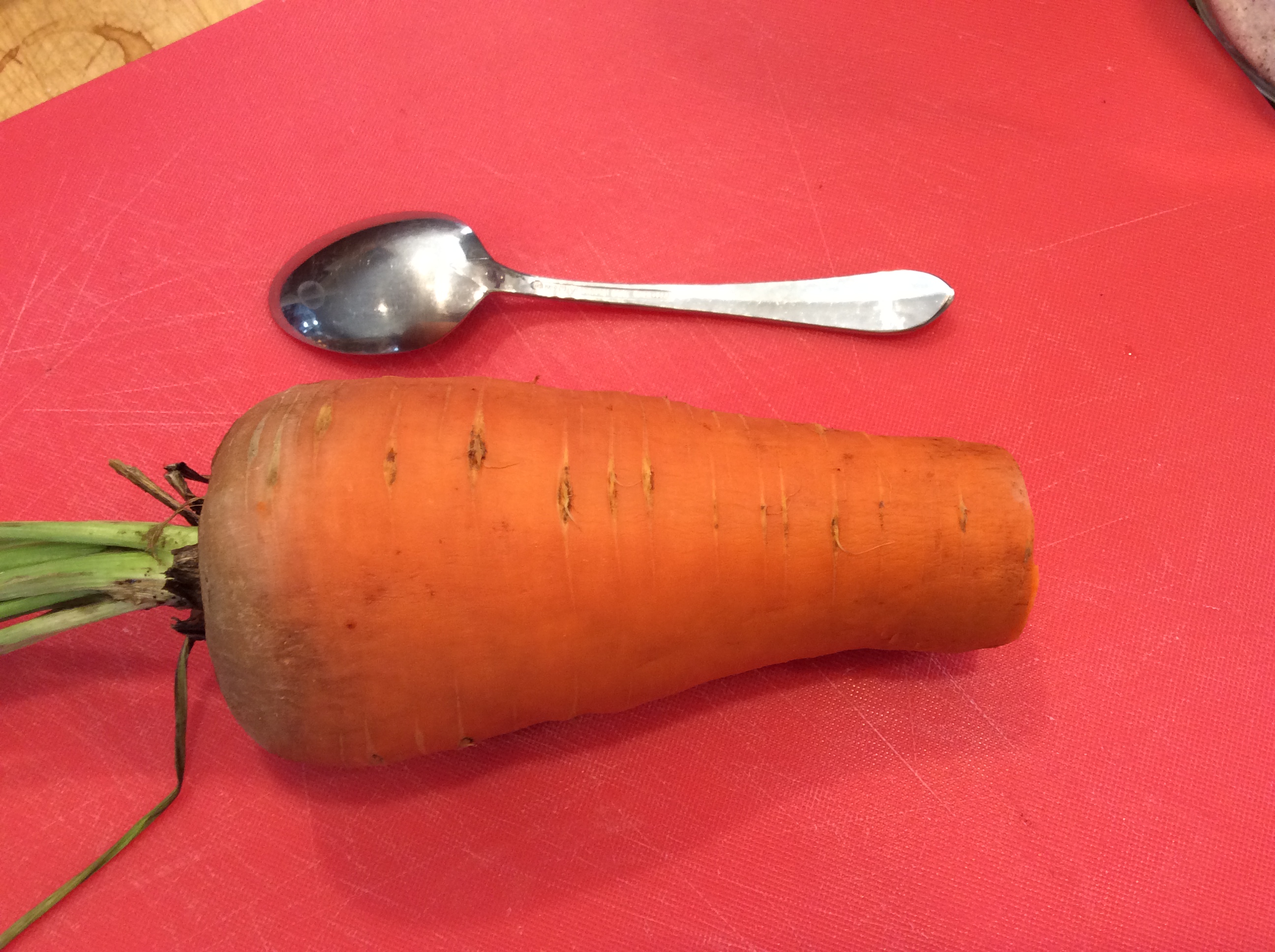
I don’t grow the tiny baby carrots. My preference is for the immense Chanteney-style variety Autumn King. I plant them at some point in May and let them grow all summer. By late fall they have reached the proportions shown. They are very tender and flavorful as long as they get enough regular watering during the growing season. I store them for winter by doing exactly nothing. They stay right where they grew. This works because this variety is quite hardy and because I live in a relatively mild climate where the ground doesn’t freeze more than an inch or so deep, and I can break the frozen ground with a shovel when I want to harvest. Dig up at will, scrub, and eat. In colder climates further protection would have to be given. I would experiment with putting straw bales a layer or two deep over and around the carrot bed rather than fuss with a root cellar. Readers in colder climates, please let us know what methods you like
image
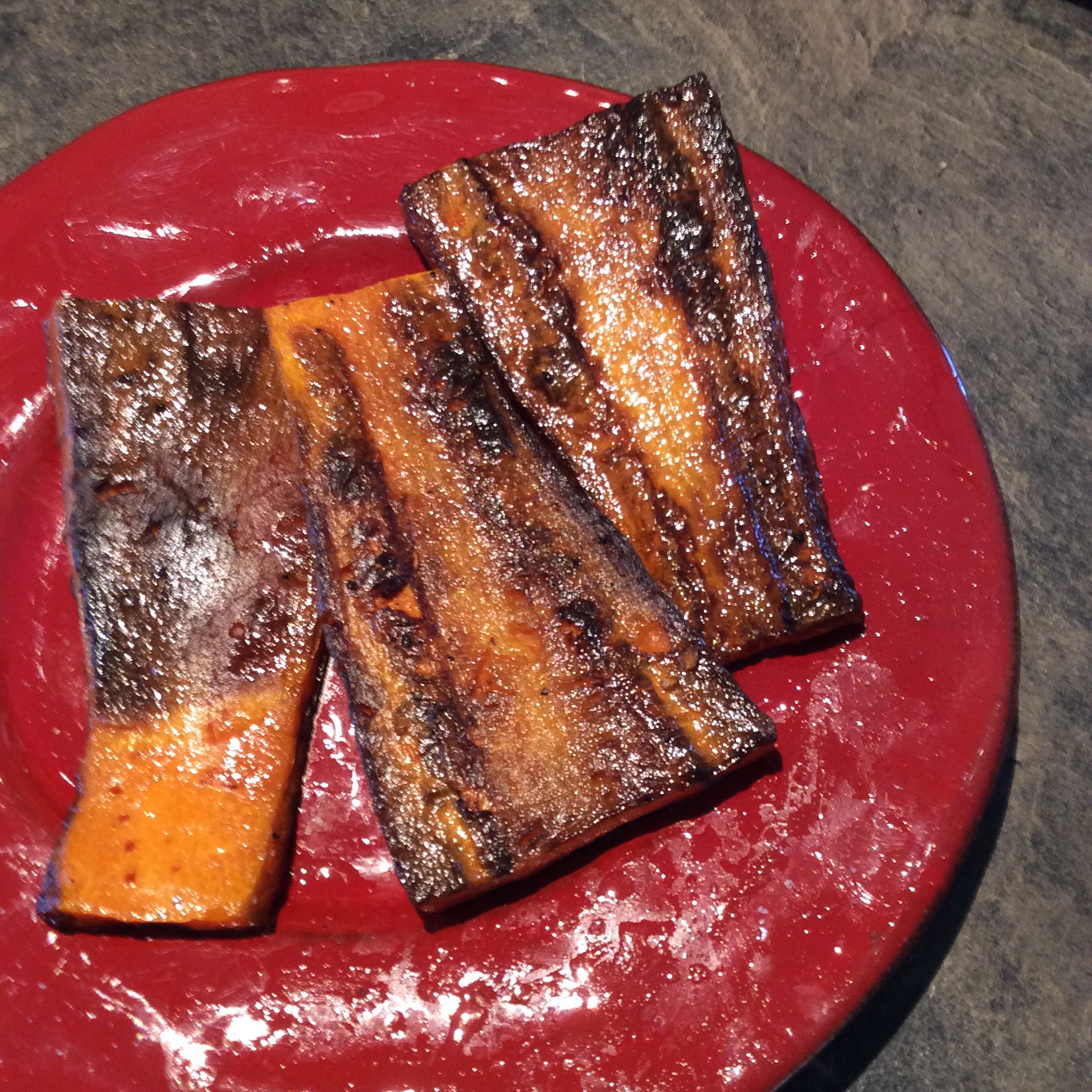
For cooking, I’m very fond of the carrot steak method that I wrote about yesterday as well as other, more conventional methods. The immense Autumn King can be sliced into carrot steaks that are about the size of  porterhouses. They can be seasoned in a lot of different ways. My default seasoning is olive oil and salt for the grilling or pan-grilling, then a glaze of thyme butter before eating.  It has recently occurred to me, though, that Carrot Steak Tandoori could be really wonderful. The only carrot dishes that I really dislike are those that are sweetened. Carrots are loaded with natural sugar and don’t need any added. Just let them shine.

If there are leftovers, carrot steaks are wonderful brought to room temperature, sliced into julienne, and dressed with a good vinaigrette.

I have often read that carrots left in the ground become woody. I have found this to be true only if they are left there until they resprout in the spring. So any carrots that are left when new tall green fronds start to emerge go to my goat and not to my kitchen. She couldn’t be happier. If you are goatless, chickens will scarf up carrots if they are chopped up finely in the Cuisinart. A carrot is also a necessary ingredient in the broth pot and woody cores don’t matter in that context.

Kitchen staples: the pantry (and freezer) of the low-carb home

image
There are ingredients and seasonings that I have to have on hand at all times or I get nervous. With them, I’m ready to make a meal out of whatever foodstuff comes to hand. All such lists are intensely personal and idiosyncratic and I make no claims for universality, just usefulness. Due to my very low-carb eating, staples like pasta and flour aren’t on the list for me.

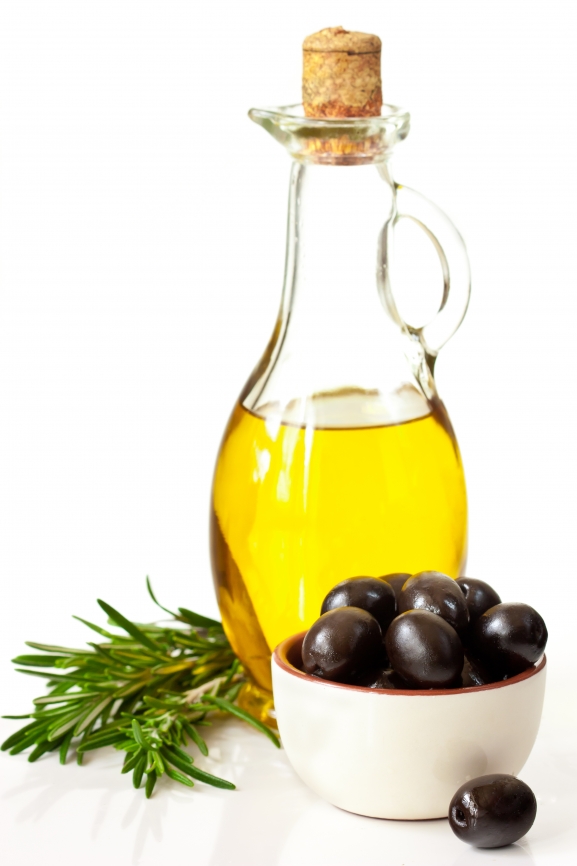
1. Really good fresh olive oil. Olive oil oxidizes fairly rapidly and, in my opinion, should not ever be used if more than a year old. Rather than take chances on freshness, I belong to the Fresh Pressed Olive Oil club; every three months they ship you three (or more if you choose) bottles of olive oil guaranteed to have been harvested and produced within the last 3 months; sourcing from the Southern Hemisphere as well as more traditional source areas makes this possible. I have belonged for years and hope they go on as long as I live and cook. A wide range of olive varieties and oil styles is represented. Pour it over cooked vegetables, dress salads, drizzle it on meat dishes, use as a base for a sauté of veggies. The Cretans and Ikarians thrive on it and so can we. I also keep oil-cured olives around at all times for their meaty umami belt in mixed greens.
2. Red Boat fish sauce. This is not only the best fish sauce available for Asian cooking, but pinch-hits very nicely for Italian colatura (garum.) A dash in vinaigrette gives a wonderful savor.
3. Dried mushrooms. I keep dried shitake, maitake, and porcini on hand at all times, and others at times as the mood takes me. With them, I am always prepared to add texture and flavor to cooked veggies, give a fitting garnish to a good piece of meat by soaking and sautéing them, or make a really good soup on short notice. I am ketogenic and don’t use flour, bread crumbs, or any other starch product, so I intend to try grinding them to powder and using them to “bread” and fry chicken, but that’s still on my to-do list.
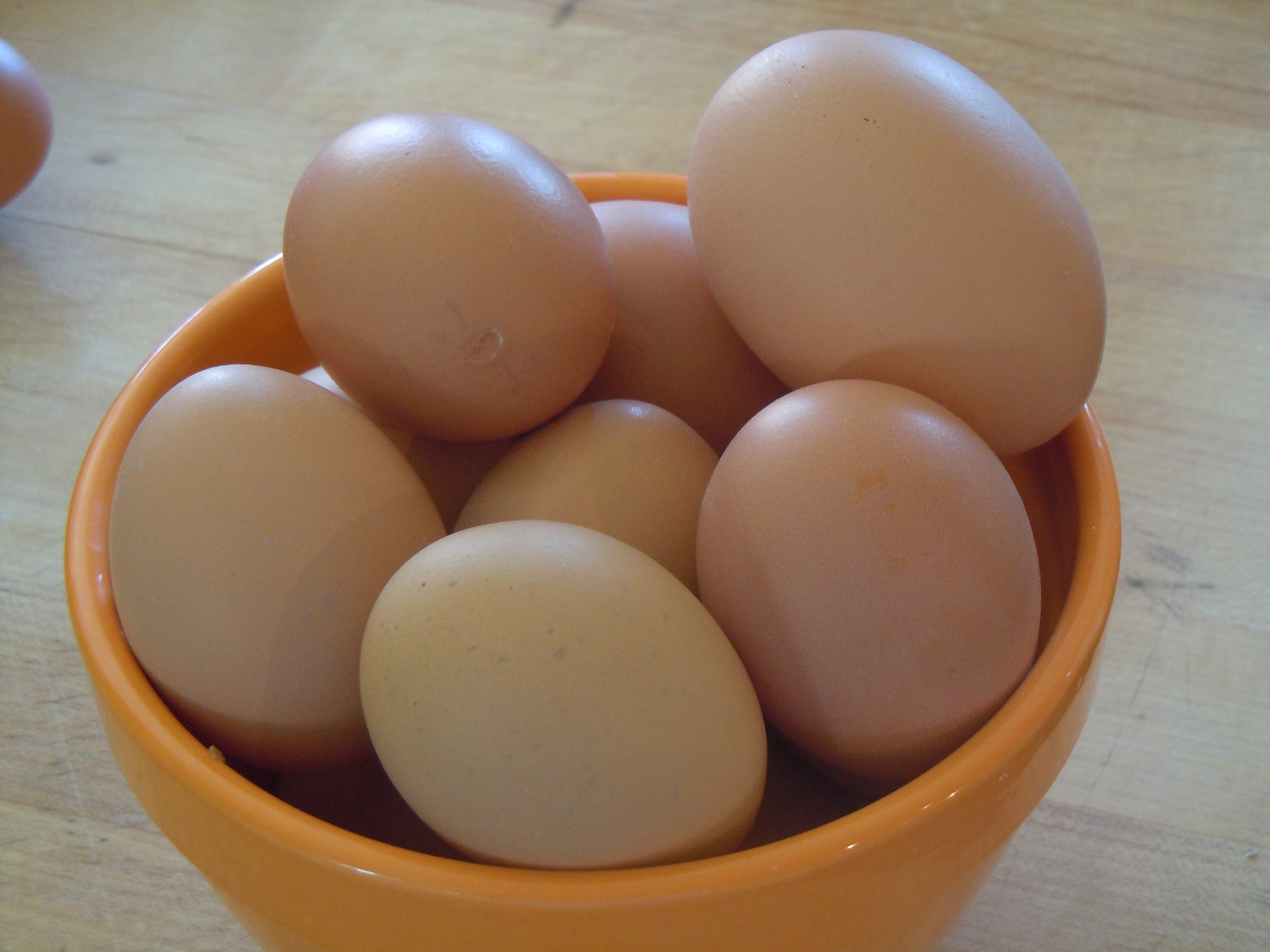
4. Eggs. The best eggs I can get. Most of the time I have eggs from my own chickens, and in midwinter when my hens take a rest, I buy from a local co-op. Beyond the obvious omelet, frittata, and scramble, a fried egg is a wonderful way to make vegetables into a complete meal, and egg yolks are a wonderful velvety thickener for sauces.
5. Grass-fed butter. Grass-fed because it’s better for the cows and the planet as well as for me. Butter because there is nothing like it for improving flavor.
6. Coconut milk, which in my book is a joint pantry item with Hand brand Thai curry pastes. On days when I am short of time, energy, and verve, I can pick up some fresh fish or thaw a couple of pastured chicken thighs, soak and slice a few shiitakes, and pull together a healthy meal in under twenty minutes.
7. Freezer item: Wild-caught Alaskan salmon. I pay whatever I have to pay to get good fish, and I always buy Alaskan because their fisheries are well managed. The fillets are thin and thaw rapidly when I haven’t thought ahead about dinner. After a workday that ran later and harder than I expected, I’ve been known to take a frozen fillet still in its vacuum seal into the hot tub with me. Fifteen minutes later, I feel rejuvenated and the salmon is ready to cook.
8. Freezer item: homemade broth from grassfed beef and pastured chickens. I have written at length elsewhere about homemade broth. I really feel that nothing else will do as much to instill food thriftiness and improve your soups and sauces.
9. Nuts of various kinds. Almonds and Macadamias always, others here and there. Because they taste good and you can run for hours on a handful of them if you need to and they add flavor and crunch and specialness to all kinds of dishes.

10. Freezer item: blanched and chopped greens. Mine are a mixture of whatever was fresh and vibrant in the garden and field on any given day. If I had no garden and didn’t forage, I would use mixtures of spinach, chard, and Tuscan kale, and blanch and chop them and vacuum-seal before freezing. I find that I eat a lot more greens if I have them available in a handy form, and can make horta or whatever in a matter of  ten minutes rather than having a more prolonged process to go through.

11. Good red wine. Because life contains joy and is worth celebrating.

12. Very dark chocolate. Because see #11.
image
image