Archive for the ‘Uncategorized’ Category

Turkish Rocket in garden and kitchen

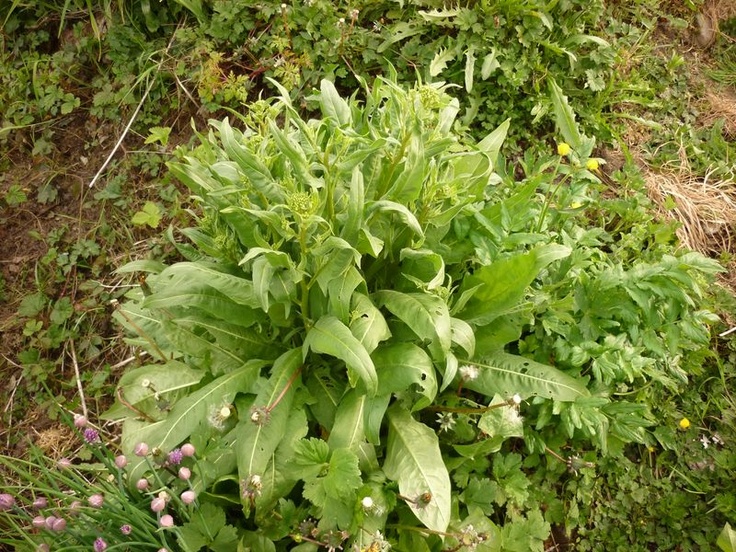
Last year I finally got around to planting  the perennial vegetable Turkish rocket, Bunius orientalis, and this year I was able to experiment with it in the kitchen. I had read that it was invasive and so I limited myself to five plants that I could watch carefully, meaning that my experiments were on a very small scale. So far, here’s what I found:

As so many have discovered before me,  the leaves are so strongly mustardy that they create quite an unpleasant burn in the back of the throat, and they are not a culinary object as far as I am concerned. Even my goat wouldn’t  eat them.

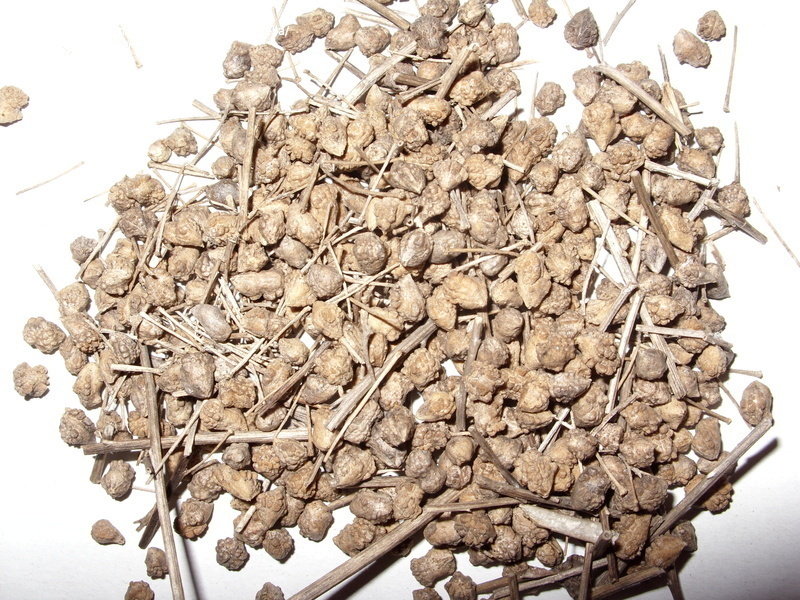
The bud clusters are used like broccoli rabe.  They can be very delicious, but timing is everything. The proper stage is shown in the photo above, when each stalk has one small bud cluster and the buds themselves are green, not yet showing the edges of bright yellow petals.  At this point, they can be blanched in boiling water for a minute or two, drained well, and then sautéed in olive oil with garlic and chili flakes and have the slight nutty-mustardy quality of good rabe,  with no burn as you swallow. You would need several well-established plants to get enough for a few servings, as far as I can tell, but they would certainly deserve their space.
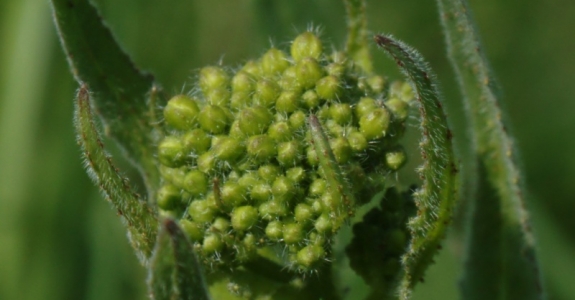
Here’s a close-up of a stalk in the perfect stage for eating. Snap off the top few inches of stem with the buds and it will cook up beautifully.
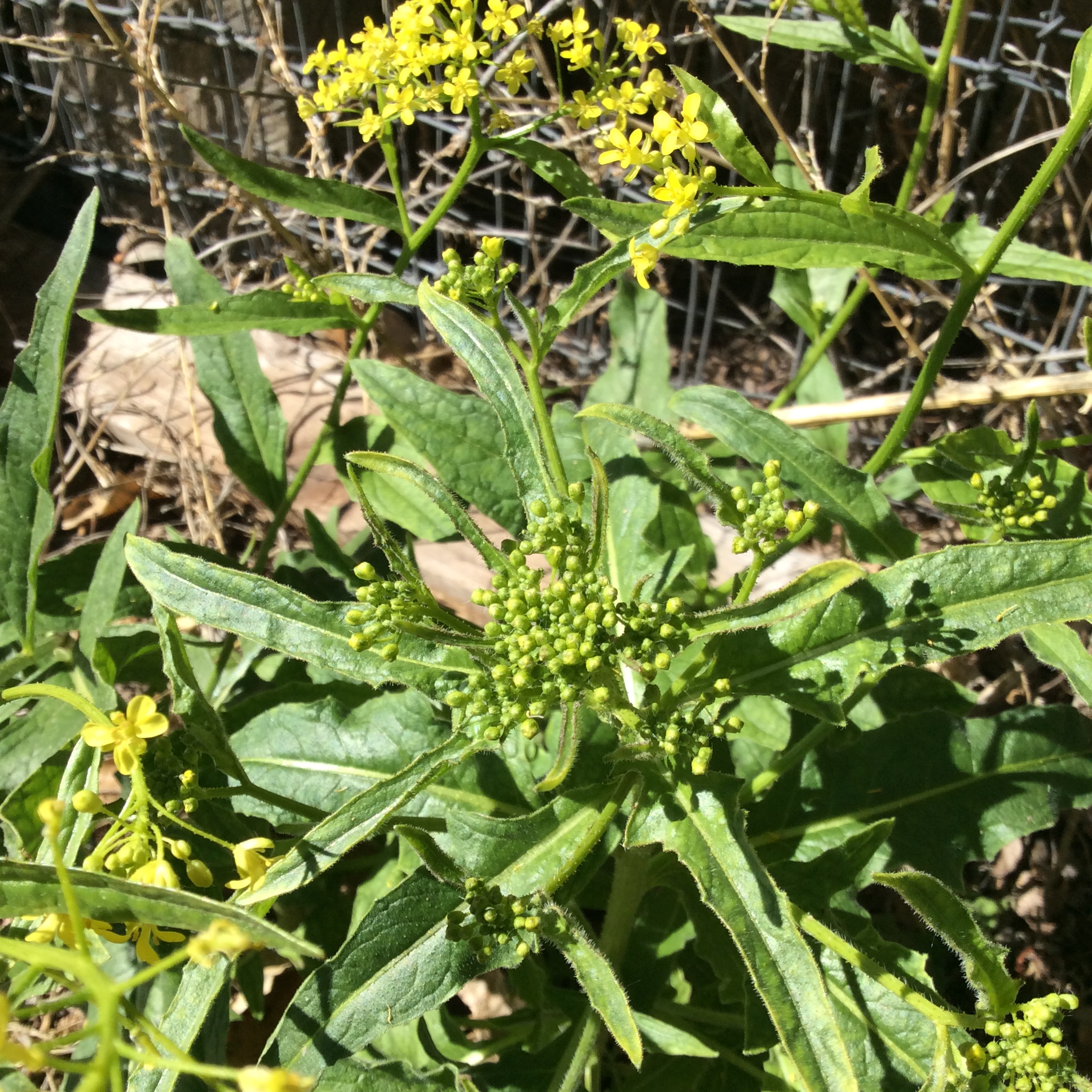
This picture shows the next stage in the stalk’s development.  The stem has elongated and the small original cluster has spread into sub clusters. I had hoped that this would be a good stage for harvesting, since you would get more material than at earlier stages, however it was not to be. At this stage, even when  cooked, there is a very unpleasant mustardy burn that continues to build in the back of the throat for a few minutes after swallowing. Not a pleasant experience. Once the subclusters have started to show and some yellow shows on the outermost buds, don’t bother.  It is possible that they could be  cooked longer, cooled, and ground with olive oil, salt, and maybe a little lemon into a sharp mustard-like condiment, but I have not experimented with that and throw it out as a purely theoretical idea, possibly similar to a green horseradish sauce.  Because of the throat burn factor, if you choose to experiment with that idea, try it out privately before you foist it on hapless guests.
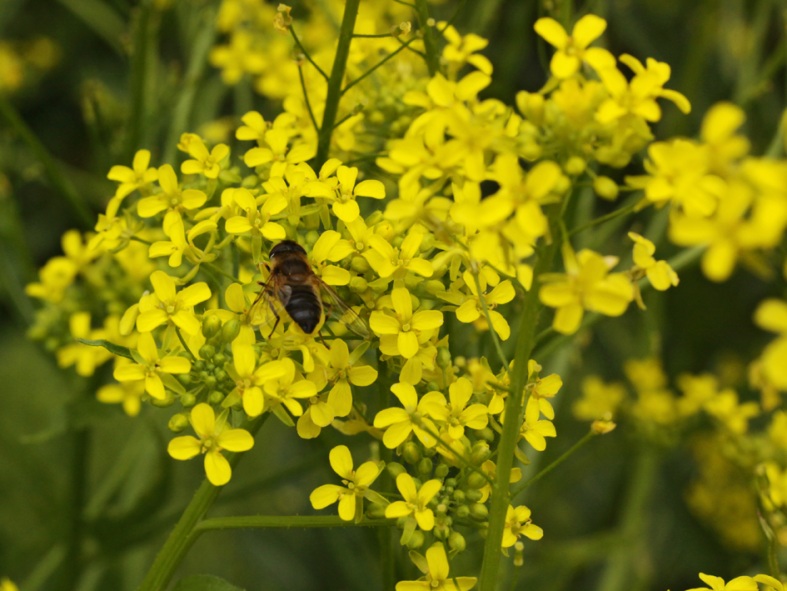
Then there is the flowering stage at which it is a bright cheerful yellow and is a fair bee plant, not highly preferred but certainly visited.
This is the stage that I am waiting for, so that I can plant a whole row of it and have a lot more to cook in the future.

For me this perennial vegetable fills a good niche  after the winter broccoli is gone, but before the spring broccoli begins producing. This time of year there are a lot of edible leaves in my garden but not too much else, so some textural variation is very welcome.

Regarding the claims of invasiveness, I am sure that this is true in many areas, but in my desert climate it requires a fair amount of water to grow well, so I doubt that it could grow outside the confines of my fence.
Milkweed, For People and Others


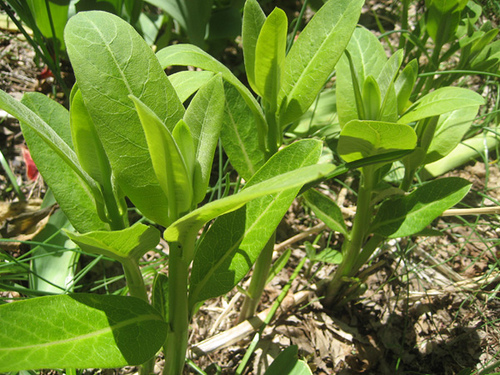
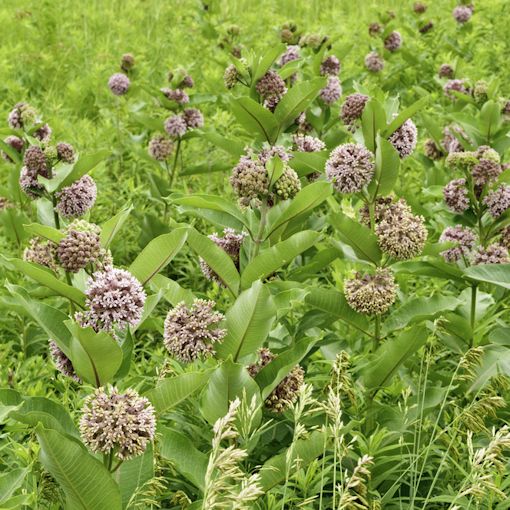
People who live in wetter climates would be surprised, and probably amused, to learn what efforts I’ve made to have common weeds like nettles, burdock, chickweed, and milkweed grow on my property. Common milkweed, Asclepius syraica, has been especially difficult because it really does like moist soil and doesn’t tolerate “dry feet” or alkalinity gracefully.  It took a couple of tries before I got any to germinate, and now I finally have a few plants, which have to be watered and tended and fussed over as if they were orchids until they get stronger. I had to borrow photos because my own milkweed is still a bit on the spindly side.

One might well wonder why I bother. One reason is that I like to eat milkweed, especially the young seed pods, but the shoots and buds are just fine too. It’s a true nose-to-tail vegetable. Another is that I am transitioning from annual veggies to perennial wherever possible, and A. syraica is a good useful perennial that doesn’t require soil disturbance to grow. A third reason is that the flowers are fairly ornamental and send out a cloud of perfume reminiscent of flowery vanilla.

A fourth reason can be seen on this map:

Monarch migration

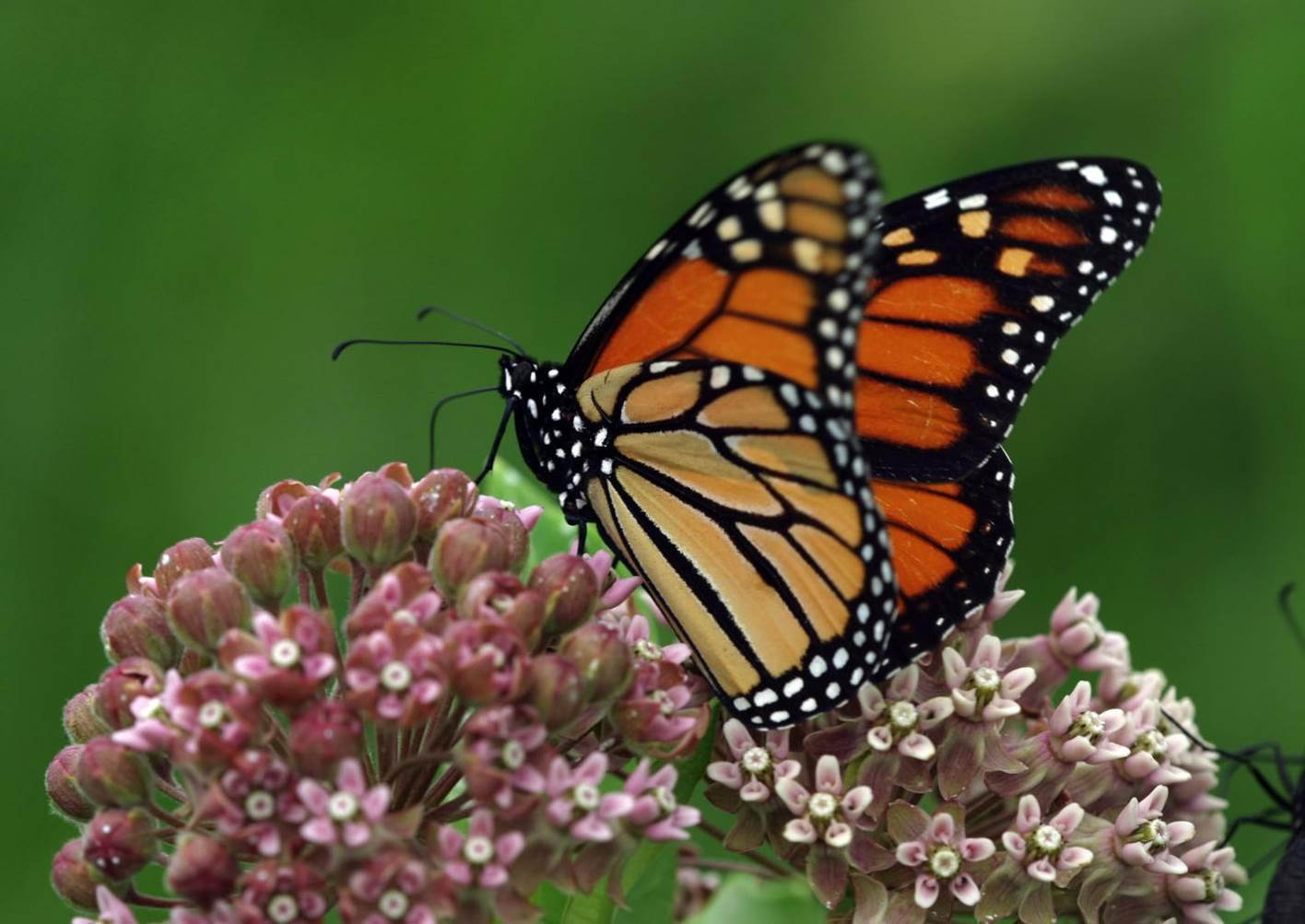
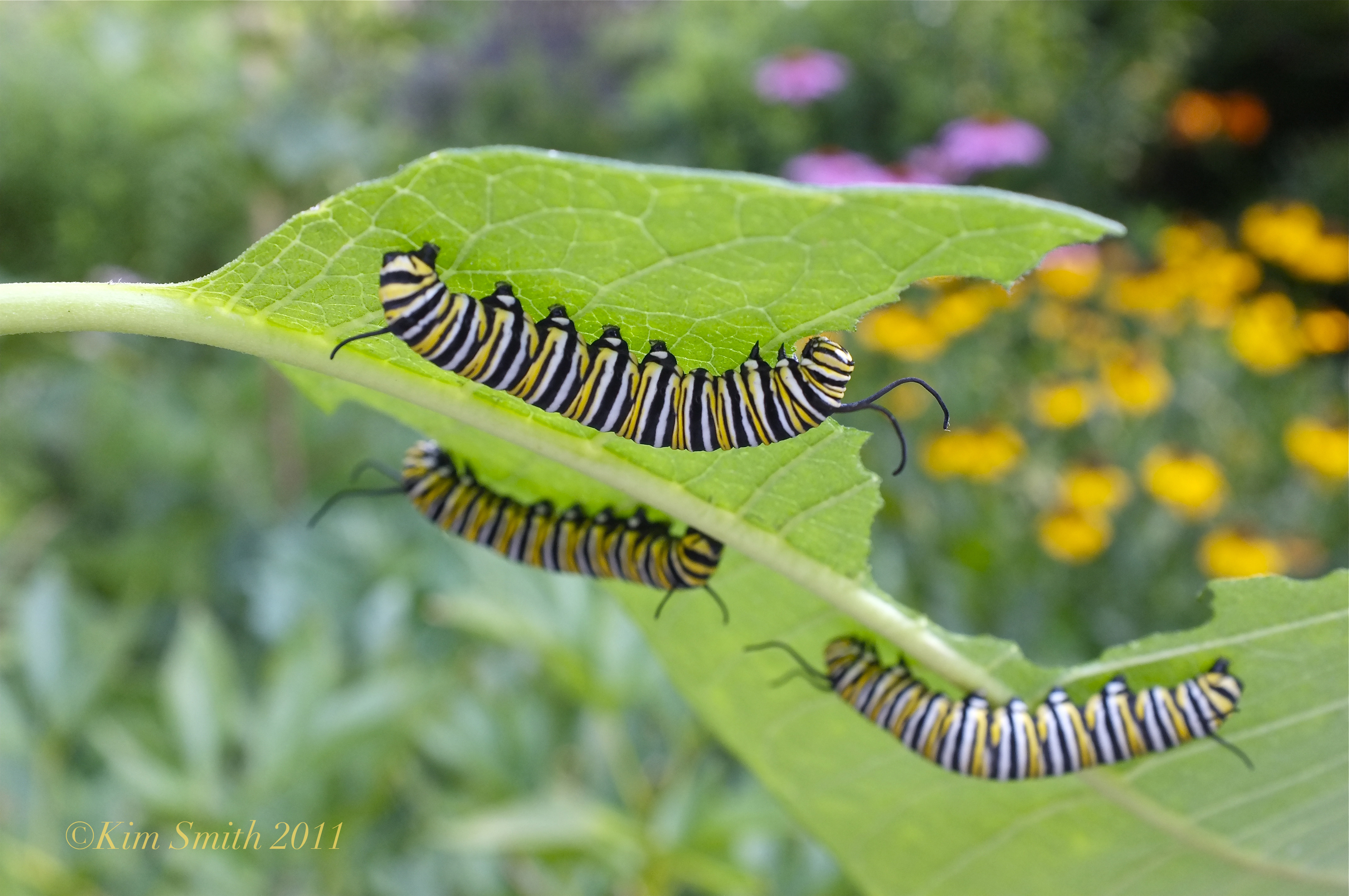
Notice how the sightings in New Mexico just peter out, while the ones in wetter areas east and west continue northward. Compare this to the maps on the same site for larvae and for milkweed. The migration of monarch butterflies from Mexico to the northern US is a migration of generations. The butterfly that arrives in Montana may be great-great-grandchild to the butterfly that flew north from Michoacon. All along the way they need breeding habitat, and their larvae feed on A. syraica and a couple of other closely related milkweed species. The leg of the journey through desert northern Mexico and southern New Mexico is a barren one, and a few milkweed oases along the way might help more monarchs make it to Colorado and further north. I can’t guarantee it, of course, but it seems worth a try. Adult monarchs will sip nectar from many flower species, but the fate of the larvae is tied to milkweed supply.

You can read more about monarch conservation here:

https://monarchconservation.org

Since my plants are still too young to pick for eating, I won’t be writing about milkweed in the kitchen until next year, but you can obtain the two wonderful field guides by Samuel Thayer, The Forager’s Harvest and Nature’s Garden, and be prepared to forage and cook any common wild edible. I never tire of recommending Thayer’s books, which contain great detail about identification and culinary use at various stages.

A Quickie on Pollination

IMG_5498

There can’t be anybody left who doesn’t know about our pollinator crisis. I was saddened recently when an experienced beekeeper who is profoundly attentive to her bees told me that she lost a third of her hives over the last year. It can’t be overstated that our friend over millennia, Apis mellifera, is in deep trouble and therefore so are we.

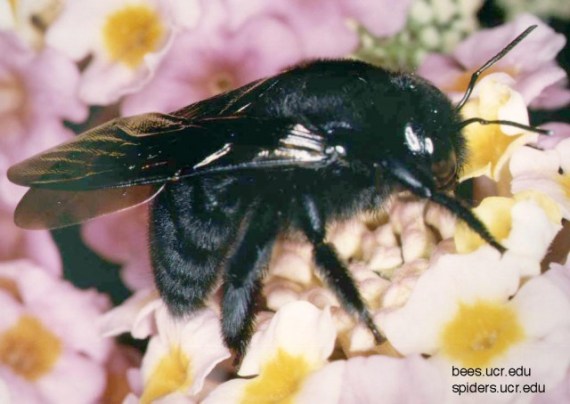
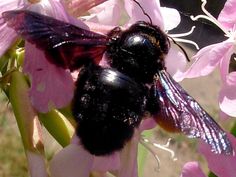
This makes our remaining pollinators even more important. Everyone recognizes bumblebees and knows that they are active pollinators,  and in my area most people recognize the coal black stylish looking carpenter bee.  Unfortunately, they recognize it because they think it is a danger to their houses and tend to reach for spray the minute they see it.  Carpenter bees are active pollinators and adapted to our area and spraying them is a really, really bad idea under most circumstances, but when I did a search on them to find a photograph, I was horrified to find that almost all  the hits that I found were about exterminating them and advised application of “residual pesticides,” i.e. pesticides that leave residues which kill for a long time after they are sprayed.  This is sick stuff, in my view, especially since it kills large numbers of other species.  On the other hand, I own a house with exposed wood beams and don’t want my house bored into any more than anybody else does.  I have repeatedly noticed that the carpenter bees like cottonwood, and have decided to keep a pile of cottonwood logs and branches where the bees can burrow around at peace.  I read that they also will not attack painted wood. Clearly, I will be watching my beams closely for signs of invasion, and if I see carpenter bee activity I will consult an entomologist (not an exterminator, since they have a business interest in selling me their poisonous services) about what to do. But so far that hasn’t happened. And I guess that’s my real point: the mere sight of something that might potentially be harmful but that is minding its own business at the moment is not a reason to get reactive and act harmfully. The mindset of permaculture and homesteading is to avoid making a hazard out of something that isn’t.  This point is rather neatly illustrated below:

IMG_5502

Help our bees. All of them.

Backyard Mushrooms

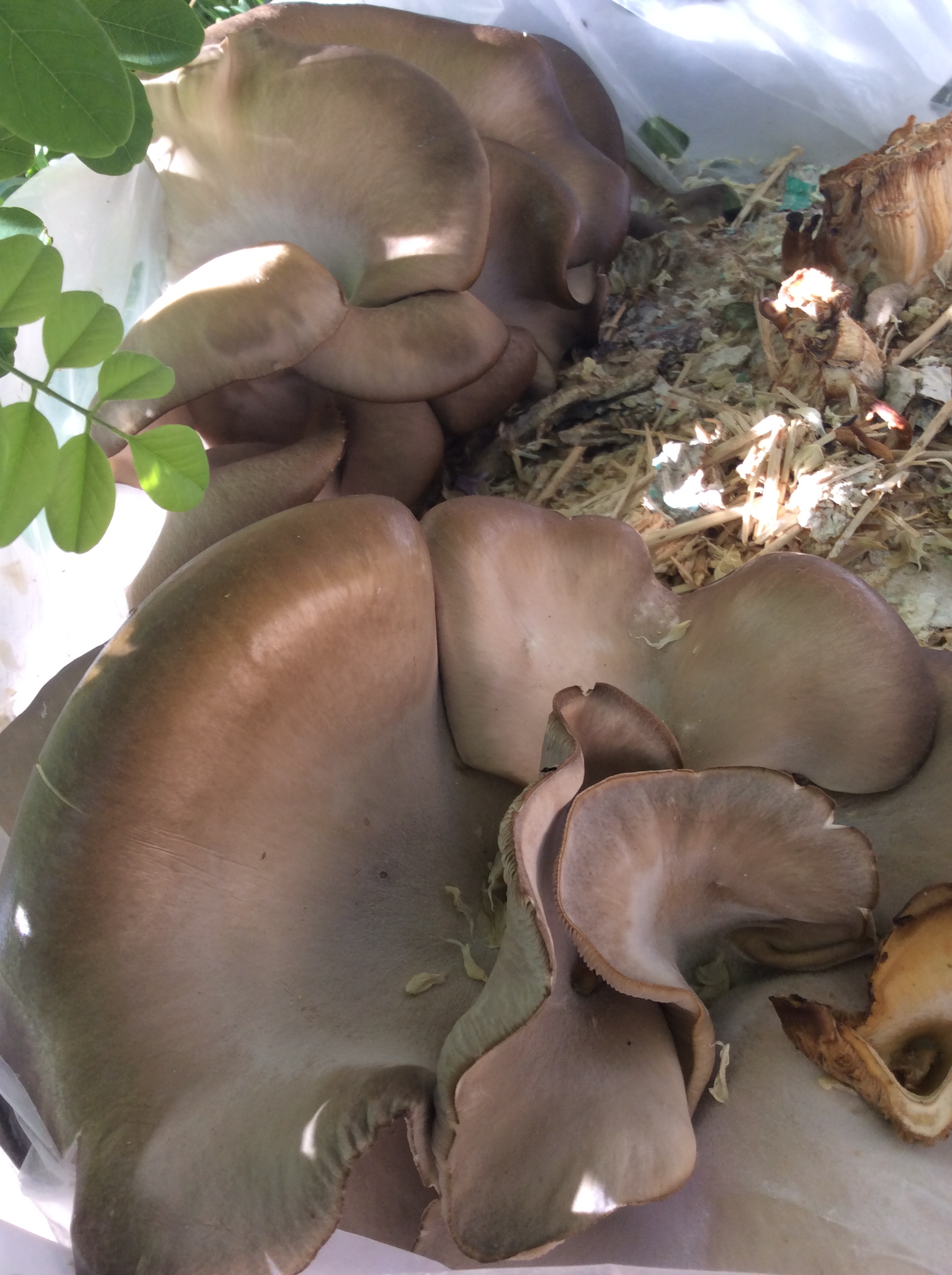
For years I moaned and carried on about my inability to grow mushrooms as an integrated part of my urban homestead, and now I can’t stop them. All winter I grew oyster mushrooms in the garage on a substrate of recycled paper, and last month I put the theoretically depleted basket of substrate outside in the shade with the thought that when I got around to it, I would break up the broken-down paper and incorporate it into my mulch. Instead, the basket was within range of a sprinkler that I was using every other day to help some new plants get started, and produced another three pounds of mushrooms. So this might not  exactly be the Pacific Northwest around here, but the adaptable oyster didn’t care.

So my point is, as the Gangsta Gardener says, just plant shit. Plant what you would like to eat and don’t give up. Plants and fungi are resilient survivors and may astonish you at some point, even after initial disheartening failures.

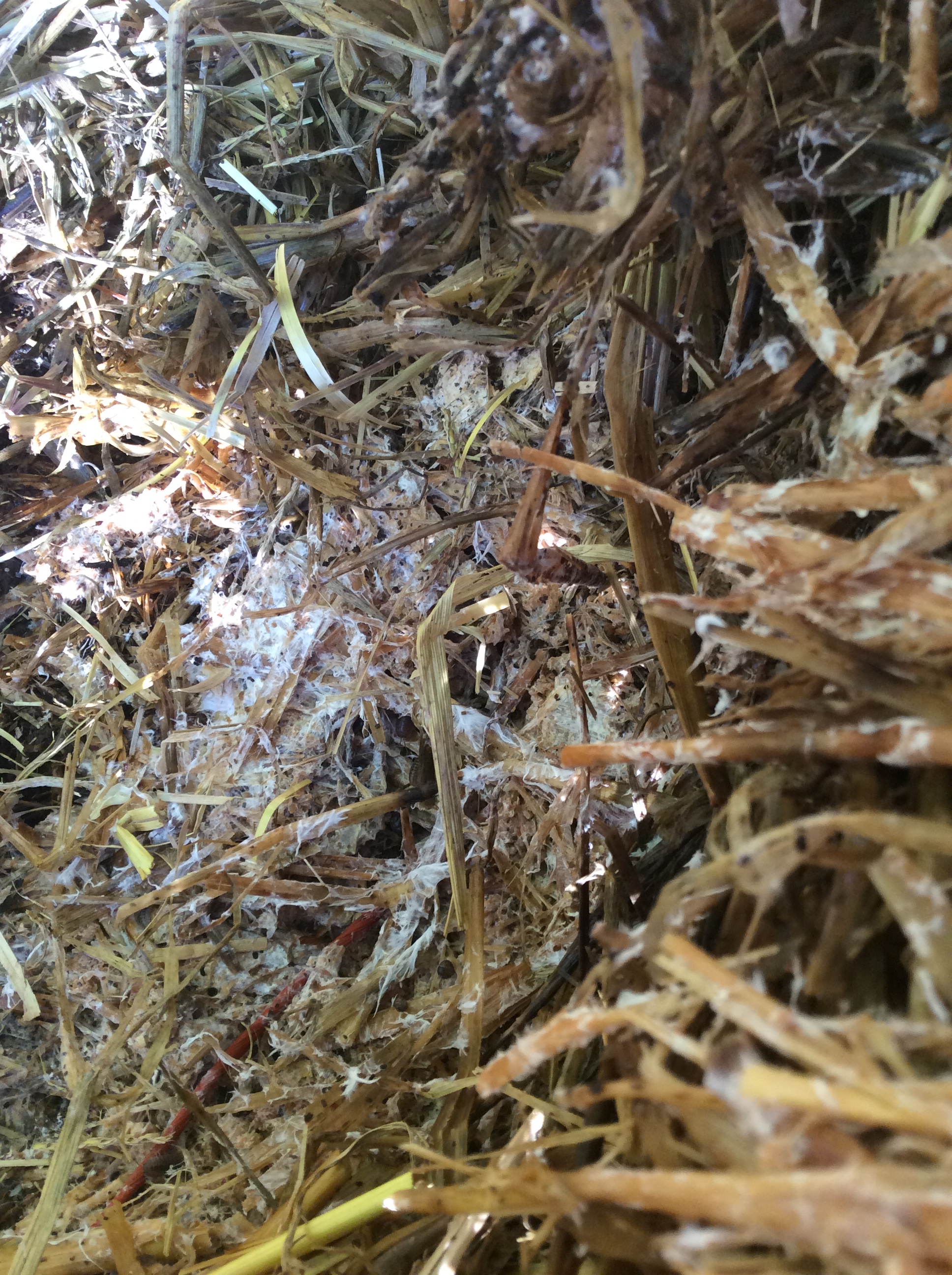
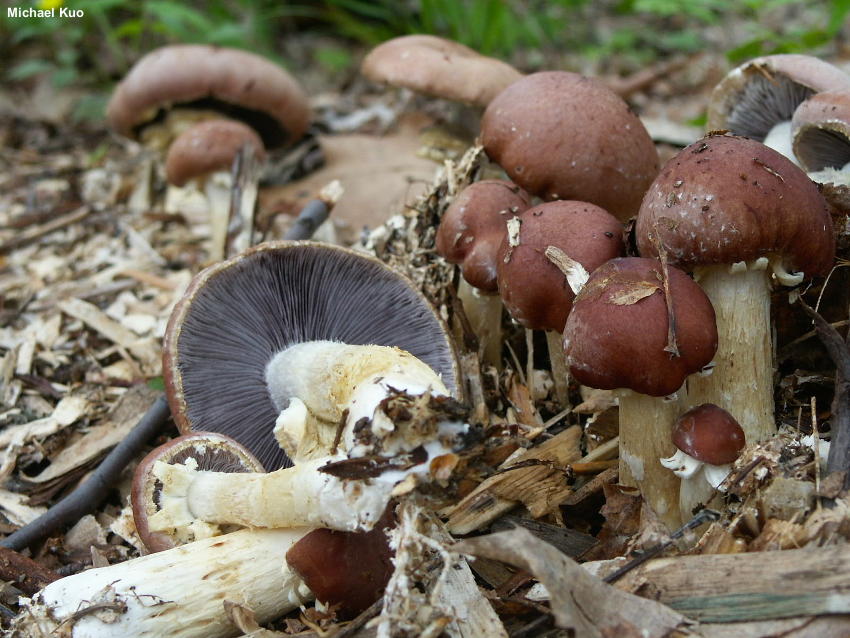
The role of fungi in a healthy ecosystem is far-reaching and worth reading about. They are valuable beyond measure whether you can directly eat them or not. But my greed and gluttony makes me most interested in the edibles. Pleurotis ostreatus, the common oyster mushroom,  is vigorous and highly adaptable and also delicious, which works out well for my purposes. But I am experimenting with some other types. In an area of deep straw and mulch I put spawn of the wine cap mushroom, Stropharia rugosa-annulata, and it seems to be sending mycelia out through the straw. In August I’ll find out if it will fruit for me.

The mycelium above may grow into the mushrooms below:

DCF 1.0

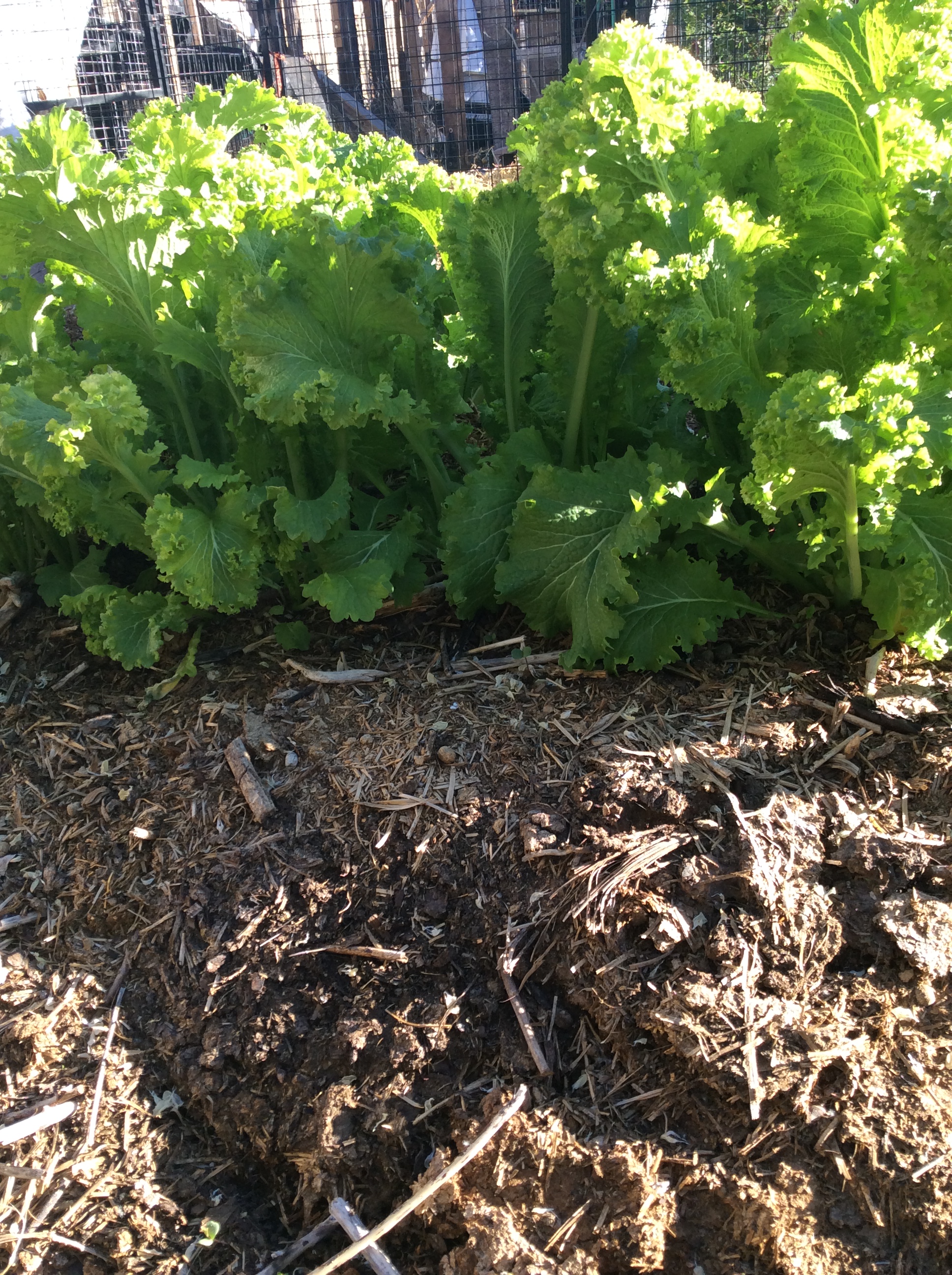
Every year I make a new bed by putting down layers of cardboard and nontoxic paper recyclables and piling up a year’s worth of goat bedding on top. This is a mixture of goat manure and the alfalfa that she eats, and is as hot a compost material as you will find, so I do this in late fall or early winter, wet it down thoroughly, and let it compost in place over the winter. In spring, I start planting into it.  Generally, the first year I use hearty healthy unstoppable plants, such as mustard for greens and summer squash. They always flourish, and by the second year of the compost is finely broken down and will grow pretty much anything. This year I planted spawn of the almond agaricus mushroom, a compost-loving mushroom, into a first-year bed and will see what happens. But I was interested to note that a small shelf of oyster mushrooms poked out the side a couple of weeks ago. The oyster mushroom is not “supposed” to tolerate full sun or hot compost. To which I can only say, tell that to the oyster mushroom.

If you’re interested in learning more about offbeat ways of growing mushrooms, Mycelial Mayhem is a delightful romp through the casual side of mushroom growing. Mycelium Running is a classic about the role of fungi in ecology.