Archive for the ‘Uncategorized’ Category

Chicken with Double Garlic Sauce

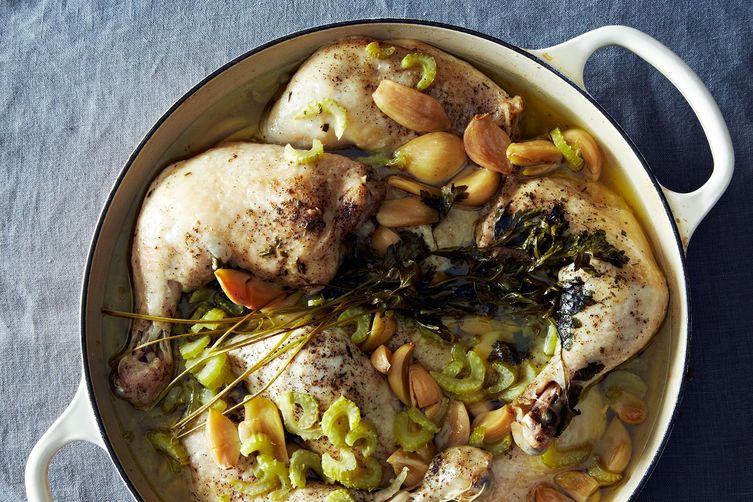
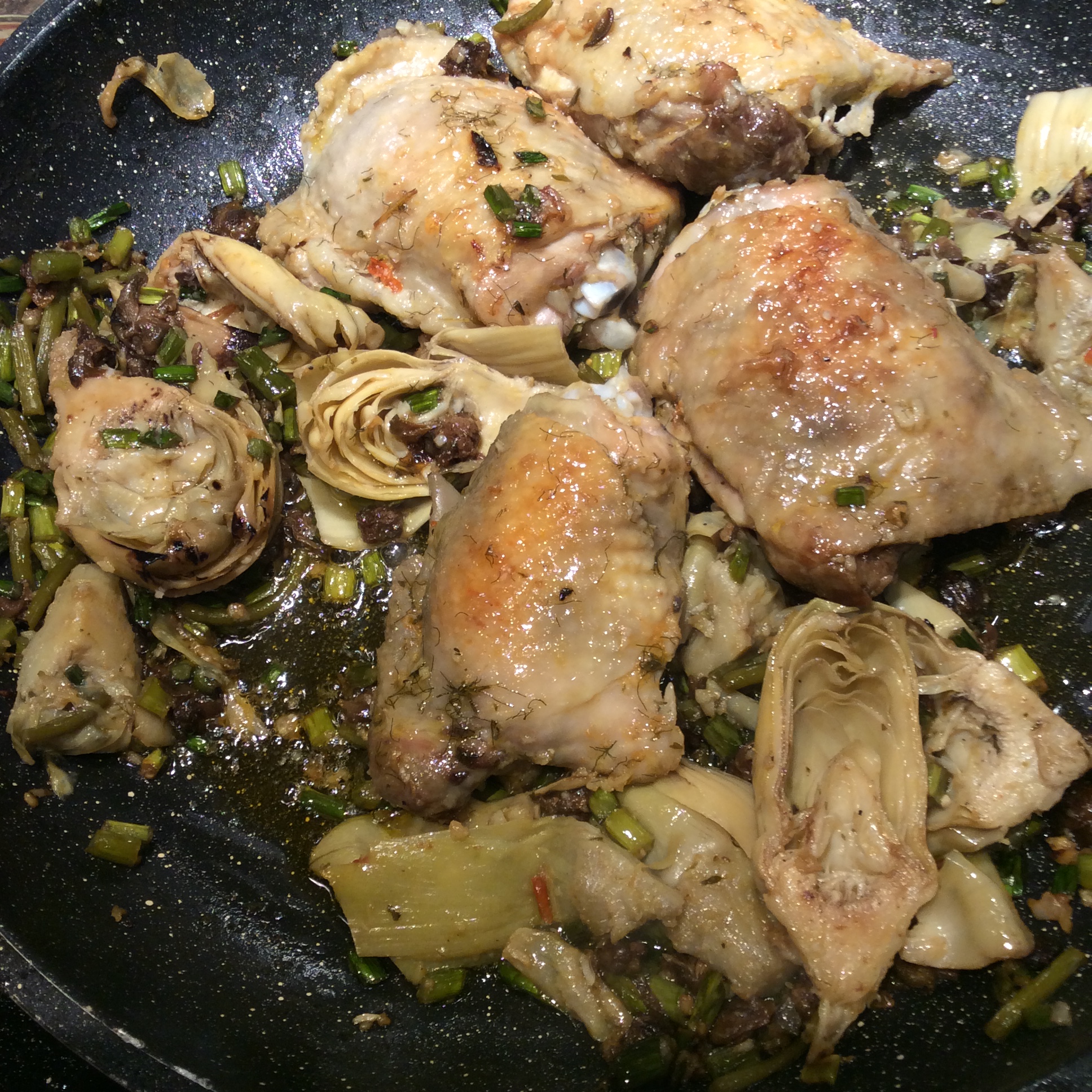
Garlic is wondrous in all its forms. I called this simple chicken sauce  “double garlic” not because it contains a lot of garlic, although it does, but because it contains garlic in two distinct forms. Right now I am harvesting the bulbs of the early Chinese Pink while the late Mount Hood is forming tender scapes. So both went into this dish. For the chicken, I used some leftover plainly roasted thighs. You could also make the very quick seasoning sauce to add interest to a plainly seasoned rotisserie chicken that you bought on the way home after a busy day. Of course you could also cook chicken thighs right in the sauce, but I conceived of this as a way to make leftovers fresh and interesting.

In the spirit of easy convenience, I added some artichoke hearts marinated in oil that I found at a grocery store olive bar. If you have some leftover vegetable that isn’t too seasoned, this is a good place to use it up. Just don’t use marinated veggies that are acidic or pickled-tasting; taste to be sure.

You will need:

1/3 cup very good EV olive oil

7 cloves fresh garlic, chopped

5-6 tender garlic scapes (snap one near the base. It should snap cleanly, with no “bark” peeling at the breakpoint) Chop in bits a little more than 1/4″ long

1/3 cup salted capers, soaked and squeezed dry, or brined capers rinsed and squeezed dry

1/4 cup, loosely packed, chopped herbs of your choice. I used half thyme and half fennel

4 cooked whole chicken thighs, or a disjointed rotisserie chicken

roughly 1 cup of cooked leftover veggies, not too seasoned
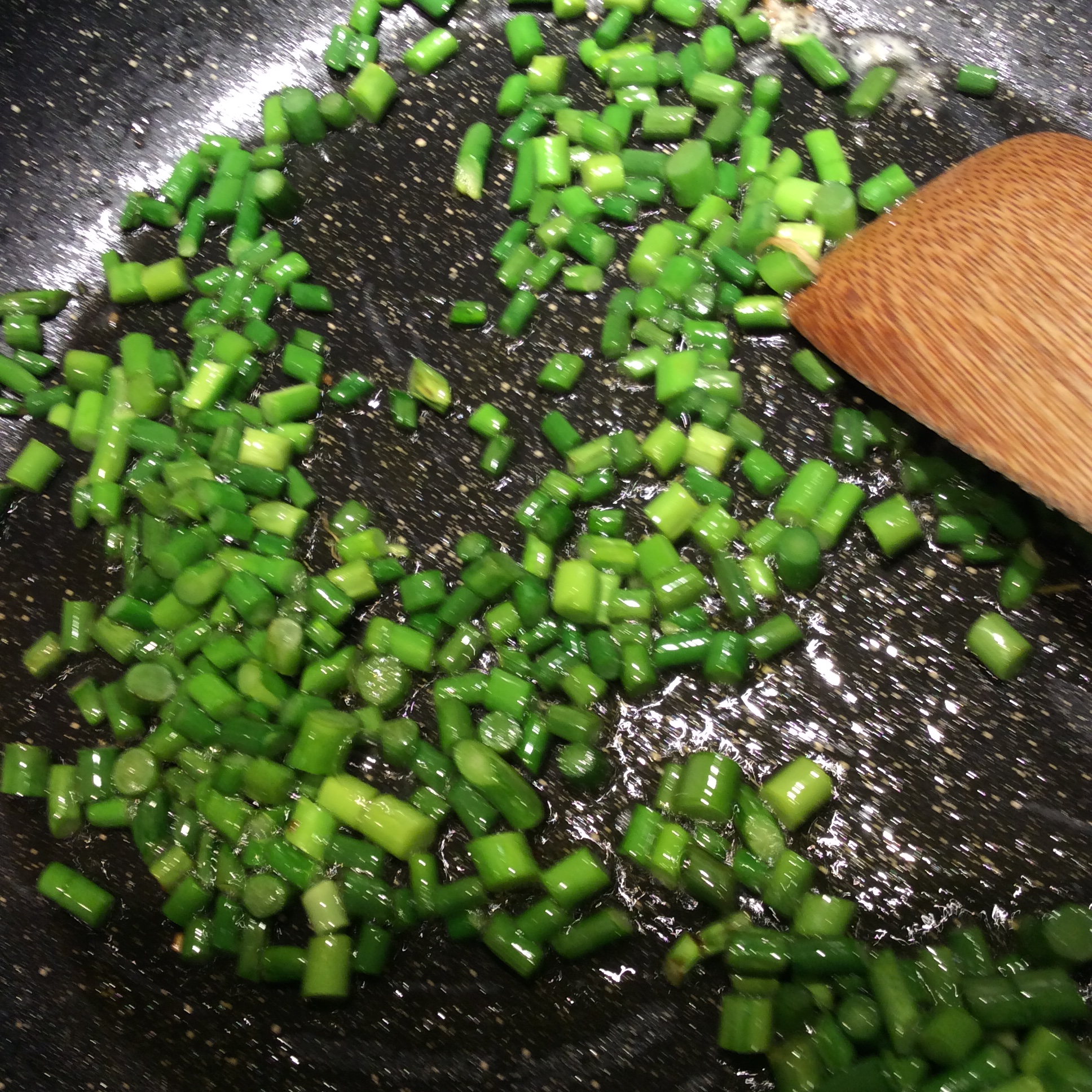
Heat a skillet ovet high heat and add the olive oil. Put in the chopped scapes, fry for about two minutes stirring frequently, reduce heat to medium, and cook until scapes are crisp-tender ( the best way to find out is to chew one.)
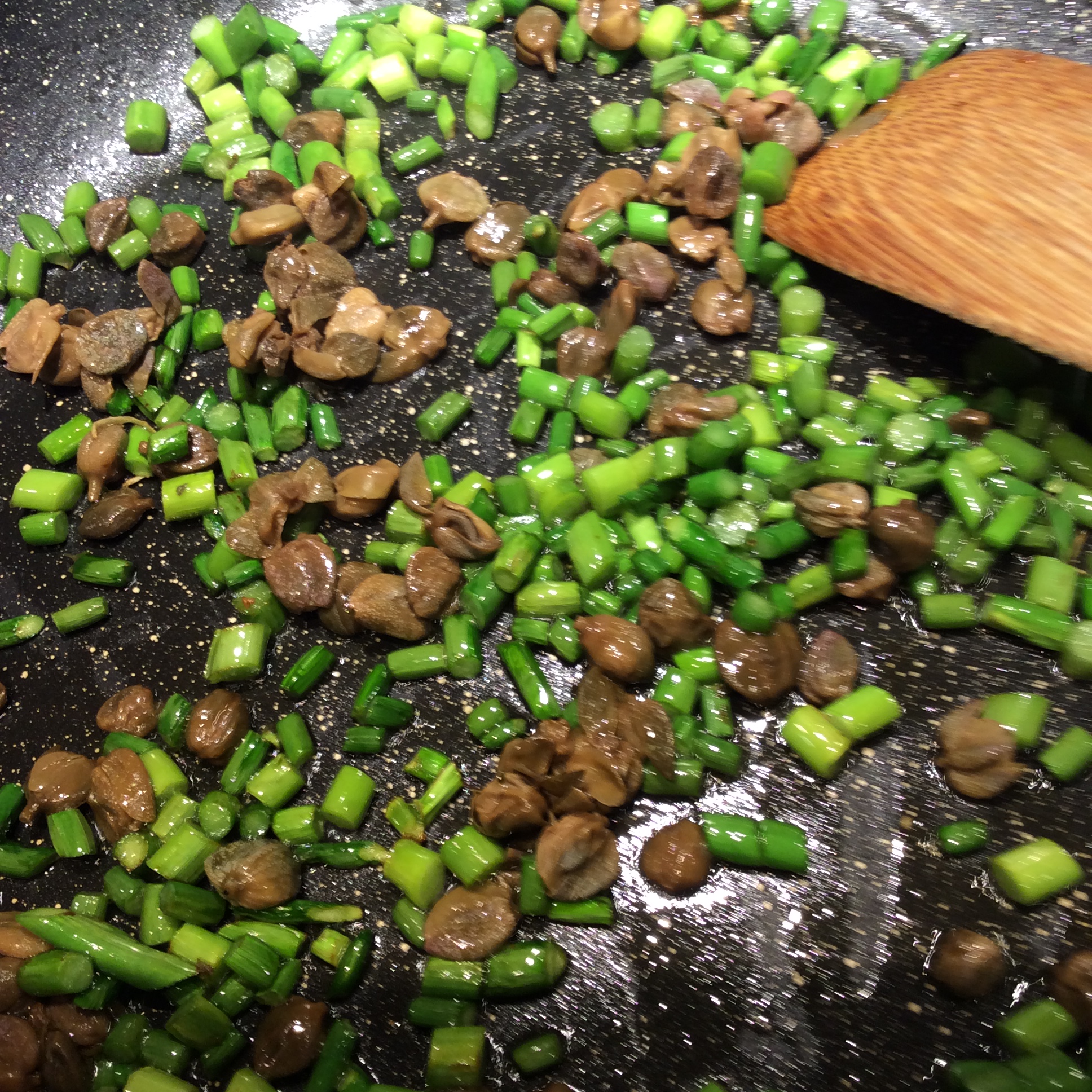
Add the squeezed-dry capers and cook until they look a bit dry and (ideally) a bit browned. Add the chopped garlic and the herbs, sauté just until the chopped garlic looks cooked, and add about 2 tablespoons of water and the veggies and chicken. Cook uncovered over medium-low heat, stirring and turning as needed, until heated through. There should be little to no water left, just seasoned oil full of delicious bits that can be spooned over the chicken and veggies. Serve with freshly ground pepper, but taste before adding salt, because of the capers and the pre-cooked ingredients.

I have already talked about garlic and garlic scapes at length, so this a good time to talk about capers for a minute. I consider them an essential kitchen staple and my favorites come from Morocco, but they are absurdly expensive, so feel free to buy something much more reasonable. The tiny nonpareil capers are often marketed as the best, but I don’t like them except as a garnish on smoked salmon and generally prefer the largest and most herbaceous that I can find. If salted, rinse the salt off, soak in water to cover for 20 minutes, and squeeze dry. If brined, rinse the brine off thoroughly, soak in hot water for a few minutes, and squeeze dry. There is currently a lot of silly snobbery about brined capers, but they can be delicious and are far preferable to tasteless or oversalted dry capers. I eat capers all summer and try to keep a handful, already soaked and squeezed, ready wrapped in a square of plastic wrap in the refrigerator. They’re astoundingly rich in quercetin, if that’s important to you, and they taste like essence of summer.
 

Harvesting Garlic

In a way the title of this post is very inaccurate, because I have been “harvesting garlic” since February  in the form of green garlic. But this is the time of year when I start to pull bulbs, because the extremely early Chinese Pink comes out of the ground now. So this is a good time to say something about the curing of garlic.

First, the variety matters. Chinese Pink doesn’t last that long for me and is mainly to tide me over until the main crop comes in, since it’s a good six weeks earlier than any other type that I grow.

Second, harvest at the right time. Watch for yellowing, withering leaves. Generally I harvest when there are four green leaves left, but Chinese Pink is prone to splitting and needs to be harvested earlier, when about the four lowest leaves are yellow. The picture below shows “split” garlic which has been left in the ground too long. It’s still useful but harder to peel and clean.

Third, DON’T cut off the stalks. The curing bulbs draw nourishment from the remaining leaves. Do, however, remove any bloomscapes. Also leave the roots intact but shake off soil. Brush loose dirt off the bulbs.

Fourth, DON’T leave them lying in the sun, where they will “cook” and be spoiled. After pulling the plants, lay them in single layers on a dry surface (I use flattened corrugated cardboard boxes that will later go into sheet mulch) and put out of direct light in a place with good air circulation. Leave for two weeks, turning the bulbs occasionally.

Now cut the withered tops off unless you grew a softneck garlic and want to make braids. My favorite types are all hardneck so no braids for me. The remaining surface dirt is now dry and can be brushed off with a soft brush, but don’t get fanatical with the brushing because you can damage the wrapper and impair the bulb’s ability to keep. Leave in the dim airy place and bring a few bulbs at a time into the kitchen.

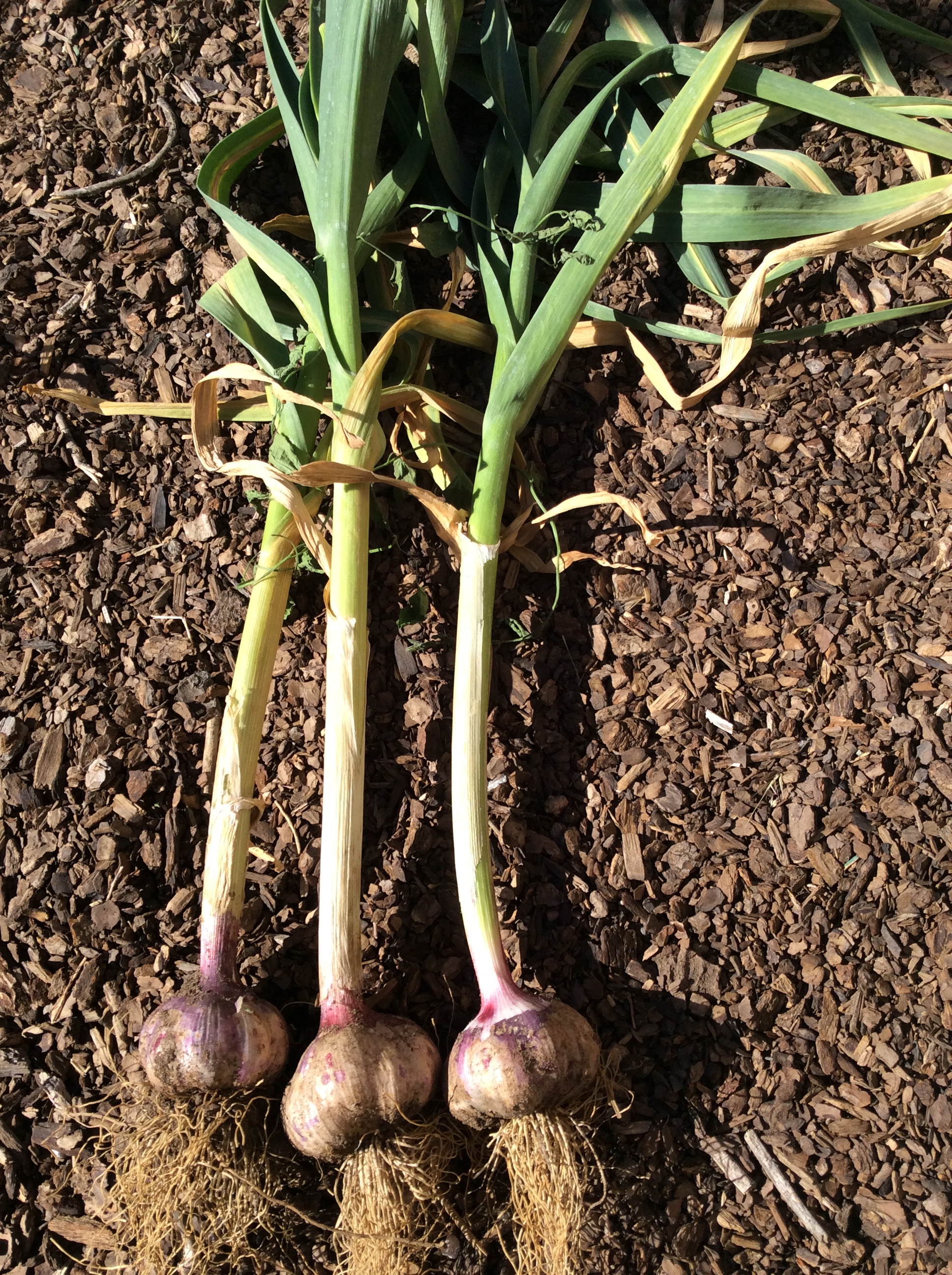
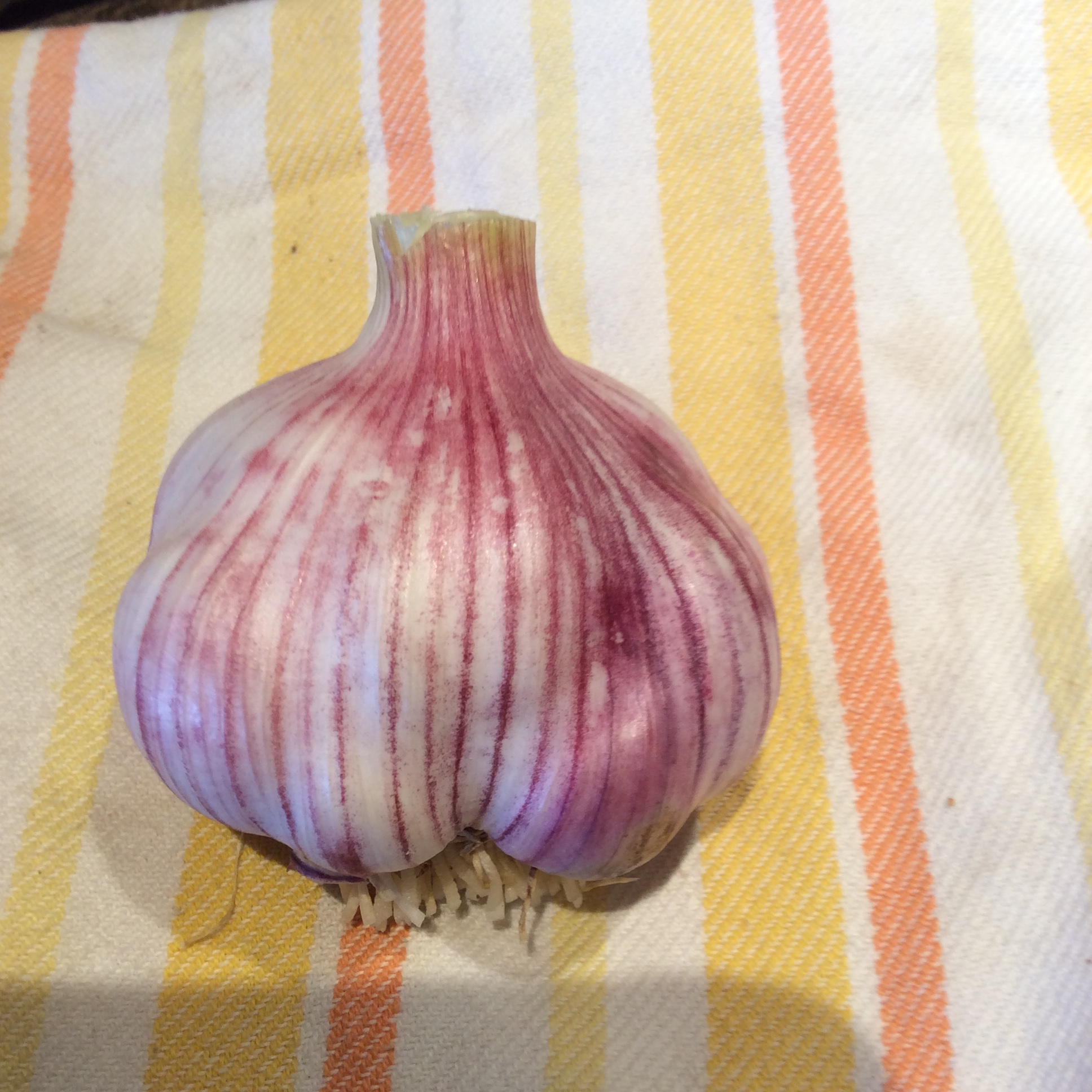
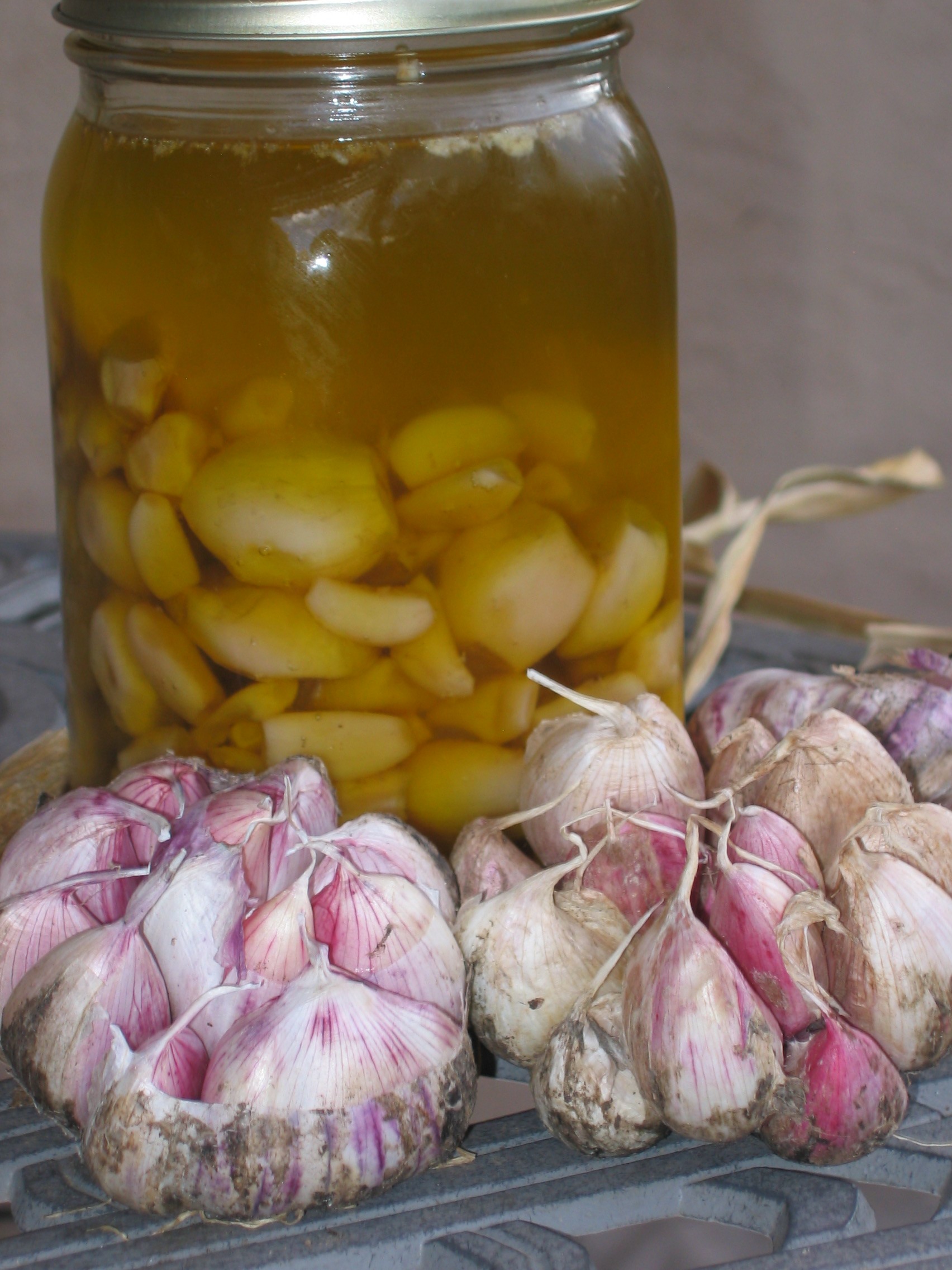
When ready for curing, they will look like the picture below. Later on when you clean them up and bring them into the kitchen, they will look like the picture at the top of this post.

Before you start using your garlic, be sure to set aside the largest and best bulbs with the largest cloves for replanting.

Use your garlic.  A lot. This is the fresh clean-flavored garlic that makes recipes like Chicken with 40 Cloves of Garlic or Chicken with Fennel, Pernod, and Garlic such a pleasure to eat. Confit some and enjoy it on toasted sourdough bread or crackers, or alongside roast chicken, or in pepperonata. To confit garlic, peel a quart’s worth of cloves, put in a small heavy saucepan, cover with good extra virgin olive oil and add a heaping teaspoon of sea salt, bring to a simmer, and simmer slowly over low heat with an occasional gentle stir until the cloves just hold their shape but are soft and can be crushed easily with a spoon. If there is any hard “core,” keep simmering. Cool and store in a jar in the refrigerator. Be sure to keep the cloves covered with olive oil and it will keep a month or more. The confiting oil is a treasure, great in dressings or for drizzling.

The image of chicken and garlic above was borrowed from Food 52, my favorite cooking site.

For a far more detailed take on garlic curing and storage, review this excellent PDF from Boundary Garlic Farm.

Pause for a Cause: Older Dogs

Usually my “Pause for a Cause” posts are about charities that you might not come across otherwise. But this one is a deeply personal plea to adopt older shelter dogs. My beloved black lab Jack died this weekend at age 15 after seven wonderful years with us. When I met him in the city shelter he had been owner-surrendered three different times, had been feral in the Rio Grande bosque for months, and had fractures that healed without medical attention and other  signs of abuse and neglect. He was aggressive toward men and, in short, looked like the worst possible candidate for a family dog. A year later he was my personal bodyguard and my husband’s best friend. He was brave and loving in a way that’s hard to describe.  We will never forget him or cease to feel honored that he was part of our lives.

So, please, think beyond puppies. Older dogs don’t deserve to end their lives in shelters. They have histories and quirks and need your patience while they learn to be loved. But they come with the equipment to be good dogs, if given the time and space to learn.

Food for Thought: A Cookbook for Cooking and for Thinking

I have been  vegetable gardening all of my adult life, and own several shelves full of vegetable cookbooks, and I have a very high bar when it comes to buying new ones.  Actually, that’s not true. I buy new ones in a fairly promiscuous fashion because that is my addiction, but I have a very high bar indeed for recommending that other people spend their hard-earned money on them.

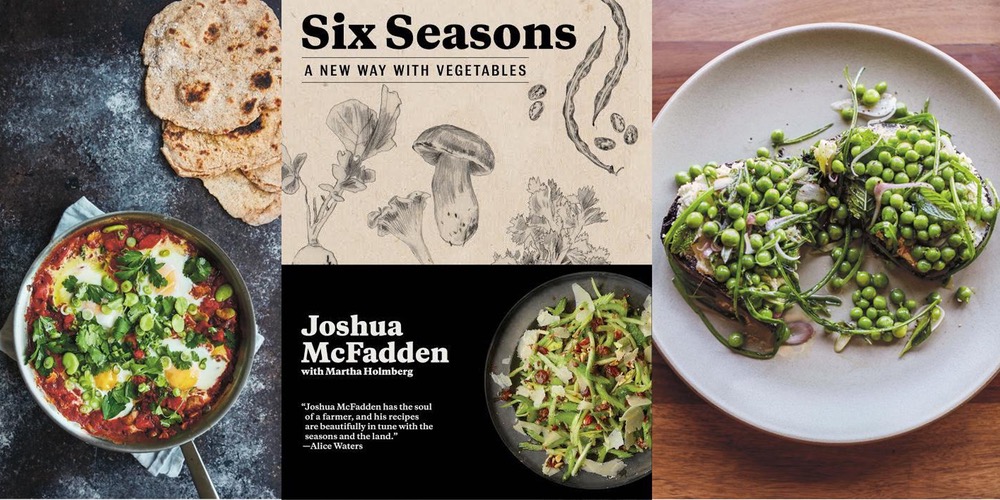
So  here’s what I have to say about  Six Seasons: A New Way With Vegetables by Joshua McFadden: go buy it.  Now. Read it. Think about it.  It really will bring you to think in a new way about how to handle familiar vegetables.  Take salads, for instance. I like salads well enough but am almost never really excited by them.  They always seem a little predictable to me, and just throwing some meat, cheese, or eggy thing of some kind on top does not make them interesting in my view. McFadden’s  way of putting a substantial “pad” of seasoned nut butter sauce, savory seasoned whipped cream, whipped seasoned ricotta cheese, or other interesting  possibilities underneath the salad does make them seem new and like a real meal that I am happy to eat.

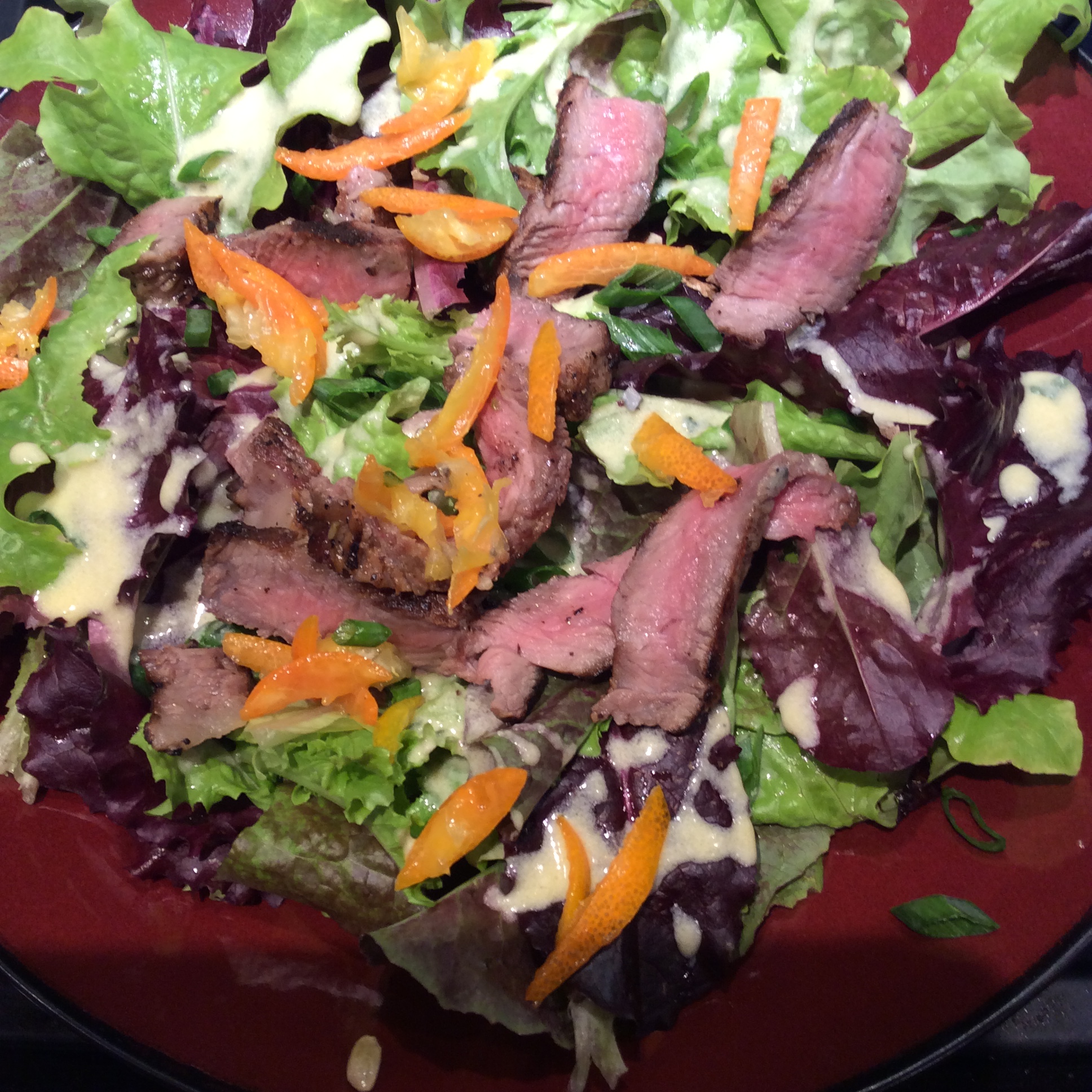
As good as the recipes are, I put this one in the “thinking cookbook” category,  i.e. an idea-rich cookbook that will affect the food you put on the table whether you were actually following a recipe from the cookbook or not.  Take the salad shown above, for example.  I had a lot of lettuce in the garden, including some dark red lettuce that still looked beautiful but had grown the slightest bit bitter  in hot weather.  I kept tasting bits of the leaves, thinking about what would make them taste good.  Ultimately, I whipped and seasoned some homegrown goat ricotta  with olive oil and salt, and smeared the plates with it, then arranged the red lettuce and some sweet green lettuce on top.  Then I put some of the ricotta mixture in the blender with an egg yolk and two cloves of roasted garlic, blended in more olive oil and some salt, and acidified it with lemon juice and white wine vinegar until it tasted just right, added some chopped marjoram because it seemed to fit in well, and used that as the dressing. I slivered shallot greens, soaked them in cold water briefly as McFadden recommends, pressed dry, and scattered them all over, and finished with warm leftover steak and bright sweet crunchy slivers of kumquat rind. The earthy rich ricotta dressing made the faintly bitter lettuce just right and complemented the steak beautifully, and dripped down to the whipped ricotta beneath to season it, while the kumquat rind added an electric zing.   Delicious and interesting to eat. It isn’t a McFadden recipe per se  but was entirely inspired by his methods and I would not have come up with it without reading his book.

The cooked vegetable recipes are very good too, as are the techniques. Just to name one, McFadden recommends grilling your vegetables “dry,” i.e. without oil, and then drizzling them with olive oil afterwards on the grounds that the burnt oil produces strange chemical flavors.   Even if you like the ones grilled in oil, I think you’ll like his method better. Try it and see.  I am also a fan of his section on pickles. These are not pickles that you can put on your shelf and keep forever. They are quick, delicate refrigerator pickles that serve as seasoning and garnish and add wonderful nuances to the flavor of vegetables.

This is a useful and excellent book at any price,  but I do wish to point out that the Kindle version is a special bargain and I highly recommend it.