Archive for the ‘Uncategorized’ Category

Deconstructed Thai Egg Salad

If you have chickens, there are inevitably times when you grow tired of eggs. I had one of those times recently and started to grope for a new way to think about egg salad. Since I love Thai food and keep a lot of the necessary seasonings around, some sort of Thai egg salad seemed like the perfect way to reawaken my enthusiasm. I wanted to make it quick and easy, too, so cupboard condiments played a large role. I used coconut milk, fish sauce, some artificial sweetener (people with no blood sugar problems can just use sugar,) Shark brand Thai  sriracha sauce (important, because it tastes very different from standard Vietnamese-style sriracha,) the excellent Hand brand Matsuman curry paste, and chopped peanuts, and all I added to them was eggs and sliced mint leaves.

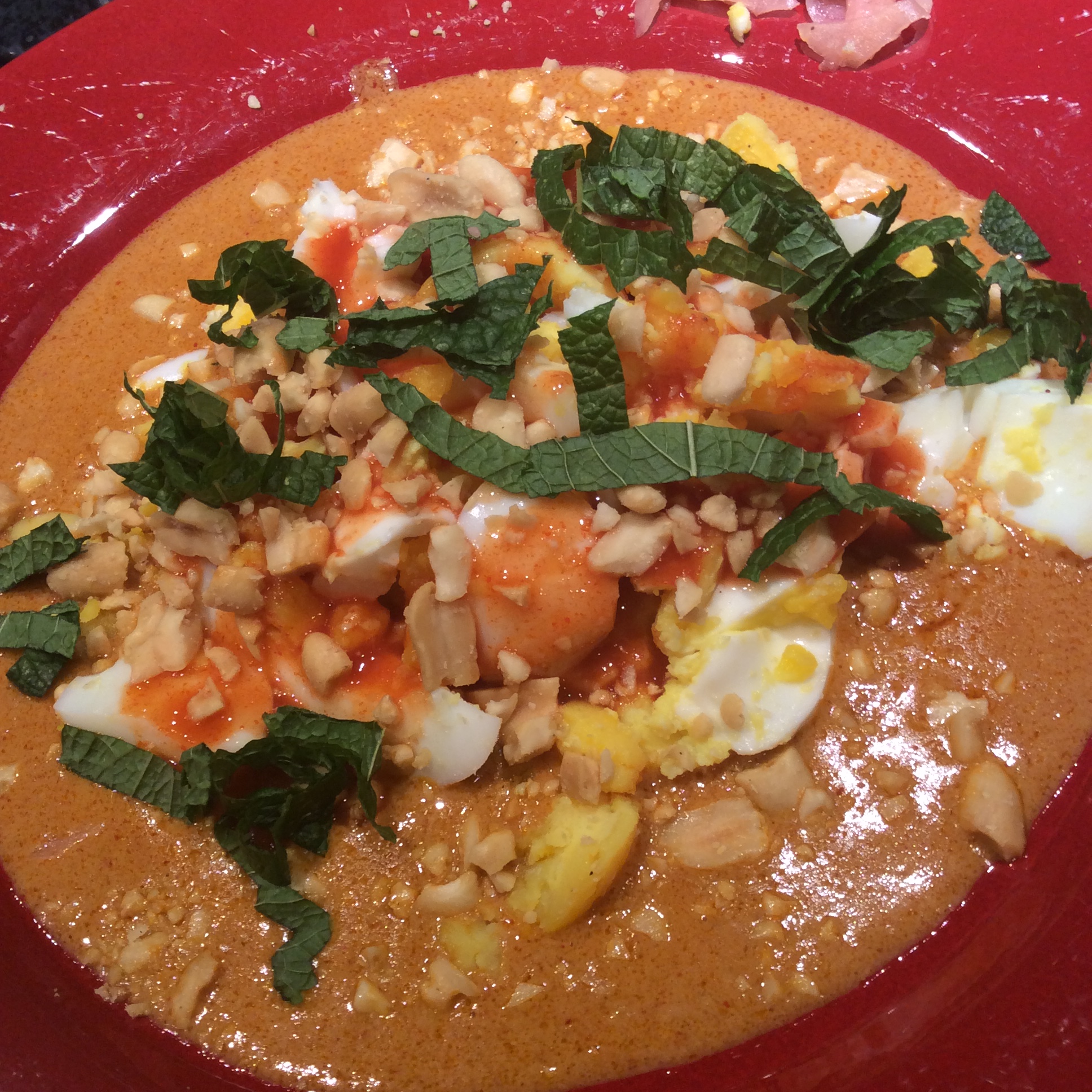
For two people I started with three hard-boiled eggs each, and chopped them roughly leaving them in large chunks. I heated the top fat off one can of coconut milk, stirred in a heaping tablespoon of Matsuman curry paste, and cooked a few minutes until thick and smooth. I added fish sauce to taste and sweetened it a bit. I pooled this elixer on a plate, put piles of chopped eggs on top, salted the eggs to taste and then dribbled Thai sriracha (which is not very hot) liberally all over the eggs. Peanuts and sliced mint finish up the seasoning, and a bit of sushi ginger on the side is my own very weird addition.

If the eggs are already hard-boiled, you will be plating your lunch in about ten minutes. It’s ketogenic except for the sugar in the sriracha, which isn’t much. You can use your own sweet-hot dipping sauce for the dribbling if you prefer. The mint could be replaced with Thai basil or cilantro. I speculate that finely slivered leaves of lemon verbena might be interesting here but I haven’t tried it yet. This is of course in the Thai-ish category and I feel free to experiment and find new tastes.

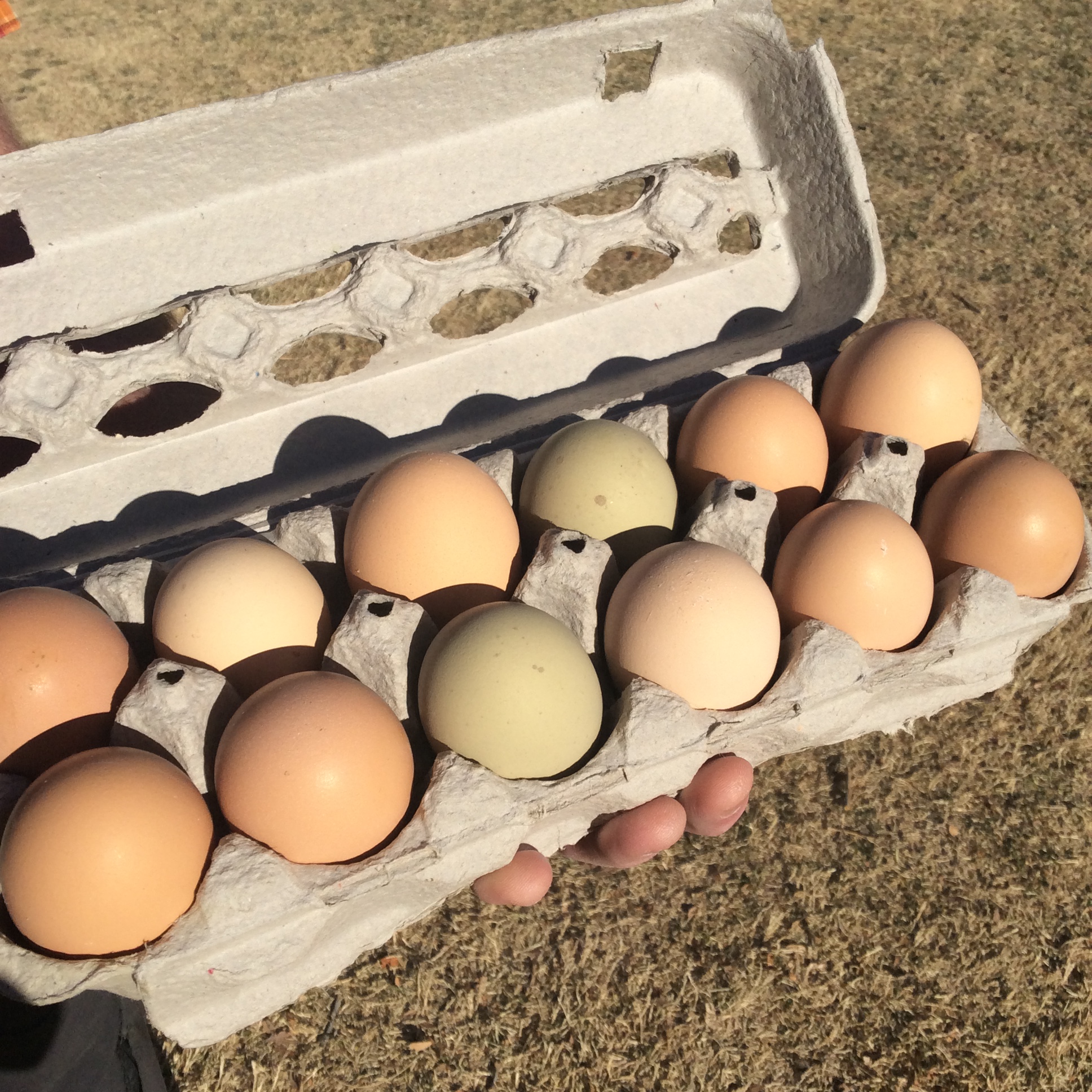
This is a good time to say something about producing the best eggs you can: in addition to a good commercial laying pellet high in an Omega-3 source such as flaxseed, feed your chickens all the greens that they will eat and a good source of calcium. In addition to oystershell I save all eggshells, dry them in the microwave and grind them, and feed them back in any soft foods from the table or kitchen that I have occasion to give my birds. I grow alfalfa patches in the back yard so that I can cut fresh alfalfa for them. Chickens are busy little machines that convert the 18-carbon Omega-3 fatty acids found in plants, which we absorb poorly, into the 20 and 22-carbon Omega-3s EPA and DHA, which we absorb well. (More structural info here.) One small commercial egg producer who feeds this way says he has hit about 600 mg Omega-3s per egg, verified by testing. I haven’t tested mine, but when I watch my chickens chow down greens, I know that it’s happening and that they are the best eggs I can get.
 

A Quick Thai-ish Snack

After yesterday’s brief dissertation on nam prik pao,  it occurred to me that one thing I had not really demonstrated about this Thai seasoning paste is its ability to make something very good very fast.

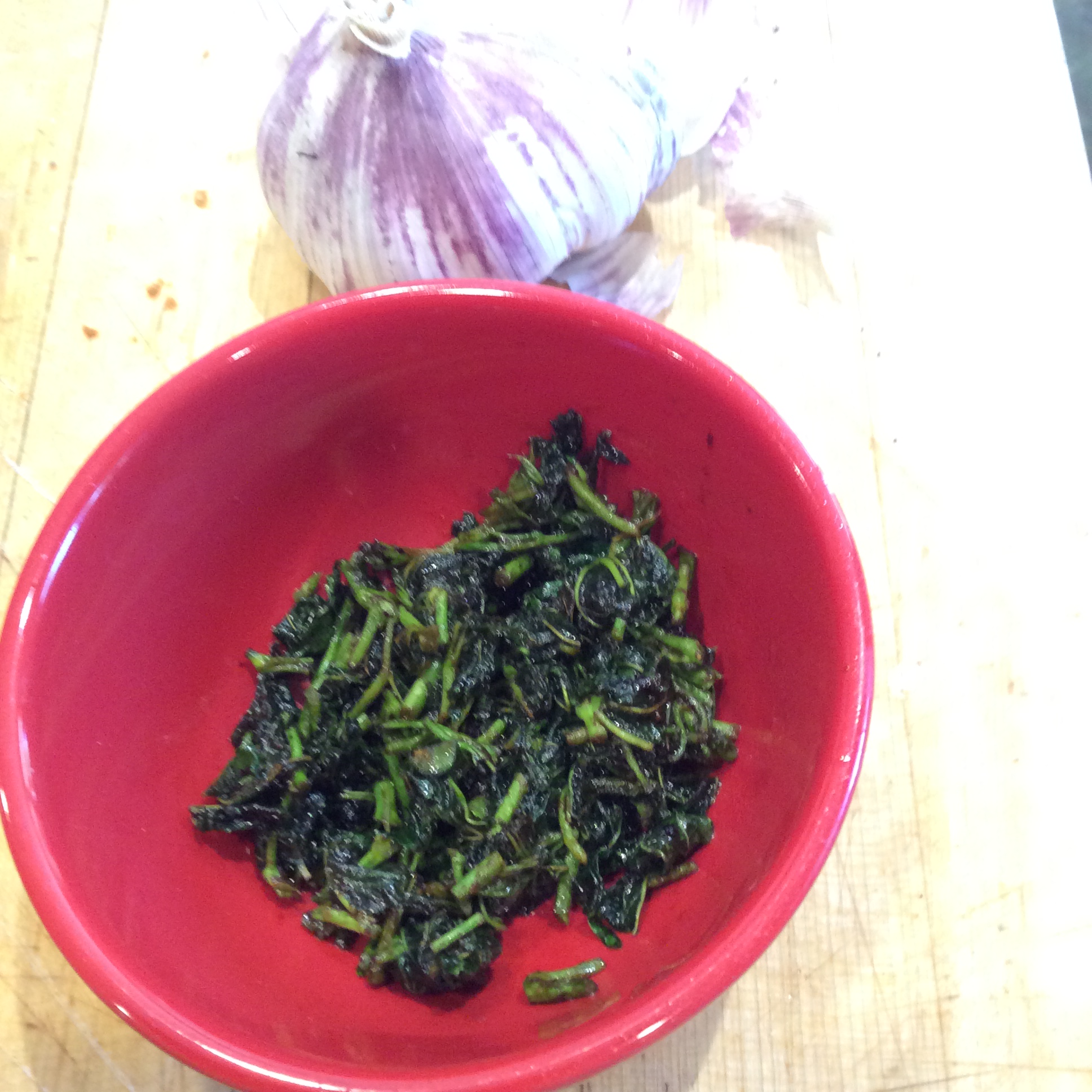
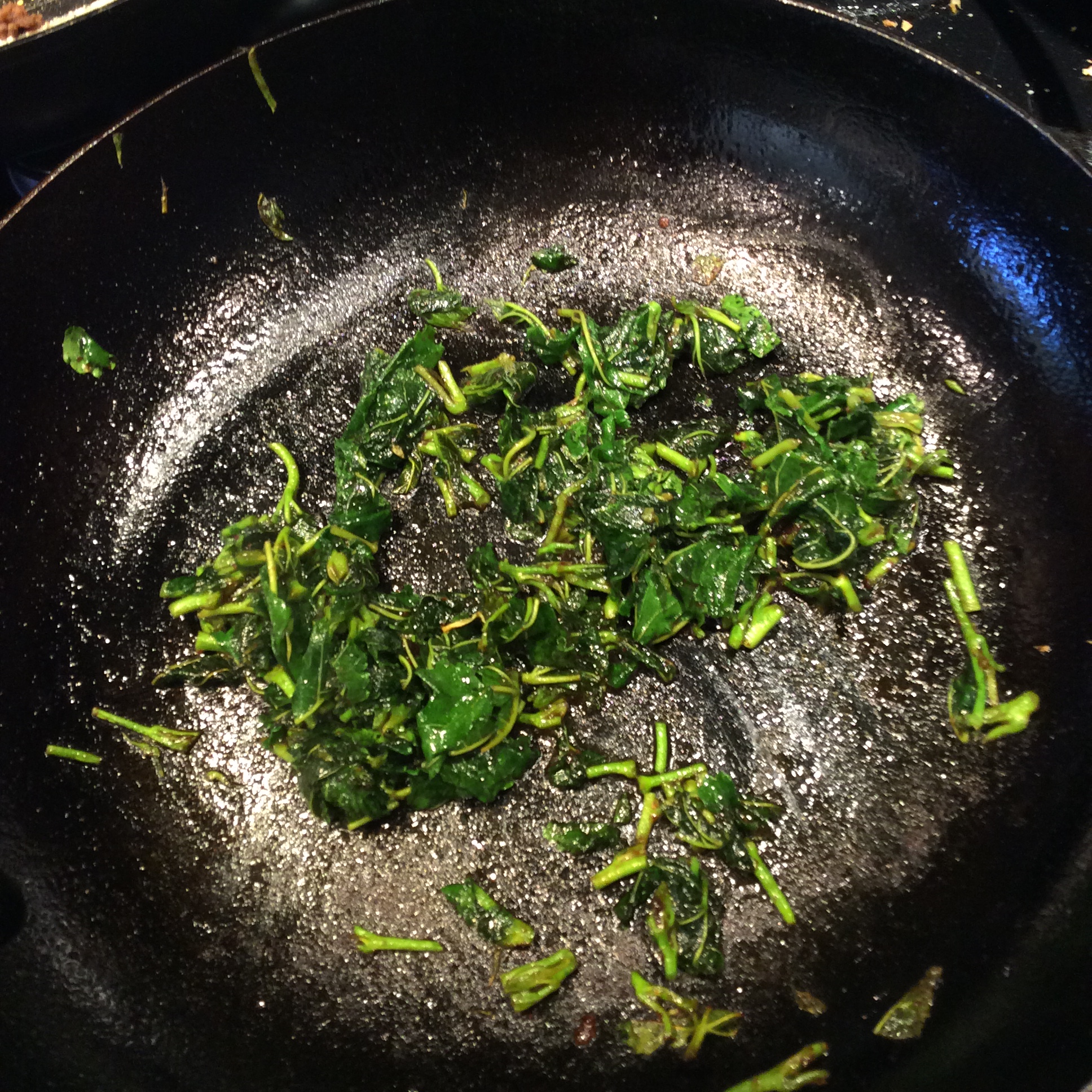
Today I was not hungry for lunch but did want something healthy in a hurry to tide me over.  I decided on a quick very small bowl of greens. I used mulberry shoots, but any rather sturdy green would do. If you use something substantial like collards or kale, one collard leaf or two kale leaves  would work for a passing snack.  For smaller leaves, a generous handful is the right spirit.

All you need is your leaves, fish sauce, a little coconut oil or other cooking fat, and nam prik pao.  Wash and chop the leaves or, if they are large and substantial, chiffonade them.   Heat your smallest skillet, put in the coconut fat and heat it briefly, and put in a heaping teaspoon of nam prik pao.  Stir it around for about 30 seconds to distribute it through the fat, throw in your greens over medium heat, and stir around for a couple of minutes, drizzling with a little bit of fish sauce but not too much because the small quantity of greens can get too salty in a hurry.  When the greens are done to the degree of tenderness that you like, put them in a little bowl and eat them.  Simple as that. You will feel a pleasant glow of virtue because of the soluble fiber and antioxidants that you have taken in, and it will taste good  and take less than five minutes. The leaves are whatever struck your eye on the way from the garden to the kitchen and took approximately a minute to gather. No fuss no bother.  You can chop some herbs on top if you want to and that will be delicious, but it will still taste awfully good without them.

You could use the same principle to make a side dish for dinner, or for that matter a main dish, and a few different Southeast Asian vegetable dishes with a cushioning bowl of rice if you can eat it make a wonderful dinner full of interesting flavors.  If you are a low-carb person, you can use cauliflower rice instead of real rice, or have both available for the various kinds of eaters at your table.   But the recipe as written is for your own private pleasure.

The Oregon Giant Pea and the Taste of Early Summer

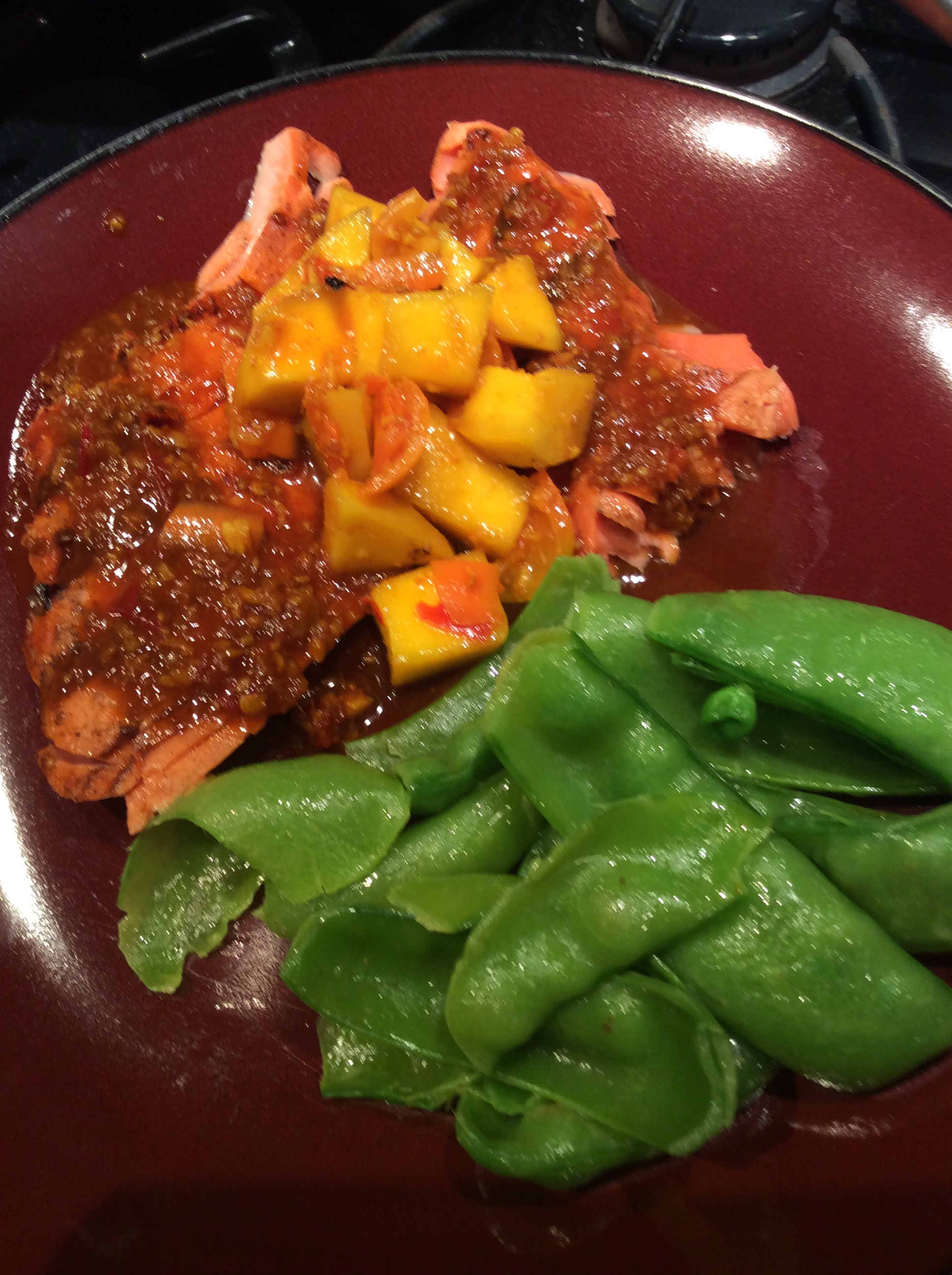
I think that I have written before about my entrancement with the snap pea/sugar pea called Orgeon Giant. In my opinion, it’s the most delicious thing of its kind  and I gorge on this type for as long as its season lasts. I begin to harvest my early spring planting in late May, waiting until the pods are bulging but not round and making sure to pull the strings off, and at first I eat them blanched in boiling salted water for four minutes and then sautéed in butter with a pinch of salt for a couple of minutes. They go well next to everything.

But as the season gets into full swing, I have enough of them to get ambitious. I continue to be obsessed with Joshua  McFadden’s new cookbook Six Seasons,and tonight I happened to be struck by his addition of English peas to Pasta Carbonara. I don’t eat pasta for carby reasons, but it occurred to me that the traditional carbonara flavors, while rich, are also rather full and gentle, and might go wonderfully with sugar peas even if there were no pasta involved. I hasten to add that there is no question that a large plate full of sugar peas will not do anybody’s carbohydrate count any good. However, we all have our vices, and I do tend to allow anything green.

Have all the prepping done before you start cooking because it goes very fast.
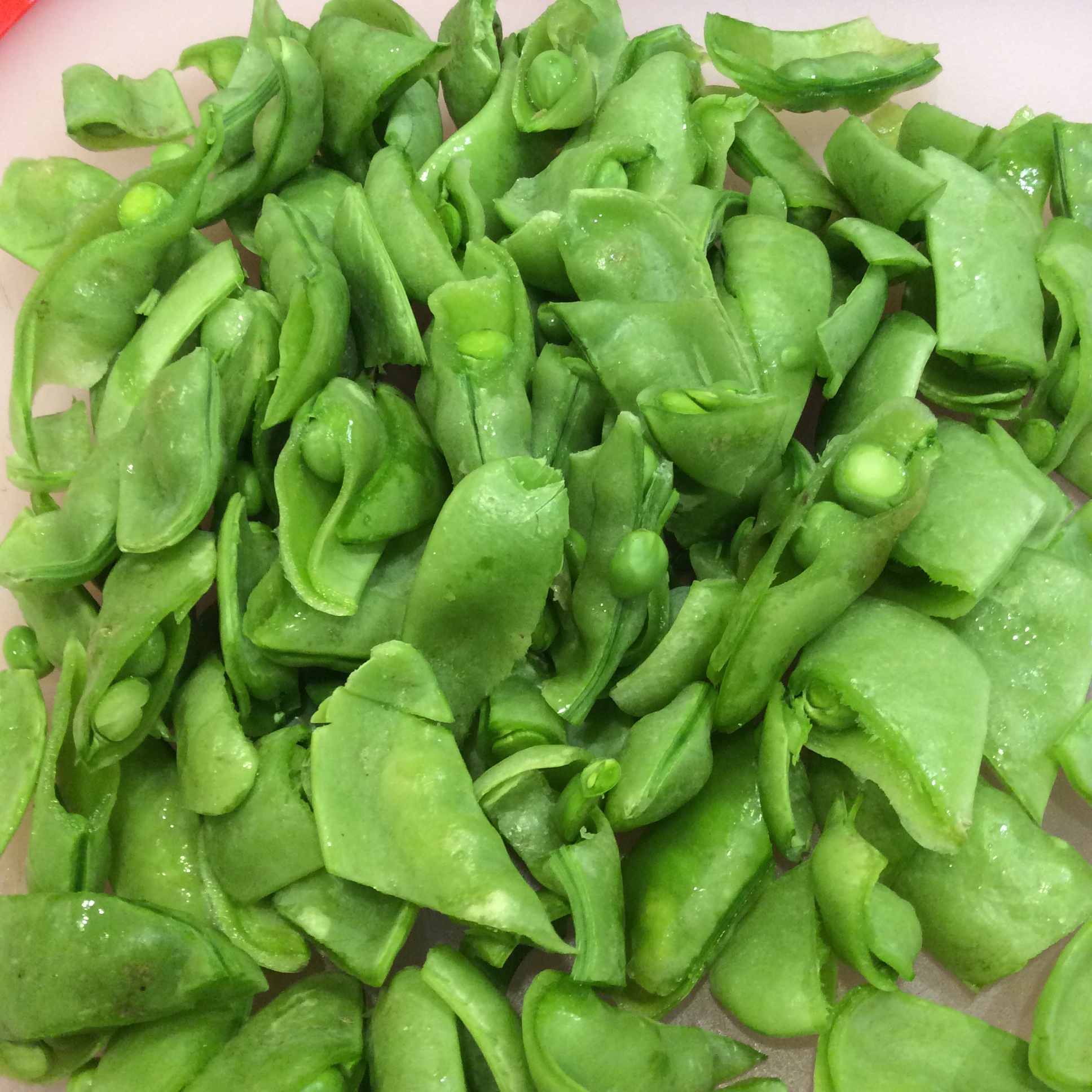
So I started with 2 quarts of enormous peapods, loosely packed. I picked them over and pulled the strings off, and cut them diagonally into pieces roughly an inch long as you see above.
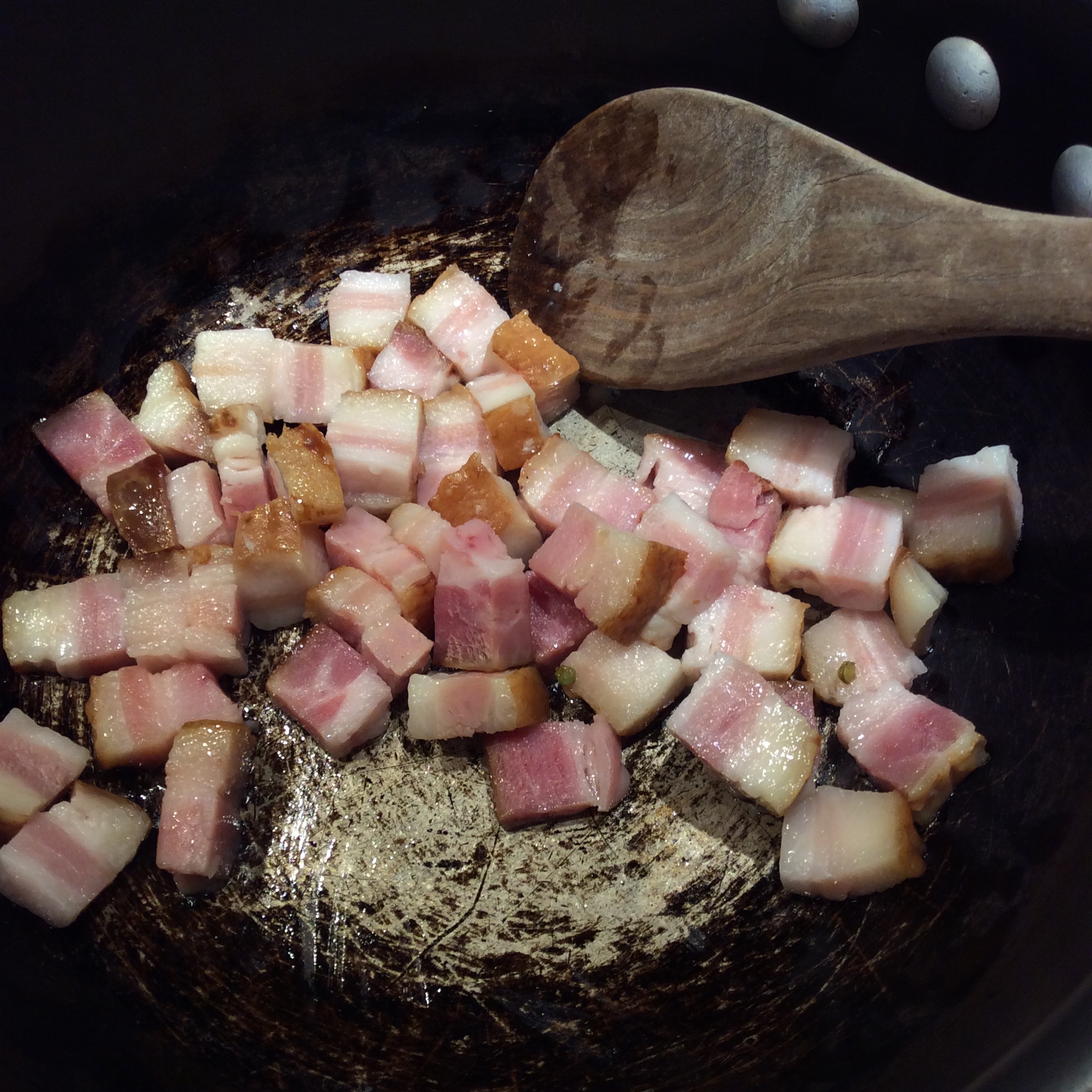
There is no question that piggy products do peas a world of good. I did not happen to have the classic carbonara ingredient pancetta on hand and so I decided to use a thick slice of mild applewood smoked bacon. I cut it into cubes a little bigger than 1/4 inch square. I chopped two cloves of fresh garlic very fine, finely  chopped a small onion, grated about a cup+ of very good Parmesan, and separated out the yolks of three eggs. A quarter cup of heavy cream ended up smoothing out the mixture.

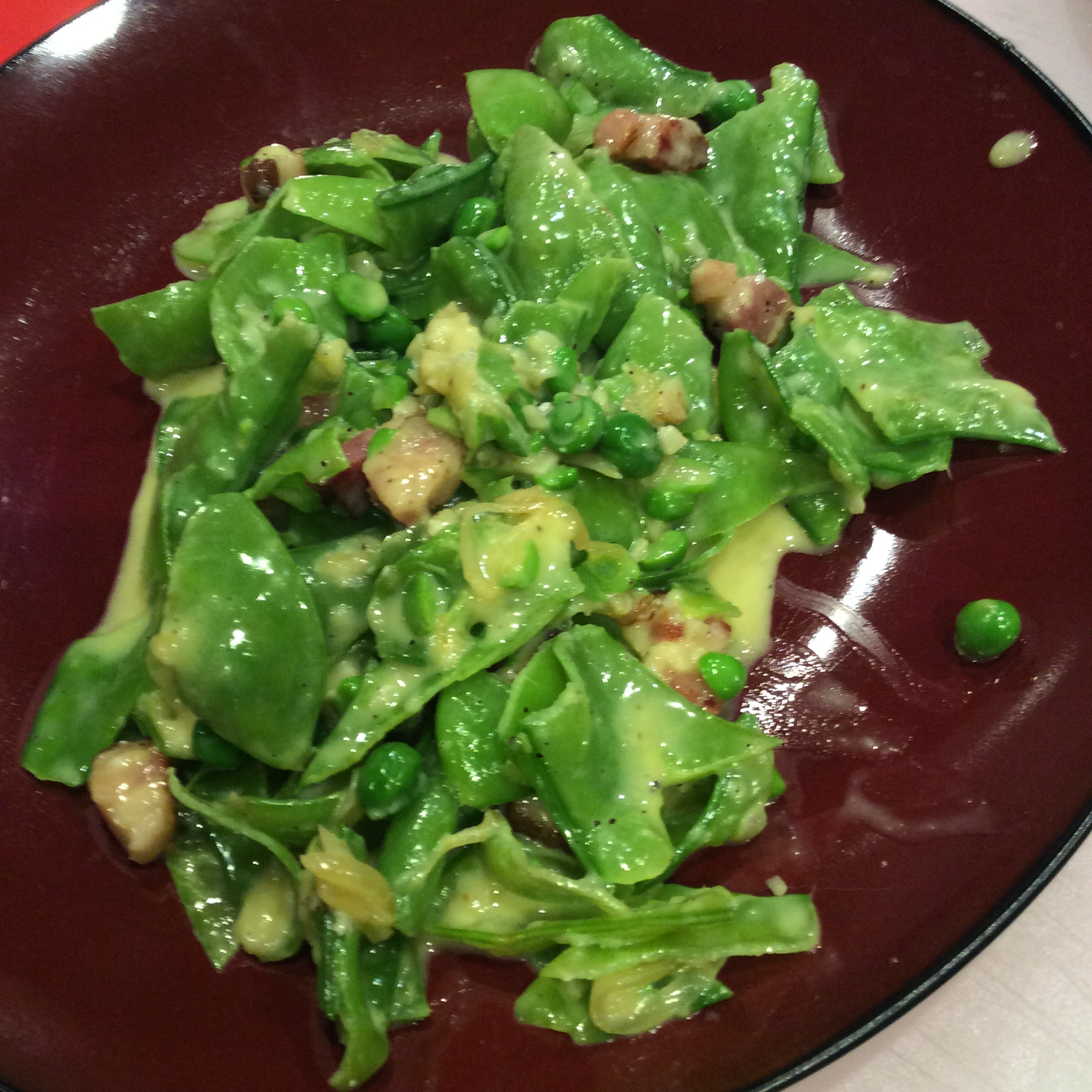
The bacon cubes were rendered gently over medium heat, and the onion and garlic thrown in when they were about half cooked. This mixture was cooked together until the onions were cooked soft without allowing it to color, and meanwhile a couple of quarts of salted water were brought to a fast boil. The heat was turned off under the bacon mixture, and the chunks of pea pods thrown into the salted water and cooked for exactly 4 minutes. The pea pods were drained well in a strainer but not shaken totally dry, and then returned to the hot saucepan, the bacon mixture added, the cream poured in, and sautéed over medium heat for about a minute. Now, working very fast off the heat and stirring  continually with a wooden spoon because a metal spoon would break up the peapods, the egg yolks were added and tossed around for a little under a minute, until the cream looked a bit thickened. Then the Parmesan was tossed in off the heat. When the sauce amalgam look thick and creamy, about a half teaspoon of freshly ground pepper was stirred in and the dish was immediately plated. You can add a little more cheese on the top if you like. Serve hot with some additional black pepper ground over the top.
This may be the purest expression of the sugar snap pea pod, somehow even more classic than the simple blanched pods. The pods retain some texture, and the swollen peas that float around the finished dish are pure essence of early summer. This is a main dish  and if you accompany it with some good white wine, you are very unlikely to want anything else.

Chard’s Great Moment

I decided to reblog this older post because I want to say again that, although I am not crazy about Swiss chard in hot weather, the fall leaves and most particularly the wonderful meaty sweet early spring leaves are one of the most delicious greens that you will ever eat. So devote some space to it now for a big benefit later.

wooddogs3's avatarMy urban homestead

image image

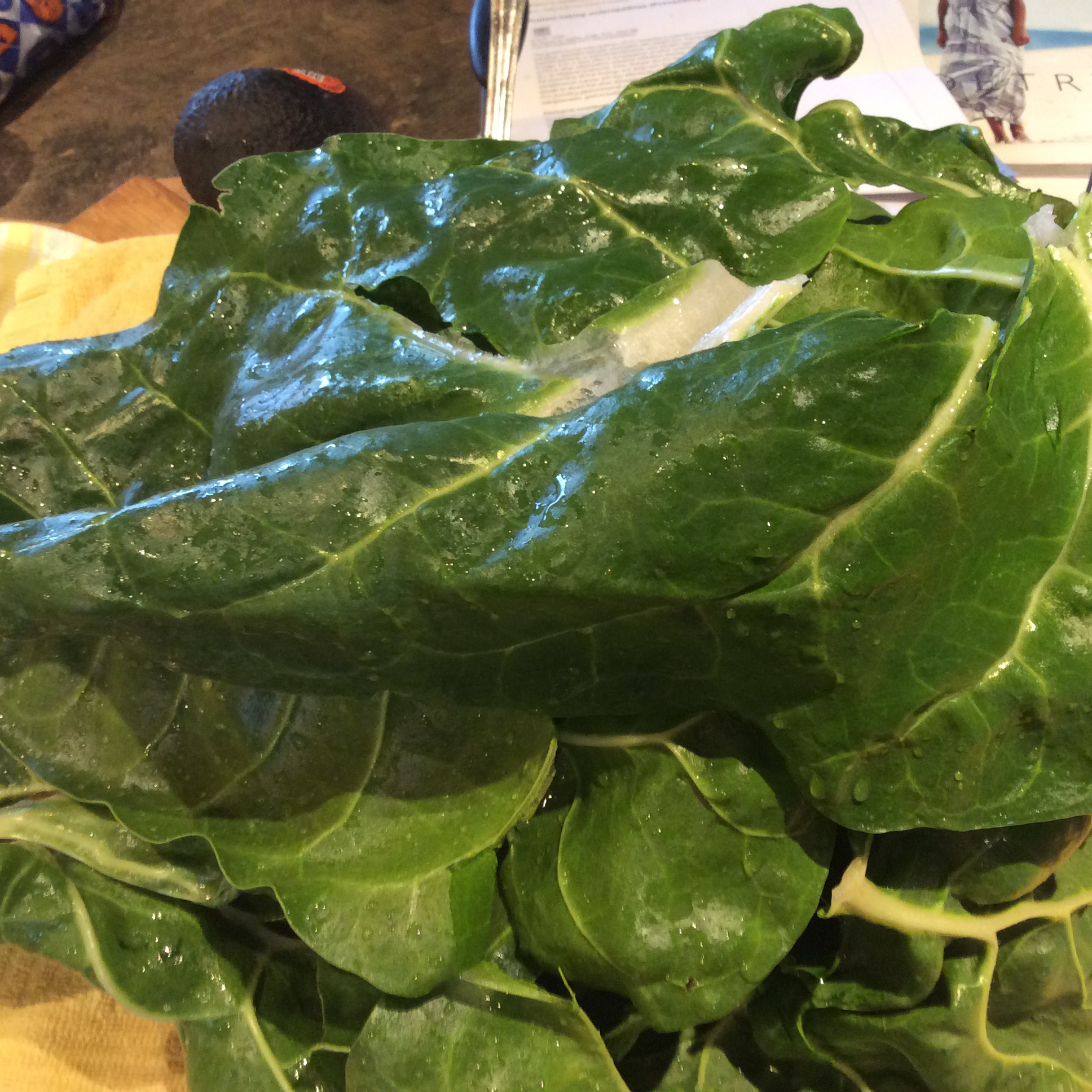
In my garden, this is the time to plant Swiss chard. It grows slowly in summer heat and gets a new lease on life in the fall, which is when I start eating it.  It goes dormant for the winter, and then in spring it emerges again and gradually progresses to making enormous leaves over a foot long.  These early spring leaves are very thick and meaty, and have a taste that has the umami elements of meat, but is mild and clean.  These early spring leaves are the ones that I eat, in huge quantities.  They are great cooked, and this is the only time of year that I love chard as a salad green. As soon as the plant starts to bolt to seed, the leaves of the elongating stalk acquire a rather dreadful dirty taste.  Interestingly, the large thick leaves at the base retain their mild…

View original post 78 more words