Archive for the ‘Uncategorized’ Category

The Winter Kitchen: Earth and Fire Sauce


In the past, when I traveled in Oaxaca, I fell in love with the moles, as nearly every traveler there does. My favorite is the rich, complex, highly seasoned mole negro, and I have made the mole paste for it a few times but find that I seldom have enough uninterrupted time to collect all the ingredients, prepare and fry them individually, grind them together, etc. There are a few good commercial brands of mole negro paste, and on the rare occasions when I want this special dish, I tend to use them.


But I often crave flavors that are somewhat reminiscent of mole negro, involving deep, rich, earthy tones with a spicy seasoned overlay and an element of slow, dark fire. For those occasions, I have come up with a seasoning paste that I can make in the winter, keep in my refrigerator, and add where appropriate. Properly speaking it’s a salsa, but in the American minds salsa is the fresher lighter tomato concoction, so I call it a sauce. The ingredient list is simple, although if you live in an area that lacks a substantial Mexican population you may need to order the chiles by mail. The prep may seem time-consuming, but comfort yourself that it’s insignificant compared to the time spent making mole negro. You’ll need a blender.
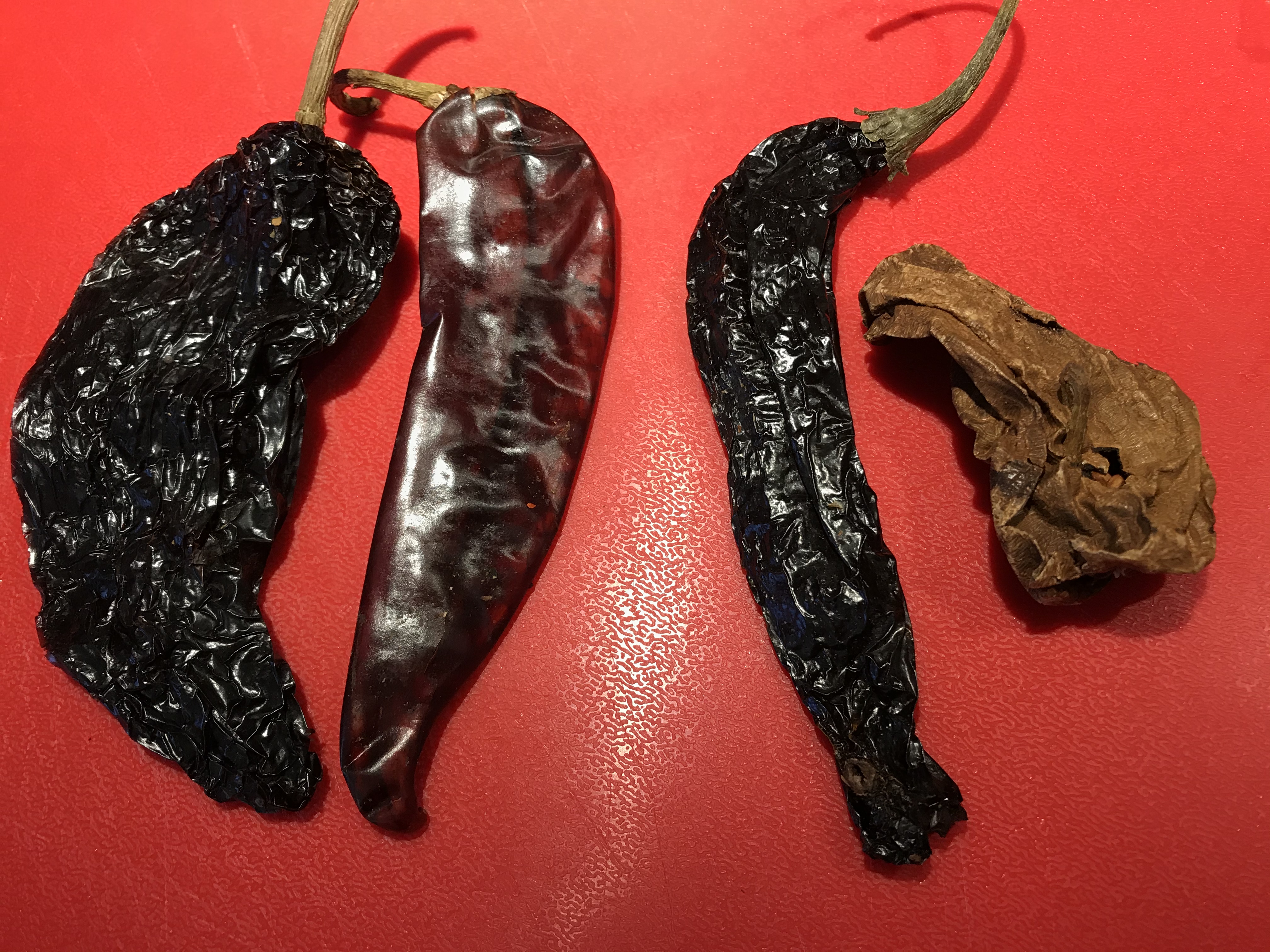
The long, narrow Pasilla negro and the light brown chipotle meco are the two on the right

7 chiles Pasilla Negro, often just sold as chiles negros

7 chiles chipotle meco (medium-sized and light brown, not small and dark red)

1 7 ounce can chipotles in adobo, including all the liquid

8 cloves garlic, not peeled

1/2 cup raisins

3 cups chicken broth

1/2 teaspoon Ceylon (canela) cinnamon or a bit less standard cinnamon

1/4 teaspoon freshly ground allspice

2 tablespoons grated piloncillo or coconut sugar

1/2 teaspoon salt, oak-smoked if available.

2 cups avocado oil for frying

1/4 cup homemade lard or more avocado oil for searing the sauce


Cut the stem ends off all the dry chiles, cut them open down one side with kitchen scissors, and scrape out most of the seeds and veins. Snip each one across the length a couple of times. In a small deep sauce pan, heat the avocado oil intended for frying to about 350 or until a piece of chili put into the oil immediately bubbles and sizzles. Have paper towels ready for draining. Put a small handful of the chiles into the oil at a time, fry them until the color changes visibly turning as needed, fish them out with a slotted spoon, and drain them. Now put the cloves of garlic, still in their skins, in the oil and let them fry until the skins are somewhat browned, and drain them. Put the raisins in the hot oil and fry just until they swell and puff, then drain. Now set the saucepan of oil aside in a very safe place to cool off.

Heat the chicken broth to boiling in another pot, turn off the heat, and put all the fried chiles in the hot broth to soak for 20 minutes. Peel the garlic cloves and add them.

Put the soaked chiles and peeled garlic cloves and their fluid in the blender jar along with the seasonings, the sugar, and the canned chipotles with all their adobo fluid. Grind smooth, scraping down the blender as needed. Add a little more water if needed to keep the blender blades turning.

Now for the dramatic step that pulls the sauce together. In a large frying vessel (I prefer a wok to minimize the inevitable splattering,) heat the lard or avocado oil over high heat. When it’s very hot, pour in the purée from the blender jar. Use an apron and don’t lean over the stove, because it will sizzle and splatter viciously. Stir cautiously with a wooden spoon. After 3-4 minutes turn the heat down to simmer and simmer the sauce for about 30 minutes, stirring occasionally.
When ready, the sauce is very thick and will hold indentations when stirred, but it’s not cooked down to a paste. Taste it and adjust the salt if needed, but in my opinion use table salt and not smoked salt at this point. If it tastes a little bit on the acrid side, you may need to add a little more dark sugar.

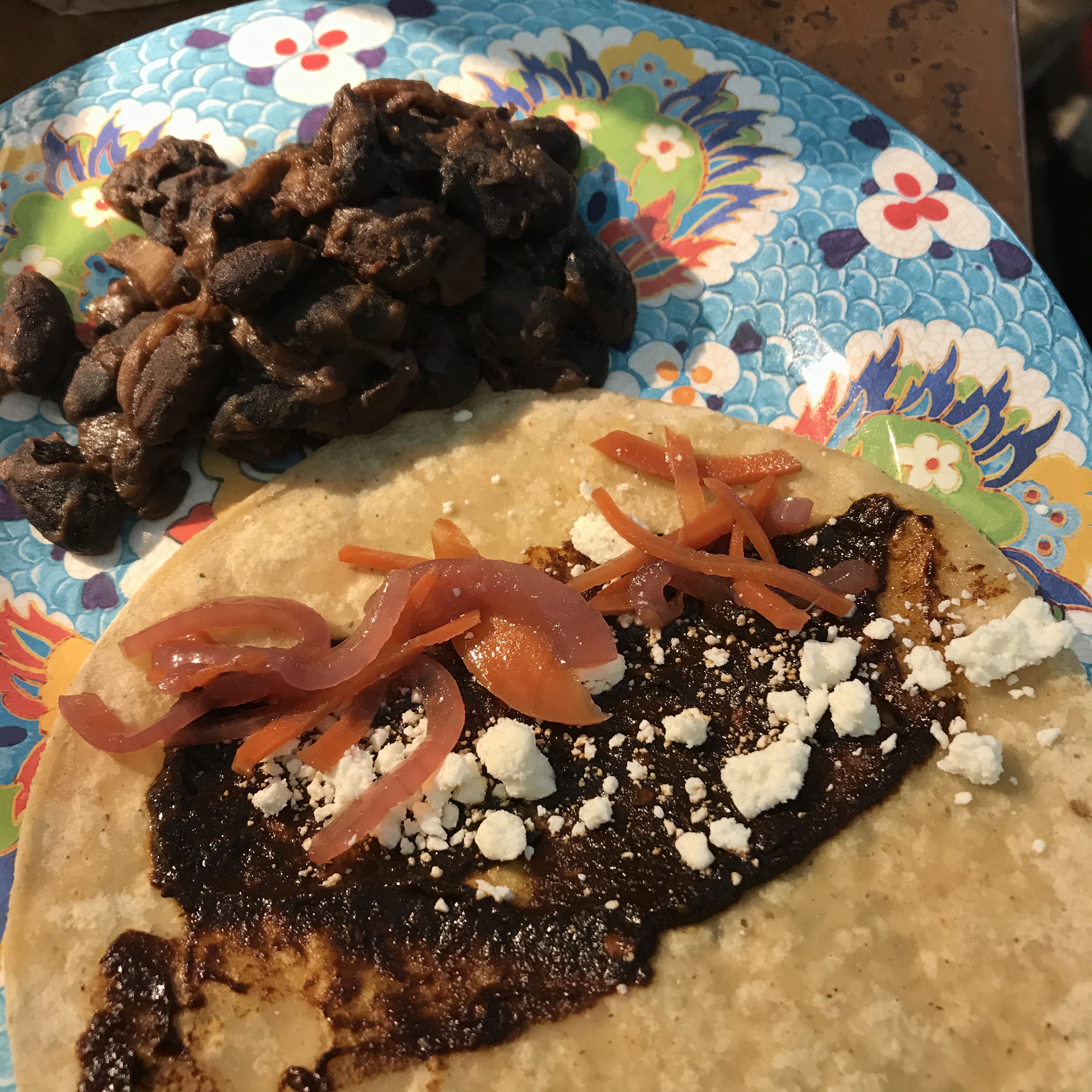
Now you’re done and can quickly and efficiently add notes of earth and fire wherever you think they are needed. Use diluted or undiluted. The finished sauce can be spread directly on hamburgers immediately after grilling. A tablespoon or two per serving of black beans adds immeasurably to their meaty richness,  and this combination is especially good with a dollop of crème fraîche on top. A few tablespoons per cup of chicken or turkey broth makes a wonderful sauce for roasted or smoked birds. It could be used as a rub for grilled chicken, although you need to be careful not to burn it. I think that it might make a good grilling rub for salmon or other strong-flavored fish. It adds wonderful depth to sautéed mushrooms, and I think it would be great on grilled carrots or roasted sweet potatoes, especially with a pat of butter on top. For a quick snack or lunch, nothing beats a quickly griddled tortilla with a smear of Earth and Fire sauce, a sprinkle of crumbled cotija  cheese, and a few quick-pickled vegetables. A quick soft taco also makes a great cook’s treat. If you’re hungrier than that, add some frijoles negros or frijoles refritos as shown at the top of this post. A good dollop in a bowl of good posole elevates it to a feast.
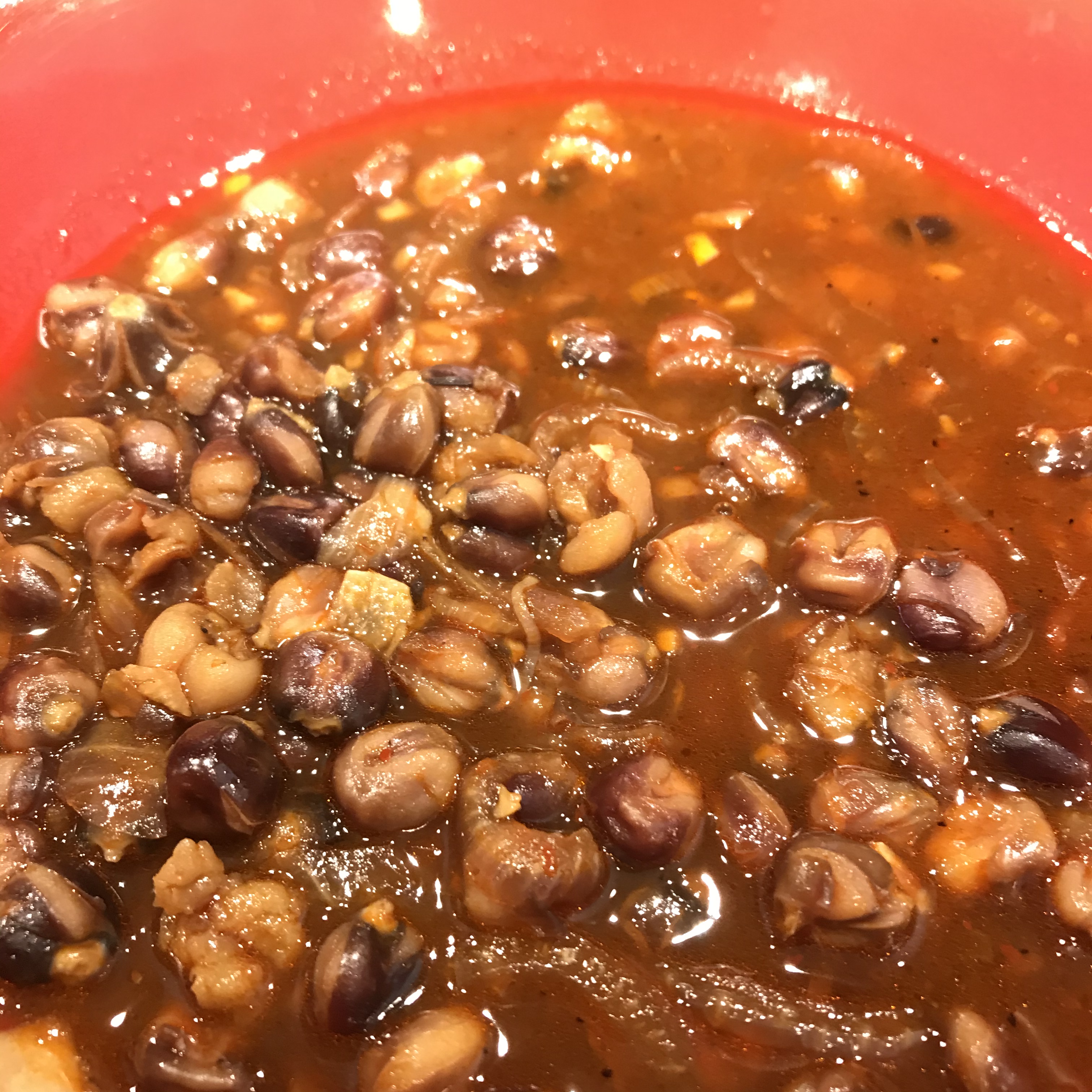
It can be frozen after preparation for use later, either in jars or in individual portions in large ice cube trays. On late afternoons when you need something warm and not too filling, a cube could be dropped in a cup of hot chicken broth to make a warming “instant” soup.


A few notes on ingredients:
The best chiles that I know of come from The Chile Guy
The best beans and posole corn that I know of come from Rancho Gordo
The only lard worth using is the lard that you render yourself, not the awful commercial stuff. If you don’t want to render a little, use oil instead.
My favorite tortillas are the nixtamalized heirloom corn tortillas from Masienda. In my area, Whole Foods carries them.
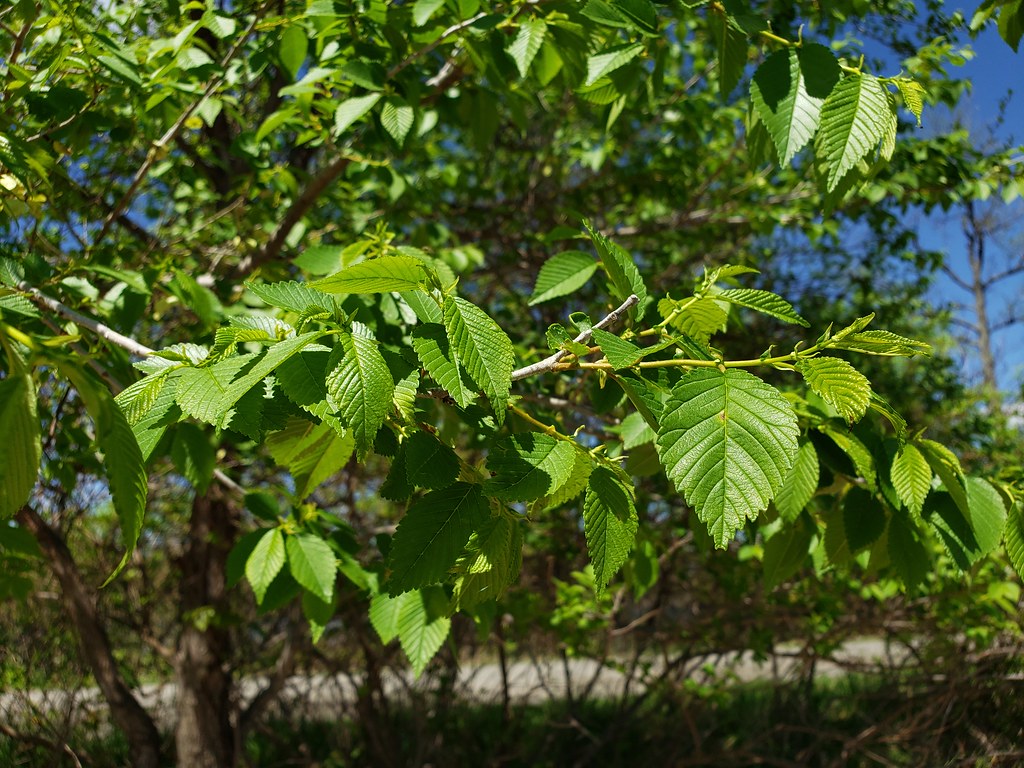

The Siberian Elm and Our New Ecosystem

When I write about the uses of invasives, I can usually count on getting a lot of hate. So I’ll say this up front: I am thoroughly acquainted with the awful side of the Siberian Elm, Ulmus pumila. It invades inexorably, grows indefatigably, sucks up groundwater needed by our beautiful native cottonwoods, and is generally regarded as a trash tree. It’s changed the entire ecology of the Rio Grande bosque. I get all that.

But here’s the thing: while pamphlets and online sites are devoted to how to battle the Siberian elm, the battle is over and this tree has already won the war. It’s everywhere, and it cannot be eradicated.  So as I see it, we might as well look at whether we can use it well. And since I only write about my own small home ground, I am not looking at how to use hundreds of acres of it well, but how to use it on a half acre.  It grows lustily even in our dry desert climate, and there are large areas where it is the only green thing around, so I feel a certain gratitude to it. But I don’t allow it inside my yard because I want other trees there, and because as soon as I step outside my gate, it’s everywhere.

For me, its food uses are limited. I’ve written before about the edible samaras, or seed cases,  and I won’t say more here except that they have a pleasant green mild taste and are produced in unbelievable quantities every spring, and the chickens like them as much as I do.  As I get further into permaculture I’m experimenting more with tree leaves that have culinary uses, but I can’t find anything much about Siberian elm leaves except on the wonderful site Eat the Weeds, where I find that the young leaves are edible cooked. I admit that this doesn’t sound enterprising on my part, but I haven’t tried it yet. I have so many other green things to eat that it will probably be some time before I make this experiment.  I can’t find any nutritional analysis even about their use as fodder, although I did find one reference stating that they might be a potential source of higher-protein forage for animals.

But when it comes to nutritious forage, I typically let my beloved old dairy goat Magnolia make her own decisions. And there is no question that Siberian elm is her favorite food and one of the few foods that she never gets tired of.  So over the years I have been letting Siberian elms grow up along my longest fenceline, and cutting them back above the top of the fence. New branches grow at astounding speed below the cuts, and Maggie chows them down as an almost exclusive diet all summer long. She is naturally on the thin side, but loses no weight during the 6-7 months of her elm diet, and her enthusiasm never fails. The usual life-span of a domestic goat is 9-11 years and she is pushing 13, so I don’t think it’s done her a bit of harm. The feed is free, as local as it gets, and gives me plenty of mostly unwanted exercise with the cutting and hauling. The trunks occupy the space along the hot baking hell of the open space, and I don’t give them any water so they’re surviving on what they can find on their own. There’s no doubt that they look scraggly between cuttings, but I can tolerate that to see Maggie so happy. And if I ever get hungry enough I’ll try eating them myself.

The hens also love the leaves when young and tender. They might eat the tougher late summer leaves if cut up, but I don’t bother when there are so many other greens for them.

I’m largely talking about animal feed here, but whenever I allude to possible human uses I feel compelled to say a few common-sense things about wild and unfamiliar foods:

1. Never assume that because an animal can eat it, you can eat it. Goats in particular are able to eat some plants that are toxic to other animals including humans. Magnolia’s metabolism is wired differently than mine.

2. Never assume that because one part is edible, the whole plant is edible. Black locust blossoms and elder flowers are delicious, but the leaves and stems are toxic. There is no substitute for studying reliable authorities.

3. Never assume that because other people including reliable authorities can eat it, you can eat it. Test a small amount of any new food, and wait a day before trying more.

A Low-Carb Mexican Lunch, and a nod to Rick Bayless

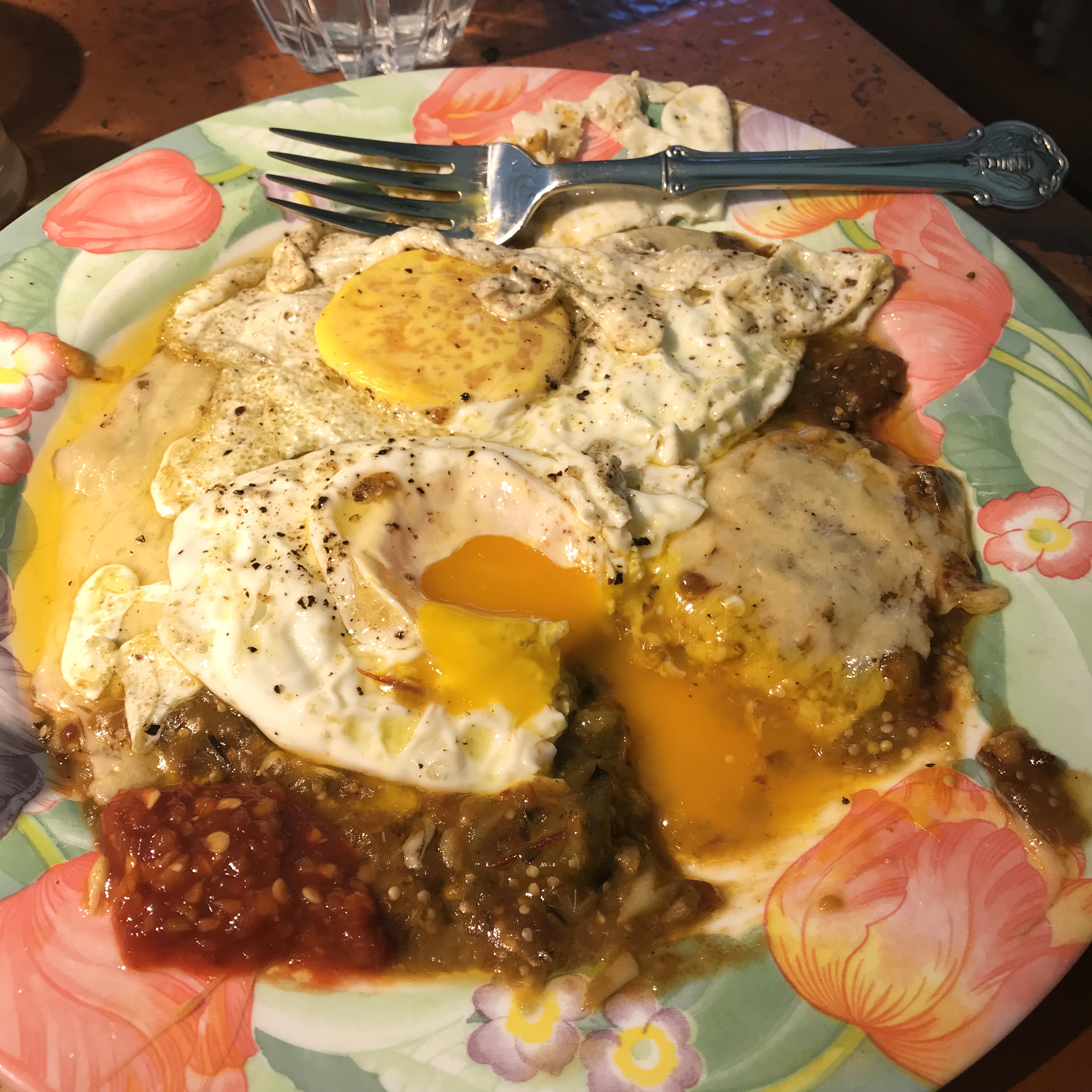
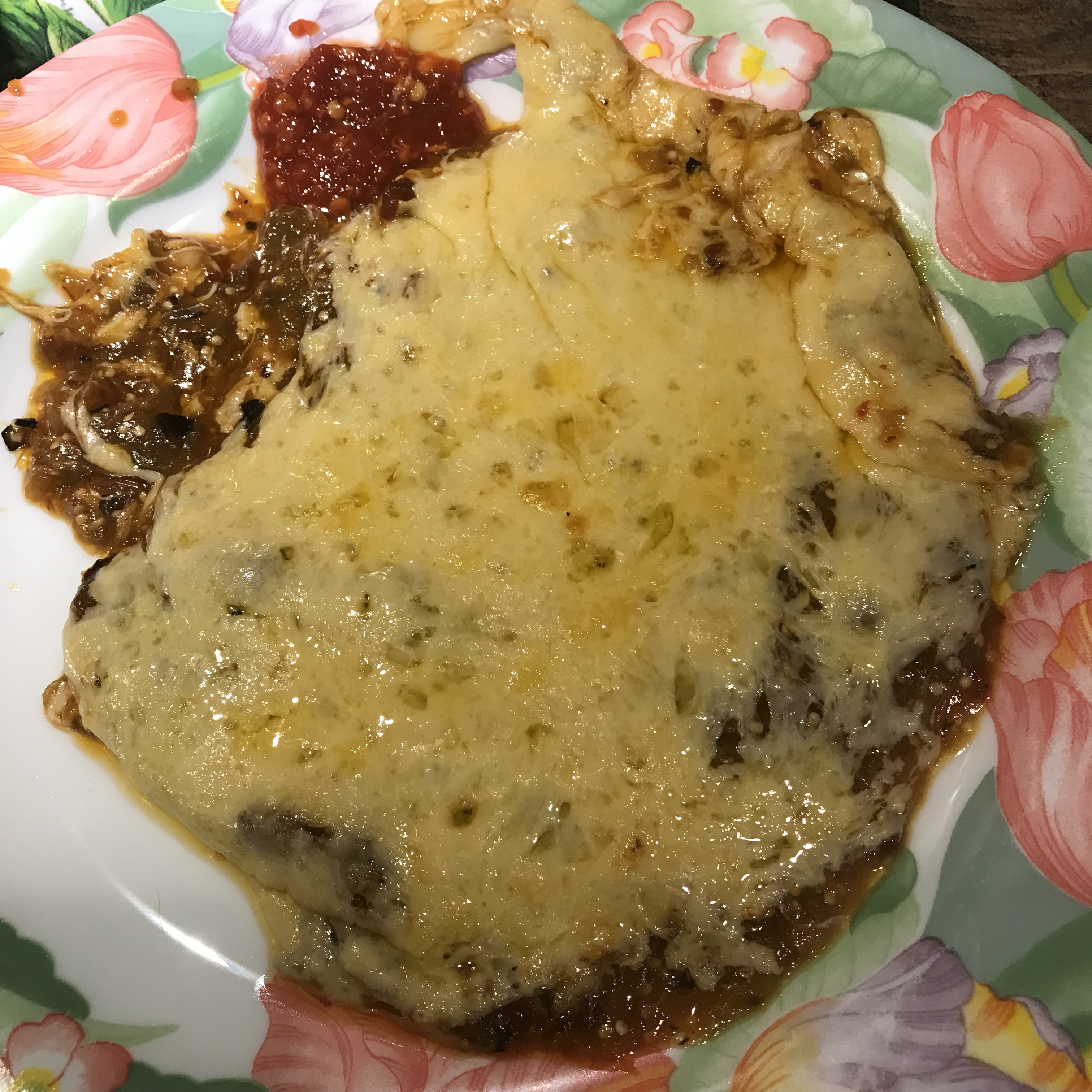
Somehow, nothing looks as naked and unappetizing as a lonely egg on a plate. A lovely piece of buttered sourdough toast rounds out the picture nicely, but is off limits if you control your blood sugar by eating low carb. There are lots of potential solutions to the lonely egg problem, but one of my favorites is to put the eggs on a base of gratineed salsa and cheese, a sort of deconstructed queso fundido. The concept couldn’t be simpler. Preheat the broiler. Make mounds of thick salsa on a well-greased baking sheet, one per diner, spaced two inches apart each way.  Cover each mound with a generous heap of grated grass-fed cheddar. Cook under the broiler until the cheese is melted. Using a lightly oiled spatula, finagle each mound onto a plate, and put one or two fried eggs or a small heap of scrambled eggs on top.

If you wish to elaborate further, you can drizzle avocado oil on top and run under the broiler again for a second as you see in the top picture, but it isn’t strictly necessary. I like a spoonful of hot red chile on the side. Serve. The low-carb eaters have a glorious gooey flavorful mess, and the carb eaters can be provided with tortillas.

It occurs to me to say something about my favorite salsa, one that is always in my refrigerator in warm weather. It’s a slight variation on an old Rick Bayless recipe and is easy to make, medium hot, smoky, and delicious.

I start with two pounds of tomatillos. You can make a half batch if you want, but if you like salsa it’s worth making a whole recipe. You will also need 5-6 large cloves of garlic and a can of chiles chipotle in adobo. These are essential to the flavor.

Peel the husks off the tomatillos, rinse them, and put on a baking pan lined with aluminum foil. Off to the side of the pan, not under the direct heat of the broiler, put six cloves of garlic in their husks. Broil the tomatillos, turning as needed until they are cooked and have blackened spots all over. Every time you check the pan, keep an eye on the garlic cloves. Take the garlic out when the husks have blackened spots but the cloves inside aren’t blackened. When the tomatillos are done, set the pan aside and put a few of them in the blender. Peel and add the garlic cloves, and add four chipotles with their adobo, using more or fewer according to your heat tolerance. Blend until smooth. This is to avoid large chunks of chipotle or garlic in the finished salsa. Add the rest of the roasted tomatillos and blend to your desired degree of chunkiness. You can, if you wish, salt to taste and declare your salsa finished. But there is a further refinement: searing, sometimes referred to as frying the salsa.  This is a step that is necessary for many salsas to achieve their full authentic flavor, and it is useful in this case  as a finishing step that brings the flavors to life. It is messy but very simple. Heat a cast-iron skillet over medium-high heat until good and hot, put in a couple of tablespoons of bacon fat which goes especially well with this salsa, and when it coats the bottom of the pan, pour the salsa in. It will spatter, hiss, and snap furiously, and it does make quite a mess of the stove.  Continue to boil the salsa furiously for a couple of minutes or until thickened a bit, and pour it out into a bowl. Use hot or chill, then bring to room temperature or warm it for use later. It freezes very well. A handful of chopped cilantro is a tasty garnish.

In addition to the eggy meal above, this salsa is very tasty in fish tacos or as a base for broiled shrimp. One of its best uses is to mix with cooked greens, bake until hot, and add a topping of grated cheese. Broil until the cheese is melted and browned in spots. Yum.


Dressing Up the Greens

My fanaticism about leafy greens is no secret,  and I have said in the past that if you keep them prepped and ready and preferably pre-cooked, you will eat a lot more of them. In the summer I try to keep horta, the Greek cooked greens mixture, in the refrigerator and see how many ways I can use it.
Although in general I eat low-carb, I do sometimes bake sourdough bread because I have a very good starter and it would be a pity not to use it now and then. Well, actually, I do it because sourdough bread is one of my favorite things and I allow myself an occasional relapse. The last time I made sourdough, I put a lump of dough about the size of a softball in the refrigerator, and a few days later I got the urge to use it.
If you have the dough and the horta ready, a greens calzone is a very easy thing to produce and looks rather spectacular. Pat the chilled dough out into a large thin circle, pile horta on half of it, top with generous layers of grated Parmesan and torn-up mozzarella, fold the bare half over the top, brush a beaten egg over the top dough and sprinkle with coarse salt, cut some slits in the top, and bake at 425 degrees until cooked through and browned. Ten minutes of actual hands-on time and some oven time when you can do other things.

If you don’t happen to have bread dough in the refrigerator, many stores and pizzerias now sell fresh pizza dough.

Species in my current batch of horta: lambsquarters, chard, walking onions, green garlic, broccoli leaves, mulberry shoots, wild lettuce tips, parsley, thyme.  Really a tiny number of species this time, but still awfully good.