Archive for the ‘sustainable’ Category

Nettle Season

image

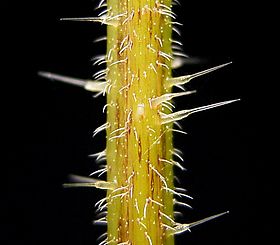
If green garlic is always the first thing that I harvest in spring, nettles are always the second. When I moved to New Mexico I couldn’t find any and couldn’t get seeds to germinate, so I was reduced to calling an herb nursery and begging them to dig up some nettles on their property and sell them to me. Every spring I’m glad that I did. Gather the tender tops with as little stem as possible, wearing leather garden gloves. Don’t handle them without gloves, no matter what you read on the Internet. I always manage to pick up a sting on my wrist just above the glove, but it hasn’t killed me yet. Wash in a big bowl of water, stirring them with a wooden spoon. Drain and dump them into lightly salted boiling water. Boil for two minutes and drain. They are now rendered weaponless: the venom (formic acid) has been denatured by heat and the zillions of fine spines that do such a good job of injecting the venom into your skin are soft. Squeeze the drained greens dry, chop them up to eliminate any stringiness in the stems, and finish cooking them any way you like. They are awfully good just braised in cream with a bit of sautéed green garlic and finished with butter and a little salt. You can click on the “greens” category of this blog for some other ideas. They are a mild-flavored green and can be used any way that you use spinach, although the flavor is a little different; “wilder” is the best way I can describe it. They are ultra-nutritious and worthy of a place on your spring menu. They are even…gulp…worth buying plants of if you don’t have them naturally.

image

DSCN0988

Animals, Waste, and the Urban Homestead

december08-005
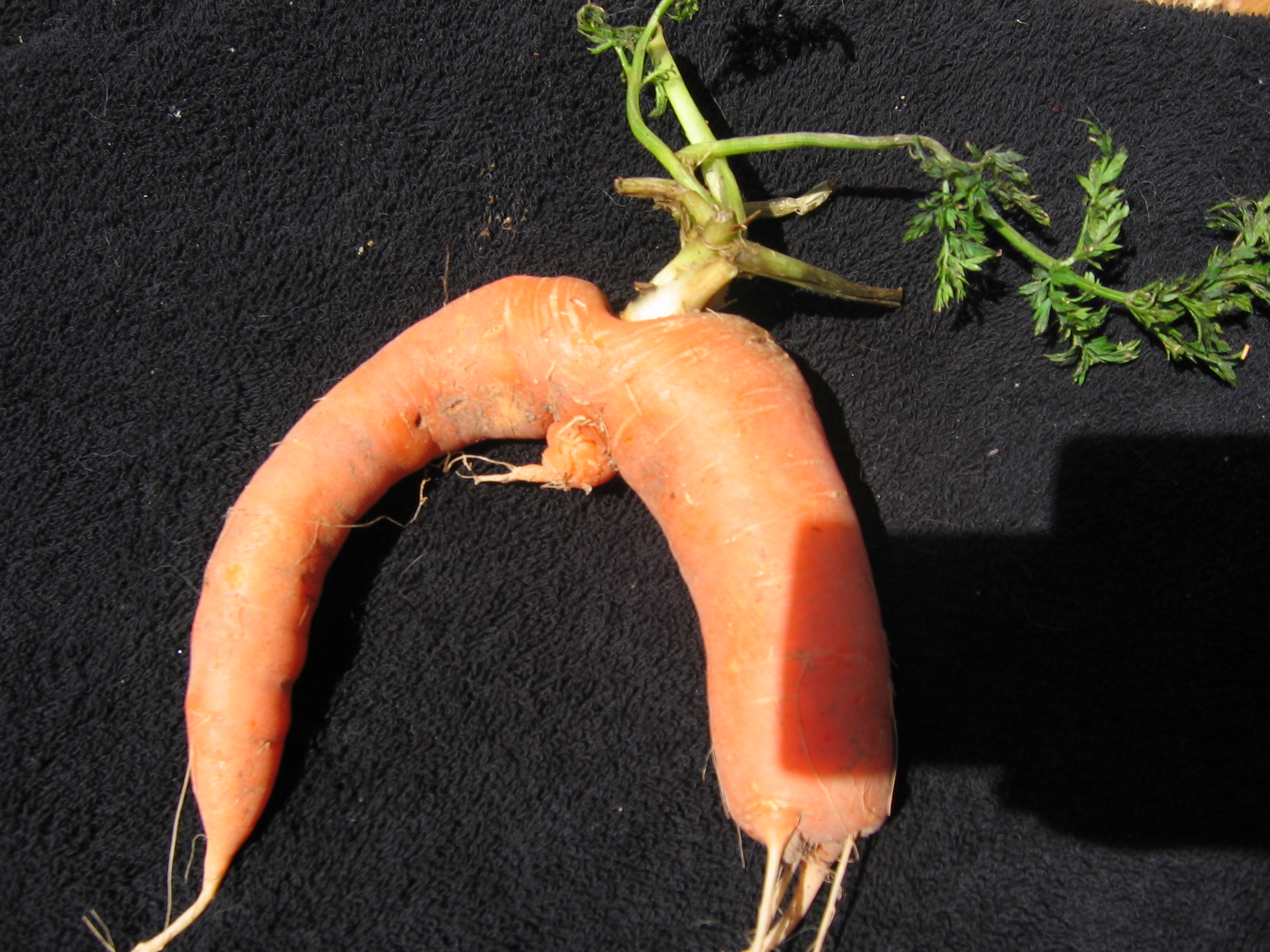
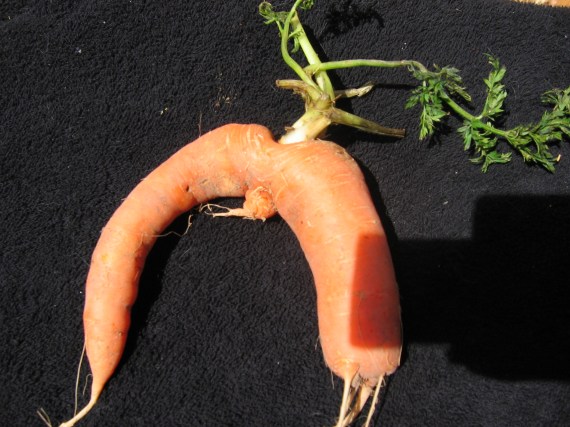
Many years ago now, in one of my earliest blog posts ( hard to imagine that I’ve been doing this for eight years now,) I posted the picture above of a carrot from my hard soil, because I thought it was funny and I had little else to talk about that day. Now, I think that my ardent carrot is part of a much bigger picture, and that picture is the ugly landscape of food waste.
Globally, unbelievable amounts of food are wasted, enough to feed a lot of hungry people, and you can read about that and about what one lively activist is doing about it in this article.
My own interest in the subject is smaller and more local. What can be done to reduce waste around our homes and neighborhoods? Start with the carrot above, and with imperfect produce in general. Are you willing to buy it and eat it? If your favorite grower at the farmer’s market sold imperfect stuff at a somewhat reduced price, would you buy it? Let them know.
When you are the grower, the task can be more satisfying, and small livestock can help. Eat what you can yourself, and share with others. People have been so market-conditioned to demand perfect produce that I can end up giving my friends the most perfect specimens and eating the imperfects myself. Get yourself a good nose-to-tail vegetable cookbook to help you eat and like the “nasty bits” of your veggies. Then look at what’s left and who will eat it, because a lot of it isn’t ready for the compost yet.
image
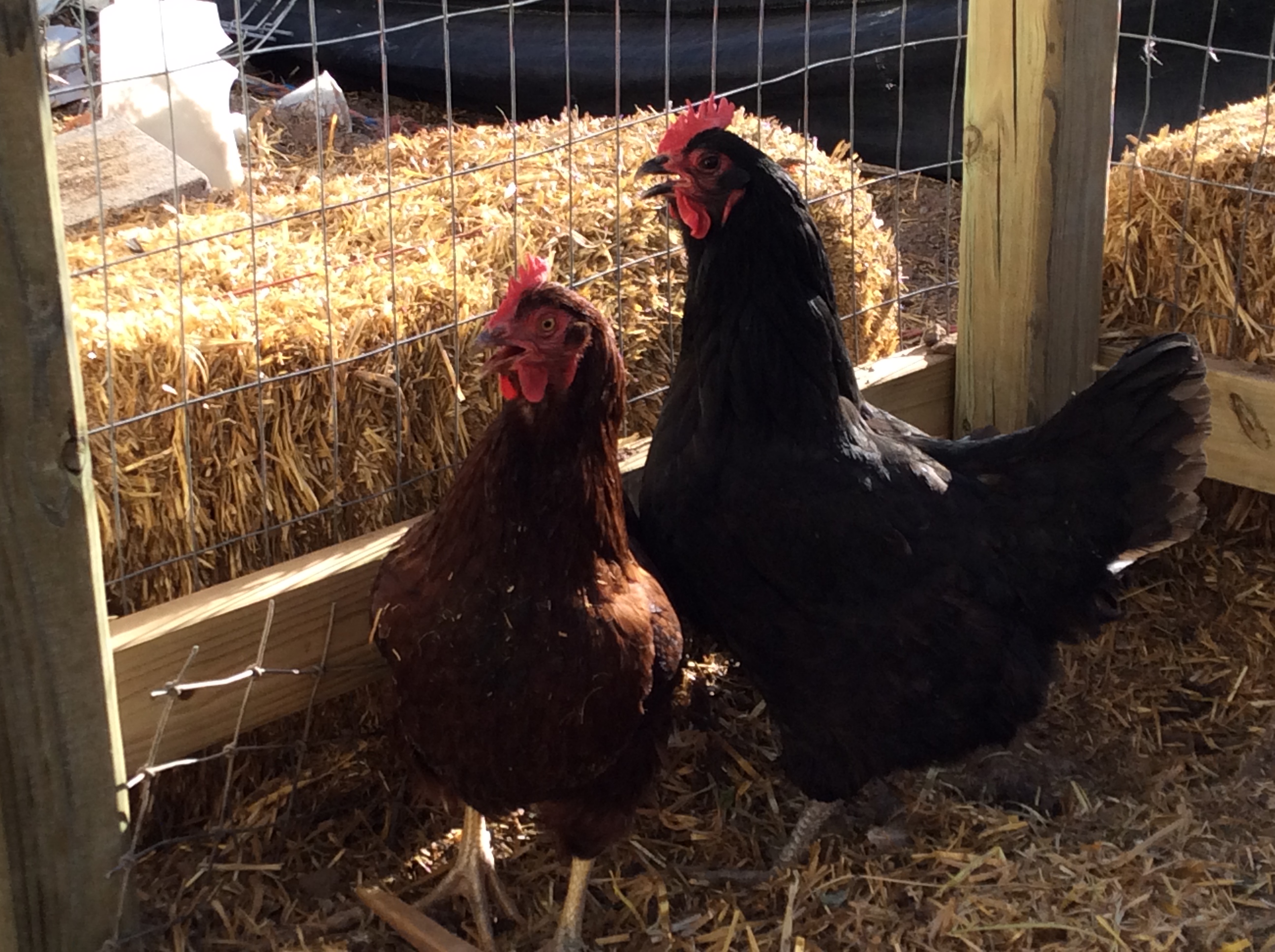
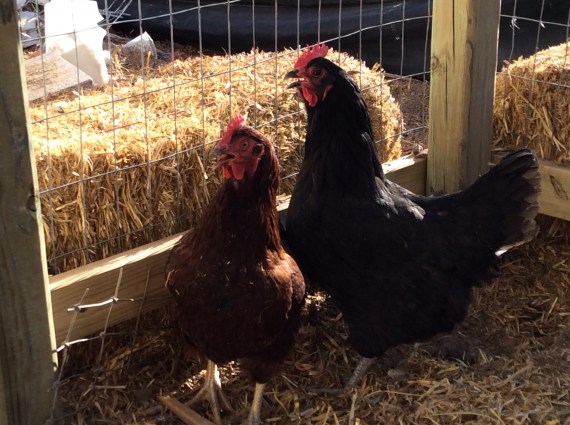
Chickens are your best friends when it comes to reducing waste. They will eat and relish greens in huge quantities, and will eat carrots, winter squash, and other chunky things if they’re cooked soft or ground in the Cuisinart. They love the residue out of the juicer, and will dispose of most of your table scraps if they are chopped finely. Personally I do not limit my chickens to a vegetarian diet because chickens are among the most profoundly omnivorous animals around, along with pigs and we ourselves. Any arguments that feeding them “garbage” is inhumane are absurd when said “garbage” was on my own plate and would have gone down my own gullet if my appetite had lasted a bit longer. They scratch over, poop on, and compost what they don’t eat, providing you with increased bounty down the road. I have read the argument that feeding them in this informal way malnourishes them, and can only reply that as long as extra calcium is supplied, my little flock shows admirable vigor and my hens lay industriously through age 4. A good laying pellet is available to them free-choice.
image

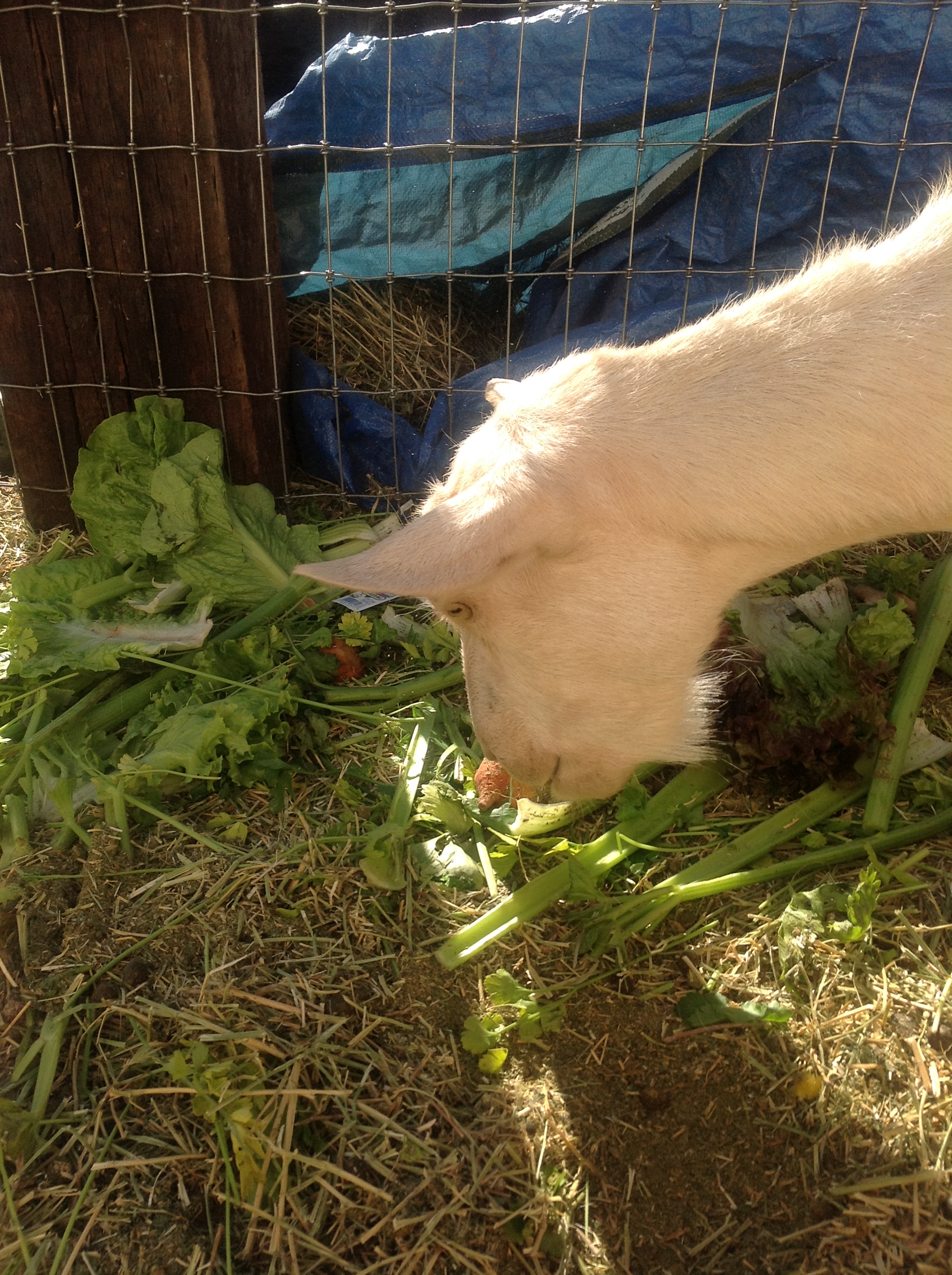
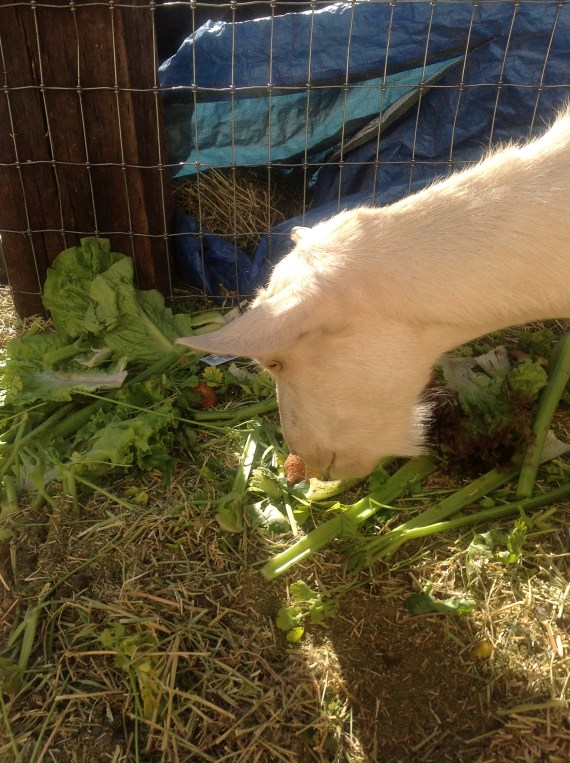
Goats occupy a different place in the waste-eating structure. Contrary to general belief they are fussy eaters and will nose at and play with anything but will only eat things that are choice in goat terms.  Goat treats include anything that’s woody and fresh, which is why you don’t keep them loose in your yard: all trees and shrubs will be killed in short order. It is also why they effortlessly absorb things that you have no other use for, such as rose prunings (unsprayed, of course.) My goat loves rose trimmings, corn stalks, carrots, pumpkins, celery and other things that the chickens have no use for, eats all my fruit tree trimmings and some excess fruit, gnaws every edible bit off broccoli stems and other large coarse plants that are otherwise hard to dispo, and will eat some large coarse weeds but only the ones that she personally selects. Amazingly, she rejects kale, lambs-quarters, and other things that I consider delicious. We do have a major trash tree in my area, the Siberian elm, and she adores them, so I cut down the ones that are growing where I don’t want them and leave the stumps in place, coppicing them for future goat food. She also eats a lot of expensive alfalfa, so believe me when I say that there is no such thing as a free goat. On the contrary.
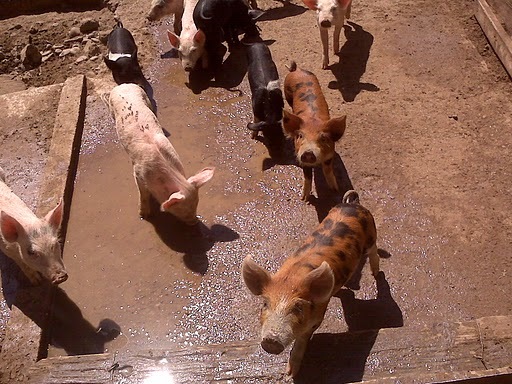
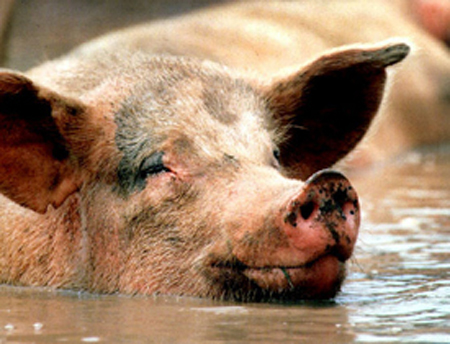
image image

Pigs are among my favorite animals, and throughout the third world they are prized for turning waste into human food.  I wish that I could recommend them for the urban homestead, but they smell too bad when kept in small areas and get too big. A full-grown hog of breeding age is practically the size of a dining room table but stronger and more determined. Urban Farm Online has a good brief summary of why  they don’t recommend pigs. I have heard it suggested that the much smaller Vietnamese pig might be good for urban bacon, but I don’t know anything about that and don’t know if anybody has tried it. If it could be made to work, it could be interesting.

I would not want any of the above to be taken as saying that you can feed animals free on household scraps. If you have animals, you can plan to spend plenty of money on feed. You will also spend time learning to care for them, and then attending to their daily needs. But they will utilize some garden and kitchen leavings and supply you with a nice end product.

 

A Carrot of a Different Color

image

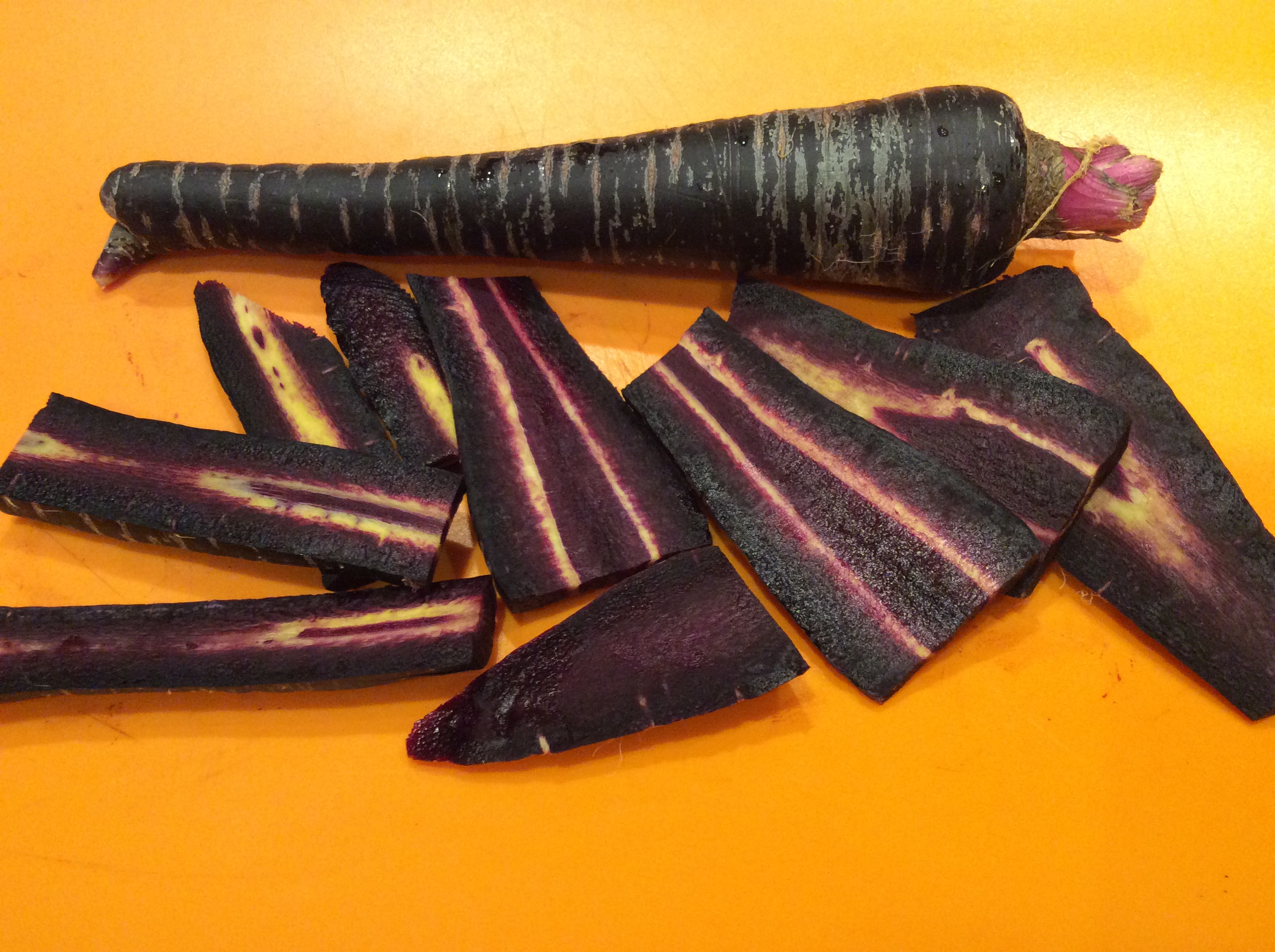
I like carrots in general, and this year I’m especially enamoured of the carrot variety named Deep Purple. As you see above, it is not a wimpy purple-blushed orange carrot. It is a startling deep indigo-violet right to the core. It is packed with anthocyanins, which can only do us good, and the flavor is a bit less sweet than many modern hybrids, which suits my preferences. I like carrots, not candy bars.

If you are accustomed to boiling carrots you will need to rethink your strategy, because the rich anthocyanin content in this one makes it bleed on the plate like boiled beets. This is not attractive, and I am no fan of boiled vegetables anyway, so a cooking method that keeps its juices inside where they belong makes sense.

image

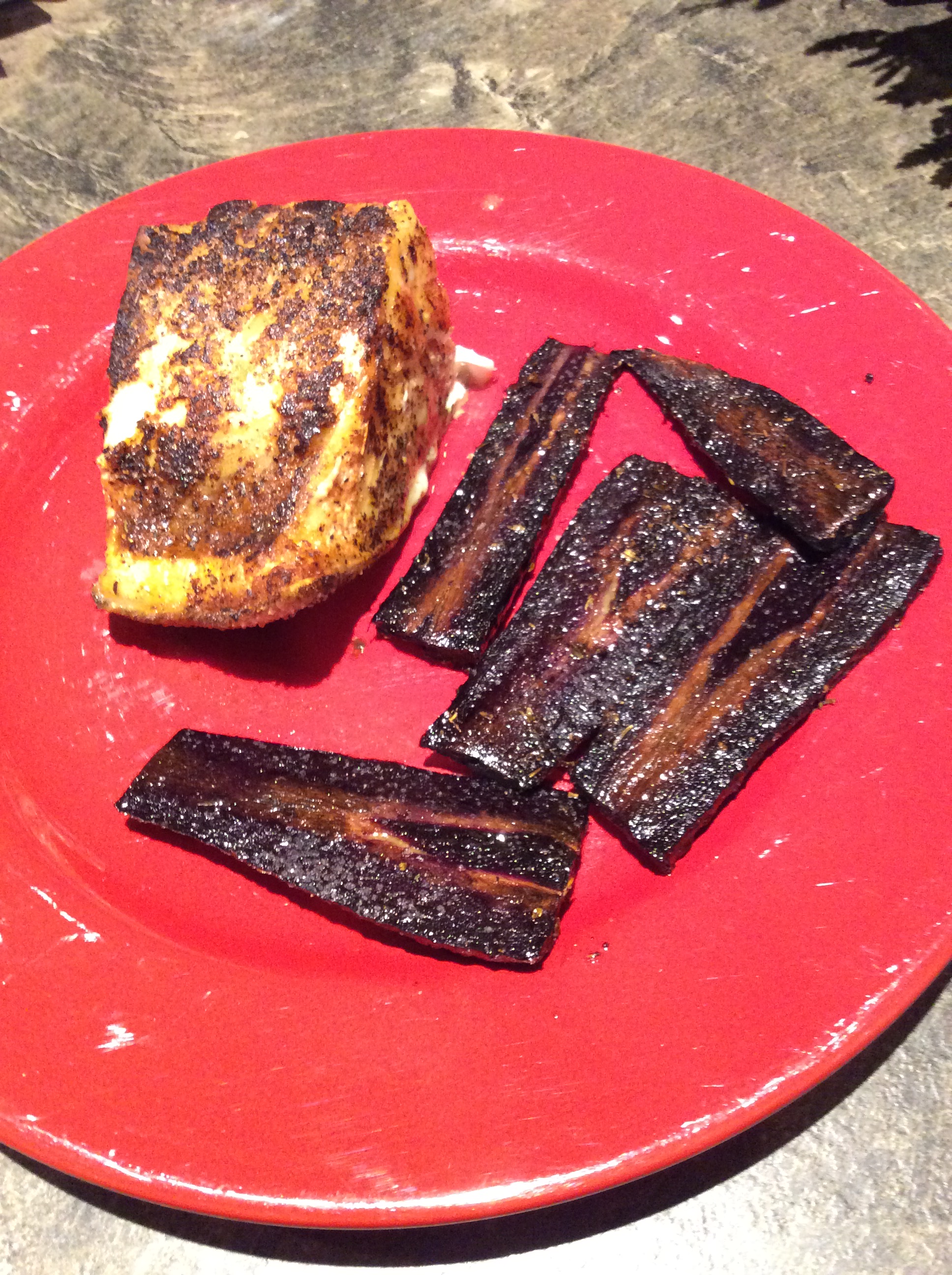
I am cooking a lot of carrot steaks lately and this is a great method for quick vegetable accompaniments that requires no forethought. The prep is quick. Catch your carrots, scrub them thoroughly, cut off the tops and bottoms, and cut the body of the carrot lengthwise into “steaks” of the thickness that you prefer. I like 1/4″ because I like them to cook quickly and get a little cooked clear to the center. I cook all the odd-shaped side slices because they are all delicious; the tapering parts get a little gooey and caramelized, which adds depth and savor. I salt the slices lightly, rub them with good olive oil, and add any seasoning that I might want. In the case shown here they were to accompany blackened fish chunks and so I dusted them lightly with blackening spices.

After you cook your entree, or in a separate nonstick skillet, heat the pan over medium-high heat and lay in the carrot slices, not letting them touch each other. Let them cook at a brisk sizzle until the underside looks cooked and is deep brown in spots, flip, and repeat. Serve and eat.

Incidentally, when I say “nonstick skillet,” these days I mean seasoned cast iron. The newer ceramic-lined nonstick skillets might be safer than the older ones, but their nonstick qualities rapidly break down if used over high heat and they are not considered safe for use under these circumstances. I also dislike the mushy not-really-a-crust that is produced over lower heat, and only fairly high heat will produce a true sear. So cast iron it is. Keeping a skillet seasoned takes a little extra work but not much. The Maillard browning reaction is the cook’s friend for deepening flavor and it happens happily in hot cast iron.  The meaty tang that browning produces makes carrot steaks an ideal vegetable entree.

DSCN0490

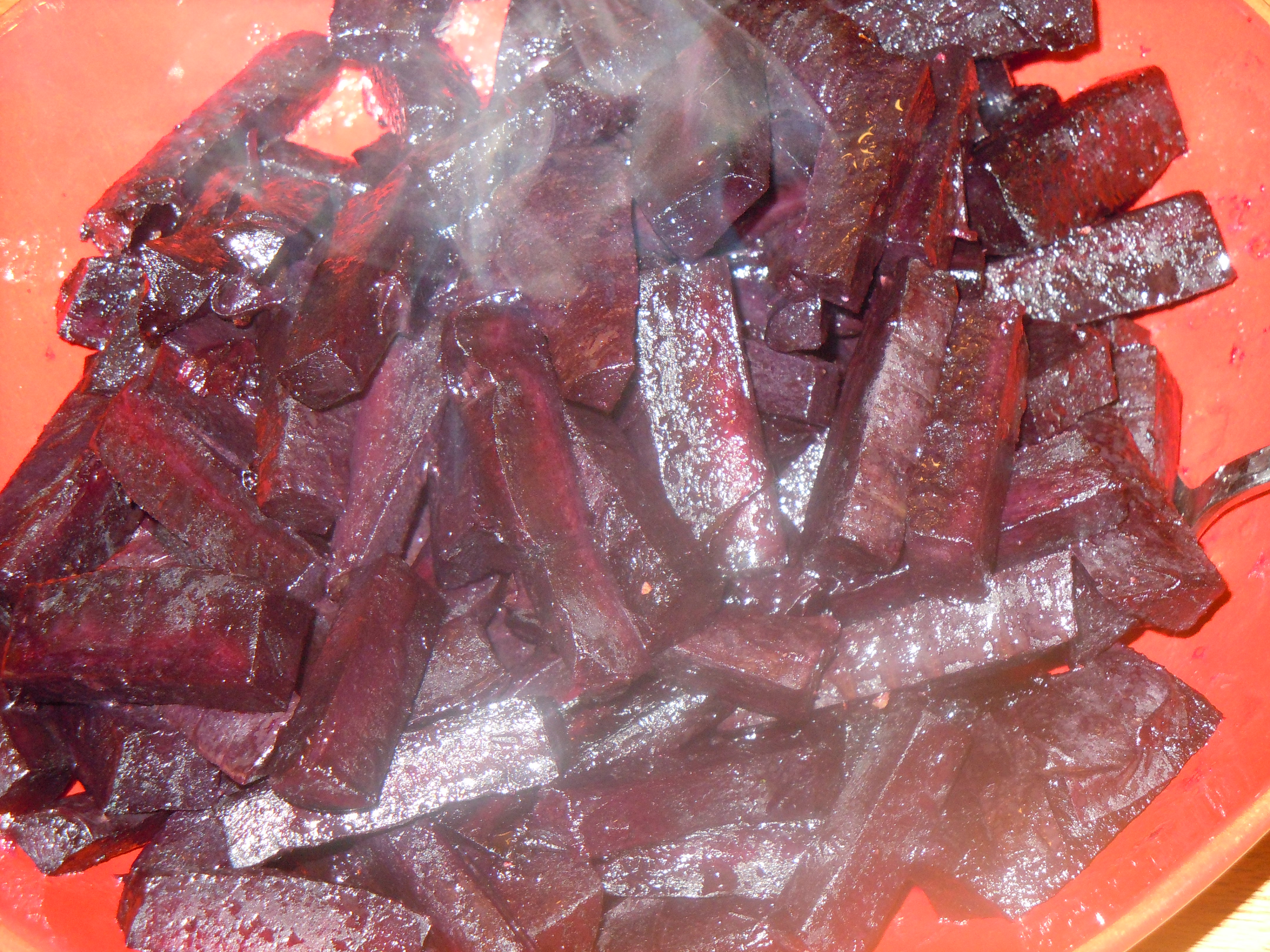
The same general method can be applied to purple carrot quarters as shown in the steaming plateful above. In this case I cooked them over lower heat for a longer time with no seasonings but salt and olive oil, and added thyme butter just before serving.

august 09 007

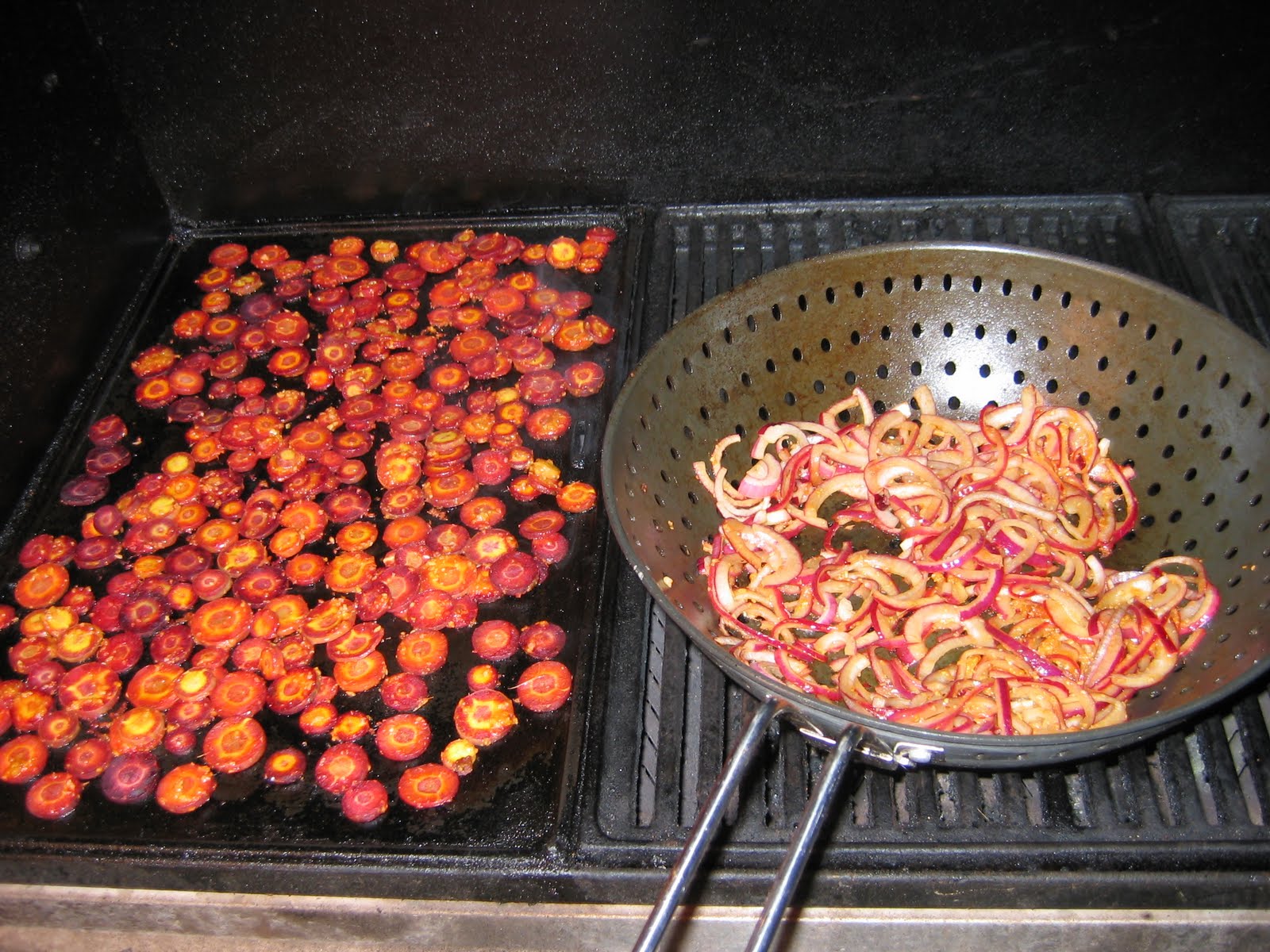
Grilling is another great way to cook purple carrots. The ones shown above are a purple-blushed variety that I grew before I discovered Deep Purple, seasoned with garlic and ginger midway through grilling so that the garlic doesn’t burn and topped with chopped turmeric leaves to accompany a dish of southeast Asian grilled shrimp.

august 09 005

Wildlife in the Suburban Garden

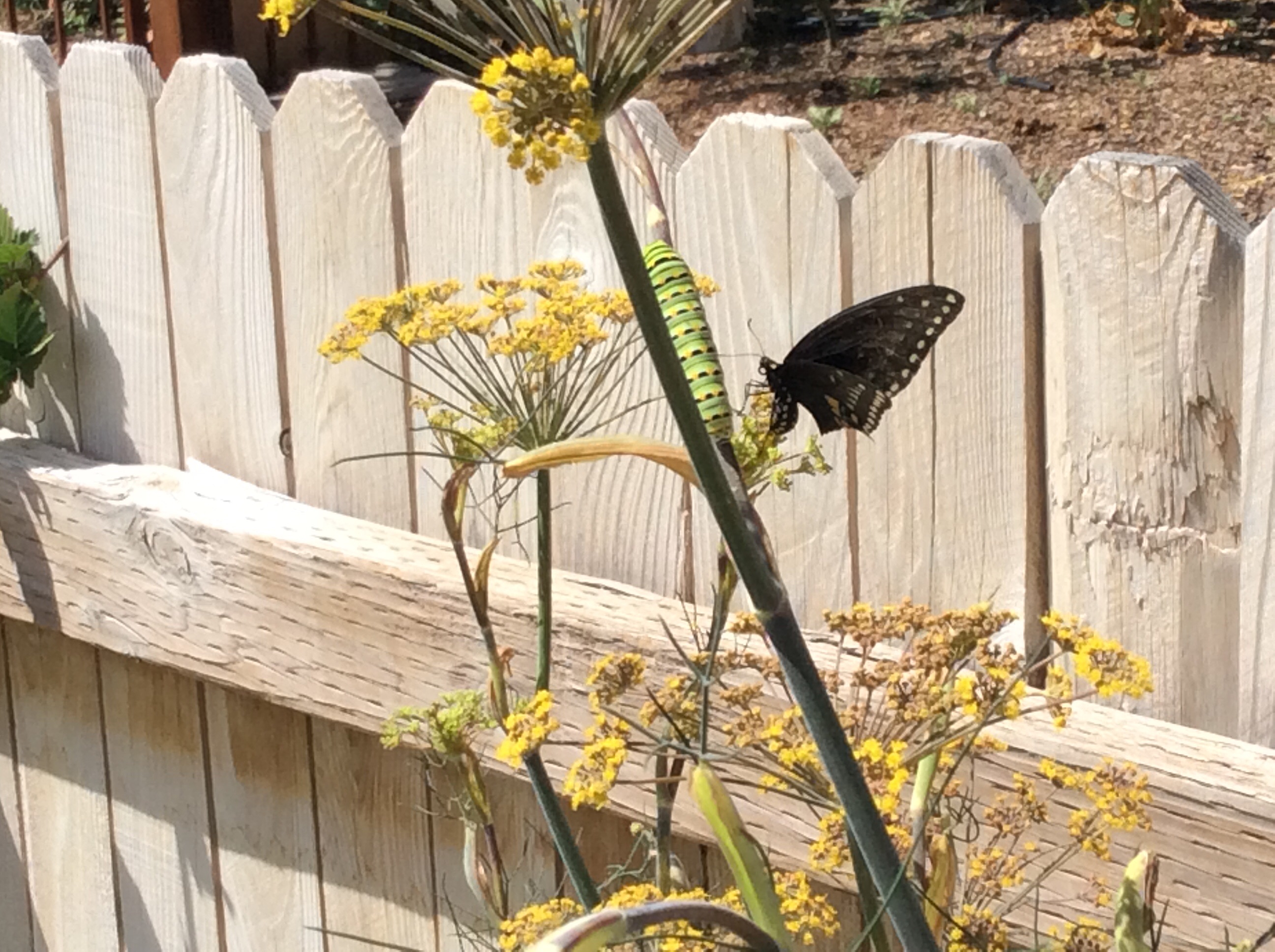
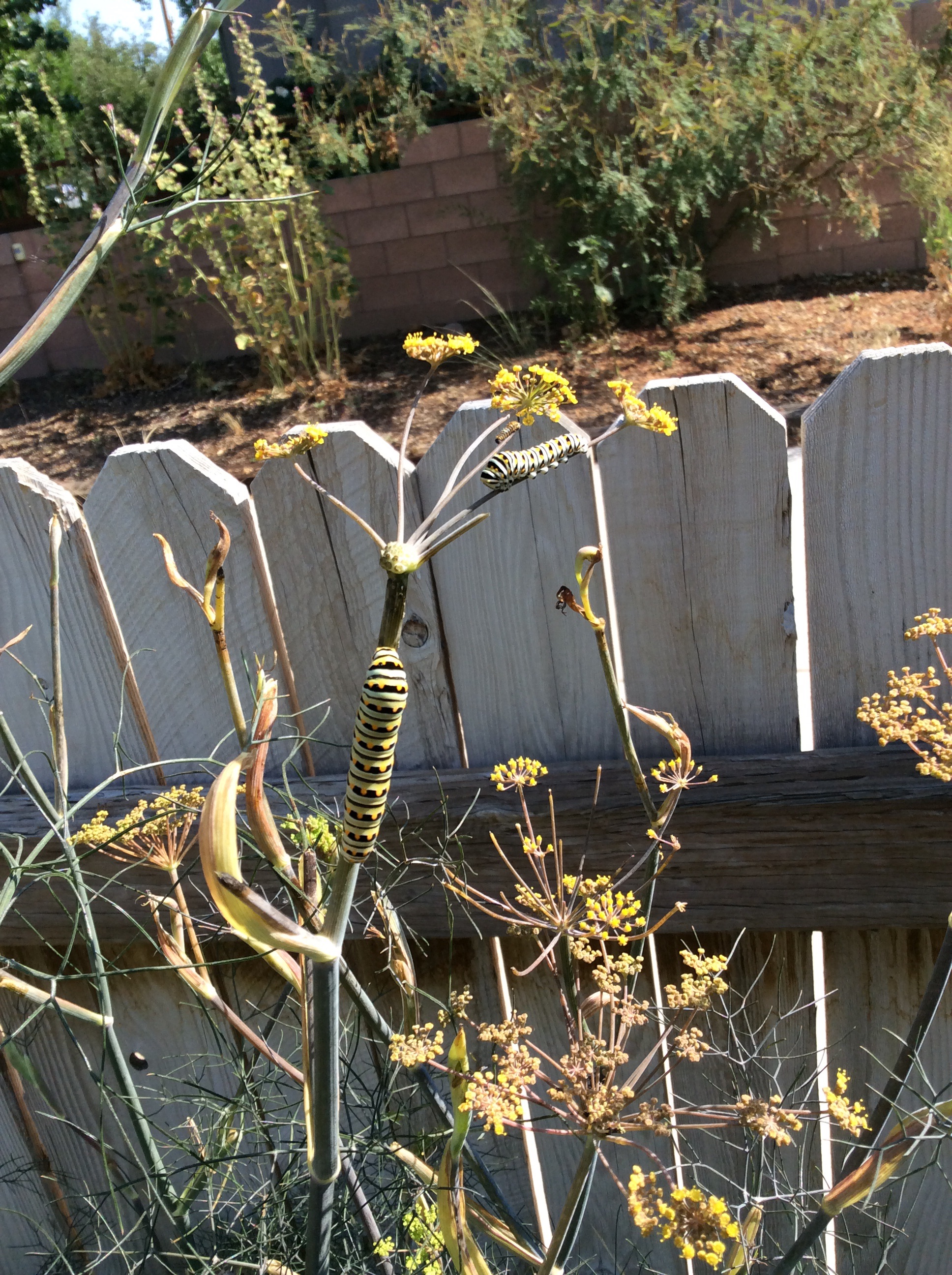
One of the lovely fringe benefits of gardening organically is that you support a lot of wildlife. Just this morning when I went out to inspect my garden, I noticed anise swallowtails around the flowers and their caterpillars on the fennel.
image
image
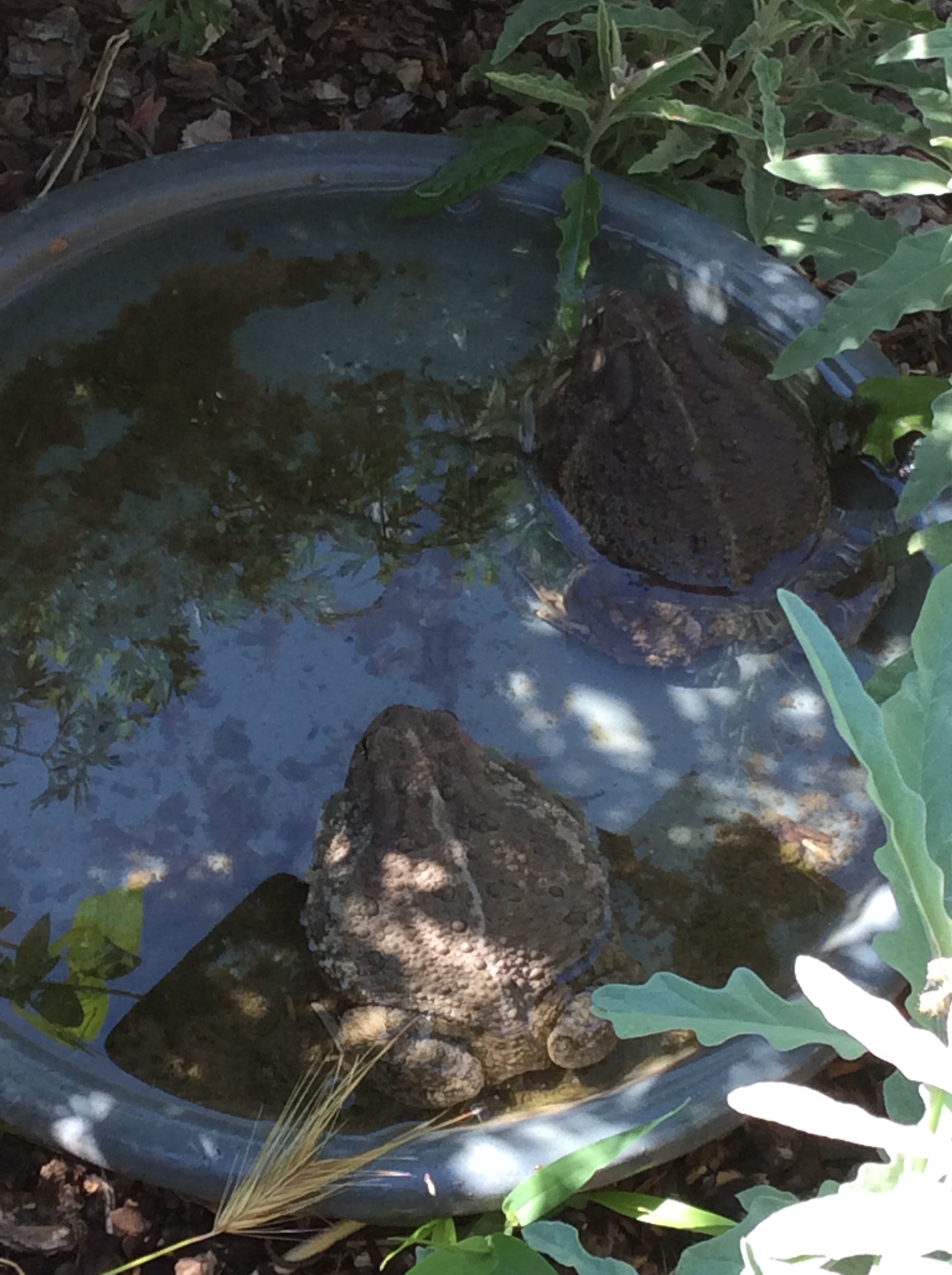
I put a birdbath on the ground in a shady spot yesterday and filled it with water, and this morning my spa was in use:
image
Coyotes pass through my yard (had to have the chickens’ run roofed over,) red-tailed hawks soar overhead, Cooper’s Hawks hunt among my neighbor’s trees, bees of all kinds visit the flowers, whiptail lizards scuttle among the plants, and sometimes a huge raccoon comes around to stare longingly at the chickens. Under my feet untold billions of microbes churn the soil. Invite Nature to dance and she’ll take you up on it.