Archive for the ‘recipe’ Category

Pork Belly and Eggplant

image
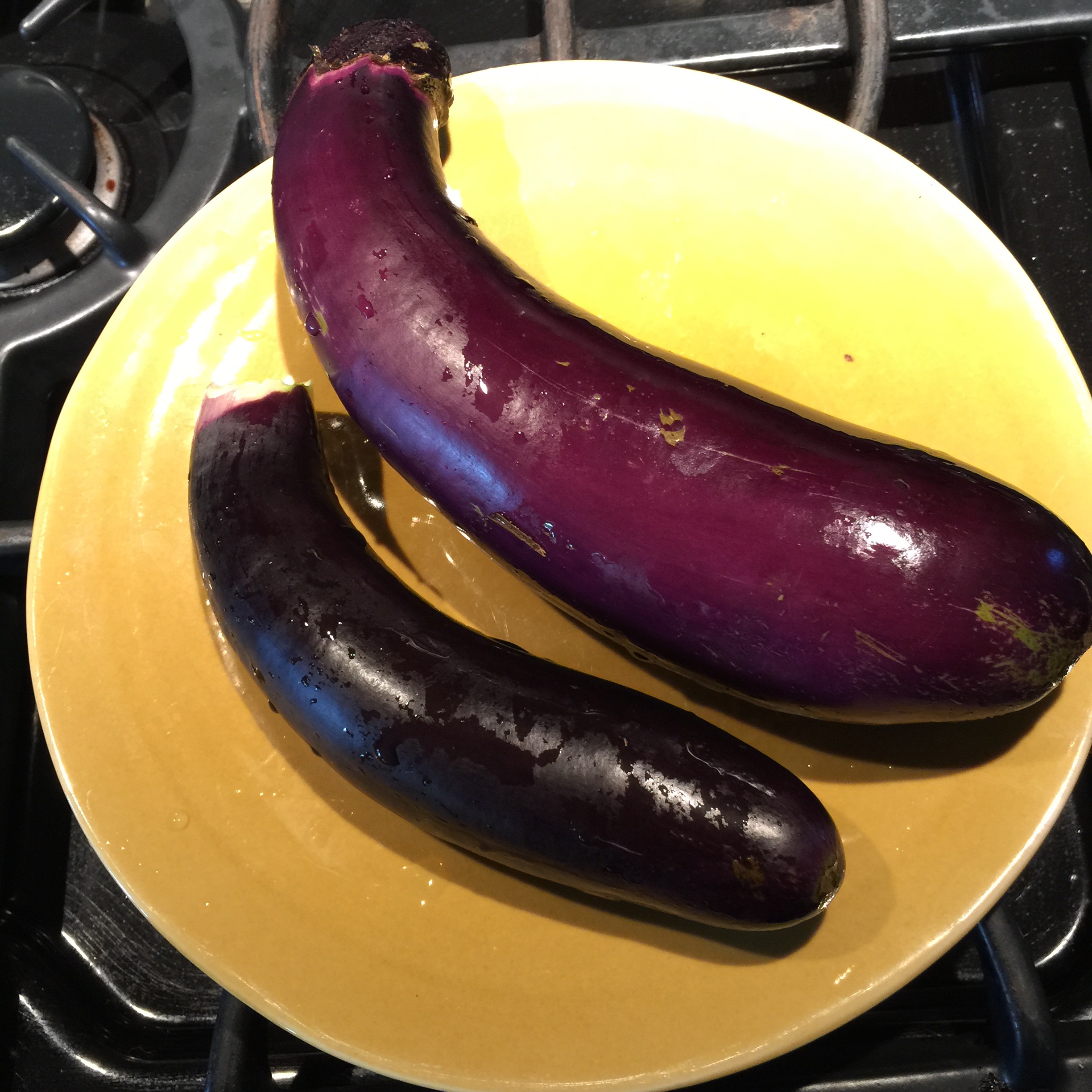
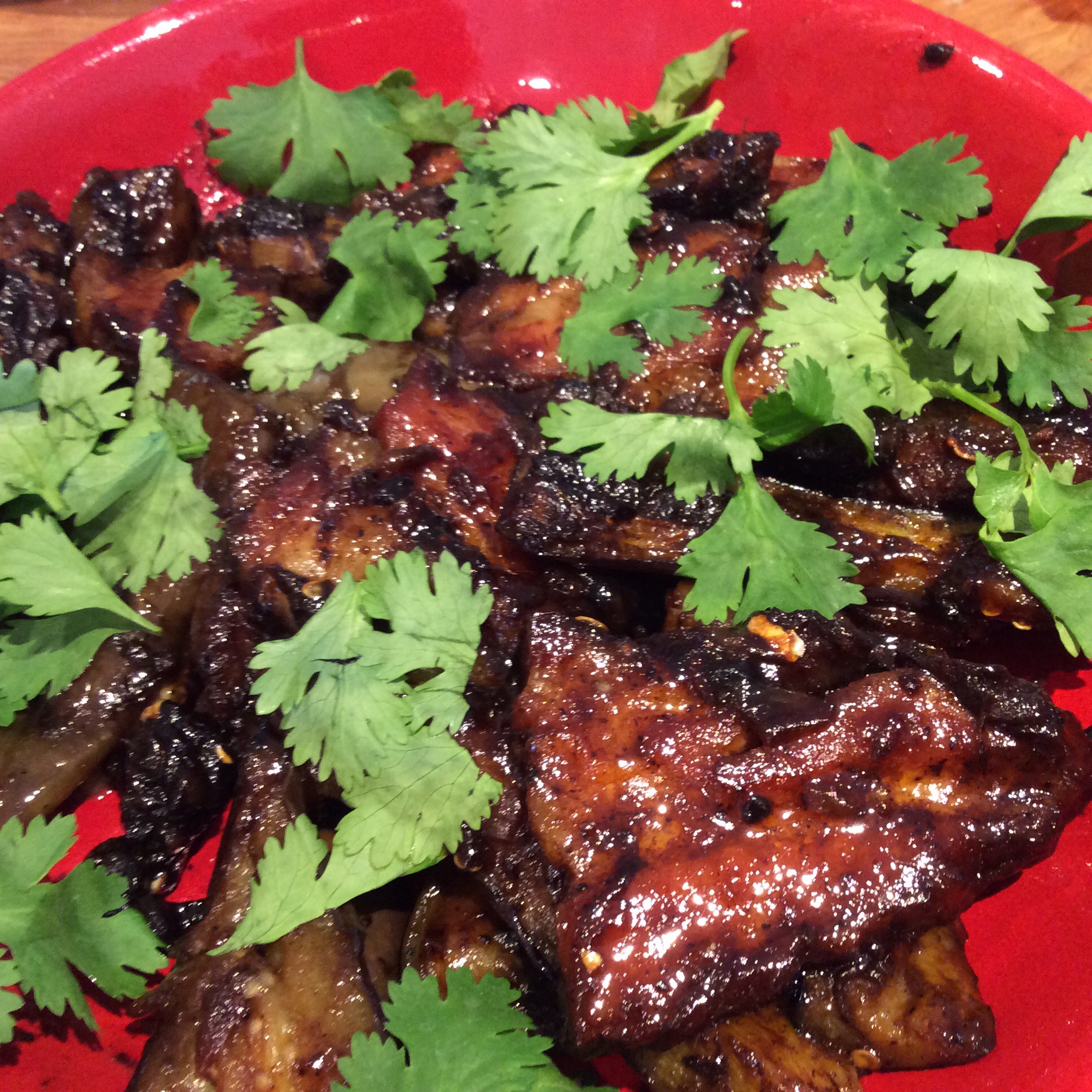
Recently I scored a big chunk of local outdoor-raised pork belly and have been gleefully cooking with this delicious cut for about a week. First I seasoned it with salt and pepper, let the seasoning sink in overnight, then sous-vided the piece at 143 degrees for 24 hours, finishing with a rapid sear on both sides over hardwood charcoal. That was delicious, but today’s planned-overs are the best pork belly so far. This dish uses the eggplants that my garden is pumping out right now.

You will need:
6 slices across a half pork belly (raw or cooked, but salt if raw) about 1/4-1/3 inch thick. In effect, you have six very thick slices of unsmoked bacon. Cut the slices crosswise into pieces about 2″ long.
4 Japanese long eggplants cut into chunks 2″ long and then quartered, salted liberally and set aside to drain.
3 tablespoons fermented black beans, rinsed, soaked, and drained (you can find salted fermented black beans in bags or bulk at good Asian groceries. DON’T get the unfermented kind.)
Half a cup or so of my Quasi-Korean Sauce I have this in the refrigerator all the time.

Press the salted eggplant pieces hard with your hands in a clean towel to get out as much moisture as possible. Lay the pieces of pork belly flat in a hot skillet and fry them good and brown and crisp on both sides, but don’t burn. Set them aside on paper towels and pour most of the fat out of the pan, leaving a few tablespoons. Put the eggplant pieces in to fry, keeping the heat medium-high and turning with a spatula. They should be browned on the cut sides and pretty soft. Meanwhile, mash the fermented black beans with your mortar and pestle or grind them in a mini-prep. Add them to the Quasi-Korean sauce. When the eggplant is cooked add the sauce to the hot pan, stir and flip to coat the eggplant well and cook it in the sauce a minute, add the pork belly chunks, and stir to coat them thoroughly. Serve forth with suitable green bits on top. I used cilantro, but slivered green onions would have been better. Serves two. If you aren’t a ketogenic eater, you will want some white rice with this, and it will serve three.

Now, my rant about pork. Pigs are intelligent animals and the conditions under which they are kept in factory farms is heartbreaking and disgraceful. They go insane, as would we under similar circumstances. Please seek out a local farmer who raises pigs humanely and buy from him or her. Often local food co-ops are sympathetic to your quest and can either help you get the meat or direct you to farmers. Go to farmers markets or look on Craigslist. If you have no other source, ask meat dept. managers at Whole Foods. They may surprise you.
The Eggplant Chronicles IV

DSCN0199
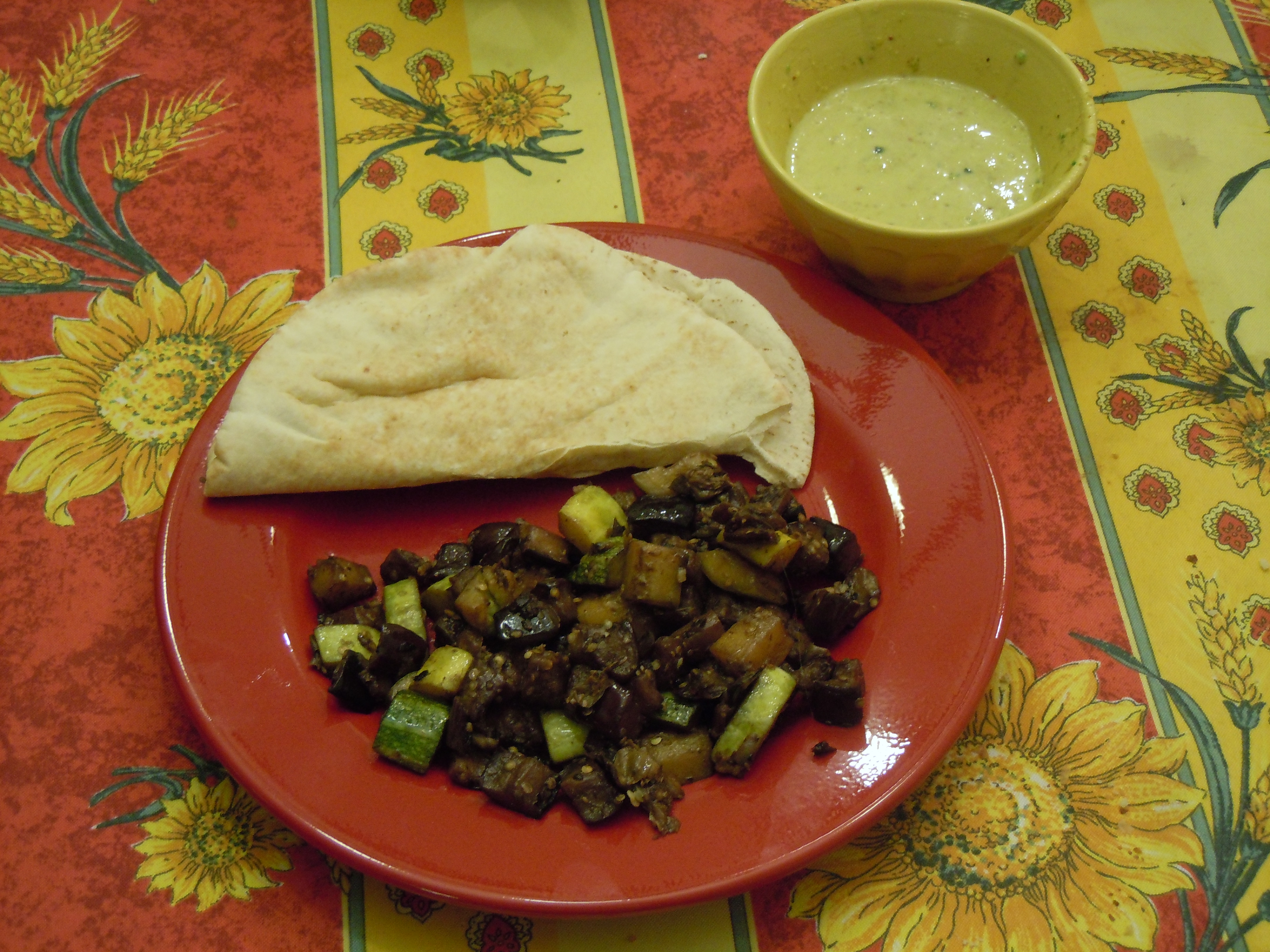
Summer vegetables are at their peak now, and in my home most of our meals are based on them. This one makes a great lunch or light dinner. I used to wrap this mixture into a pita as shown above but now that I am low-carb I just pile it on a little plate, drizzle with the sauce, and eat it. I like it warm, but it is also very tasty served at room temperature. It can be made ahead, and keeps a few days in the refrigerator. Oil-cured black olives are used to add a meaty savor to eggplant and zucchini, and capers add an herbal note. This meal is vegetarian, and can be made vegan if you alter the sauce recipe a little. You can use all eggplant or all zucchini if that’s what you have, although I think that the mixture is best.

Eggplant and Zucchini with Olives and Capers

2 small or one large eggplant, fresh and firm
2 small zucchini
12-20 oil-cured black olives depending on your taste for them (no other kind of olive will do here)
3 tablespoons salted capers, rinsed and then soaked in cold water for an hour and squeezed dry
1/4 cup good olive oil
2 large or 3 medium cloves garlic
chopped parsley to taste, probably a couple of tablespoons
Cut the eggplant in cubes 1/2 inch or a little larger on a side. Whether you peel it first is up to you. The finished dish has a more tender texture if the eggplant is peeled, but has less fiber and fewer antioxidants, so take your pick. Personally, I leave the peel on for this dish as long as the eggplants are young and tender. Cut the zucchini in quarters and slice each quarter into segments on the small side of 1/2 inch. Toss the vegetable cubes together in a bowl with 2 teaspoons of salt and let sit at least 1 hour, tossing occasionally. This step is important for this dish and shouldn’t be shortened. Don’t worry about the quantity of salt; if you do the squeezing step well, most of it will be removed with the liquid. You can soak the capers at the same time. Pit the olives and chop them coarsely, and chop the garlic finely. At the end of an hour, drain off exuded liquid and squeeze the veggie chunks in a clean kitchen towel, a few handfuls at a time, until as much liquid as possible has been squeezed out. Squeeze the capers dry and chop them coarsely. In a clay cazuela or 10″ skillet, heat a few tablespoons of the olive oil and add the garlic. Cook until opaque and cooked but do not allow it to start to brown even a little. Now add the olives, capers, and veggie chunks, toss to coat with the oil, and cook over low heat for about an hour, tossing occasionally and making sure it doesn’t burn on the bottom. Add a little water if needed to prevent burning.
Texture is very important. Start tasting a little after 45 minutes or even 30 if it looks like it’s cooking quickly. When the zucchini is just tender but not mushy, and the eggplant is melting in texture, it’s done. Also check for salt, but the seasonings are salty and you are unlikely to need any. Stir in the parsley just before serving. Serve with the sauce below.

Lemon-garlic sauce
This sauce is like an aioli but looser and less rich. The egg yolk just binds it and thickens it a little. If you leave out the egg yolk the whole dish is vegan, and the flavor is less rich but still very good. The texture of the vegan version will be liquid, not thick, and it will need to be stirred up by each diner before taking any.
1 egg yolk
1 large clove garlic
juice of half a lemon
1 Jalapeno pepper, seeds and veins removed unless you are a heat freak
olive oil as needed, usually about 1/4 cup.
salt to taste
1-2 teaspoons fresh thyme leaves
In a small food processor, chop the garlic clove and the chile pepper. I always mince fresh chiles before putting them in the processor to make sure that big chunks don’t startle diners. Add the egg yolk and lemon juice, process briefly, and slowly drip in the olive oil until it’s as thick as you want. I like it to be liquid and spoonable, but velvety. Taste and salt as needed. Add the thyme leaves and stir in. For the vegan version, proceed the same way except leave out the egg yolk, and be aware that it won’t thicken in the same way but will be more like a vinaigrette.
This dish is suitable for a low carb diet. All veggies have some carbs but not enough to worry about.
As far as portions, I think this quantity only serves two, maybe even just one on a hungry day. Daintier eaters might get three or four portions.

The Eggplant Chronicles III: an Eggplant Appetizer

image
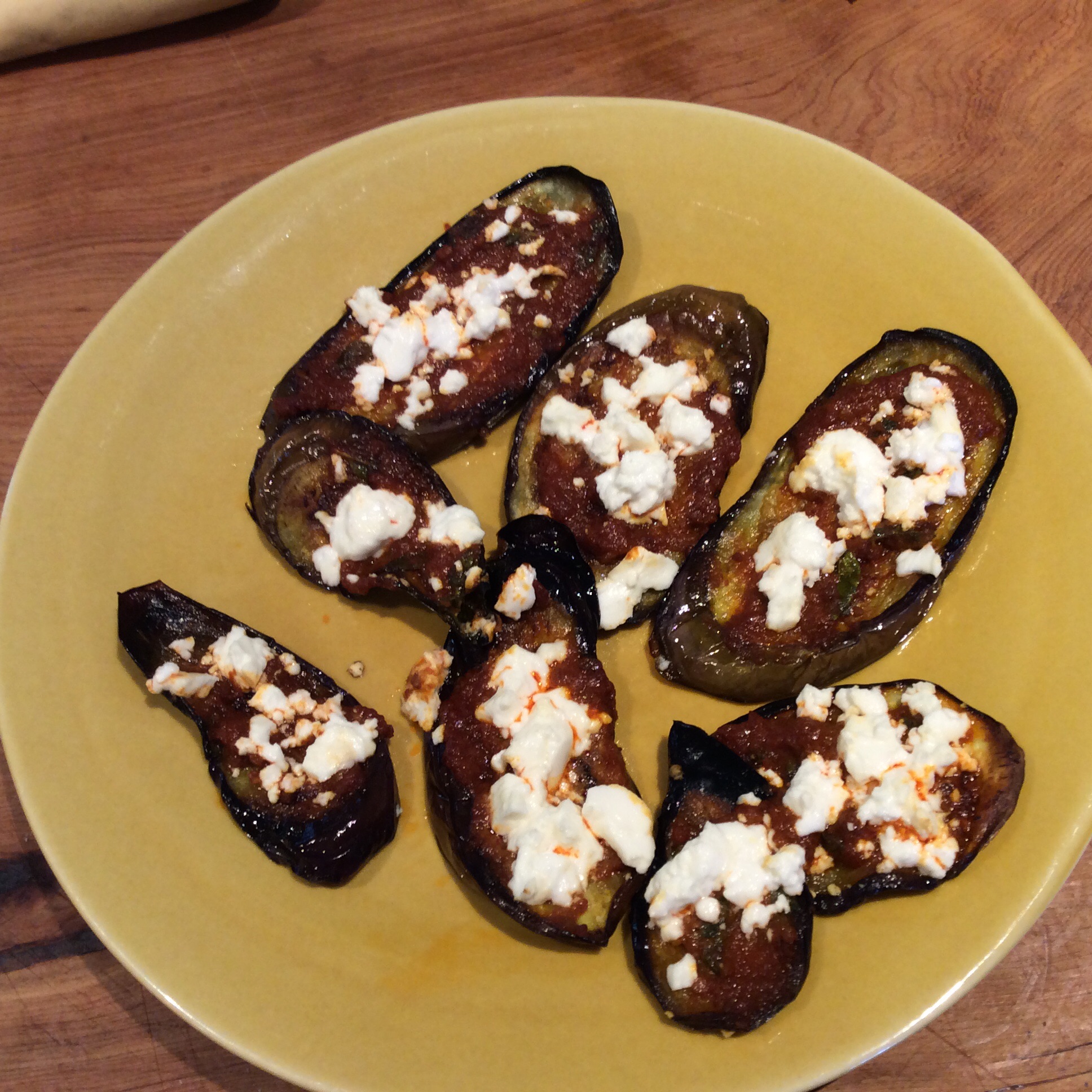
One evening recently I found myself with four expected for dinner and two Japanese eggplants. I decided to use the eggplants as an hors d’oeuvre and sliced them diagonally (to increase the size of the slices) about 1/3 inch thick, sprinkled the slices heavily with salt, and set them aside to disgorge while I rummaged in the pantry and refrigerator. I came across my tub of salt-cured capers and set a large handful of them aside to soak. I found some leftover marinara sauce, about a cup’s worth, and put it in a little saucepan and reduced it to half a cup to thicken the sauce and intensify the flavors. I added a small handful of chopped fresh Greek oregano, and since the flavor was going to lean more Greek I threw in a few chopped fennel fronds too, a tablespoonful or so. I pulled a slice of feta out of the tub in my refrigerator and crumbled it. The oven was turned to 425 to preheat.
By this time the eggplant slices looked quite watery and were ready to be dried with a clean dish towel. They need to be pressed hard to get as much water out as possible. Then they were fried in olive oil in a nonstick skillet until nicely browned on both sides. I do this over fairly high heat, which requires constant unwavering attention so that they don’t burn but gets the job done quickly.
Once the eggplant slices are fried, they can be laid out on parchment paper on a baking sheet and the squeezed-dry capers fried quickly in olive oil in the same pan, not to crispness and not browned but just enough to turn them a shade darker and bring out their flavor. Then mix them into the tomato sauce and spread the mixture on the eggplant slices. Top with crumbled feta. Pop in the hot oven for 15-20 minutes, until the slices are bubbling-hot and the feta looks a little soft, and serve.
These can be made hours ahead, even a day ahead, and then the final baking done just before eating. They are suitable for low carbohydrate diets. They are suitable for vegetarians as long as the tomato sauce didn’t contain any meat. If cooking for vegans, you could leave off the cheese, fry the capers to the point of a bit of browning and crispness, and use them combined with toasted pine nuts for the top garnish.
image
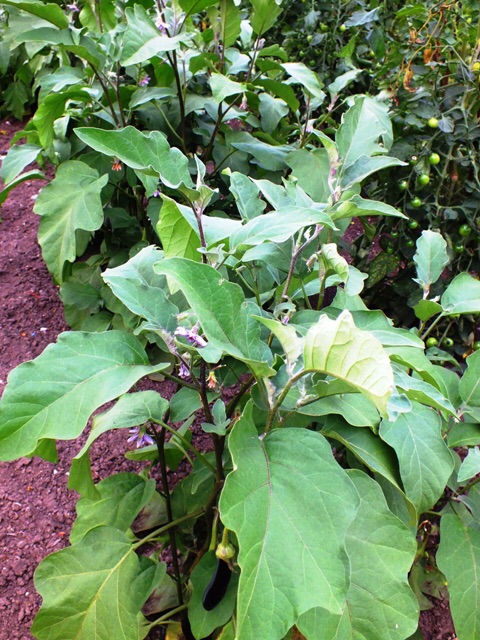
Thanks to my grafted Japanese eggplant I always have a couple of lovely fruit hanging around the kitchen waiting for inspiration to strike. If you don’t have a big vegetable garden, eggplant is attractive enough (in my eyes anyway) to be grown along a walkway in place of flowers.
image

Clove Currants

image

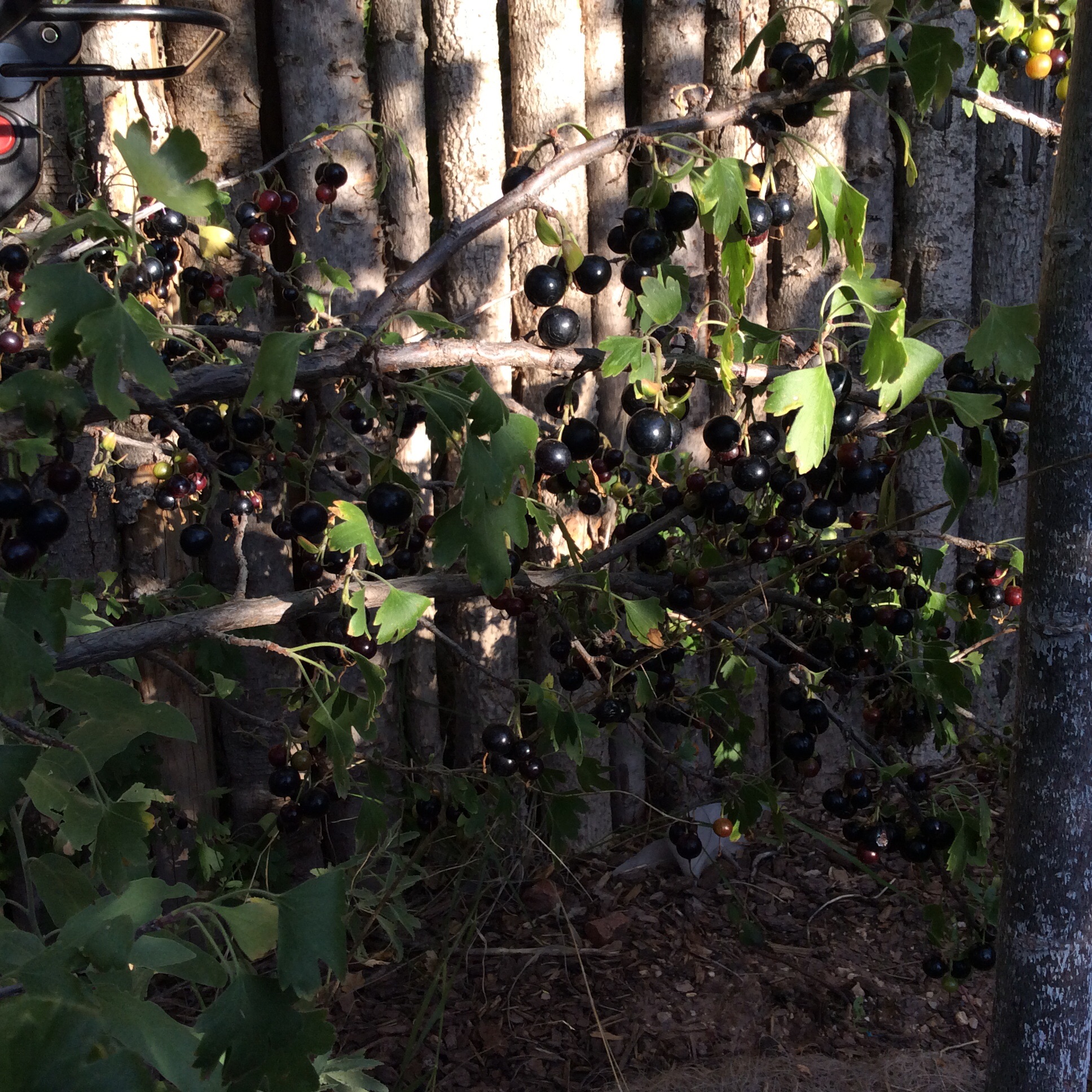
The native clove currant, Ribies odoratum, grows beautifully in my area. It is sturdy, healthy, drought-tolerant, will tolerate some shade, suffers from no bugs or diseases, and is reasonably attractive, especially in spring when covered with thousands of tiny yellow flowers that have a soft pleasant scent. I haven’t found them growing wild in my area but I have a bush that was planted by birds; they grow that easily, and start to bear within three years.  I have several large bushes and would have planted more if not for one major disadvantage: I thought the fruit tasted awful.  The fruits, like most berries, are relatively low-carb for fruits and probably contain a good set of antioxidants, but eating things prescriptively rather than for pleasure is just not my style.

But sometimes plants just have to hang around my yard until I learn to use them well. This year, after living with clove currants for five years, I finally figured out (duh) that the fruits are not ready to eat when they turn black. Don’t grab those first black shiny fruits. Leave them on the bush for another couple of weeks. Taste every few days, and when they taste sweet and spicy (still very tart but with a balance of acid and sweetness) they’re ripe. The fruits actually get a little smaller as they ripen, and some will look a bit wrinkled. Don’t worry. Don’t use any that are dry and shriveled, but a little loss of turgor just intensifies the flavor.

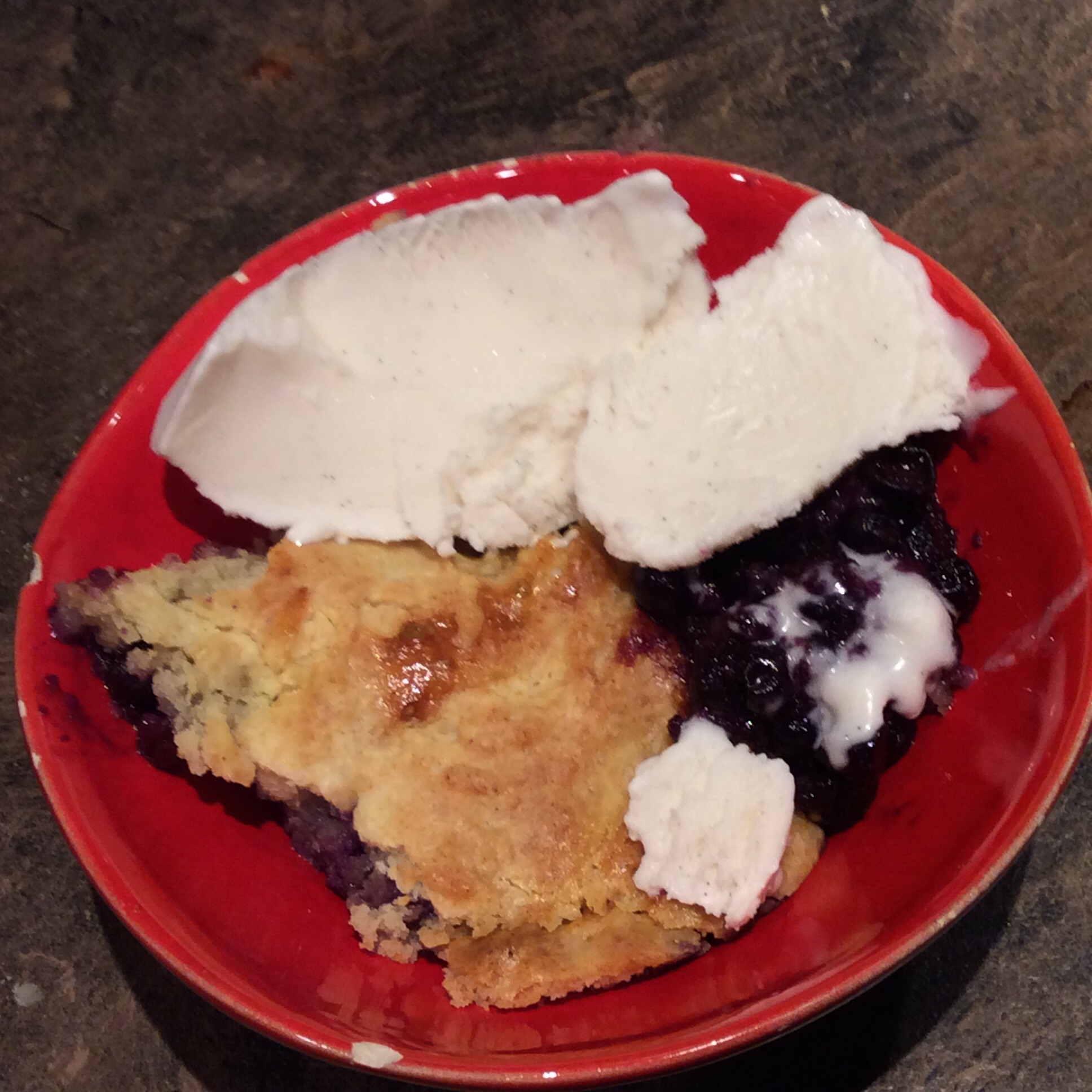
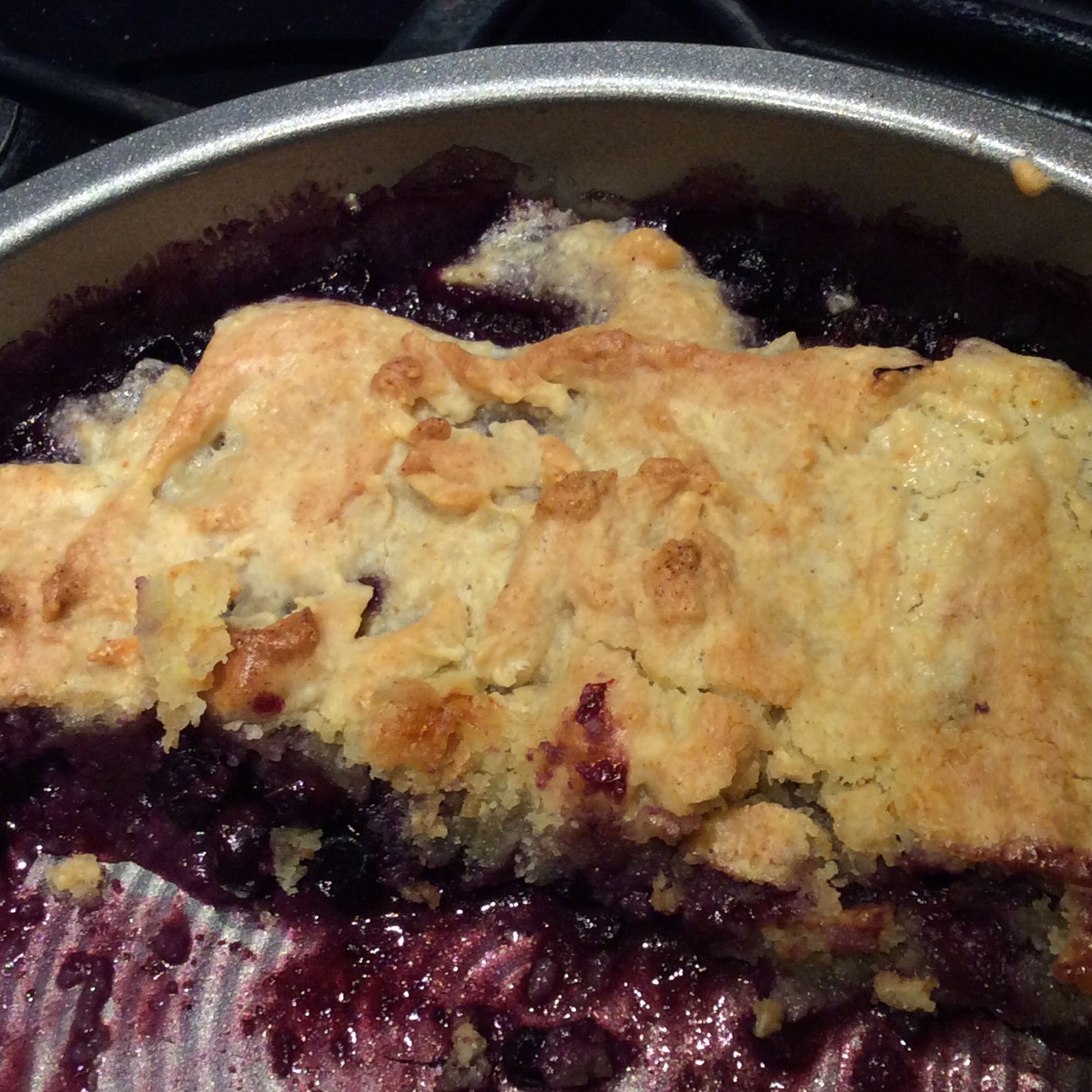
I enjoy eating a handful in the garden when I make my morning rounds, but my favorite use for them is in cobbler. If you are low-carb, use my recipe for red, white, and blue cobbler, using clove currants alone or adding in some frozen wild blueberries to make up the fruit volume if you don’t have enough clove currants. Work the sweeteners into the fruit with your fingers, crushing the fruits a bit as you go. If you eat sugar and flour, just use your own favorite cobbler recipe. Be sure to grate a little fresh nutmeg into the fruit mixture to bring out the spiciness.
image
The fruit clings to the stems and often has a little wiry “tail” clinging to the blossom end which has to be removed, so harvesting them is a bit tedious. I wait until early evening and then sit comfortably under the bushes with a bowl, pulling off stems and tails as I go so that fruits that hit the bowl are ready to use. I eat a few along the way. The laborer is worthy of her hire, after all.

I’ve been thinking of other ways to use them, and I think that they might be good in sauces for meat and game. I can recall reading a British recipe for a blackberry sauce for venison, and along those lines I plan to try using clove currants for a sauce for roasted pork. But right now they are going into cobbler or disappearing straight down my greedy gullet.
image

I also have a couple of bushes of Golden currant, also known as wax currant, but they are slower to bear and I haven’t had enough fruit to experiment with yet. More on that later.