Archive for the ‘recipe’ Category

Fall and Winter Leaves II: Nettles

Nettles are one of my favorite greens, and one of the most nutritious plants around, so treating them with the respect and care that helps you avoid stings is definitely worth the trouble. I have a thriving nettle patch in a corner of my yard that I don’t routinely have to visit, so I have always harvested the new greens in the spring and then assiduously ignored the nettle patch for the rest of the year.  This is partly because I get interested in other things, but mostly because as a child, when I first started foraging to the intense dismay of my parents, my mother wisely bought me a set of Euell Gibbons books so that I would not poison myself.  Mr. Gibbons wrote eulogistically about nettles, but cautioned his readers that after the spring flush they develop oxalate crystals and are gritty and inedible.  I believed every word he wrote, and so I never tried them after they were about a foot high.

Here in the desert, in the unwatered spot where they have to live in my yard, nettles die back beginning in July, and the stems look dead by September.  But this year we got an uncharacteristic long heavy rainstorm in late September, and to my surprise the dead nettle stems began to leaf out again.  This week I noticed a mat of fresh nettle leaves, and told myself that no doubt they would be gritty, exactly as Euell had predicted.  But I did gather a couple of quarts (using leather gloves) of nettle sprigs and tried cooking them. They were exactly as verdant tasting as the spring greens, and neither gritty nor tough.  Now that I know this, I will try to remember to cut my nettle patch back when it dies in the hottest late summer weather, and begin to water in September so that the late fall shoots will be easier to pick.

Cooked greens in the refrigerator are an appetizing snack or light meal waiting to happen.  Today I didn’t particularly feel like eating a heavy lunch, but I did want something, and I wanted it to be healthy. I had a cup of blanched nettle greens hanging out in the refrigerator, and half a cup or so of leftover cooked cauliflower rice, so I grabbed two large scallions out of the walking onion patch and picked three large carrot leaves off the last remaining carrots.  The garlic that I planted in late summer is sprouting, so I picked one stalk that was about 6 inches high  to use as green garlic.  The fresh green stuff was chopped and sautéed in butter until cooked through, then the cooked nettles and cooked cauliflower rice were added along with about 2 cups of canned chicken broth and half a cup of heavy cream.  You could certainly leave this as a chunky soup, but I decided that I wanted a cream soup, and put the little potful in my Vitamix blender. About a minute later, it was completely creamy and thickened. I poured it back in the cooking pan, added a little water to thin it to a good consistency, simmered for 10 minutes, salted to taste, and ate it with a spoon full of drained yogurt on top to supply a subtle acidic element.  The entire process, including grabbing the green stuff from the yard, took about 15 minutes. This is a pretty small time investment for something as absurdly healthy as nettle soup.

Needless to say, vary to suit your own taste. Cooked cauliflower is a surprisingly good creamy thickening agent, and if you are vegan you could use olive oil for the initial sauté  and vegetable broth for the cooking liquid, and leave the cream out or substitute nut milk. It could be finished with a few drops of lemon juice instead of drained yogurt. Vegetarians can change the broth and leave everything else the same. As written it is a delicately flavored and very comforting soup, perfect for days when fate is being unkind, but if you want something more emphatic  you can start playing with herbs.  If you don’t happen to have a nettle patch, use some other leafy green. Have fun in your kitchen and make the result work for you.  My mother objects to my greens soups on the undeniable grounds that they are green, but if you have a prejudice against the color green in food I do hope that you will get over it, because it is the marker for some of the healthiest food that you can possibly eat.

And by the way, Euell Gibbons wasn’t right about everything, but his foraging books are still well worth reading for their palpable joy in the outdoors.  In one plant essay he says that wild foods are his way of taking communion with nature and the Author of nature, and I think this sums it up.

Bold Scrambled Eggs, and Notes on Egyptian Onions

I love Indian food and cook it frequently, and I especially love the simple dishes that make quick meals in Indian homes. This is a cuisine that vegetarians should get to know well, since the population of India is about 40% vegetarian and vegetable dishes abound. But it can seem daunting to view the ingredient list of many Indian recipes, and the toasting and grinding of spices for each dish can require more time than is available.

So start with simple scrambled eggs. These are loaded with bold flavor, and easy to make. I lean low-carb so I eat them plain, but you can scoop them up with warm parathas or warmed-over naan from last night’s take-out, or pat out squash flatbread thin and use that. It’s always a good investment in your health to use the best eggs that you can lay hands on if you don’t keep your own hens. Check out the farmer’s market and get eggs from hens that have been fed a lot of greens, since bugs and leaves are a big part of the natural diet of a hen.

The only out-of-the-ordinary prep that you need to do is to toast some whole cumin seeds in a dry skillet just until they are fragrant and a little darker and then grind them in a spice grinder. In the summer I do a tablespoon at a time so that I always have a bit on hand, but don’t make too much because once toasted and ground it doesn’t stay fresh for long.

Be sure to add salt to the vegetables as they cook, as directed. This is part of getting them to soften properly and assures that they are seasoned through.

For two hungry people, you’ll need:

3 eggs and three egg yolks, or 4 eggs if you prefer, beaten a bit

4 large green onions or a bunch of the little grocery store type, cut in 1/4″ slices crosswise, whites and greens kept separate

Ghee, 2-3 tablespoons, or neutral oil of your preference

one small bunch of cilantro, washed and chopped finely crosswise, stems and leafy parts kept separate

one teaspoon of ground toasted cumin seed

Heat the ghee in a skillet, and add the white parts of the green onions with a good pinch of salt and sauté over medium-high heat until cooked through but not browned. Add the onion greens and the cilantro stems and another small pinch of salt and cook until the onion greens look softened; taste one to be sure that they have become pleasant to eat. Add the beaten eggs and yolks and cook, turning over with a spatula, until they are cooked to your preference. Taste for salt and add more if indicated. Add half the cilantro leaves and the toasted ground cumin to the pan and stir to distribute, serve, and top with the remaining cilantro leaves.

This is great as part of an Indian brunch for two as shown above, or by itself as a quick easy meal that can be on the plate in 15 minutes if you have the ingredients handy. You can also make a mini version in your smallest skillet with one big green onion, a few stalks of cilantro, and one egg, if you aren’t hungry enough for a meal but want a nutritious snack.

If you love green onions and want to have them around throughout the growing season, my blogging friend Luke has helped me figure out how to do it with Egyptian, or walking, onions. Once you have these sturdy onions, you have them. To get started, I ordered a hundred top-set bulbs off Etsy one fall when they were plentiful. It’s a bit of an investment by gardening standards, but it’s a one-time thing. Choose an area with good rich soil that gets plenty of sun and water. When the top set bulbs arrive, plant 20 of them and keep the rest in a cool dry place well away from direct sun, with excellent air circulation. No plastic bags. The following spring, when the ones you planted in the fall are about 6″ high, plant 20 more. Keep going in like fashion until you have succession-planted them all. If I notice the ones in the storage box sprouting, I put the box in the refrigerator until they are all planted.
When the fall planting is over a foot tall, but has not yet sent up the tough inedible central stalk that forms the top bulbs, start harvesting. This is important: snap or cut them at the soil surface rather than pulling them out. The bulb and roots that you left in the ground will sprout a few new green onions for later in the year. After managing your patch this way for a year, they will get so thick that they are pretty well defended against weeds and you will need to start pulling some out by the roots to prevent overcrowding. At that point, you can also start deciding when to let some go long enough to form top bulbs, and you can either start a new succession bed or give them to a friend who wants to try it.
At this point I let mine perpetuate themselves from the ground and rarely let them form topsets. I keep two smaller beds, one in full sun and one in partial shade, and they yield at different times and keep a fairly good succession going with minimal input from me except harvesting and cooking.

I do top-dress periodically with well-rotted goat manure and kelp meal. I’m a great believer in kelp meal, for bringing back onto the land some of the trace minerals that we washed off it into the ocean. I strongly prefer the organic Icelandic kelp meal from Thorvin, because it is harvested from an area of the ocean tested for heavy metals and some of the other nasties that we are washing into the water. I don’t want a closed system on my tiny urban farm, because any trace mineral deficiencies that existed wouldn’t get corrected. The Thorvin meal would get pretty expensive on a commercial scale, but for the small urban homesteader it’s a healthy investment. I also use it generously as a supplement for my chickens and goat. For the chickens I mix some into any moist food that they like to eat, such as any leftover cooked greens or wilted salads, and for the goat I mix it with organic blackstrap molasses to make a treat that she will trample me to get.


A Quickie Relish

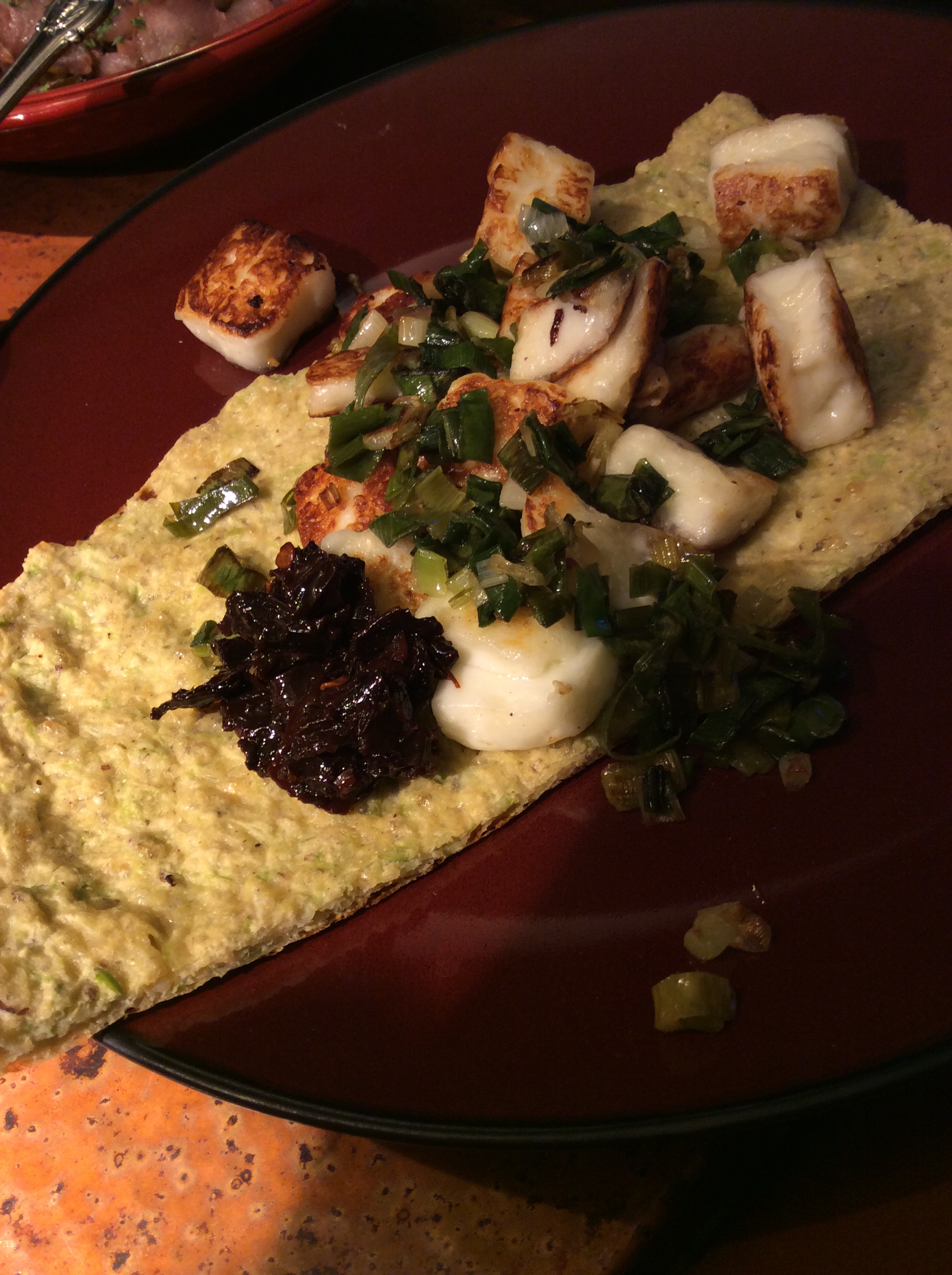
After posting the above picture in my post on making halloumi, I realized that the chile relish in the foreground deserved a post because it is so easy and so good. Its origin is Mexican, and I learned it from Diana Kennedy’s superb Mexican cookbooks, where it’s called Tia Georgina’s Salsa or Scissors Sauce. It’s great with a Mexican meal, of course, but also good with almost any other kind of food that could use grounding with a dollop of full-bodied mellow flavor with a bit of heat.

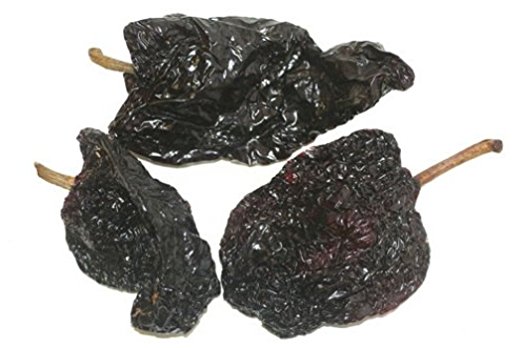
First, catch your anchos. The ancho chile is the ripened dried Poblano chile, and should be leathery and bendable rather than crisp-dry. The chile has a mild sweetness and marvelous notes of coffee and darkest chocolate in its meaty flavor. Pull the stems, seeds, and internal matter out of six ancho chiles. Cut them into thin strips with scissors. Add two chopped cloves of garlic and a half teaspoon of salt. Stir in half a cup of mild vinegar; I use about 2/3 homebrewed red wine vinegar and 1/3 water to decrease the acidity just a bit. Then add half a cup of oil. I prefer a mild olive oil. Then-this is key-let it sit covered overnight. This gives the chiles time to soften and lets their flavor bloom. In the morning stir it up, taste and adjust the salt, store in a jar in the refrigerator, and eat with nearly anything. It’s wonderful with grilled meats or chicken, great alongside scrambled eggs (especially if they are cooked with a bit of onion and green chile and garnished with cilantro,) and if you aren’t ketogenic it’s superb in nearly any kind of taco or just spread on a freshly grilled tortilla with a handful of crumbled queso fresco. Ah, those were the days…

Post 300: Magnolia

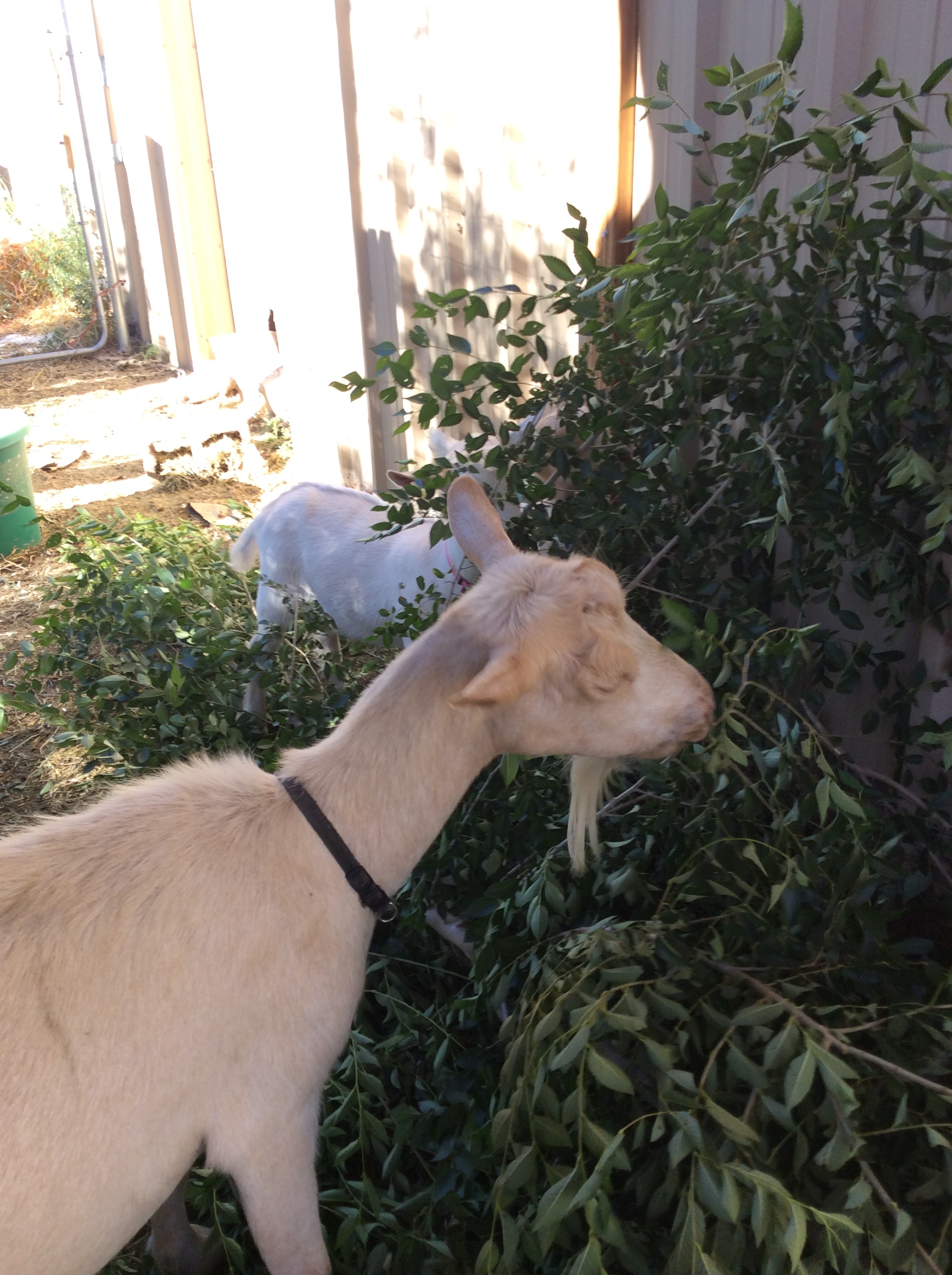
This is a poignant post for me to write, because one of my very first posts written on this property was about my new Sanaan doe goat Magnolia. Beloved Maggie is over nine years old now, and no longer  holding body weight well when she’s in milk, and I’ve concluded that for her own good, this is her last lactation. So I’m filling the freezer with goat cheese, and Magnolia will retire and live out the rest of her life in leisure. Goats are smart and interactive and, like dogs, incredibly painful to lose. I hope that Maggie will be with us for a few years yet. She is a big part of my daily life, and I can’t think of a better subject for my 300th post.
If you are interested in having a dairy animal, bear in mind that they need excellent nutrition and eat a lot of expensive food and occasionally have veterinary needs, so don’t even think in terms of producing economical food. Think in terms of having a lovely pet, with benefits. Do remember that periodic male offspring are almost inevitable and you have to have a plan for what to do with them, so if you are vegetarian yourself this may be a real issue for you. Female offspring can often be given to good homes, but can very seldom be sold at a profit.  Also, I trust it goes without saying that when in milk they have to be milked out every day, not just when you feel like making cheese, and have to be milked when you travel, which is not a job that the average pet sitter will take on. Be aware that excellent fences are required to keep goats out of your own shrubbery and trees or your neighbor’s, and in my area an 8 foot fence they can be secured behind at night is needed for protection from coyotes. All of this costs money.  If any of this discourages you, there is an abundance of excellent cheese including the superb Mount Vikos halloumi available at any upscale food store or co-op.

One of the reasons that I wanted a dairy animal in my suburban yard is that I like to make cheese, and currently it’s pretty hard to make cheese from most commercial milk. This is because milk is being pasteurized at increasingly high temperatures to extend its shelf life, and the milks in your local dairy case that don’t say “UHT” were probably still pasteurized at near-UHT temperatures. This affects the proteins, and such milk will not form a proper curd when rennetted. Therefore, unless you have access to fresh-from-the-animal milk, success is by no means certain with any cheese recipe except ricotta. Since it’s illegal or very difficult in most areas to sell raw milk, a dairy animal is your ticket to cheesemaking. If you don’t have a dairy animal or access to milk that wasn’t processed at high temperatures, I am very sorry to say that I do not recommend cheesemaking because it is going to be too disappointing. Personally, I find it absolutely weird to think that most commercial milk is so denatured that you can’t make cheese out of it. But these are the facts.

If you have access to  clean milk that was not pasteurized at high heat, go immediately to Ricki Carroll’s wonderful cheesemaking site and go to town. She has all the supplies and cultures as well as reams of recipes and advice.
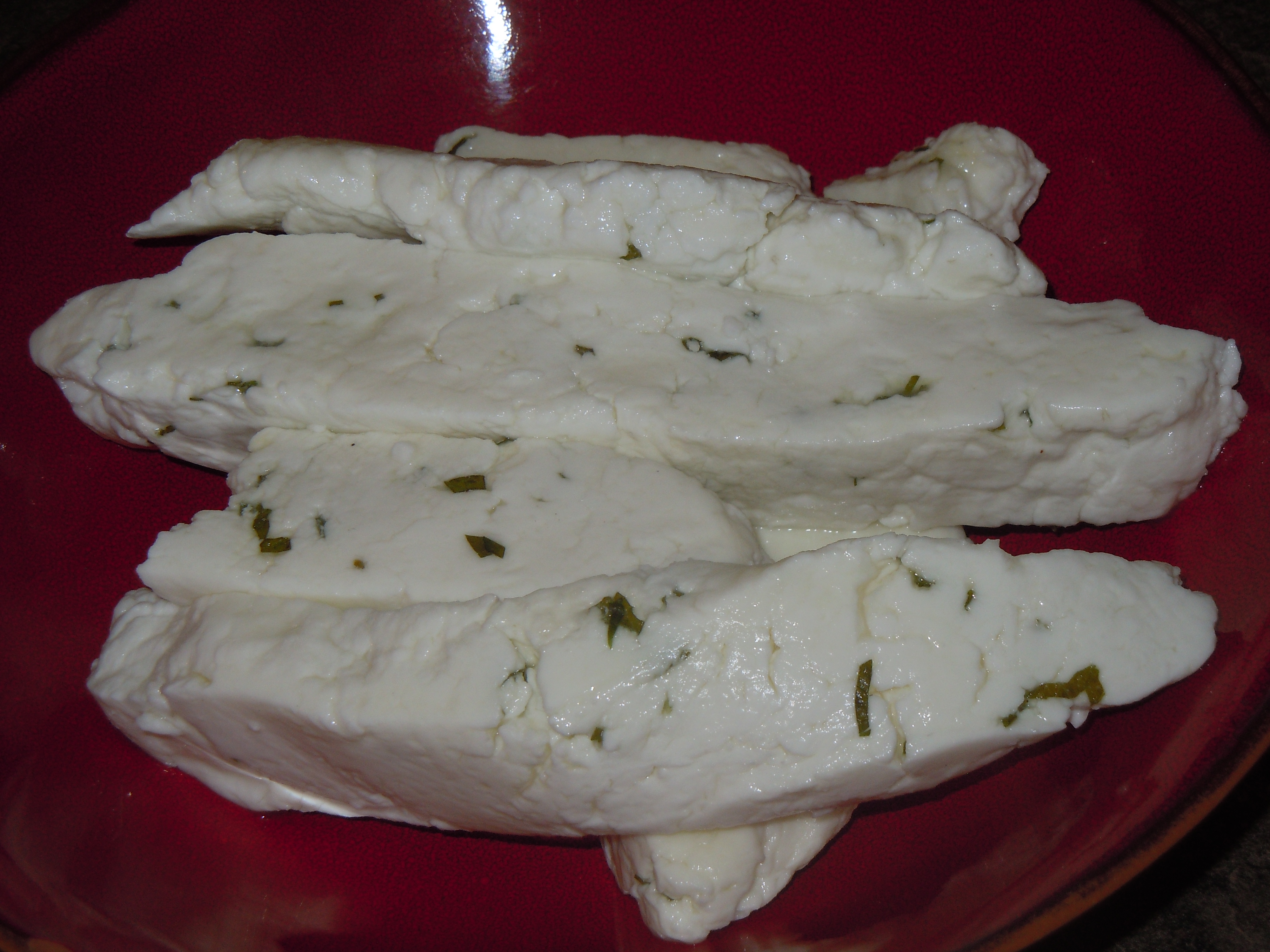
My own choice has been to stick to fresh cheeses and halloumi, because they are quick and easy to make, can be frozen for later use, and do not require any special attentions as they age because they don’t age. I’m especially fond of halloumi because it can be grilled to such a wonderful crusty brown, and I do love a good Maillard reaction.
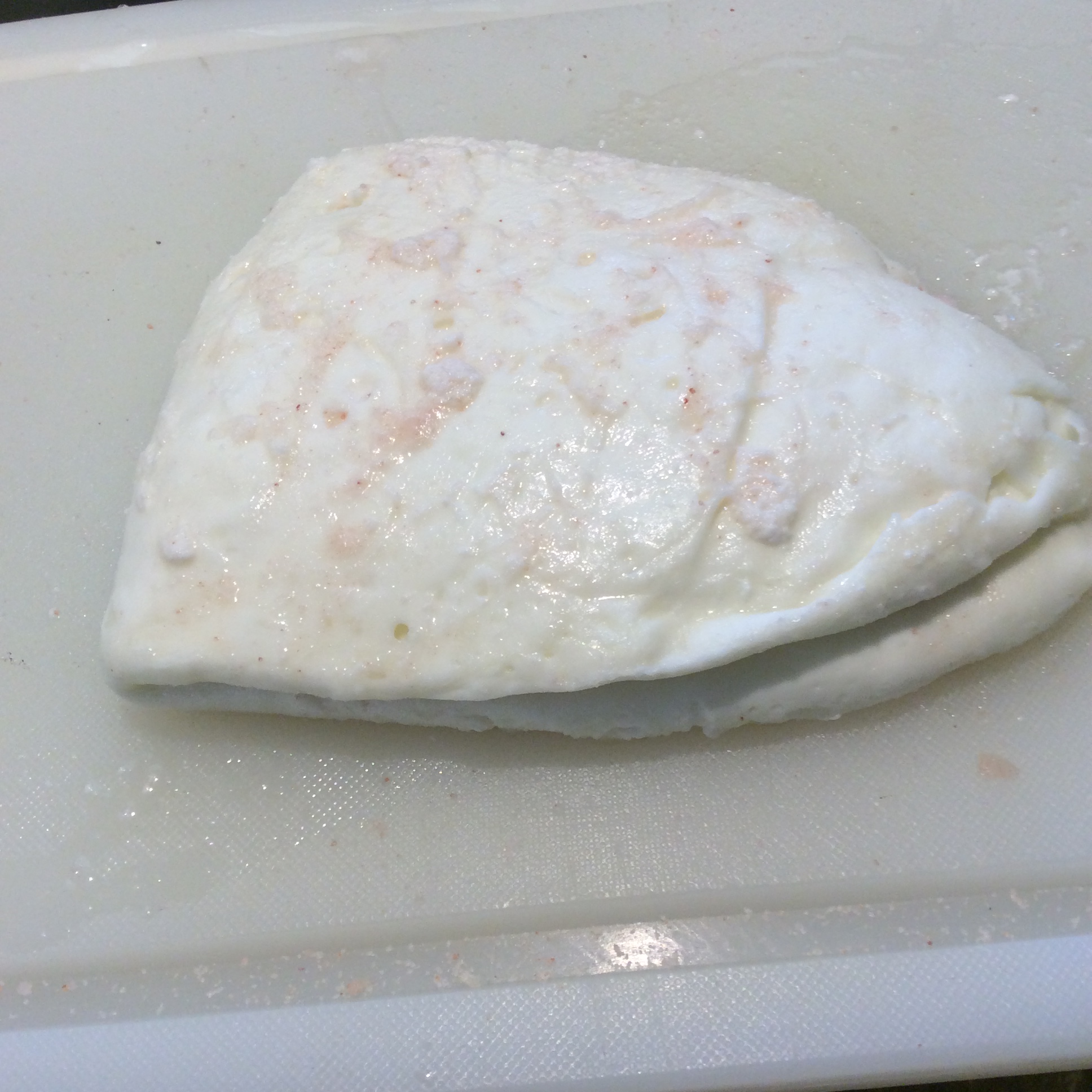
Rather than give my own haphazard procedure for making halloumi, which might not be perfect but fits into my kitchen routine and produces a good product, I am going to have you start off on the right foot by linking to Ricki’s recipe.  I will only add that I don’t use any herbs in finishing the cheese, because it is more versatile if it isn’t already carrying an herb flavor.  Any herbs that you want can easily be added at the cooking or serving stage, as the green onions pan-grilled with the halloumi in the top picture.  Also, a salted but unseasoned halloumi is an excellent stand-in for paneer if you feel suddenly moved to go Indian rather than Mediterranean.  And a wild greens saag paneer with your own greens fed cheese is as delicious a dinner as I know of,  and likely to contribute to your health and longevity as well as your immediate gratification.

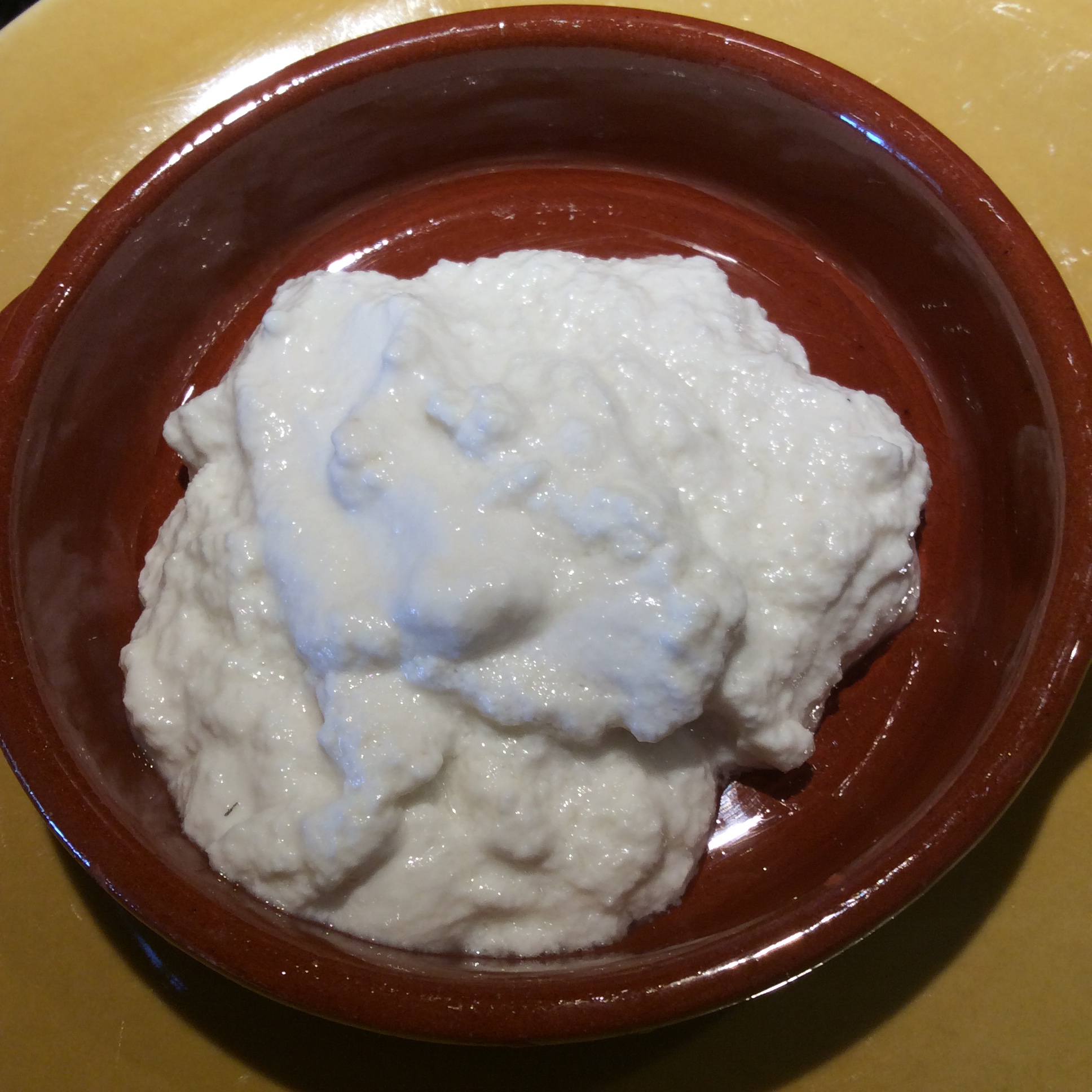
A quarter cup of ricotta  is a byproduct of making halloumi,  and makes a nice Cook’s Treat to reward yourself for your enterprise.

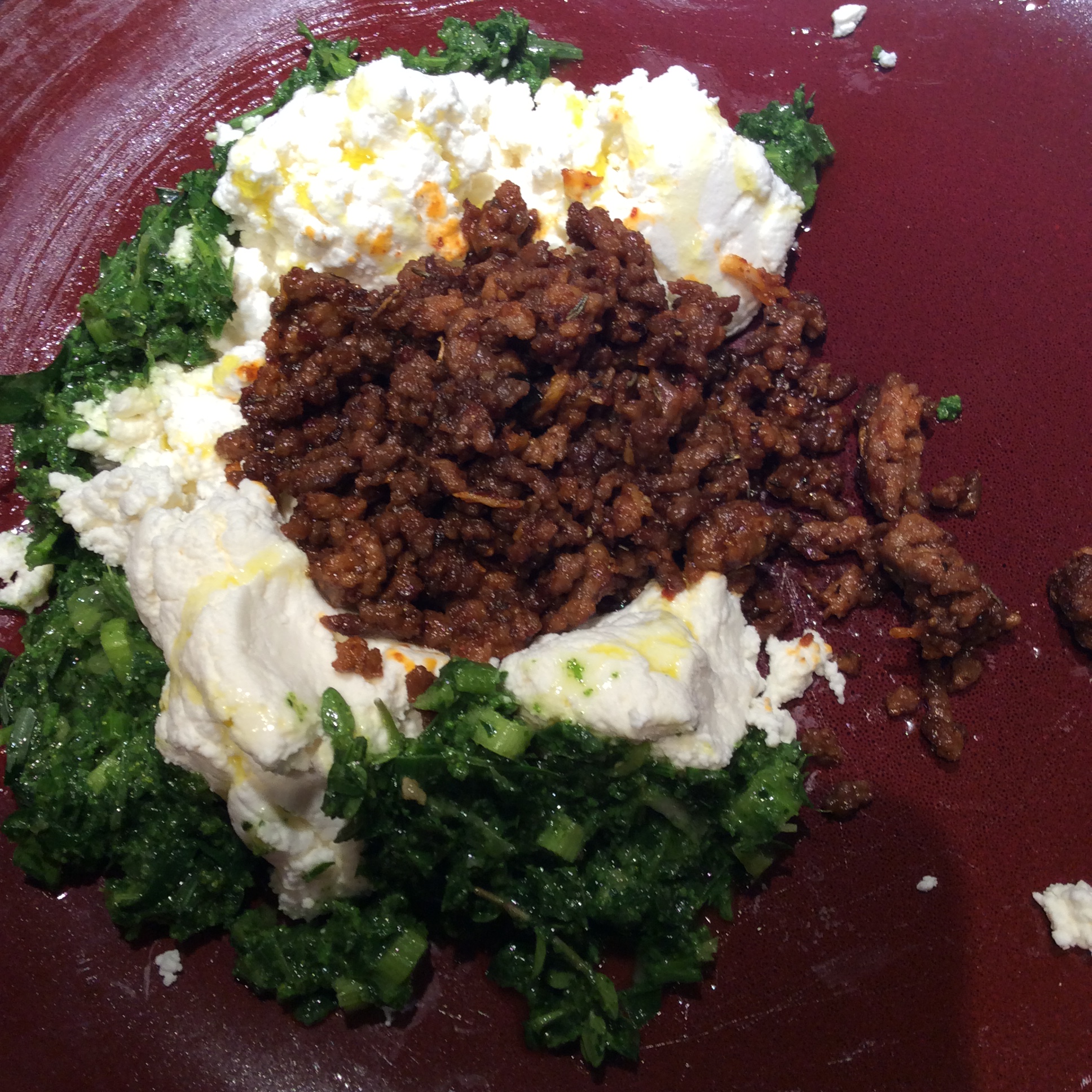
Here,  fresh goat cheese serves as the bulk of a dinner, a strongly seasoned ground meat with sweet spices in the Arabic style is part of the flavoring, and an elaborate herb pesto is the other part.

Continue reading