Archive for the ‘passing pleasures’ Category

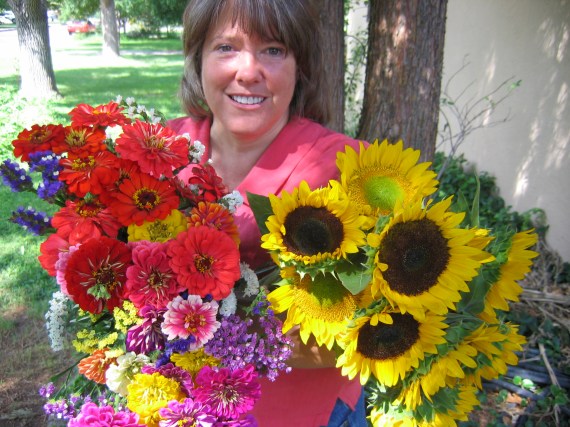
Passing Pleasures: late summer flowers

september 2009 009

Part of the joy of seasonal living is the lavish abundance of late summer. Tomatoes and eggplants are sunkissed and beautiful, a wide variety of fruit is available, and meals seem to plan themselves. But even if you aren’t a cook-it-at-home sort of person, this is the time to fill your house with flowers. Local flowers are beautiful, and they don’t cause ground to be poisoned, workers to be exposed  to toxins, and refrigerated trucks to be filled with petroleum to haul them around. They are a pure and good thing, and in a few more weeks we’ll have the first frosts and they won’t be here any more, so run to your nearest farmer’s market and indulge. I buy flowers at the downtown market at Central and Eighth and at the Corrales market. I’m sure that other markets have similar offerings. If you go to the Downtown market, see Chispas Farms for zinnias and Majestic Farms for sunflowers. Get there early, because the flowers sell out fast.

   A writer whom I admire once described buying flowers at a French market, then carrying them while meeting friends for lunch at a cafe’. The waitress fussed about the “mess” and pointed out that artificial  flowers would last much longer, to which a gentleman at the table replied “But, madame,  you too will wither and grow old, and you too must be appreciated and loved while you are in bloom.” Exactly.
Passing Pleasures: Artichokes

may 2009 019
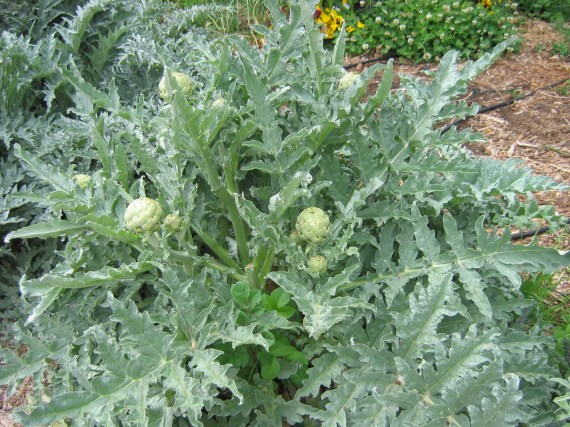
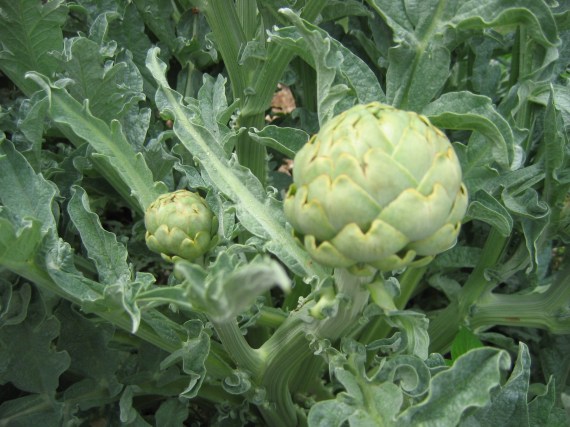
      Artichokes are a wonderful addition to the New Mexico garden. They are splendid silvery architectural bushes for the cooler seasons of the year, and provide a rare treat to their enthusiasts.

       One of the overlooked aspects of front yard gardening is that neat greens like Swiss Chard can’t be used as edging because passers-by don’t know vegetables when they see them, or don’t care, and so they let their dogs urinate on anything along the sidewalk. I solve this problem by edging my front garden with artichokes: the edible part happens a few feet off the ground, and until a squadron of Irish Wolfhounds comes to my neighborhood, I’m safe.

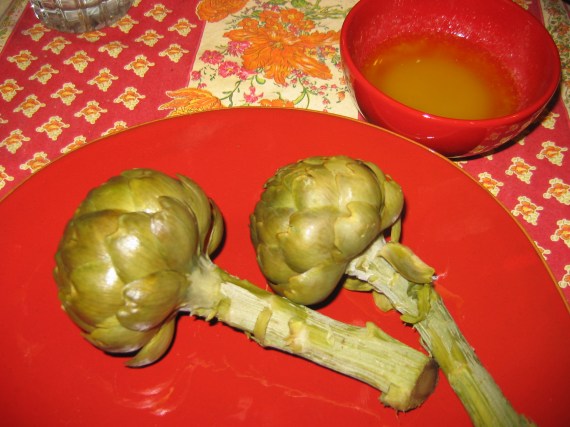
     Now is the time to start artichokes from seed, to enjoy next spring. I like the common “Green Globe” best. The plants typically live 3-4 years in our area. The scaly buds don’t get as big as they do on the misty west coast, but they’re very delicious. A deep watering once a week is plenty once they’re established. They don’t produce over a long season, but for two weeks in late spring we revel in all the fresh artichokes we can eat, and a rare feast it is, too. If you’re interested in such things, artichokes contain abundant amounts of two antioxidants, cynarin and silymarin, which are found only in the thistle family. I’m not sure what this really means nutritionally, but it does mean that when I feel tired and out of sorts, I can eat a plate of artichokes, telling myself that a good dose of cynarin will fix me right up. It usually does, too, unless it’s the bagna cauda or the general abundance of the season that I’m responding to.
may 2009 020
may 2009 018

For more on cultivation and recipes, Continue reading

Passing Pleasures: sage blossoms

may 2009 040
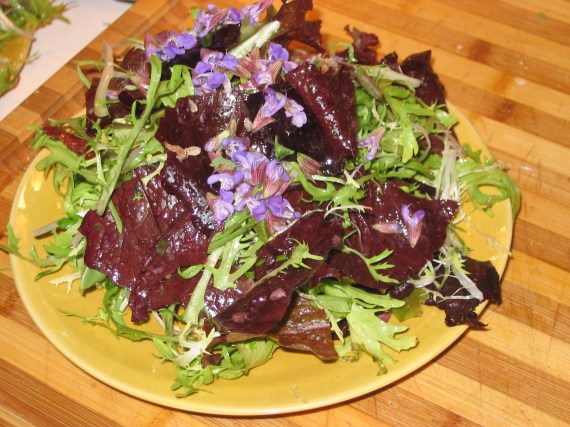
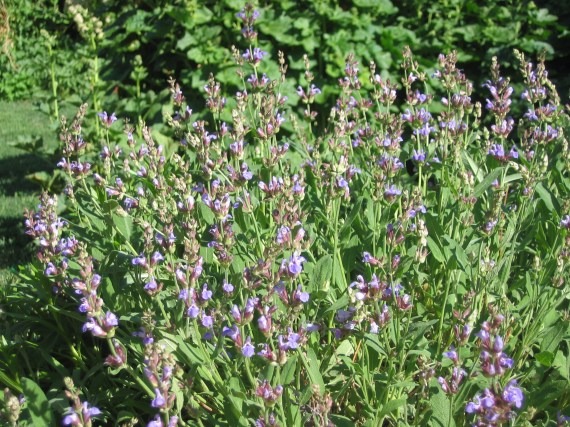
Sage is a useful culinary herb which loves our climate and grows with unbounded enthusiasm. My own specimen has been grown in a container for three years with no care or attention other than periodic watering and has reached 3 feet across and seeded itself around, providing a number of nice plants to give away. A major advantage to growing your own is that you can enjoy its lovely Delft-blue flowers, both in your yard and on your plate. The flowers also taste of sage, but the flavor is softer, sweeter, and more floral. They are lovely on salads. Pick them just before you use them, toss them on top of the dressed leaves, and enjoy. This is one of the ephemeral pleasures of the garden, to be enjoyed for a week or two and then let go. But, like most such pleasures, it makes an impression and leaves a memory of a pure and lovely thing enjoyed in its season.
You can buy a sage plant nearly anywhere. I suggest avoiding the variegated or variously-scented ones unless you have space to spare. Common culinary sage is the most useful in the kitchen.
may 2009 028

Lemons, limoncello, and springtime

february-09-012
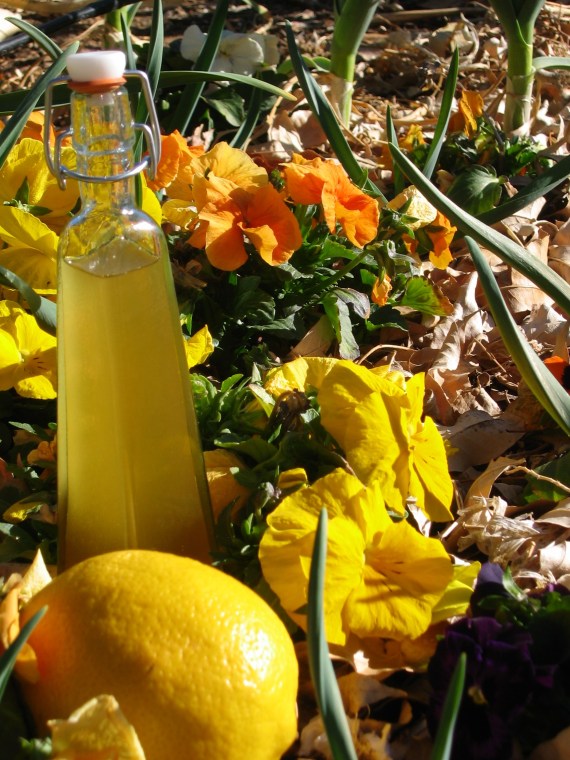
I recently returned from a conference in Tucson, where there were trees gloriously heavy with brilliant lemons and oranges. It set me thinking about the Ilalian liqueur Limoncello, which at its best is redolent of pure fresh lemons. Unfortunately, most of the versions that make it to America taste a bit artificial. It’s quite common for Italians to make it at home, and I started looking for a recipe. As often happens, most of the easily located recipes online were copied from one source, and used only the peel and not the juice. After looking further, I ended up doing it this way:
Obtain ten fresh juicy organic lemons. With a very sharp paring knife, peel the zest off in strips, carefully avoiding the white layer underneath. Probably it would also work to grate the zest off, but I haven’t tried that. Put the zest in a large jar (I used a half-gallon jar) and add the strained juice of five of the lemons,
2 1/2 cups good vodka, and 1 1/2 cups sugar. Stir it around to start the sugar dissolving, but it won’t finish dissolving for days, so don’t worry. Let steep for one week, stirring daily. Taste it for sweetness, and adda little more sugar if needed. Let it sit two or three more days. Then strain carefully, pour into decorative bottles, and store in the refrigerator. Since it’s never boiled and contains fresh juice, it won’t keep as well as the commercial stuff. Serve well chilled in tiny glasses.
Addendum:shortly after I posted this, I received a comment which led me to a fascinating site, limoncelloquest.com. I recommend that anyone with an interest in the subject check out this quirky and fascinating site.