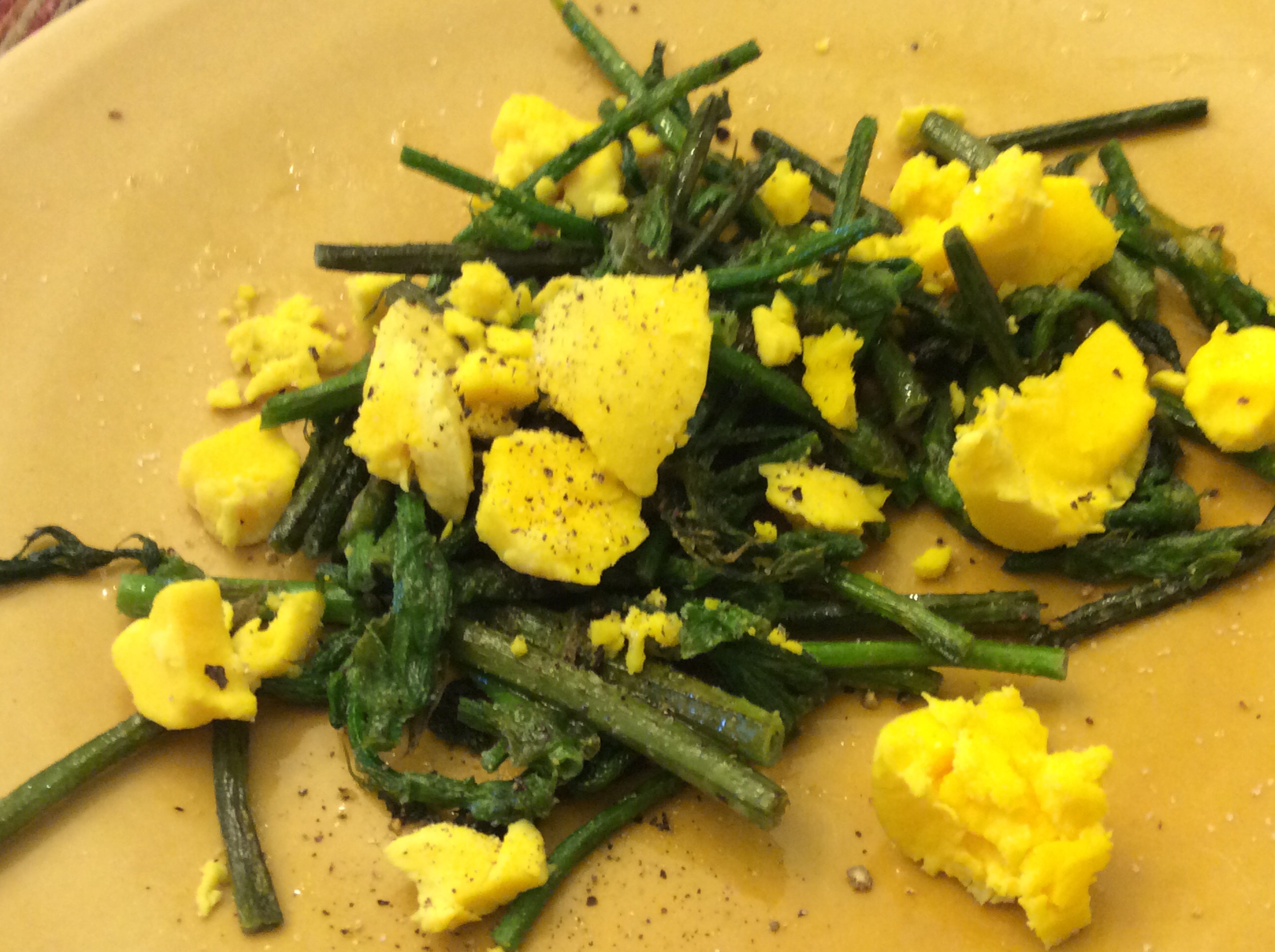
Two posts ago I wrote about learning to use spring hops shoots as a vegetable, and a couple of weeks after my first taste, they are nearly over for the year. I hit a tiny second harvest by breaking off the tips when the vines were as tall as I wanted. These “upper shoots”have even more of the wild, feral, slightly bitter flavor than the first emerging growth has, and are quite addictive. My favorite preparation so far is to cut them into segments about an inch long, sizzle them in butter or olive oil over medium-high Heat until the stems are crisp-tender and the infant leaves are fried crisp, salt to taste, and crumble the yolk of a hard-boiled egg over the top. The egg yolk smoothes the bitterness beautifully. This method works well with bitter greens as well.
Incidentally, the only thing I dislike about hops shoots is that there aren’t all that many of them. I have five large hops hills and only get enough shoots for my husband and I to share them a couple of times. I’m thinking of planting more hills just for the shoots. The vines are fairly handsome and almost indestructible, and will cover an ugly fence ( summer only) within a couple of seasons.
Archive for the ‘passing pleasures’ Category
28 Apr
Passing Pleasures: more on hops shoots
12 Sep
Passing pleasures, gratitude, and September 11th
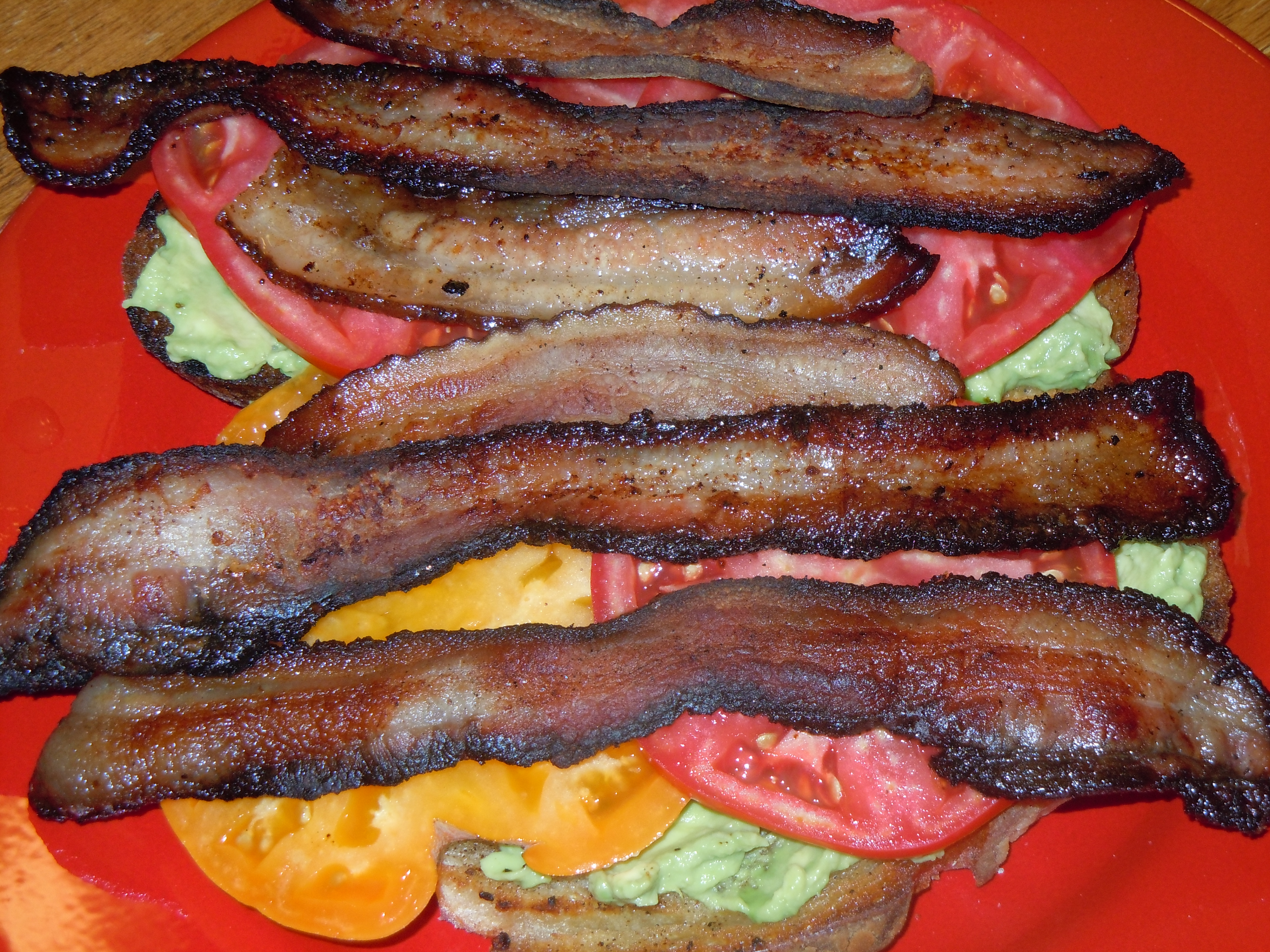
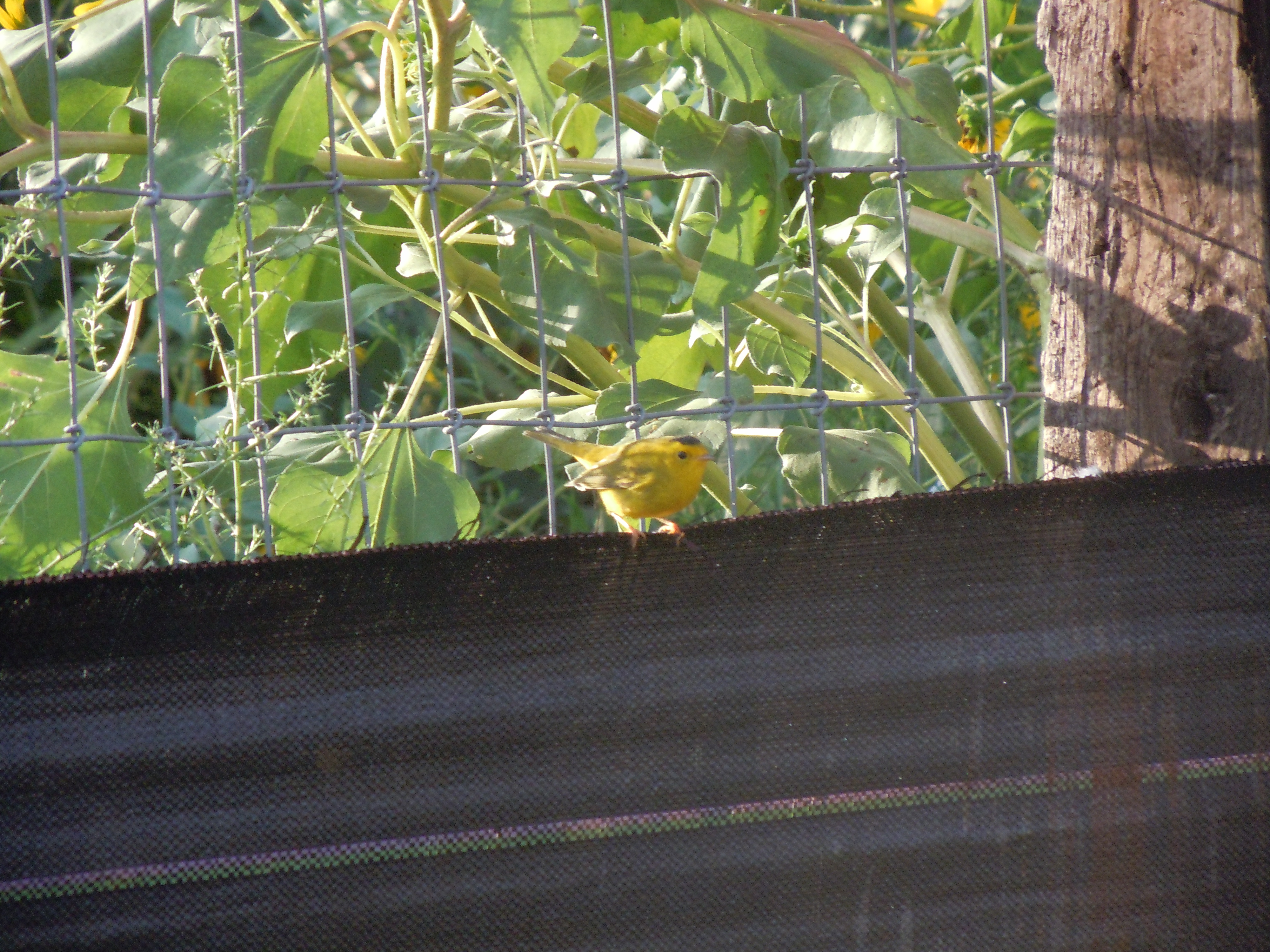
Some of the pleasures of having a little piece of land to call your own are direct. The joy of a perfect bacon, avocado, and tomato sandwich in late summer, with bacon cooked on the grill campfire-style and bread toasted likewise, and the juices of a perfect beefsteak tomato running down your chin, gratifies a hunger that goes well beyond the physical: the hunger for one simple thing in your life to be exactly right. Then there are the hungers that aren’t physical at all, and that you don’t even know you feel until they are unexpectedly fulfilled. I was reminded how lucky I am to be able to have a mini-wildlife refuge in my back yard when a couple of mornings ago, while I trudged around feeding the animals and wishing I was back in bed, I realized that a little flock of Wilson’s warblers was bouncing around in my sunflower jungle. They came out to watch me, and one graciously posed for a picture before heading down the flyway.
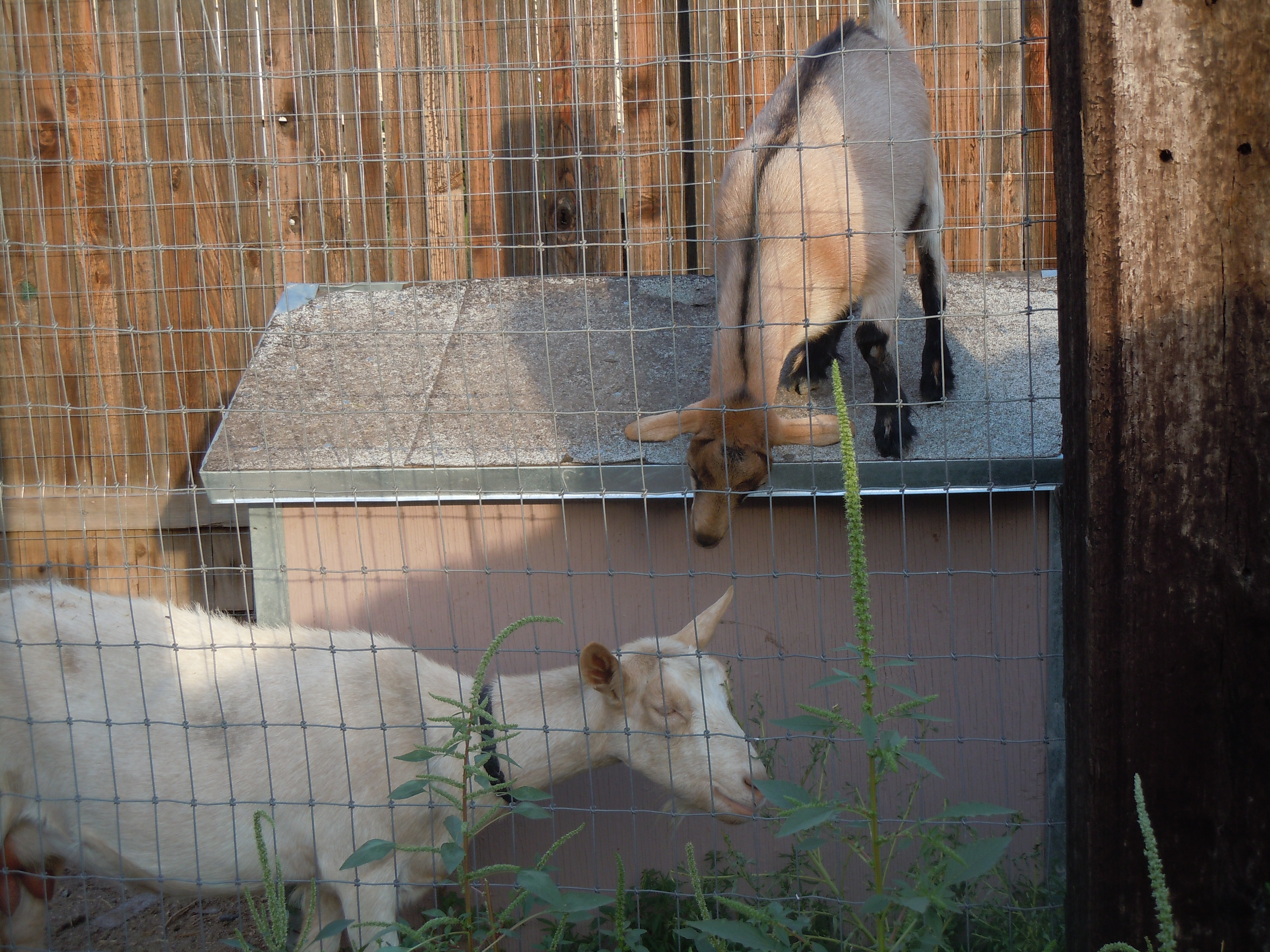
Then there’s hearing the “clomp” as my doe kid, Cocoa, practices her newfound skill of leaping onto the roof of the goathouse.
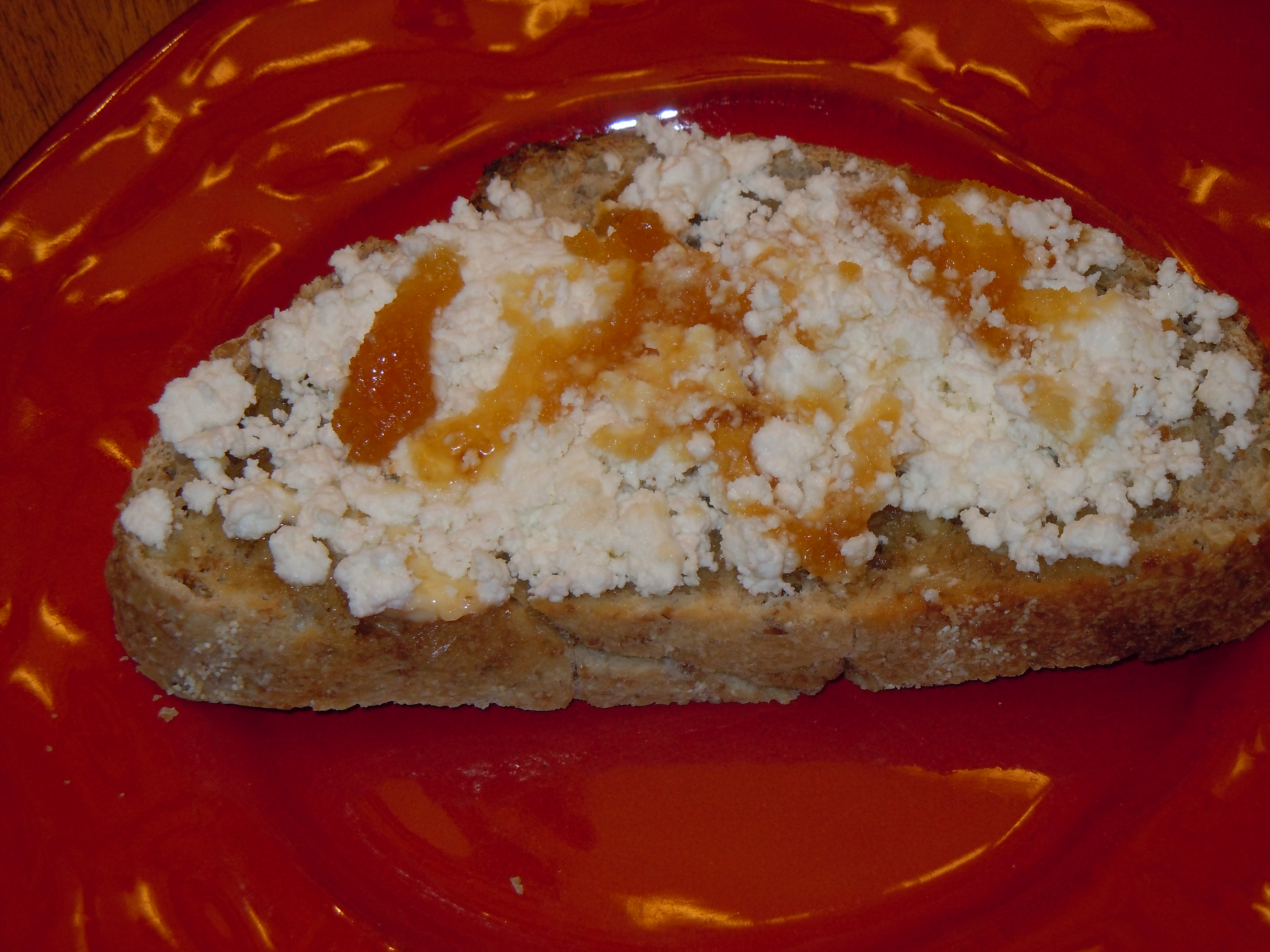
A breakfast of grainy bread spread with homemade goat cheese and drizzled with honey makes me purely happy to be where I am in the morning.
On September 11th we were reminded as a nation that life contains tragedy, disappointment, and sickening despair. Only a fool finds it easy to live in a stance of perpetual gratitude. But there are these radiant moments that push us to remember that there is also beauty, connection with the Earth, and genuine reason for gratitude. May our lives, and the intertwined lives of all the creatures of the planet, continue to draw us toward wholeness.
16 May
Passing Pleasures: Grow Your Own Endorphins
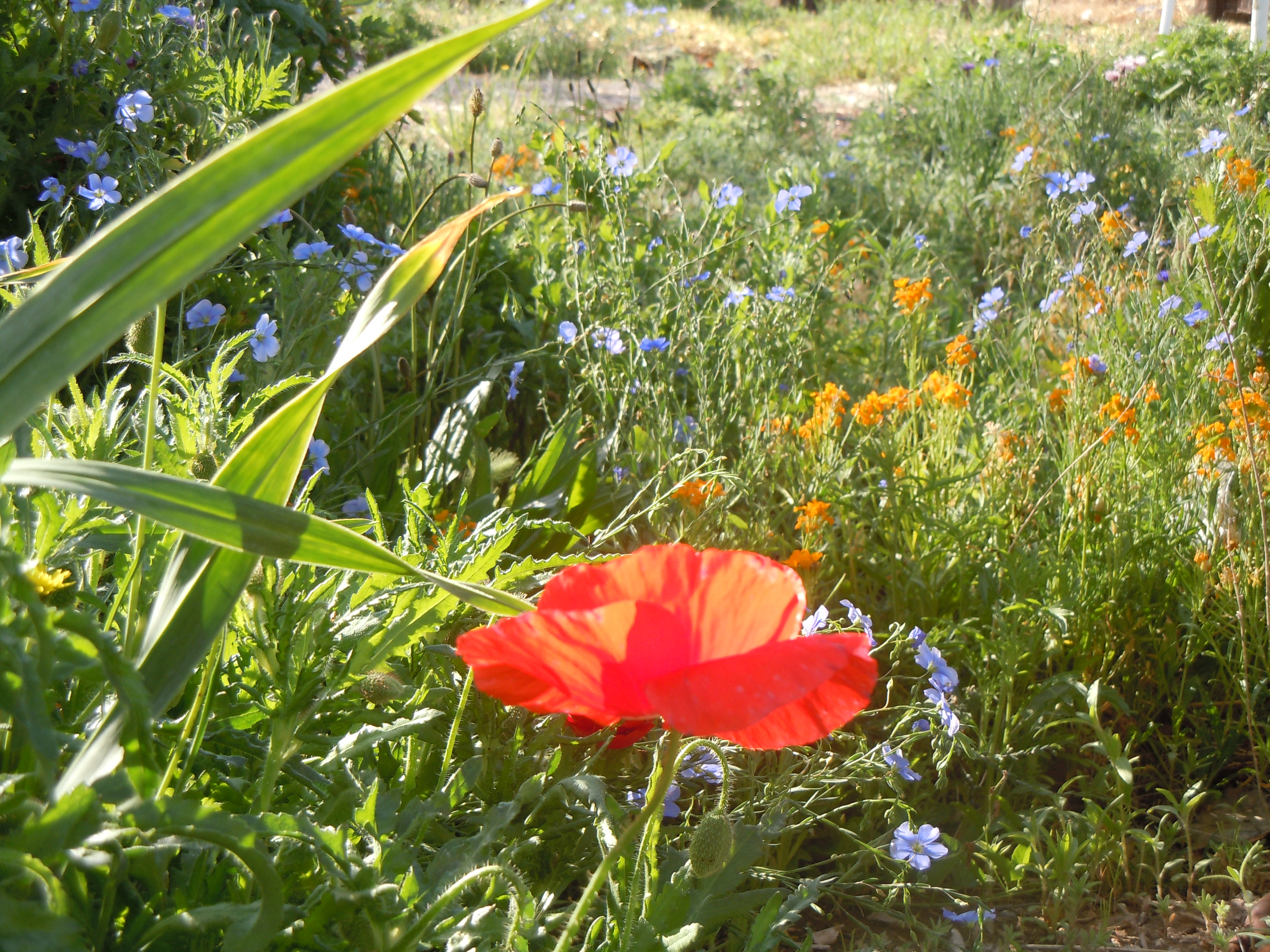
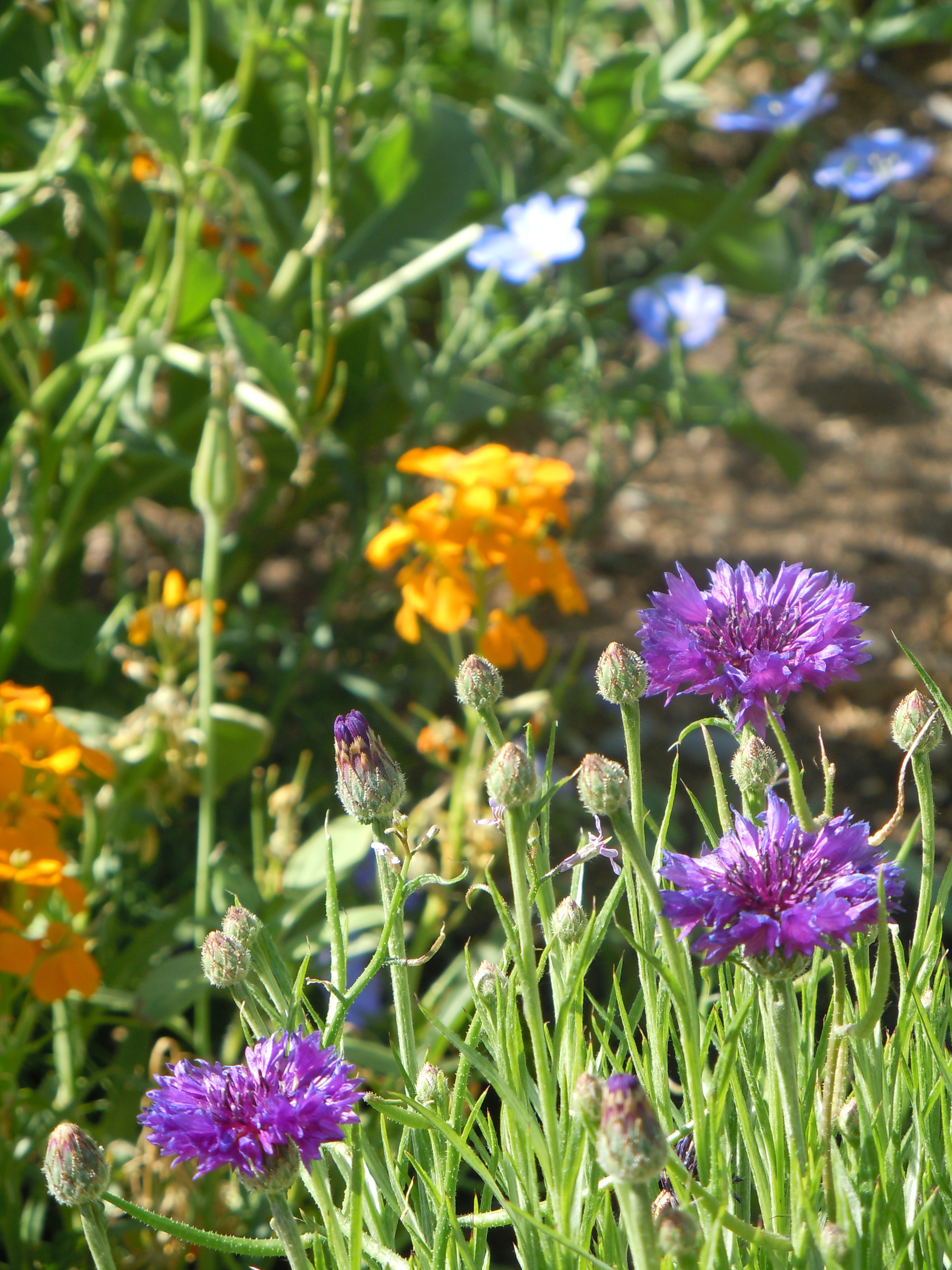
It is my belief that, no matter how efficiently you want to manage your small space and make every square inch produce something, some of your land should be given over to something for each season that is so heart-stoppingly beautiful that you catch your breath when you see it. You can think of it as endorphin-farming if you like, and it’s an important part of what makes your gardening sustainable. The moments of joy that you experience can only do you good. For me, poppies will always be the ultimate late spring heart-stoppers, with their blend of drop-dead showiness and tissue-paper fragility. So I use a small swathe of my land for a wildflower circle where poppies are harmonized with other lovelies such as Siberian wallflower and blue flax. Don’t be afraid to throw bright colors together, because in this season it looks right. You need to decide by late winter where the wildflowers are going to go, and do some soil prep. They don’t need a lot of pampering, but to be lush and beautiful they do need some care and good soil. Plant very early, by March at the latest, water regularly, and keep the weeds out. Then, some morning in May, you will wander through your flowery meadow so filled with pleasure that you can hardly believe it, and at tedious meetings or in the dentist’s chair the image will still be there. Surely that’s worth a little sweat and compost.
18 Jul
Passing Pleasures: Squash Blossoms
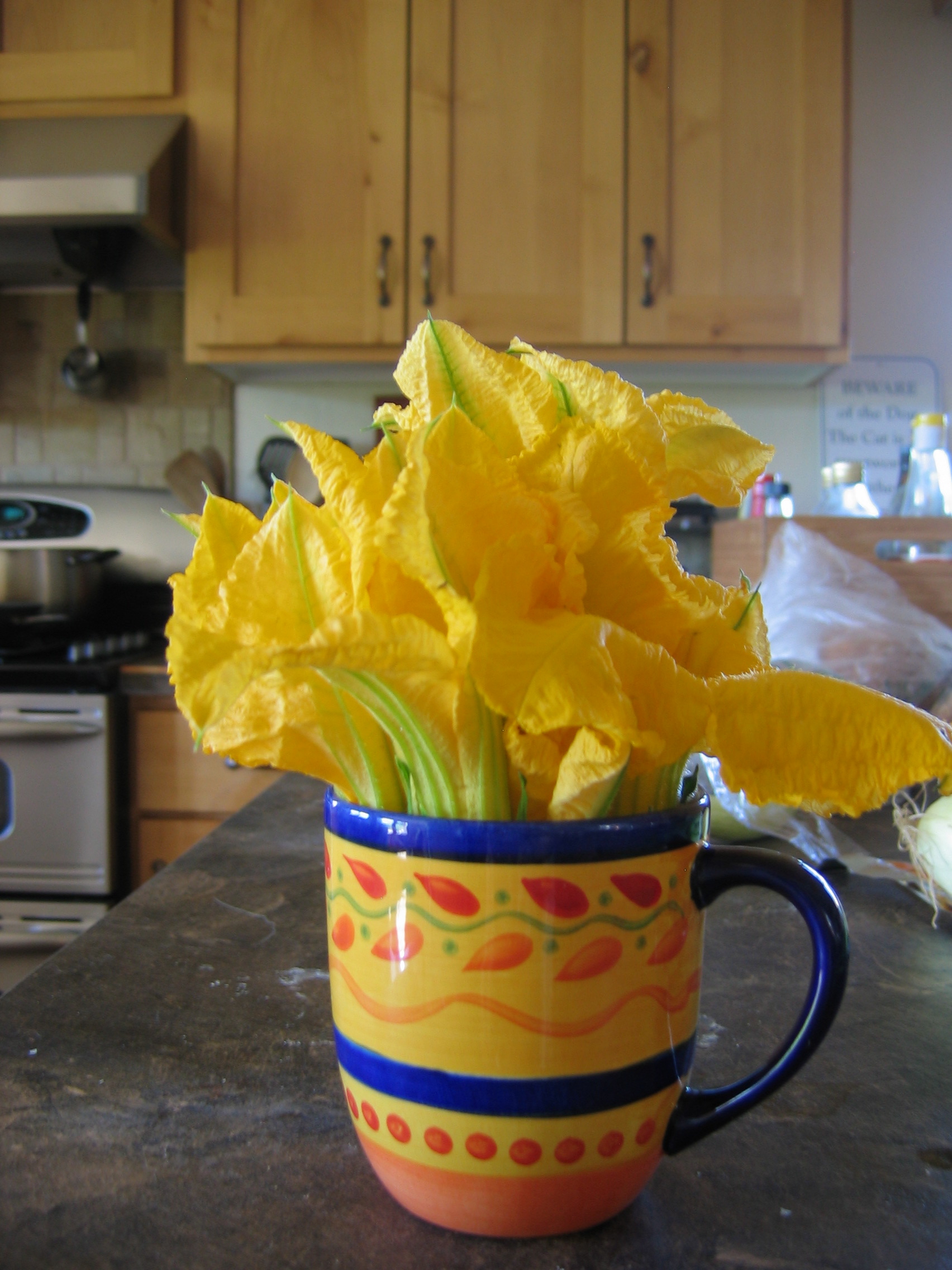
There are a lot of edible flowers, but no flower expresses the joy of summer as well as the resplendent squash blossom. The sheer exuberance of them in the garden on a July morning lifts the heart of anyone who sees them, and they are a delicious edible. They’re fragile, and your best chance of getting good ones is to grow them yourself. I like the flowers of winter squash and pumpkins best for eating. They are huge gold trumpets six or seven inches long. You can use the smaller flowers of zucchinis, but you’ll need almost twice as many. There are lots of ways to cook them, but my favorite method is to stuff them with a delicate ricotta and basil filling.
I pick only the male flowers, making sure to leave at least one male blossom in the squash patch every day for pollination purposes. You can also use the female flowers, which have embryonic little squash between the stem and the flower, but of course you won’t get as many squash if you pick females. These flowers are wildly attractive to bees, so check for bees inside before you pick the flower, and give them a chance to escape safely out in the garden. I rinse them well and place them trumpet-down on a dish towel to drain. Some sources tell you to pick out the stamens or pistol, but I don’t think this is necessary. Just get them clean and fairly dry. Then carefully pull or snip off the six long green sepals that stick up from the base outside the petals. These have a coarse texture and detract from the delicacy of the finished dish. The blooms need to be cooked the day they are picked. To keep them from morning to evening, wrap them gently in the damp towel that they drained on, put the bundle in a plastic bag, and refrigerate until dinnertime. It’s better to use them for lunch, though.
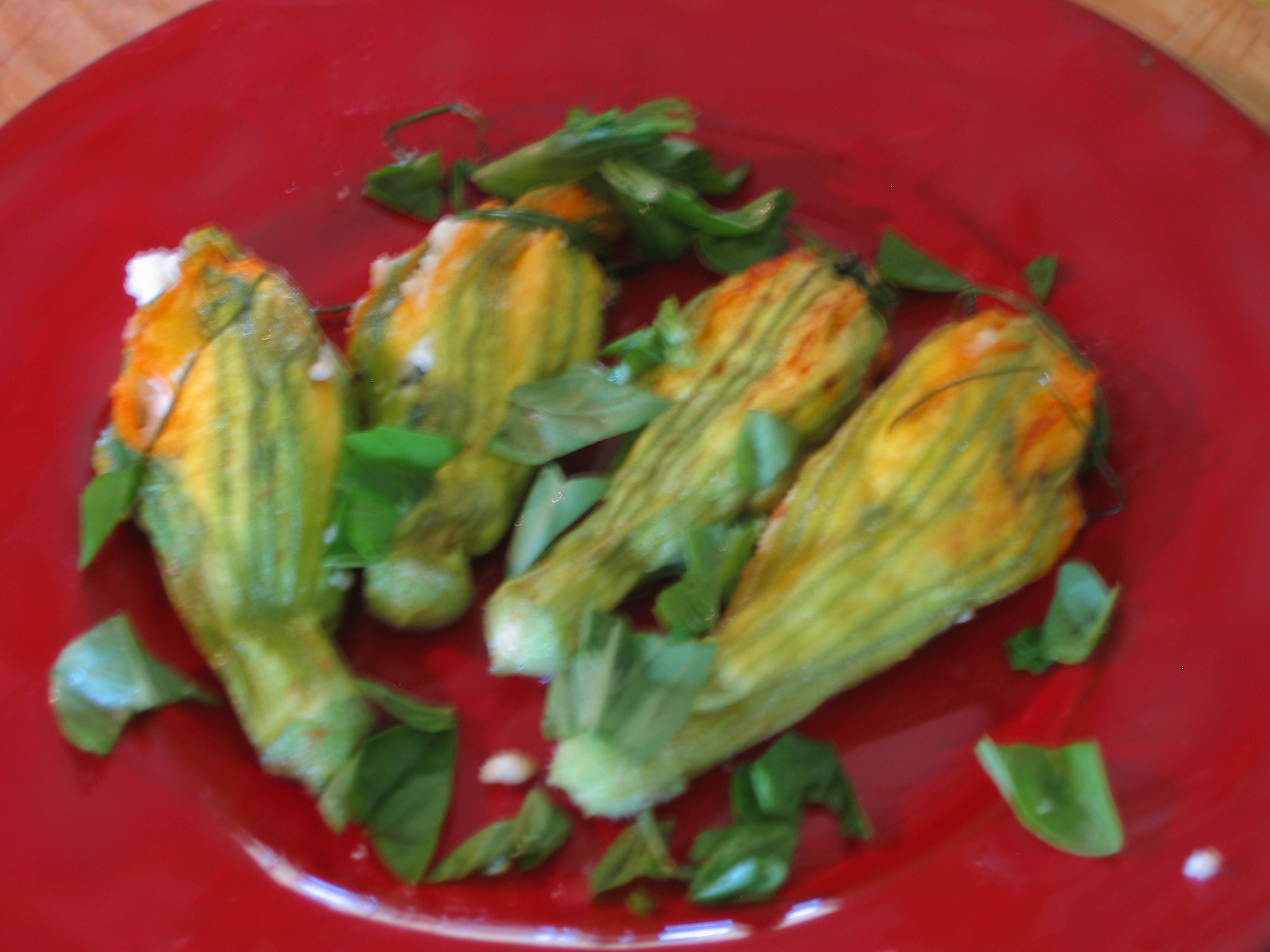
Stuffed Squash Blossoms
A dozen large squash blossoms or 20-24 small ones, rinsed and drained, stems trimmed off level with the base of the flower
1 pound of very fresh ricotta
1/2 cup very finely grated best quality Parmesan, loosely packed
6 large sprigs of basil, leaves picked off the stem and torn (NOT cut) into large chunks
White part of one large or 2 small scallions, very finely minced.
Long chive leaves, twice as many as the number of blossoms
5 tablespoons butter
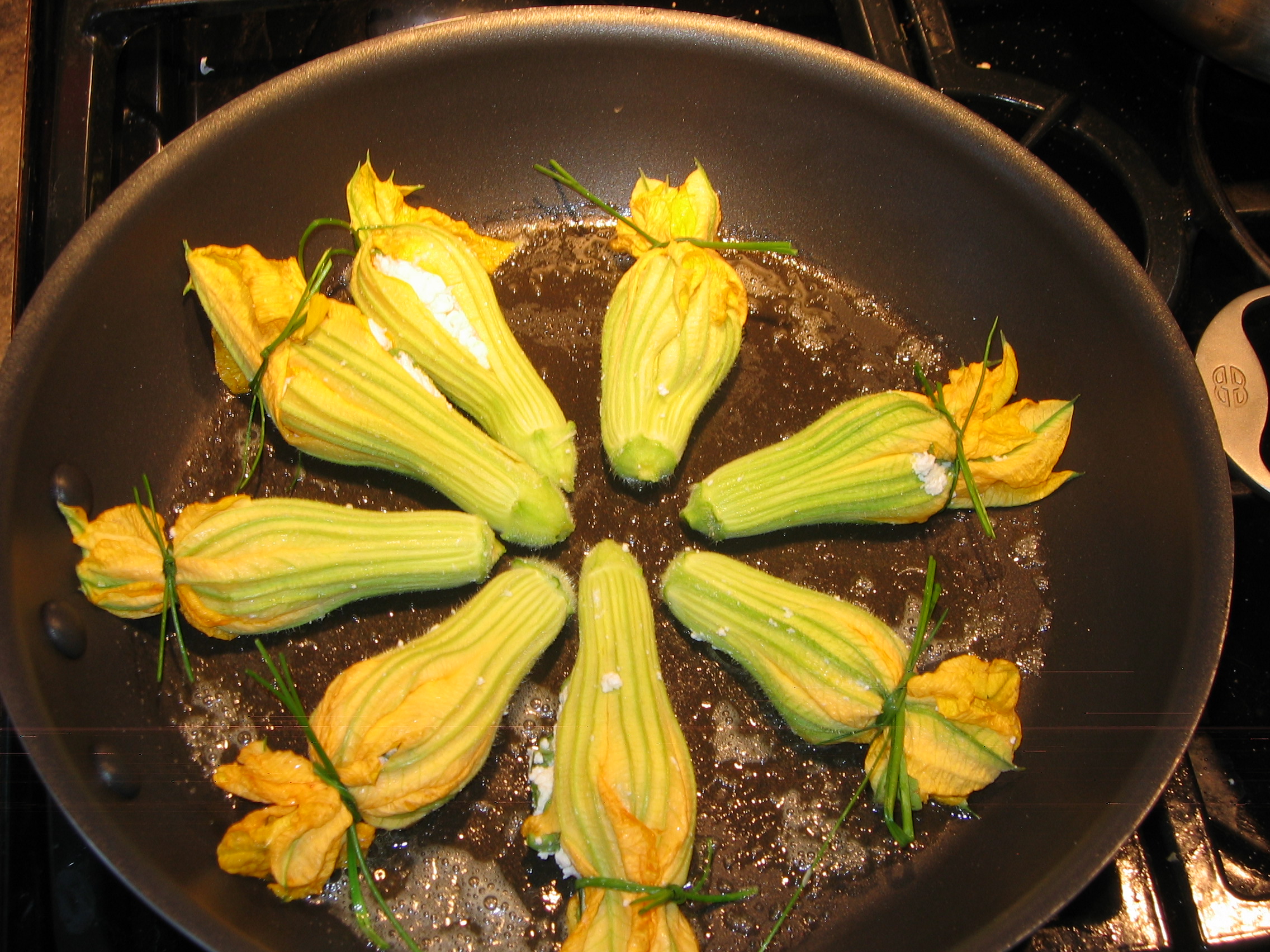
Make sure the ricotta is very fresh and free of bitterness. In a bowl, mix it with the Parmesan, minced scallion, and half the torn basil leaves. Taste the filling and add a little salt if needed, but don’t overpower the delicate flavors. Using your fingers and working very gently, fill each blossom with the cheese mixture. You will need to work a little down into each trumpet, but don’t tear them by pushing too hard. Fill each trumpet about halfway, and don’t overstuff. Now hold two long chive leaves together and tie a square knot at the end of each trumpet, and trim the ends to about 1″ long. I admit that this is a bit fiddly and not completely necessary, but the tied bundles look so attractive that I strongly recommend it. Now heat a skillet over medium heat, melt 3 tablespoons of the butter, and put in the filled blossoms. You will need to turn them about three times to get the blossoms cooked on all sides. Work very carefully with a small spatula and your fingers, so as not to tear them. Let them get slightly browned in spots but not darkened all over. The cooking usually takes me about 15 minutes. Then put them on plates, melt the remaining two tablespoons of butter in the pan and drizzle a little over each plateful, and scatter with the remaining torn basil leaves. Serve with a good baguette, and eat with gratitude for the pleasures of the season.
 My urban homestead