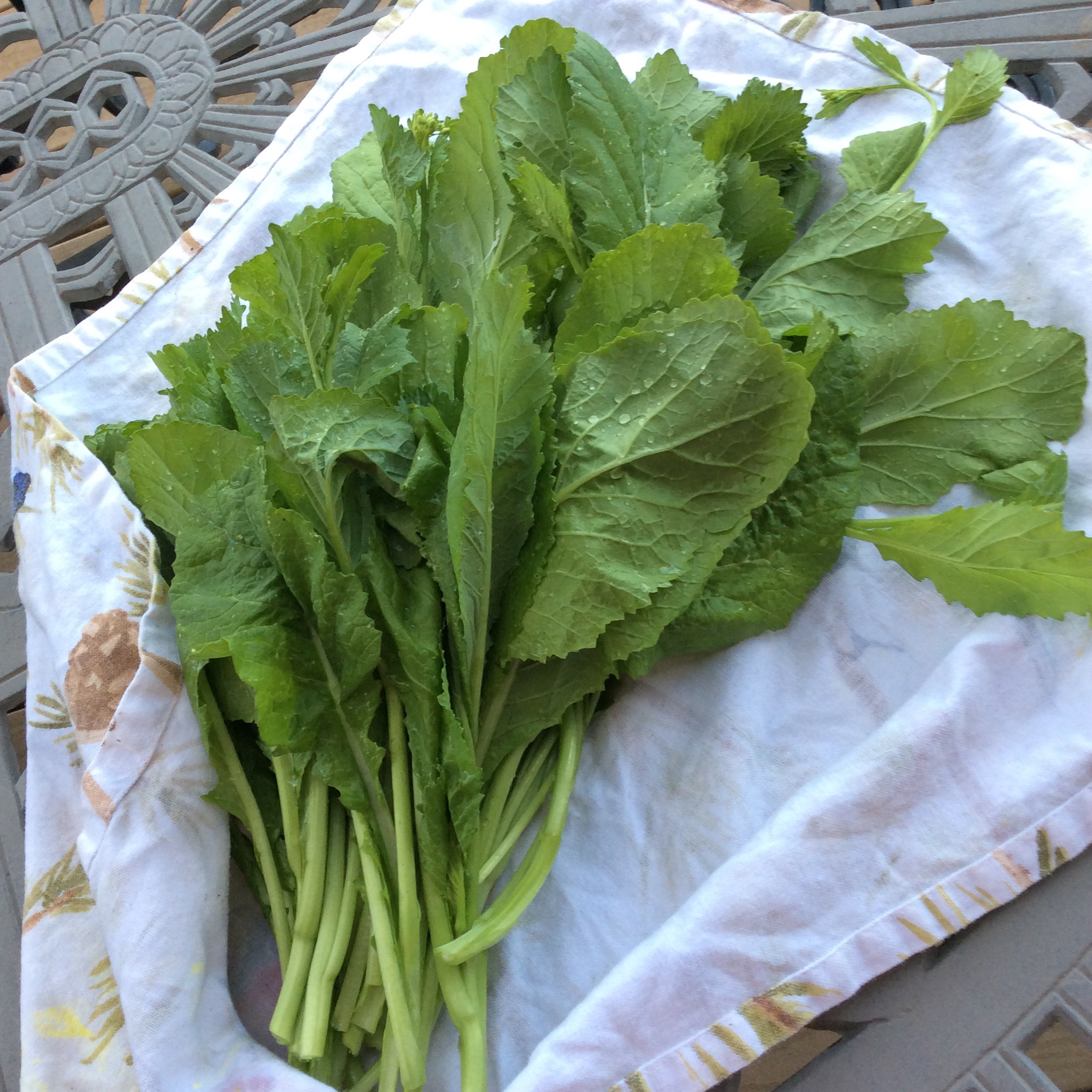
I hear people talk about how difficult they find it to cook vegetables for themselves. I’m on my own tonight, so I decided to try it. I started with a bunch of mustard from an area where I’d sown mustard greens thickly as a quick cover crop. The greens were thinned to 2″ apart in the seedling stage, and now are about a month old and maybe 8″ high. I grabbed a handful and pulled them out by the roots. Then, still holding the stems together as a bunch in my left hand, I used my right hand to snap the roots off of each stem at the point where they snapped rather than bending, taking the lower yellowed leaves away with the roots, and put the roots aside on the mulch and avoided dirtying the leaves. It’s important to break the stems where they snap. If they bend almost double instead, they have acquired more fiber than you can chew. Then I took the rootless mustards inside and washed them quickly. They grew upright due to the crowding, and that keeps them clean and saves washing. This entire process took five minutes, plus another minute to snap off two young tender garlic scapes and rinse them.
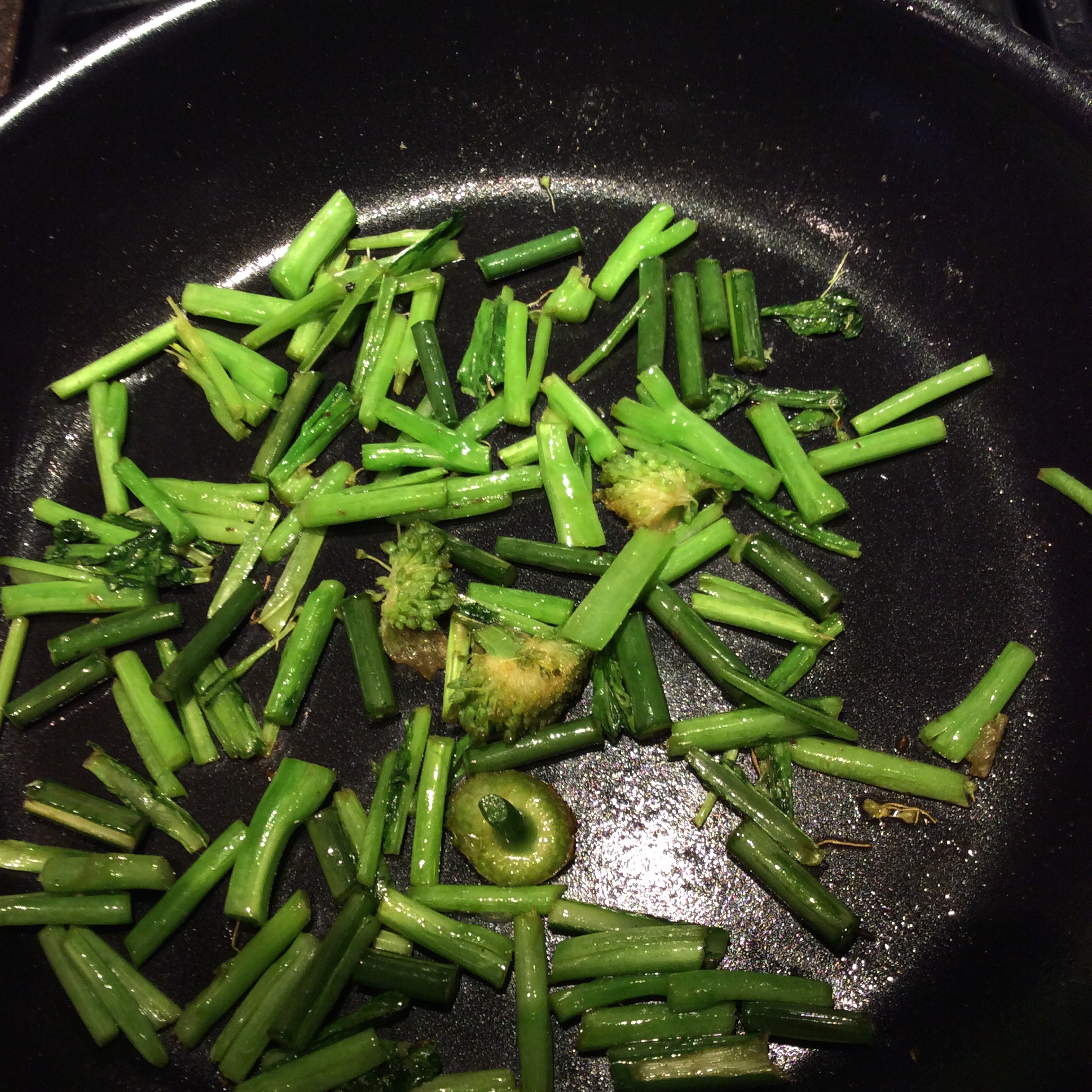
Then I heated my skillet over fairly high heat, and while it was heating I cut the garlic scapes crosswise into 1″ lengths. When it was hot, I put in a couple of tablespoons of olive oil and tossed in the garlic scapes. I put in the cut-up bud sheath from the top of the scape too, but I ended up picking it out later because it was too large and tough. No issues, you are alone and there are no mistakes. While they sizzled, I cut the mustard bunch crosswise into 1″ sections.
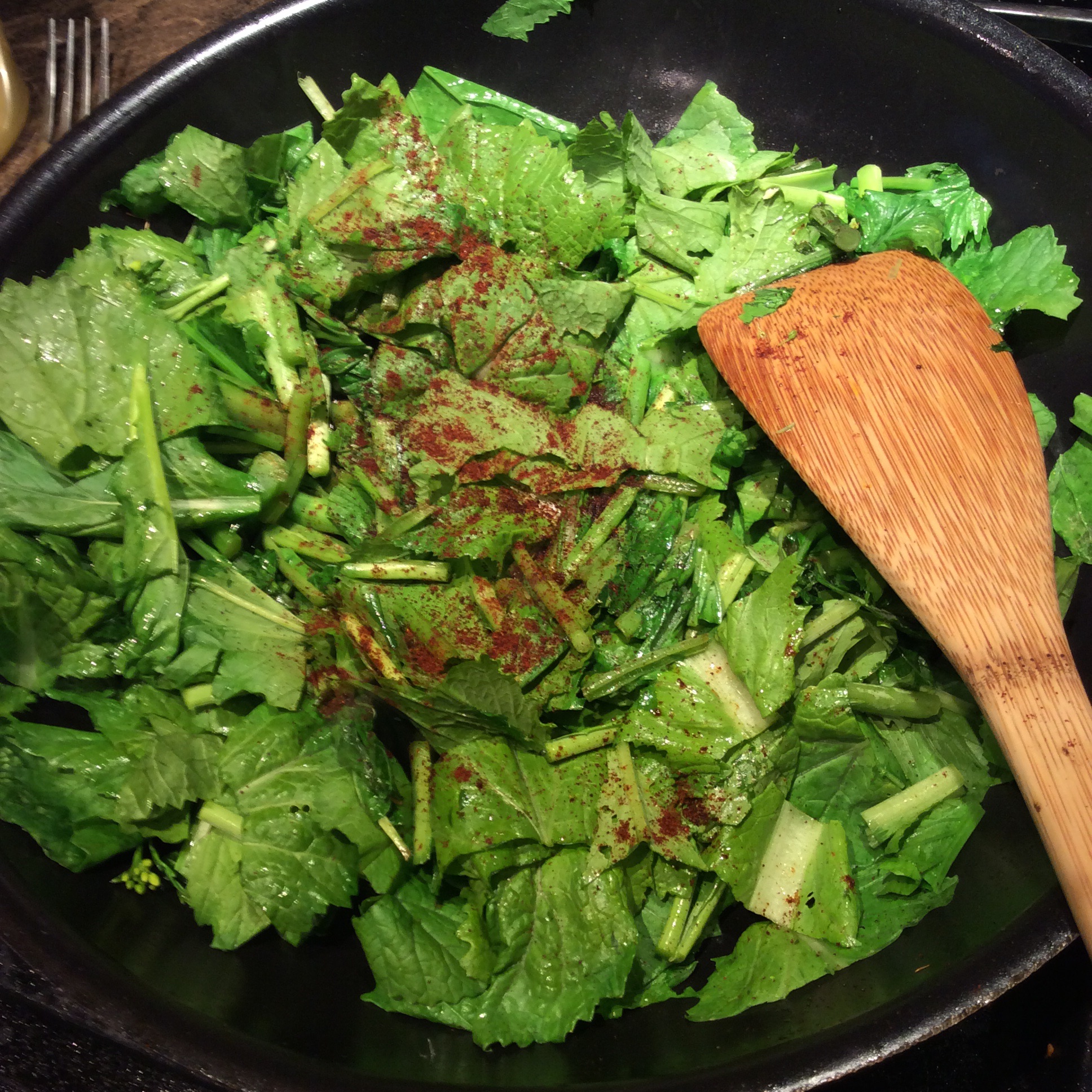
After the scapes had cooked about three minutes, I added the stem ends of the mustard, cooked a couple of minutes, and then added the rest of the cut-up mustard and a large pinch of salt, stirred and fried a few minutes, and added a heaping quarter teaspoon of ground chipotle chile. If you don’t care for heat, Spanish smoked paprika would work well. Keep tossing every minute or so.
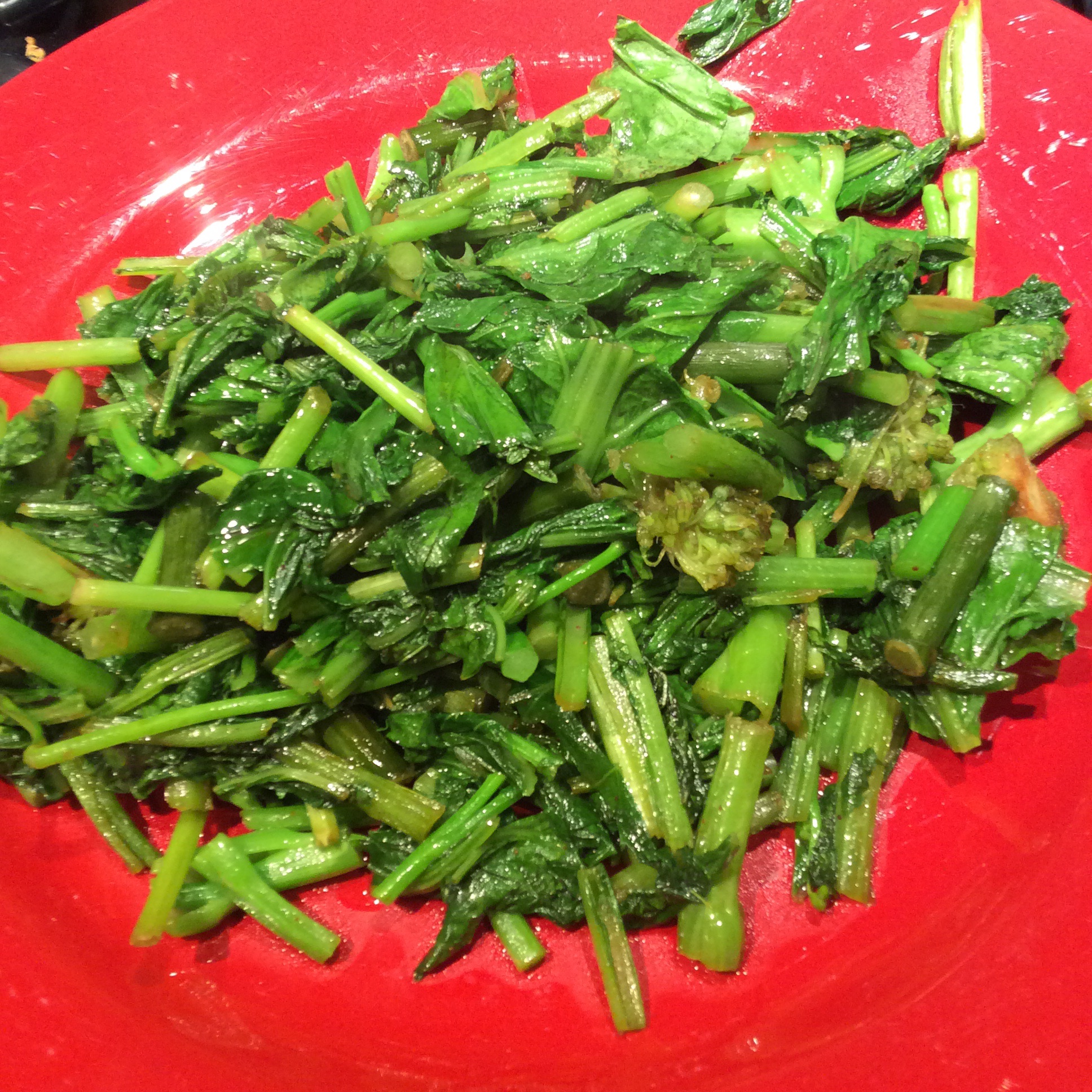
Just before they were done, I added a good dash of Red Boat fish sauce, which is easily obtainable at Asian markets or online and is the closest substitute for Italian colatura. Stir another minute, check doneness by eating a leaf section and a stem section, and keep cooking until it tastes good. Keep the heat fairly high but not hot enough to brown the leaves. When done to your taste, plate it. I think everything tastes better on red plates.
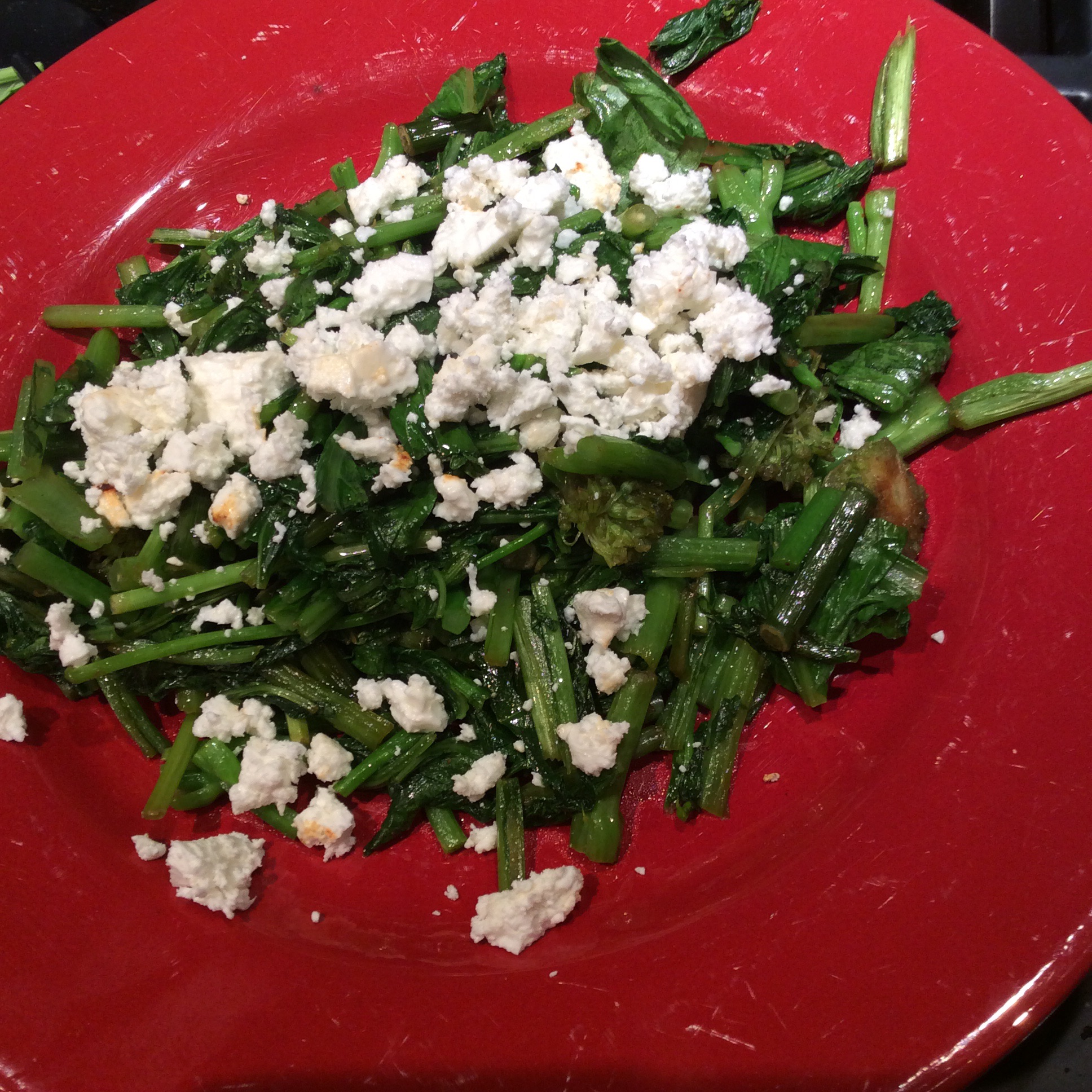
Then I looked in the refrigerator for a cheesy protein component. I suddenly went all Greek and crumbled some wonderful locally made goat feta over the top. If not using feta, check the salt. If really hungry, top the greens and feta or other cheese with a fried egg.
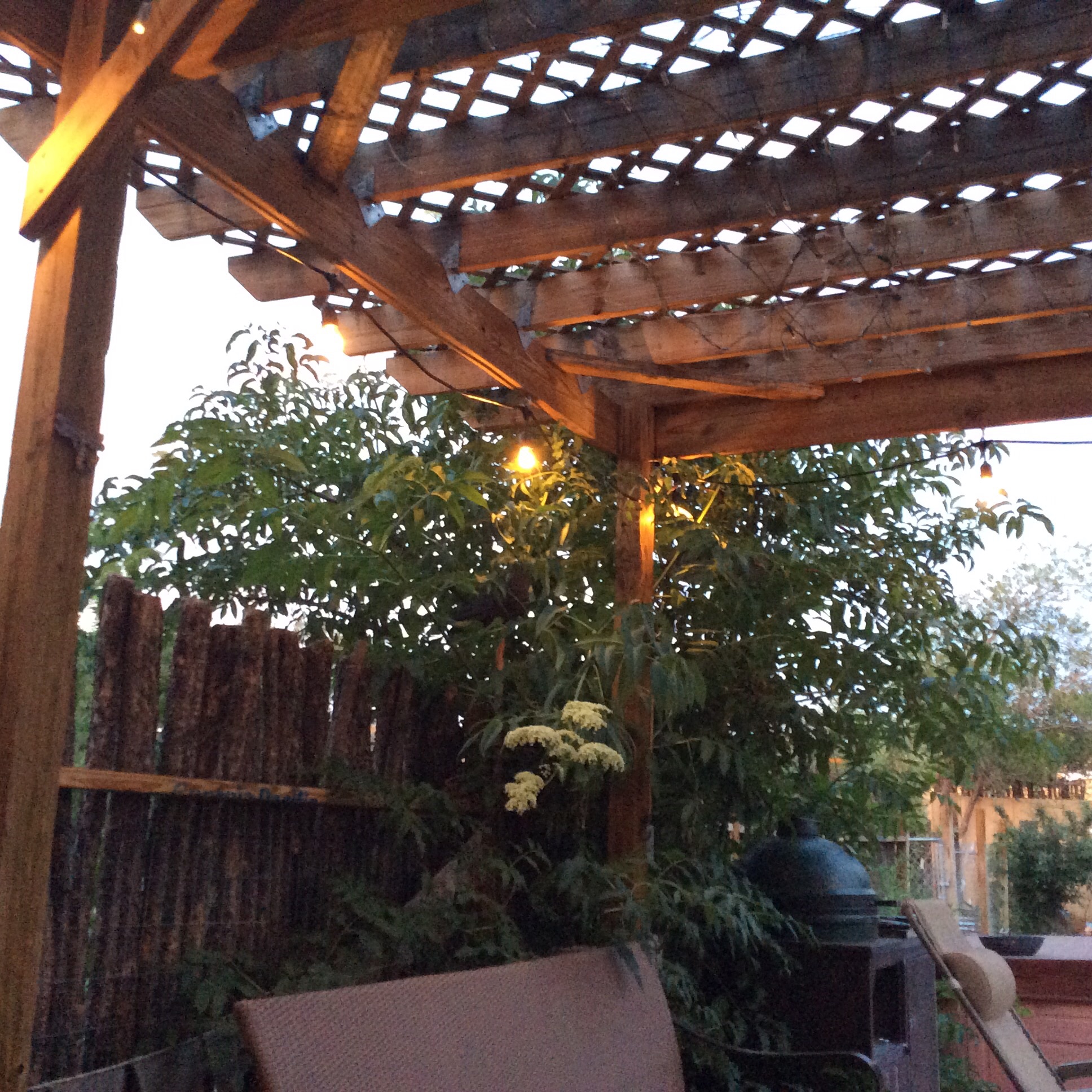
Eat in solitary splendor. You are doing a good thing for your body and it tastes good. How cool is that? So eat on the patio under the romantic lights.
Have a little dark chocolate for dessert, because life is short.
Archive for the ‘Nose-to-tail vegetables’ Category
9 Jun
Vegetables for One
1 Jun
A Veggie Cookbook Worth Owning
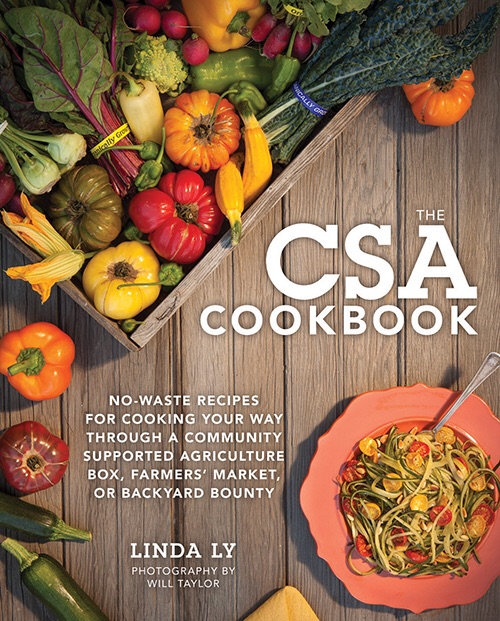
There are a lot of vegetable cookbooks on the market currently,most of them much of a muchness and pretty forgettable as far as I’m concerned, but now and then I come across one that must be bought. I bought this one. Then I bought another copy for a friend. It’s of special interest to anyone who grows their own vegetables or gets a CSA box for a few reasons:
1. The organization is by vegetable type, so if you have leafy greens in the garden you can turn to the leafy greens chapter and consider some cooking options.
2. It offers suggestions for vegetables, or parts of vegetables, that aren’t usually eaten. Broccoli leaves, for example, which are good to eat and highly nutrient-dense ( be careful how many you harvest, though, or your broccoli-bud crop will be significantly reduced.) Ms. Ly’s improvisational kale-stem pesto gives you a flexible way to use up the “nasty bits” of your kale. Tomato leaves are used well as a seasoning, and no, they aren’t poisonous. There are numerous other examples: I am looking forward to trying her chard-stem hummus later in the season. The recipe for pan-charred beans with bean leaf pesto looks like another winner.
3. The recipes that I have tried work and taste good. This does not go without saying. I have come across recipes, especially no-waste recipes, that look lovely in the picture but aren’t really edible. Ms. Ly’s recipes are good.
Oh, and 4. It’s available on Kindle if you need to save space on your cookbook shelves.
I don’t accept review copies of cookbooks. I buy them at my local indie bookstore, paying the same price that you will pay. That’s the only way that I can judge whether the value/ price ratio is really favorable. I think this one is worth the money. Even an old hand in the kitchen will pick up some new ideas for using vegetables.
30 May
Nose-to-tail Cilantro
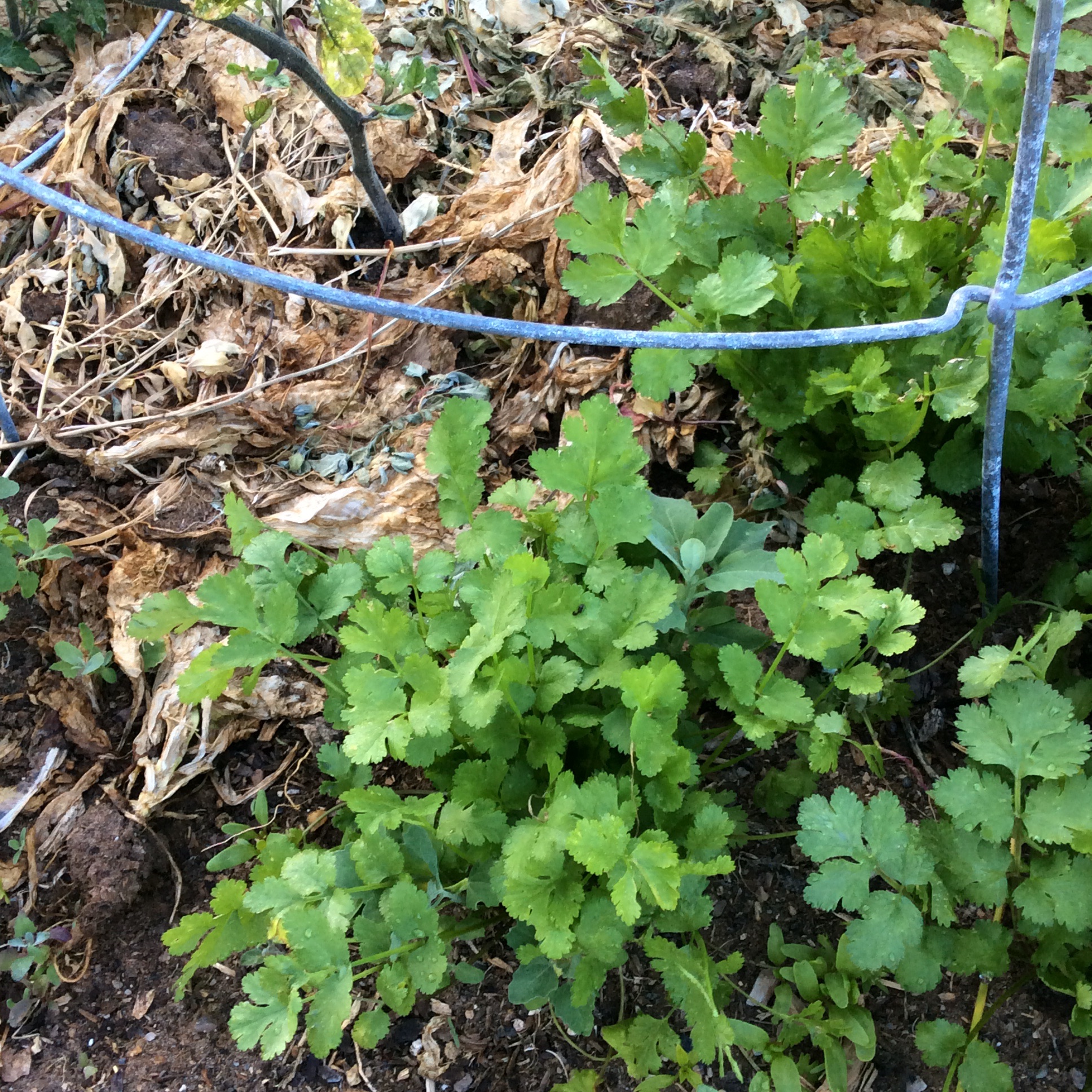
Cilantro is a lovely and evanescent thing. It is a major seasoning herb in Thai and Indonesian cuisines, is widely used in China and Southeast Asia, and fills me with wellbeing whenever I eat it. It was a few years, though, before I learned how to make it pay for its garden space.
First, choose your variety carefully. You need a bolt-resistant type that can be bought in ounces, not packets. Don’t plant the seeds sold as spices. Currently my favorite is Calypso. Second, forget rows. Plant it in bunches that you can harvest all at once, and only have as many bunches maturing per week as you will actually use. I like the bunches to be spaced 8-10″ apart each way, and I plant 15-20 seeds in each bunch, all clustered into an area about 2″ in diameter. I plant 4 bunches a week, every week that I remember and have some bed space available, starting well before the last frost because cilantro likes cool weather and stopping as the days heat up. They will not occupy their real estate more than a couple of months, so I plant them in places where big heat-loving crops like tomatoes or zucchini will take over the space. In the picture above, you see the stem of the young tomato which will spread out when the days heat up. You may also note the early lettuce that occupied the tomato’s space over the winter, now serving as a light mulch.
When the plants are 7-8″ high, I harvest the bunch by cutting about two inches above the ground. They are quite clean because the crowded plants hold each other up, and just need a quick rinse before being used in your favorite way. Cut the bunch rather than pulling, because those stems will keep on working.
Leave the cut stems in place. When they show a good amount of new growth,you will notice that the leaves are finely cut and feathery rather than looking like grocery-store cilantro. This new growth doesn’t have the full cilantro flavor by any means, but I still like to throw chopped handfuls into salads and pounded green herb sauces. But what we are really after at this point is not the leaves. When some of your bunches are tall and starting to bolt, pull them for the roots and lower stems. Scrub the roots and thick lower stems well, cut off the finer roots and discard (into the compost, of course) and chop the roots and stems thinly crosswise. This is your supply of cilantro root, which is used extensively in classic Thai cooking, while the leaves aren’t used in authentic curry pastes etc. In fact, make sure that no leaves get into your root, because the flavor is different and not right for this use. Thai cooking aficionados refer to it as the “unobtainable, mythical coriander root,” but it is highly obtainable if you have a garden. Now you can pound your roots and stems in your faithful mortar and pestle to make curry and seasoning pastes, or freeze them in little plastic bags in quantities of about 4 tablespoons. I tend to use mine up during the summer, which is when southeast Asian cuisine tastes best to me.
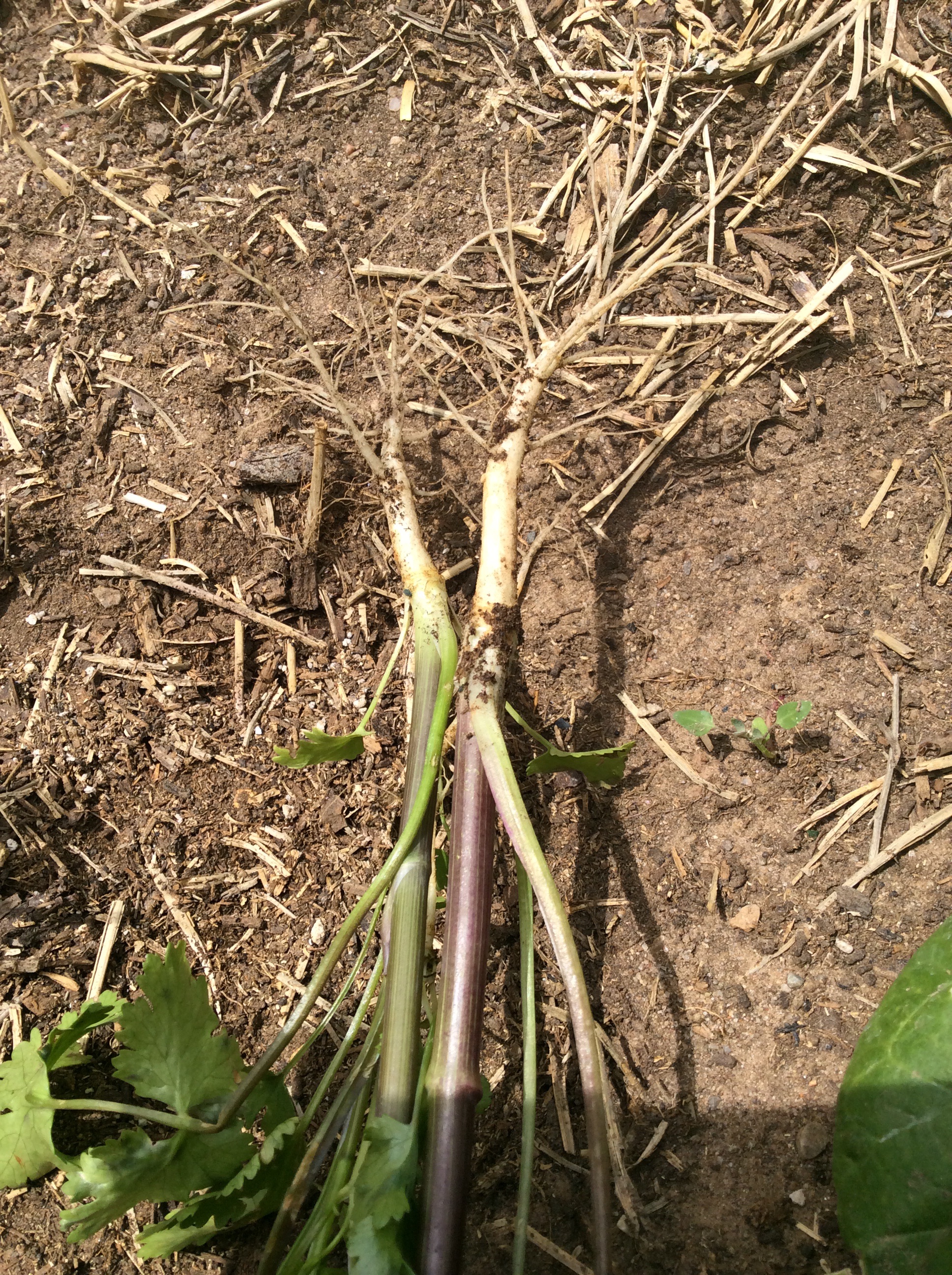
But don’t pull every bunch. Let some bolt, because you want the green seeds.
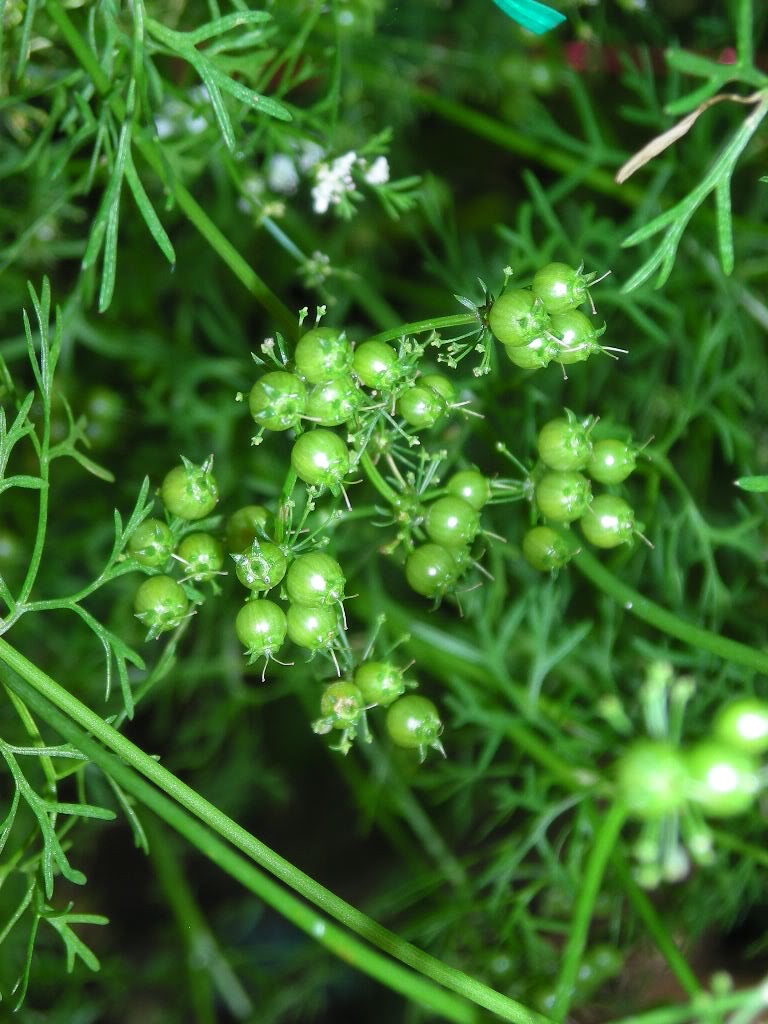
These have a flavor in between the leaves and the dried coriander seed and are delicious sprinkled over salads, used as a garnish on grilled meats, or tossed over bulgur or rice dishes.
Now you are finally done with your cilantro plants and can pull them and compost them, unless you want to let some set and dry seeds to use as coriander seed. I don’t dry and save seeds, personally. I can buy seeds easily, and prefer to use my own seeds green, when they are a fresh treat that can’t be bought.
For more on using the roots, check out David Thompson’s huge and highly addictive “Thai Food,” the best Thai cookbook in English in my opinion, although it does assume a scary amount of kitchen time😉
24 May
Onion Flowers
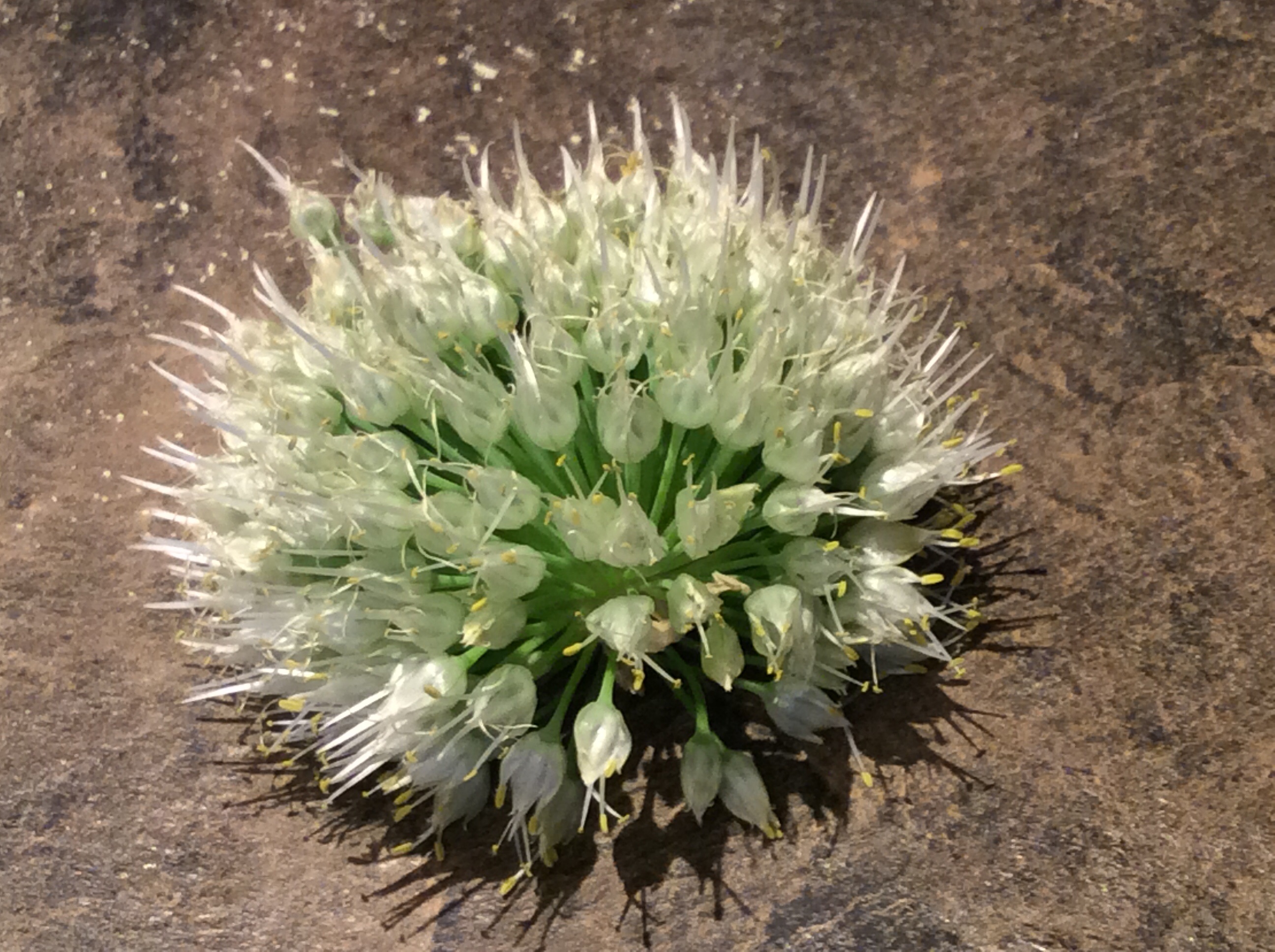
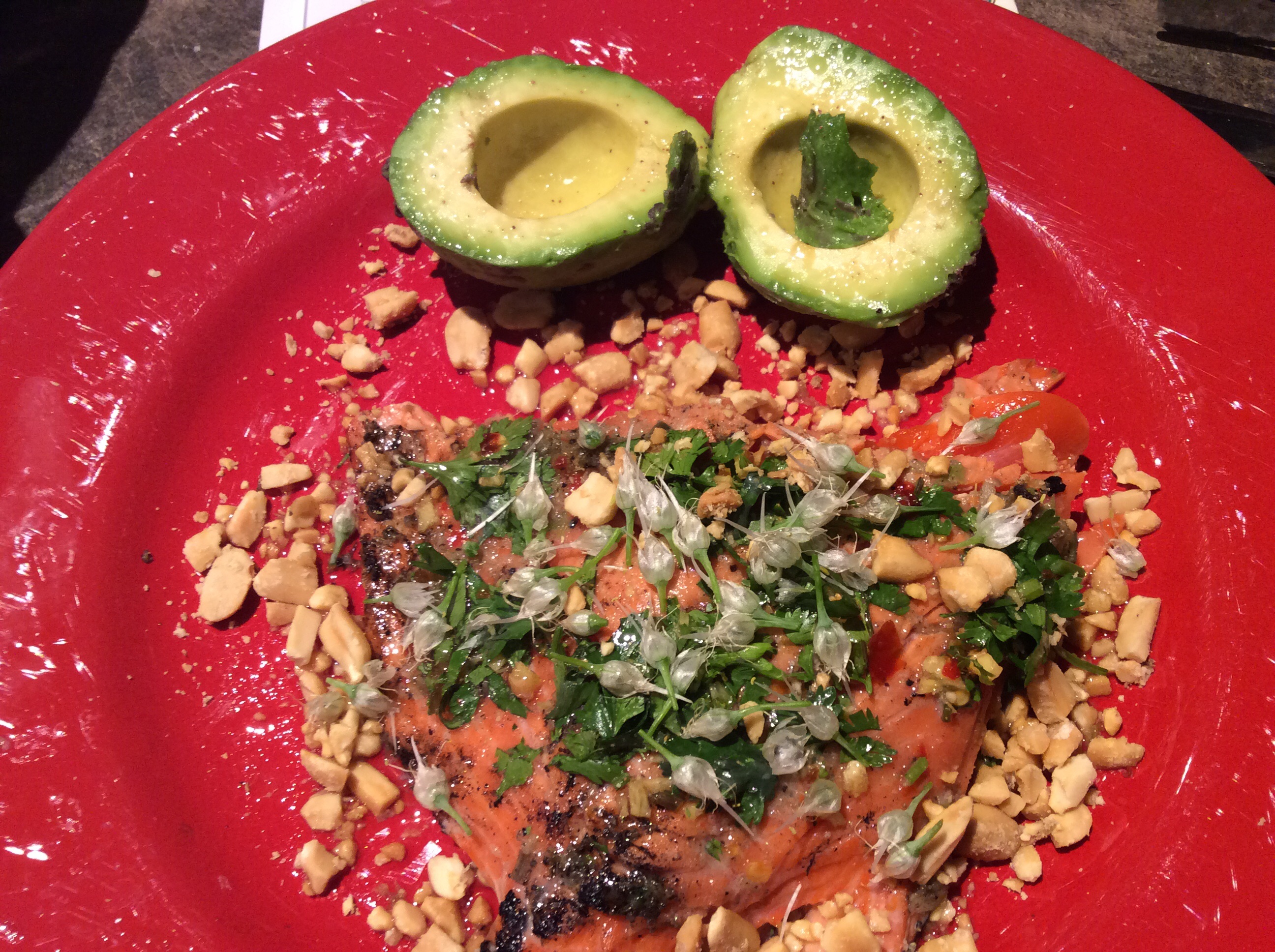
I have written about onions and onion scapes, but what happens when a scape gets past the busy gardener and blooms? Well, then you have onion flowers. Harvested shortly after they open and clipped off the bloomscape with kitchen shears, they taste of onions but light, a bit floral, delicate. They are delicious in salads, and I love them showered over any of the delicious herb-laden southeast Asian dishes. Here, you can see them garnishing Thai-ish grilled salmon. Try them on burgers or steaks, sprinkled lavishly over a dollop of good butter melting on the hot meat. They are a great addition to grilled chicken. Just don’t let them bloom in vain!
This makes onions a true nose-to-tail vegetable, with every part both edible and desirable.
 My urban homestead