Archive for the ‘Ketogenic diet’ Category

Sunflower Stems

image

Lately I have been inspired by Pascal Bauder’s cookbook The New Wildcrafted Cuisine and can’t quit yapping on about it. Most recently I found myself trying to apply his eye to sunflowers. They are a common weed in my area, and so useful to the birds and so pretty in bloom that I can hardly bear to pull them out, so I have far too many of them. Recently there was internet info that ” You can eat the leaves and the stems and the buds!” This does not accord with my own experience; edible yes, choice not hardly- so I set out to experiment.

The leaves are very coarse and fibrous, and my own experiments in cooking them have been totally unsuccessful when there are so many other wonderful things to eat.  They might be a useful survival food, but for thriving at the table they are not good fodder. I do like the sprouts in salads, the first two cotyledons that emerge when the plant sprouts, but when the leaves are any larger than that they are not to my taste.  Incidentally, it is easy to plant a large handful of viable seed in an out of the way area maybe a foot square in late fall, and at whatever time it comes up in the spring you will have a bunch of sunflower sprouts ready to harvest and all in one place.   They are delicious in salads.  Just remember to get them before the true leave start forming.  There is no toxicity at any point, but I only find them pleasant to chew before true leaves form.

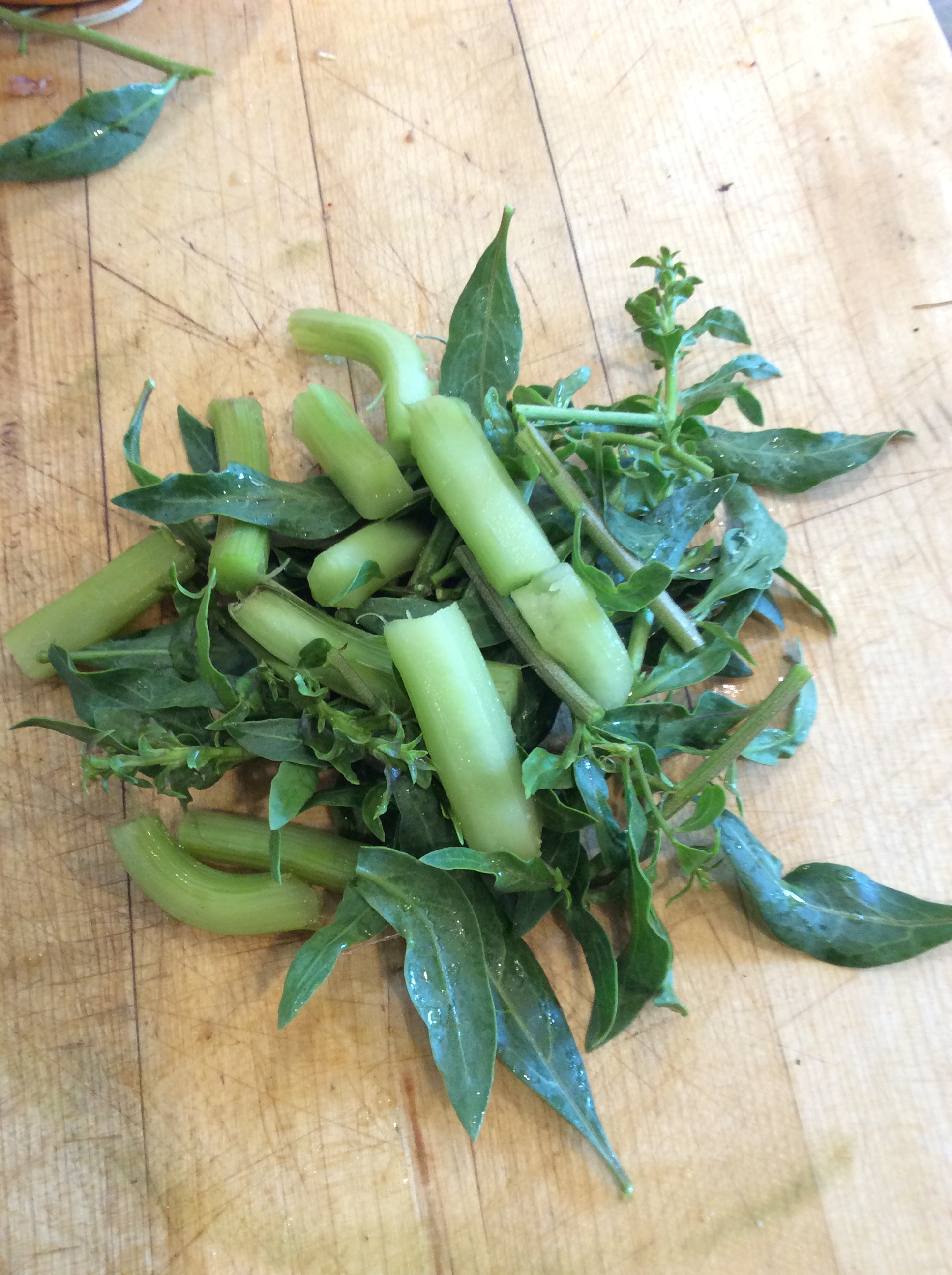
My current experiments are with the stem.  This gives me the opportunity for another blast at Internet information provided by people who have never actually eaten the plant in question. You will find information that “you can eat the stem and it tastes just like celery!” Do not just grab a stem out of the garden and start chewing, even a small one, because from a very early age they have a very fibrous outer layer.  But yesterday I found myself engaged in a long boring kitchen task that required continual presence but very little attention, and decided to do some experimenting.  The first part was simple: peel off the outer layer. This is easily accomplished with a vegetable peeler, but if you don’t have too many stems to work with you will lose a fair amount of edible material this way. I started by working my thumbnail under the fibrous layer of the lower cut end of the stem, peeling upward, and then using the vegetable peeler just to skim off whatever stringy bits were left.  I started with stems about the size of my index finger, and they were about as thick as my little finger when I finished.  They seemed to discolor slightly as I worked with them, so I dropped them in a bowl of water with a squirt of lemon juice in it.

Tasted raw, they were pleasant in a mild way, with a touch of sunflower flavor, mostly a generic mild green taste, and a great crisp texture. I wouldn’t bother to eat them that often, but they were nice enough. But when cooked, they came into their own.
image

I combined them with some tender shoots of wolfberry (goji,) probably about half and half. Be sure to cook only goji shoots that snap cleanly off. If any peeling of bark occurs, they’re too tough to eat whole.
image

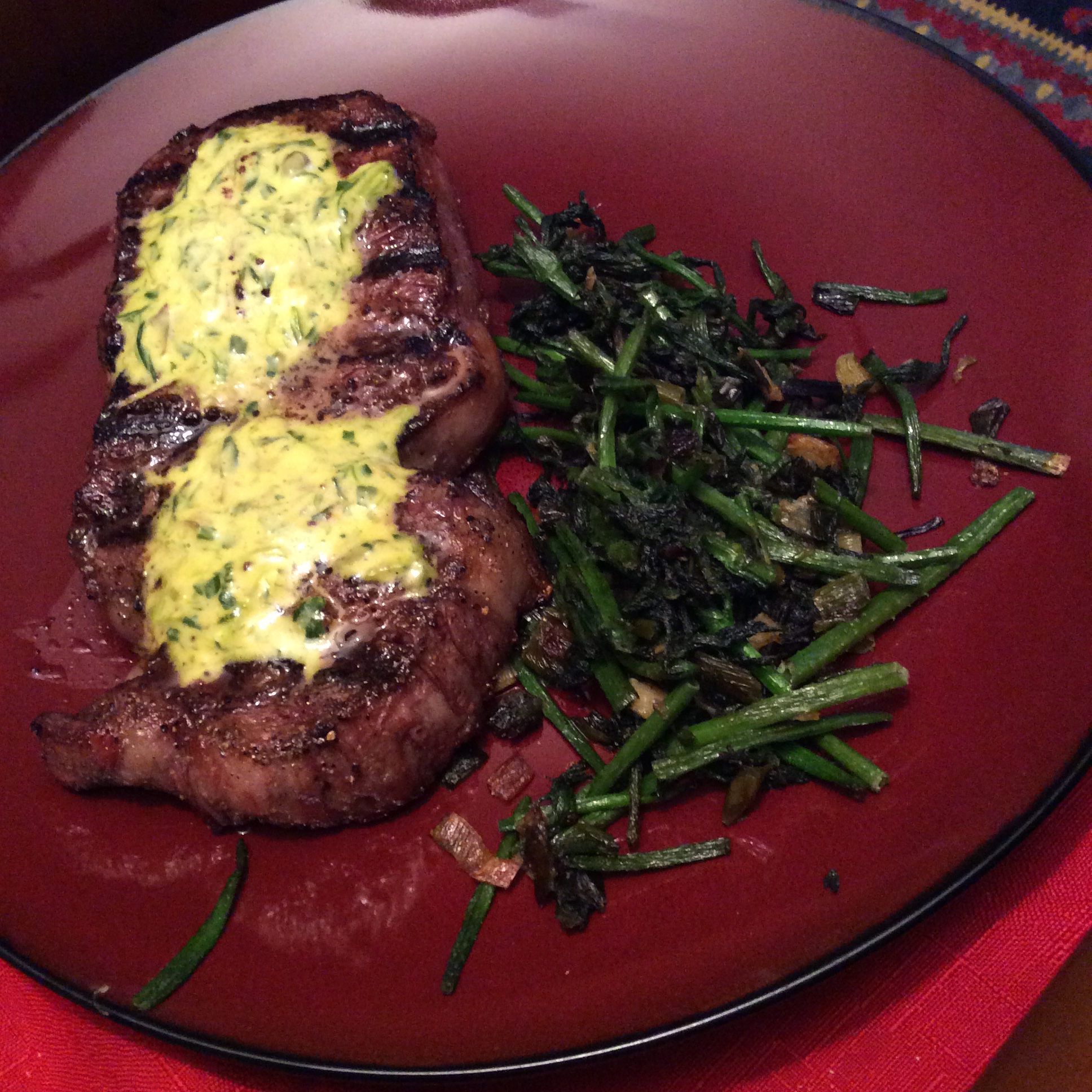
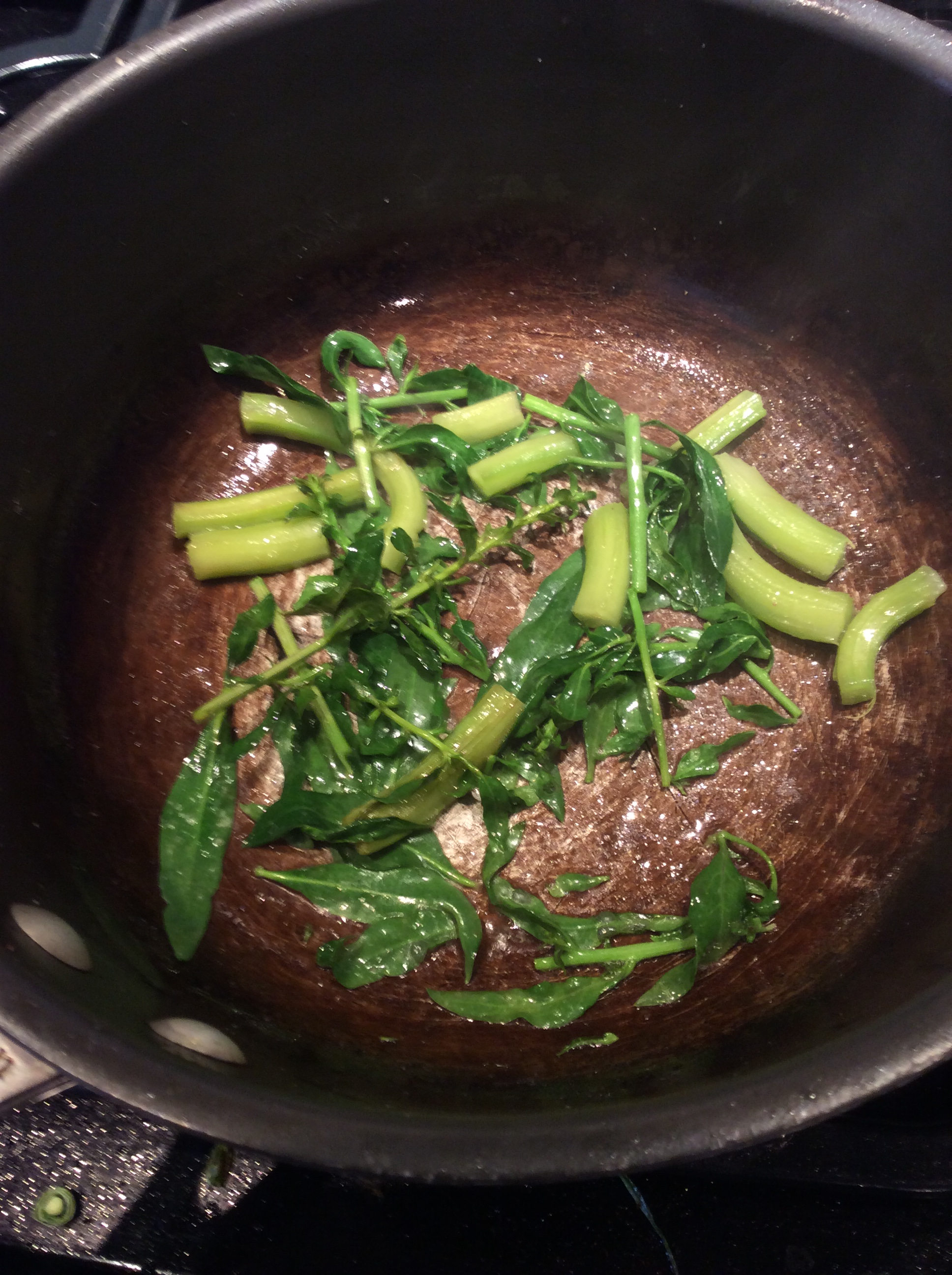
I’ve become  a fan of using macadamia nut oil for dishes like this, where I want to be sure that I can taste the nuances of flavor in the plants.  Macadamia nut oil is very stable, has a high smoke point, and has a pleasant rich buttery flavor but does not mask other flavors in the way that a strong olive oil might.  I added a good pinch of salt and stir fried the mixture until the goji leaves were dark green and beginning to crisp, but not to the point of any browning.

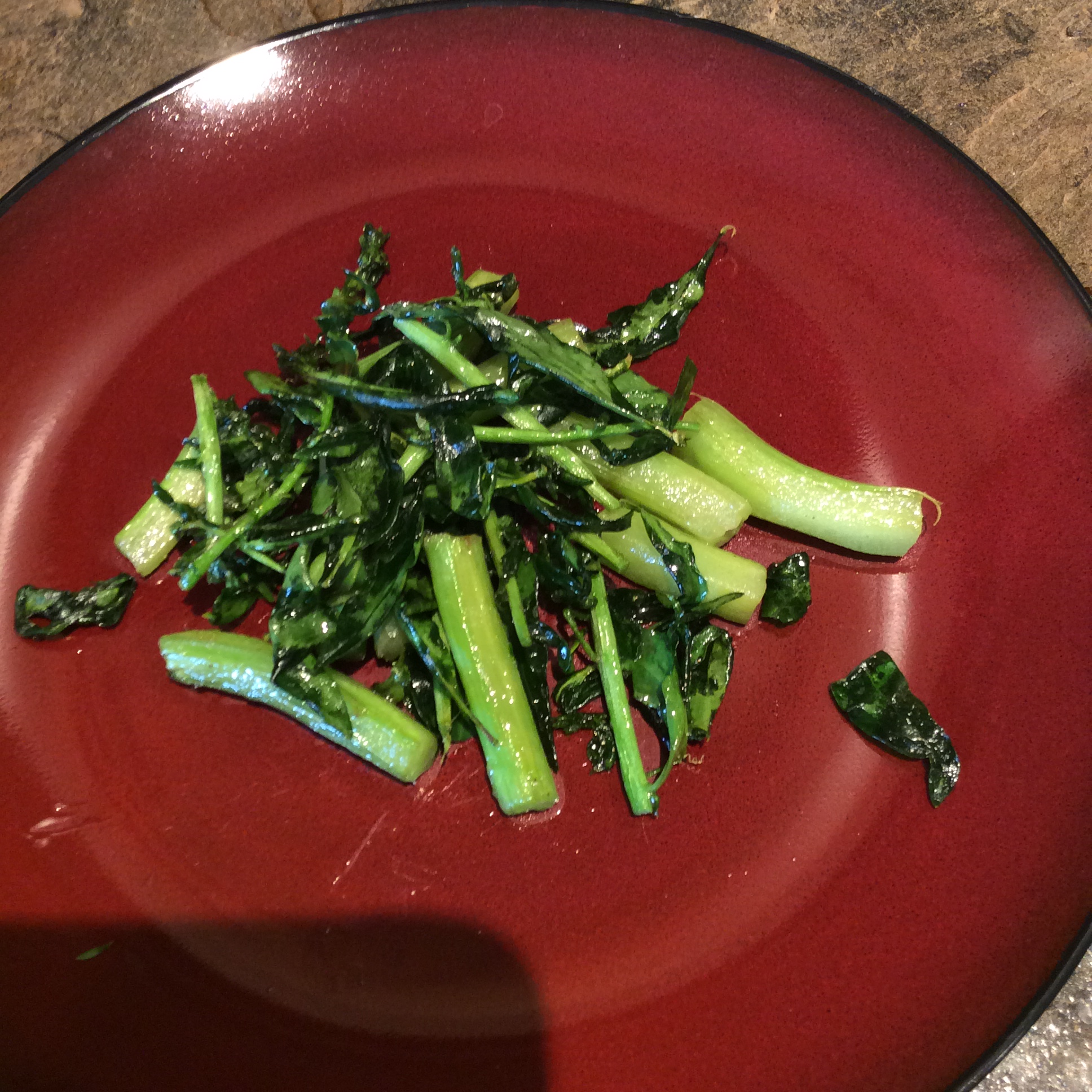
The result was delicious. The goji leaves and stems had a pleasant mild herbal flavor, and the peeled sunflower stalks had come into a rich nuttiness with artichoke overtones but retained some crispness.

It made an excellent cook’s treat, and I will try it again on a larger scale.  I think that a minute or two more of stirfrying would have benefited the sunflower stems a lot, and next time, I will not combine them with other shoots but will work on getting the cooking time exactly right for them.  But this was an excellent simple dish that I would not be ashamed to serve to anybody.  Now I find myself speculating about the gray stripe sunflower grown for bird food, and whether its enormous single stem would be palatable at a young age. Only one way to find out.

And don’t worry, I will always leave plenty of sunflowers for the birds.


Wild Lettuce

image

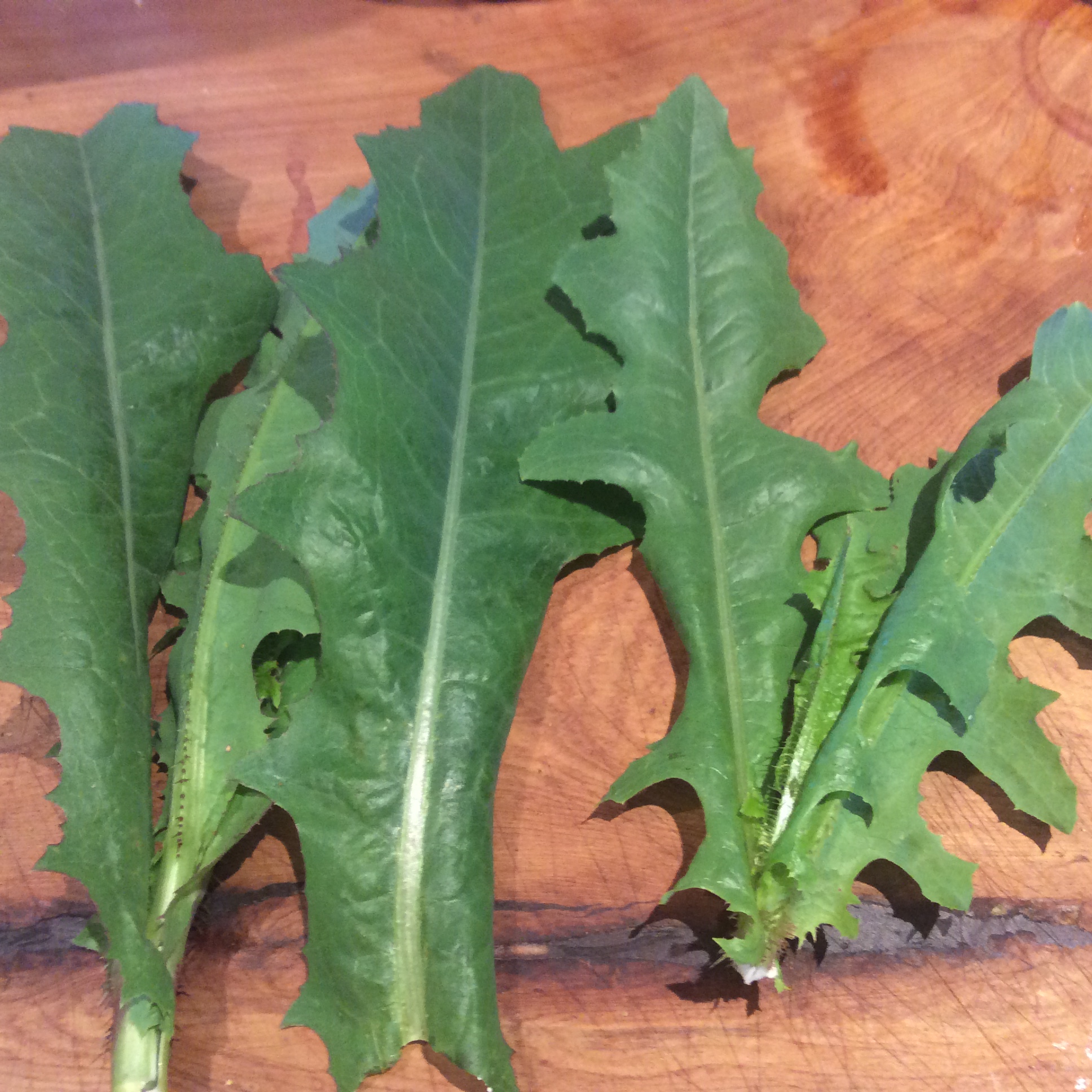
Wild lettuce is everywhere. I see it all over the downtown area of our city, growing in cracks in pavement and against buildings.  Wherever you are right now, there is probably a plant of it growing nearby. Its endurance is extraordinary and there is no getting rid of it, which suits me fine. A green that will grow in unwatered parts of my desert yard is an unusual thing, and I’m not likely to turn down a gift like that.

It’s quite variable in leaf shape and a few species are common in the U.S. In my area I mostly see Lactuca serriola, which is covered with small spines. I borrowed the photo above because the spines show more clearly than in my own photo. Accounts online and in foraging books differ, some reporting that the young leaves are delicious, others considering them a very poor food, and all commenting on the bitterness of the adult plant. In my area they don’t seem to get very bitter, not half as bitter as dandelions or chicory, and I love to eat the growing tips regardless of the age of the plant. This may relate to soil or temperature factors. I have noticed the same thing with sow thistle that grows in my yard, which lacks its characteristic bitterness, while dandelions in the same area seem even more bitter than those found elsewhere. Nature always has the last word and does not have to provide us with explanations. You have to get to know your home area.

image

I pick the tips as shown on the right, but if I find a plant growing in shade I will pick larger leaves because they remain more tender than when grown in sun. They exude sticky white sap, which washes away easily. I toss the tips in boiling water for about 90 seconds and drain and squeeze, which renders the spines soft and harmless. Proceed as desired. With greens that have any tinge of bitterness, I like to sauté with garlic, olive oil, and pepper flakes, preferably the deep earthy Turkish Urfa pepper flakes or smoky chipotle flakes. A ten minute sauté creates a lovely vegetable.

The rest of the plant is a favorite treat for my goat, who is totally unbothered by the spines. It’s one of the few plants that she never seems to get finicky about.

There are some very weird things to be found online. Wild lettuce has  acquired a strange internet reputation as “lettuce opium” and there are places that sell the seeds and tincture and swear it will cure insomnia and/or get you high. I have no idea where this idea came from. I was startled to learn about it when I searched for a good photo, and overall I would disregard the whole idea. So do the people who have actually tried it; customer feedback includes comments like “very mild,” “placebo buzz only,” “nothing going on here,” and “useless.” One commenter who thought it was great admitted to being “crazy drunk” when he tried it, which no doubt makes a difference. Some think it is a useful mild sleep aid if smoked or brewed as a very strong tea. I don’t advise smoking anything at all so I wouldn’t know. For those interested in soporifics I can only say that when I eat it at dinner I feel sleepy at bedtime, and when I eat anything else for dinner I feel sleepy at bedtime.

Dandelions Nose to Tail

image
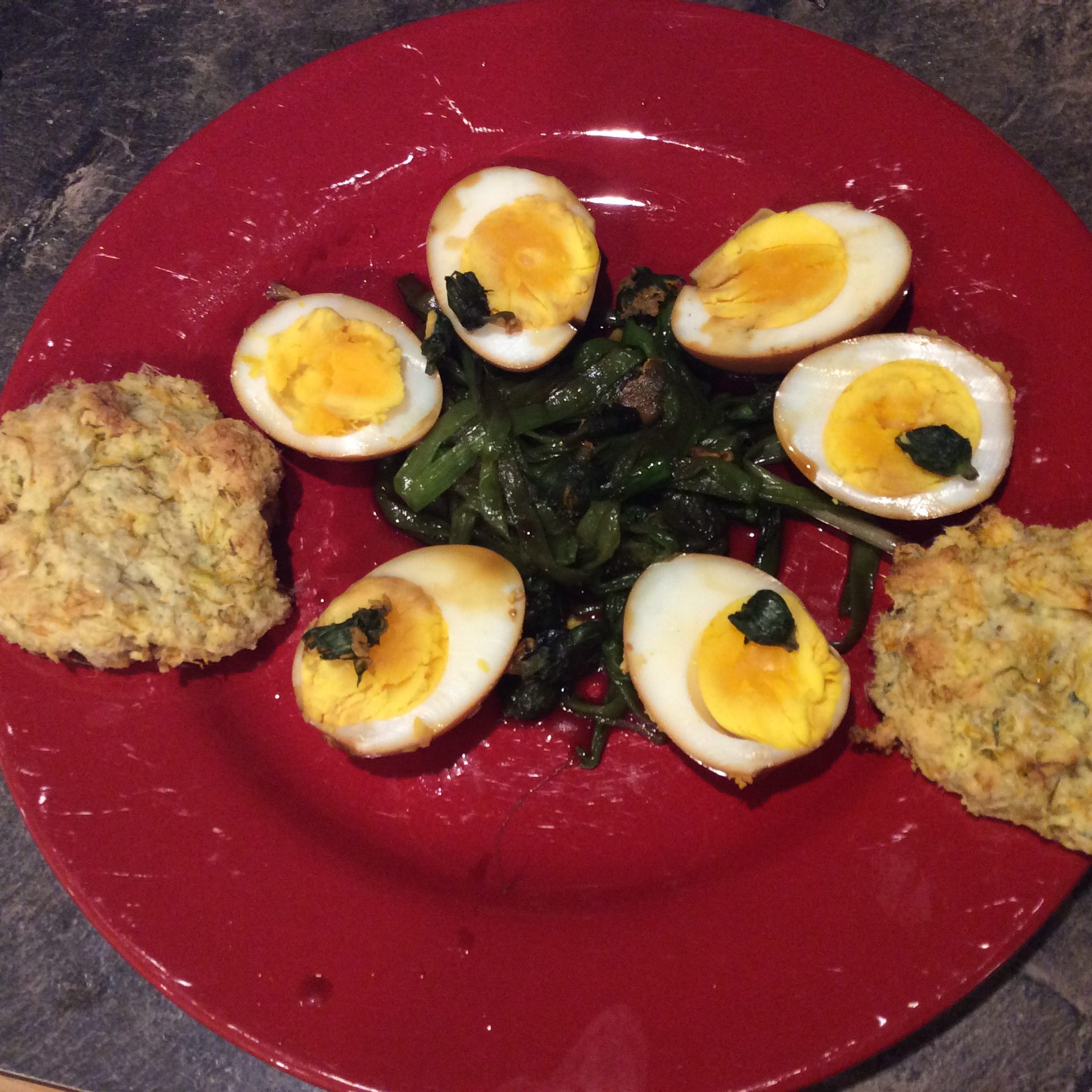
I seldom write about foraging and cooking with dandelions, because although I love them, they are the most written-about wild food and I think it’s all been said before. But yesterday I came across a patch of dandelions growing in a shady spot in moist streamside soil, and last night I challenged myself to make a dandelion dinner with dishes that I had never made before. So no recipes this time, just briefs about how a very impromptu meal came together. I had gathered flowers on the very long stems that form in shady conditions, unopened buds, and leaves.
I hard-boiled some eggs, and made a cup of sauce from 3/4 cup of soy sauce, 1/4 cup of rice vinegar, 2 cloves of garlic chopped, and a tablespoon of grated ginger, plus some sweetener. If you use sugar, to tablespoons might be about right, or just sweeten to taste. When the eggs were cooked and peeled, I set them in the dipping sauce to marinate, using a small plate to keep them completely submerged.
I prepared about two cups (loosely packed) of dandelion flowers pulled out of their bitter green calyxes. This is a tedious job and you might as well sit down for it, but I had my two cups in about 25 minutes. A few calyx tips will stay with the flowers and they don’t matter as long as none of the intensely bitter base is included. I incorporated the flowers into my favorite low-carb drop biscuit dough (use your own favorite recipe) and put them in to bake.
The unopened buds were blanched in boiling water for a minute, drained and squeezed, and put in to marinate in the soy sauce mixture with the eggs.
The stems were 8-10 inches long and barely bitter at all, thanks to the shade and wet soil. I put the stems and some leaf midribs in boiling water to blanch for one minute and drained them. In a skillet I heated coconut fat and fried a handful of 1″ pieces of green onion leaves briefly, then added the blanched stems and a couple of tablespoons of the egg dipping sauce, stir-fried over high heat until the sauce was nearly evaporated, and plated the stems with sliced marinated eggs on top and the marinated buds sprinkled over. I drizzled a bit more dipping sauce over the eggs, which spoils the neat appearance but improves the flavor. I put a Dandy Drop Biscuit on each side, and we ate.

If you question the inclusion of drop biscuits in this essentially Asian meal, well, fair enough. Sometimes my menu planning is based more on ideas I am eager to try then on careful coordination of dishes. Do not underestimate the local household joy produced by a cook who is enthusiastically trying stuff.
Take-home lessons: the stems are really fragile and can get mushy easily, and next time I will cut them in 3-4″ lengths and stir-fry them without the initial blanching. They need a lighter hand than I realized. Also, I was reminded anew how much I like the unopened buds. If I ever harvested enough of them at once, I would stir-fry some with chopped garlic and pickle some like capers.
The alert reader may note that the leaves and roots weren’t mentioned. The leaves are waiting in the refrigerator to be  cooked up tonight. I don’t care for dandelion roots, personally, but if you do, there is scads of information about using them in any wild food book or herbal. I think the highest use for the roots is to leave them in place to produce more leaves, stems, and blossoms.

The Shoots of Spring

image

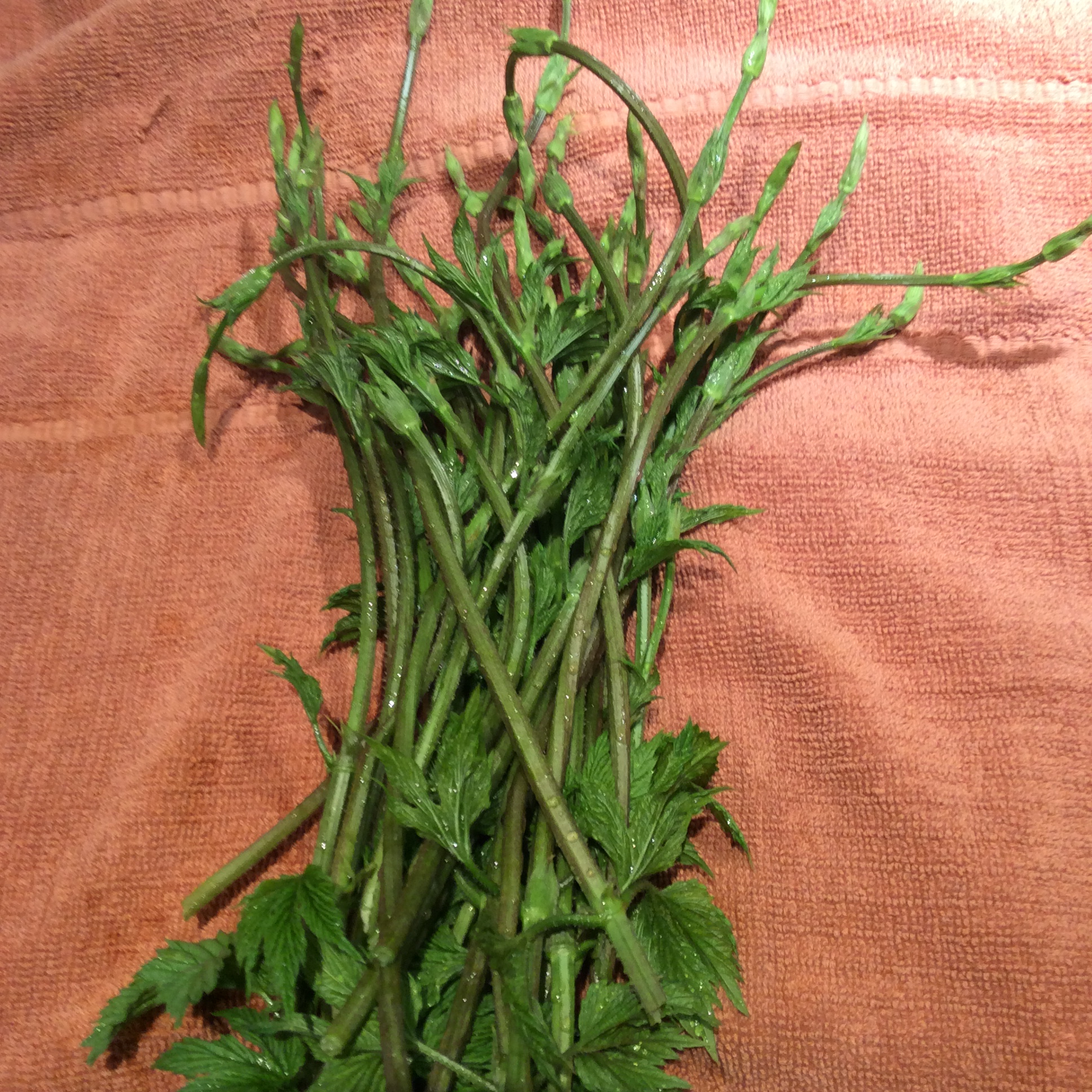
This is the great season for hops shoots. I gather a large handful every day or two, taking care to snap them off where the stem is tender and brittle. I wash them, cut the bundle crosswise in pieces about an inch long, toss in a hot skillet with a generous amount of good olive oil, and sauté over medium-high heat, turning frequently, until the stems are tender and  some of the leaves are brown and crisp. Add salt and serve. They have a “wild” and slightly bitter flavor which I love alongside very flavorful meaty main dishes.

image

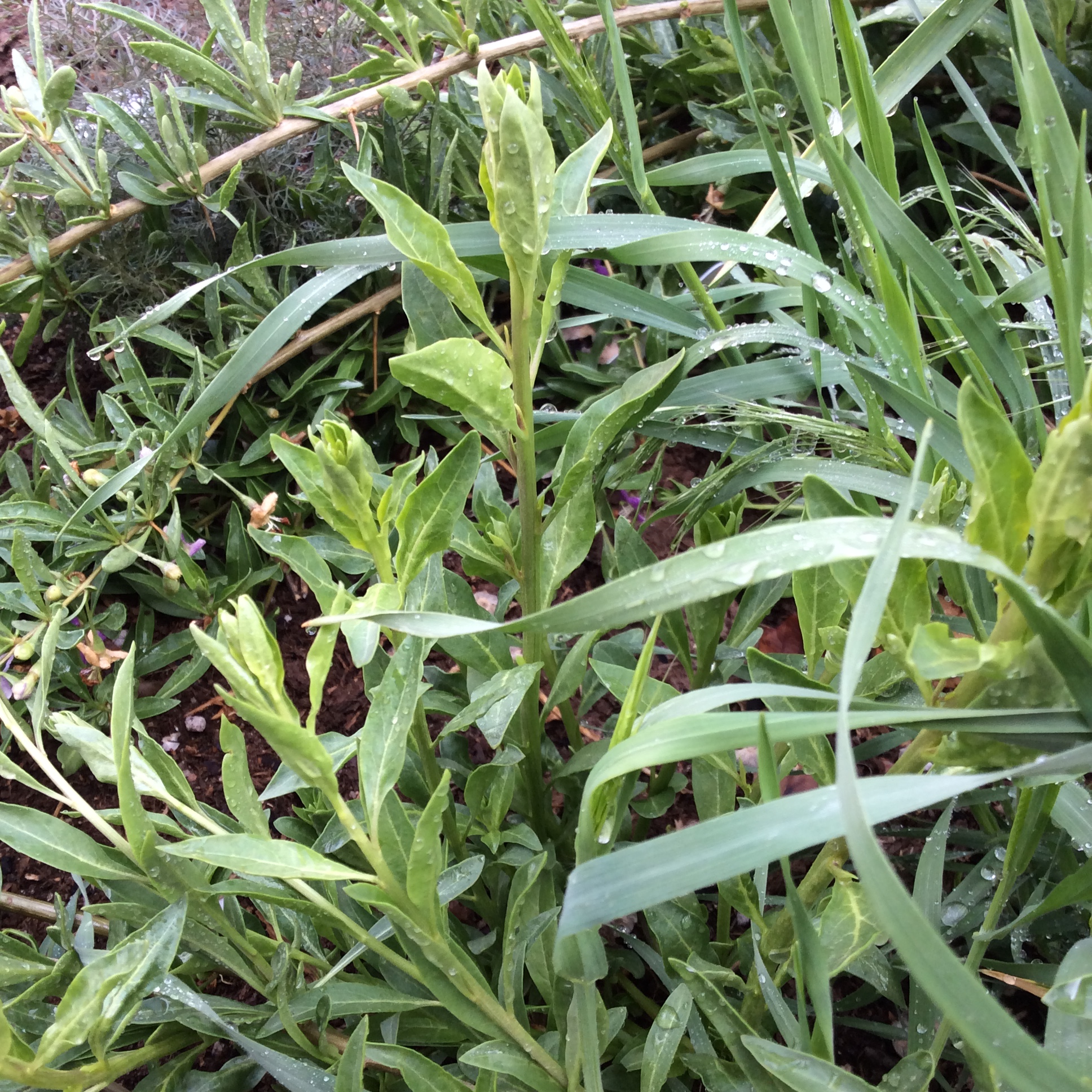
This spring I started to experiment with other shoots. I have been eyeing the invasive tendencies of my goji bushes, which routinely send suckers out 10 feet to send a shoot up right where I don’t want another goji plant. They are turning up everywhere as the weather warms.

image

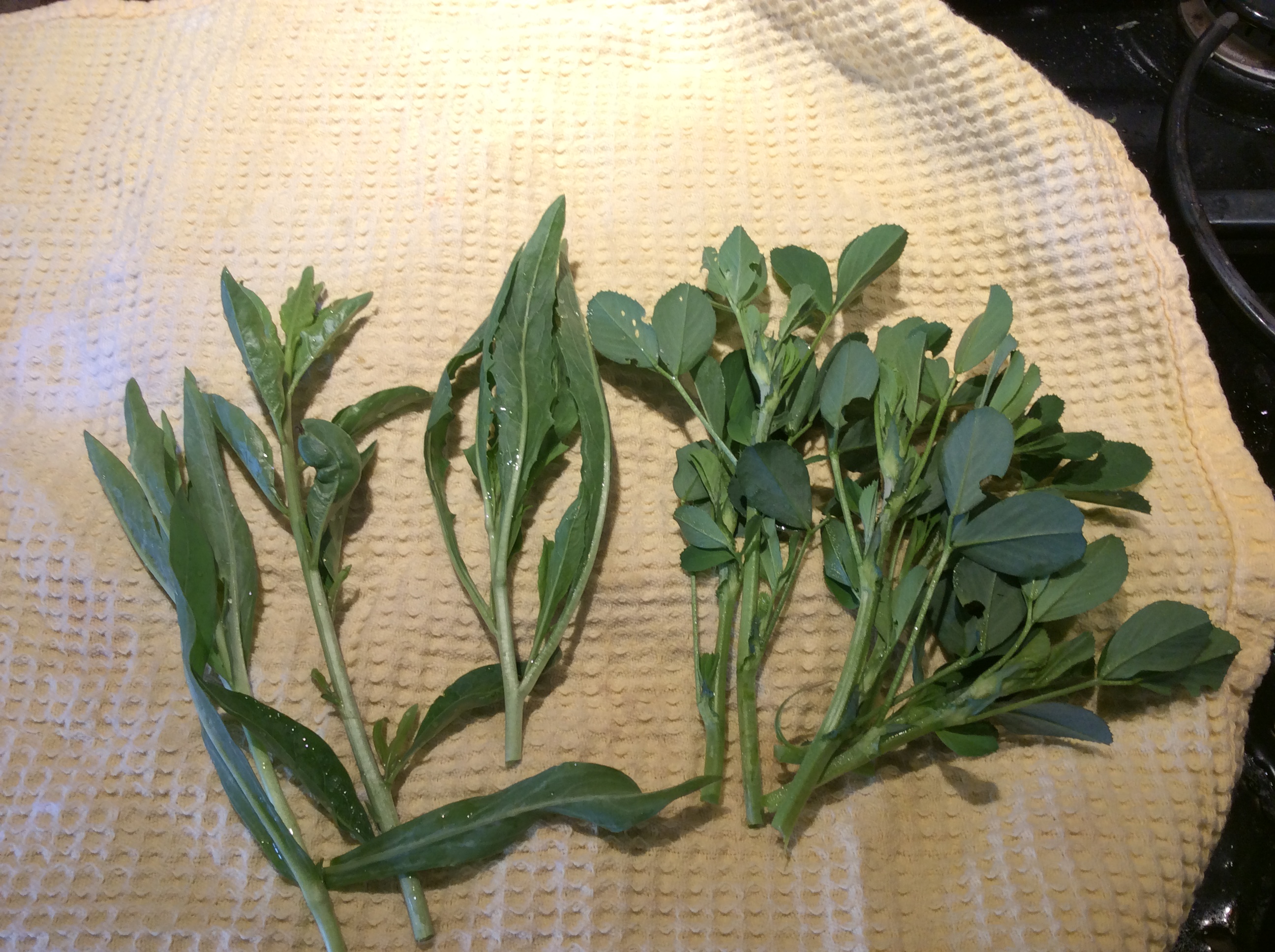
I knew that their foliage was edible but had never been much impressed with the taste, and there aren’t many leaves per bush. The shoots, on the other hand, are bulkier than the leaves, green, tender, and a nuisance unless removed. Yesterday I gathered young shoots of  silene (bladder campion,) goji berry bush, perennial arugula, and alfalfa to experiment with ( shown L to R below.) I wouldn’t try cooking with any shoot that didn’t break off with a clean, brittle snap. You don’t want them woody.

image

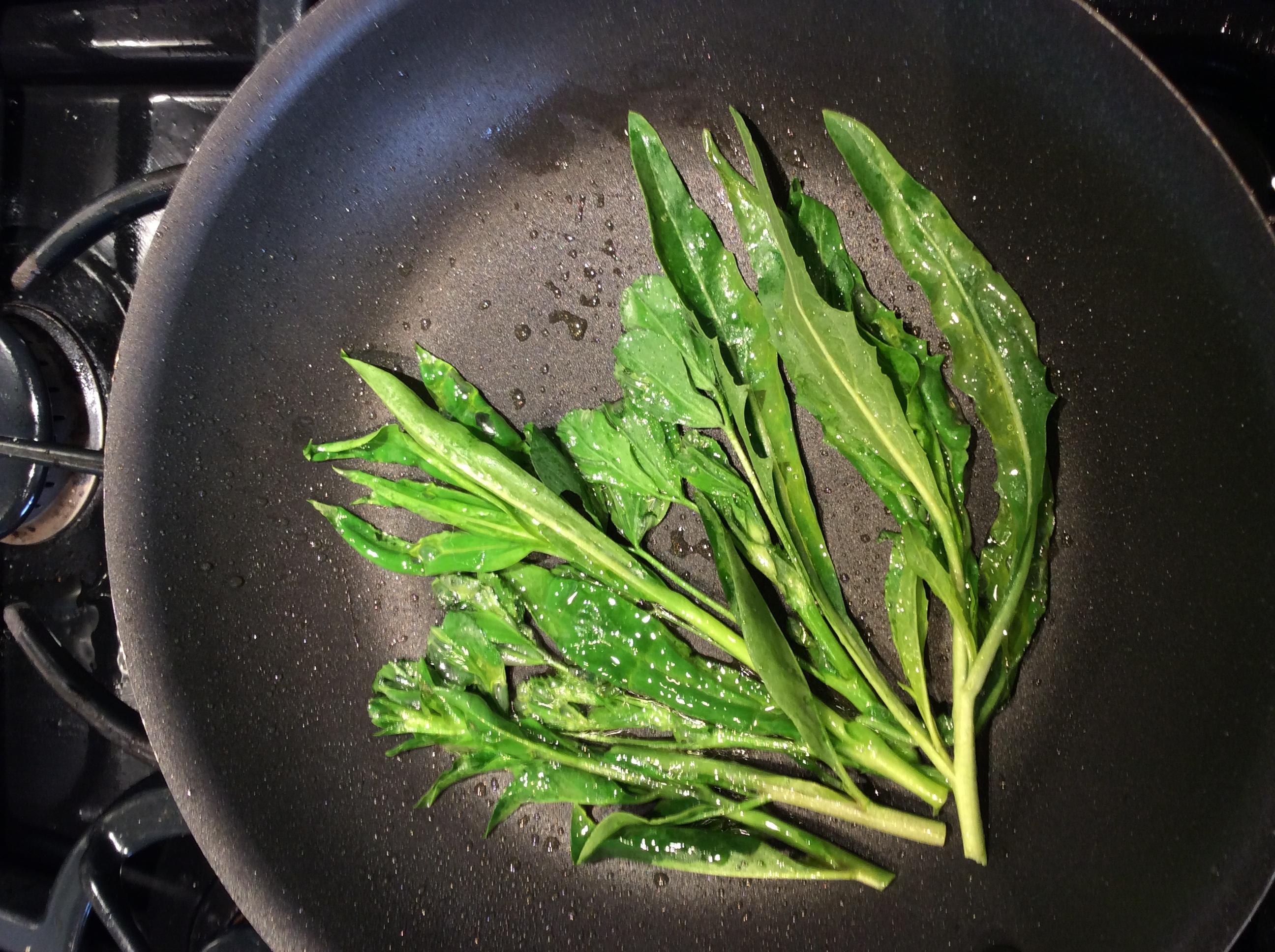
I didn’t cut them up, just washed them and let them drain. Then they were put in a skillet with some olive oil and fried over medium-high heat until the leaves were crisp and browned. I would guess that it was about two minutes a side. Watch carefully; the line between browned and burned is crossed in milliseconds.

image

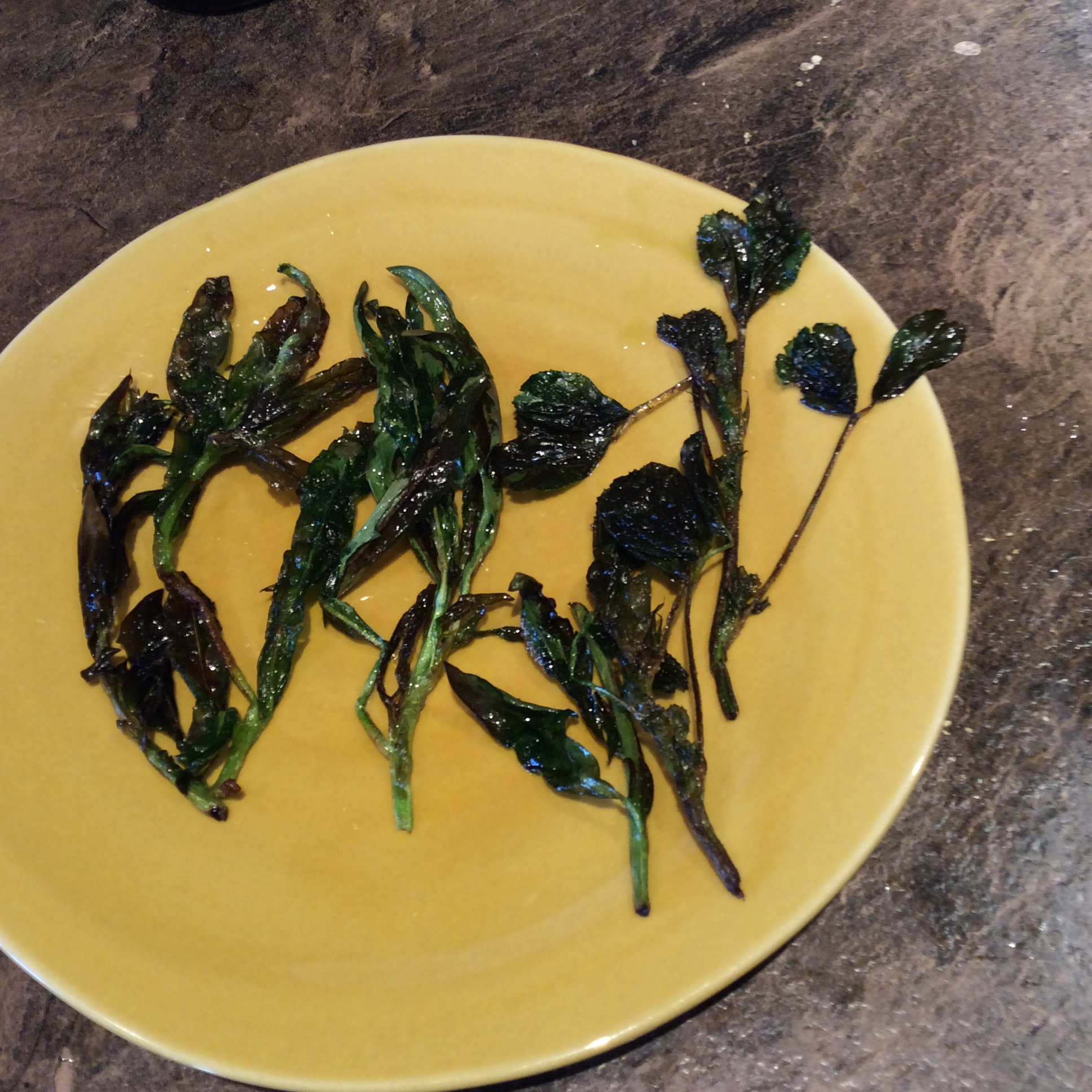
They were drained on paper towels, salted, and eaten.

image

They were actually a rich brown in spots, not black as they appear in my photo. The alfalfa and silene shoots were crisp and pleasant enough to eat, but all I could taste was olive oil and salt. I had used a wonderful olive oil so I didn’t mind that, but I do like a vegetable to taste of itself.  The stars were the goji and perennial arugula shoots. The hot and mustardy flavor of perennial arugula was tamed and made interesting but not excessive, and the goji shoots had an herbal flavor and a delightful texture. I will definitely cook them again. I can easily cook them for my husband and myself, but they need lots of room in the skillet to crisp, so I don’t think it’s practical to make them for more than two people. They are too fragile to withstand being dipped into anything, and are best eaten on their own. They are a passing fancy and to be enjoyed as such.

I only wish that all my invasives could be dealt with by eating them.

There are many other shoots to consider, and this is a time of year for perennial veggies to shine. Meaty young milkweed shoots should be wonderful. It has taken me three years to get a milkweed patch to germinate so mine are still spindly infants, but if you live in an area where it occurs naturally, do give it a try. Asparagus, the classic shoot, is wonderful when pan-fried like this. Young slender green onions can be treated this way with good effect, and green garlic could be great, although in this one use I would use only the white part, since the leaves can seem stringy if not chopped in cross-section. I will soon be experimenting with shoots of young wild lettuce as it starts to bolt. I think these would need to be blanched first to reduce bitterness, but I’m not sure yet.  I’m very fond of using the fresh tender shoot-tips of coppiced mulberries as a green, and I think they would be very good given this treatment, but they don’t come along until about June, so it will be a while before I find out. See here for a discussion of the ins and outs of selecting and eating mulberry leaves.  The young second-year stems of chard leaves that emerge when an overwintered plant sprouts in the spring, before it starts bolting to seed,  might be good for this, trimmed of their green leafy bits and maybe cut in inch-long chunks if they seem a bit on the stringy side. And I have written before about using the young flowering shoots of scorzonera this way, and they are definitely the highest culinary incarnation of that tough perennial.

I often mention Cook’s Treats, the series of improvisational tapas for one that I enjoy in the kitchen when nobody’s looking and I’m doing other things. Four or five tasty shoots, thrown in your smallest skillet with olive oil while you’re working on other things, make a great cook’s nibble. You will need to give them your undivided attention for a few minutes and that’s all, which fits well into the rhythm if many kitchen tasks.